Reading view

Little Champions – Special Exhibit at the Pacific Bonsai Museum

A “Champion Tree” is a specimen that has been measured to be the largest of its species (see “Champion Tree Registry“). The findings are based on a points system that considers tree height, trunk circumference, and average crown circumference (there’s a manual that spells out the details).

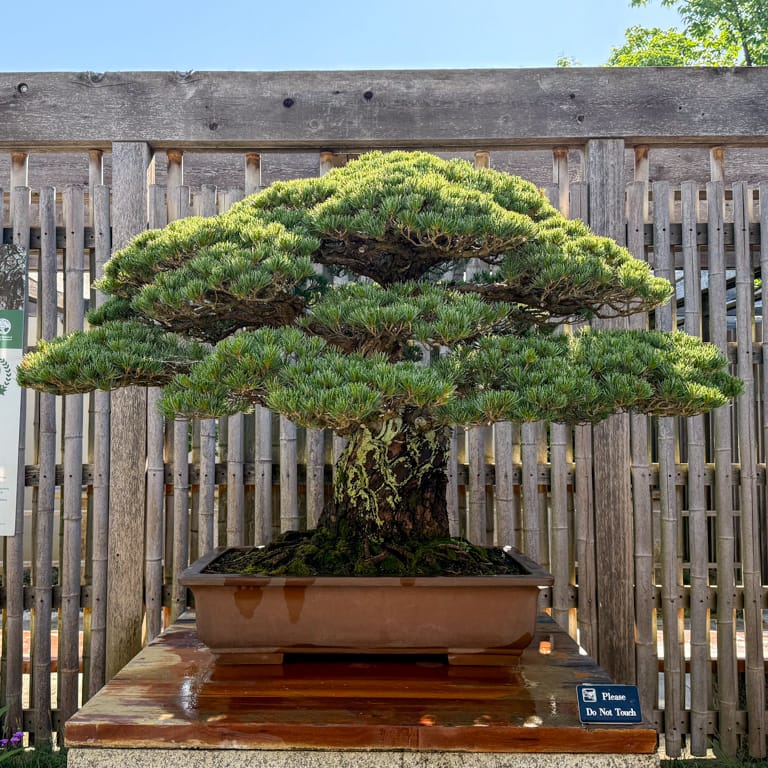
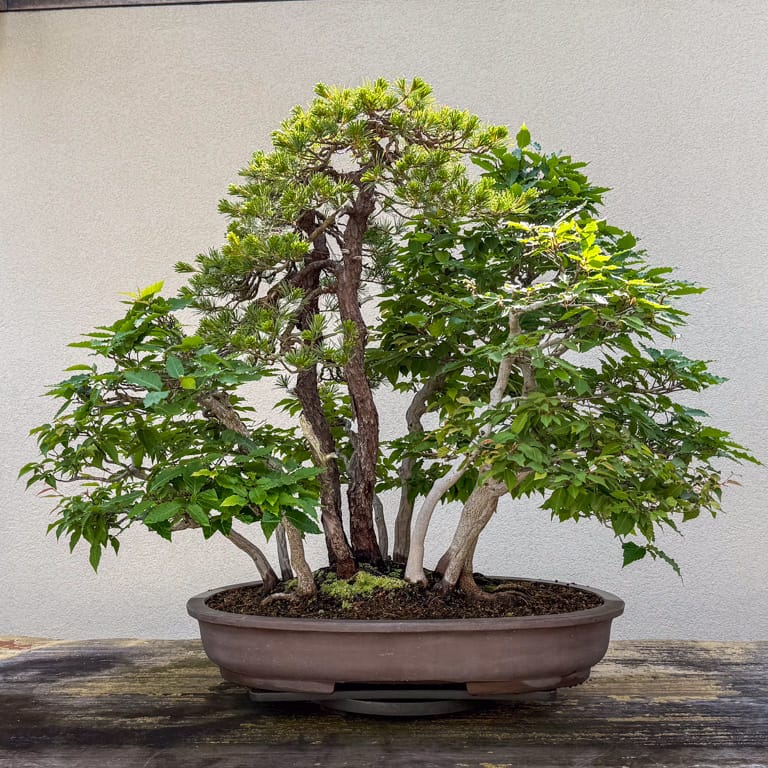
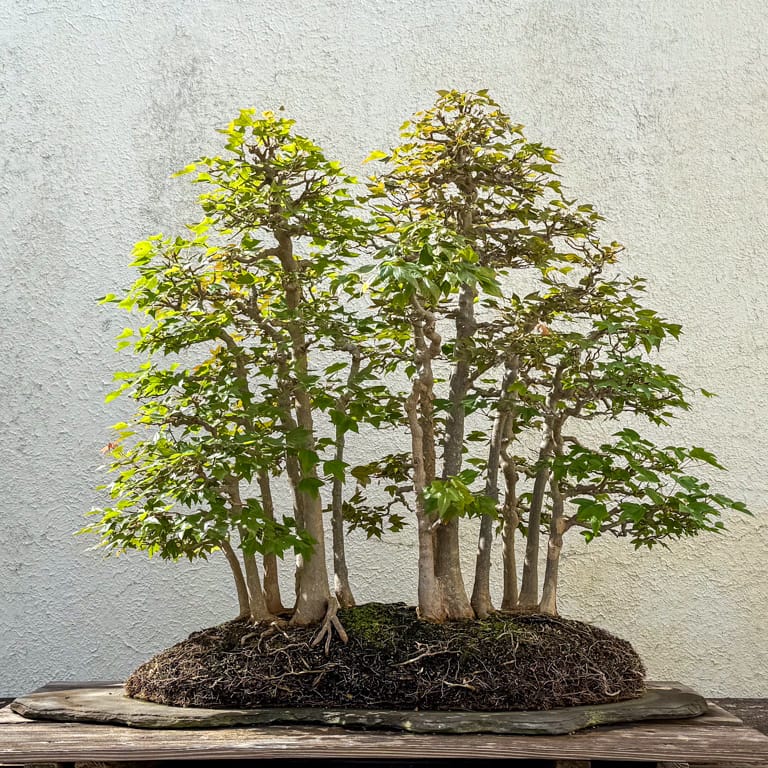
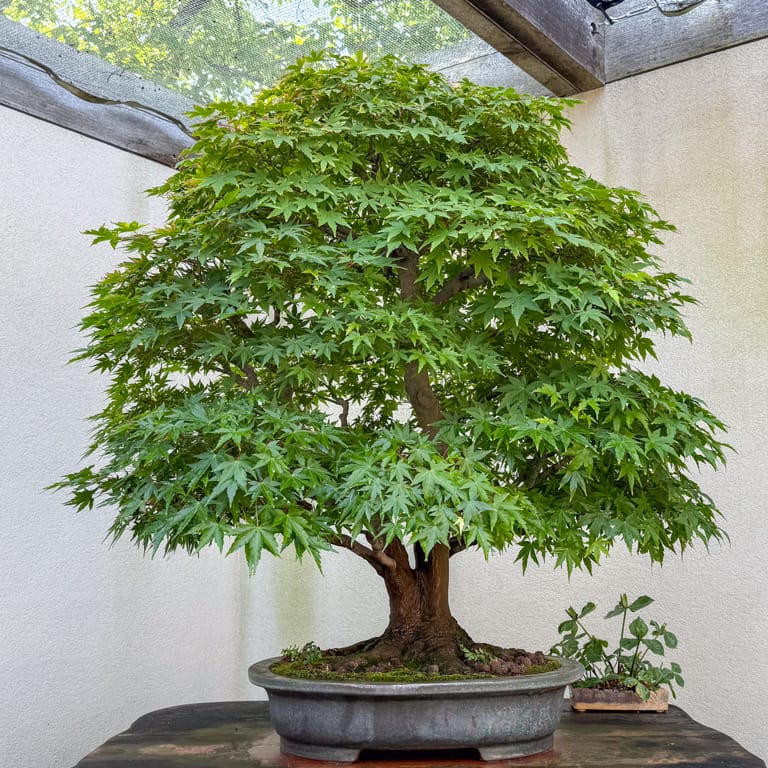
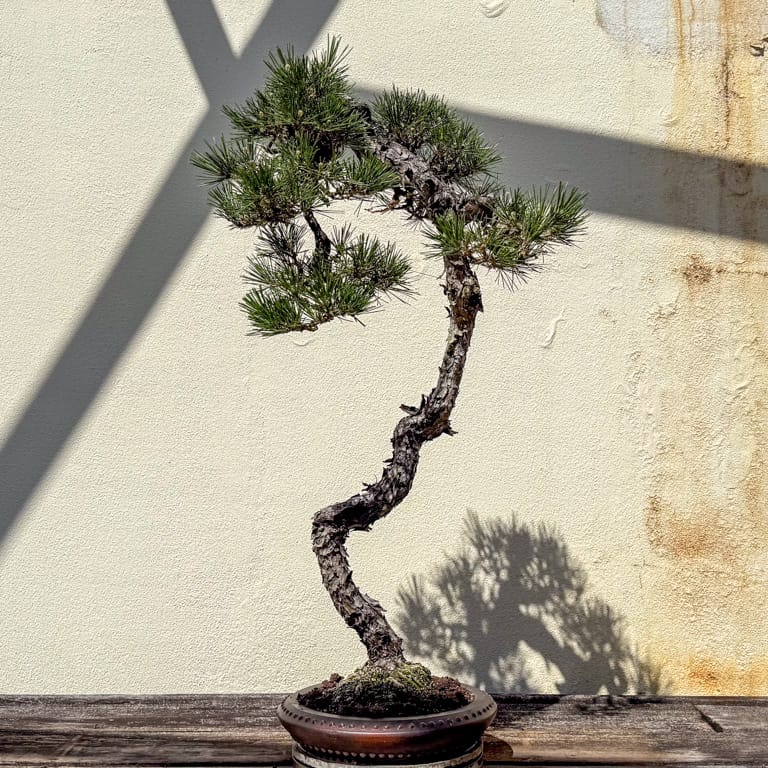
Playing on this idea, the Pacific Bonsai Museum is currently featuring an exhibit called “Little Champions” that looks at eight specimens that are native to the West Coast. It’s a great example of the bonsai work that can be done with native material.

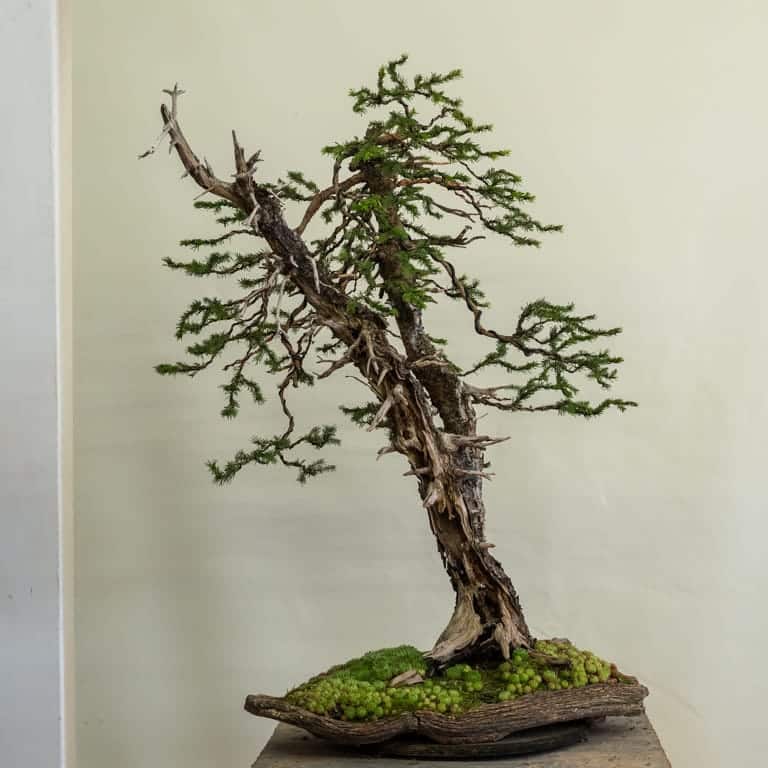
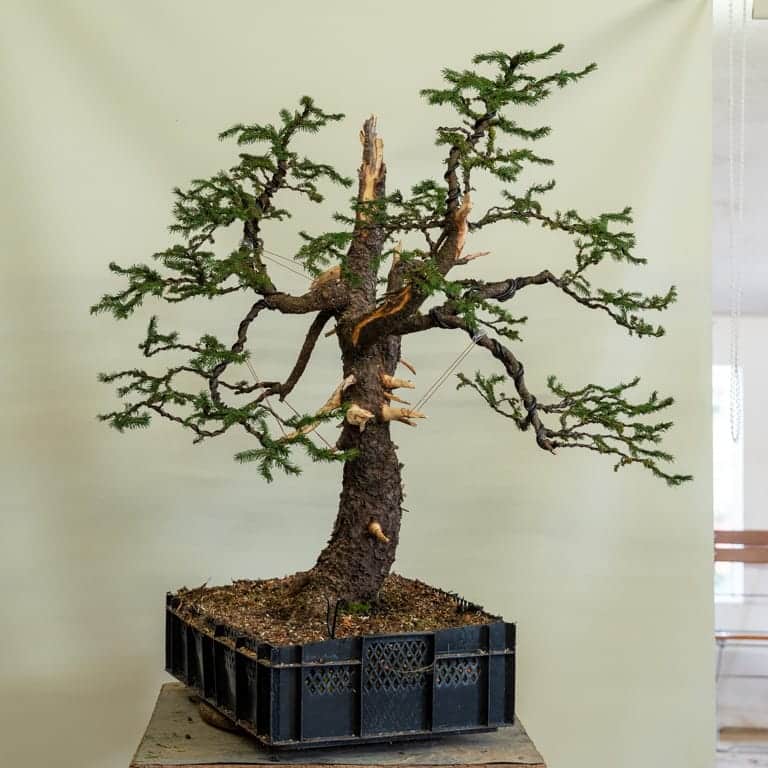
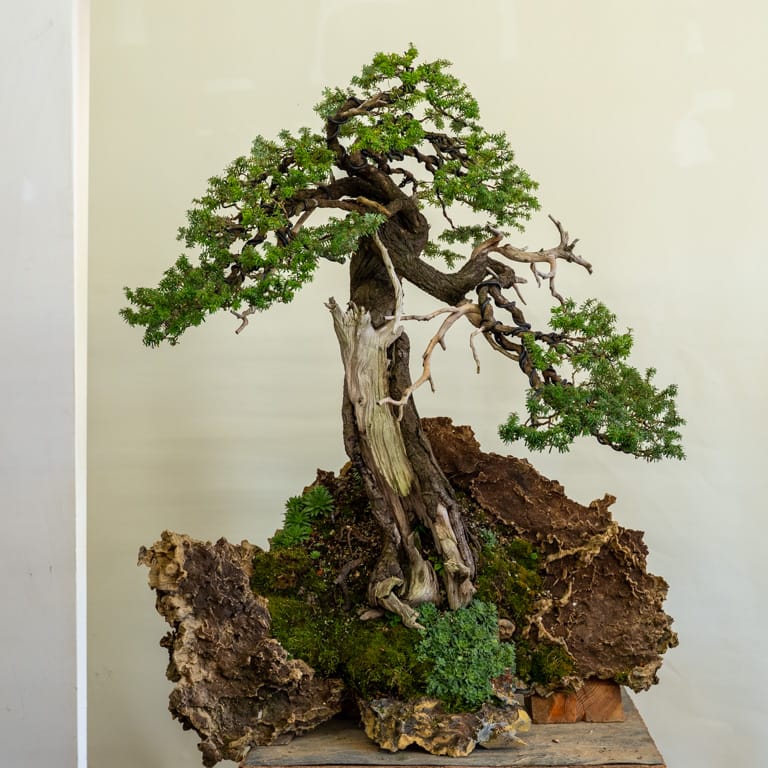
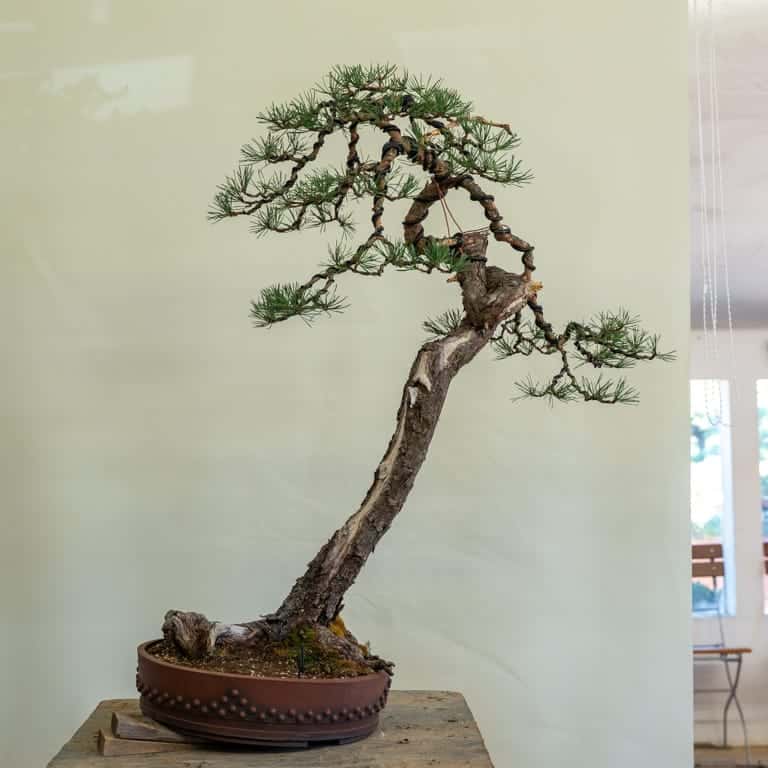
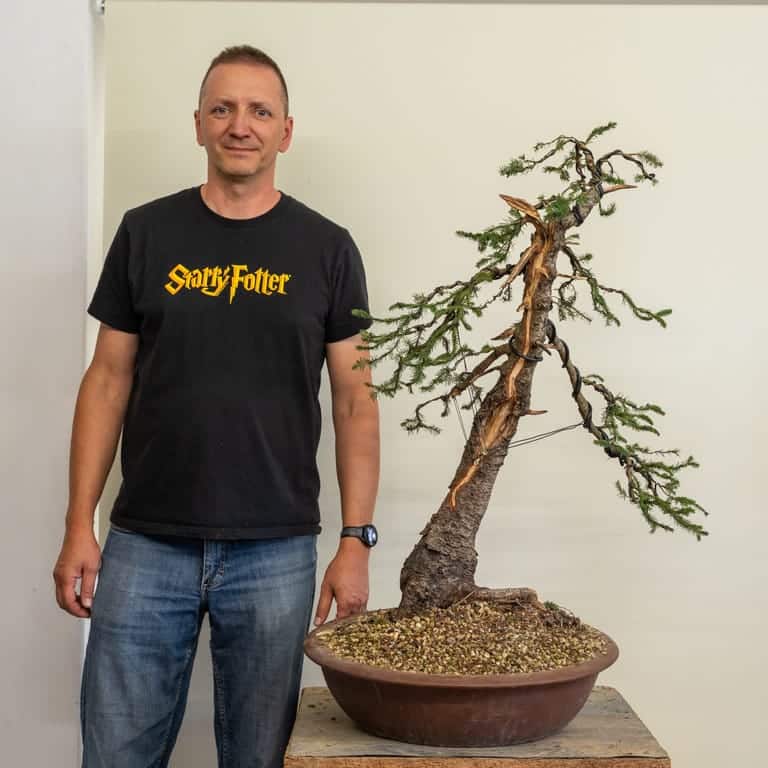
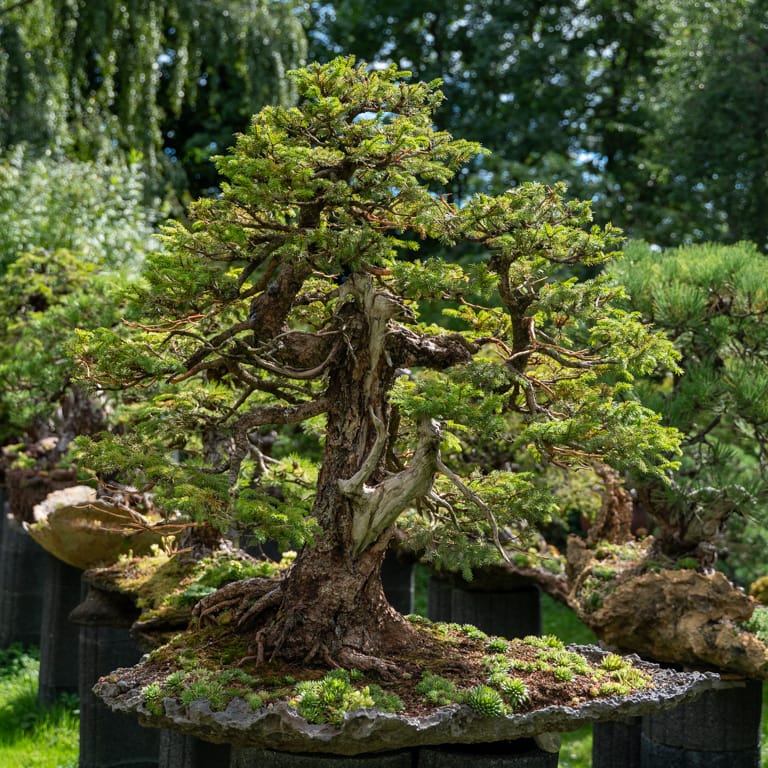
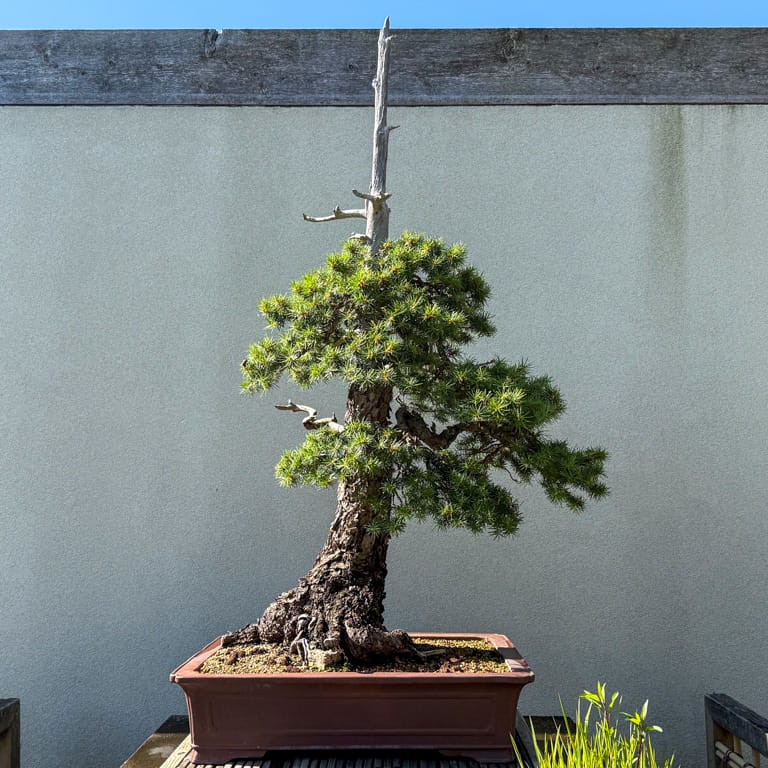
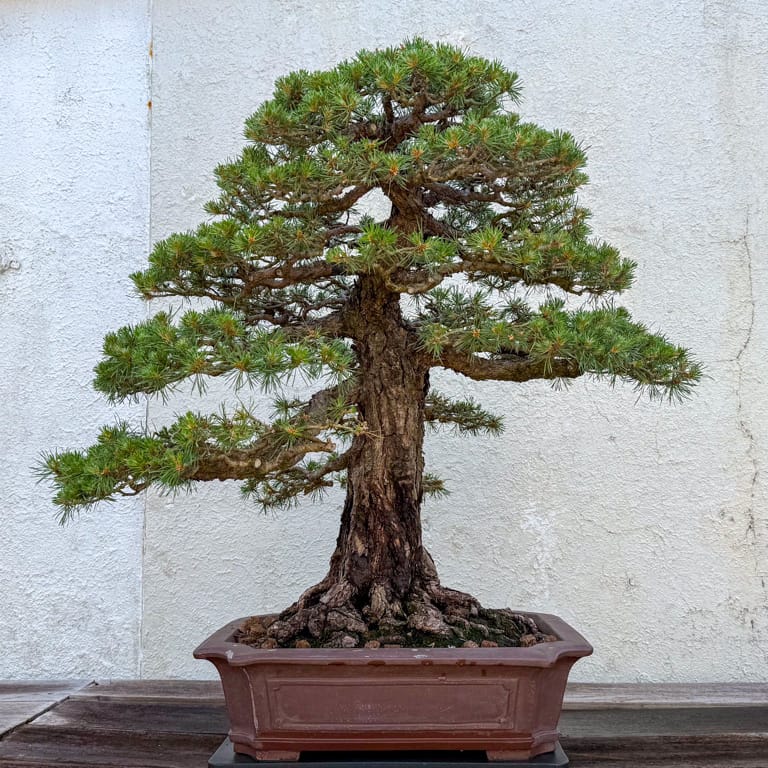
First up is an Engelmann spruce that’s been in training since 1978. Harvested from about 4600′ on the slopes of Mt. Hood, this specimen suggests the rugged terrain in which the species thrives at a much smaller scale than the tallest of the species (179′).
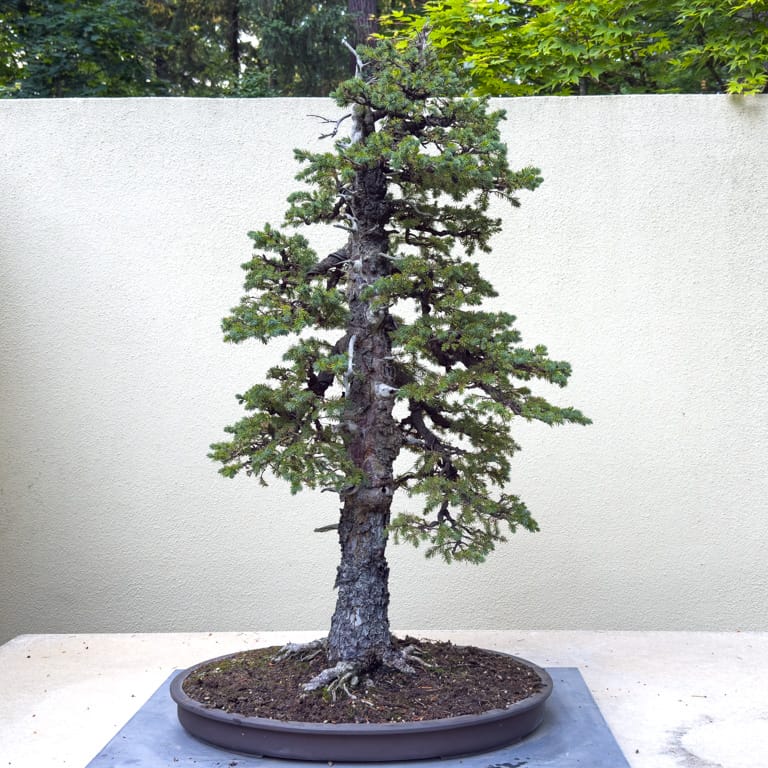
Engelmann spruce
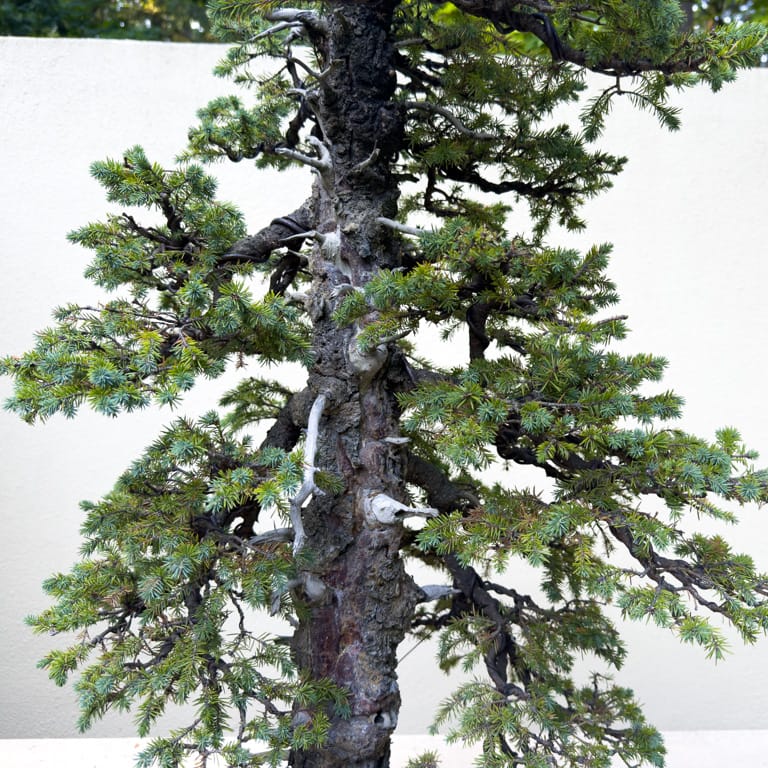
Engelmann spruce

Trunk and foliage detail

Trunk and foliage detail

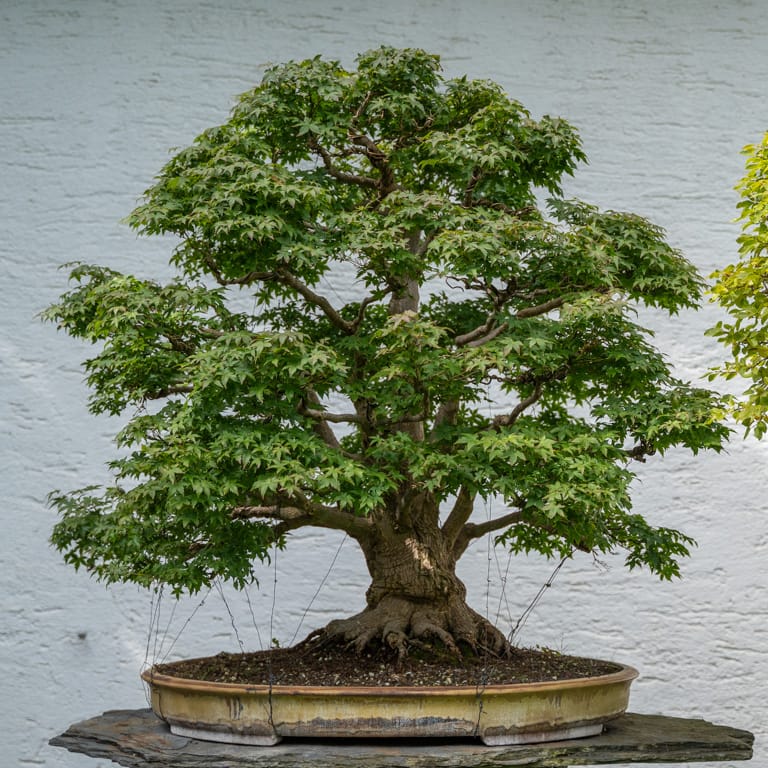
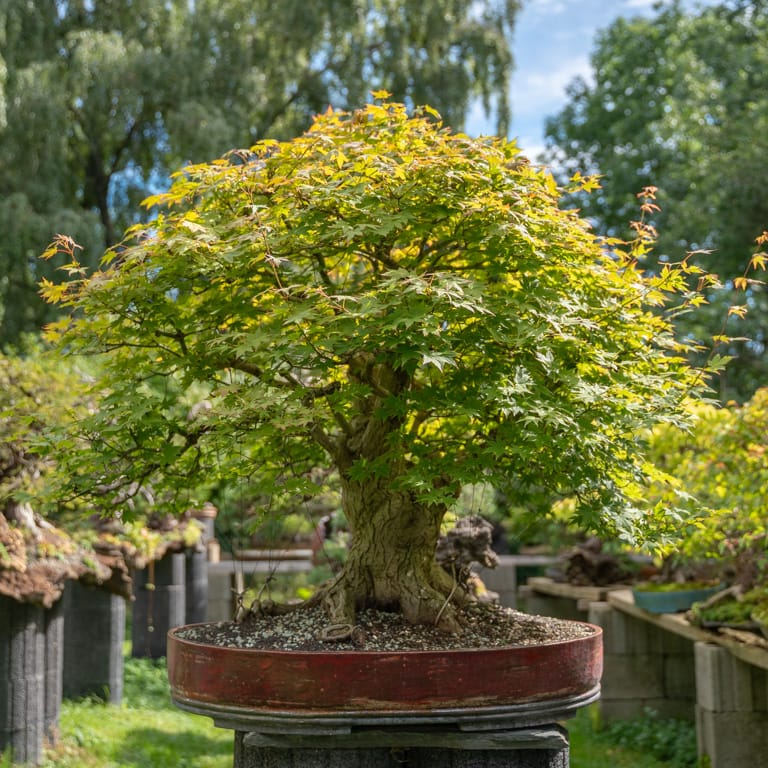
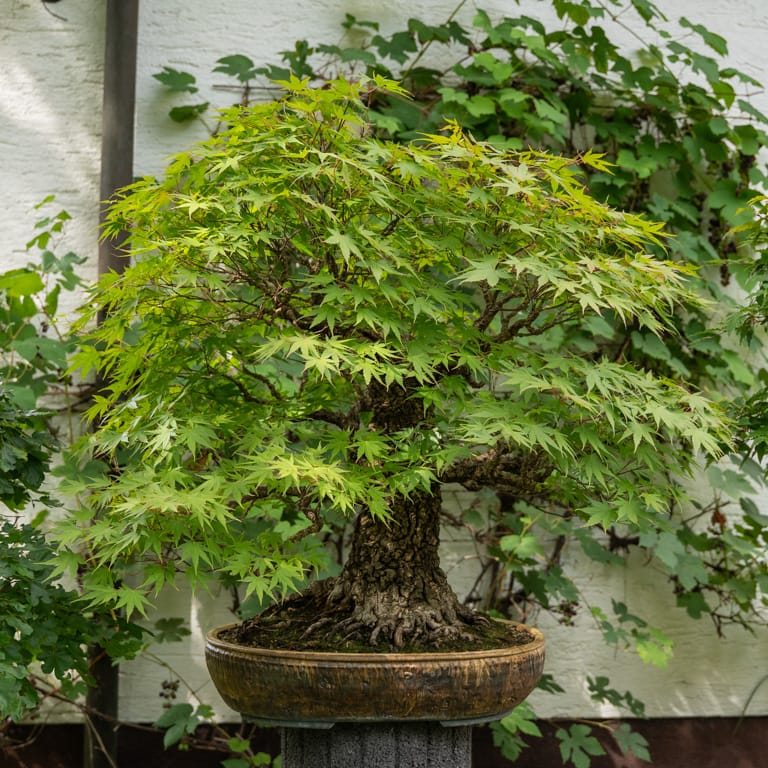
Next up is a vine maple on loan to the garden from Michael Hagedorn. It was collected at about 4000′ from a lava flow in the Cascades. (Forgive the netting around the pot – it’s job is to deter critters from digging up the moss.)
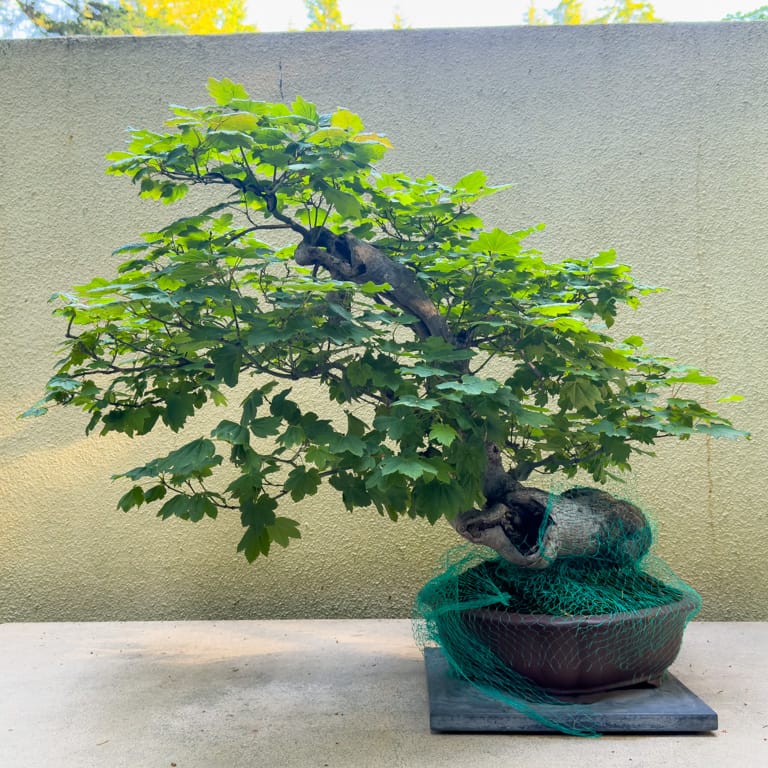
Vine maple

Vine maple

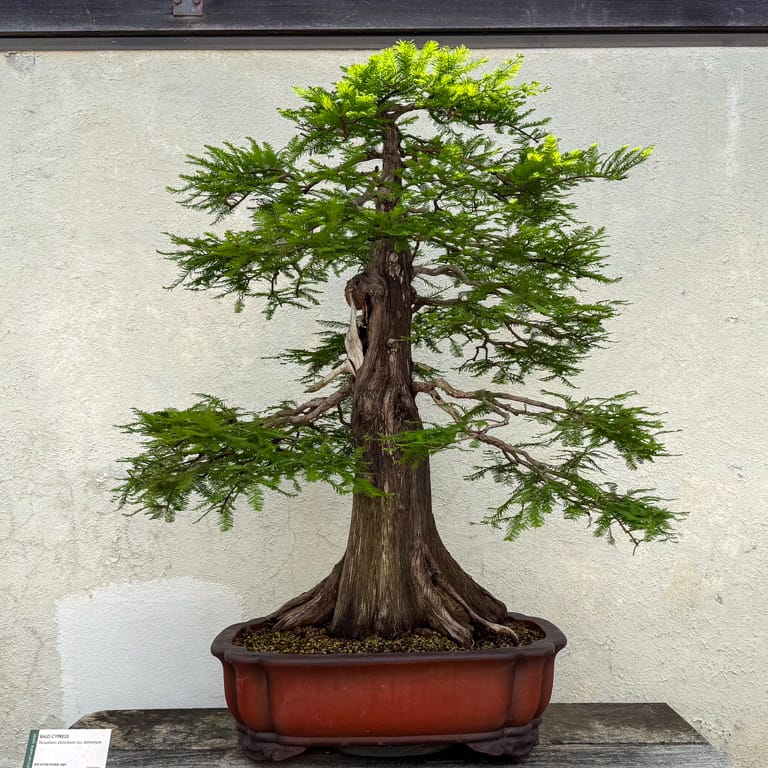
The coast redwood below was donated to the garden by Toichi Domoto, a well-known California nurseryman and bonsai grower. Domoto started this bonsai from a three-year old seedling in 1957 and trained it for thirty years before donating it to the Museum (learn more about Toichi Domoto).
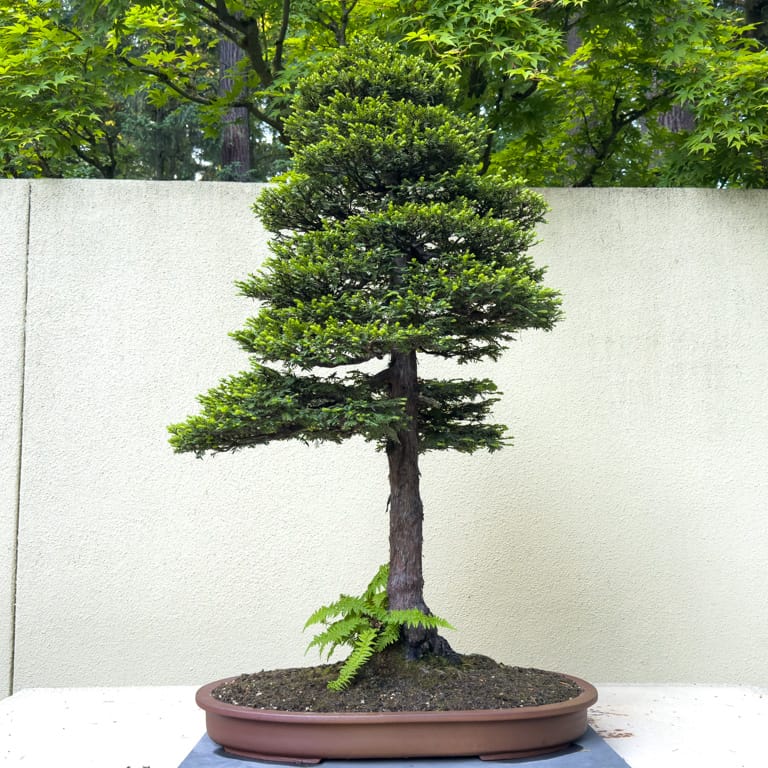
Coast redwood

Coast redwood

In 2018, the museum presented the LAB (Living Art of Bonsai) Project which featured work from bonsai professional Ryan Neil, ceramicist Ron Lang, and furniture designer and craftsman Austin Heitzman (learn more about the LAB). The basic idea was to mix up the order in which tree, container, and stand are created to see what happens.

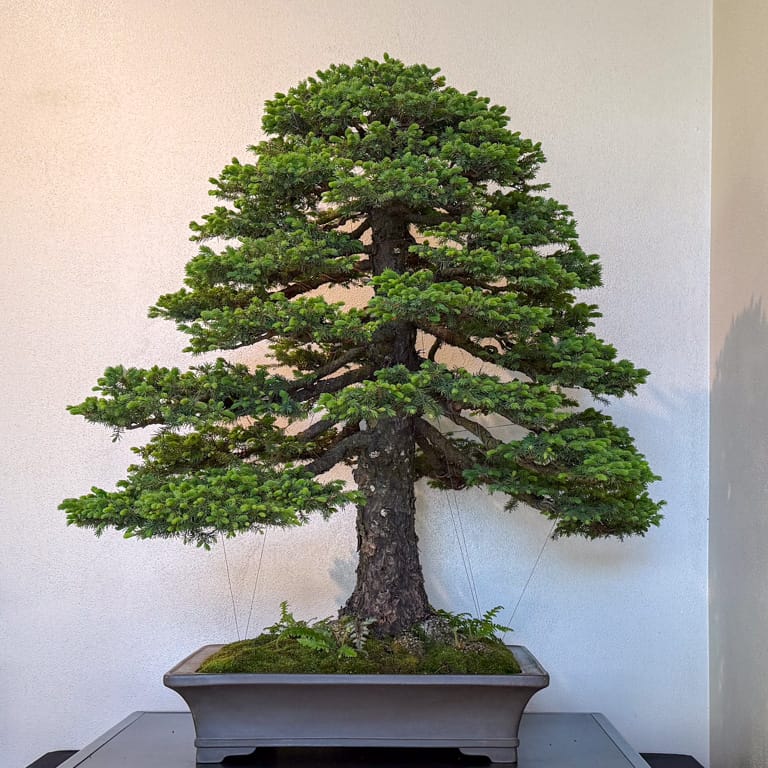
The composition below started with Lang’s container. Heitzman then created the stand to complement the container. Finally, in 2020, Neil planted the root over rock Douglas fir and this composition came to its initial completion.
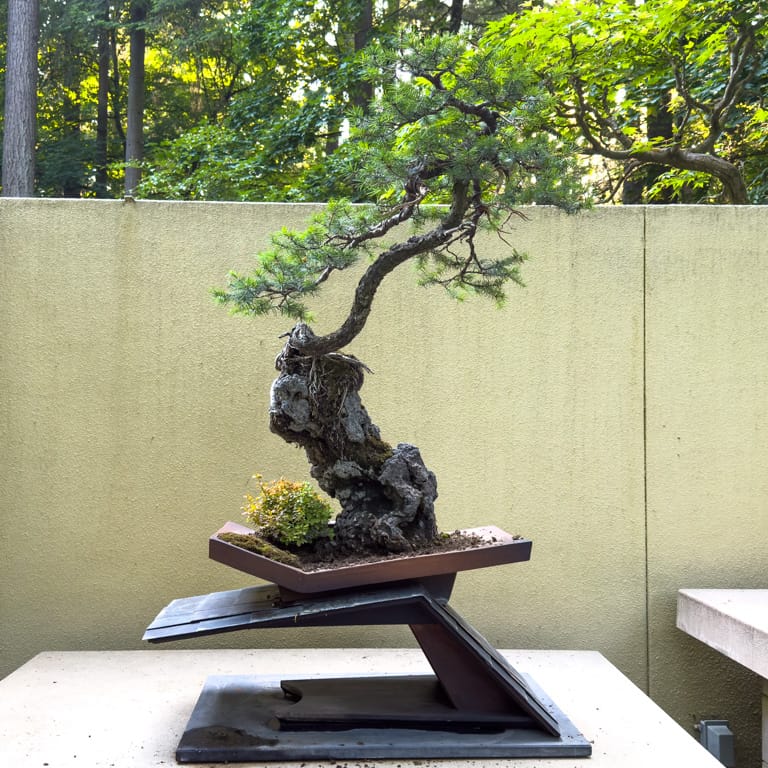
Douglas fir
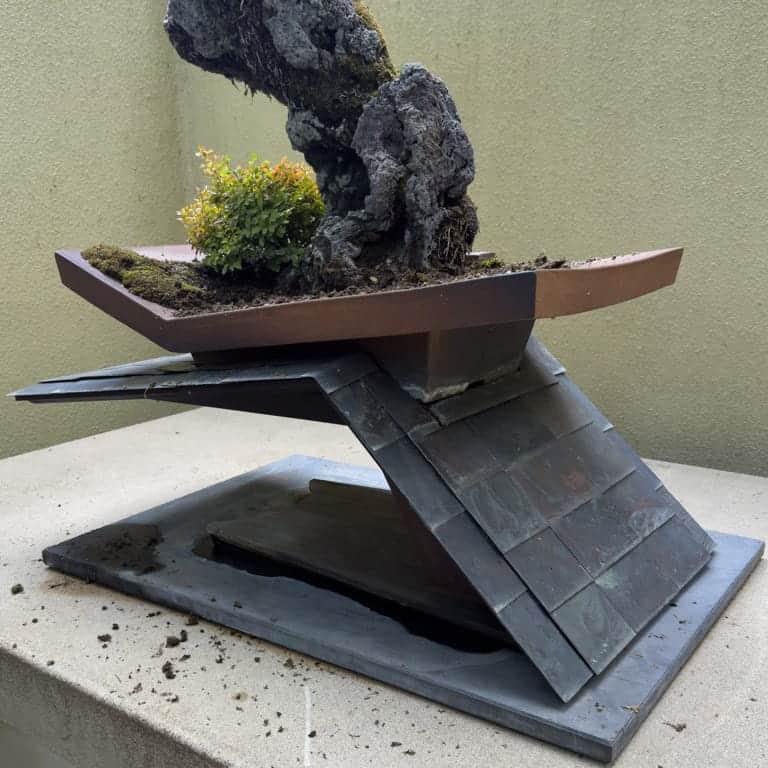
Douglas fir

Stand and container detail

Stand and container detail

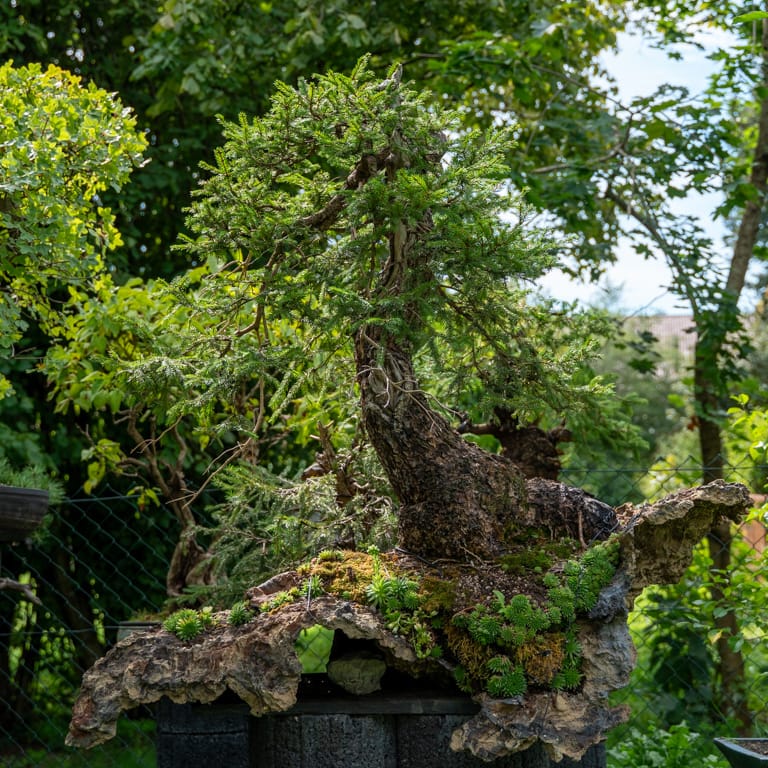
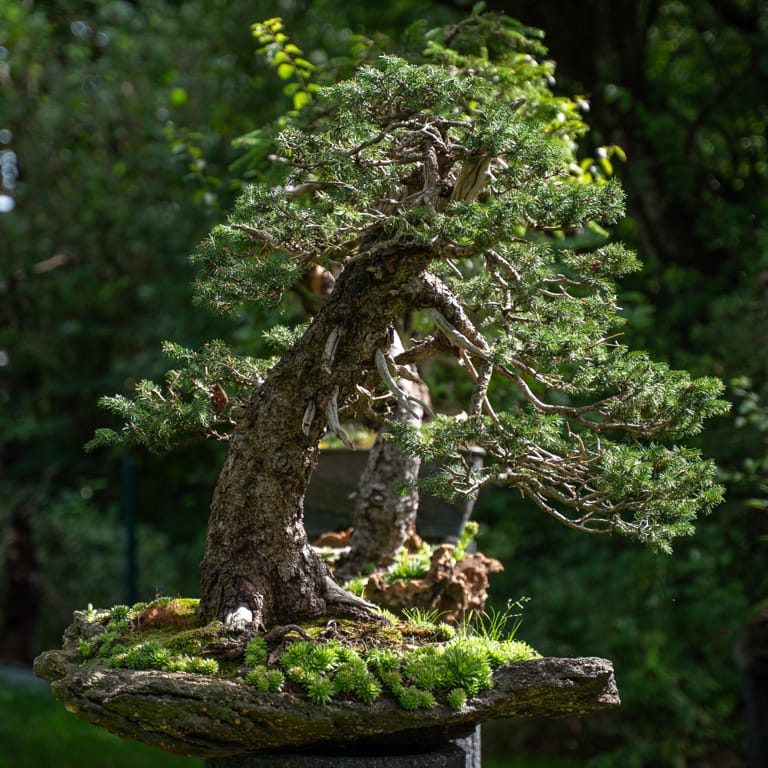
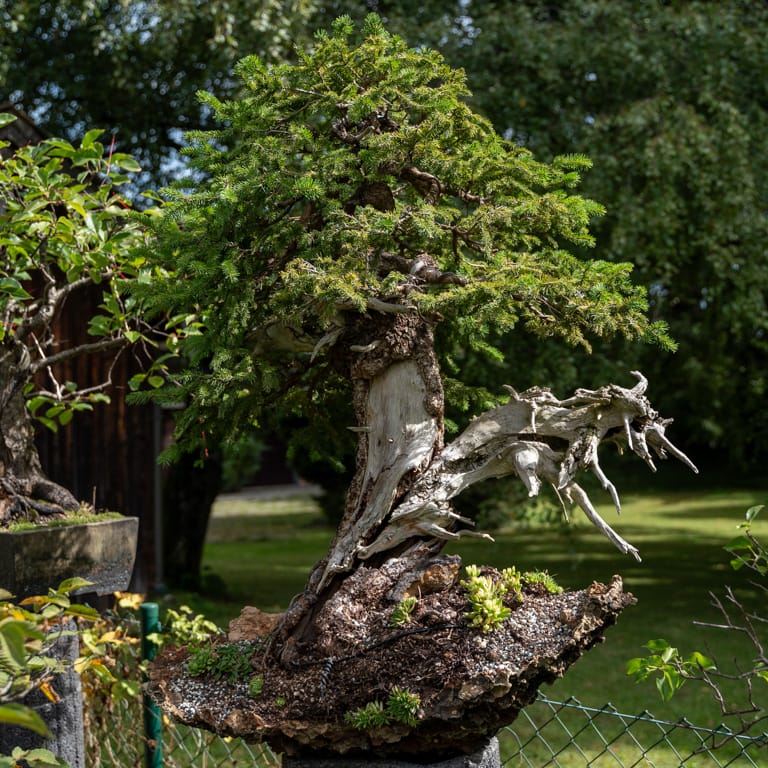
Sitka spruce can grow to massive sizes and live to be over one thousand years old. This specimen was collected in a parking lot on the Olympic Peninsula in Forks, Washington. The pot was from the museum’s Decked Out exhibit in 2016.

Sitka spruce

Sitka spruce

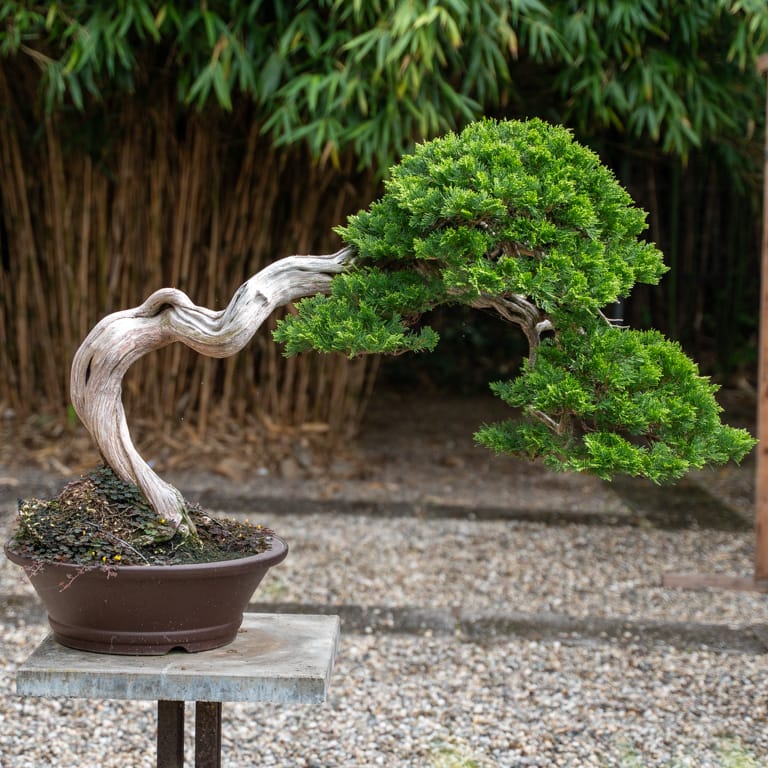
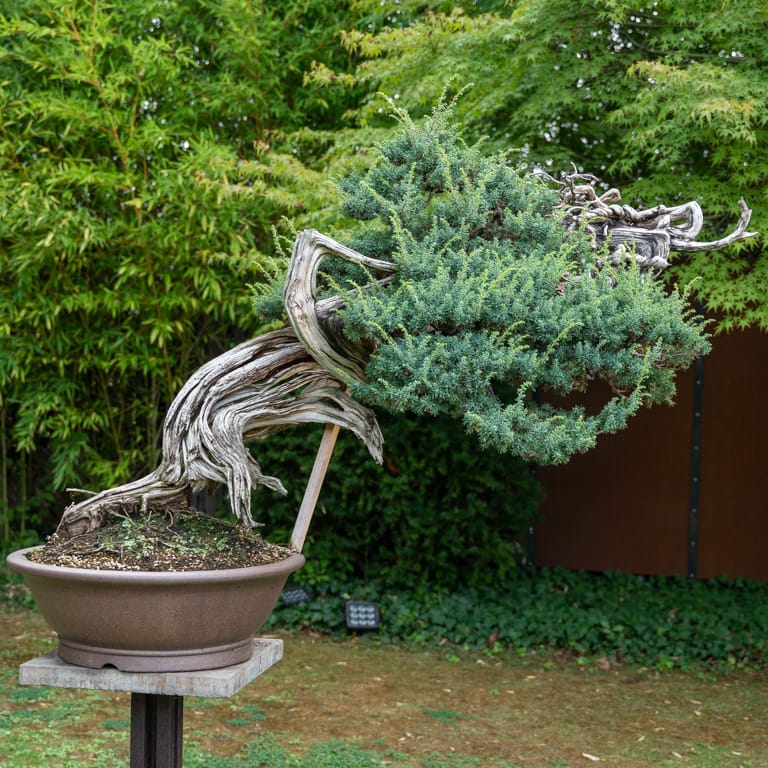
The subalpine fir is one of a number of coniferous species that takes on a standard forest tree shape at lower elevations but can become contorted and character-filled in more extreme environments. The specimen below, created by David De Groot, is no exception. The container is by Jan Rentenaar.

Subalpine fir

Subalpine fir

If you missed last week’s post, check out photos from the “Small Talk” exhibit. And if you’d like to see these trees in person, start planning your trip by visiting the Pacific Bonsai Museum website.

News & Updates

[2026 Kokufu Dates]

  • The 100th Kokufu exhibition, the top bonsai show in Japan, will be held on February 8-11 (part 1) and February 14-15, 17-18 (part 2, the museum is closed on the 16th), 2026. The event will be held at the Tokyo Metropolitan Art Museum in Ueno Park in Tokyo.
  •  

A visit to Peter Macasieb’s shohin garden

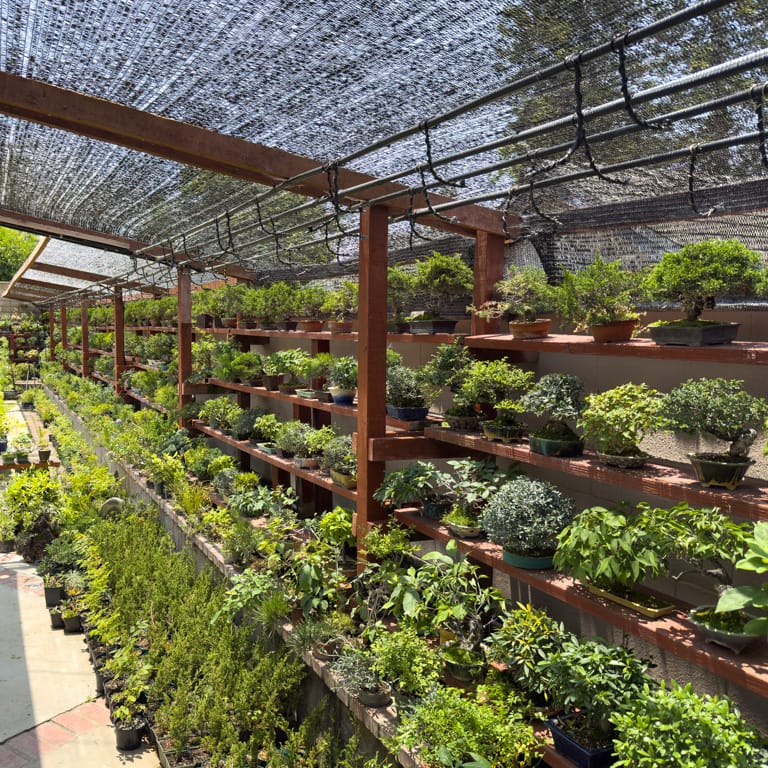
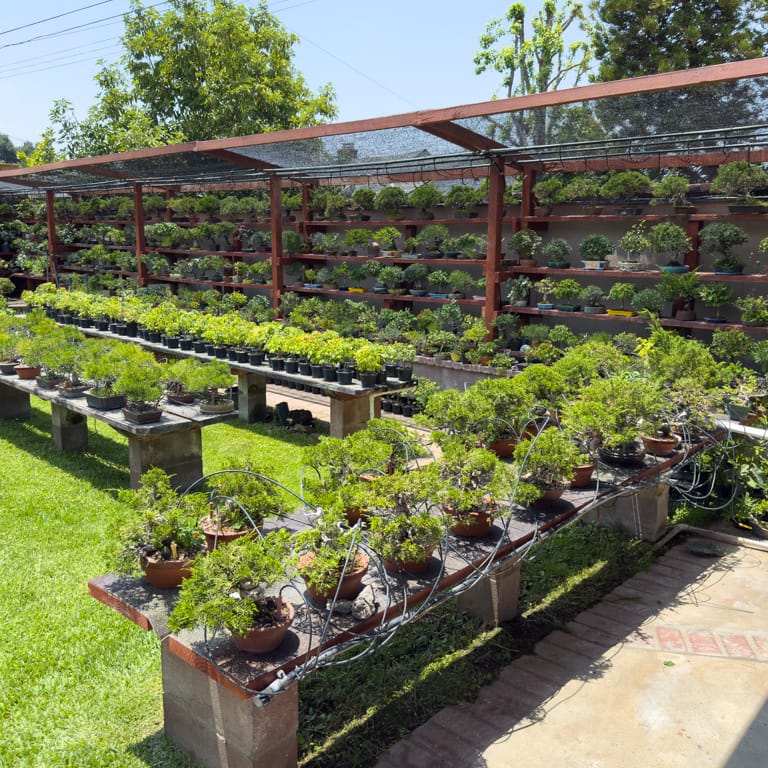
Seeing photos ahead of time didn’t adequately prepare me for the literal wall of bonsai that greets visitors at Peter Macasieb’s garden.

Peter Macasieb's garden

Peter Macasieb’s garden

Peter has been a fixture in the Southern California bonsai scene for years. I’ve been wanting to see his collection up close and was excited to learn that I’d have the opportunity to visit on a recent trip to the area.

Peter's wall of bonsai

Peter’s wall of bonsai

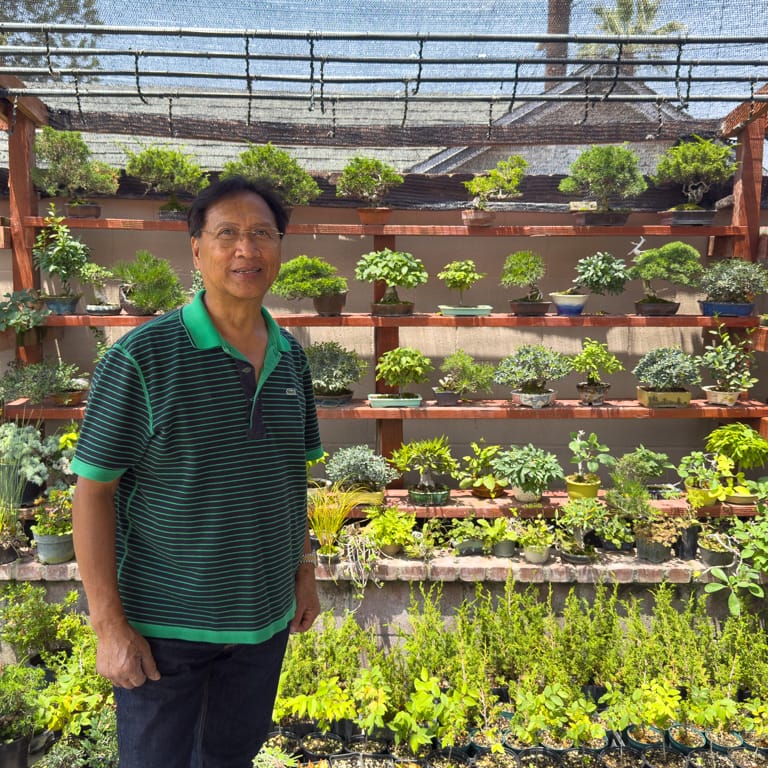
Peter Macasieb

Peter Macasieb

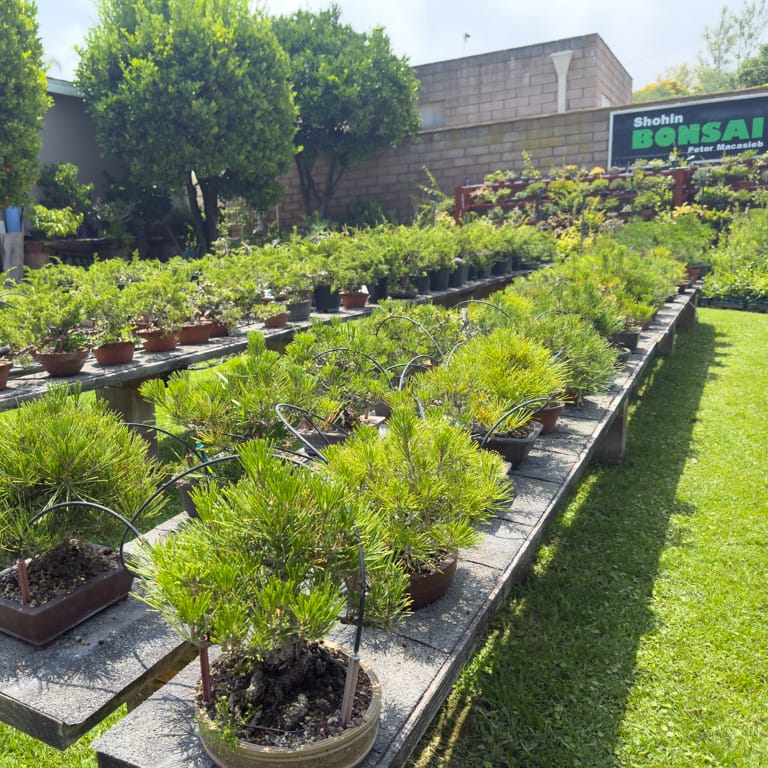
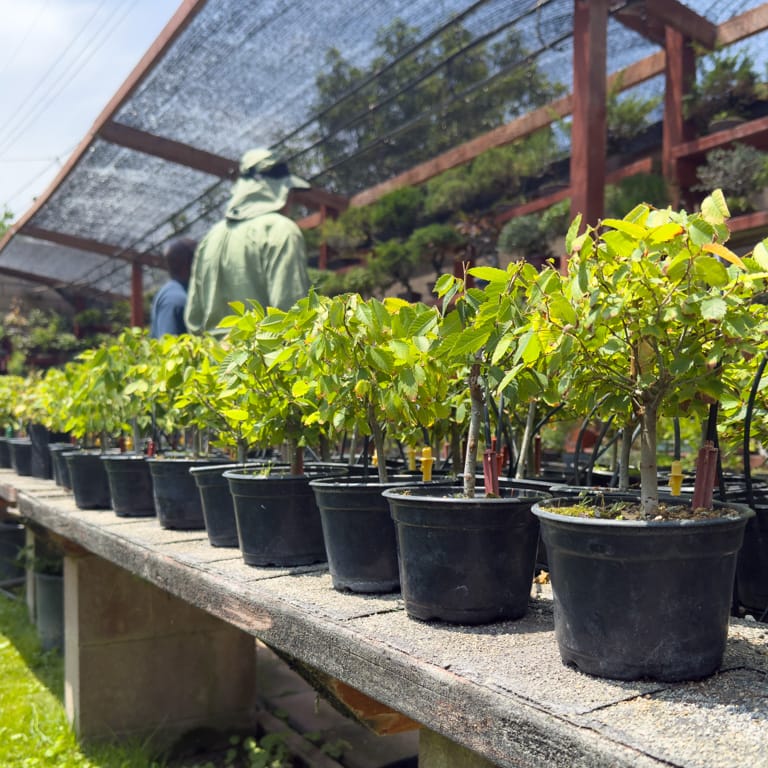
One thing that makes Peter special is that he creates many of the shohin he works with from scratch. Just across from “the wall” are several benches of young junipers, pines, and zelkova, among other species, that he’s been working on for years.

Pines and junipers

Pines and junipers

Young zelkova

Young zelkova

Peter uses this material for workshops he hosts locally and at events like the California Shohin Seminar. As a grower, Peter is doing a fantastic job creating material that the shohin community is hungry for.

Peter's Tokonoma

Peter’s Tokonoma

The sheer size of Peter’s collection makes it easy to miss how many different species he’s growing. It’d be fun to visit in winter to see the deciduous trees without leaves.

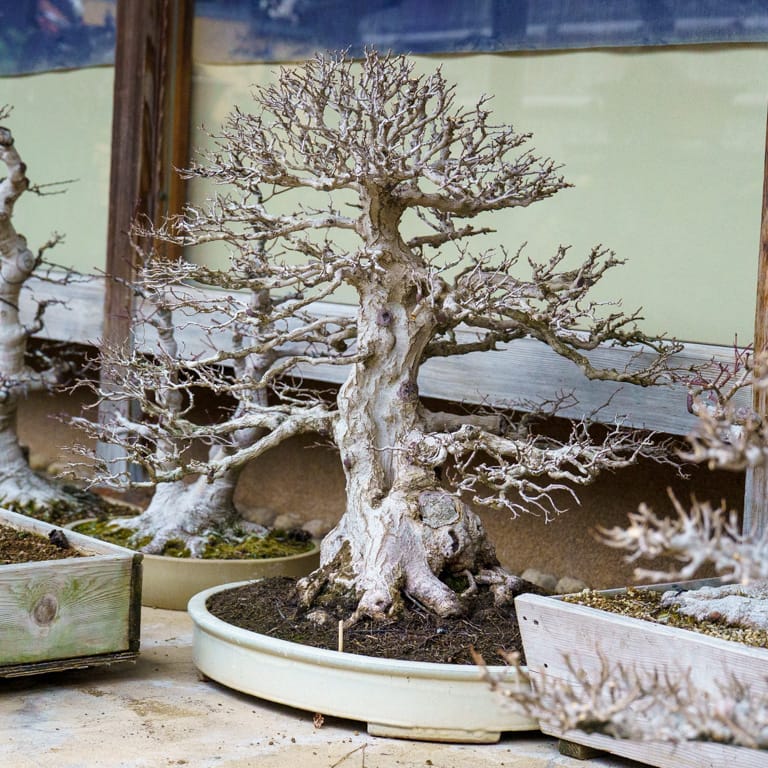
Zelkova

Zelkova

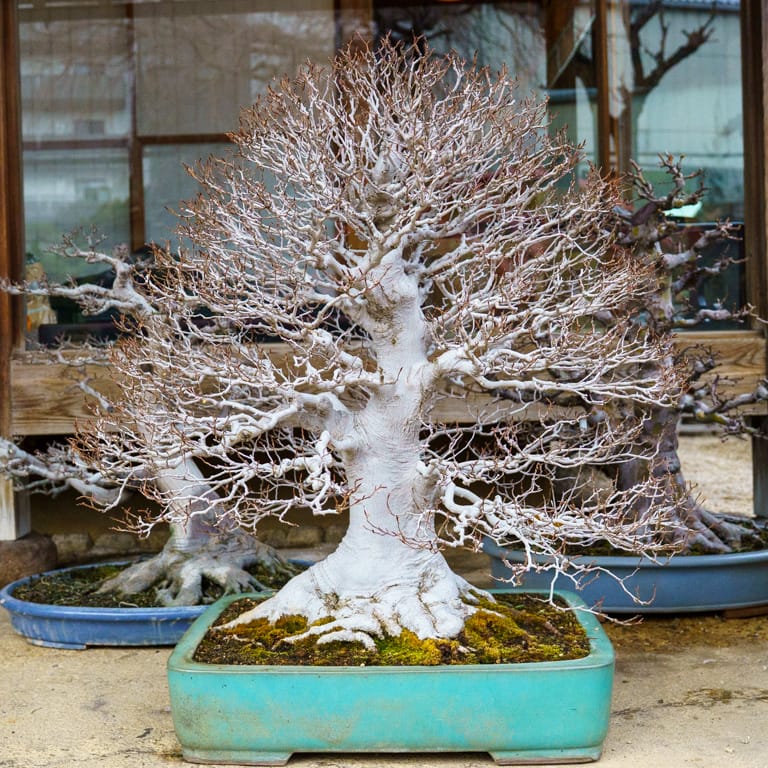
Japanese maple

Japanese maple

Based on the material Peter’s currently working on, it looks like there will be a lot more special trees to see in his garden the next time I visit.

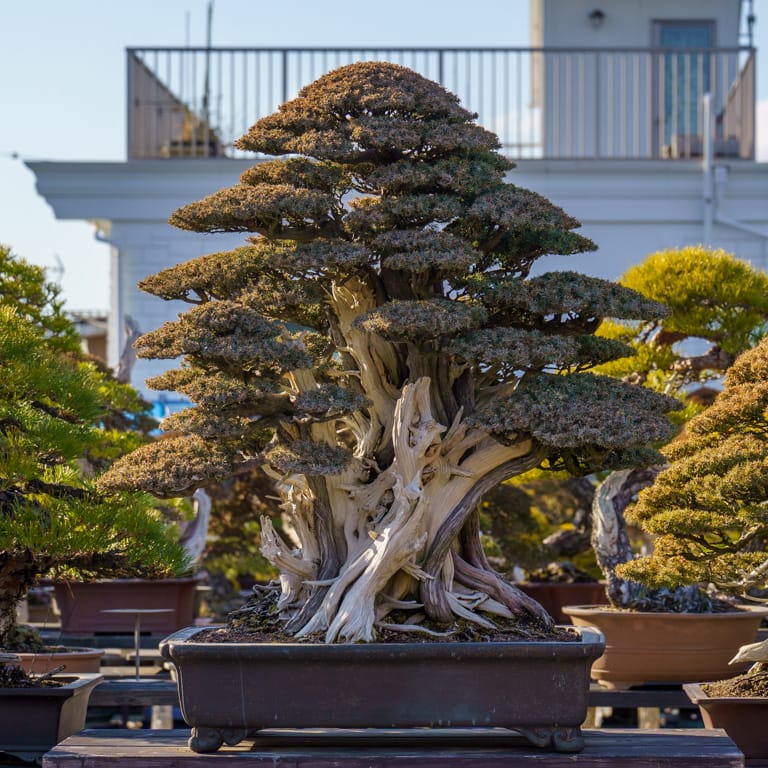
Shimpaku juniper

Shimpaku juniper

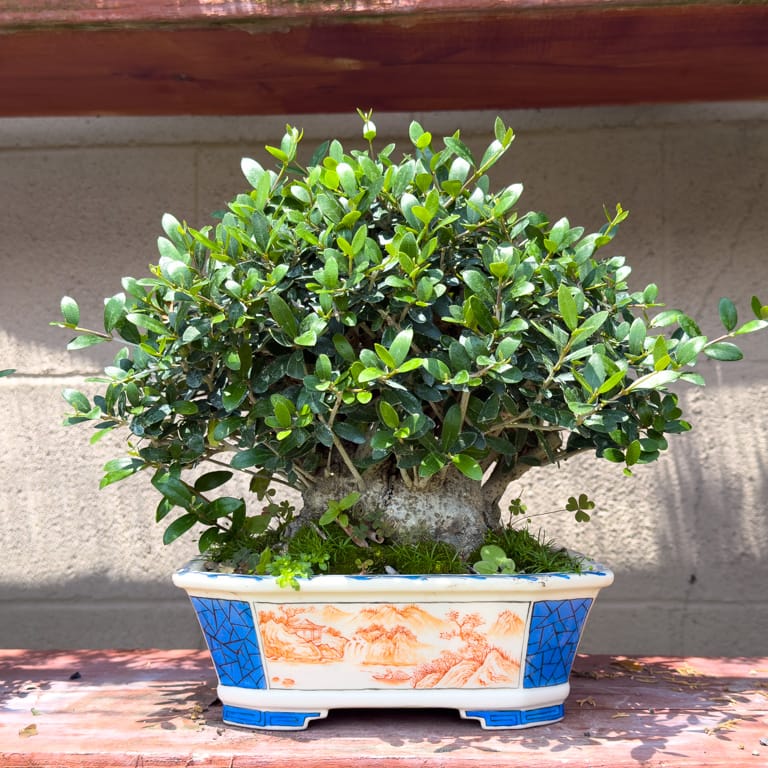
Olive

Olive

See an in-depth video tour of Peter’s garden on the Baikoen Bonsai Club’s YouTube channel. You can get in touch with Peter on FB or IG.

News & Updates

[Links to black pine videos]

  • I recently had the opportunity to work with volunteers at the Huntington who were working on decandling. Check out videos of us covering decandling basics and pine cutback basics.
  •  

Tom Vuong’s Giant Trees

I drew a lot of inspiration from my visit to Tom Vuong’s bonsai garden. It wasn’t just the trees, but the way he handled them.

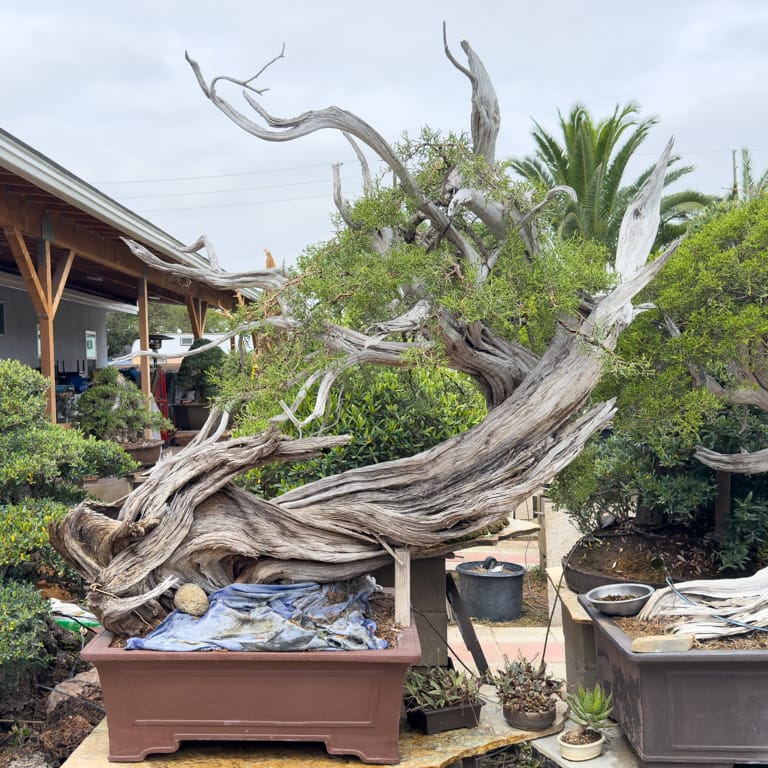
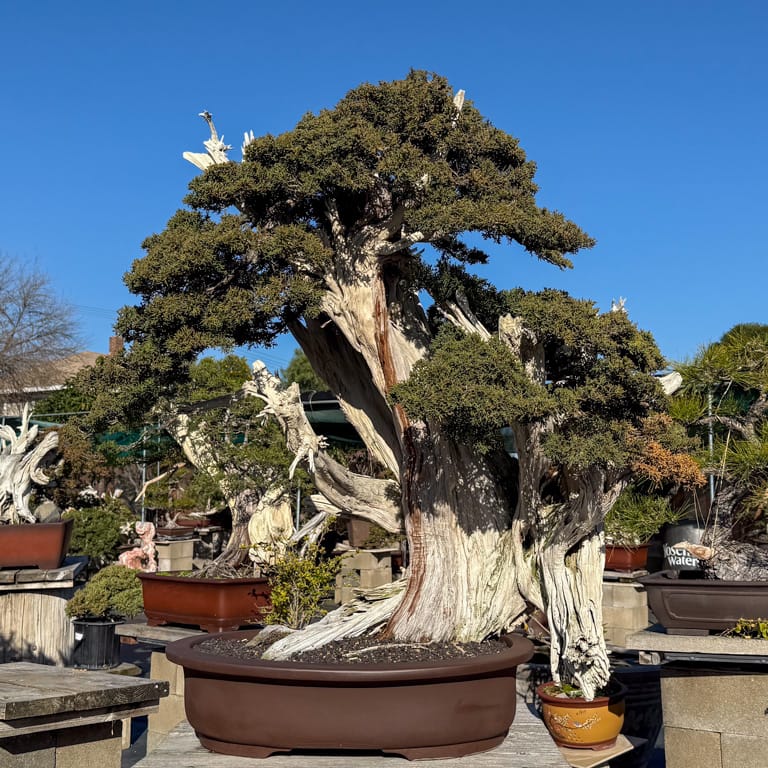
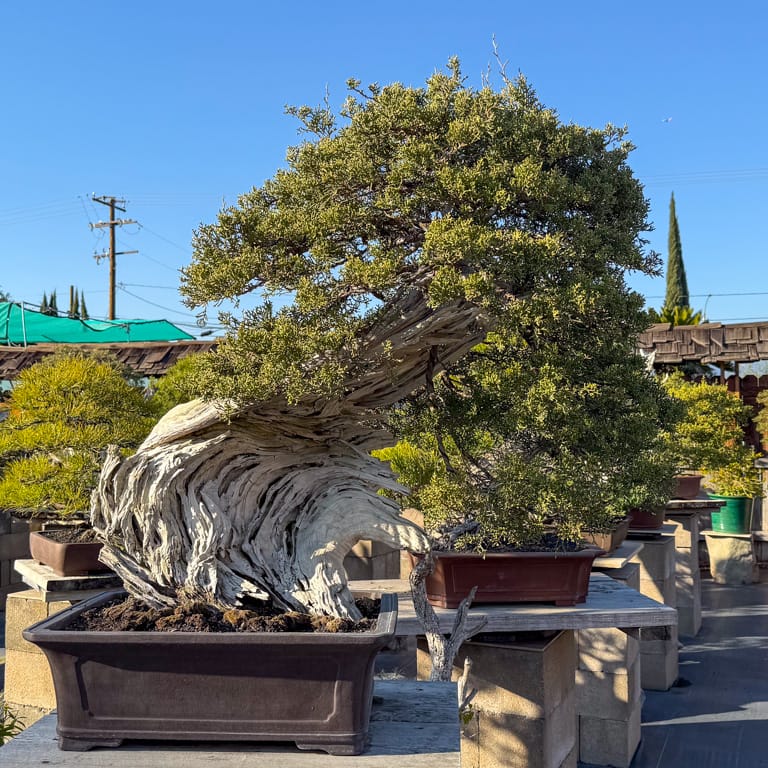
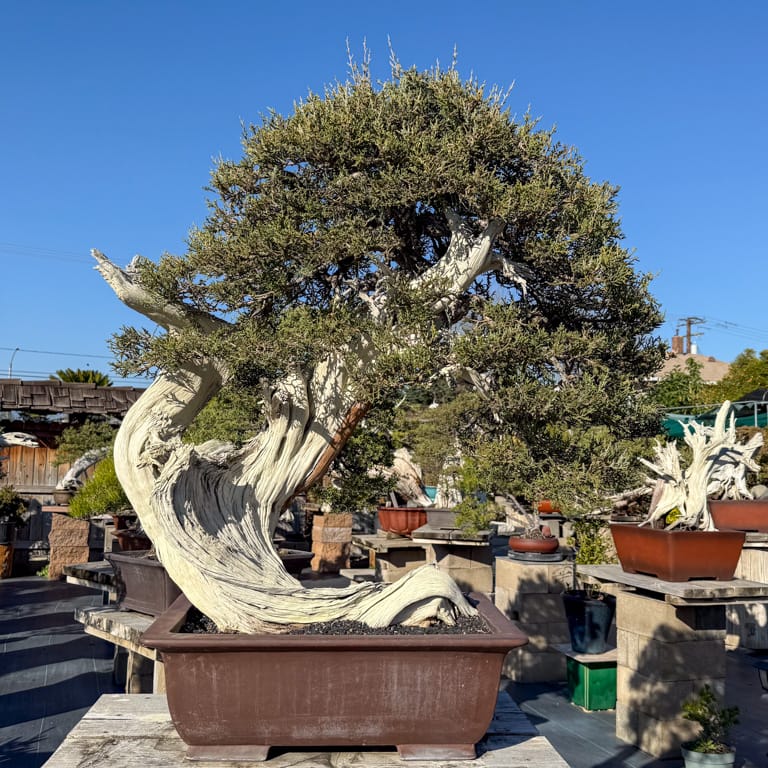
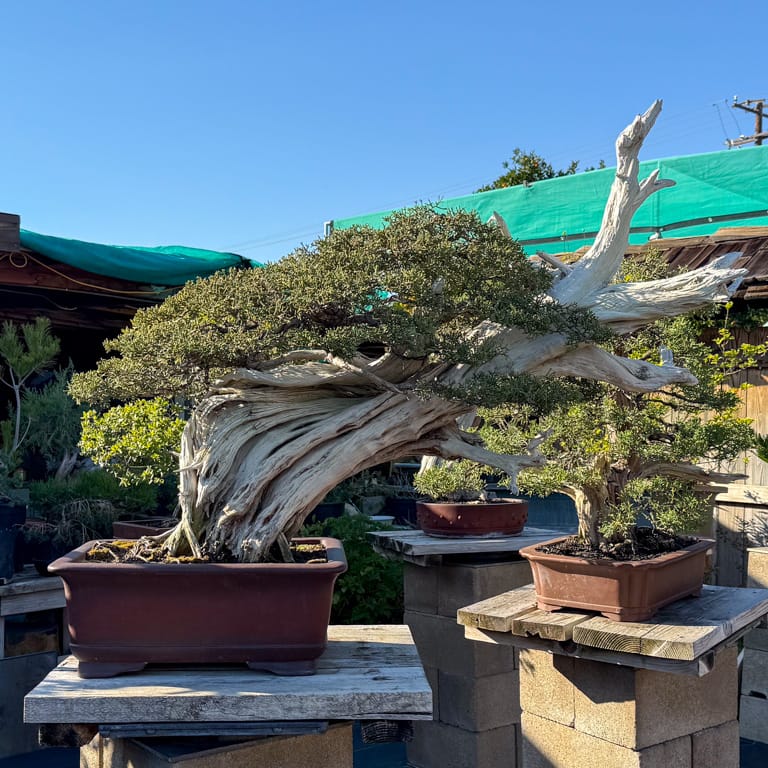
California juniper

California juniper

California juniper

Semi-cascade California juniper

Tom came up with many the techniques he uses on his own. This extends to the way he collects junipers, bends large branches, and works on deadwood. He air layers black pines – even cork barks – regularly, and has perfected a method for grafting pines using candles before they’re fully open. Over time, Tom’s hard work has produced a large number of (large) trees that wouldn’t be bonsai without his vision and novel techniques.

California juniper

California juniper

Cork bark pine

Cork bark pine

Rows of shimpaku with full silhouettes, many grafted over the years, offered contrast to the deadwood-focused designs of the garden’s California junipers.

Shimpaku

Shimpaku

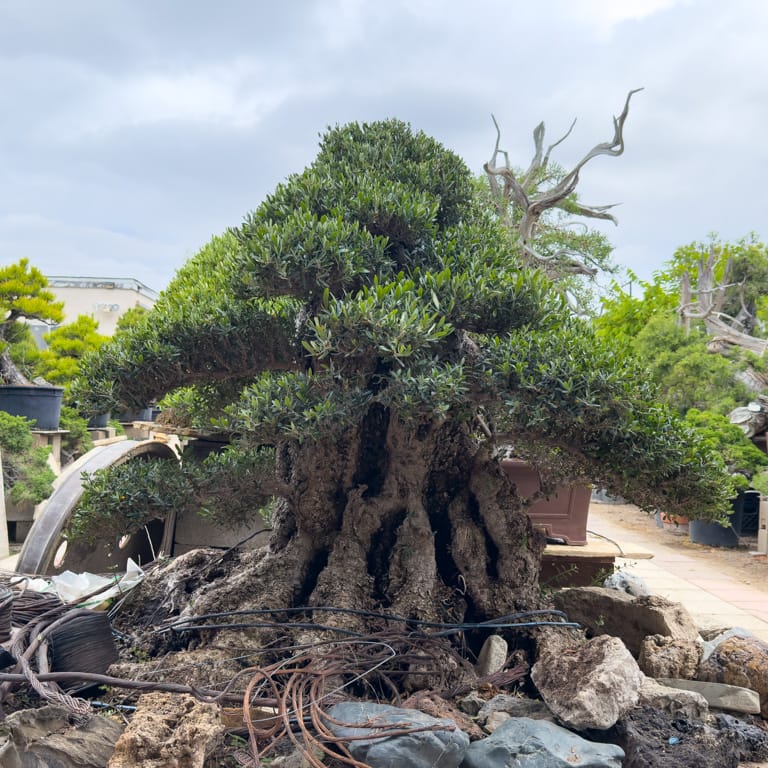
The largest of the olives are more than three feet in diameter at the base.

Olive

A massive olive

What might look like an average to large-size bonsai in Tom’s garden would stand out as giants in most collections.

California juniper

Extra-large California juniper

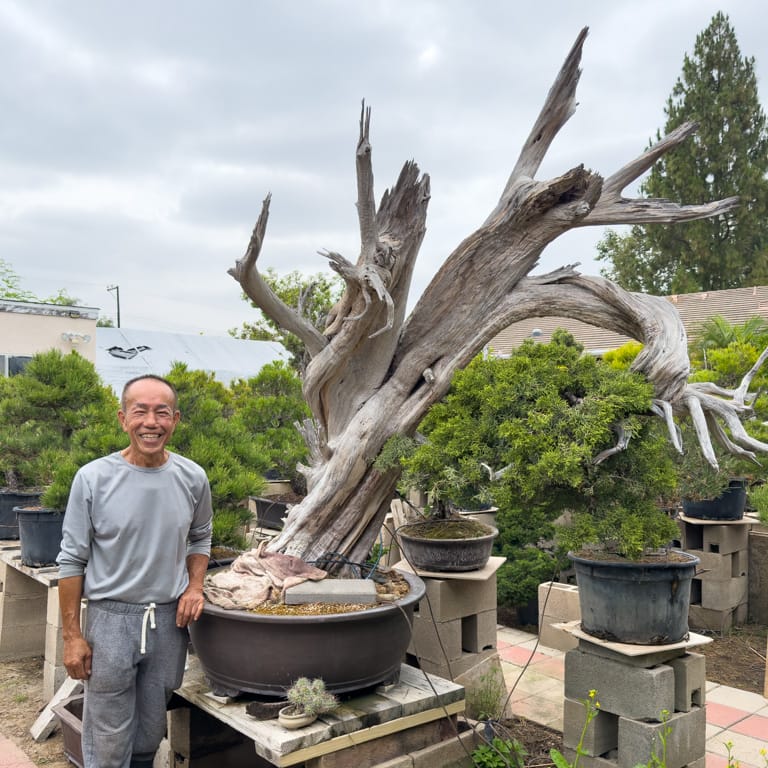
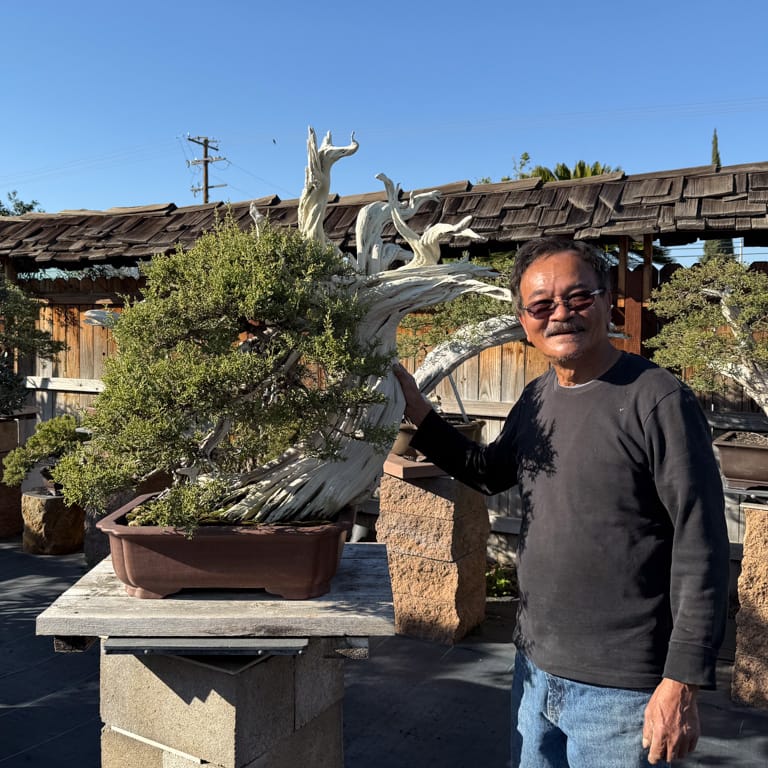
Tom Vuong

Tom standing next to the tree for scale

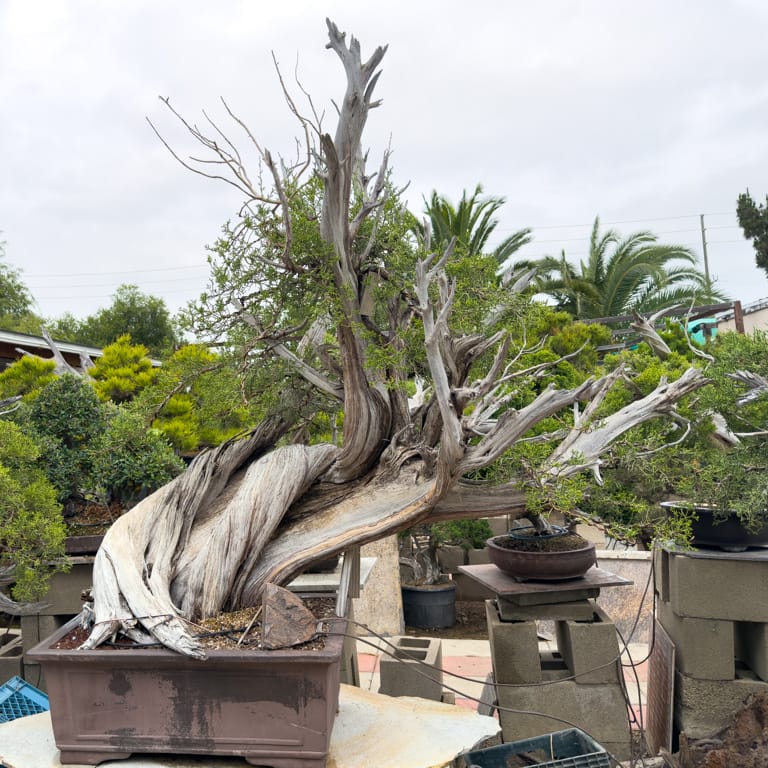
That’s right – a number of the trees in Tom’s garden are over six feet tall.

California juniper

A tall California juniper

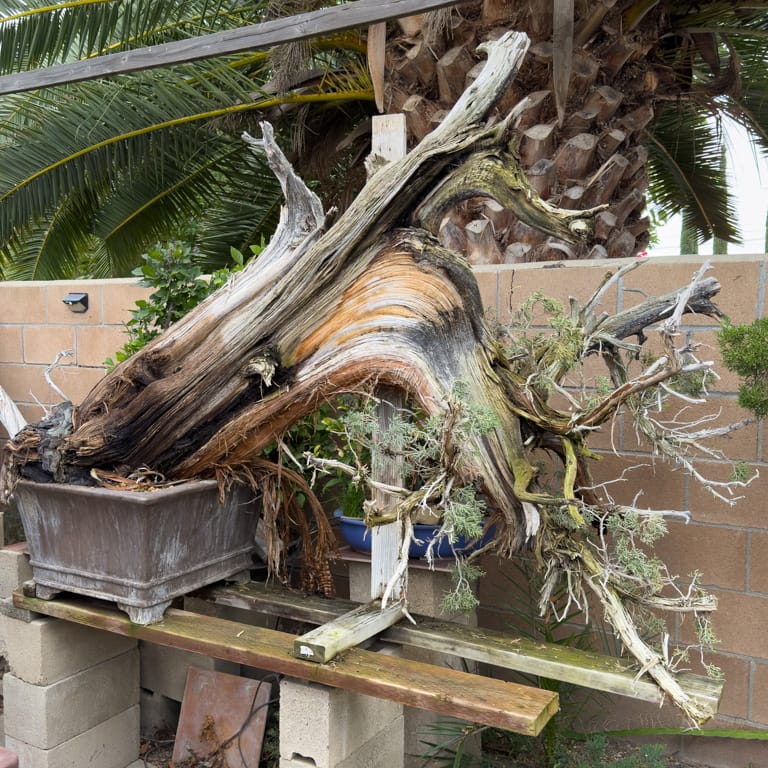
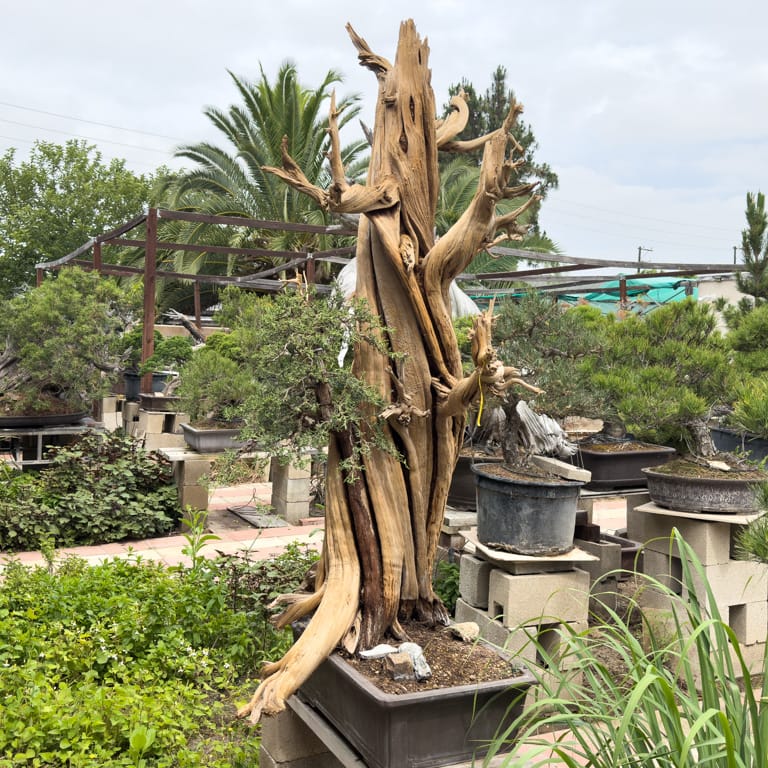
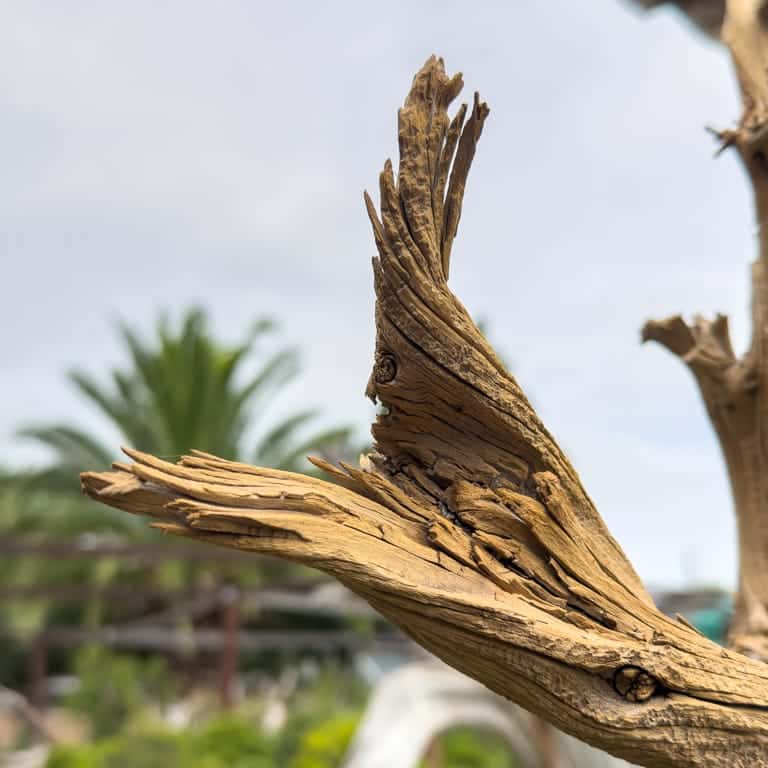
Deadwood detail

Deadwood detail

While I wandered through his garden, Tom generously answered questions and pointed out examples of whatever we were talking about. He’s a fantastic guy and I highly recommend a visit to his garden if you find yourself looking for dramatic additions to your collection.

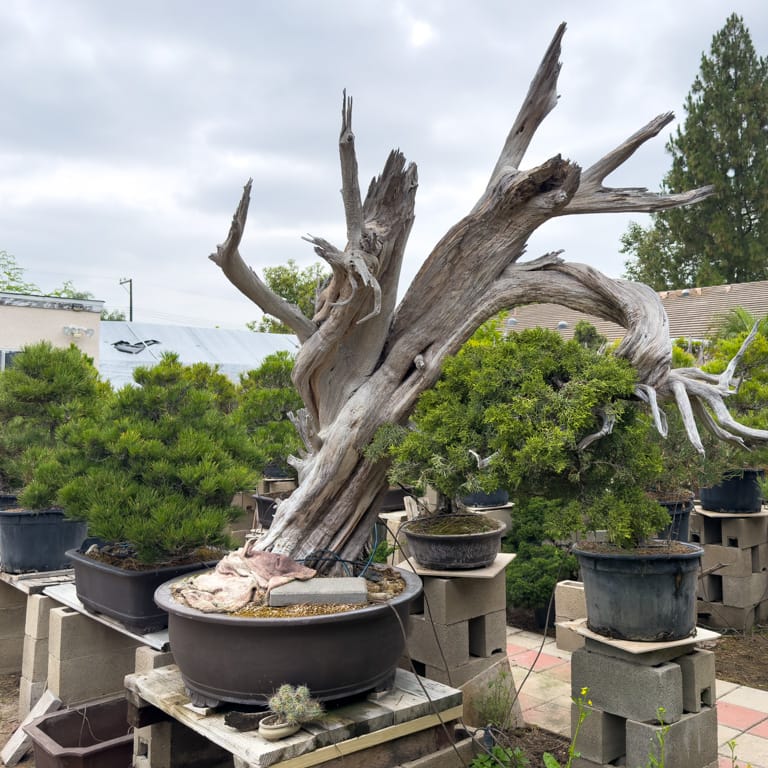
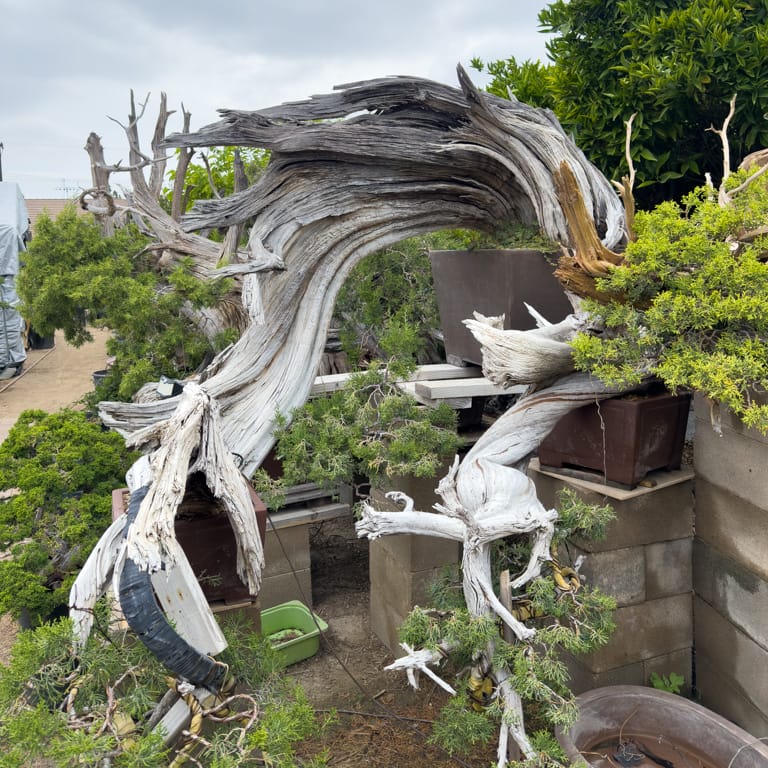
Junipers with deadwood

Junipers with ancient deadwood features

  •  

A visit to David Nguy’s garden

Getting to know David Nguy over the years has been a pleasure. The first time we had a chance to talk at length was on a trip to Japan about eight years ago. He invited me to his garden that day, and I’d been looking forward to seeing it ever since.

Earlier this year, I was lucky enough to visit David and June at their home in Southern California. What a treat! Their huge garden is filled with a variety of species at different stages of development. Foremost among these species are one of David’s specialties – California junipers.

California juniper

David Nguy

Most of the trees in the garden ranged in size from big to bigger. Here are some of the more developed specimens.

California juniper

Grafted California juniper

California juniper

California juniper

California juniper

California juniper

California juniper

California juniper

California juniper

California juniper

Of course, David’s garden featured other species too, including the pine below.

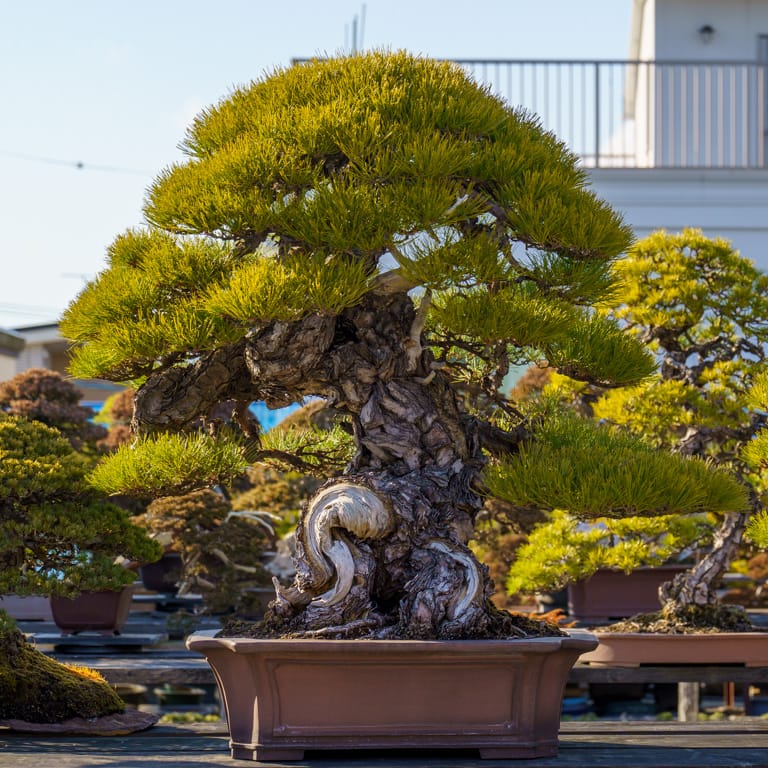
Black pine

Japanese Black pine

To the side of the main courtyard was a space filled with trees that were in much earlier stages of development.

California juniper

California juniper

California juniper

California juniper

California juniper

Giant California juniper

California juniper

Another large California juniper

I’d like to thank David and June for being great hosts on my visit, and Michael Roberts for making the trip possible. I hope I can visit again soon!

To learn more about David, visit his website, Bonsai Jidai.

News & Updates

There’s a lot going on this summer! Here’s an overview of events to check out.

Local Events

  • Accent plant/kusamono workshop with Young Choe: bring your accent plants for a tune-up or design new creations from scratch! Workshop will be held in my garden in Alameda. Spaces are available for $100. Attendance is limited to six participants. August 12 from 3:00 – 6:00 p.m. in Alameda, California. Plant material and containers will be available for purchase at the workshop. Reply to this email to register.
  • Bonsai Pot Exhibit at Hakone Gardens: see work by Denise Soultanian on display through December 26, 2025, at Hakone Gardens in Saratoga. If you plan to visit, call ahead to make sure that the CEC building is open to the public (they often have events in that space). See the Hakone Gardens website for details.
  • Redwood Empire Bonsai Society annual exhibit, August 23-24 in Rohnert Park. Demonstrations by Mike Pistello both days. Learn more at the event website.

Regional Events

  • The 47th Mid-America Bonsai Exhibit, August 15-17 at the Chicago Botanical Gardens. Sponsored by the Midwest Bonsai Society, the event features workshops, demonstrations, an exhibit and vendor garden. I’ll be doing a demonstration at 1:00pm on Saturday the 16th in the main auditorium. Learn more at the event website.
  • Naka Memorial Exhibit Bonsai Show, August 16 & 17 at the George J. Doizaki Gallery in Los Angeles. Learn more at the event website.
  • Wild Thing at the Clark Bonsai Museum: collected bonsai on display through October 6 at the Clark Bonsai Museum in Fresno, California.
  • The 9th U.S. National Bonsai Exhibition in Rochester, New York, September 13-14. Presenters include Toru Suzuki from Japan’s famous Daiju-en garden in central Japan, Juan Andrade from Costa Rica, and Tony Bebb from Australia, among others. Learn more at the event website.
  • The American Bonsai Society’s 2025 Learning Seminars in Rochester, New York, September 12-13. This year’s line-up features Bjorn Bjorholm and Todd Schlafer plus 13 additional presenters. Pot contest new this year! Learn more at the event website.
  • Bonsai on the Bay: the LSBF annual convention in Corpus Cristi featuring guest artists Mike Lane, Jennifer Price and me. September 18-21. Learn more and register at the LSBF Convention website.
  •  

The bonsai collection at the Chicago Botanic Garden

While I was in town for the recent Mid-America Bonsai Exhibit, I had the opportunity to visit and learn about the bonsai collection at the Chicago Botanic Garden. Curator Chris Baker and Seasonal Bonsai Assistant Angelica Ramirez led me through a tour of the facility that included the work areas, multiple greenhouses for overwintering trees at different temperatures, and the public display courtyards.

Angelica Ramirez and Chris Baker

Angelica Ramirez and Chris Baker

Chris is the garden’s first full-time curator. After volunteering for a few years at the U.S. National Arboretum, he was able to secure a six-month apprenticeship at the Daiju-en garden in Japan with Toru Suzuki. Upon his return to the US, Chris received a “First Curators” Internship at the U.S. National Arboretum. These experiences led him to Chicago where he’s served as curator since 2014.

Limber pine

Limber pine

Angelica has also served at both the US National arboretum (as the National Bonsai Apprentice) and at the Chicago Botanic Garden. In addition to working at the Garden, Angelica maintains a database of active ceramicists making bonsai pots (check out her awesome resource “Discover Potters“). She’s also coordinating the American Bonsai Society’s 2025 Bonsai Pottery competition (you can see the finalists on display at this year’s ABS Learning Seminar in Rochester, NY).

Green Island ficus

Green Island ficus by Angelica Ramirez

As for the collection itself, there are more than 300 specimens representing scores of species from around the world. Early accessions include many bonsai that came from Japan. In recent years, Chris has expanded the collection to include more US native species.

Hinoki cypress

Hinoki cypress

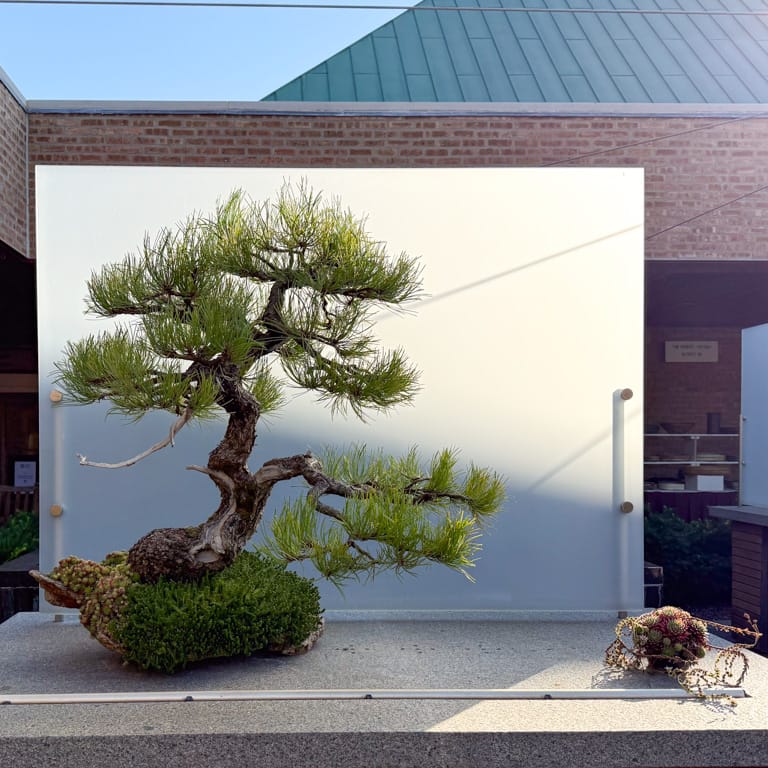
Ponderosa pine

Ponderosa pine

As you can imagine from looking at the image above, the changing light throughout the day makes individual trees worthy of repeat visits. I checked out the trees in the courtyards throughout the weekend and enjoyed the different lighting conditions.

Field elm

Field elm

Natal plum

Natal plum

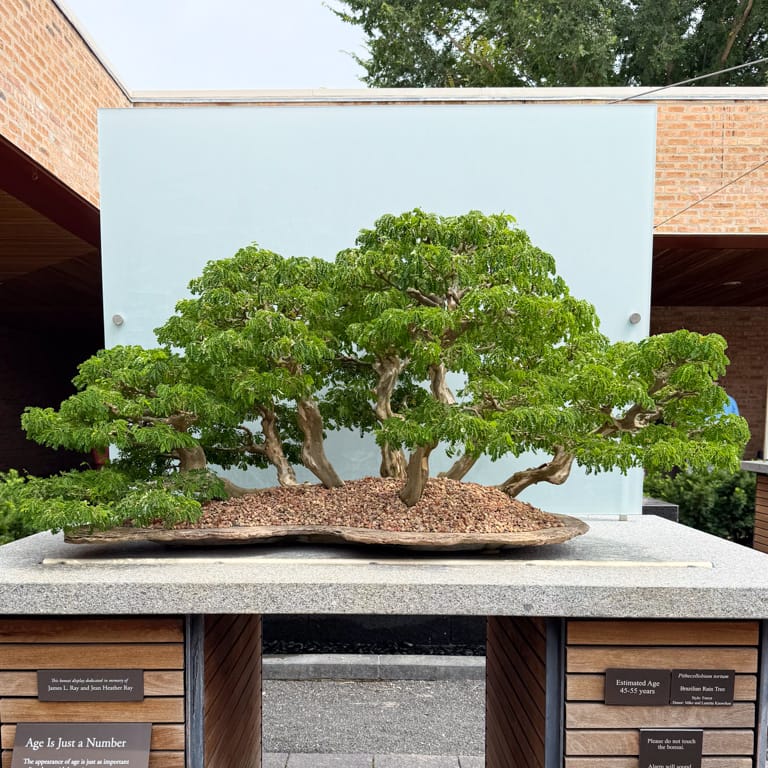
Brazilian rain tree

Brazilian rain tree

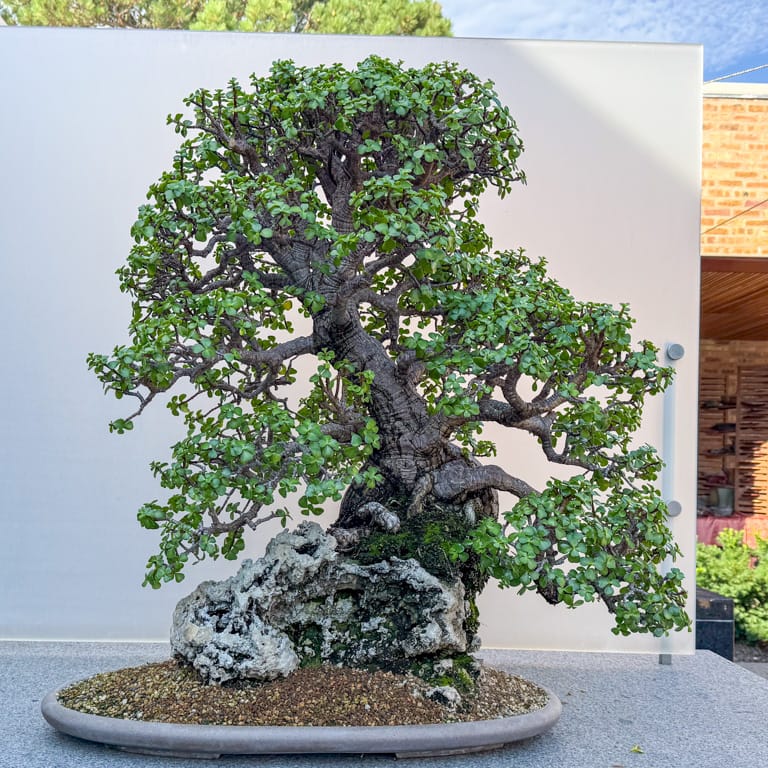
Jade

Jade

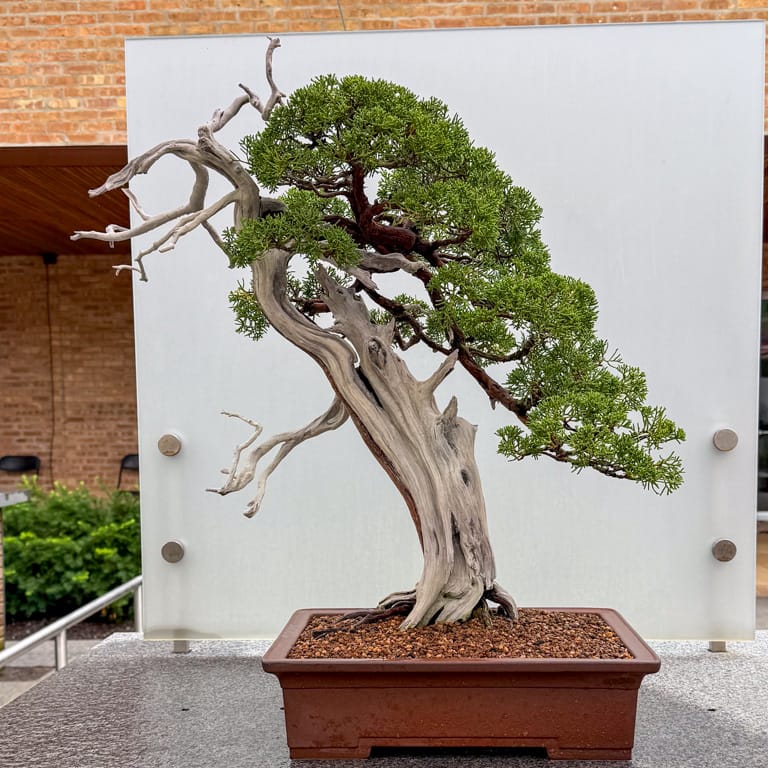
Shimpaku

Shimpaku

If you find yourself in the Chicago area, I highly recommend visiting the bonsai collection. Learn more or plan your visit here.

News & Updates

[Seattle area workshops]

  • If you’re in the Seattle area, I’ll be leading workshops on Friday, October 31 and Saturday November 1 at Bonsai Northwest. Friday’s class will focus on trees in early or middle stages of development. Saturday’s session will focus on fall work for black pine bonsai. Learn more and sign up at the Bonsai Northwest website.

[California Convention]

  • The 2025 Bonsai Rendezvous will be held on October 24-26 in Santa Nella, California. Here’s the latest: there is still time to register, there are spaces available for several of the workshops, and there are lots of opportunities to volunteer (please consider helping out for a free t-shirt!). Come see presenters Mauro Stemberger and Suthin Sukosolvisit, watch the Rising Stars competition unfold, shop in the vendor area, or enjoy the exhibit. Learn how you can take part at the Rendezvous website.
  •  

Highlights from the 2025 REBS bonsai show

The Redwood Empire Bonsai Society held their annual exhibit last month at the Rohnert Park Community Center in Rohnert Park, California.

This year’s event featured a demonstration from Mike Pistello, member tree sales, and a good mix of vendors. It also included a trees-in-training display with bonsai presented by members who are relatively new to the hobby. It was a well-executed display with different species at different stages of development. Some trees were in plastic pots and some had yet to be wired, but all were arranged carefully and accompanied by accent plants. I hope to see more displays like this in the future!

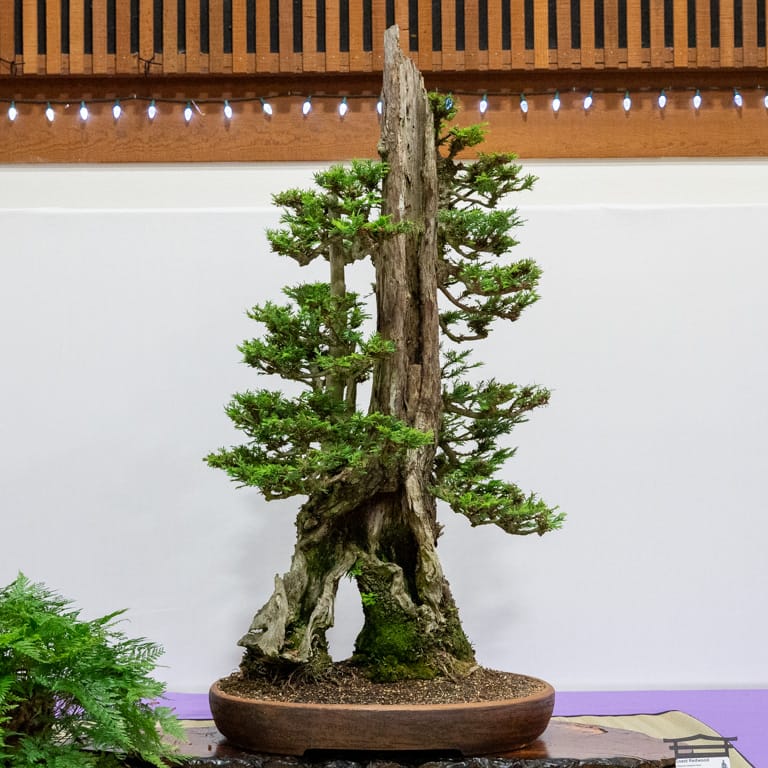
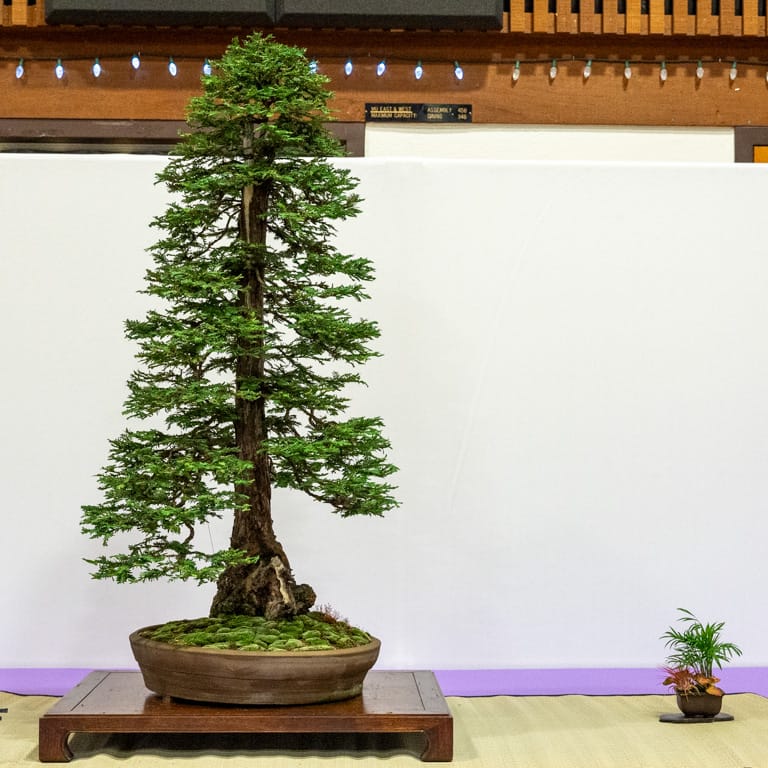
As for the main exhibit, some of the first trees to greet visitors were large coast redwoods.

Coast redwood

Coast redwood

Coast redwood

Another tall coast redwood

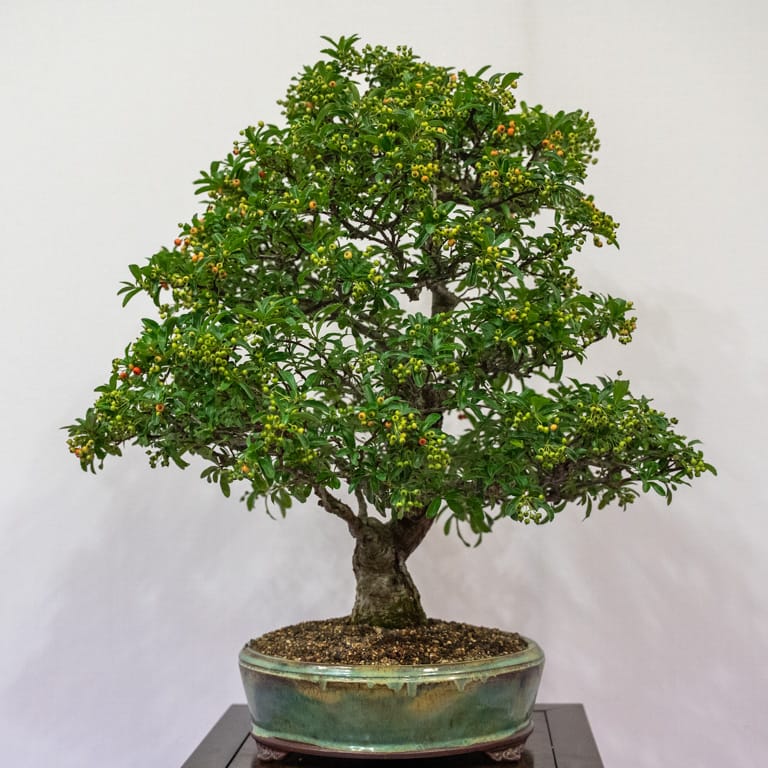
Conifers are a common choice for summer shows, but there were a few deciduous bonsai in the exhibit and a pyracantha loaded with fruit that was just starting to turn color.

Pyracantha

Pyracantha

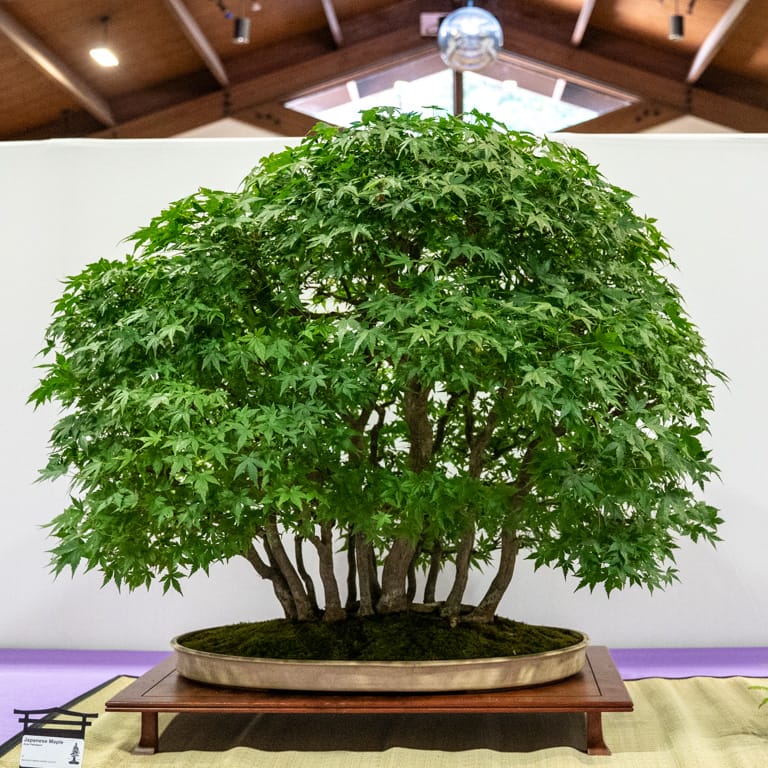
Japanese maple

Japanese maple

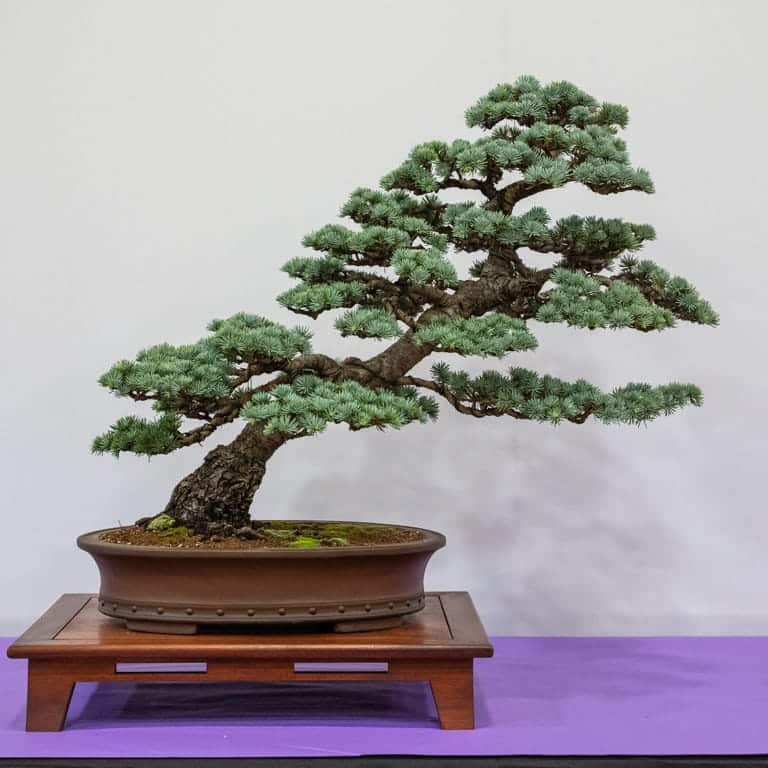
It was fun to see two atlas cedars in the exhibit, one green and one blue. Cedars are a good fit for summer shows as most of the spring growth has hardened off and the trees are covered with a fresh flush of foliage.

Atlas cedar

Atlas cedar

Blue atlas cedar

Blue atlas cedar

California privet

California privet

Garden juniper

Garden juniper

Coast redwood

Coast redwood

One of the junipers in the show was a “tanuki,” a bonsai created by training a young tree around a piece of deadwood to make it look like a much older composition. When tanuki are well excecuted, they can be hard to discern from much older trees.

tanuki

Tanuki – a young shimpaku, in this case, trained on a much older piece of deadwood

I’m often asked if it’s OK to show tanuki. In general, I think it’s fine to display tanuki at exhibits, and it’s up to the organizers to determine whether or not to disclose that a given tree is a tanuki. That said, it’s far less common for tanuki to show up in regional exhibits. As more selective events by their nature, regional shows typically focus on bonsai with the most prized characteristics which include the age of the tree.

Is it OK to display tanuki in your club’s show? Let us know in the comments below.

News & Updates

[Seattle Area Workshops]

  • If you’re in the Seattle area, I’ll be leading workshops on Friday, October 31 and Saturday November 1 at Bonsai Northwest. Friday’s class will focus on trees in early or middle stages of development. Saturday’s session will focus on fall work for black pine bonsai. Learn more and sign up at the Bonsai Northwest website.

[Regional Events]

  • The 9th U.S. National Bonsai Exhibition in Rochester, New York, September 13-14. Presenters include Toru Suzuki from Japan’s famous Daiju-en garden in central Japan, Juan Andrade from Costa Rica, and Tony Bebb from Australia, among others. Learn more at the event website.
  • The American Bonsai Society’s 2025 Learning Seminars in Rochester, New York, September 12-13. This year’s line-up features Bjorn Bjorholm and Todd Schlafer plus 13 additional presenters. Pot contest new this year! Learn more at the event website.
  • Bonsai on the Bay: the LSBF annual convention in Corpus Cristi featuring guest artists Mike Lane, Jennifer Price and me. September 18-21. Learn more and register at the LSBF Convention website.
  •  

Walter Pall bonsai master class

About a year and a half ago, I mentioned that I’d like to visit Walter Pall’s garden. The message got through to Walter (thanks, Jennifer!), and last week I was able to make the trip a reality.

Each summer Walter conducts a master class for students and friends at the Bonsaigarten Munich, a public bonsai garden and nursery created by Thomas Haering in the small Bavarian town of Zorneding, just outside of Munich.

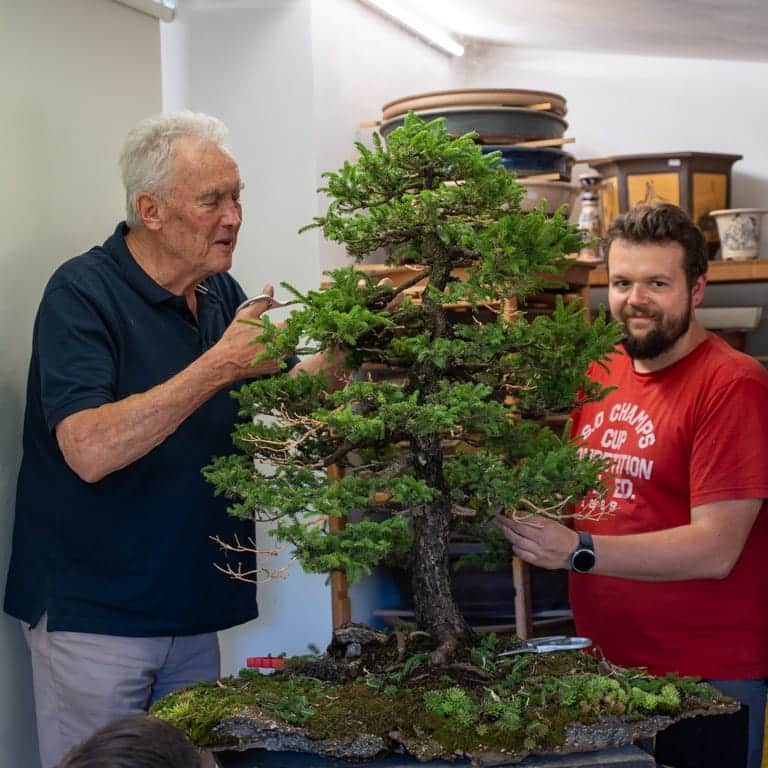
The group meets a few times a year in different cities around Europe. The most recent session brought together Jennifer Price (USA), Andy Bello (USA), Lukas Sirotny (Czech Republic), Maros Belan (Slovakia), Kestutis Gailius (Lithuania), Andrija Zokic (Croatia), Thomas Haering (Germany), and Walter’s helper Benedikt Schwabl (Germany).

The format of the class is simple – everyone works on one of Walter’s trees and the group discusses the work before and after it is completed. Most of the material is collected European conifers with a handful of imported Japanese conifers. The work ranges from initial stylings to refinement of mature imported specimens.

I arrived on a Friday straight from the airport a few hours after the group got started. Already the trees were taking shape.

Andrija carving deadwood

Andrija carving deadwood

Mugo pine

Kestutis and a mugo pine (2nd styling)

European spruce

Lukas and a European spruce

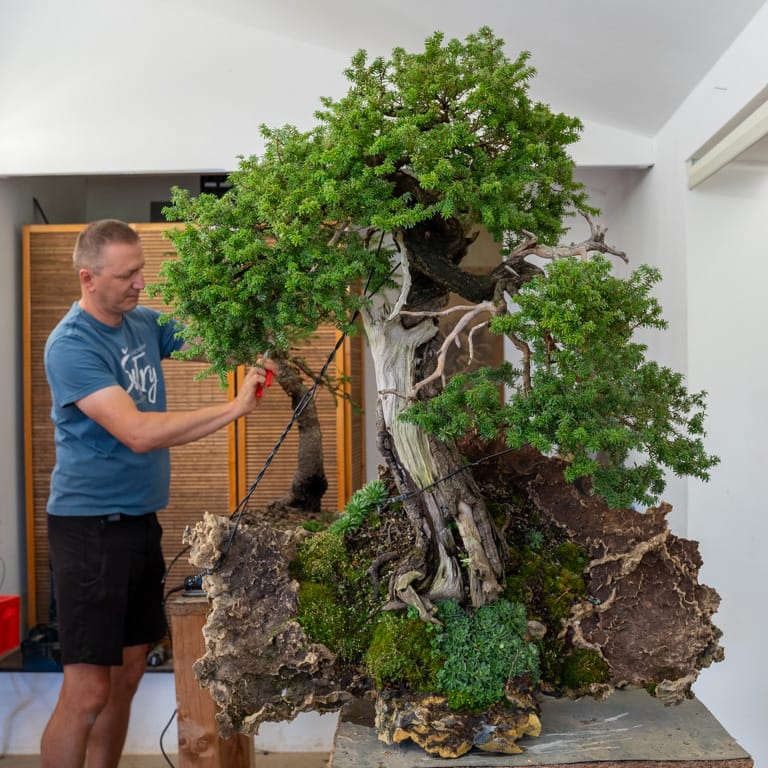
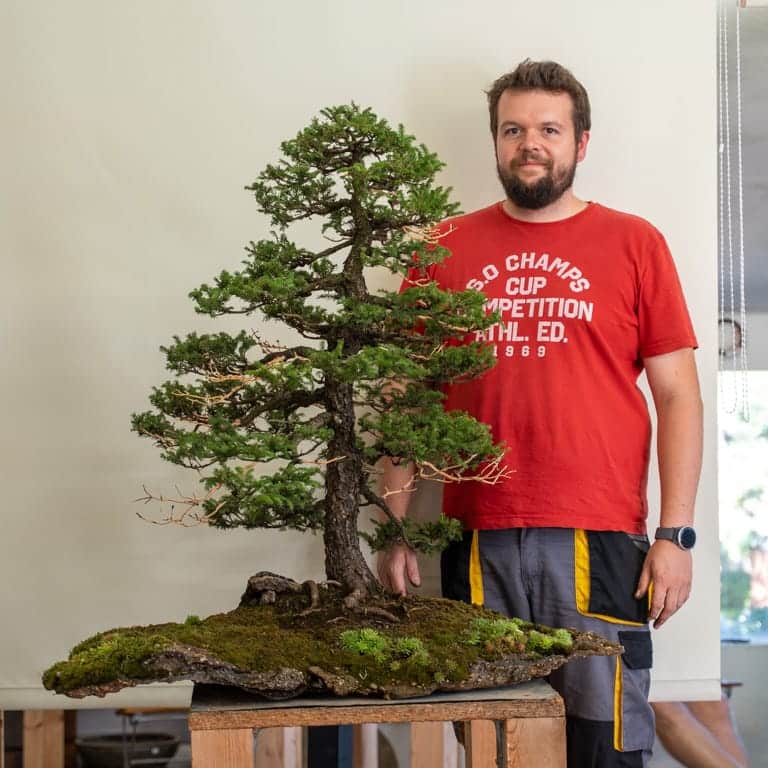
Right in the middle of the room was a beautiful Japanese hemlock planted on an artificial stone. Walter had selected the tree so I would have a fun project to work on over the weekend.

Japanese hemlock

Japanese hemlock

At times the workshop got crowded. Visitors to the garden – up to ten at a time – would wander through the space as we worked giving the event a lively feeling. Most of the visitors spoke at least some English and didn’t hesitate to ask participants questions as they worked.

The real highlights of the session, beyond making friends and working on great material, came when we gathered to discuss the work. This typically began with the stylists describing what they did to a given tree and what the plan would be going forward.

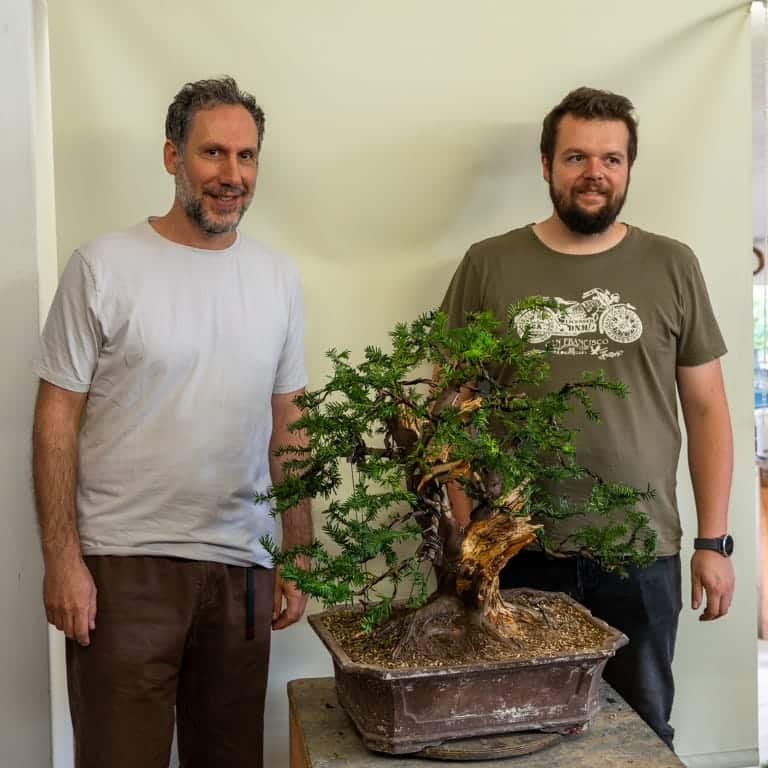
Lukas had brought a batch of 8 Euro (about $9.40) field-grown yew that made for interesting studies of how to handle rough material.

Yew

Andrija and Benedikt discussing a field-grown yew

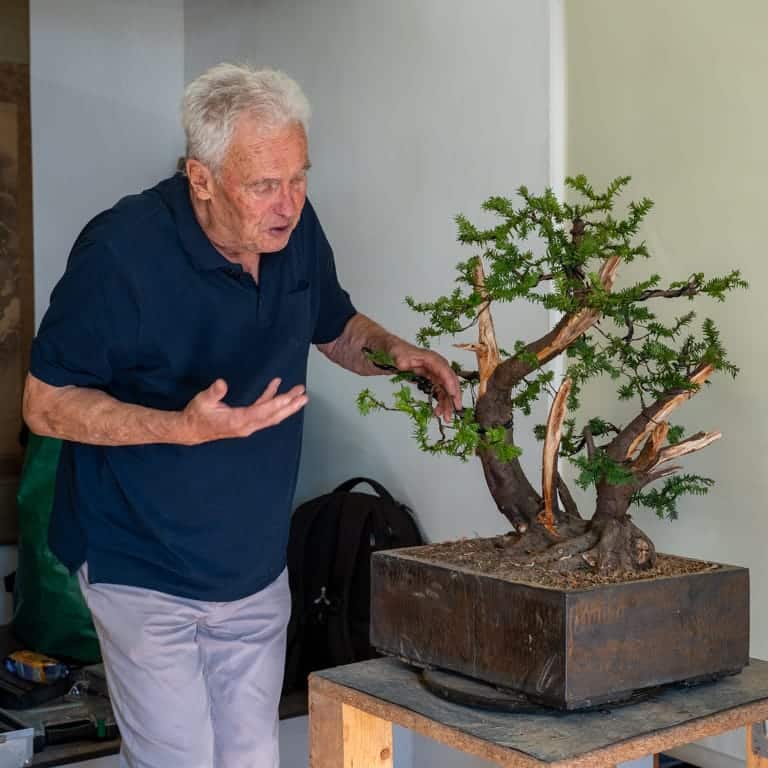
Walter followed these presentations with suggestions for further development or stories about the tree’s histories.

Walter and a yew

Walter discussing design options

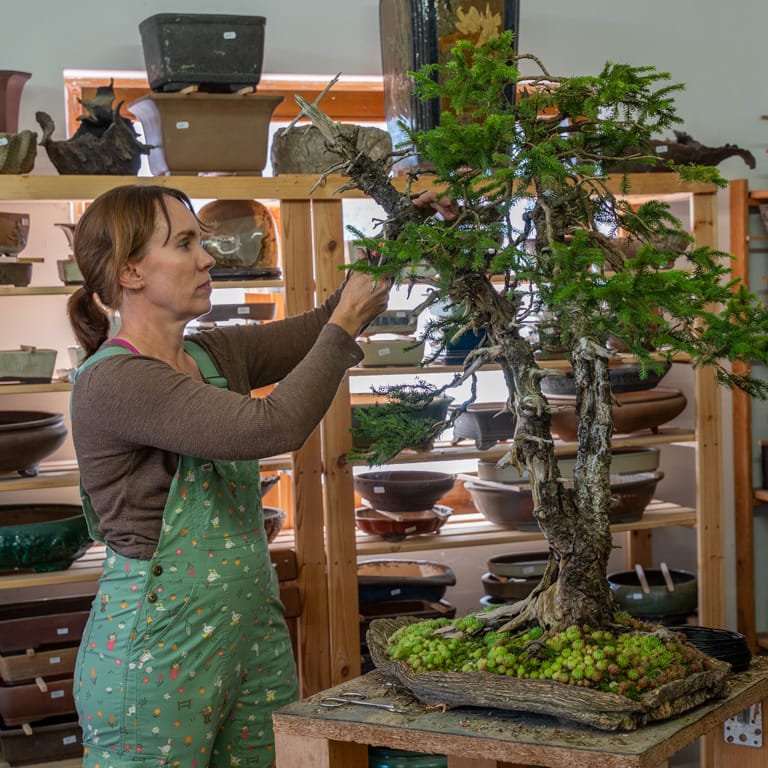
Some of the stories were unexpected. The European spruce below was collected by Randy Knight years before and has since been maintained by Walter. The tree was one of several styled by Jennifer Price over the weekend.

Jennifer and a spruce

Jennifer styling a spruce

Spruce

Initial styling complete

A common refrain that came up during Walter’s critiques was that a lot of the material presented “flaws” that made the trees good candidates for less conventional styles. Many had dead central leaders with one or more side branches which had started to grow upward in its place. The result was often a bonsai with multiple apices.

Spruce

Spruce with a dead central leader

For some participants, the event was an opportunity to refine skills that didn’t come up in their daily bonsai practice. This was definitely the case for Andy Bello. Andy is the Assistant Curator at the US National Bonsai and Penjing Museum where maintenance and refinement tasks are more likely to fill his days than initial stylings.

Andy Bellow

Andy styling a collected spruce

Andy also had the opportunity to style a fantastic pine.

Andy and pine

Andy Bello

My work on the hemlock entailed moving the top and back branches to give the tree more depth and then thinning the foliage to ensure the lower branches received adequate light. The tree will be due for more detailed work after it recovers from this year’s work.

Hemlock

Japanese hemlock

It was a treat for me to see so many European natives. European spruce, mugo pine, and Scots pine are more likely to be nursery grown in the US so it was fun to see collected specimens in person.

Cembra pine

Cembra pine

Scots pine

Scots pine

Maros and spruce

Maros and a European spruce

Maros Belan is a Slovakian YouTuber – you check out his channel here.

Maros

Maros working on a yew

By the end of the weekend, Walter couldn’t resist joining in. His assistant Benedikt was working on an old spruce that was due for cutback.

Walter and Benedikt

Walter and Benedikt

Spruce

Benedikt showing off the result

Although it was sad for me to get to the end of the weekend, most of the other participants were already planning the next master class for a weekend in the Czech Republic at Lukas’ garden. I don’t know when I’ll get the chance to visit the group again, but I’ll be looking forward to it when I do!

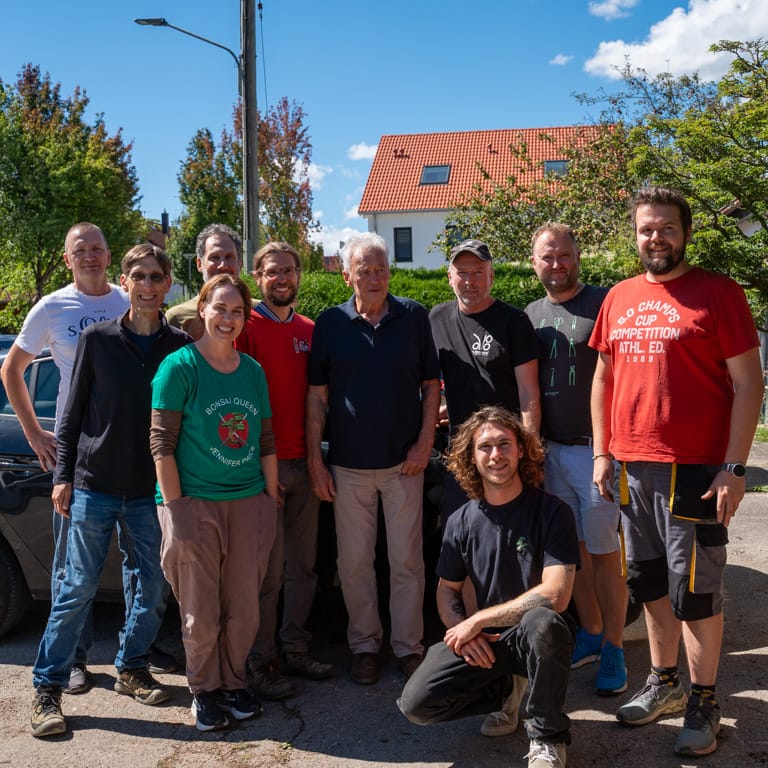
The 2025 summer Master Class: Maros, Jonas, Jennifer, Andrija, Lukas, Walter, Thomas, Andy, Kestutis, and Benedikt

News & Updates

[New Podcast Episodes]

  • During my visit to Germany, I had the opportunity to interview Walter for the Bonsai Wire podcast. You can catch the discussion wherever you listen to podcasts or watch it on YouTube.

[Regional Events]

  • This weekend is the US National Exhibition in Rochester, New York. If you’re in the area, now’s your chance to visit! Running concurrent with the event is the American Bonsai Society’s Learning Seminar. Learn more at the US National Bonsai Exhibition and the 2025 Learning Seminar.

[Northern California]

  • The East Bay Bonsai Society will hold their annual exhibit at the Lake Merritt Garden Center in Oakland, California, on September 20-21, 2025. Come see the show and enjoy a demonstration by Michael Hagedorn. Hours 10:00am – 5:00pm Saturday and 11:00am – 4:00pm Sunday. Admission is free. Learn more at the EBBS website.
  •  

Amazing pines at Michael Tran’s garden

One of several side trips on my recent visit to Germany took us to Heidelberg to see Minoru Bonsai, the garden of Michael Tran.

Michael Tran

Michael Tran

Michael, who studied with Udo Fischer, among others, founded the garden in 2009 and hosted several high-profile events featuring international bonsai professionals known as Generation Bonsai.

Michael’s garden features a fun mix of juniper, larch, and oak, among other species, but is best known for its pines.

Mugo pine

Mugo pine

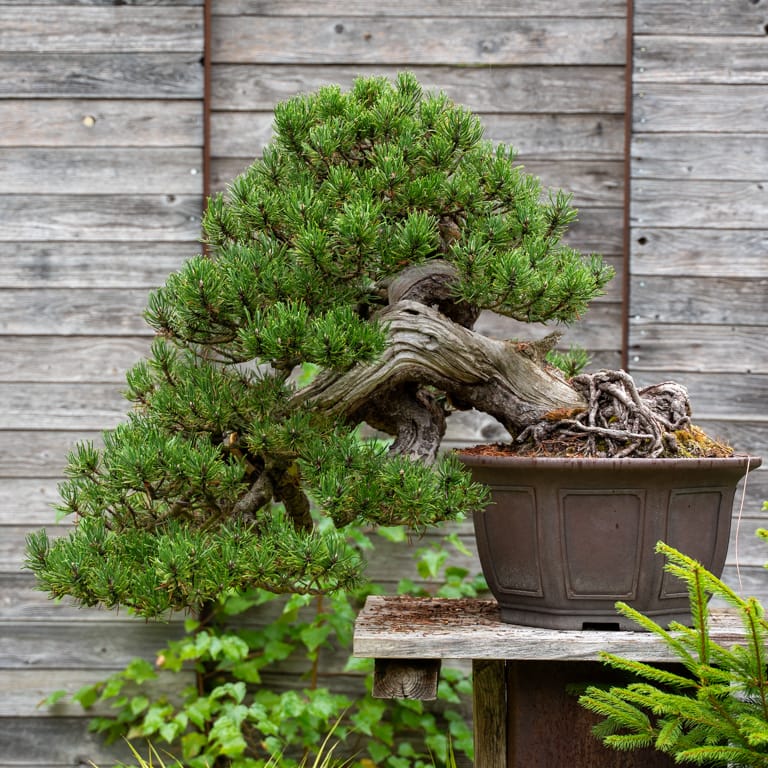
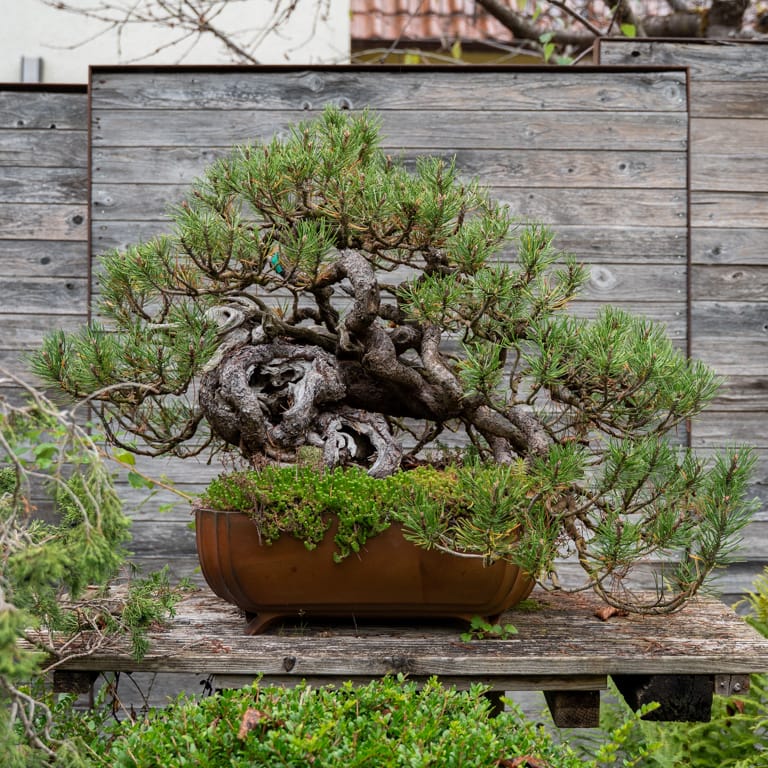
It was really fun to see the mugo and Scots pines as they both have unique characteristics that make them great candidates for training as bonsai. Both have relatively short needles with sturdier, darker needles on the mugo and airier, pale green foliage on the Scots. The natural movement and deadwood on both is fantastic.

Mugo pine

Mugo pine

Mugo pine

Mugo pine

Mugo pine

Mugo pine

Scots pine

Scots pine

Michael was a fantastic host, showing us his favorite trees despite some light rain.

Mugo pine

Mugo pine

Mugo pine

Mugo pine

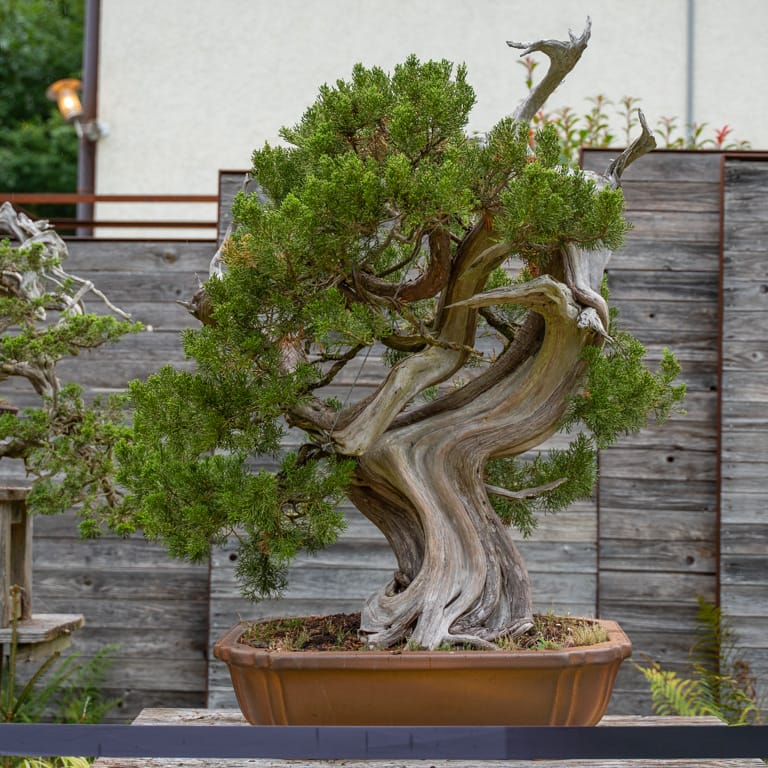
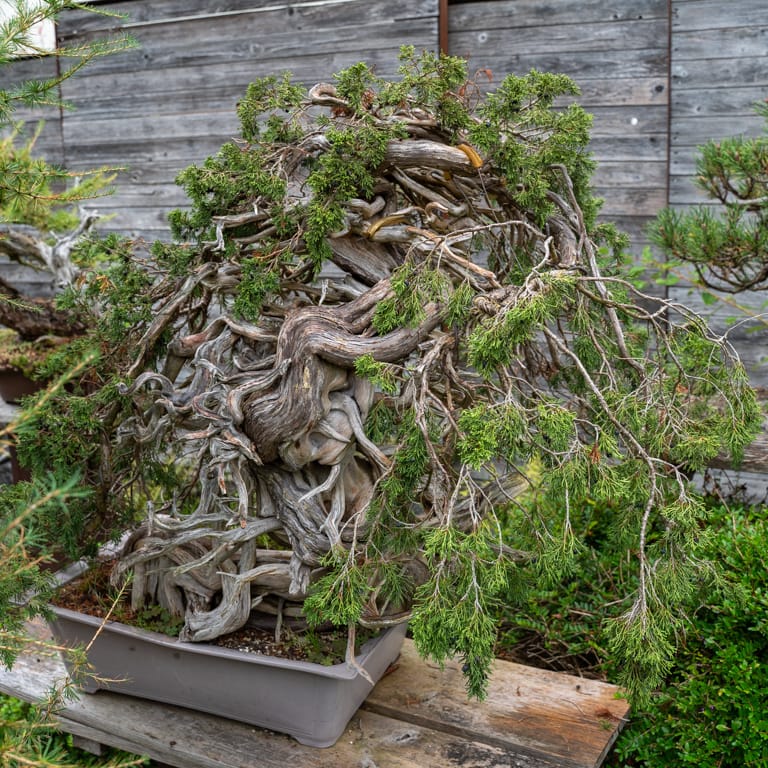
Juniper

Juniper

Juniper

Sabina juniper

The juniper above was jaw-dropping. It takes Michael 2-3 days to clean the deadwood by hand!

After wrapping up our tour, we headed off to the Bonsai Zentrum Heidelberg. More on that in next week’s post.

News & Updates

[California Convention]

  • The 2025 Bonsai Rendezvous will be held on October 24-26 in Santa Nella, California. There is still time to register, and there are spaces available for several of the workshops, plus there are lots of opportunities to volunteer (please consider helping out for a free t-shirt!). Come see presenters Mauro Stemberger and Suthin Sukosolvisit, watch the Rising Stars competition unfold, shop in the vendor area, and enjoy the exhibit. Learn how you can take part at the Rendezvous website.

[Seattle Area Workshops]

  • If you’re in the Seattle area, I’ll be leading workshops on Friday, October 31, and Saturday, November 1, at Bonsai Northwest. Friday’s class will focus on trees in early or middle stages of development. Saturday’s session will focus on fall work for black pine bonsai. Learn more and sign up at the Bonsai Northwest website.

[Recent Podcast Episodes]

  •  

A visit to the Bonsai Zentrum Heidelberg

The Bonsai Zentrum Heidelberg is a large bonsai nursery and event center owned and operated by Edis Ziegler. A previous incarnation of the business had closed in 2006 prompting Edis to acquire the property, renovate, and reopen it in 2008. Since then, the operation has grown into a premier destination for bonsai, containers, suiseki, and koi.

Hornbeams

Hornbeams

Yew

Yew

Juniper

Juniper

When I arrived at the Zentrum, I couldn’t believe the scope of the operation. There were hundreds – maybe thousands – of trees and containers imported from Japan, Korea, China, and Indonesia in a beautiful garden setting accented by specimen trees.

Yew

Yew

Cork oak

Cork oak

Olive

Olive

In addition to serving as a bonsai nursery, the Zentrum hosts events like weddings and banquets at which guests can enjoy the bonsai and gardens.

Juniper

Juniper

Scots pine

Scots pine

Juniper

Juniper

Needle juniper

Needle juniper

Maples

Maples

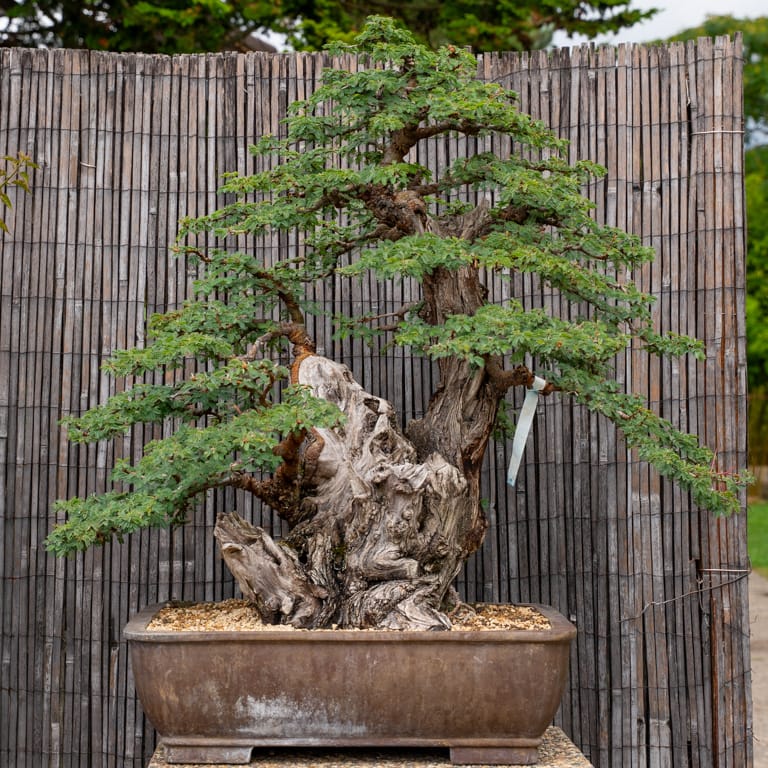
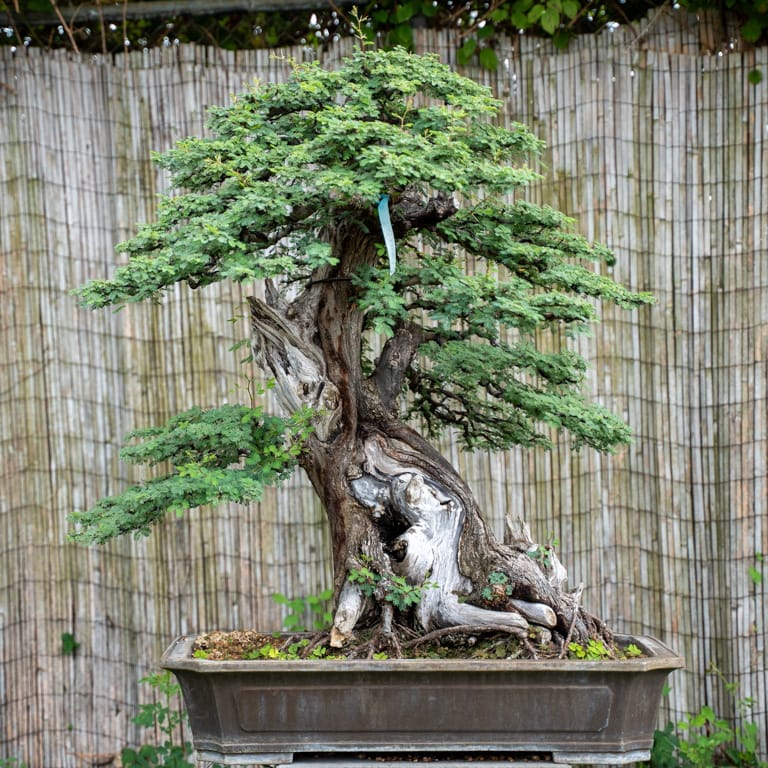
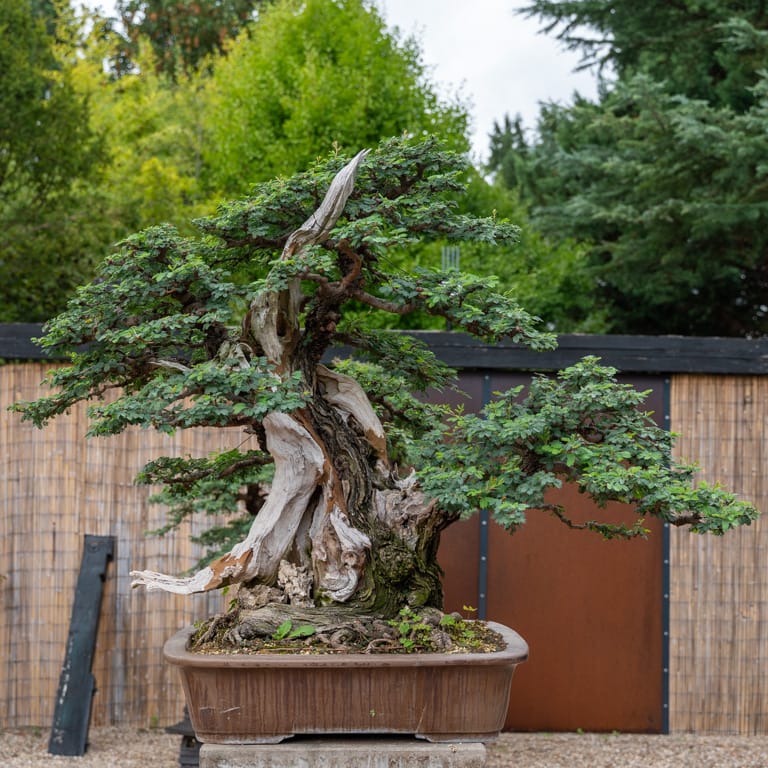
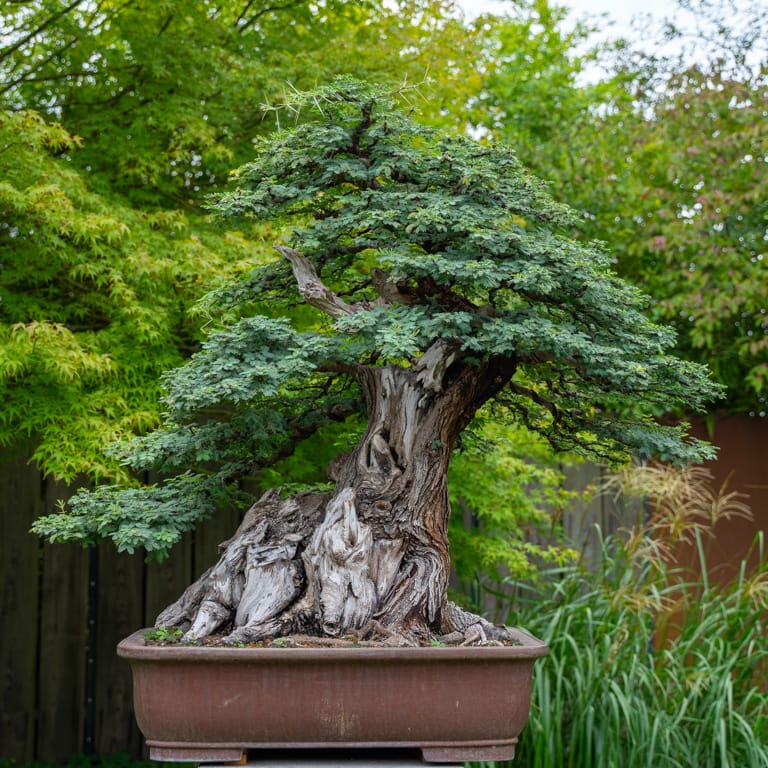
One of the highlights for me was seeing species with which I’m not familiar with as bonsai. One of these was Acacia arabica, aka Vachellia nilotica.

Gum arabic

Gum arabic

These massive collected specimens grow quickly and respond well to bonsai training techniques.

Gum arabic

Gum arabic

Gum arabic

Gum arabic

Gum arabic

Gum arabic

If you’re anywhere near Heidelberg, I highly recommend a visit. Learn more about the Bonsai Zentrum Heidelberg.

  •  

2026 Shohin School registration open

A couple of years ago, Andrew Robson and I hosted a Winter Shohin School in Milwaukie, Oregon featuring headliner Daisaku Nomoto from Japan. The event is coming to Northern California next month!

The 2026 Winter Shohin School will be held at Lincoln Park’s Harrison Recreation Center in Alameda, California, on January 31st and February 1st.

Daisaku

Daisaku demonstrating shohin juniper creation
(photo by Aki Yamakawa)

Attendees will learn shohin display basics on Saturday and get a chance to practicing setting up displays with their own trees.

Student display practice

Student display practice
(photo by Aki Yamakawa)

Andrew and Jonas

Andrew and Jonas setting up a display
(photo by Aki Yamakawa)

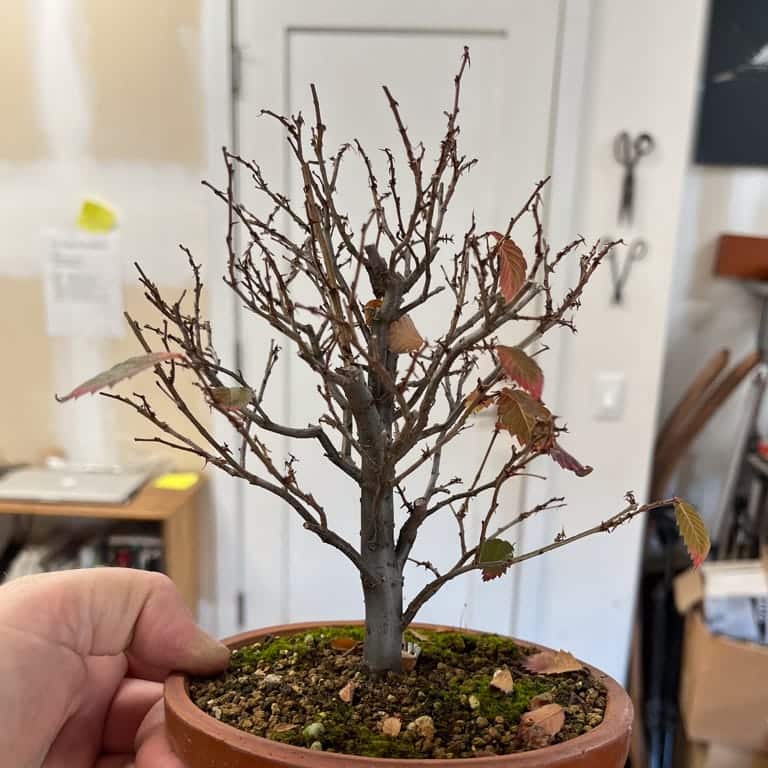
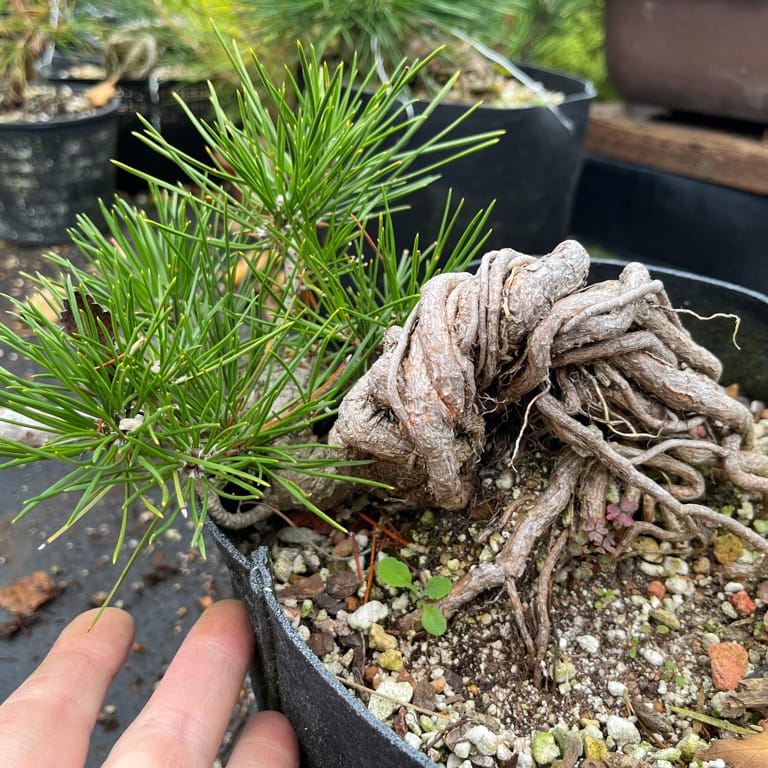
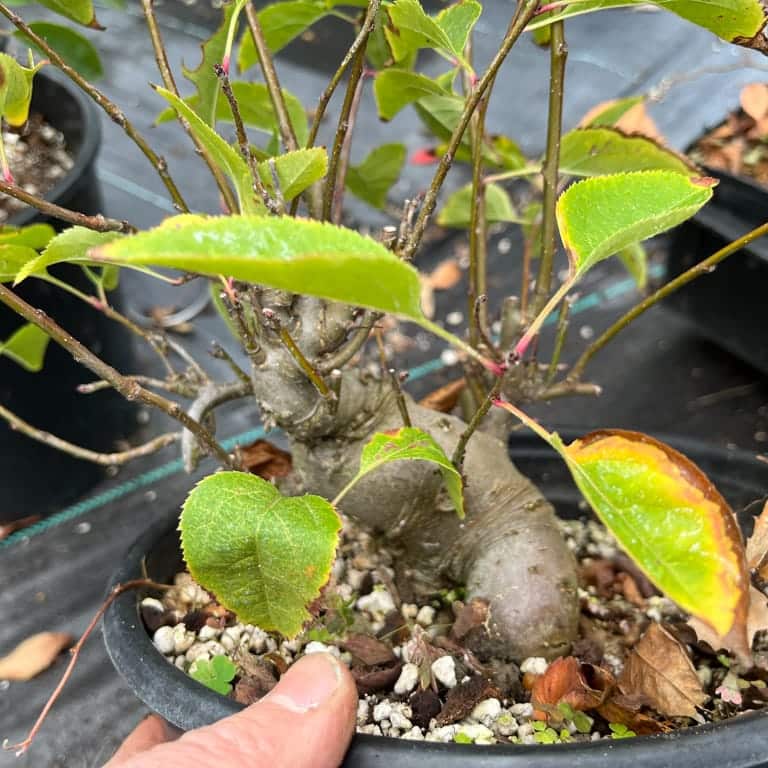
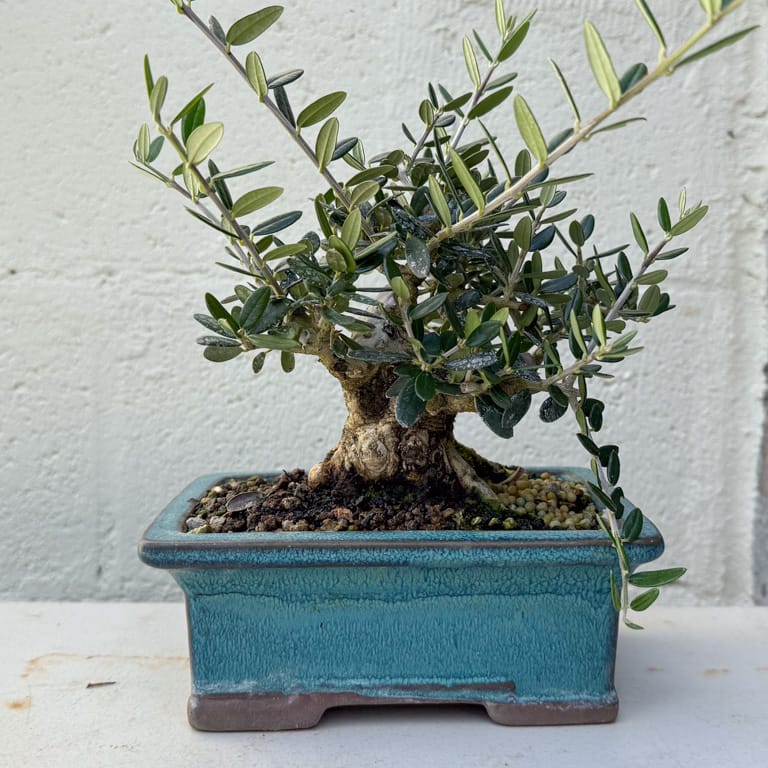
Sunday will focus on creating shohin bonsai. In a change from the last two events, we’re providing trees for ten workshops! Material will include pre-bonsai hand-selected from Bonsaify specifically for development as shohin. Species include winterberry, cork elm, black pine, olive, chojubai, narrow leaf ficus, crabapple, and zelkova.

Zelkova

Zelkova

Black pine

Black pine

crabapple

Crabapple

olive

Olive

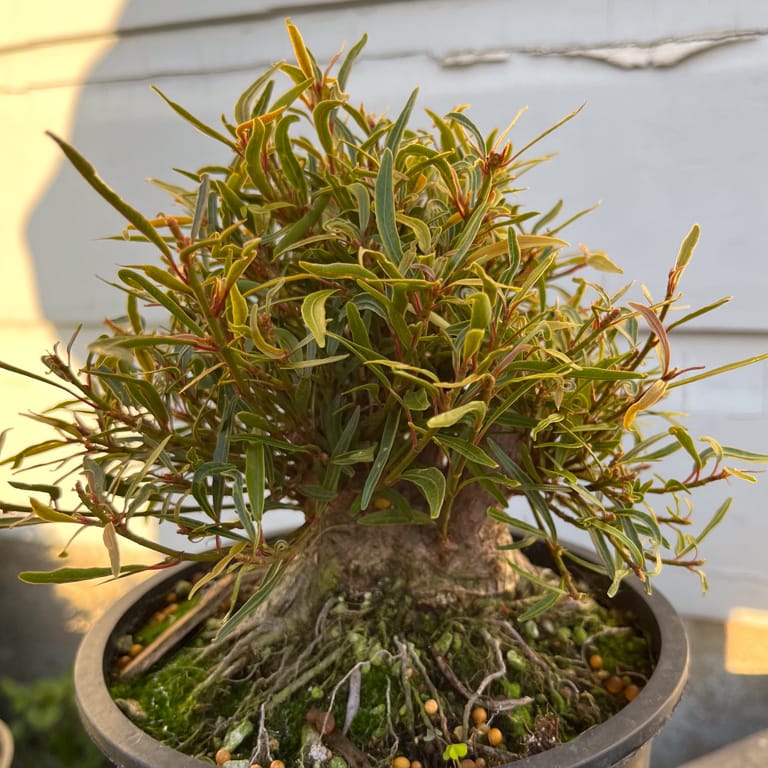
Willow leaf ficus

Willow leaf ficus

Winterberry

Winterberry

Registration is required for entry – the event is not open to the public. Registrants may participate in all lectures and workshops and shop with our vendors. Space is limited to 50 attendees.

To register online and to see more photos of the workshop trees, visit the Shohin School registration page.

News & Updates

[Northern California Sale & Auction]

  • Now’s the time to participate in next year’s Mammoth Fundraiser hosted by the Bonsai Garden at Lake Merritt. To submit trees for the auction or to sell (or donate) material at the sale, visit the BGLM website.

[Online Bonsai Competition]

  • Be sure to vote this weekend in the Bonsaigers’ X 2025 online bonsai competition on Instagram. This year’s judges include Walter Pall, Todd Schlafer, and Matsusue Koji. Each judge gets one point per round, and the winner of the popular vote gets two points. We’re two rounds in with a couple more rounds to go. The next round of voting opens this weekend – join in via the Bonsaigers’ stories in Instagram.
  •  

A visit to Walter Pall’s garden

One of this year’s highlights was getting to spend time with Walter Pall in his garden. After joining his master class for a few days in Zorneding, Germany, I headed to Walter’s garden to record him talking about his trees. The result was a series of nine videos in which Walter shares stories of how he acquired his trees, how he approaches styling, and what he gets out of growing bonsai.

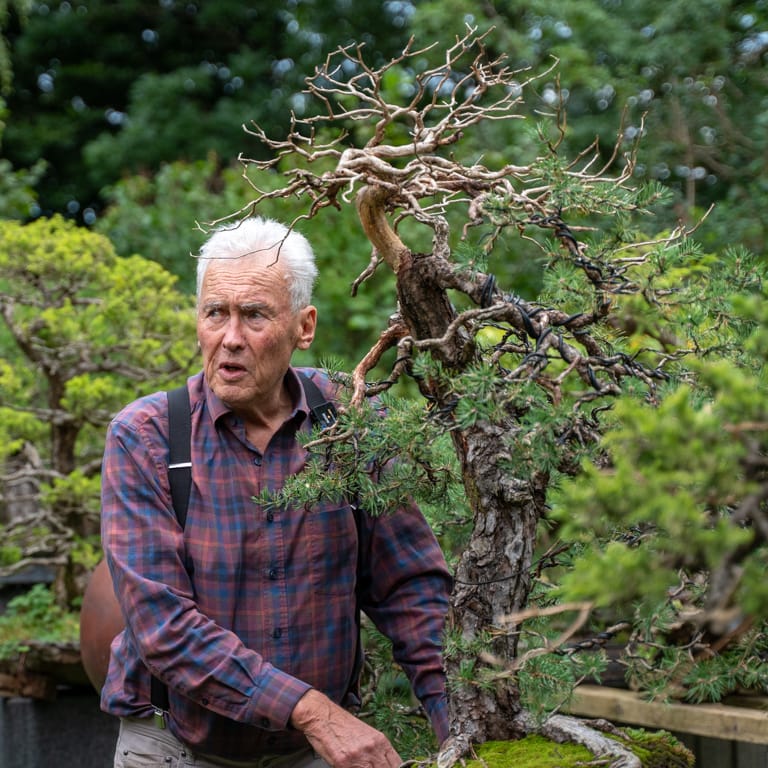
Walter Pall

Walter Pall sharing the story of Scots pine

For years I’d been wanting to get a better understanding about the work Walter does. Although seeing photos of bonsai does a good job of expressing the basic idea of one’s work, I’ve found that meeting artists and experiencing their trees in person offers a more complete picture.

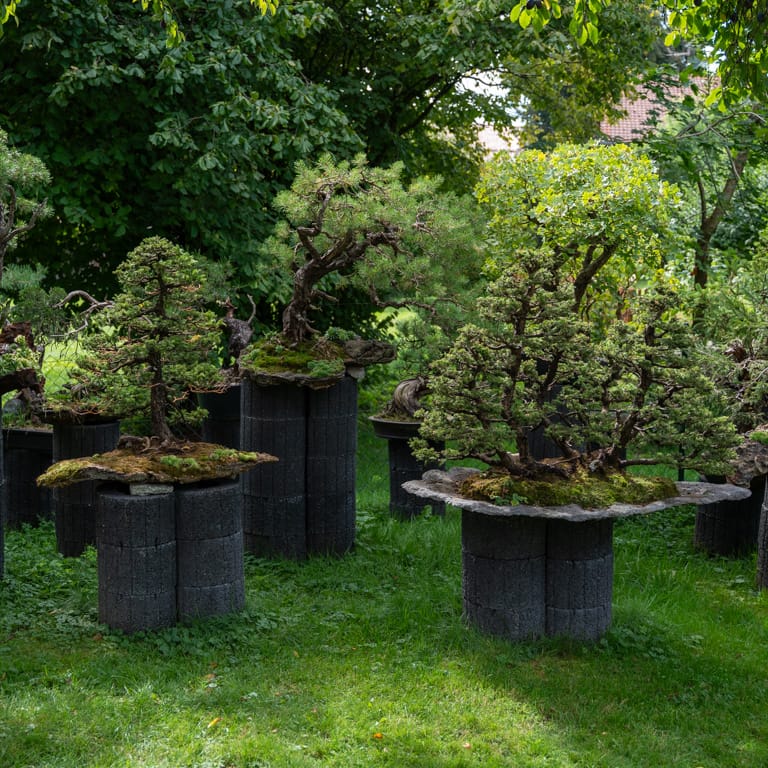
Walter's garden

Walter’s garden

This was definitely the case in Walter’s garden. Through his naturalistic approach to styling trees, Walter conveys stories about the hardships trees face in harsh alpine environments. A good example of this his “candelabra” European spruce – a tree that has taken on the candelabra form after losing its central leader.

Candelabra European spruce

Candelabra European spruce

His work with deciduous bonsai allows viewers to enjoy the trees year round. Were he to create a fuller silhouette, it would be harder to see the trunk and branch structure when the tree is in leaf.

Japanese maple

Japanese maple

Japanese maple

Japanese maple

Arakawa maple

Arakawa maple

Throughout the garden were stone slabs, some natural and some artificial, which made compelling containers for the trees.

European spruce

European spruce

European spruce

European spruce

European spruce

European spruce

Ezo spruce

Ezo spruce

You can learn more about Walter’s trees and hear the stories behind them in the series “Nine Trees with Walter Pall” on YouTube.

News & Updates

[Winter Shohin School]

  • Spaces are filling up fast for the 2026 Winter Shohin School. This year’s event will be held in Alameda, California. Headliner Daisaku Nomoto will lead the two-day event focusing on shohin display and development. Learn more and register online.

[WBFF Photo Contest]

  • Submit a photo of your tree to the World Bonsai Friendship Federation’s Photo Contest for a chance to win a trip to the 10th World Bonsai Convention in Malaysia! Accepted photographs will be registered in the WBFF 2026 ebook and will be displayed during the convention.

    Entries will be judged by Masahiko Kimura. The submission period is open now but will be closing on March 26, 2026. Learn more and submit your photos at the WBFF Photo Contest Website.
  •  

Kouka-en in the snow

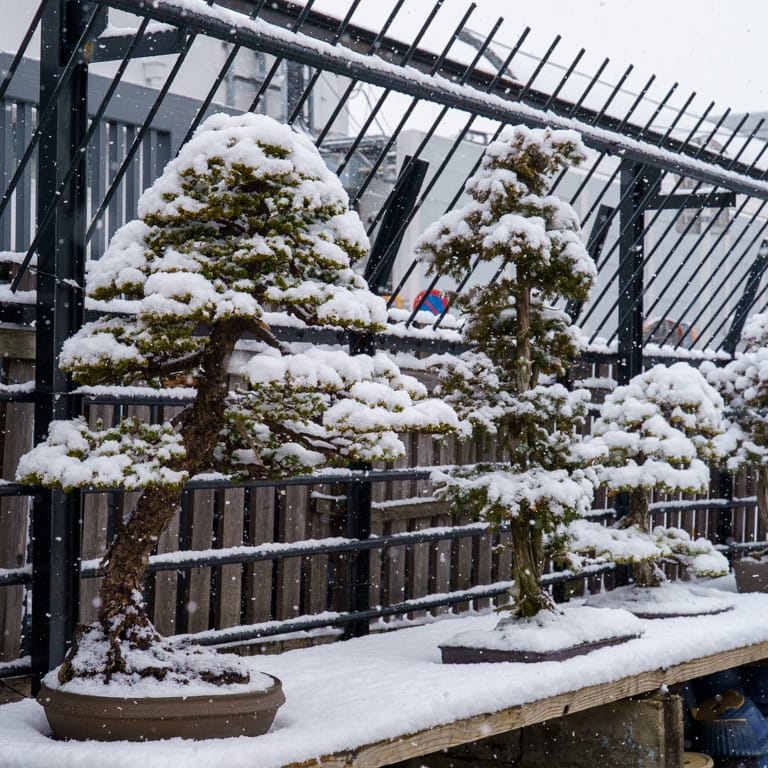
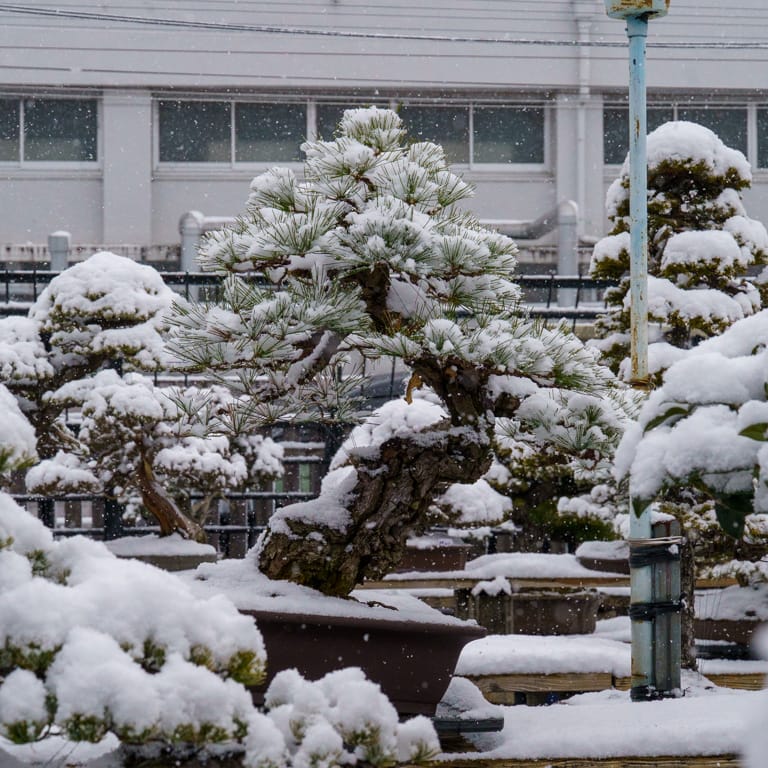
For much of the northern hemisphere, seeing snow-covered bonsai in winter is nothing out of the ordinary. For Keiichi Fujikawa, proprietor of the Fujikawa Kouka-en bonsai garden in Osaka, the sight is far from normal.

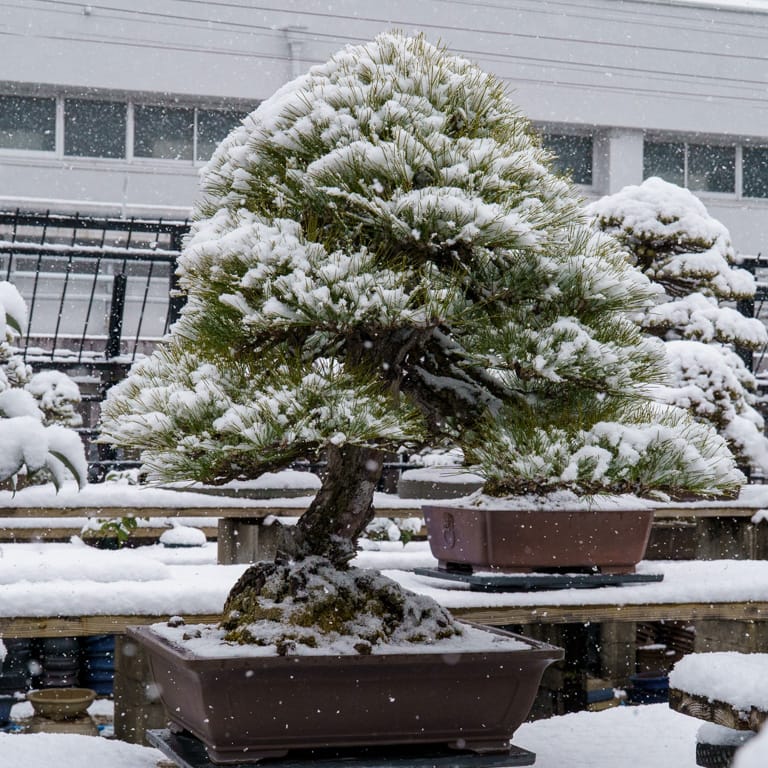
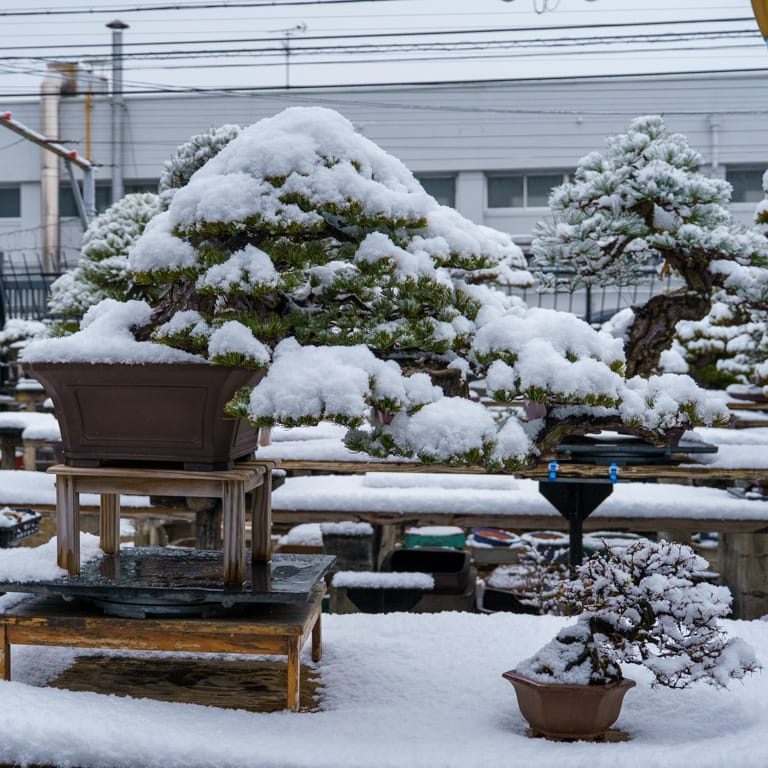
Snow-covered bonsai at Kouka-en

Snow-covered bonsai at Kouka-en

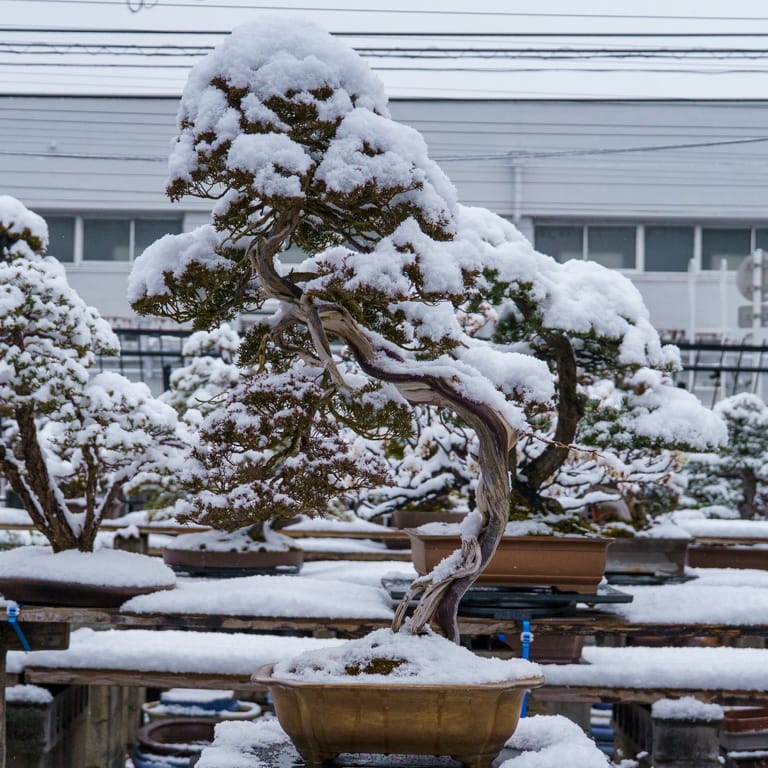
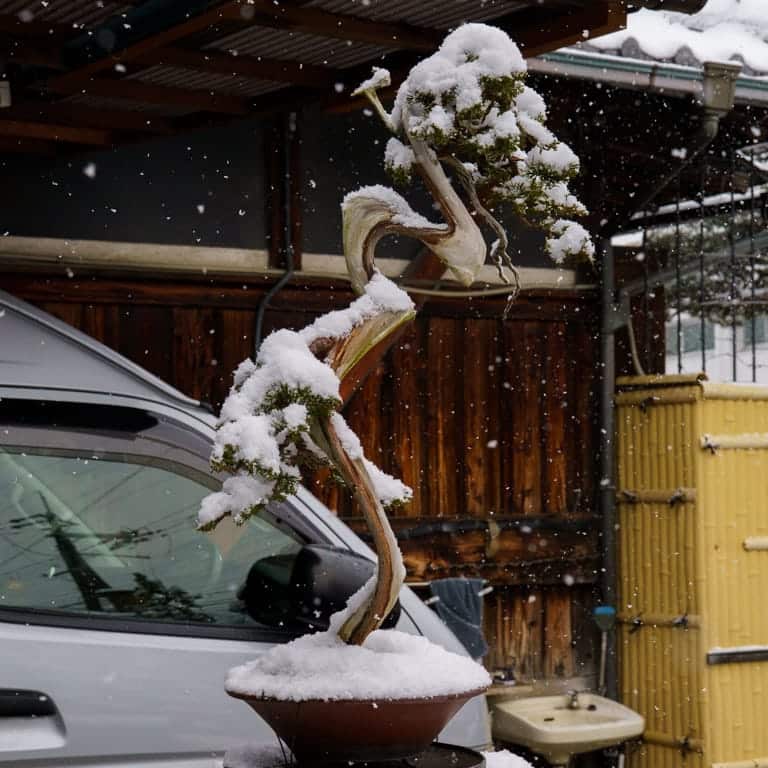
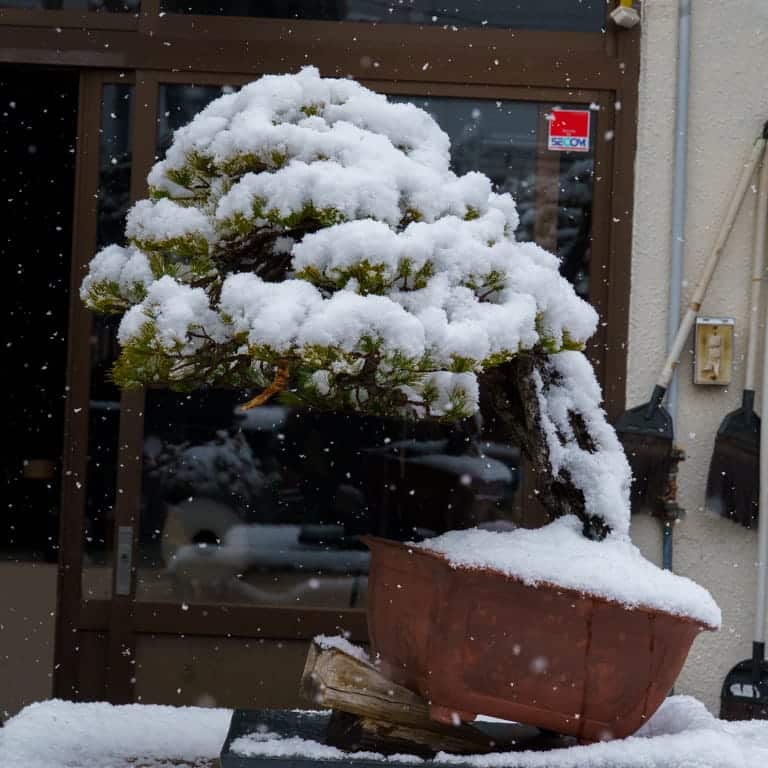
Shimpaku juniper

Shimpaku juniper

When our small tour arrived at Fujikawa’s garden, I asked how many times it snowed like this in a given year. His answer was never!

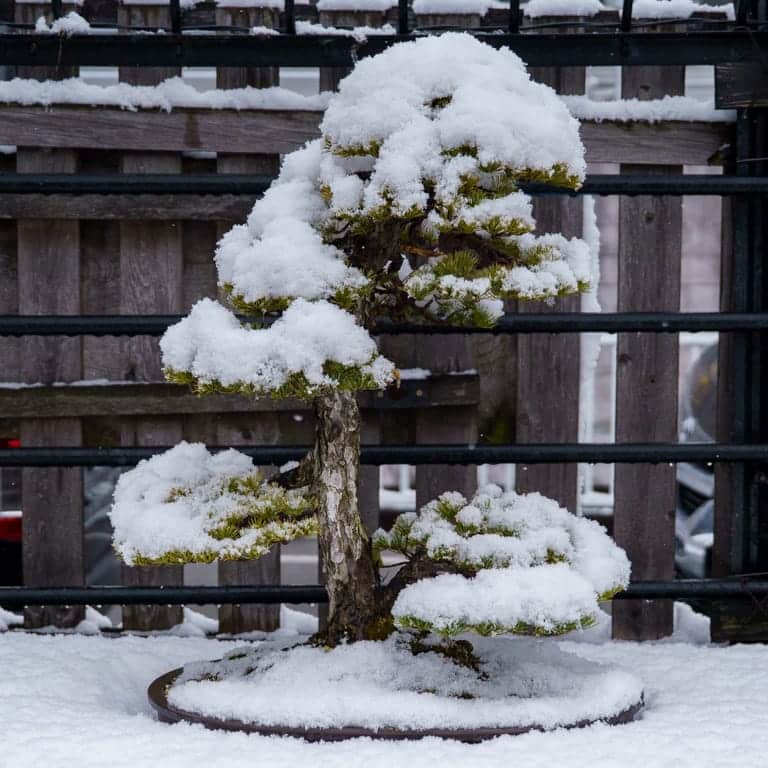
White pine

White pine

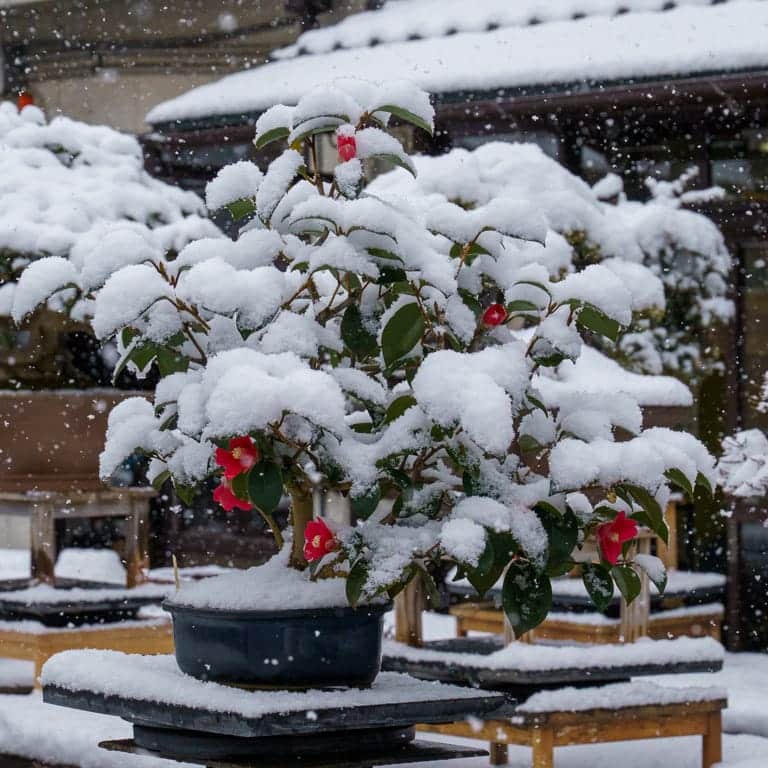
Camellia

Camellia

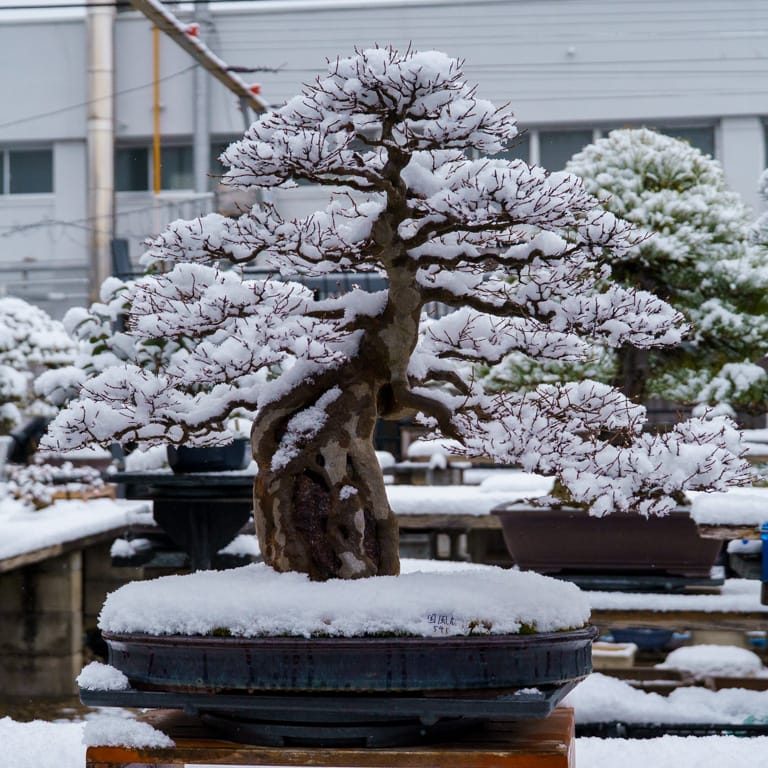
I wasn’t sure how long we’d want to walk through the snowy garden, but the longer we stayed, the more I appreciated the beauty of snow-covered trees.

Pine

Pine

Trident maple

Trident maple

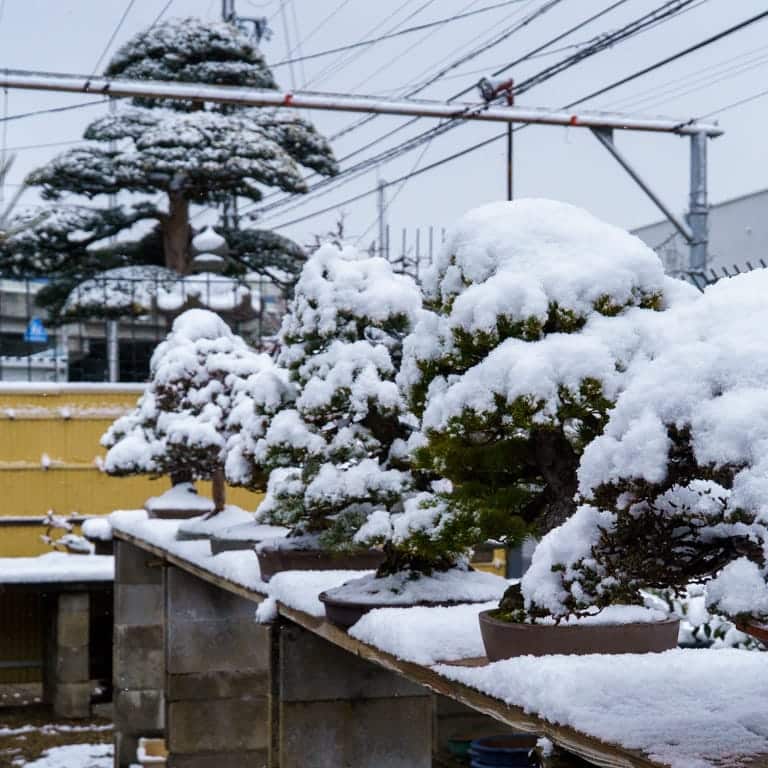
A few of the temperature sensitive bonsai were moved inside when the snow started, but the rest stayed outside on the benches. The snow wasn’t expected to stick around for more than a day.

Snowy bench

Snowy bench

Shimpaku

Shimpaku juniper

Pine

Pine

Every once in a while an apprentice reluctantly went outside and brushed snow off the branches to prevent them from breaking under the weight of the snow. Within minutes, the trees were covered again.

White pine

White pine

Pine

Pine

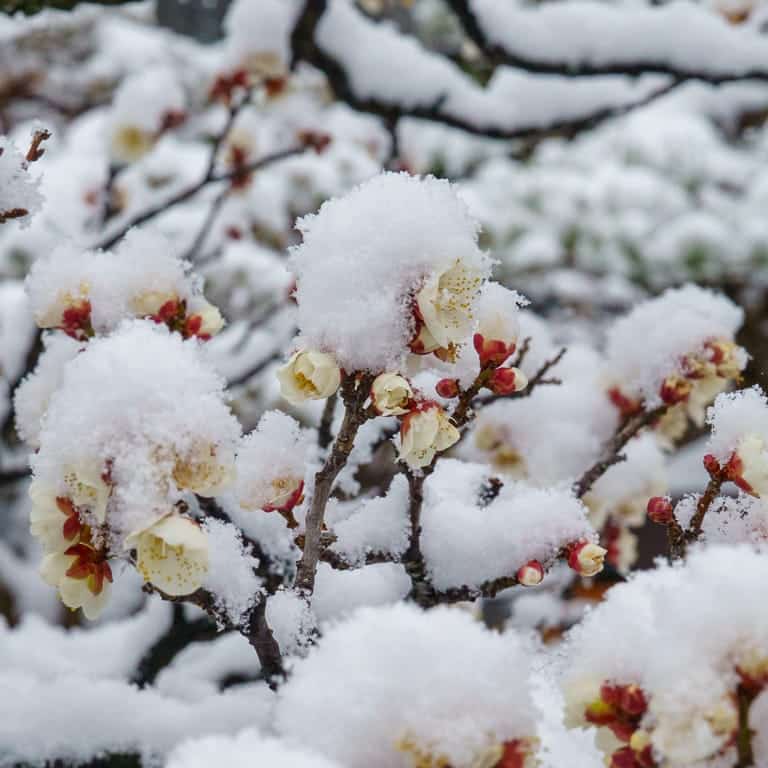
Ume flowers

Ume flowers

After a day visiting gardens in the snow, our group headed up to Tokyo for the Kokufu exhibit. More on that next week!

News & Updates

[Southern California Event]

  • There’s one day left of the Bonsai-A-Thon, one of Southern California’s biggest events of the year! The Bonsai-A-Thon is an annual fundraiser held at the Huntington in San Marino, California.

    Headliner Sergio Cuan will share a presentation about deciduous bonsai from 11:00 a.m. to 2:00 p.m. on Sunday. Additional demonstrations will be held from 10:00 a.m. to 2:00 p.m. featuring Mel Ikeda, Robert King, Bob Pressler, and Al Rivera.

    The weekend will also feature a tour of the bonsai area by Daniel Deephouse at 11:00 a.m.

    A number of vendors will be on hand with an assortment of trees, pots, and supplies, plus live and silent auctions means there are lots of opportunities to shop!

    Learn more at the 2026 Bonsai-A-Thon website.

[Northern California Event]

  • The Mammoth Fundraiser will be held on Saturday, March 7th (auction), and Sunday, March 8th (general sale and vendor area). Learn more at the Bonsai Garden Lake Merritt website. More details coming soon!
  •  

Special trees at the 100th Kokufu exhibit

Last month the Japanese Bonsai Association hosted the 100th national exhibit, the Kokufu, at the Tokyo Metropolitan Art Museum in Ueno Park, Tokyo.
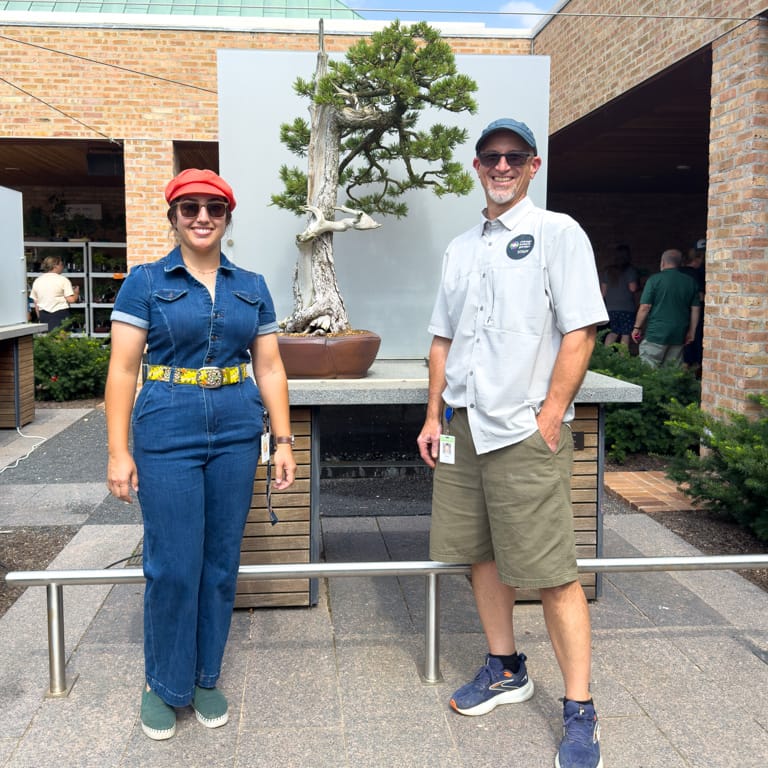
The event was busier than it has been in recent years, and a larger percentage of the visitors were foreign. As for the bonsai, there was a good number of special trees that are always a treat to see.

Rose

Rose

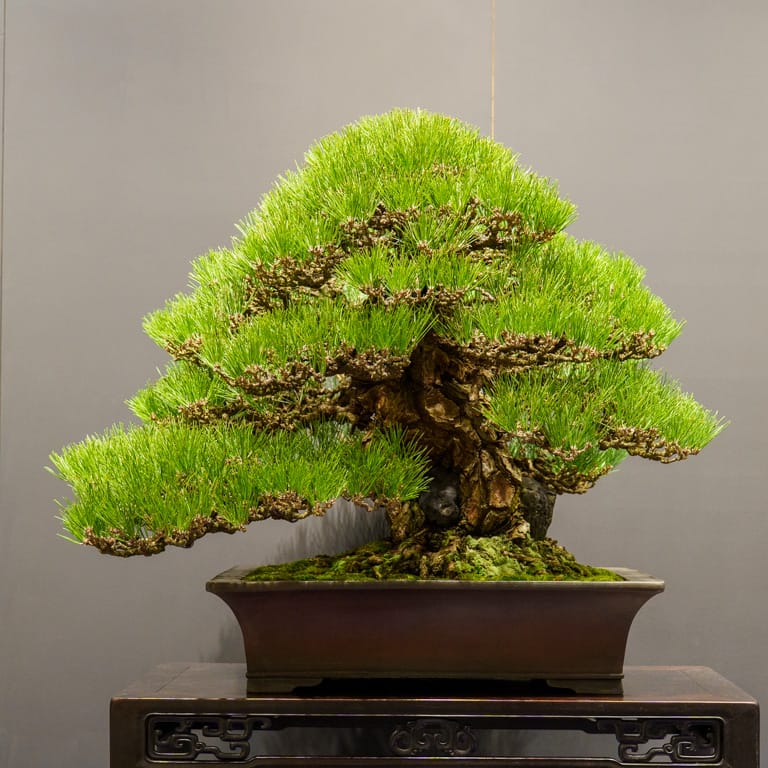
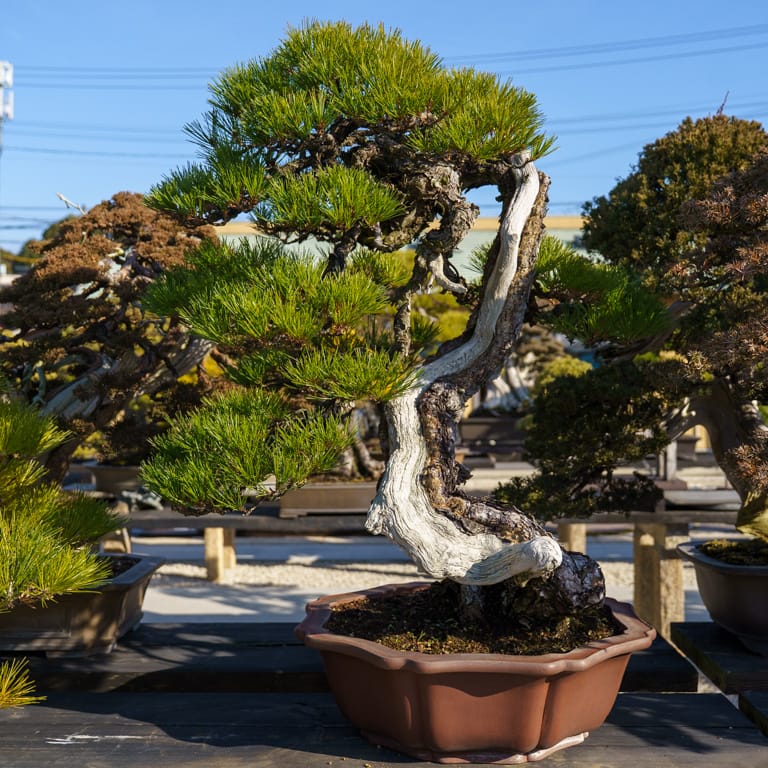
Black pine

Black pine

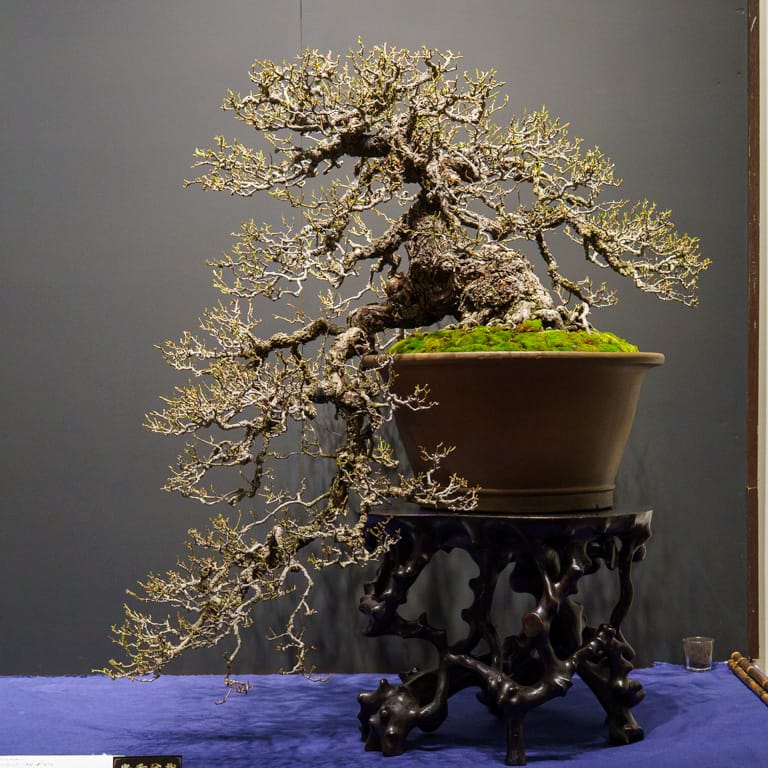
Some of my favorites won awards, others simply made the room look great. Some, like the Chinese quince below, were so twiggy that I had to reset my thinking about what’s possible with the species.

Chinese quince

Chinese quince

Chinese quince

Chinese quince

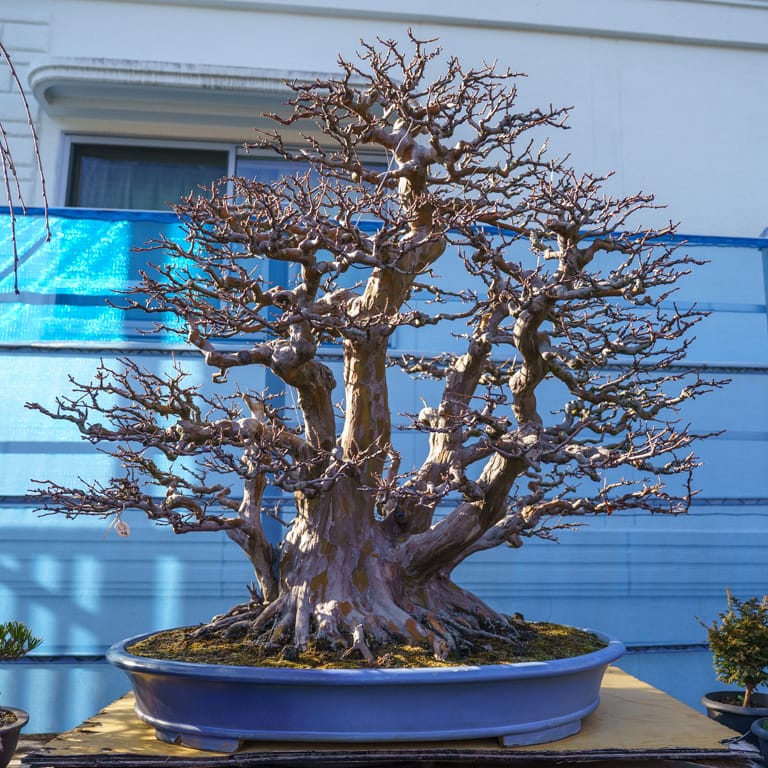
A lot of the trees that stood out to me this year were deciduous.

Japanese maple

Japanese maple

When standing in front of these trees, it was easy to get lost following the branches as they meandered from the trunk out towards the edges of the canopy. Trees like these had been skillfully worked on for decades – and it showed.

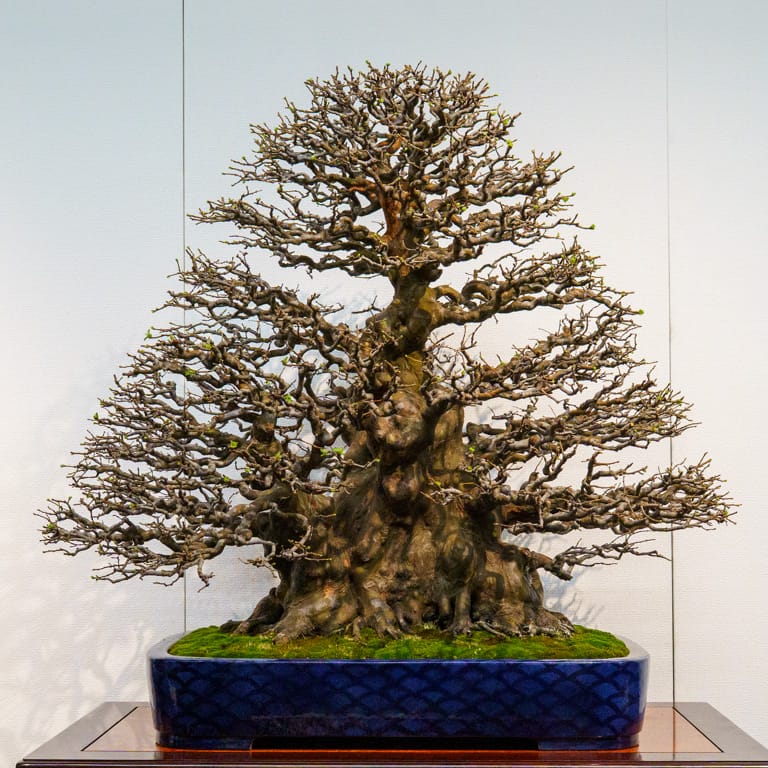
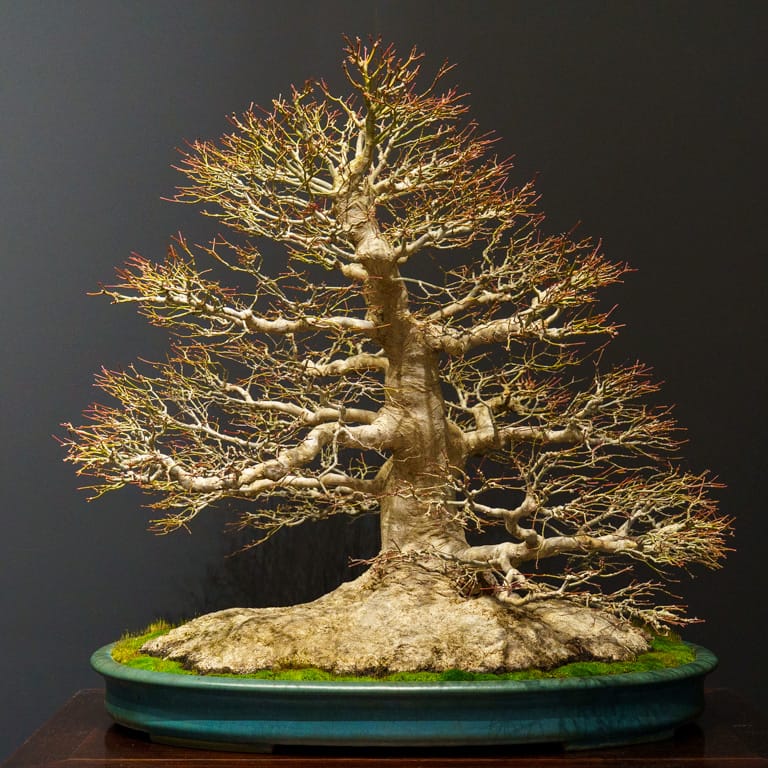
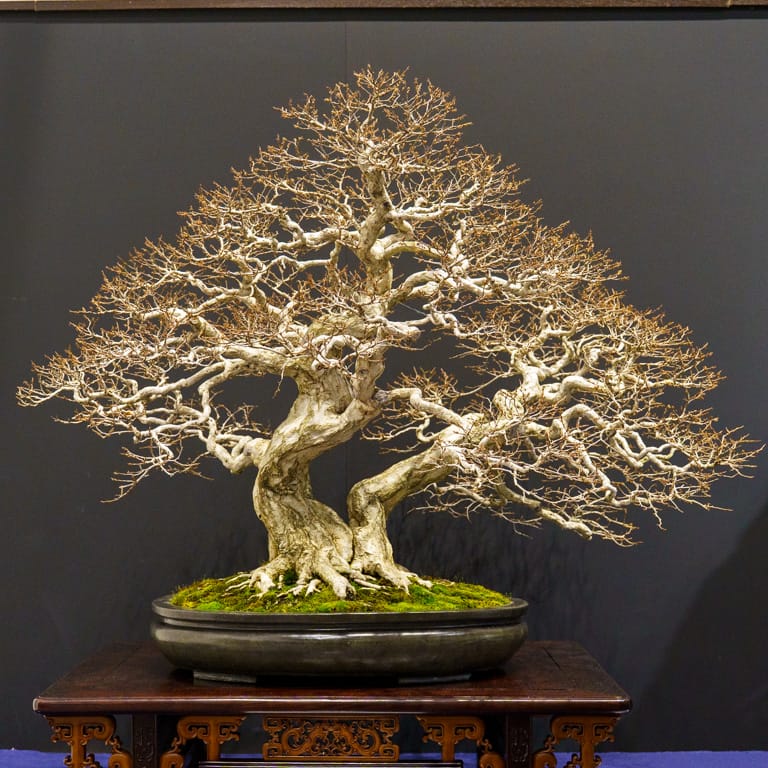
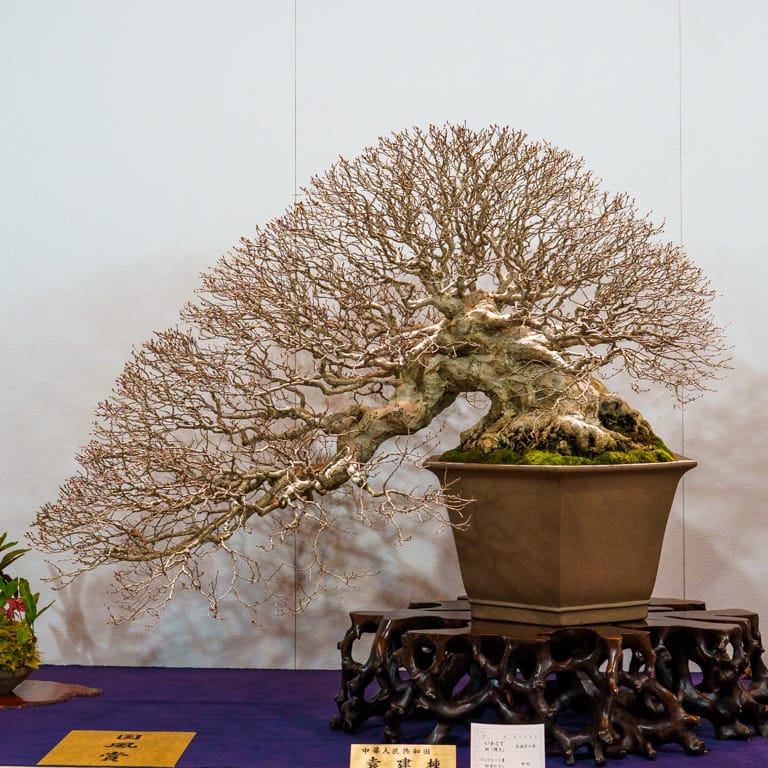
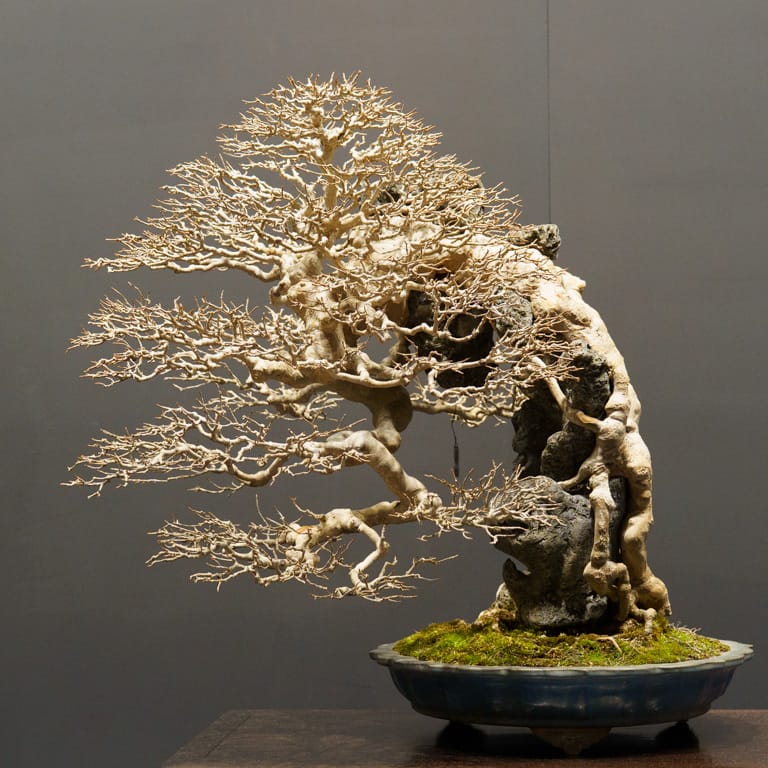
Korean hornbeam

Korean hornbeam

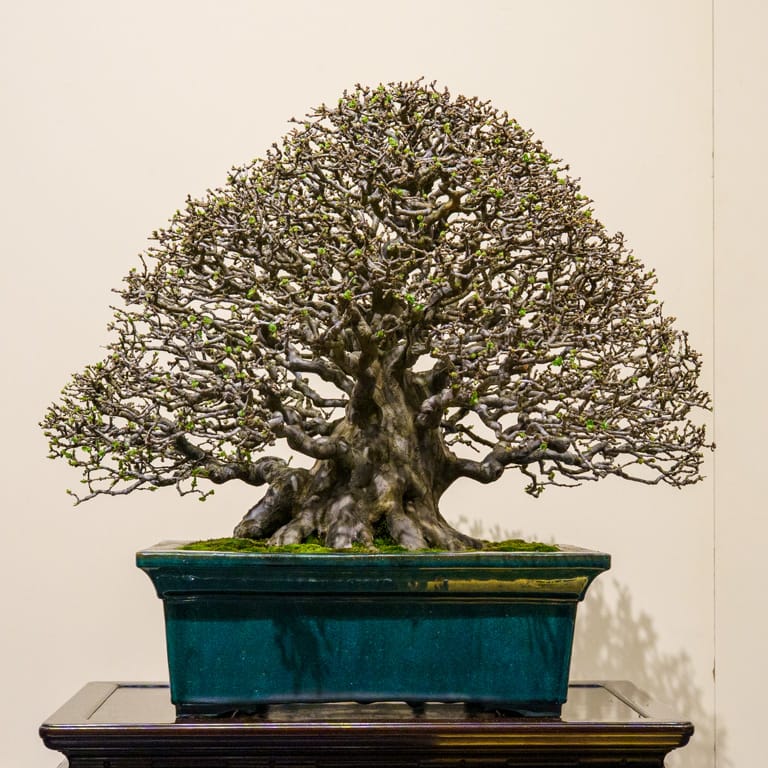
Korean hornbeam

Korean hornbeam

Trident maple

Trident maple

Of course there were spectacular conifers in the exhibit as well. Here are some of the remarkable junipers on display.

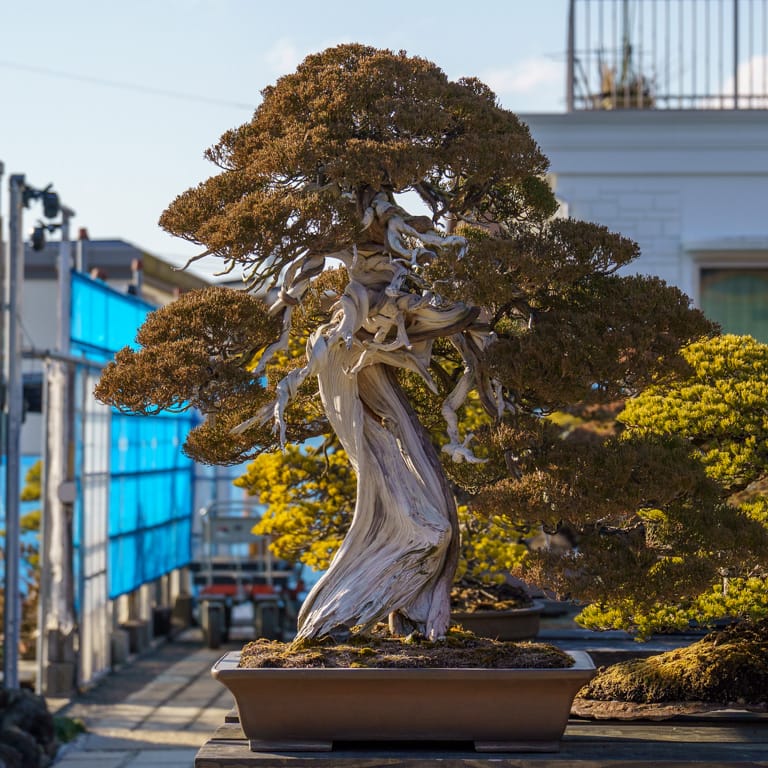
Shimpaku juniper

Shimpaku juniper

Shimpaku juniper

Shimpaku juniper

Shimpaku juniper

Shimpaku juniper

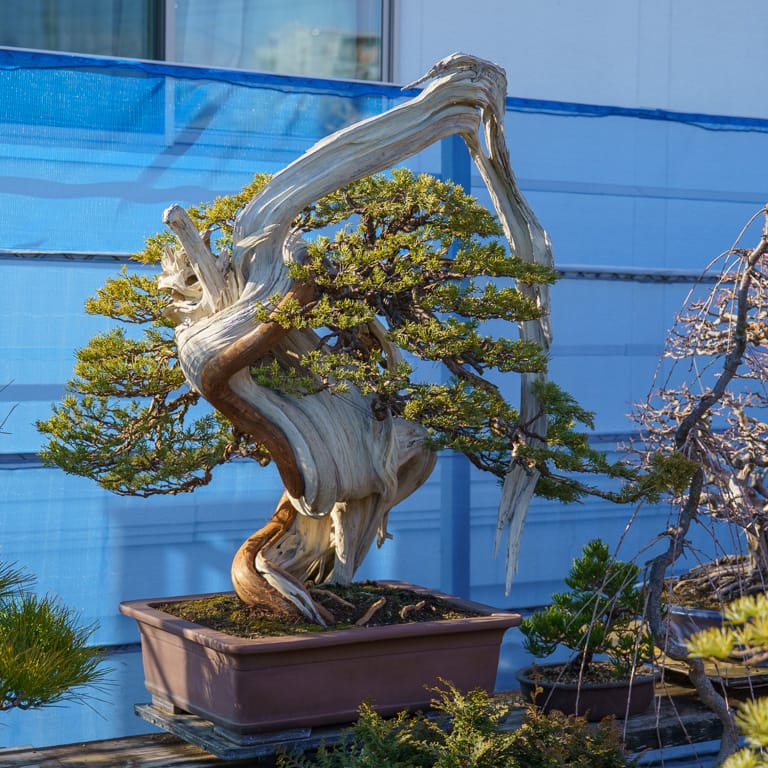
Although in recent years it’s become common to see large junipers with massive trunks, it’s the exceptions that stand out the most to me. The juniper below has fantastic character along the trunk. Slender lifelines supported by undulating deadwood feature more delicate movement with give this old tree – and its viewers – a very different feeling.

Shimpaku juniper

Shimpaku juniper

Up next, highlights from the second half of this year’s two-part exhibit.

News & Updates

[Northern California Event]

  • The Bonsai Garden at Lake Merritt’s annual fundraiser, the Mammoth Auction and Sale, will be held this Saturday and Sunday in Oakland, California. On Saturday the main event is the largest auction in Northern California. On Sunday, it’s a plant sale and vendor area. Learn more at the Mammoth Auction & Sale website.

[Auction Tips]

In preparation for this weekend’s auction, here are some tips to help you get the most out of the event.

  • If you’re interested in taking home an item but want to feel good about the purchase, set limits ahead of time for how much you’d like to spend (and how much above this limit you’re willing to actually bid).
  • Check the health of the tree before setting your buy price. For deciduous trees, check the health of the buds and look out for dead branches or dead areas along the trunk. For conifers, check the number and size of visible buds as well as the color and character of the foliage.
  • Don’t let inside information influence your bids. A long time ago, I stopped bidding on a tree because I knew how much the owner had originally paid for it. It didn’t feel right to pay twice as much as my friend had paid for the tree. This was foolish as the second the bidding ended I remembered that the tree was worth almost double the amount it went for.
  • Take note of who you’re bidding against, but stick to your plan. Once I stopped bidding on a tree because I didn’t think I could keep up with the other bidder. When the bidding ended, the other bidder ran over with a big smile to let me know how relieved he was I stopped bidding as he’d reached the limit he was willing to pay for the tree. Another lost opportunity!
  • Above all, remember that the event is a fundraiser. Bonsai auctions are typically organized by volunteers who work hard to provide us with the opportunity to build our collections and have fun while doing it. Keeping the spirits (and the bids) high can make the event a pleasant experience for everyone.
  •  

A visit to the Omiya Bonsai Art Museum

The Omiya Bonsai Art Museum is a favorite stop of mine on bonsai tours. It provides visitors with a little history about the Omiya Bonsai Village – a collection of historic gardens, several of which are still operating today – and features a courtyard garden with a rotating selection of bonsai.

Most of these trees have been in training for a long time and show a maturity that’s harder to find outside of Japan.

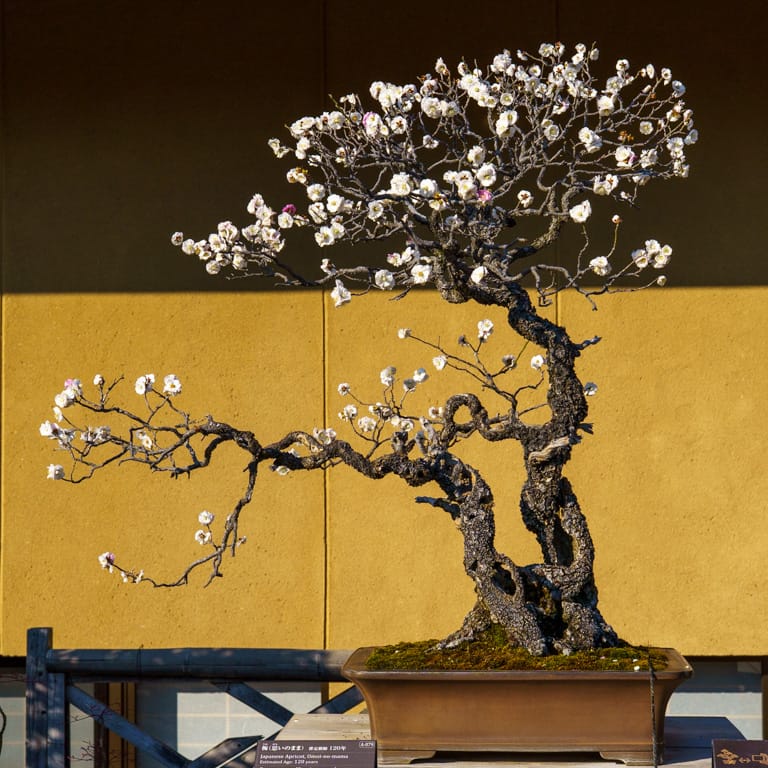
Ume

Ume – Omoi-no-mama
Estimated age: 120 years

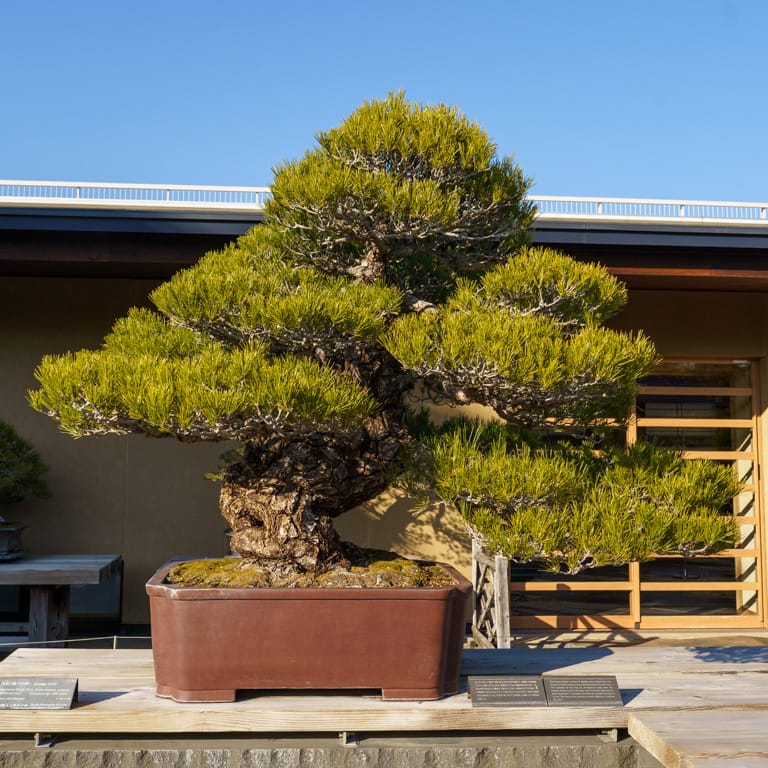
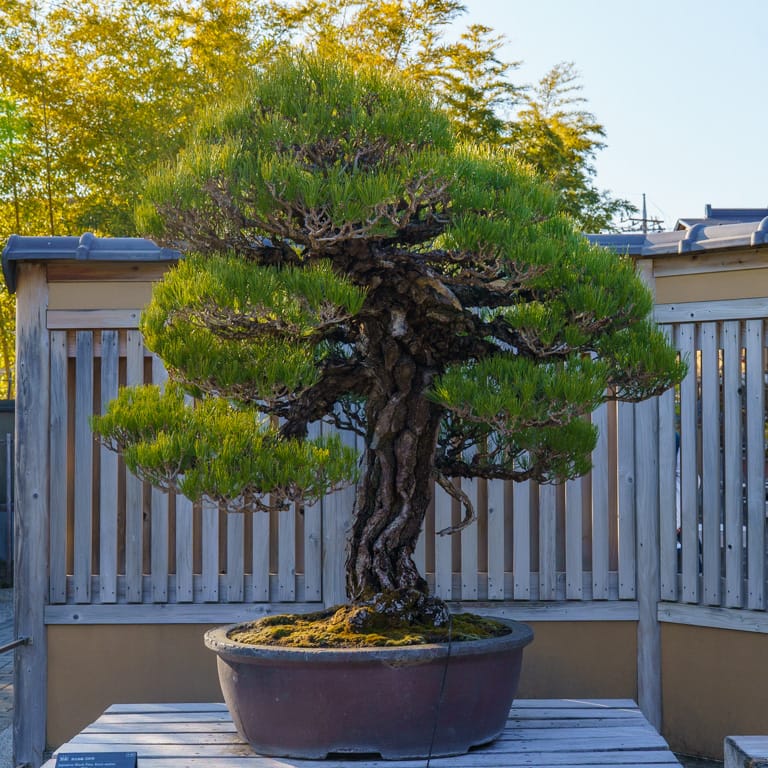
Black pine

Black pine
Estimated age: 100 years

One reason I come back to the museum so frequently is that there is ample space around every tree. Getting to see great bonsai from all angles is great for studying the trees’ shape and structure.

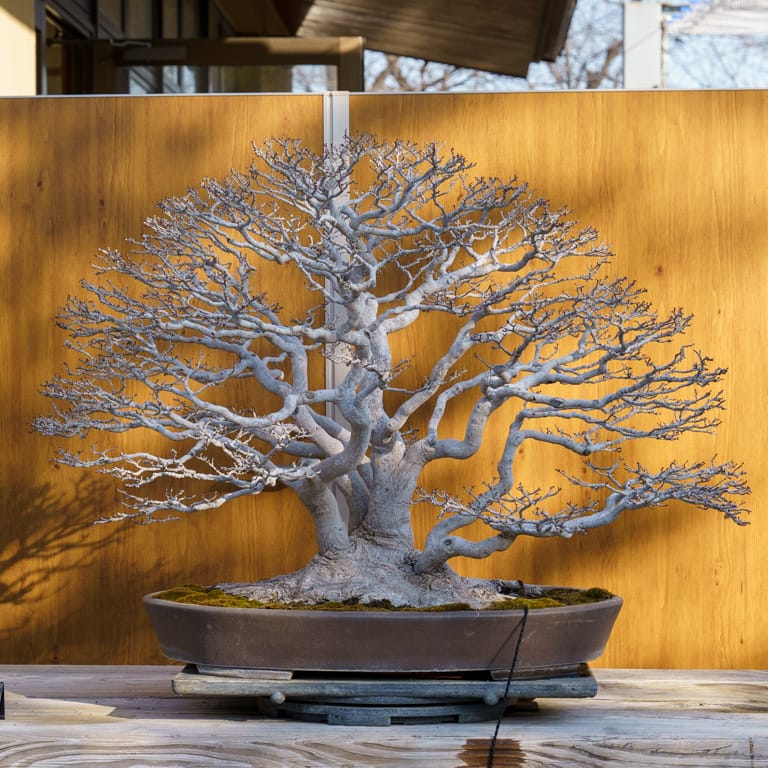
Shishigashira

Shishigashira Japanese maple
Estimated age: 120 years

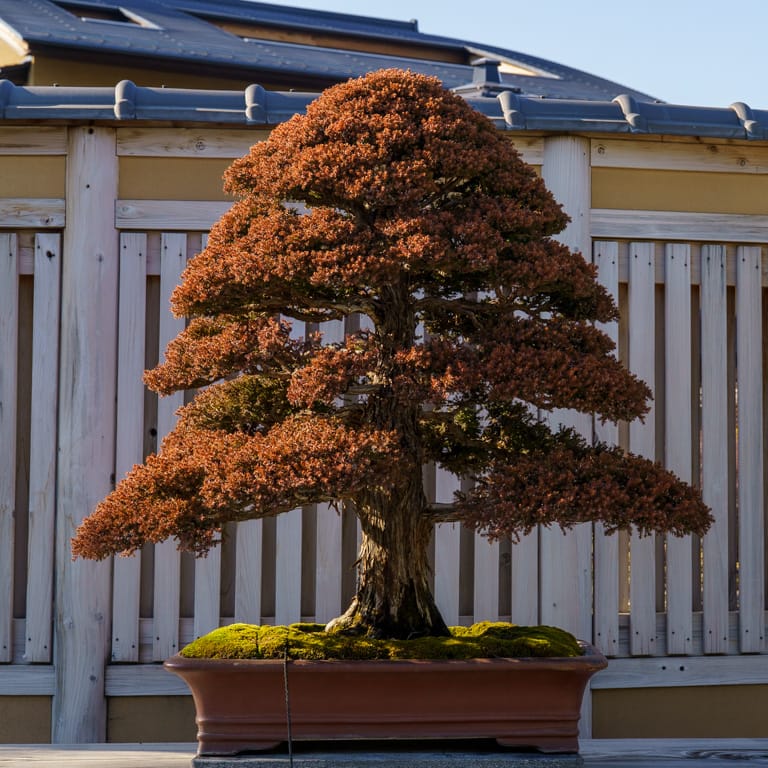
Hinoki

Hinoki
Estimated age: 70 years

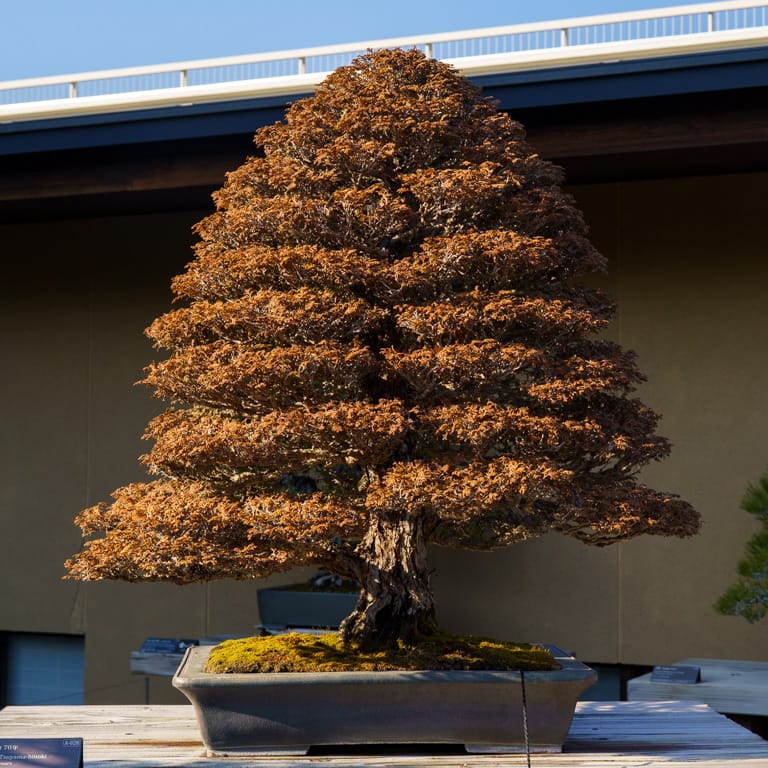
The brown foliage on some of the conifers is a response to cold weather. The trees typically green-up when the weather warms in April.

Cryptomeria
Estimated age: 70 years

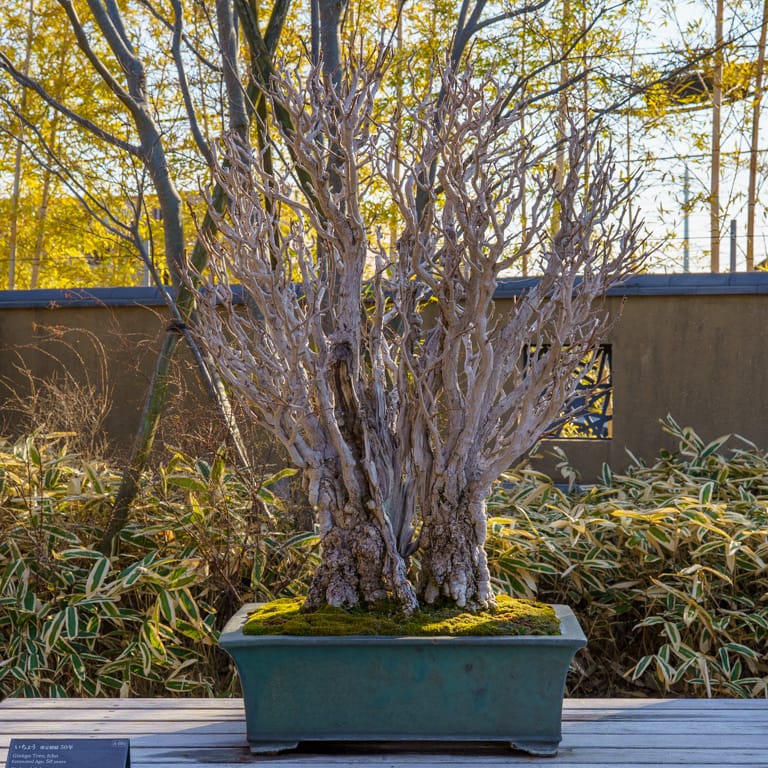
Ginkgo

Ginkgo
Estimated age: 50 years

Some trees, like the ginkgo above, look much older than their estimated age suggests. Other trees are much older than we might casually guess.

Black pine

Black pine
Estimated age: 250 years

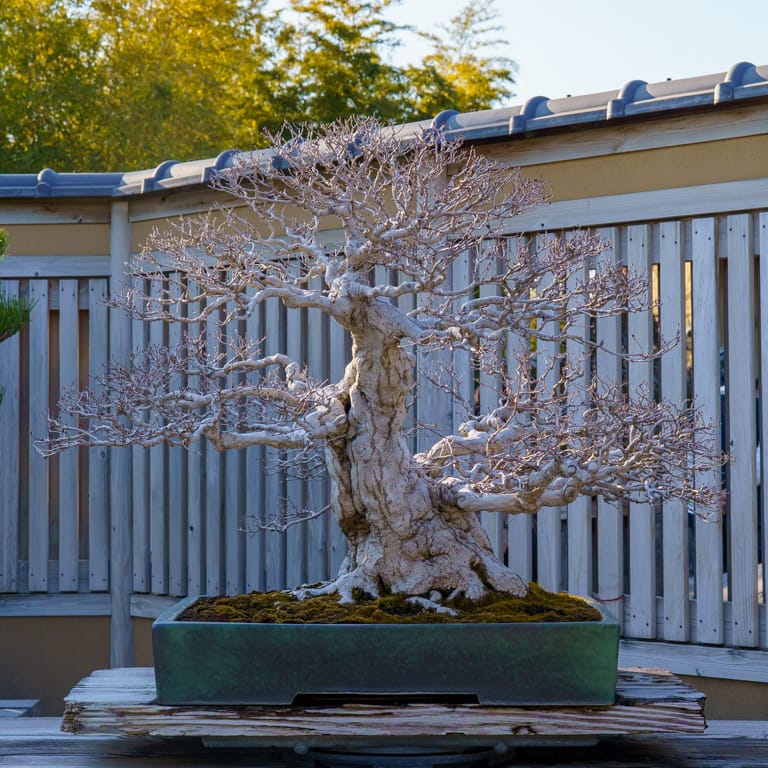
Korean hornbeam

Korean hornbeam
Estimated age: 150 years

More important than age in some cases is the time in training. Each of these bonsai look like they’ve been cared for as bonsai for a long time. This gives them a unique character that distinguishes bonsai from trees found in the natural landscape.

Red pine

Red pine
Estimated age: (not given – maybe 40)

Shimpaku

Shimpaku
Estimated age: 380 years

Learn more about the museum or plan your visit at the Omiya Bonsai Museum website.

News & Updates

[Northern California Exhibits]

  • The American Bonsai Association, Sacramento, will hold its 66th Annual Exhibit April 11-12 in Sacramento, California. Guest artist Jennifer Price will perform demonstrations at 1:30 p.m. Saturday and Sunday. Club sales and vendor area open both days. Hours 10:00 a.m. – 4:00 p.m. Saturday and Sunday. Learn more at the ABAS website.
  • The Kusamura Bonsai Club will hold its 66th Annual Exhibit April 18-19 in Palo Alto, California. Headliner Jennifer Price will perform a demonstration (1:00 p.m. – 3:00 p.m.) Saturday and will lead a critique (at 10:30 a.m.) and workshop (1:00 p.m. – 3:00 p.m., open to public viewing) on Sunday. Tours, benefit drawings, and club sales open both days. Hours 12:00 p.m. – 4:00 p.m. Saturday and 10:00 a.m. – 4:00 p.m. Sunday. Learn more at the Kusamura Bonsai Club website.
  • The Bonsai Society of San Francisco will hold their annual bonsai exhibit at the 2026 Northern California Cherry Blossom Festival. The exhibit will be held in the Issei Memorial Hall on Saturday, April 18, from 11:00 a.m. – 4:00 p.m. Learn more at the Cherry Blossom Festival website.

[Regional Events]

  • The MidAtlantic Bonsai Societies are hosting their Spring Festival on April 17-19 in Harrisburg, Pennsylvania. I’ll be presenting and leading workshops together with special guests Kaya Mooney and Peter Warren throughout the weekend. Learn more at MidAtlanticbonsai.org.
  •  

A snapshot of Shunka-en bonsai garden

One of the most common stops on bonsai tours in Japan is Shunka-en, the garden of Kunio Kobayashi. By car or train it’s about 20 minutes east of Ueno Park, home to the Kokufu exhibit, in Edogawa.

I first visited Shunka-en, or “spring flower garden,” twenty-seven years ago. Since that trip, the garden has changed a lot. There are several new growing areas and more than double the number of trees, including these junipers and pines in the main courtyard.
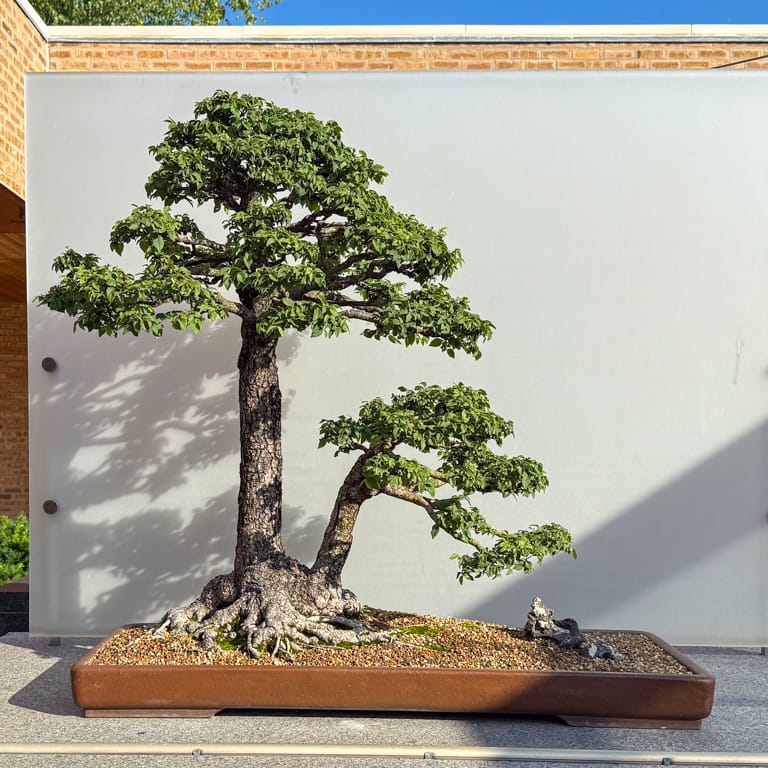
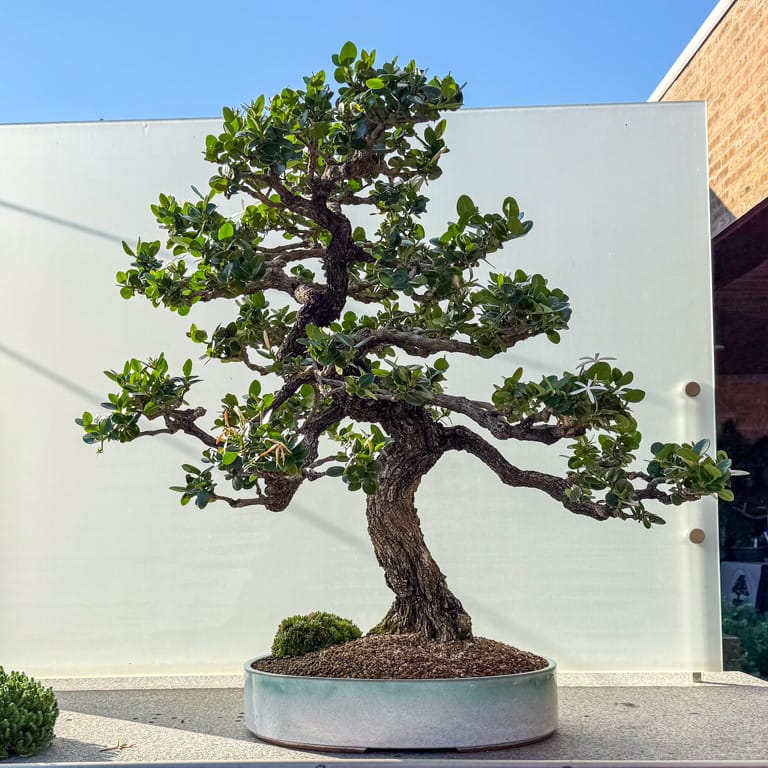
Shimpaku juniper

Shimpaku juniper

Black pine

Black pine

Shimpaku juniper

Shimpaku juniper

Black pine

Black pine

Shimpaku juniper

Shimpaku juniper

The garden is jam-packed with trees, mostly conifers, in every direction you look.

Shunka-en

A section of Shunka-en

Although most of the trees are presented for garden display (the facility is billed as a museum) there are a few prominent trees in development, including the maple grafting project below.

Approach grafts

Thread grafts on a Japanese maple

Inside, visitors can enjoy several tokonoma set up with seasonal displays. On the day we visited, the display rooms featured a juniper, a chojubai, and a maple, among other species.

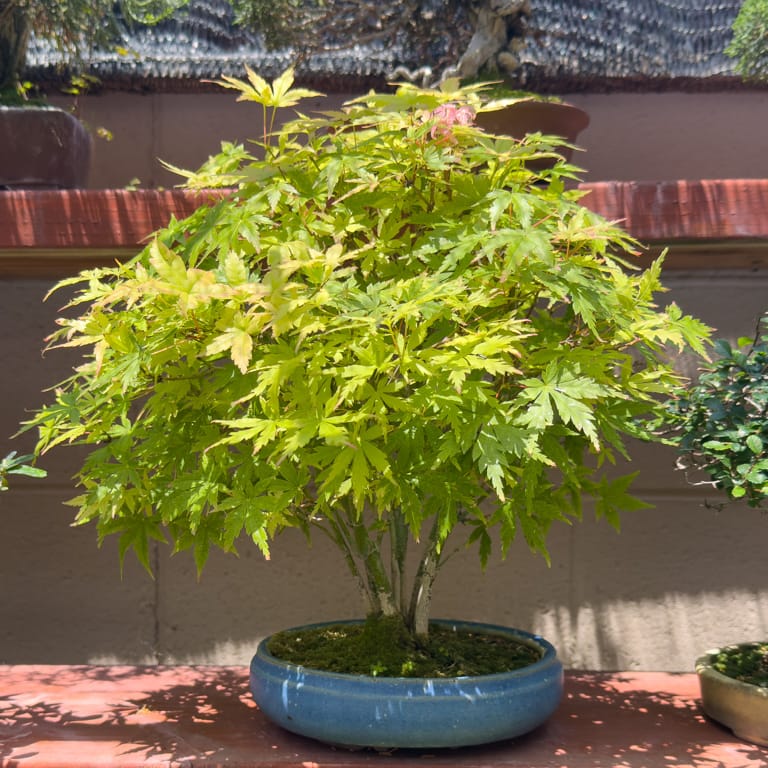
Japanese maple

Japanese maple with crazy surface roots

Chojubai

Chojubai

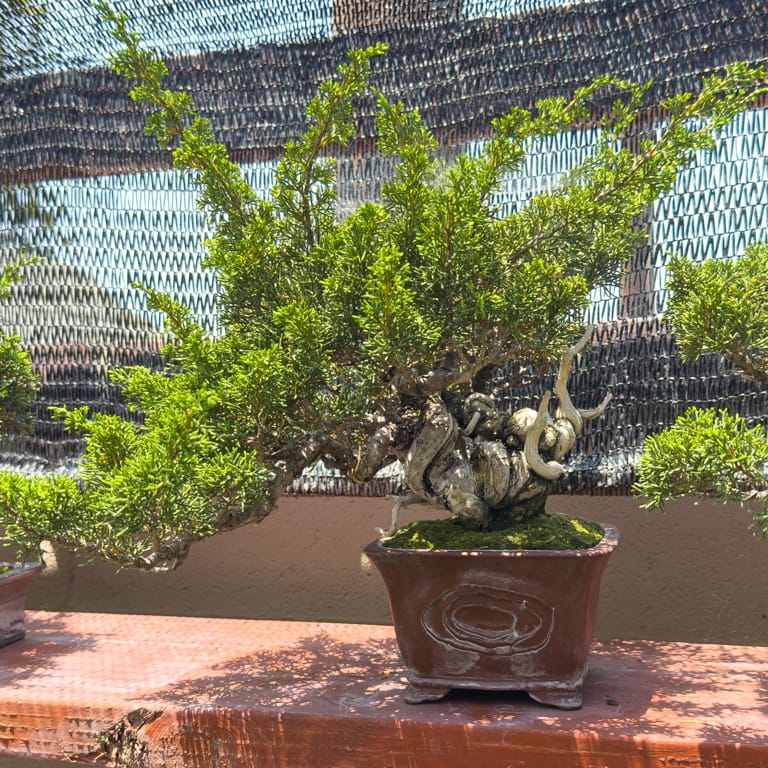
Shimpaku juniper

Shimpaku juniper

Just outside the display rooms, a large collection of deciduous bonsai sat on the ground under the protection of the main building’s eves.

Japanese beech

Japanese beech

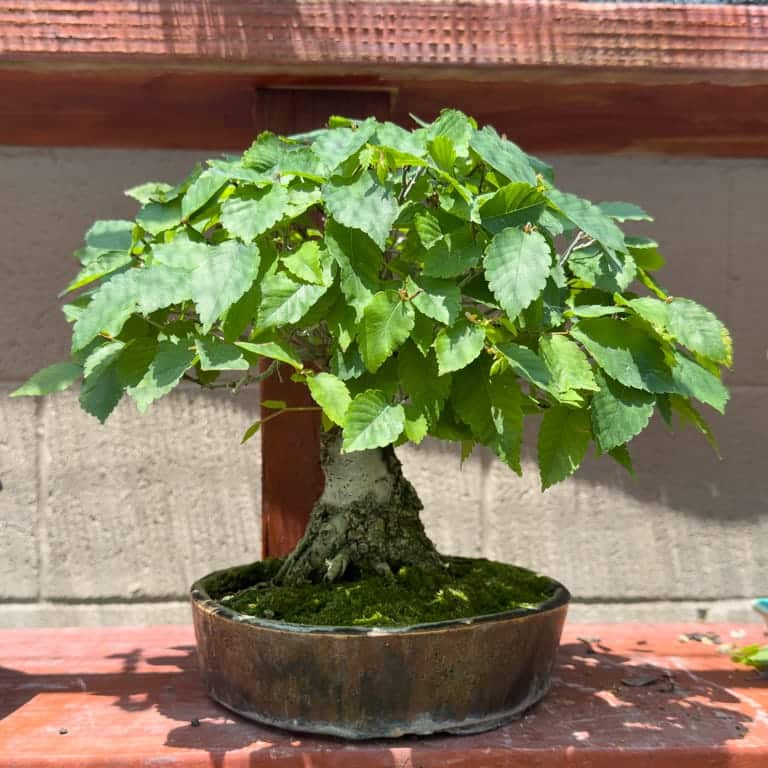
Korean hornbeam

Korean hornbeam

If you’d like to visit Shunka-en, you can plan your trip at the Shunka-en Bonsai Museum website.

  •  

Taisho-en: the garden of Taiga Urushibata

Among the handful of gardens I’m happy to visit every time I go to Japan, Taisho-en is a favorite. World-class trees. World-class work.

Taisho-en is managed by Taiga Urushibata. His father, Nobuichi Urushibata, was a prominent shohin professional. Taiga, who apprenticed with Masahiko Kumura, is well-known for working on trees of all sizes.

Walking among the trees in Taiga’s garden is a pleasure because each bears close investigation. The following are good examples of the bonsai you’ll find if you get the chance to visit.

Black pine

Black pine

Needle juniper

Needle juniper

Shimpaku

Shimpaku

Chinese quince

Chinese quince

Shimpaku

Shimpaku

Red pine

Red pine

Shimpaku

Shimpaku

Shimpaku

Shimpaku

Shimpaku

Shimpaku

Shimpaku

Shimpaku

  •  

A visit to Masahiko Kimura’s garden

One of the most anticipated stops on our tour this year was a visit to Kimura’s garden. The section that’s open to the public is relatively small and almost exclusively filled with pines and junipers. The most famous of these is a shimpaku named Toryu no mai (“Dance of the Ascending Dragon”).

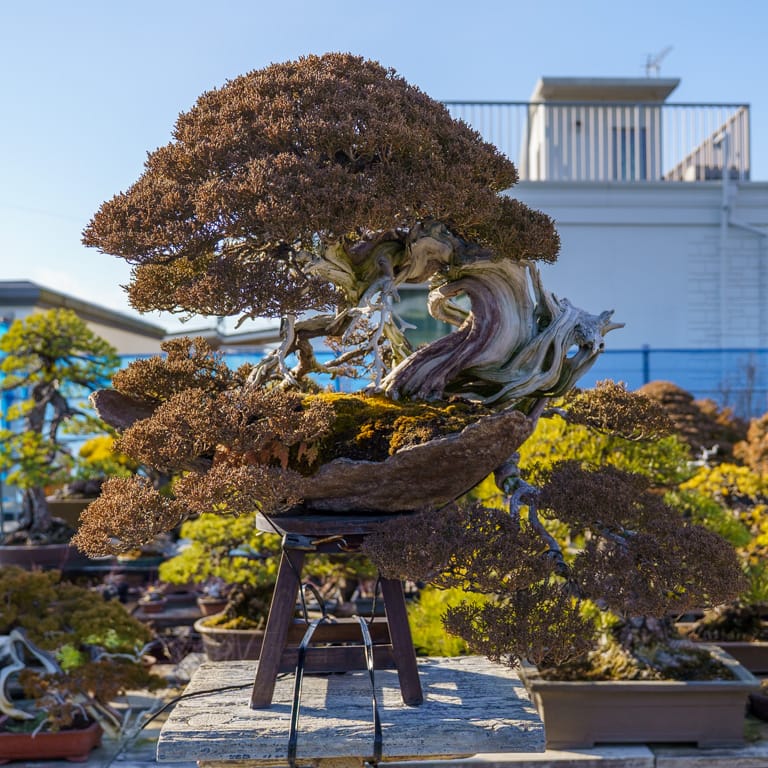
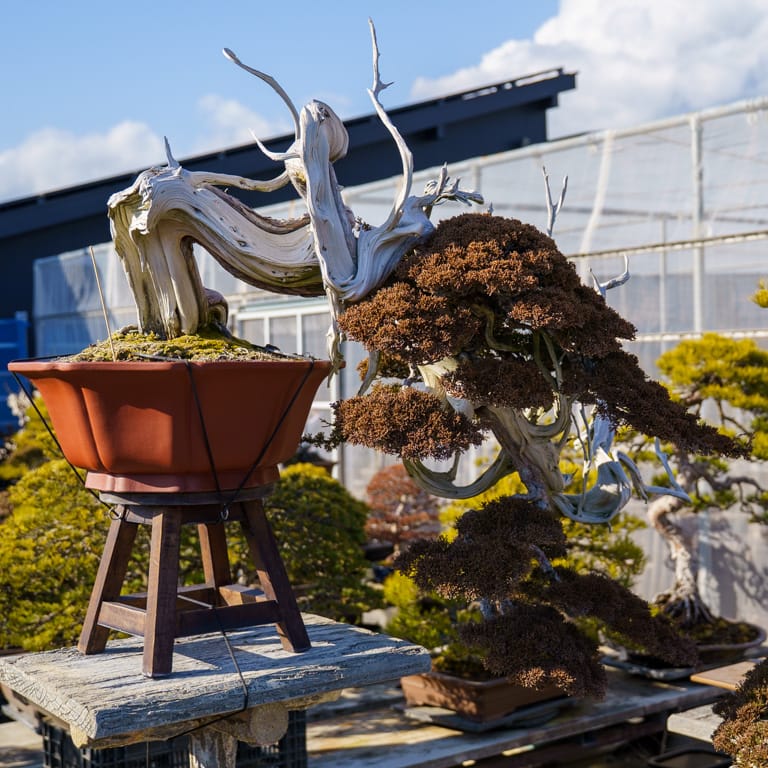
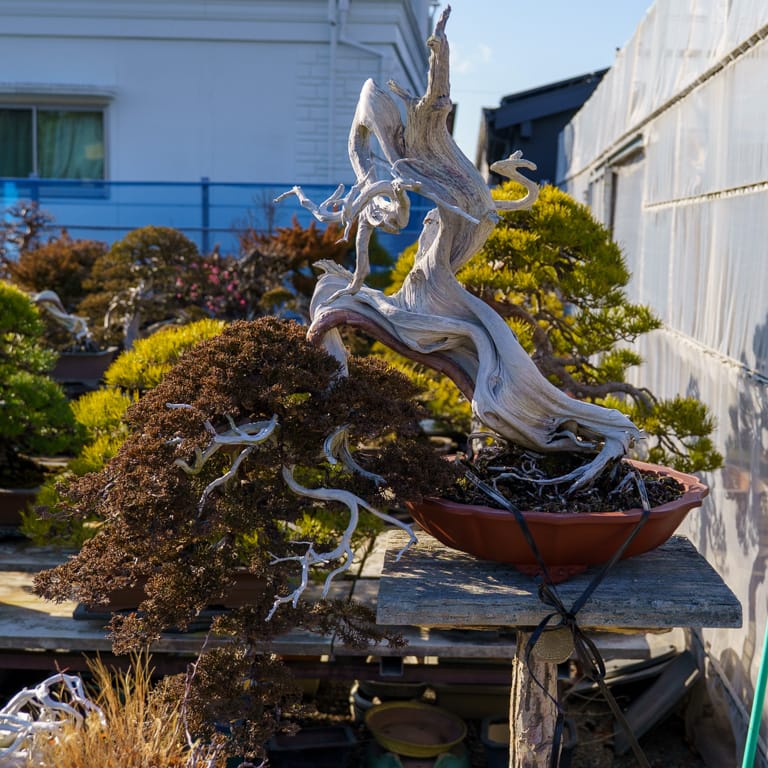
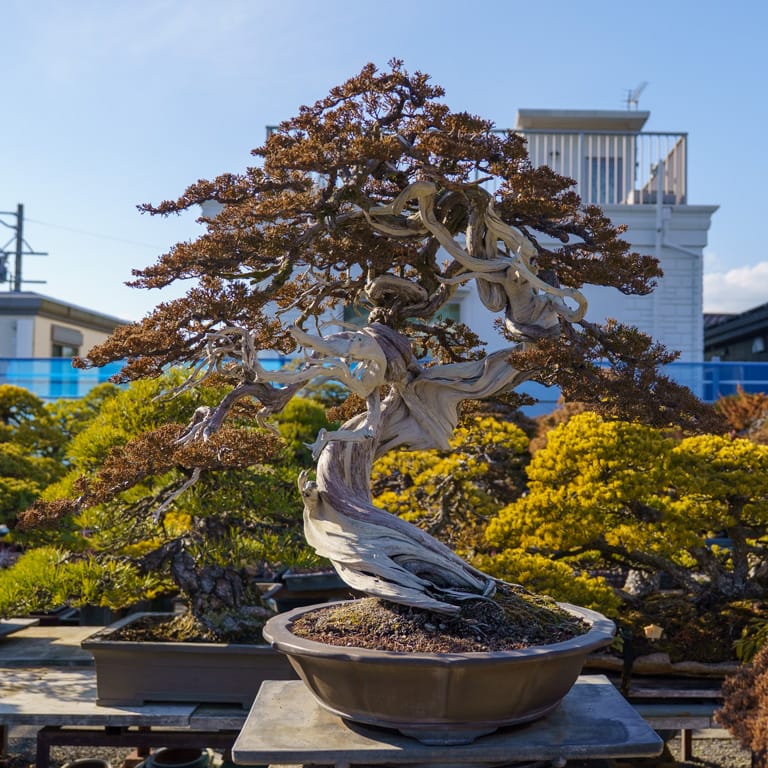
Toryu no mai

Shimpaku – Toryu no mai

Seeing Toryu no mai in person makes a good case for why we appreciate twisting lifelines and sinuous deadwood in juniper bonsai. When appreciating other junipers in the garden, it’s easy to see that tree movement and deadwood features provide the trees with interest, whether they’re super twisty or not.

Shimpaku

Informal upright shimpaku

Shimpaku

Semi-cascade shimpaku

The pines in the garden are exemplars of what we look for in massive pine bonsai: big trunks with fantastic bark and full branch pads arranged in an artful manner.

Black pine

Black pine

Black pine

Black pine

Black pine

Black pine – note the huge cascading branch

There are a few red pines in the garden too, including the famous specimen below.

Red pine

Red pine with fascinating movement and deadwood

For the past decade or so, Kimura is best known for more creative designs. One of the most recognizable is the hinoki forest planted on two interlocking slabs.

Hinoki

Hinoki

Many of the new works coming out of the garden are juniper plantings growing on manufactured stones.

Juniper

Junipers on manufactured stone

Planting young trees on stones has long been a great way to create a compelling composition with modest material. That said, where do so many small junipers come from? From air-layers!

Juniper air-layers

Juniper air-layers

Almost any material can be used in this fashion as long as there are branches big enough to serve as the trunks and shoots that can be wired to fill a silhouette.

Do you have an old, funky juniper that can be layered to create small trees? If so, start looking for compelling stones (or learn to make manufactured ones) and by the time the layers take you’ll have some great new projects lined up for the following repotting season.

Next up – highlights from the MidAtlantic Bonsai Societies’ Spring Festival.

  •  

A visit to the Bonsai Collection at Longwood Gardens

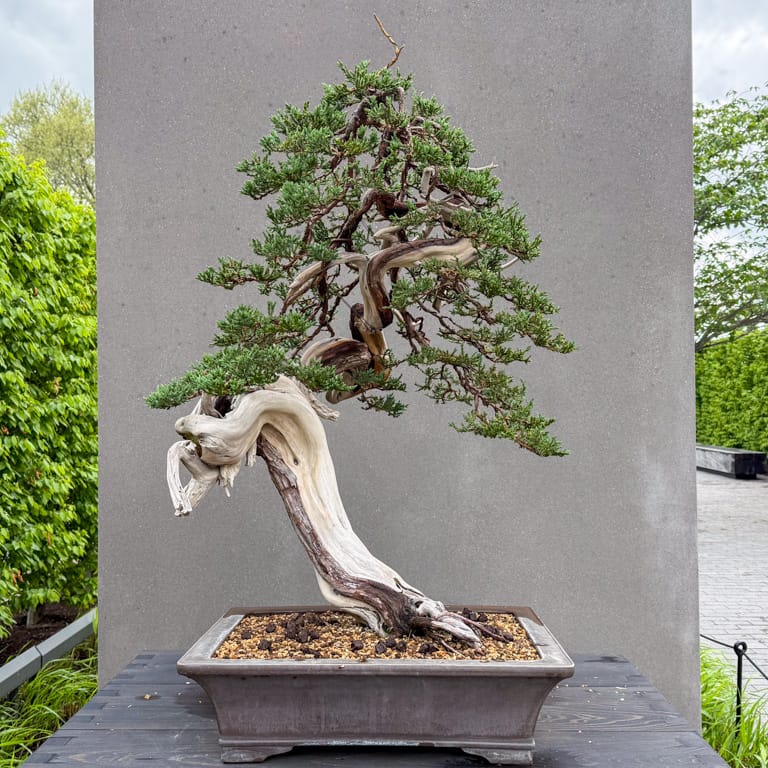
When I was in town for the MidAtlantic Bonsai Society’s Spring Festival I made a side trip to Longwood Gardens. Located in Kennett Square, Pennsylvania, Longwood features over 1000 acres spread over several properties of incredible gardens. It also features a bonsai collection.

The collection got its start almost 70 year ago with thirteen trees from Yuji Yoshimura including the zelkova below.

Japanese Zelkova
Training began in 1909

Today the collection features over 150 trees managed by curators Kevin Bielicki and Matt Turner.

American Arborvitae
Training began in 2016

San Jose Juniper
Training began in 1975

Two weeks from now, the team at Longwood Gardens will be hosting their first Bonsai Festival featuring demonstrations, lectures, vendors, an auction, and an exhibit featuring trees from six local clubs. It’s an ambitious program featuring presentations from Chase Rosade, Bill Valavanis, Bob Mahler, Sergio Cuan, Sean Smith, and Owen Reich. For anyone interested in visiting Longwood Gardens, seeing the bonsai on display, or enjoying presentations from the guest artists, I highly recommend attending.

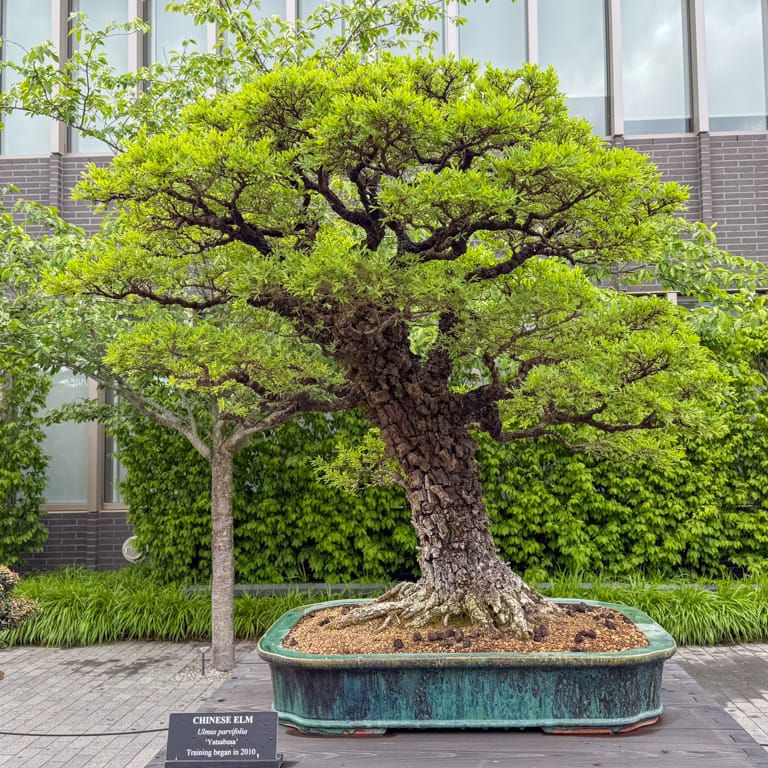
Chinese Elm ‘Yatsabusa’
Training began in 2010

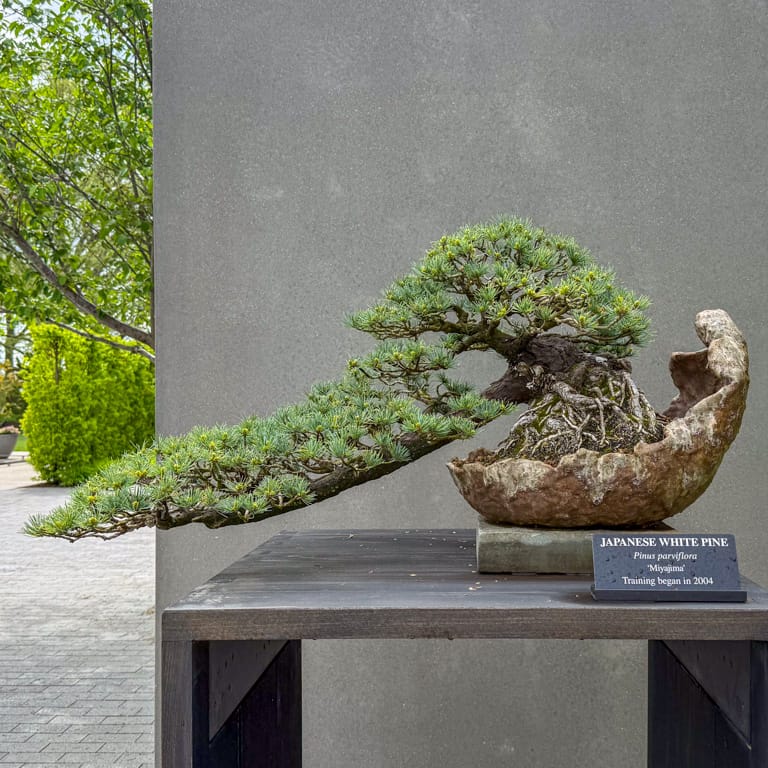
White Pine ‘Miyajima’
Training began in 2004

Although I missed catching up with curator Kevin Bielicki when I was in town, I had a chance to talk with him on the Bonsai Wire Podcast and learn more about his role at the garden and the challenges of managing such a diverse collection.

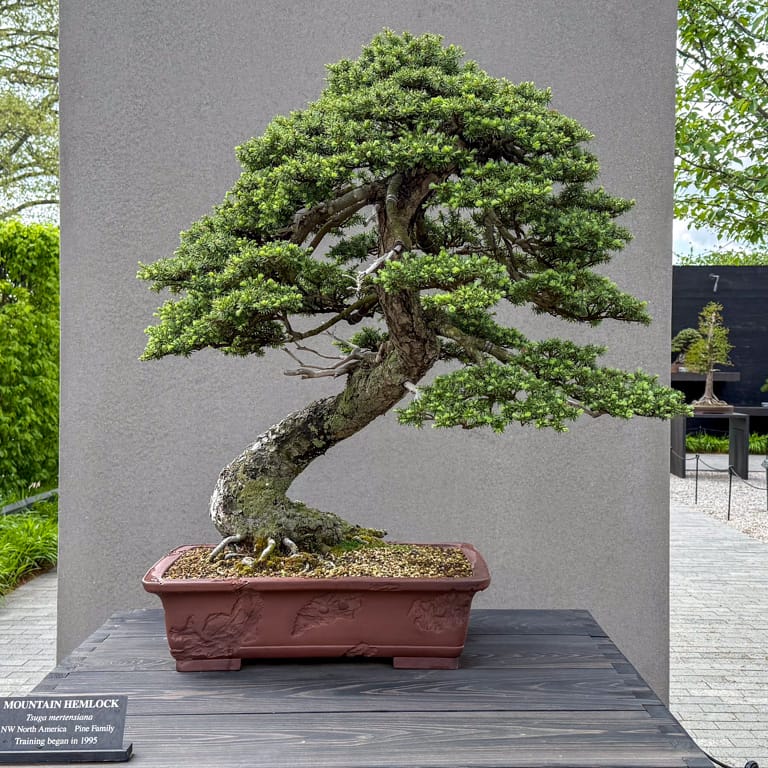
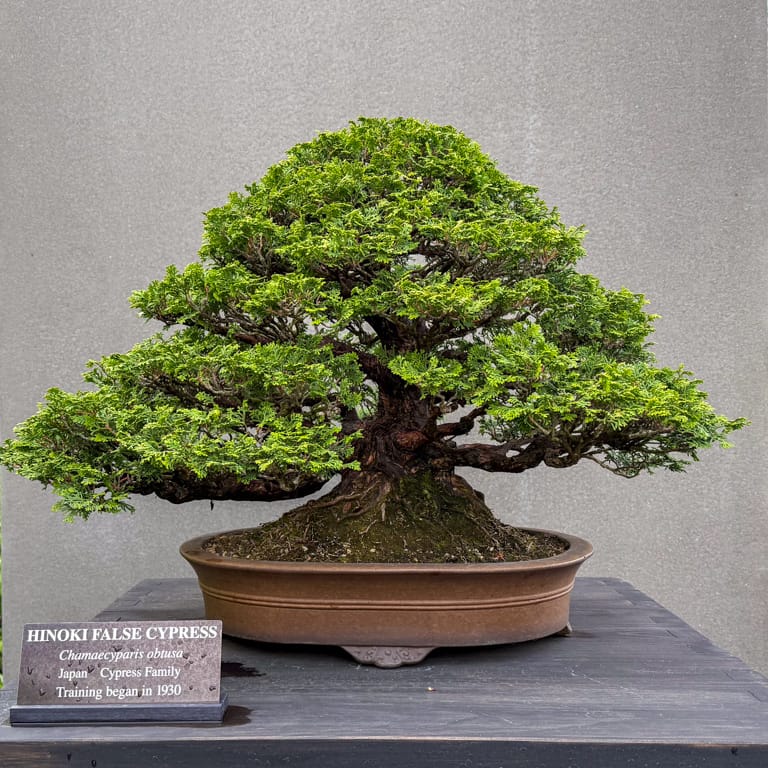
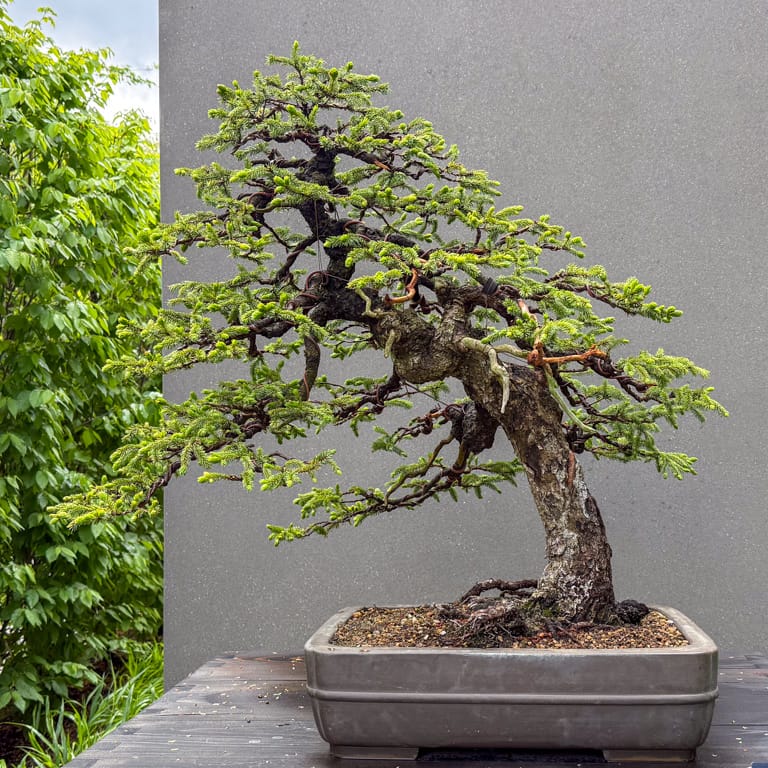
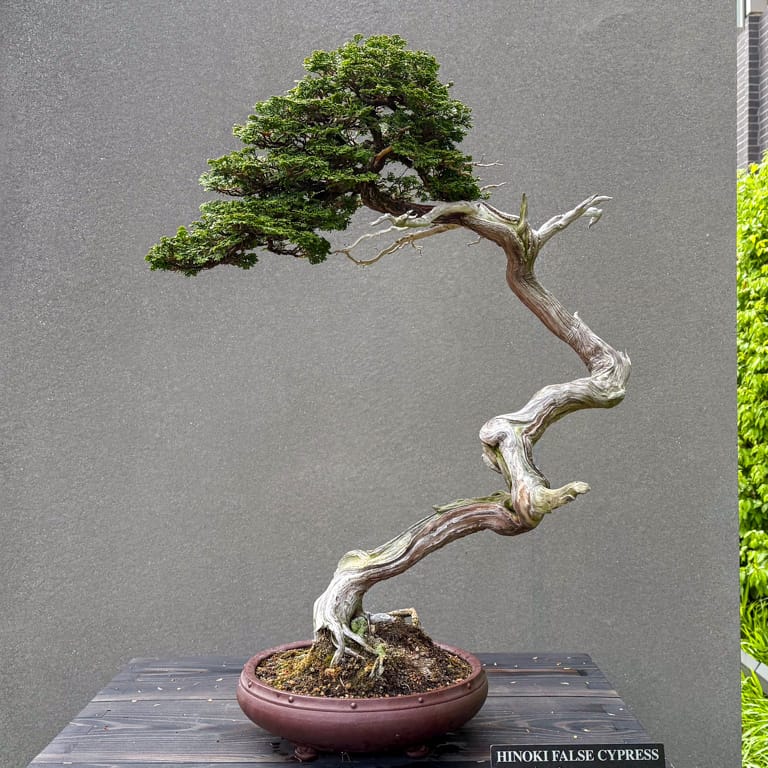
As you likely noticed, the trees pictured here represent a good mix of exotic and native species presented in a variety of styles and stages of development. It’s a really fun mix that offers challenges for the curator’s team and great opportunities to improve trees that have been bonsai for a long time.

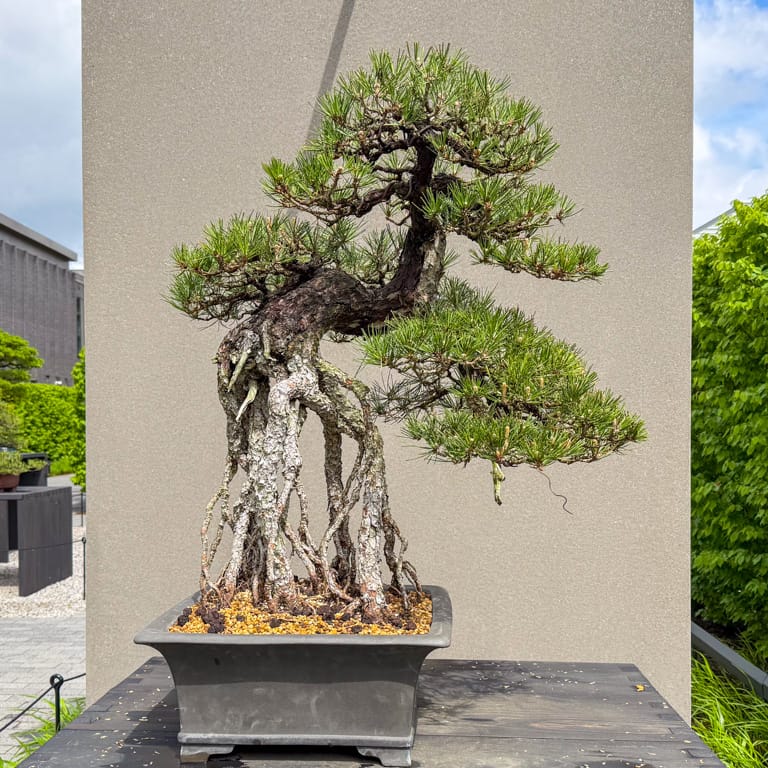
Japanese Black Pine
Training began in 1949

Mountain Hemlock
Training began in 1995

Hinoki Cypress
Training began in 1930

Ezo Spruce
Training began in 2004

Hinoki Cypress
Training began in 1970

Bonsai workshop

To learn more about the Bonsai Festival or catch the conversation with curator Kevin Bielicki, check out the links below.

News & Updates

[Regional Event]

  • The Bonsai Festival at Longwood Gardens will be held June 24-29 and feature lectures, demonstrations, vendors, and a special exhibit organized by local clubs. Guest artists include Chase Rosade, Bill Valavanis, Bob Mahler, Sergio Cuan, Sean Smith, and Owen Reich. Learn more about the Bonsai Festival.

[New Podcast Episode]

  • I recently had a great chat with Kevin Bielicki, curator of the Bonsai Collection at Longwood Gardens. Check out the episode on your favorite player or at the Bonsai Wire Podcast.

    Stay tuned, more episodes are on the way.

[Local Exhibition]

  • The Sei Boku Bonsai Kai is hosting their annual exhibit this weekend (June 13-14) at the San Mateo Garden Center in San Mateo, California. Show hours are 10:00 a.m. to 4:00 p.m. both days. Demonstration at 1:00 p.m. with Steve Jang Saturday and workshop (silent observers welcome) from 1:00 p.m. – 3:00 p.m. Sunday. Learn more at the Sei Boku website.

    We’ll be vending with tools, supplies, and a selection of small trees. If you’re in the area, come by and say hi!
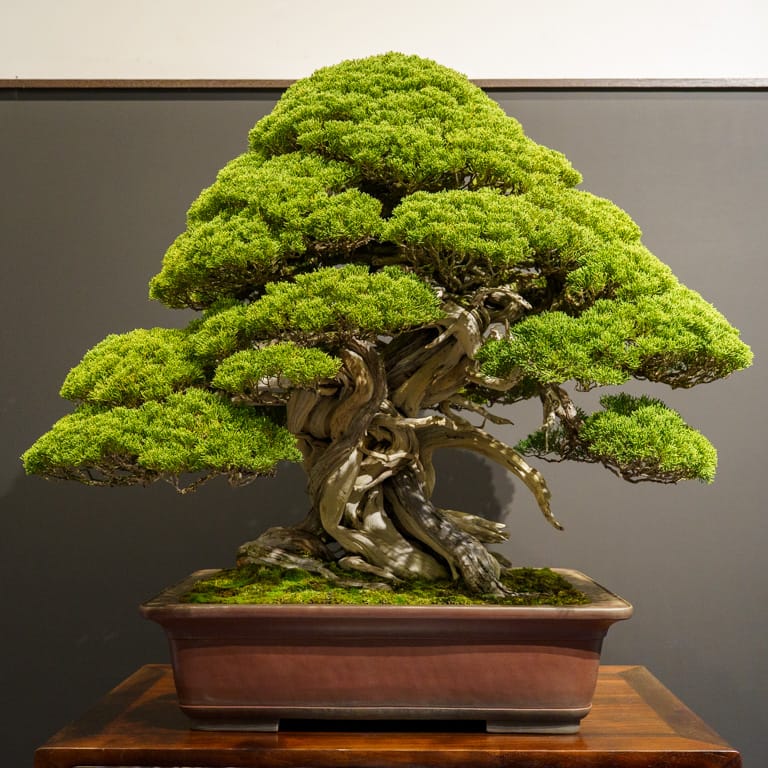
  •  

A visit to the National Bonsai & Penjing Museum

I spent World Bonsai Day at the National Bonsai & Penjing Museum in Washington, D.C. this year – a fitting location for the event!

It had been many years since my last visit to the museum which made it really fun to see how the trees had changed. It was also an opportunity to see a number of new trees, including one that was on loan for the event from Bob Chilton and Todd Stewart of Gardens Unlimited: a giant Chinese elm known as “Emperor.”

Chinese elm – “Emperor”

Another tree that was relatively new to the garden was a tall Douglas fir donated by Bjorn Bjorholm and Richard Le.

Douglas fir

The museum also includes two of the most famous trees in the country, John Naka’s “Goshin,” and the “Yamaki Pine,” a roughly 400 year-old tree, also known as the “Peace Tree,” gifted to the US in 1976.

Foemina juniper – “Goshin”

Japanese white pine – the ‘Yamaki Pine’

The Yamaki Pine was part of the 53 tree donation that kicked off the Museum 50 years ago. Celebrations for the anniversary are in the planning stages and will be held later this year.
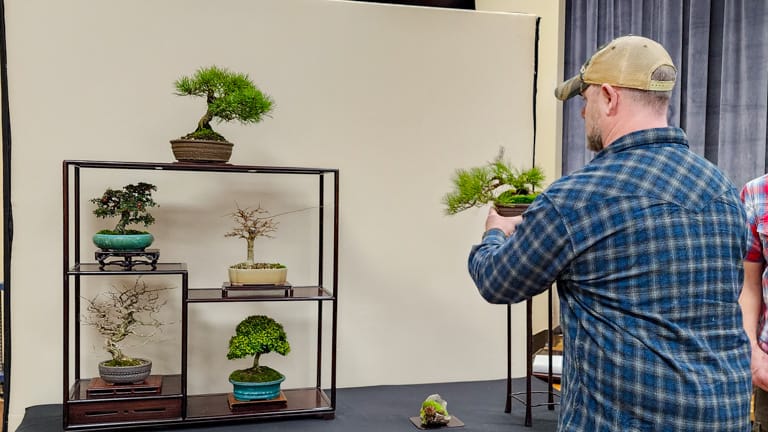
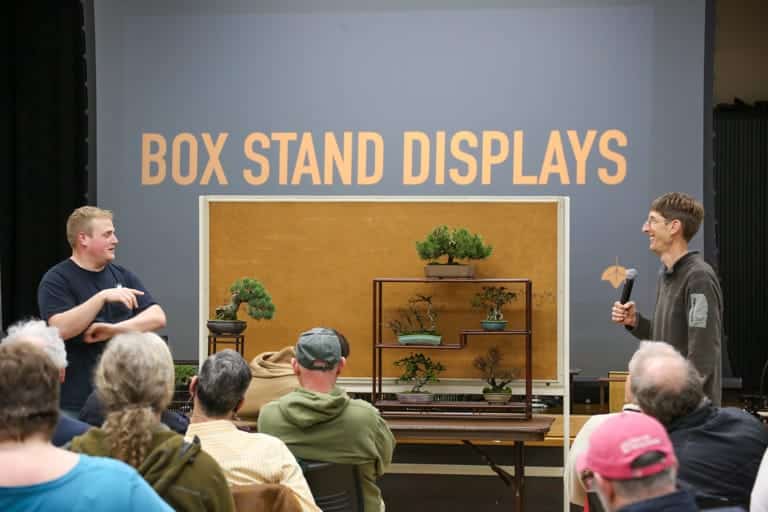
R.A.F. Dwarf Scots pine

Ezo spruce

The Museum is somewhat of a living time capsule as it represents bonsai that came into the collection from different regions at different times. And although the trees continue to change as they mature, they represent initial inspirations of diverse artists making it a great place to study our country’s evolving history of bonsai practice.

Bald cypress

Japanese beech, white pine, Korean hornbeam

The National Bonsai and Penjin Museum is a great place to visit and the price – admission is free – is hard to beat. If you have a chance to visit, I highly recommend it.

Trident maple

Japanese maple

Not long after my visit, I had a chance to speak with the Museum’s curator, Michael James, for a discussion on the Bonsai Wire Podcast. It was great to learn about Michael’s tenure at the Museum and how many doors volunteering at the Museum can open.

The above trees can be found at the Museum in the main courtyard, in the North American Pavilion, or the Japanese Pavilion. Up next: trees from the Chinese Pavilion.

News & Updates

[Local Event]

  • The East Bay Bonsai Society will be host their annual bonsai auction on Wednesday, July 8th, at Lakeside Garden Center, 666 Bellevue Avenue, in Oakland, California. The auction will start at 7:00 pm with a preview at 6:00pm. Auction is open to all buyers. Established and starter bonsai trees, pots, tools, and more! Credit cards, checks and cash accepted. Sales tax added to purchases.

[Exhibit Books]

  • Catalogs from the 100th Kokufu exhibit will be available next month! Stay tuned for details in the coming weeks.

[Pacific Bonsai Expo – Vendors]

  •  

Highlights from the National Bonsai & Penjing Museum’s Chinese Pavilion

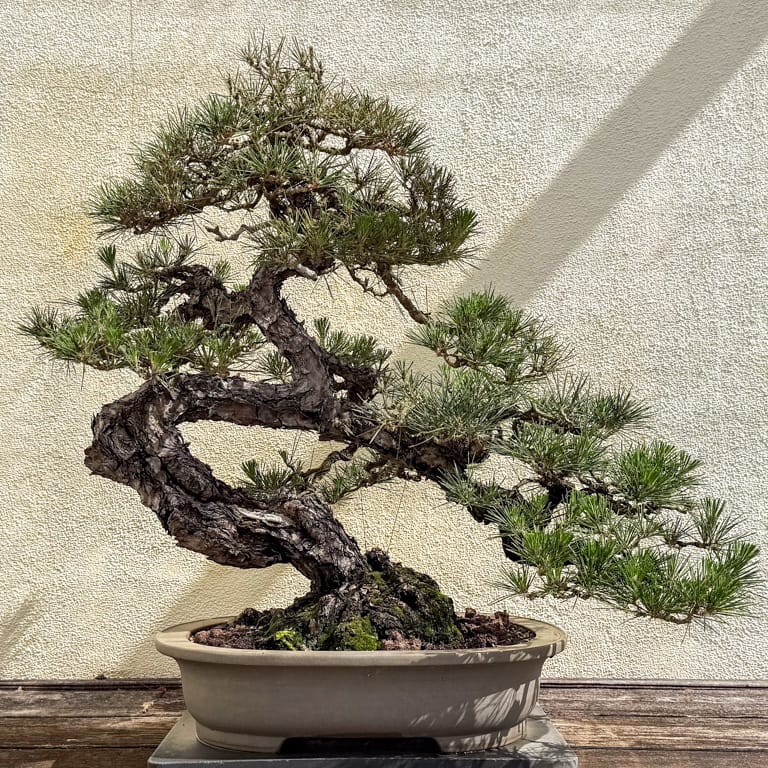
Imagine you’re in charge of maintaining the trees in the National Bonsai & Penjing Museum’s Chinese Pavilion. Your experience is with bonsai, but from a Western perspective. You begin with a tree like the black pine below.

Japanese black pine

The tree appears to have been trained as a literati, or bunjin bonsai, but it’s in the Chinese Pavilion so you look for signs that the tree may have been trained with different aesthetic goals in mind.

Nearby, another pine catches your attention. This one differs from your idea about what bonsai, or possibly what penjing, typically look like. You look closer.

Black pine

There’s a roughly asymmetrical silhouette, the foliage is arranged in pads, and the primary branches extend mostly downward from the trunk, and yet the tree looks different somehow.

Thinking about how penjing differs from bonsai can be a fascinating exercise whether or not you’re familiar with concrete design goals for either approach to growing small trees in containers.

The trees in the Chinese Pavilion offer wonderful opportunities to study the apparent differences between bonsai and penjing. They might lead you to ask, is there room for both in my collection? Are there ways of incorporating one approach with the other for a given tree? Are some trees better candidates for development one way or the other?

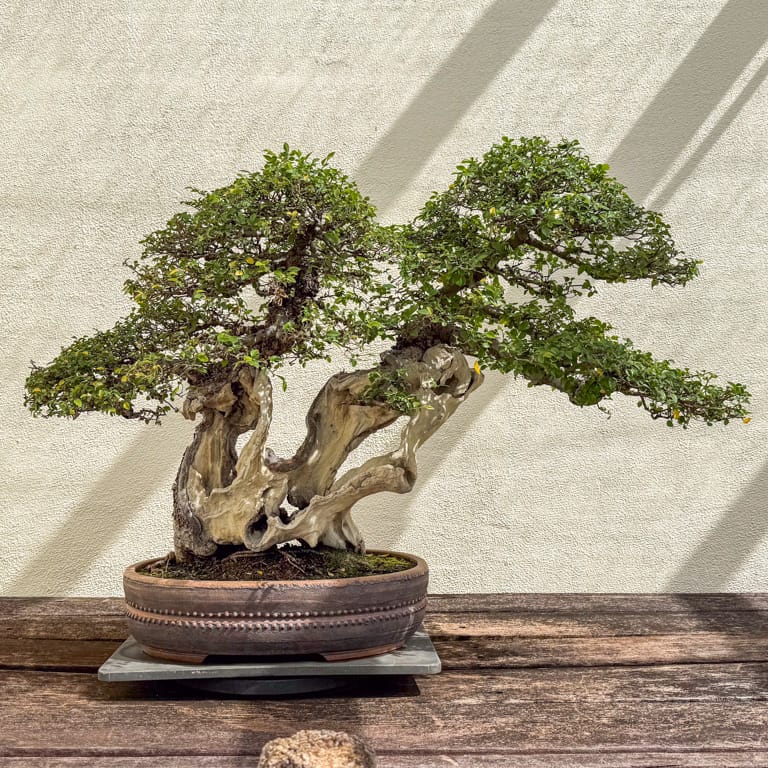
Consider the Chinese elms below. The first may not look out of place at most bonsai exhibits.

Cork bark Chinese elm

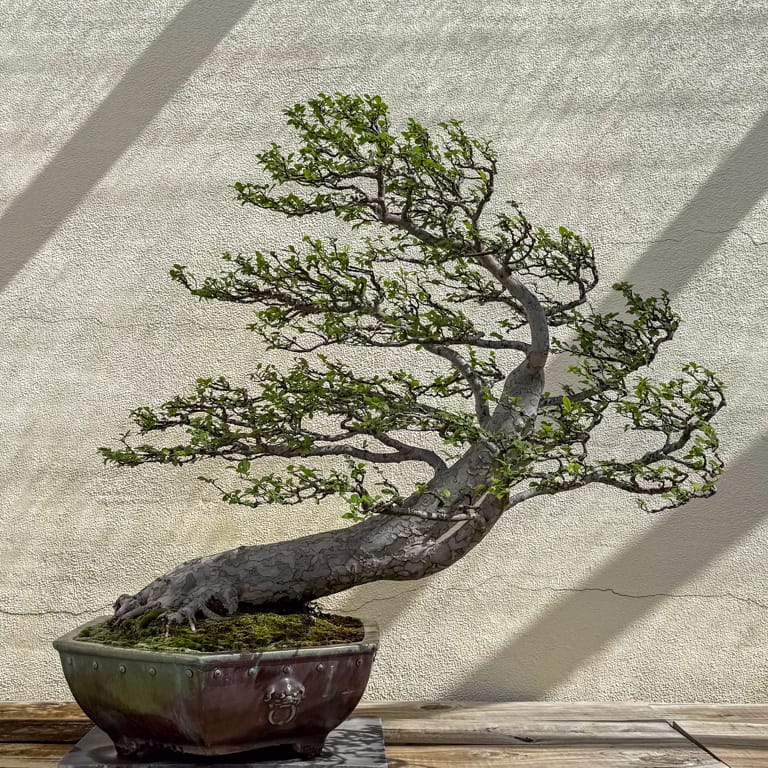
The second might catch our attention – or is it a typical example of a wind-influenced design?

Chinese elm

The above elm suggests that the line between bonsai and penjing may involve extent. For example, it’s common to create bonsai designs in which a tree takes on a form that evokes an environment with strong prevalent winds. If we dial this up, a tree may look like its branches are actively blowing in a strong wind. As our artistry suggests stronger and stronger wind, do we cross into penjing or can we still say we are working within common conceptions of bonsaI?

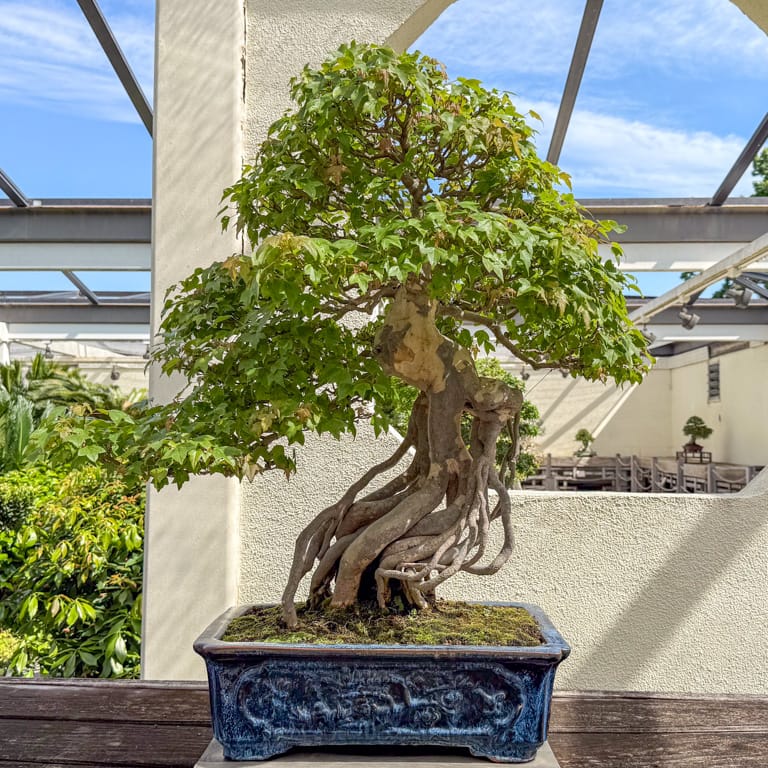
We can apply the same questions to basic design precepts. The trident maple below is a good example of a tree with a trunk that mostly flows to the right but the apex and key branch both flow to the left – a very common pattern. The trunk, however, is in this case composed of exposed roots – a less common feature of trident maple bonsai.

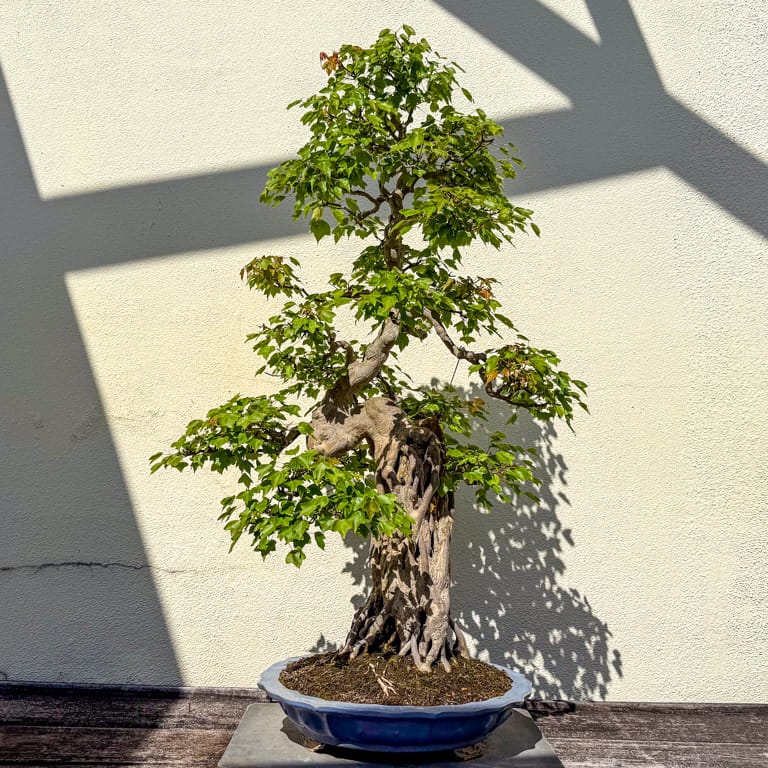
Trident maple

What if we keep the basic elements the same but exaggerate the height of the upper trunk – is this still bonsai or have we ventured into penjing territory?

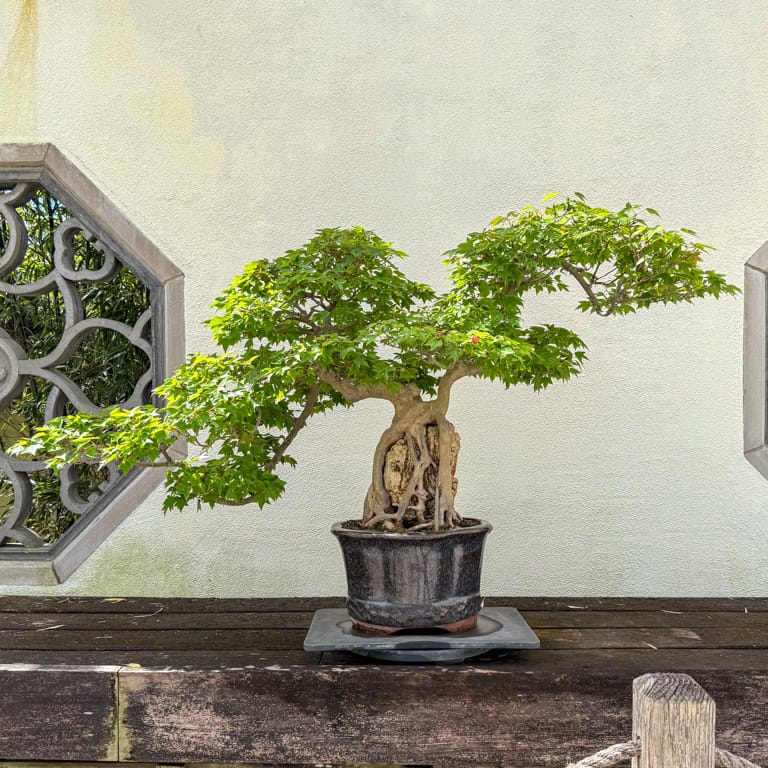
Trident maple

What about when there are multiple apices, key branches of great length, and very strong indicators of flow to the left and right – have we crossed a line from bonsai to penjing?

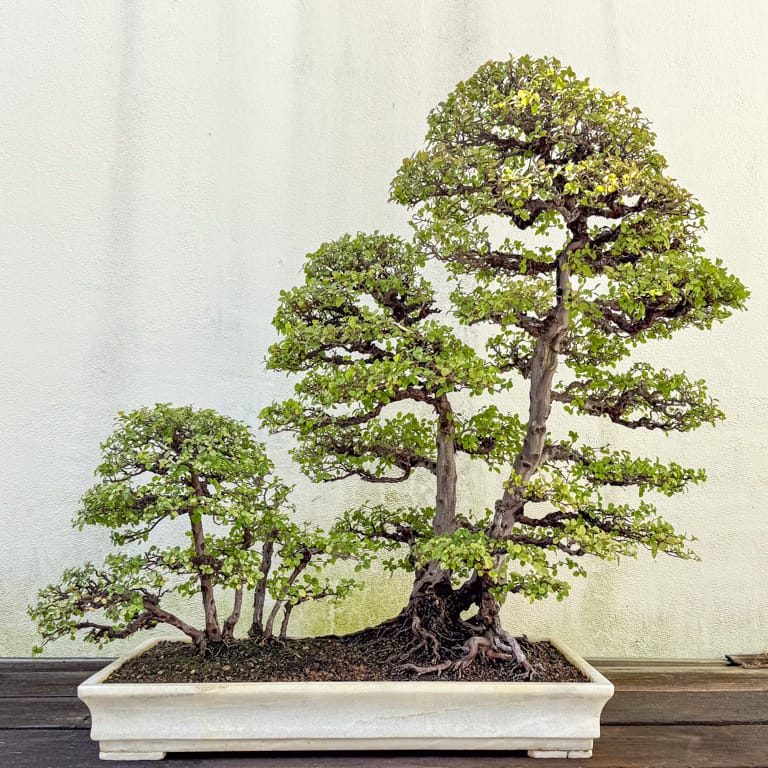
Trident maple

Because I’m not well-versed in the tropes of penjing design or familiar with the techniques, I try to leave judgement aside and focus on appreciating the differences in approach. I also look for signs that the trees have been carefully cultivated over long periods of time.

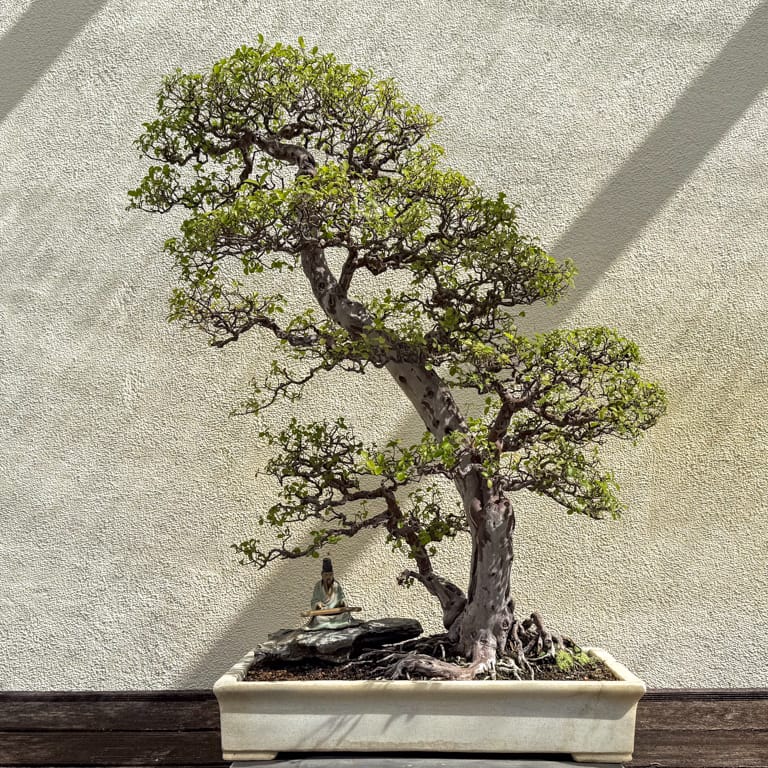
The branches on the pauper’s teas below show great age and make for very compelling designs.

Pauper’s tea – Sageretia thea

Pauper’s tea

Both Pauper’s teas have branches that convey great age (the branches have good size, movement, taper, and complexity), but they aren’t like each other (the former’s branches are mostly lateral whereas the latter’s branches extend upwards as much as outward).

I really appreciate the work that Michael James and the curator’s team at the Museum do to keep these trees in shape. It can’t be easy to work in different idioms, but I imagine it’s a lot of fun.

  •