Reading view

Art is a lie that makes us see the Truth

That quote, in all its incarnations, has been attributed to artists, writers, poets, philosophers, actors.

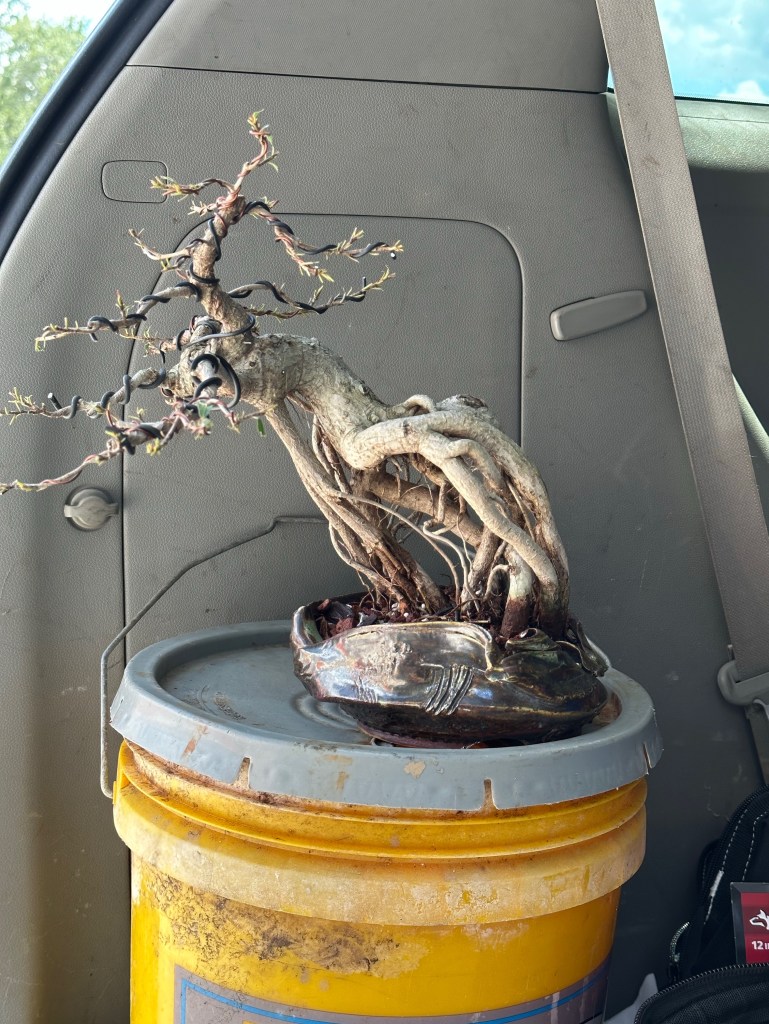
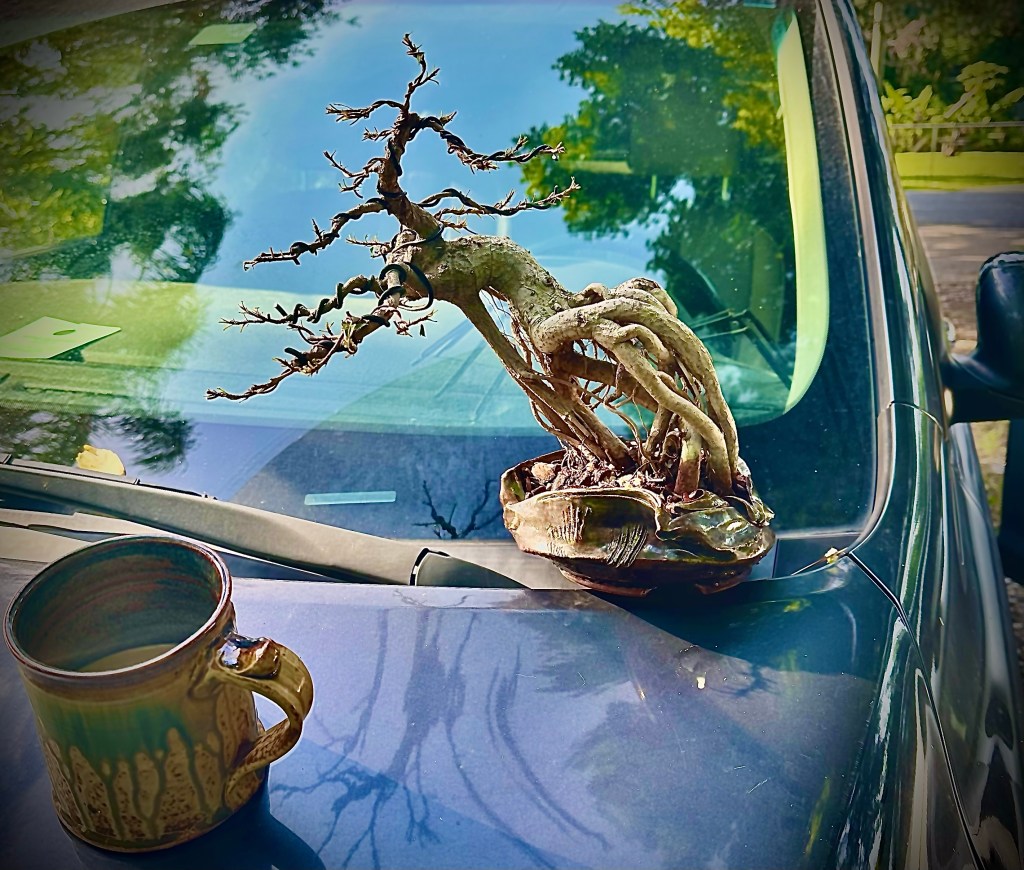
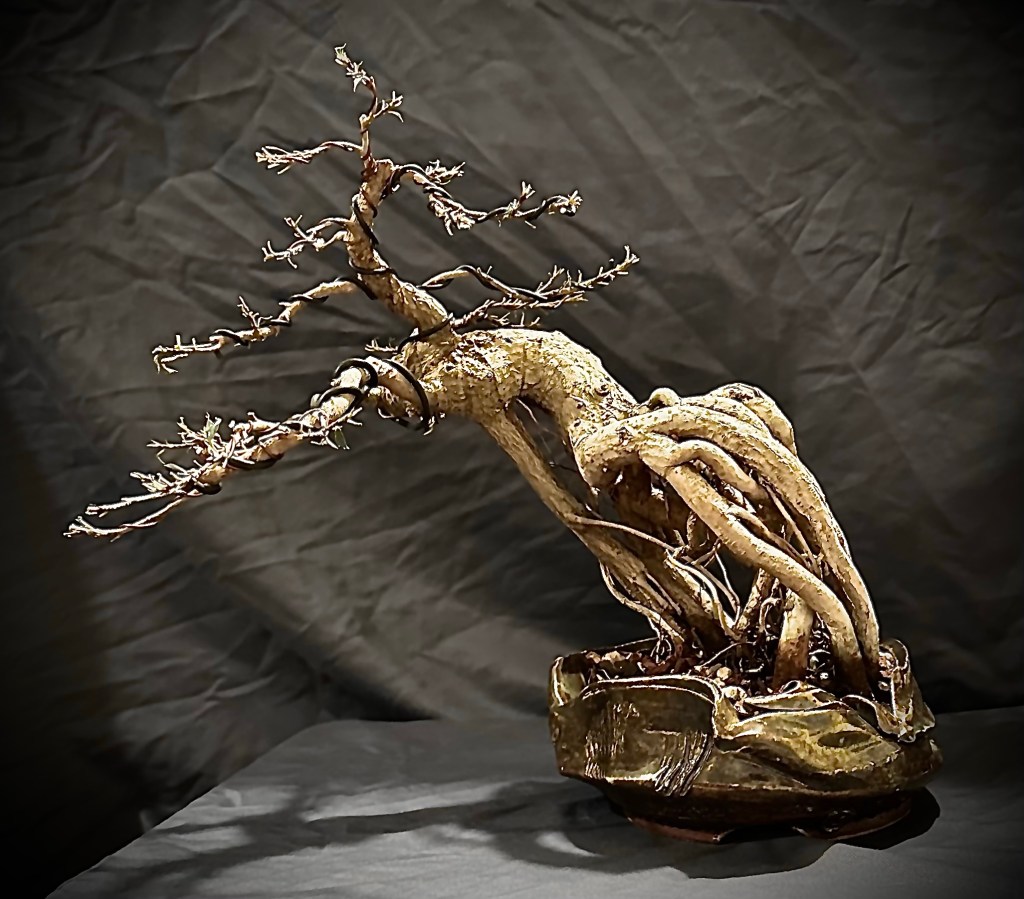
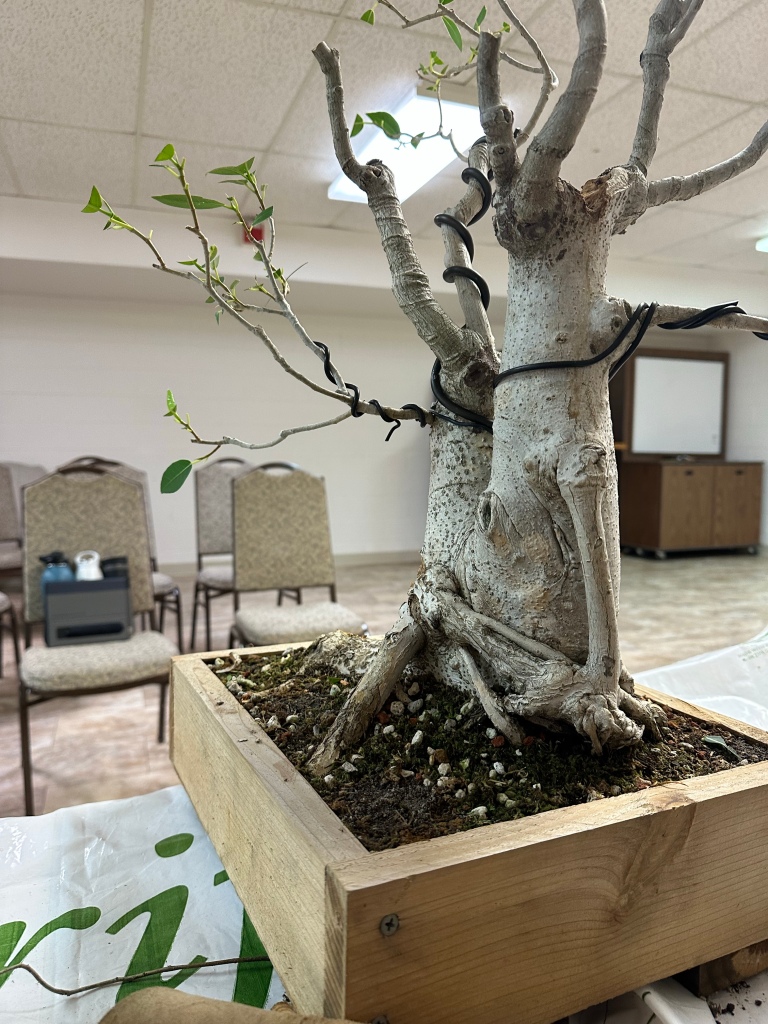
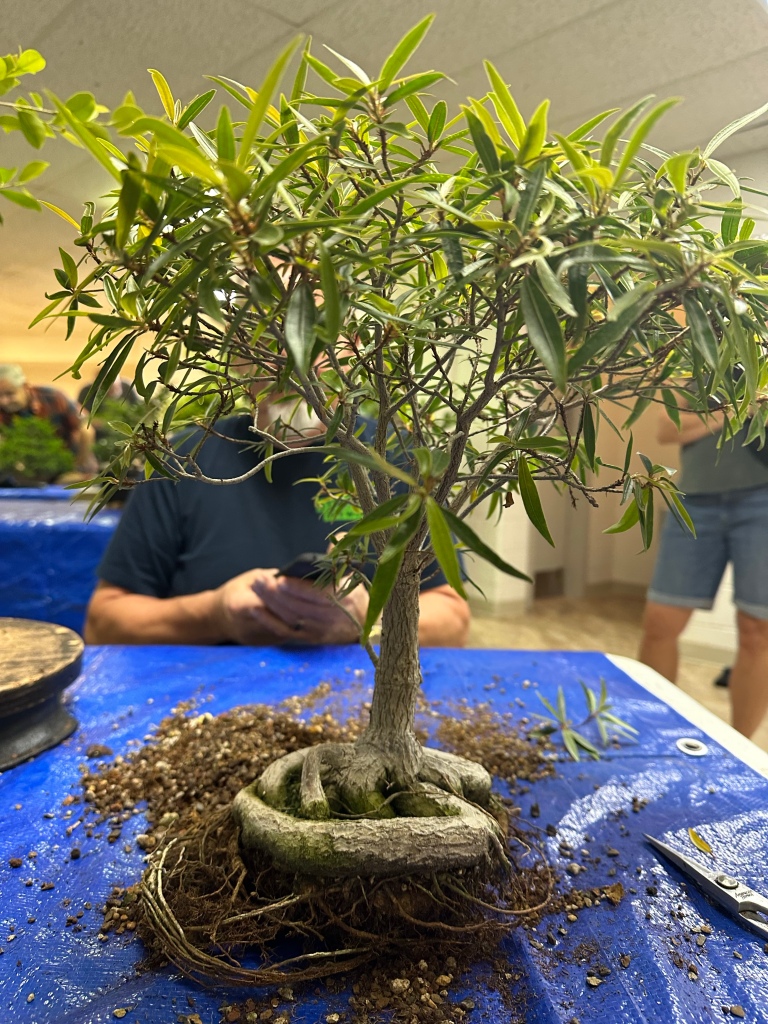
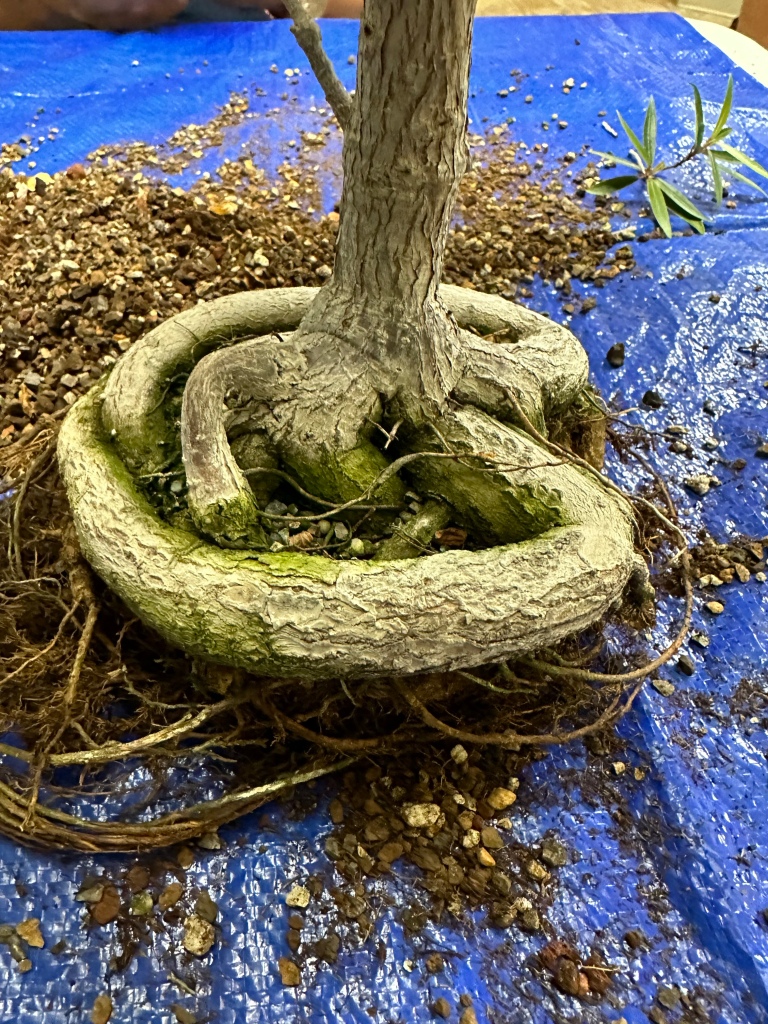
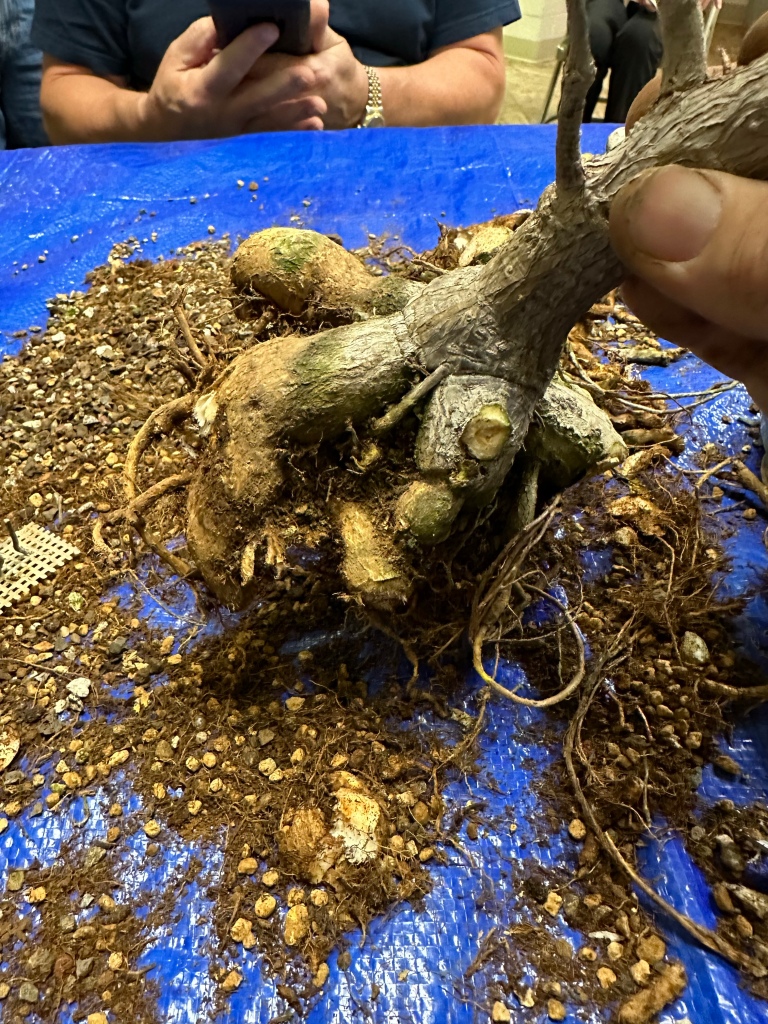
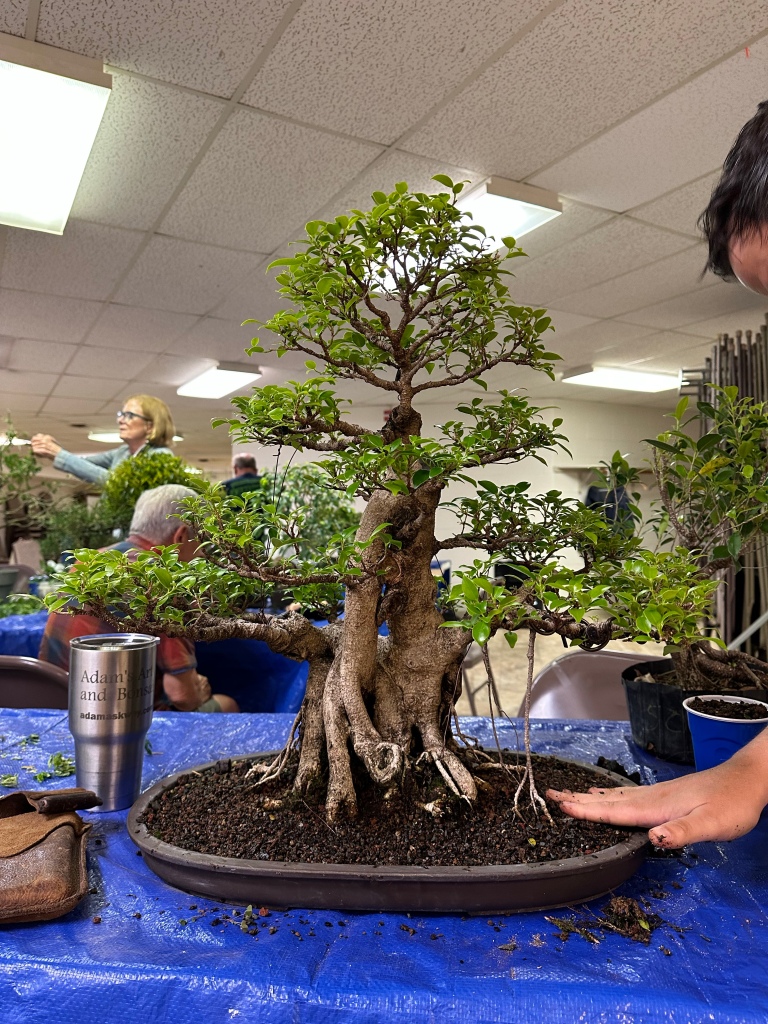
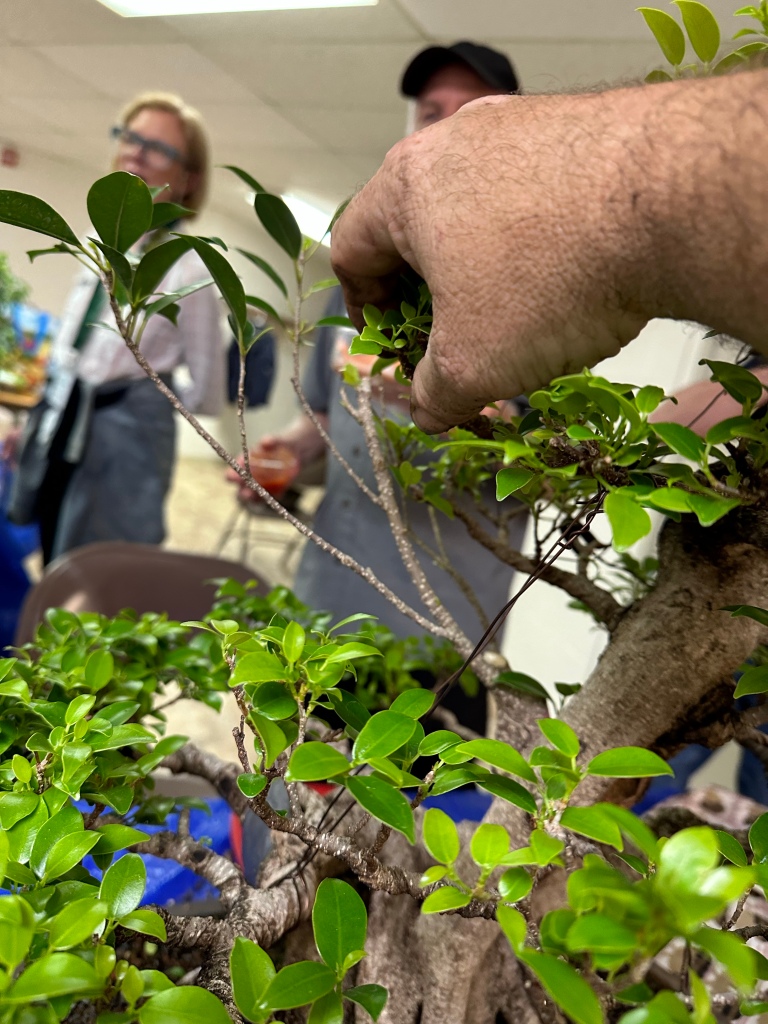
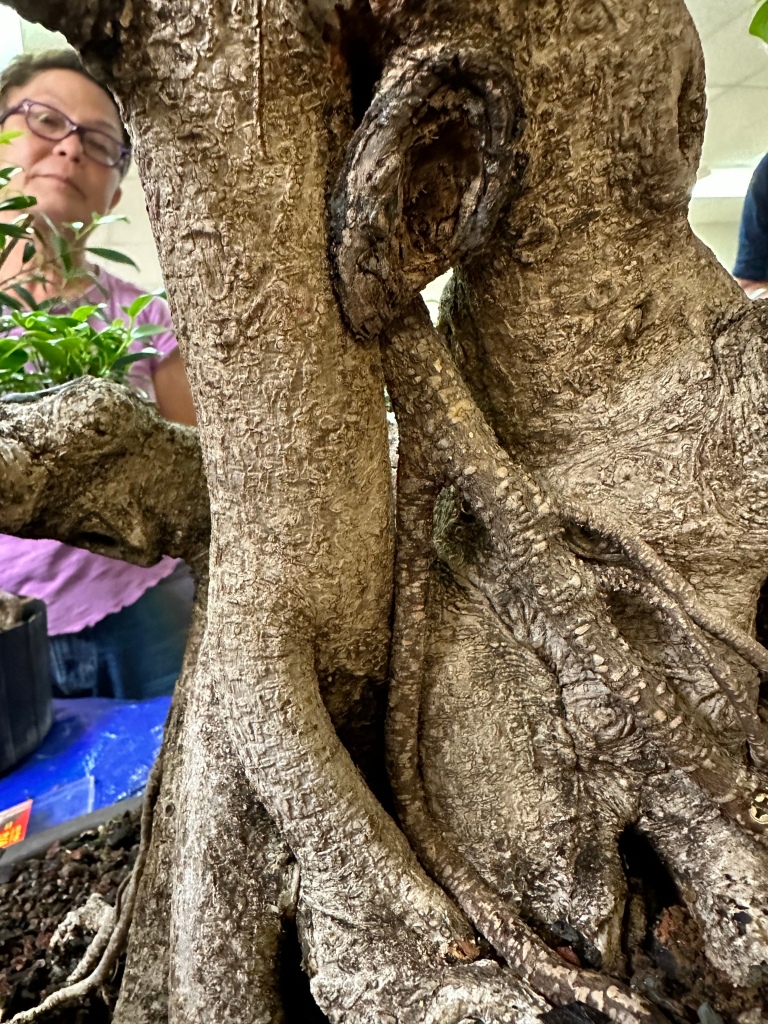
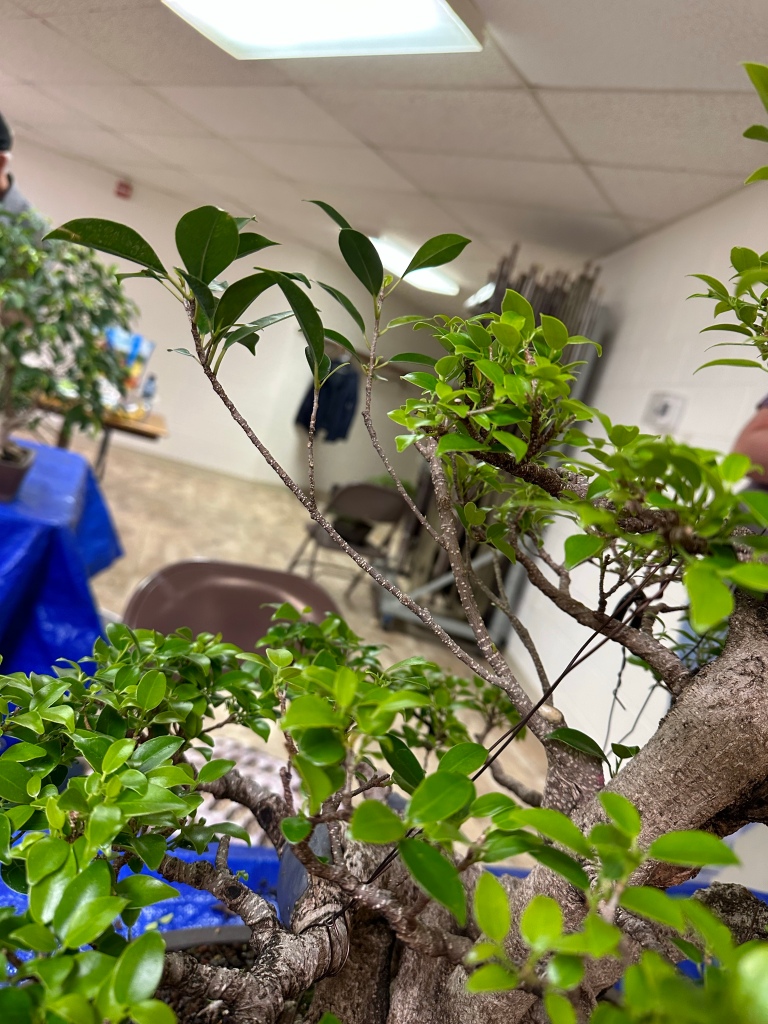
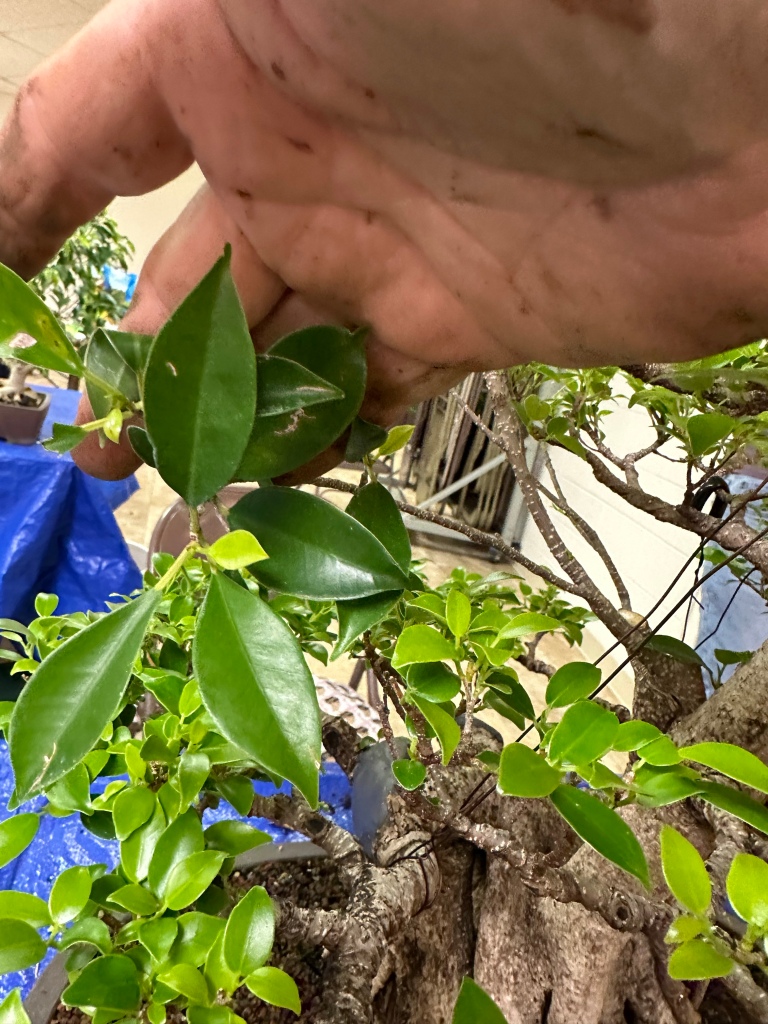
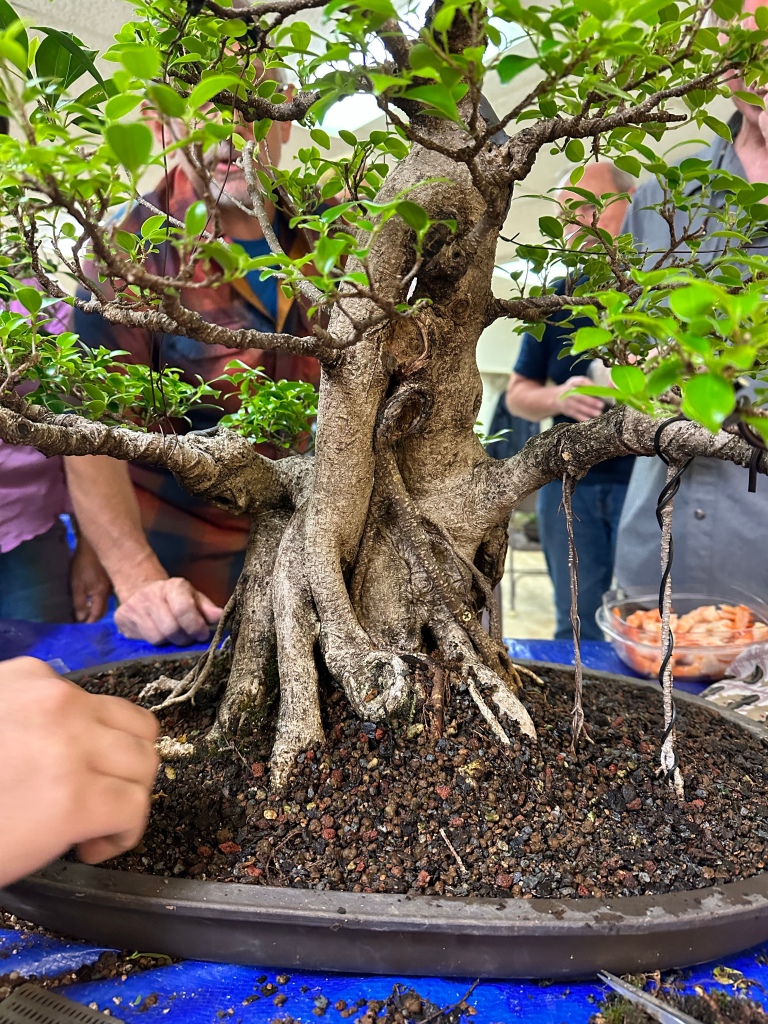
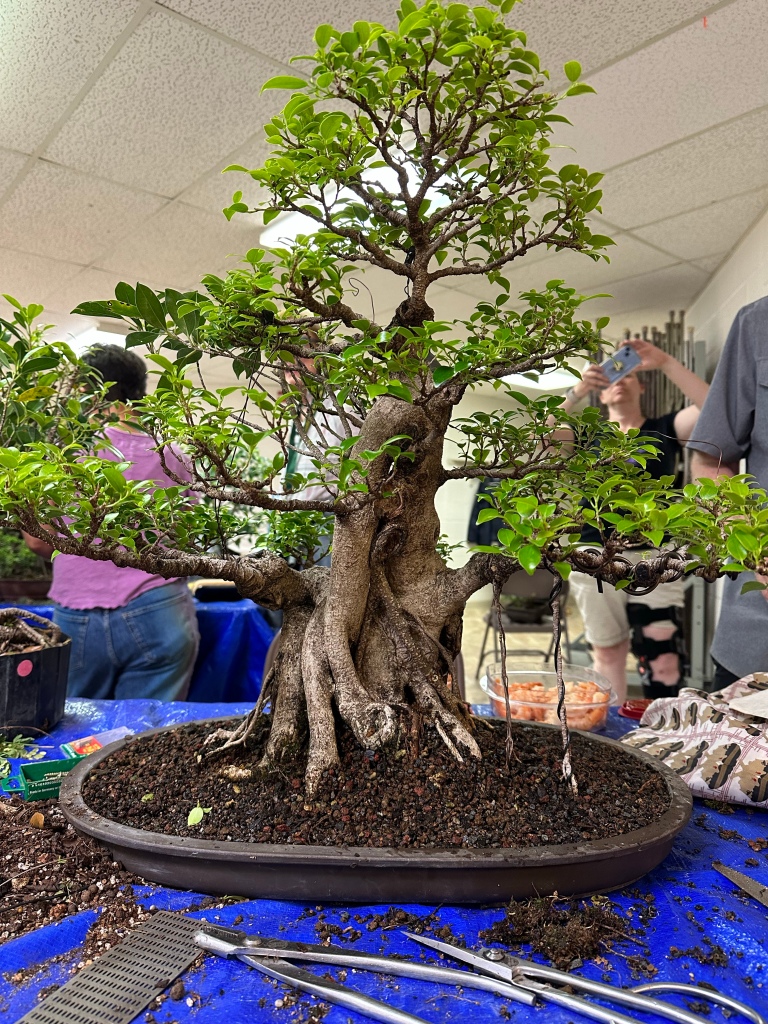
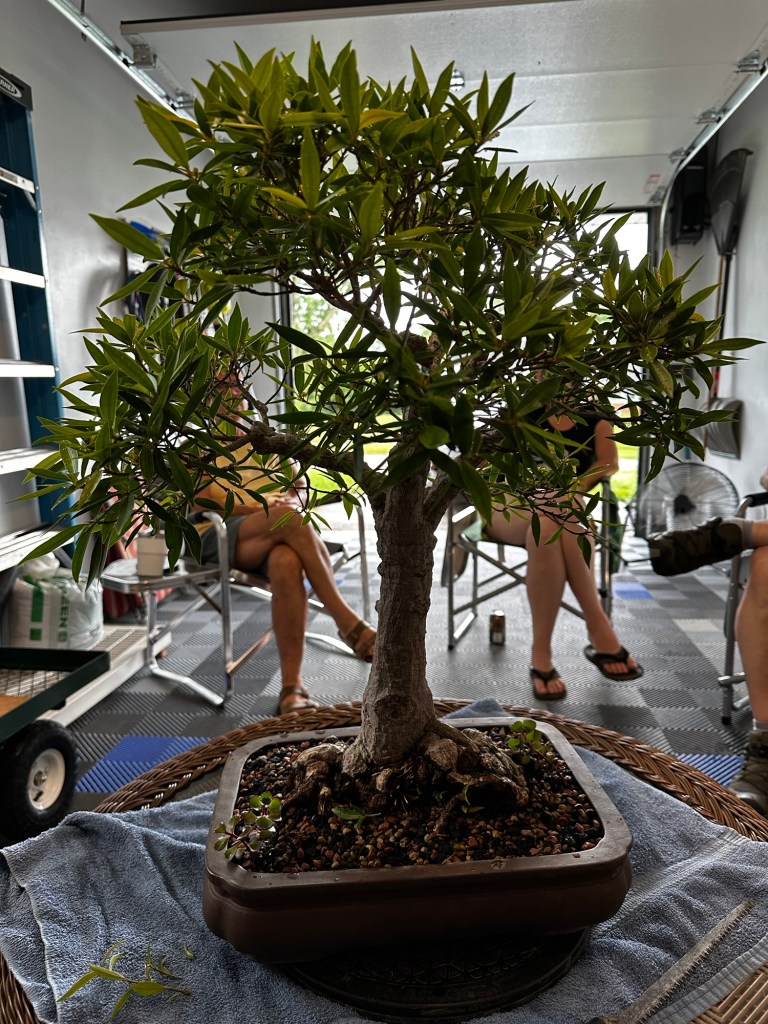
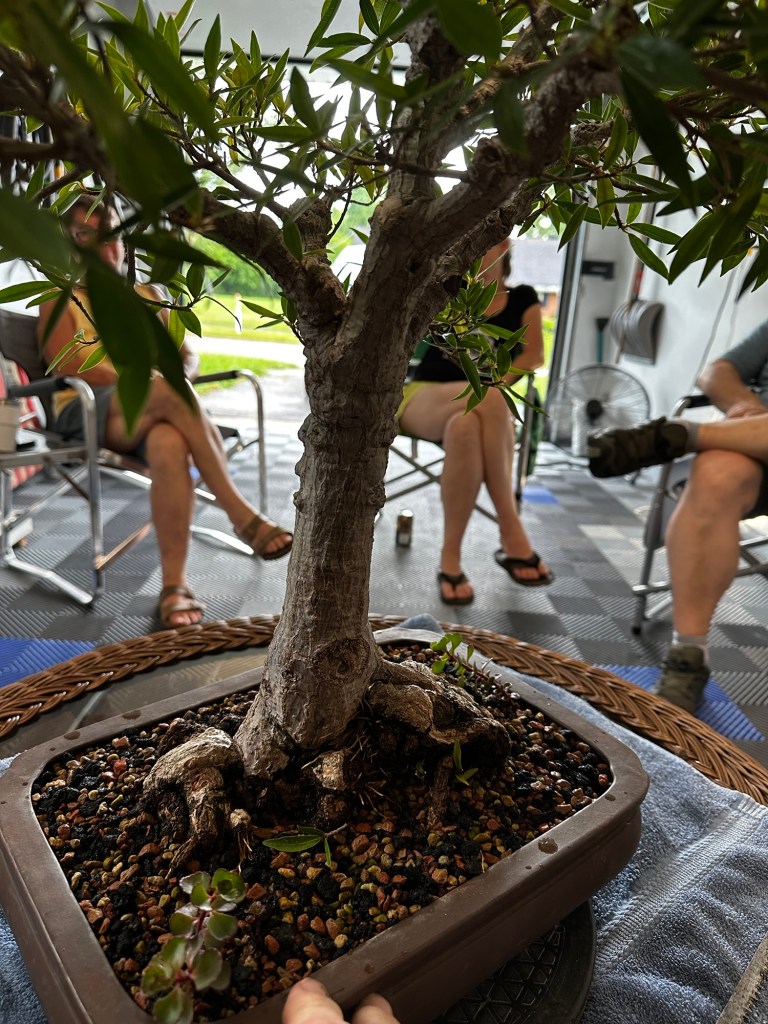
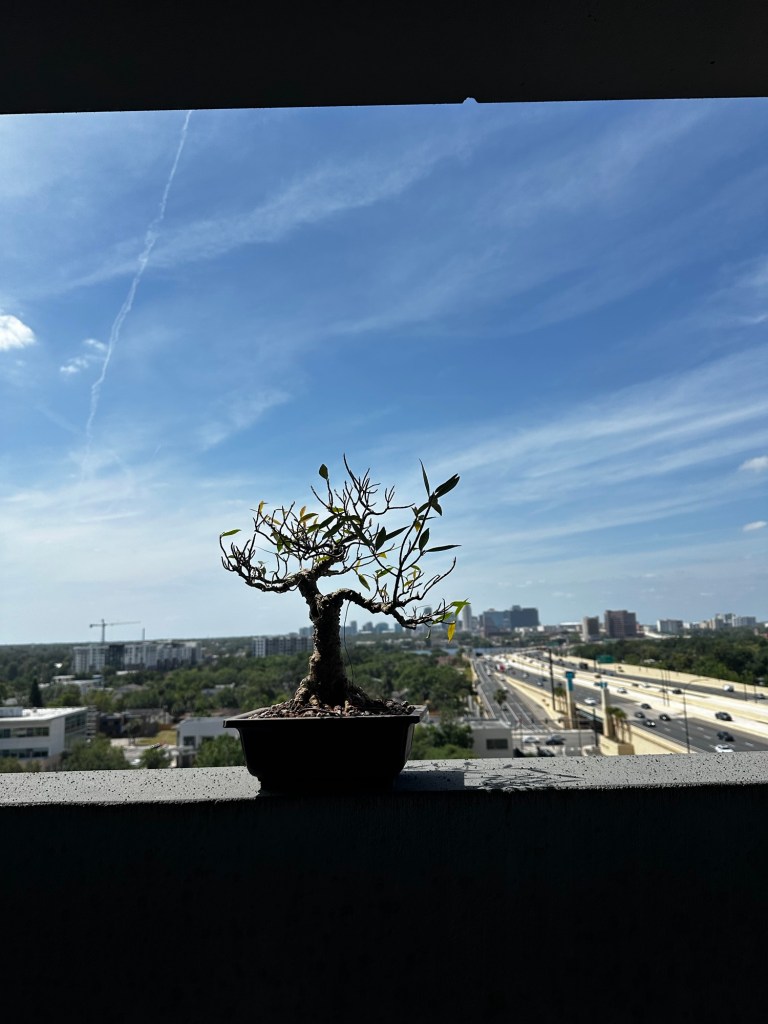
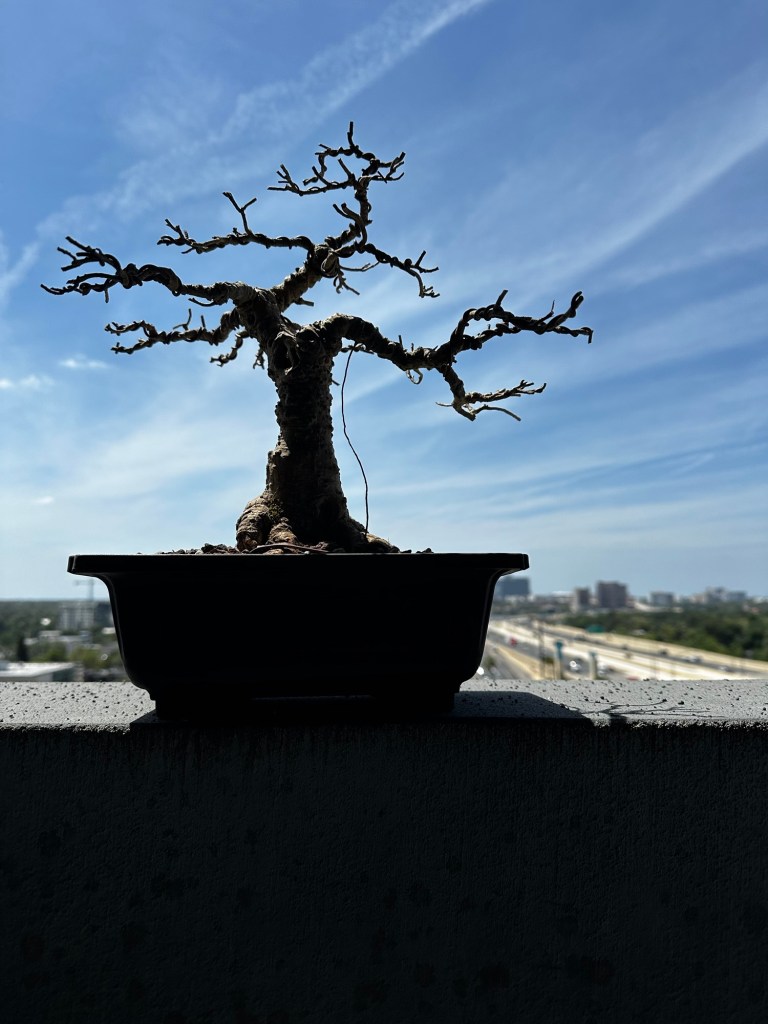
Like this Ficus microcarpa, the quote comes in many varieties. This tre was once called “nitida”. Kinda like a tiger bark but without the bark.

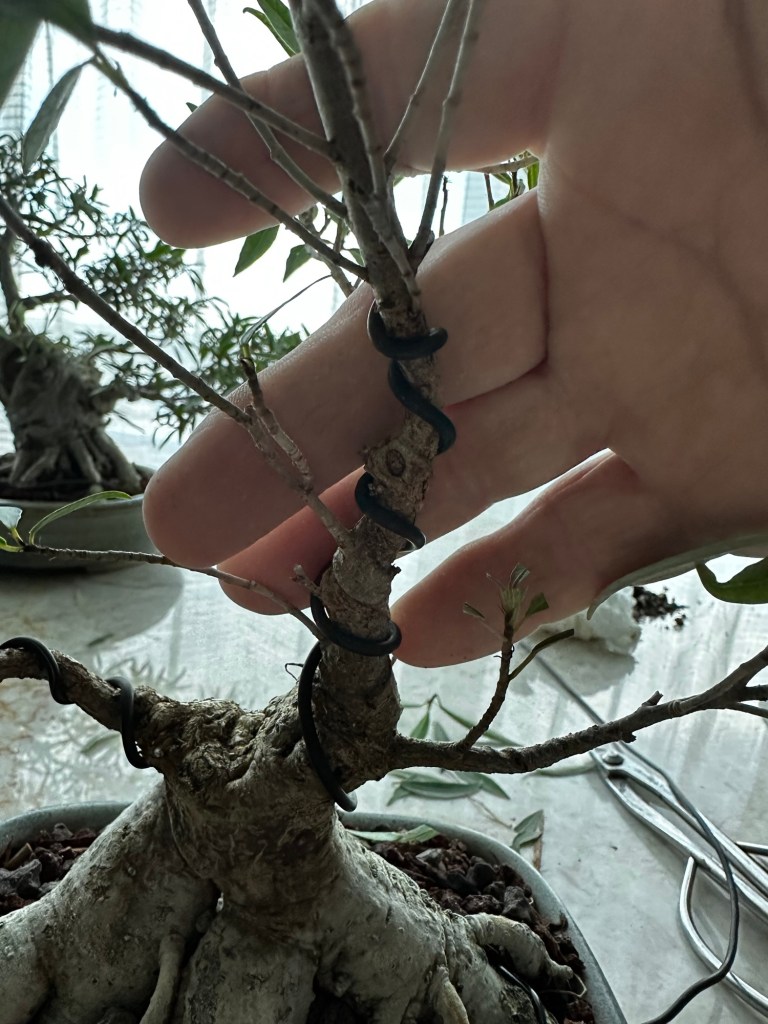
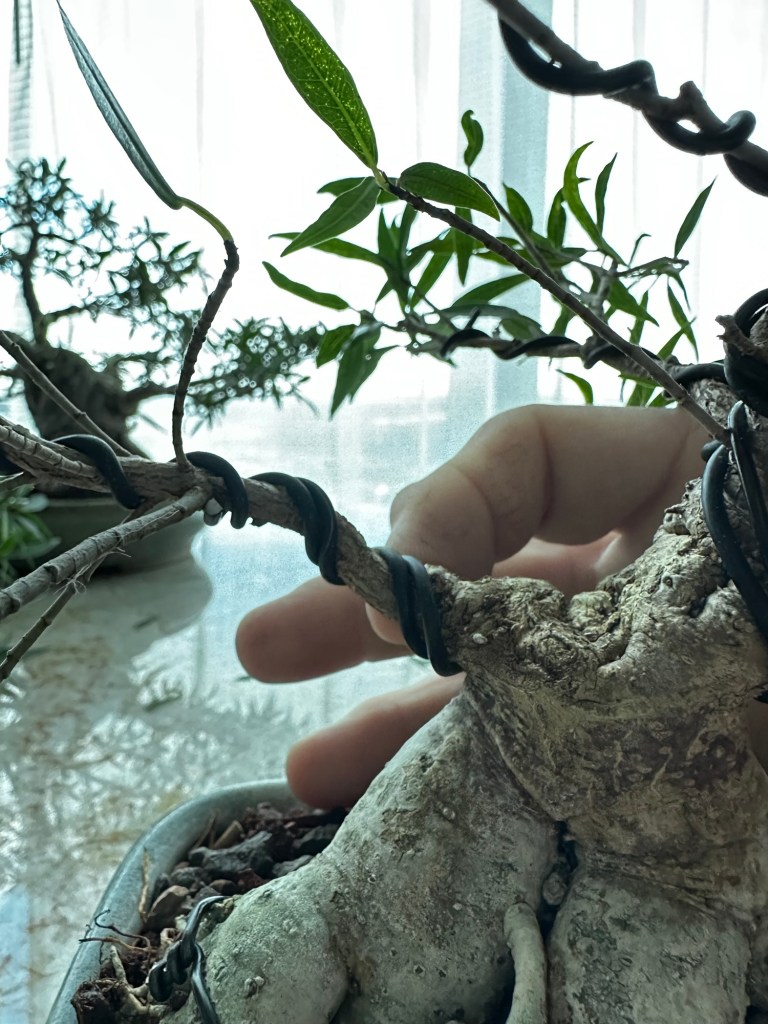
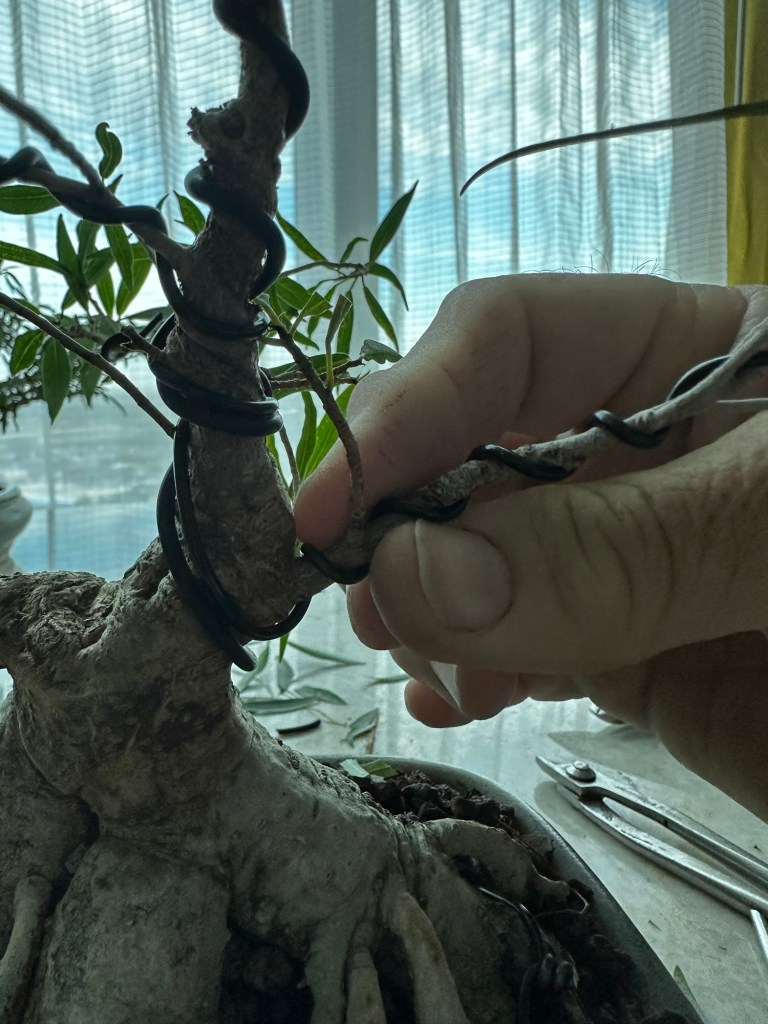
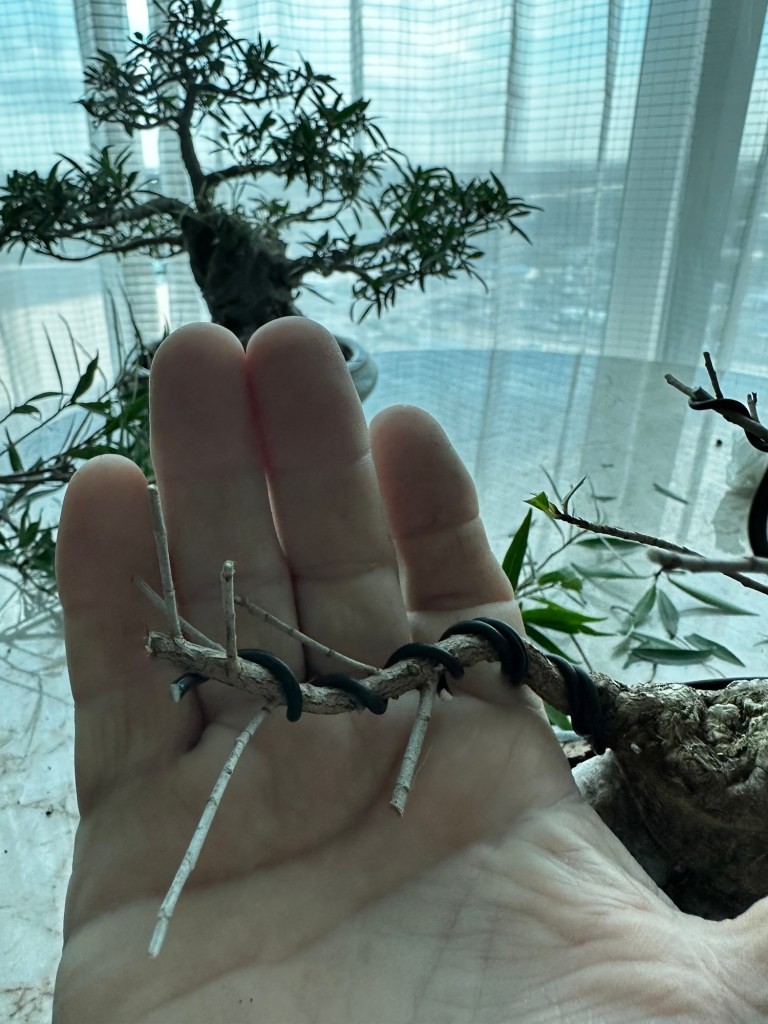
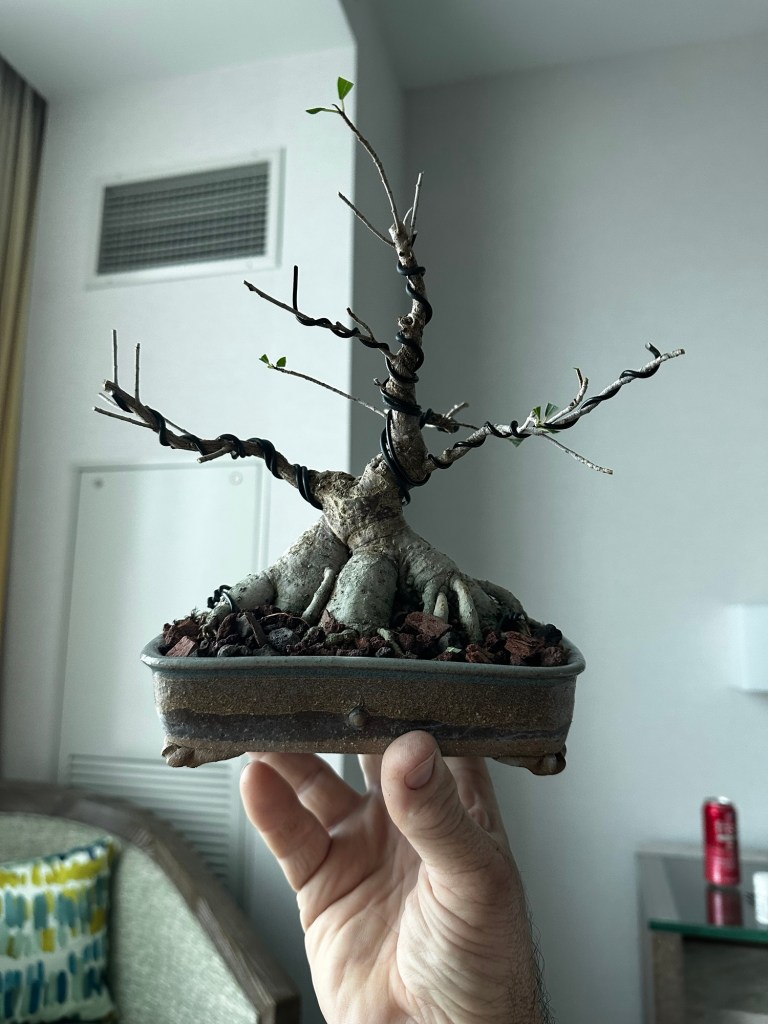
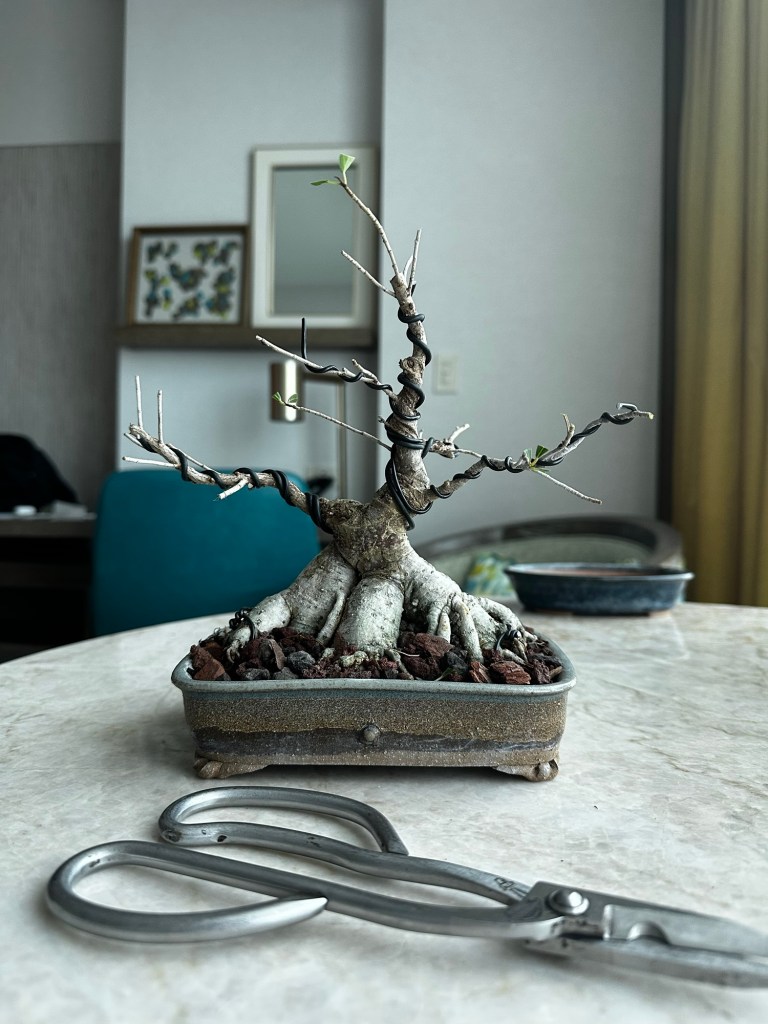
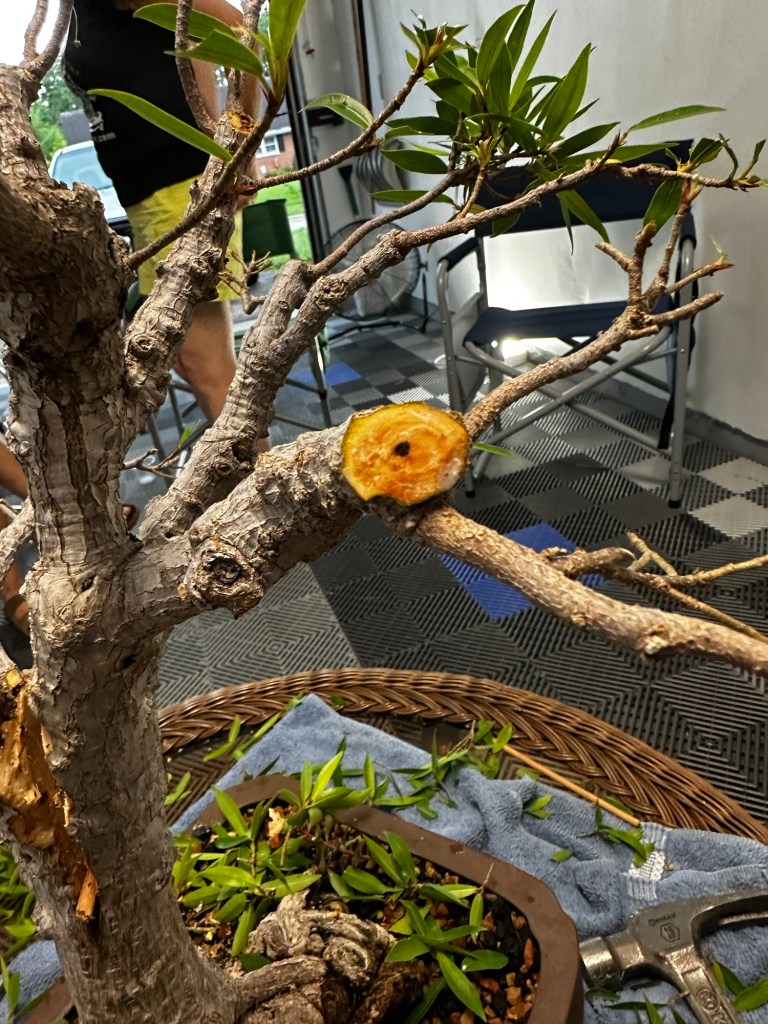
Get out the saw, add a little wire. Do you know what the purpose of wire is? It’s two-fold. The first is obvious, to hold the branch while we bend it. The second is to protect the branch from breaking, as we bend it. Kinda like when we are under stress, sometimes a blanket or a hug takes the stress off of us and makes the change easier.

But……

……it can only protect where it touches. Let your friends into your life.

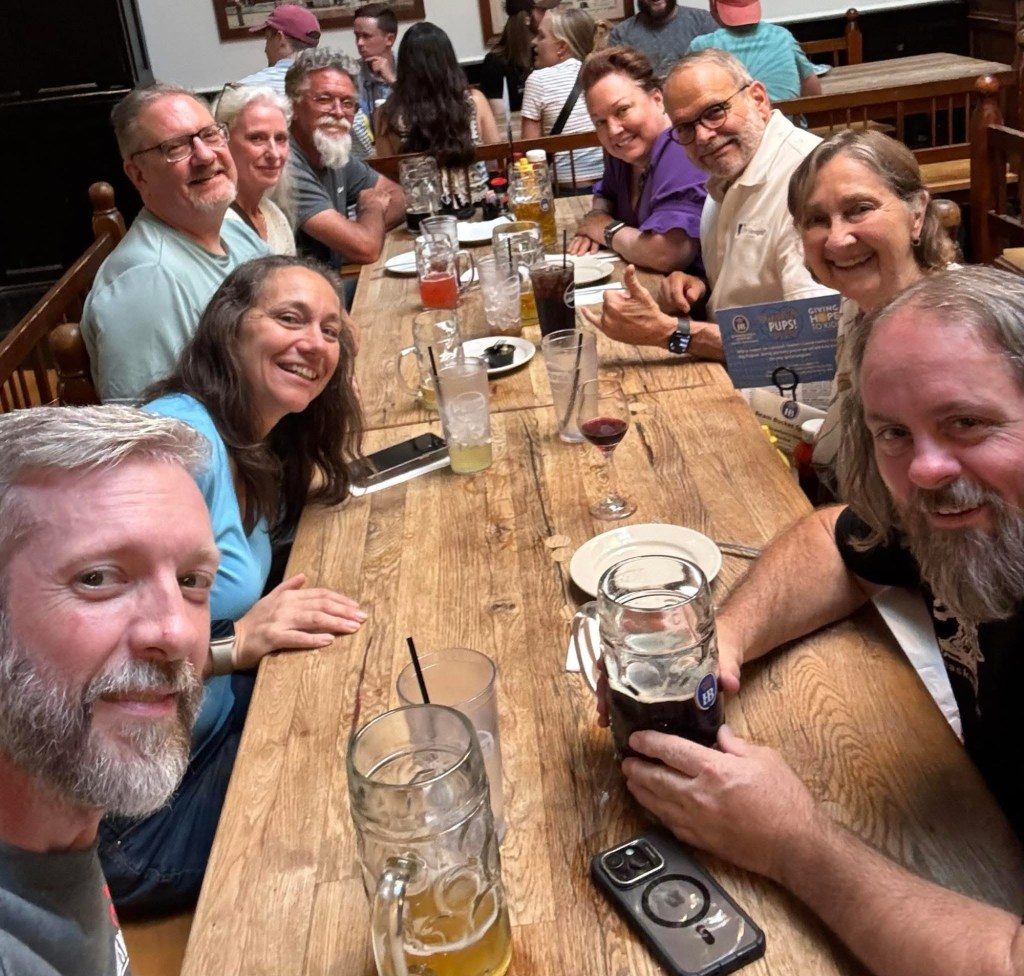
….that’s what life is, spending moments and remembering those moments when, perhaps a shared joke, or a drink, or meal, make the loneliness that is the true reality of man, go away for a little while. And it’s those moments one should cherish.

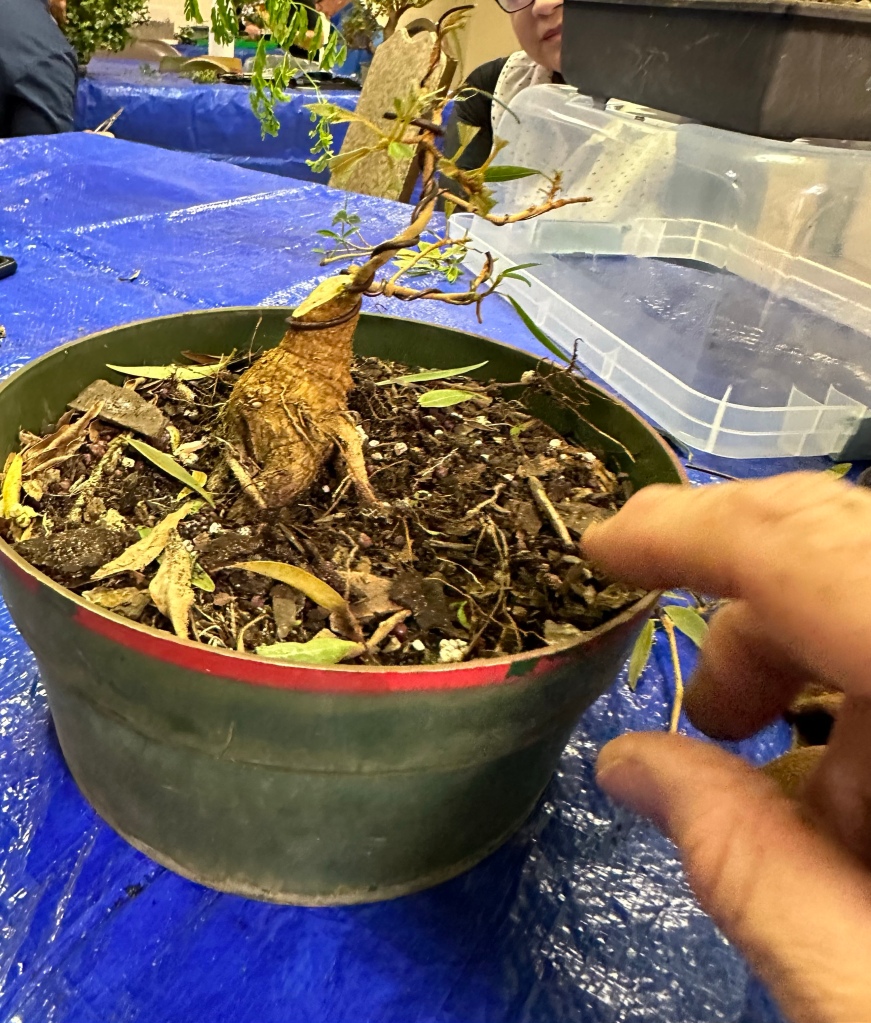
Brazilian raintrees were brought into this country (the USA) by a man named Jim Moody. I never met him, I don’t believe, but I was good friends with his grandson, Allen Carver. He left us recently. I never got to say goodbye. But every time I work on a Raintree, I think of him.

Gnarly.

This one came from Jim, to Michael Cartrett, to Javier Cortez, it was an air layer off a big tree that grew in Mike’s yard. And it went to another friend who went his own way, Jose Perez. He had to sell it after a divorce, and now it’s Doug’s. I get to work on it from time to time.

The story of trees are often as compelling as the trees themselves.

I’m glad I get a part in the story. A small part.

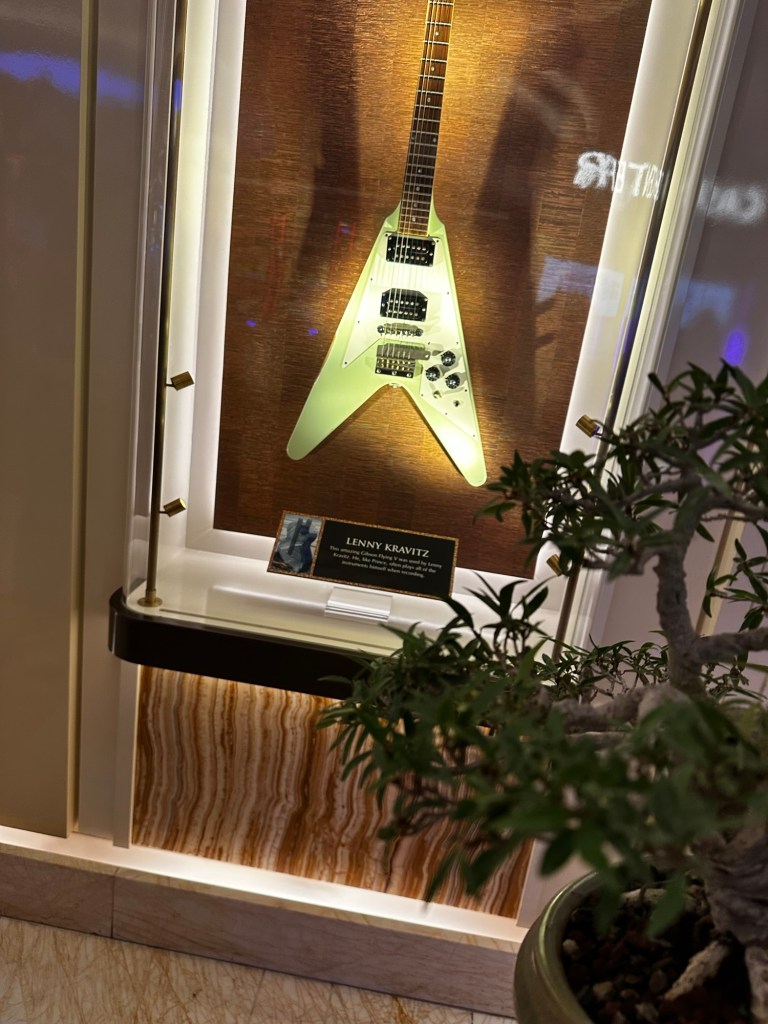
Tuning a guitar. Trying to get the spaces between the strings just right. So that the song sounds good. That’s Jack, a good friend I don’t get to spend too much time with.

Life is not the counting of numbers, it’s the space between those numbers.

How much can you fit into an hour, a minute, a second? How much should you? Can the appreciation on that infinitely divisible moment of time between the seconds in your life be enough, or do you need to fill up those moments with importance?

How many beats per minute does your heart count? Are we promised only so many beats per lifetime? Is it written in our genetic code? Or do we just time of the calculation and stop counting? How many leaves on this buttonwood? Does it matter?

It’s like the space between the branches. The air around the tree. This gives meaning to the tree.

And some things you just gotta see in person. Go to a bonsai exhibit, or all you’re seeing is the blast of pixels in an image against your retina. We “see” with all our senses.

The best story will never be written because it’s your story and you’re making it up as you go along with your life.

The story has truth and lies. And even the most honest of us have all these things we tell ourselves to help us get through the day. But we believe them.

Kurt Vonnegut said “We are what we pretend to be, so we must be careful about what we pretend to be.” in the novel Mother Night, in 1962. Harsh and cruel. You should read it.

Another buttonwood. Let’s help it along. It needs stress and pressure to forge it into what it wants to be.

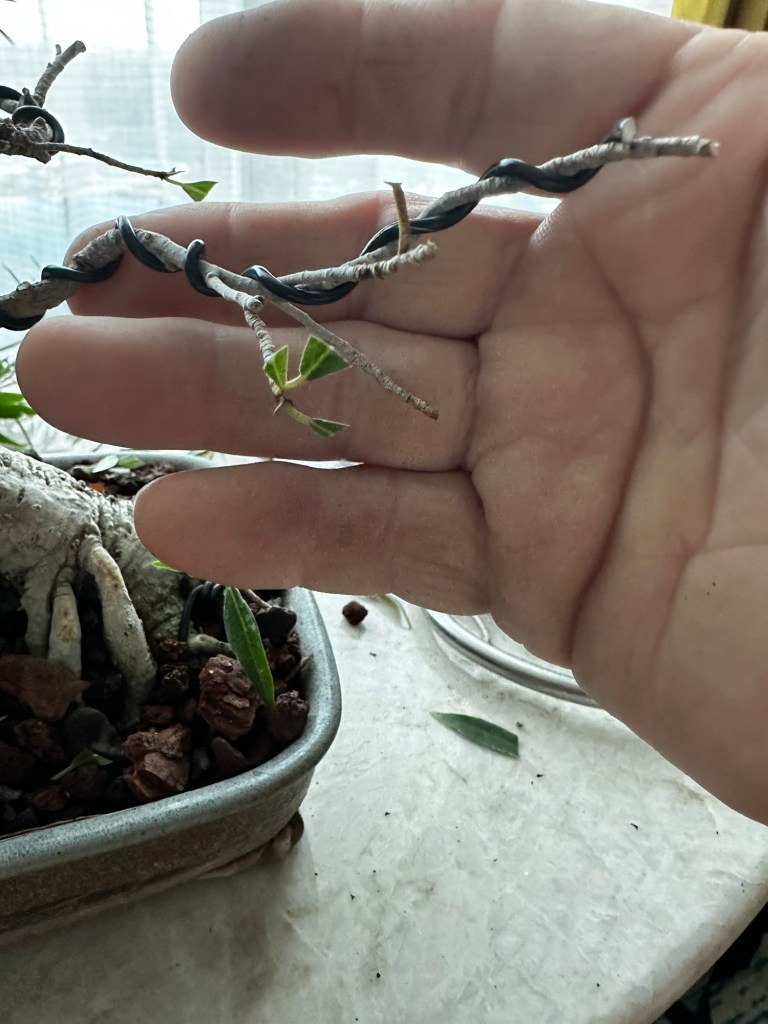
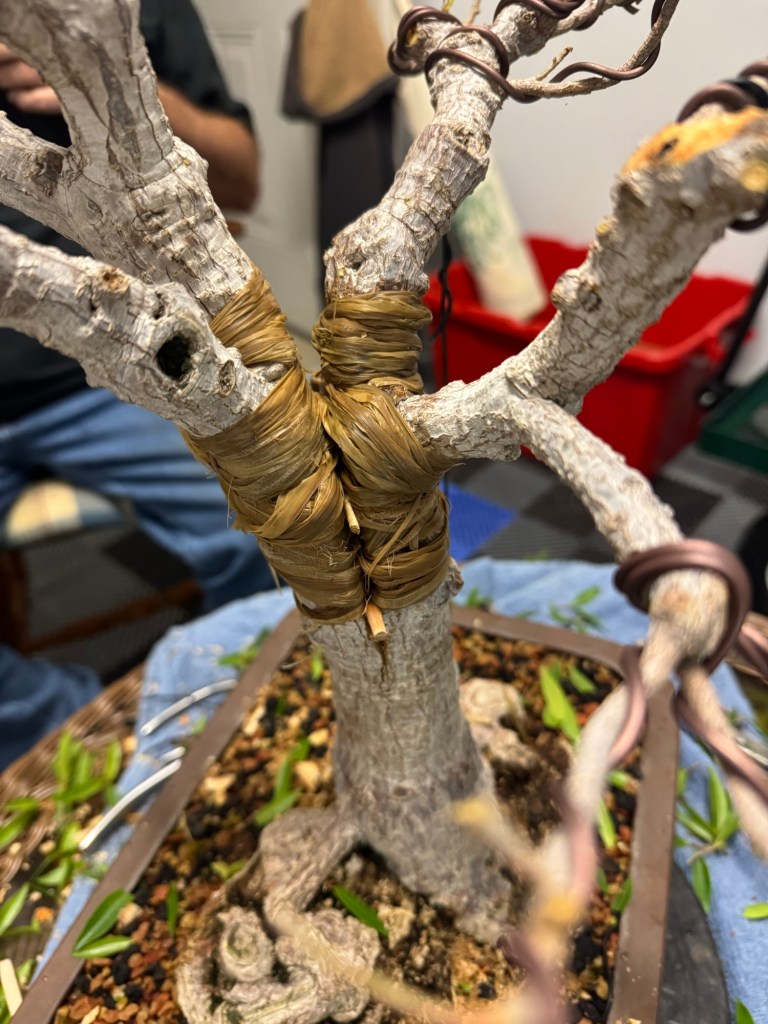
It needs that blanket so the branches don’t snap and break, as we bend it. This time there’s wire and a secondary wrapping of self amalgamating, rubber, electrical wrap.

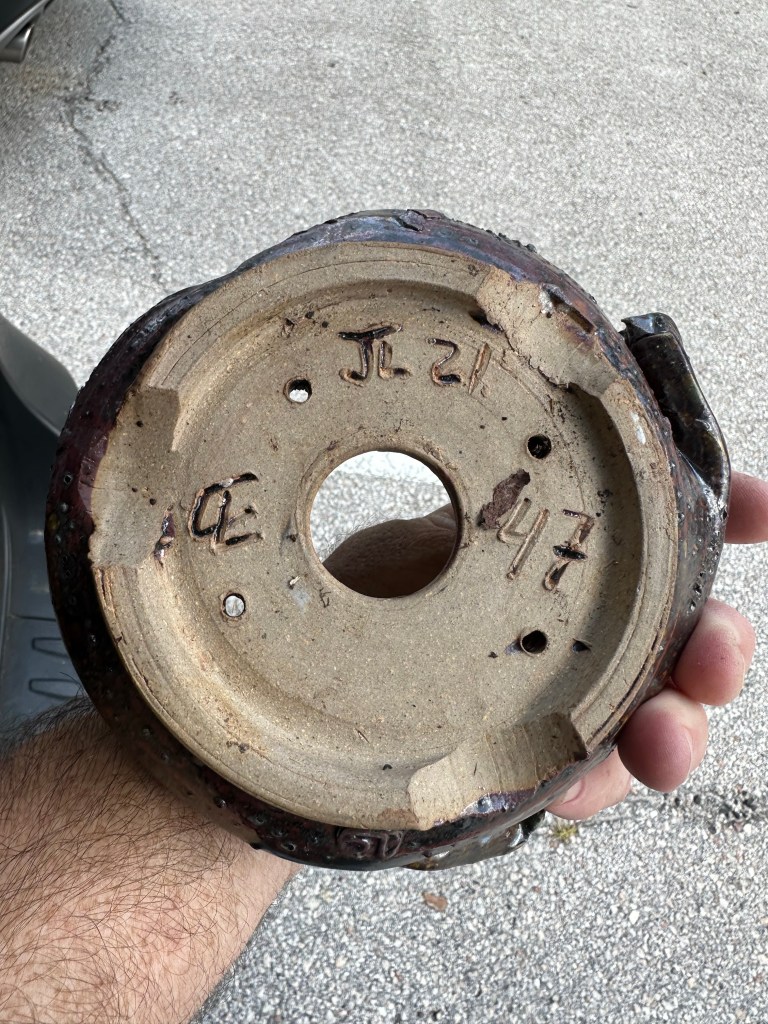
How about this pot? Made by an auto mechanic that builds transmissions. Lynn Baker, goes by the name Herr Lynn. A local potter from the west coast of Florida.

I think it adds to the story.

But the story is false. This buttonwood may have started out on a beach in Florida, but it’s nature wants it to grow straight. Like the branches in the first pic

That’s why it’s species as designated as “erectus”. Like the hominid Homo erectus, an ape that walks upright, Conocarpus erectus will grow straight, but if it’s in the environment like the southern Florida coast, with the hurricanes, the sun, the surf, alligators and crocodiles, and the land developers and tourists, all causing stress and beating down and torturing the tree, it will be transformed into the twisted trees we so love.

We have to tell a story, a true one, but not true in this case, of all the struggles a buttonwood can go through and live.

To get back to our initial pondering in the title of this article, it was Picasso who was first quoted saying that art is a lie, in 1923. Here’s the full quote, translated from Spanish:

“We all know that art is not truth. Art is a lie that makes us realize truth, at least the truth that is given us to understand. The artist must know the manner whereby to convince others of the truthfulness of his lies. If he only shows in his work that he has searched, and re-searched, for the way to put over his lies, he would never accomplish any thing.”

  •  

Why Adam? Just why?

As I go through my day, working on trees or just making soup, there’s an ever present question on my mind. That question is: “Why?” Especially of late, but that’s a rabbit hole I won’t go down today.

It’s a tough question to answer,”Why?”. Most people mistake my online moniker “Adamaskwhy” as meaning that you can ask me “why?” and I’ll tend to answer. And that’s ok. I usually know the answer, or if I don’t, I can find it (and if I can’t find it I just might make something up).

But the real meaning behind “Adamaskwhy” stems from my propensity to ask my teachers, when I was a young and inquisitive lad, “Why?”.

For example, my teacher might expound “When drafting an exclamatory sentence, one should use simple, declaratory prose.” and I might ask, innocently, “Why?”. Now, the best teachers knew the answer. The competent ones knew where to find the answer. The average would just quote what they’ve been taught. The worst would say “just because”.

Obviously, from the preceding paragraph, I didn’t take the lesson of short declarative sentences to heart. Mainly because, sometimes, obfuscation and evasion is the quickest path to The Truth. But, more importantly, I don’t want my style to sound like The Old Man and the Sea (“….here is a bonsai. It curves to the left, then to the right.” I’m more of a “.. The blue sky paints the cream glazed pot with streaks of azure. The sun silhouettes the canopy like an umbrella, shading the mossy soil. The old, sun-browned man, wizened eyes staring at the green foliage, raises his shears and snips at a dry branch…..”).

Needless to say, many of my past teachers did not appreciate the question “Why?”. Truth be told, many teachers can’t answer the question. They feel that, just because they are the teacher, their teaching is inviolate, sacred, and not to be questioned. And the more narrow the focus of the lesson, the more pedantic and authoritarian the teacher becomes. As an example, let’s say the lesson is on bonsai soil, (just to bring bonsai into this essay, since this is a bonsai blog after all), the reasoning style usually used by bonsai professionals is Reasoning from Authority. They’ll say “so and so uses such and such, and they are so and so, therefore it’s correct. Or, depending on the particular pedant flailing his hands around whilst lecturing, the verbiage becomes a word salad of technical jargon with one needing a degree in soil mechanics to understand just what they are saying.

Anywho, why (heh) am I “why-ing” now? Well, dear reader, I recently posted a video in the social media webosphere concerning a certain willow leaf ficus, and what I did to the poor thing. This one to be precise:

Now, with such a raw piece of stock, I could’ve done all kinds of things to it. The scene: Ikebana Club international, Orlando Florida. This is my fourth visit to this Ikebana club. My visit usually consists of me bringing starter trees (in todays case, willow leaf ficus) a few different choices of containers, soil, wire etc., and potting, styling those trees, or re-potting members trees from past sessions. Irene, who’s been to all of them, decided to get two willow leaf this time. The first one we wired up and made into an informal-upright. The second one….well, you can see below what happened to it….

As you might have noticed, we chopped it. And Irene was right there with me on the decision to do it. It was actually her idea. It’s a drastic technique, for sure, somewhat controversial, as dramatic as my teenage boys trying to get through a Fortnight Battle, and, in my case, it makes me look badass for how casual I can do it, with just a pair of scissors.

You see, many people may misunderstand the decision to do a trunk chop. Let’s go through another willow leaf (below) and the decision tree (no pun intended) used to decide when and if to trunk-chop a tree.

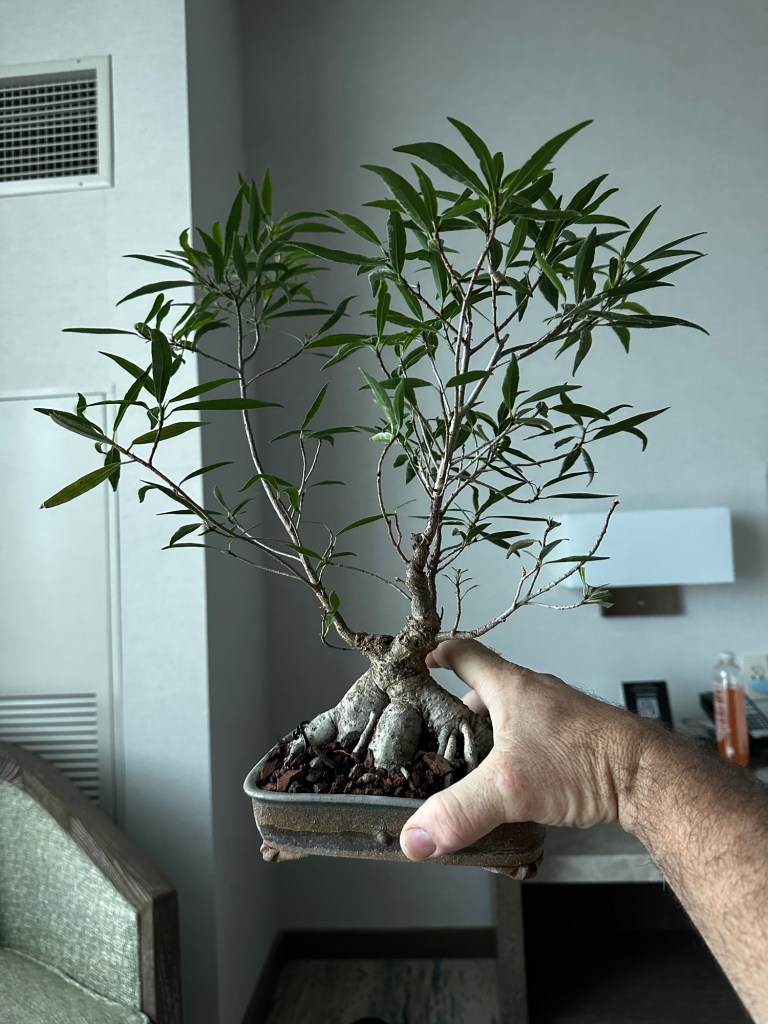
Below: Hand for scale. Ficus salicaria, the willow leaf fig. It belongs to Mike, who’s visiting from the Naples area. The tree is a stock tree from Wigert’s Nursery in North Ft Myers. It has a fair sized base (nebari) and a good sized trunk. But it has little taper, the branches are way high, and it kinda looks like a slingshot. Just need a rubber band and a good rock, and we can go squirrel hunting.

Ok now, you ready? As one should, let’s begin at the beginning. You can probably guess the ending to this post, a trunk chop, but the question, the one in the title, is “Why?” Why a trunk chop?

The beginning begins with the first interrogative “What?” What is Bonsai?

Bonsai is the Art of taking a relatively small, and relatively young tree and, using various techniques and principles of art, trying to make it look like a big and old tree.

One of those principles is the one we call “Taper”. The concept of taper means that, starting at the bottom, we should start with a wide base and, as we go up the trunk, it should taper, or get skinnier, coming to a point at the top.

The tree below has some taper. It could be used to describe (style) a tree as seen from a distance. Throughout most of the history of bonsai, most trees were styled from a distant view perspective. Think of observing a tree on a mountain. But, as tastes and visions change, so has the idea of perspective. In the real world, trees have a trunk-width to tree-height of 1(trunk width) to 12-14 (trunk height). If you read the old books, it was taught that the ideal ratio was about 1-8 or 10. Today they teach 1-6. But there are extreme examples of 1-4 or even 1-1 (the so called “sumo style”). Now, I have been known to style a sumo style in the past, and, if a tree could support it, I still do. But let’s get back to Mike’s tree.

Here’s the slingshot I was talking about.

It’s not generally a good design choice to keep that. Why? Well, horticulturally, a tree in nature tends not to grow that way. Or, if it does, when a good wind storm comes along, the tree will break at the “V”. It’s physics. Artistically, a v acts as a visual stop for the viewer. Bonsai being an art, that wide V will stop your eye as it moves up and down the tree. Your eye is drawn to open spaces and you’ll be looking at what’s behind the tree and not at the tree. Your eye moving around the piece of art, as designed by the artist, is called “composition”. I could get really into it, and talk about line, form, focal point, and negative space, but I think you get the idea.

For Mike’s tree, I could remove the bigger branch, like below.

And I’d still have good taper.

I could remove the smaller branch and have a more natural taper. That’s Doug hiding between the “V” btw.

Proportion (how the limbs are arraigned as you move up a tree) would satisfy a natural looking design.

The thickness of the trunk should decrease, in shorter lengths, as you go up the tree (main trunk is longer than the next level, the middle part by about 1/2-1/3, the third part, even shorter and thinner, until you get to the top, which should be your fine twigs. This makes the tree appear as though it’s taller).

I could not cut anything and use that first branch as, well, the first branch, and wire it down. We could make a good natural style.

To give an example of keeping most of the tree, let’s go on a tangent. Here’s a tree from a club member, George

We cut out the middle and wired that slingshot.

And it’ll make a good tree, in time, as well.

Getting back to Mike’s tree, we could start over, and chop the whole thing and make an exaggerated tree with quick taper.

You can guess what we did.

We didn’t cut here

Or here.

We cut even lower. Doug had to close his eyes, the horror was so extreme.

The reason why? Proportion. The first third is where the chop is. The tree now needs to grow up to have believable taper. Ultimately, we wanted (and it was a collaboration with Mike, I don’t go willy nilly chopping another person’s tree without a full discussion of what can be done with everything. Even on my trees I keep asking myself “why?”. Why cut here, why wire there, etc. )

And the real answer to the question “Why?” is that Mike wanted a smaller tree. And, with a willow leaf, we can chop it and regrow the top in short time.

Something like this is the final vision.

Here’s Mike. He took a pic, for posterity,

Here’s another of Mike’s trees we worked on that day. A Ficus Microcarpa.

It had been chopped already, and we just had to move the branches a bit.

Styling a tree is all about asking questions. “What happens if I do this?” “Will this improve or destroy the tree?” And ultimately, “Why am I doing this?”

Those questions are answered by experience, experimentation, and by people who’ve done whatever you want to do to the tree. And feel free to ask those who’ve come before. Just make sure you ask “Why?”

To finish out this essay, let me quote this (my wife is a third Dan backbeat in taekwondo, for background) it’s from a part of the taekwondo Black Belt Oath:
“…….I am a student yesterday, I am a student today, I am a student always……”


If only we all lived by just that part…..

  •  

Back Bumper Bonsai

Today, I got to diagnose what’s wrong with a 2012 Jeep Compass, take my daughter to PT, and go and take a dog outside to poop.

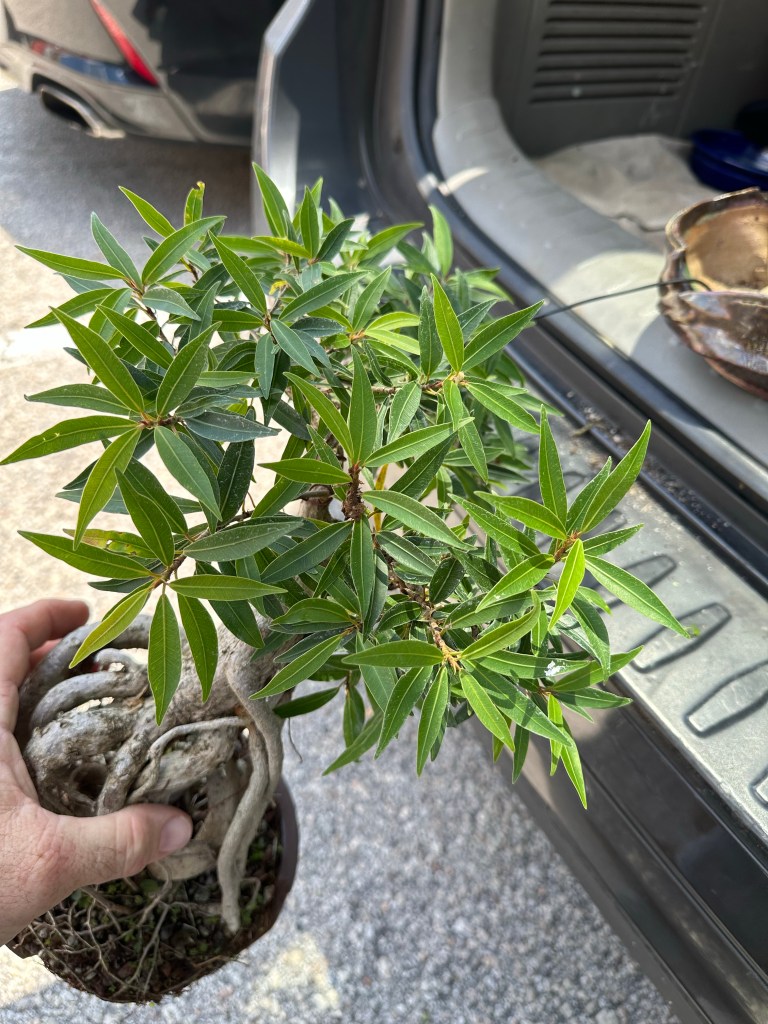
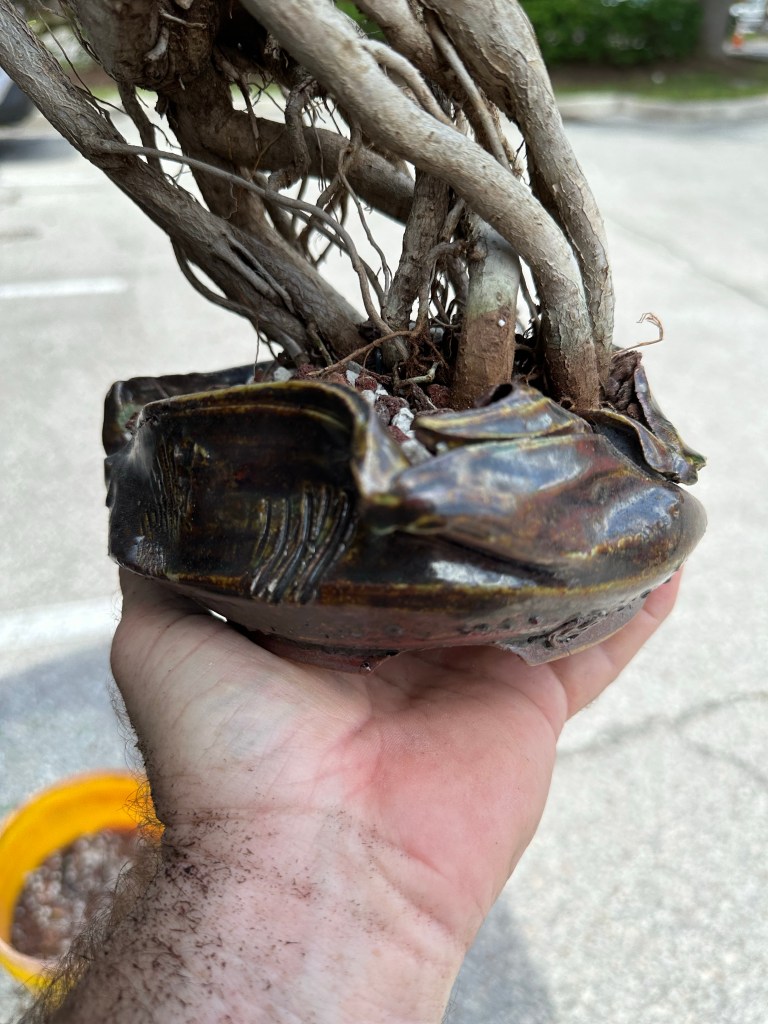
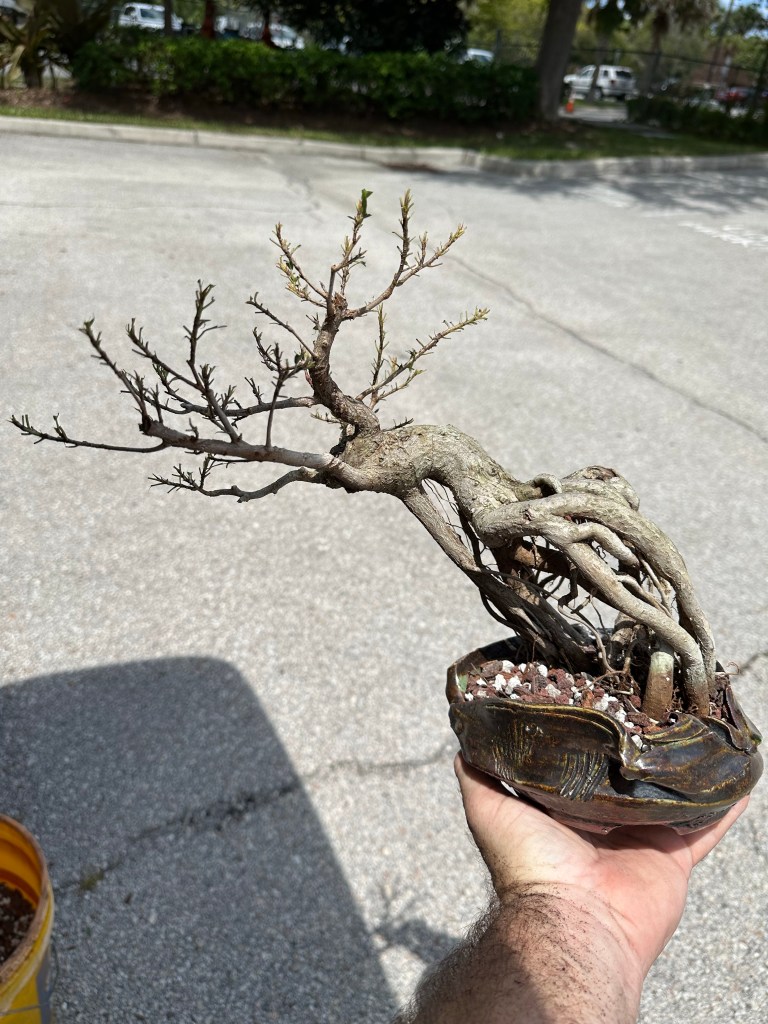
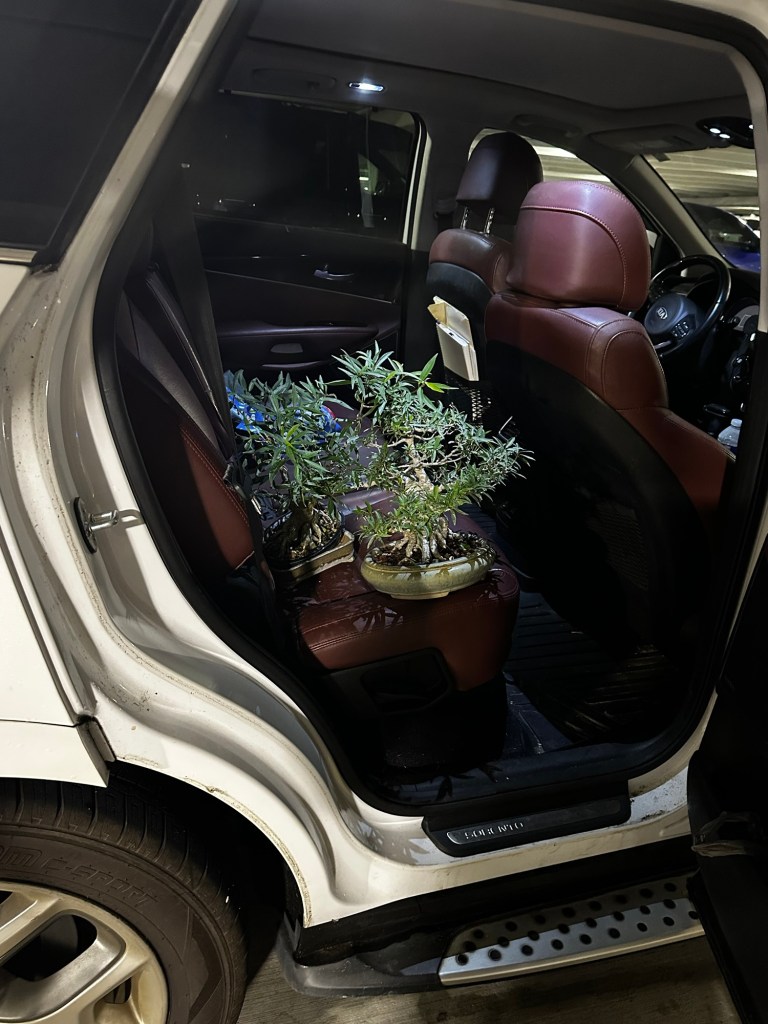
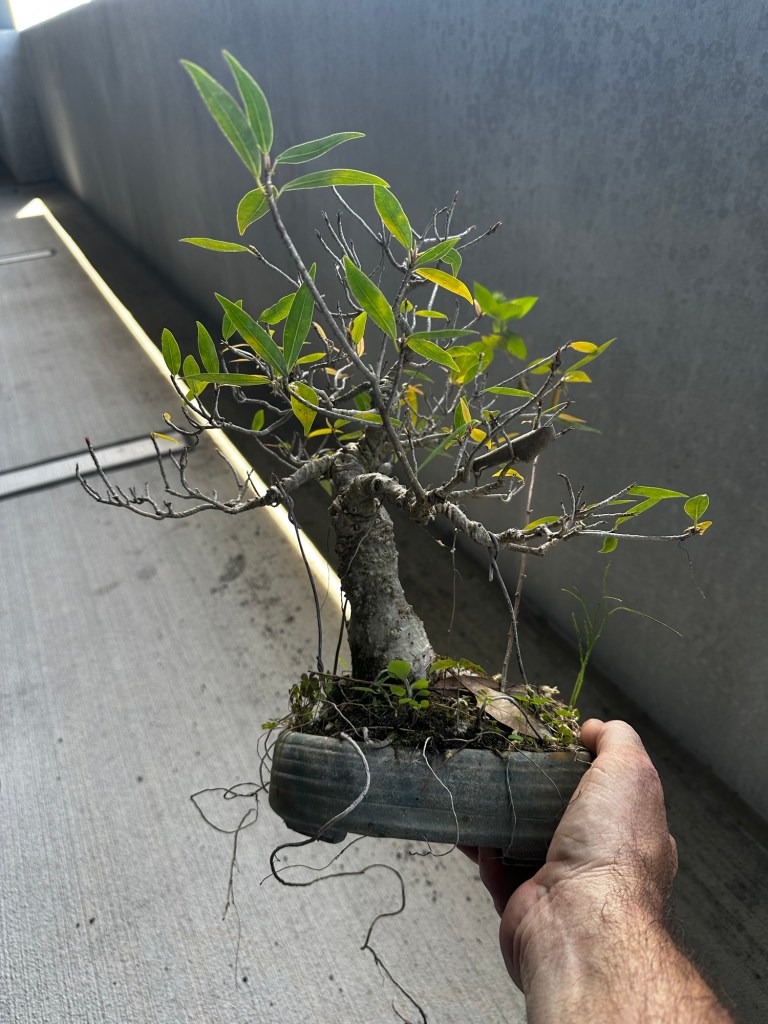
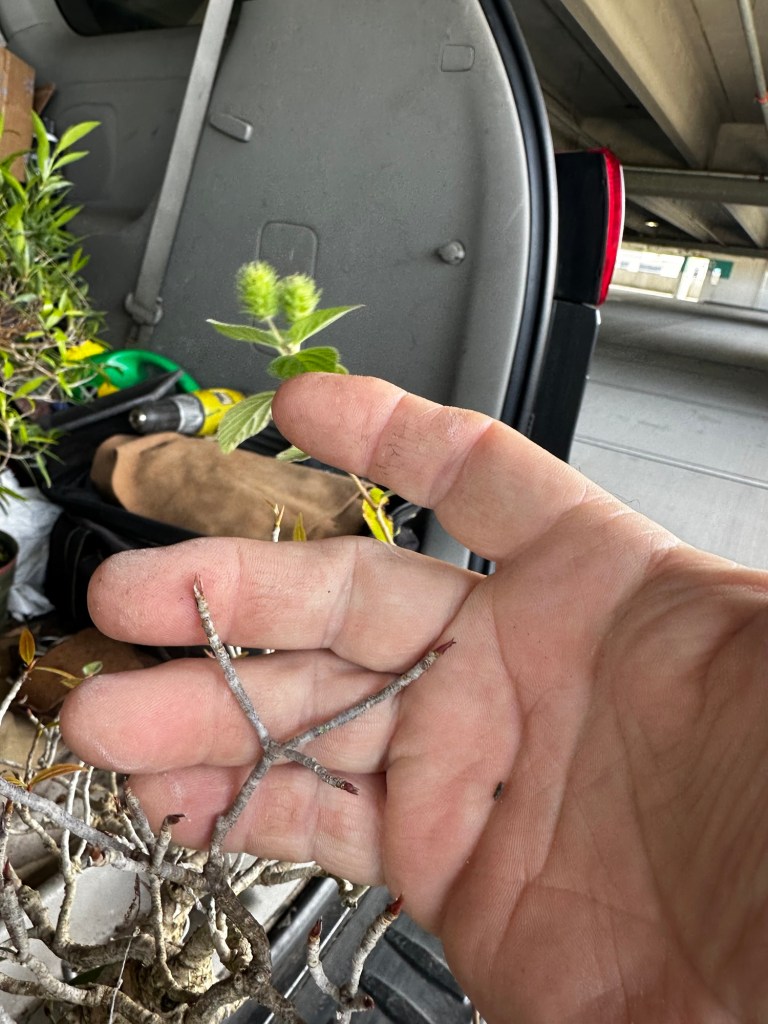
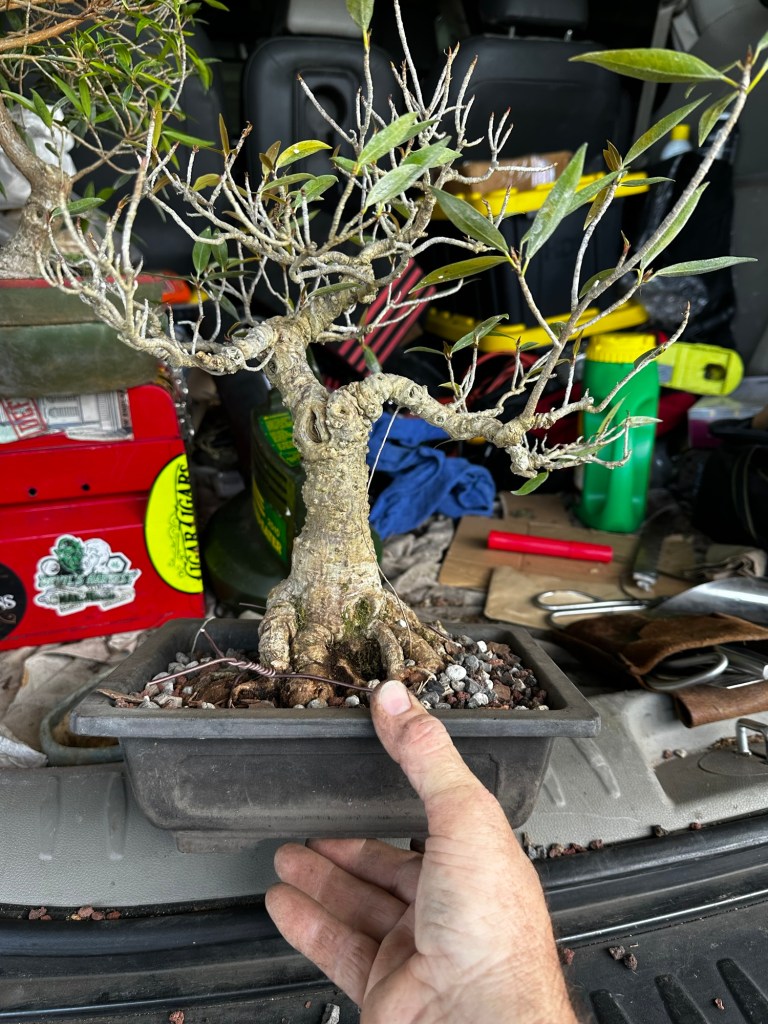
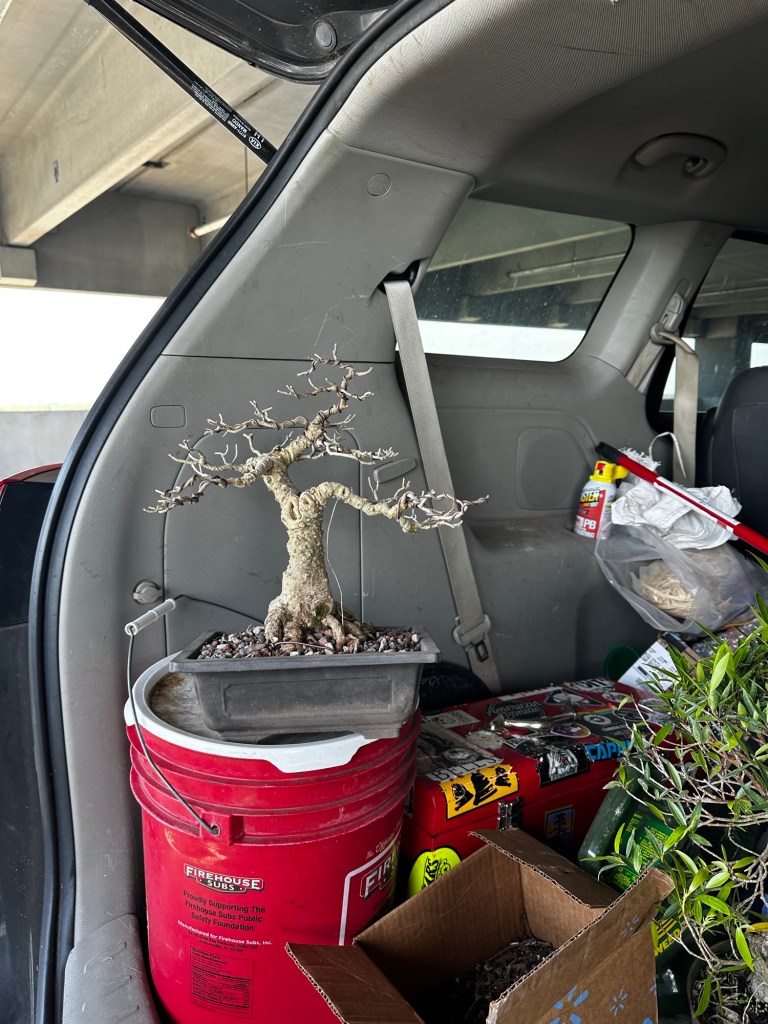
In between the PT and the Dog poop, I practiced a little Back Bumper Bonsai™, just like the old days. Here’s the tree, a willow leaf fig (Ficus salicaria, ofttimes erroneously called Ficus nerifolia, or F. salicifolia, or whatever it was called when you grew up in bonsai).
Here’s the facility my daughter is getting tortured at.

Here’s the dog. Ugly thing, ain’t it? Lily. Stupid dog. It has no tail, so when it poops, you have to wipe its ass. Not me, no way, no how, not ever. My sister does though.

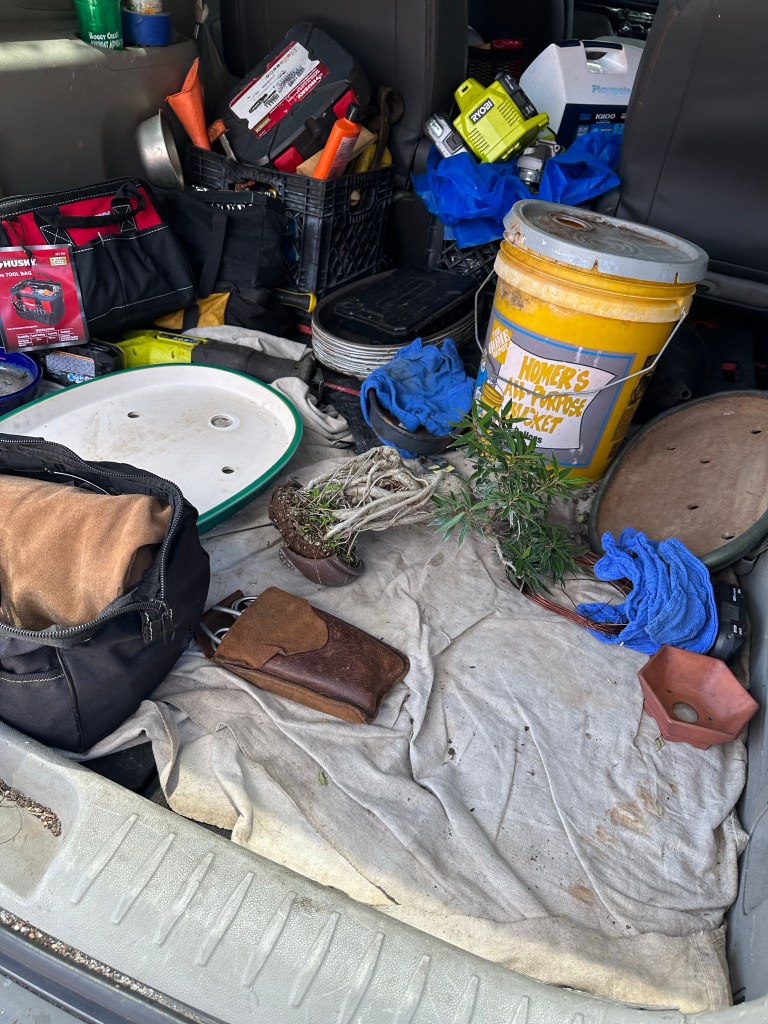
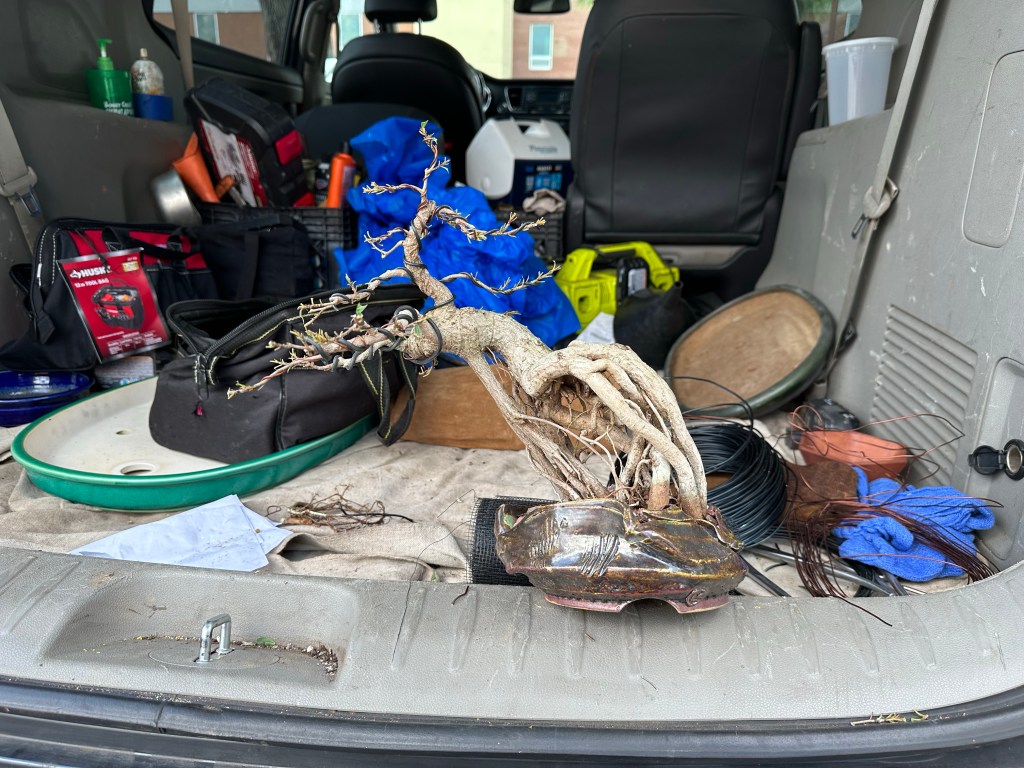
And here’s the Back Bumper bonsai studio.

A Kia minivan. For those that remember the old days, I graduated the PT Loser to the junkyard years ago.

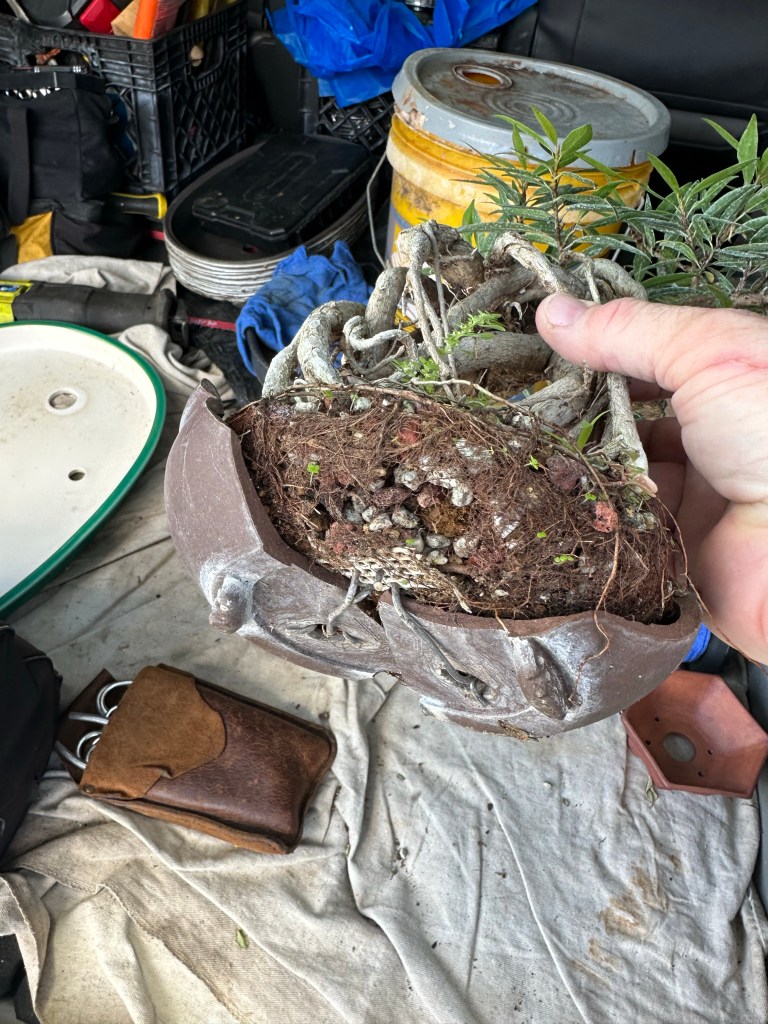
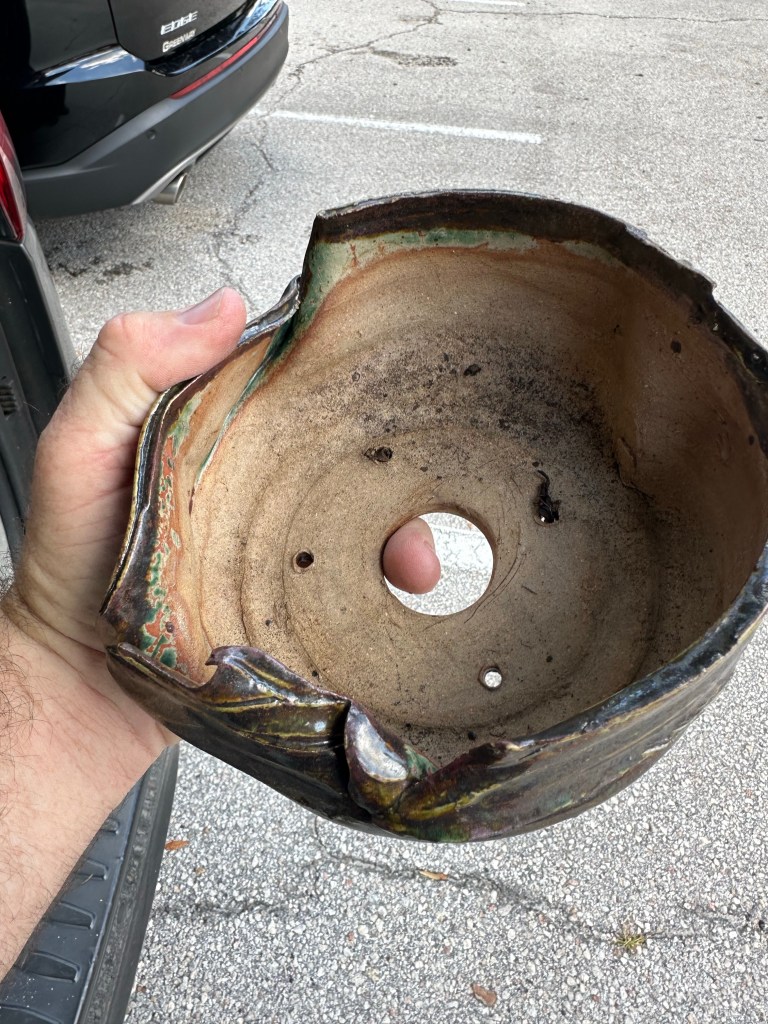
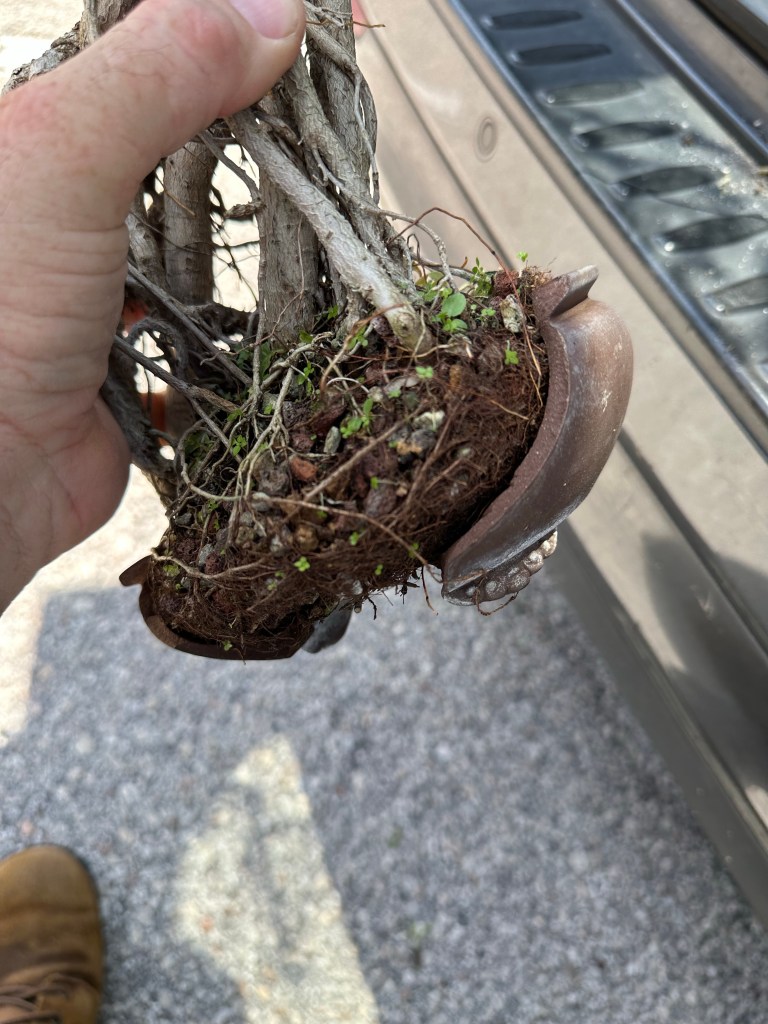
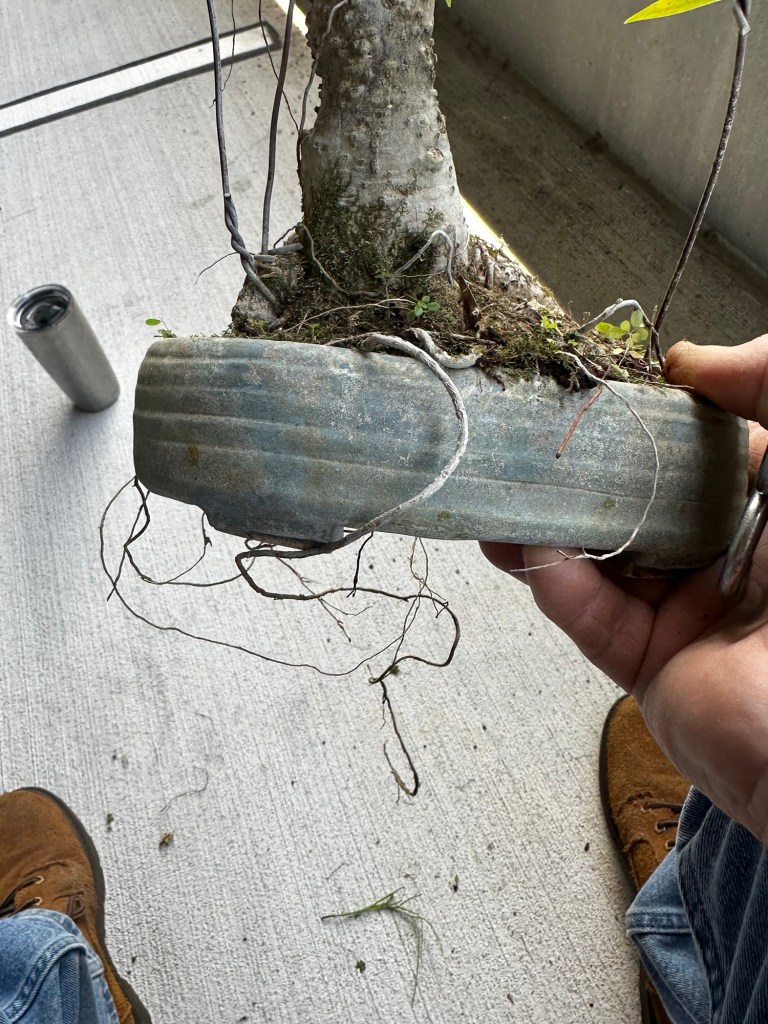
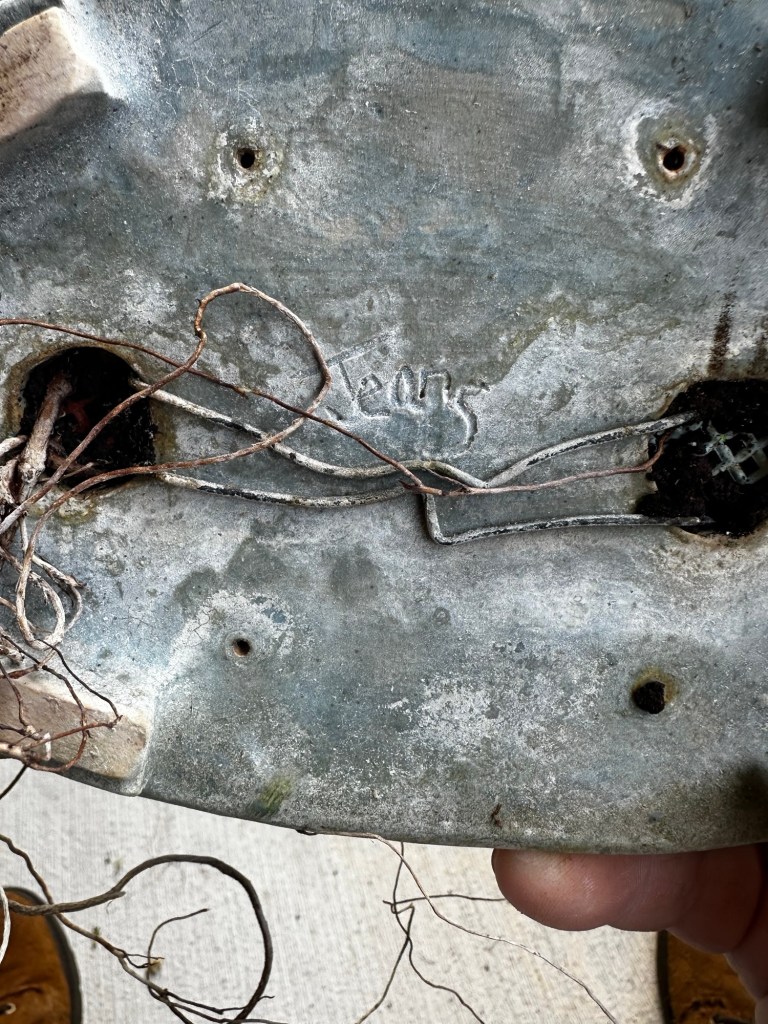
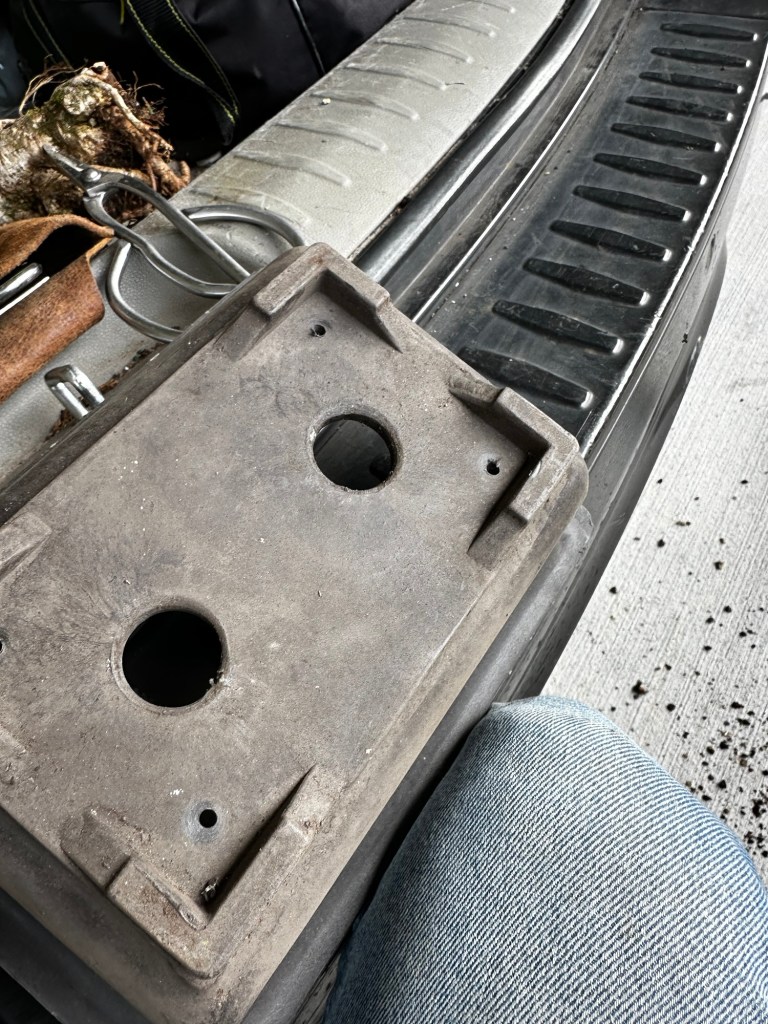
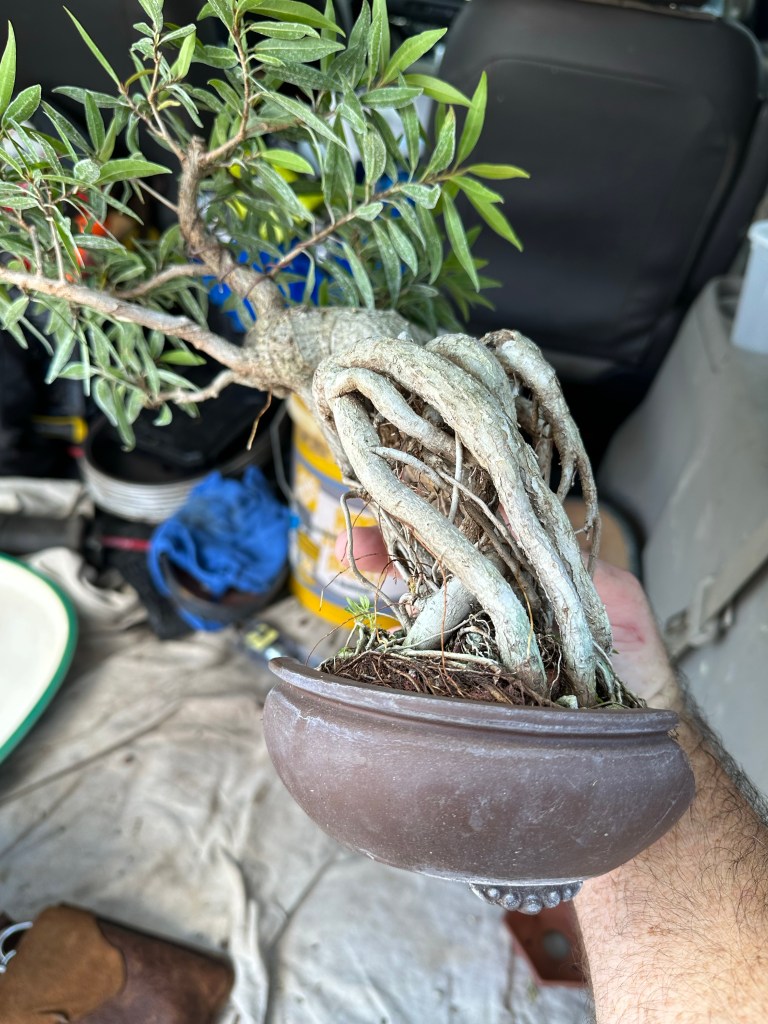
The willow leaf has a, uh, structural problem with the pot.

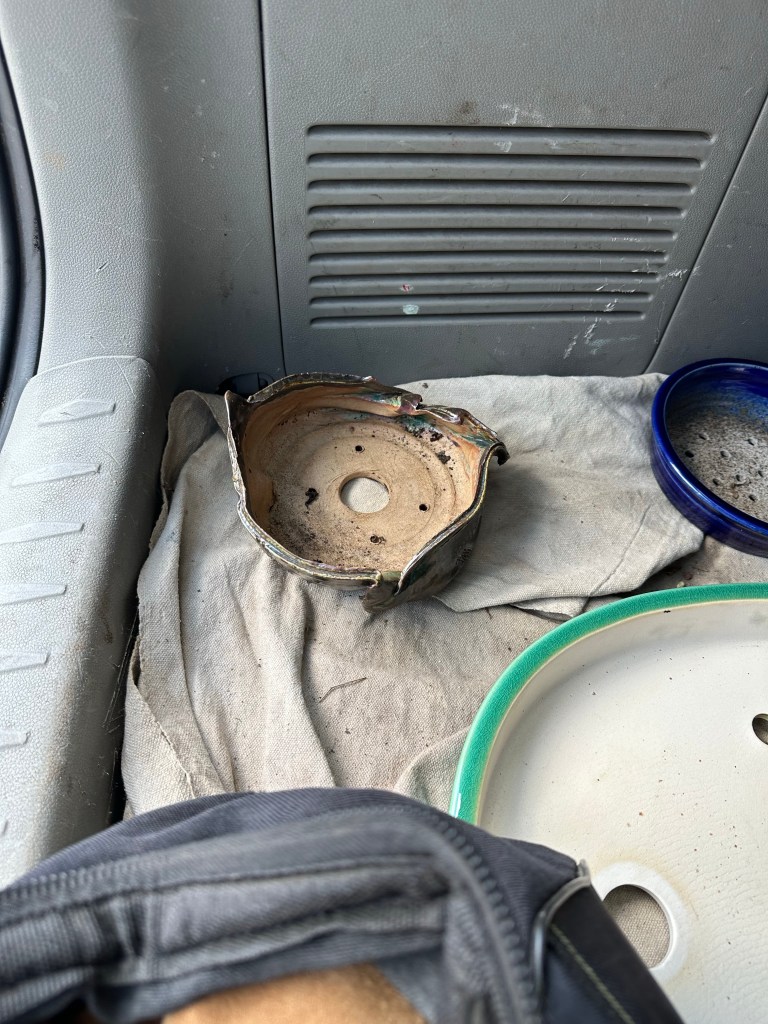
It done broke.

So today, I’m going to repot it, cut it back, defoliate, and wire. In that general order I guess.

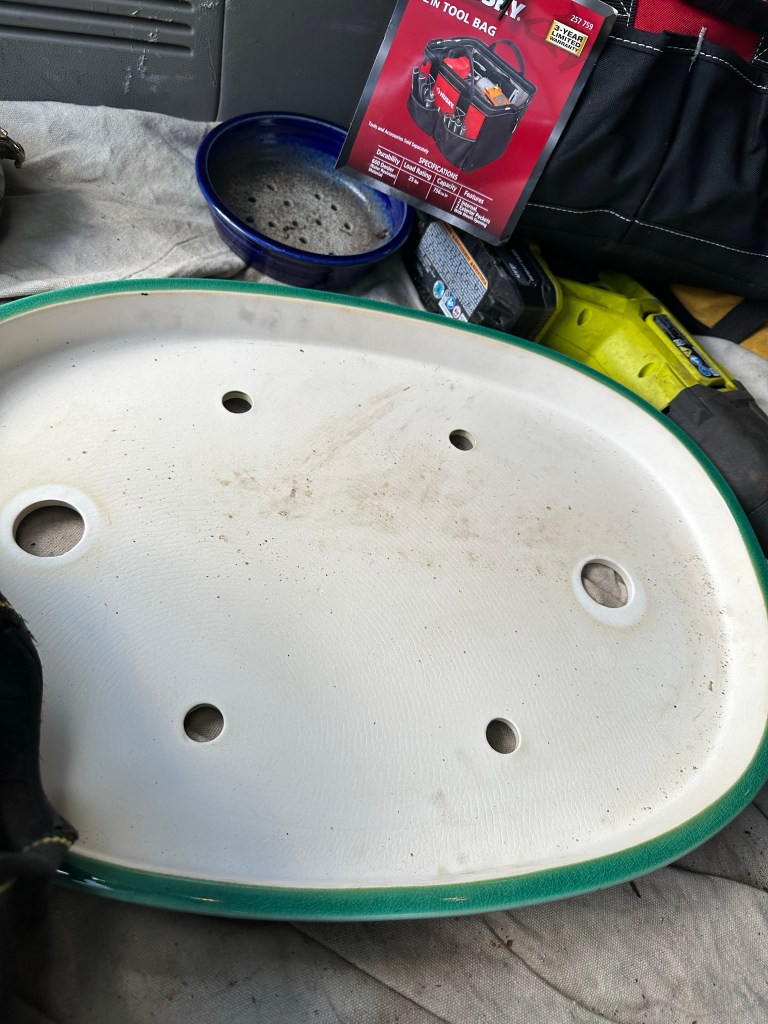
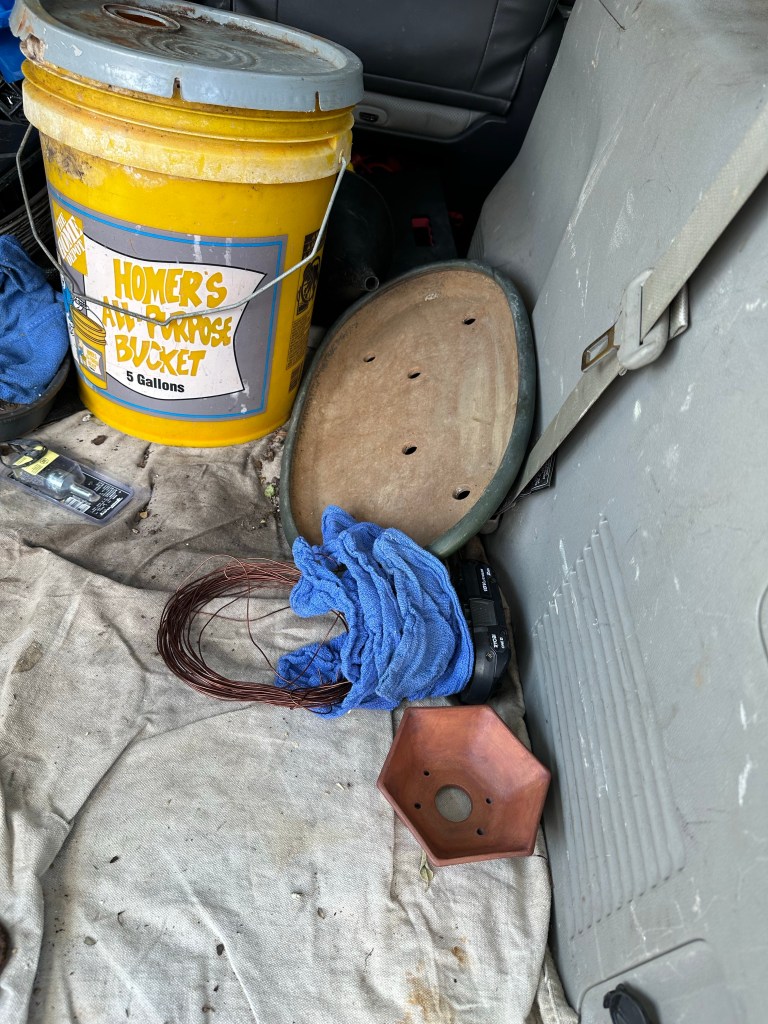
Here are some pots to choose from.

Not the big one of course.

Or that old Japanese one either.

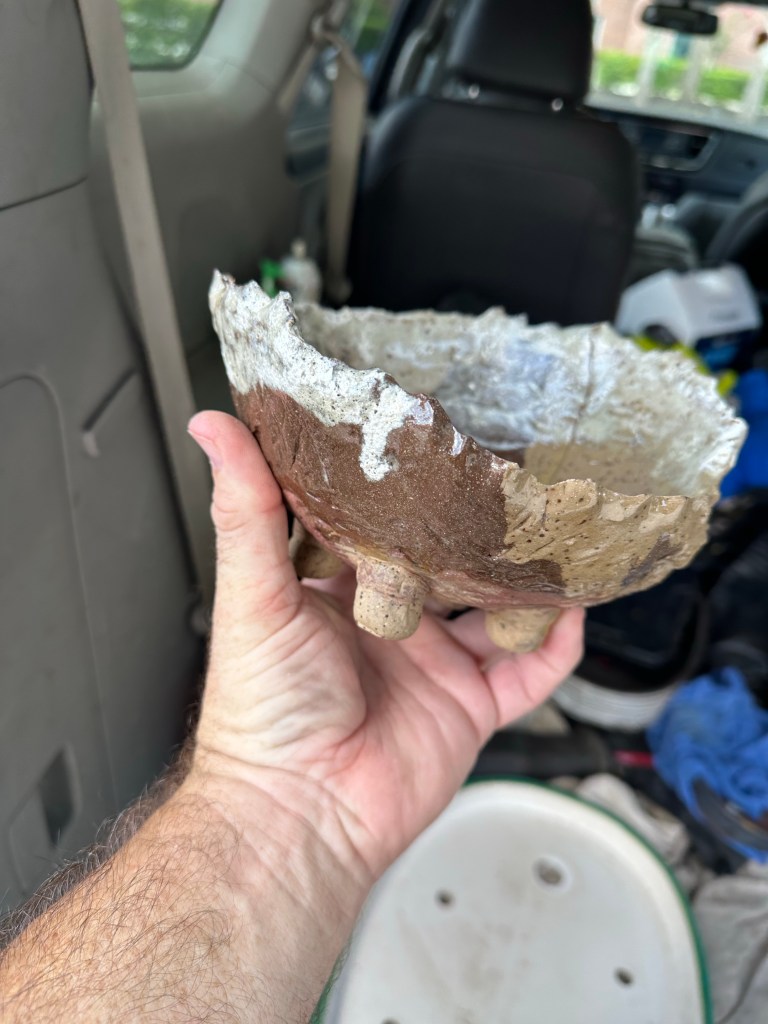
The one below is from my student, Peter Penico. It could work.

But it’s going the wrong way. Nice pot though.

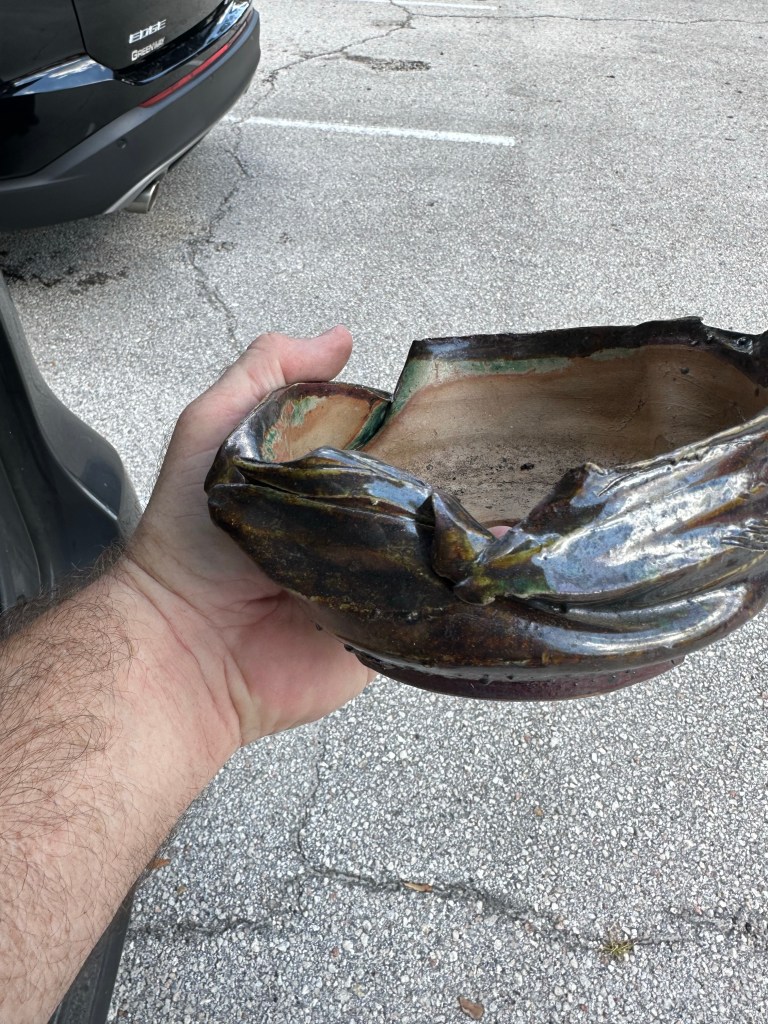
The one I’m going with is this one from Cesar Labrador, a Florida artist living in the Tampa/St. Pete area.

You’ll see his work on the Bonsai Pot Facebook auctions every once in a while.

Sweet details and shape.

It’s perfect. Let’s see about the tree now.

I think I’ll actually defoliate first.

I’ll be using the “chicken plucking” technique today.

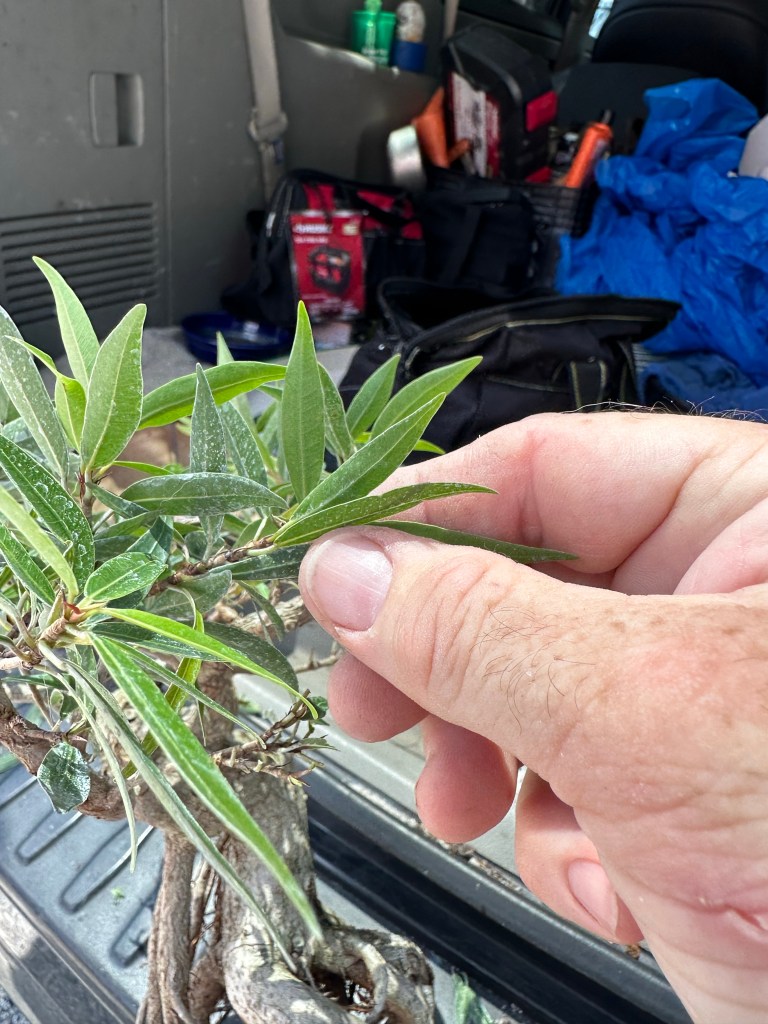
Grab the leaf, and pull forward. The leaf will break at the petiole and you’re done.

Pretty quick and easy. Doesn’t work on all species of trees though.

Next is to remove the old pot.

Gently massage the old soil out.

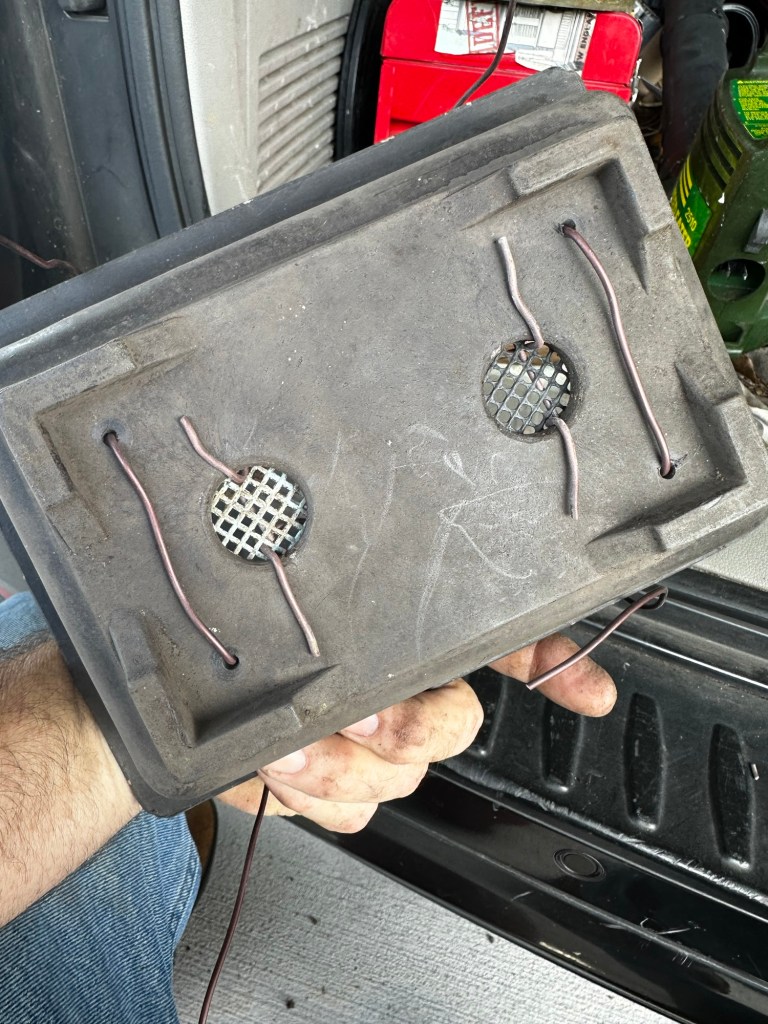
Tie the tree into the new pot, add soil.

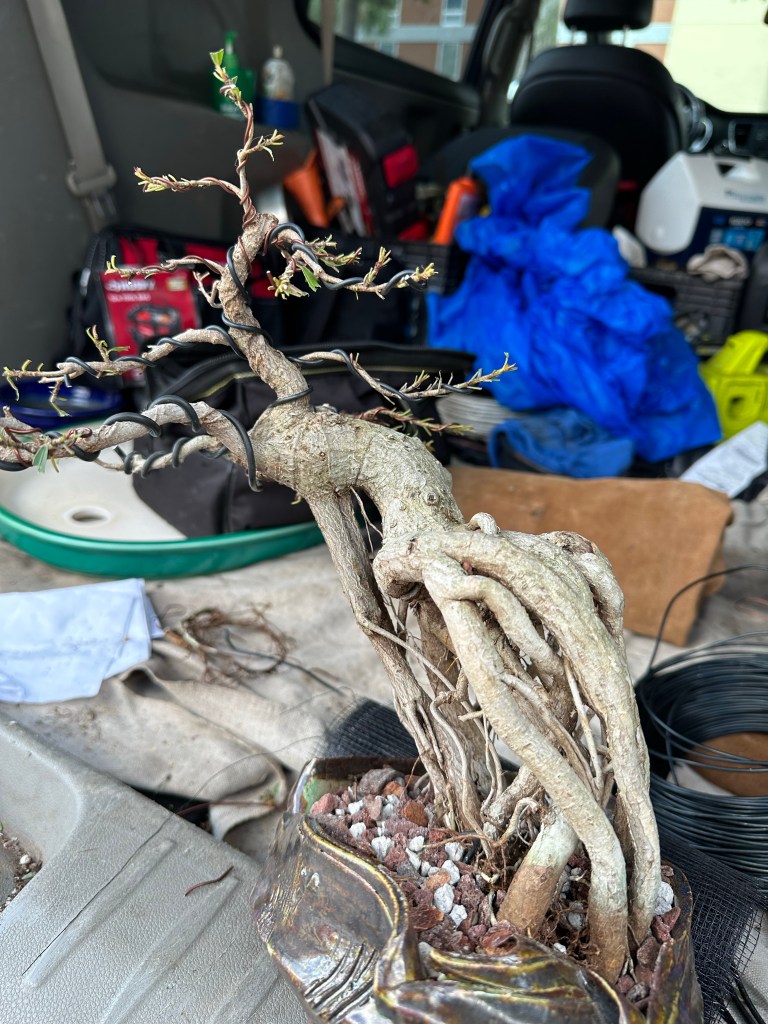
And now for the magic. Wiring!

Here’s the before.

And…..here’s my daughters Jeep and what’s wrong with it (see what I did there? I’m going to make you wait for the after. Wait, don’t scroll down yet…..dammit!). Well, if you’re still here, she has a blown head gasket. The design of the cooling system allows for the coolant to get low and you don’t know it because the overflow reservoir stays full. So, in typical Chrysler fashion, the car overheated and blew up the gasket.
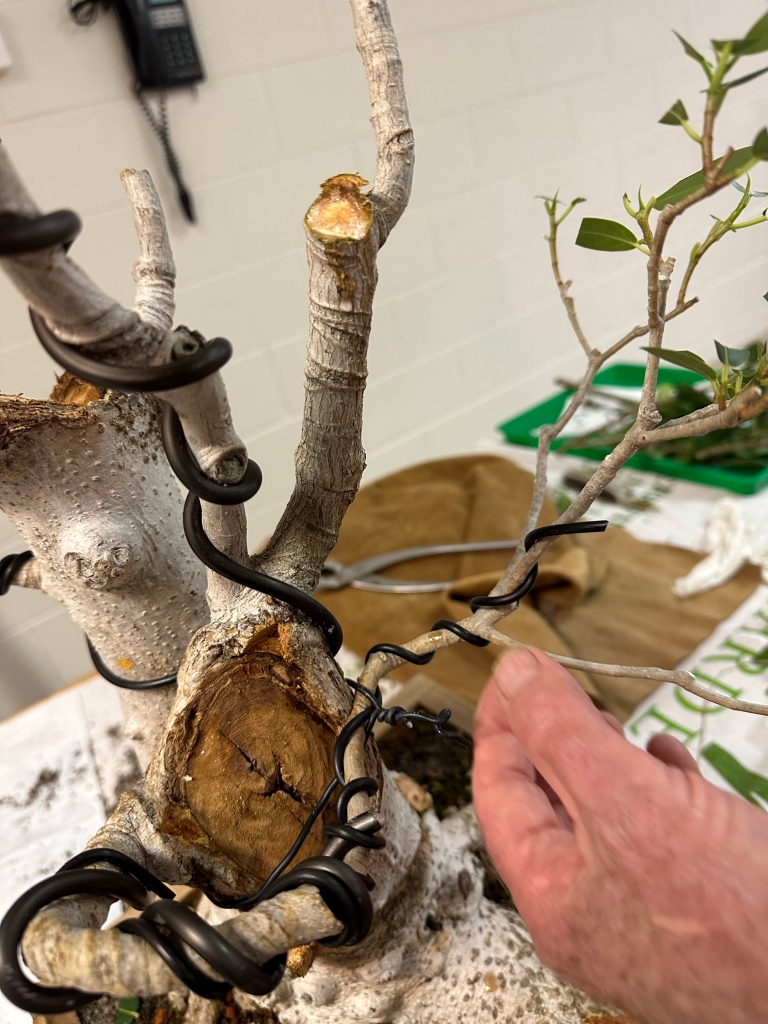
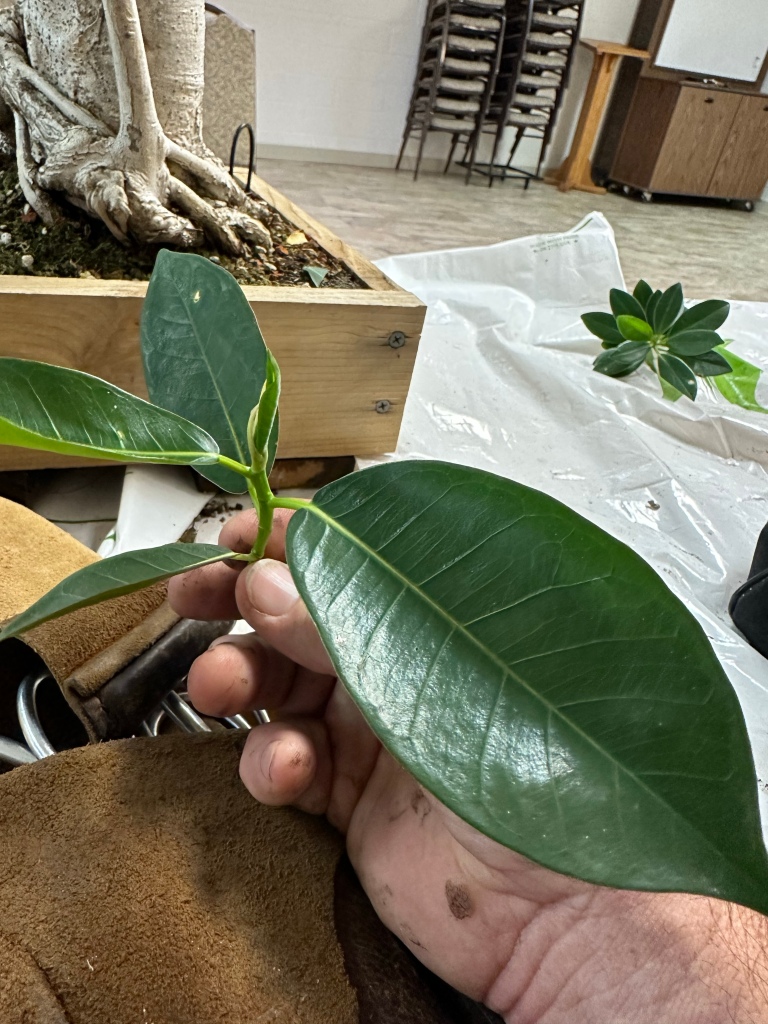
She liked the color of the Jeep. But it’s a bit too much of a job for me to fix, so its for sale, as is. If you’re interested. Call me….

Ok, now for the after.

I think the pot goes well with the exposed root style of the tree.

Here’s an ugly, informative shot.

And a couple of Glamour Shots

These two will go on Instagram of course.

Now, what shall I write about next?

  •  

Welcome to Tropical Northern….Virginia???

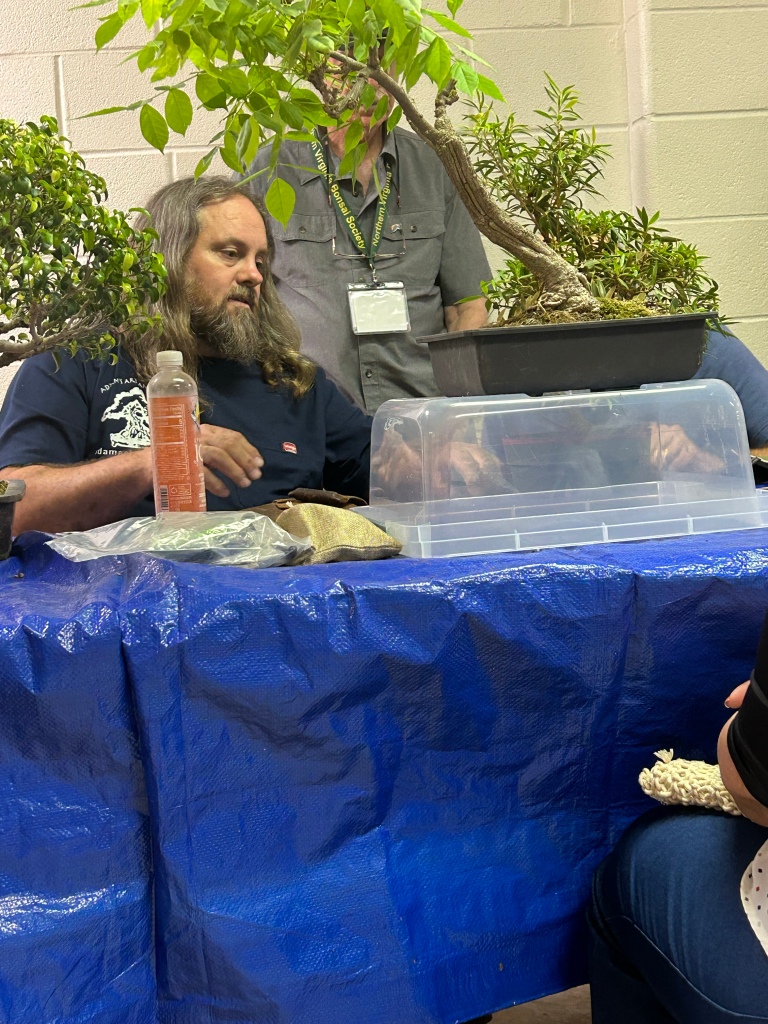
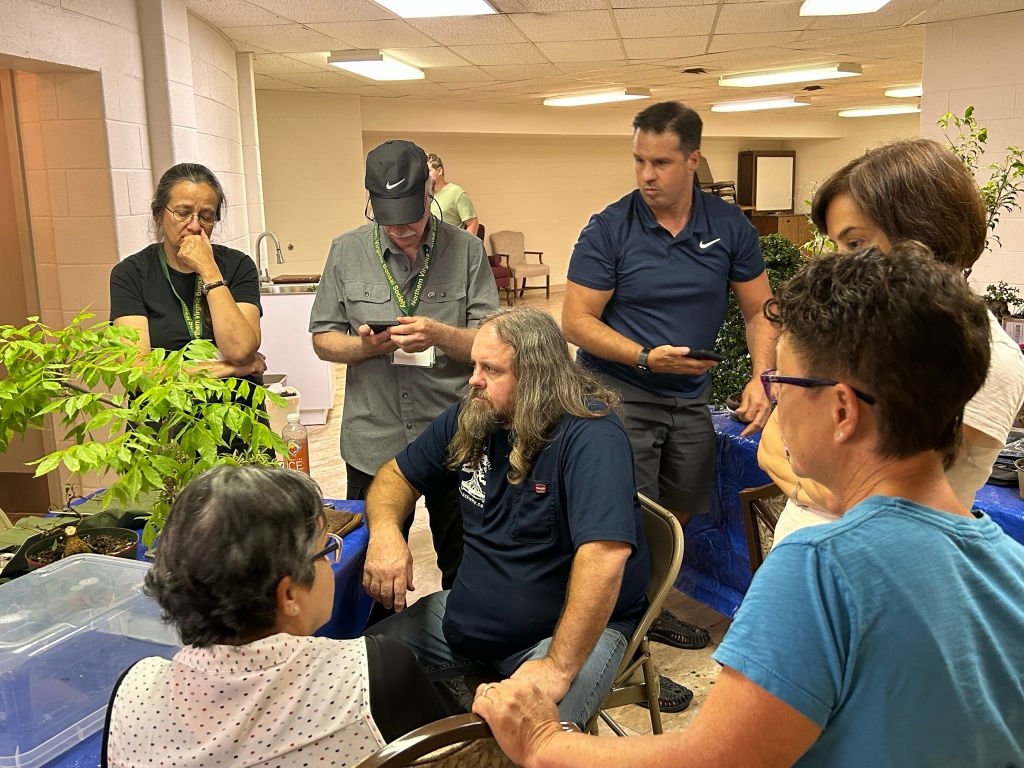
I promise, I wasn’t hanging out with any rich men in Northern Virginia. It was all cool bonsai peoples. See?

Not a single politician (I don’t consider Roberto a politician, and he was in Peru anyway).
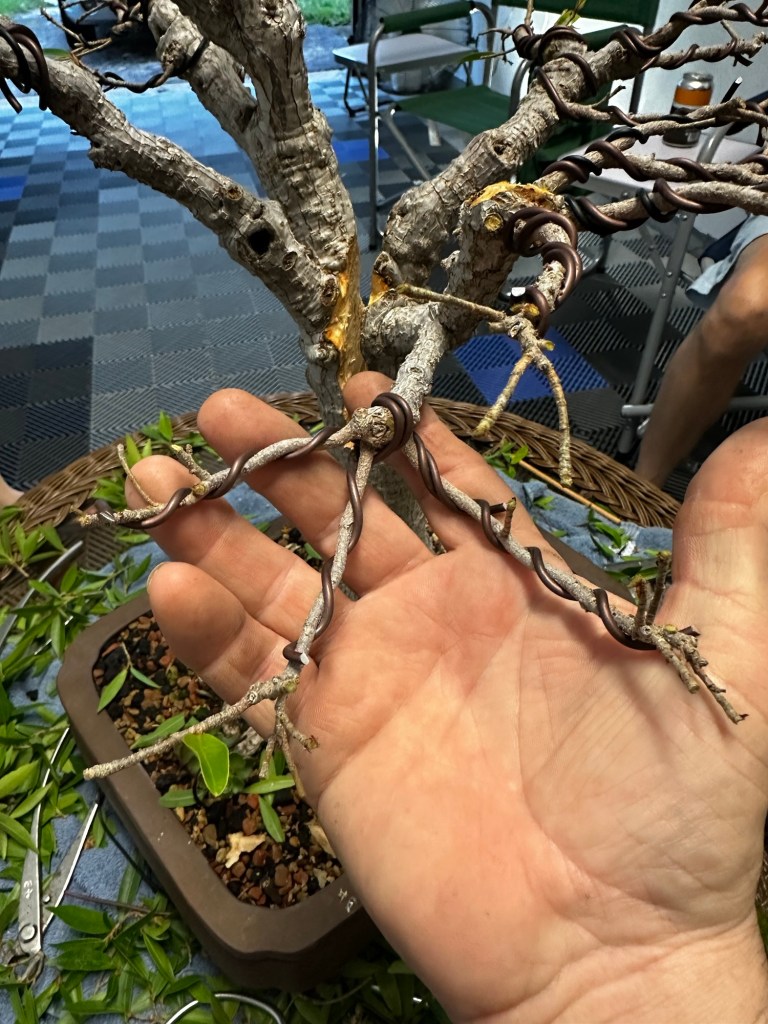
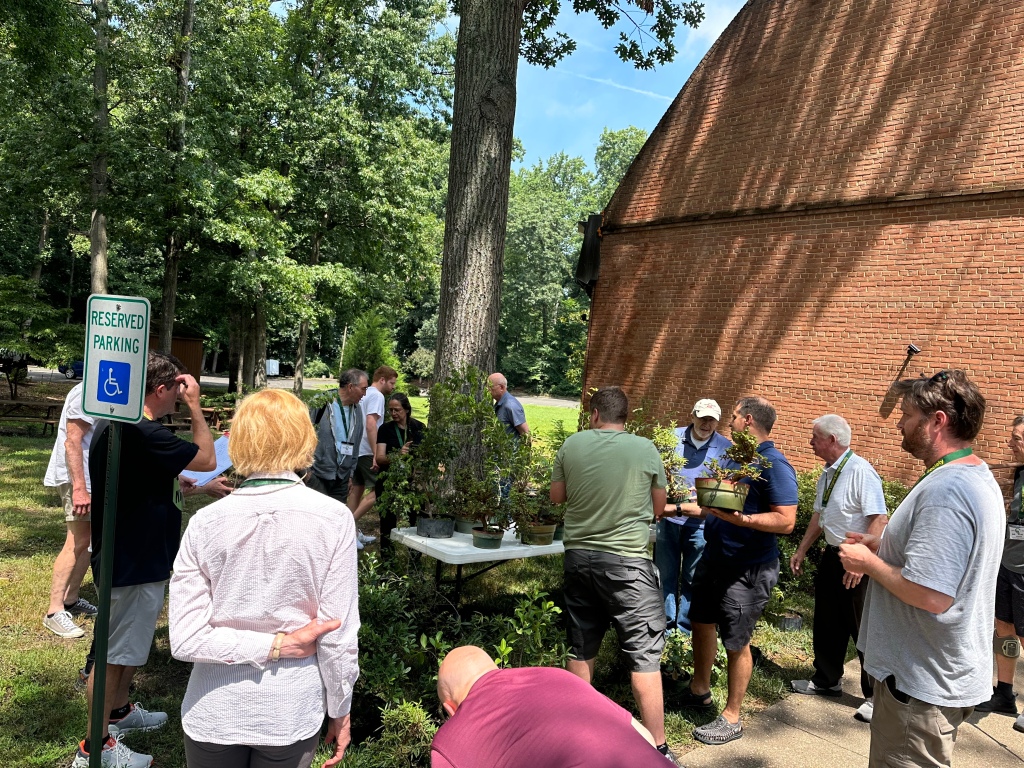
I was at the beginning of my summer tour, making a triumphant return to the Northern Virginia Bonsai Society. I brought a lot of trees for the workshops.

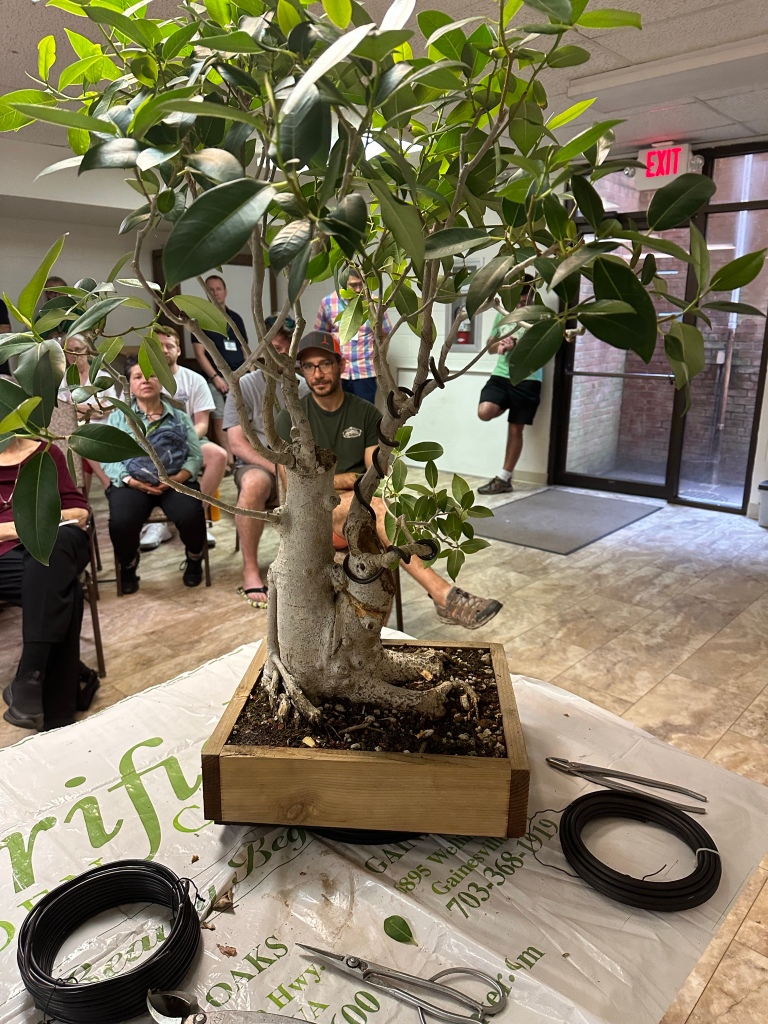
They gave me a tree, what I believe is a Ficus macrophylla (or the Moreton Bay fig, a ficus from Australia) as the demo tree. . This particular specimen has been passed around in the club a few times, with no one really doing much with it. Maybe a trunk chop or two. I liked it and the challenge.

I kinda like an underdog, so I tried my best, using my tropical tree bonsai superpowers to bring out the most I could from the tree.

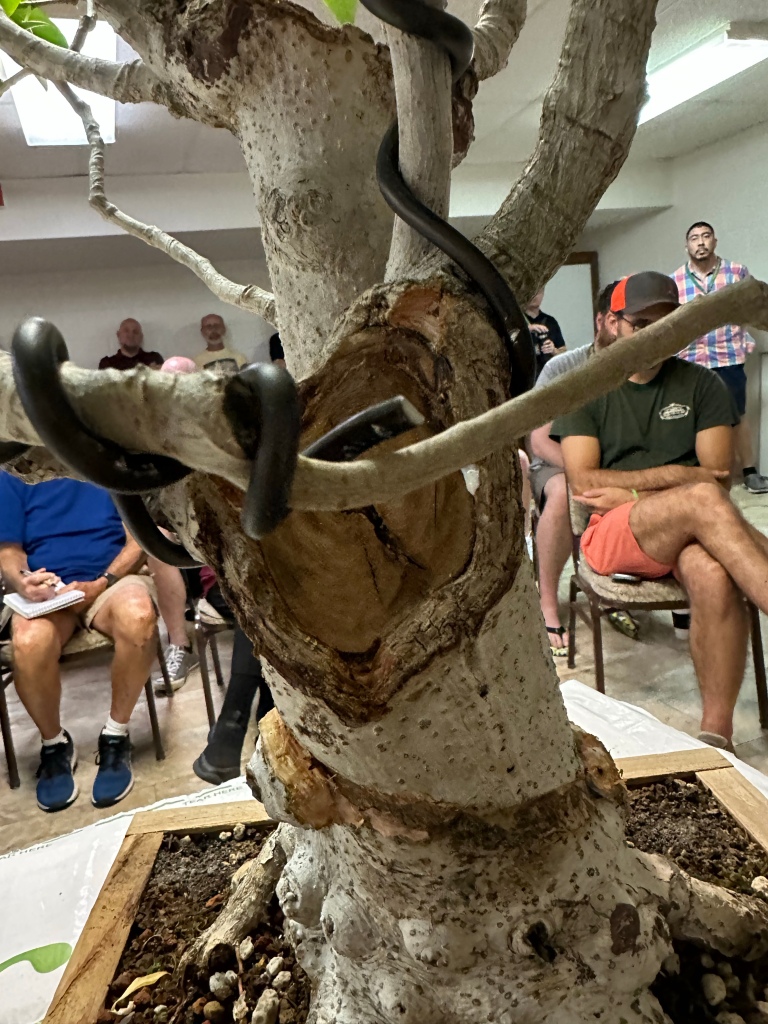
We start with an approach graft.

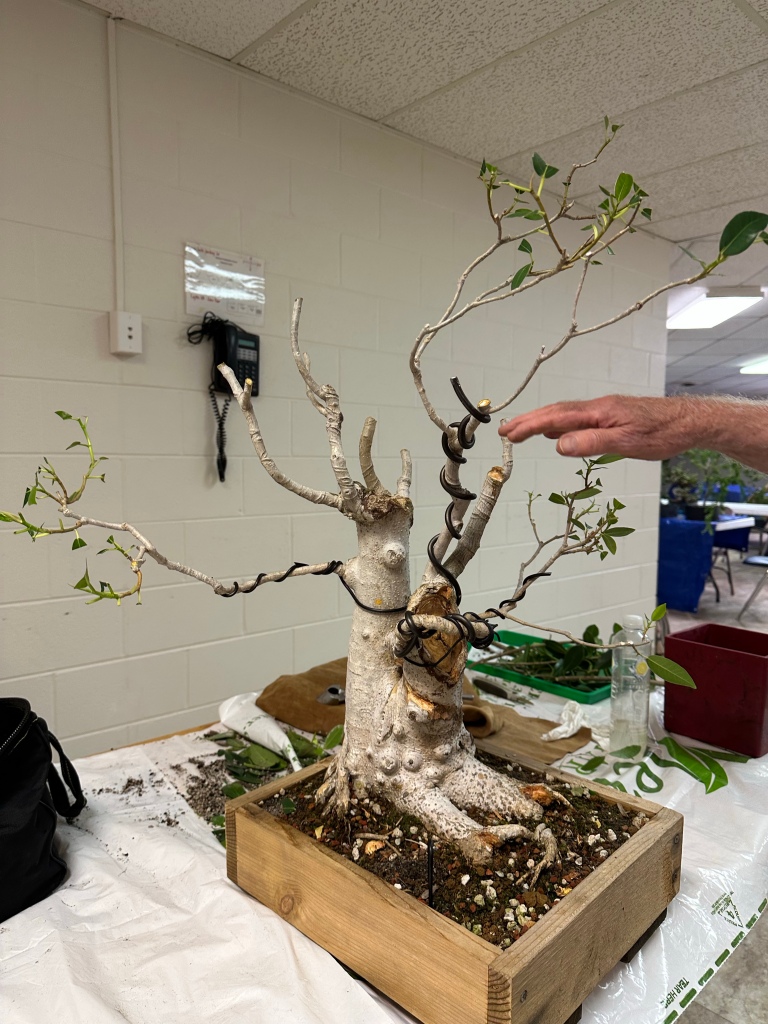
Cut it back in places, let it grow in others.

The graft….

The growth….

The cut back.

And below, my hand in an anticipatory gesture of the “Let it grow!” number, along with choreography and three part harmony.

This was the demo. Along with the work, I told the chicken sexter story (I’ll have to tell you, the readers, that story sometime), I explained what different plant growth growth hormones do (see this post: I use some fancy words to justify my defoliation habit, go figure ). I talk about my childhood trauma and how I use it in the styling and care of tropical trees in the sunshine state (not really, my trauma is manifested in less healthy ways, as it should be).

I told the story of my youth in bonsai, trying to find as much about bonsai as I could, and happening upon a website from a guy that not only grew tropical bonsai in the Great White North (coincidentally, in Massachusetts, about four miles from where I grew up), but developed spectacular tropical bonsai, better than most bonsai artists from Florida. His name is Suthin Sukosolvisit. One of the only true Masters in American Bonsai.

Anyway, I had some fun making a fool of myself on stage and hopefully imparting some knowledge.

I’d love to have the tree for myself. Maybe there will be some altruistic NVBS member who bids on it and sends it down to the FLA as a gift.

After the demo, and some lunch, we had a workshop. My wife took the pics with me in them. I think she’s biased, but she likes them.

In my element, surrounded by trees and students.

The trees got smaller as my ego got bigger.

Love a good trunk chop. It’s like the smell of napalm in the morning.

Here’s a link for the ficus trunk chop, above https://www.instagram.com/reel/CuwgSarMCtD/?igshid=MzRlODBiNWFlZA==

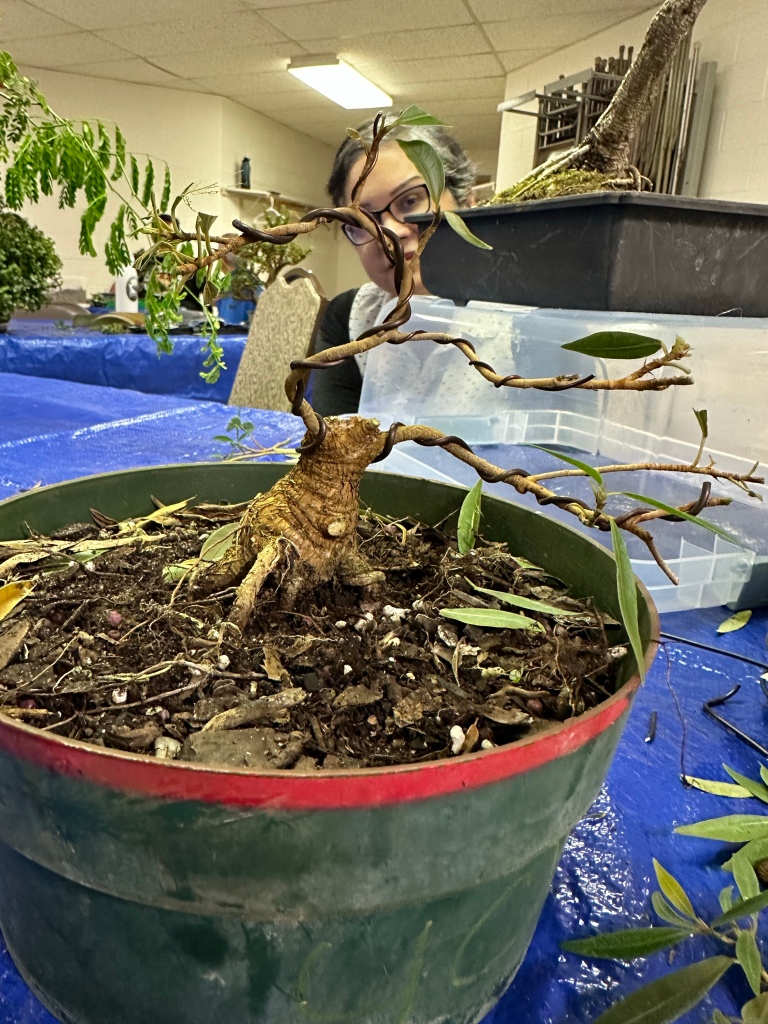
And below, a willow leaf that needed some courage….

Like a pretzel. We just needed some cheese.

Doh!

Where did the pretzel go?

Yea, of course it’s a reel. Here’s the link from Instagram: https://www.instagram.com/reel/CuyRox2g05X/?igshid=MzRlODBiNWFlZA==

And just the video. For those that don’t like Led Zepplin.

My wife channeling her inner Jack Kirby with the wacky camera angle.

Now, we get to a cool tree. It’s a tree originally from Ed Trout, one of the last true gentlemen of bonsai. Ed had sold it to a man named Jonah Hill.

I know. Adam lavigne helping Jonah Hill work on a bonsai tree. The joke writes itself.

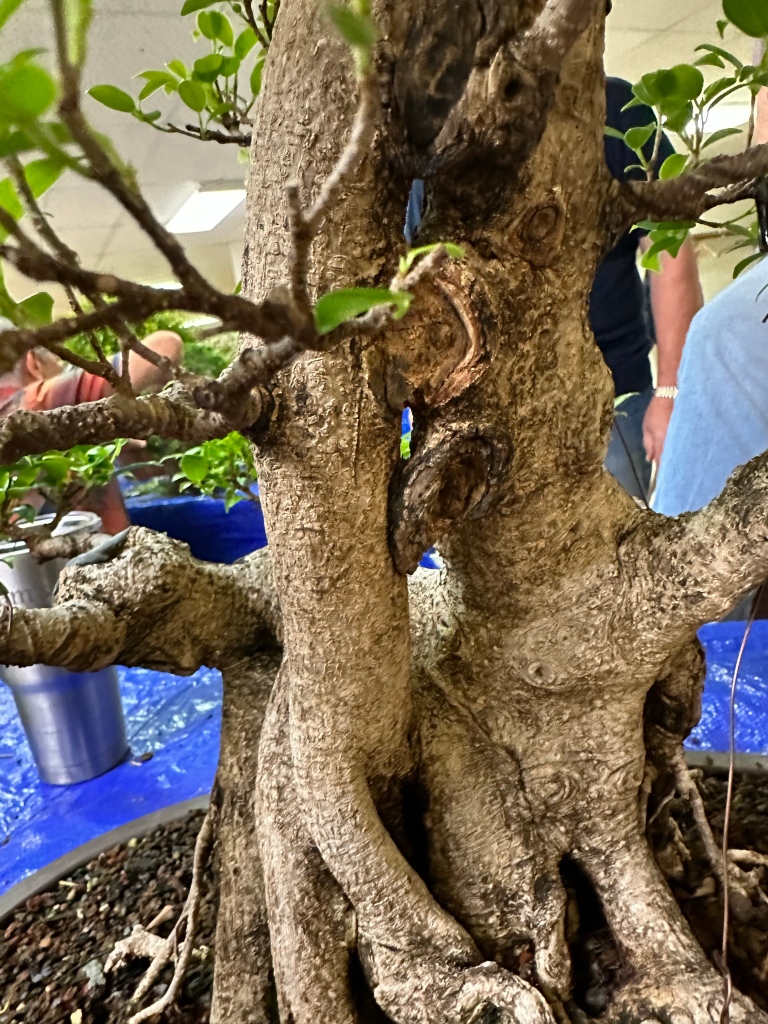
Study the pic just above. You’ll notice a hole in the middle of the trunk.

Below, I have a tree that no one wanted. So we are going to graft that into the hole.

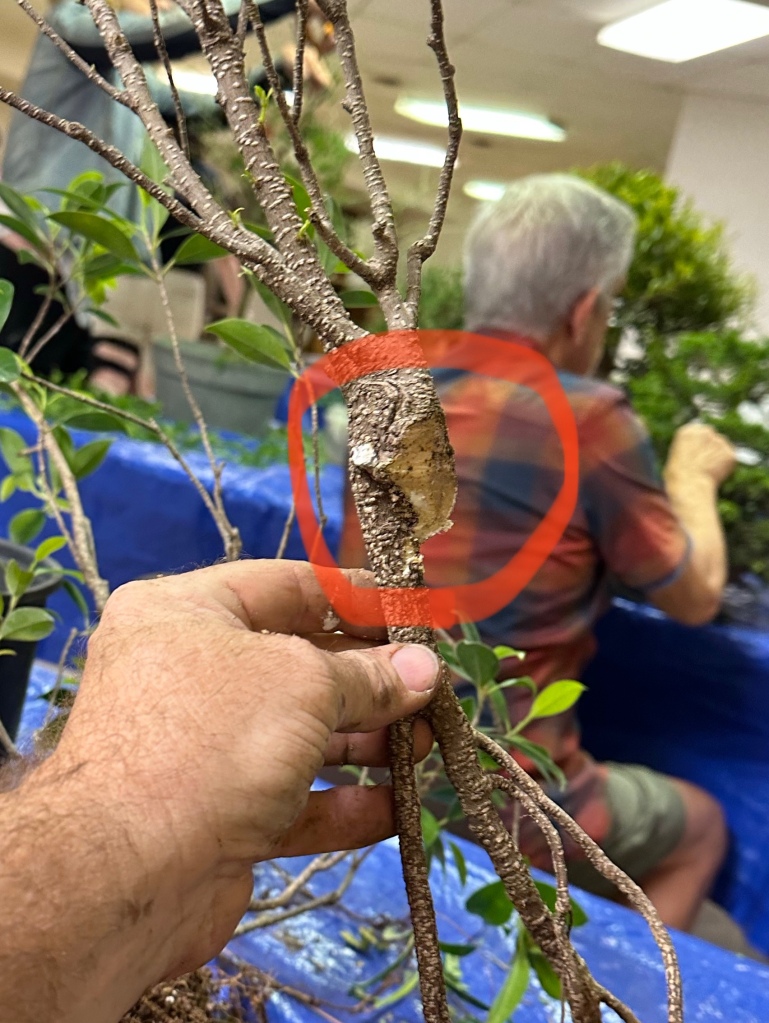
I cut off a piece of the tree, a piece with a good aerial root. The red circle is where I cut it and the graft will occur.

This, below….

….needs to fit into here. that’s the front of the tree, to keep you correctly oriented.

There’s Jonah, at the top of the pic. I’m about to stick the graft through the hole. Yup. Through it. That’s Jack behind me.

This is the back of the tree. The leaf end of the graft will act as a new back branch.

We use a brass screw (use a non reactive metal) to attach the graft.

Here’s the front of the tree. I arrange the roots, artistically, so that they compliment the tree. Notice the screw in the bottom left. And my wife giving me the “Look”

To get the graft to grow faster, I remove all the leaves except the last few, and I leave the grow tip.

There is still a hole, but as the graft grows, it’ll fill it up. That’s LeAnn, on the left, who was my host, giving me the same look my wife gave me. Both of them want me to work on her buttonwood. don’t worry ladies, it’s next.

Some more pics to give you some detail.

Jonah has done well reducing the leaf size.

Just about done. We tied some aerial in place (bottom left).

And, finito!

For the next tree, and the next post, we get to meet LeAnn’s buttonwood. An amazing tree, also from Florida (like Jonah’s tigerbark), and originally from none other than Mary Madison, the Buttonwood Queen.

Excited?

  •  

It’s a Hard Rock life, for m’trees, it’s a Hard Rock life, for me

Carry on my wayward sons, or trees….or something like that.

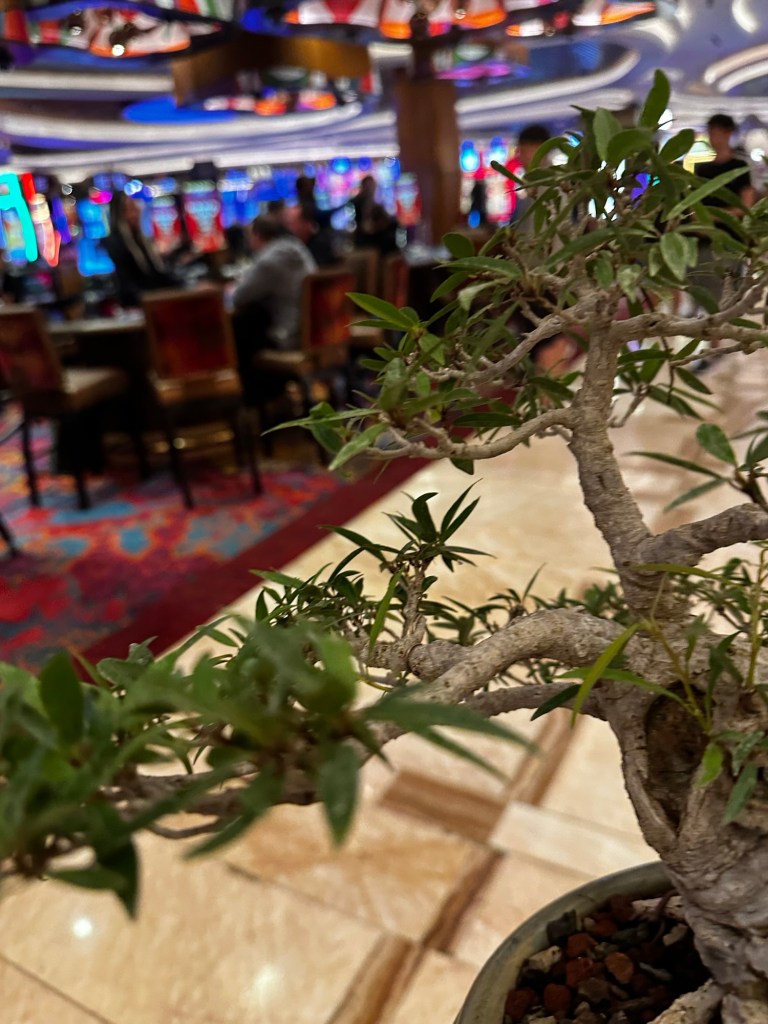
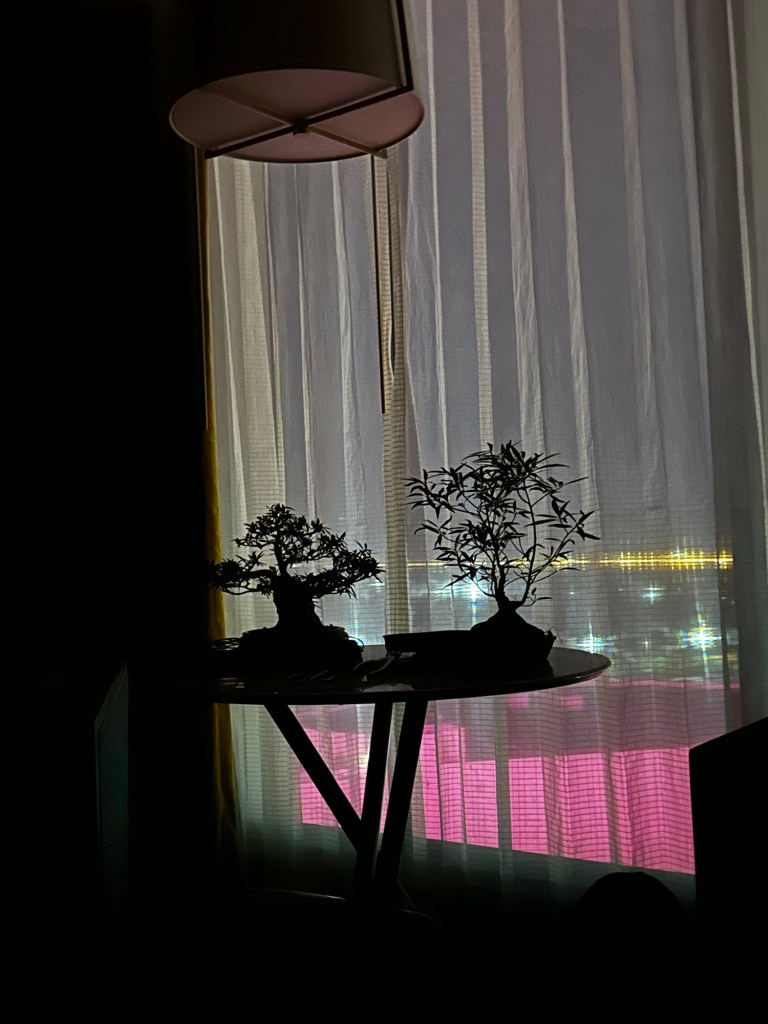
Here I find myself in a hotel in Hollywood.

Florida, not the hotel in California. Where you can’t never leave.

I’m at the Seminole Hard Rock Hotel and Casino. It seems there’s a place way down south in the Everglades, where the black water rolls and the saw grass waves.
The eagles fly and the otters play in the land of the Seminole…

I could catch a show, eat a meal, go swimming, gamble and win (most likely lose). But they’re never gonna catch me cuz I have one more silver dollar.

I have some work to do. Takin’ care of business, so to say.

Or, tomorrow morning I have work to do.

Nightie night…..

Here comes the sun….

And the tree. A willow leaf fig. Ficus salicaria. What’s a more Florida tree than the one bonsai species that was first discovered here. And not too far from this place. The very first bonsai made from the willow leaf still exists and lives down on the east coast of La Florida. Very far from the Florida:Georgia line.

The tree came from Mike Blom, of Emblem Bonsai. He’s one of Florida’s best. He takes the time to develop the trunk and works to make the stock plant the best it can be. The pot is an early Taiko Earth container, by Rob Addonizio.

I didn’t bring any number one wire, so just the main branches will be wired.

They already have a strong upward bend so I’ll keep that movement and exaggerate it. An artistic concept we use in bonsai is the repetition of shape and line. This brings the character of the tree into a more honest representation of itself. The branches should tell a story. Say we have a mountain for or spruce in a place where winter dumps hundreds of pounds of snow on the trees and plants growing there. The branches tend to start growing down right from the trunk.

This tree, a purely tropical species, tends to want to grow up first.

Now, don’t get me wrong, we can style the willow leaf ficus as though they are conifers (in fact, here’s a post where I did just that: This is what happens when you leave a tree at my nursery)

I consider them one of the best species for bonsai mainly because they will, much like a juniper or Chinese elm, they can be made into almost all the styles. Cascade? Yeah. Upright formal? You bet. Windswept? If you want. Bunjin? Definitely.

And they grow and backbud like insanity in a tree. A trunk chop will result in buds right from the chop sight, usually double digit amounts. You can totally redesign one of these trees every ten years and the tree will thank you for the makeover. I’ve heard twice from returning westerners who’ve apprenticed in Japan that ficus in general just grow too fast for the Japanese masters.

Imagine that.

That’s one reason we in Florida tend to put them into bonsai pots when developing them, it slows the growth might so that we aren’t unwiring and then rewiring every week when it starts to cut in.

How’s that? I like it. It could have better taper….if it were a Hershey’s Kiss.

Some water…

Whoops, made a mess in the shower.

Now it just needs some sunshine. Let the sun shine….and you thought I ran out of song lyrics, didn’t you?

Now it’s breakfast time.

WAIT, WHAT? $32 dollars for two eggs and bacon….I thought casinos had cheap food?

  •  

The Cincinnati split

We have before us, up in the urban spires in the city of Cincinnatus, one willow leaf ficus. The tree, as is, would be good on most people’s benches. It has a biggish trunk, good branching and a full canopy. But, to quote the modern day vernacular, it’s kinda like a “helmet on a stick”.

And Brendan was bored with it. I might be able to do something about that, let’s see what we come up with, shall we?

Twirling it around, I think I like the front (below) with its nice root spread and interest. Now what?

I think you see what I saw…

…hah! I crack myself up sometimes. Let’s crack this trunk up….

Or saw it, as it were.

Maybe we (or Brendan) needs some liquid courage to steady the nerves. Or hands.

Bob Dylan has a new bourbon by the way.

But, oddly, I chose a Van Morrison song for the video, go to My Instagram to watch the sawing. It’s a good song at least.

“Are you sure the tree will survive this Adam?” my wife asks.

I sure hope so.

Using a knife, I make the saw cut a little less “saw cutty” looking.

That’s better. The willow leaf ficus almost heals like we do, from the inside out, as opposed to the bark spreading over the cut, like a maple tree. It’s an observation I’ve made in my career as a ficus bonsai guy.

That was the easy part, now I’ll go through and give the canopy some shape.

Which means, defoliation, removing unwanted and superfluous branching or budding, wiring, etc.

Without foliage (foil-age to some of those in the town of my birth), we can clean up some cuts too.

And no, Virginia, I don’t tend to use cut paste on figs. Why? A point to consider, the white latex “sap” that we see when pruning a ficus is not the real “sap” from the tree. It’s actually from a secondary, pseudo-vascular system that utilizes cells called “laticifers”. The sap flows through the xylem and phloem and it’s comprised of the water and sugars the tree uses in photosynthesis and respiration.

Laticifers are super specialized cells or a network of connected cells (often like the real vascular system, in tube-like structures) that make and hold the latex and can be found in various tissues, including the pith, the cortex, the secondary phloem, and even secondary xylem. The botanists believe that the purpose of the latex is to trap bugs and stool continued damage to the plant, and to help seal the wound for quicker healing

Let’s add some wire…

Look at that dude, he’s a stud.

My work is done, except to have Brendan add some raffia to the sawn edges. Willow leaf figs tend to bud right on any cut or wound, which is a good trait to have, but sometimes it’s too much.

The raffle should keep new buds from forming.

And Bob’s yer uncle!

This is where you, my Constant Readers, are quoting Jurassic Park “You.. were so preoccupied with whether you could, you didn’t stop to think if you should…”

But I jumped past all that and posit the concept that I needed to do it.

We had some reverse taper building where the branches were coming off the trunk, pretty much in the same spot, so something needed doing. Whether it was chopping them off or, this. If I chose the chop option (just as traumatic as this technique) we could have created a sweet short tree. But it too would be just a “regular” bonsai. Brendan was bored with the tree before. Now he’s excited to see what happens. And the tree will be a better one for this. That’s Brendan below, on the left in the front.

He looks happy. I do too. That’s my second or third liter of beer, so…..I’m happy.

The tree, for Brendan, was a good tree, but boring. And living up in Cincy, it was becoming a chore to go through all the labor of winter protection, including grow lights, heat mats, etc. Now, Brendan has something to look forward to as the tree responds.

The tree looks happy too.

Another video of the finished work.

And yes, you saw White Castle’s and a sparkling beverage called Bonsai, tasty and expeditious. Food and beverage of the bonsai gods we pray to.

Let me know what you think. I’ll add updates as they pop up.

  •  

What and Why, willow leaf revisit. It happened, but it’s in the past

Here’s a tree. Willow leaf fig. Yeah, the one everybody says they can’t decide on a name for. Nerifolia? Salicifolia? Wilowleafyanus? But they did, about ten years ago. “They” being botanists: it’s called Ficus salicaria, which is literally -willow leaf fig. Also, I’ve been writing this post for about six months, and the work was done early spring, before the rainy season in Orlando.

Let’s start with an interesting note on growing the willow leaf ficus outside all year in Orlando. In the spring, if you’ve done no work on them since last summer, they will drop all their leaves and grow new ones within a week, much like a deciduous tree, or, more specifically, like Quercus virginiana, the southern live oak. First time it happened to me I was freaking.

Don’t worry though, the leaf drop may seem pathological (meaning caused by a pathogen or illness) but it’s natural. It quite literally drops its old, winter leaves, which are adapted to the lower light intensity and short light intervals of winter, and grows new ones that are better adapted to the heat, length, and intensity of spring and summer in Florida.

If that sounds familiar to my northern peeps, it’s this process, plus my own experience pruning and moving trees around in my nursery during the Florida Winter, that informed and enriched my own teaching. Mainly, I recommend this technique to my northern students: when moving a tropical tree from outside to inside, or versa vice, inside to outside, defoliate. A tropical tree will drop old leaves instead of trying to change them according to their new environment.

Meaning, outside leaves are not adapted to inside light. Remove them and the tree will grow new, indoor leaves, when it’s inside. And do it again when returning the tree outside.

Works for me, and those students up north who follow the advice.

The pot it’s currently in was made by a friend’s wife, Jean. But it’s too small now.

Jean is an all around artist, and has done theatrical make-up work in movies and even on some of the actors in Star Wars events. You’ve seen her work I’m sure.

She makes a good container too. But it’s time to get a bigger one for the tree.

The tree was acquired from one of the Facebook Bonsai Auction pages. From a former friend named Seth Nelson.

There’s a name that gives me a bitter taste in my mouth. There are very few of my readers and students who’ve heard the story about this kid. Or man by now, I’m thinking.

When I knew him, he was both young in temperament and age. I’m thinking that he has grown up now.

When I first met him, he was looking for a mentor. Unfortunately, that was me for a few short years. I say “unfortunately” on his behalf, not for me.

I can hear it now, “What does that even mean?” Well, this will be hard to write, and I’m not going to be pointing fingers, except back at myself, or trying to persuade you that I’m an angel, because I’m not, but at that time in my life, I was still young and stupid too. I’m not sure I’ve matured.

Let’s work on the tree and I’ll throw in my thoughts. And, Hell, if you don’t want to read it, just look at the pictures. I’m very reluctant to write it.

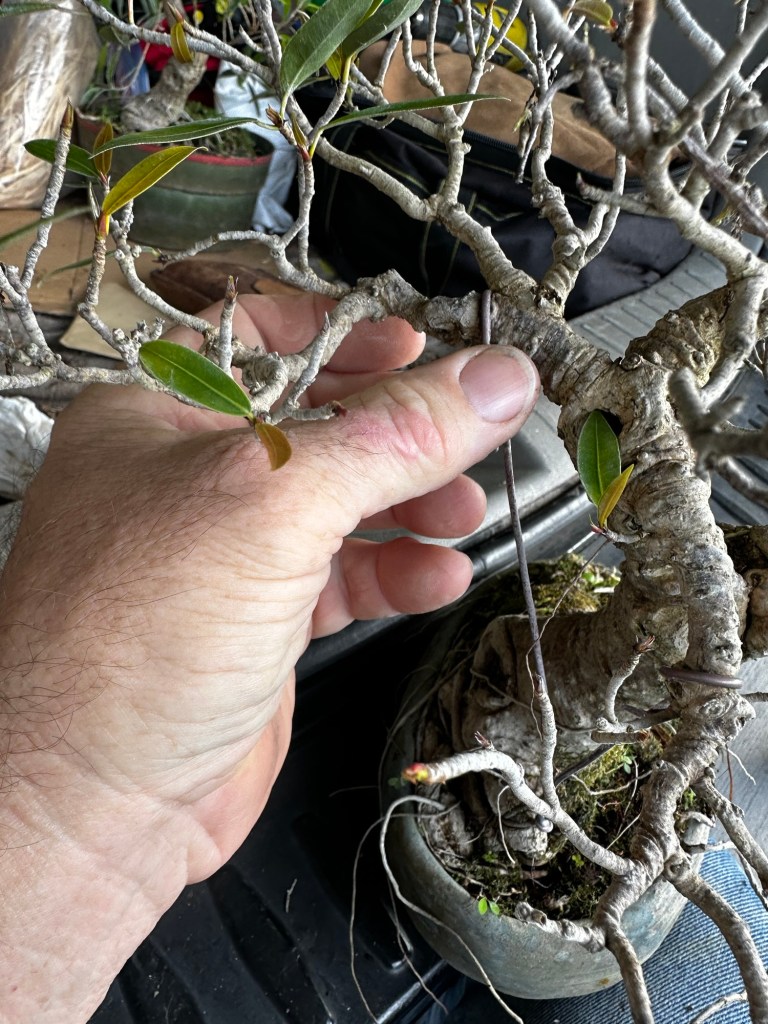
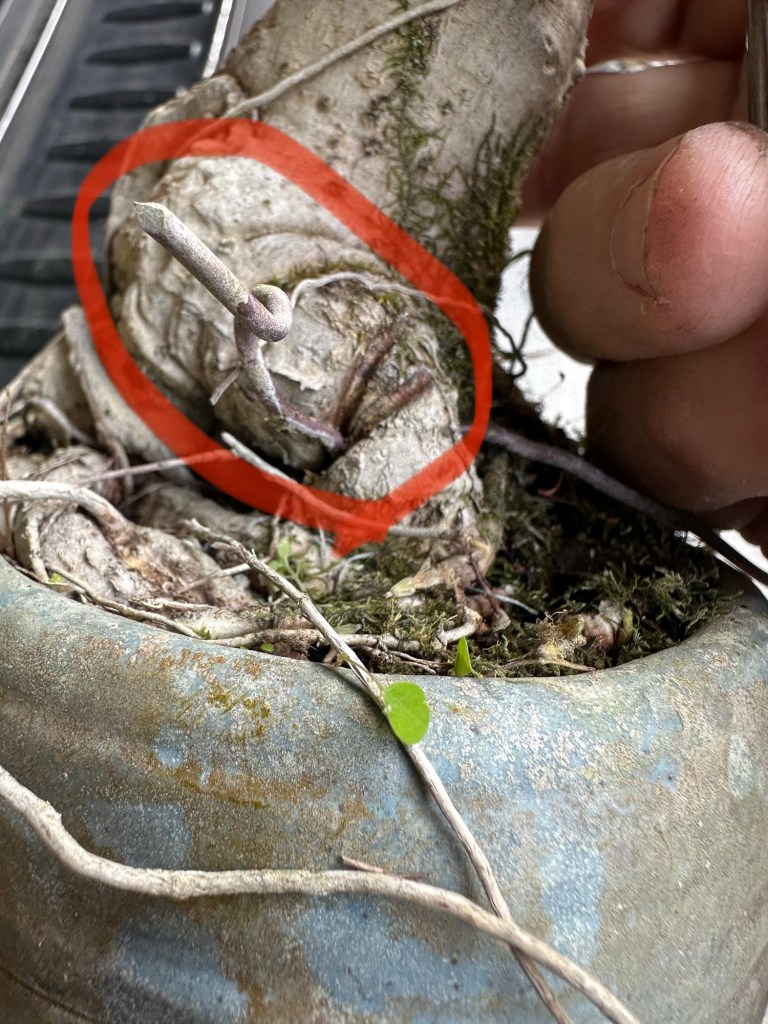
I guess the ficus has been in this pot for too long. That wire is just a bit cut in. The reality is that I have been thinking about this tree for years and ignoring it at the same time. I knew if I worked on it, I’d have to document the process and then its story had to be told.

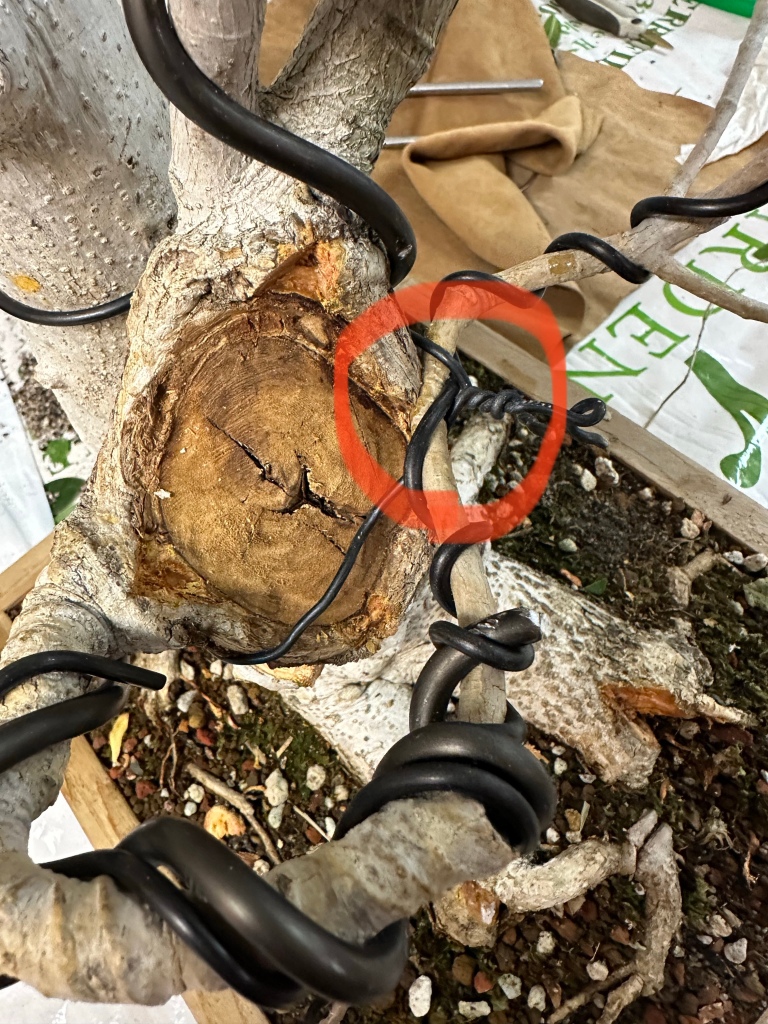
The red circle shows the tie-down wire cuts. You gotta tie them down so they don’t get up and walk away.

Seth was selling the tree to help pay for something, I think maybe a starter for his truck. I surprised him by using the BIN option (B.I.N. means “buy it now”). And he brought it to the nursery for me.

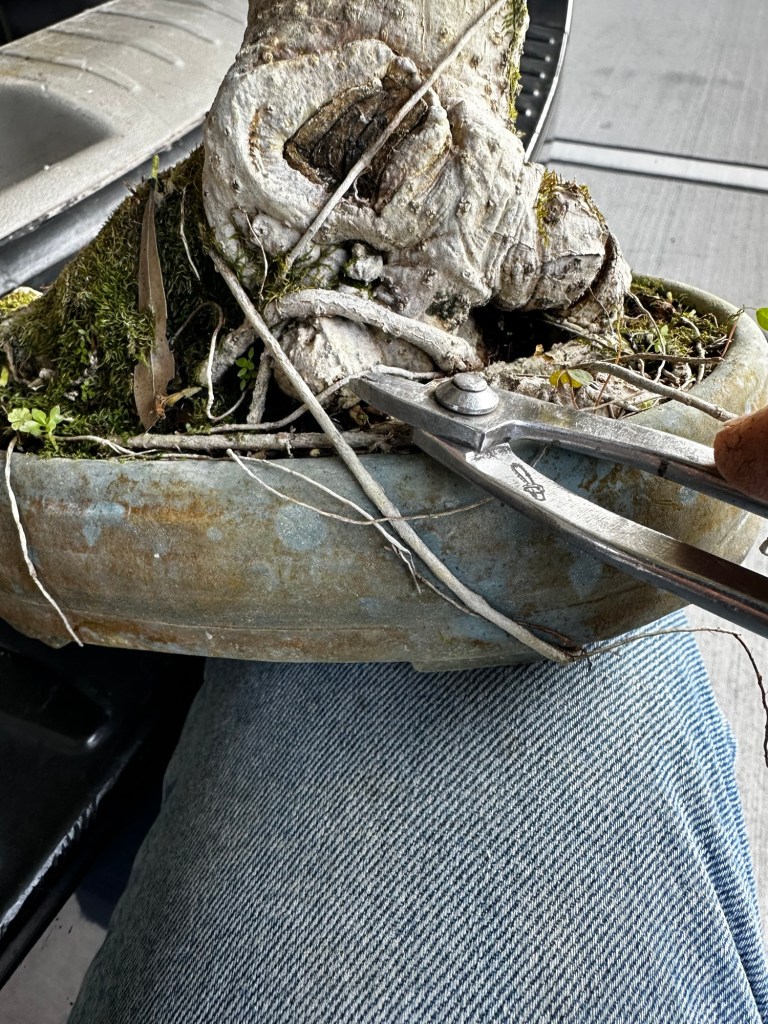
Release the chains! The tie down wires

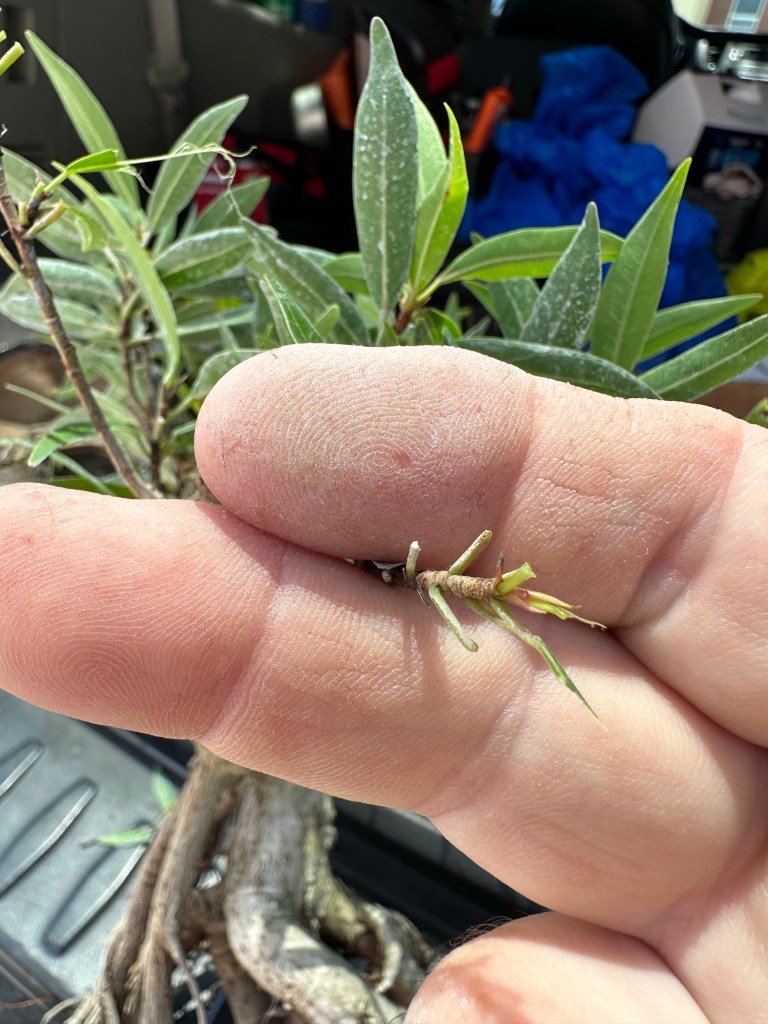
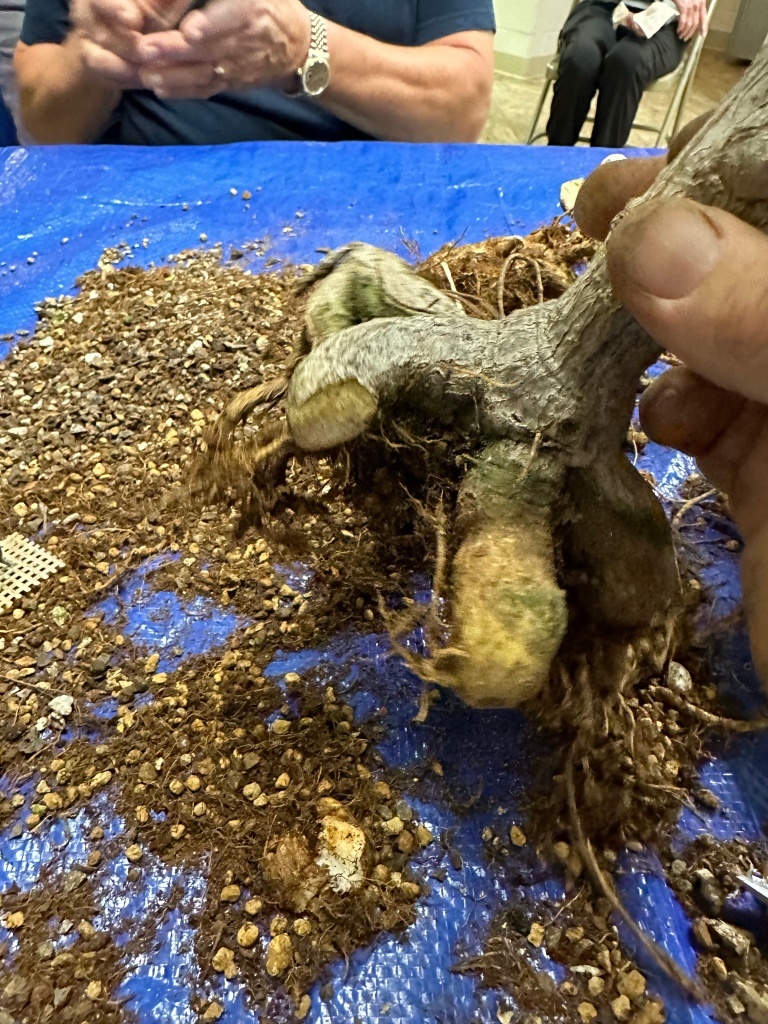
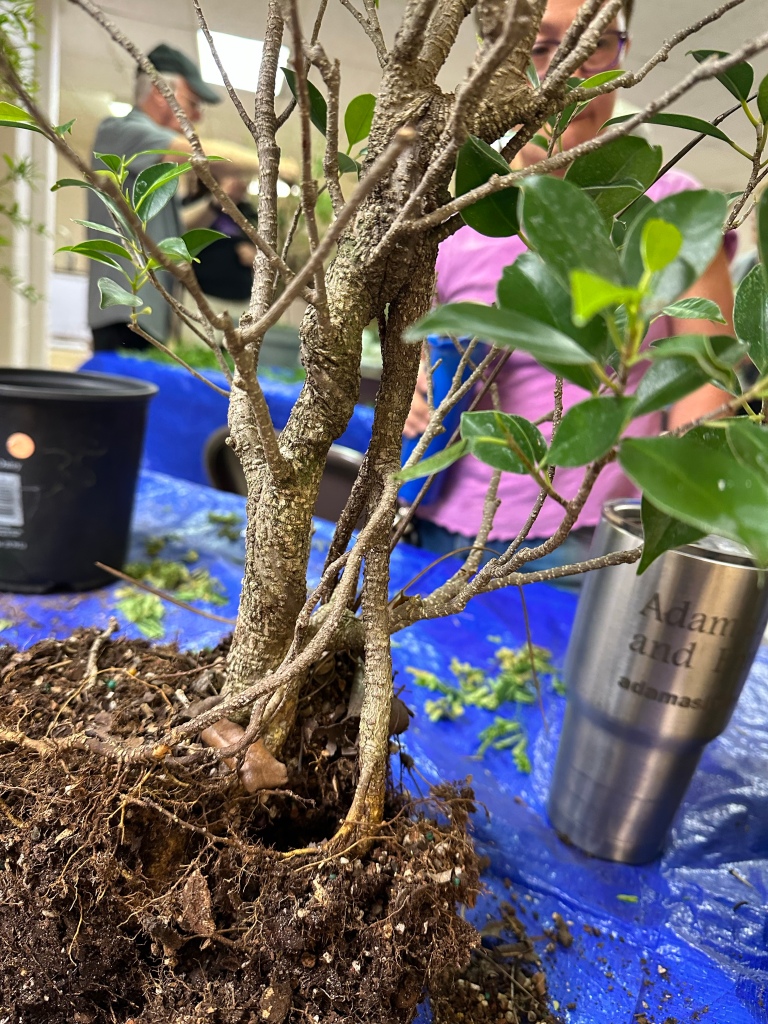
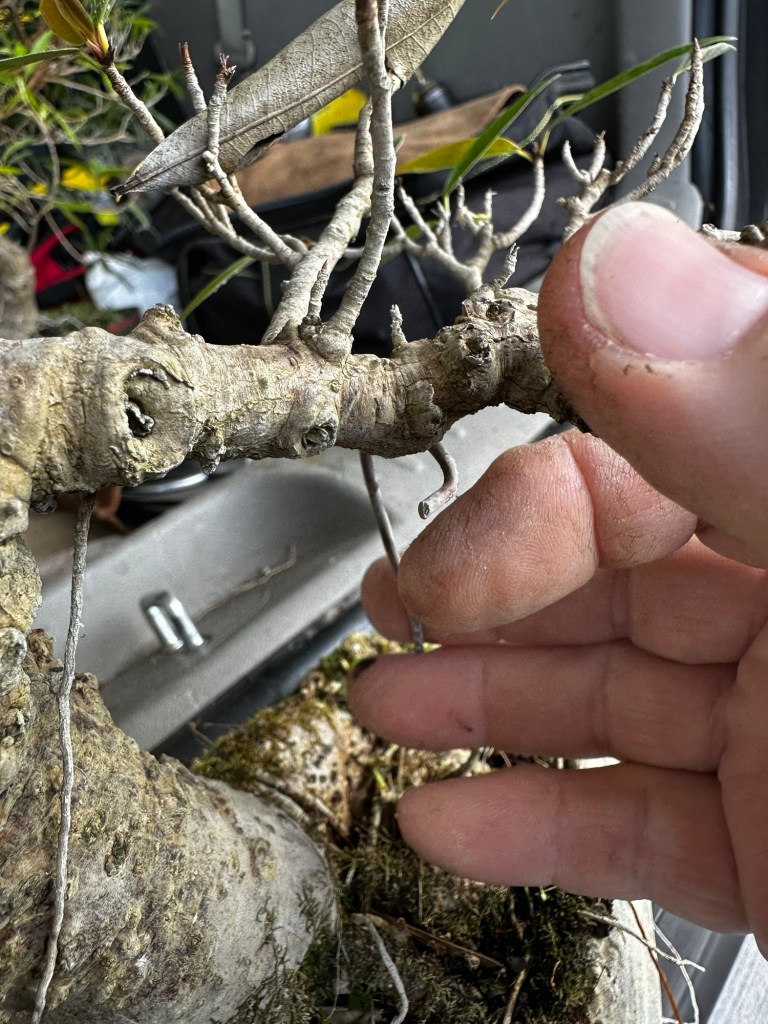
Ah! That, below, is a root. Maybe the tree doesn’t want to be repotted?

It’s in there like the second wicked stepsister’s foot crammed into the glass slipper.

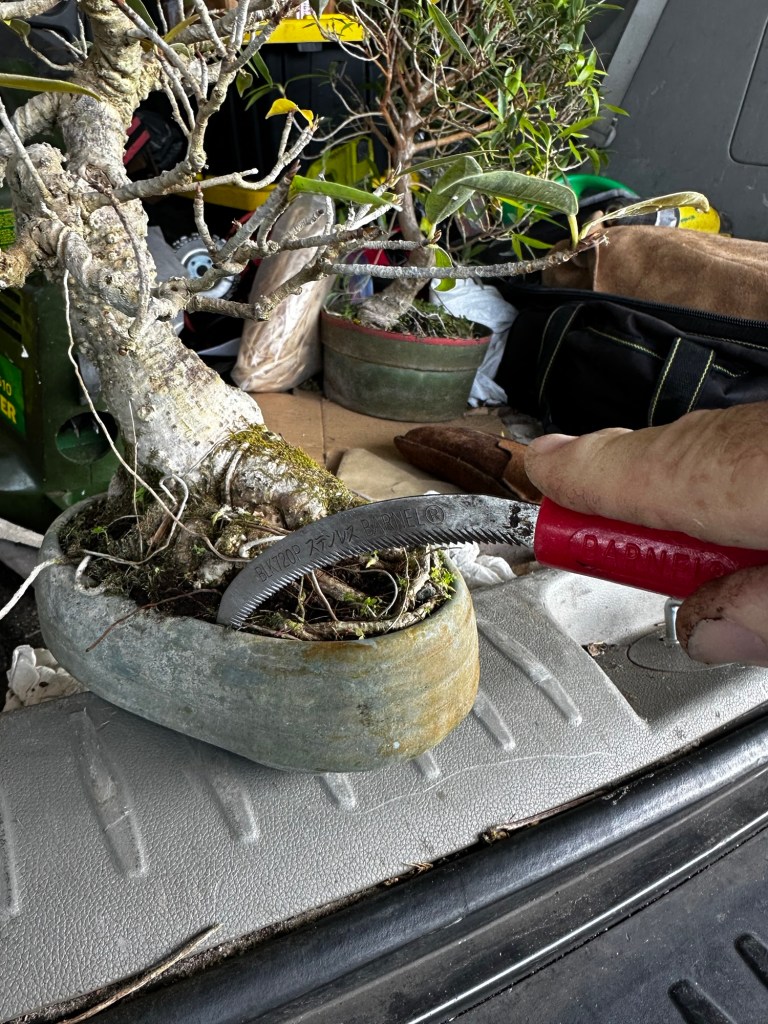
A tad bit of irony, but me having to use a repotting scythe to cut the tree out of the pot, goes with the original Brothers Grimm telling of Cinderella, where the stepsisters cut their foot so it would fit in the slippers (in the original, the slippers were gold, not glass).

Sounds like a lot to do to yourself just so you can be a part of the ruling elite, cutting off pieces of yourself so you fit in.

As you see in the video below, it’s in there tight.

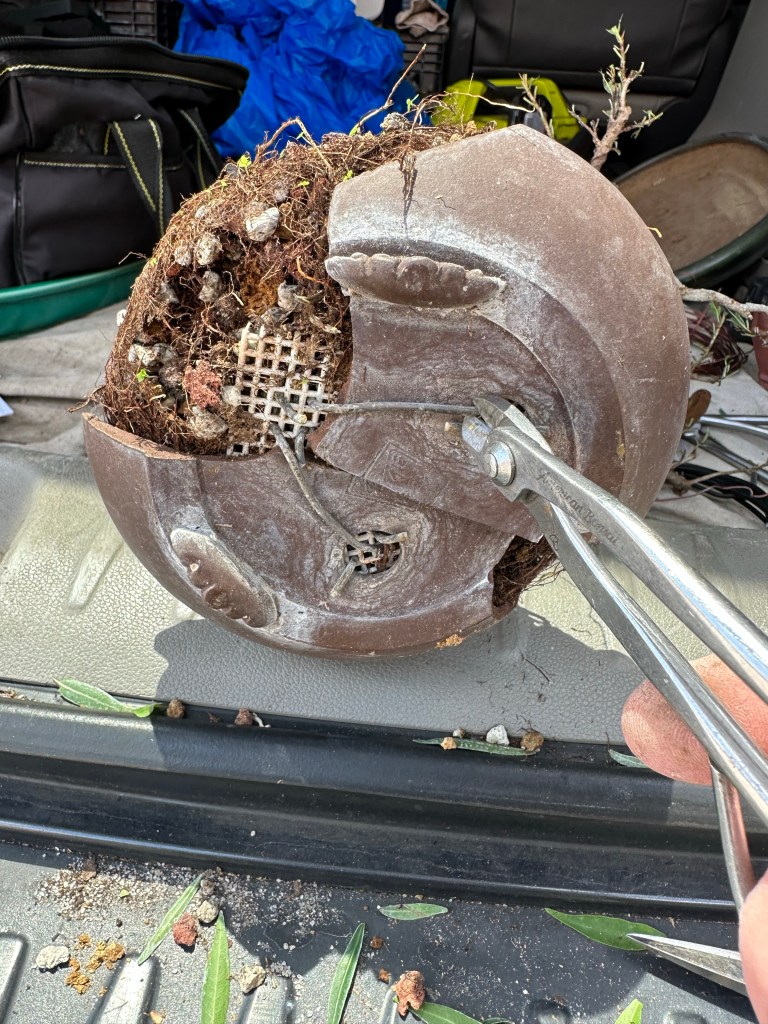
Jeez. Do I have to break the pot?

There’s some ASMR for you.

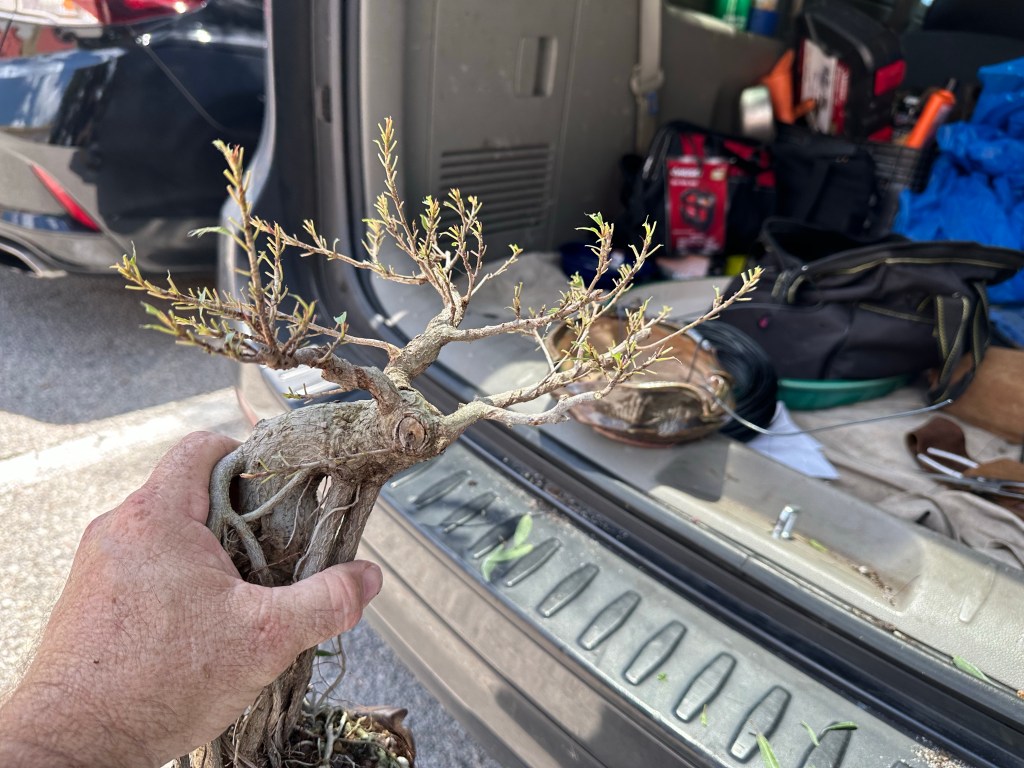
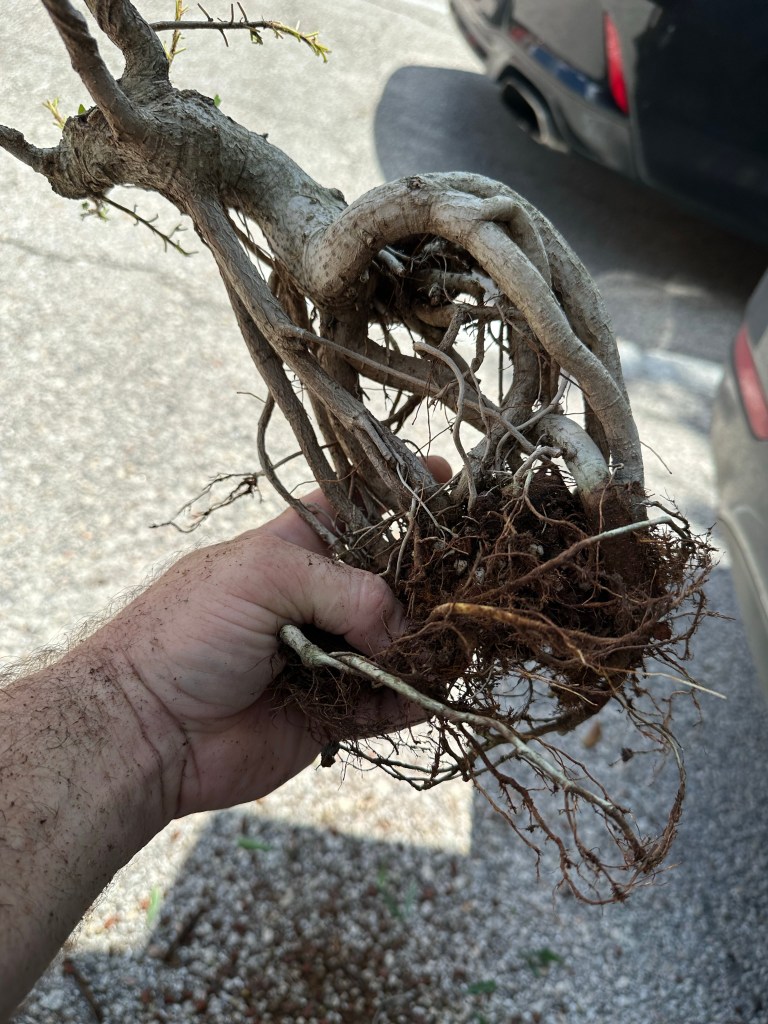
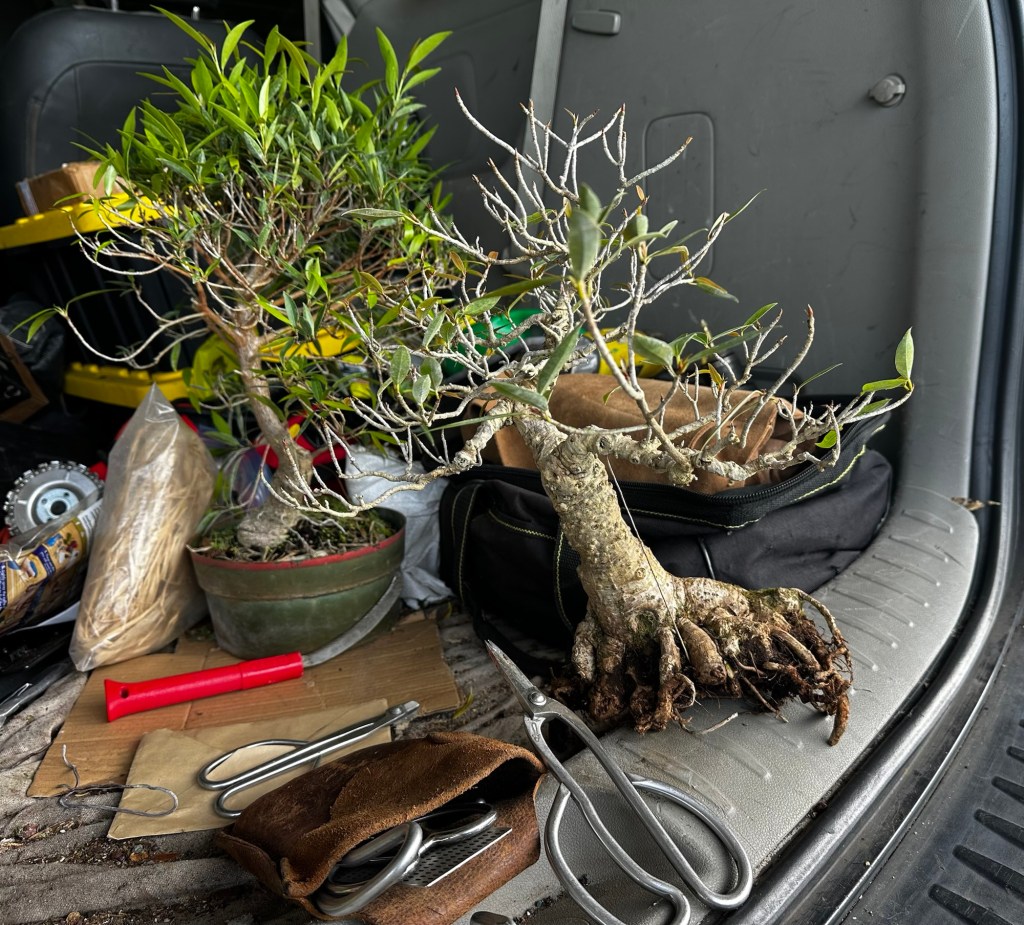
I got it out, finally.

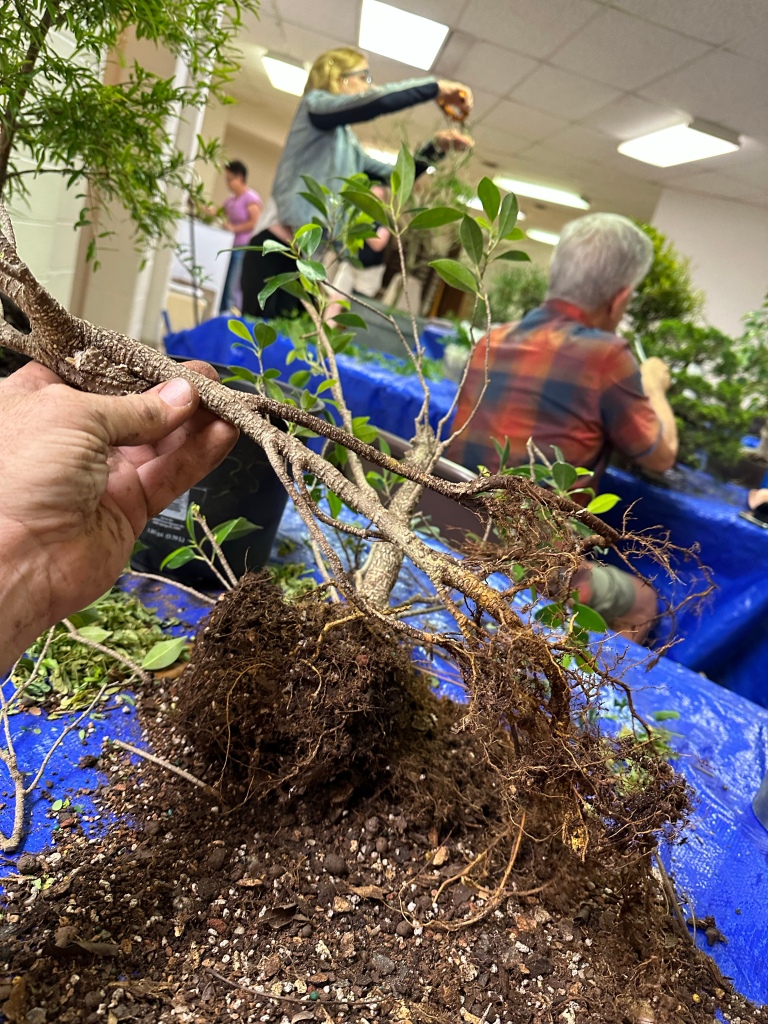
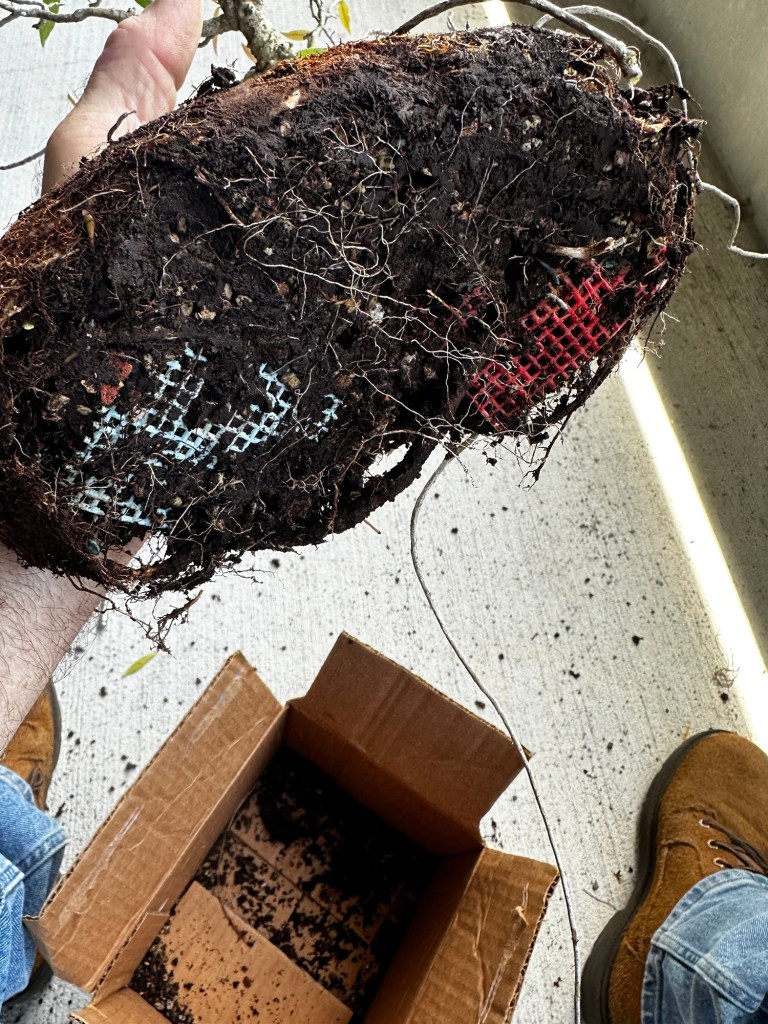
It has some roots on it alright. Ficus are very good at saving sugars in their root structures (being partially epiphytic is the reason. Most ficus are epiphytes, meaning they can live without soil, usually in a tree as strangler figs, so they’ve adapted by growing tuber-like roots to store carbohydrates and moisture for when they need it. Think of the so-called “ginseng” ficus, looking like a potato with the caudex looking roots. It isn’t a distinct species, but a trade name given to seedling Ficus microcarpa. Almost every species of ficus will do that with their roots).

Some pruning.

A few heavy root cuts.

Now to pot it up.

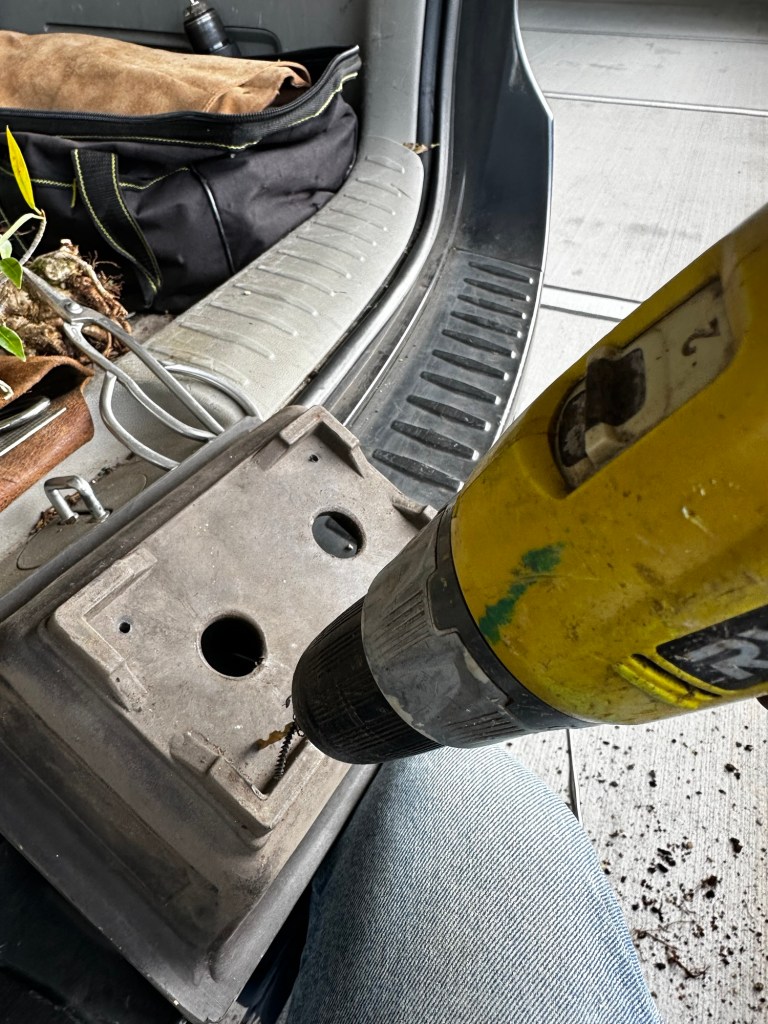
I have soil, wire, fertilizer, granular systemic insecticide, but one thing I didn’t remember to put in the van this morning was a good pot. I do have a pot made out of mica, from Korea. It’s at least bigger and will serve the purpose.

Needs some more holes for tie-down wires. That’s the great thing about mica pots, they are good containers, and they can be easily modified however you want. One of these days I’m going to carve a design into one.

Now we are cooking with gas.

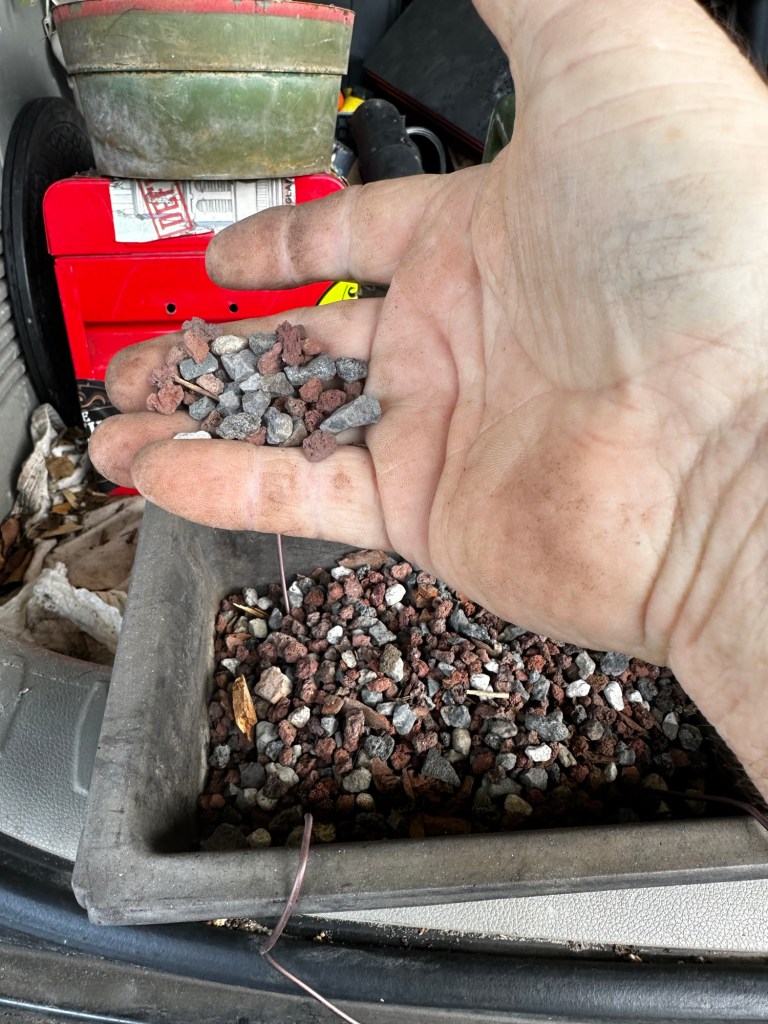
Some soil. Soil, that’s how it started; Funny story, I’d been in a casual conversation with Seth, and he saw a post of mine where I was repotting, and he asked where I got the red lava. He’d been buying the consumer grade and mulch sized red lava they sold at Home Depot, and was trying to use a hammer to crush it down to bonsai sized (about 1/4 inch size) and discovered that it just makes dust. It’s hard to crush lava with a hammer. I told him that I was going to be at a bonsai club meeting that met close to where he lived, and I’d bring him some of mine.

It was a good way to get a meeting with me. I like to help people, and Seth figured it out.

Fast forward a year or so to when I first got the tree from him, he thought I was going to do the famous Adamaskwhy trunk chop.

I didn’t, but instead decided to use all the branches to make it work. For some reason, he wanted a chop, so he was disappointed. It wasn’t the last time I disappointed him.

I said earlier I was young and stupid. When I met Seth, it was just around the time I began my journey with an ileostomy. There’s even a blog post where I go into the hospital after I visit him and he was one of the only people to come and visit me (Click here). I was angry at the world and I tend not to suffer fools gladly (I still don’t, but I’m getting better, now I just suffer them stoically). Seth had a hard time with his stepfather at home and we both would commiserate by saying bad things about people we didn’t like.

And here is where I couldn’t live up to my ideals. I have a flair for writing well, and he and I would DM each other on FB messenger. That made for some interesting screenshots. But I have come to the realization that, even though he shared private messages between he and I, two good friends, it was still my fault that I wrote those messages.

But I think I’ve grown. I question myself and my motivations often. Like Plato said, “The unexamined life is not worth living”. I also try to align my life with the idea that a meaningful life is one dedicated to beauty, truth, and virtue. And when it comes to my interactions with other people, I know that I can’t ever figure out why other people do things, only why I do things. And it could be argued that I don’t have a right to know another’s thoughts, only to deal with those actions. It’s entirely possible that how they act is really a reaction to how I am acting.

Before styling:

After styling.

Eagles-eye view.

It is a complex tree. You really have to watch the video to see the depth of the trunk movements.

It’s a good tree, and I’ll cherish it for what it represented, a friendship. One I’ll never have again with Seth. I did wrong and I’m sure I’ll never be forgiven, but that’s ok. I’m close to forgiving myself, but I’m not sure I can forget.

I’ll just keep talking to my trees, and be guarded with people. I’m not sure how else to be and not hurt or be hurt. The trees, though it’s a difficult language, still speak in plain sentences.

  •