Reading view

Bonsai Empire Intermediate Course 2: a review

A few months ago, I got an email from Oscar Jonker, from Bonsai Empire , asking me to give an honest review of his newest online class. I’ve collaborated with Oscar in the past, providing some media, hosting livestreams, etc, so I said “sure”. Little did I know that the class was so in-depth and full of information that it would take me days to finish!

So, my friends, here is The Review…..well, after the mandatory legal statement: according to the US FTC, I have to disclose whether I’ve received any compensation from Oscar or Bonsai Empire. I have not. This is not a paid review, simply a service provided to my friend and to let the Bonsai World know about a valuable resource. I was provided access to the class though, which you see by the above pic, costs a mere $59.99.

Some of you might wonder why I, as a possible competitor, might want to promote Bonsai empire (always ask why!). Easy answer, I don’t see myself as a competitor nor do I think any Art is a competition. Down that road is where we find division and strife. My business model has me providing in-person bonsai instruction. I have done online classes and courses, and you can find those easily, but my blog (Da’ Blog) is free to anyone. Besides, the business of bonsai is not a zero-sum game. It’s not a pie to be cut up and the only way your piece gets bigger is to take from someone else’s piece. By supporting and promoting bonsai, the pie gets bigger.

Ok, with all that said, THE REVIEW!

The course is laid out with 21 video lectures, starring Bjorn Bjorholm and Michael Hagedorn, two of my favorite bonsai artists from the USA. Both trained in Japan, both with amazing content (I subscribe to Michael’s blog). And both very knowledgable.

The video quality is top notch, as expected from a Bonsai Empire production. The knowledge imparted is in plain English, and presented in a humble way. You don’t need to know what a “moyogi momji with a melting nebari in a nanban pot with an understated namako glaze” is. Very accessible. By the way, who would put a moyogi in a nanban?

One refreshing thing, Bjorn isn’t averse to trunk chopping:

The information: both artists describe what they are doing and, most importantly, why. The chop above is for taper and movement. And after care is discussed, the how and why and when. There’s one spot where Michael explains that if you do this, at this time, you’ll see this result. But if it’s at another time of the year, you’ll see this.

It’s also set out in terms of the trees various stages of development.
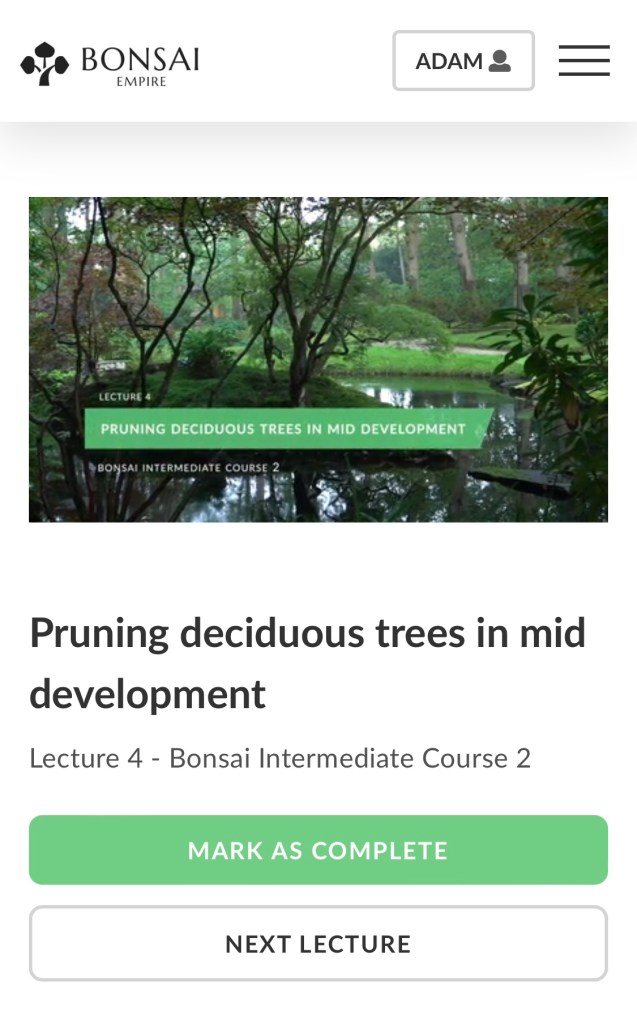
I followed the courses on my iPhone, and the video transitions from the different views was flawless.

You can watch like this:

With the video in the text.

Or with just the video (here in portrait mode).

Or in landscape, full screen mode (turning your phone horizontally).

There is also a closed captioned mode, for when you’re with company and don’t want the sound to bug those near you.
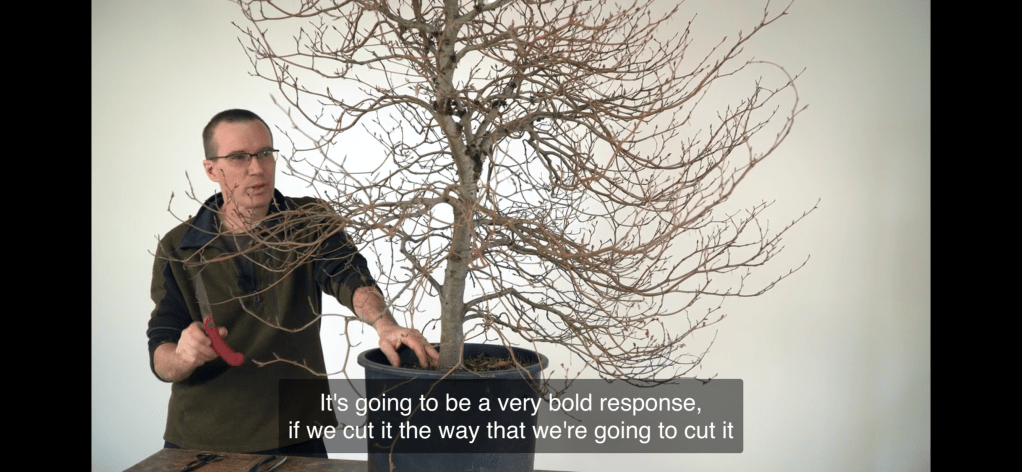
Above, Michael is tackling a huge beech.

The course covers both deciduous and coniferous trees. And styles.
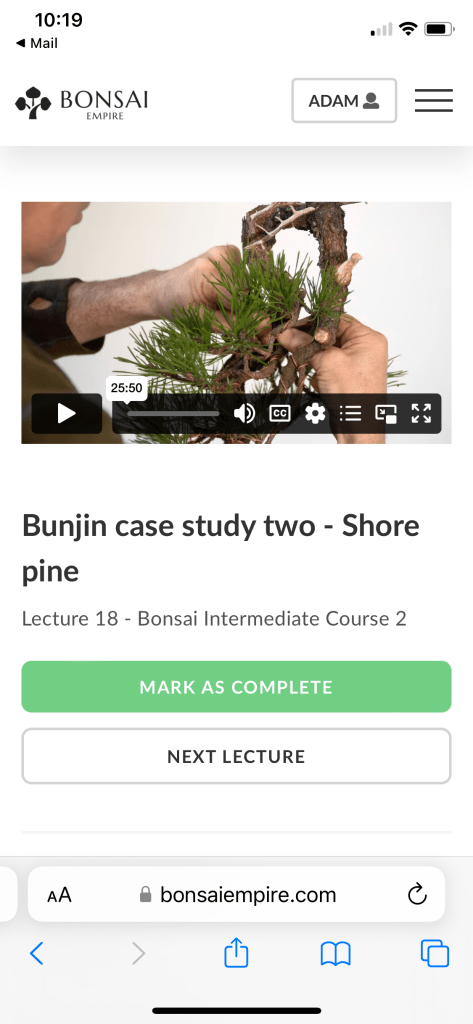
The pruning strategies between the two are covered, and contrasted.

If there are any drawbacks, I might have added some still photos that one could zoom in upon. You can zoom in on the video, but you have to pause it, and it’s not a full zoom (where you can see the dirt under the fingernails). I’m not sure how you could structure the addition of still shots, that’s above my skill level, but it would be cool.

You can also ask questions and comment, and they are answered pretty well.

At the end, you get a certificate of completion, which you can print out for framing

All in all, I’d say this course (after taking the previous courses, of course) would be a good addition to your digital library (did I mention you have lifetime access to the courses you’ve taken? Meaning you can go back and review what you’ve watched any time).

Well done Bjorn, Michael, and Oscar, and all the people at Bonsai Empire.

If you’re inclined to increase your bonsai knowledge (and I recommend you learn from as many artists as you can) take a look at Bonsai Empire’s courses (the full curriculum can be found here )

Now, I just might take this course:

Love me some Kimura!


  •  

Welcome to Tropical Northern….Virginia???

I promise, I wasn’t hanging out with any rich men in Northern Virginia. It was all cool bonsai peoples. See?

Not a single politician (I don’t consider Roberto a politician, and he was in Peru anyway).

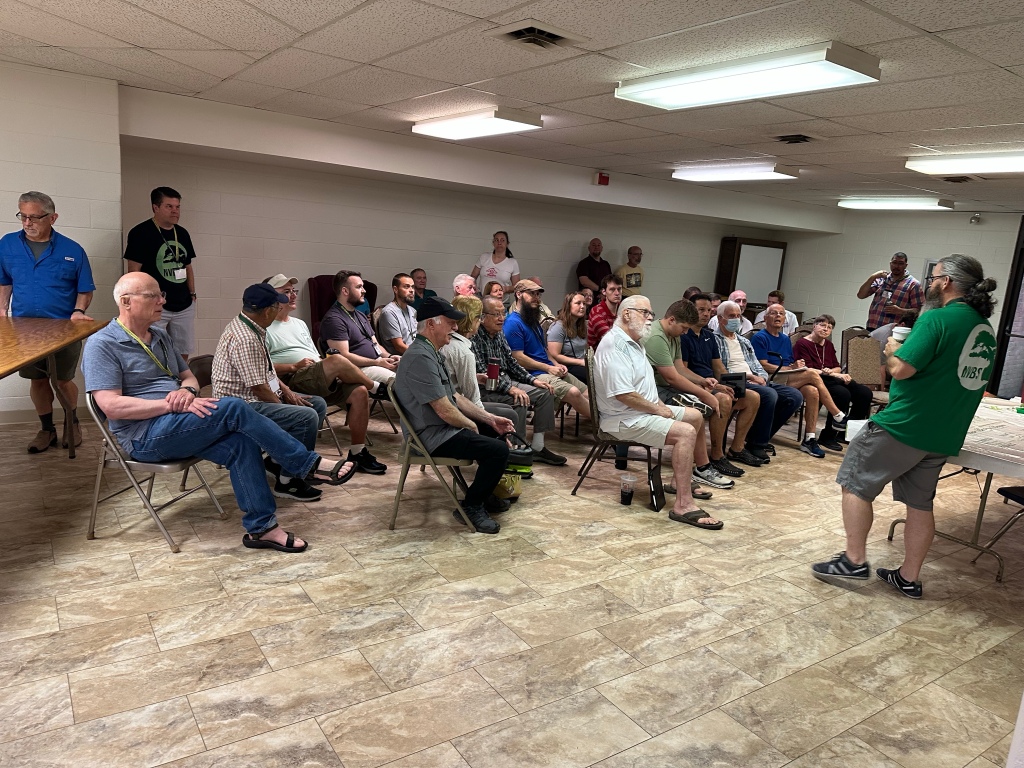
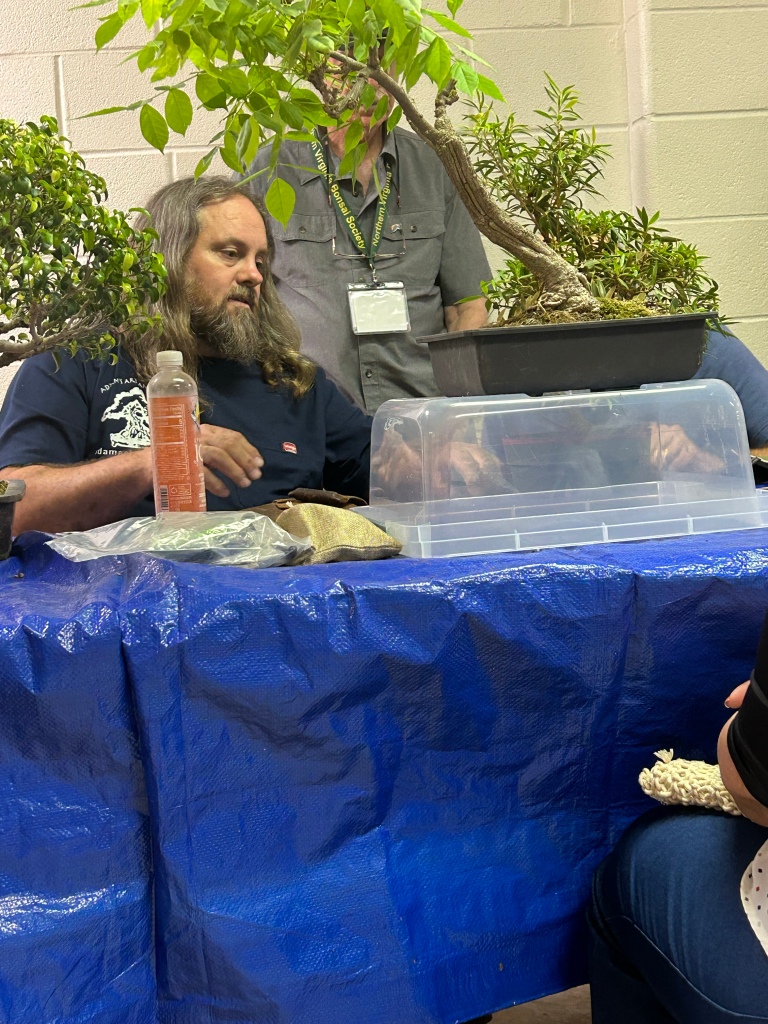
I was at the beginning of my summer tour, making a triumphant return to the Northern Virginia Bonsai Society. I brought a lot of trees for the workshops.

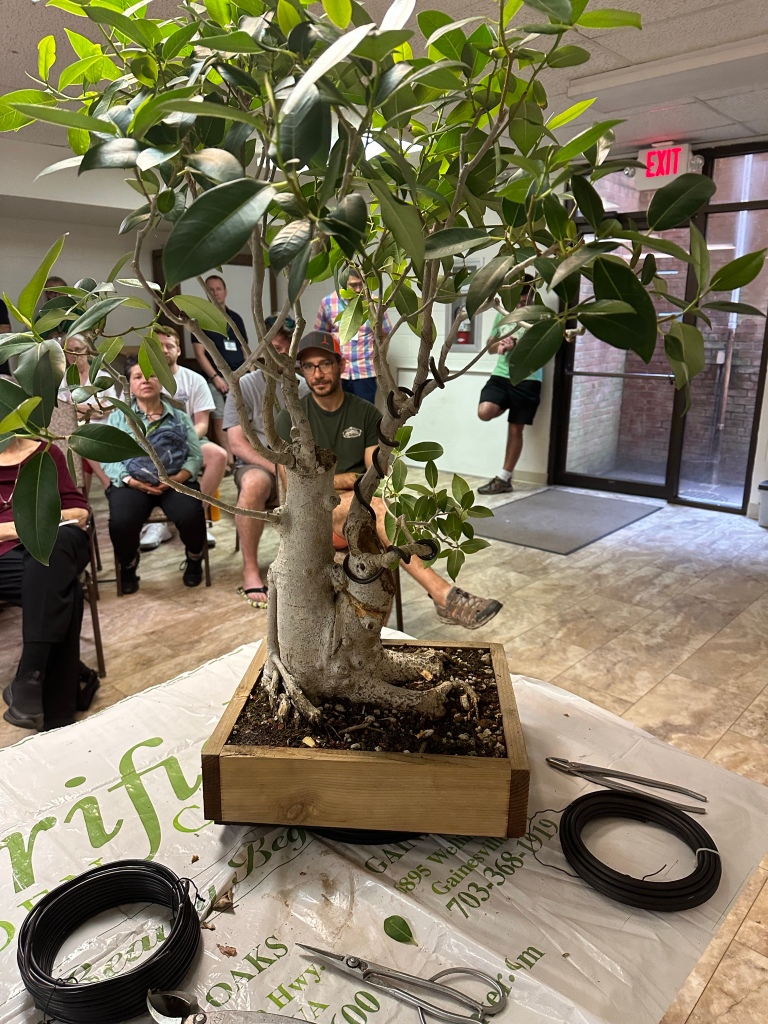
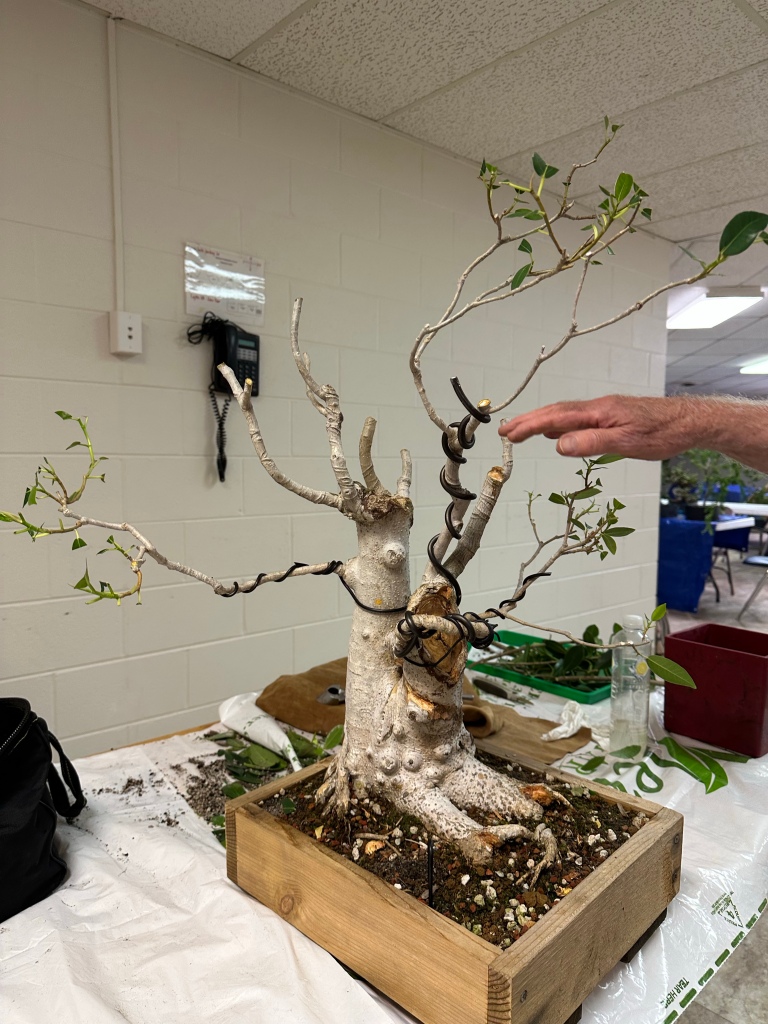
They gave me a tree, what I believe is a Ficus macrophylla (or the Moreton Bay fig, a ficus from Australia) as the demo tree. . This particular specimen has been passed around in the club a few times, with no one really doing much with it. Maybe a trunk chop or two. I liked it and the challenge.

I kinda like an underdog, so I tried my best, using my tropical tree bonsai superpowers to bring out the most I could from the tree.

We start with an approach graft.

Cut it back in places, let it grow in others.

The graft….

The growth….

The cut back.

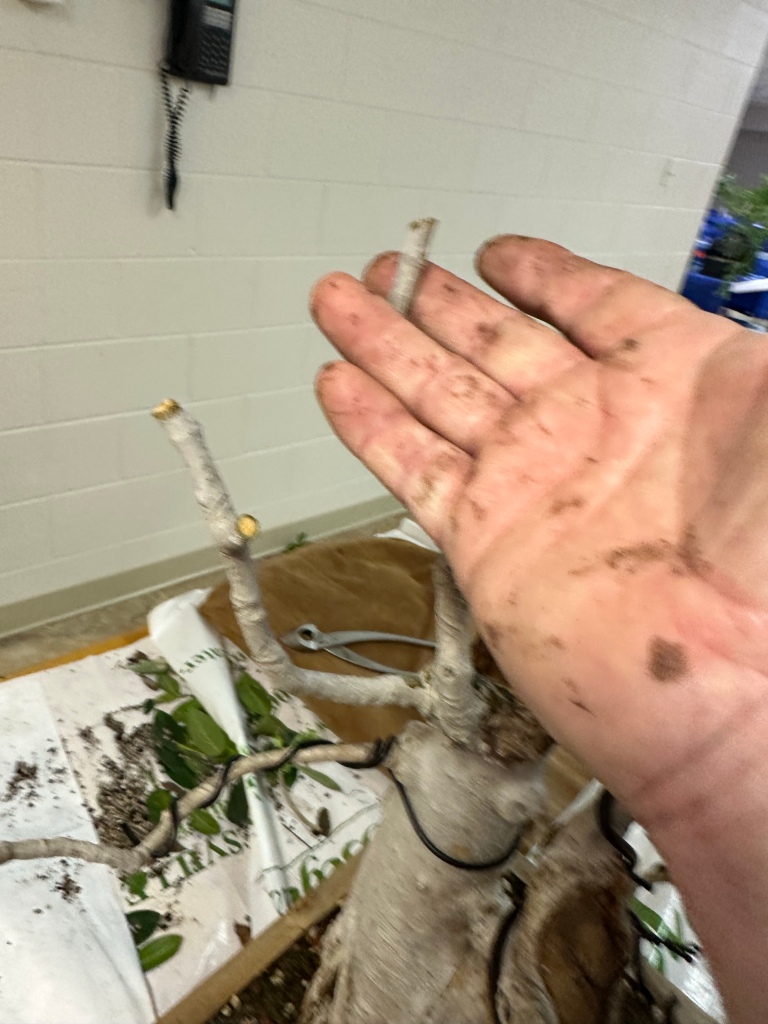
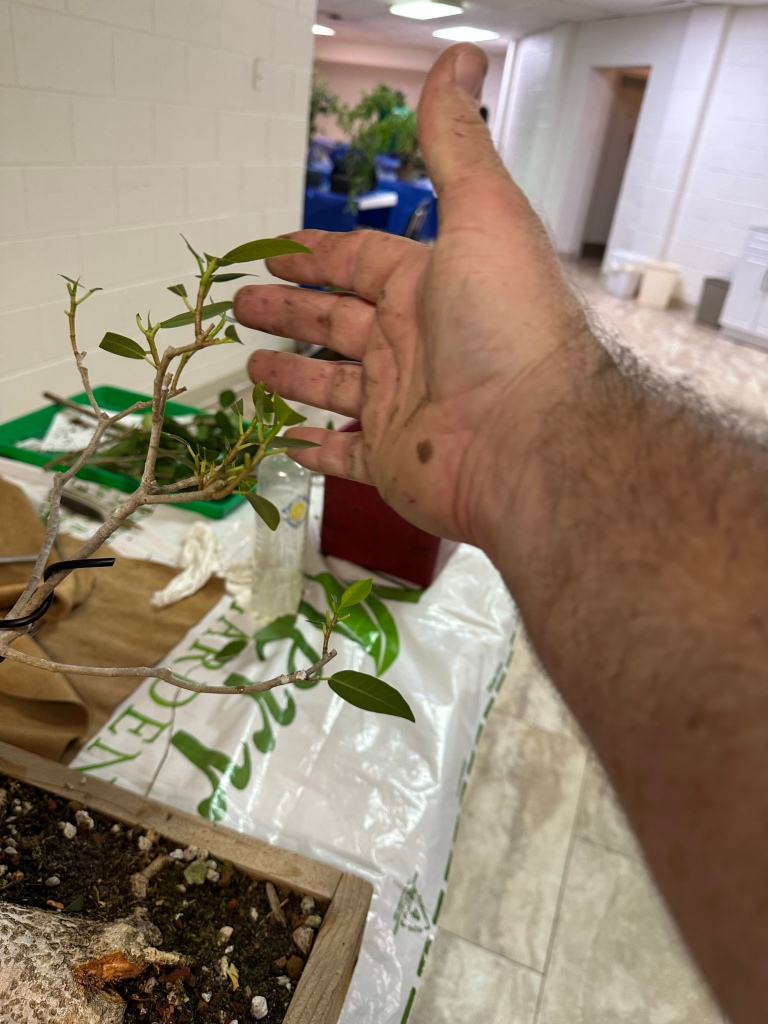
And below, my hand in an anticipatory gesture of the “Let it grow!” number, along with choreography and three part harmony.

This was the demo. Along with the work, I told the chicken sexter story (I’ll have to tell you, the readers, that story sometime), I explained what different plant growth growth hormones do (see this post: I use some fancy words to justify my defoliation habit, go figure ). I talk about my childhood trauma and how I use it in the styling and care of tropical trees in the sunshine state (not really, my trauma is manifested in less healthy ways, as it should be).

I told the story of my youth in bonsai, trying to find as much about bonsai as I could, and happening upon a website from a guy that not only grew tropical bonsai in the Great White North (coincidentally, in Massachusetts, about four miles from where I grew up), but developed spectacular tropical bonsai, better than most bonsai artists from Florida. His name is Suthin Sukosolvisit. One of the only true Masters in American Bonsai.

Anyway, I had some fun making a fool of myself on stage and hopefully imparting some knowledge.

I’d love to have the tree for myself. Maybe there will be some altruistic NVBS member who bids on it and sends it down to the FLA as a gift.

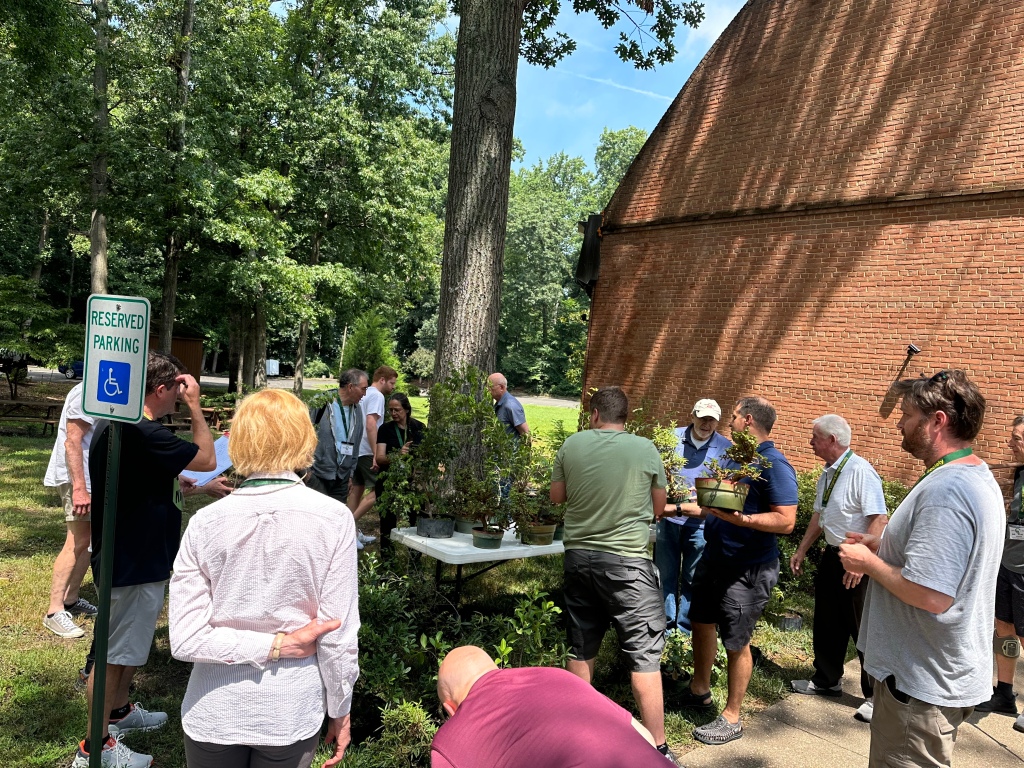
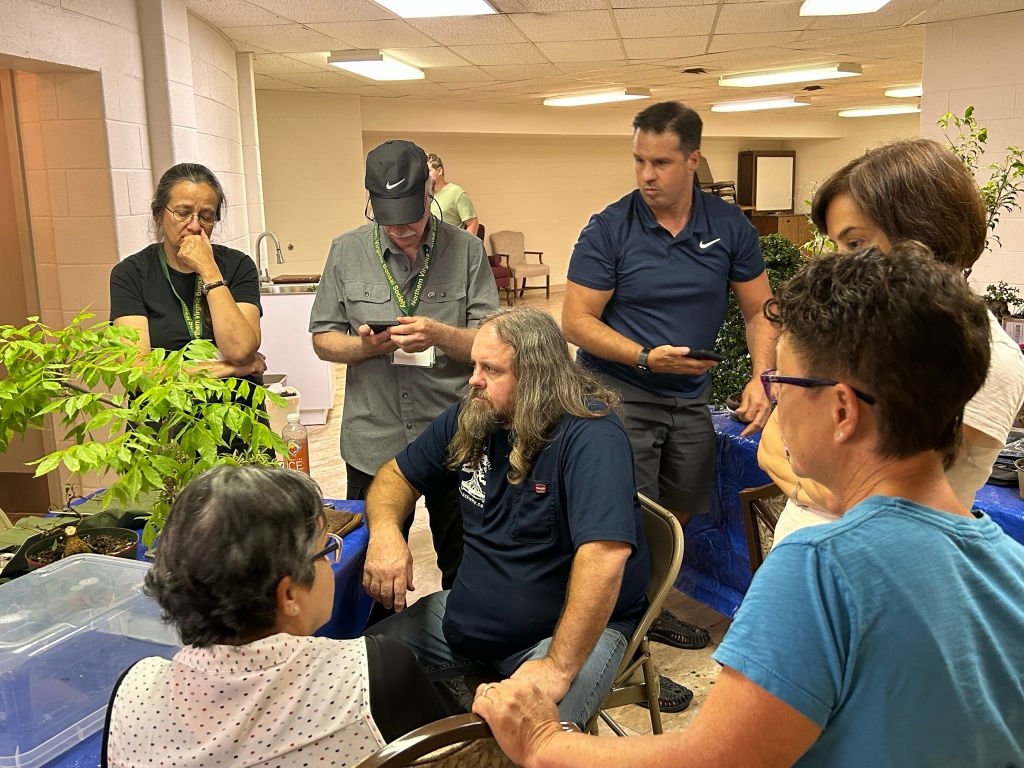
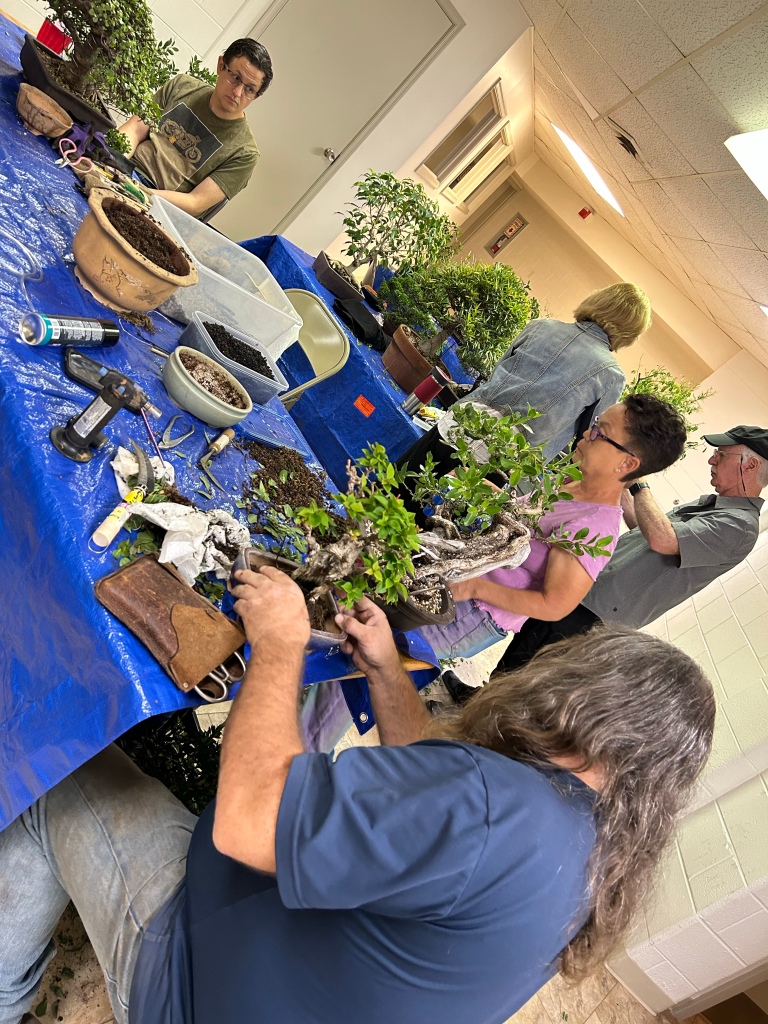
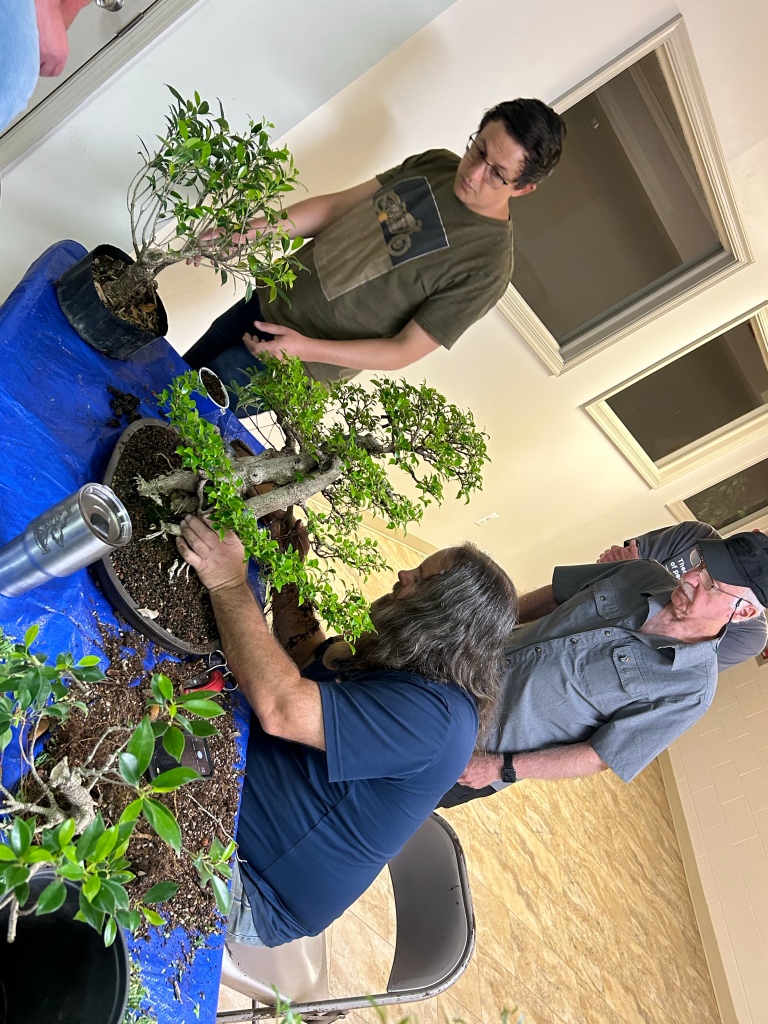
After the demo, and some lunch, we had a workshop. My wife took the pics with me in them. I think she’s biased, but she likes them.

In my element, surrounded by trees and students.

The trees got smaller as my ego got bigger.

Love a good trunk chop. It’s like the smell of napalm in the morning.

Here’s a link for the ficus trunk chop, above https://www.instagram.com/reel/CuwgSarMCtD/?igshid=MzRlODBiNWFlZA==

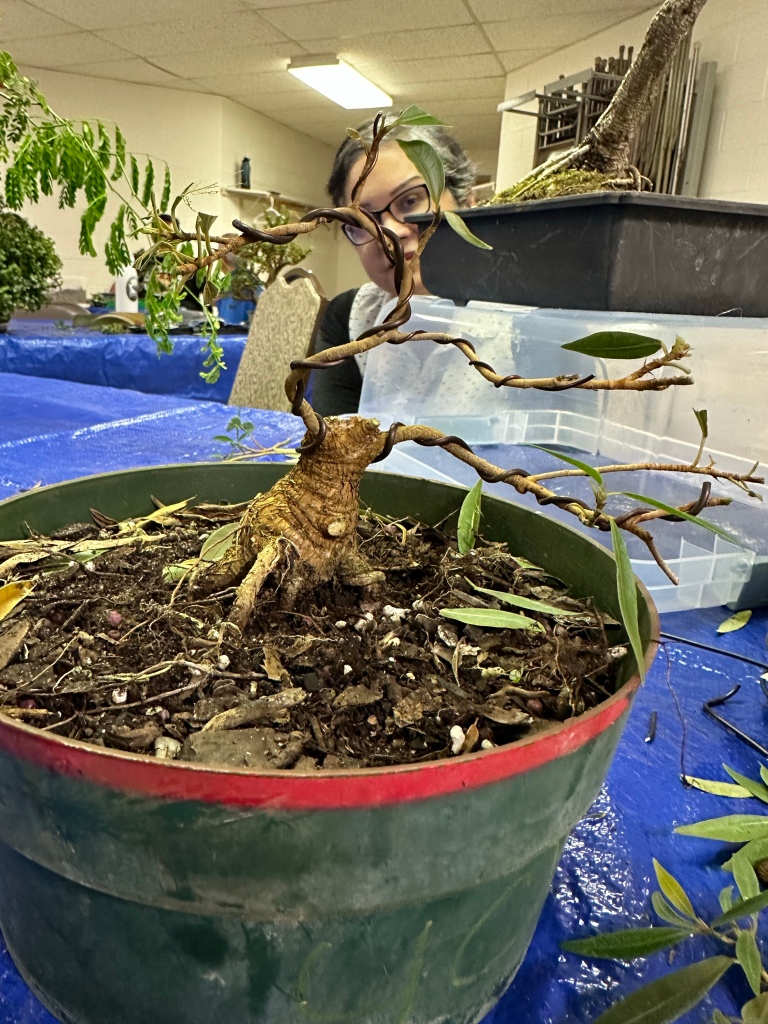
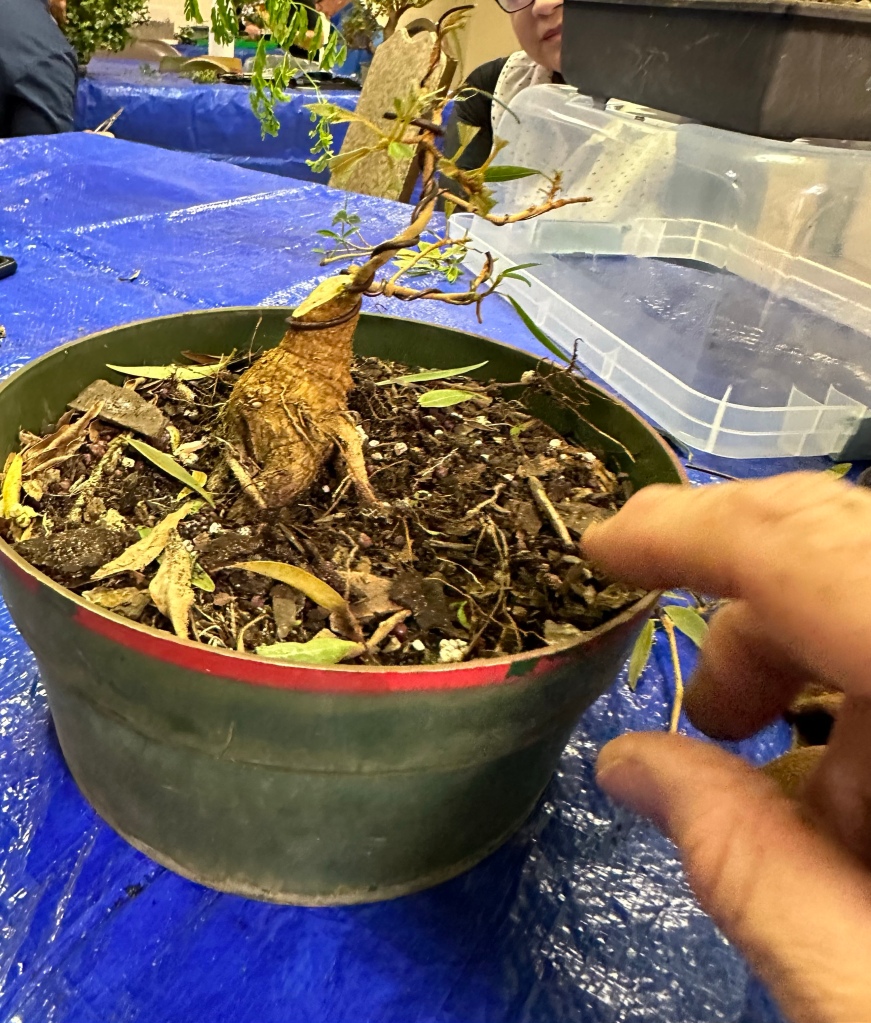
And below, a willow leaf that needed some courage….

Like a pretzel. We just needed some cheese.

Doh!
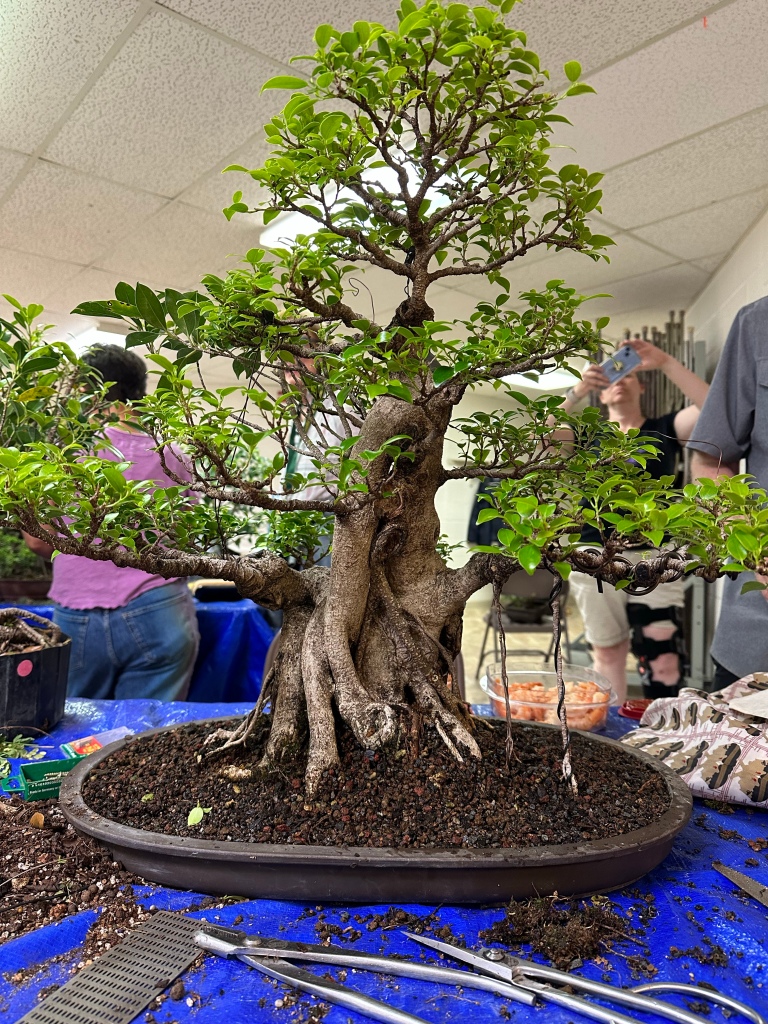
Where did the pretzel go?

Yea, of course it’s a reel. Here’s the link from Instagram: https://www.instagram.com/reel/CuyRox2g05X/?igshid=MzRlODBiNWFlZA==

And just the video. For those that don’t like Led Zepplin.

My wife channeling her inner Jack Kirby with the wacky camera angle.

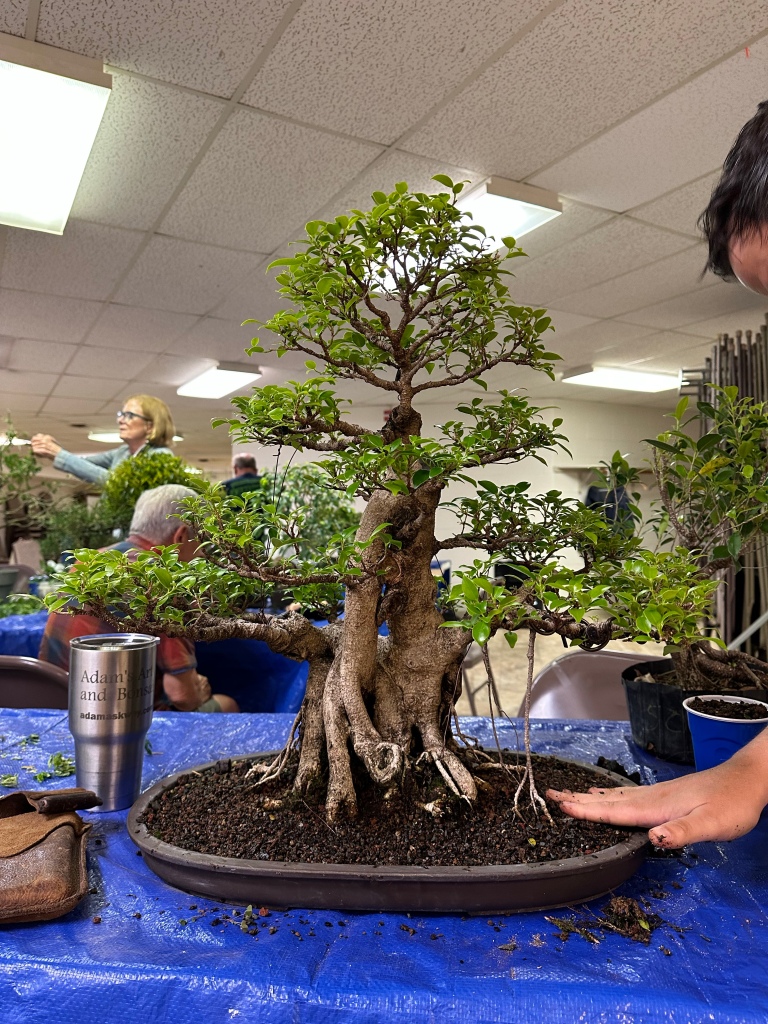
Now, we get to a cool tree. It’s a tree originally from Ed Trout, one of the last true gentlemen of bonsai. Ed had sold it to a man named Jonah Hill.

I know. Adam lavigne helping Jonah Hill work on a bonsai tree. The joke writes itself.

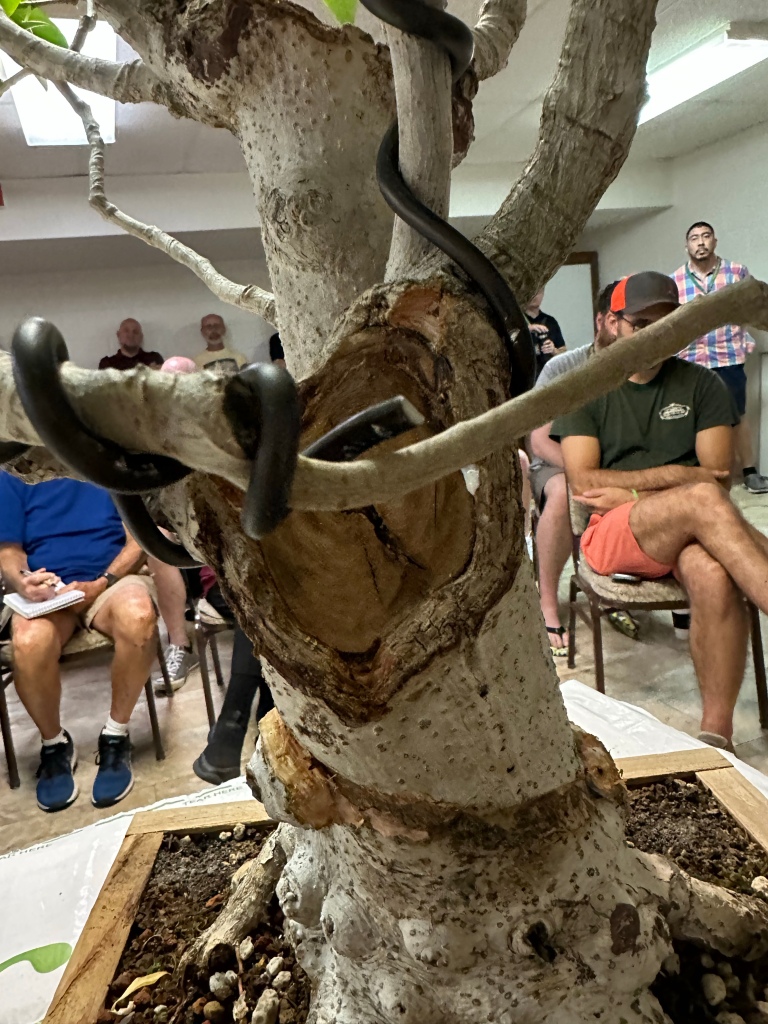
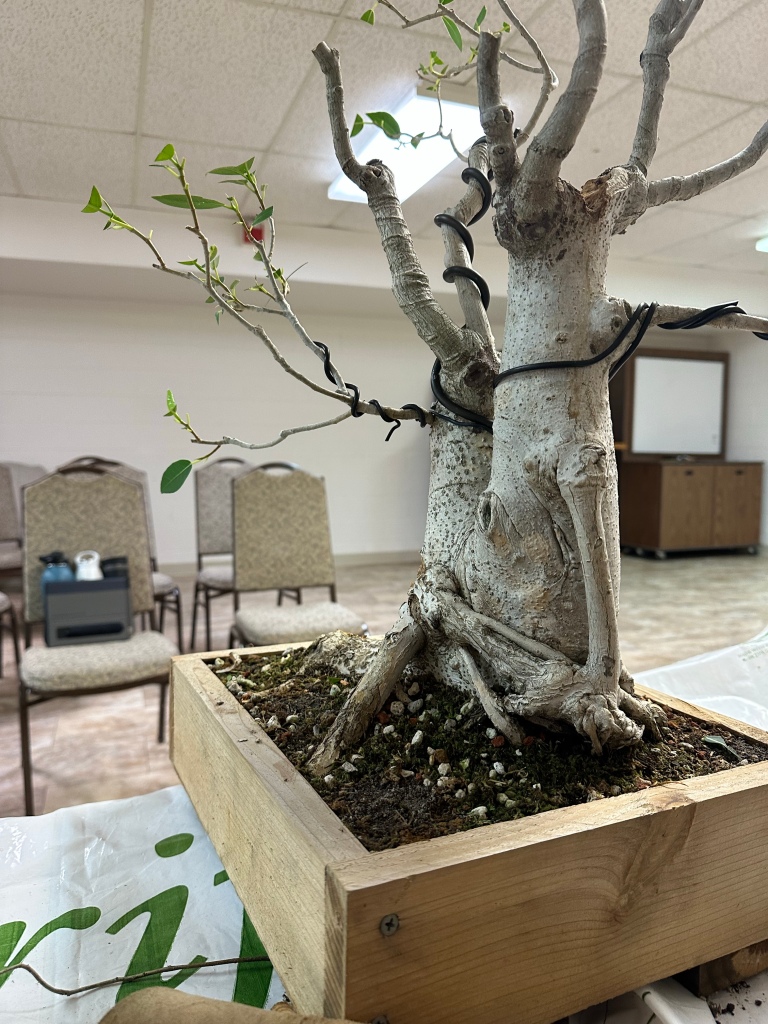
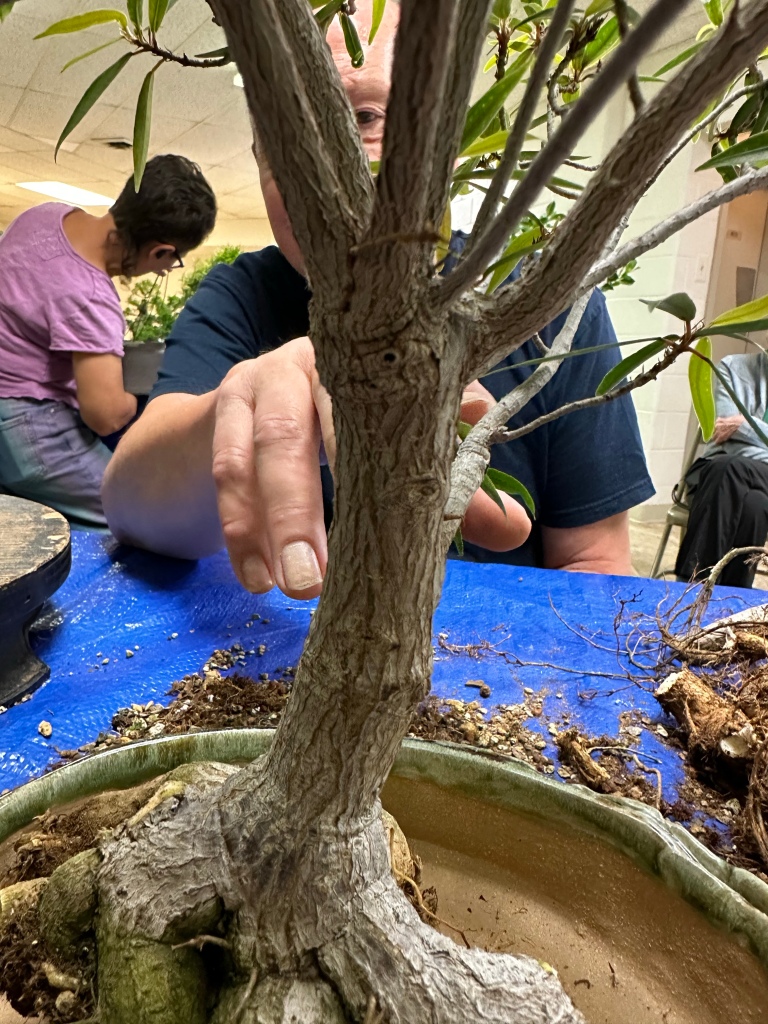
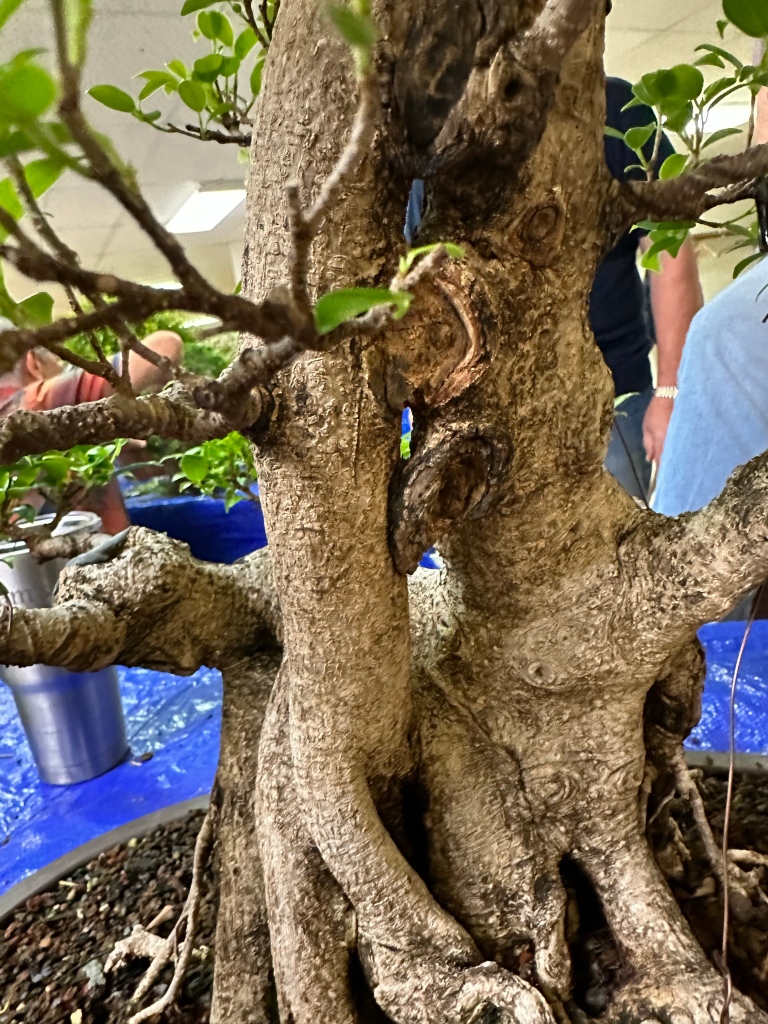
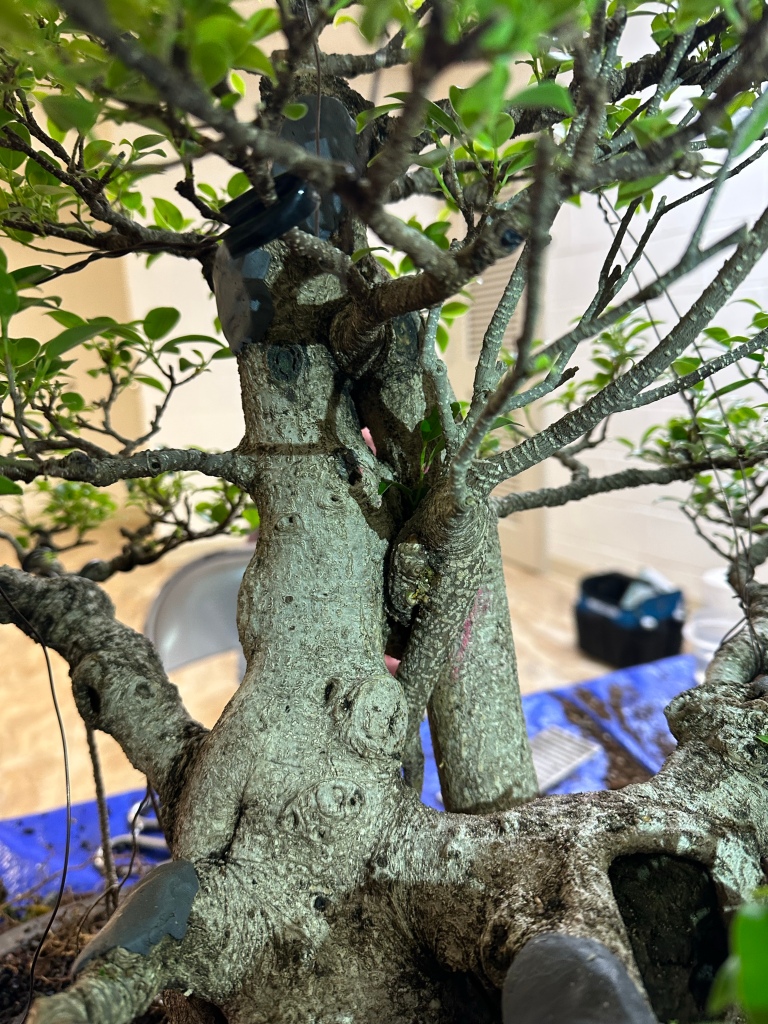
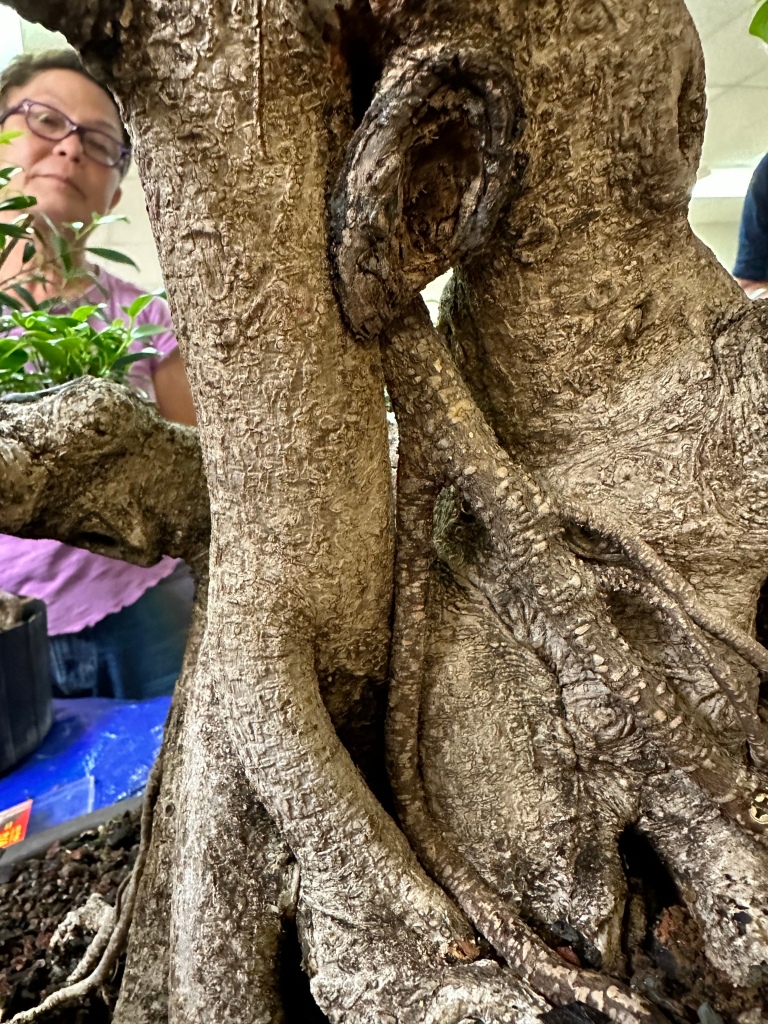
Study the pic just above. You’ll notice a hole in the middle of the trunk.

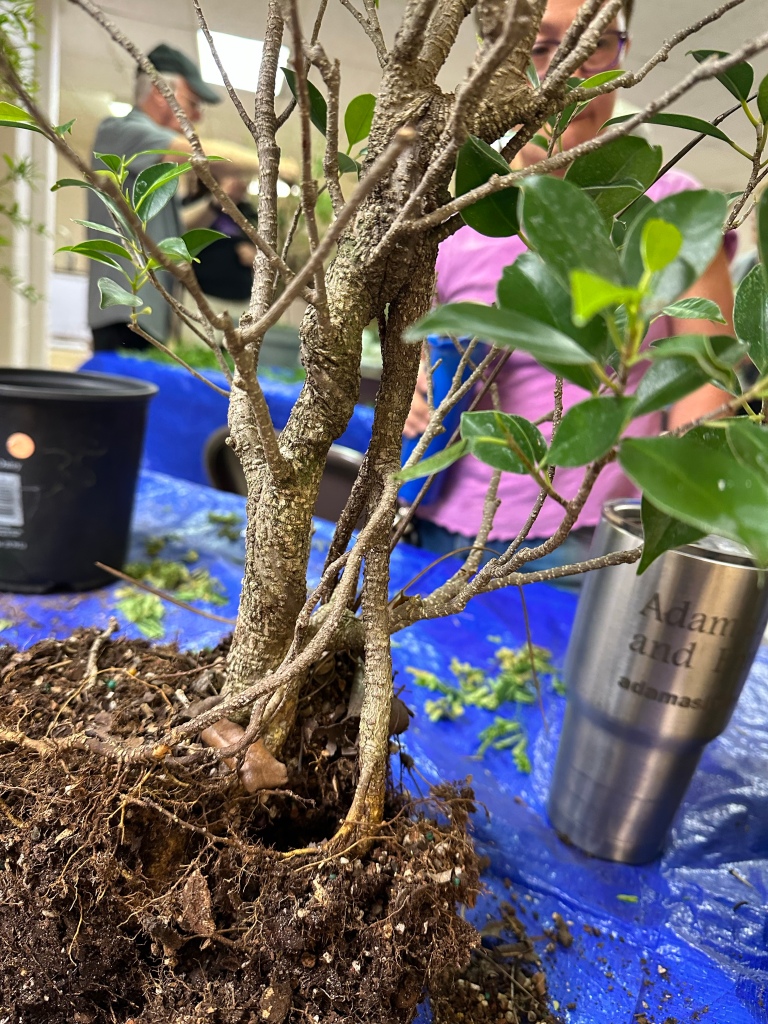
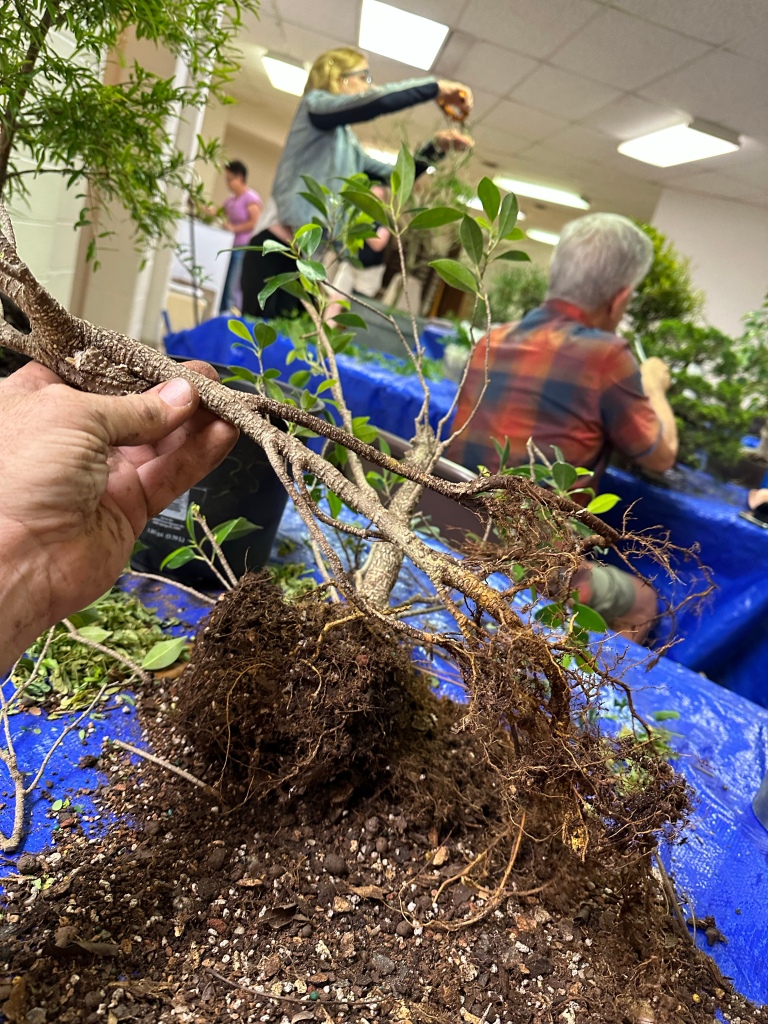
Below, I have a tree that no one wanted. So we are going to graft that into the hole.

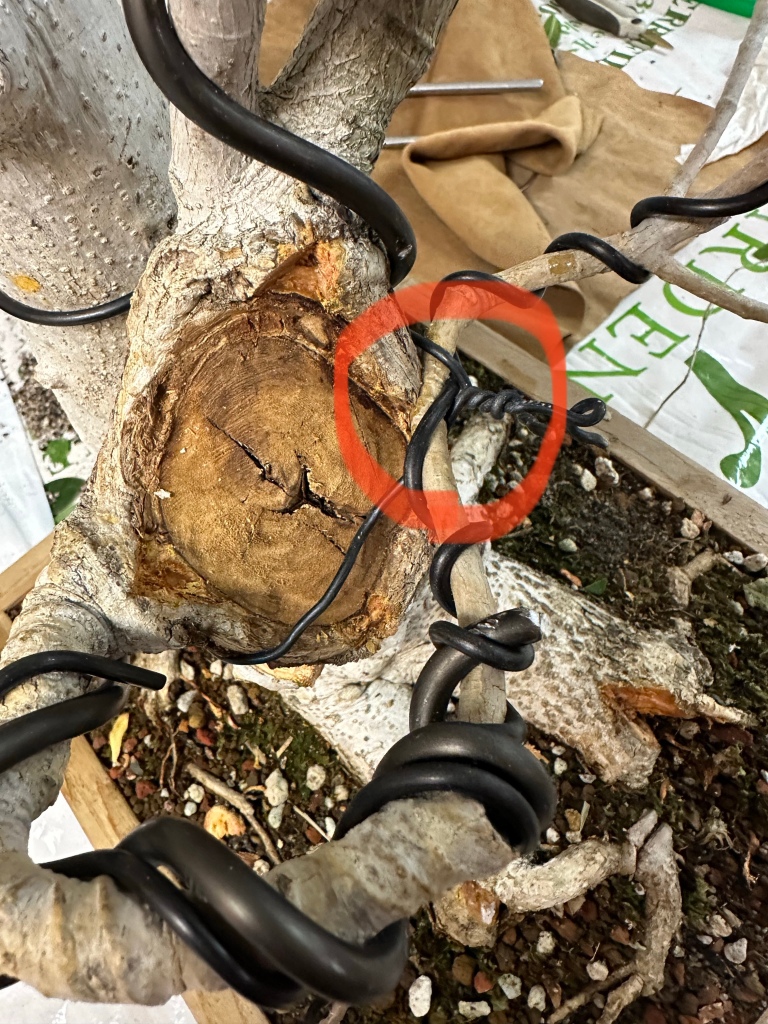
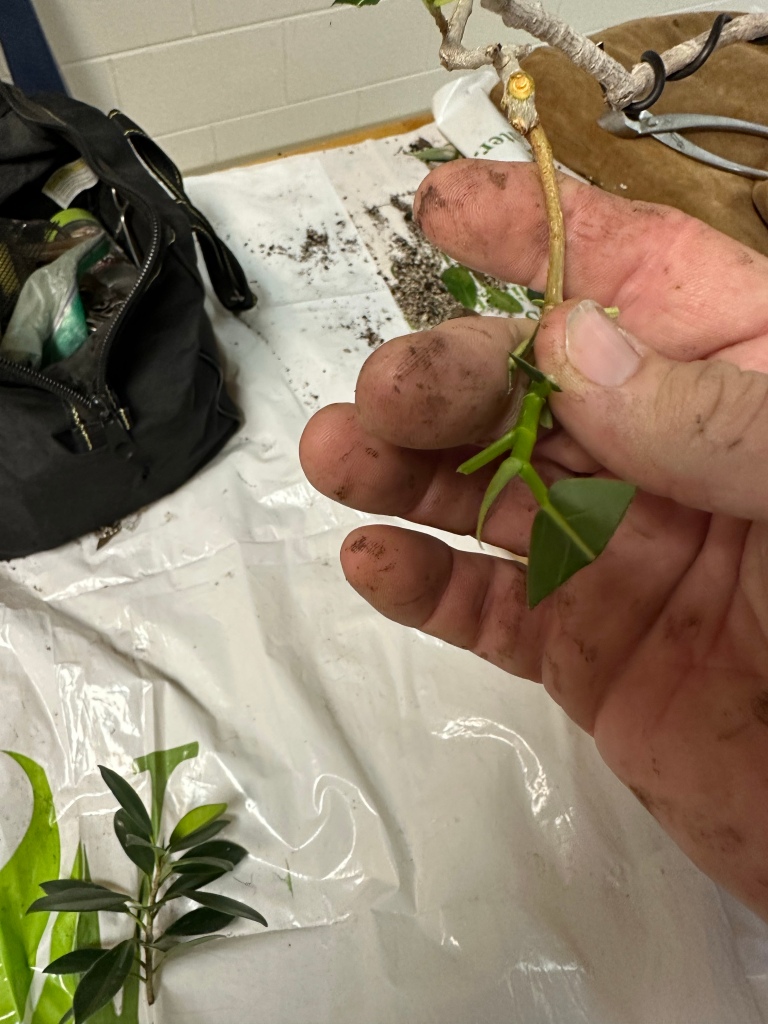
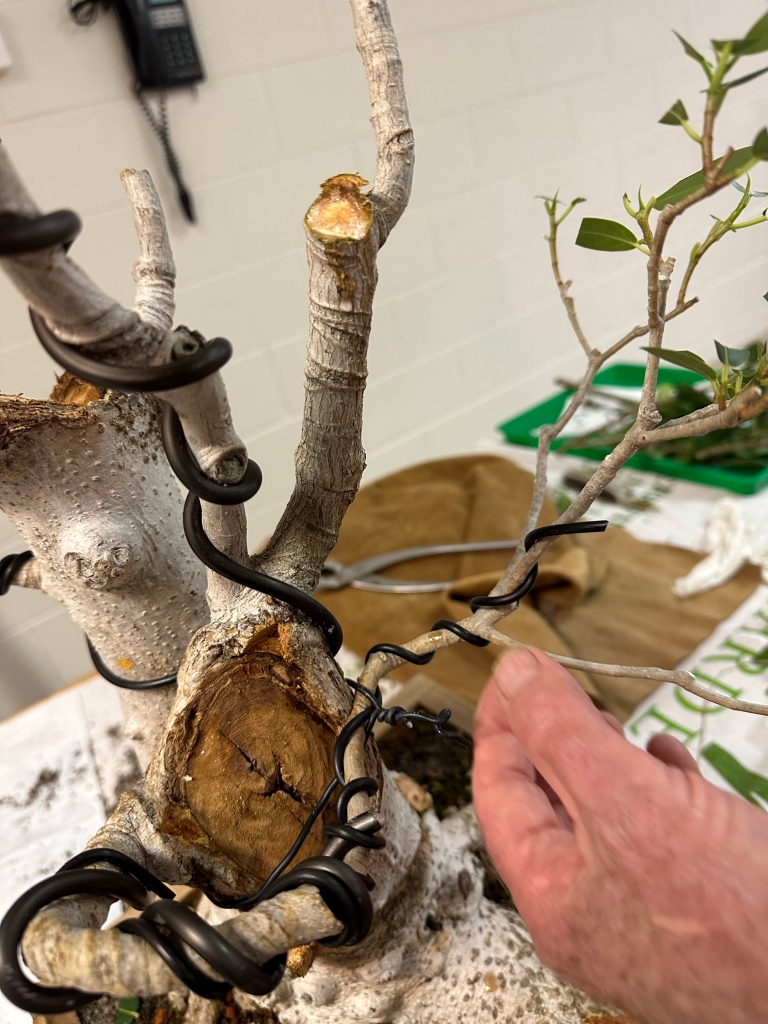
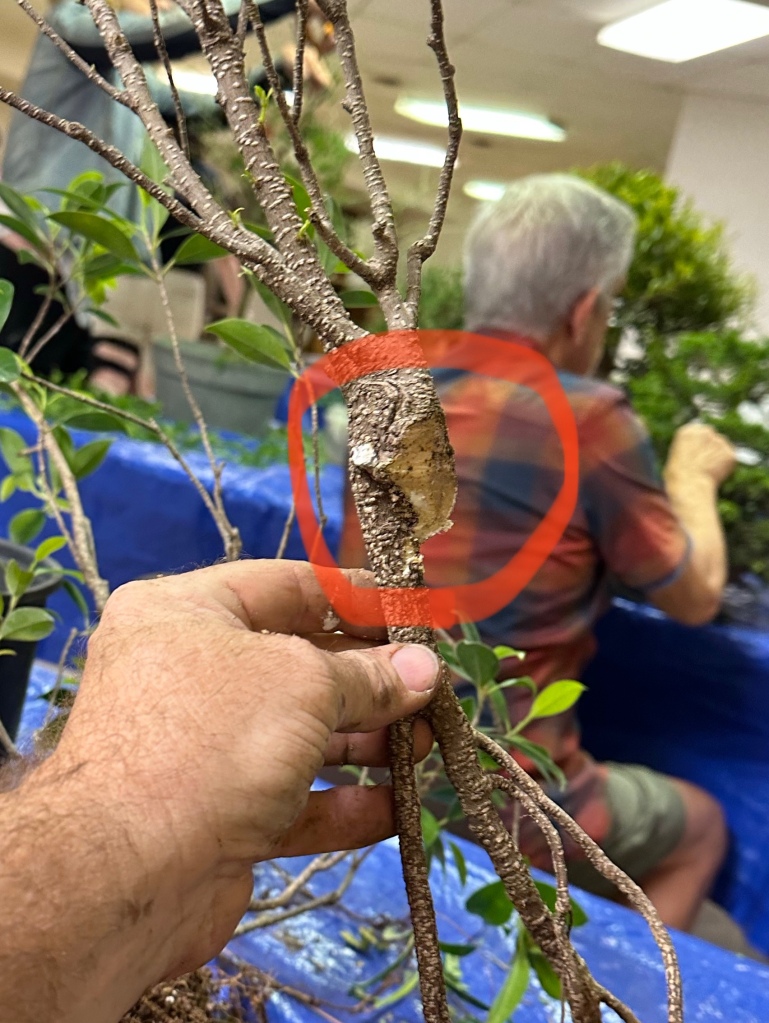
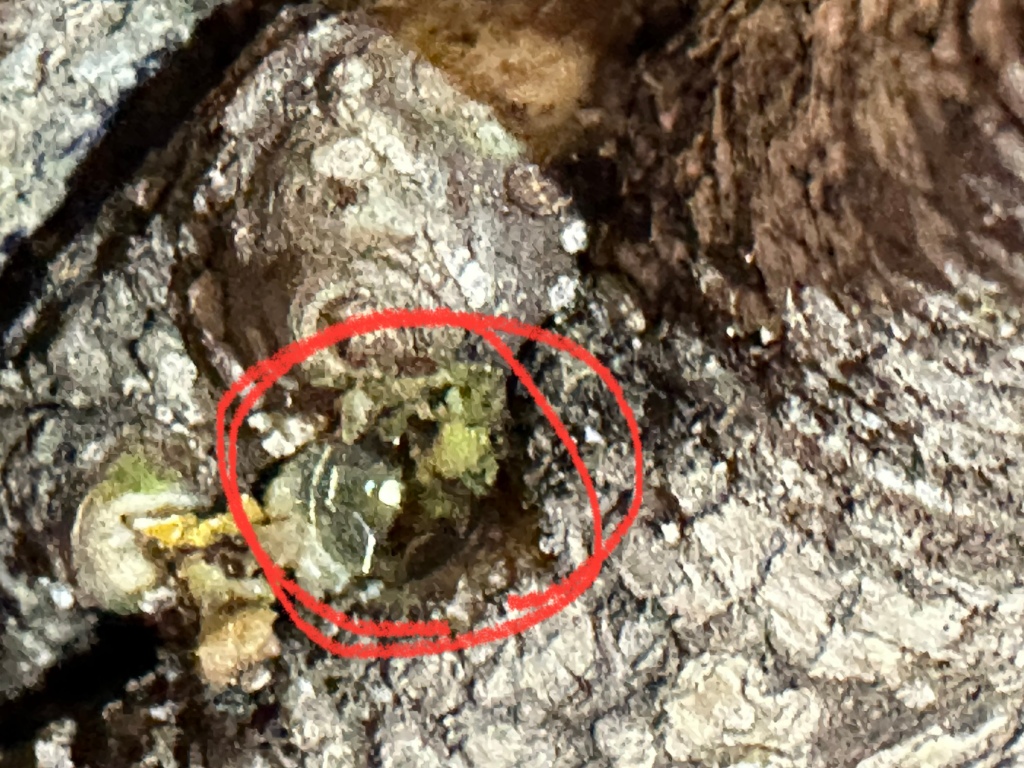
I cut off a piece of the tree, a piece with a good aerial root. The red circle is where I cut it and the graft will occur.

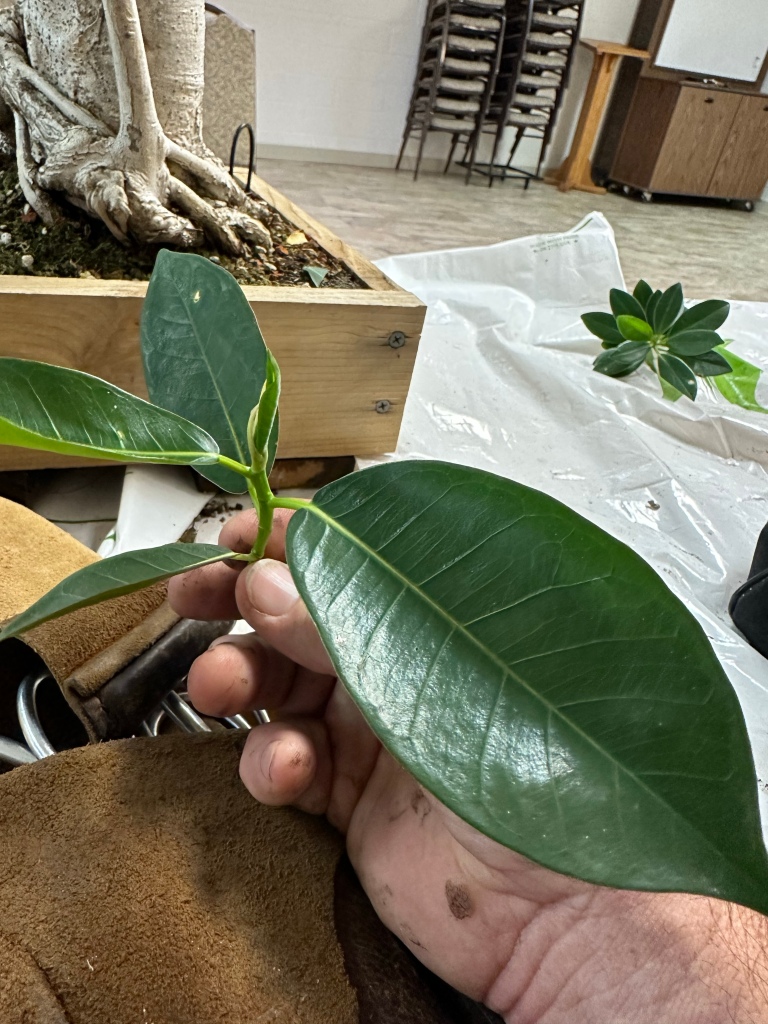
This, below….

….needs to fit into here. that’s the front of the tree, to keep you correctly oriented.

There’s Jonah, at the top of the pic. I’m about to stick the graft through the hole. Yup. Through it. That’s Jack behind me.

This is the back of the tree. The leaf end of the graft will act as a new back branch.

We use a brass screw (use a non reactive metal) to attach the graft.

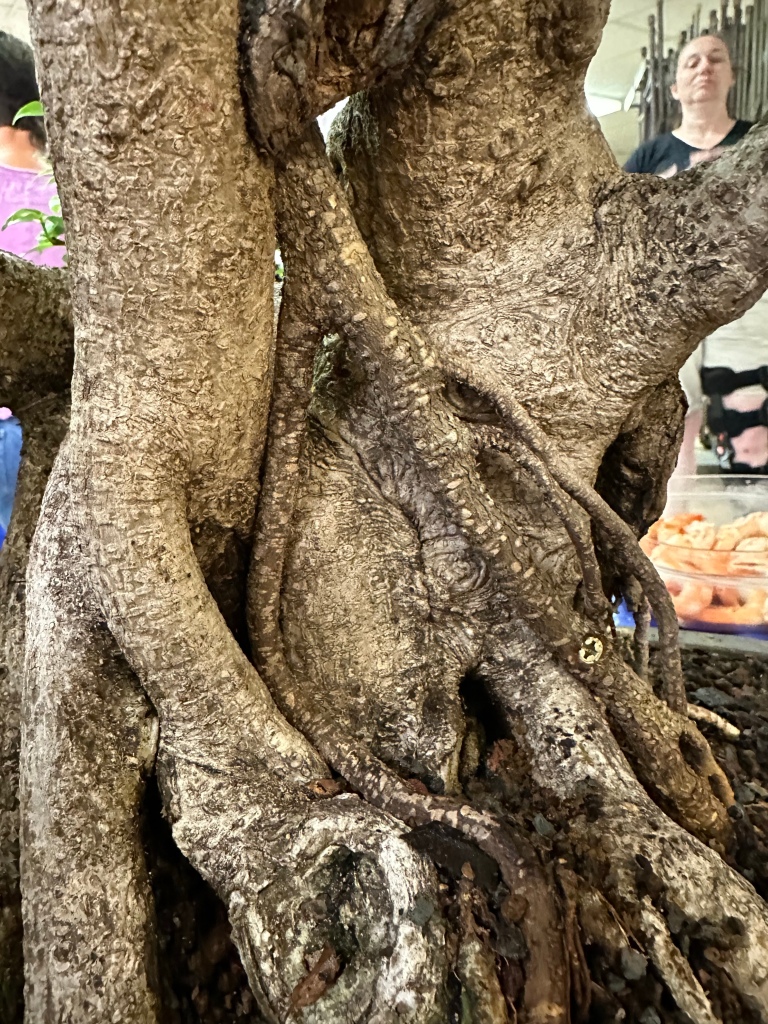
Here’s the front of the tree. I arrange the roots, artistically, so that they compliment the tree. Notice the screw in the bottom left. And my wife giving me the “Look”

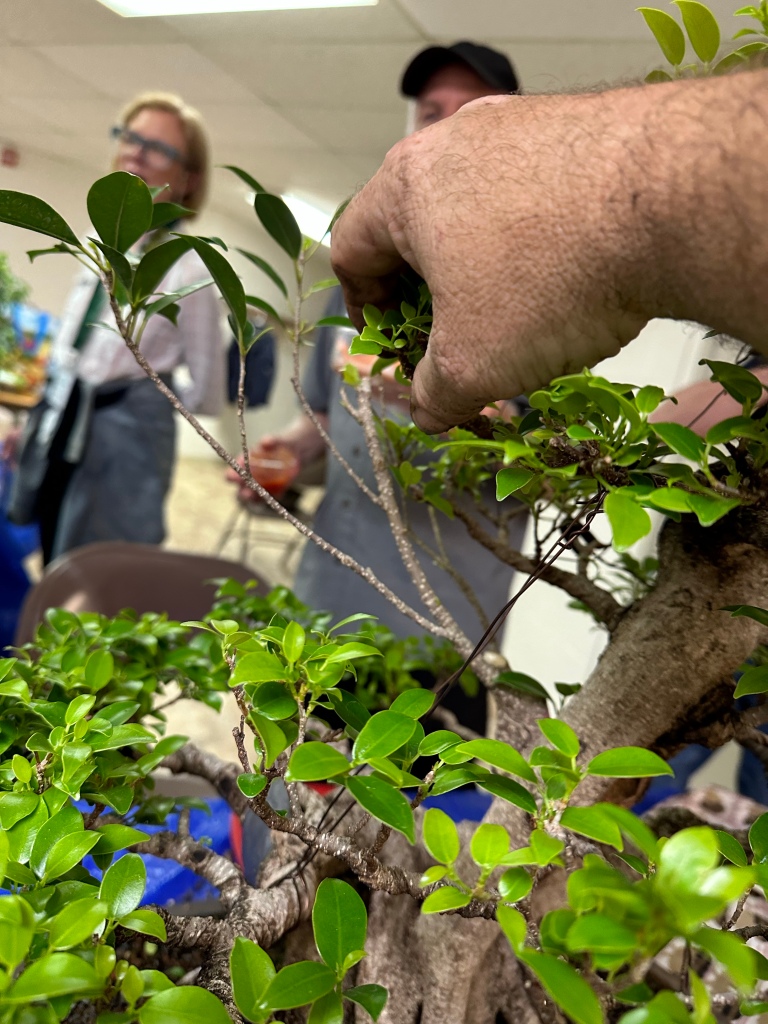
To get the graft to grow faster, I remove all the leaves except the last few, and I leave the grow tip.

There is still a hole, but as the graft grows, it’ll fill it up. That’s LeAnn, on the left, who was my host, giving me the same look my wife gave me. Both of them want me to work on her buttonwood. don’t worry ladies, it’s next.

Some more pics to give you some detail.

Jonah has done well reducing the leaf size.

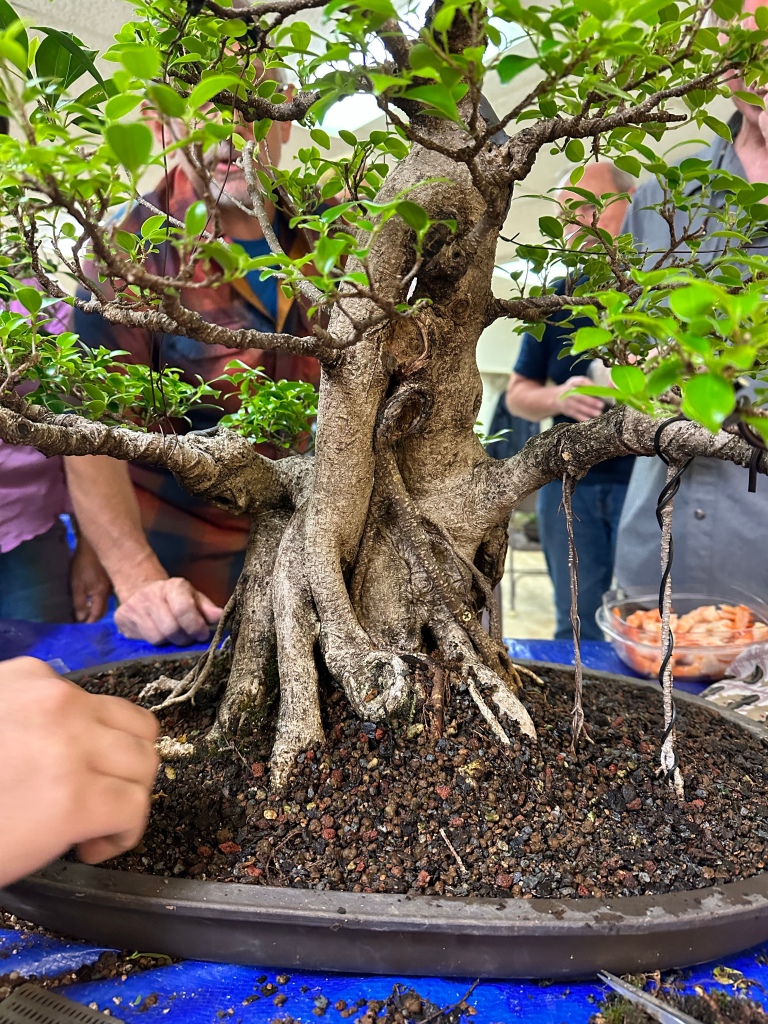
Just about done. We tied some aerial in place (bottom left).

And, finito!

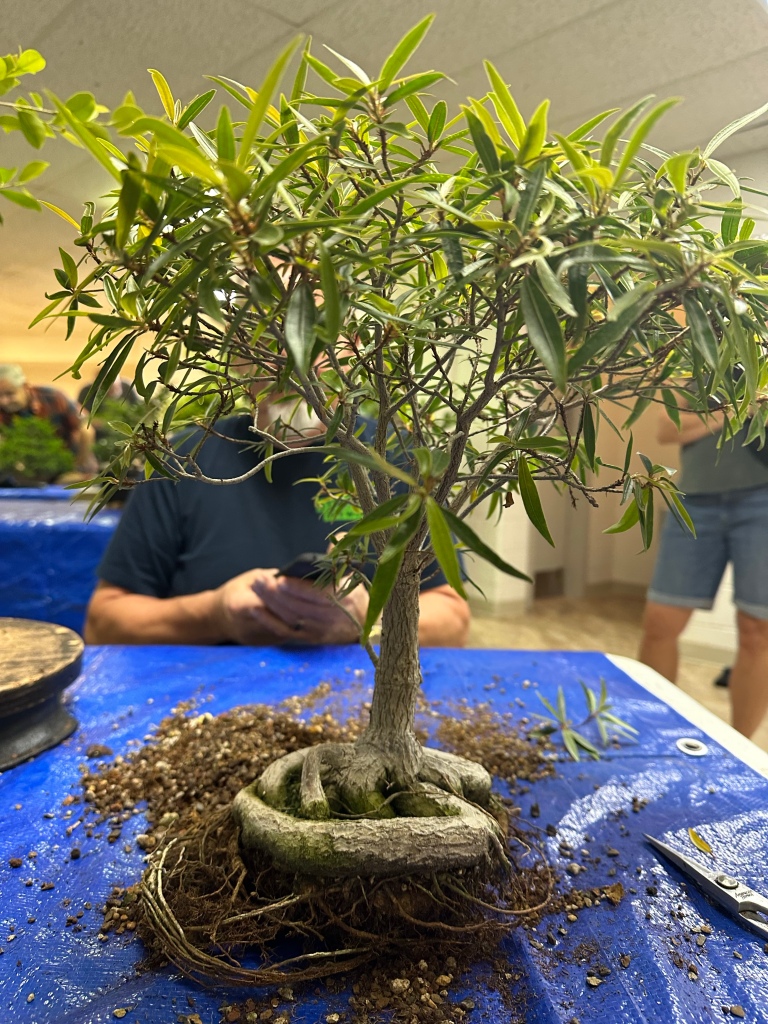
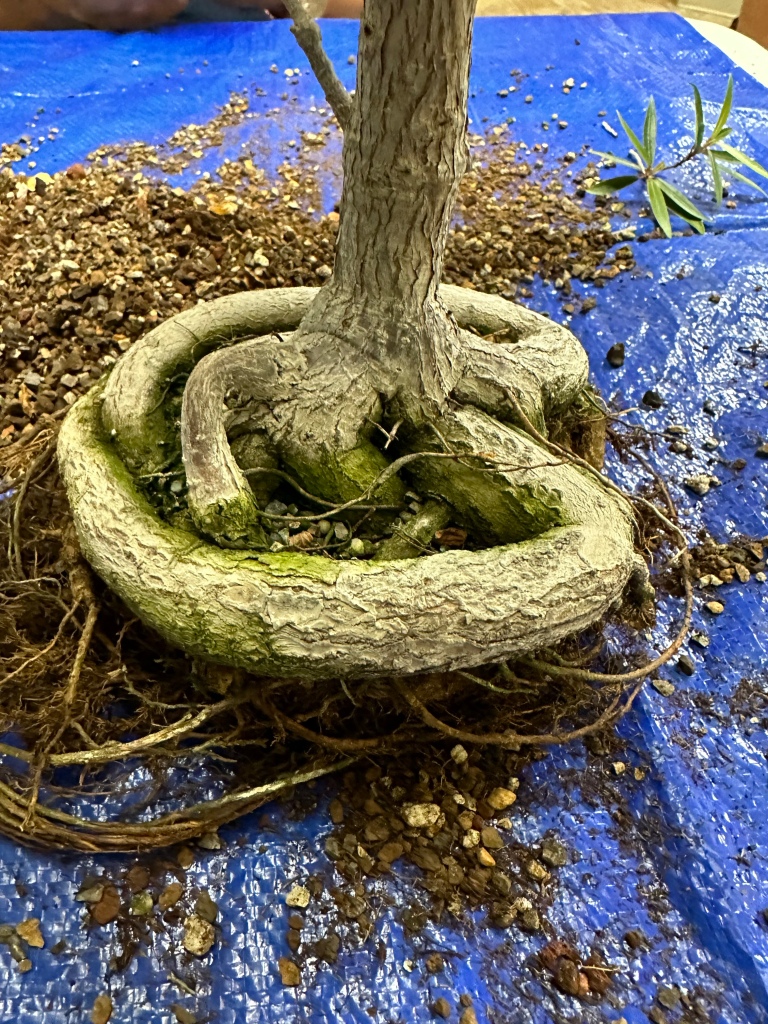
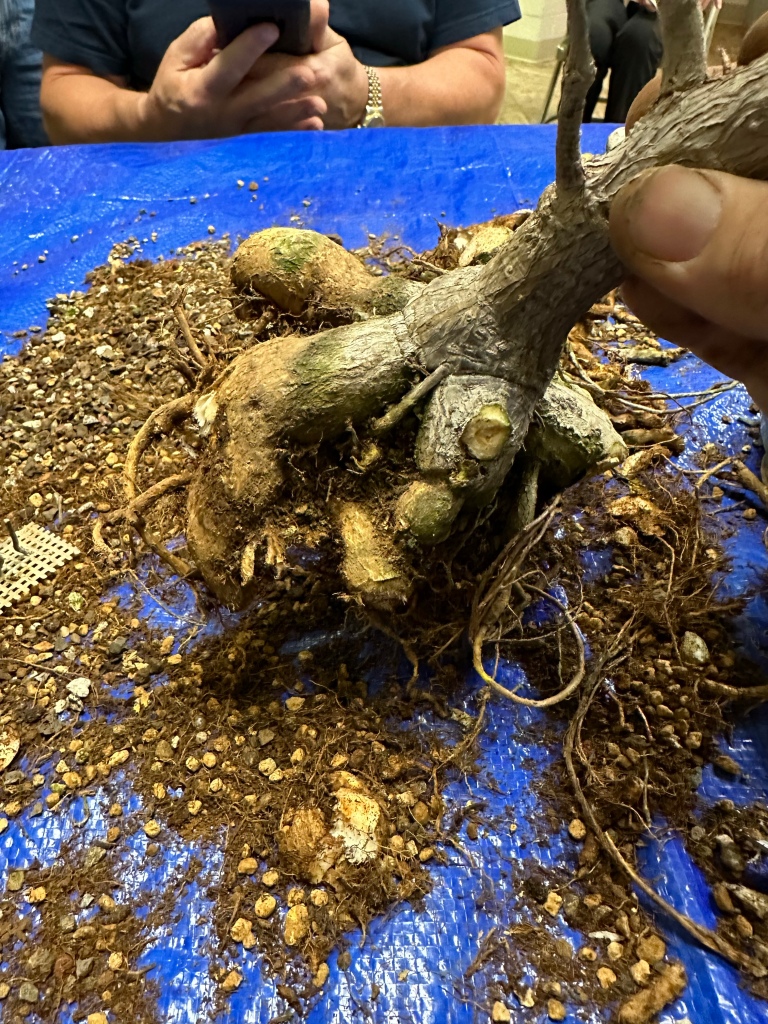
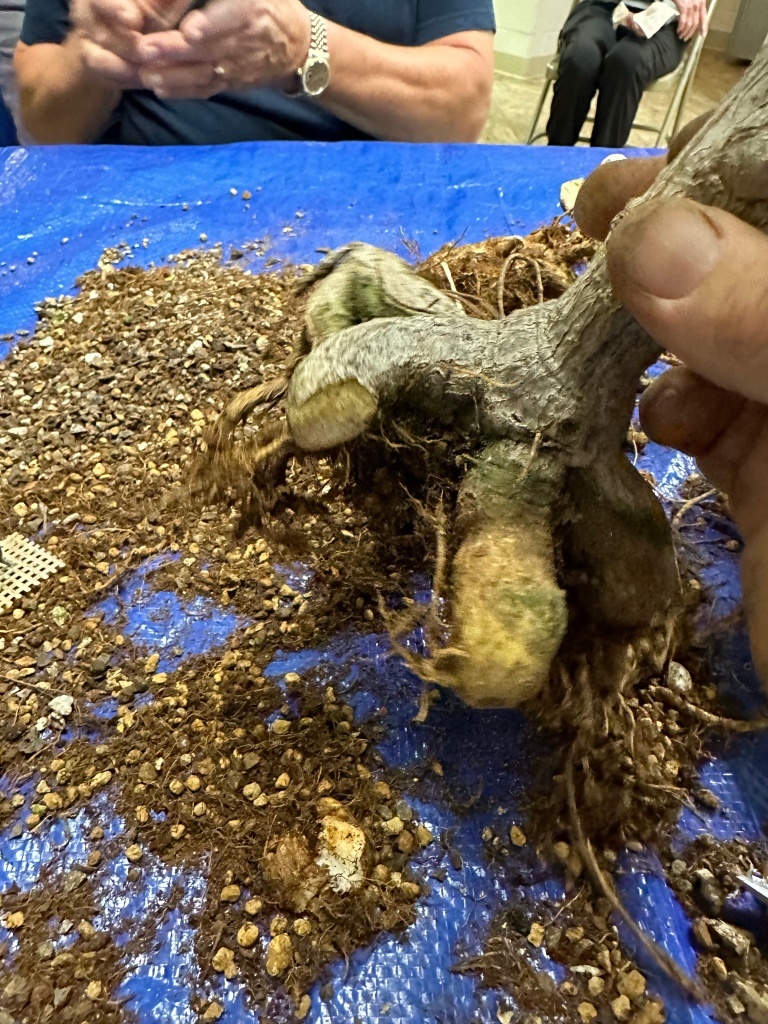
For the next tree, and the next post, we get to meet LeAnn’s buttonwood. An amazing tree, also from Florida (like Jonah’s tigerbark), and originally from none other than Mary Madison, the Buttonwood Queen.

Excited?

  •  

Holy Toledo, this tree is outta this world

Hmmm. Cosmic Bonsai in the Great White North? I’m in Ohio, and I guess they like outer space a lot; it’s a fact that more U.S. astronauts have been from Ohio than any other state.

John, from Toledo, one of my friends for a long time, has been going to the convention for the Bonsai Societies of Florida for two years now. He got to see Walter Pall, Mauro Stemberger, and many others in years past.

This year he got to meet and take workshops with Laurent Darrieux from France, the creator of the Cosmic Bonsai approach to styling trees.

Some people see it as blasphemy, some see it as a narcissistic offense, some see it as silly. But what it really is, in imaginative terms, is a question “what if we travel to another world, with, maybe, higher gravity, or two suns, or a long rotational period, what would those trees grow like?”

Artistically, it is a valid question. Artistically, it works too. When it is practiced well (just like any style, any idea, or even traditional bonsai) it works as Art. There are those that may say it isn’t bonsai, but some of those same people say that the flat top style of trees, whether the American bald cypress flat top, or the South African style Pierneef flat top, aren’t bonsai either. Uh huh.

I’m sorry, but bonsai is not a Japanese art. It is a Japanese word, and it is very Japanese traditionally (but it’s dying in the country) but that’s just because, when we modern practitioners of bonsai decided to give it a universal name, a certain Chairman in the east was intent on destroying traditional arts with his Cultural Revolution. so it was named “Bonsai”.

When I was learning bonsai, I read all the old books, and took to heart the challenge that the early Japanese bonsai masters gave us when they started to travel and teach bonsai throughout the world.

They told us not to mimic Japanese bonsai, but to find new species of trees, and new forms of design, and expression, to celebrate not only the character of our countries, but also the natural world we saw around us.

Here’s my question to you: What if our imaginations also let us see the world differently too? Say another world? That’s Cosmic Bonsai.

To categorically discard the concept because it’s not how you learned it is everything that people accuse Laurent of: arrogance.

He’s an artist. He has to create. And to show others his vision. He’s not being allowed to do it. Well, except in Florida, my backyard.

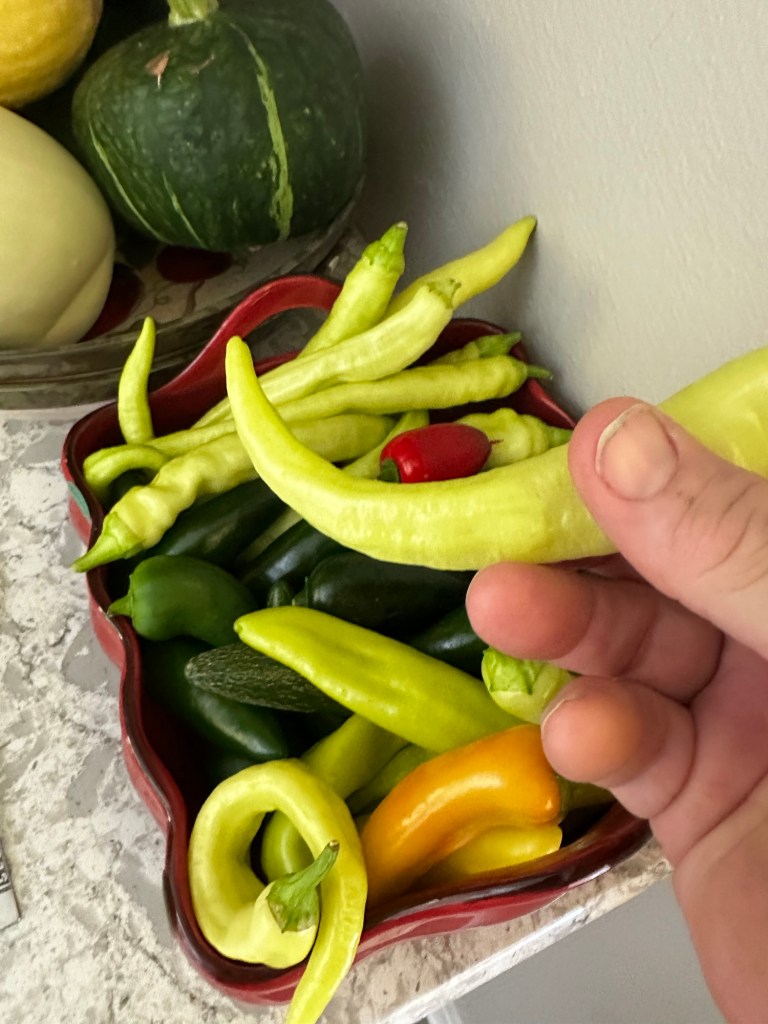
Phew, that’s some heady stuff. Anyway…Here’s a banana pepper in the traditional style.

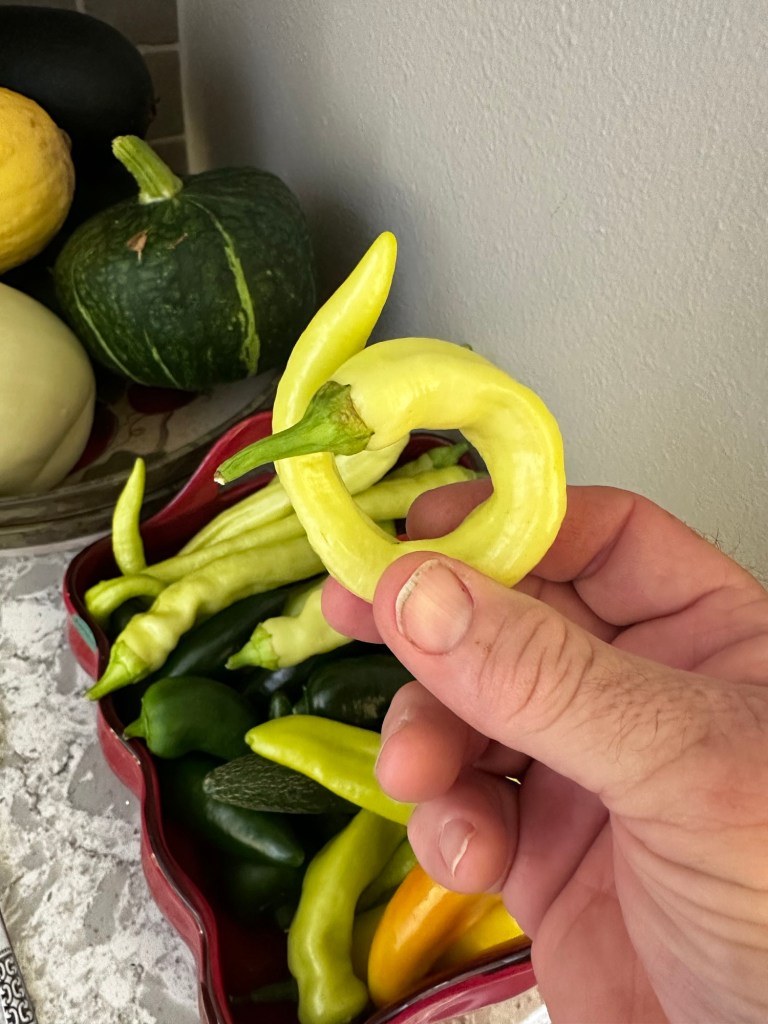
Here it is in the Cosmic Style:

They both go well in an omelette (French word btw).

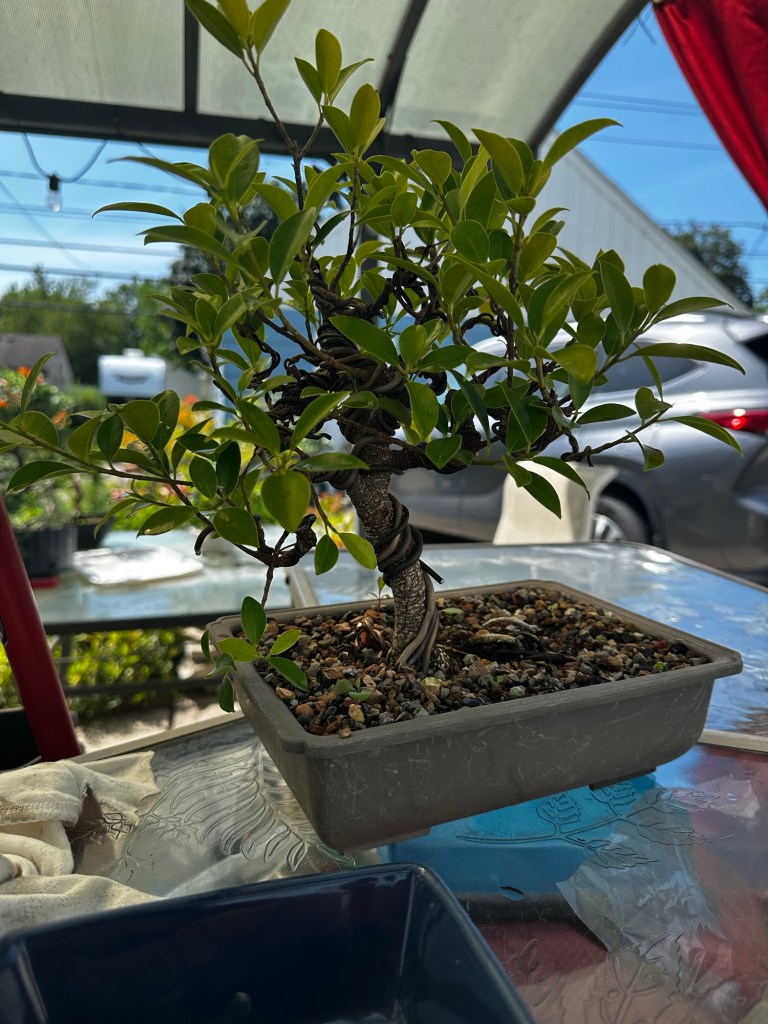
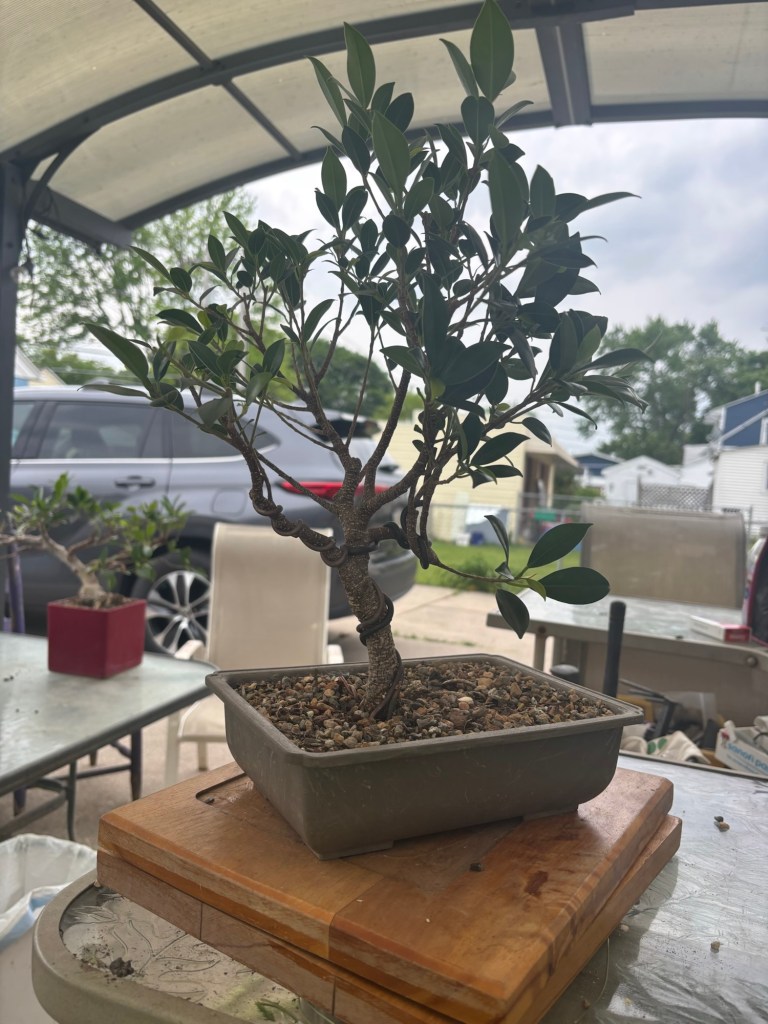
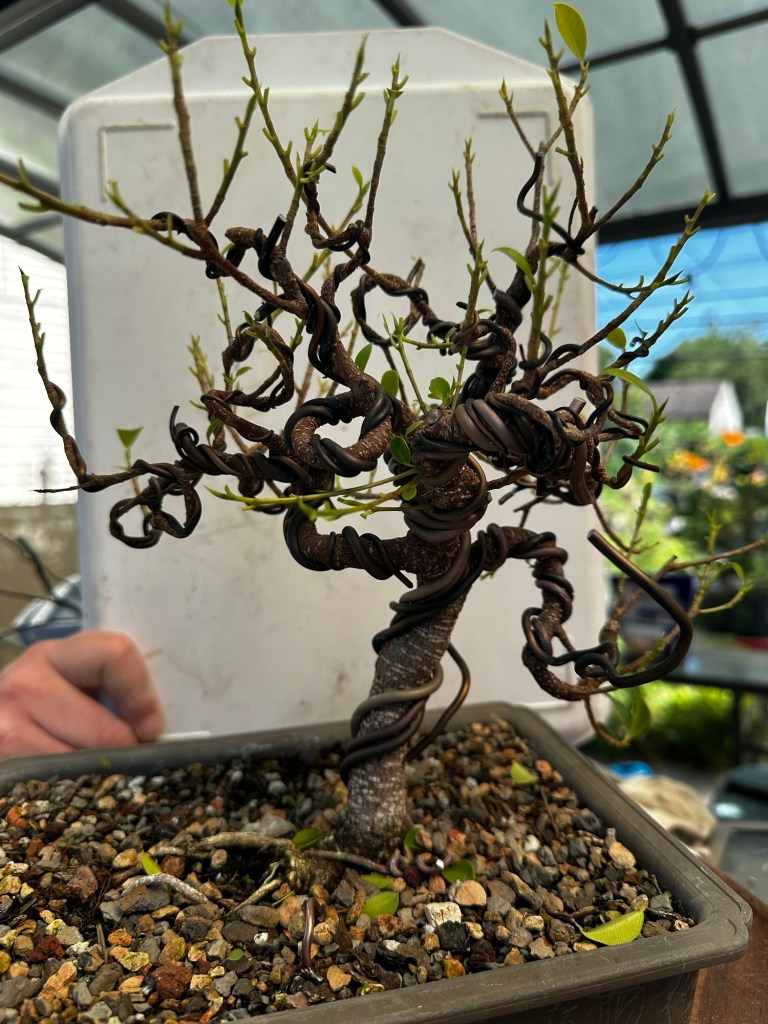
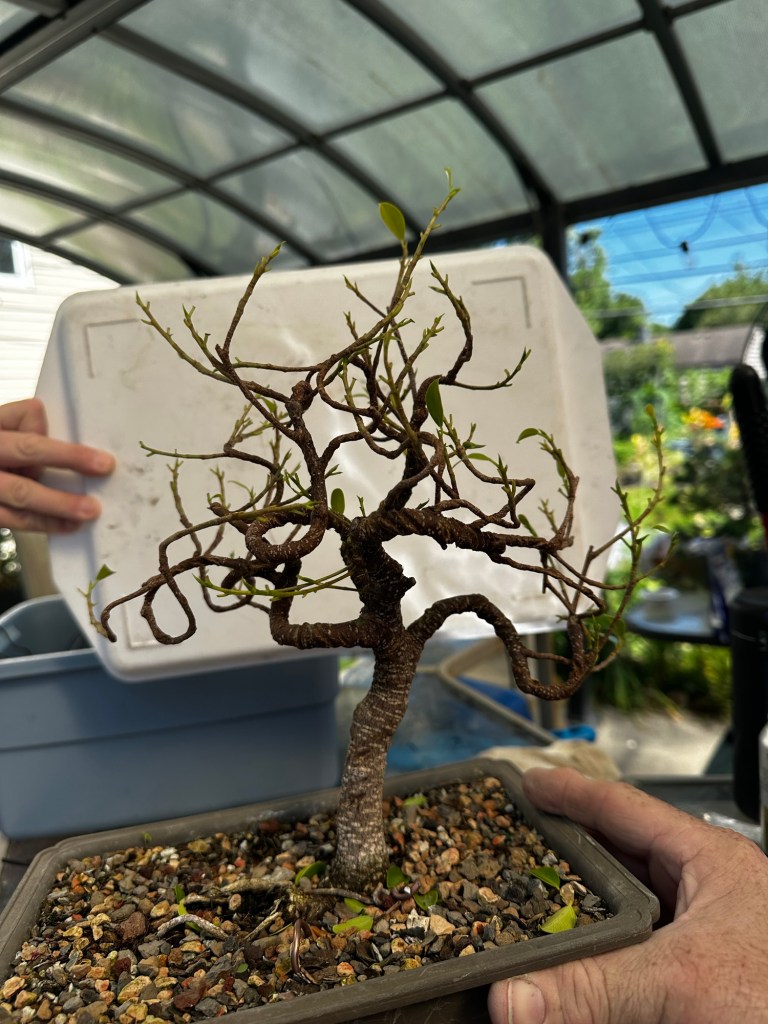
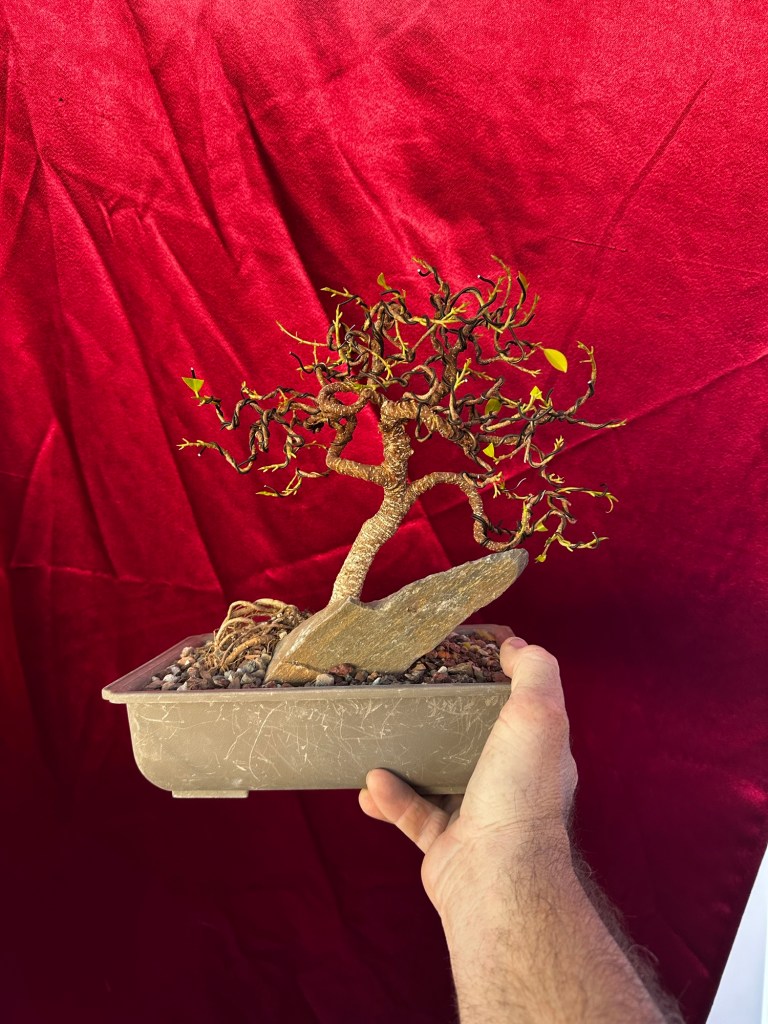
Below (and some pics above) is a tiger bark ficus (or Golden Gate, or kinman, or kemang, or whatever you want to call it) that John made in Toledo after he got back from the Orlando convention.

I took the wire off and…

….the branches stayed put. Surprisingly. It was a mere two months or less.

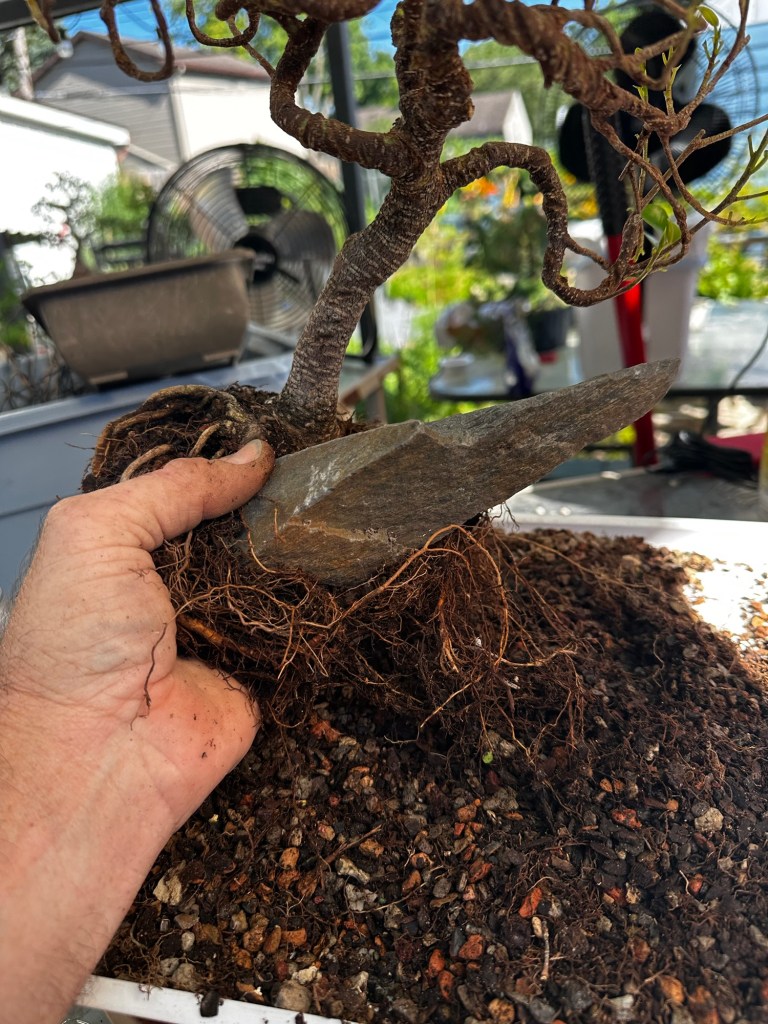
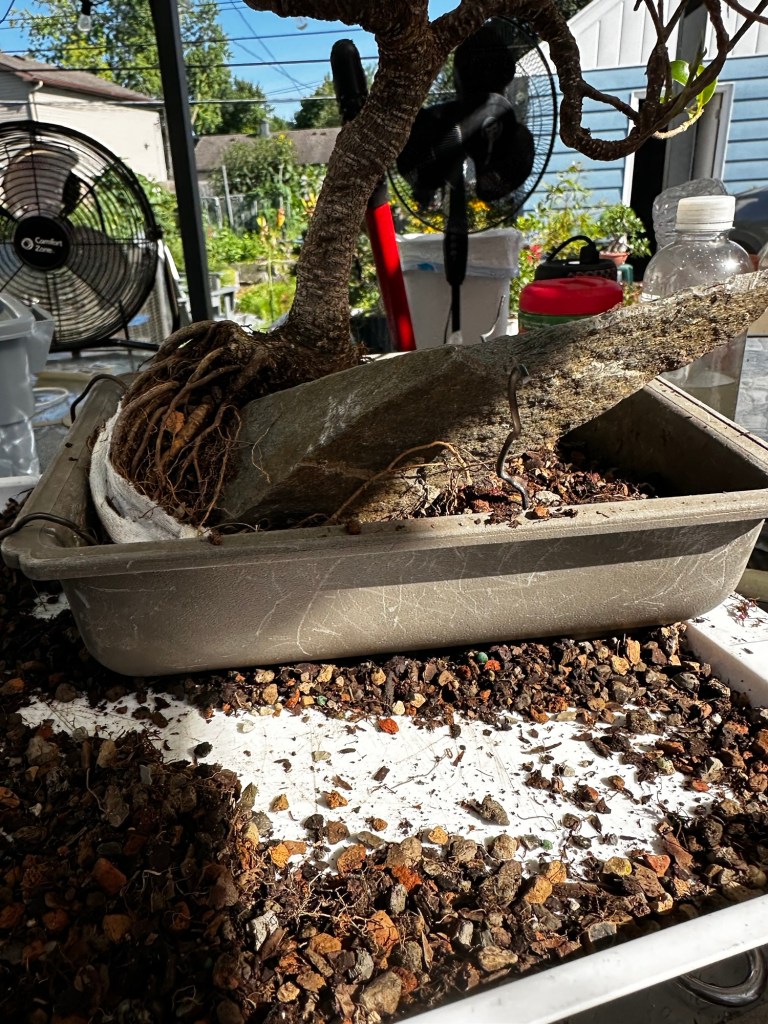
I think we need a rock outcropping to give the base some drama. and to expose the roots and give some repetition of movement to the composition.

John had the idea to add some fossil looking carvings to the rock (maybe next year).

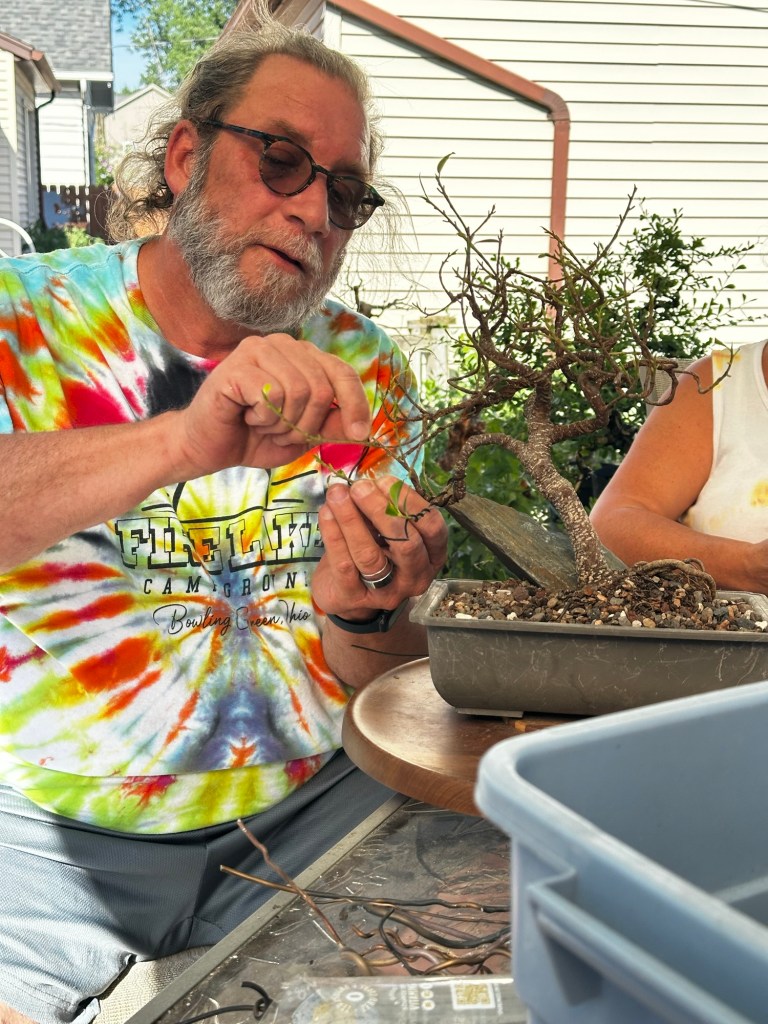
Hi John. I made him rewire it.

While I enjoyed some….

….coffee?

And that’s it for now. I’ll add updates as I get them.

Let me know how you think, feel, or not, about the Cosmic style.

I won’t censor them. I’m not about that, I believe in freedom of expression.

BYEEEEEEEE!

  •