Reading view

Welcome to Tropical Northern….Virginia???

I promise, I wasn’t hanging out with any rich men in Northern Virginia. It was all cool bonsai peoples. See?
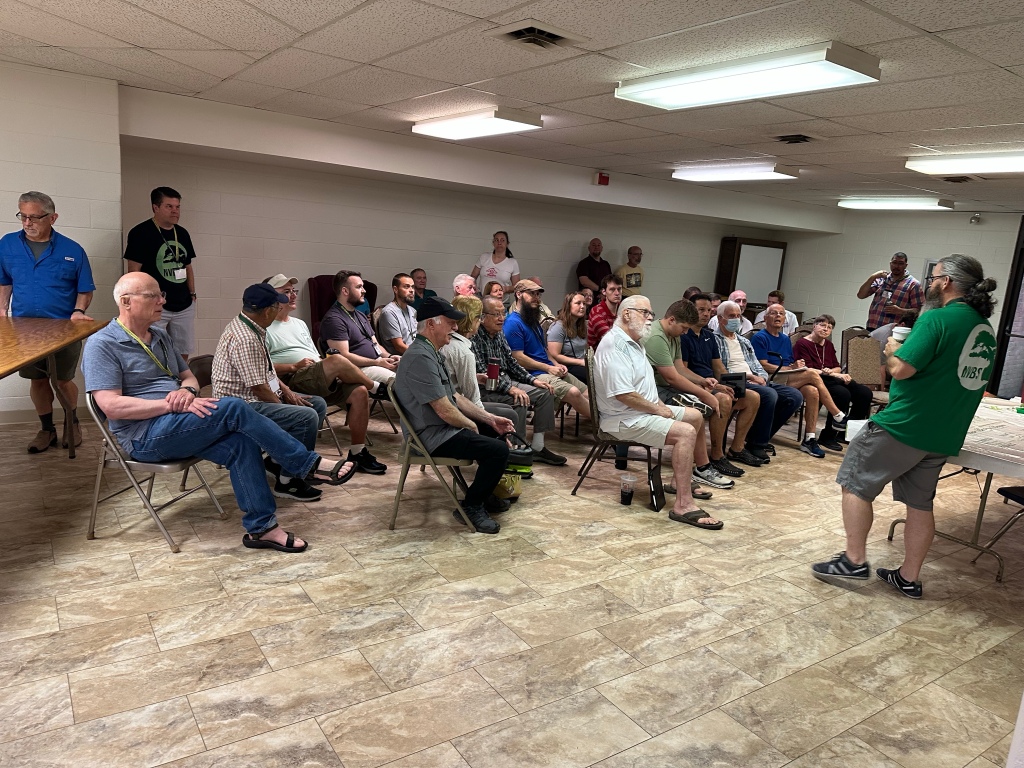
Not a single politician (I don’t consider Roberto a politician, and he was in Peru anyway).
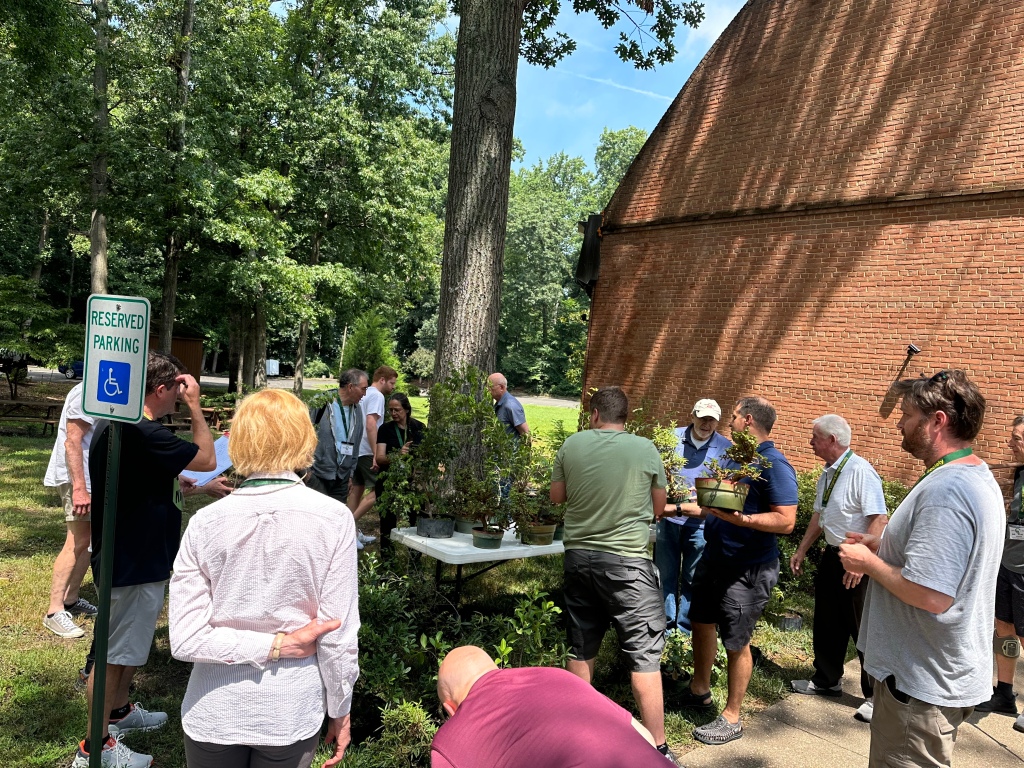
I was at the beginning of my summer tour, making a triumphant return to the Northern Virginia Bonsai Society. I brought a lot of trees for the workshops.

They gave me a tree, what I believe is a Ficus macrophylla (or the Moreton Bay fig, a ficus from Australia) as the demo tree. . This particular specimen has been passed around in the club a few times, with no one really doing much with it. Maybe a trunk chop or two. I liked it and the challenge.
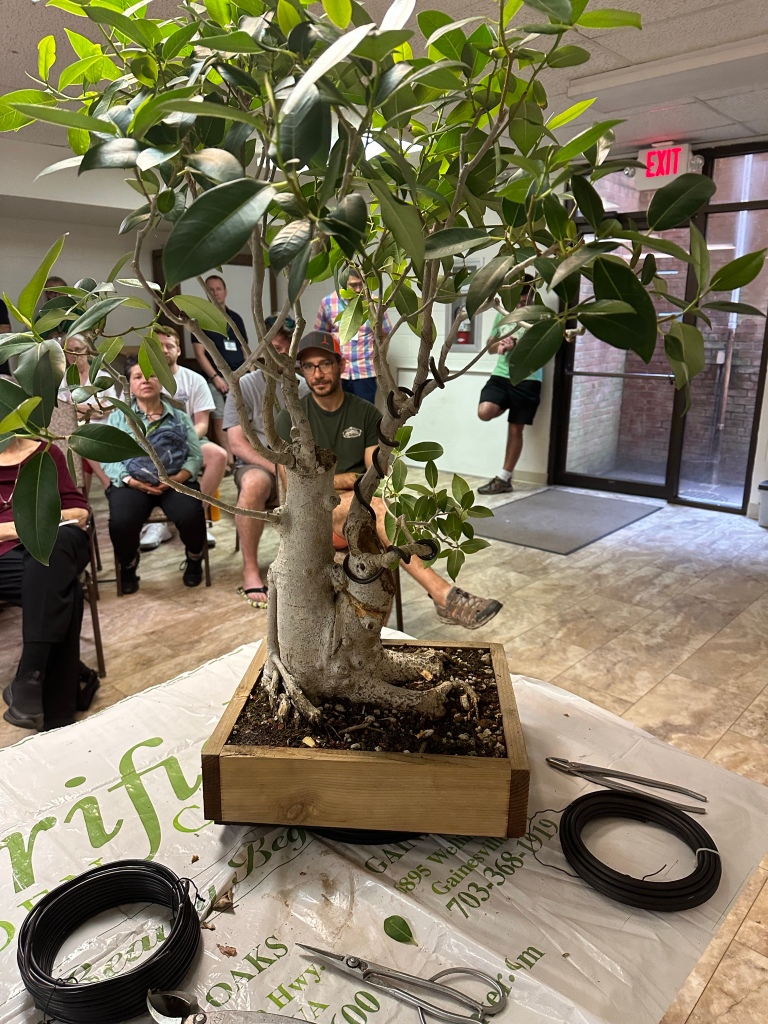
I kinda like an underdog, so I tried my best, using my tropical tree bonsai superpowers to bring out the most I could from the tree.

We start with an approach graft.
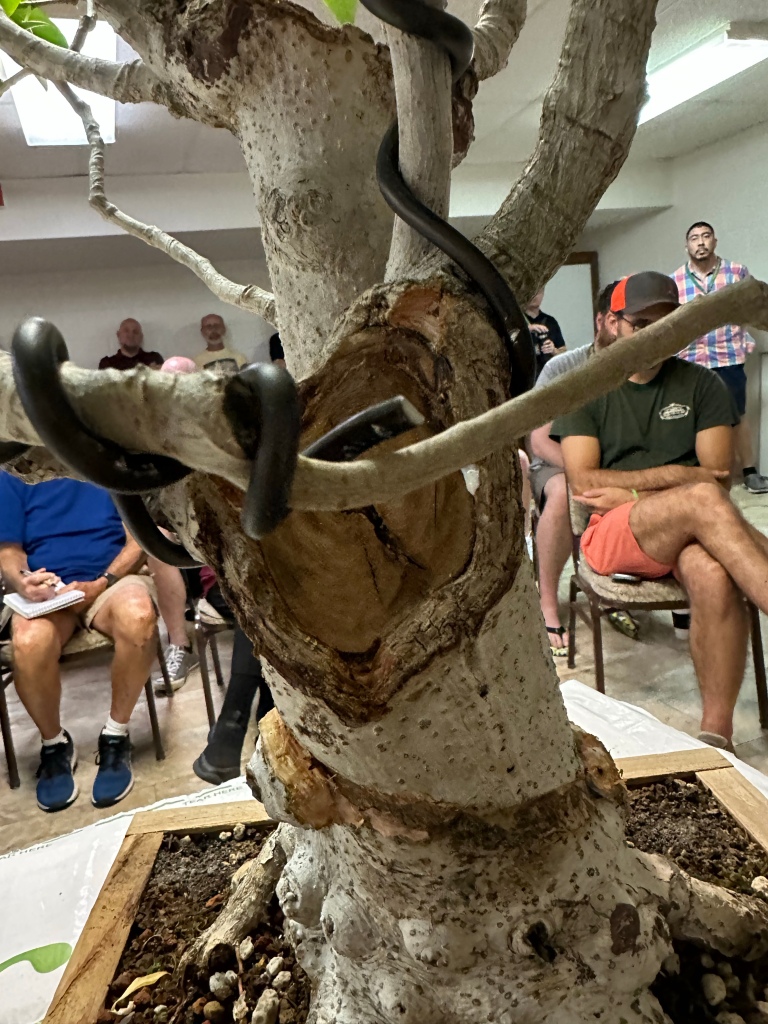
Cut it back in places, let it grow in others.
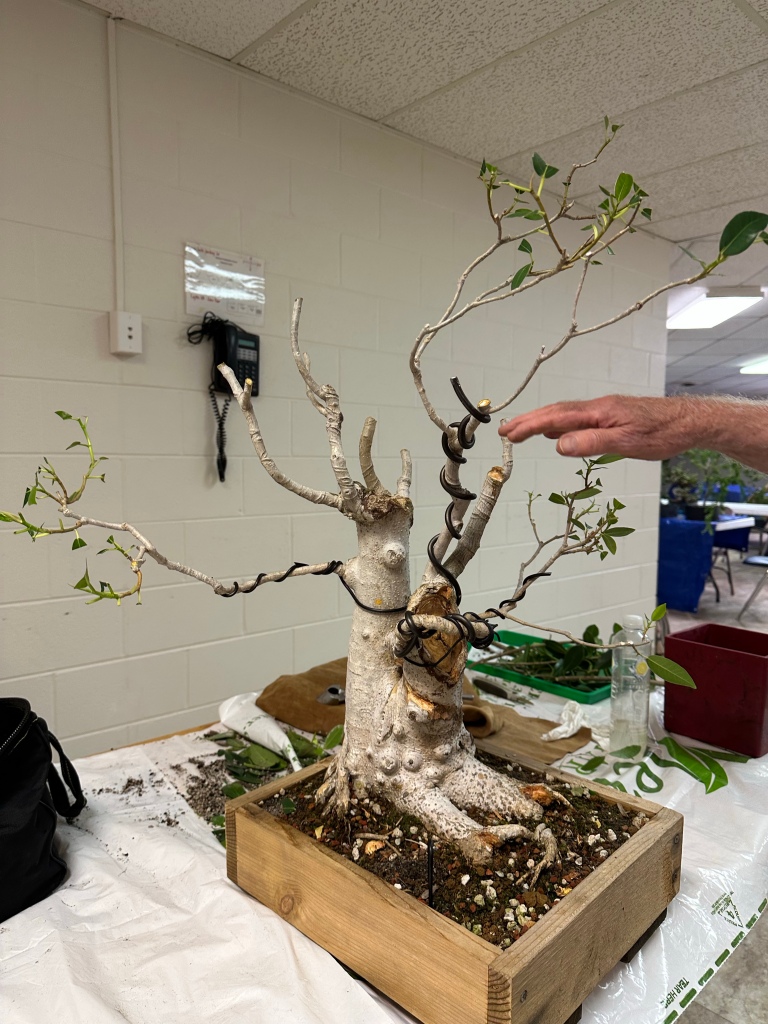
The graft….
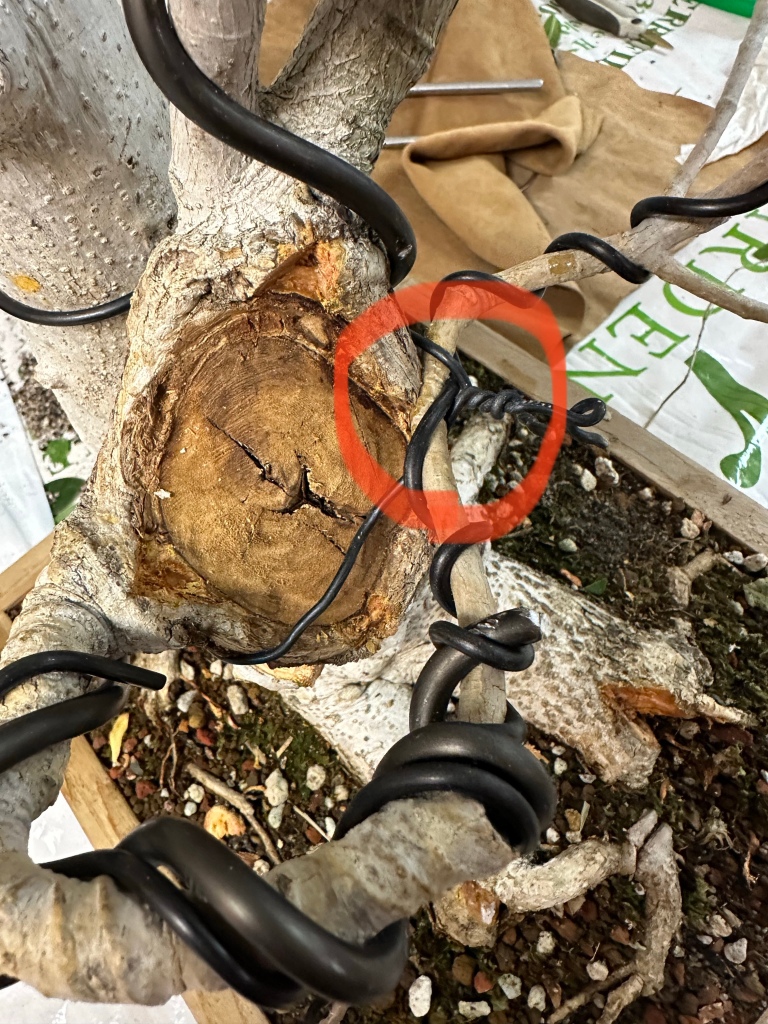
The growth….
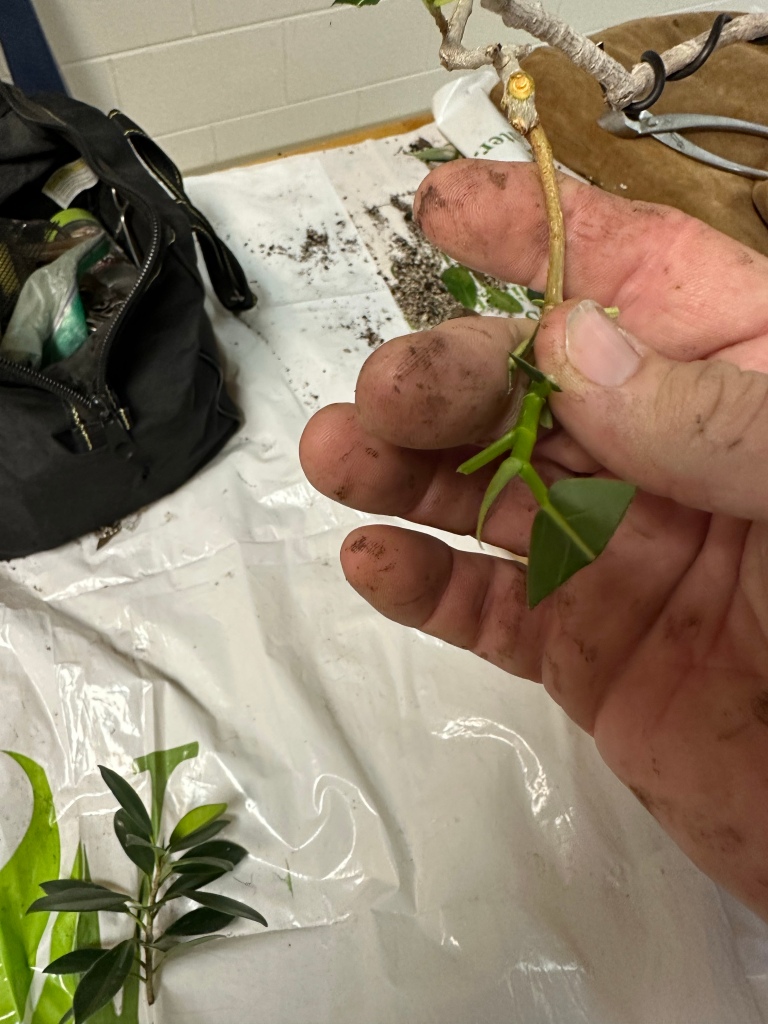
The cut back.
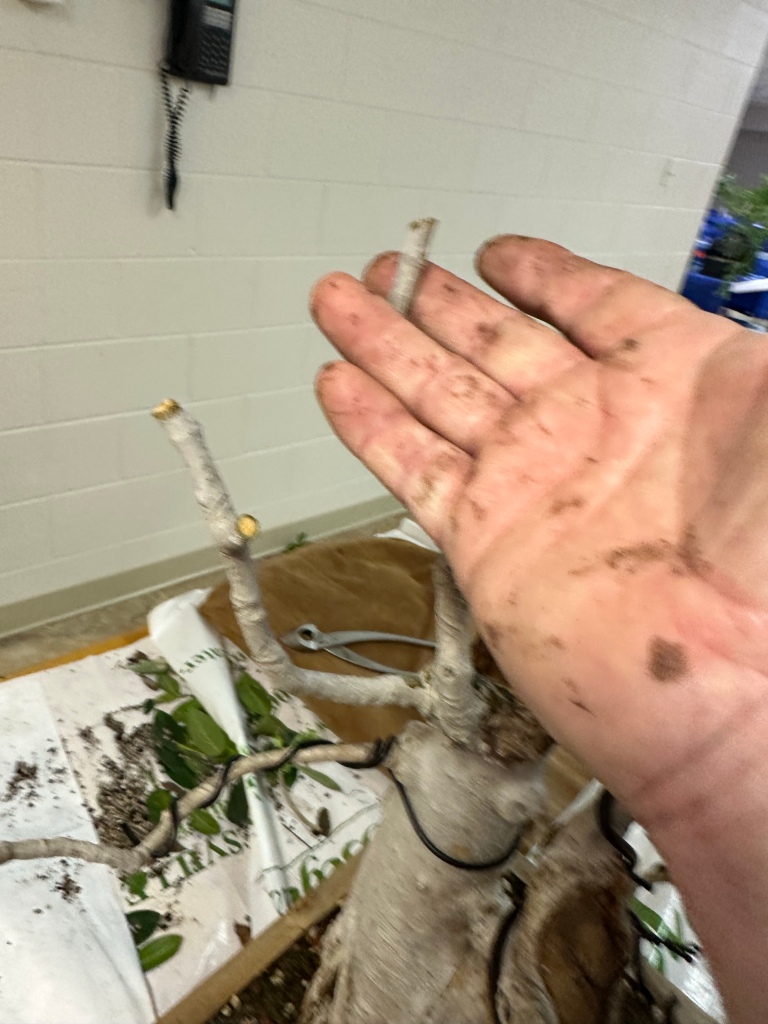
And below, my hand in an anticipatory gesture of the “Let it grow!” number, along with choreography and three part harmony.
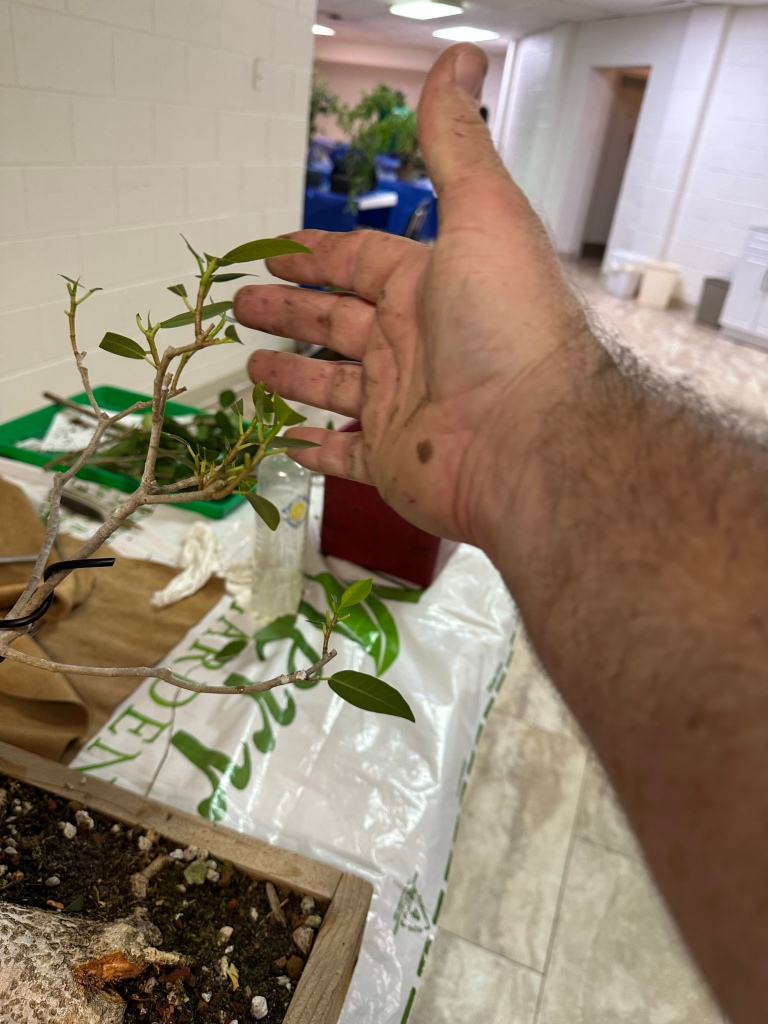
This was the demo. Along with the work, I told the chicken sexter story (I’ll have to tell you, the readers, that story sometime), I explained what different plant growth growth hormones do (see this post: I use some fancy words to justify my defoliation habit, go figure ). I talk about my childhood trauma and how I use it in the styling and care of tropical trees in the sunshine state (not really, my trauma is manifested in less healthy ways, as it should be).

I told the story of my youth in bonsai, trying to find as much about bonsai as I could, and happening upon a website from a guy that not only grew tropical bonsai in the Great White North (coincidentally, in Massachusetts, about four miles from where I grew up), but developed spectacular tropical bonsai, better than most bonsai artists from Florida. His name is Suthin Sukosolvisit. One of the only true Masters in American Bonsai.
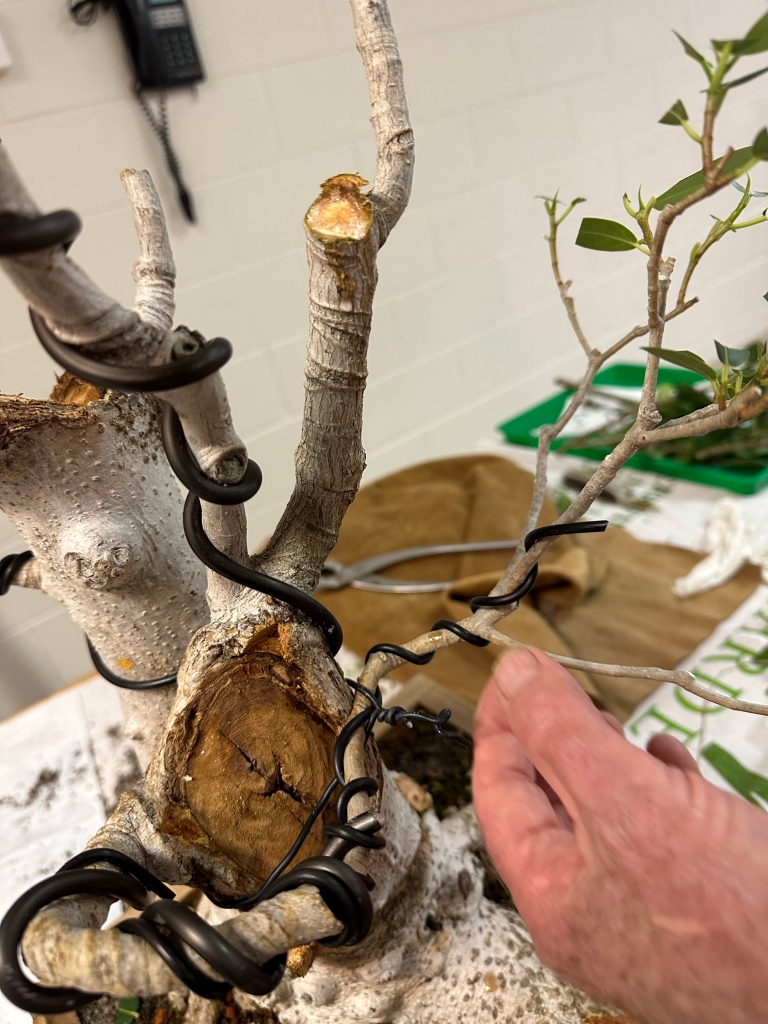
Anyway, I had some fun making a fool of myself on stage and hopefully imparting some knowledge.
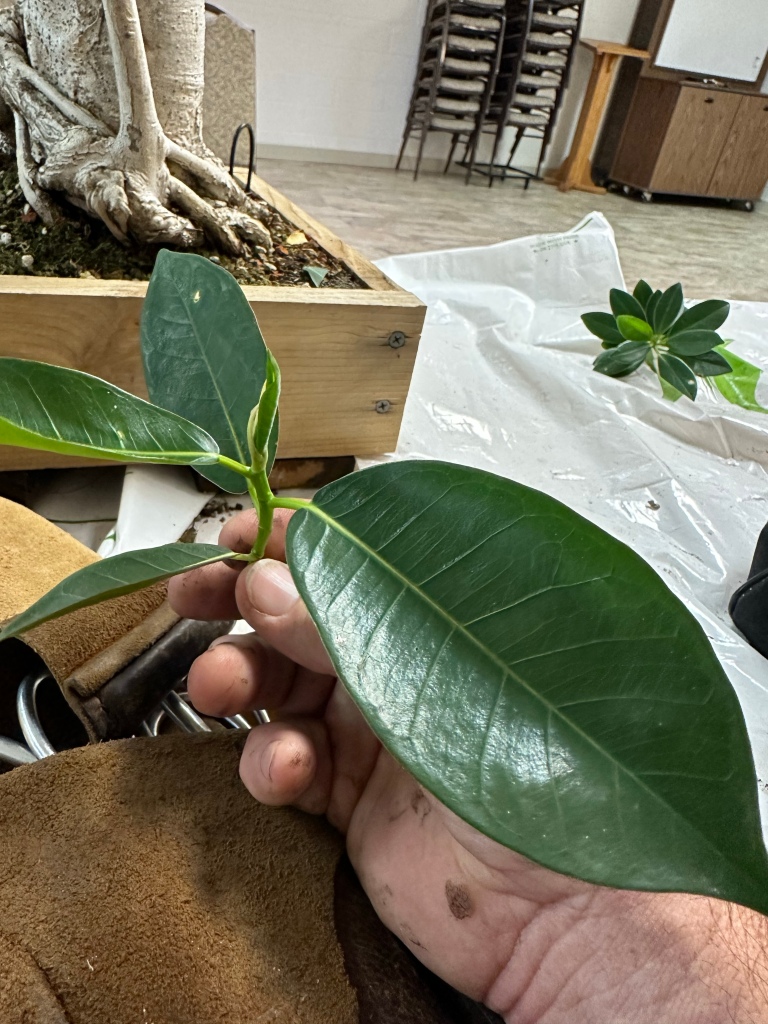
I’d love to have the tree for myself. Maybe there will be some altruistic NVBS member who bids on it and sends it down to the FLA as a gift.
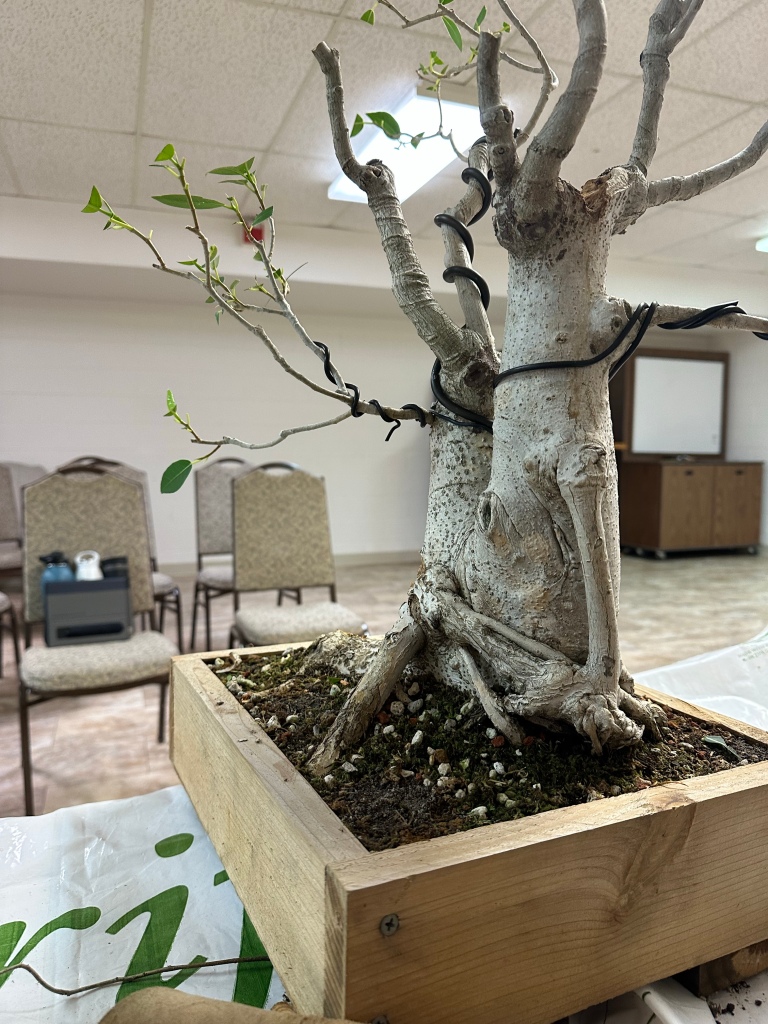
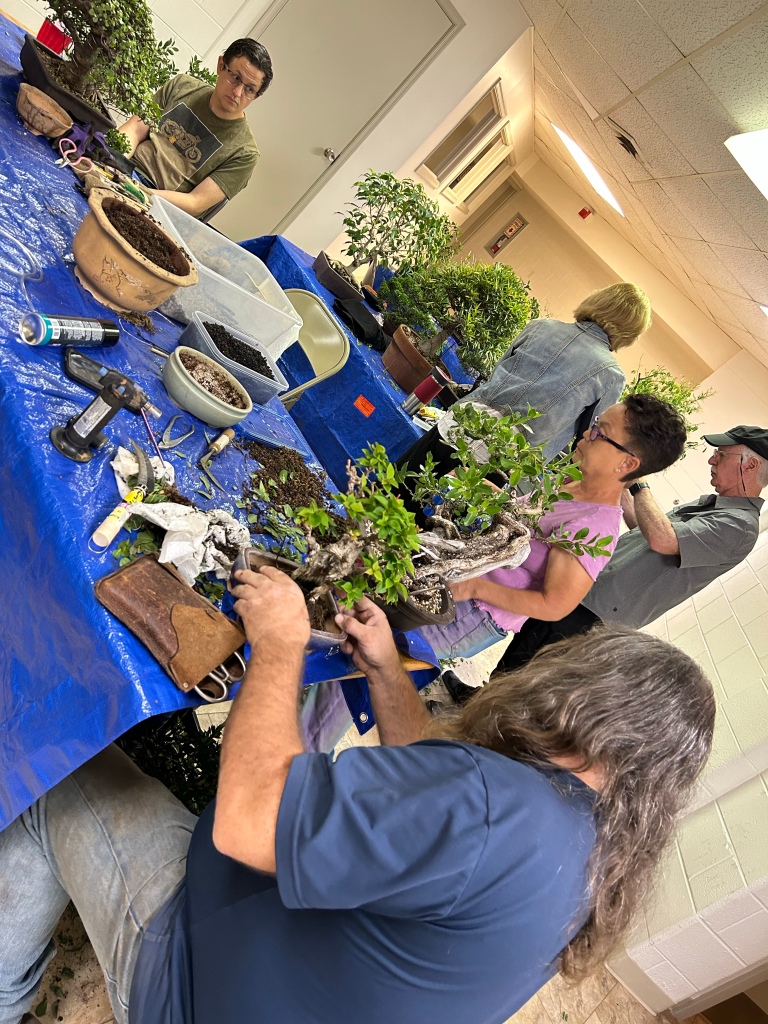
After the demo, and some lunch, we had a workshop. My wife took the pics with me in them. I think she’s biased, but she likes them.
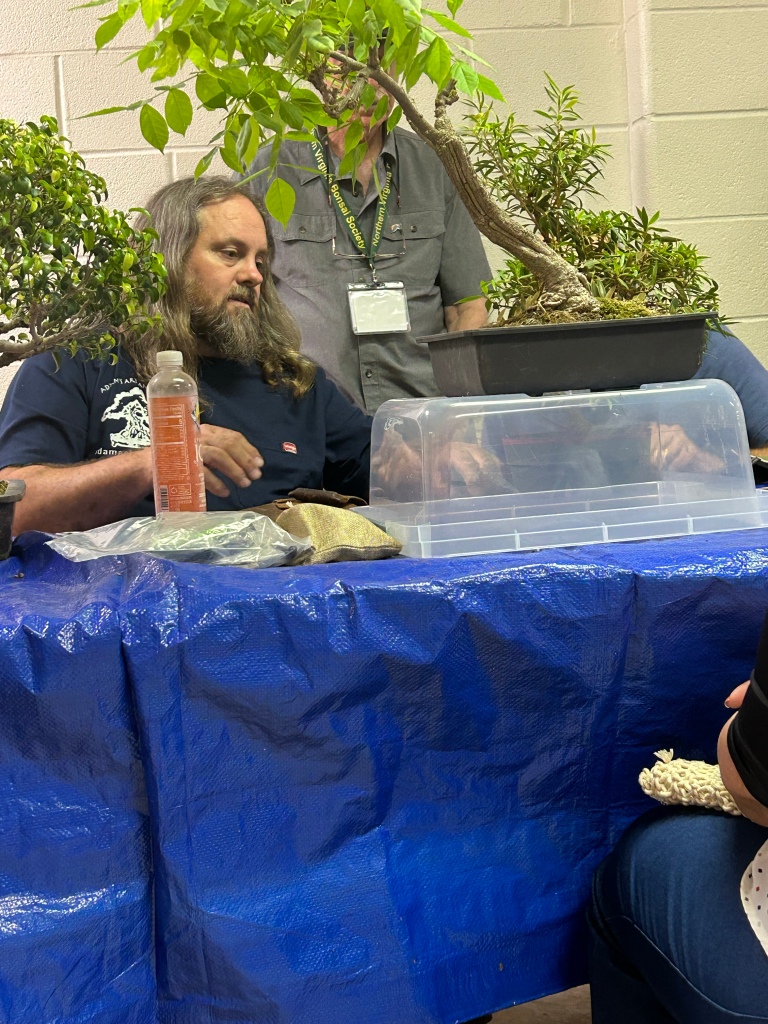
In my element, surrounded by trees and students.
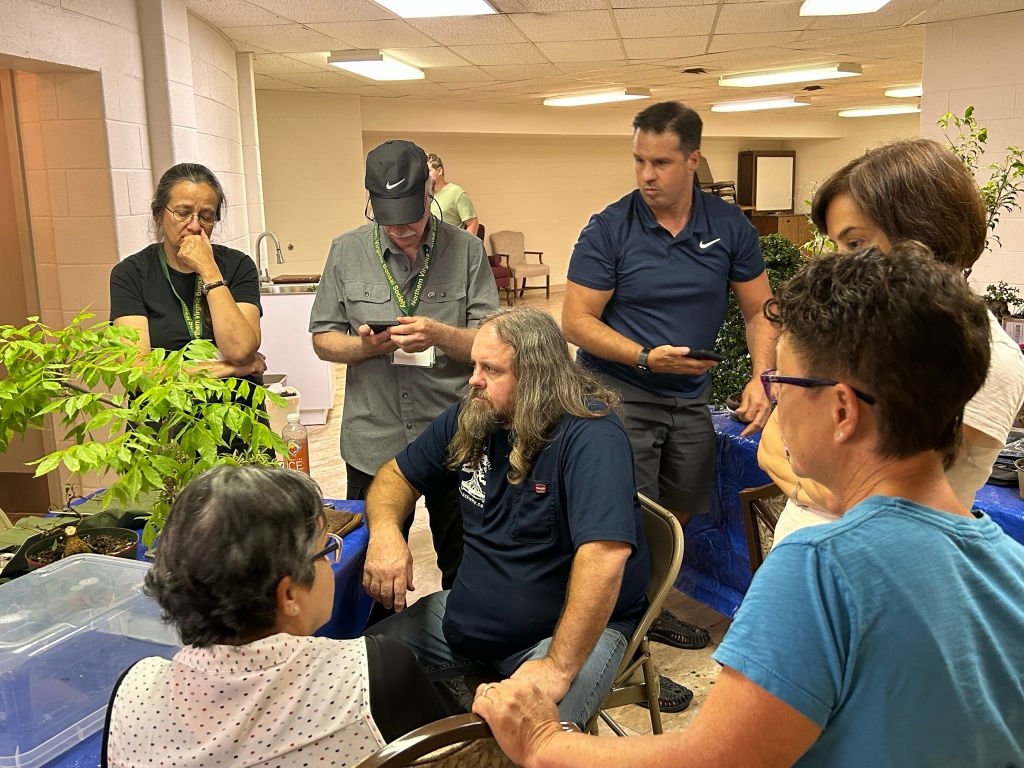
The trees got smaller as my ego got bigger.
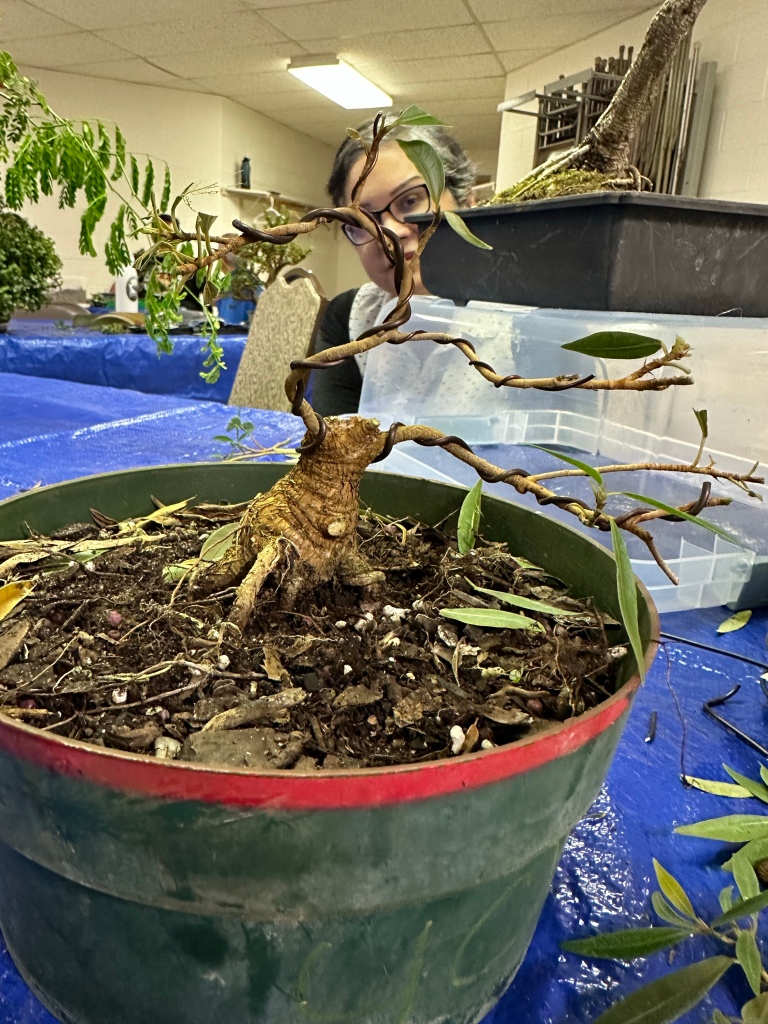
Love a good trunk chop. It’s like the smell of napalm in the morning.
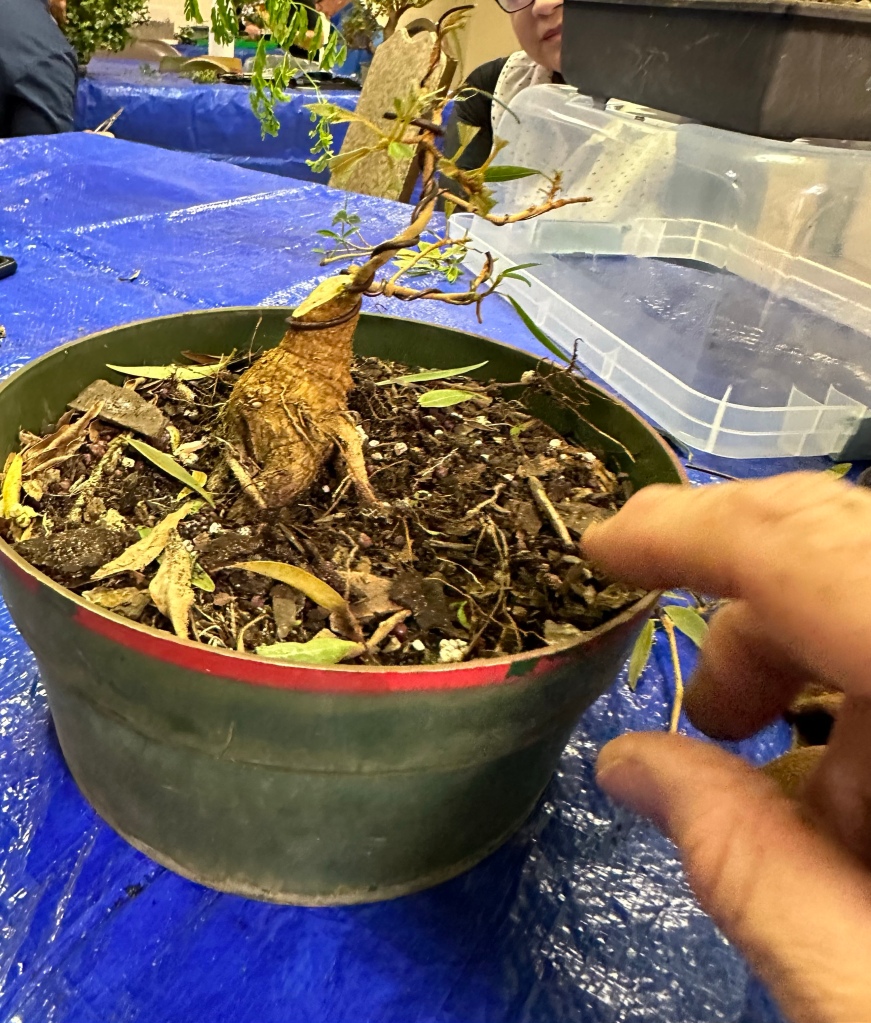
Here’s a link for the ficus trunk chop, above https://www.instagram.com/reel/CuwgSarMCtD/?igshid=MzRlODBiNWFlZA==

And below, a willow leaf that needed some courage….
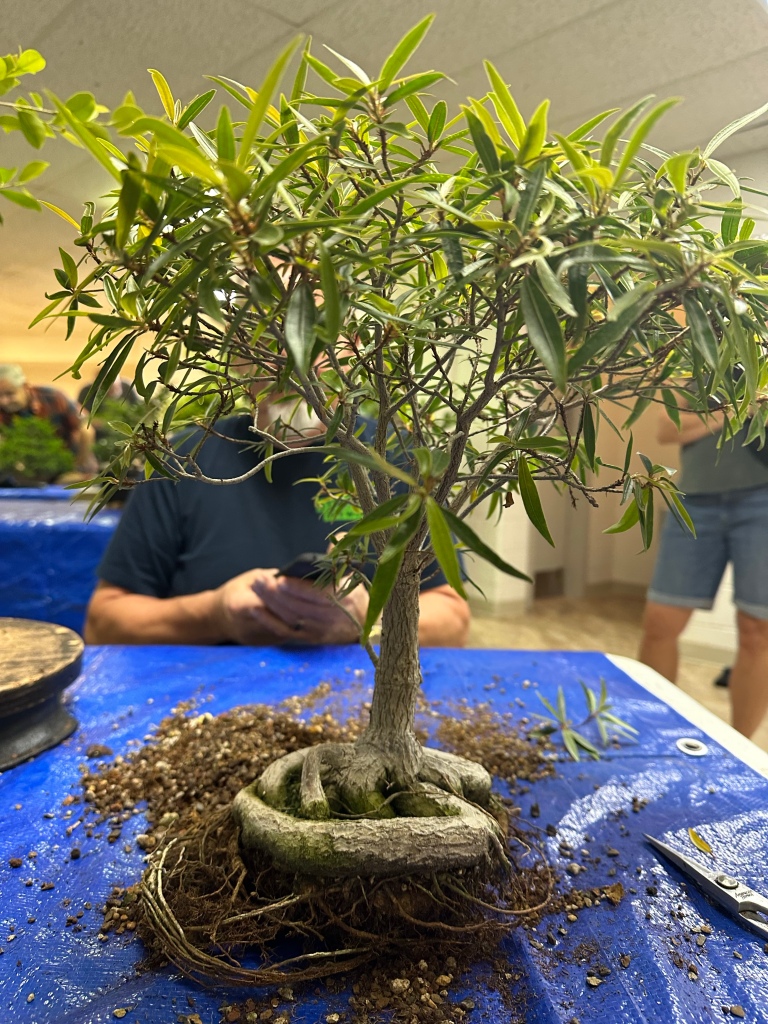
Like a pretzel. We just needed some cheese.
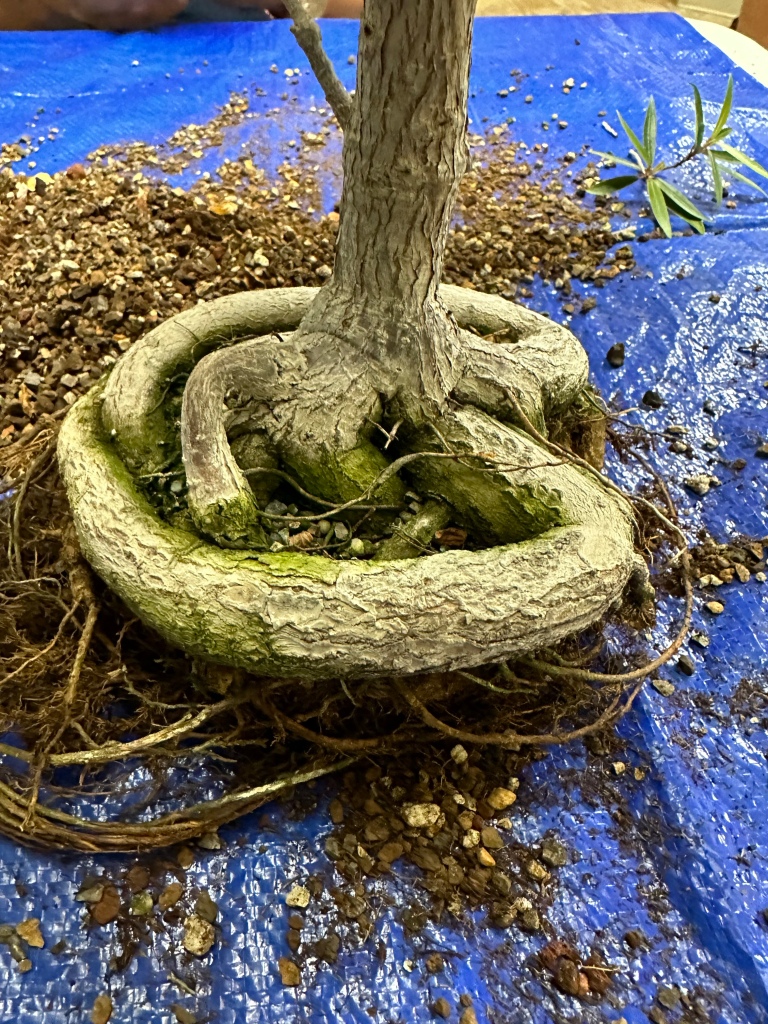
Doh!
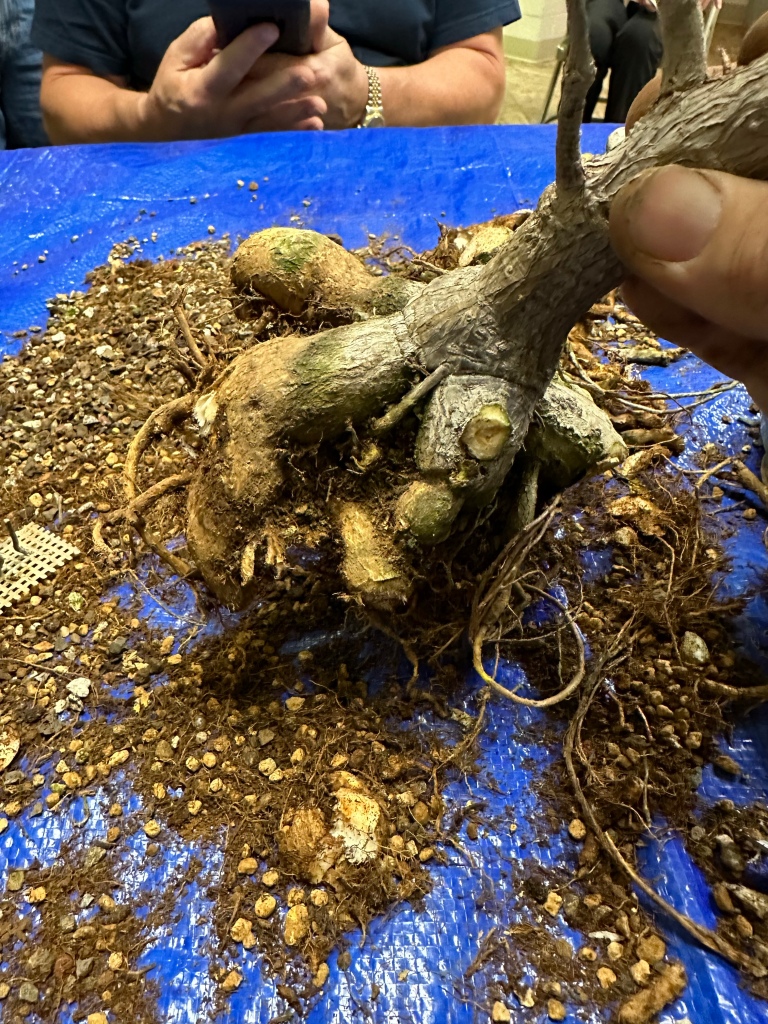
Where did the pretzel go?
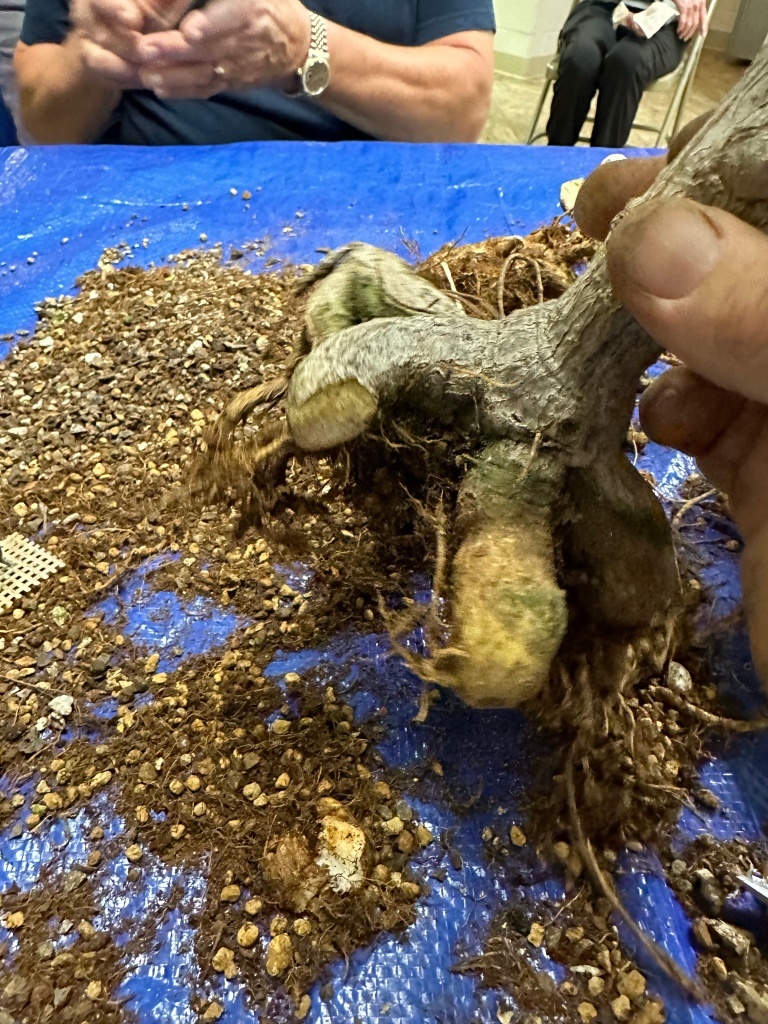
Yea, of course it’s a reel. Here’s the link from Instagram: https://www.instagram.com/reel/CuyRox2g05X/?igshid=MzRlODBiNWFlZA==
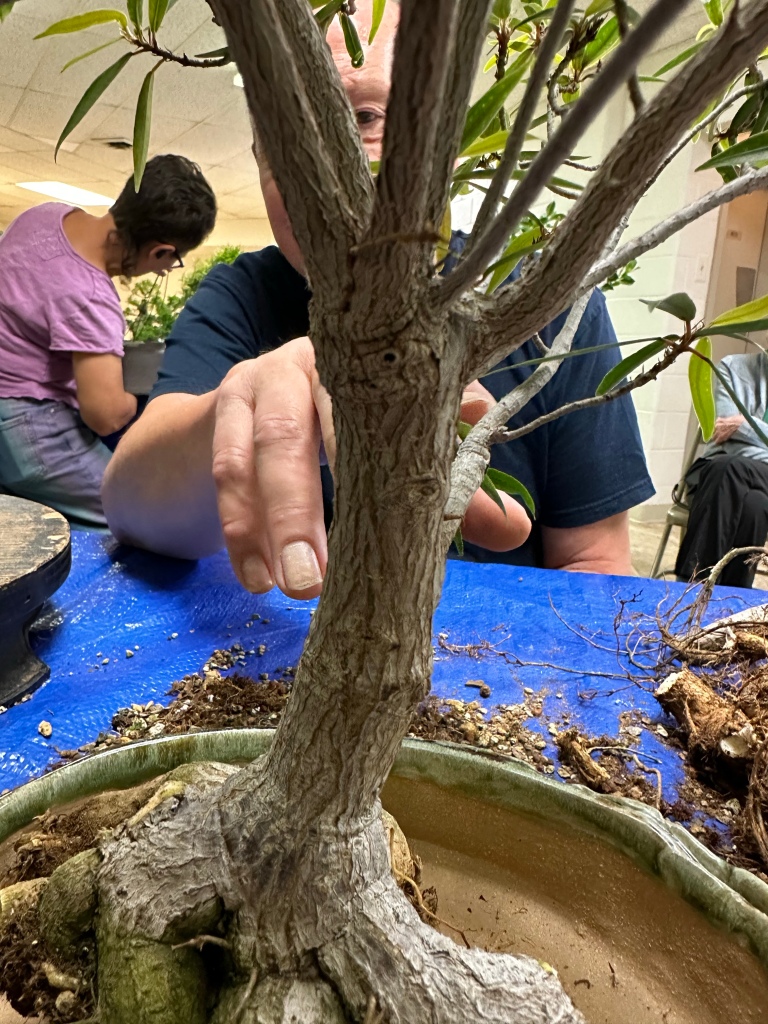
And just the video. For those that don’t like Led Zepplin.

My wife channeling her inner Jack Kirby with the wacky camera angle.
Now, we get to a cool tree. It’s a tree originally from Ed Trout, one of the last true gentlemen of bonsai. Ed had sold it to a man named Jonah Hill.
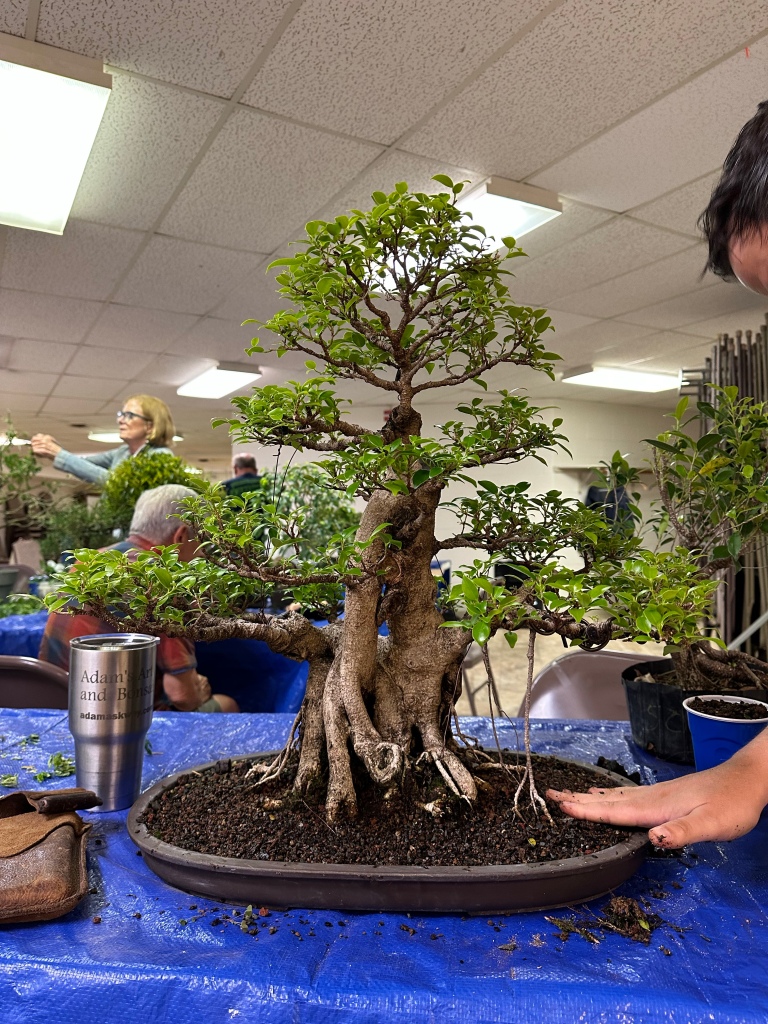
I know. Adam lavigne helping Jonah Hill work on a bonsai tree. The joke writes itself.

Study the pic just above. You’ll notice a hole in the middle of the trunk.

Below, I have a tree that no one wanted. So we are going to graft that into the hole.
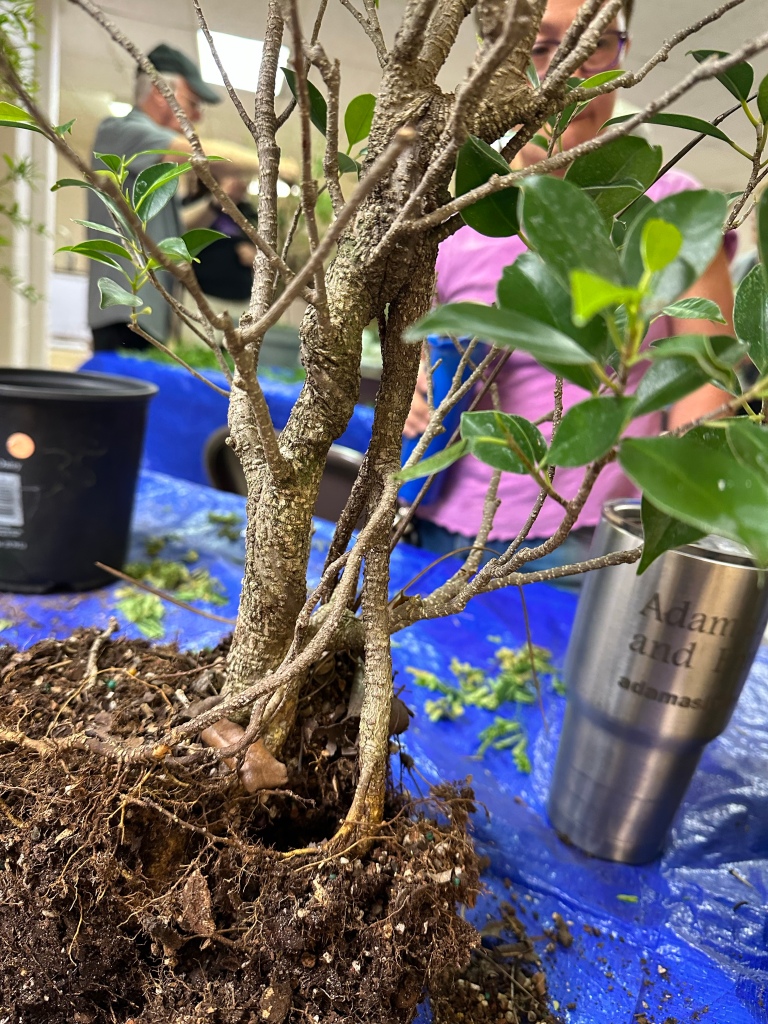
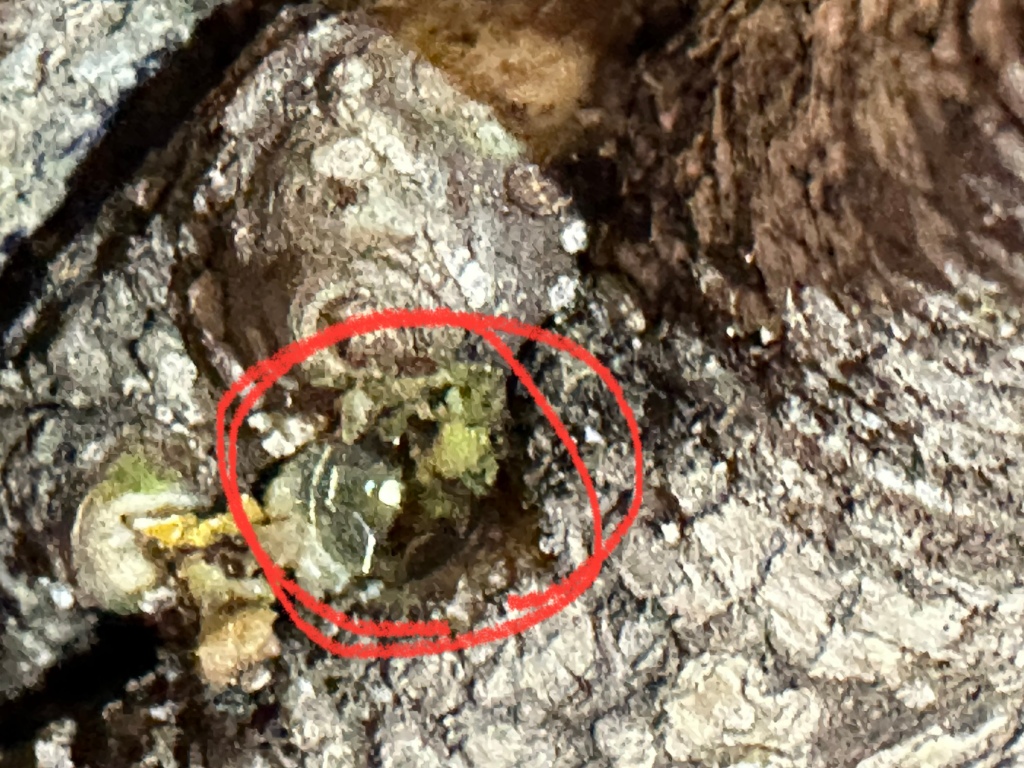
I cut off a piece of the tree, a piece with a good aerial root. The red circle is where I cut it and the graft will occur.
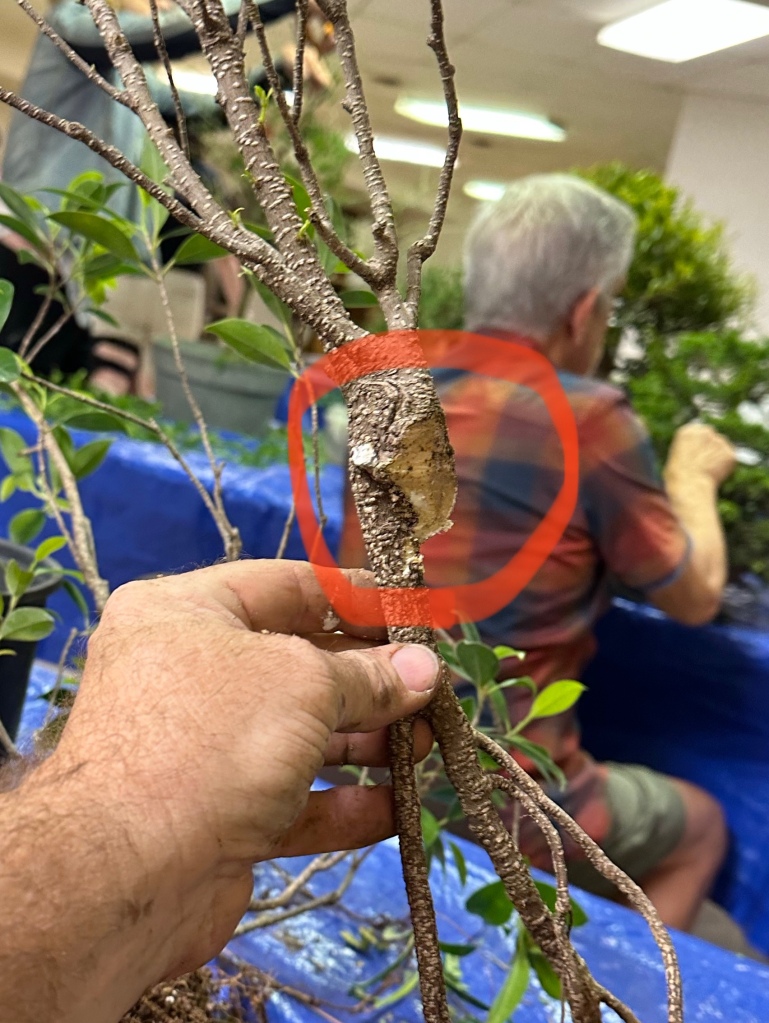
This, below….
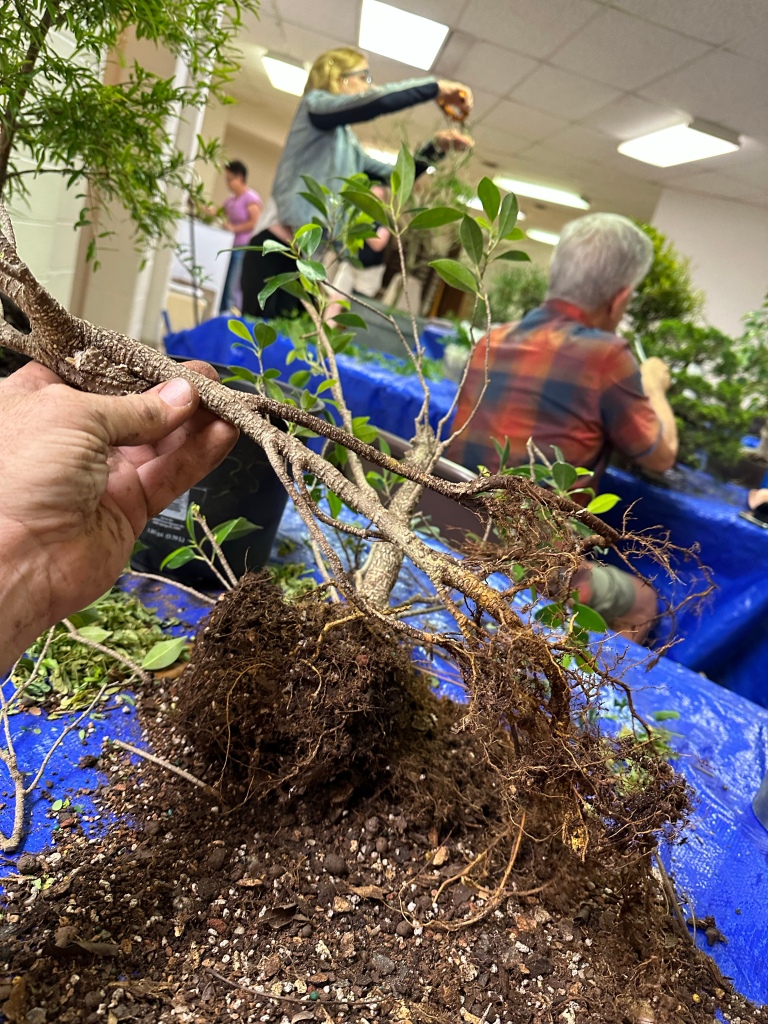
….needs to fit into here. that’s the front of the tree, to keep you correctly oriented.
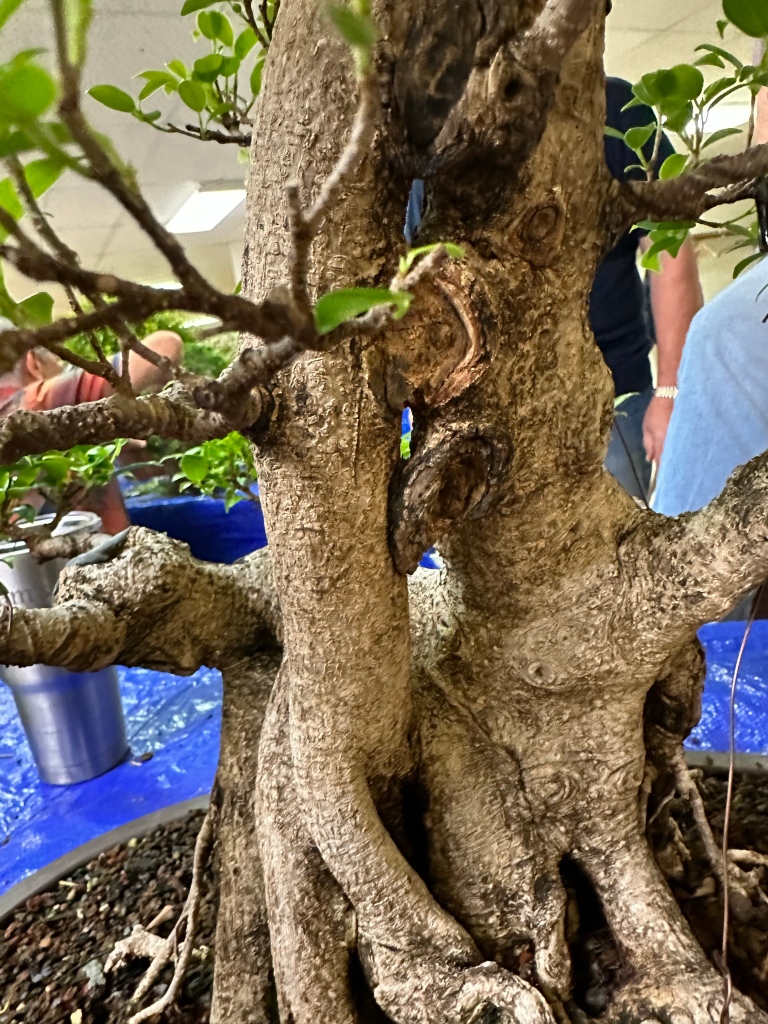
There’s Jonah, at the top of the pic. I’m about to stick the graft through the hole. Yup. Through it. That’s Jack behind me.
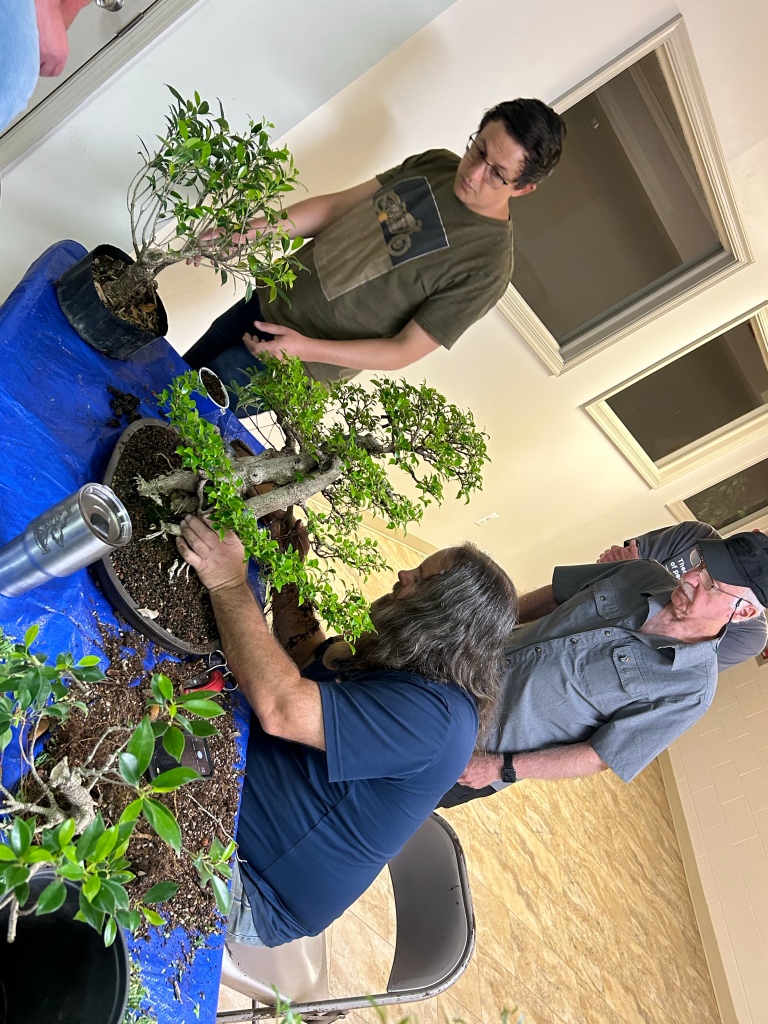
This is the back of the tree. The leaf end of the graft will act as a new back branch.
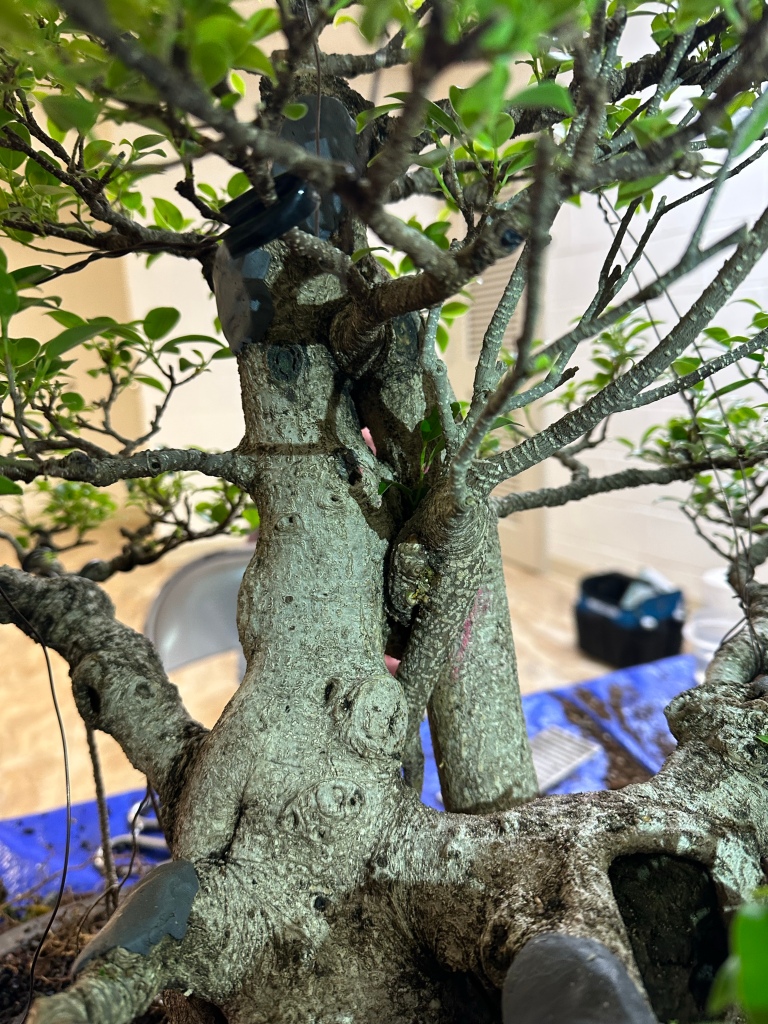
We use a brass screw (use a non reactive metal) to attach the graft.
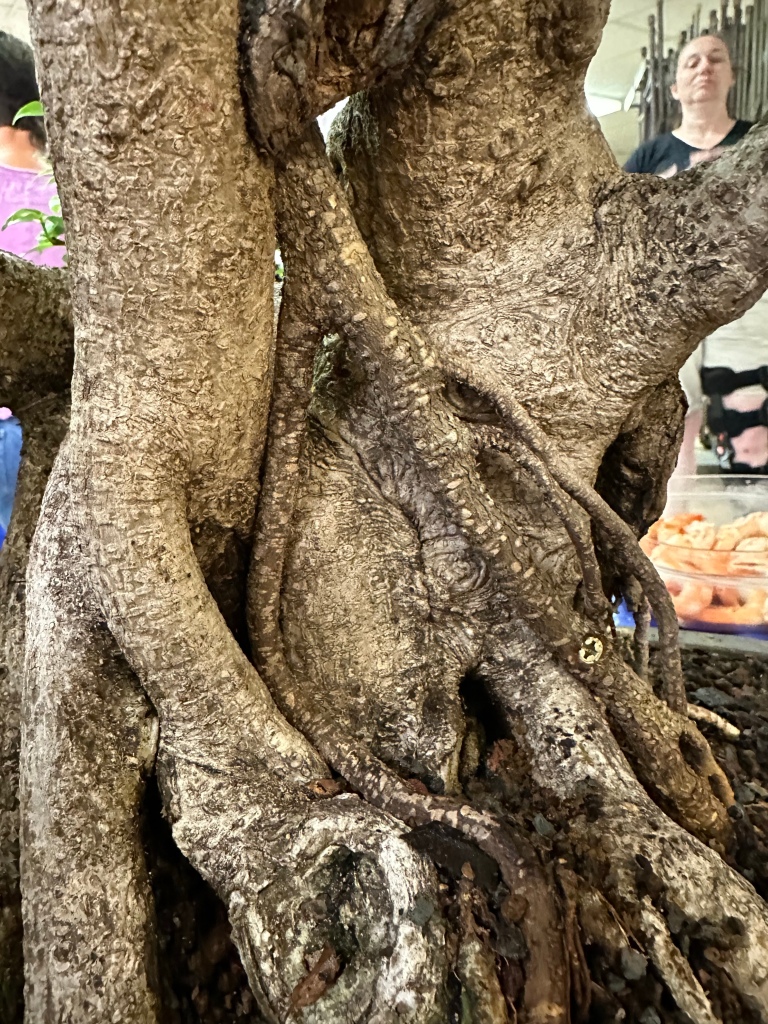
Here’s the front of the tree. I arrange the roots, artistically, so that they compliment the tree. Notice the screw in the bottom left. And my wife giving me the “Look”
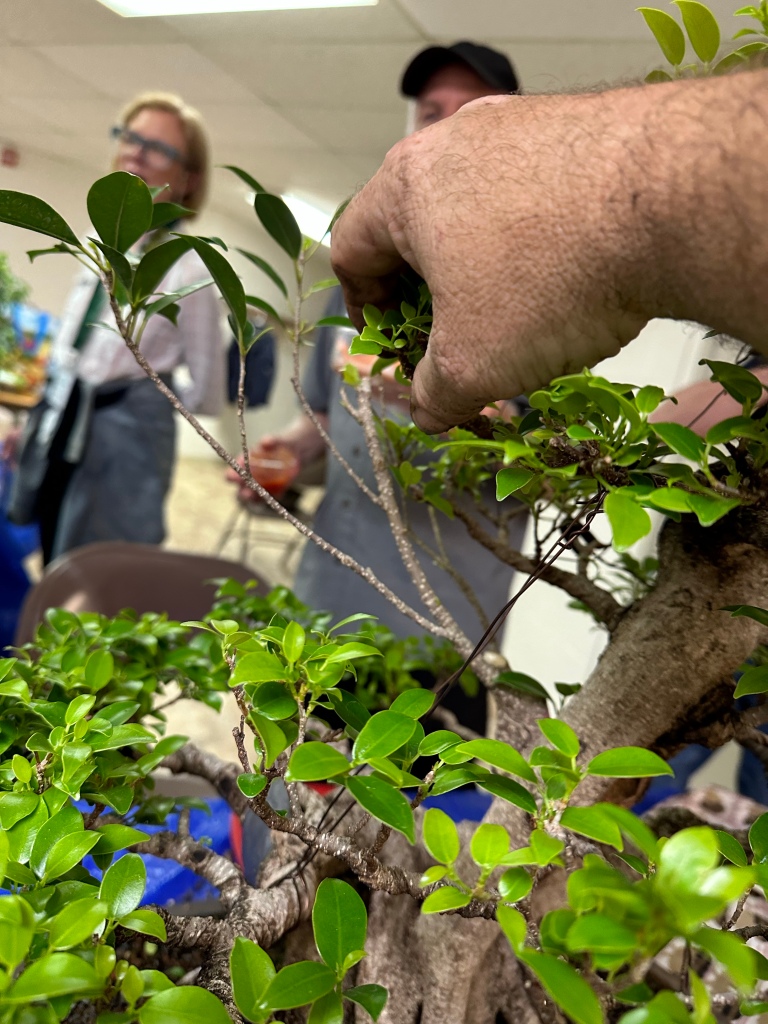
To get the graft to grow faster, I remove all the leaves except the last few, and I leave the grow tip.
There is still a hole, but as the graft grows, it’ll fill it up. That’s LeAnn, on the left, who was my host, giving me the same look my wife gave me. Both of them want me to work on her buttonwood. don’t worry ladies, it’s next.
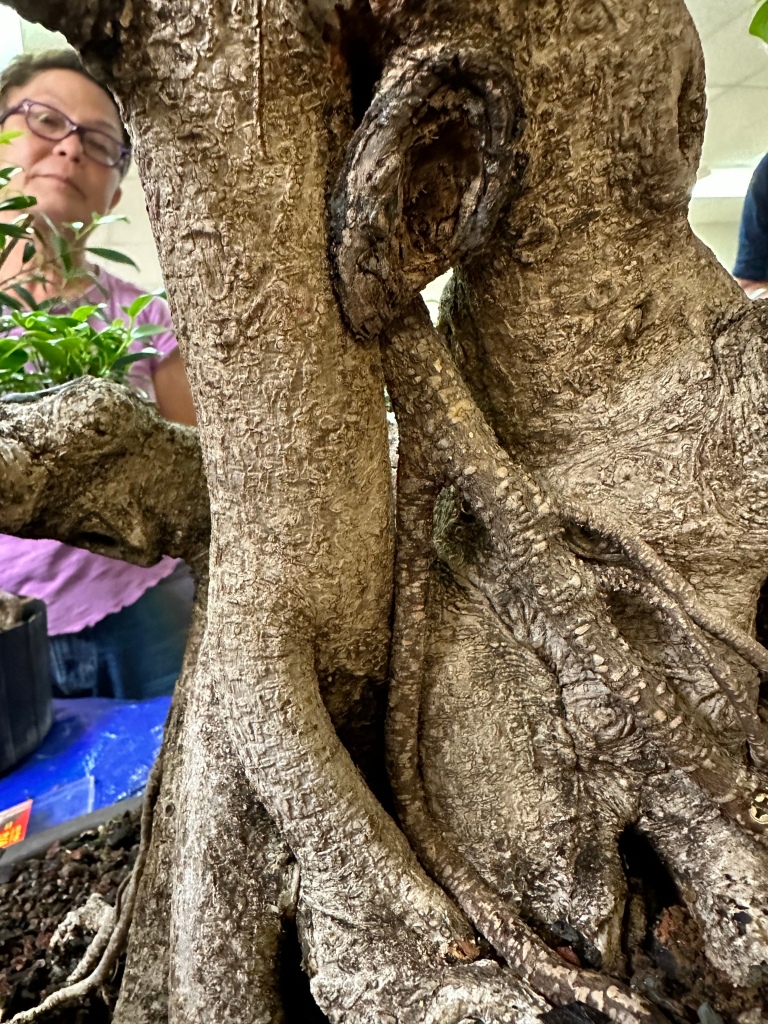
Some more pics to give you some detail.
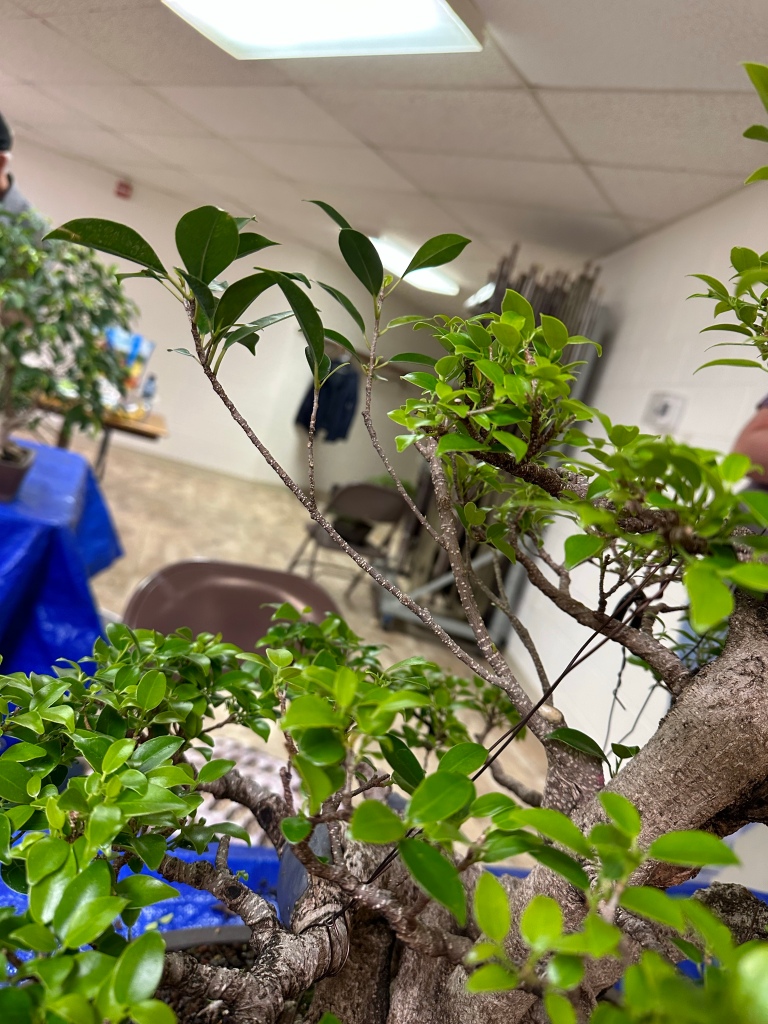
Jonah has done well reducing the leaf size.
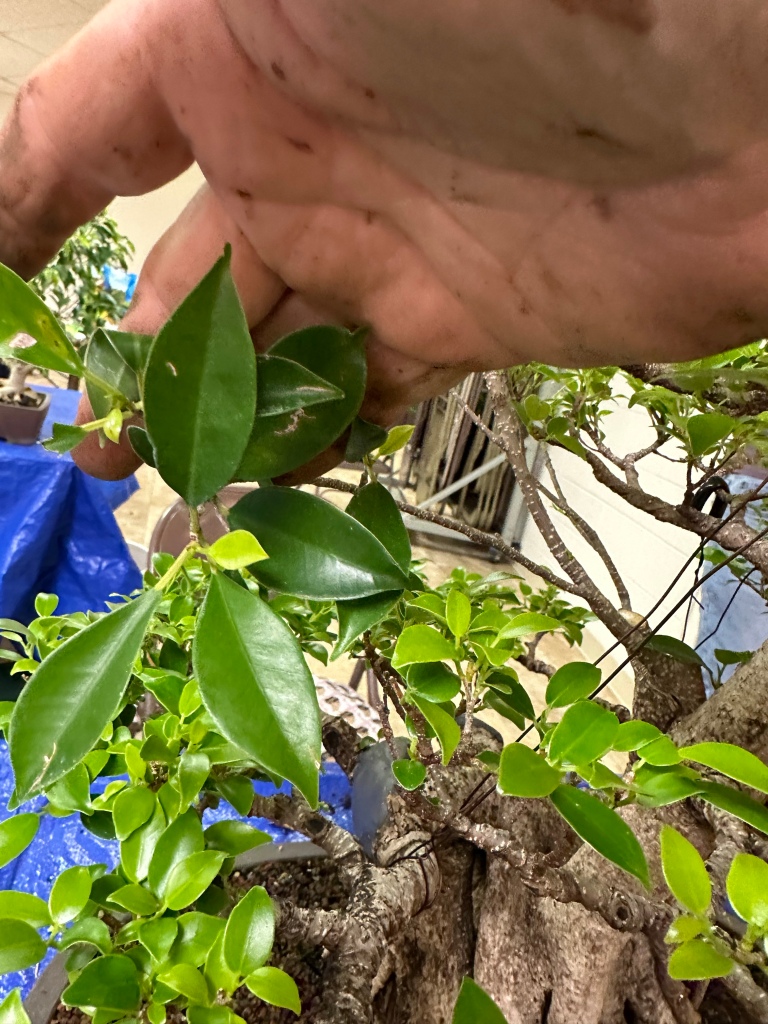
Just about done. We tied some aerial in place (bottom left).
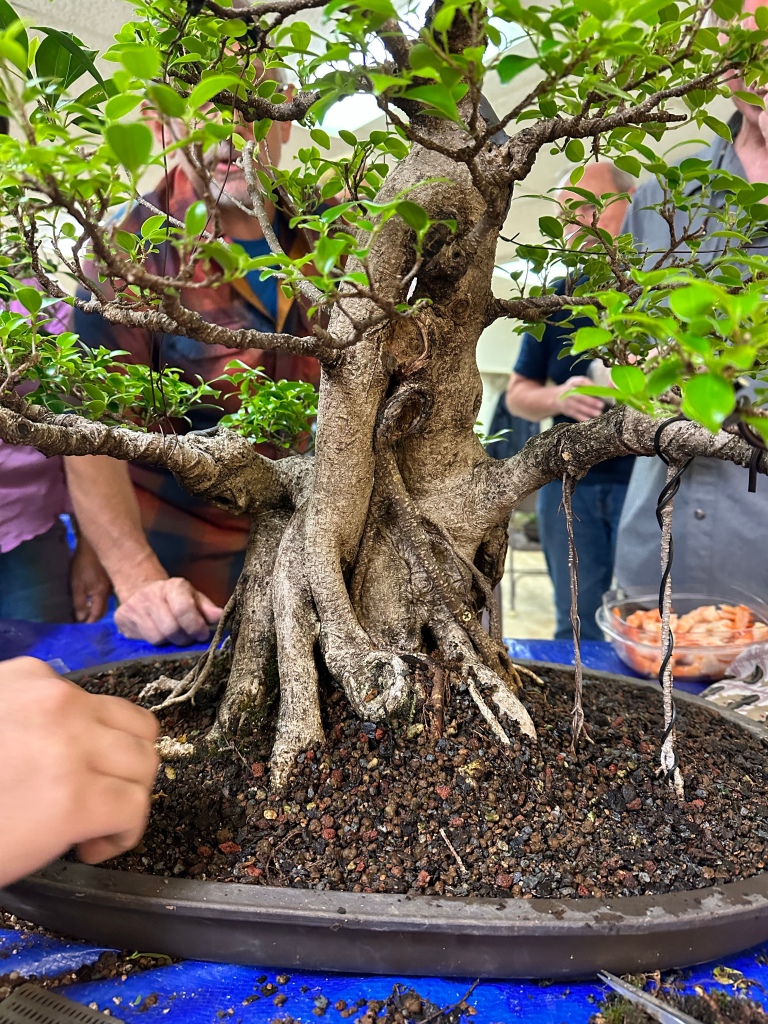
And, finito!
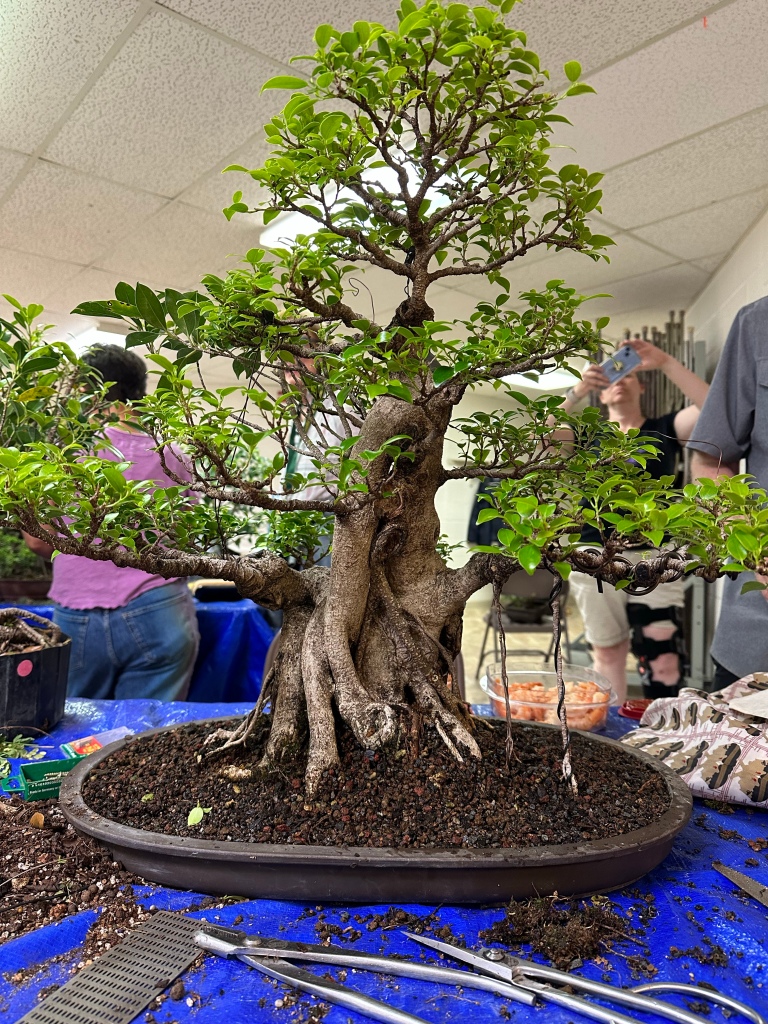
For the next tree, and the next post, we get to meet LeAnn’s buttonwood. An amazing tree, also from Florida (like Jonah’s tigerbark), and originally from none other than Mary Madison, the Buttonwood Queen.

Excited?

  •  

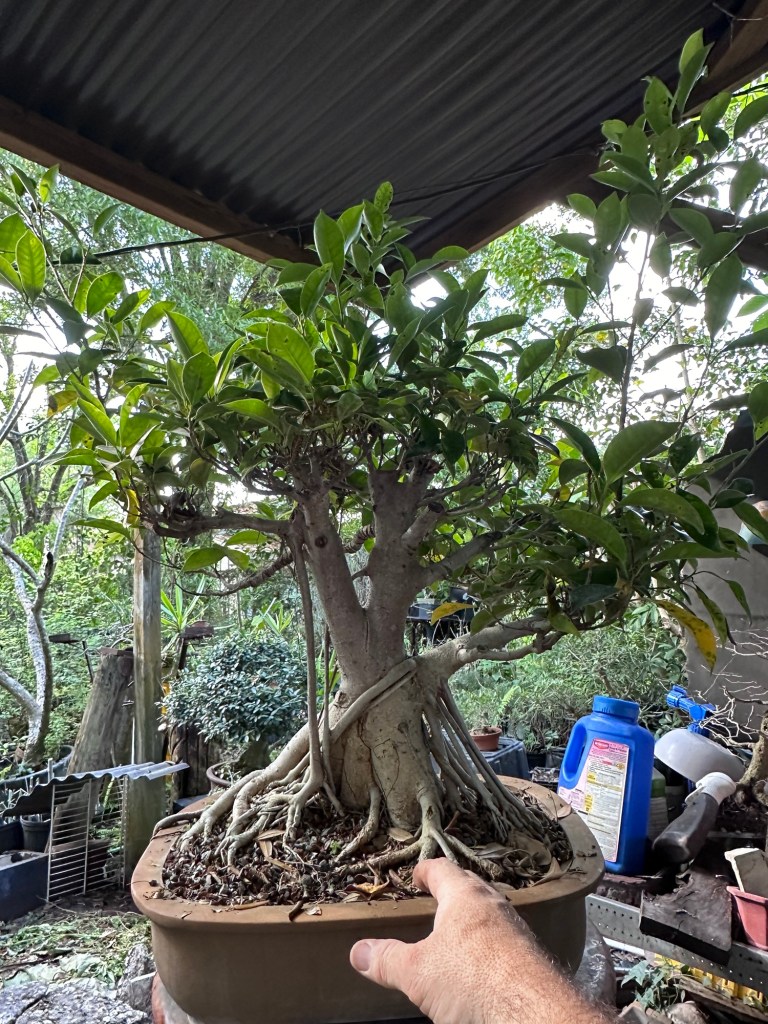
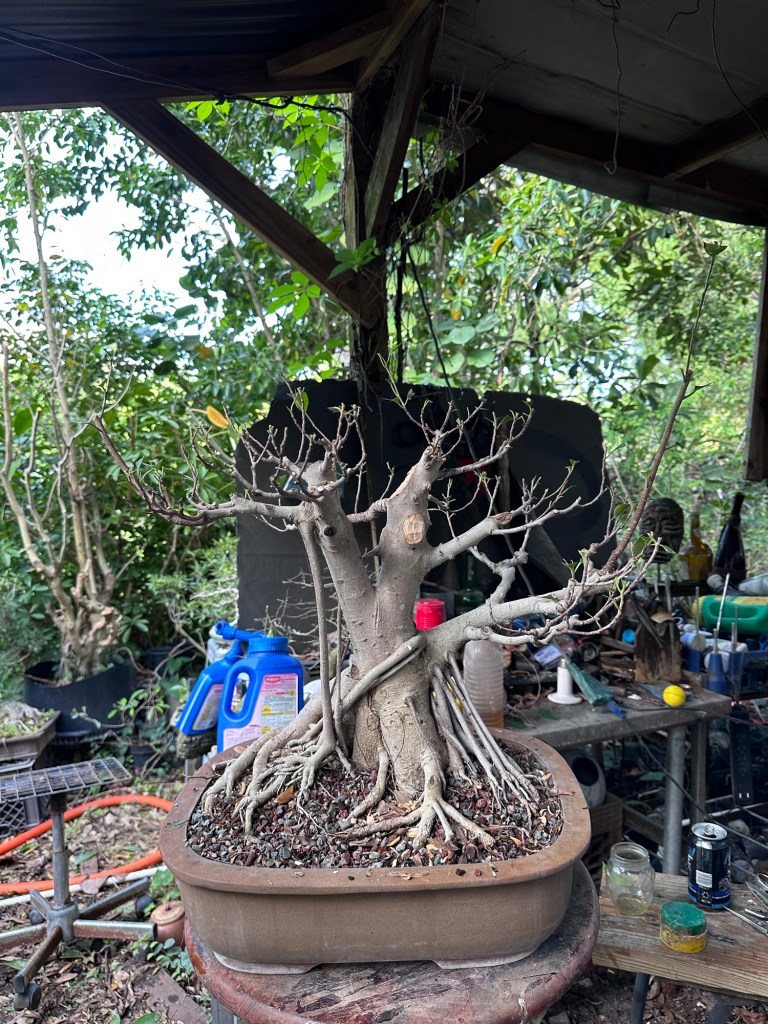
Ficus microcarpa from an auction…..3 years later..

The Shofu Bonsai Society of Sarasota has a pretty good auction every year. Granted, some years are better than others, but the year I got this one, maybe 2021, was spectacular. This tree was on the silent auction.

Yeah, not the live auction, the silent auction! I didn’t have to raise my hand or pull my earlobe to win this beauty. I just wrote a bid down on a piece of paper.

I don’t even think I went higher than $100 on it.

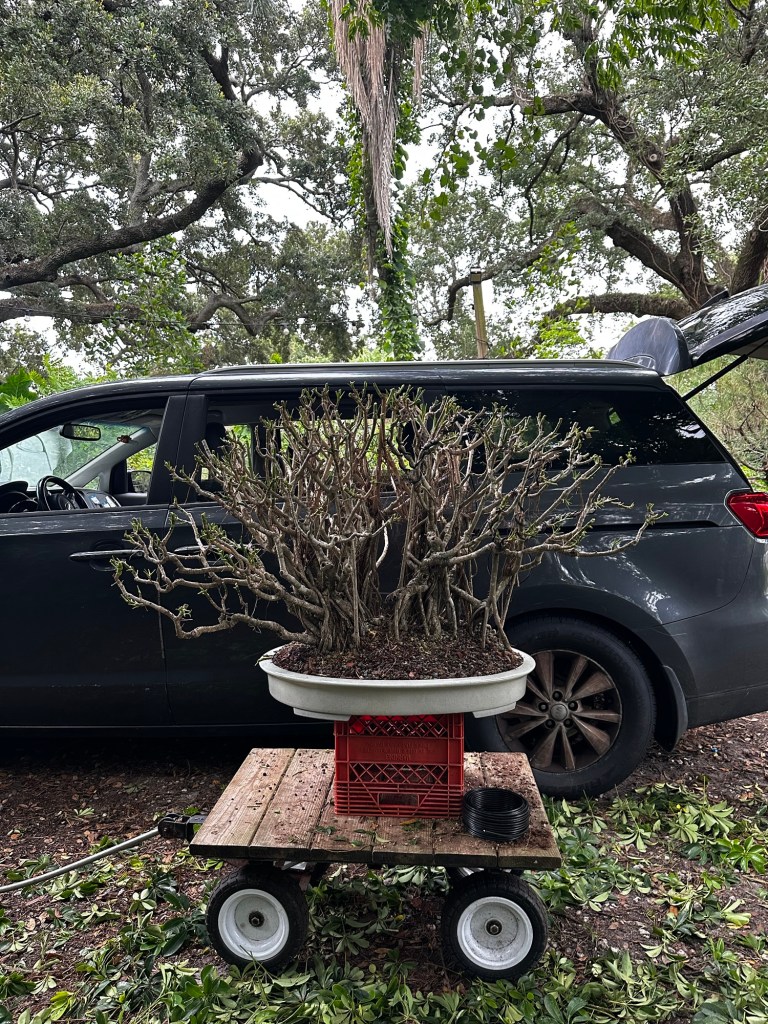
Since I’ve had it, it seems like only a few branches have grown.

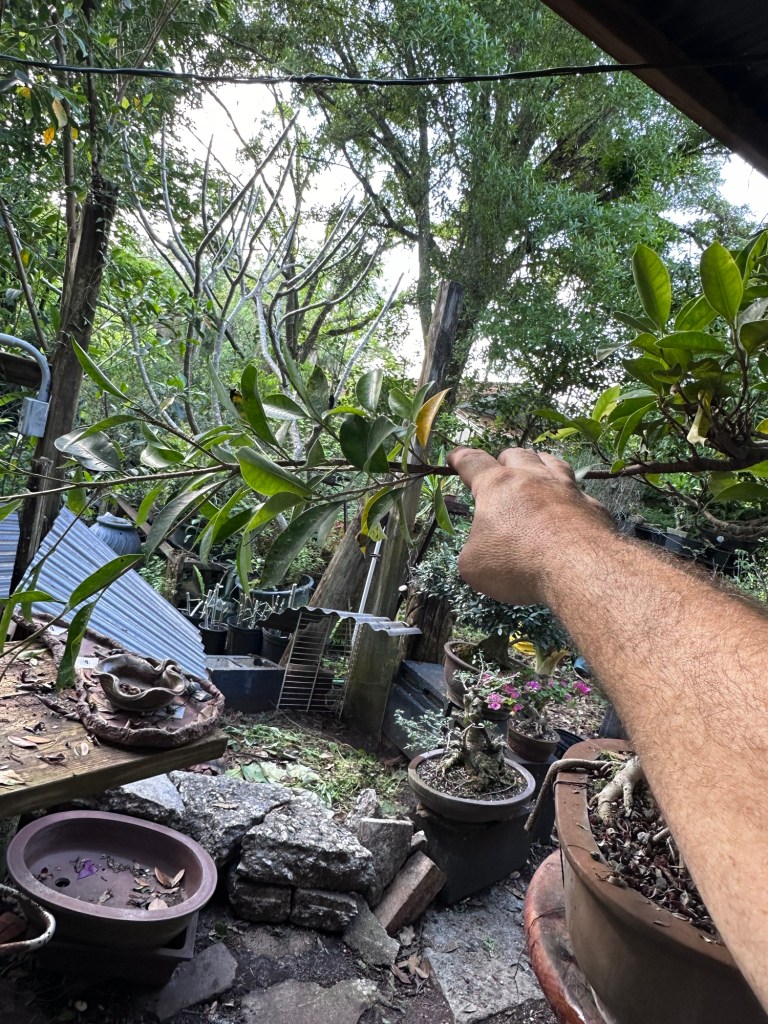
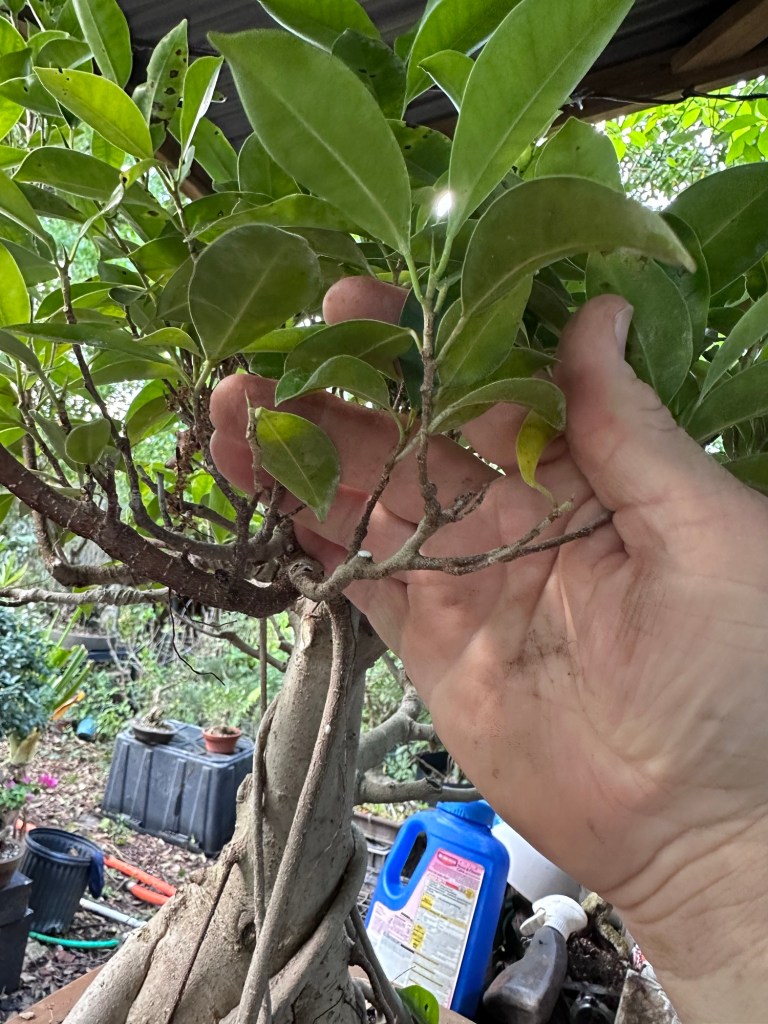
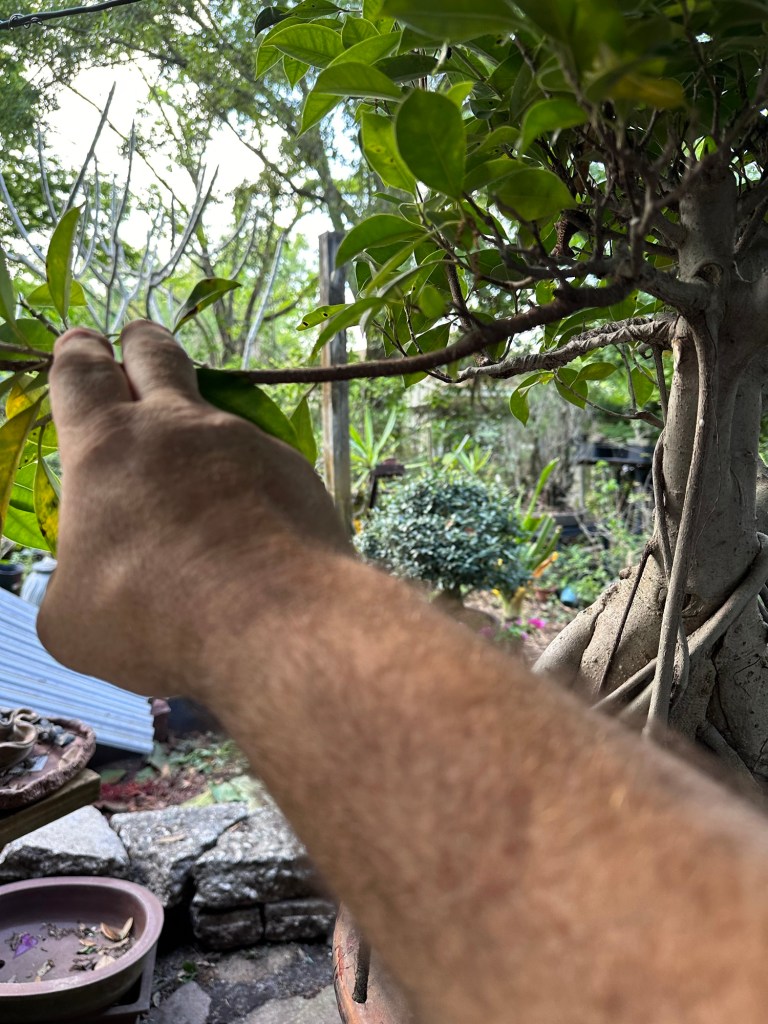
But that’s typical. I don’t do anything to it for those few years except to water it. And when you ignore this species, a Ficus microcarpa, it will pick one shoot on each branch to feed the sugars to, and, like the pic above, you get long spindly branches and the smaller, interior branches tend to die off.

The lack of sun is the impetus to tell the tree how to allocate the resources.

(Not to belabor a point, but that’s another reason for timely defoliation techniques on figs. Defoliate to let sun in, calm down the randy shoots and allow everyone to grow. )

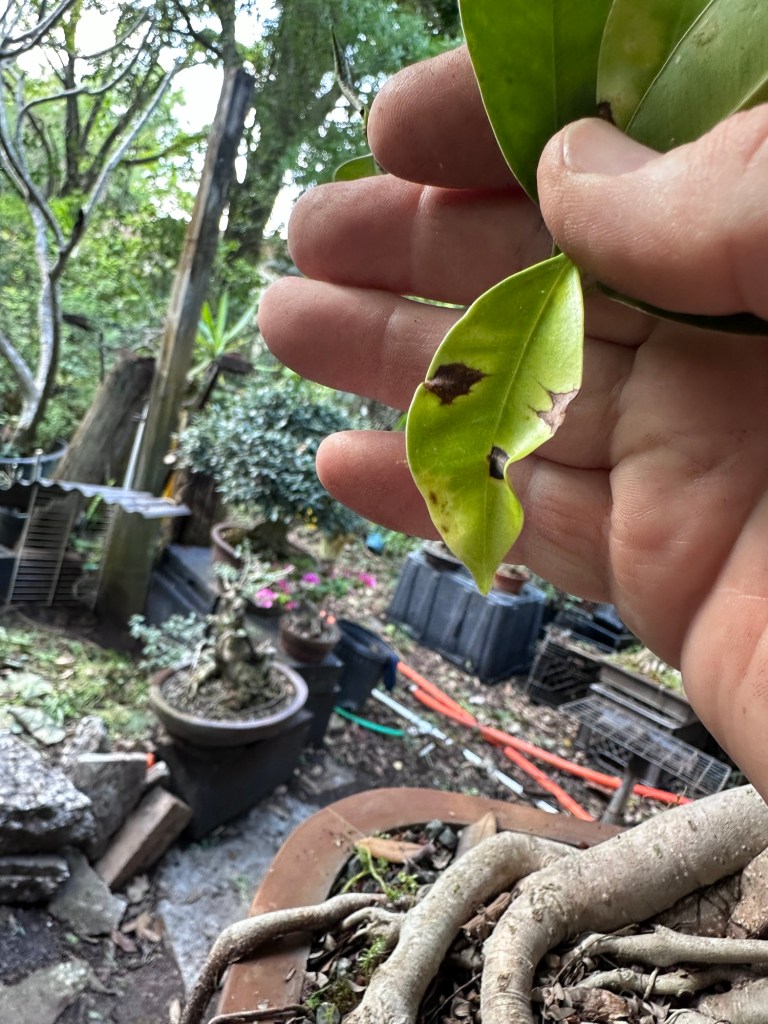
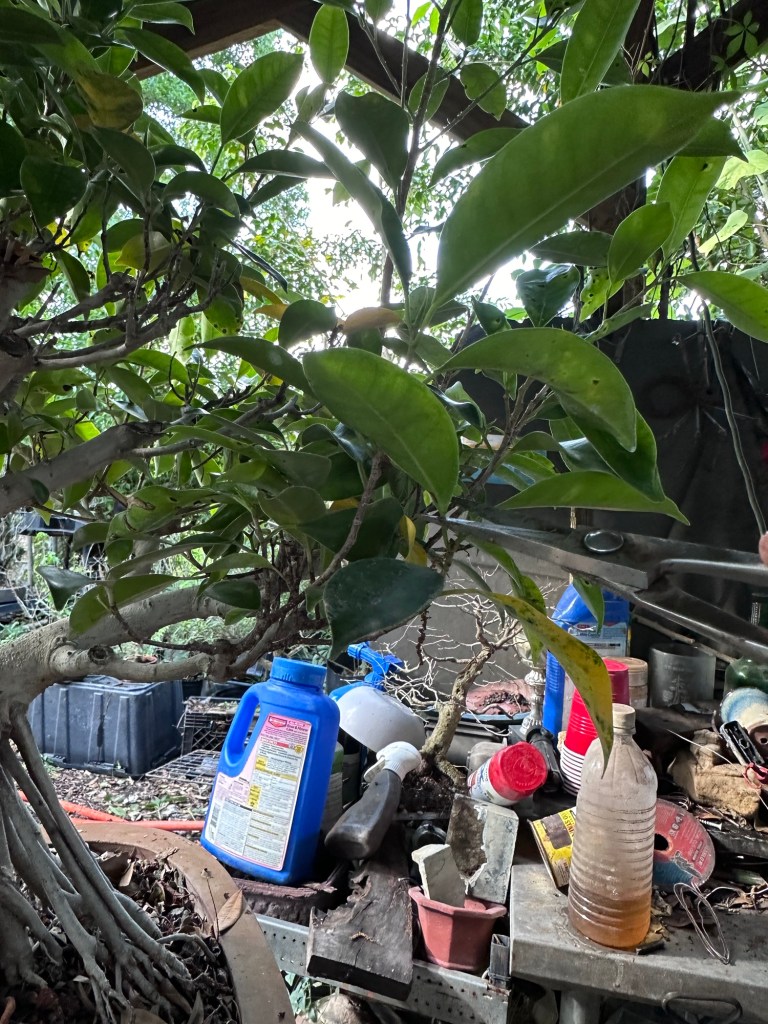
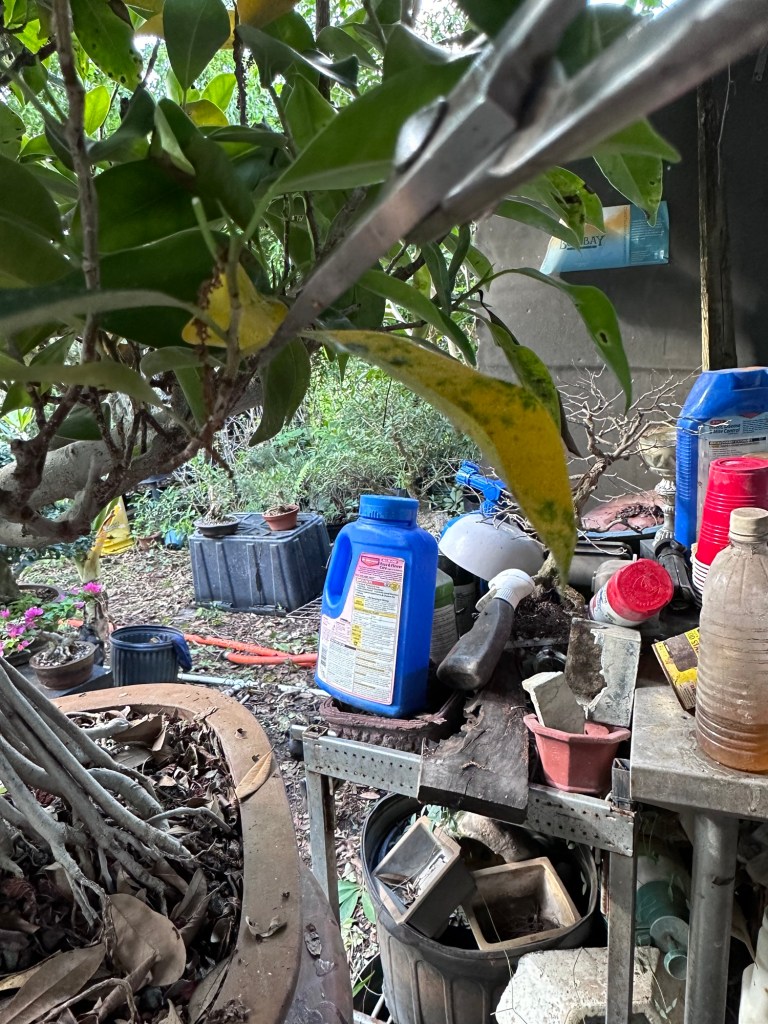
Oh! Notice the blue bottle? That is one thing I’ve kept up on for this tree. That bottle has a systemic insecticide in it called “imidacloprid”, which is a synthetic nicotine (what they call a neo-nicotinoid) that I treat all my F. microcarpa with to control thrips. An insidious insect that takes the leaf and folds it to make an incubation structure to breed more thrips.
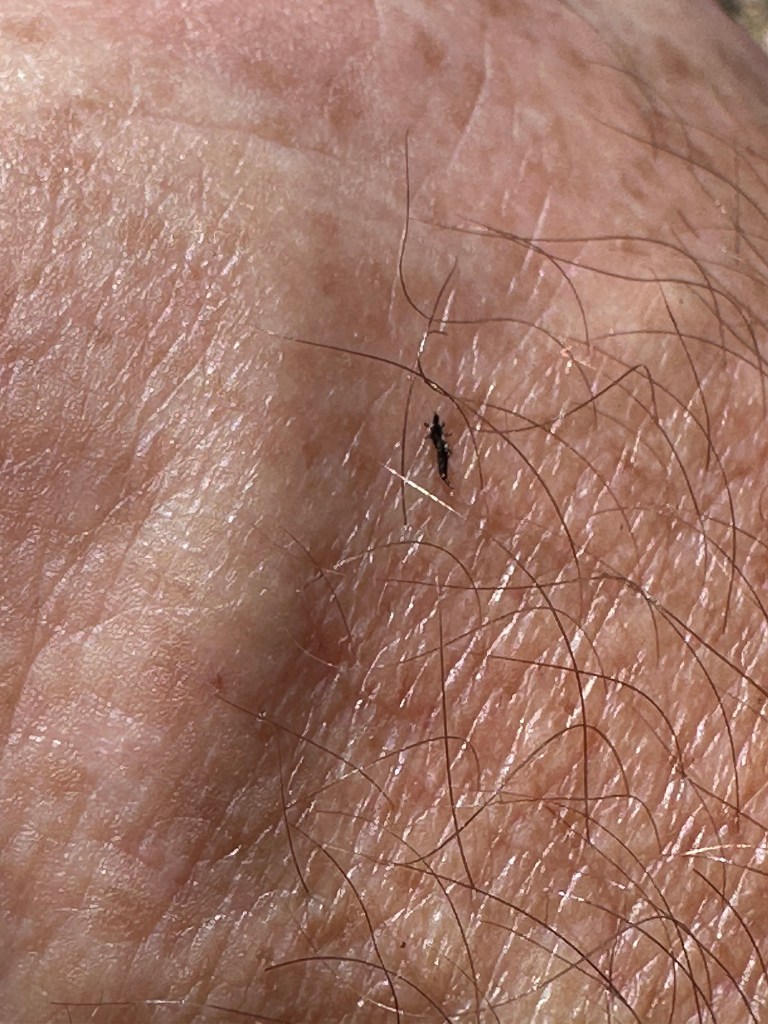
Below, there’s one on my arm. They call this one the “Cuban Laurel Thrip”, as that’s one of the common names for this ficus, Cuban laurel. I call it the “Indian laurel” as it’s more indigenous to India than Cuba, though it is endemic in the island.

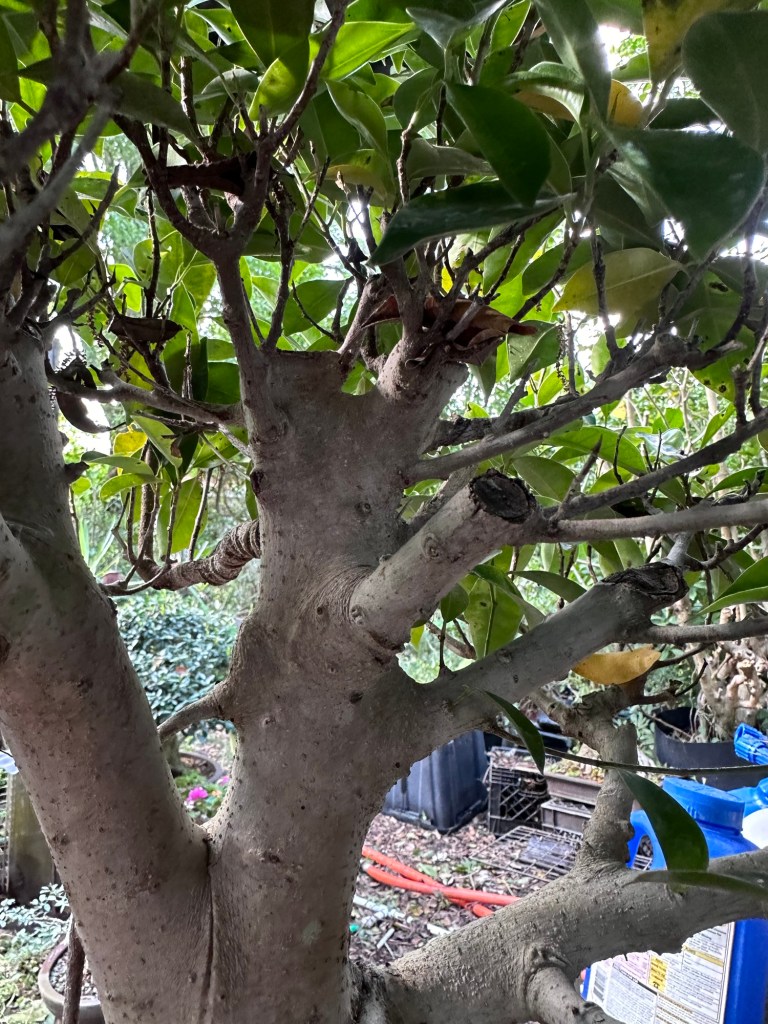
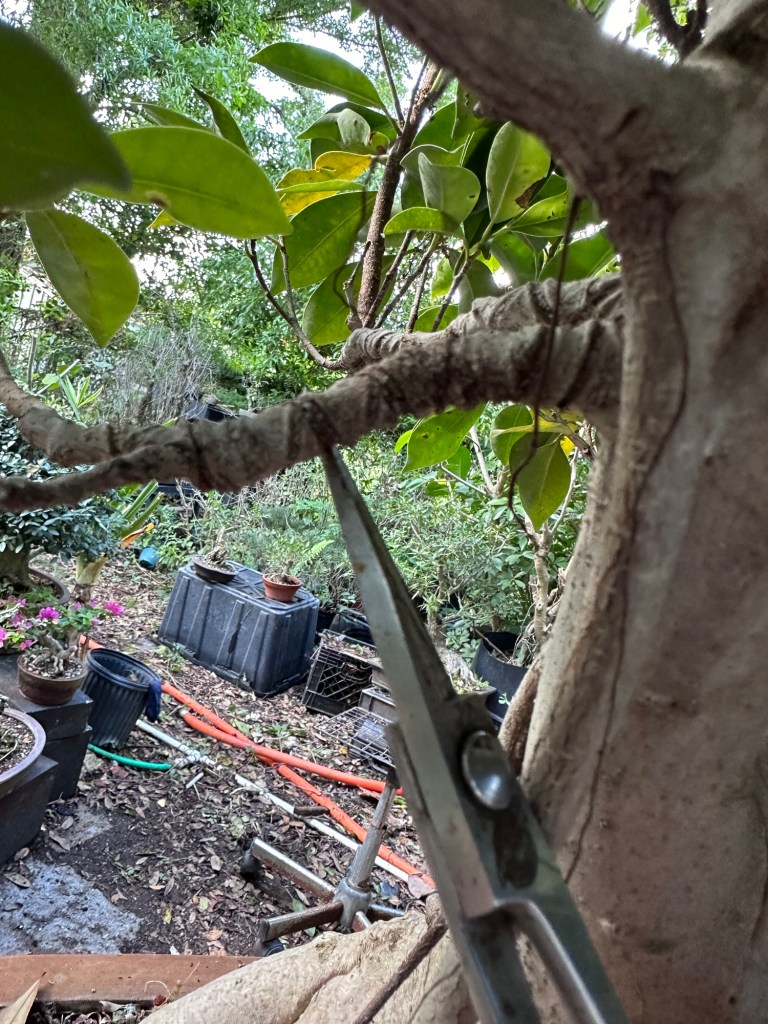
The tree does have flaws, like the wire scars below.

And, as a species, the leaves are bigger than say, the “tiger bark” variety. And they are prone to branch dieback (like the Ficus benjamina) if you don’t leave strong growth on the tips when you prune.

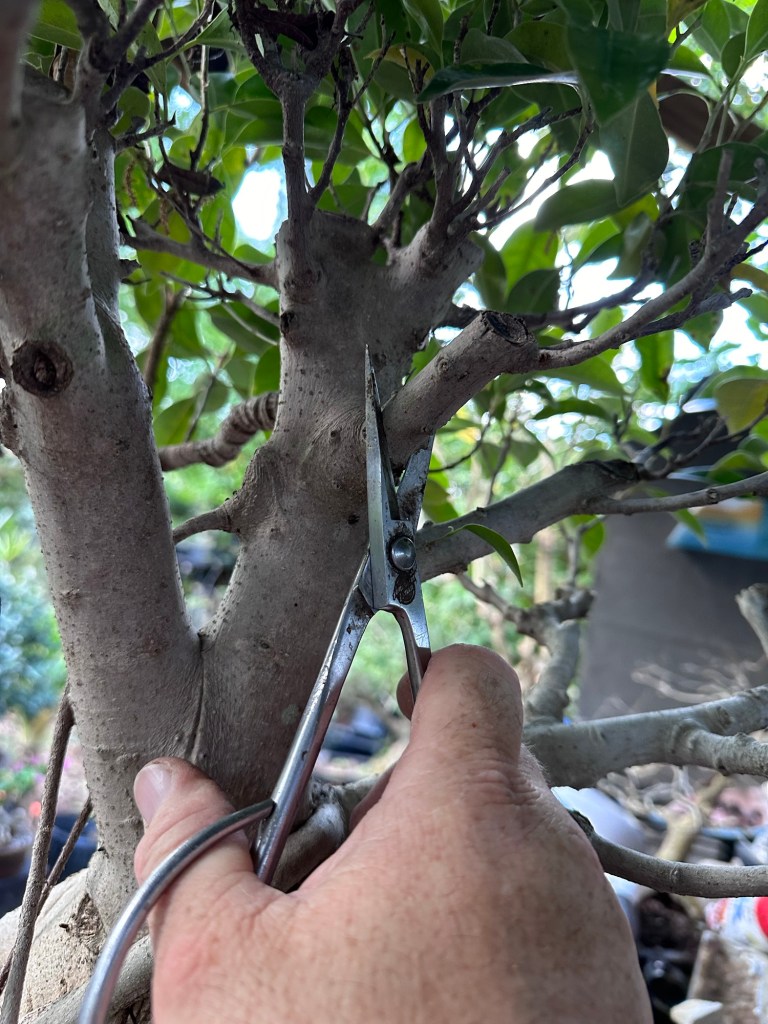
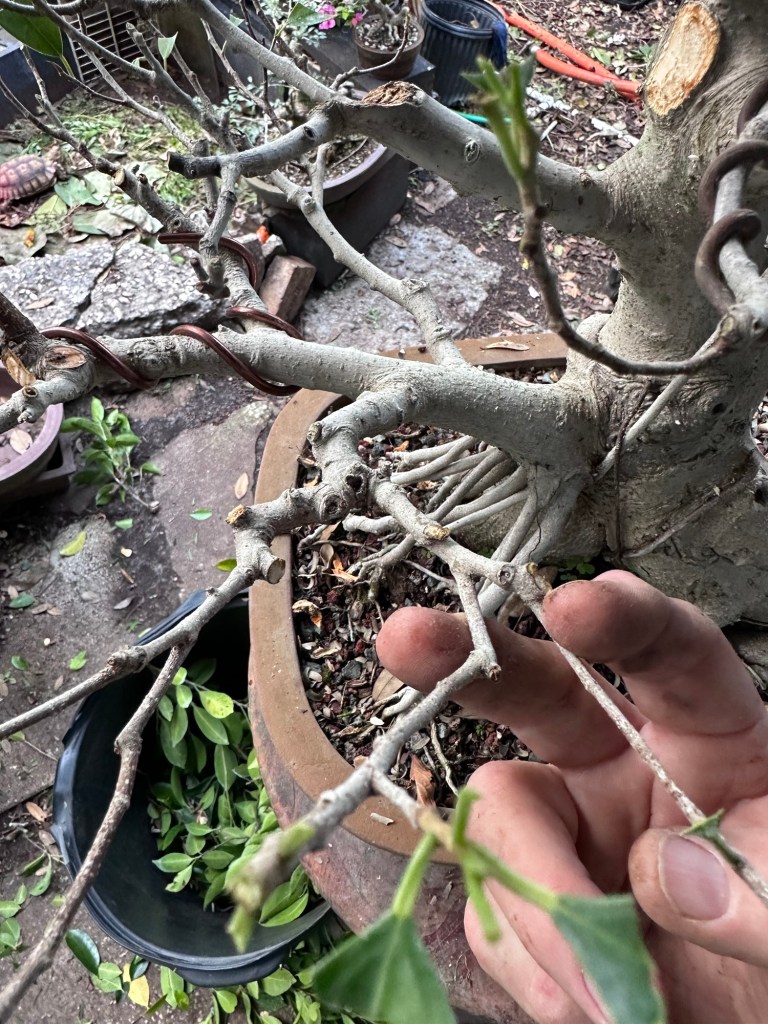
Let’s open it up and select some branches.

Hmmmmmm….might be useful. Below?

Nah

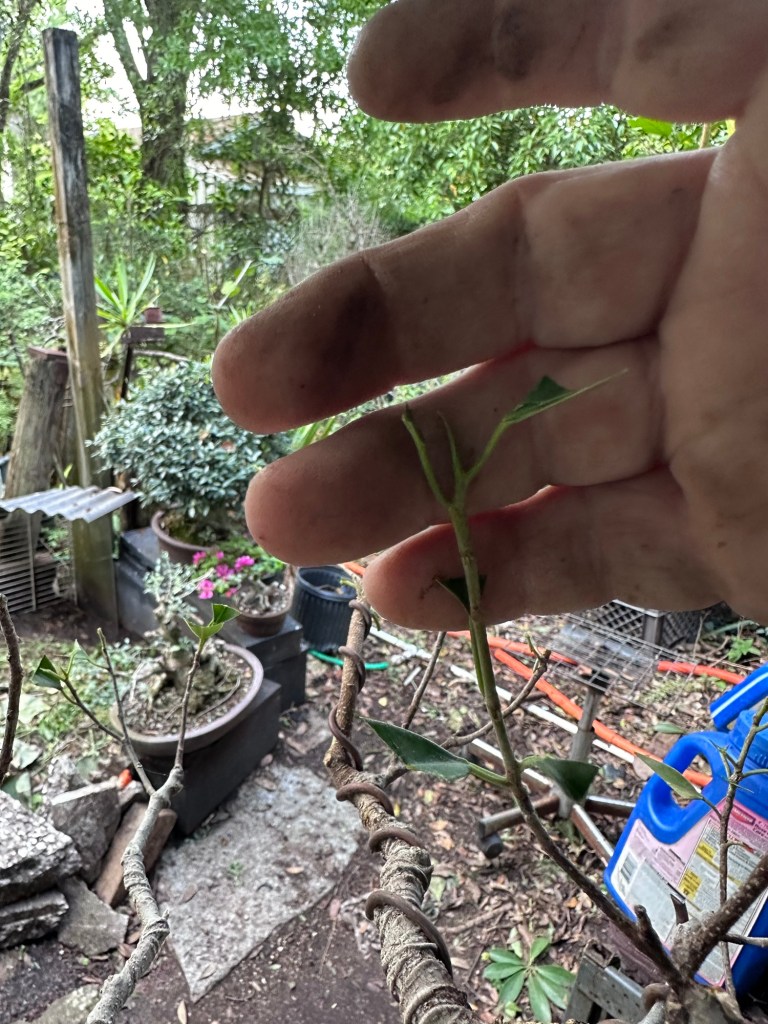
Below, there’s that growth tip.

I’ll leave it to grow longer.

But some I’ll cut back to encourage back budding.

Clean up, clean up….everybody do your share.

Kah-chop!

There we go.

Some wire.

The result of clip and grow. Good movement.

More grow tips to preserve.

Now just let it grow.

But not willy nilly growth, directed growth.

If you ever take a class with me, and I say let it grow, you should let the things left, to grow, but get rid of growth that’s not needed.

Here’s a video

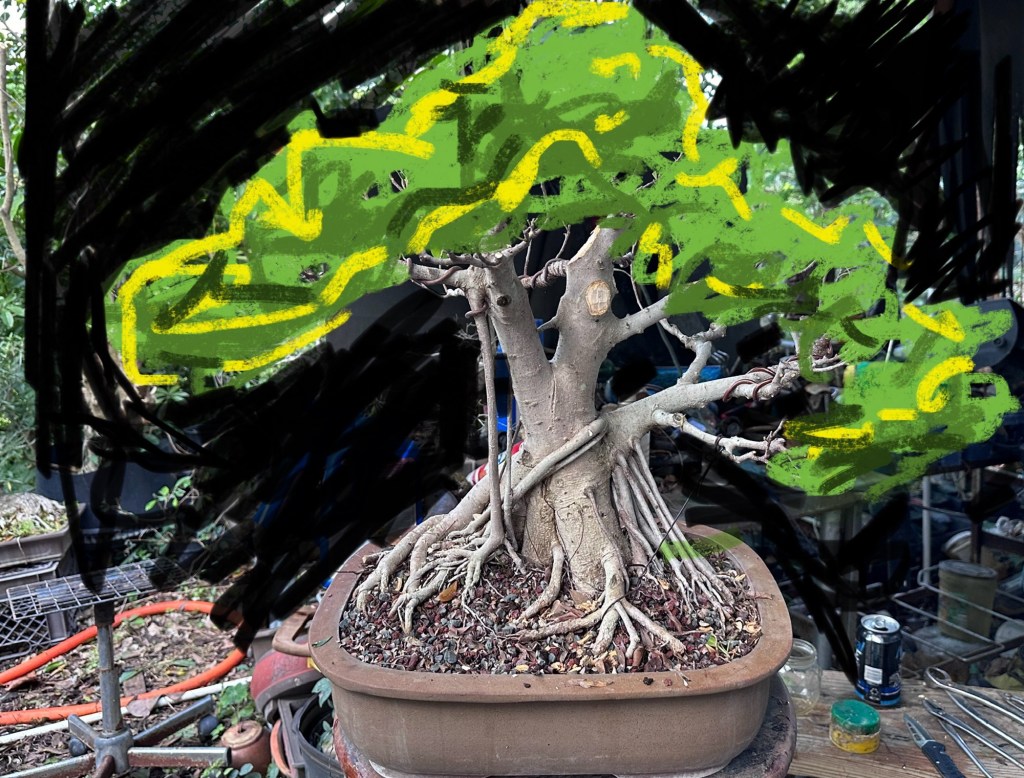
And here’s an idea of what it’ll look like. Needs a better pot.

Let’s see what happens, I promise to show the repot and updates

  •  

Why do you do what you do, or, is it a Schefflera, or Heptapleurum?

What we used to call a “Shefflera aboricola” back when I grew up in bonsai, has now been renamed to the oddly hard to pronounce “Heptapleurum arboricola”.

This time it was actual genetic testing that changed the eggheads minds. But, to quoth Kipling, “it’s not ours to wonder why, only to do, and to die”.

This morning at 4 am, myself and the best bonsai artists in Florida (yeah, what the hell was I doing there, right?) picked up the bonsai on display for the 2025 Epcot International Flower and Garden Festival. The trees were there for about three months, outside in the Florida heat and rain, on view to about 4 million viewers as they passed through the Japanese Pavilion in the World Showcase at Epcot.

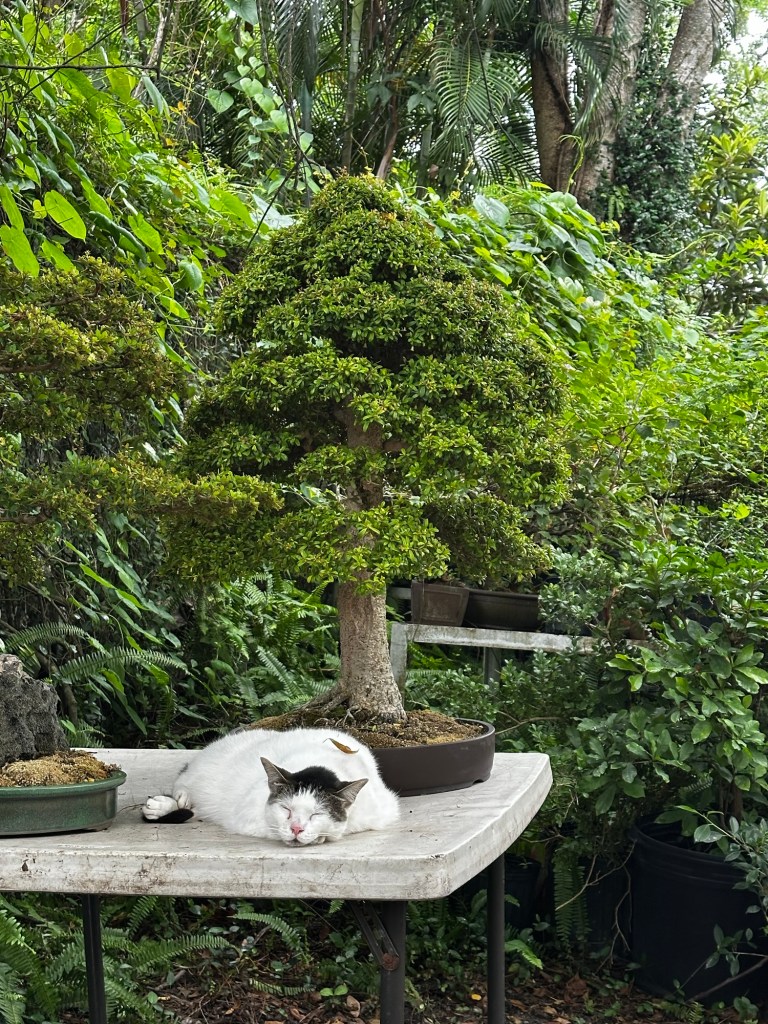
That’s another tree that was on display, a Neea buxifolia. And that’s Rosie Posie Puddin’ Pie, the cat.

She kisses all the boys and makes them cry.

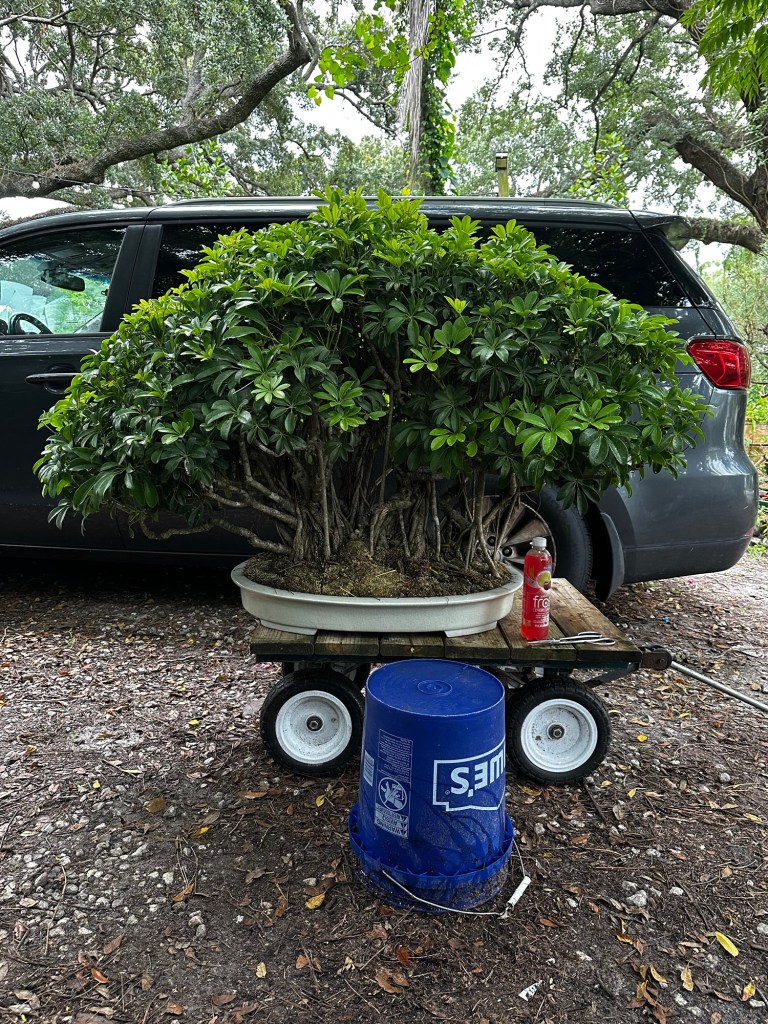
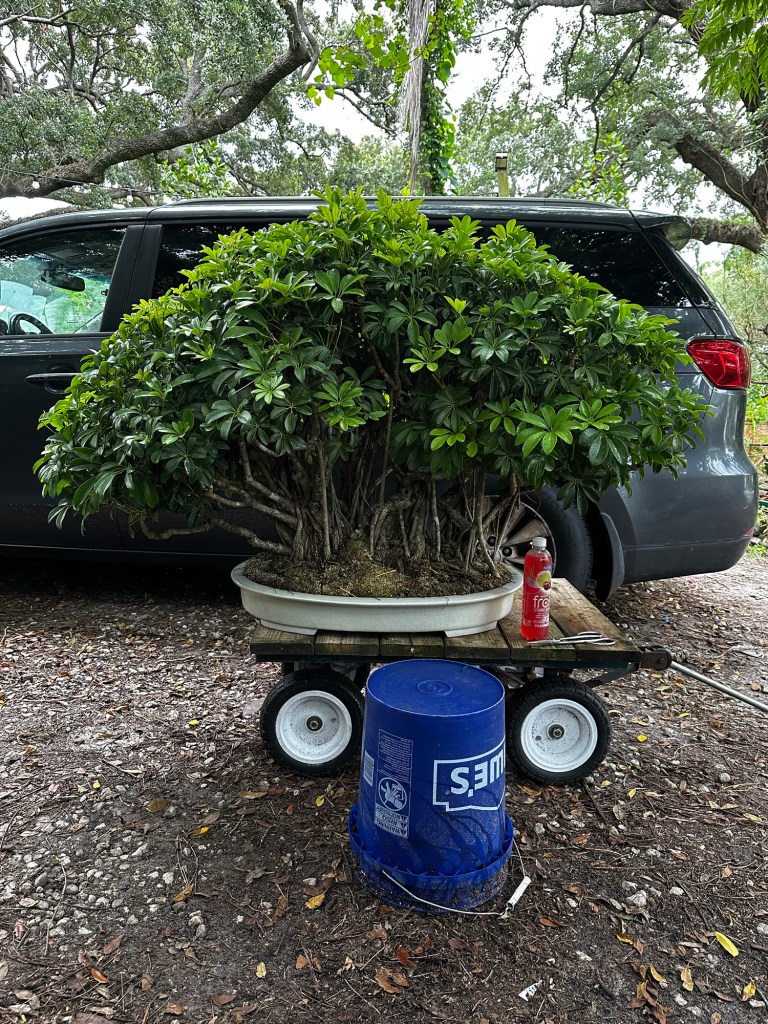
And the schefflera.

What’s the work today? A hard cut back and defoliation. Then a repot.

It’s been eating up all the Florida sunshine for the last few months, and it’s bursting and ready for some work.

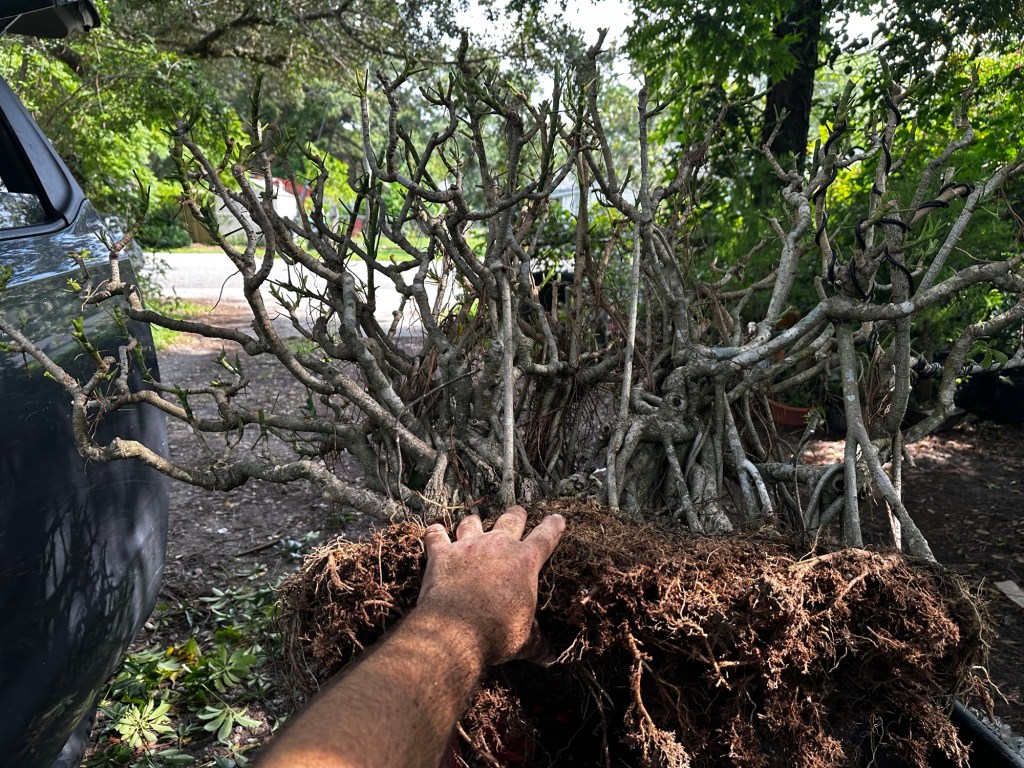
It’s about to walk out of the pot.

The question is, I’m sure, why do you feel the need to defoliate?

Well, I think I might just tell you.

First, check out this post: I use some fancy words to justify my defoliation habit, go figure.

It explains more precisely what defoliation does. But basically, the tree does things, like grow, flower, drop leaves, etc., because of hormones. All because of hormones. Some people say “energy” is what causes growth. But no. Nope. Nada. Energy facilitates growth. But a tree will grow itself to death. It will use all its energy without anything left, and it will die.

Why? Because of hormones. So when we hear “them” say that by utilizing a specific pruning regimen of techniques, they are “balancing the energy, what they are really doing is utilizing the hormones to make the tree grow a certain way we find favorable.

By defoliating, first, we are taking the trees ability to feed itself. Therefore, the hormones cause growth of new leaves, and, by proxy, more branches.

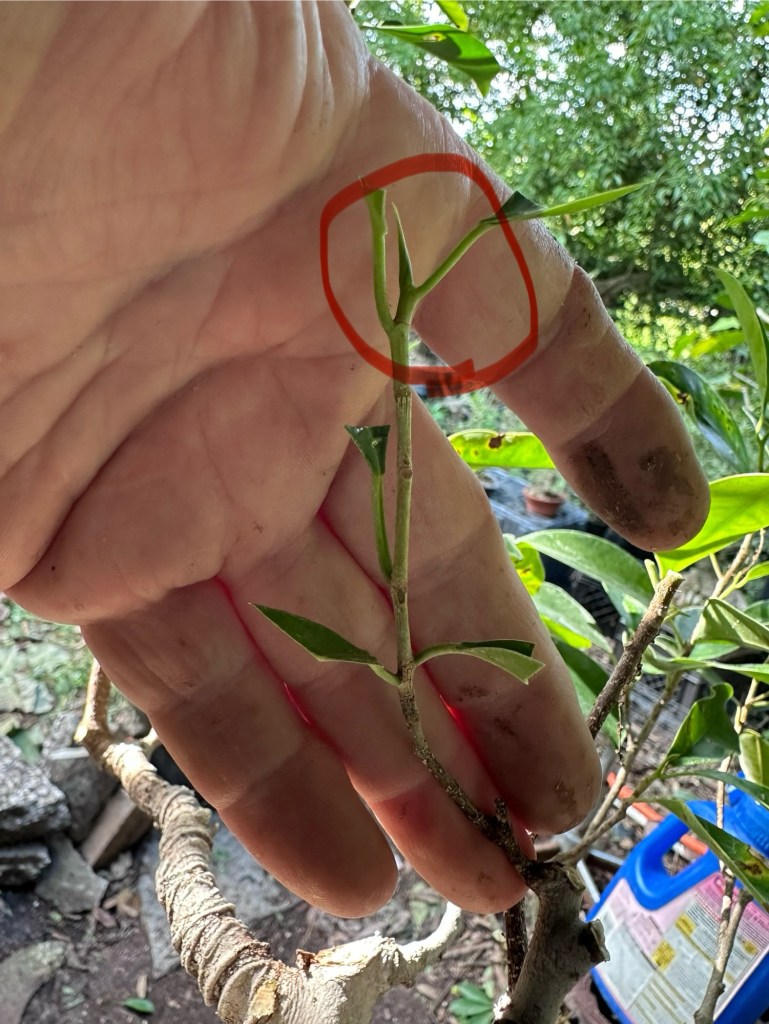
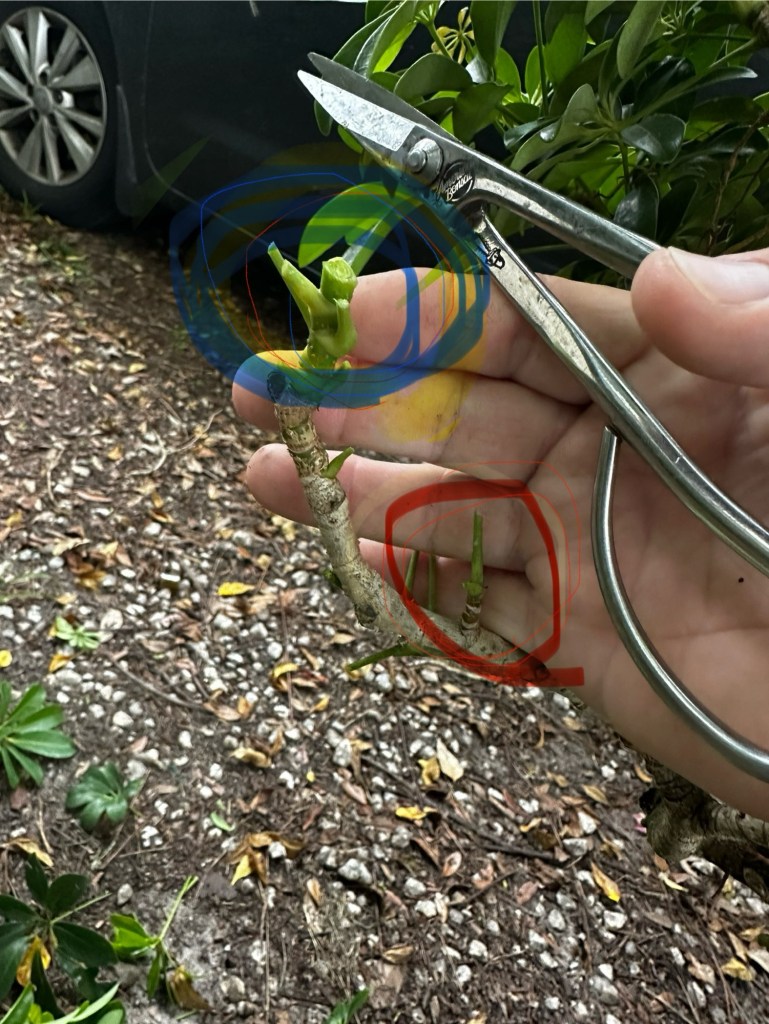
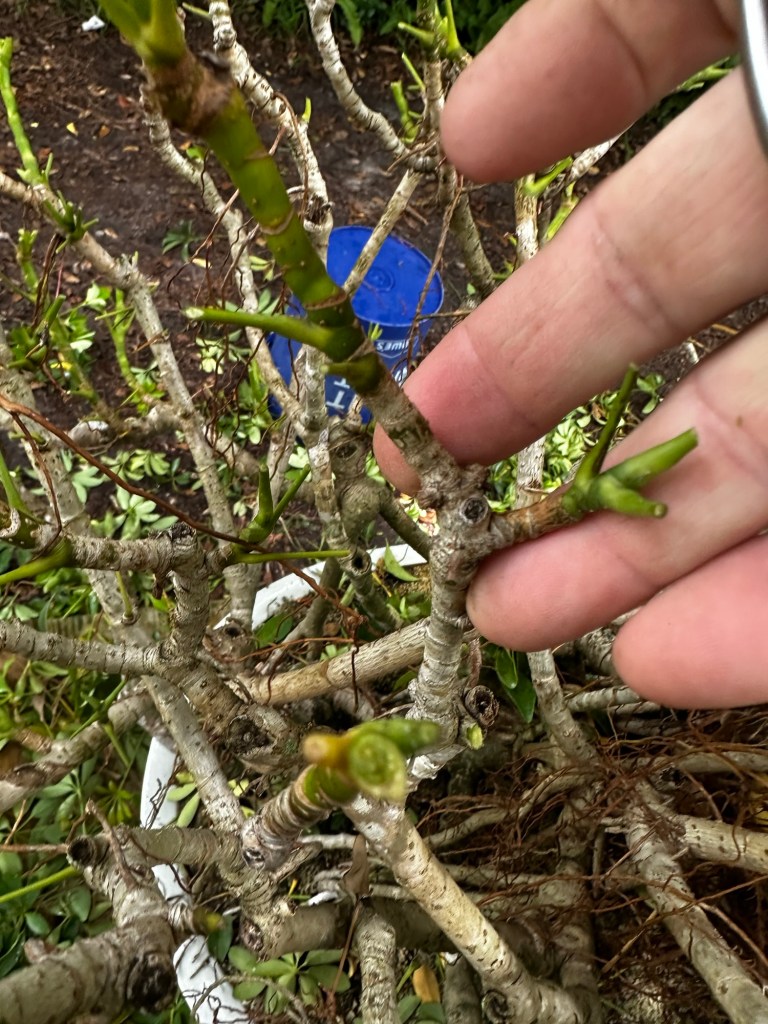
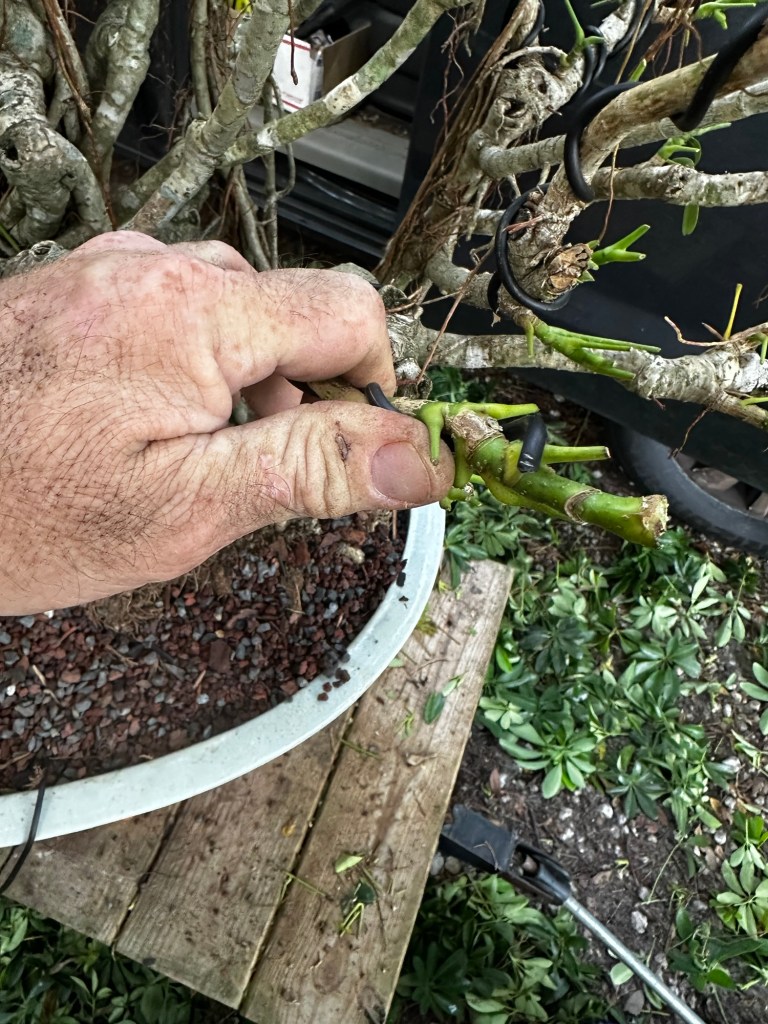
But, if we cut the terminal buds (like the blue circled branch below) and remove the hormone that causes branch elongation, we will free the hormone that causes backbudding to cause, well, more backbudding (auxin and cytokinin, respectively). Go back and read that post I linked earlier.

If we defoliate, and leave the terminal bud (like the red circled branch above) the branch will get longer.

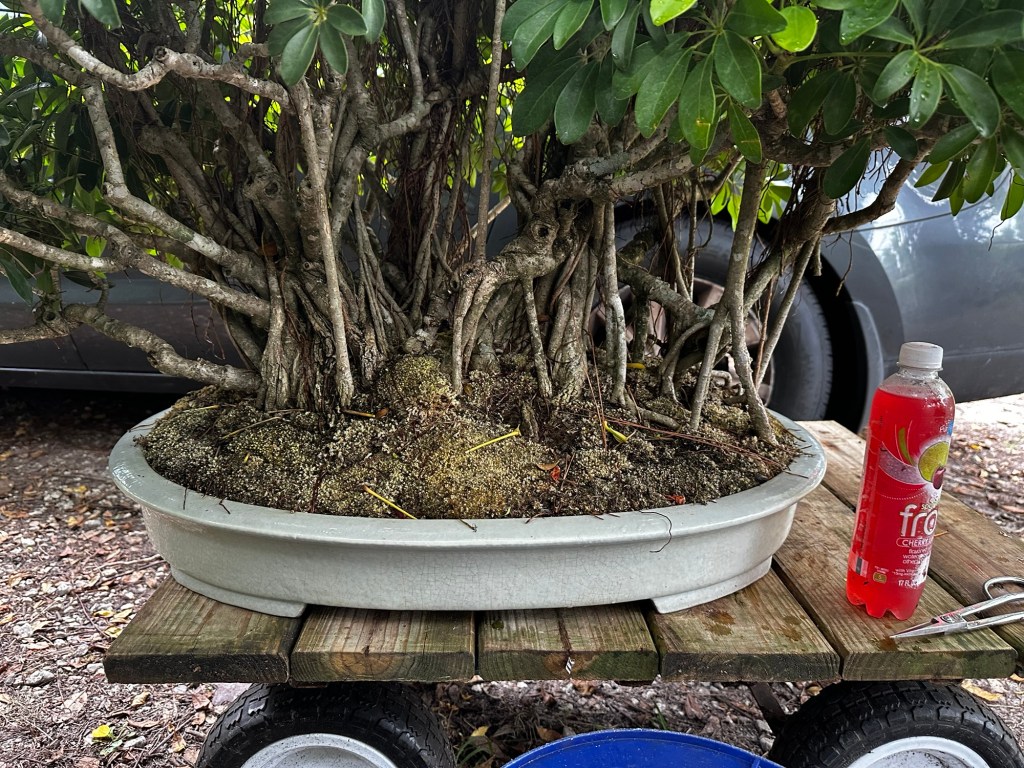
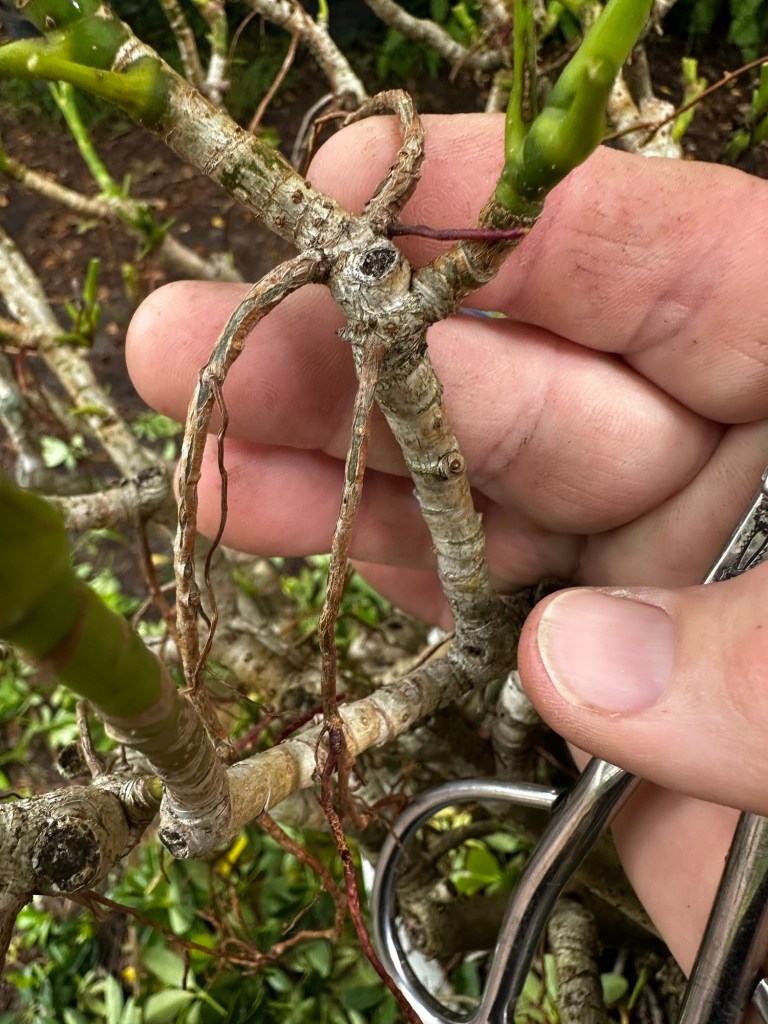
Now to prune the aerial roots. I know, I know, we like aerial roots.

But we also like to have a believable tree. And aerial roots this high….

…don’t make for believable banyan trees. An artist isn’t a camera, we don’t have to copy nature as it grows, we show you what should be, or could be, or, simply, what we see.

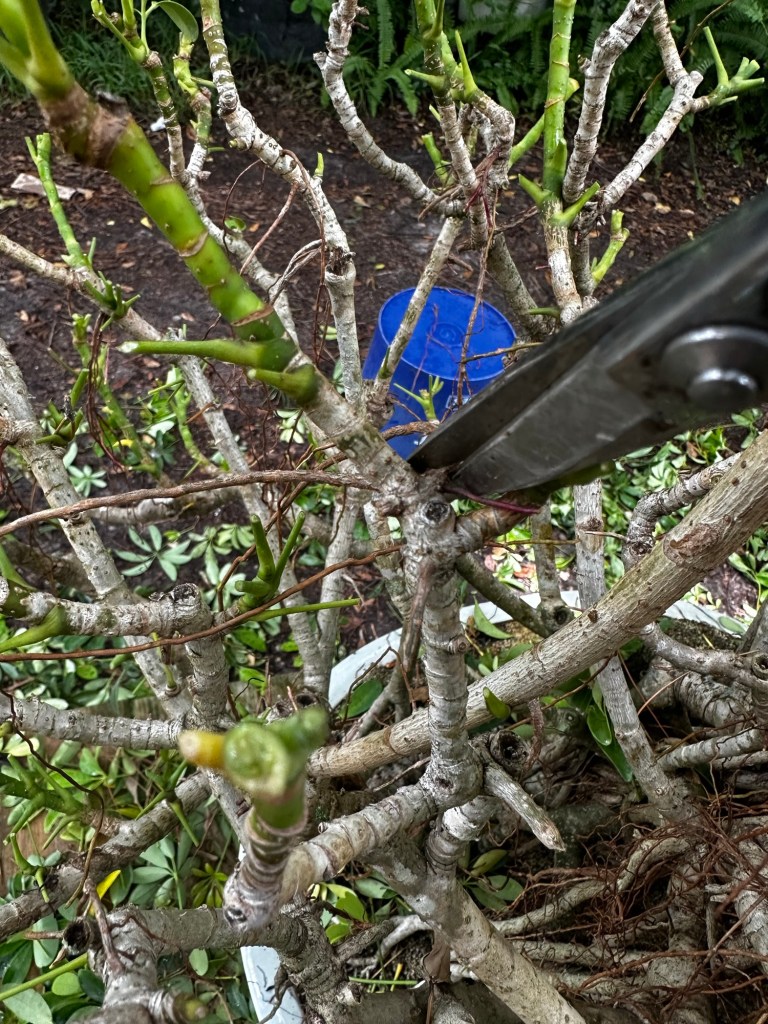
Snip snip snip!

Getting close.

Take a look, from all sides.

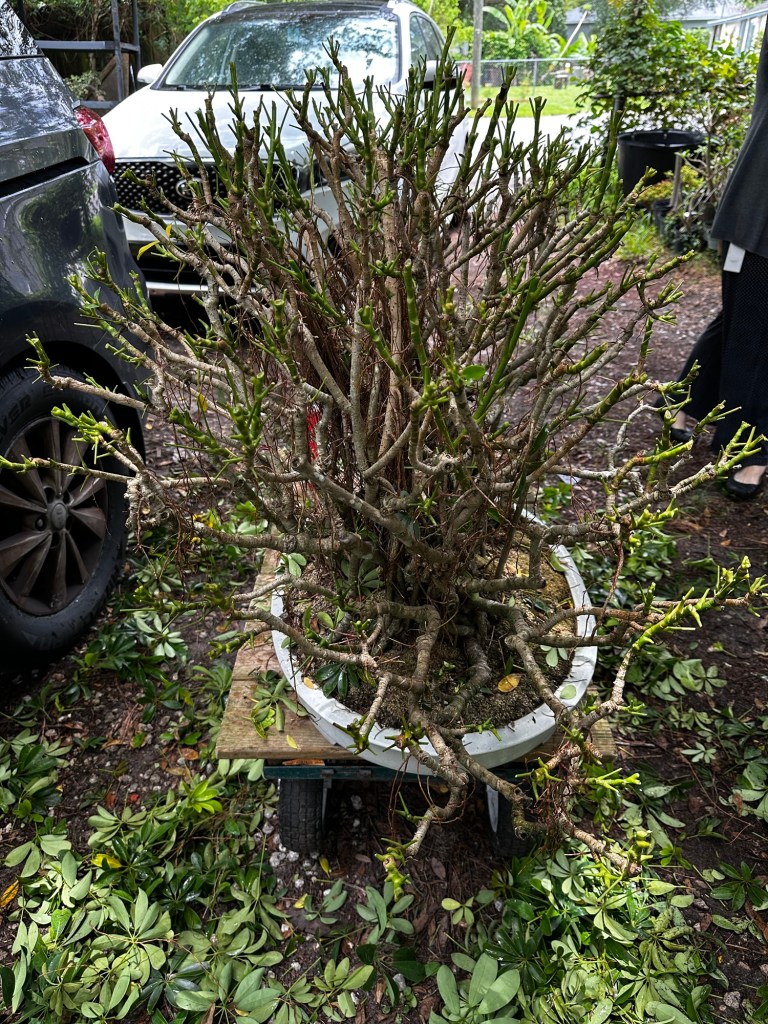
That’s a lot of leaves. Looks like an explosion.

Needs some wire….

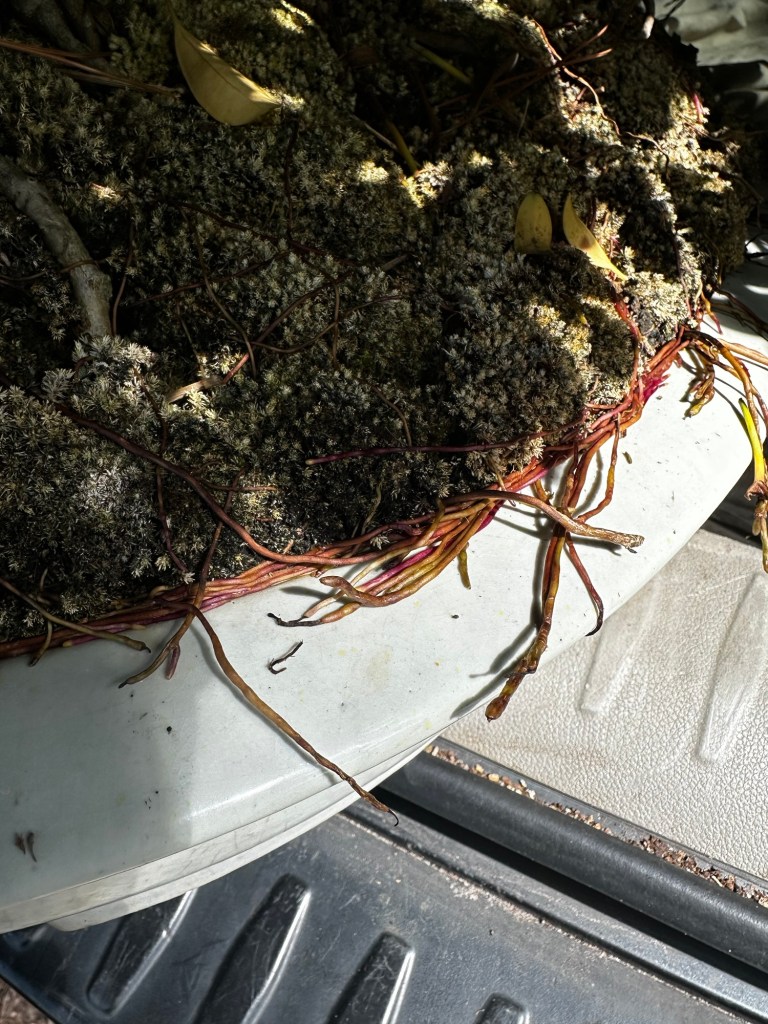
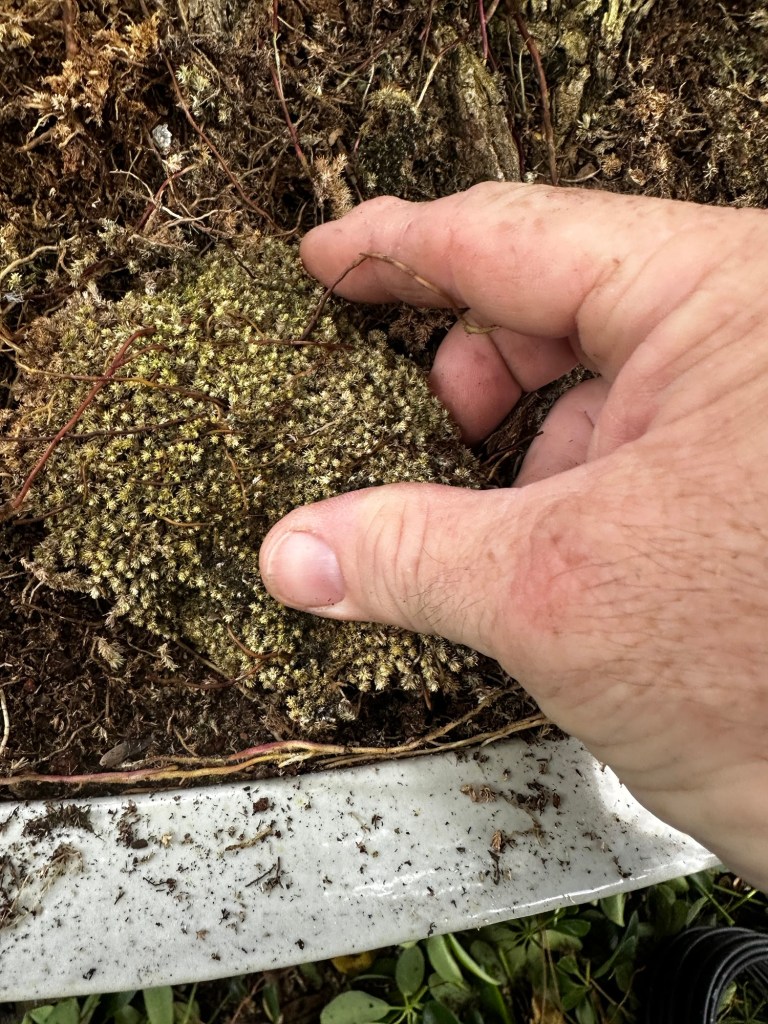
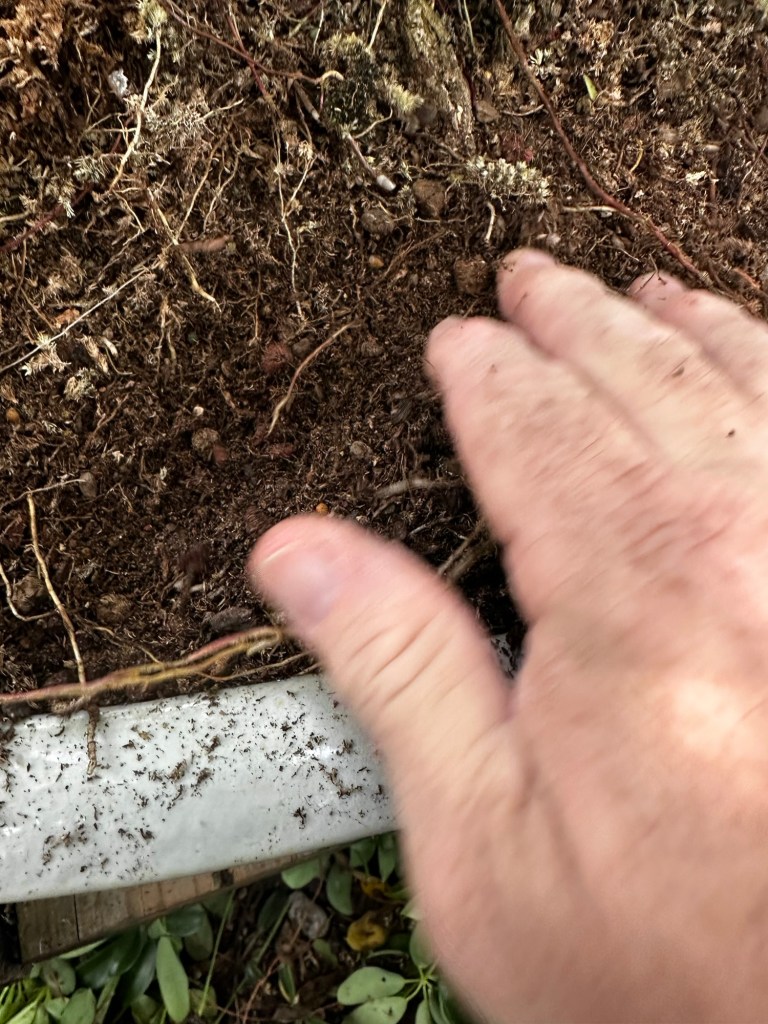
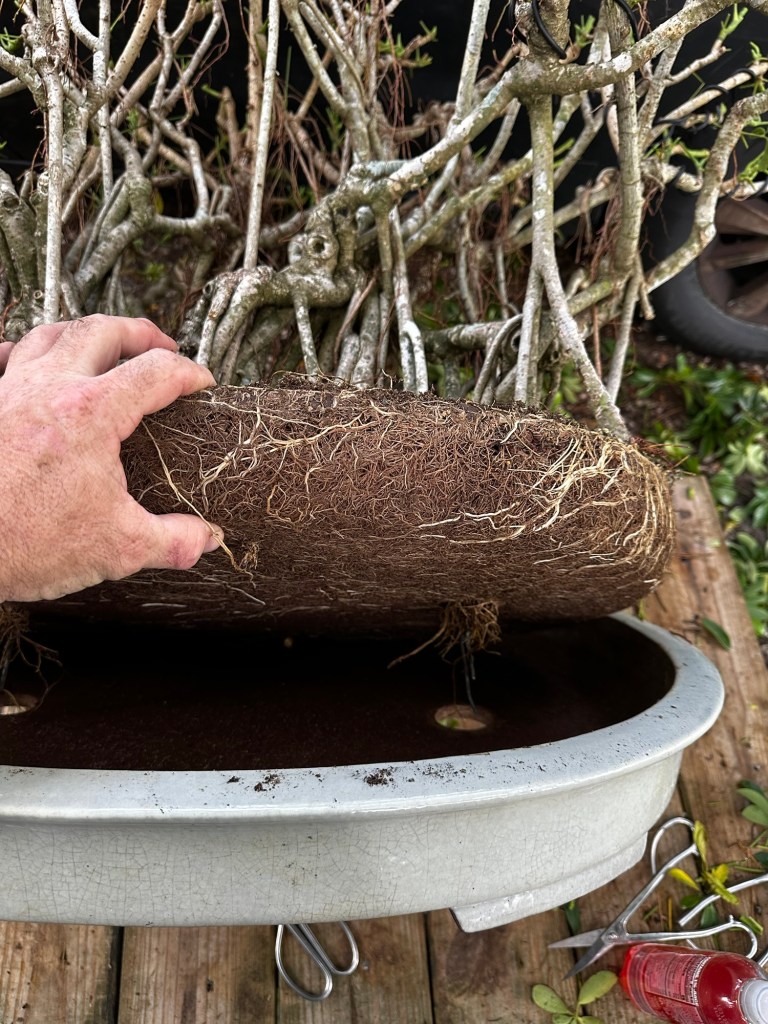
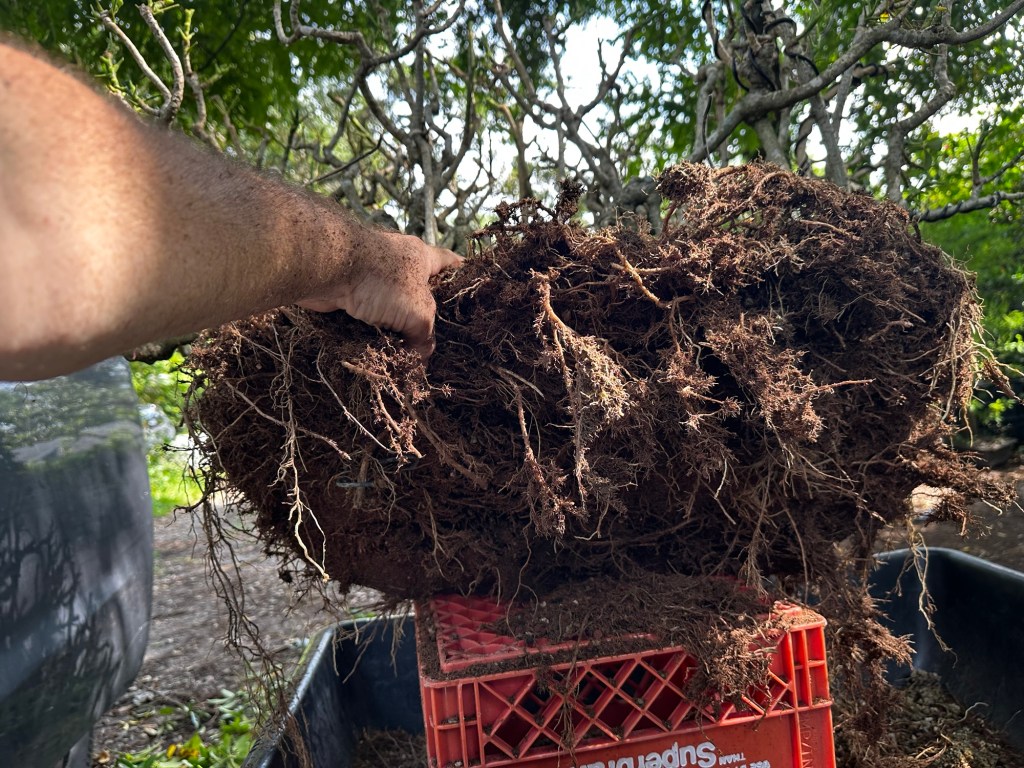
And a “quick” repot. Remove the old moss, save for later, it’ll green up again.

Maybe the repot won’t be so quick. Those roots are rooty.

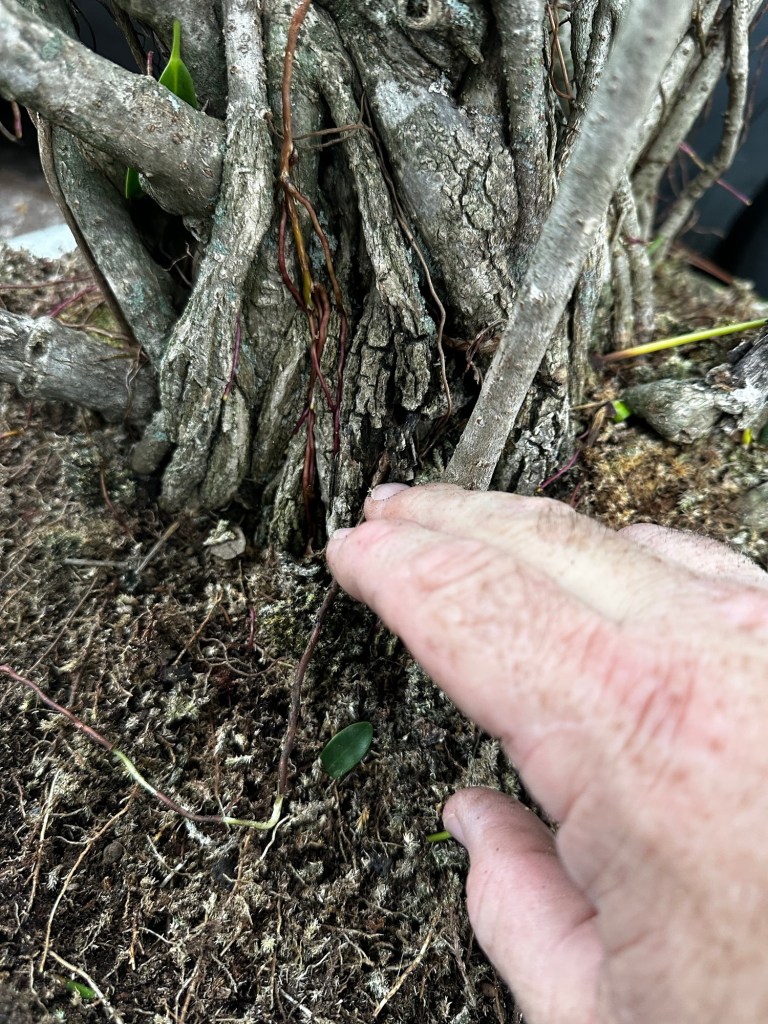
Old bark on on a big sheff. Looks old, like my face in the morning after a night out.

Or just any morning. I’m getting old.

Yeah, this will be a chore removing the tree.

DOH! Actually not bad. It just popped out.

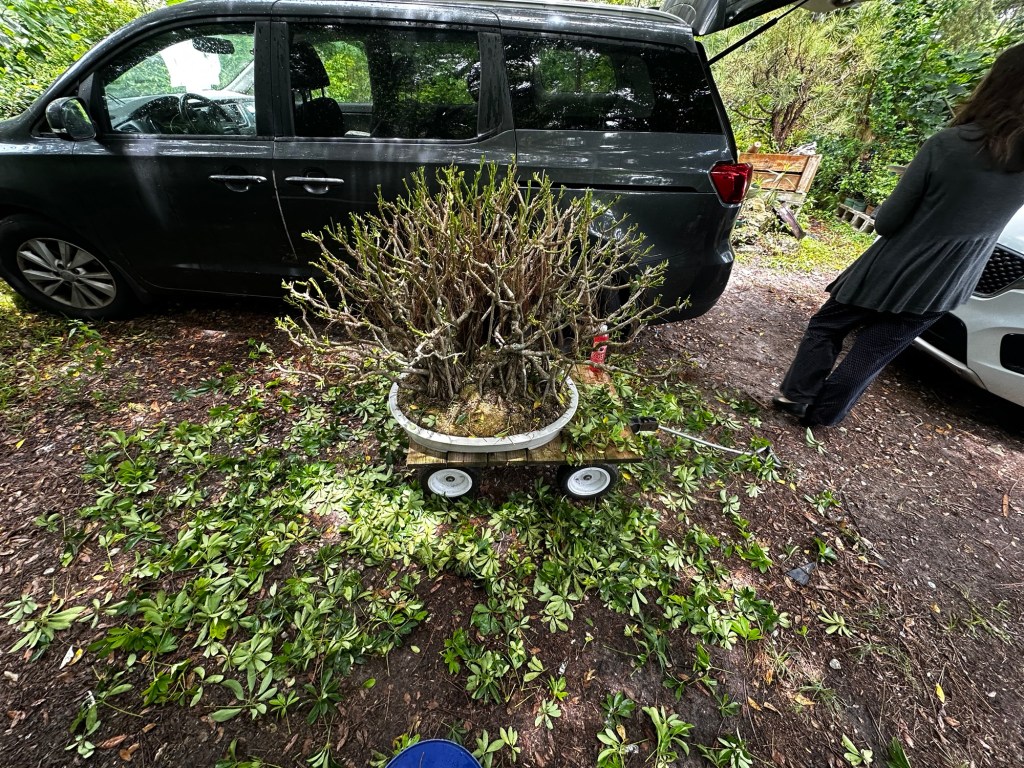
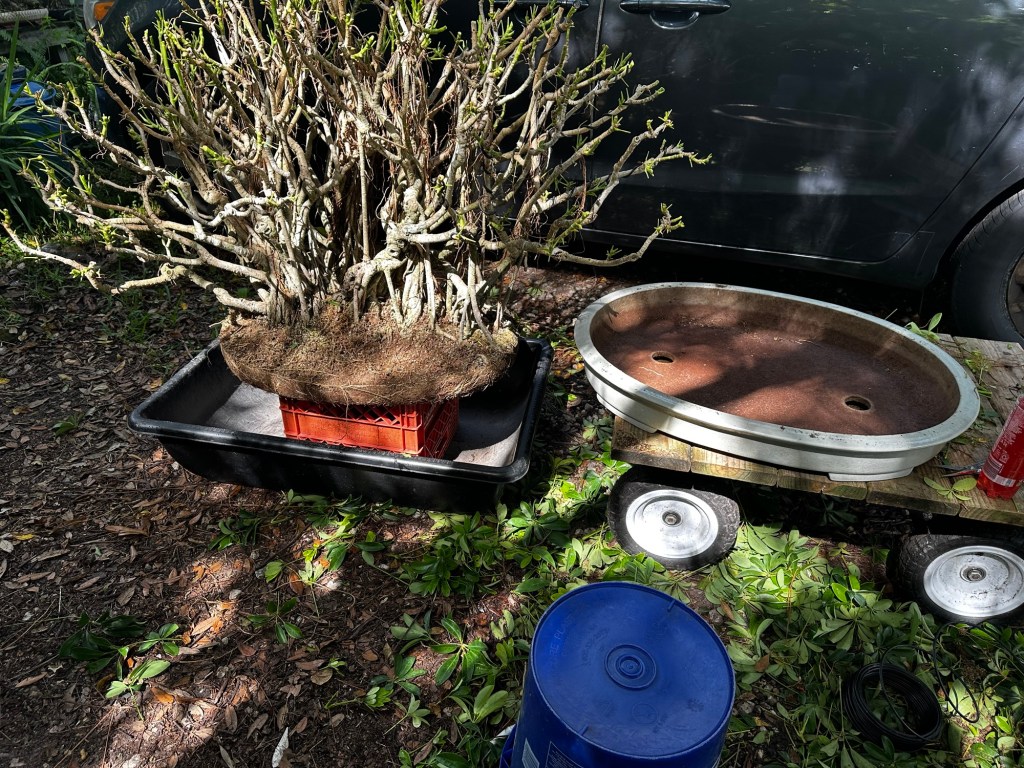
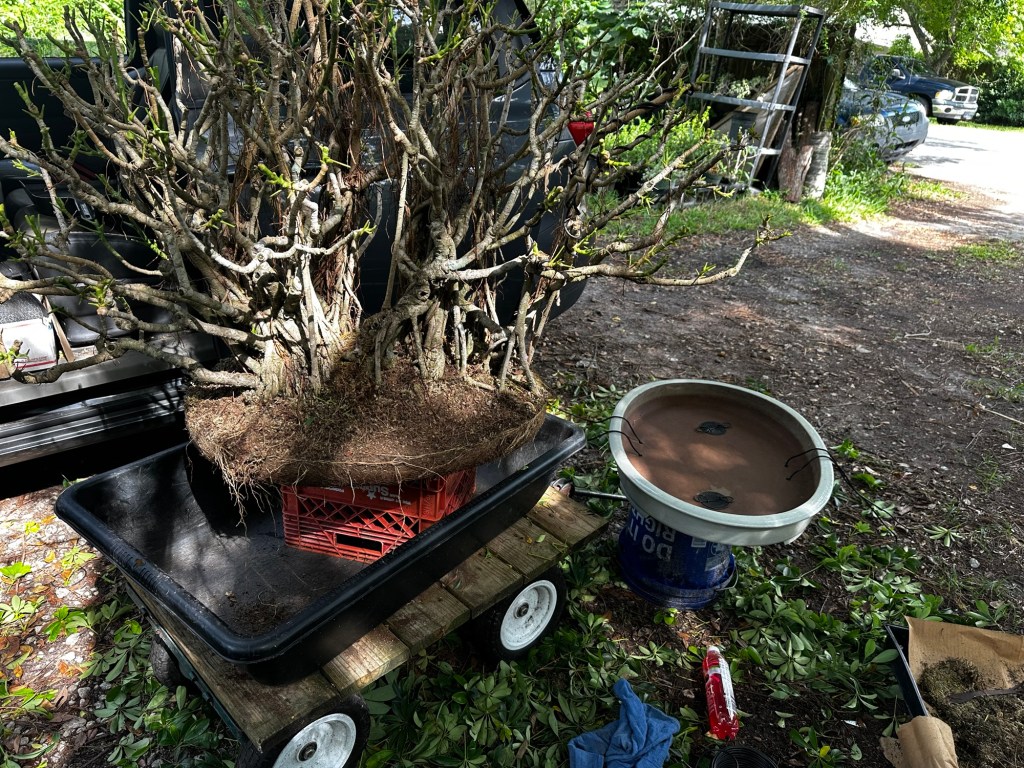
The damn thing is heavy and I’m alone in my driveway, that ain’t gonna work.

That’s a better setup. Now for the hook

THE HOOK! A new product made by my friends at American Bonsai Tools, based in part on my handmade hook.

Makes for short work.

I’ll tell you what, the fragrance from a schefflera will clean out the nasal passages

In the pot, some tweaks on the branches, and….

Below, the sheff as it was submitted to Epcot.

The day before install.

When I picked it up this morning.

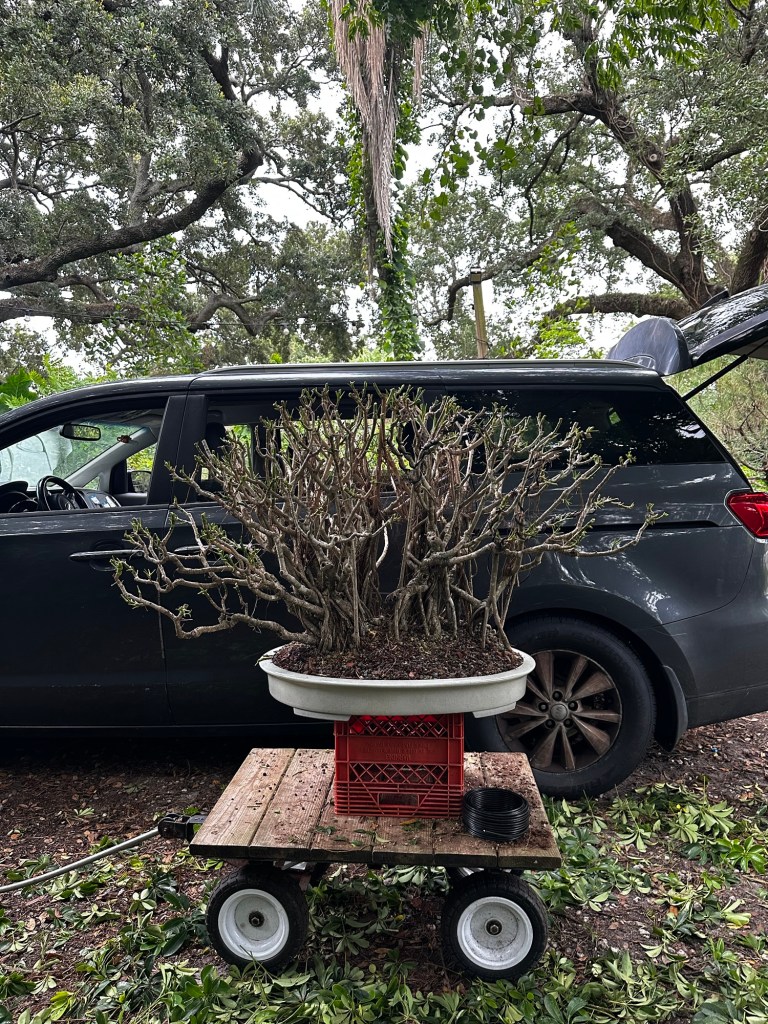
After I repotted, cut back, and wired.

And Bob’s yer uncle! And my next door neighbor.

  •