Reading view

Makin’ my way in the world today

The Orlando Japanese Festival, 2024.

Held every year in Kissimmee Florida…..

The Central Florida Bonsai Club, my club in Orlando, has been representing Florida Bonsai at this festival for several years now.

I like to go for the day and work one of my bigger trees to show the public that bonsai don’t need to be, or are limited to, small hand-held trees.

This year I brought a Ficus microcarpa. Just the plain species. Not tiger bark or green island or melon seed. Here’s how it looked after I cut it to a line way back in 2013.

I got the trunk from my good friend Ronn Miller, a Florida bonsai artist of great renown.

The link below shows a previous blog post on the tree:

https://adamaskwhy.com/2013/06/26/rejuvenating-a-ficus-bonsai-part-2/

What’s on the agenda for today?
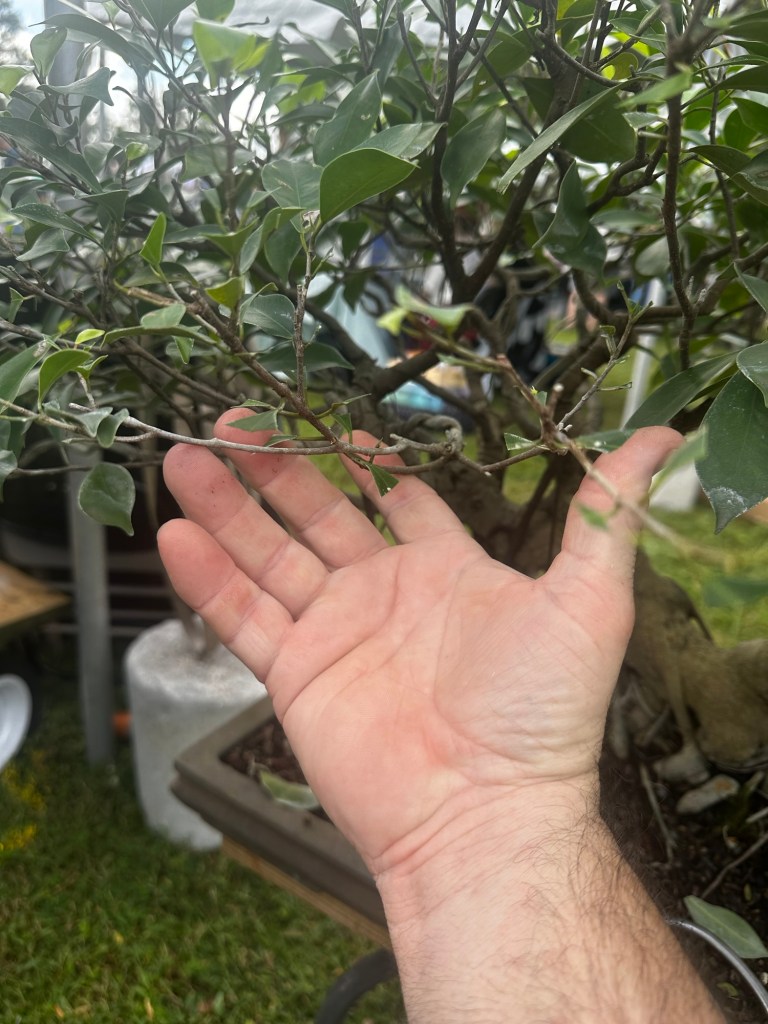
Defoliation, unwiring (I think I did that already) and pruning for shape/taper/ramificatiom, and rewiring of course. But not every branch.

Sometimes that’s needed, wiring every branch, but most times it’s not. I had a former friend who insisted on wiring every branch because that’s how he learned (he watched a video on YouTube that told him to ALWAYS wire every branch, and he was a paid subscriber to this channel, so he obviously has to do what he’s told, cuz it’s worth more to him. I wish I had a simple mind like that. I have to question everything. Just last week I was tying my boots and I wondered if they’d be tighter if I used an overhand knot instead of a sideways, underneath knot. Took me 15 minutes to tie my boots…..

If you’re looking at the leaves closely, you’ll notice the white build up on some of them.

Like above. I see this question a lot on the bonsai forums: “What is this? Is it harmful? How do I get rid of it? “

It’s usually just water spots from dissolved solids in your water. Like calcium, or lime. If it’s red or orange, it’s iron rust. it’s not harmful acutely, just ugly, but it could be a problem if it’s built up so much that it blocks the sun and restricts photosynthesis. And how do you get rid of it? You can polish the leaf, or use leaf shine, or, like I’m doing, cut them off. A ficus can hold a leaf for up to three years (it’s a tropical, broadleaf evergreen). But you can defoliate one, as long as it’s healthy, up to four, five times a year. I usually do at least twice in my normal maintenance. If I’m really pushing a tree, 3-4 times.

Anyway, I have a bunch of leaves. Let’s see if I can count….

There we are. I counted 2,713 leaves.

Actually no, but that’s a good number. It’s a prime number (only divisible by itself) and sounds good saying it out loud

“two thousand seven hundred and thirteen”.

Sounds like it belongs in the first, or last, sentence in the Great American Novel:

“In the year two thousand, seven hundred and thirteen, the hero man was born.

Or died.

It was a time of illogic and lost tales, with many great humans born or killed. Some by the hands of evil men, or by their own hands as the era was one of pain.
The world had just gone through a bloody interregnum, accented by war and famine, city and states wiped off the countryside and built up into empire. Cultures distilled out of the quirks and pathology of a leader, or group.

Our hero begins the day chopping wood, collecting water, and making tea.”

I’d read that book. Maybe I’ll even have to write it.

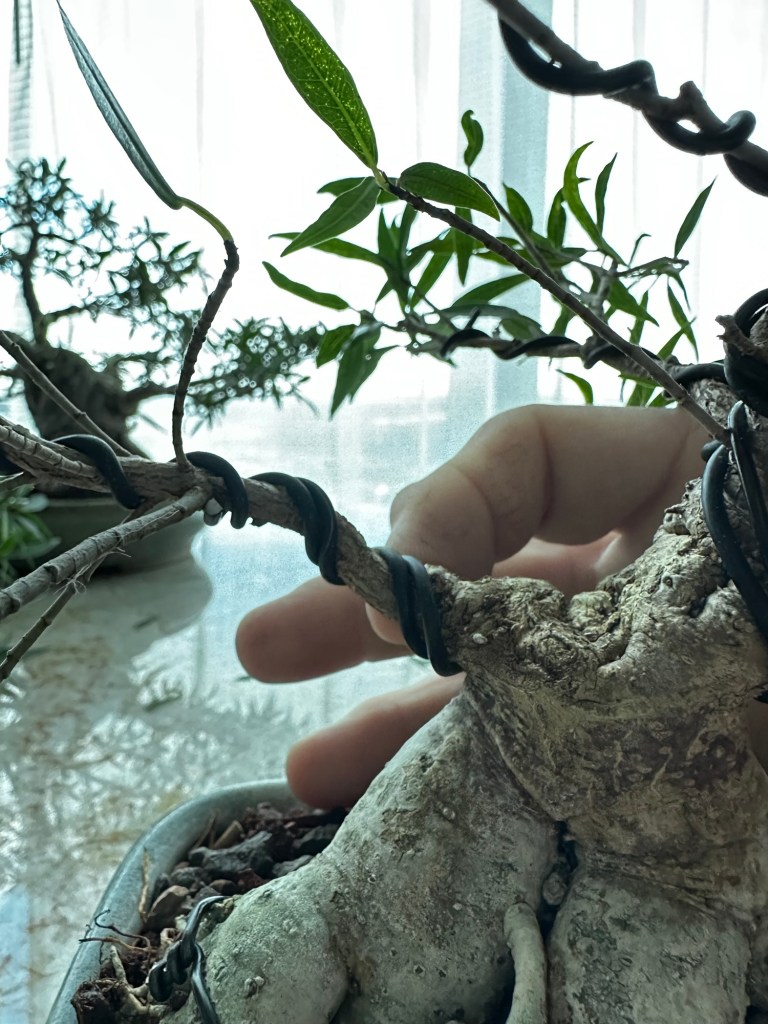
Let me finish this post first. The branch my hand is on has risen from its original place in the design.
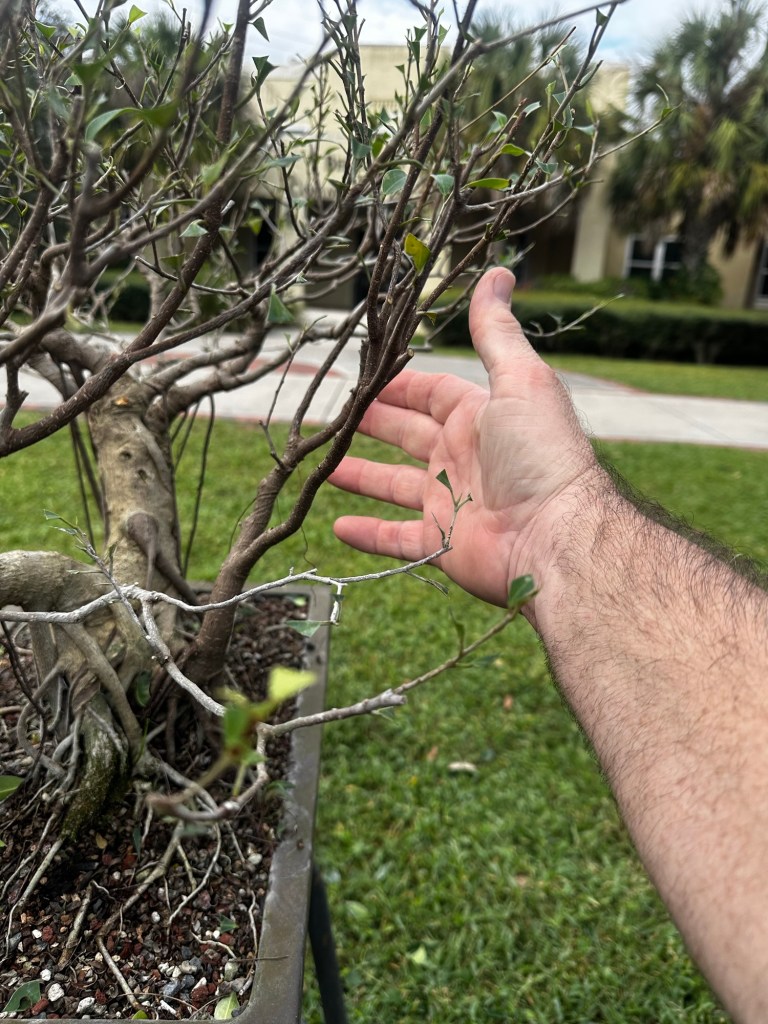
So that’ll need to be wired back down.
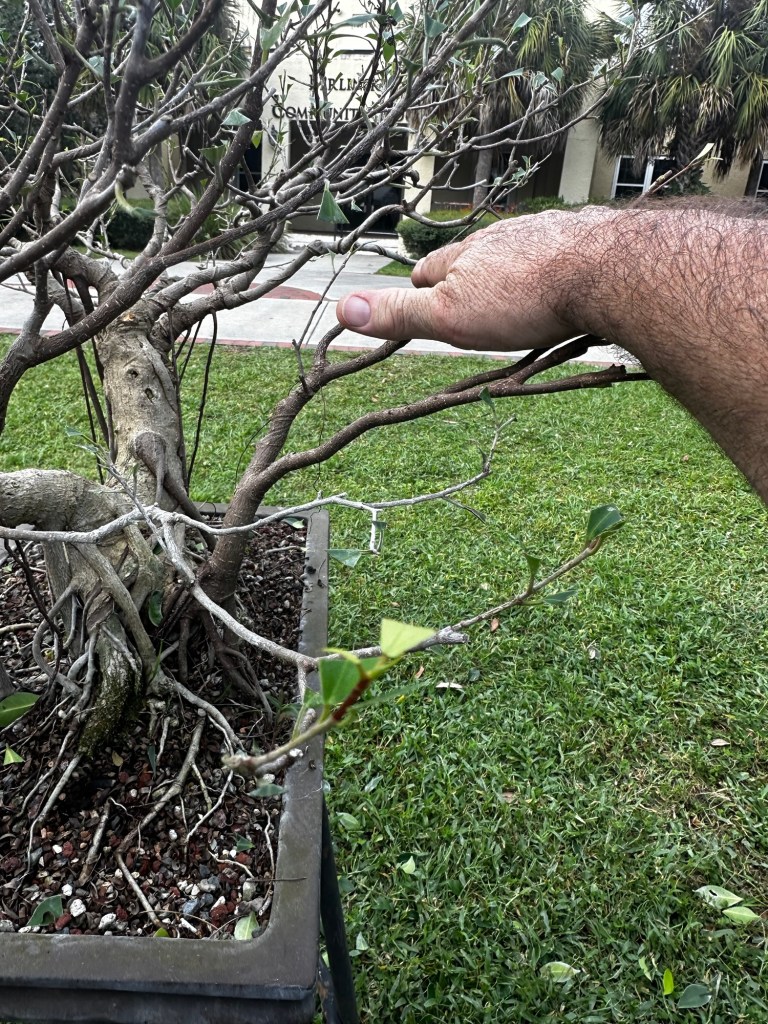
That’s the life of a ficus bonsai owner: put the wire on, take the wire off, put the wire on, take the wire off.
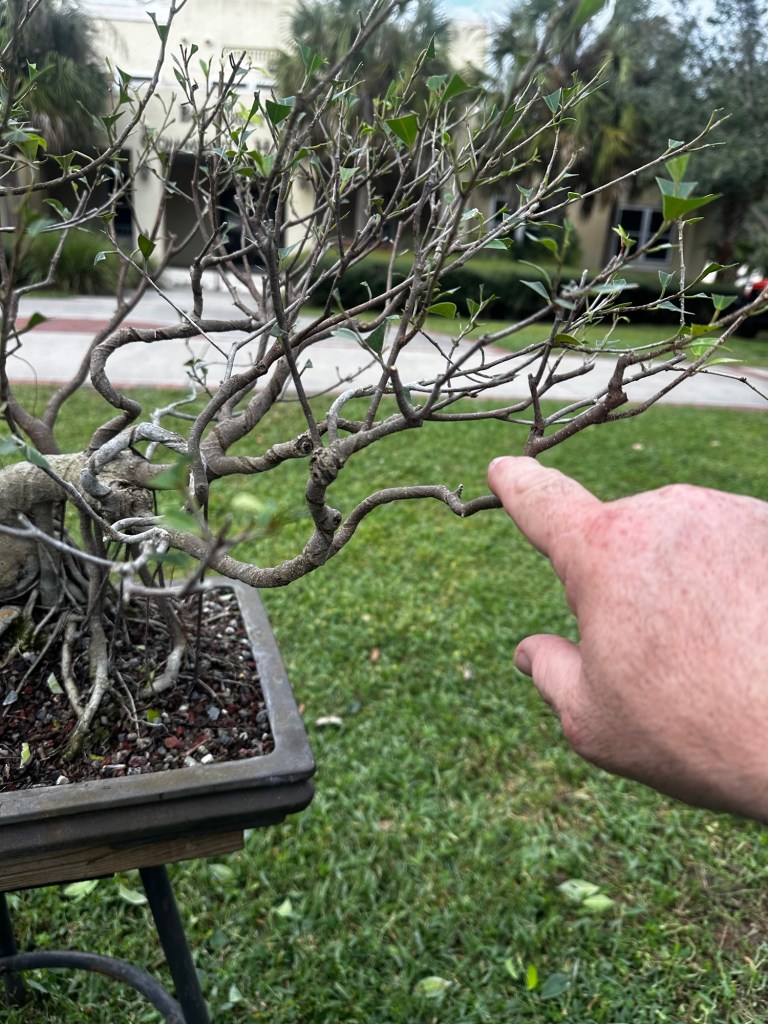
Anyway, enjoy the next twenty following pics of me pointing at various parts of the tree.

Straight lines must be made curly.
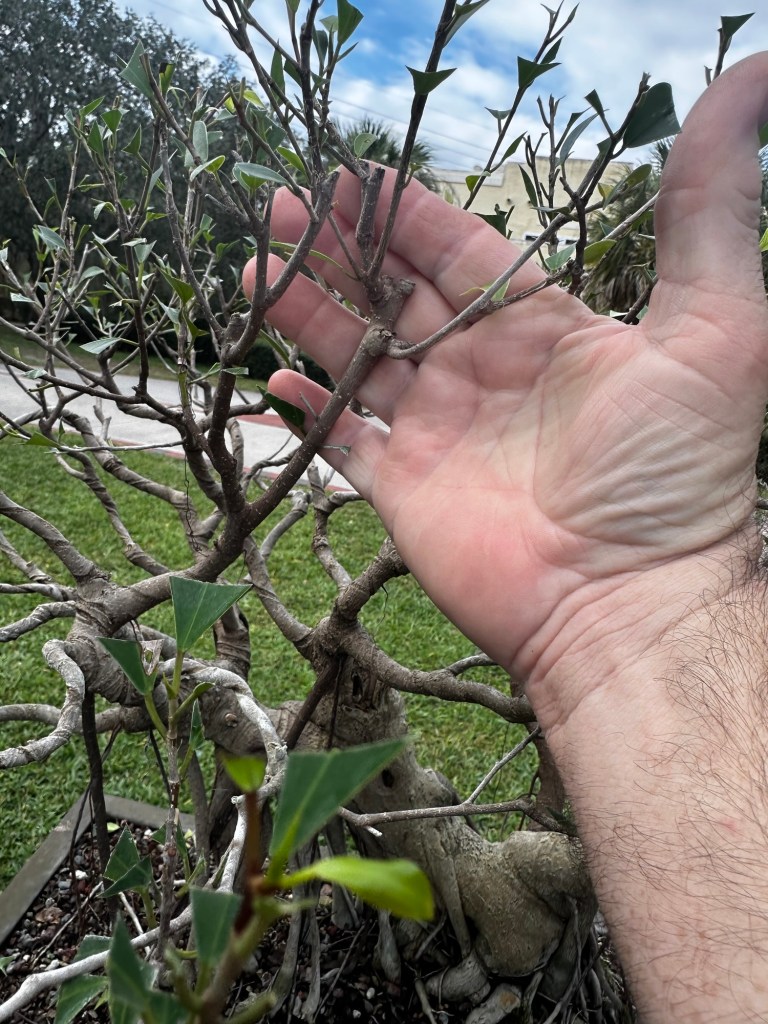
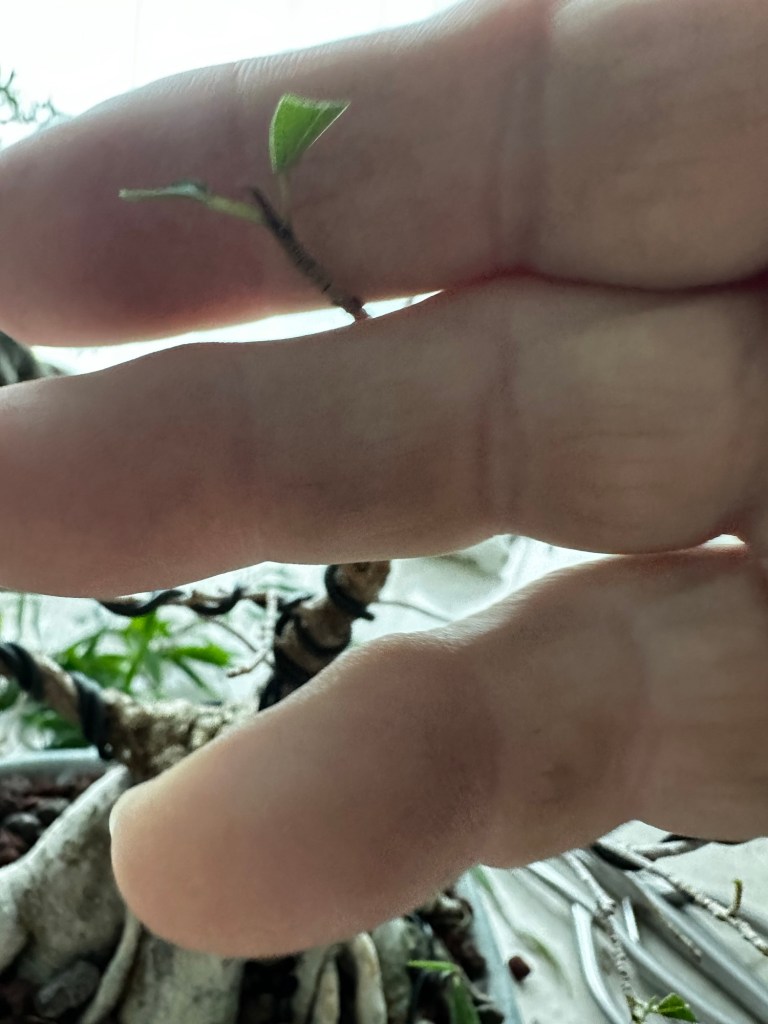
Some things gotta go.
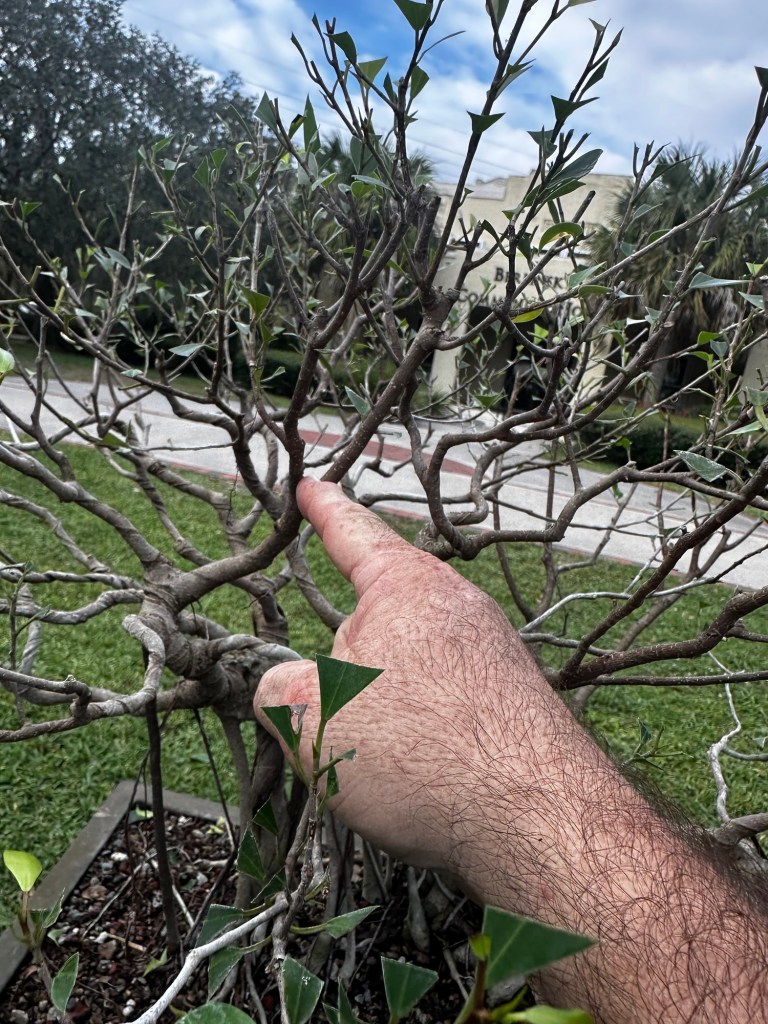
I just realized that in the background of these pics, you’ll be seeing a pretty detailed accounting of certain attendees visiting the restroom.
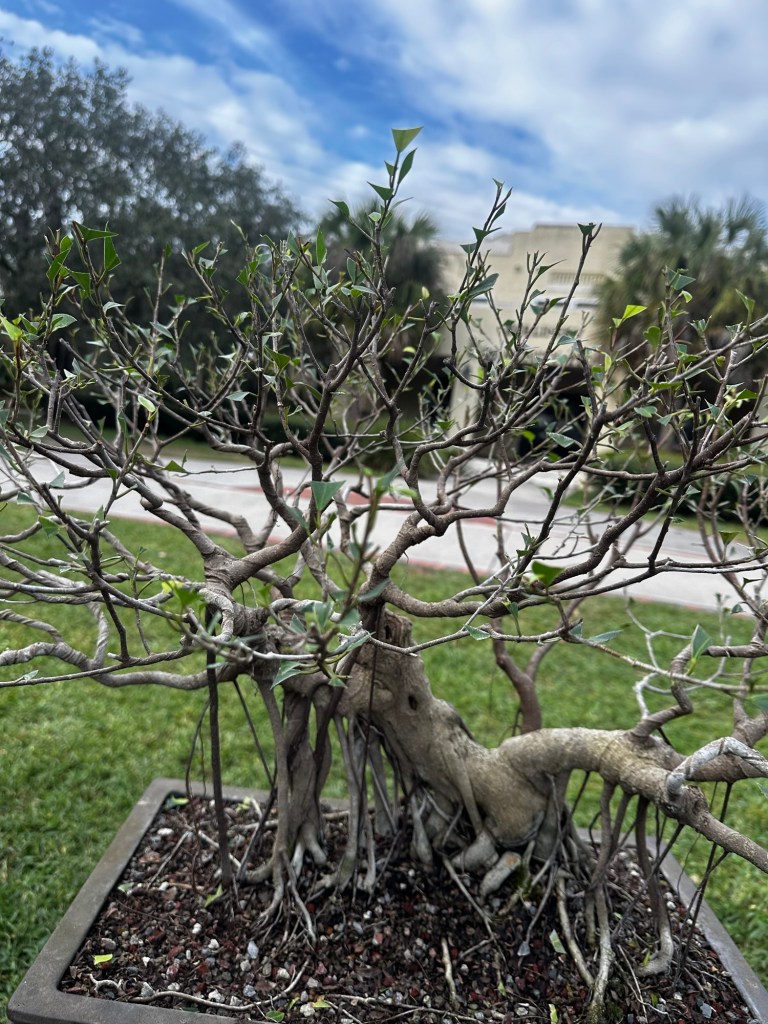
Now for wire..

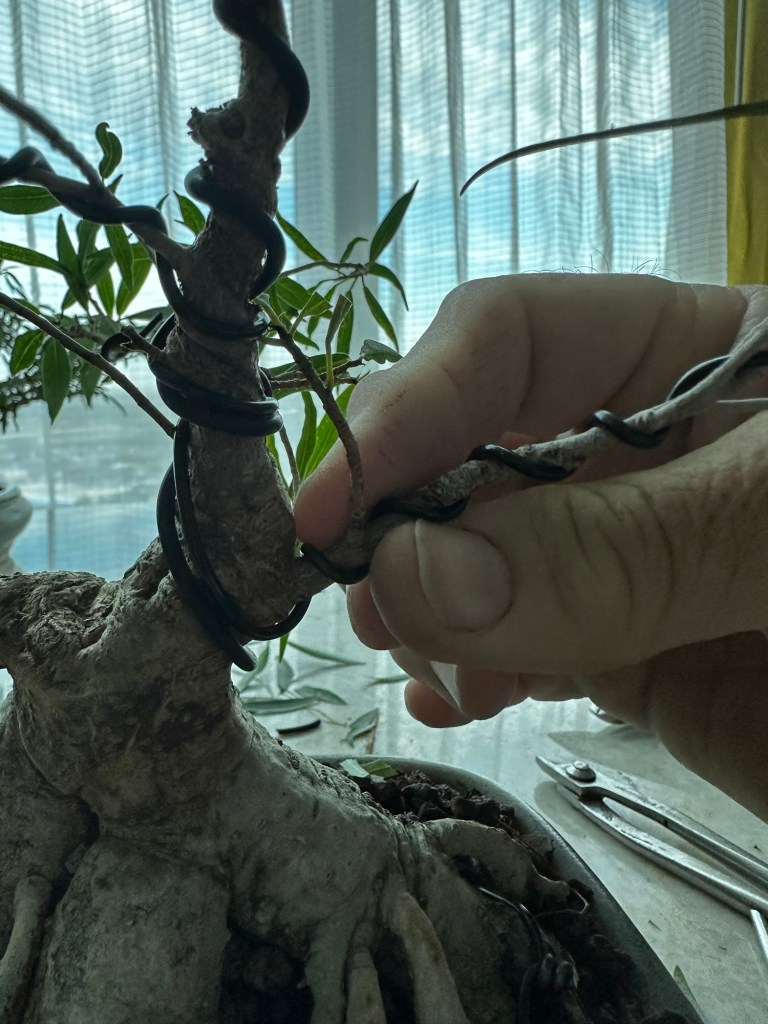
For the sake of a good anchor, one should try to wire two branches with one wire.

Always start in the branch crotch (I just learned that “crotch” is a word first used to describe the meeting of two branches, or the trunk and branch, and not the area between your legs).

And wire one side clockwise, and the other counter clockwise.
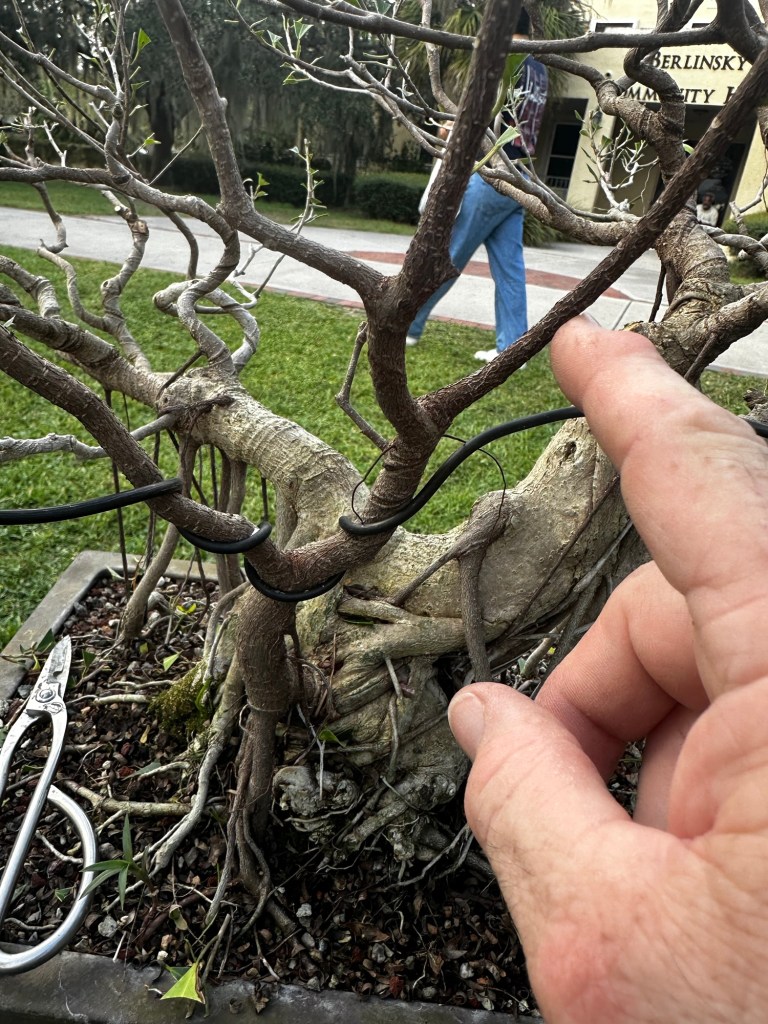
There’s a straight line that’s offending my eye.

I know I need to wire three branches. I’ll use two wires.
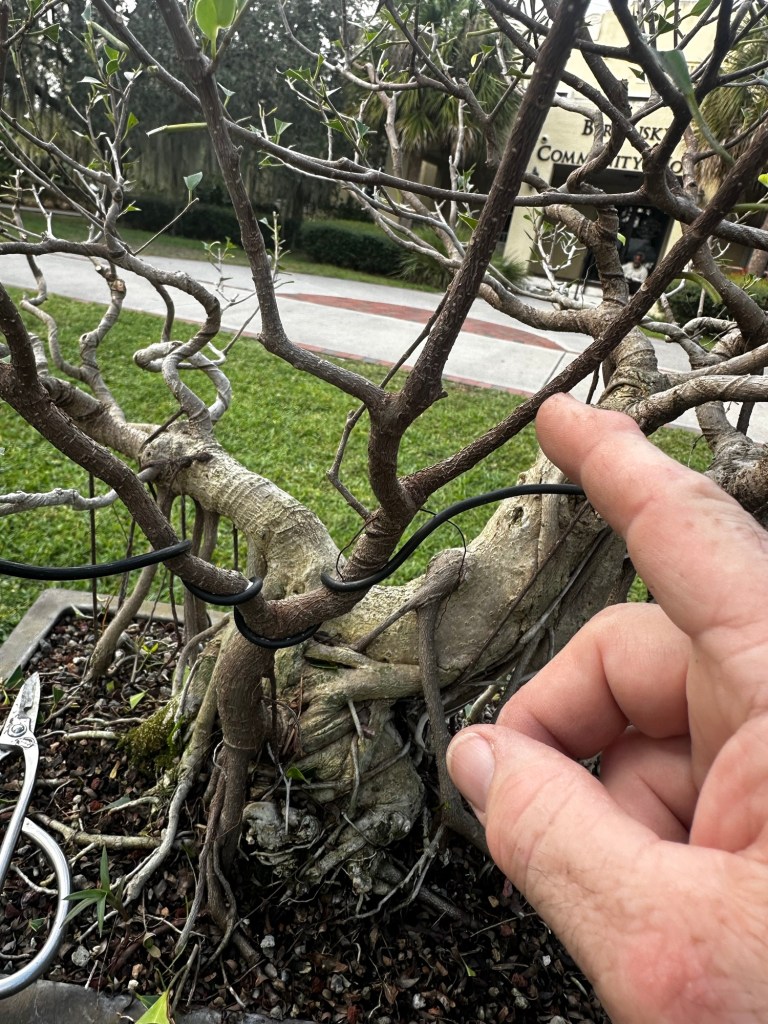
This will let me put two wires on some branches, to give better holding power.

Then the bend.

I usually use two hands to bend, but that’s hard to hold a camera, and bend. Pretend my left hand is steadying the branch.
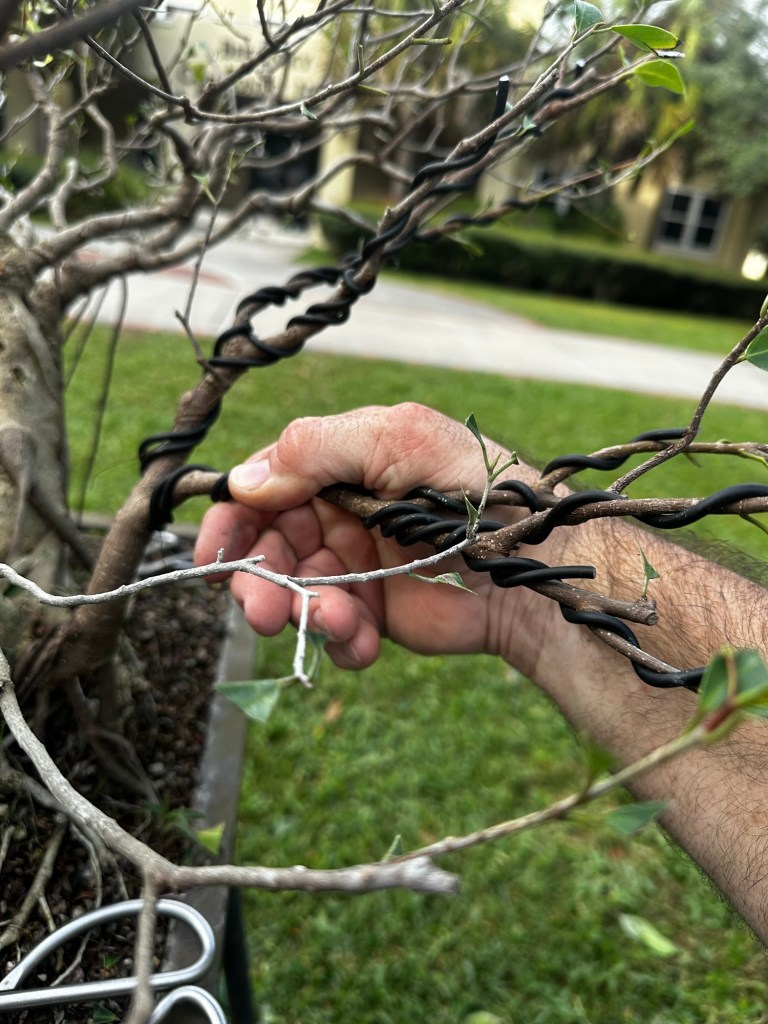
There we go, one done.

Now for the rest

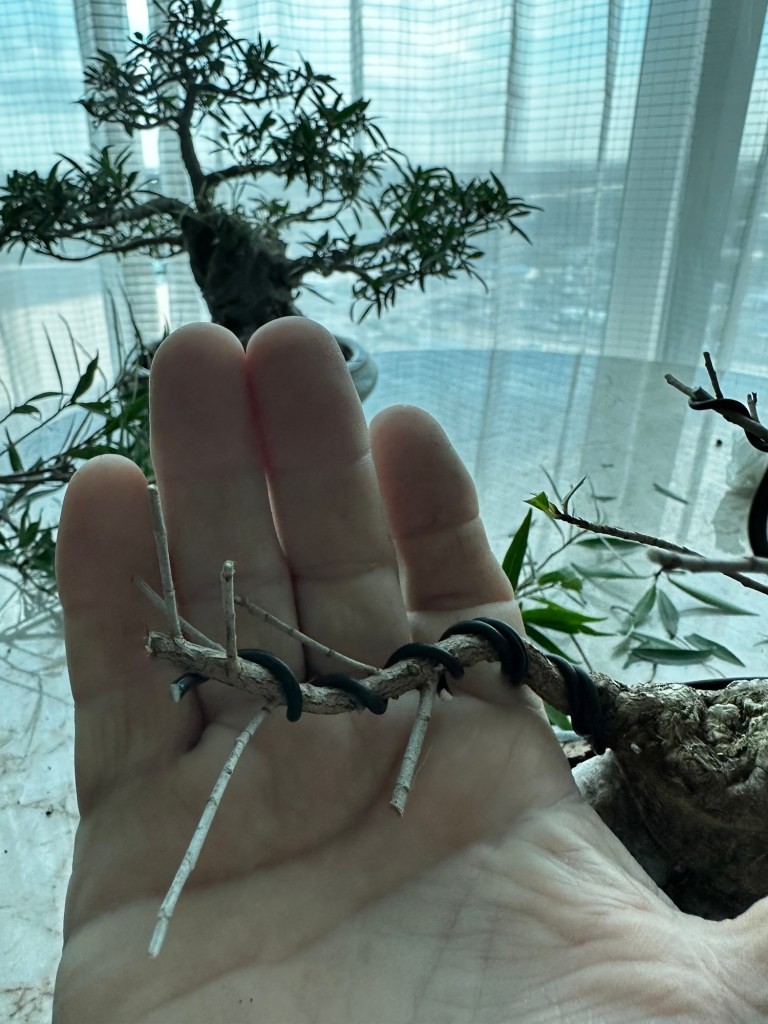
Zooming in, you’ll see wire marks. One of my favorite bonsai lines comes from an English man, he said “I’f’n you ain’t got no wire mahks, yer not using enough wire”.

Say that in a John Lennon accent.

Should you find yourself with too many wire marks, you can scrape off the ridges with a blade.
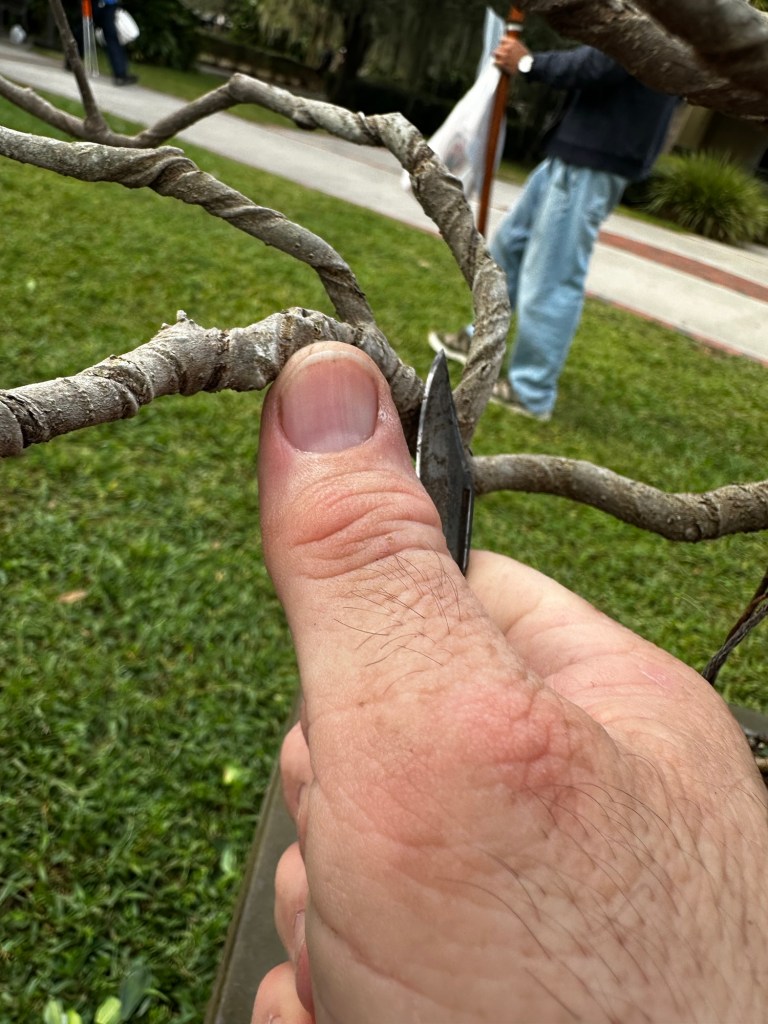
It mitigates them and makes the branch look gnarly.

And chicks dig scars.
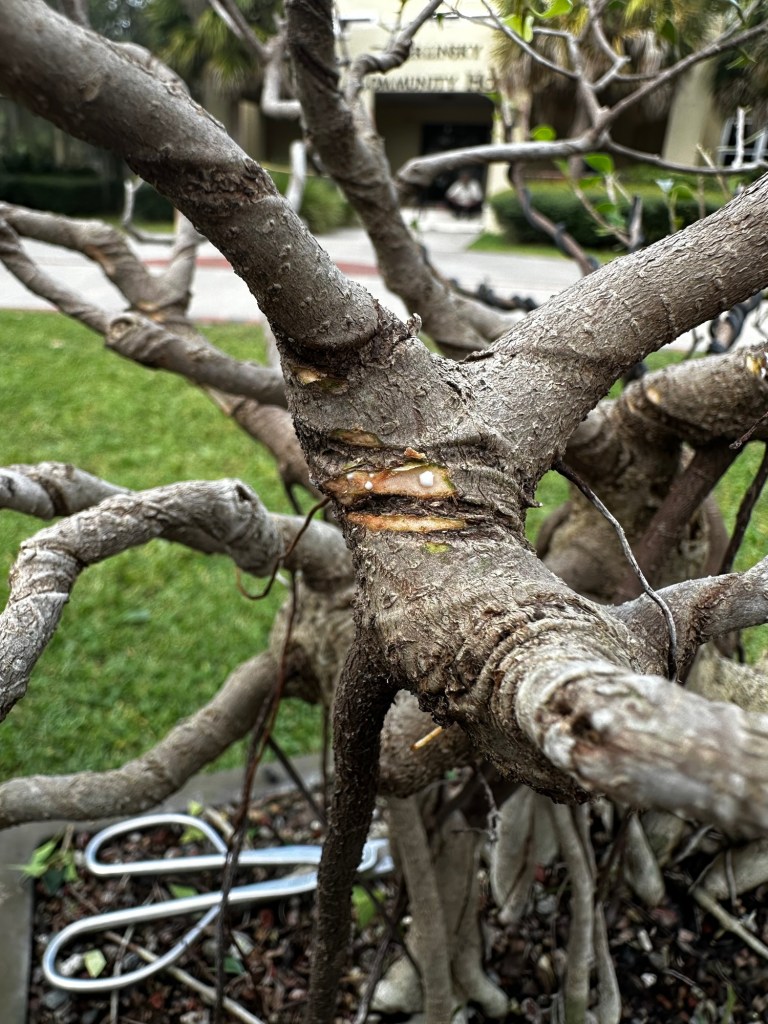
And that’s it.

A video from the top

There’s just something satisfying in wheeling a tree around on a garden cart.

🎶Walk this way! 🎶

We all have to walk the path we see before us. Sometimes we cross others paths at the same time they’re on it, and sometimes those paths parallel each other. Relish those times of a companionship, but realize you can’t get off your own path.
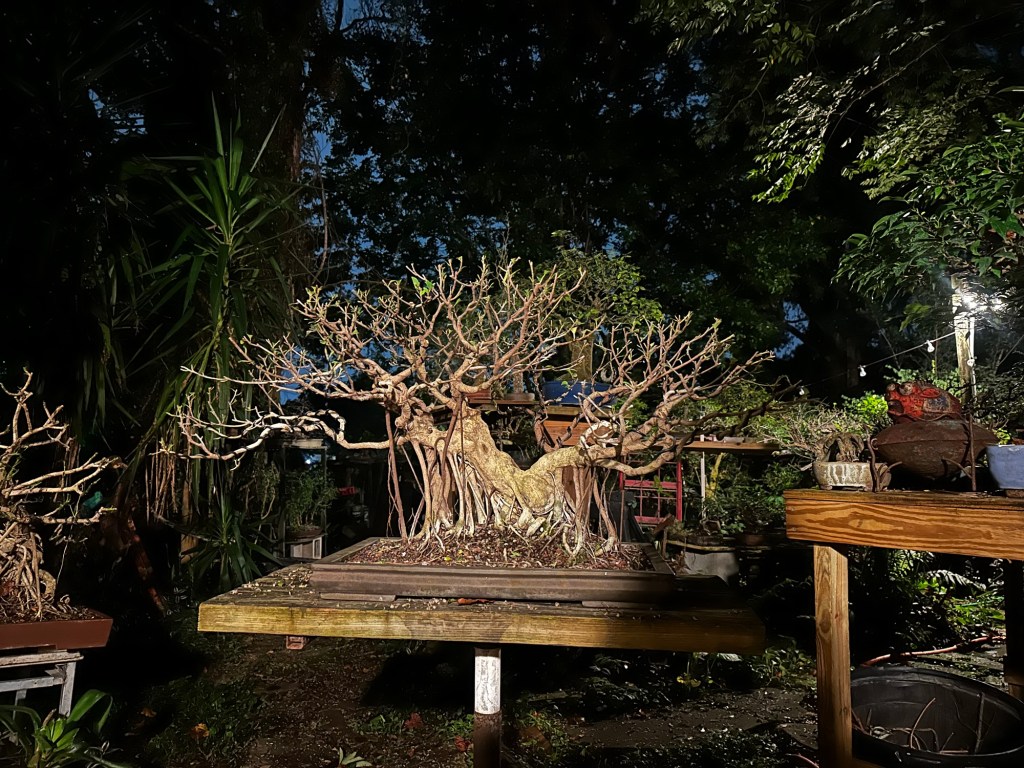
Finito!

  •  

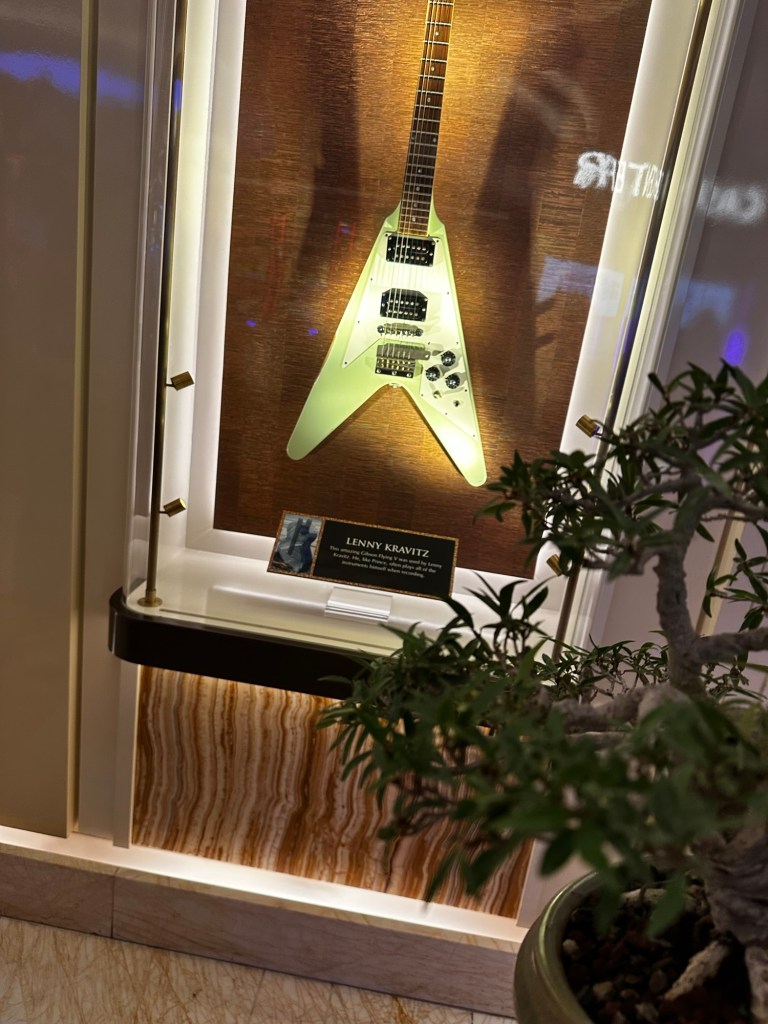
It’s a Hard Rock life, for m’trees, it’s a Hard Rock life, for me

Carry on my wayward sons, or trees….or something like that.

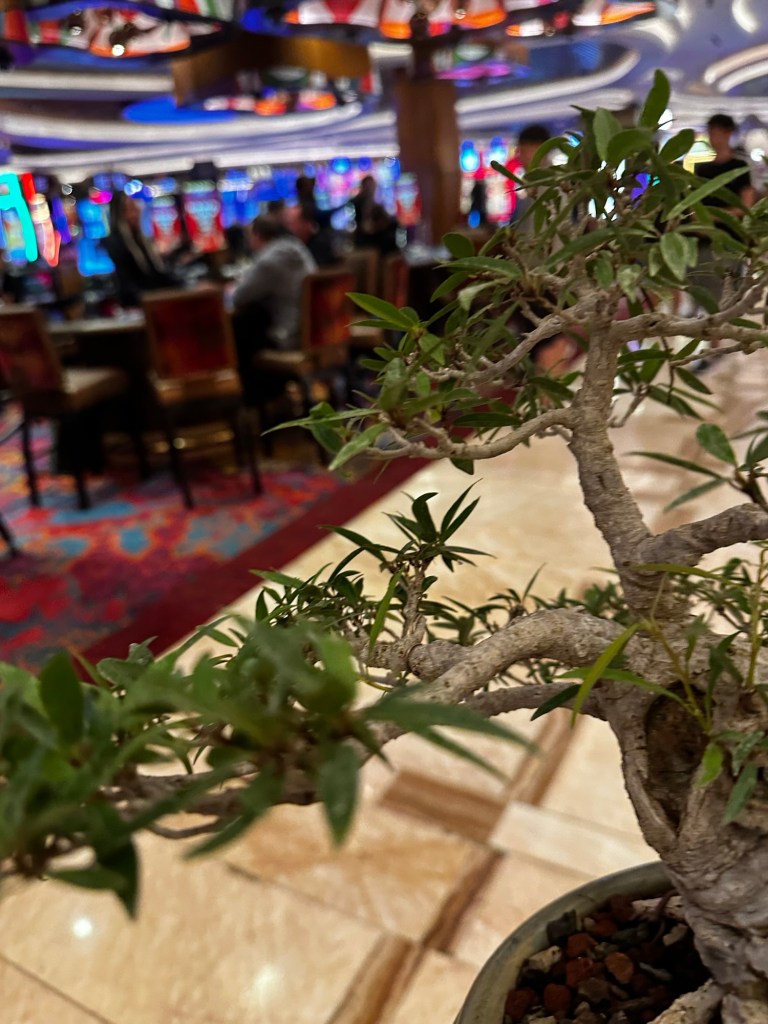
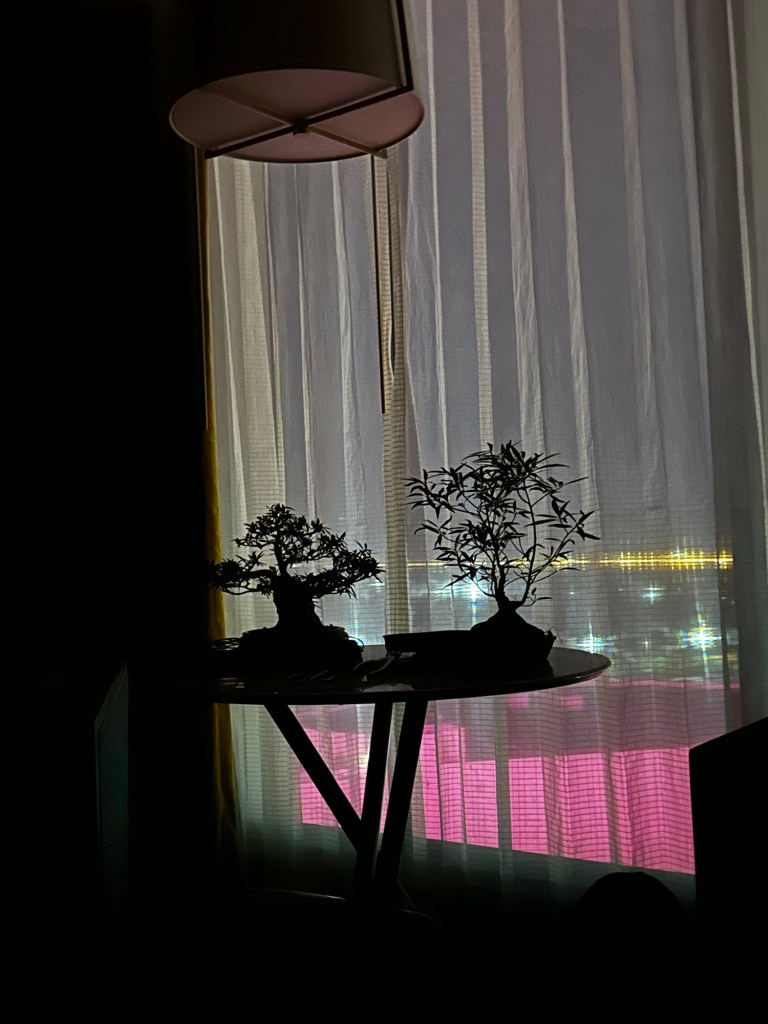
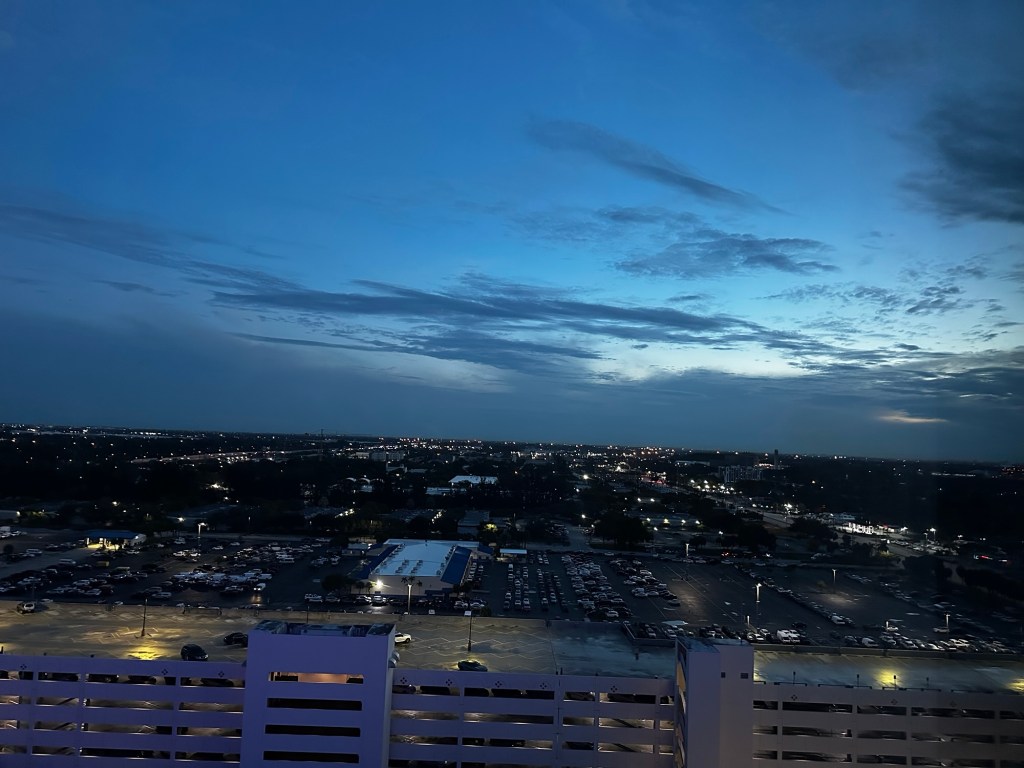
Here I find myself in a hotel in Hollywood.

Florida, not the hotel in California. Where you can’t never leave.

I’m at the Seminole Hard Rock Hotel and Casino. It seems there’s a place way down south in the Everglades, where the black water rolls and the saw grass waves.
The eagles fly and the otters play in the land of the Seminole…

I could catch a show, eat a meal, go swimming, gamble and win (most likely lose). But they’re never gonna catch me cuz I have one more silver dollar.

I have some work to do. Takin’ care of business, so to say.

Or, tomorrow morning I have work to do.

Nightie night…..

Here comes the sun….

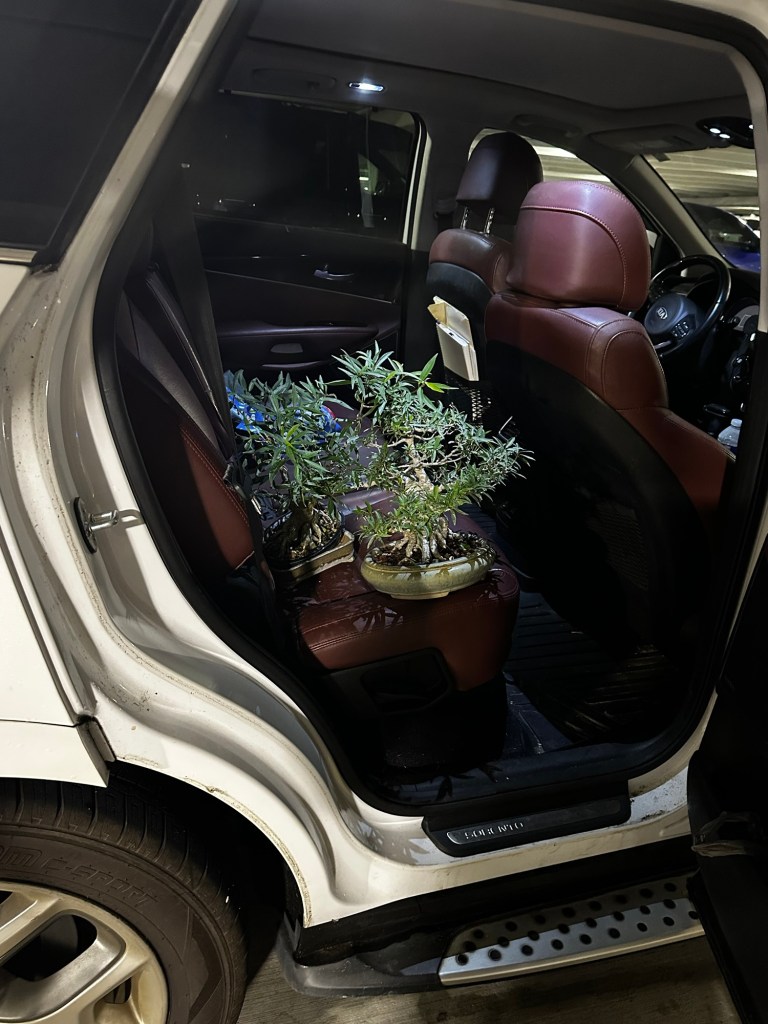
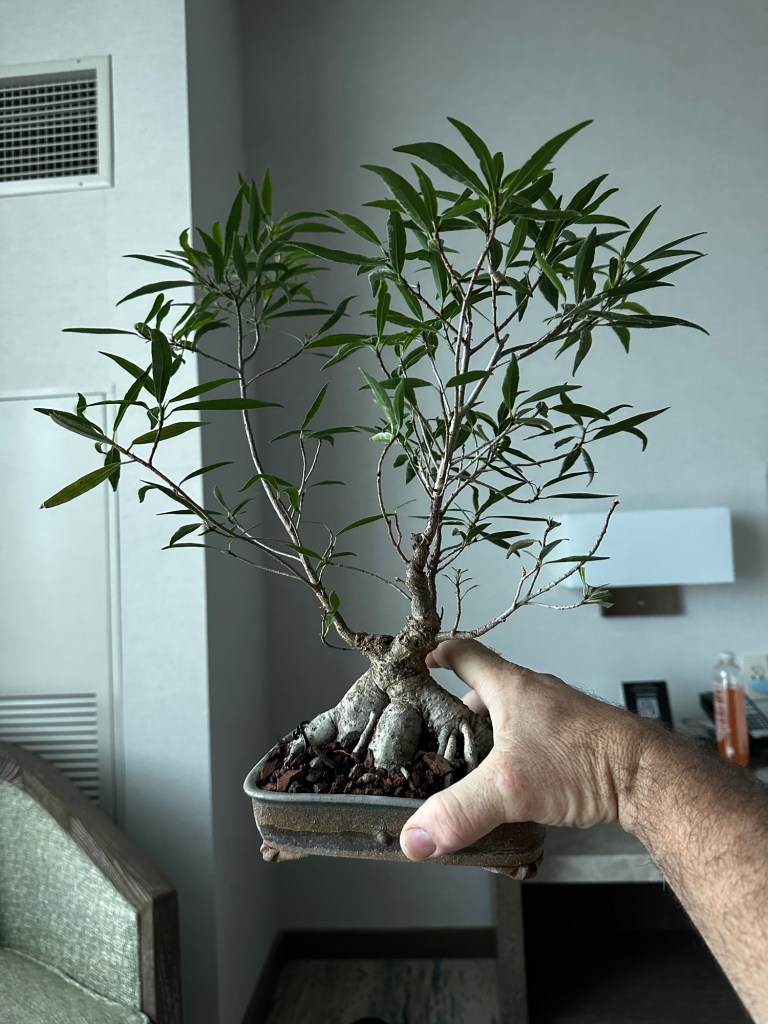
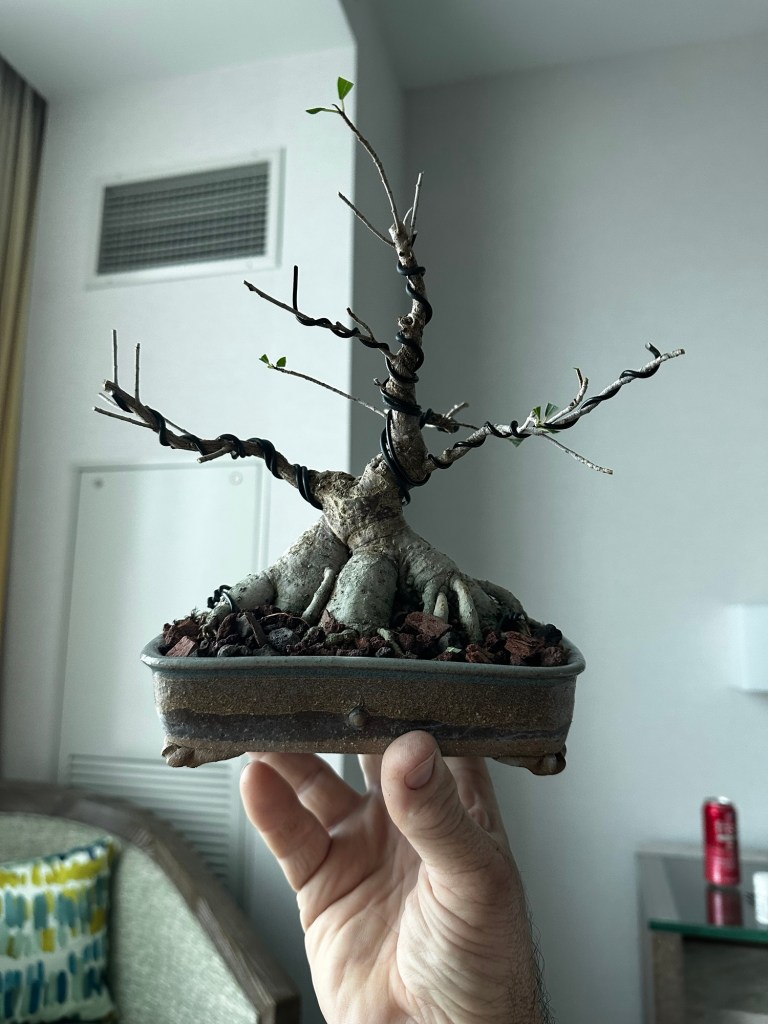
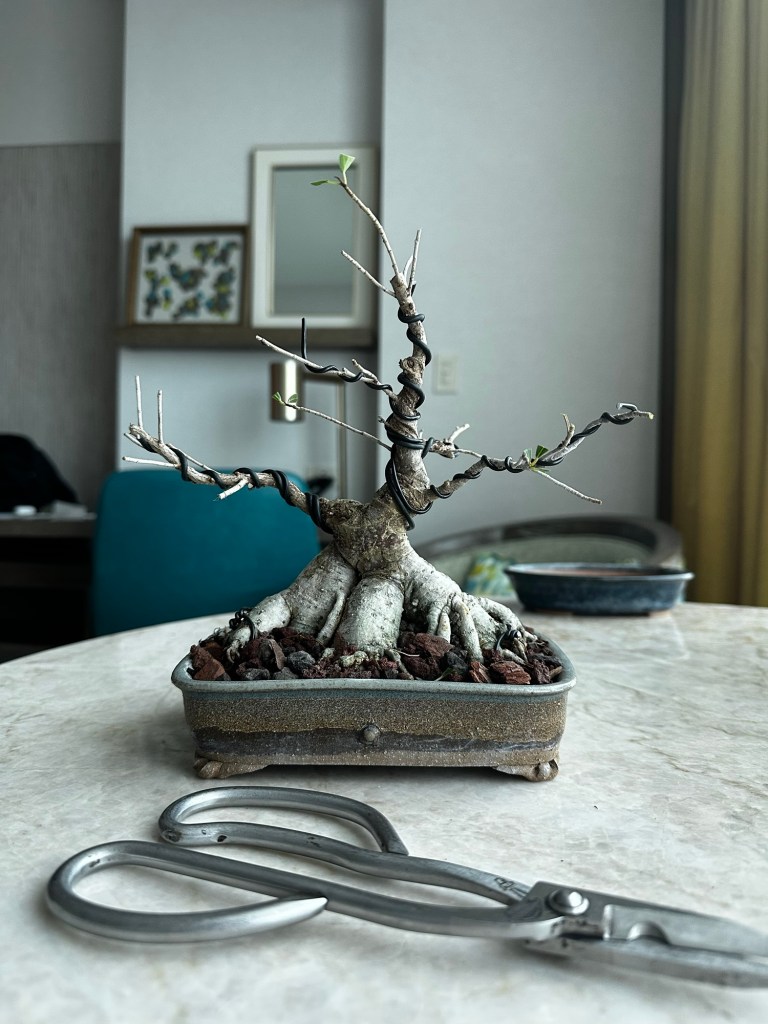
And the tree. A willow leaf fig. Ficus salicaria. What’s a more Florida tree than the one bonsai species that was first discovered here. And not too far from this place. The very first bonsai made from the willow leaf still exists and lives down on the east coast of La Florida. Very far from the Florida:Georgia line.

The tree came from Mike Blom, of Emblem Bonsai. He’s one of Florida’s best. He takes the time to develop the trunk and works to make the stock plant the best it can be. The pot is an early Taiko Earth container, by Rob Addonizio.

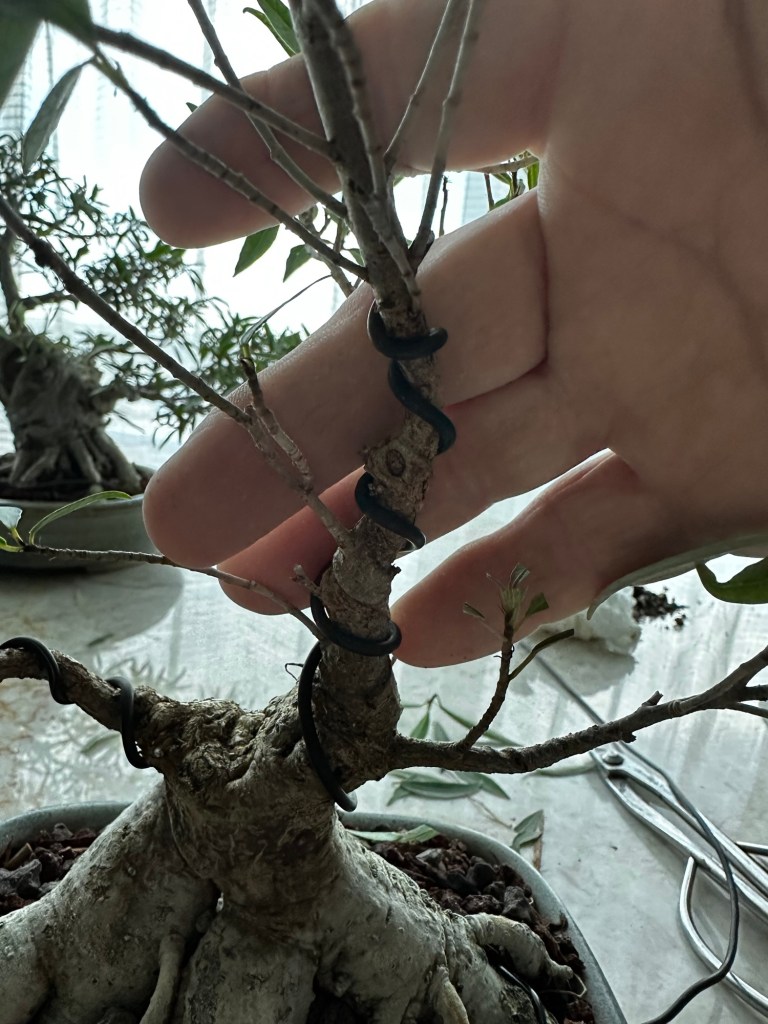
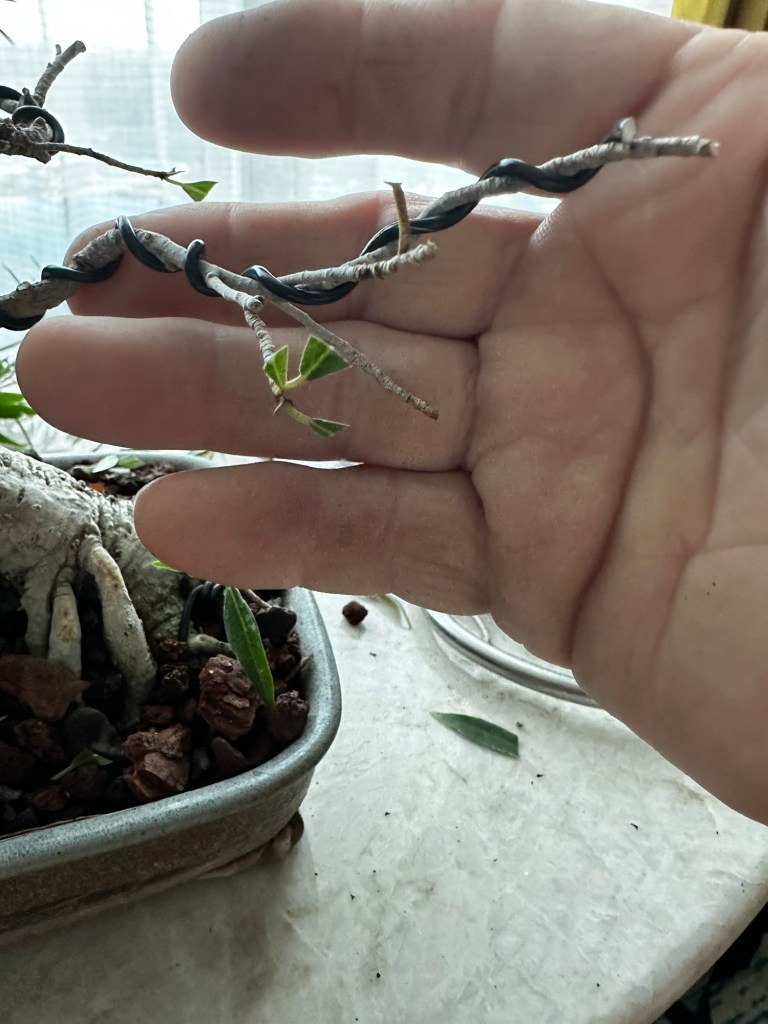
I didn’t bring any number one wire, so just the main branches will be wired.

They already have a strong upward bend so I’ll keep that movement and exaggerate it. An artistic concept we use in bonsai is the repetition of shape and line. This brings the character of the tree into a more honest representation of itself. The branches should tell a story. Say we have a mountain for or spruce in a place where winter dumps hundreds of pounds of snow on the trees and plants growing there. The branches tend to start growing down right from the trunk.

This tree, a purely tropical species, tends to want to grow up first.

Now, don’t get me wrong, we can style the willow leaf ficus as though they are conifers (in fact, here’s a post where I did just that: This is what happens when you leave a tree at my nursery)

I consider them one of the best species for bonsai mainly because they will, much like a juniper or Chinese elm, they can be made into almost all the styles. Cascade? Yeah. Upright formal? You bet. Windswept? If you want. Bunjin? Definitely.

And they grow and backbud like insanity in a tree. A trunk chop will result in buds right from the chop sight, usually double digit amounts. You can totally redesign one of these trees every ten years and the tree will thank you for the makeover. I’ve heard twice from returning westerners who’ve apprenticed in Japan that ficus in general just grow too fast for the Japanese masters.

Imagine that.

That’s one reason we in Florida tend to put them into bonsai pots when developing them, it slows the growth might so that we aren’t unwiring and then rewiring every week when it starts to cut in.

How’s that? I like it. It could have better taper….if it were a Hershey’s Kiss.

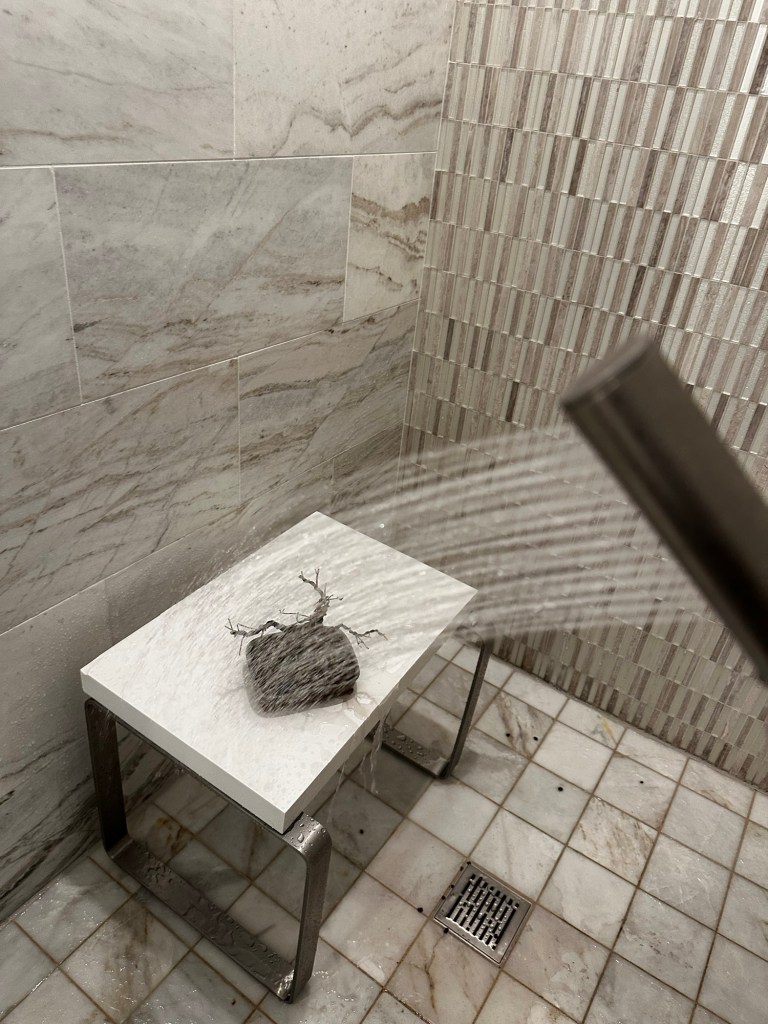
Some water…

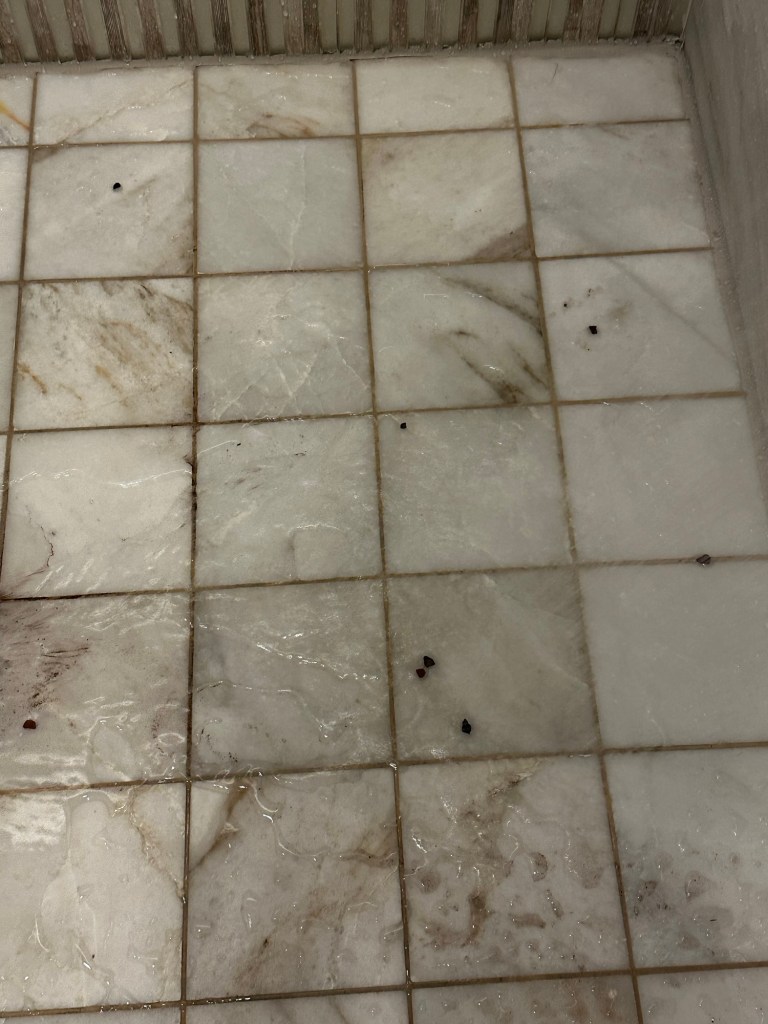
Whoops, made a mess in the shower.

Now it just needs some sunshine. Let the sun shine….and you thought I ran out of song lyrics, didn’t you?

Now it’s breakfast time.

WAIT, WHAT? $32 dollars for two eggs and bacon….I thought casinos had cheap food?

  •  

Holy Toledo, this tree is outta this world

Hmmm. Cosmic Bonsai in the Great White North? I’m in Ohio, and I guess they like outer space a lot; it’s a fact that more U.S. astronauts have been from Ohio than any other state.

John, from Toledo, one of my friends for a long time, has been going to the convention for the Bonsai Societies of Florida for two years now. He got to see Walter Pall, Mauro Stemberger, and many others in years past.

This year he got to meet and take workshops with Laurent Darrieux from France, the creator of the Cosmic Bonsai approach to styling trees.

Some people see it as blasphemy, some see it as a narcissistic offense, some see it as silly. But what it really is, in imaginative terms, is a question “what if we travel to another world, with, maybe, higher gravity, or two suns, or a long rotational period, what would those trees grow like?”

Artistically, it is a valid question. Artistically, it works too. When it is practiced well (just like any style, any idea, or even traditional bonsai) it works as Art. There are those that may say it isn’t bonsai, but some of those same people say that the flat top style of trees, whether the American bald cypress flat top, or the South African style Pierneef flat top, aren’t bonsai either. Uh huh.

I’m sorry, but bonsai is not a Japanese art. It is a Japanese word, and it is very Japanese traditionally (but it’s dying in the country) but that’s just because, when we modern practitioners of bonsai decided to give it a universal name, a certain Chairman in the east was intent on destroying traditional arts with his Cultural Revolution. so it was named “Bonsai”.

When I was learning bonsai, I read all the old books, and took to heart the challenge that the early Japanese bonsai masters gave us when they started to travel and teach bonsai throughout the world.

They told us not to mimic Japanese bonsai, but to find new species of trees, and new forms of design, and expression, to celebrate not only the character of our countries, but also the natural world we saw around us.

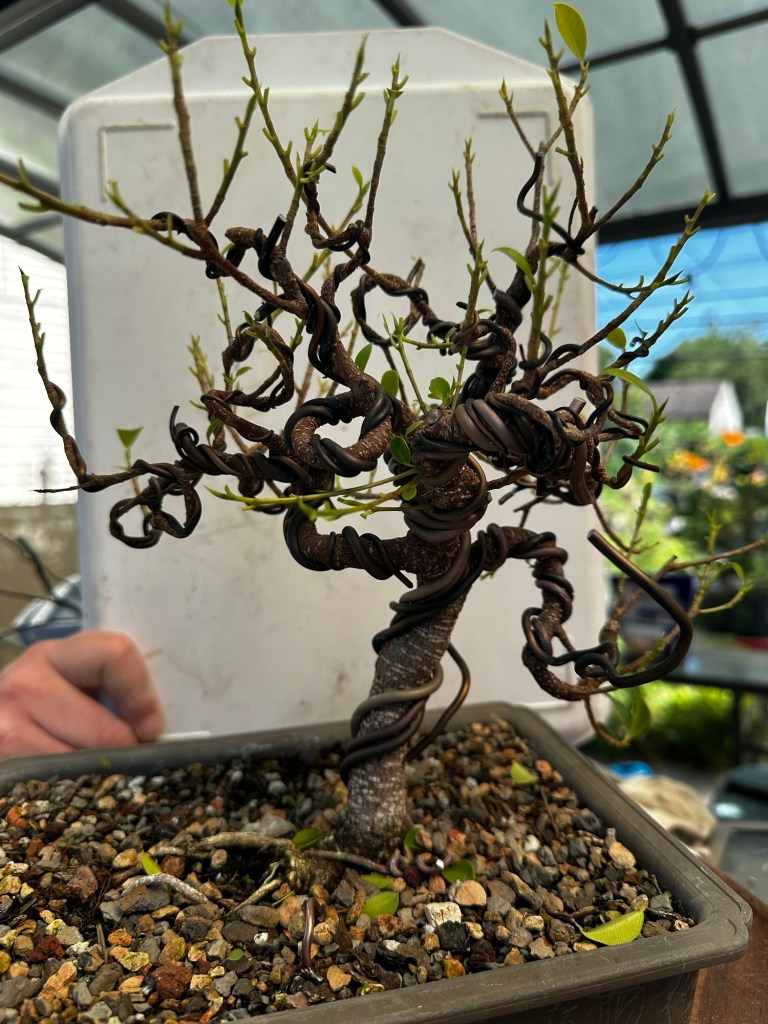
Here’s my question to you: What if our imaginations also let us see the world differently too? Say another world? That’s Cosmic Bonsai.

To categorically discard the concept because it’s not how you learned it is everything that people accuse Laurent of: arrogance.

He’s an artist. He has to create. And to show others his vision. He’s not being allowed to do it. Well, except in Florida, my backyard.

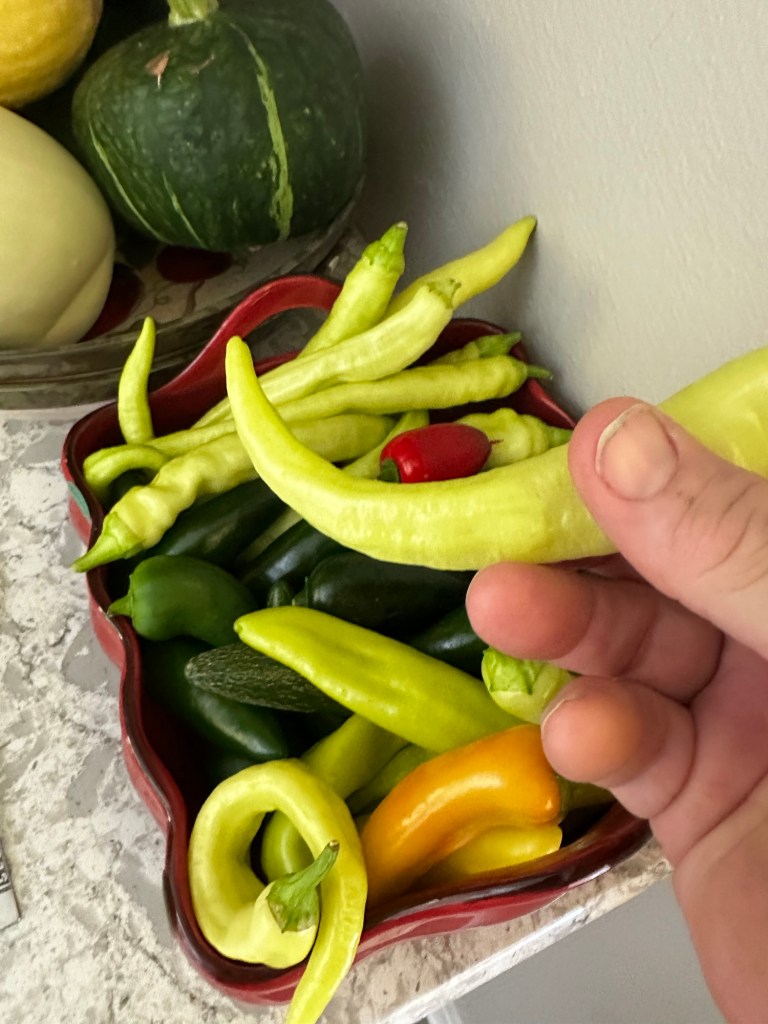
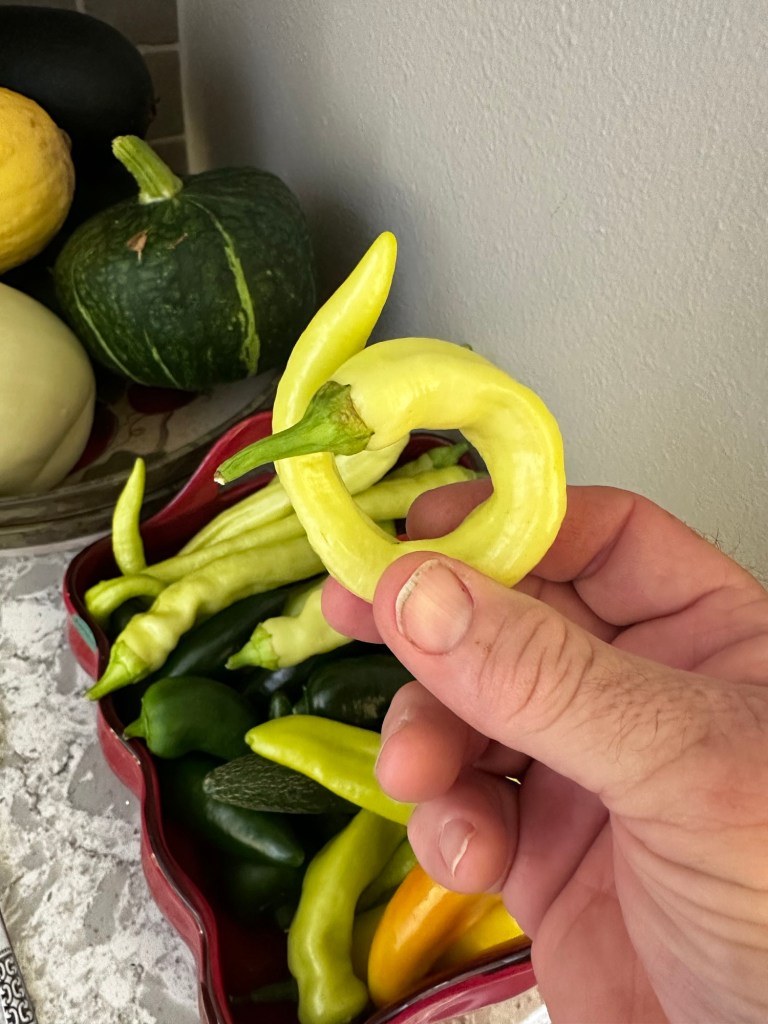
Phew, that’s some heady stuff. Anyway…Here’s a banana pepper in the traditional style.

Here it is in the Cosmic Style:

They both go well in an omelette (French word btw).

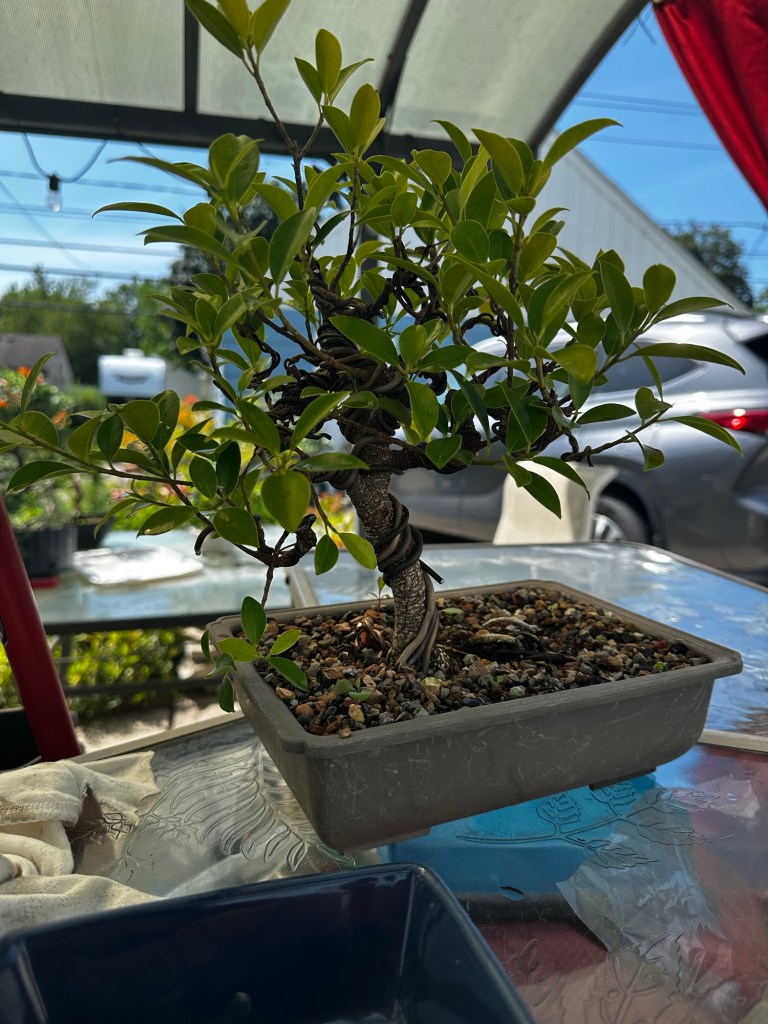
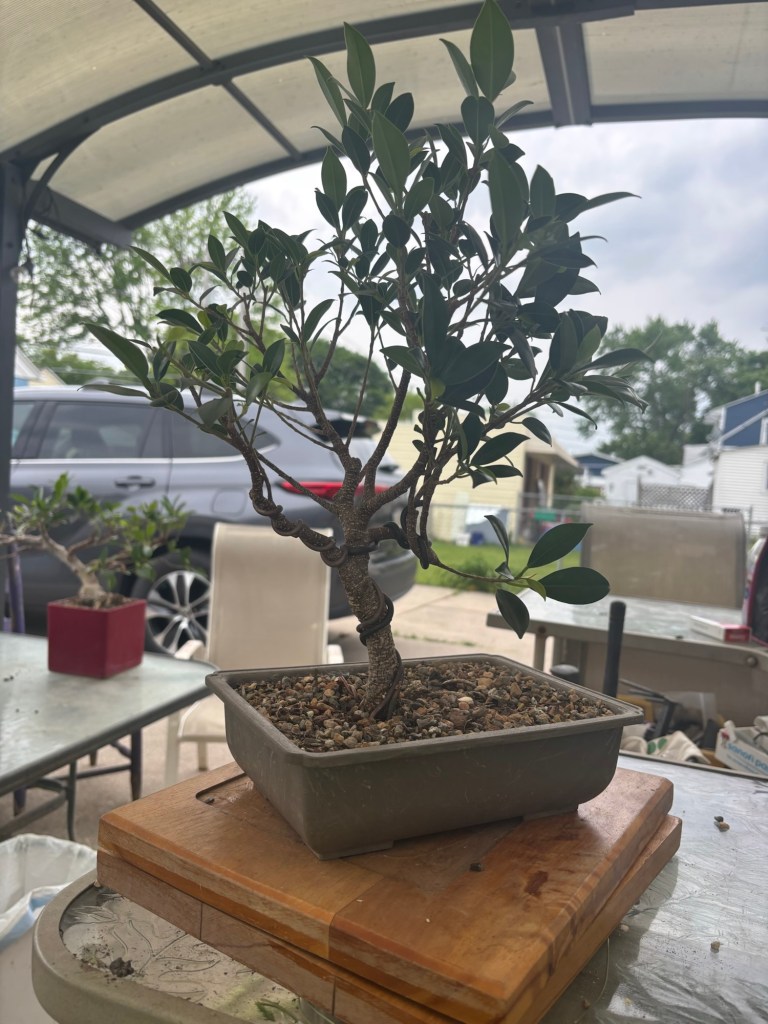
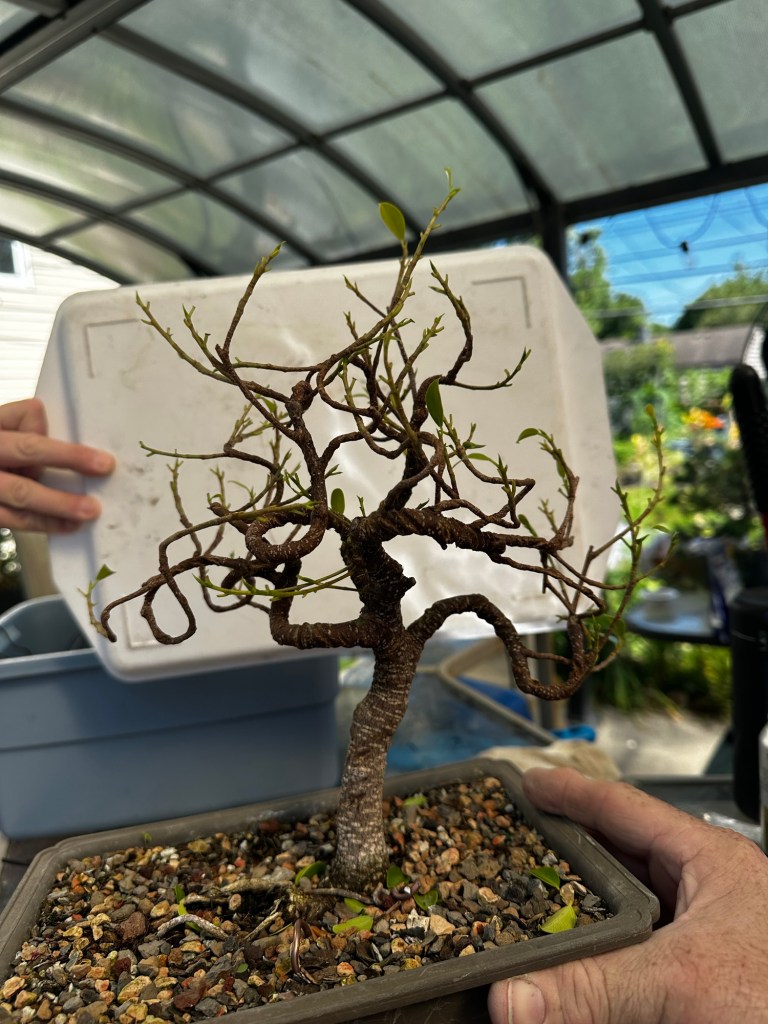
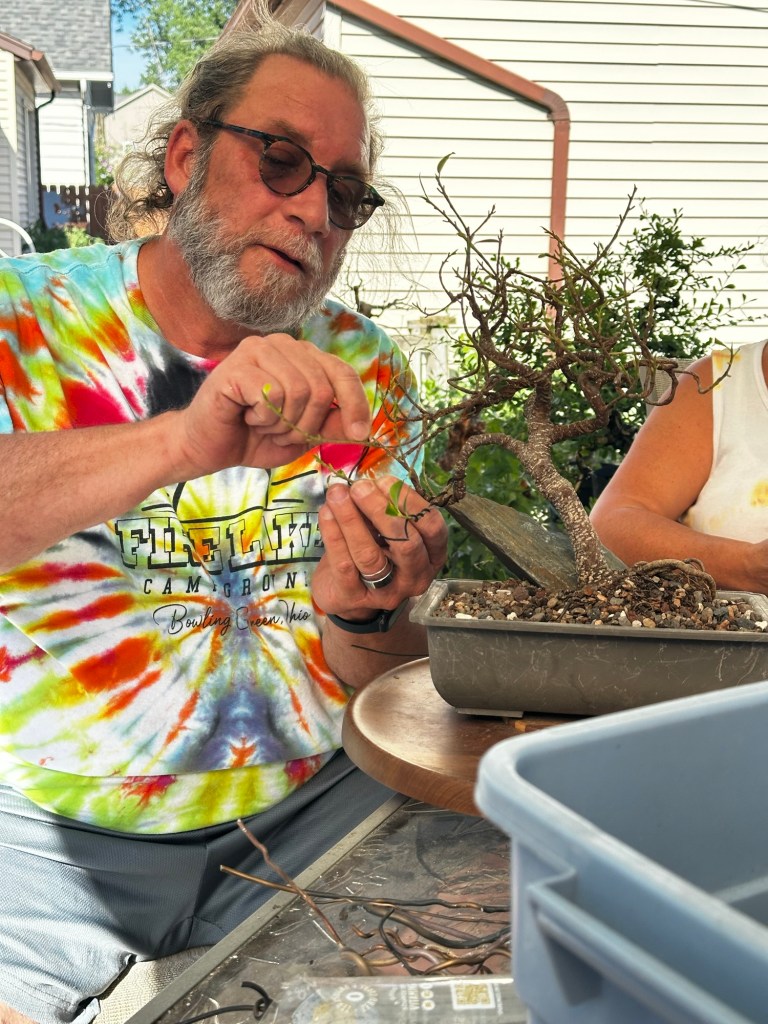
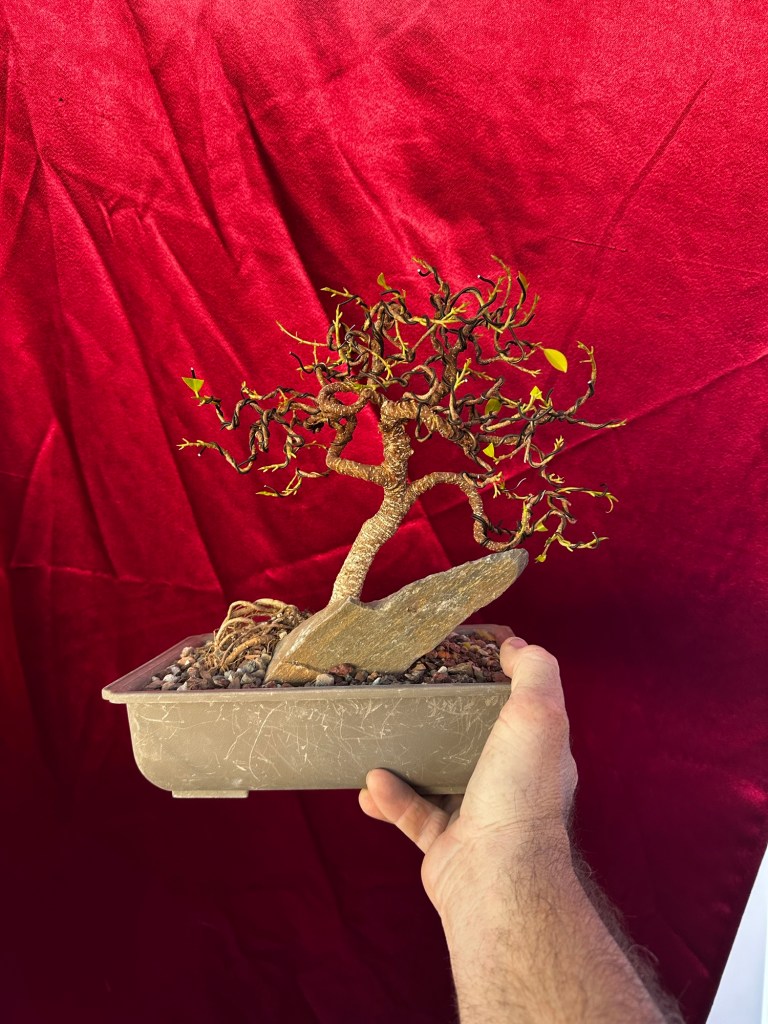
Below (and some pics above) is a tiger bark ficus (or Golden Gate, or kinman, or kemang, or whatever you want to call it) that John made in Toledo after he got back from the Orlando convention.

I took the wire off and…

….the branches stayed put. Surprisingly. It was a mere two months or less.

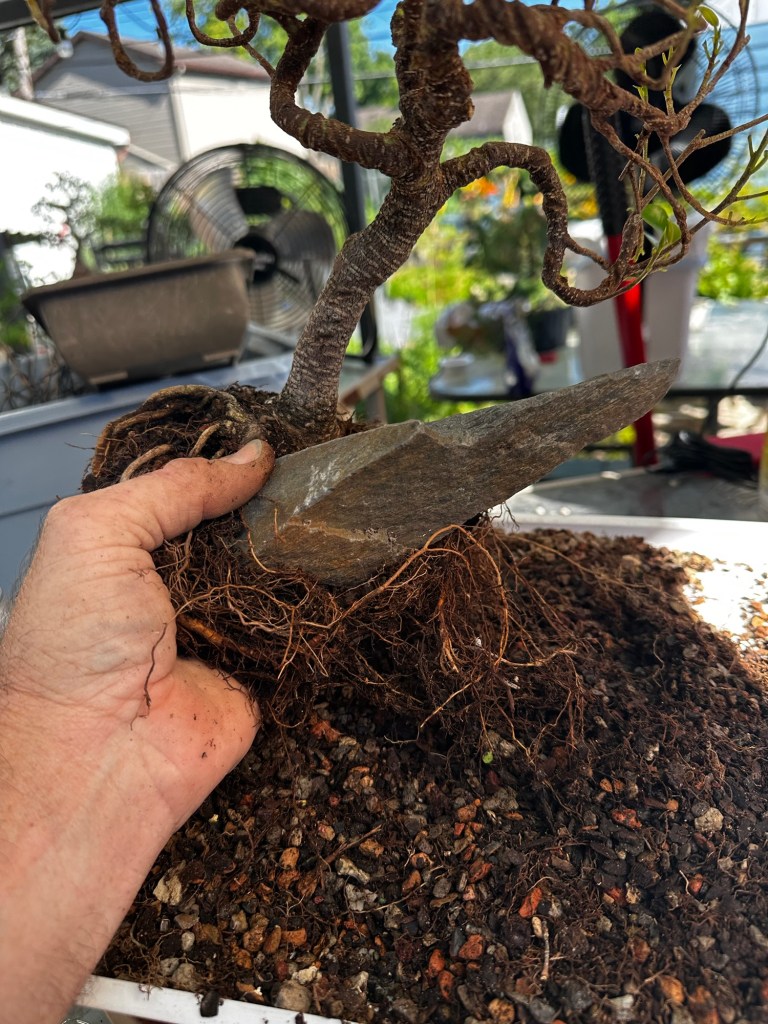
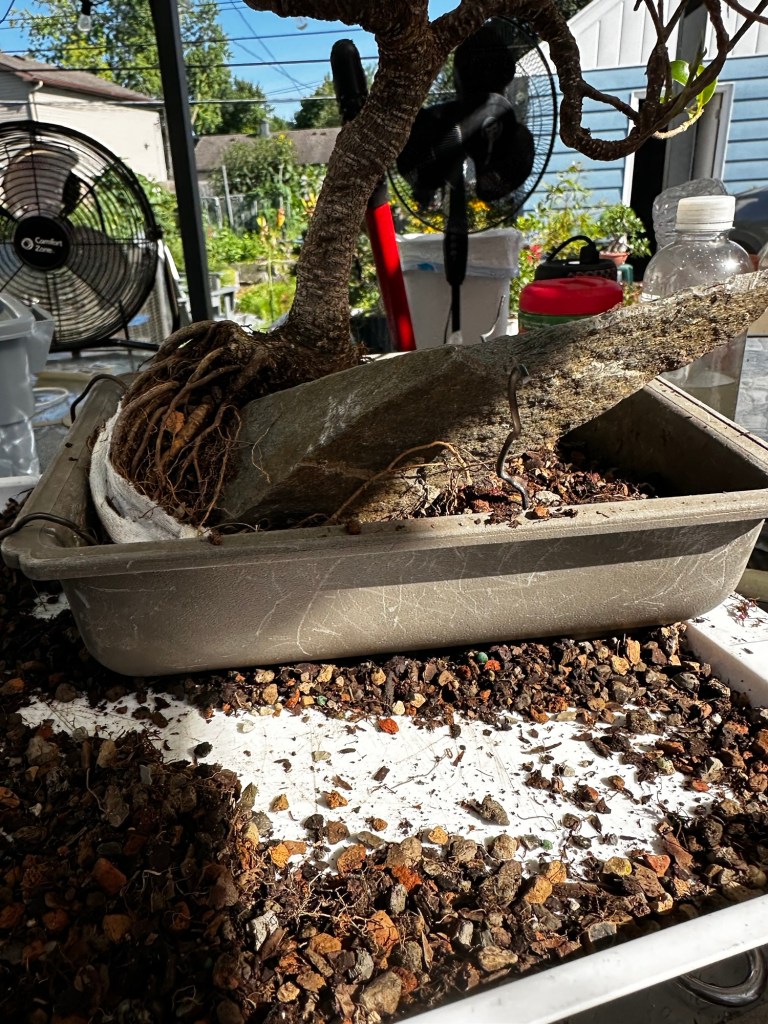
I think we need a rock outcropping to give the base some drama. and to expose the roots and give some repetition of movement to the composition.

John had the idea to add some fossil looking carvings to the rock (maybe next year).

Hi John. I made him rewire it.

While I enjoyed some….

….coffee?

And that’s it for now. I’ll add updates as I get them.

Let me know how you think, feel, or not, about the Cosmic style.

I won’t censor them. I’m not about that, I believe in freedom of expression.

BYEEEEEEEE!

  •