Reading view

Still building a ficus

Today, we have a ficus microcarpa (for those who have searched through the posts, in the far past I’ve called this species ficus retusa, incorrectly. Instead of going back and fixing them all, just keep in mind that Ficus retusa is a totally different species of fig, and take it for the ever changing nomenclature that is being updated. My apologies for any confusion). It belongs to Kathrin. I had done a demo for the Shofu Bonsai Society of Sarasota many years ago, and she won it in the raffle. You’ve seen it before, in the link below.

I had meant to update this tree several times in the past few months, but didn’t get to it. Here it was in October 2021.

And, as it was in the original post:

https://adamaskwhy.com/2020/10/14/building-a-ficus-microcarpa-bonsai/

I’ll wait as you step into the Way-Back Machine and travel back in time.

And, still in the past, the work we did at Kathrin’s garage, in my Sarasota Studygroup in October.

Then we went, the next day, into Wil’s garage.

First, we get rid of the Corona bottle cap I was using to hold a graft in place.

It worked pretty well, and played into my gallows-type humor at the time.

The graft took well on the main trunk.

But up top, we had trouble getting that branch to stick.

Take notice of the hole that was created from the branch, where the black wire is.

Now, back to today. Late July/early August, 2022.

I’ve had it here in Orlando for a few months. The idea was for me to bring it back the next month, but life got in the way. A few too many client’s trees to work on and a brief hospital stay made the tree sit on my bench and just grow. But sometimes that’s a good thing. It gives us something to work with. and it seems to like my yard.

The water at my nursery is good compared to Sarasota (it has to do with how we get our water in Orlando. This Post about cleaning calcium off a pot explains it a bit more)

If you compare the below pics with the older ones, you can really see how much the branches have thickened, and how we tied that one branch that refused to graft in place.

It’s finally taken, so now it’s time to remove the wire.

You can definitely see where the two trees are grafted on, but that’s ok, it’ll smooth itself out in time.

And somehow that one aerial root we pinned into the hole got pushed out.

Anyway, enough backstory, let’s get to work.

Remove the wire.

Not too badly scarred. And those wire scars on the branches are easily dealt with. You can literally shave them down and they disappear quickly.

That hole I pointed out above is just about filled in. That’s the advantage of unrestricted growth.

Now to defoliate.

There we go, we can see what we have to work with. Which is a lot.

We got lucky with the longer branches just happening to grow just where we need them.

This one is perfect for grafting; strong growth and fresh bark.

It’s gonna go about here, to fill in that empty spot. Now, to explain why we need grafting on a ficus like this: this is the plain Jane, regular old Ficus microcarpa, not one of the many cultivars. Which means that it doesn’t back bud as readily as one would like. In fact, it’s more prone to die back to the next node, or grow point.

The branch just above my pointer finger has been grafted on, and the next one above it as well.

After grafting, here’s the new pot. I debated for about ten minutes whether I should repot or do the top work first. Top work won out. The debate was whether the repot would be to strenuous on the grafts. But I figure I can be gentle.

Grafting time.

A freshly sharpened knife.

And…..here we go!

Grafting is easier than you might think. Simply cut a gouge into the the bark.

Doesn’t even need to be that big.

See?

Grab some type of grafting tape. In this case I’m using “self-amalgamating electrical tape”. I’ve come to use this because it only sticks to itself (self-amalgamating) and doesn’t damage the trees bark when you take it off. The point of the tape is to keep water out. In the past they’ve used beeswax, floral tape, vet wrap, even just cut paste.

Cut a piece..

Remove the backer piece…

Scrape the branch you are grafting, place it, and stretch the tape (it’s rubber), and wrap it tightly. I then like to use wire to hold it down as well.

And make sure the wire is tight. That holds the two pieces together. As the cuts heal, they want to pull away, so I’ve found that wire holds it in place nicely (like we did above on that recalcitrant branch).

On the side that’s holding the graft, two loops hold it down better than one.

Now for one more graft. Same process: cut a wedge…

Scrape the bark on the branch…

Apply the tape, add the wire…

Crank it down.

I was going to wire this tree out but I think I’ll just prune for movement and taper. Making sure to leave an active node so we diminish dieback.

All done with that.

One last thing before I repot, I’m going to smooth out this scar.

I start with a knob cutter…

Then clean it with my knife.

It’ll take a bit to heal, but it should heal.

Now it’s time to repot.

It definitely needs it.

Rake it out.

Unwinding the roots. This one went around the pot twice.

Cut back the long ones…

Rearrange the new ones

And now it’s time for the pot.

The pot is, believe it or not, a high quality Italian bonsai pot. High fired and of good clay.

Of course I tie it down.

Using the wire to hold some roots in place.

And fill it back in with good, well draining soil.

In the above pic, I’m pointing at a root I’ll split like I did in that original post (did you read it? Why not?)

Then some fertilizer.

And weed preventer.

And water it all in.

It’s hard to believe this tree started out with maybe four branches and a top. Especially it being a regular Ficus microcarpa, which isn’t know for much ramification.

But you can do it. You just need to follow the basics: cut it back, wire, let it grow, fertilize, unwire, cut it back, let it grow. Just keep doing that and you slowly build the tree.

It just takes time and work. Stay tuned for updates.

  •  

Bonsai Empire Intermediate Course 2: a review

A few months ago, I got an email from Oscar Jonker, from Bonsai Empire , asking me to give an honest review of his newest online class. I’ve collaborated with Oscar in the past, providing some media, hosting livestreams, etc, so I said “sure”. Little did I know that the class was so in-depth and full of information that it would take me days to finish!

So, my friends, here is The Review…..well, after the mandatory legal statement: according to the US FTC, I have to disclose whether I’ve received any compensation from Oscar or Bonsai Empire. I have not. This is not a paid review, simply a service provided to my friend and to let the Bonsai World know about a valuable resource. I was provided access to the class though, which you see by the above pic, costs a mere $59.99.

Some of you might wonder why I, as a possible competitor, might want to promote Bonsai empire (always ask why!). Easy answer, I don’t see myself as a competitor nor do I think any Art is a competition. Down that road is where we find division and strife. My business model has me providing in-person bonsai instruction. I have done online classes and courses, and you can find those easily, but my blog (Da’ Blog) is free to anyone. Besides, the business of bonsai is not a zero-sum game. It’s not a pie to be cut up and the only way your piece gets bigger is to take from someone else’s piece. By supporting and promoting bonsai, the pie gets bigger.

Ok, with all that said, THE REVIEW!

The course is laid out with 21 video lectures, starring Bjorn Bjorholm and Michael Hagedorn, two of my favorite bonsai artists from the USA. Both trained in Japan, both with amazing content (I subscribe to Michael’s blog). And both very knowledgable.

The video quality is top notch, as expected from a Bonsai Empire production. The knowledge imparted is in plain English, and presented in a humble way. You don’t need to know what a “moyogi momji with a melting nebari in a nanban pot with an understated namako glaze” is. Very accessible. By the way, who would put a moyogi in a nanban?

One refreshing thing, Bjorn isn’t averse to trunk chopping:

The information: both artists describe what they are doing and, most importantly, why. The chop above is for taper and movement. And after care is discussed, the how and why and when. There’s one spot where Michael explains that if you do this, at this time, you’ll see this result. But if it’s at another time of the year, you’ll see this.

It’s also set out in terms of the trees various stages of development.
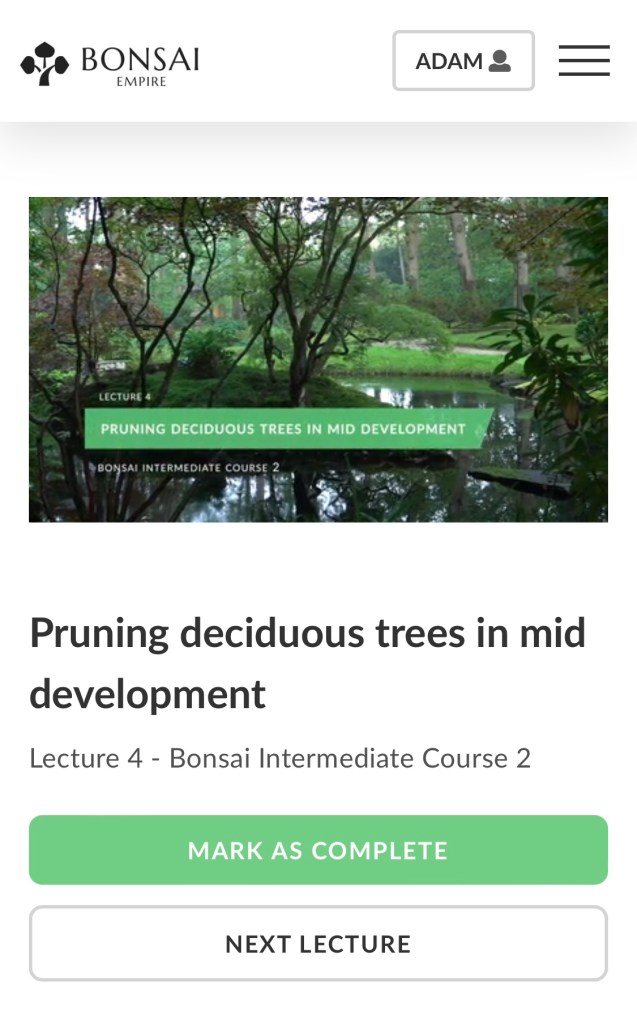
I followed the courses on my iPhone, and the video transitions from the different views was flawless.

You can watch like this:

With the video in the text.

Or with just the video (here in portrait mode).

Or in landscape, full screen mode (turning your phone horizontally).

There is also a closed captioned mode, for when you’re with company and don’t want the sound to bug those near you.
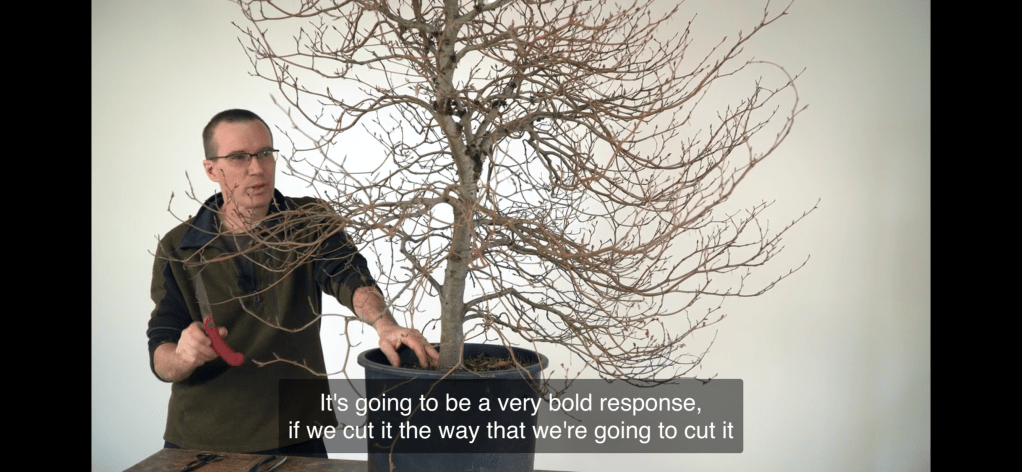
Above, Michael is tackling a huge beech.

The course covers both deciduous and coniferous trees. And styles.
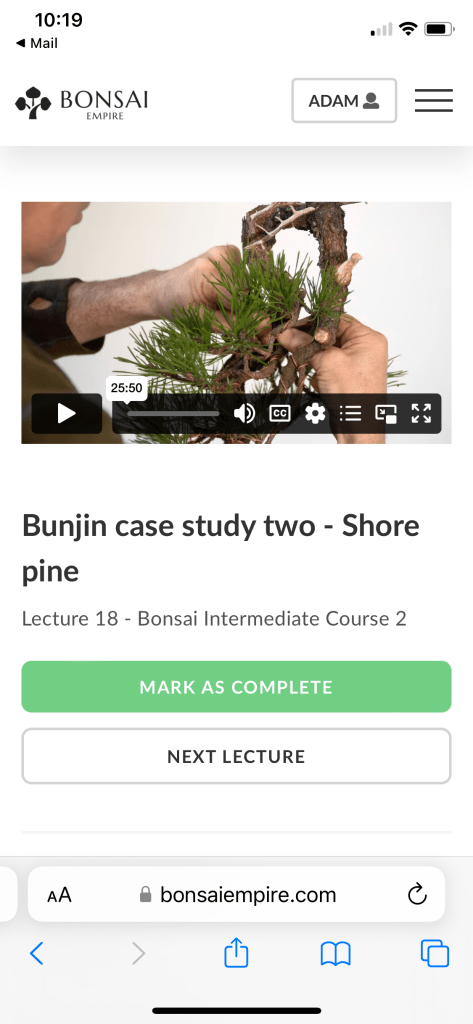
The pruning strategies between the two are covered, and contrasted.

If there are any drawbacks, I might have added some still photos that one could zoom in upon. You can zoom in on the video, but you have to pause it, and it’s not a full zoom (where you can see the dirt under the fingernails). I’m not sure how you could structure the addition of still shots, that’s above my skill level, but it would be cool.

You can also ask questions and comment, and they are answered pretty well.

At the end, you get a certificate of completion, which you can print out for framing

All in all, I’d say this course (after taking the previous courses, of course) would be a good addition to your digital library (did I mention you have lifetime access to the courses you’ve taken? Meaning you can go back and review what you’ve watched any time).

Well done Bjorn, Michael, and Oscar, and all the people at Bonsai Empire.

If you’re inclined to increase your bonsai knowledge (and I recommend you learn from as many artists as you can) take a look at Bonsai Empire’s courses (the full curriculum can be found here )

Now, I just might take this course:

Love me some Kimura!

  •  

Rock ‘N Roll

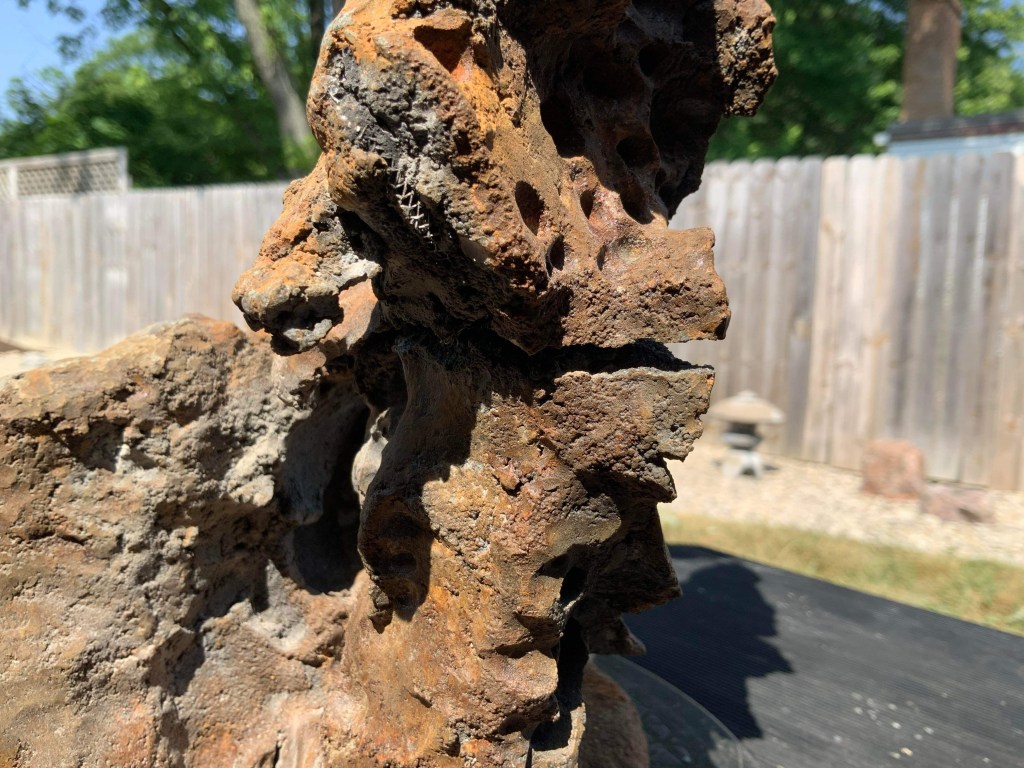
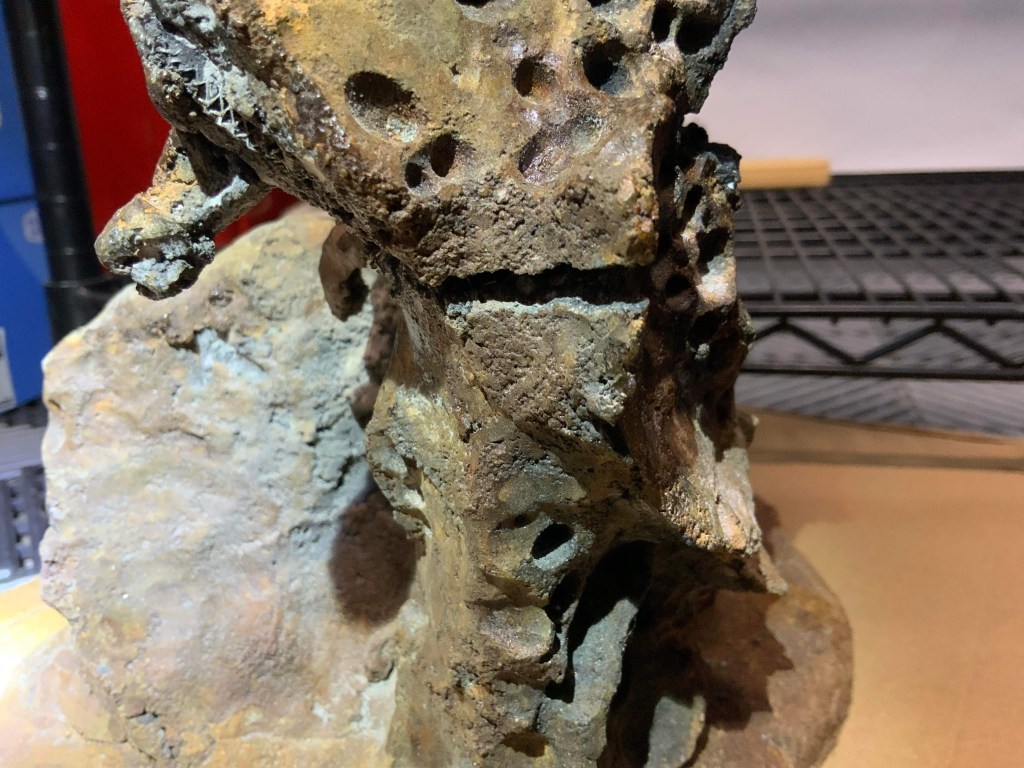
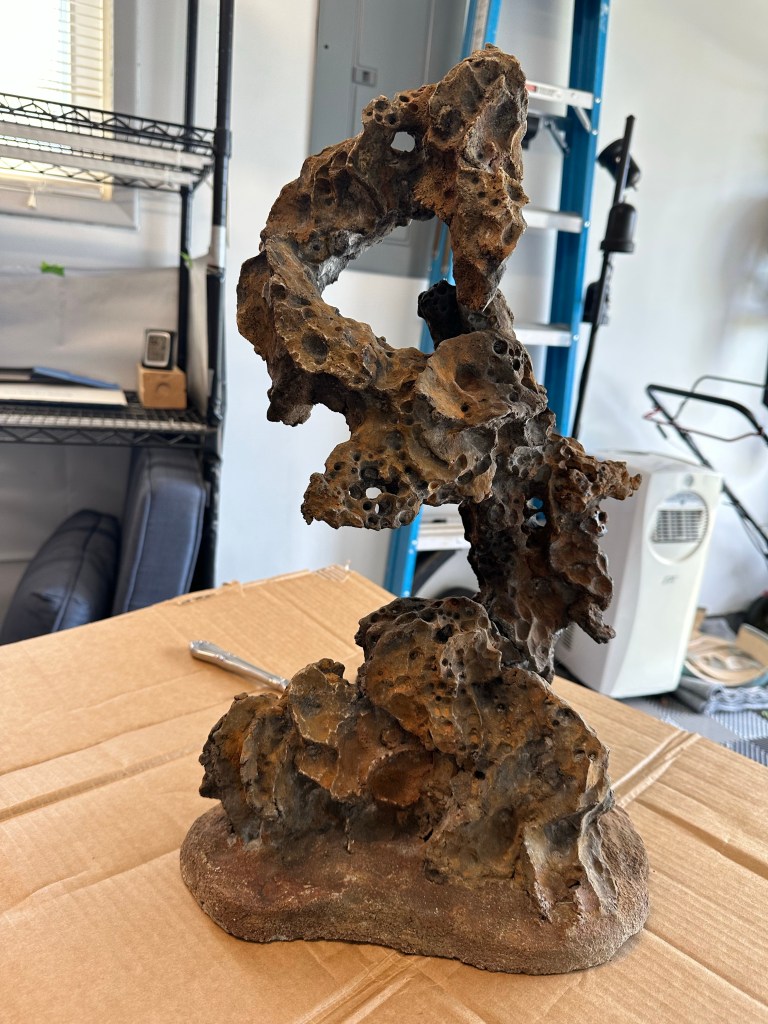
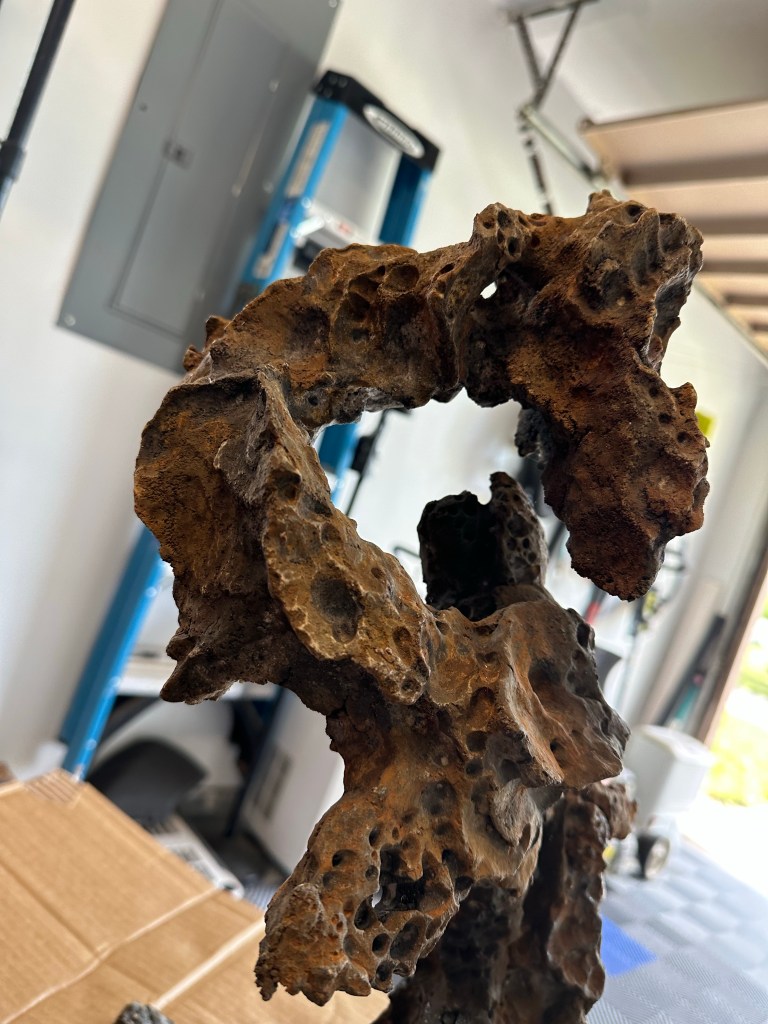
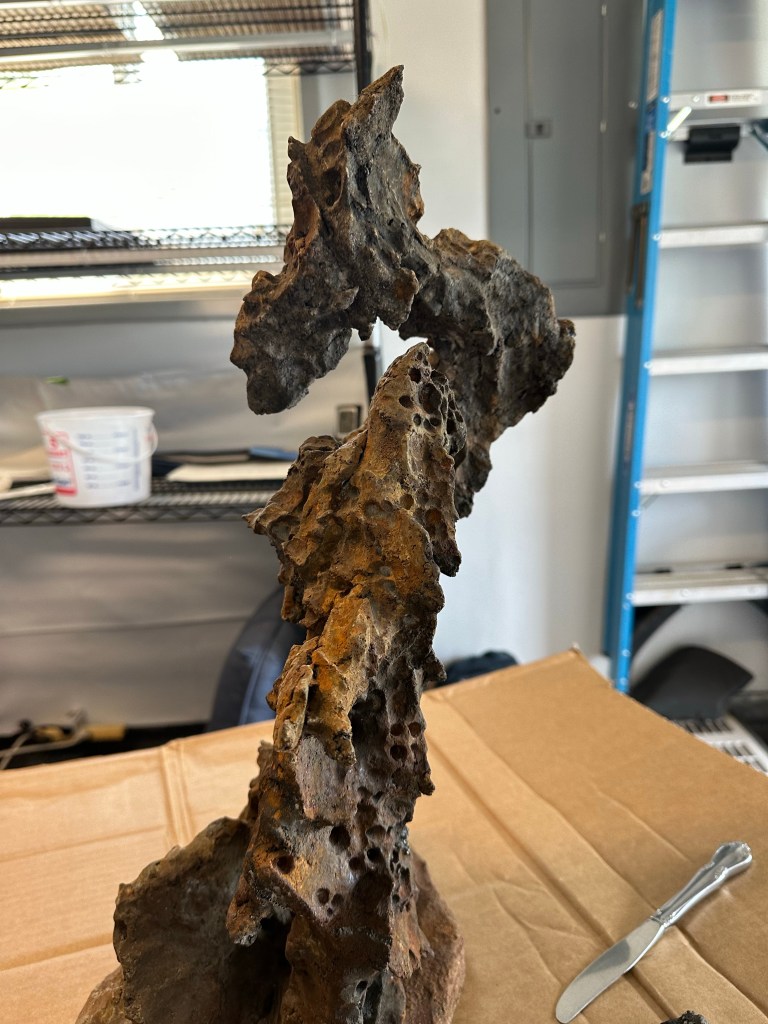
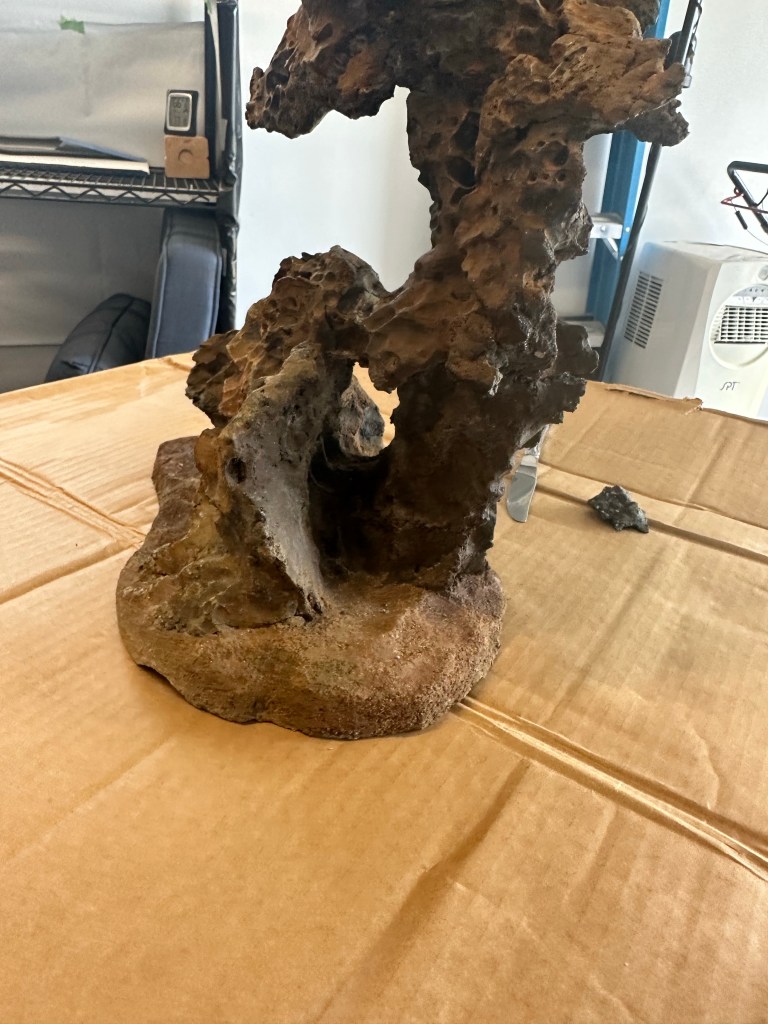
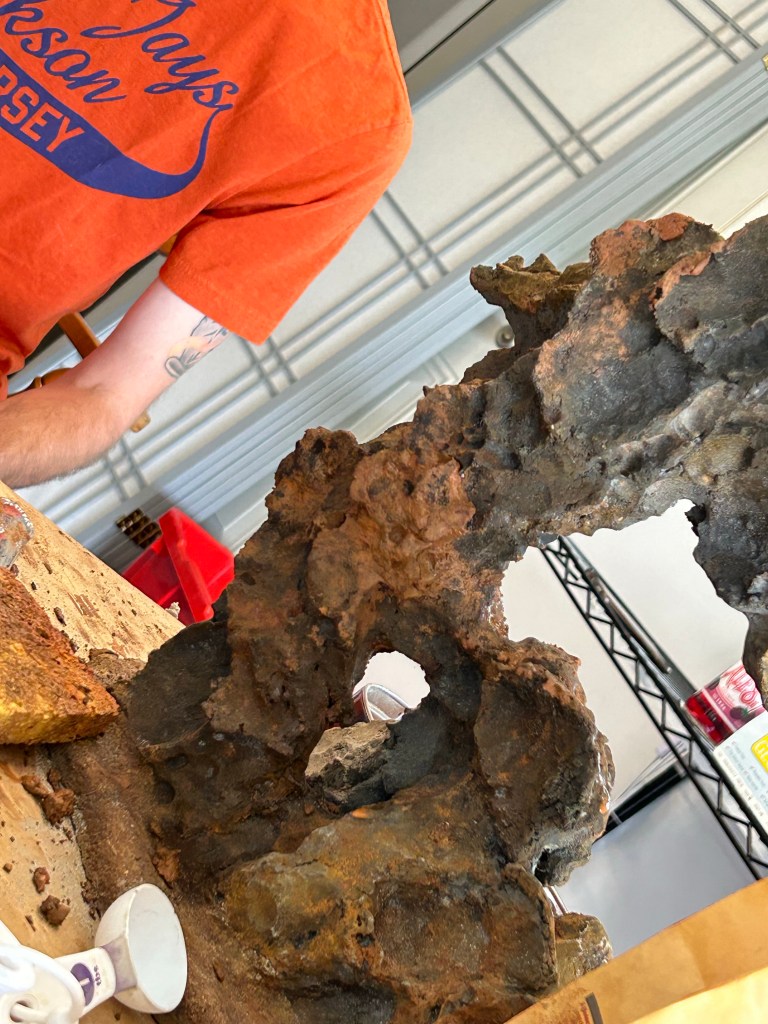
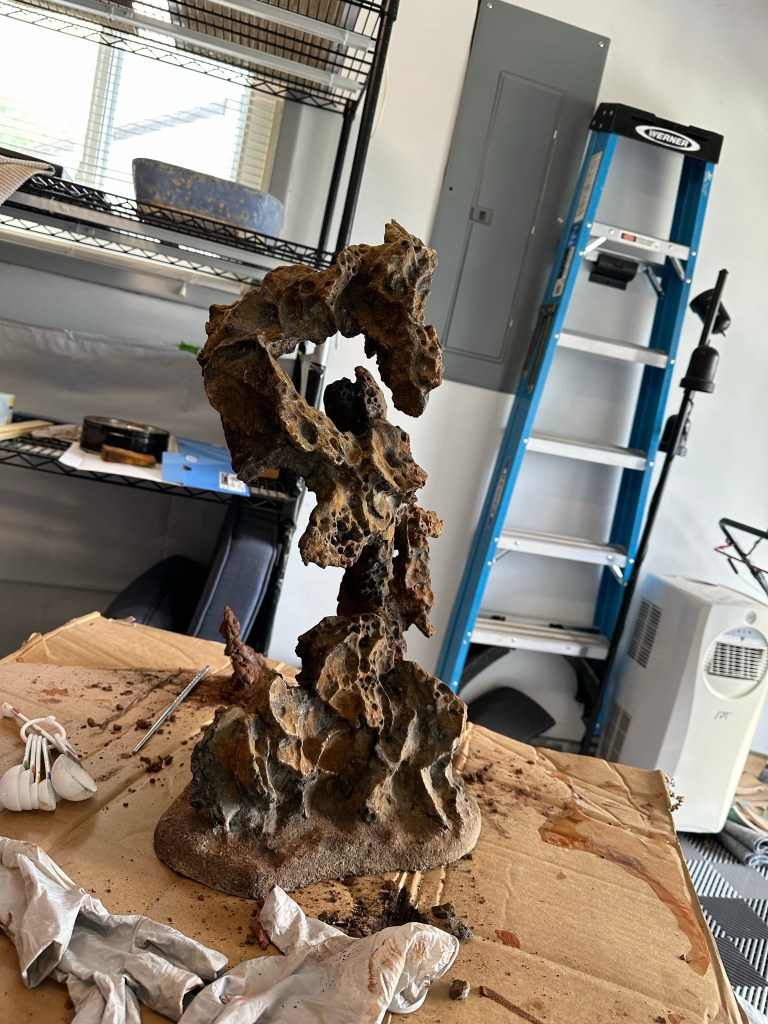
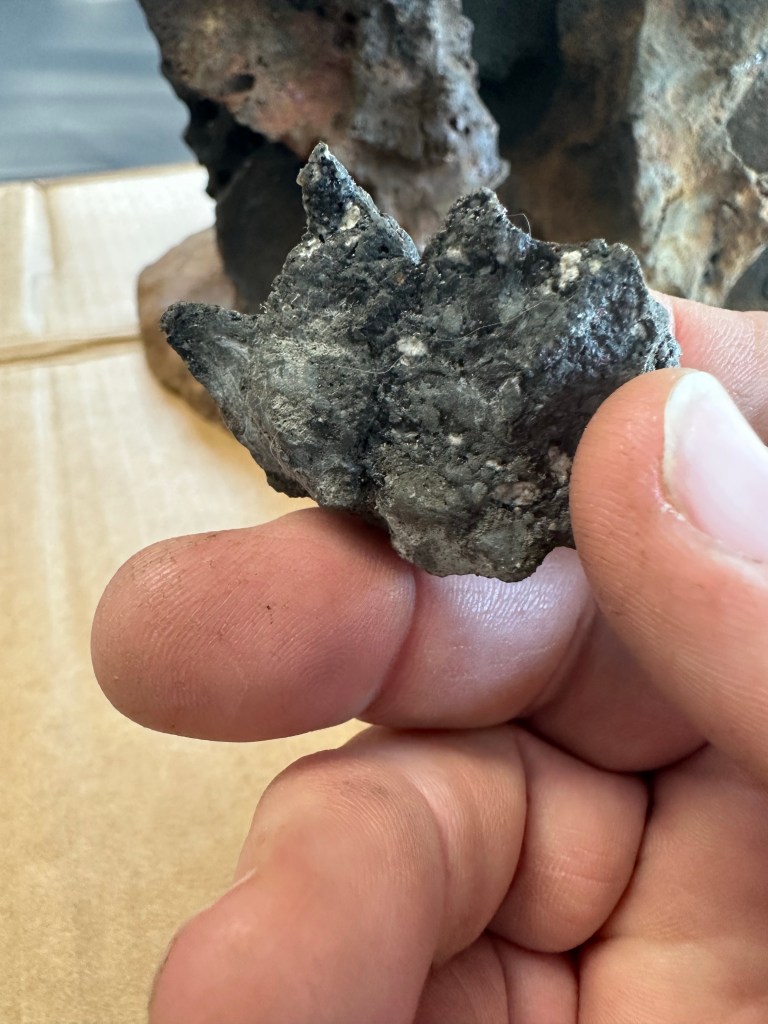
Now that’s a chunk of a block of a rock or something. Actually, it’s concrete, a manmade rock. But it’s “done broke” as they say…

It looks like a reptiles beak, below.

The story begins with a text, including some pics and videos, from Cincinnati.

The text was from Brendan. Say “Hi!” Brendan:

That’s him, my wife and me.

He got this “stone” from Poland, believe it or not. From a guy named Jacek Motyl. He makes rocks. Amazing rocks. Click on his name.

Anyway, Brendan ordered this stone and Jacek shipped it to him. In transit, it got “done broke”.

I’m not blaming the packing job. Jacek packed the rock well. I’m not blaming the Polish post office. Nor the USA postal service.

Let’s blame providence. The rock breaking gave me an opportunity to try something I’ve never done before. Sorry Brendan. Yes, this is my first attempt. I shall try my best sir.

The type of rock is technically called “tateishi”, or standing stone, used in a root over rock style called, in many modern spellings, “ishisuki”. When I was growing up in bonsai, we spelled it “ishitsuki”. Yeah, ishitsuki, I shit you not….but the modern spelling helps us to pronounce it correctly. The “T” and the “S” make a singular sound in Japanese. Kinda like an “tssss” sound.

Anyway, that’s my joke about root over rock style. It’s better in person, with the hand gestures and all.

Watch the video below to see how bad the break is.

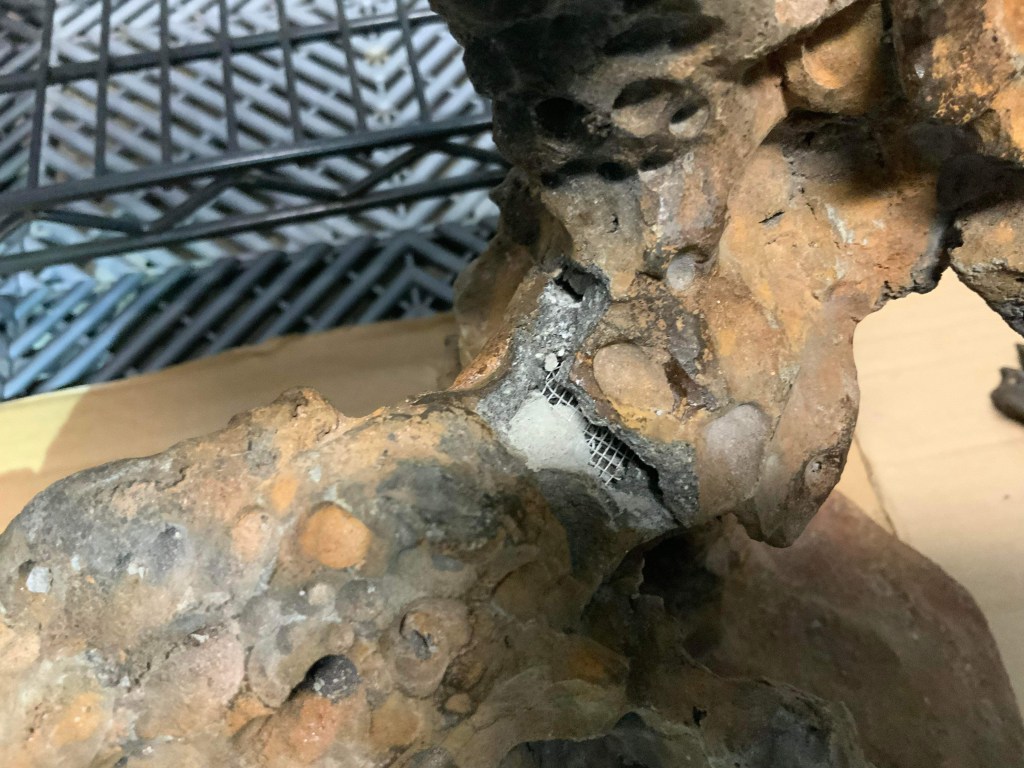
Not to give away secrets, but the shape was created by taking screen or hardware cloth and making the basic shape.

Then the screen is built up with cement. And colored, shaped, sculpted, aged, etc.

Pretty cool right?

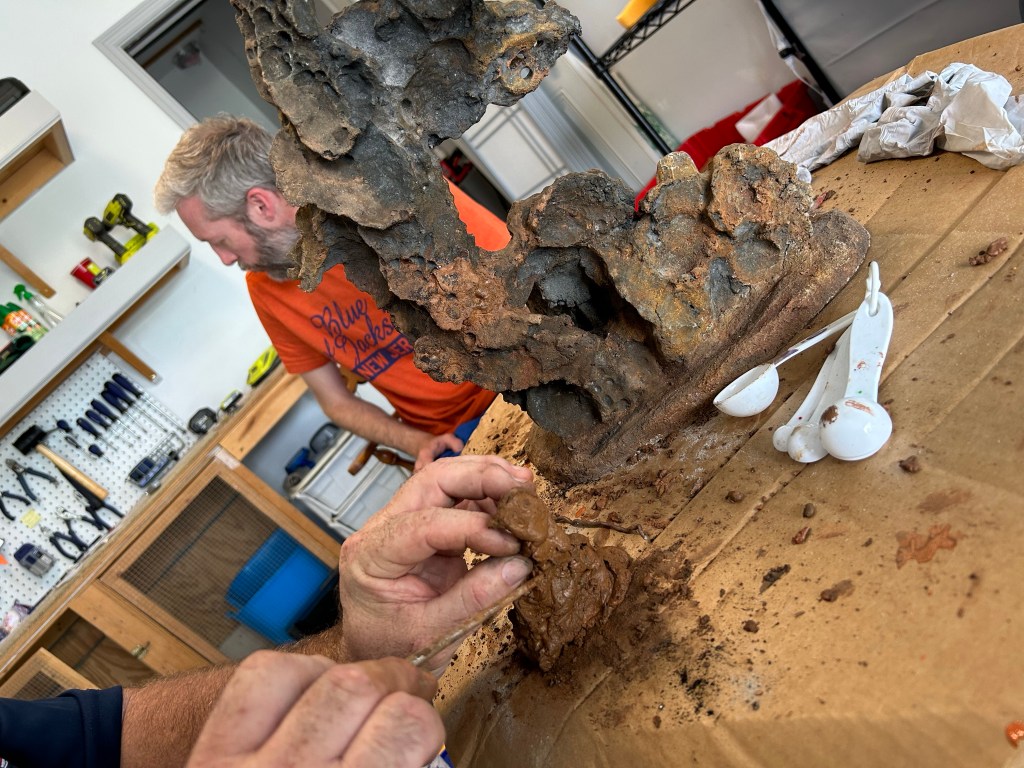
My job is to fix the break and match the colors and texture. So I first had Brendan try to find Ciment Fondue. I had remembered reading about the stuff reading in the old books and magazines when I first started in bonsai (books and magazines are these amazing learning tools that one held in one’s hands, printed on paper. You would flip pages and read and the knowledge was amazing. I could tell you about encyclopedias but you’d zone out quickly).

Brendan couldn’t find Ciment fondue. Searching on google, I found it. What is it?

CIMENT FONDU® is a hydraulic binder with an alumina content of approximately 40%. Composed mainly of calcium aluminate.

It’s a brand name, only available in Europe, so I told him to find something similar. And he did.

Refractory mortar.

Why something similar? So it expands and contracts in similar ways to heat and cold cycles as the original sculpture. And refractory cement is waterproof. An important thing up north, as water freezes in the cold, and can explode our rock. That might sound spectacular. But that’s not conducive to stable bonsai plantings.

There’s something soothing playing with cement.

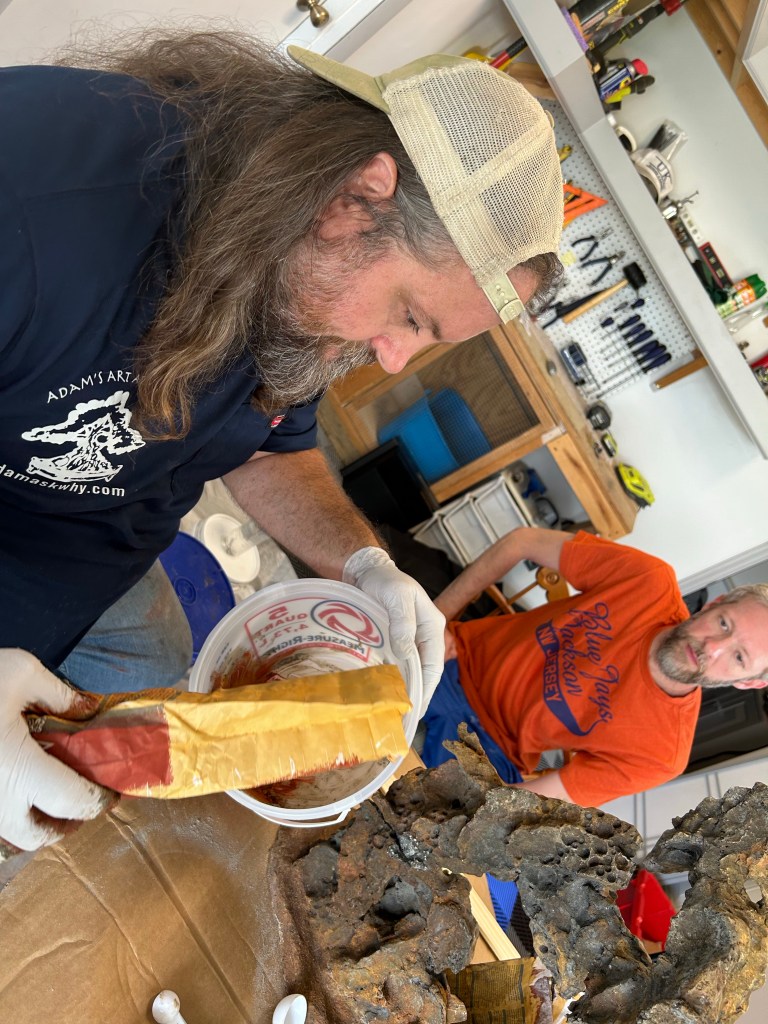
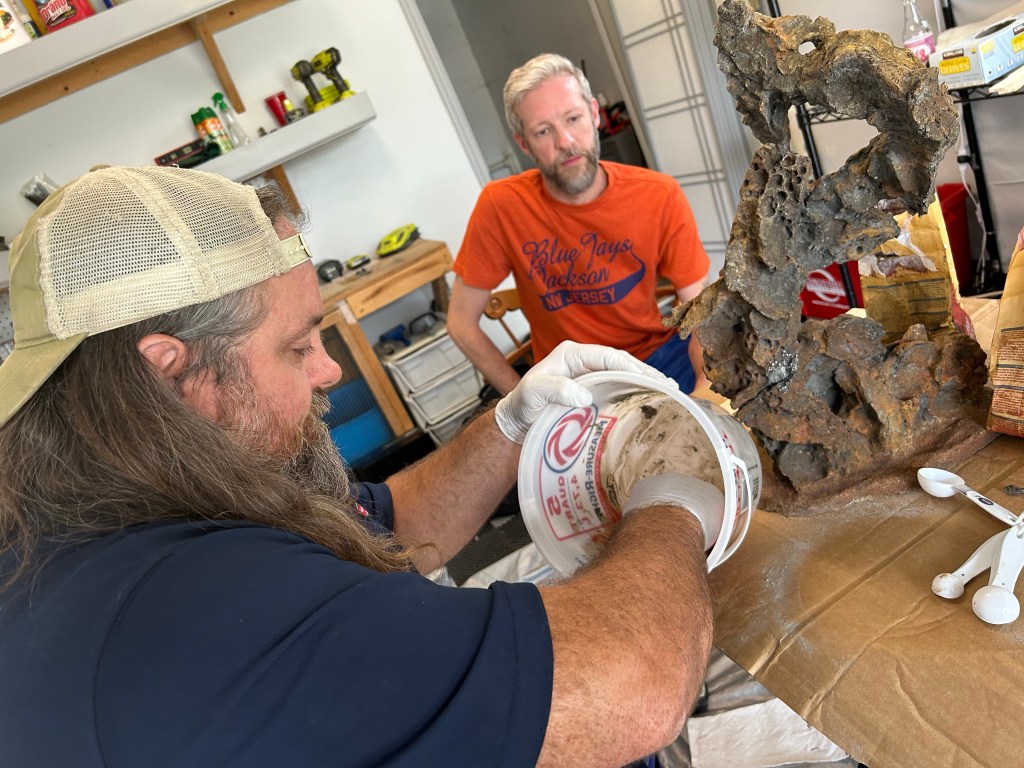
Measure out a portion….

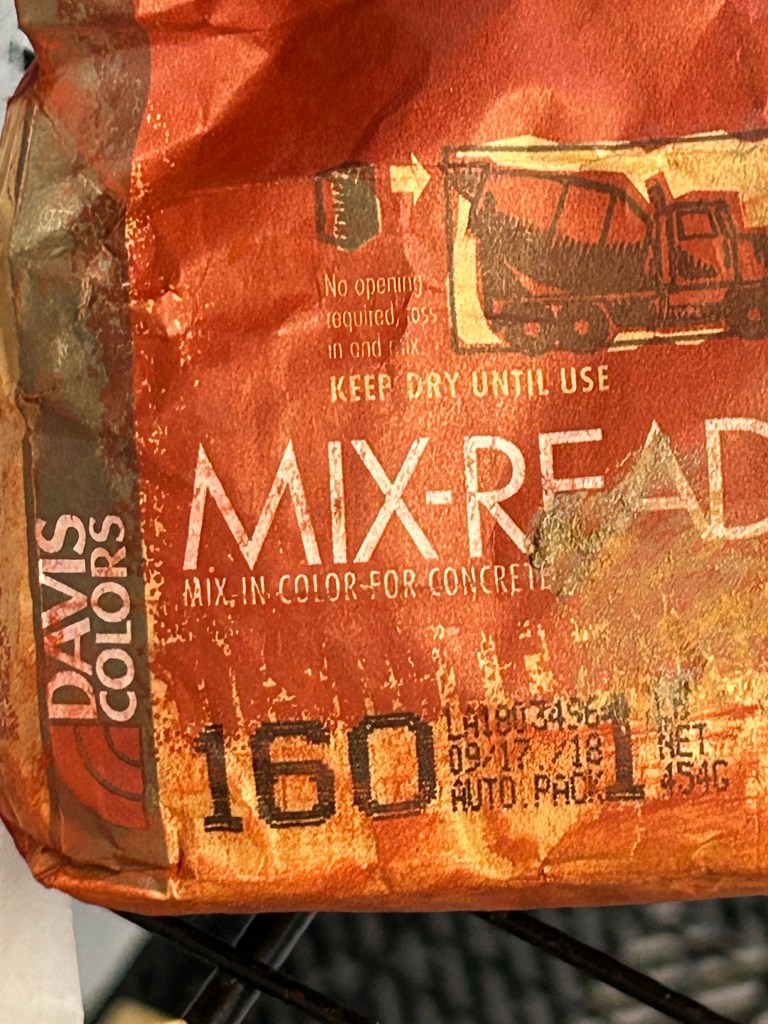
Add color (we had red, tan, called buff, and black. I eyeballed it).

And a trick, don’t mix it fully. You want variations.

Add water.

And move fast.

Brendan was watching me closely.

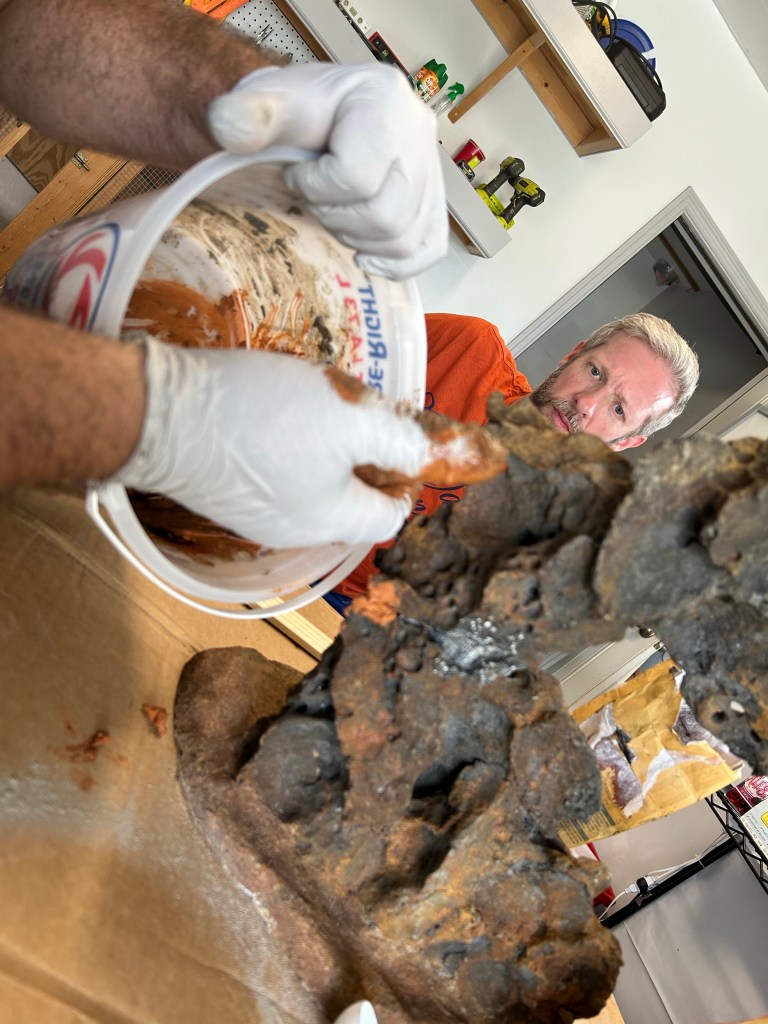
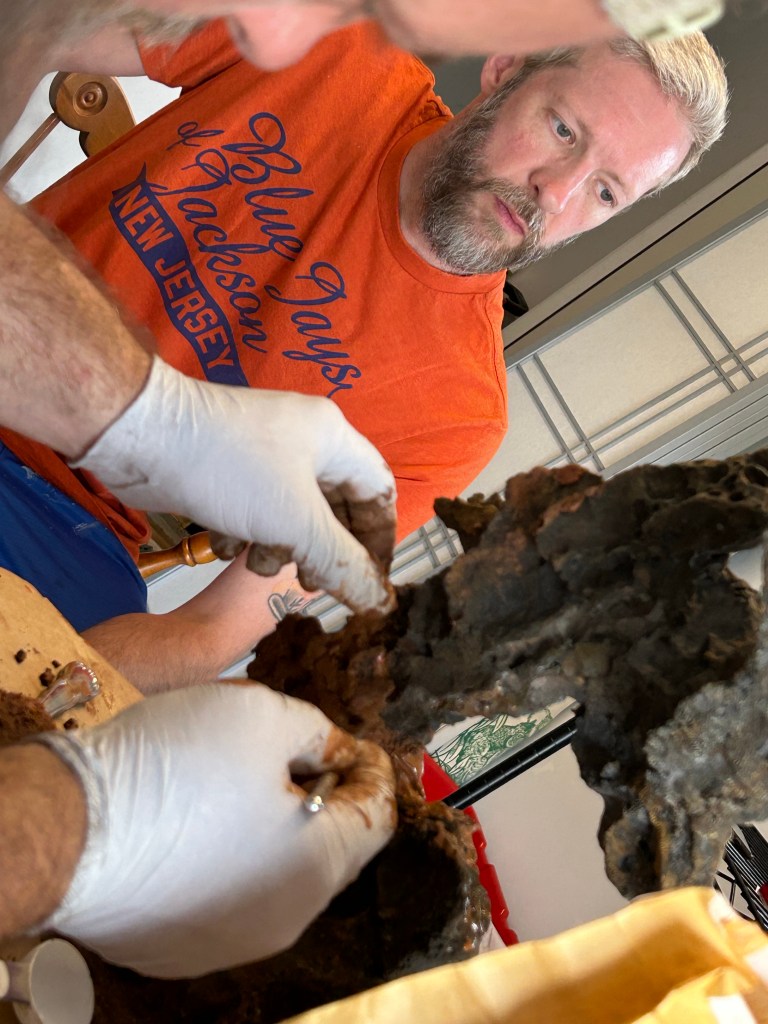
I smeared it, chopsticked it, blotted it. It’s a feeling thing.

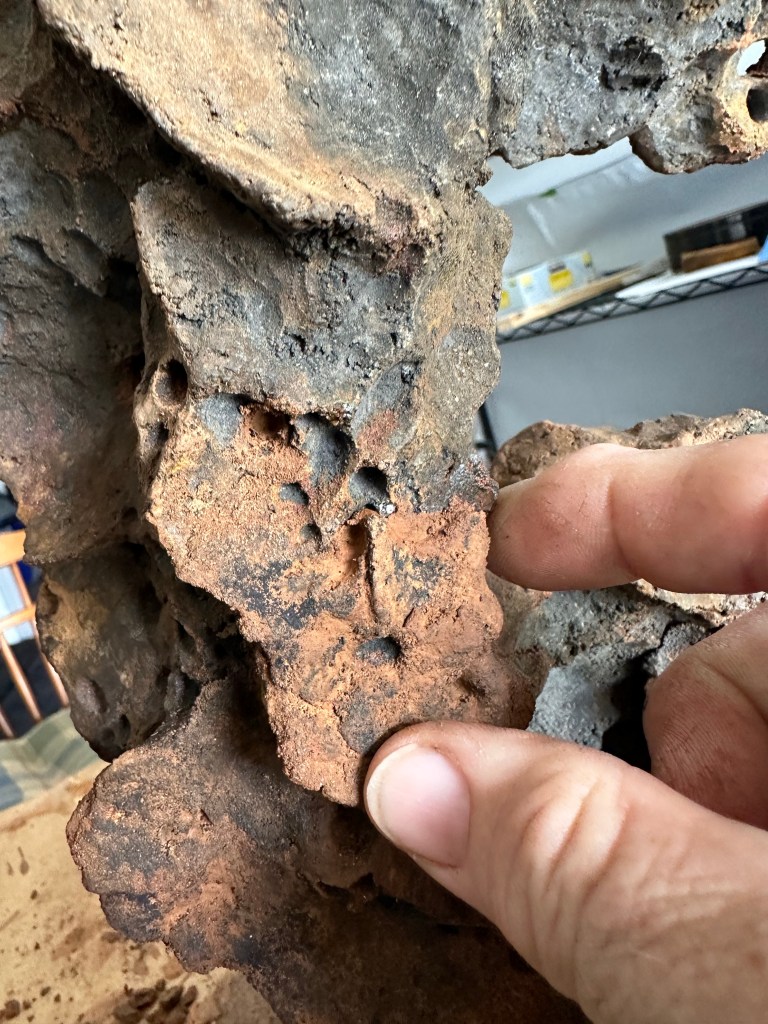
I made sure to push the material into the cracks to ensure the repair of the rock, and not just make an aesthetic facade.

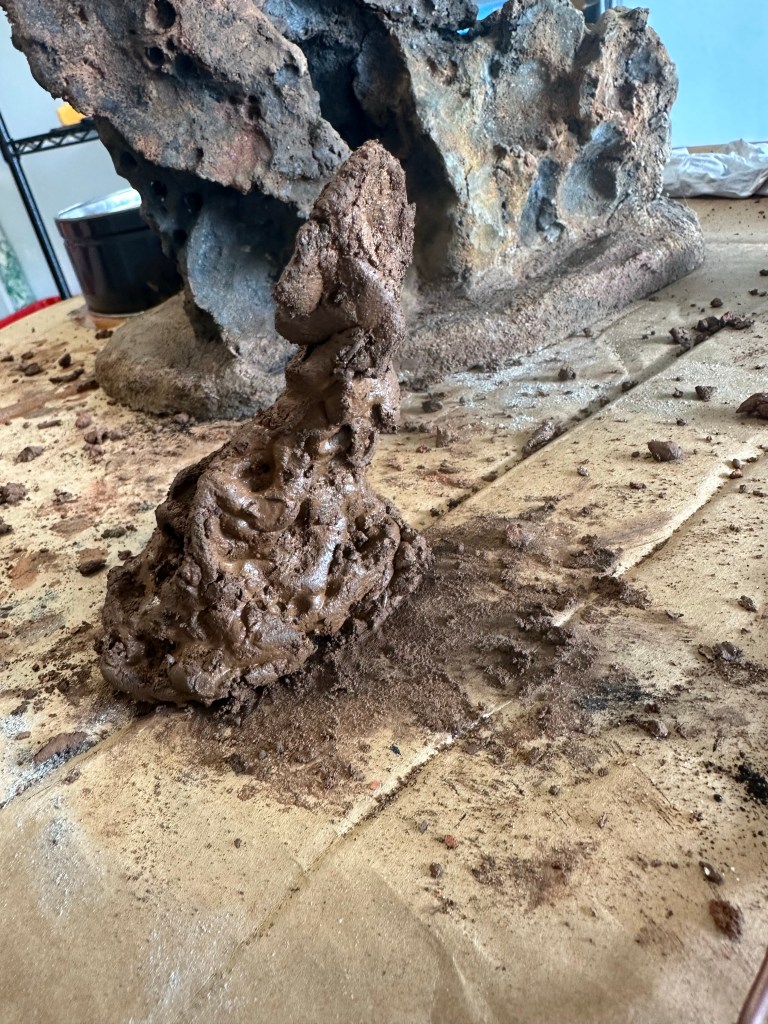
And with the leftover cement, I played around a little.

Yeah, I know what it looks like.

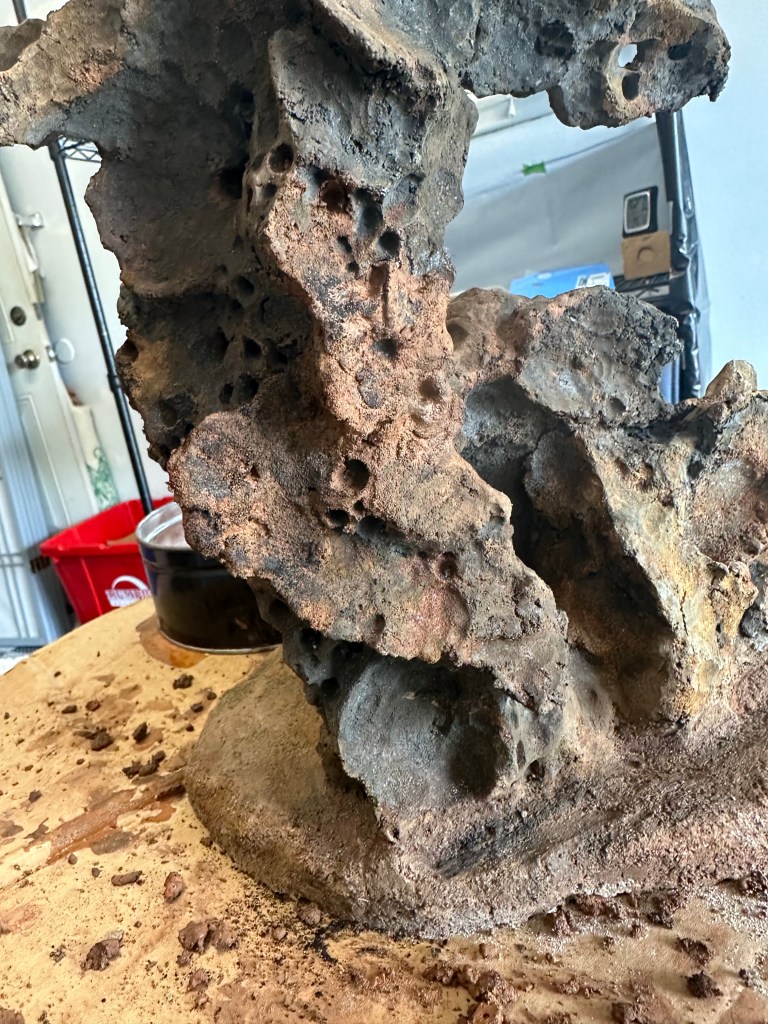
After the repair dried, I think it looks good.

I matched the texture and color. But most importantly, it’s solid.

I wouldn’t drop it, but it’s one piece again.

Below, is where I cemented that chunk back into place:

The “beak” is gone.

Now it’s up to Brendan what to do with it.

  •  

Spekboom Chutney by any other name might just be called dwarf jade relish

Consider the Portulacaria afra, what many call dwarf jade, or port, for short. In South Africa, where the tree is native to, it’s called “spekboom” which literally means “pork bush”. Interesting name…..

We know that it’s a favorite food of elephants (one common name is elephant bush) and rhinos. Goats love it too. What about us? Is it edible? More importantly, is it eatable? How does it taste?

My kids used to call it “apple tree” because to me (yes I tasted it. I’m a curious SOB), it tastes like a Granny Smith apple.

Here is an article I published in 2012 containing everything you ever wanted to know about Portulacaria afra. In it I talk about the habitat, the grazing practices of elephants, how a dwarf jade photosynthesizes and of course, all of the off topic rabbit holes I go down, the intemperate thoughts on life, the universe, and everything. I’m still even a little more upbeat in my writing, as I had not lived through the several long dark tea times of the soul I’ve experienced yet.

Any who (the who is Wil) I’ve been challenging my student (the aforementioned Wil) to come up with a dwarf jade chutney, like they make in the finer eating establishments (and farmhouses spattered around the wilderness) of South Africa.

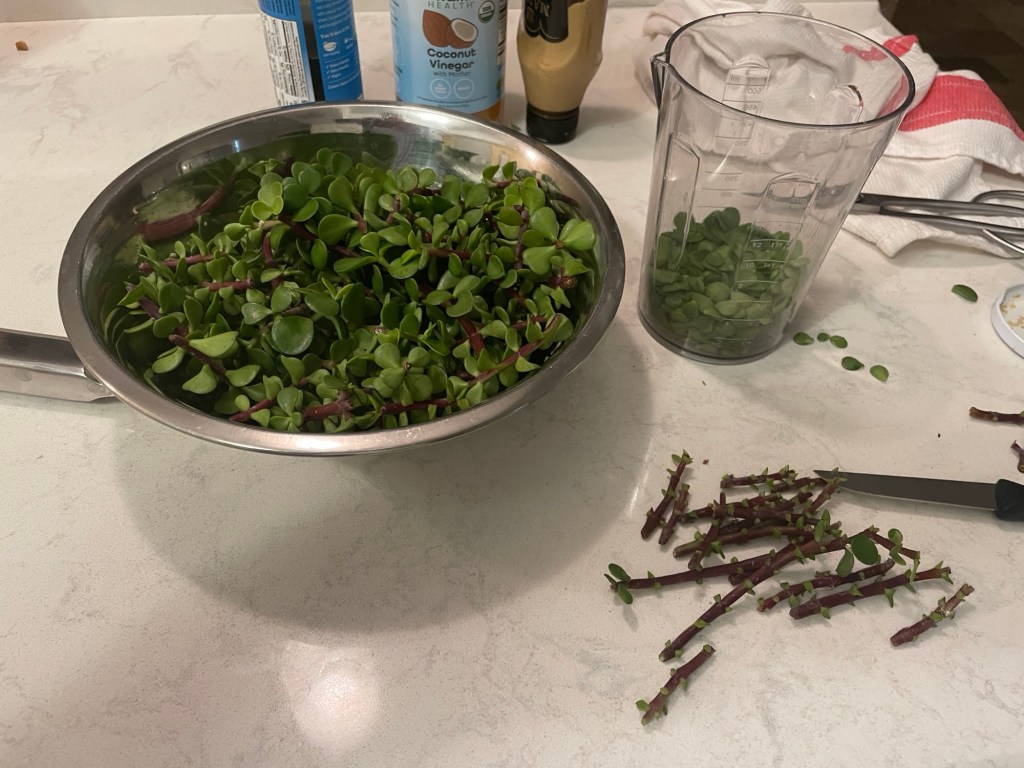
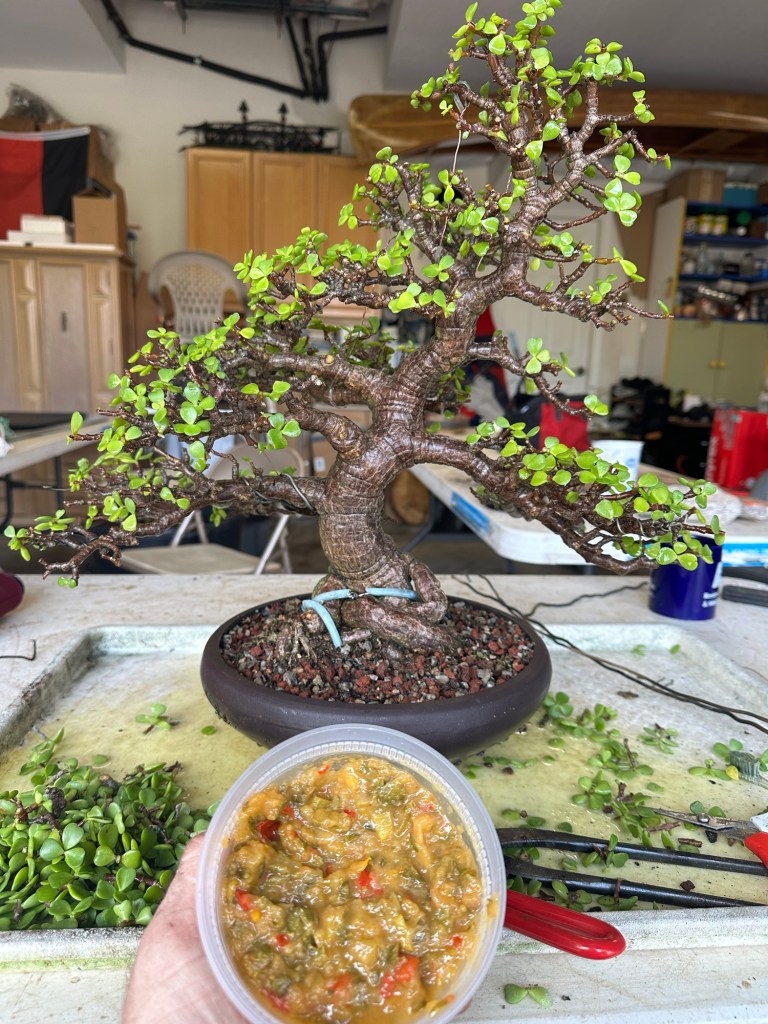
Finally, he did. First, he had to grow, harvest, and process some leaves.

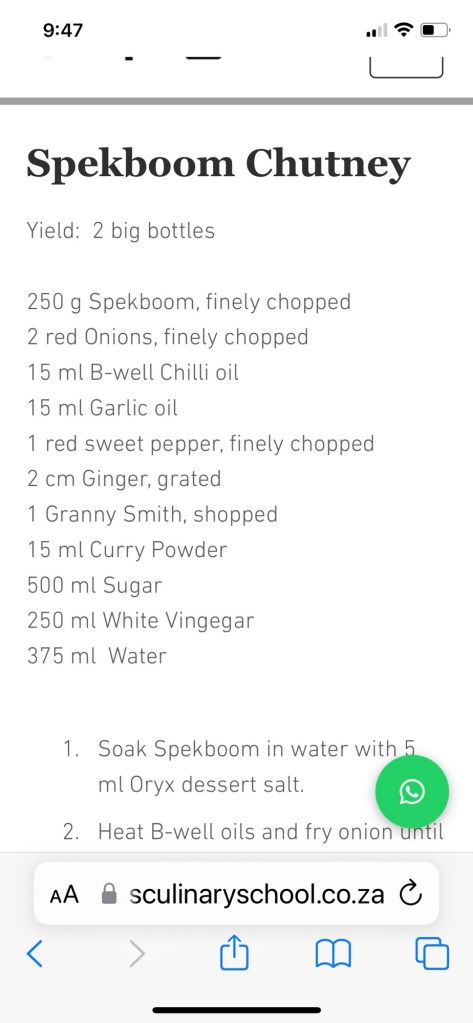
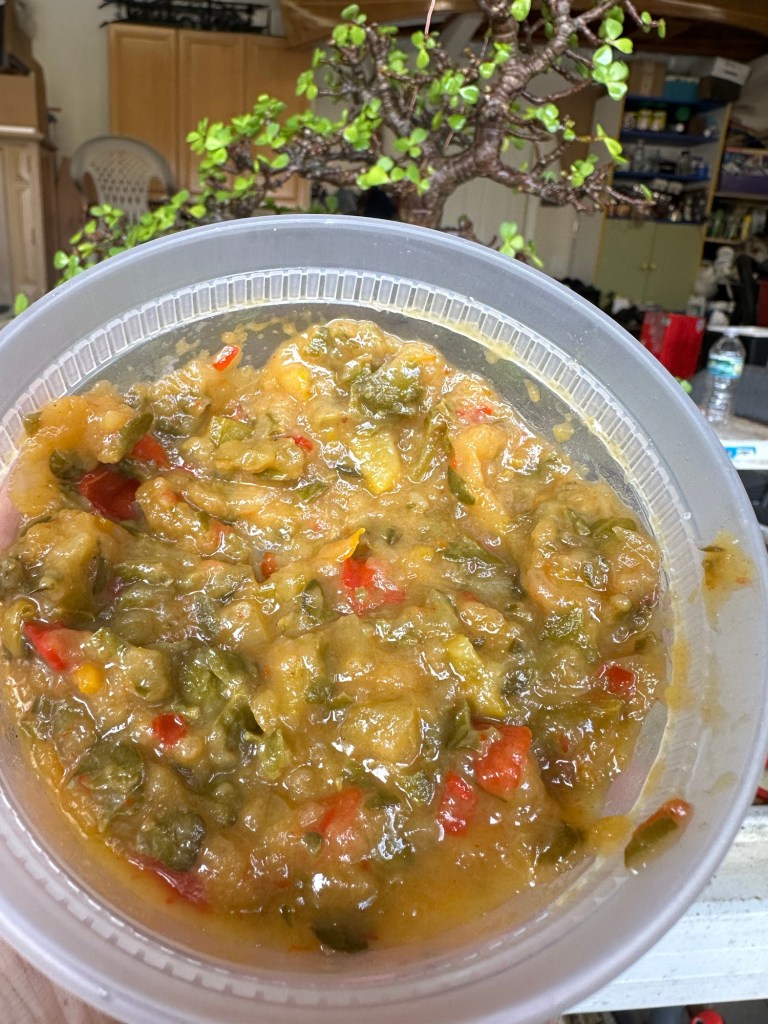
The recipe:

He had to make some changes to the ingredients as there are some products ubiquitous to South Africa that we just don’t have. Here’s the original recipe:

I mean, what’s up with a ml? And then a cm? You’d have to work at NASA to be able to convert from metric to whatever we call our units of measurements.

And what is “B-Well chilli oil? Is it chili oil or some other crazy thing called chilli oil? And who is getting well by guzzling oil? Oryx dessert salt? Is that salt from the desert but with an extra “s” or is it sweet salt?

Wil is a better chef than I. He knows when the garlic goes into the dish. And how much abuse it can take to survive the fire. Wil is the Man! And not in that negative connotated way, like “Down with the Man!” But like “Yo! Dude, you da’Man!”, though I do think he was a member of the CIA (not that one, but the Culinary institute of America).

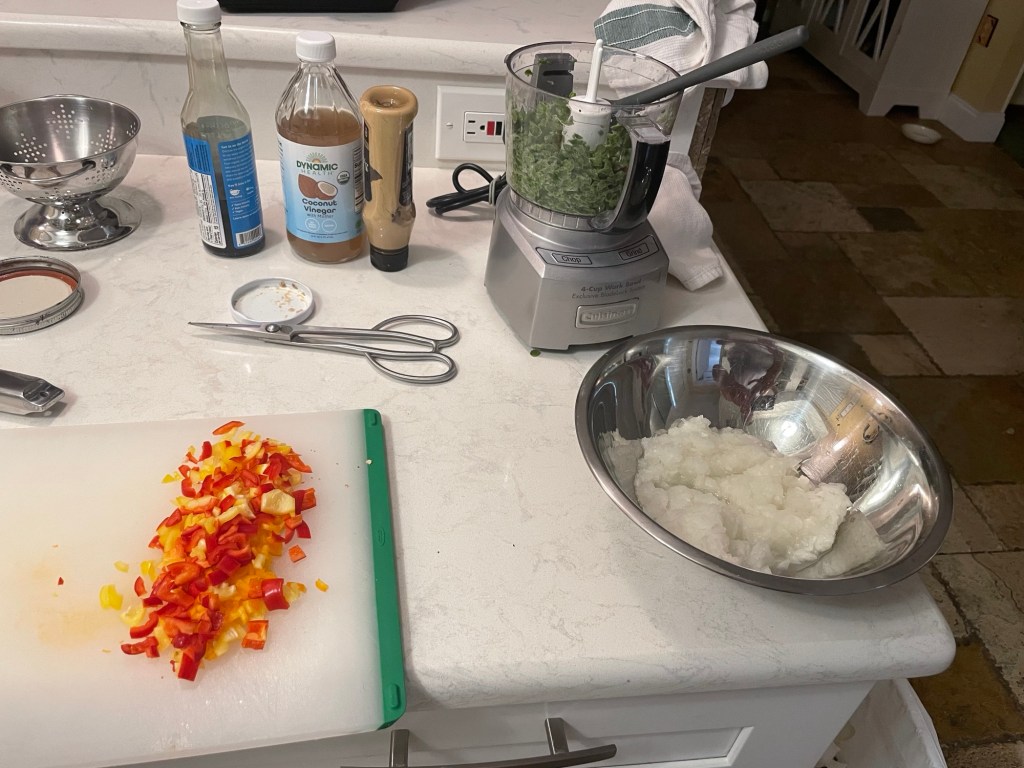
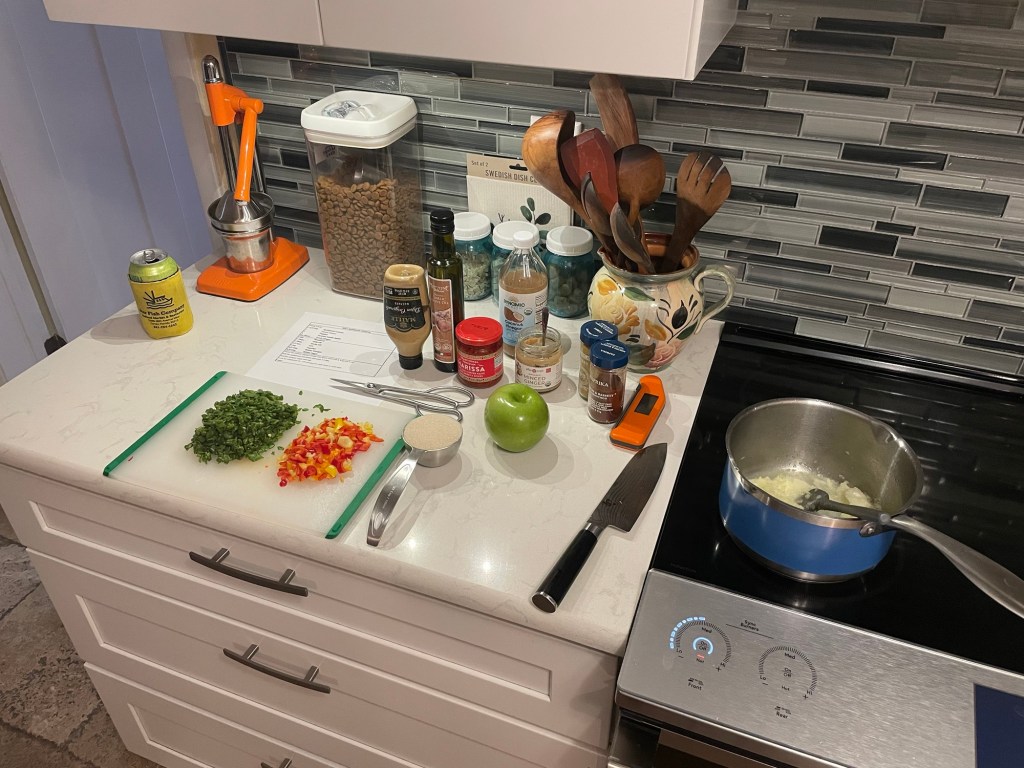
Chopping and sorting.

Mis en place in…ah, place.

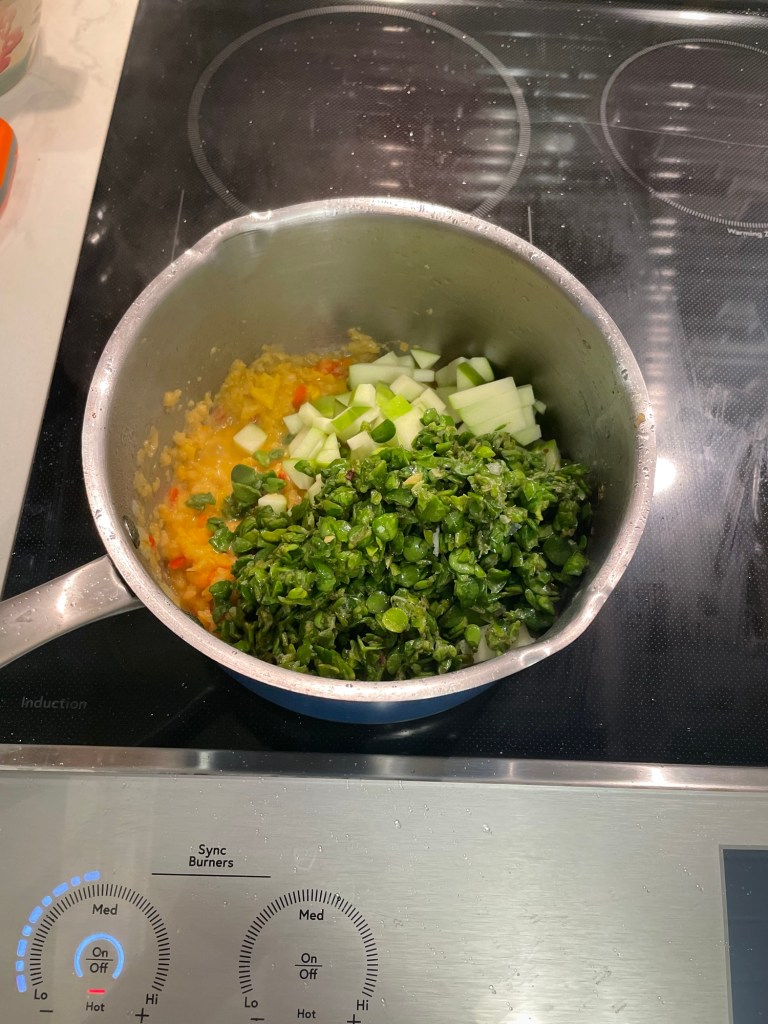
And so it begins!

I can smell it!

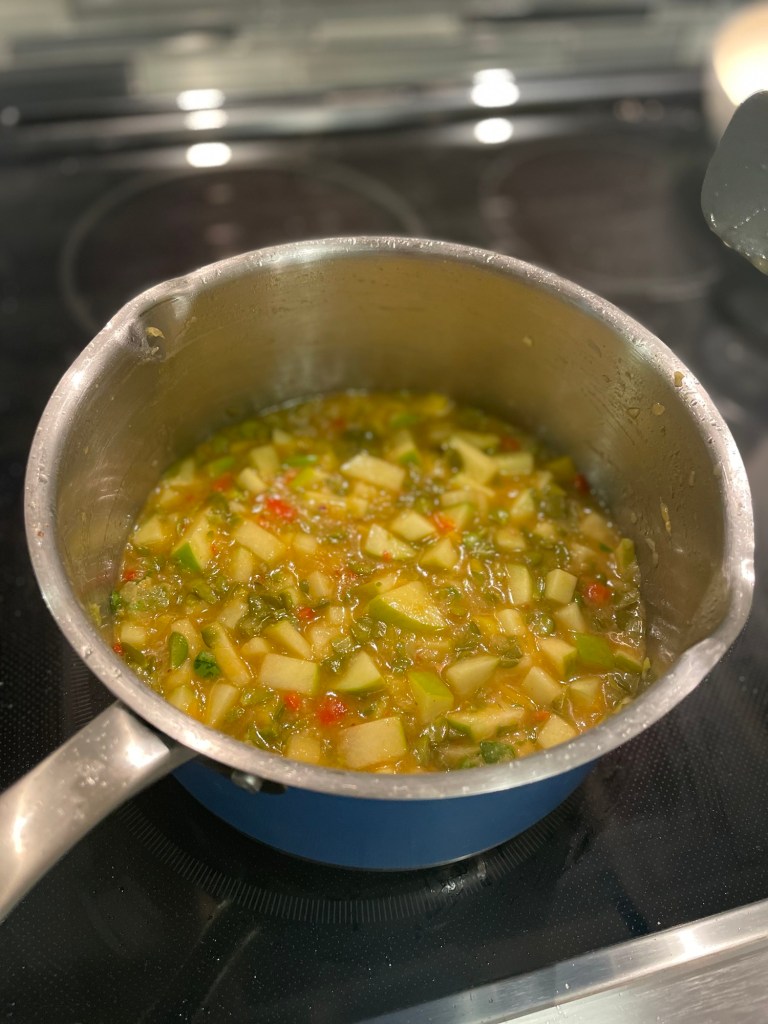
He kept sending me these pics as he was cooking.

It would be several days before I got to taste it.

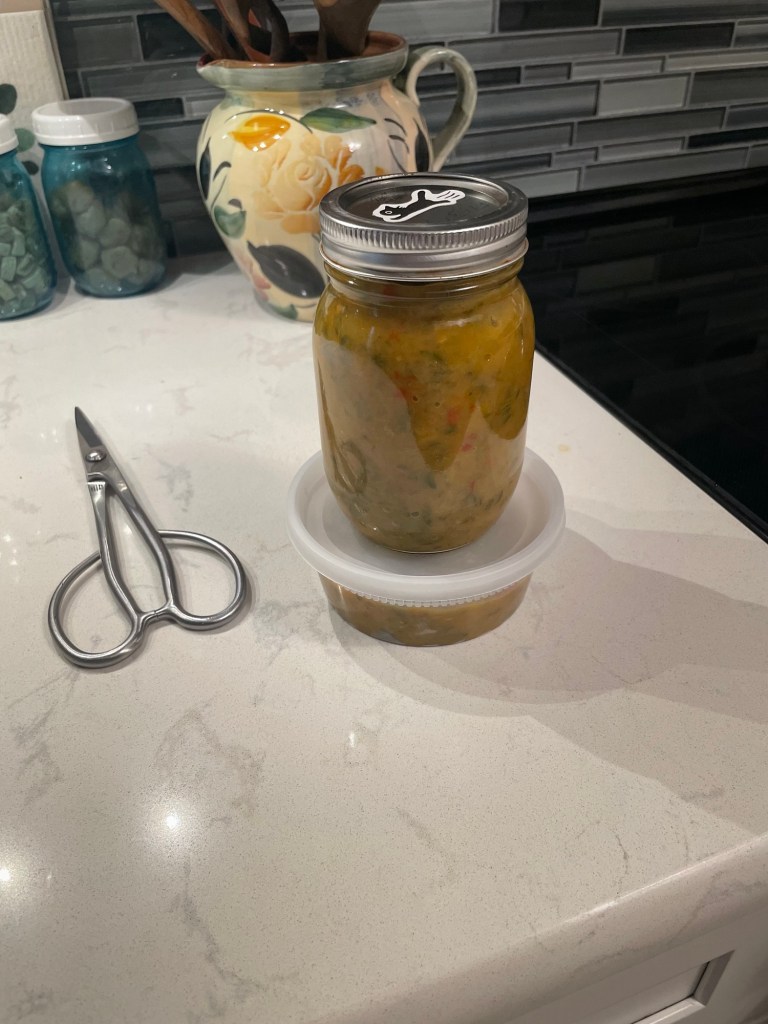
He even made it fancy with a pussy cat sticker.

And he managed to get that pair of scissors in almost every shot.

Is it good? He’ll yeah. I’ve had it on pork chops, on bread, crackers….

It’s especially good on hot dogs.

Hhhmmmmmnnnnnn……

To answer the question, “Is it edible?” Yes, and nutritious.

Is it eatable? Definitely. Sprinkle it on salads, pickle the stems, or make WIL’s SPEKBOOM CHUTNEY™ for your next backyard get-together.
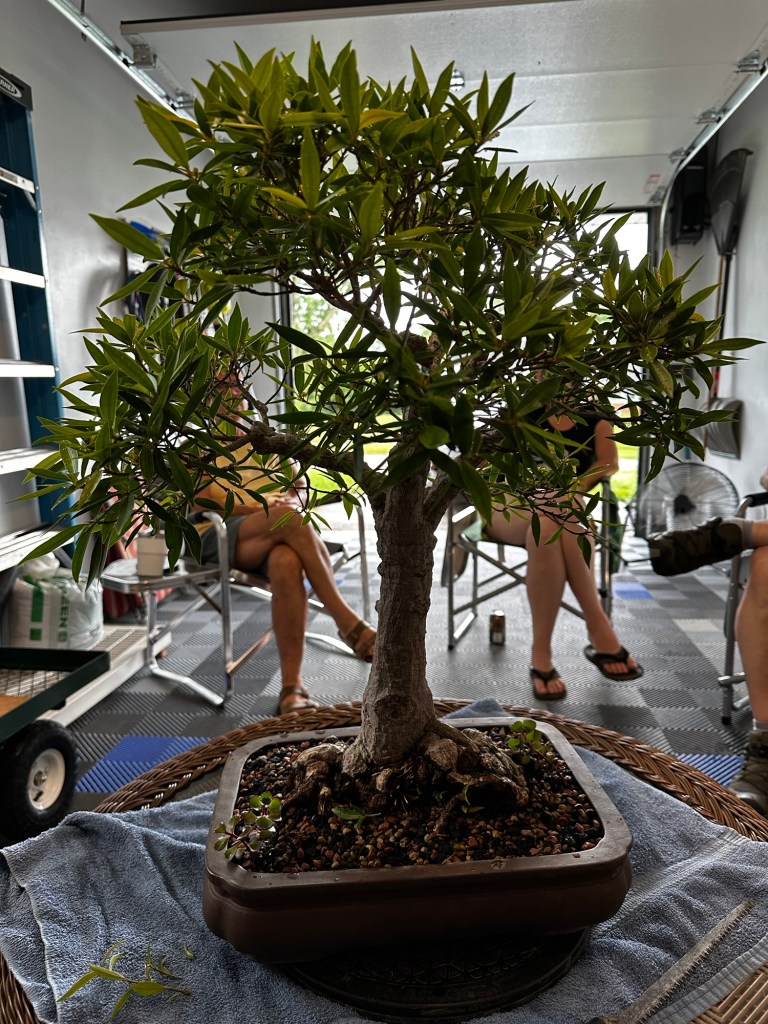
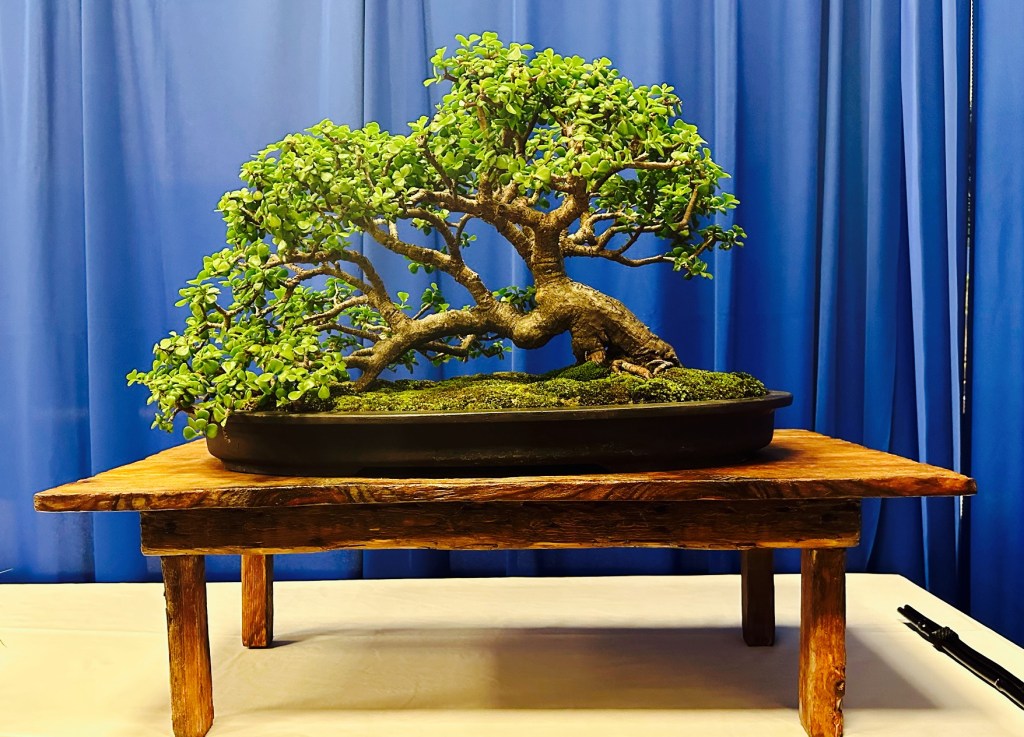
Below is Wil’s fantastic southern live oak style Portulacaria afra on display at the 2023 BSF Annual Convention in Orlando Fl.

Most of the pics are Wil’s, except for the first and last, and the food porn pics. Oh, and the screenshot. Don’t steal them.

  •  

The Cincinnati split

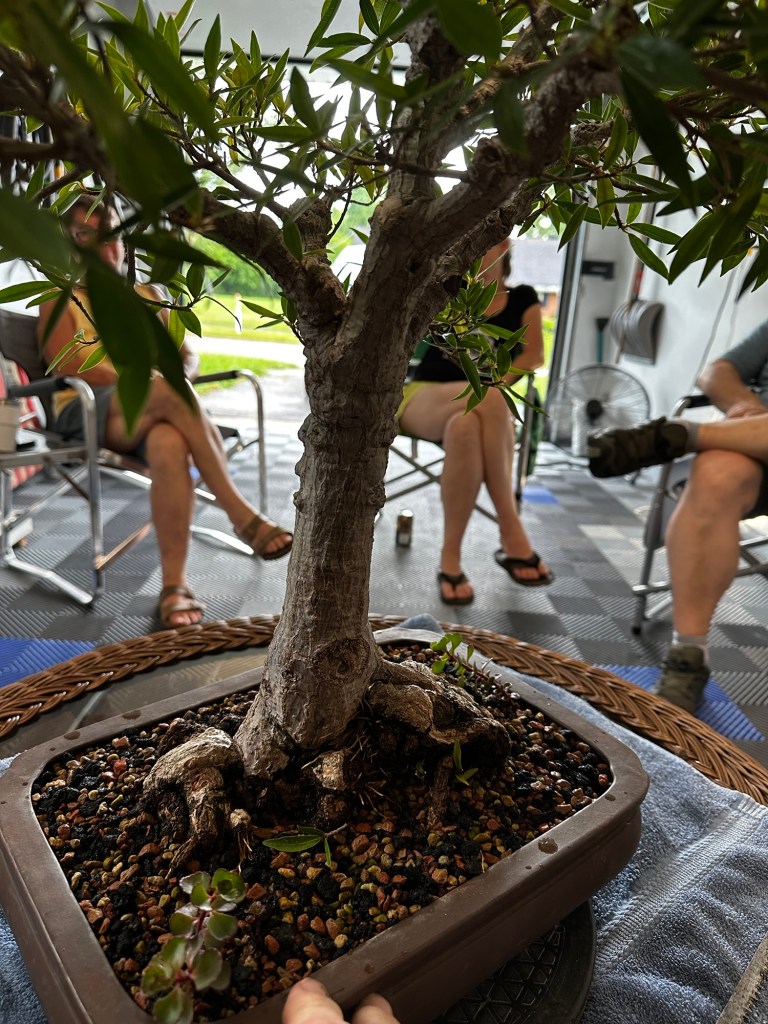
We have before us, up in the urban spires in the city of Cincinnatus, one willow leaf ficus. The tree, as is, would be good on most people’s benches. It has a biggish trunk, good branching and a full canopy. But, to quote the modern day vernacular, it’s kinda like a “helmet on a stick”.

And Brendan was bored with it. I might be able to do something about that, let’s see what we come up with, shall we?

Twirling it around, I think I like the front (below) with its nice root spread and interest. Now what?

I think you see what I saw…

…hah! I crack myself up sometimes. Let’s crack this trunk up….

Or saw it, as it were.

Maybe we (or Brendan) needs some liquid courage to steady the nerves. Or hands.

Bob Dylan has a new bourbon by the way.

But, oddly, I chose a Van Morrison song for the video, go to My Instagram to watch the sawing. It’s a good song at least.

“Are you sure the tree will survive this Adam?” my wife asks.

I sure hope so.

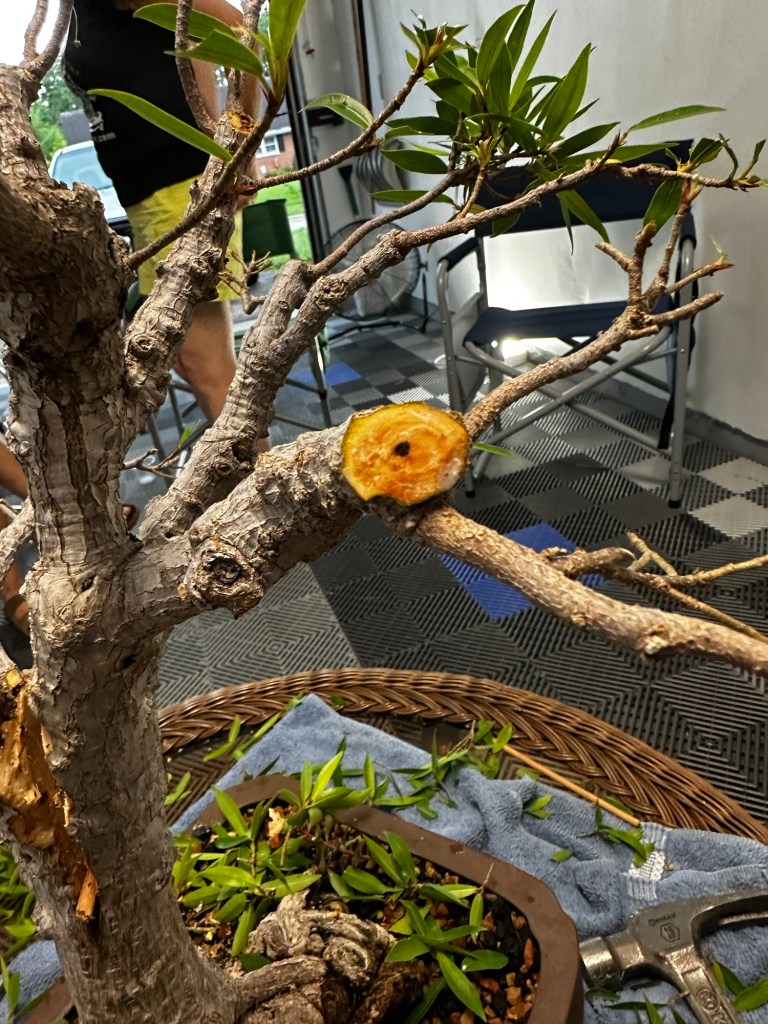
Using a knife, I make the saw cut a little less “saw cutty” looking.

That’s better. The willow leaf ficus almost heals like we do, from the inside out, as opposed to the bark spreading over the cut, like a maple tree. It’s an observation I’ve made in my career as a ficus bonsai guy.

That was the easy part, now I’ll go through and give the canopy some shape.

Which means, defoliation, removing unwanted and superfluous branching or budding, wiring, etc.

Without foliage (foil-age to some of those in the town of my birth), we can clean up some cuts too.

And no, Virginia, I don’t tend to use cut paste on figs. Why? A point to consider, the white latex “sap” that we see when pruning a ficus is not the real “sap” from the tree. It’s actually from a secondary, pseudo-vascular system that utilizes cells called “laticifers”. The sap flows through the xylem and phloem and it’s comprised of the water and sugars the tree uses in photosynthesis and respiration.

Laticifers are super specialized cells or a network of connected cells (often like the real vascular system, in tube-like structures) that make and hold the latex and can be found in various tissues, including the pith, the cortex, the secondary phloem, and even secondary xylem. The botanists believe that the purpose of the latex is to trap bugs and stool continued damage to the plant, and to help seal the wound for quicker healing

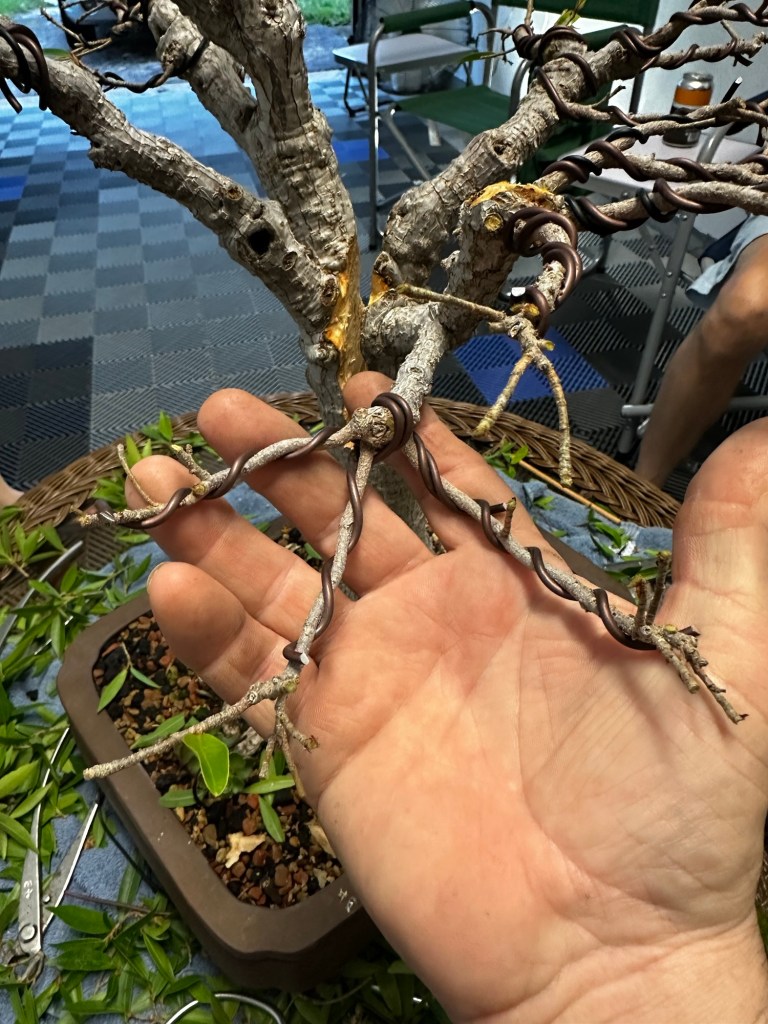
Let’s add some wire…

Look at that dude, he’s a stud.

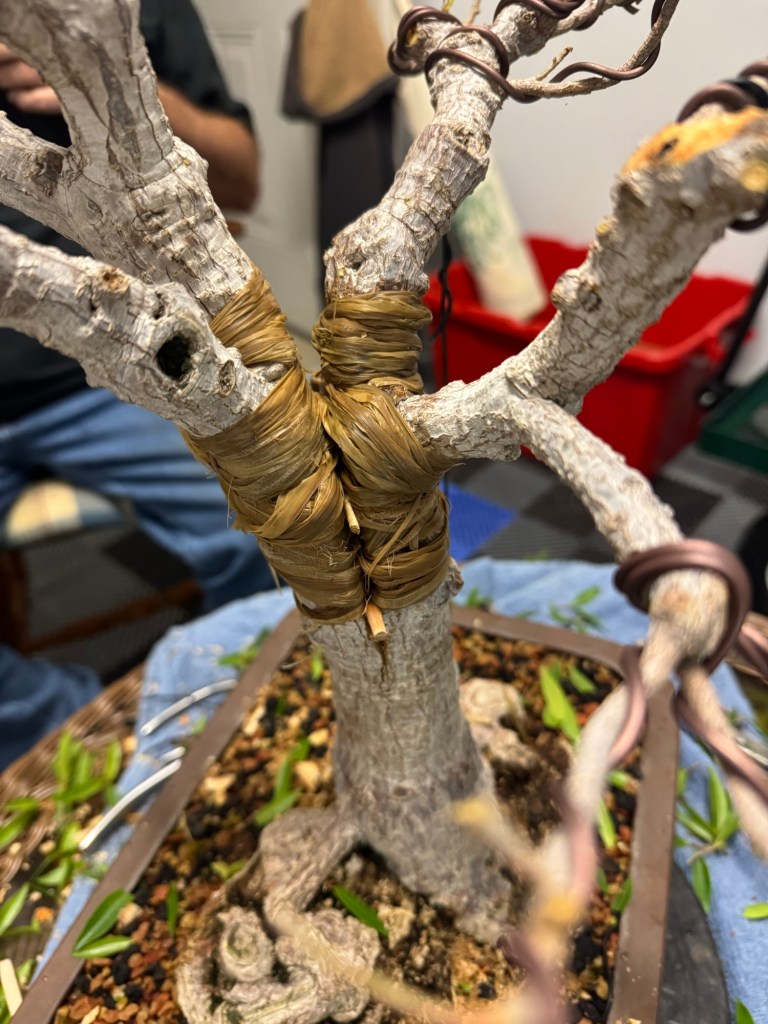
My work is done, except to have Brendan add some raffia to the sawn edges. Willow leaf figs tend to bud right on any cut or wound, which is a good trait to have, but sometimes it’s too much.

The raffle should keep new buds from forming.

And Bob’s yer uncle!

This is where you, my Constant Readers, are quoting Jurassic Park “You.. were so preoccupied with whether you could, you didn’t stop to think if you should…”

But I jumped past all that and posit the concept that I needed to do it.

We had some reverse taper building where the branches were coming off the trunk, pretty much in the same spot, so something needed doing. Whether it was chopping them off or, this. If I chose the chop option (just as traumatic as this technique) we could have created a sweet short tree. But it too would be just a “regular” bonsai. Brendan was bored with the tree before. Now he’s excited to see what happens. And the tree will be a better one for this. That’s Brendan below, on the left in the front.

He looks happy. I do too. That’s my second or third liter of beer, so…..I’m happy.

The tree, for Brendan, was a good tree, but boring. And living up in Cincy, it was becoming a chore to go through all the labor of winter protection, including grow lights, heat mats, etc. Now, Brendan has something to look forward to as the tree responds.

The tree looks happy too.

Another video of the finished work.

And yes, you saw White Castle’s and a sparkling beverage called Bonsai, tasty and expeditious. Food and beverage of the bonsai gods we pray to.

Let me know what you think. I’ll add updates as they pop up.

  •