Reading view

Reducing visual weight with carving

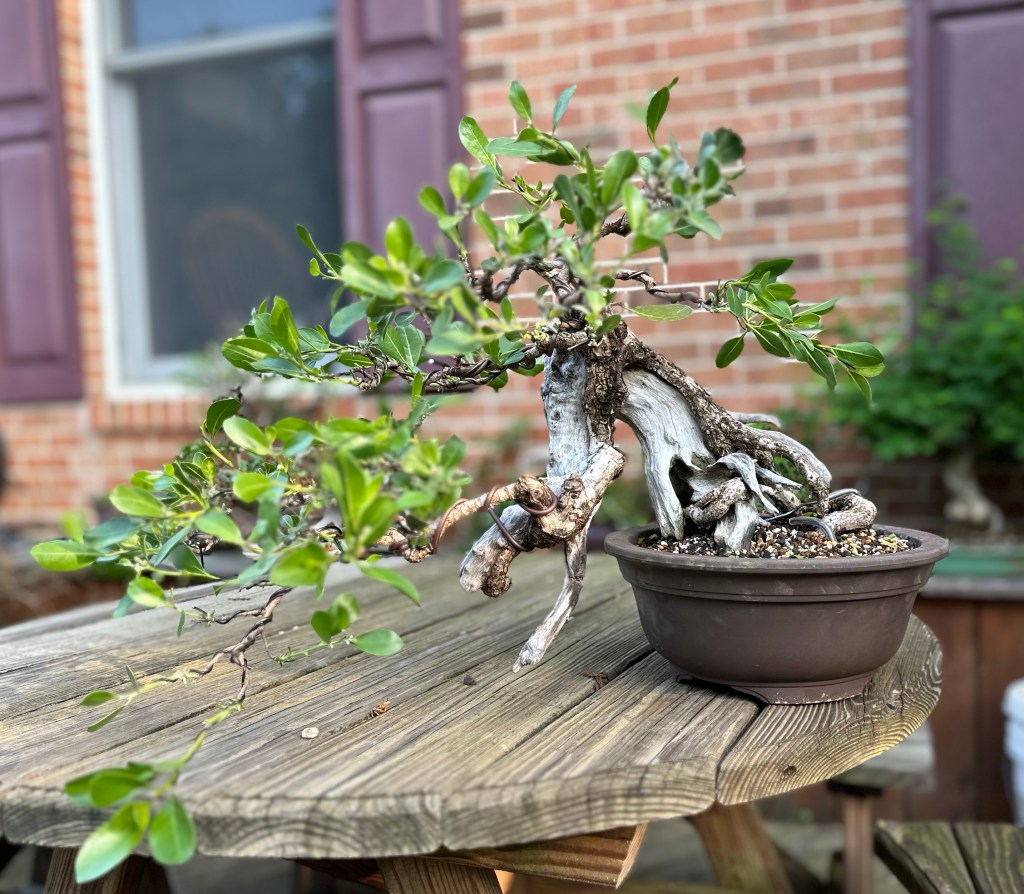
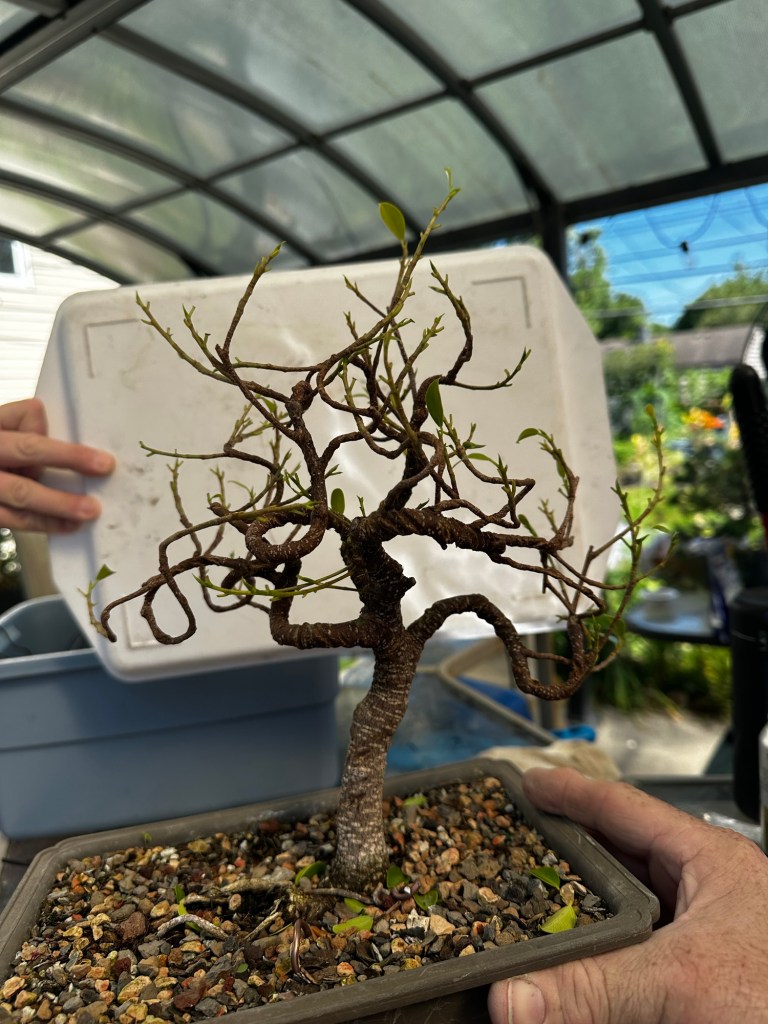
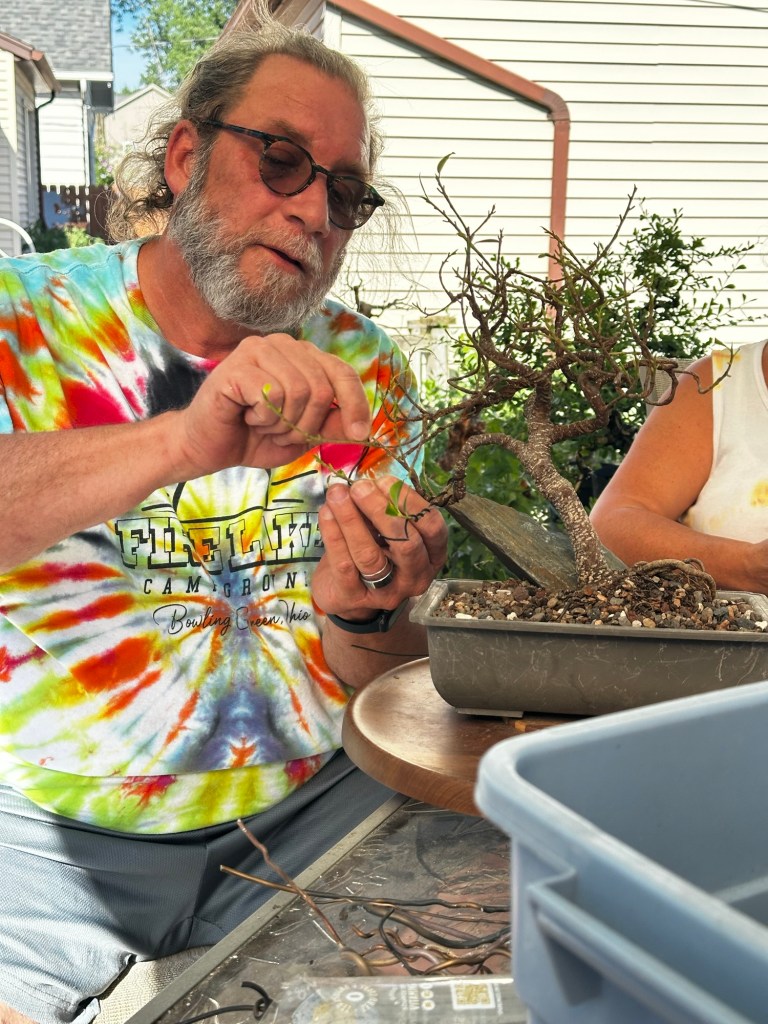
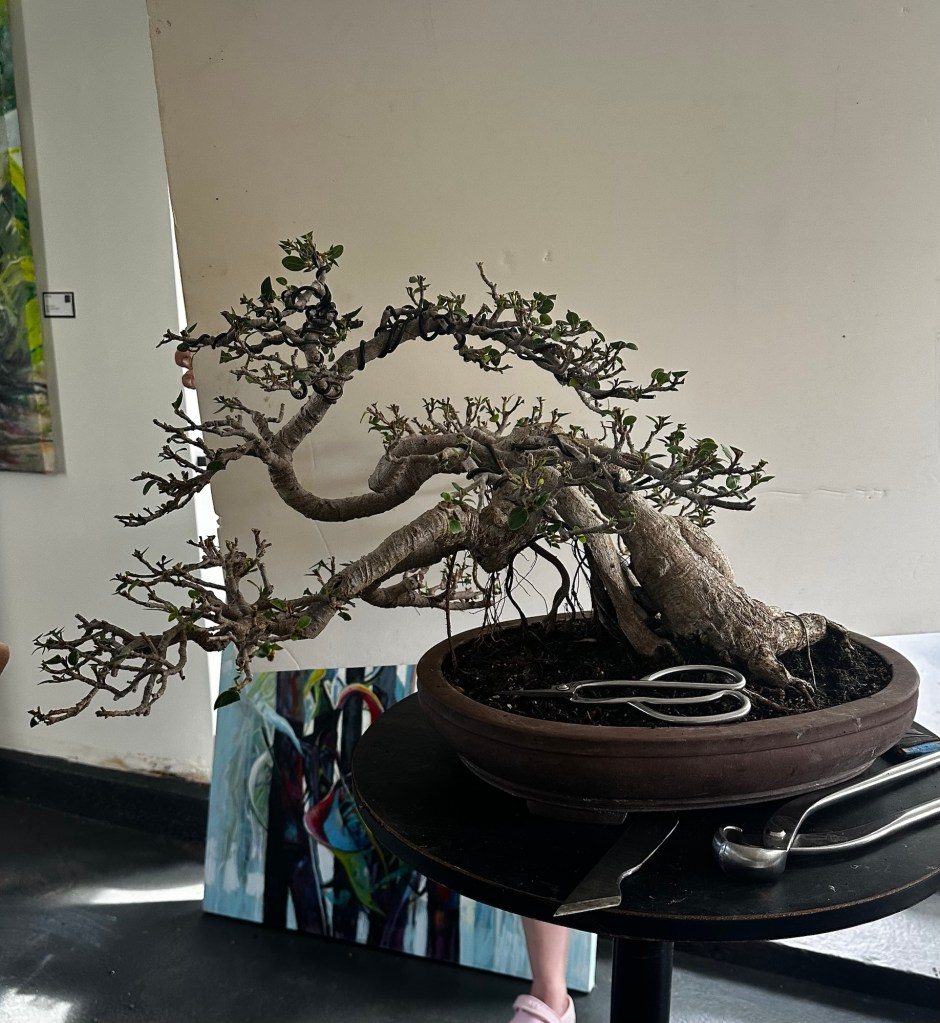
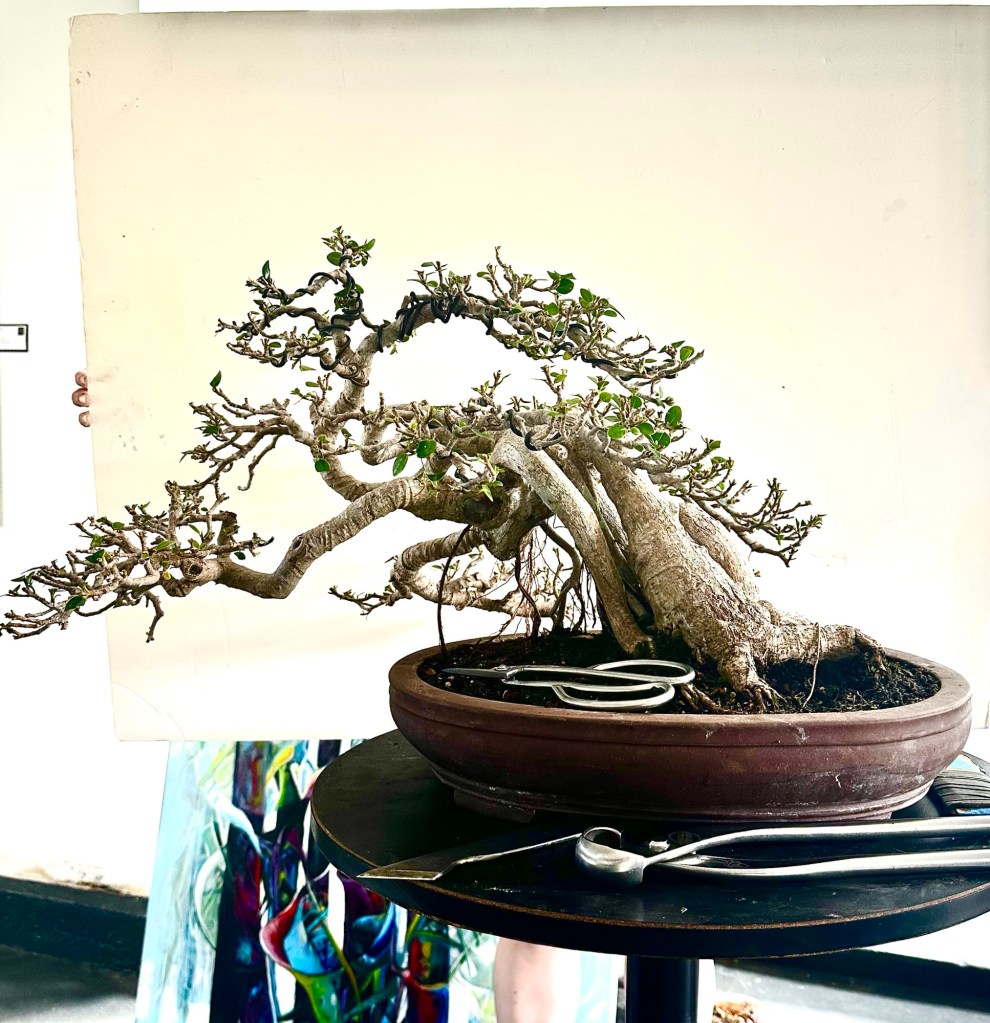
It’s a pink pixie bougainvillea kinda day today, from the Hippie Dad Bonsai garden.

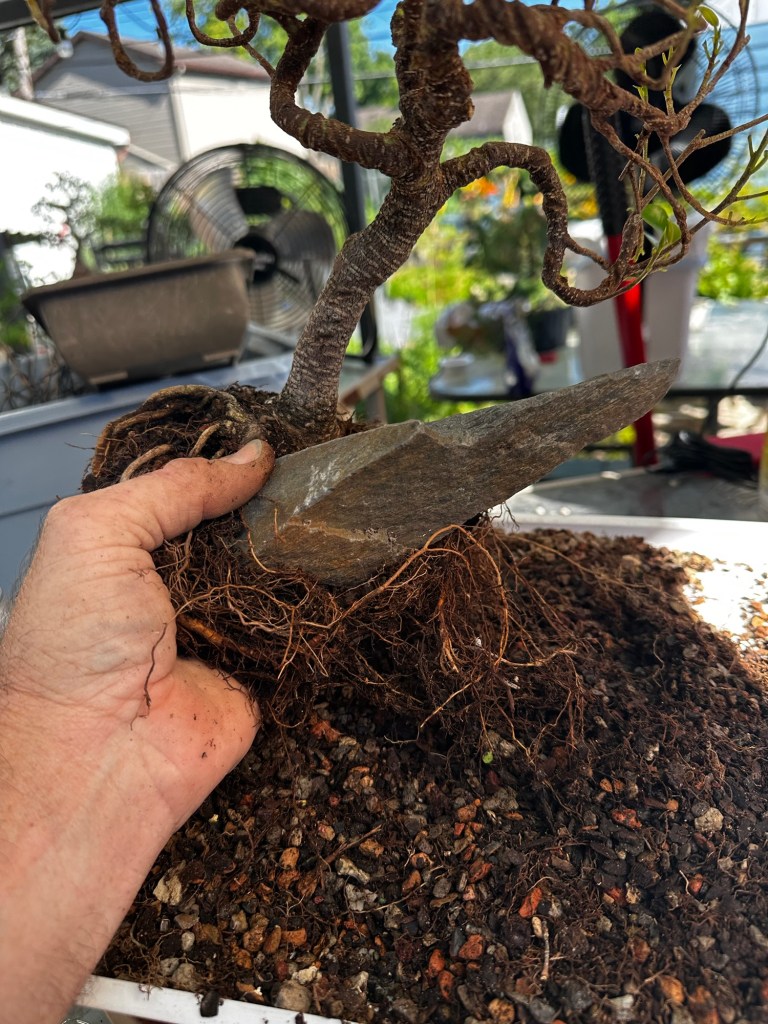
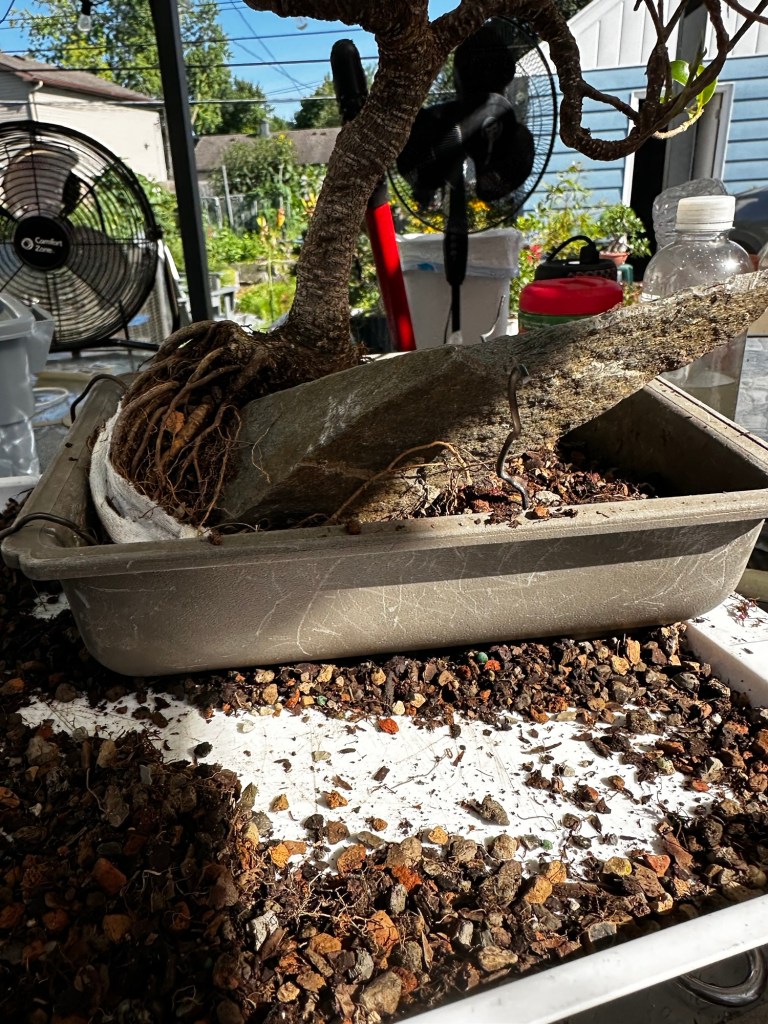
A big one too. If I remember correctly, it was a tree which was literally in the trash at a landscape nursery, and Doug (the esteemed Hippie Dad) dumpster dived it. From the looks of it when we potted it in this pot a few months ago, it might have been a big cutting at one point. The roots were so non-existent that I had to drill a screw into the trunk to secure the tree in the pot.

Here’s the screw.

Now, looking at the tree, there is a flaw, but not a fatal flaw. The middle looks fatter than…

…..the base. That’s, like I said, a flaw. But not that bad of a flaw.

We can fix it.

Those aerial-type roots will thicken in time, making the base wider.

But, for the moment, we can do something.

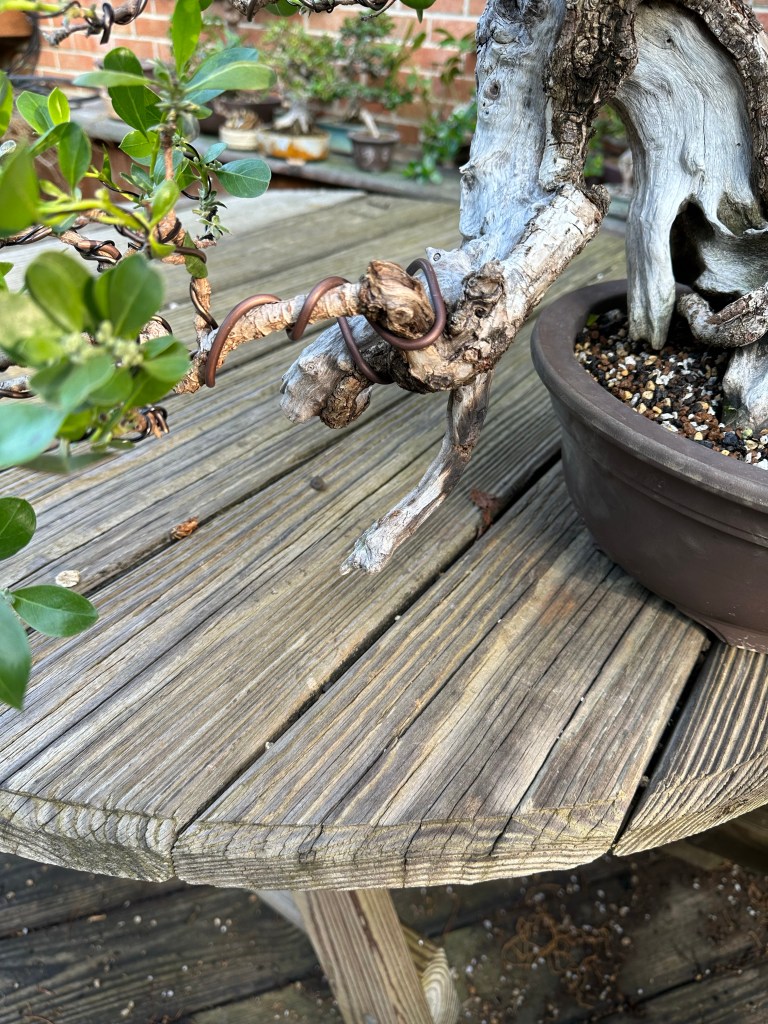
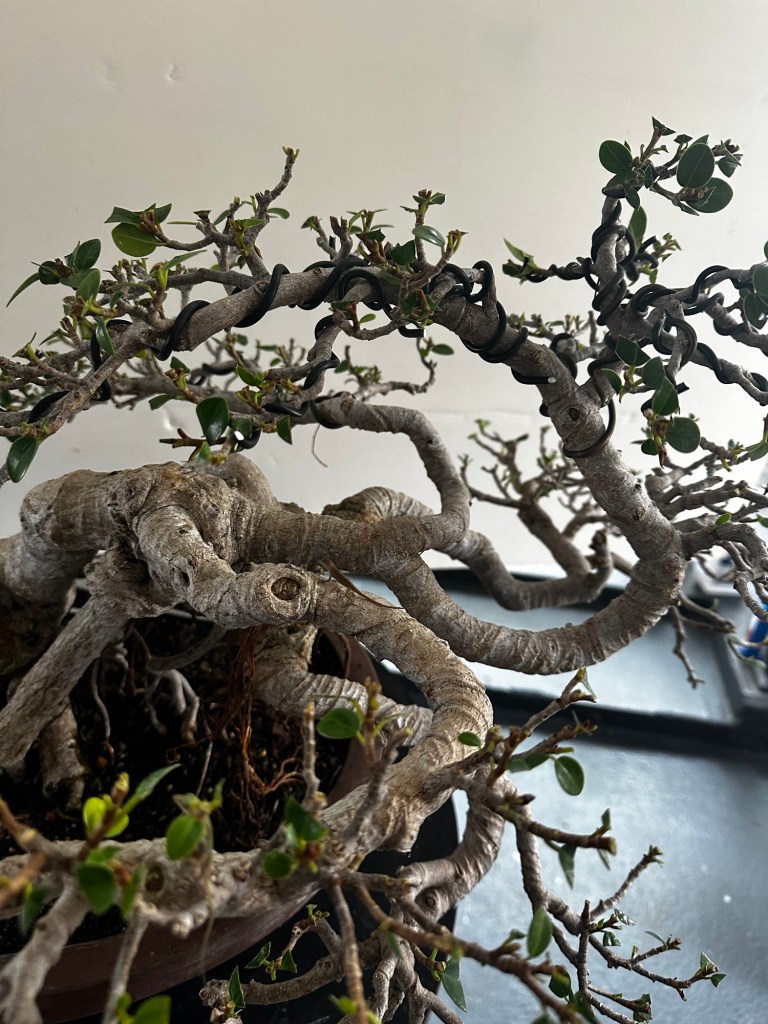
See this here wound?

It’s not going to heal, so we might as well do something to make you look at it. Cuz’ chicks dig scars, right?

The stragedy (which is a strategy to help mitigate a tragedy)

Is to carve it out, and reduce some of that visual weight on top. Carving technically removes material, so we are removing some of the obverse taper. But a piece of deadwood, after it’s been bleached with lime sulphur, will look lighter and smaller than it is. That’s just artistic principle. That’s why a person who believes they have a large nose will apply makeup to lighten it.

Notice the difference?

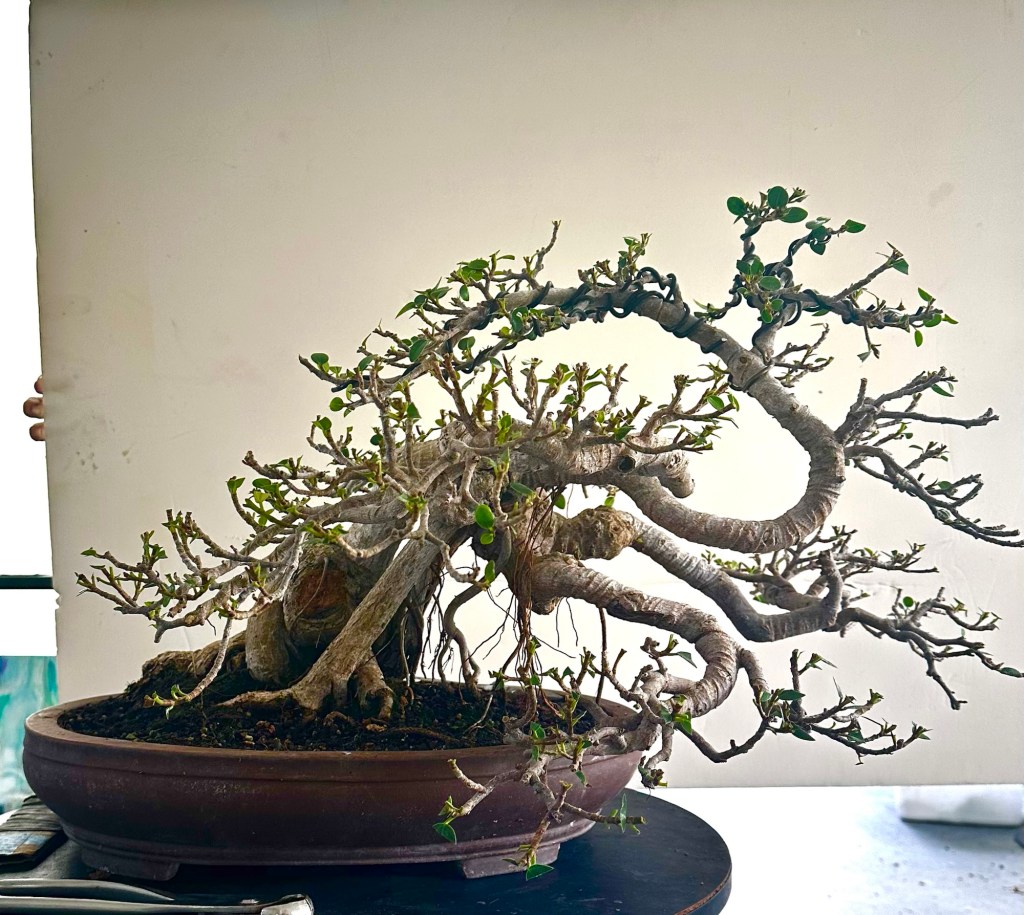
This is the second time I’ve worked on the tree, and it’s time to choose branches. Next step is wiring.

First we defoliate.

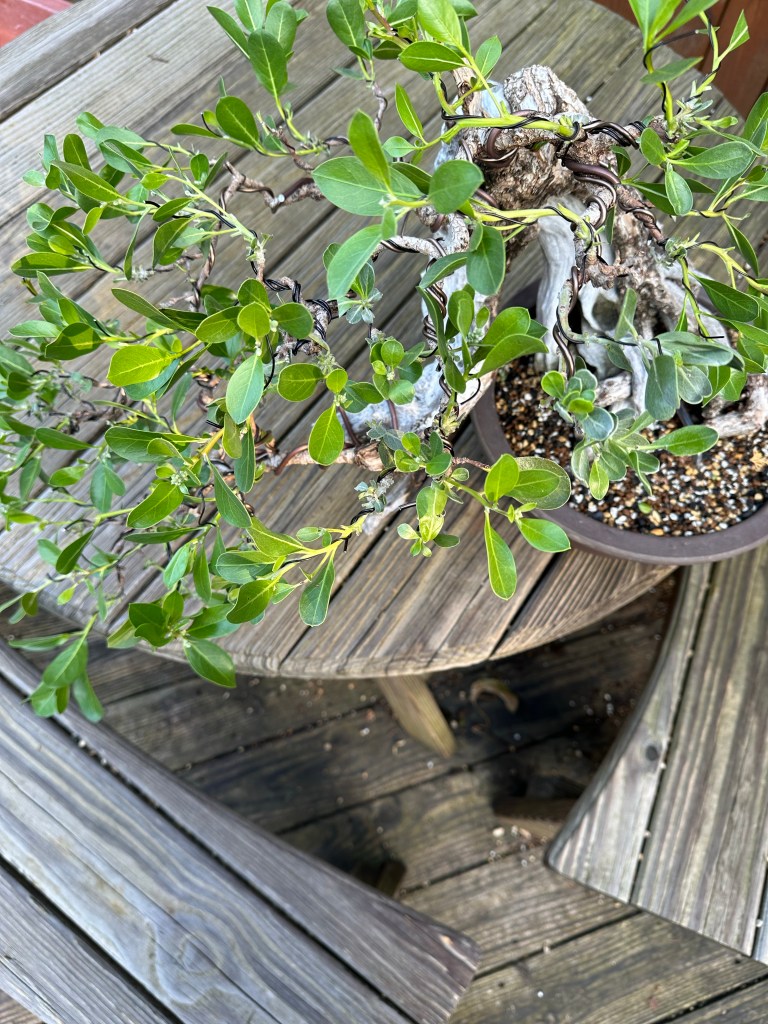
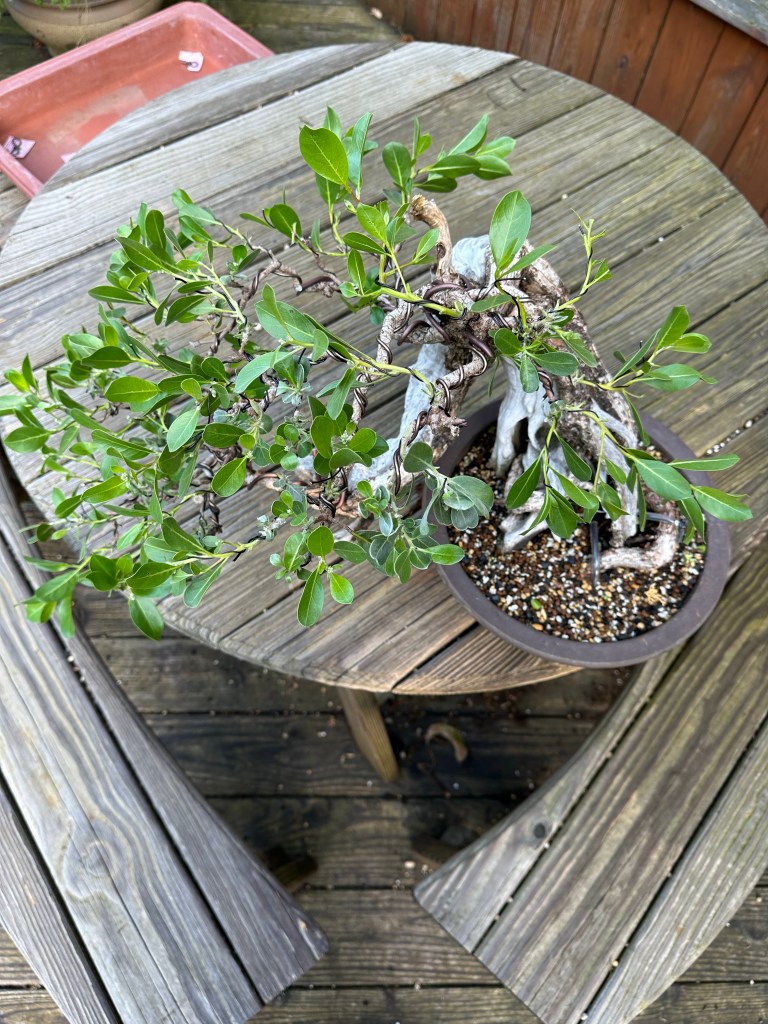
Apply wire.

And now let it grow.

Fertilizer, lime sulfur soon (sulfur=sulphur. Depends which side of the pond you live on. Do you speak the Queen’s English or colonial American English? Which is a funny story. Is it aluminum or aluminium? What color do you colour your daisies? After the American revolution, the American founders made it a point to differentiate American English dialect from British English dialect. So words changed spelling and pronunciation in the USA. The irony, though, is that the American accent, according to those that study it, is closer to the accent of the British in the colonial era than the modern English accent. That’s why English language songs tend to be sung, even by British singers, in an American accent. And the funniest thing to me is that the word we use for the sport where you run around kicking a ball into goals (which the world calls “football”), “soccer” is actually from England. It’s an abbreviation and shortening of the term “Association football”. “Association” got transformed into soccer: a-socc-iation- soccer. Weird, huh? It’s the same way where Elizabeth goes to Betty or William goes to Billy. Called “hypocorism” . )

anywho, I read too much. Back to the tree.

I think it’ll be epic. It’s certainly a big pink pixie.

Stay tuned for updates as the tree develops

  •  

Art is a lie that makes us see the Truth

That quote, in all its incarnations, has been attributed to artists, writers, poets, philosophers, actors.

Like this Ficus microcarpa, the quote comes in many varieties. This tre was once called “nitida”. Kinda like a tiger bark but without the bark.

Get out the saw, add a little wire. Do you know what the purpose of wire is? It’s two-fold. The first is obvious, to hold the branch while we bend it. The second is to protect the branch from breaking, as we bend it. Kinda like when we are under stress, sometimes a blanket or a hug takes the stress off of us and makes the change easier.

But……

……it can only protect where it touches. Let your friends into your life.

….that’s what life is, spending moments and remembering those moments when, perhaps a shared joke, or a drink, or meal, make the loneliness that is the true reality of man, go away for a little while. And it’s those moments one should cherish.

Brazilian raintrees were brought into this country (the USA) by a man named Jim Moody. I never met him, I don’t believe, but I was good friends with his grandson, Allen Carver. He left us recently. I never got to say goodbye. But every time I work on a Raintree, I think of him.

Gnarly.

This one came from Jim, to Michael Cartrett, to Javier Cortez, it was an air layer off a big tree that grew in Mike’s yard. And it went to another friend who went his own way, Jose Perez. He had to sell it after a divorce, and now it’s Doug’s. I get to work on it from time to time.

The story of trees are often as compelling as the trees themselves.

I’m glad I get a part in the story. A small part.

Tuning a guitar. Trying to get the spaces between the strings just right. So that the song sounds good. That’s Jack, a good friend I don’t get to spend too much time with.

Life is not the counting of numbers, it’s the space between those numbers.

How much can you fit into an hour, a minute, a second? How much should you? Can the appreciation on that infinitely divisible moment of time between the seconds in your life be enough, or do you need to fill up those moments with importance?

How many beats per minute does your heart count? Are we promised only so many beats per lifetime? Is it written in our genetic code? Or do we just time of the calculation and stop counting? How many leaves on this buttonwood? Does it matter?

It’s like the space between the branches. The air around the tree. This gives meaning to the tree.

And some things you just gotta see in person. Go to a bonsai exhibit, or all you’re seeing is the blast of pixels in an image against your retina. We “see” with all our senses.

The best story will never be written because it’s your story and you’re making it up as you go along with your life.

The story has truth and lies. And even the most honest of us have all these things we tell ourselves to help us get through the day. But we believe them.

Kurt Vonnegut said “We are what we pretend to be, so we must be careful about what we pretend to be.” in the novel Mother Night, in 1962. Harsh and cruel. You should read it.

Another buttonwood. Let’s help it along. It needs stress and pressure to forge it into what it wants to be.

It needs that blanket so the branches don’t snap and break, as we bend it. This time there’s wire and a secondary wrapping of self amalgamating, rubber, electrical wrap.

How about this pot? Made by an auto mechanic that builds transmissions. Lynn Baker, goes by the name Herr Lynn. A local potter from the west coast of Florida.

I think it adds to the story.

But the story is false. This buttonwood may have started out on a beach in Florida, but it’s nature wants it to grow straight. Like the branches in the first pic

That’s why it’s species as designated as “erectus”. Like the hominid Homo erectus, an ape that walks upright, Conocarpus erectus will grow straight, but if it’s in the environment like the southern Florida coast, with the hurricanes, the sun, the surf, alligators and crocodiles, and the land developers and tourists, all causing stress and beating down and torturing the tree, it will be transformed into the twisted trees we so love.

We have to tell a story, a true one, but not true in this case, of all the struggles a buttonwood can go through and live.

To get back to our initial pondering in the title of this article, it was Picasso who was first quoted saying that art is a lie, in 1923. Here’s the full quote, translated from Spanish:

“We all know that art is not truth. Art is a lie that makes us realize truth, at least the truth that is given us to understand. The artist must know the manner whereby to convince others of the truthfulness of his lies. If he only shows in his work that he has searched, and re-searched, for the way to put over his lies, he would never accomplish any thing.”

  •  

Why Adam? Just why?

As I go through my day, working on trees or just making soup, there’s an ever present question on my mind. That question is: “Why?” Especially of late, but that’s a rabbit hole I won’t go down today.

It’s a tough question to answer,”Why?”. Most people mistake my online moniker “Adamaskwhy” as meaning that you can ask me “why?” and I’ll tend to answer. And that’s ok. I usually know the answer, or if I don’t, I can find it (and if I can’t find it I just might make something up).

But the real meaning behind “Adamaskwhy” stems from my propensity to ask my teachers, when I was a young and inquisitive lad, “Why?”.

For example, my teacher might expound “When drafting an exclamatory sentence, one should use simple, declaratory prose.” and I might ask, innocently, “Why?”. Now, the best teachers knew the answer. The competent ones knew where to find the answer. The average would just quote what they’ve been taught. The worst would say “just because”.

Obviously, from the preceding paragraph, I didn’t take the lesson of short declarative sentences to heart. Mainly because, sometimes, obfuscation and evasion is the quickest path to The Truth. But, more importantly, I don’t want my style to sound like The Old Man and the Sea (“….here is a bonsai. It curves to the left, then to the right.” I’m more of a “.. The blue sky paints the cream glazed pot with streaks of azure. The sun silhouettes the canopy like an umbrella, shading the mossy soil. The old, sun-browned man, wizened eyes staring at the green foliage, raises his shears and snips at a dry branch…..”).

Needless to say, many of my past teachers did not appreciate the question “Why?”. Truth be told, many teachers can’t answer the question. They feel that, just because they are the teacher, their teaching is inviolate, sacred, and not to be questioned. And the more narrow the focus of the lesson, the more pedantic and authoritarian the teacher becomes. As an example, let’s say the lesson is on bonsai soil, (just to bring bonsai into this essay, since this is a bonsai blog after all), the reasoning style usually used by bonsai professionals is Reasoning from Authority. They’ll say “so and so uses such and such, and they are so and so, therefore it’s correct. Or, depending on the particular pedant flailing his hands around whilst lecturing, the verbiage becomes a word salad of technical jargon with one needing a degree in soil mechanics to understand just what they are saying.

Anywho, why (heh) am I “why-ing” now? Well, dear reader, I recently posted a video in the social media webosphere concerning a certain willow leaf ficus, and what I did to the poor thing. This one to be precise:

Now, with such a raw piece of stock, I could’ve done all kinds of things to it. The scene: Ikebana Club international, Orlando Florida. This is my fourth visit to this Ikebana club. My visit usually consists of me bringing starter trees (in todays case, willow leaf ficus) a few different choices of containers, soil, wire etc., and potting, styling those trees, or re-potting members trees from past sessions. Irene, who’s been to all of them, decided to get two willow leaf this time. The first one we wired up and made into an informal-upright. The second one….well, you can see below what happened to it….

As you might have noticed, we chopped it. And Irene was right there with me on the decision to do it. It was actually her idea. It’s a drastic technique, for sure, somewhat controversial, as dramatic as my teenage boys trying to get through a Fortnight Battle, and, in my case, it makes me look badass for how casual I can do it, with just a pair of scissors.

You see, many people may misunderstand the decision to do a trunk chop. Let’s go through another willow leaf (below) and the decision tree (no pun intended) used to decide when and if to trunk-chop a tree.

Below: Hand for scale. Ficus salicaria, the willow leaf fig. It belongs to Mike, who’s visiting from the Naples area. The tree is a stock tree from Wigert’s Nursery in North Ft Myers. It has a fair sized base (nebari) and a good sized trunk. But it has little taper, the branches are way high, and it kinda looks like a slingshot. Just need a rubber band and a good rock, and we can go squirrel hunting.

Ok now, you ready? As one should, let’s begin at the beginning. You can probably guess the ending to this post, a trunk chop, but the question, the one in the title, is “Why?” Why a trunk chop?

The beginning begins with the first interrogative “What?” What is Bonsai?

Bonsai is the Art of taking a relatively small, and relatively young tree and, using various techniques and principles of art, trying to make it look like a big and old tree.

One of those principles is the one we call “Taper”. The concept of taper means that, starting at the bottom, we should start with a wide base and, as we go up the trunk, it should taper, or get skinnier, coming to a point at the top.

The tree below has some taper. It could be used to describe (style) a tree as seen from a distance. Throughout most of the history of bonsai, most trees were styled from a distant view perspective. Think of observing a tree on a mountain. But, as tastes and visions change, so has the idea of perspective. In the real world, trees have a trunk-width to tree-height of 1(trunk width) to 12-14 (trunk height). If you read the old books, it was taught that the ideal ratio was about 1-8 or 10. Today they teach 1-6. But there are extreme examples of 1-4 or even 1-1 (the so called “sumo style”). Now, I have been known to style a sumo style in the past, and, if a tree could support it, I still do. But let’s get back to Mike’s tree.

Here’s the slingshot I was talking about.

It’s not generally a good design choice to keep that. Why? Well, horticulturally, a tree in nature tends not to grow that way. Or, if it does, when a good wind storm comes along, the tree will break at the “V”. It’s physics. Artistically, a v acts as a visual stop for the viewer. Bonsai being an art, that wide V will stop your eye as it moves up and down the tree. Your eye is drawn to open spaces and you’ll be looking at what’s behind the tree and not at the tree. Your eye moving around the piece of art, as designed by the artist, is called “composition”. I could get really into it, and talk about line, form, focal point, and negative space, but I think you get the idea.

For Mike’s tree, I could remove the bigger branch, like below.

And I’d still have good taper.

I could remove the smaller branch and have a more natural taper. That’s Doug hiding between the “V” btw.

Proportion (how the limbs are arraigned as you move up a tree) would satisfy a natural looking design.

The thickness of the trunk should decrease, in shorter lengths, as you go up the tree (main trunk is longer than the next level, the middle part by about 1/2-1/3, the third part, even shorter and thinner, until you get to the top, which should be your fine twigs. This makes the tree appear as though it’s taller).

I could not cut anything and use that first branch as, well, the first branch, and wire it down. We could make a good natural style.

To give an example of keeping most of the tree, let’s go on a tangent. Here’s a tree from a club member, George

We cut out the middle and wired that slingshot.

And it’ll make a good tree, in time, as well.

Getting back to Mike’s tree, we could start over, and chop the whole thing and make an exaggerated tree with quick taper.

You can guess what we did.

We didn’t cut here

Or here.

We cut even lower. Doug had to close his eyes, the horror was so extreme.

The reason why? Proportion. The first third is where the chop is. The tree now needs to grow up to have believable taper. Ultimately, we wanted (and it was a collaboration with Mike, I don’t go willy nilly chopping another person’s tree without a full discussion of what can be done with everything. Even on my trees I keep asking myself “why?”. Why cut here, why wire there, etc. )

And the real answer to the question “Why?” is that Mike wanted a smaller tree. And, with a willow leaf, we can chop it and regrow the top in short time.

Something like this is the final vision.

Here’s Mike. He took a pic, for posterity,

Here’s another of Mike’s trees we worked on that day. A Ficus Microcarpa.

It had been chopped already, and we just had to move the branches a bit.

Styling a tree is all about asking questions. “What happens if I do this?” “Will this improve or destroy the tree?” And ultimately, “Why am I doing this?”

Those questions are answered by experience, experimentation, and by people who’ve done whatever you want to do to the tree. And feel free to ask those who’ve come before. Just make sure you ask “Why?”

To finish out this essay, let me quote this (my wife is a third Dan backbeat in taekwondo, for background) it’s from a part of the taekwondo Black Belt Oath:
“…….I am a student yesterday, I am a student today, I am a student always……”


If only we all lived by just that part…..

  •  

Micro Blog (micro aggression)

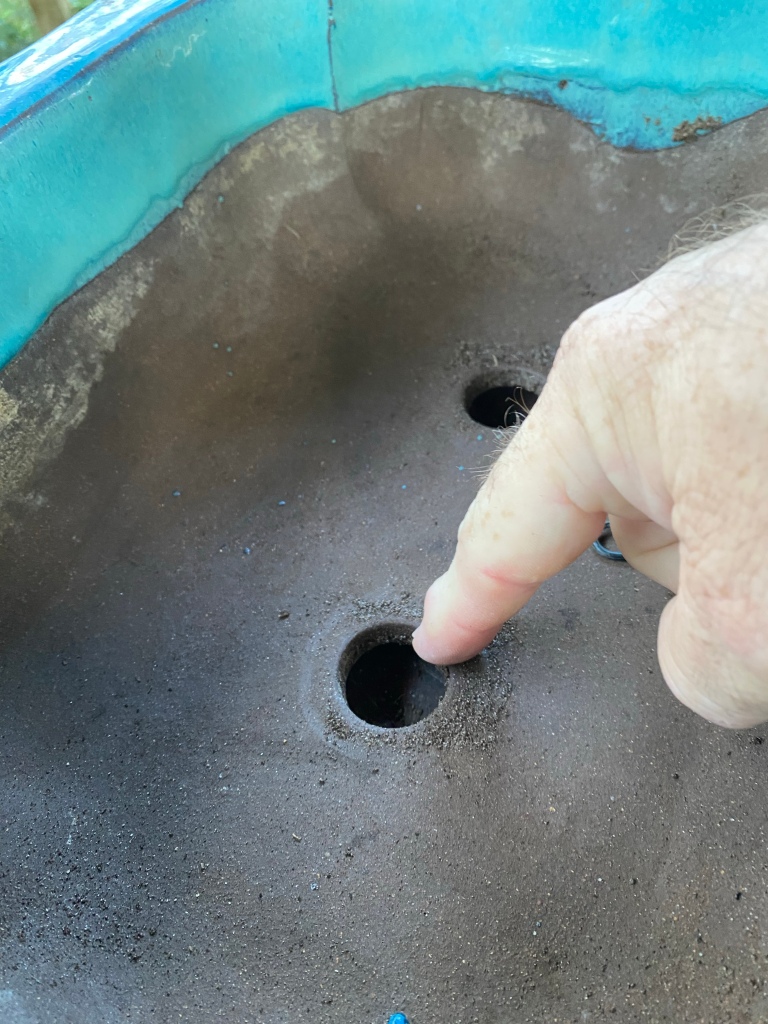
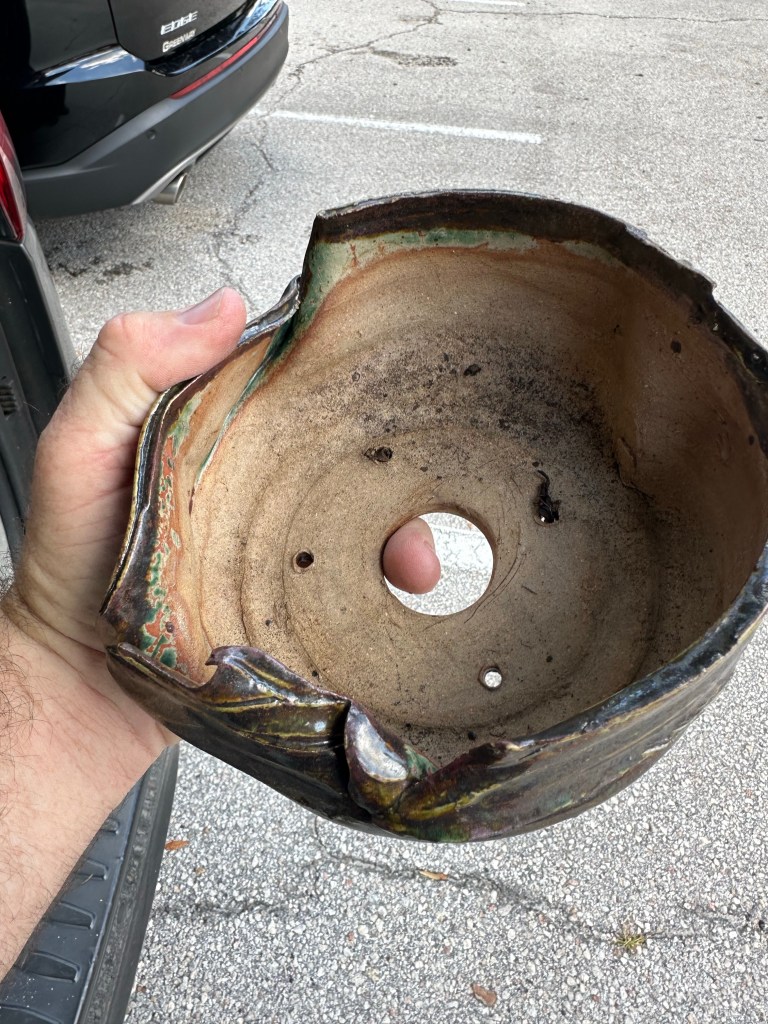
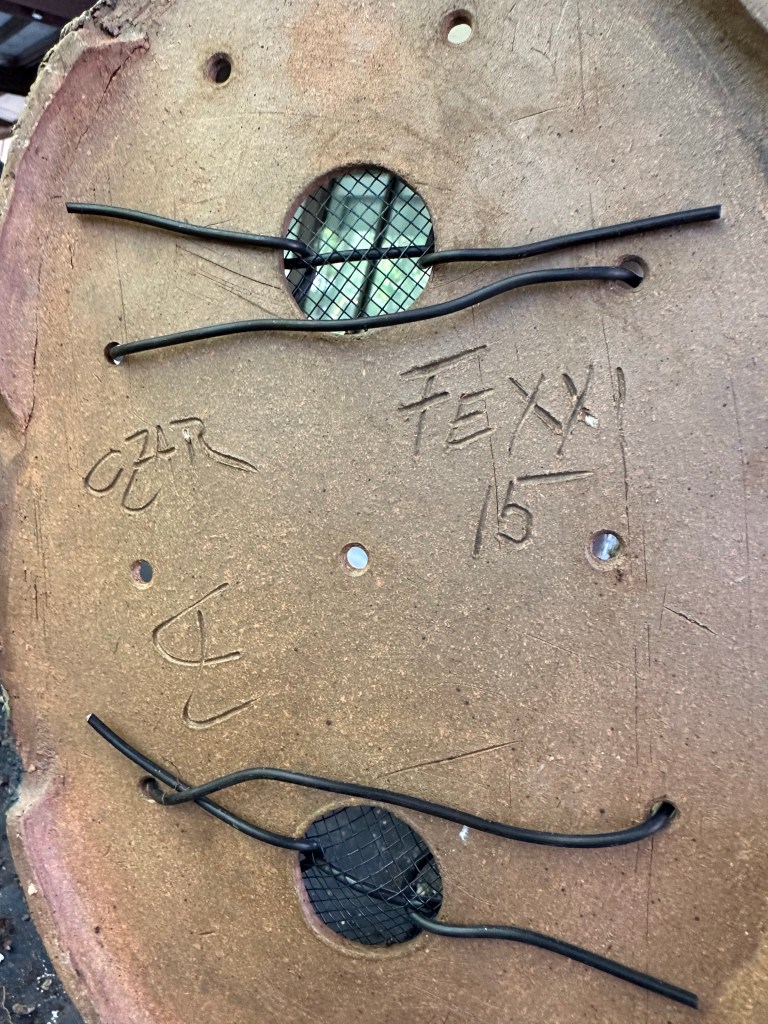
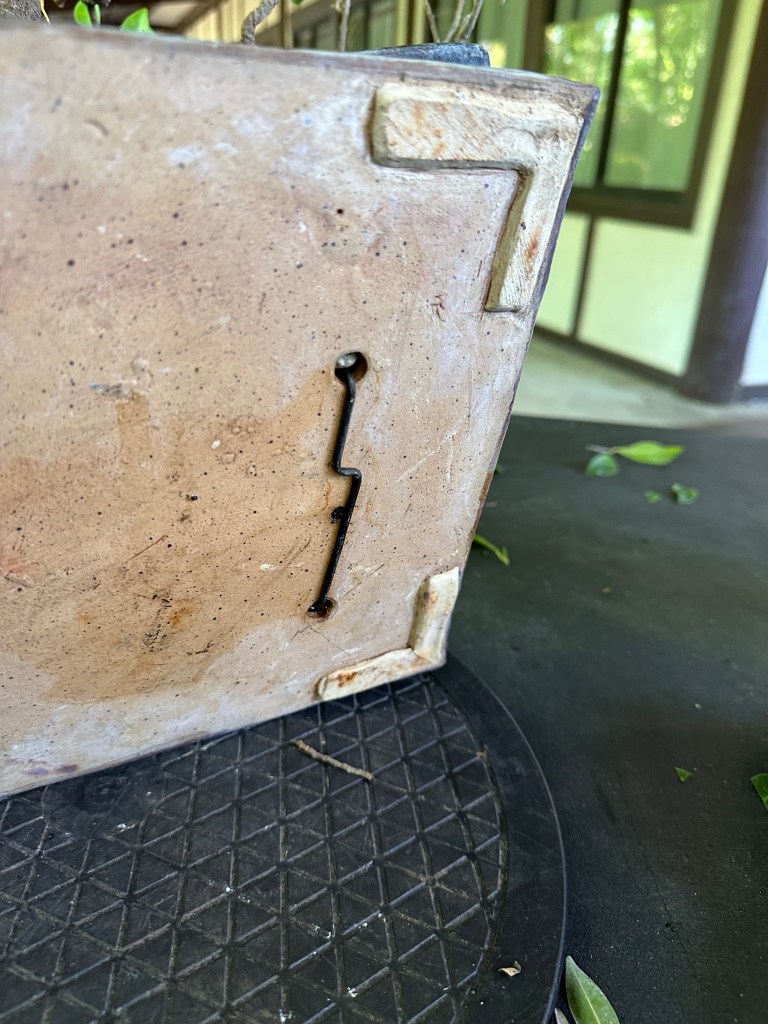
Here’s a pet peeve. And I’ll start with “there are many ways to skin a cat” but there are ways, and better ways. See the hole above? A drain hole in a bonsai pot. We cover these with screen so the bonsai soil we use (use what you like and what works for you) doesn’t fall out the bottom.

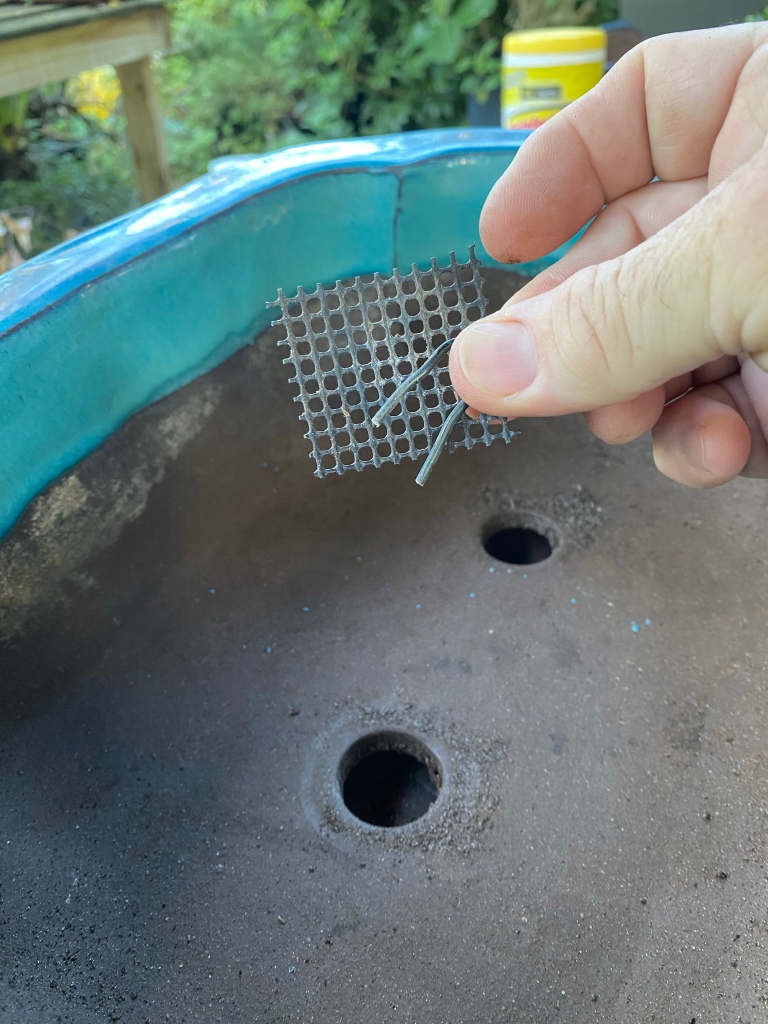
I’m repotting a client’s tree. I find this as the drain hole screen. It’s good material, actual bonsai screen, but would it hurt you to cut it a little bigger? It’s not even a penny’a worth to add an extra half inch to it.

And the wire holding it? It doesn’t even bend around the floor wall of the pot.

What’s that gonna hold?

I’ve been using galvanized steel. It’s strong, lasts for years, and drains well.

And I don’t skimp.

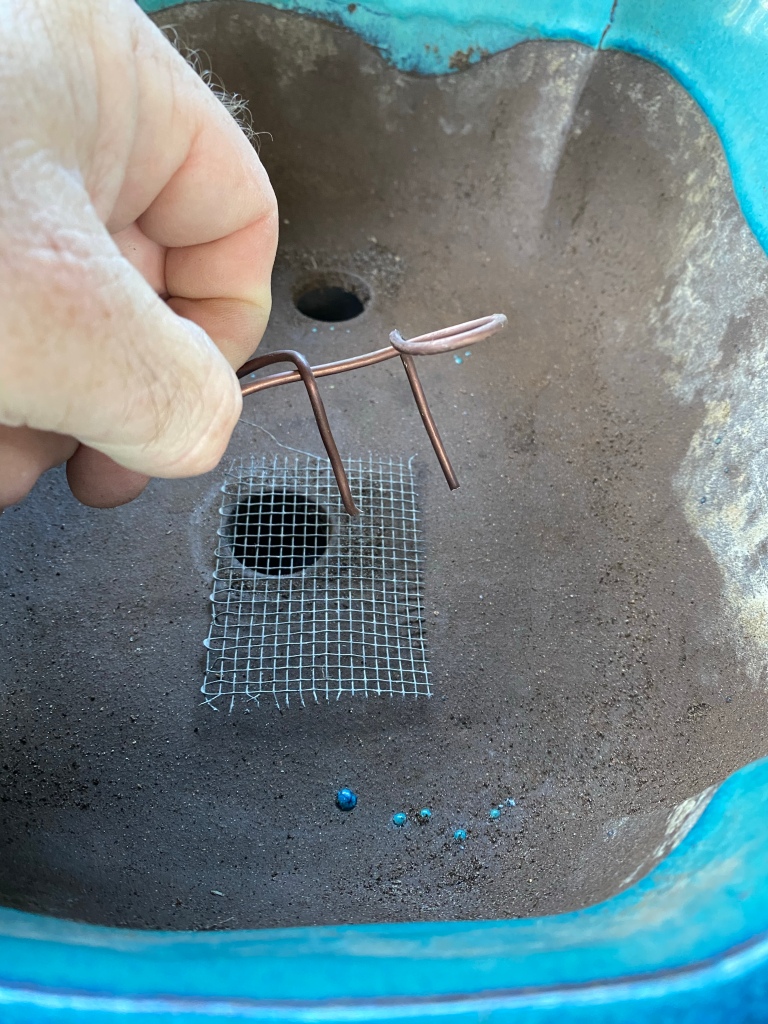
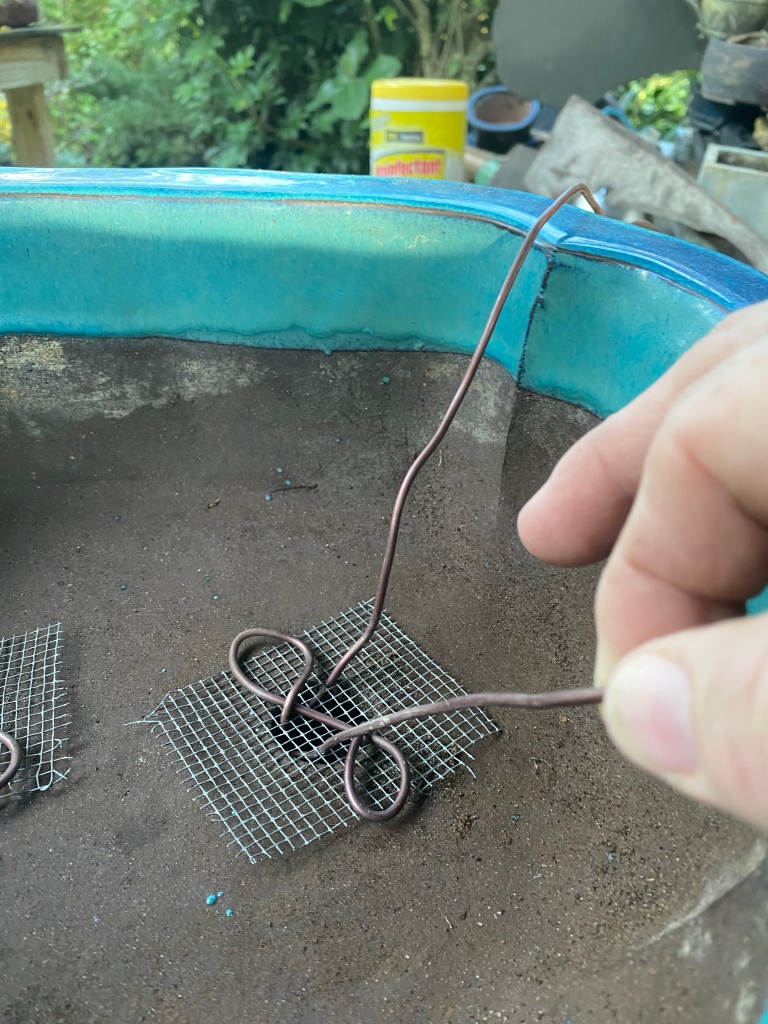
And the wire I use to hold it in: it’s heavy gauge, and bent so as to hold the screen in place.

The loops hold the screen and there’s enough underneath to hold it to the pot. (Ignore the calcium buildup, it’s from south Florida, where the water is hard as a politicians heart.

See that? It ain’t moving.

And while I’m at it, tie down wire should be heavy too. At least 2mm, this is 2.5.

I can pick the tree up by the trunk, with no worries that the tree will be damaged (could, but not usually….well, sometimes. Do as I say, not as I do…).

Here’s the tree. Portulacaria afra. It’s not going anywhere.

  •  

Back Bumper Bonsai

Today, I got to diagnose what’s wrong with a 2012 Jeep Compass, take my daughter to PT, and go and take a dog outside to poop.

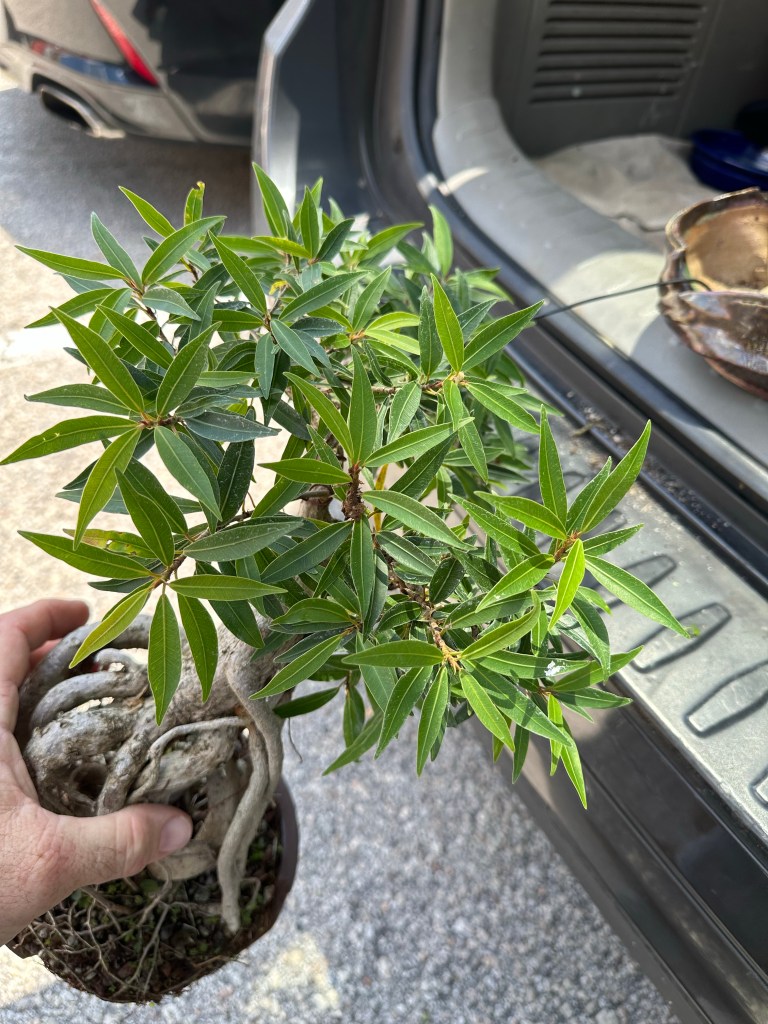
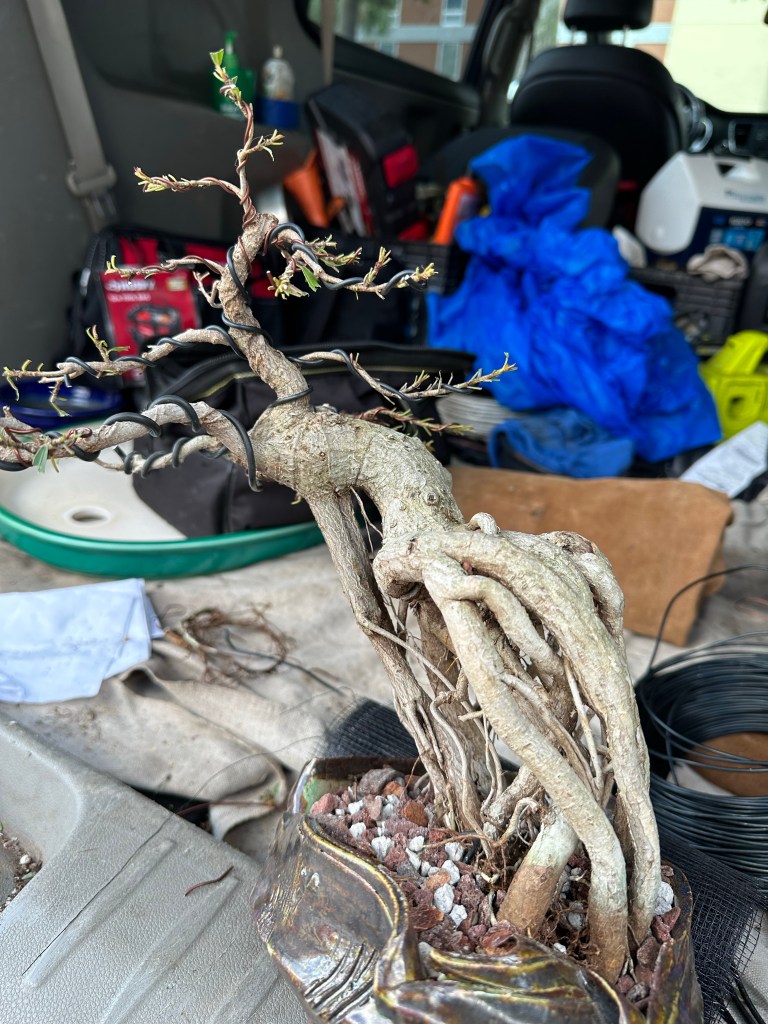
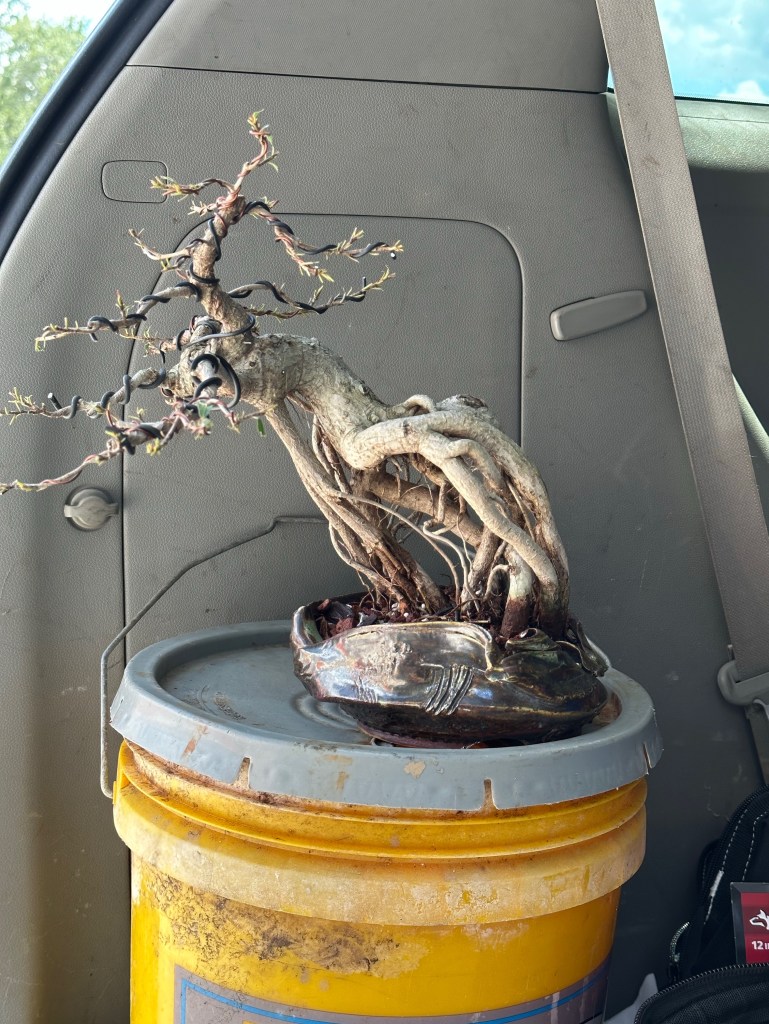
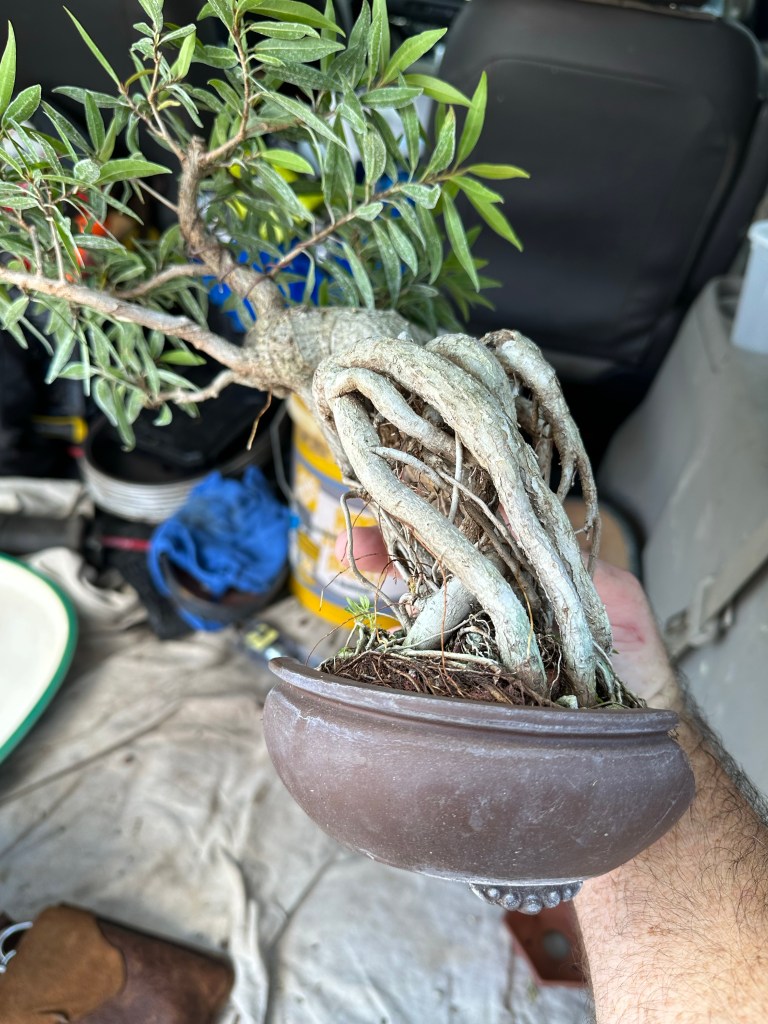
In between the PT and the Dog poop, I practiced a little Back Bumper Bonsai™, just like the old days. Here’s the tree, a willow leaf fig (Ficus salicaria, ofttimes erroneously called Ficus nerifolia, or F. salicifolia, or whatever it was called when you grew up in bonsai).
Here’s the facility my daughter is getting tortured at.

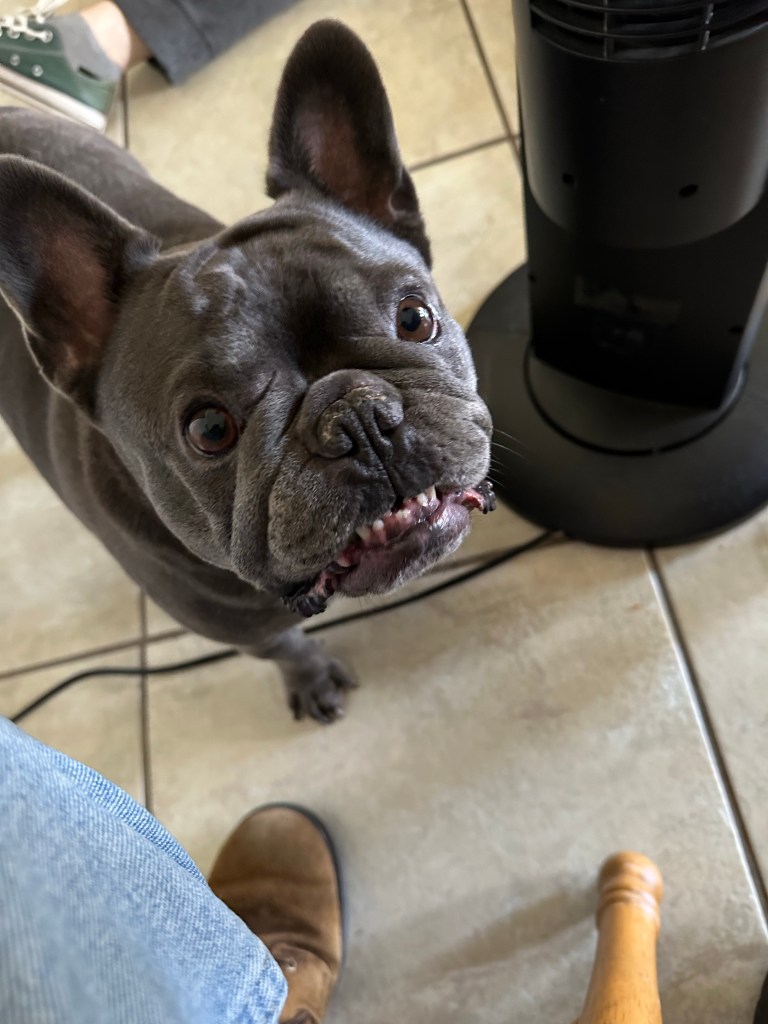
Here’s the dog. Ugly thing, ain’t it? Lily. Stupid dog. It has no tail, so when it poops, you have to wipe its ass. Not me, no way, no how, not ever. My sister does though.

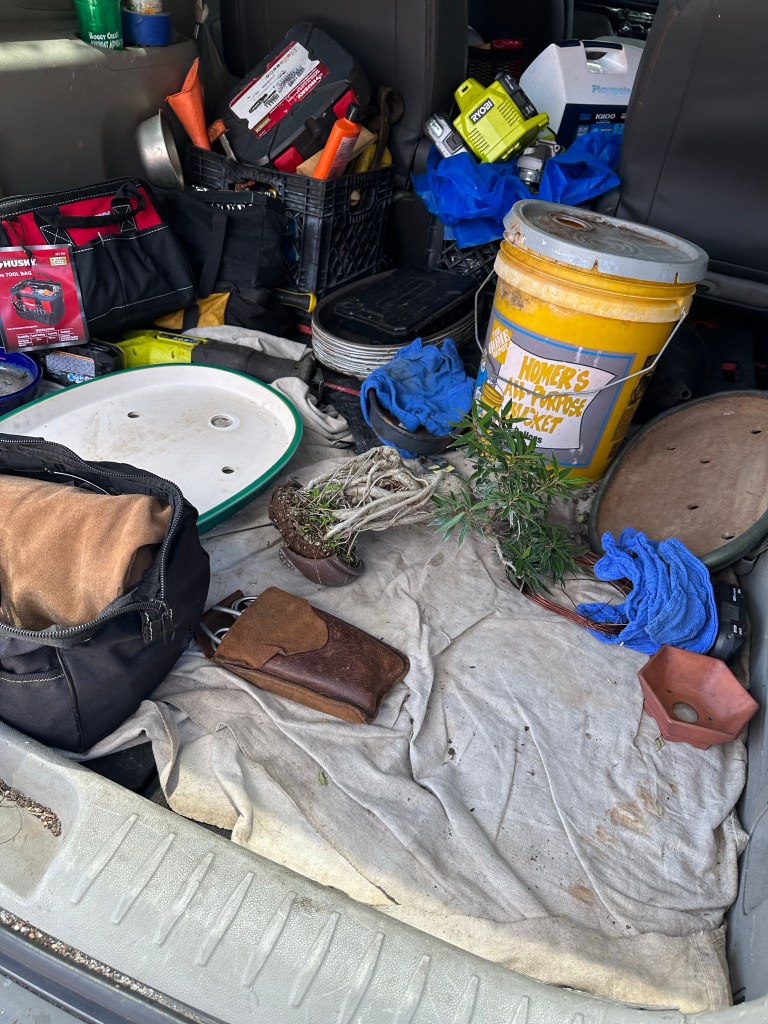
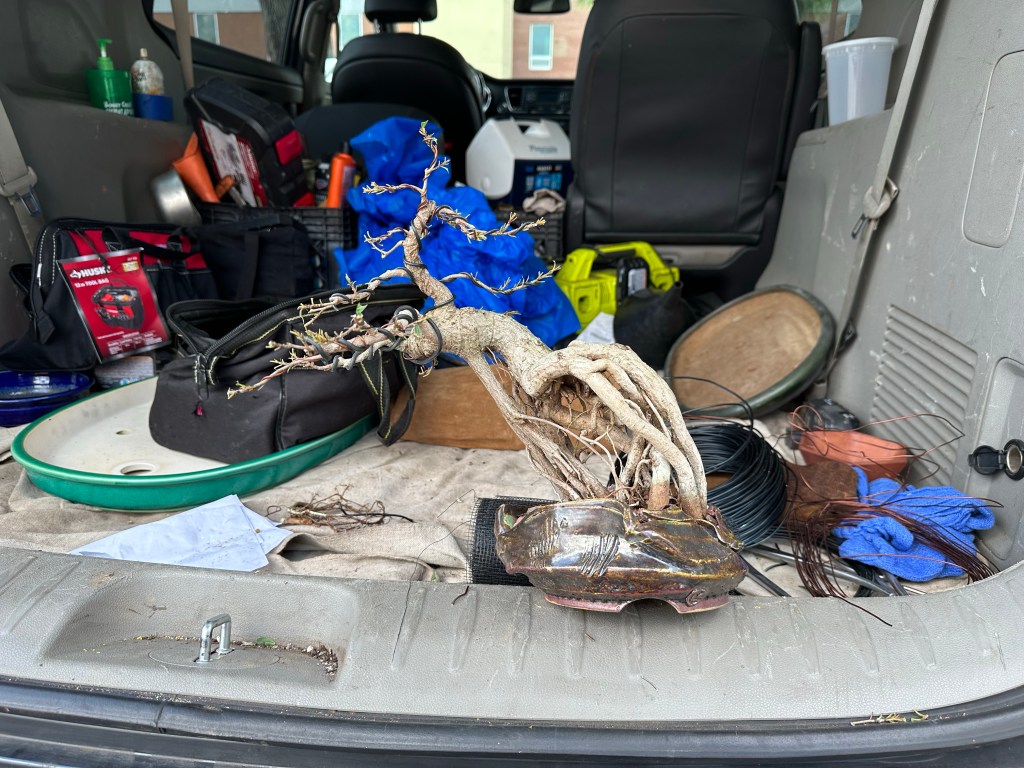
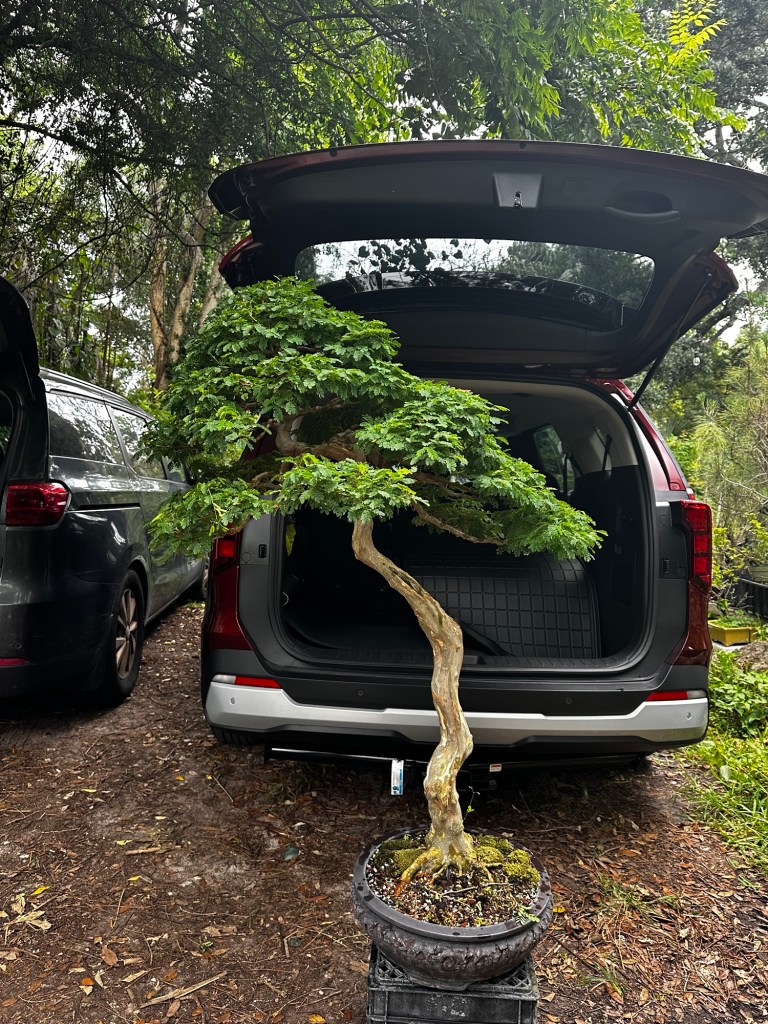
And here’s the Back Bumper bonsai studio.

A Kia minivan. For those that remember the old days, I graduated the PT Loser to the junkyard years ago.

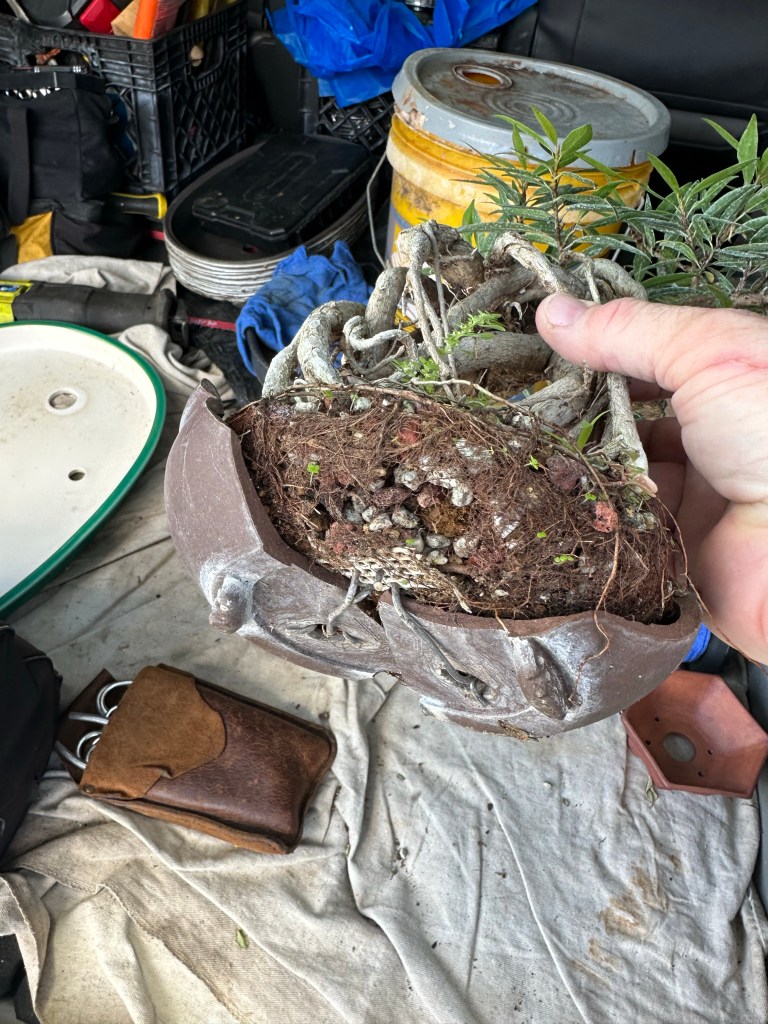
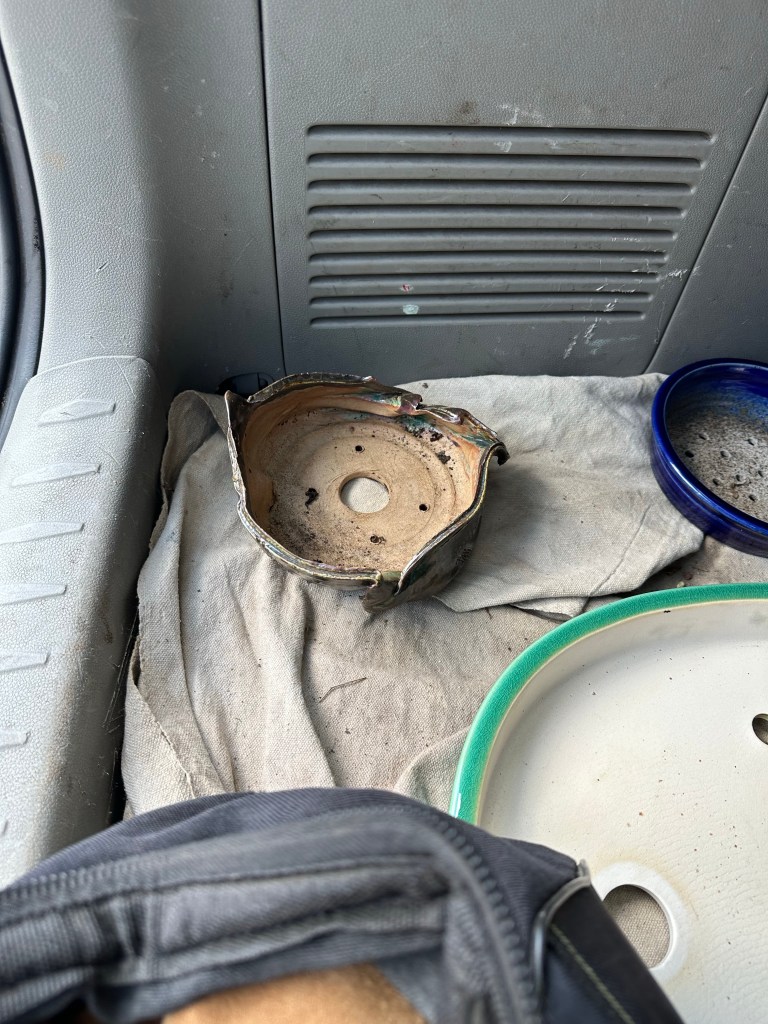
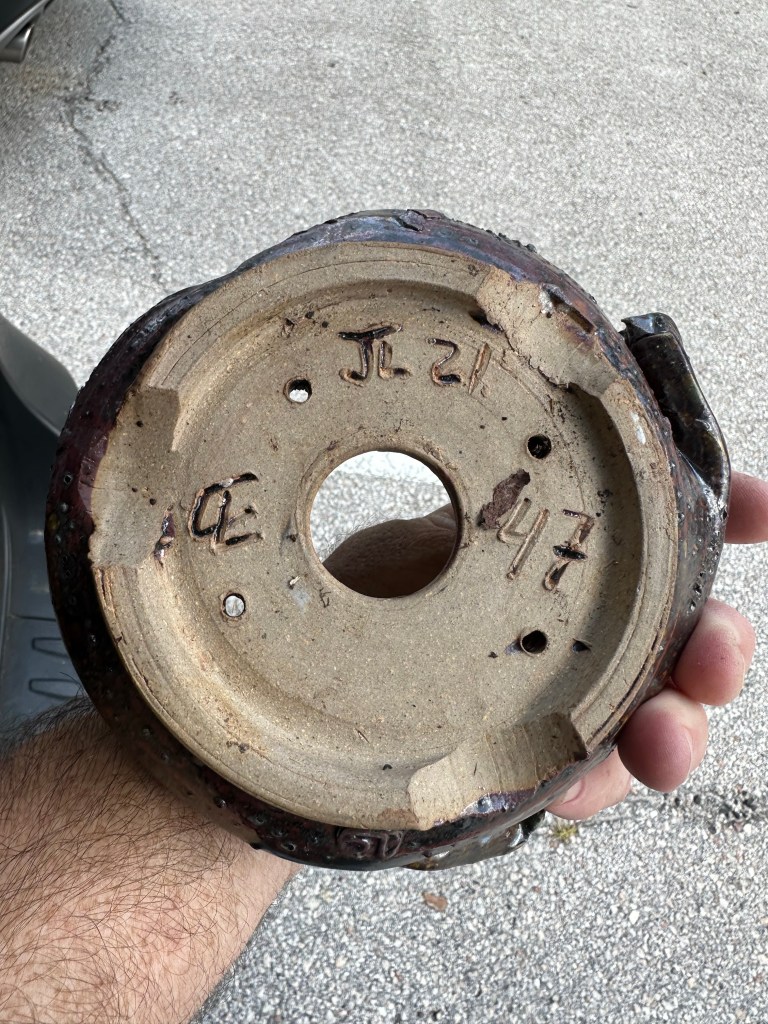
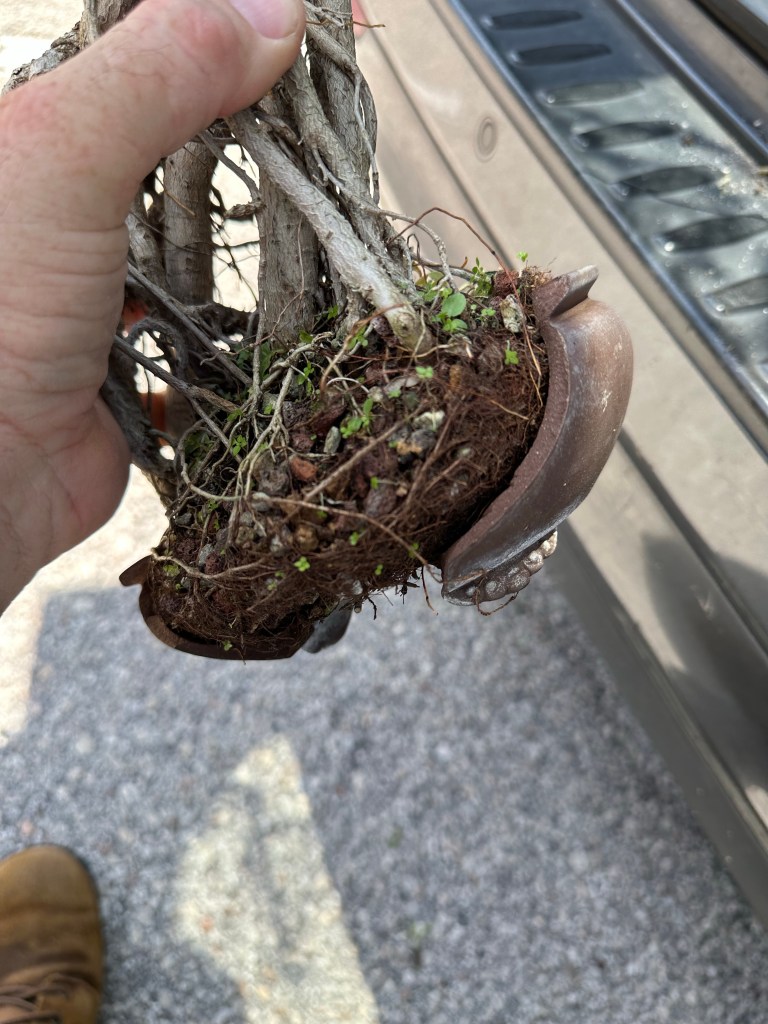
The willow leaf has a, uh, structural problem with the pot.

It done broke.

So today, I’m going to repot it, cut it back, defoliate, and wire. In that general order I guess.

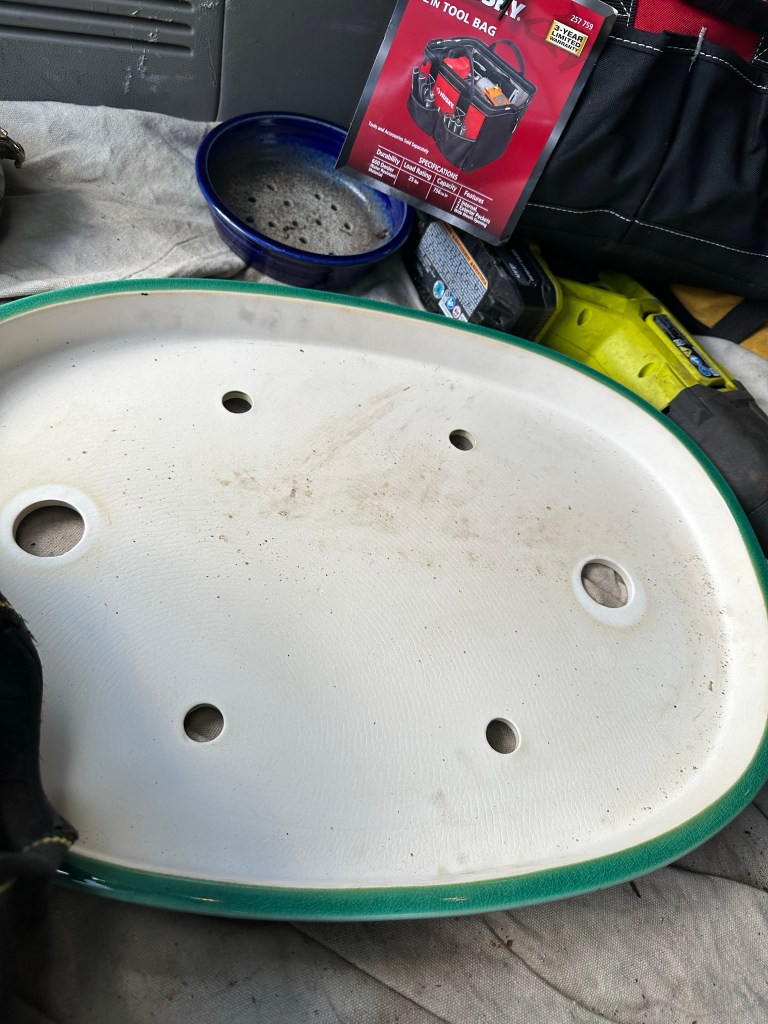
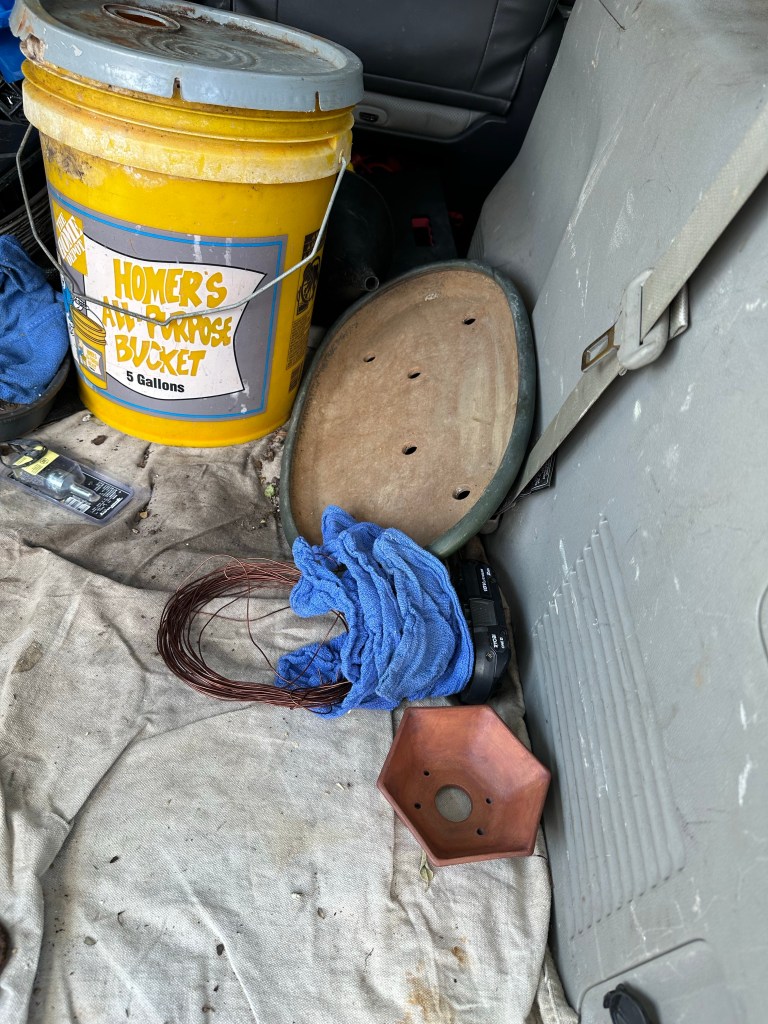
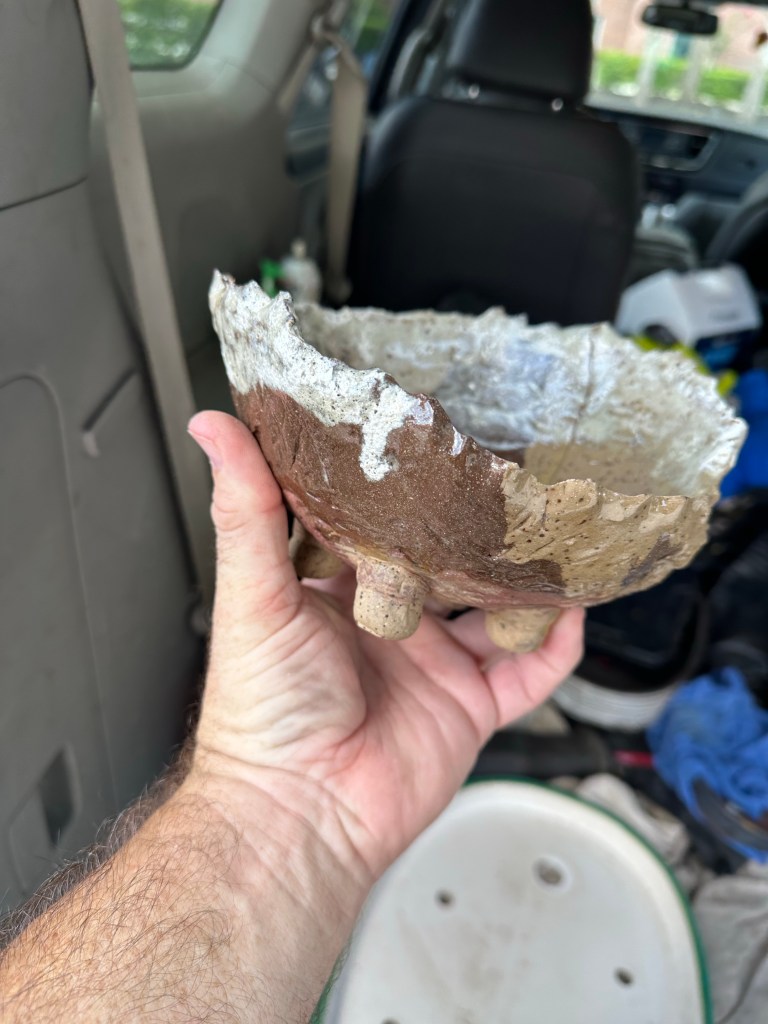
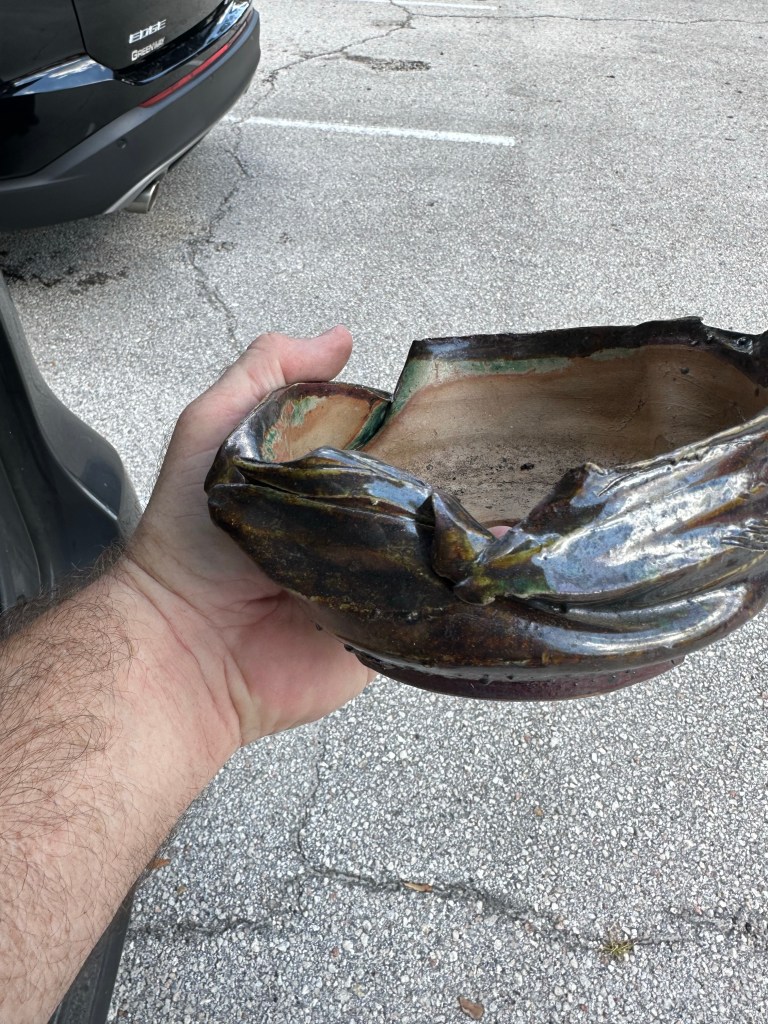
Here are some pots to choose from.

Not the big one of course.

Or that old Japanese one either.

The one below is from my student, Peter Penico. It could work.

But it’s going the wrong way. Nice pot though.

The one I’m going with is this one from Cesar Labrador, a Florida artist living in the Tampa/St. Pete area.

You’ll see his work on the Bonsai Pot Facebook auctions every once in a while.

Sweet details and shape.

It’s perfect. Let’s see about the tree now.

I think I’ll actually defoliate first.

I’ll be using the “chicken plucking” technique today.

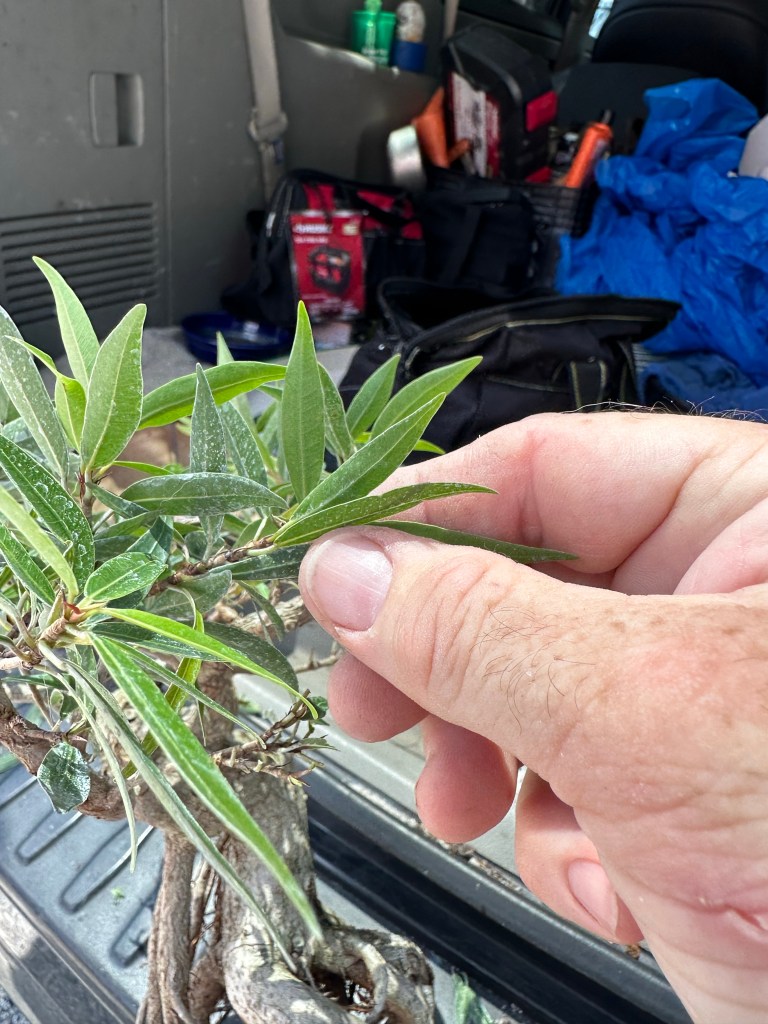
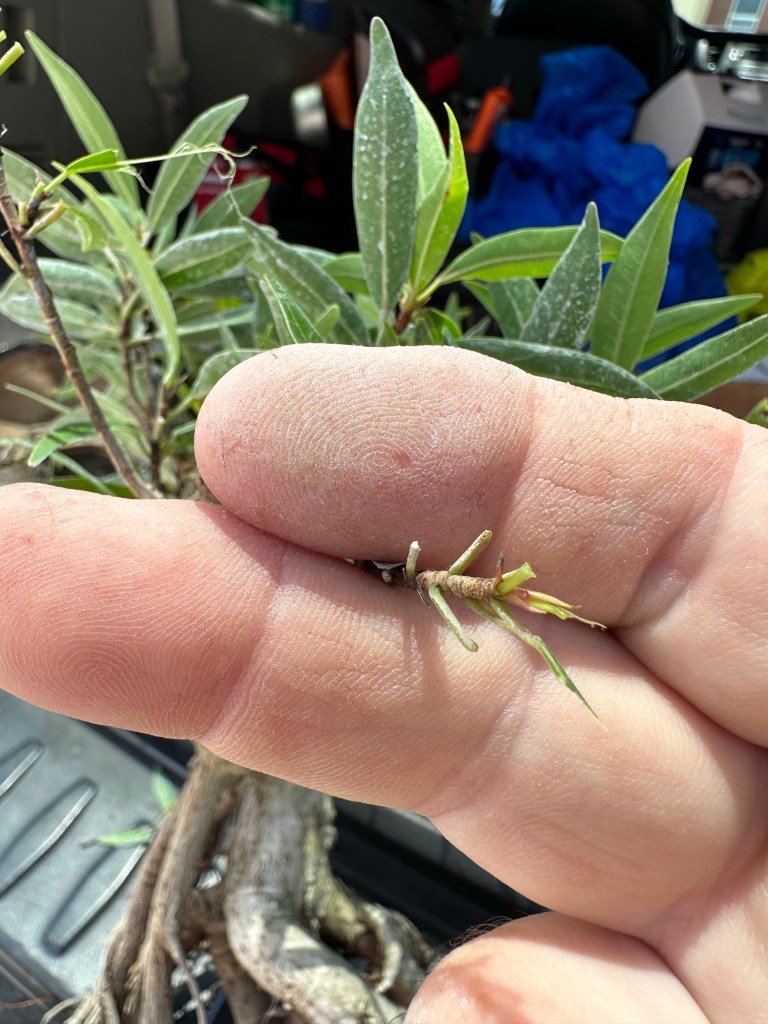
Grab the leaf, and pull forward. The leaf will break at the petiole and you’re done.

Pretty quick and easy. Doesn’t work on all species of trees though.

Next is to remove the old pot.

Gently massage the old soil out.

Tie the tree into the new pot, add soil.

And now for the magic. Wiring!

Here’s the before.

And…..here’s my daughters Jeep and what’s wrong with it (see what I did there? I’m going to make you wait for the after. Wait, don’t scroll down yet…..dammit!). Well, if you’re still here, she has a blown head gasket. The design of the cooling system allows for the coolant to get low and you don’t know it because the overflow reservoir stays full. So, in typical Chrysler fashion, the car overheated and blew up the gasket.
She liked the color of the Jeep. But it’s a bit too much of a job for me to fix, so its for sale, as is. If you’re interested. Call me….

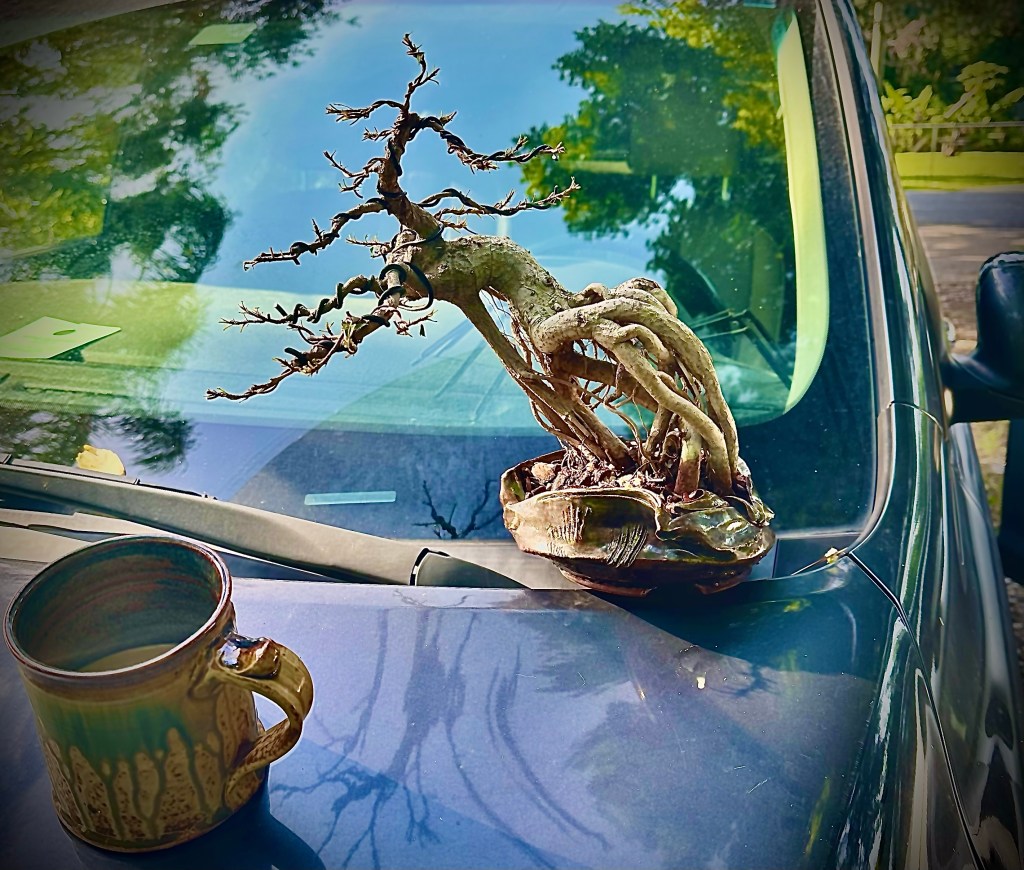
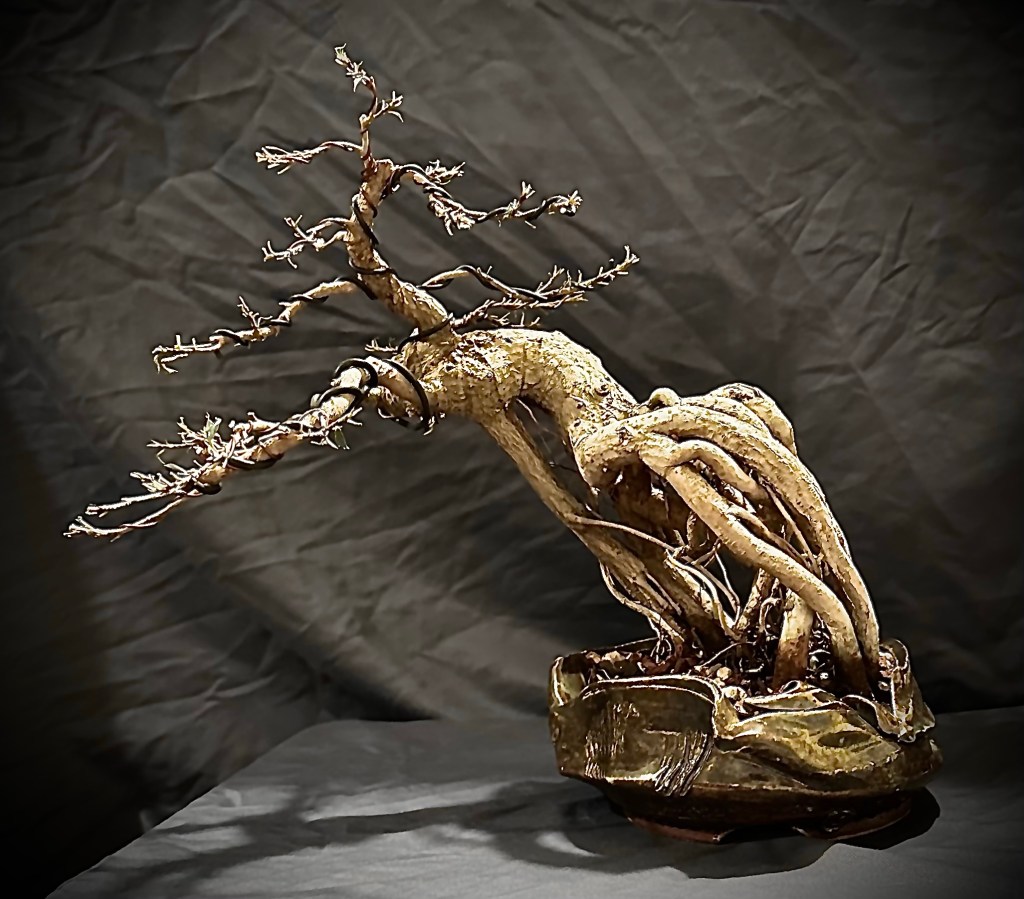
Ok, now for the after.

I think the pot goes well with the exposed root style of the tree.

Here’s an ugly, informative shot.

And a couple of Glamour Shots

These two will go on Instagram of course.

Now, what shall I write about next?

  •  

Time for a change

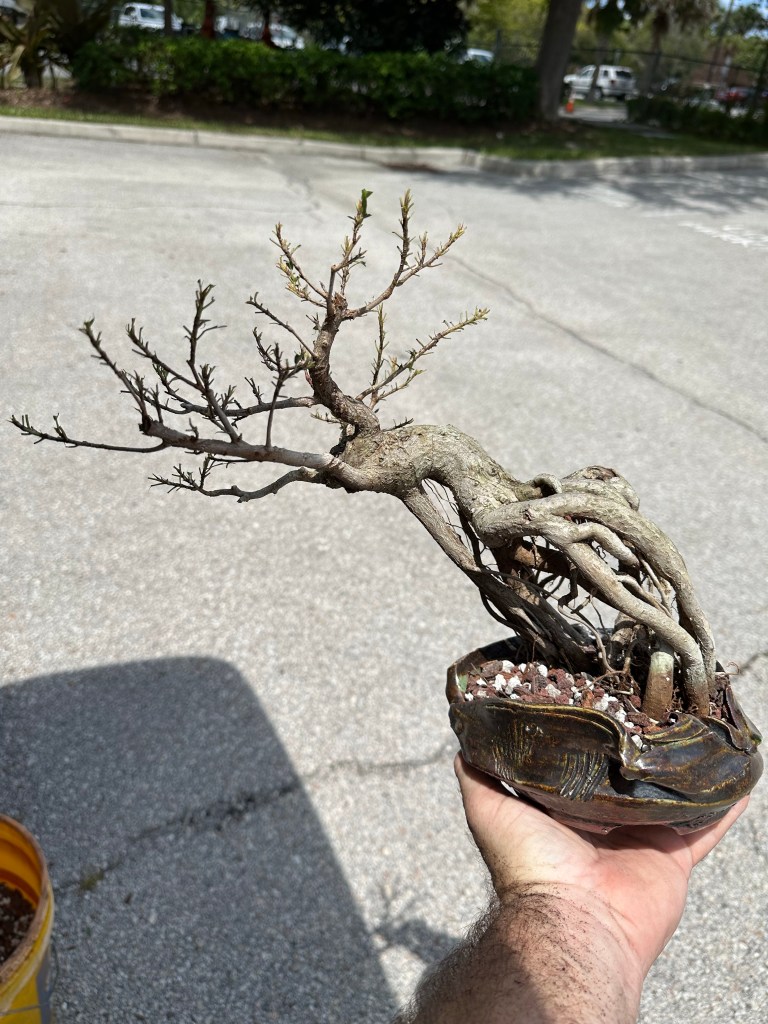
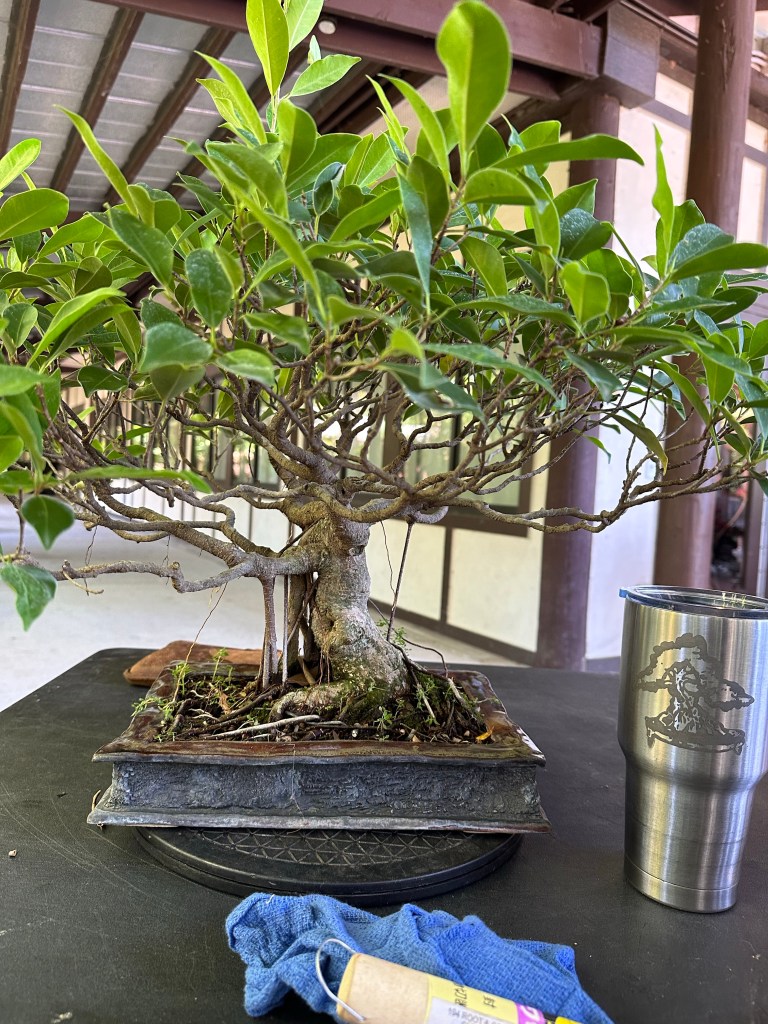
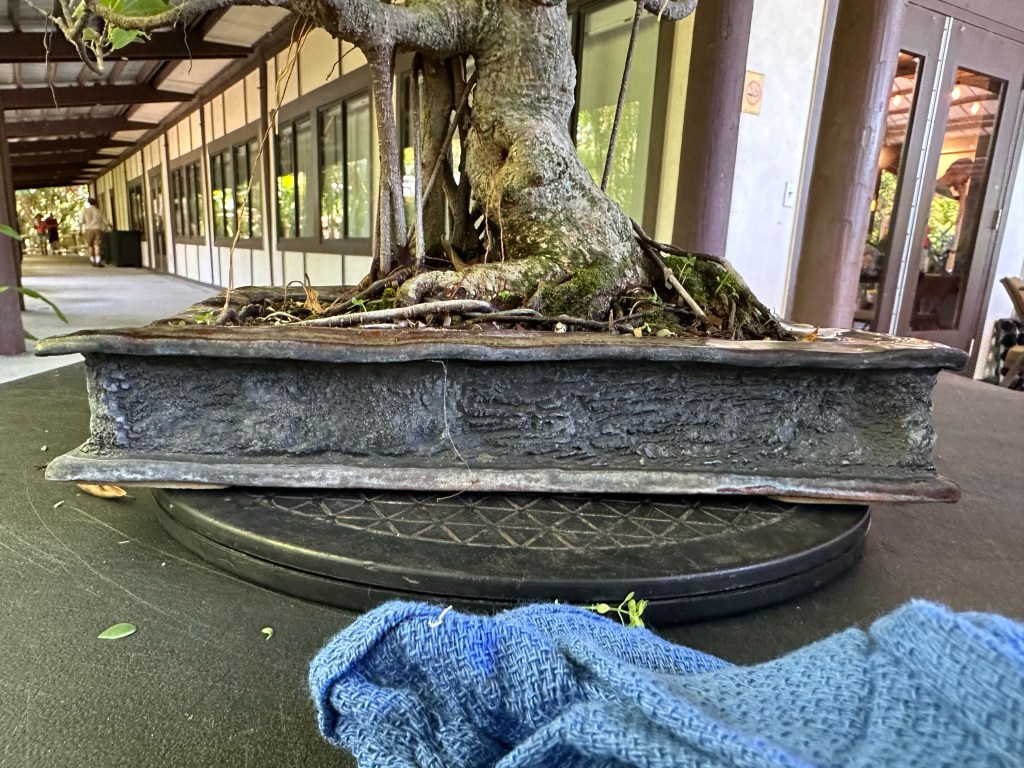
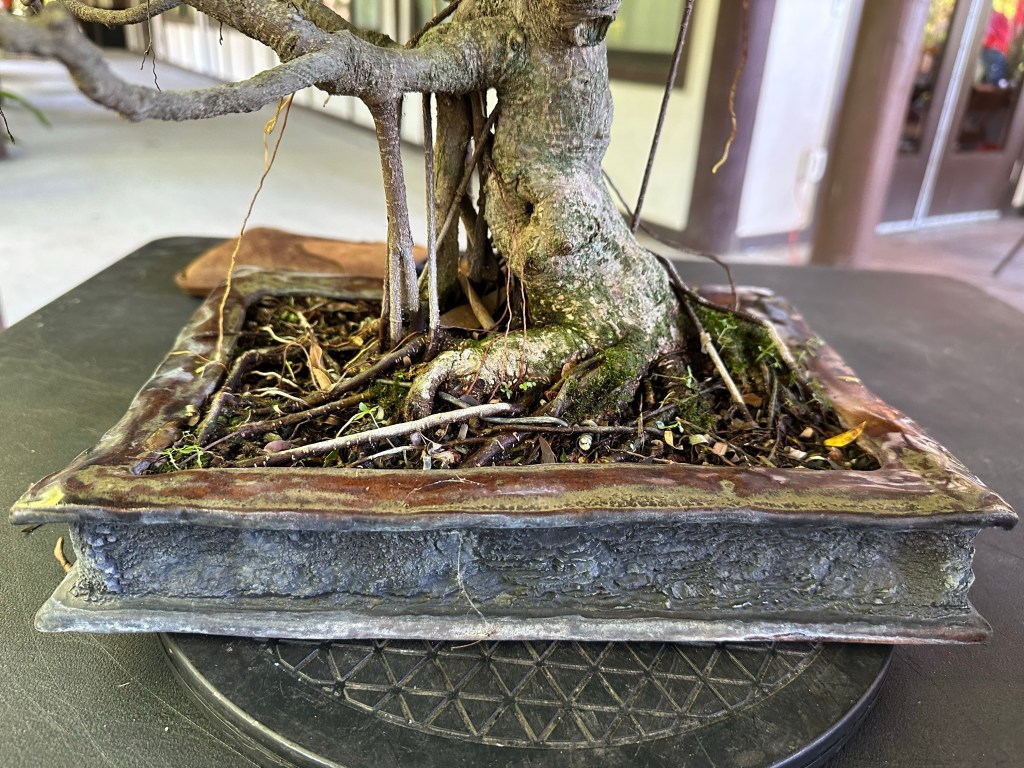
This ficus has been in this remarkable container for..ahem..four or five years, without a repot. I’m sad to say it needs a bigger pot. Sad because I love the pot and the tree combo.

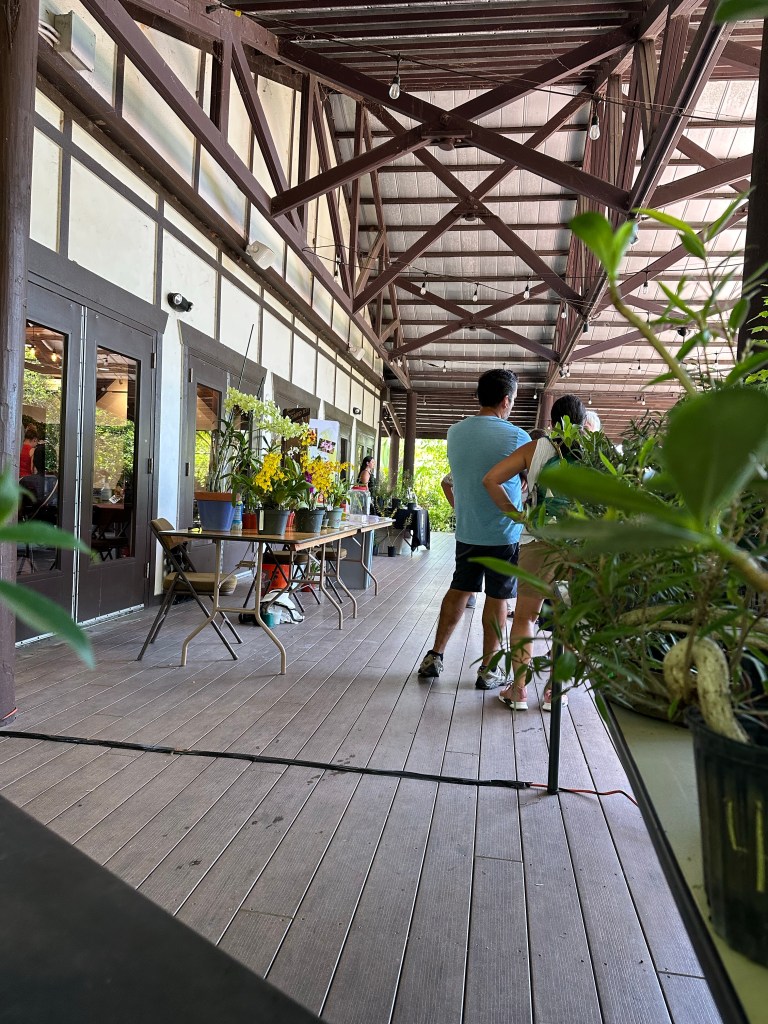
Today, I’m hanging out, selling my wares and shooting the shit (as I’m known to do) at the Brevard Zoo. No, I’m not joining the swamp ape exhibit as the first living specimen ….

…the Bonsai Society of Brevard has an annual show at the zoo, uh…every year (I guess that’s what “annual” means), and I’m here (or there. Sometime the tenses get mixed up in my wandering and rambling prose style. I think it adds flavor and character. Some people say it drives them crazy. I say to those people that their insanity was there already, and I just exacerbated it, allowing it to blossom into the full blown psychotic episode that they’ve been waiting for their whole lives. You see, some people need an excuse but we of lesser gods, we know you don’t…..).

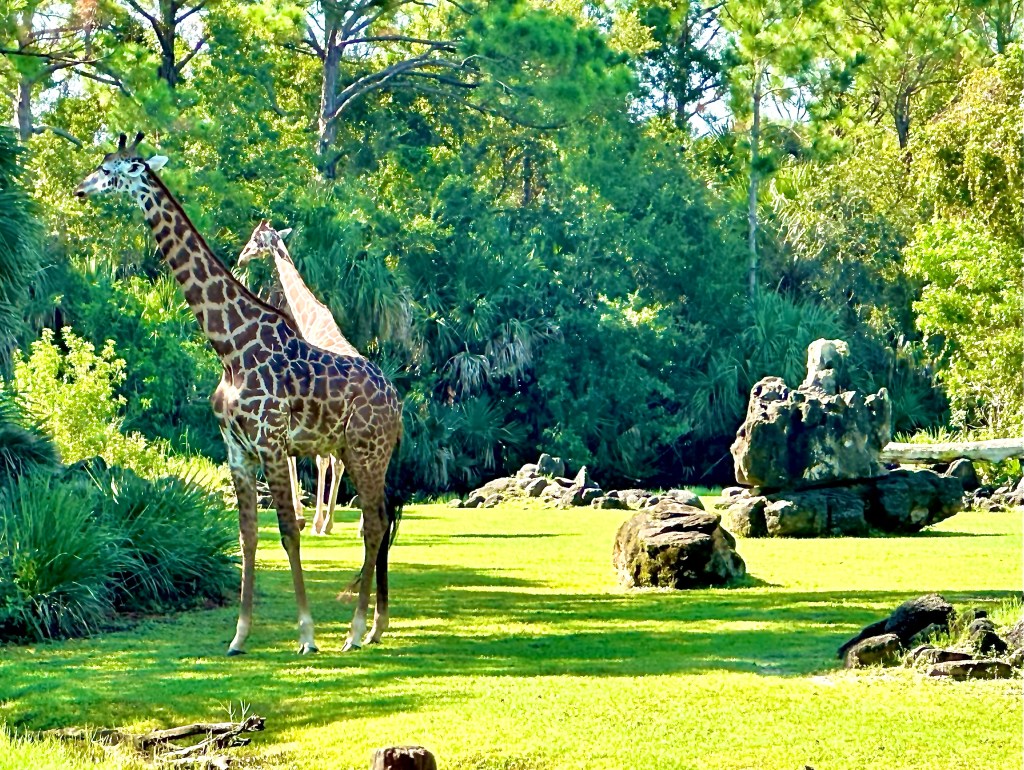
Above, we have the local fauna, Floridanus nativitus, below, are some imported beasts, Giraffa camelopardalis.

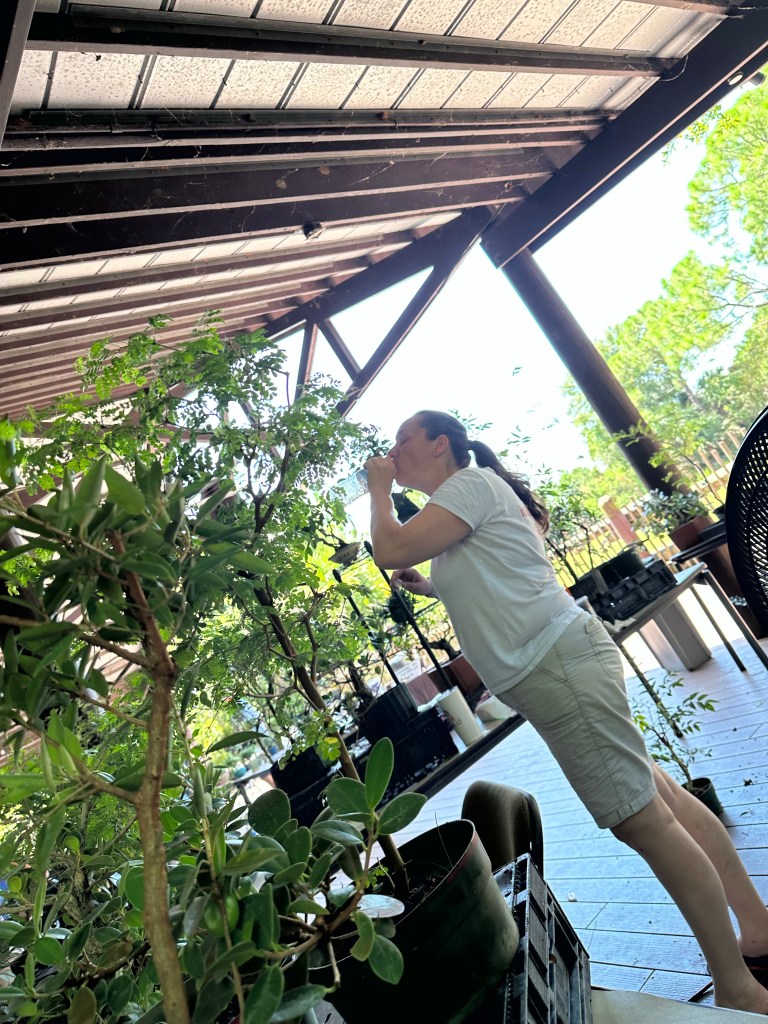
And my wife, or, as we call her on Da’ Blog, “She Who Must Be Obeyed”; she’s from Indiana.

Now, since you know where I am, and what I’m doing, and I’ve gotten in enough trouble with the wife, let’s get back to the tree.

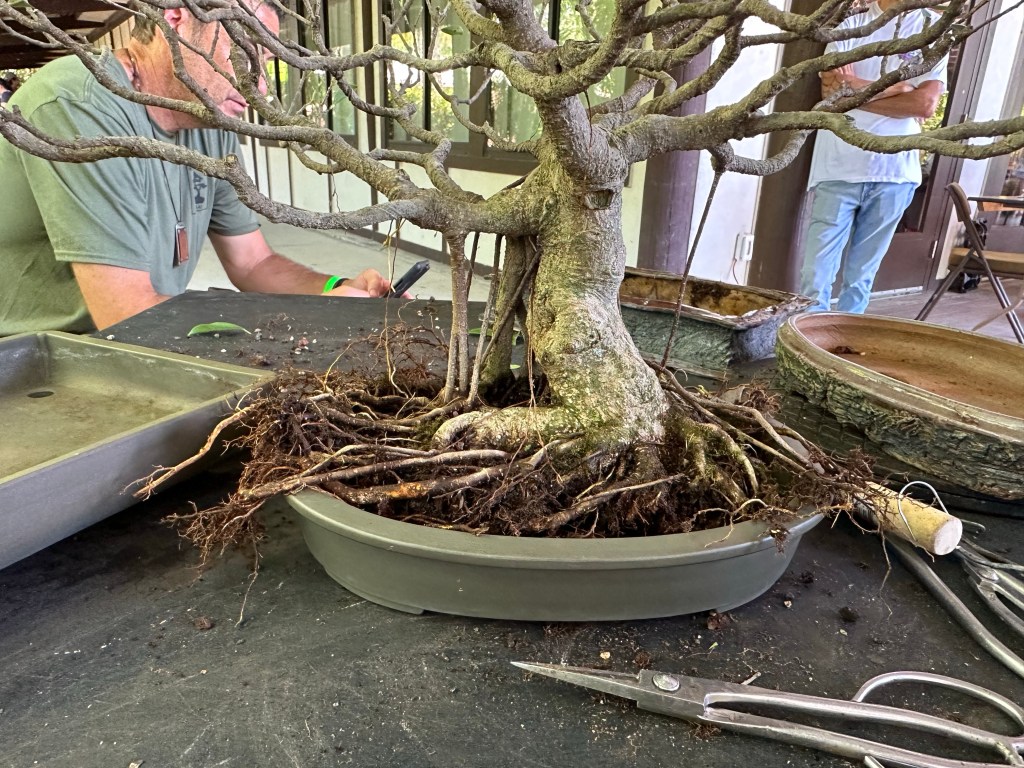
The job is to remove the tree from the pot.

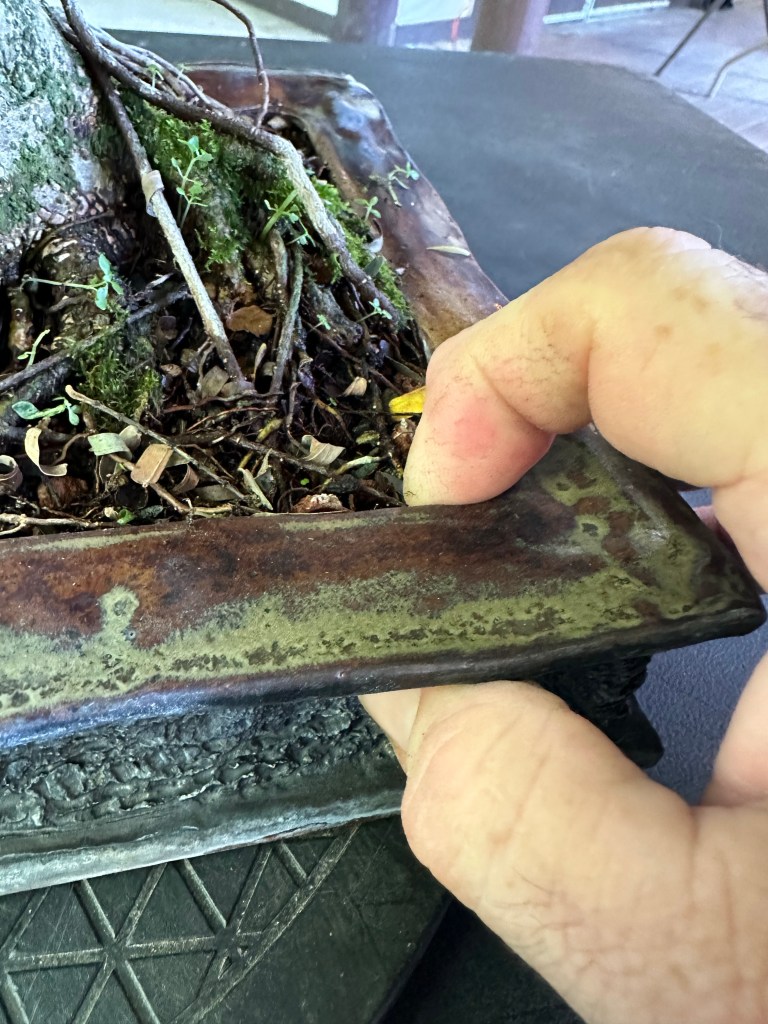
For those “in the know”, it’s really really really (really) advised against potting a ficus in a pot that has an inwardly curving lip.

Ficus (I’m going to pronounce that the British way, “Fick-us”, as I’m feeling all fancy right now), make roots. Lotsa roots.

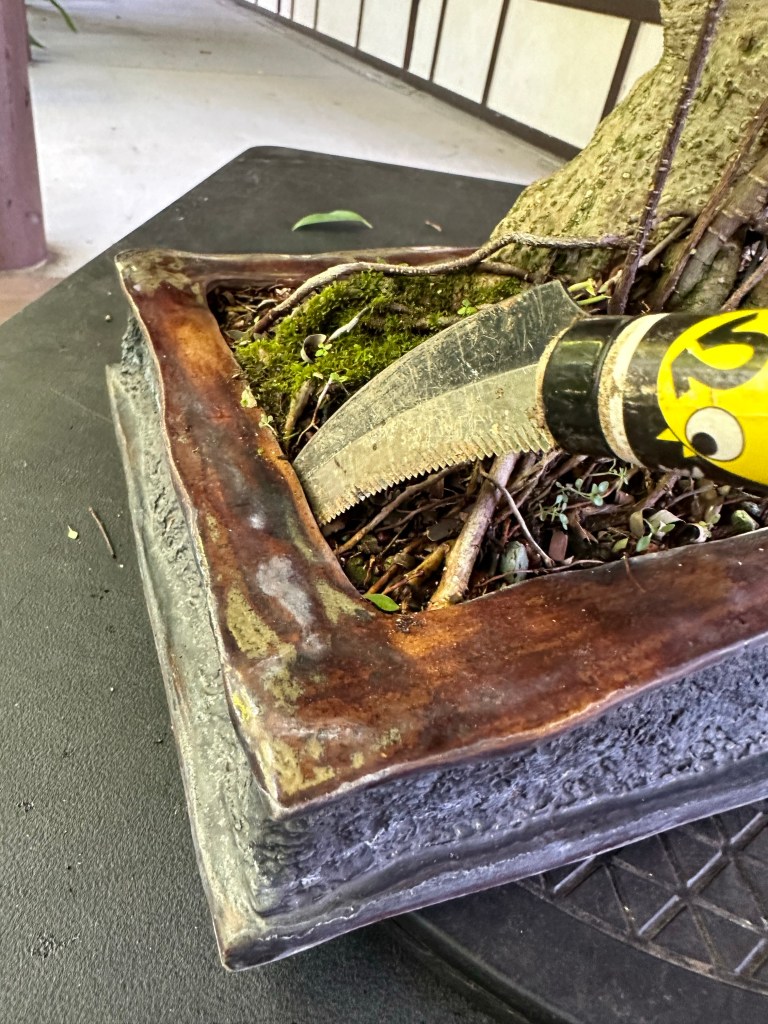
I have to bring in a highly specialized (and imported) root cutter (and sod cutter too, I guess, if you read the handle. But I just don’t see myself on my knees, my face in the grass, cutting out pieces of sod).

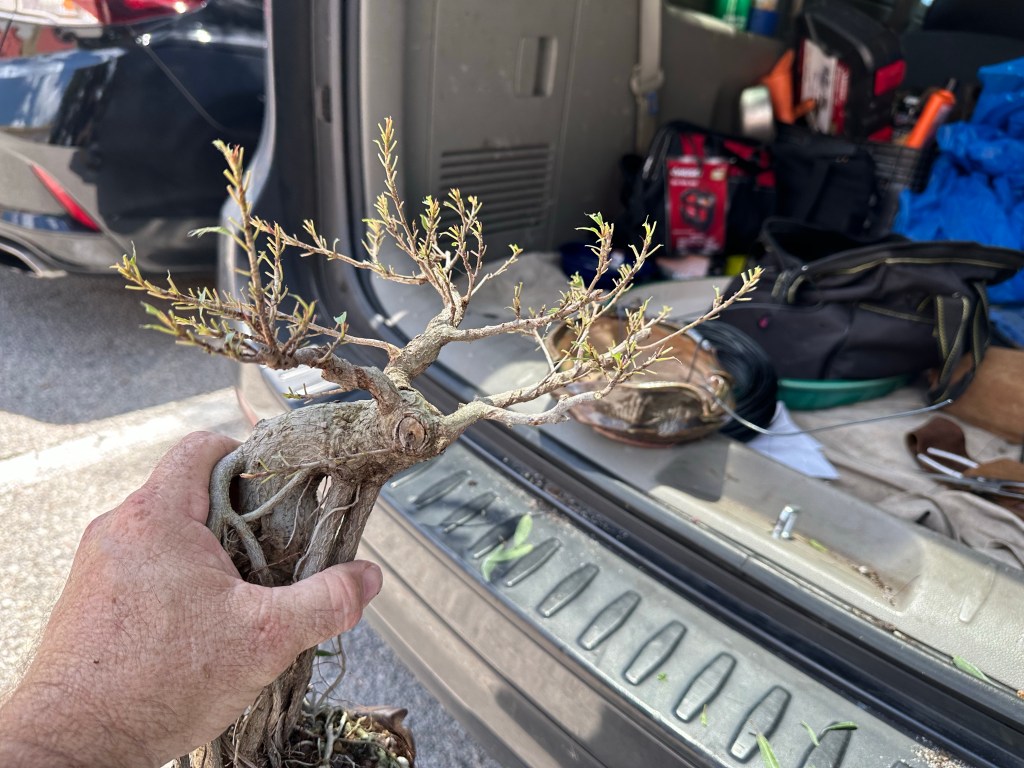
But first, the inevitable cutback and defoliation.

You don’t need to see that part, just scroll back to the hundreds of articles I’ve written and in which I’ve described the process.

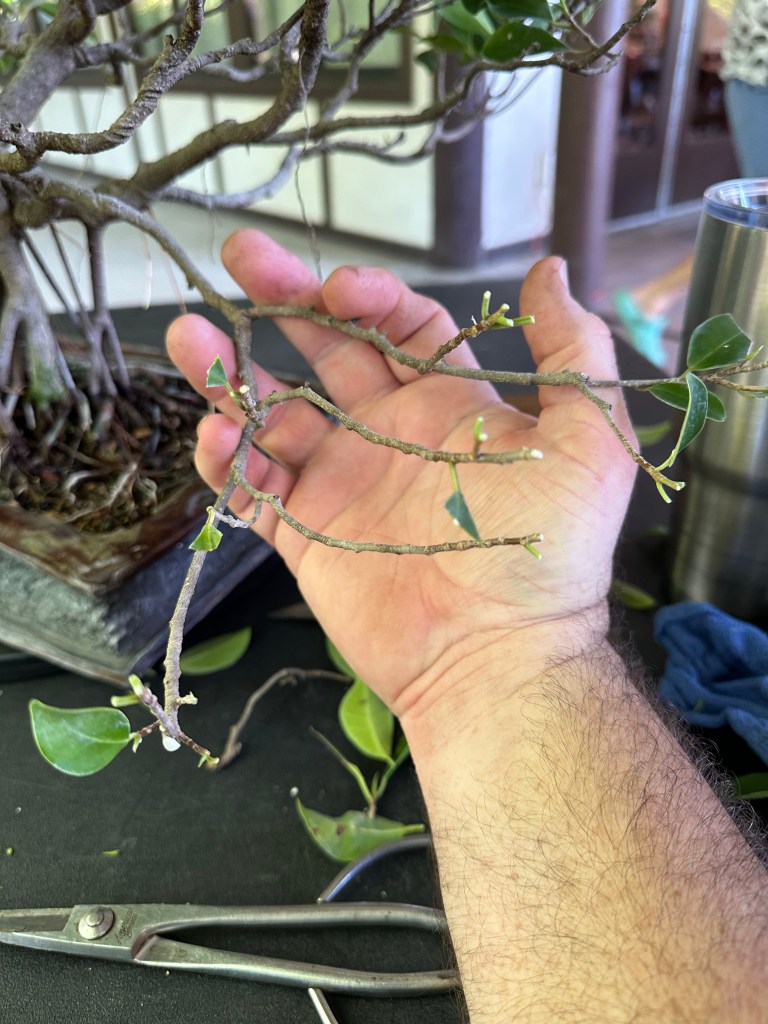
I will, however, note that this tree is the species standard Ficus microcarpa. And that means I leave a little green on the tips so there won’t be dieback.

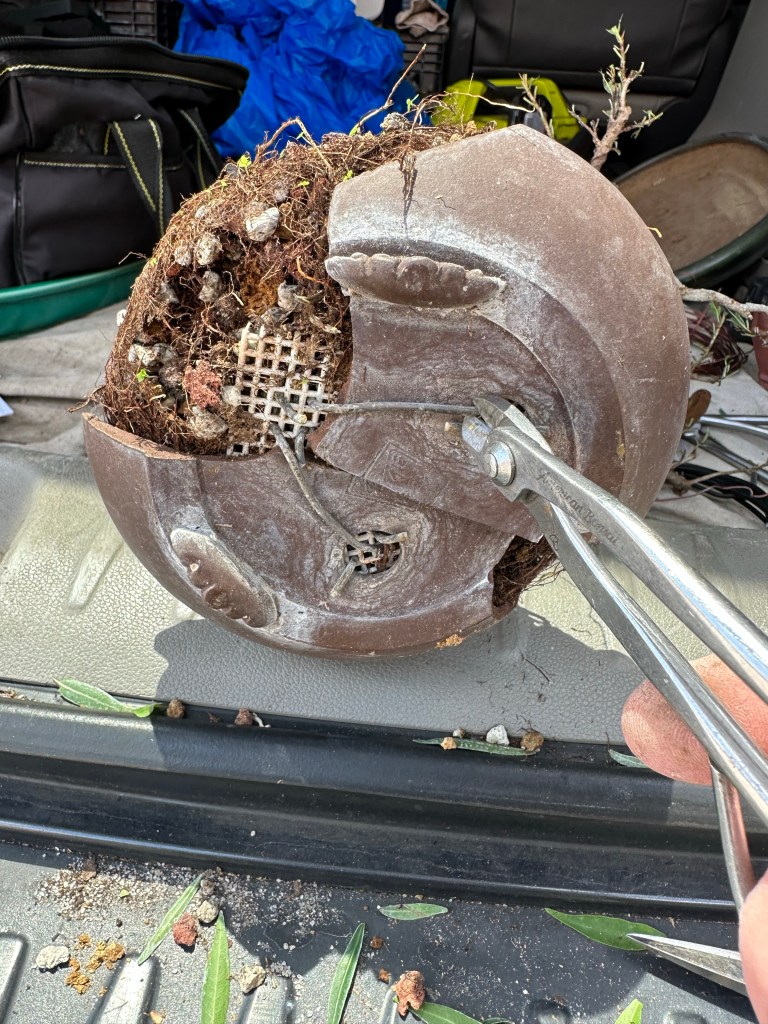
Now to the hard part, removing the tree from the pot. First, cut the tie down wires, on the bottom and top.

Then we start cutting around the pots perimeter.

As shown below.

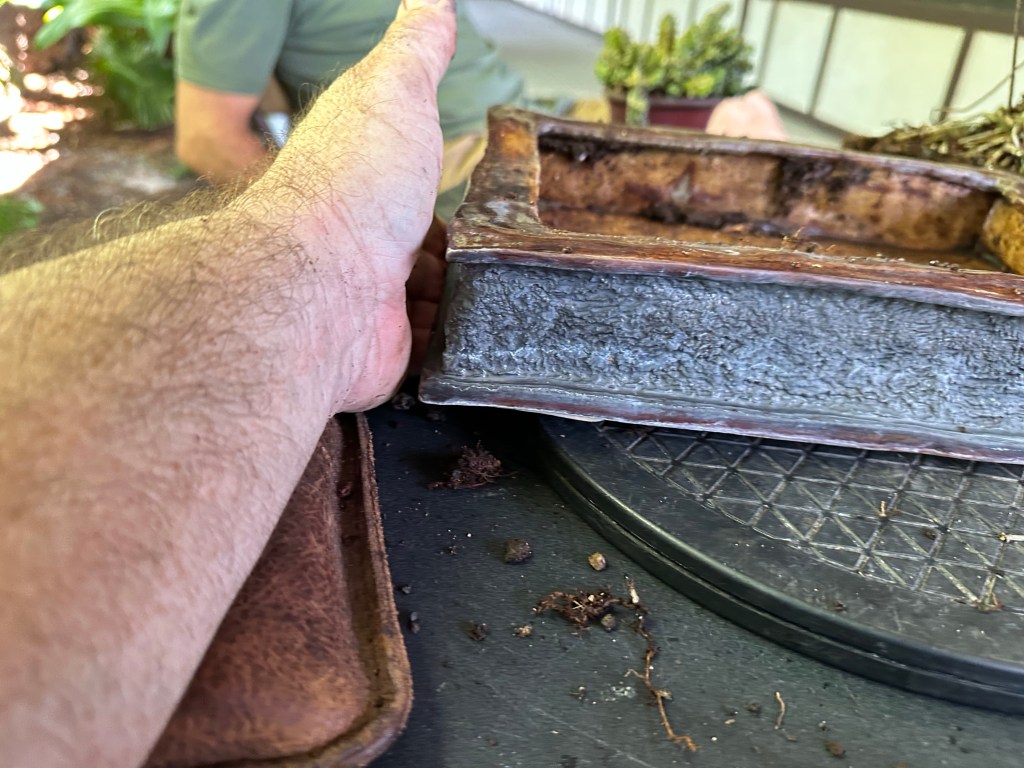
Not too hard with that tool. I usually use a steak knife (which was stolen from The Sizzler Steakhouse and Buffet) but it’s at home in The Book. The gentleman I’m speaking with is Doug, The Hippie Dad.

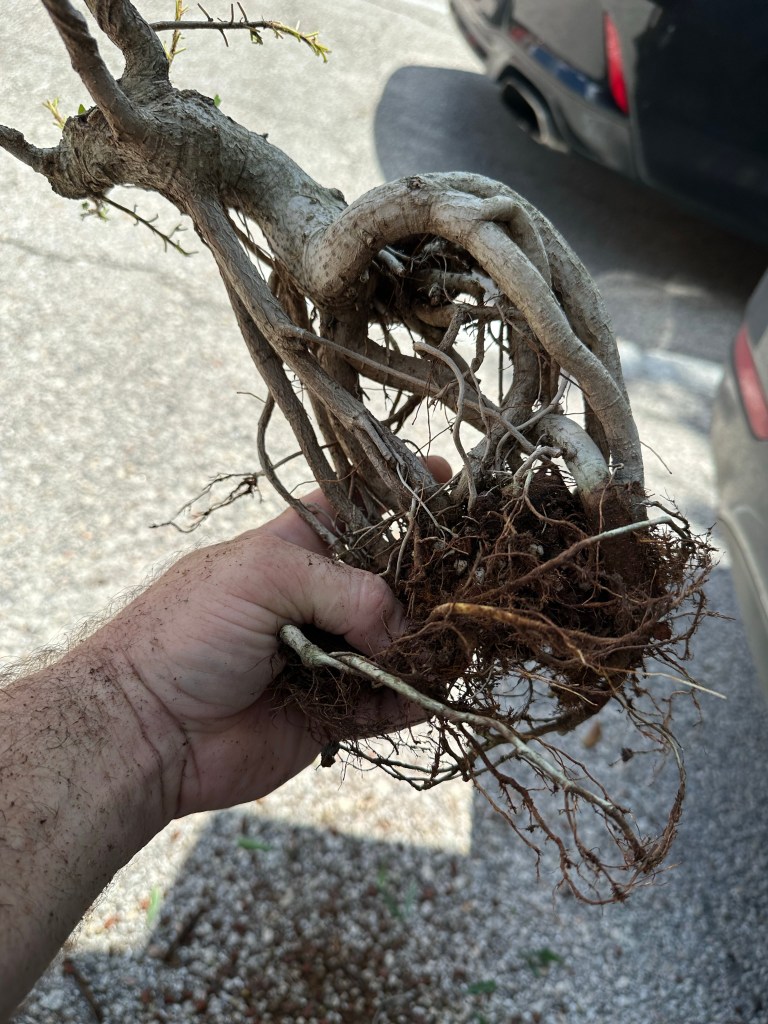
Now to birth the tree. Another video. Yes, I’m using my scissors. They worked. I use my scissors for many things I’m not supposed to use them for.

Looks like a tortoise mouth, right? And again, that was Doug. Thanks for the muscles.

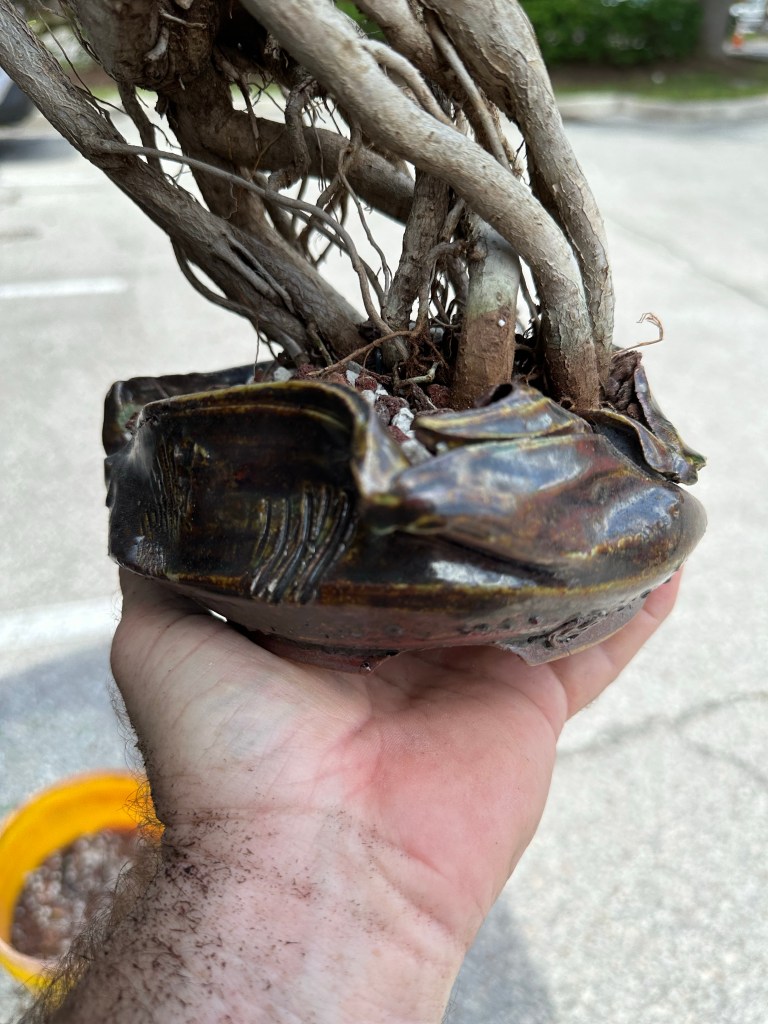
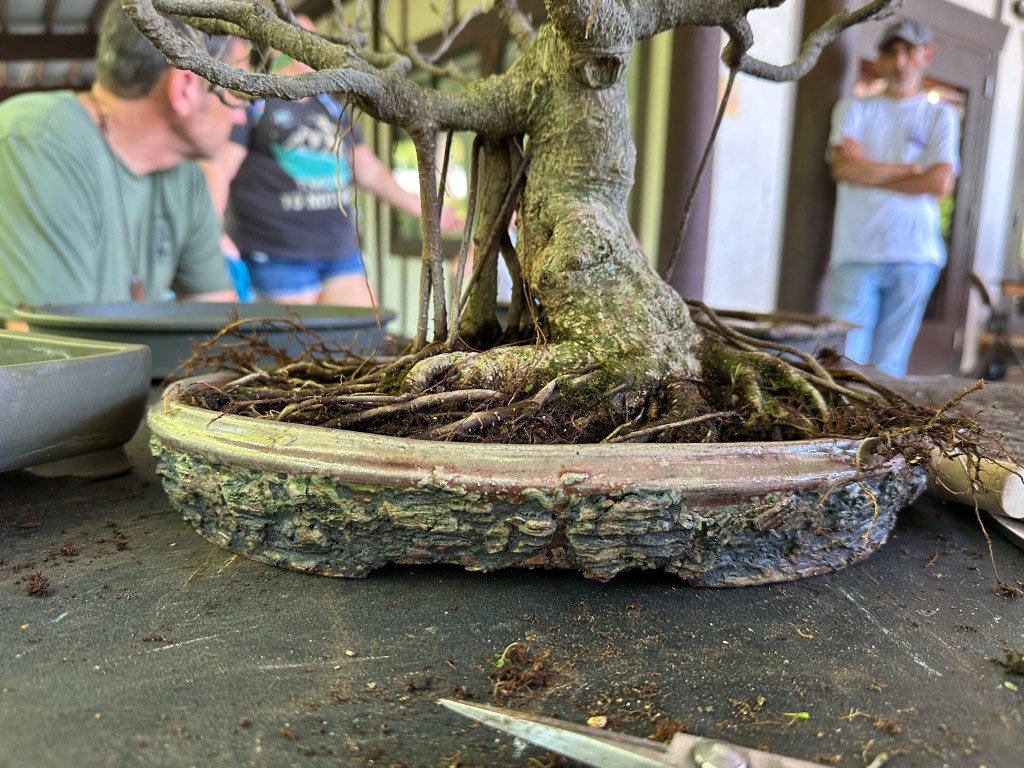
The pot was made by Daniel Holderer. He called it “Cradle for Life”.

I’ll find something else to put in in. It’s been a good container for this tree.

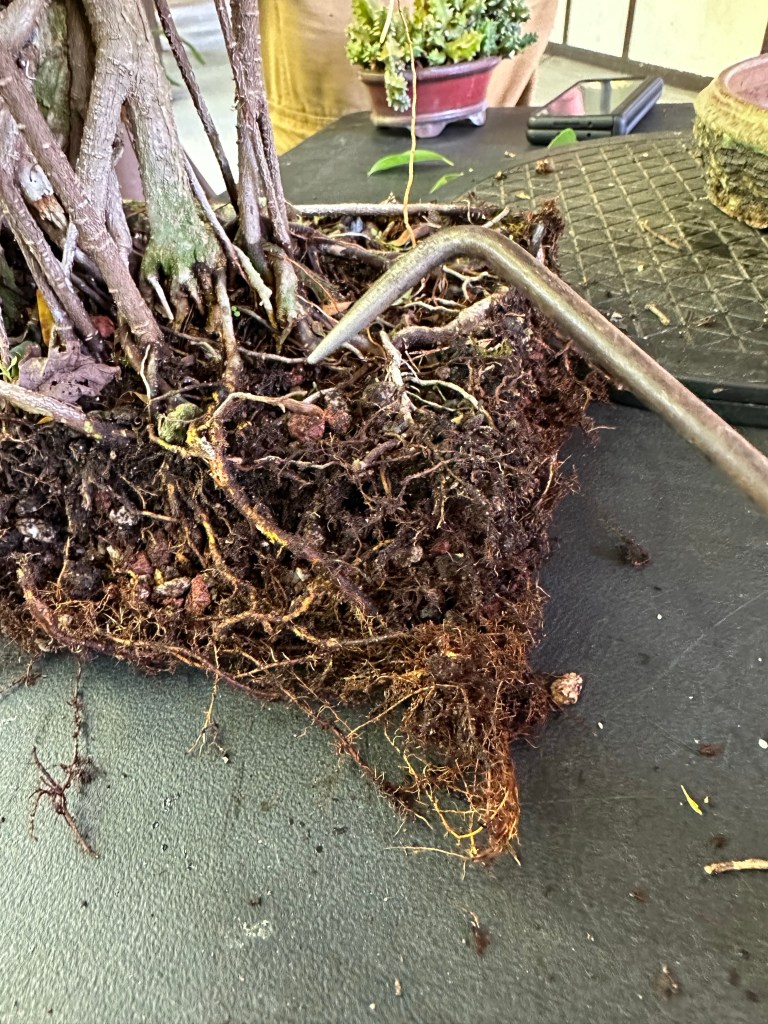
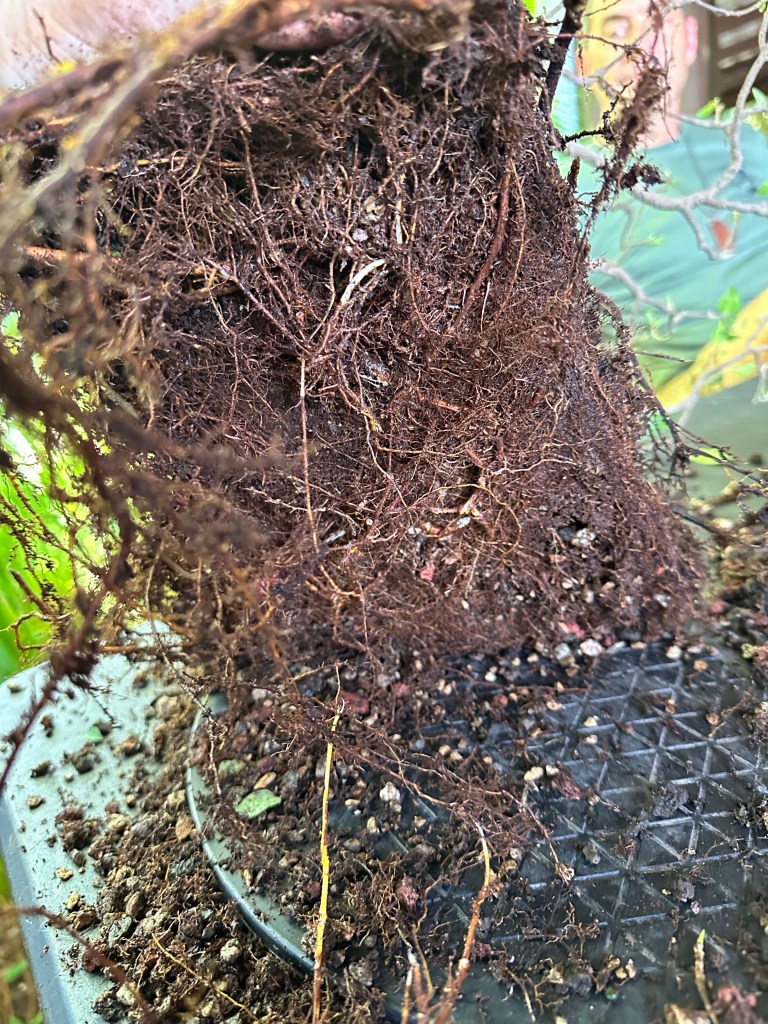
Now to rake out the roots.

It’s just a little root bound.

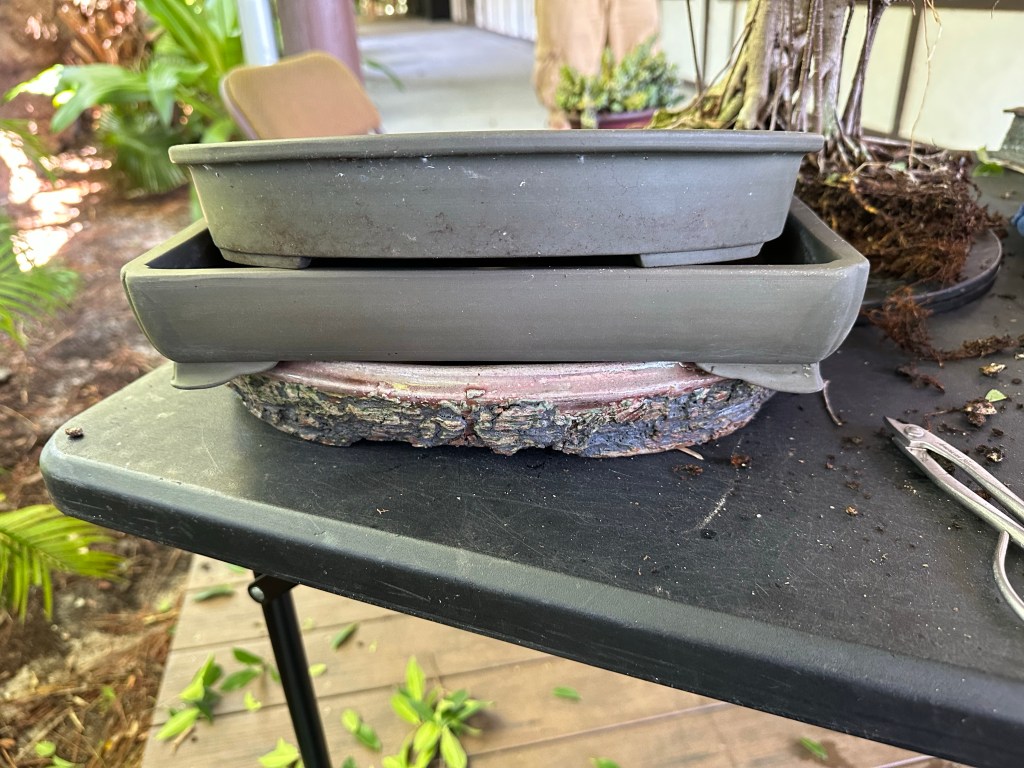
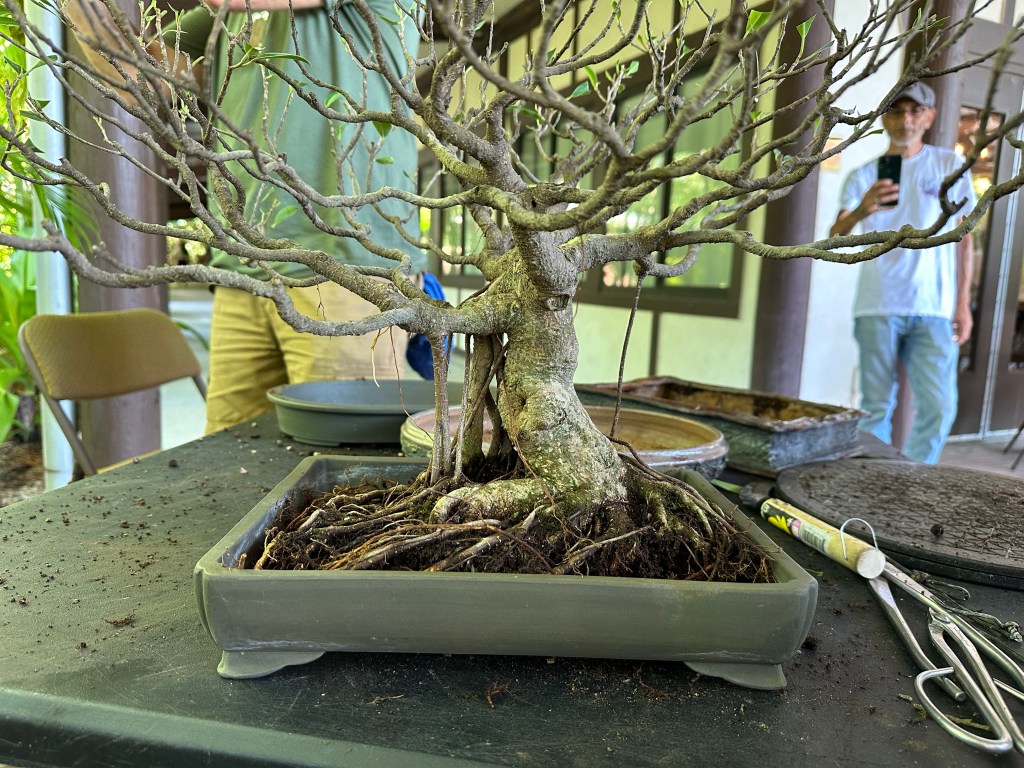
I brought three pots with me to choose from. Two of those antique Japanese pots with the weird green clay, and a beautiful oval from my friend Cesar Labrador.

The oval one’s too small…

….the rectangle one’s about right, but the style is too formal for my “Tropical Broom Style” ficus….

….ahhh, this one is just right!

Some screen, tie down wire….

Soil….

And we are done.

Looks good back on the bench at the nursery.

Tropical Broom Style. I made that up years ago but I think it’s appropriate for this ficus. And everything was made up in the beginning anyway. Whoa! Wait! Mind blown! Right? You mean you can just make up things?

Indeed you can, indeed you can….

  •  

LeAnn’s buttonwood

That’s Washington DC. I think. Lots of converging lines and paths layered on top of each other. I posted a similar insane street map last time I was up in the area and I visited the Bonsai and Penjing Exhibit at the National Arboretum .

I was too busy working this tour to get to see the Collection. That’s ok by me. I like working. To be human is to work. To find meaning in that work is the sole purpose of this life on this earth.

Anyway, there’s room for philosophy later on in the mid and last section of this essay, so, as promised in the last post, here is LeAnn’s buttonwood.

She said it was collected (as most in the USA are) by the Buttonwood Queen herself, Mary Madison.

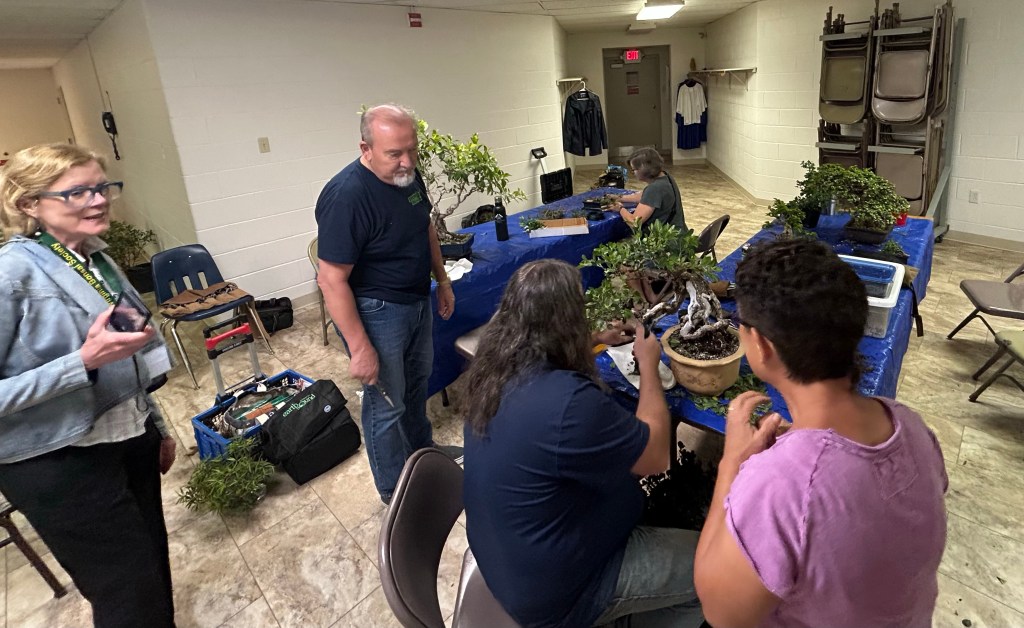
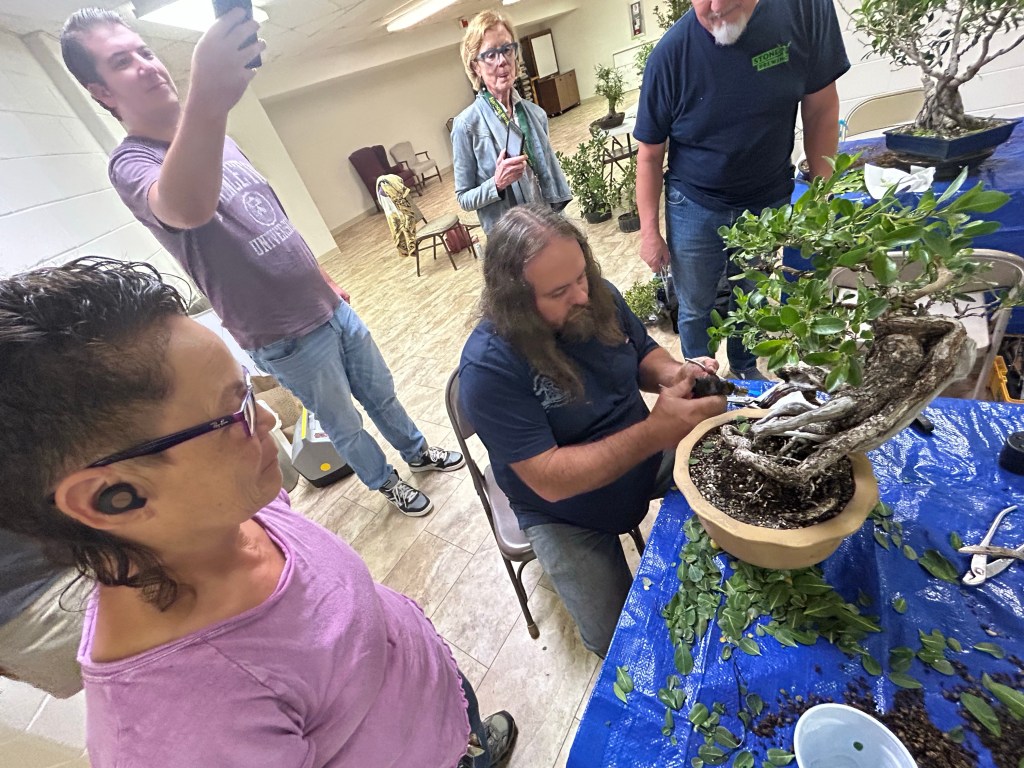
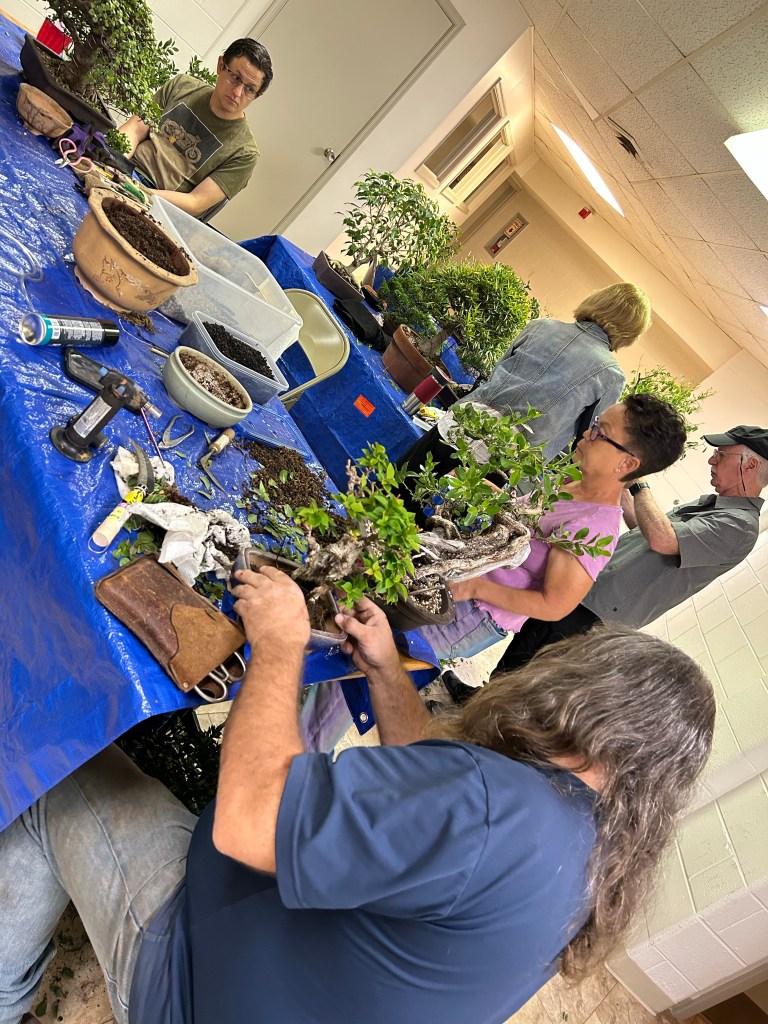
LeAnn is the lady in lavender (purple? Lilac? Not periwinkle, or plum, for sure) hovering behind me.

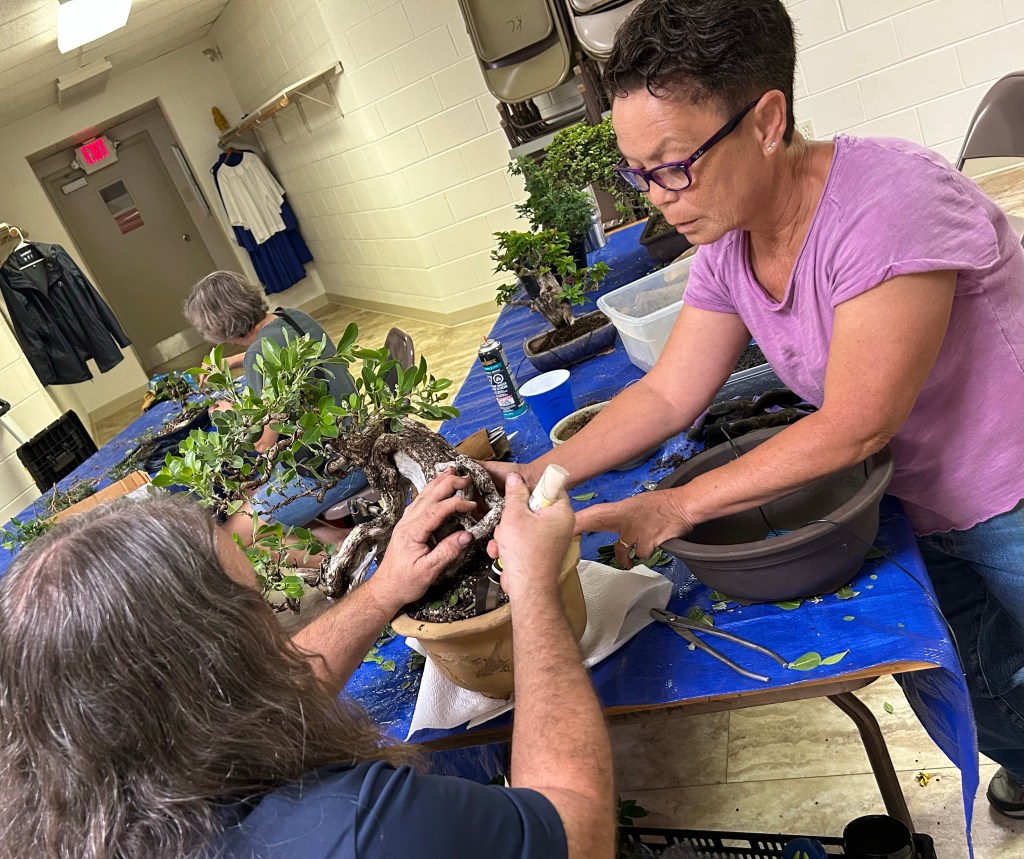
She waited very patiently while I worked through all the other workshop attendees trees and finally got to her tree.

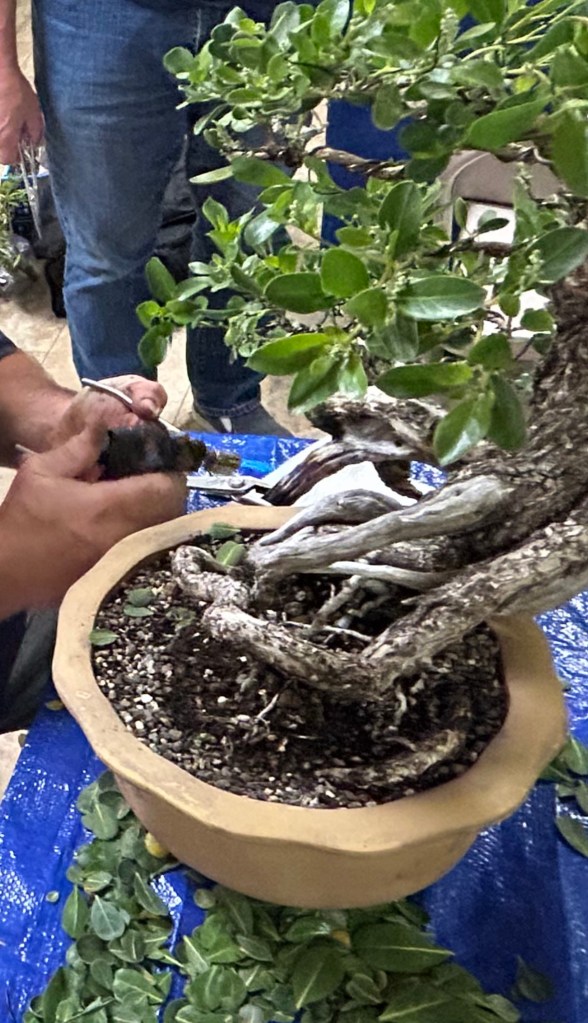
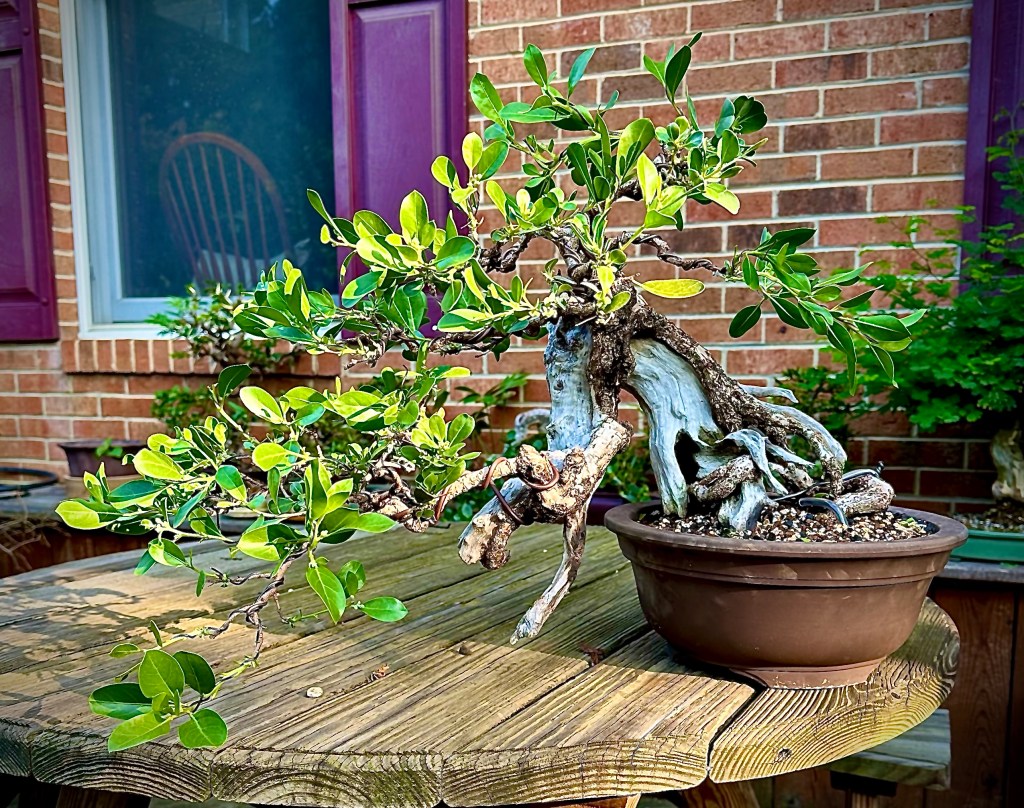
It desperately needed a repot. I teach my students in Florida that buttonwoods need a repot every year. Up north, like here in Virginia, it’s not so important. Unless you use a horticultural heating pad, that is. (Wait, is Virginia “Up North”? I’m not sure. Where’s the Mason-Dixon Line?)

Ok now…..WHAT? (not the North/South thing, even I’m not getting into that). What’s a horticultural heating pad?!

Here’s a few secrets for my northern tropical bonsai growers. First: get grow lights. We are in a golden age of indoor growing of plants. Yes, due to the legalization of cannabis, mostly, but we gain from it because all kinds of grow lights, from full spectrum LEDS to metal halide, are available almost anywhere for cheap. So get yourself one. But…BUT..secondly: heating pads!!! Horticultural heating pads are the game changer for those that need to bring in their tropical trees for the winter (one should always put your trees outside for spring and summer, there’s no replacement for the sun and rain. None). Most tropical trees growth habits are dependent on temperature. But not just ambient air temps. It’s the temperature at the root zone, in the soil, during the evening, that makes tropicals grow.

Which is why we here in the Sunshine State don’t repot buttonwoods until nighttime temps are above 65°F for at least 6 weeks after the repot.

In sweet Virginy, this particular operation is taking place in the middle of July, and LeAnn has the rest of July and most of August to grow more roots. So no worries there for her. But I knew of a guy in Cincinnati that repotted his buttonwoods in January. He had a greenhouse and heating pads. That’s where I got the idea.

Anyway, we got the buttonwood out of this pot:

And into this pot:

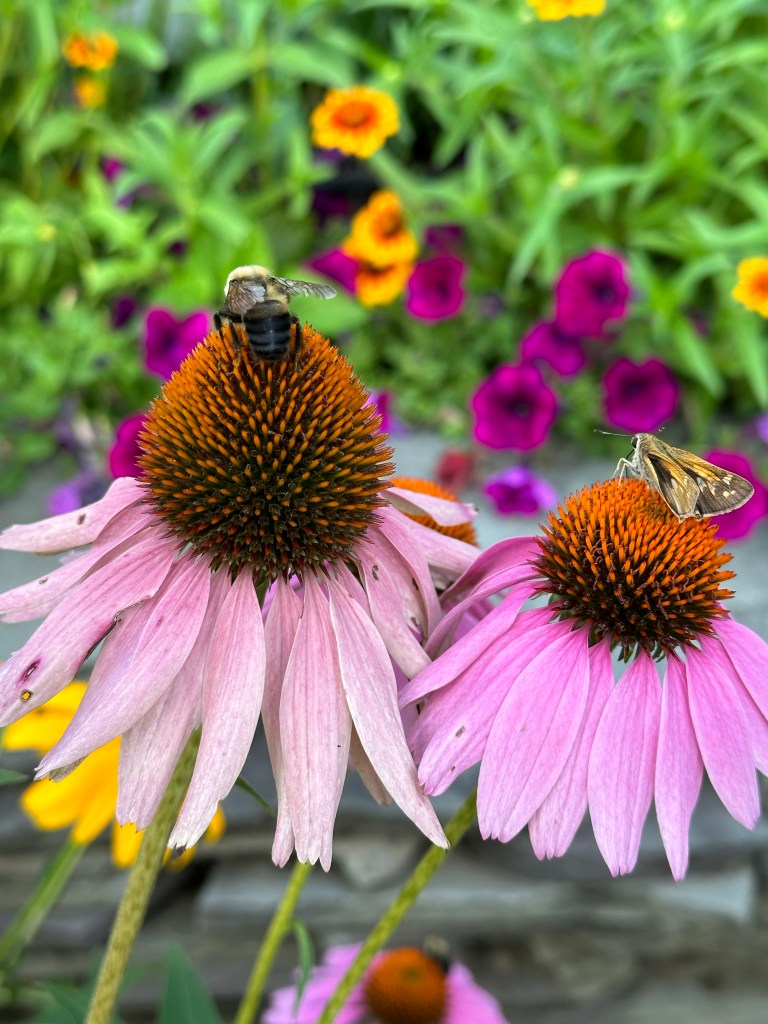
We wired it, tried to bend some deadwood with the torch and steam technique (only partly successful) and, now, just to make you wait, how about a bumble bee and a moth on a coneflower?

Awwwww, ain’t that cute?! LeAnn has an amazing garden and an even amazing collection of trees.

Here’s one of the more developed bullhorn acacias I’ve seen.

And a twin trunk willow leaf on a rock (a rock from Hawaii I believe, where LeAnn hails from).

And now, the buttonwood.

It’s an impressive specimen.

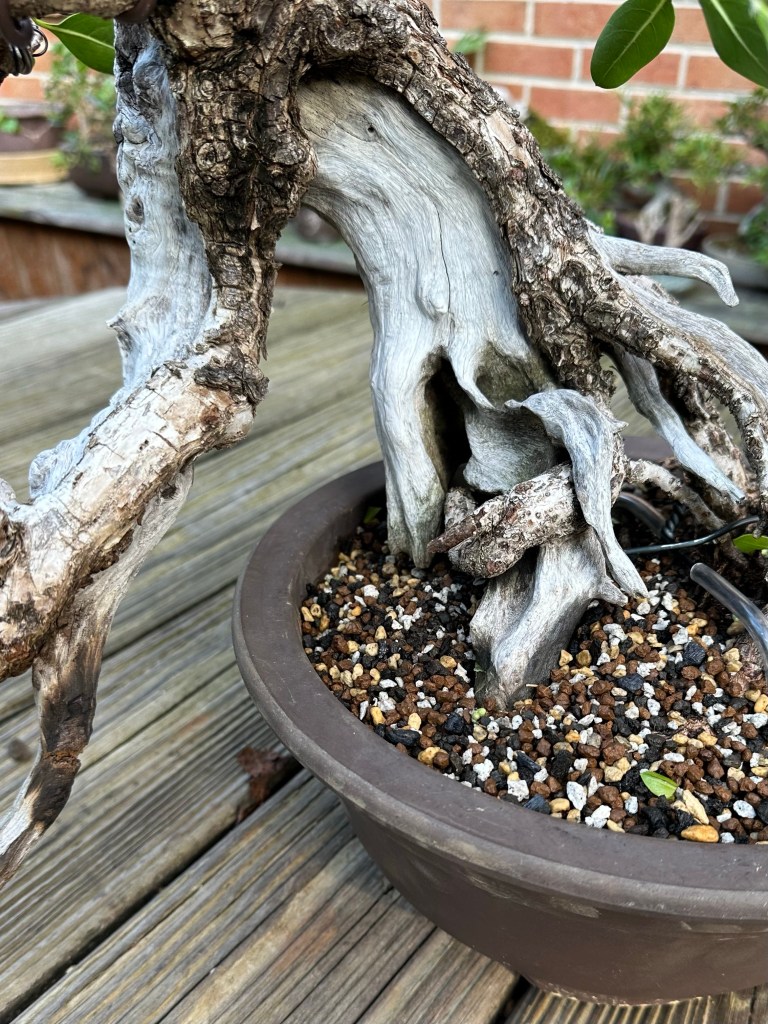
You can kinda see the burnt section where I tried to bend a straight piece of deadwood (middle of the below pic. It was ramrod straight).

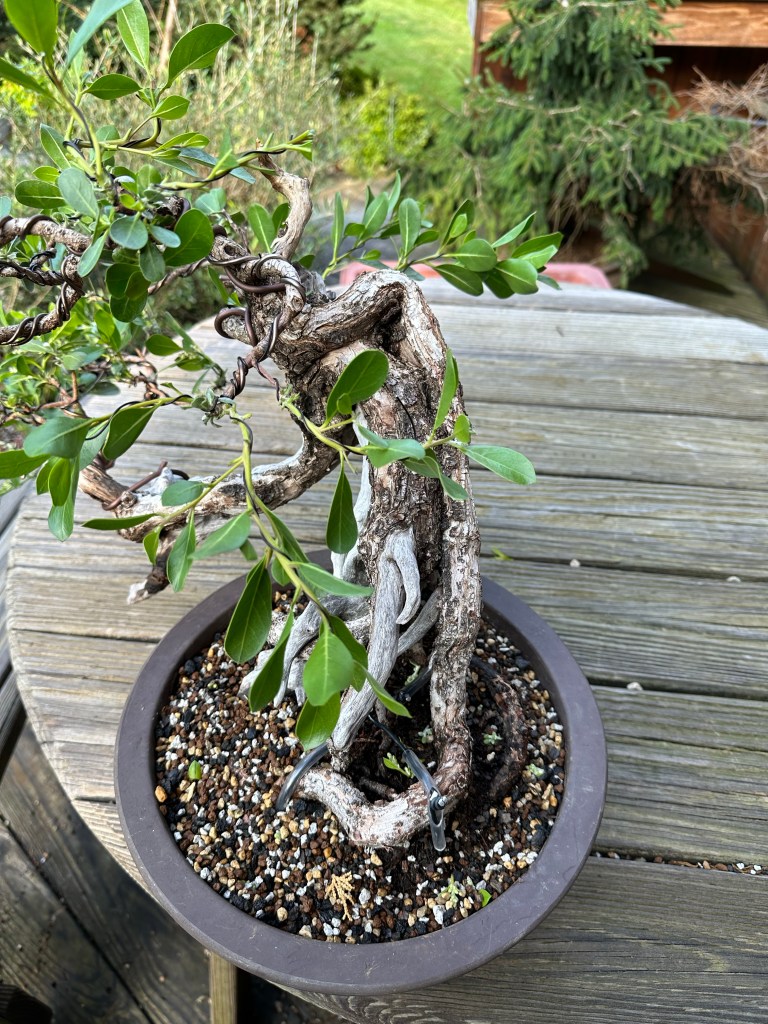
View from above.

The constant reader is asking, “Why are there still leaves on it?”

Well, we are in The North, and the sun isn’t quite so strong as in La Florida, so, even though we are in full summer, I’m not comfortable totally defoliating a buttonwood up here.

And the main thing I don’t want to do is to kill this special tree. We really beat up the roots when the repot happened, and foliage is what grows new roots, so I left the foliage. Simple calculus, as they say in the movies.

And the tree was collected by Mary. Here’s the last pic I got of her before she passed away (that’s her daughter Terri, behind her).

Mary was such a force in bonsai, it’s hard to believe she’s gone. I truly miss her. There won’t ever be a woman in bonsai like her again.

And it was an honor working her tree with LeAnn. Thank you!

One last tip, and I learned it from Mary. Since we beat up the roots so much, I advised LeAnn to set the pot in a tray of water. One deep enough to cover the drainage hole. This will help the tree to grow new roots. Contrary to what I’ve said before about air being important for root growth on other trees.

A buttonwood lives in the coastal saturated zone, where mangroves grow, by the ocean, and are used to water. In fact, to make a cutting root, the easiest way is the old fashioned “Put the cutting in water” method. Oftentimes (don’t tell anyone) when we collect buttonwood, it’s really just a big cutting, with no roots at all, and we place the tree into the pot, and, as LeAnn is doing, place that pot into a tub of water.

One can, as many often do in bonsai, point out the unscientific practices of bonsai people. I do it often. But I have a saying I use religiously, and it applies to bonsai practice distinctly:

“Horticulture is a science, but the practice of horticulture is an Art”

I’ll leave you with that to mull over. Quote it to your best friend and your most divisive foe. It’ll separate the wheat from the chaff, real quick.

  •  

Rock ‘N Roll

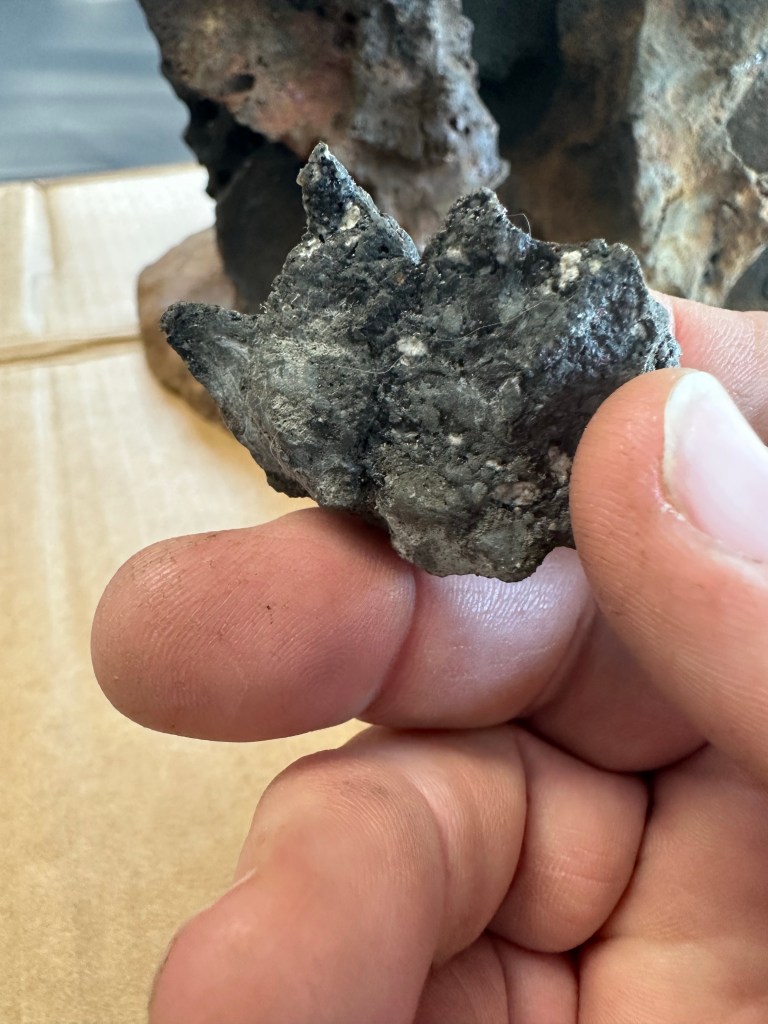
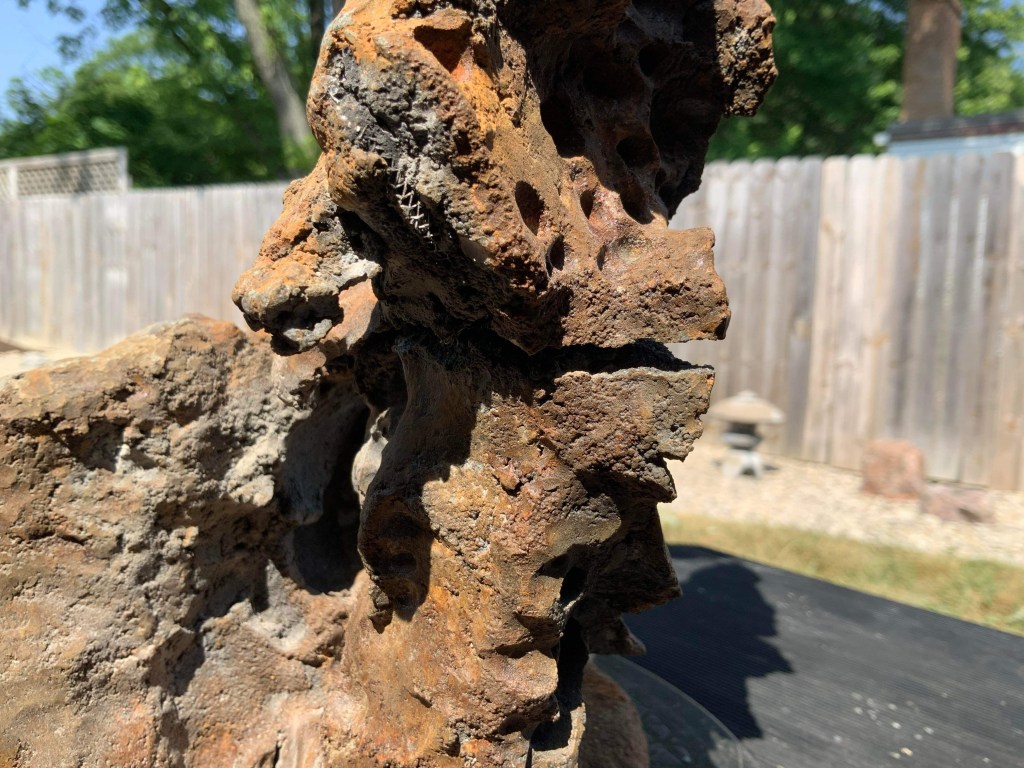
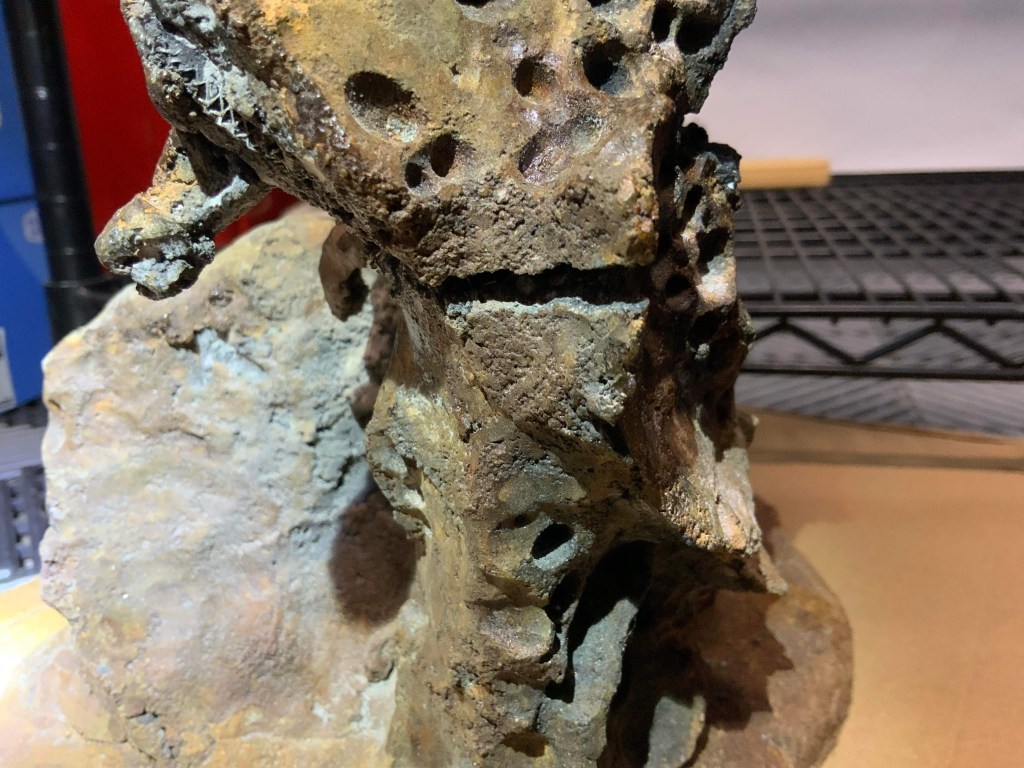
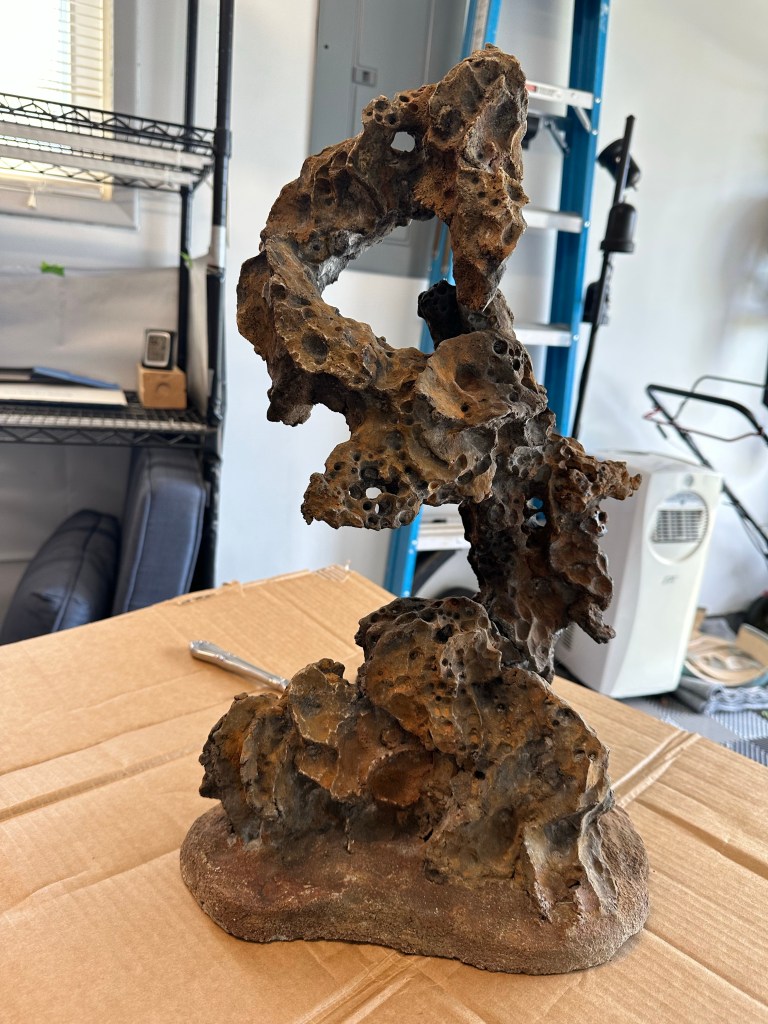
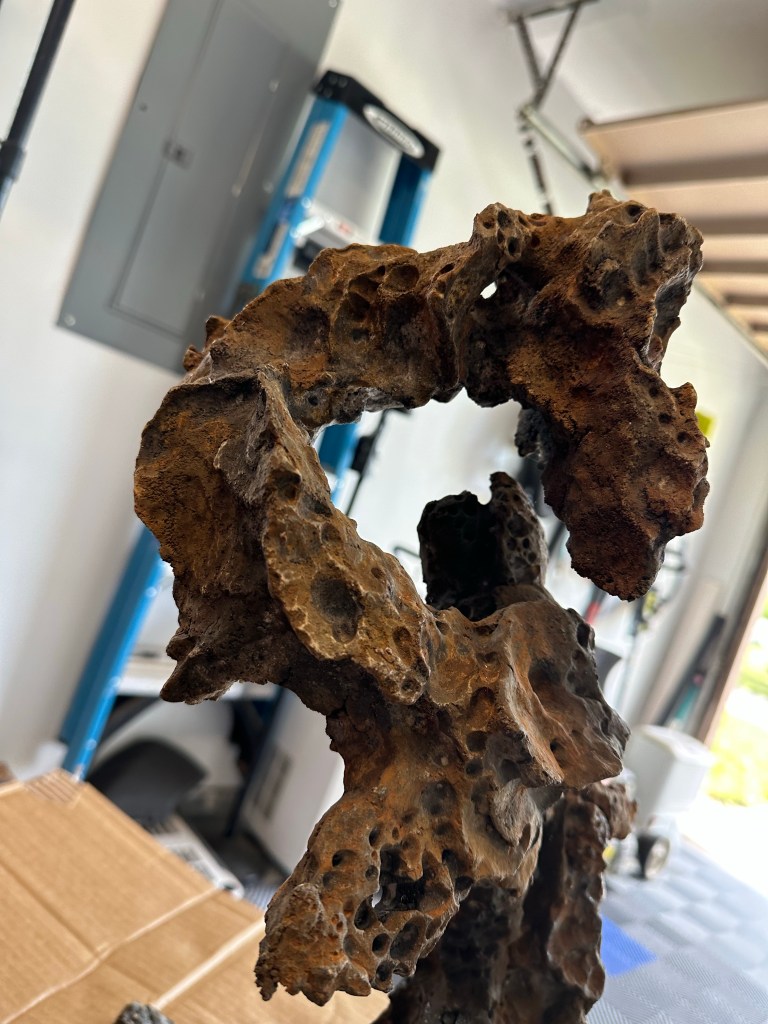
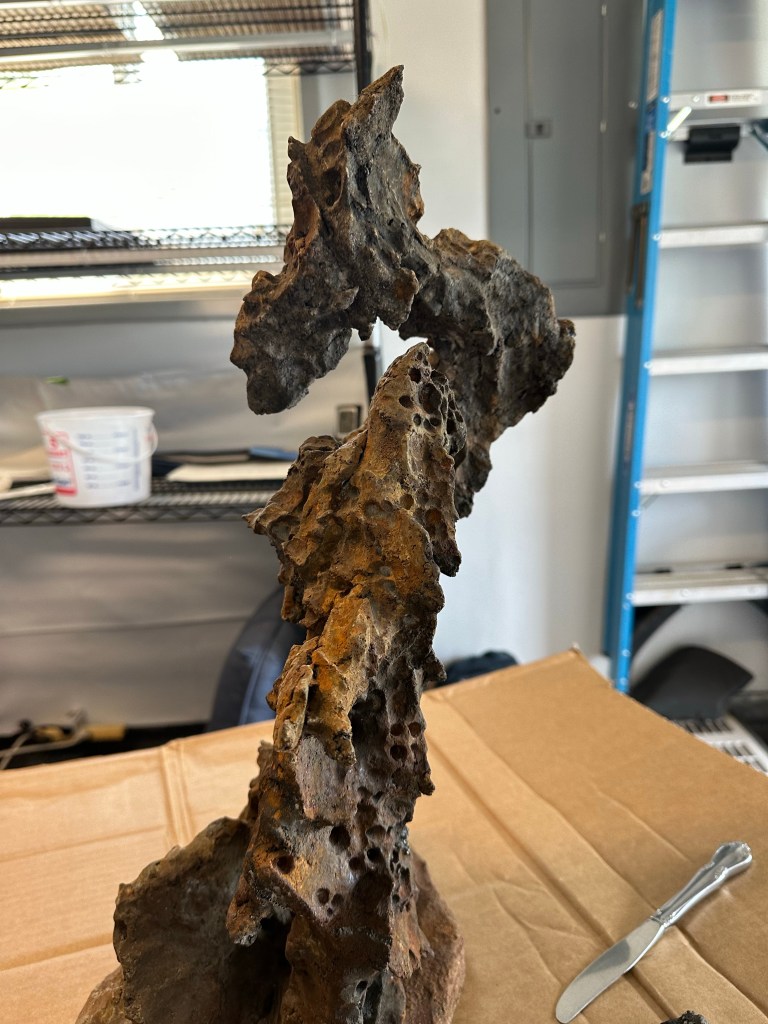
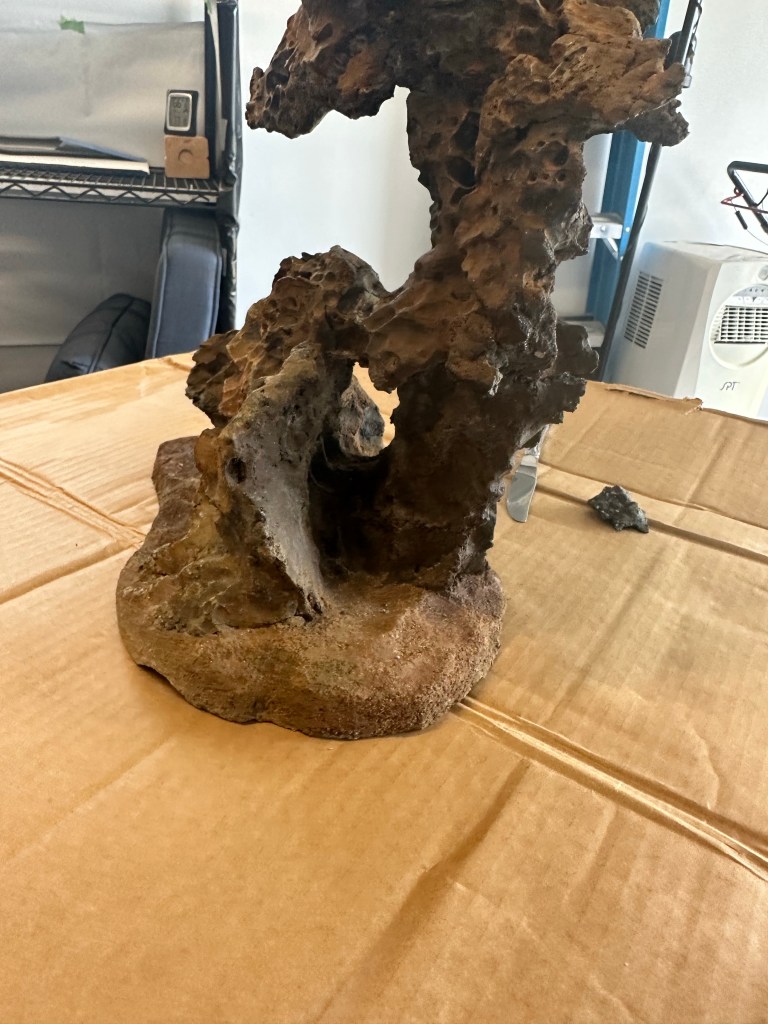
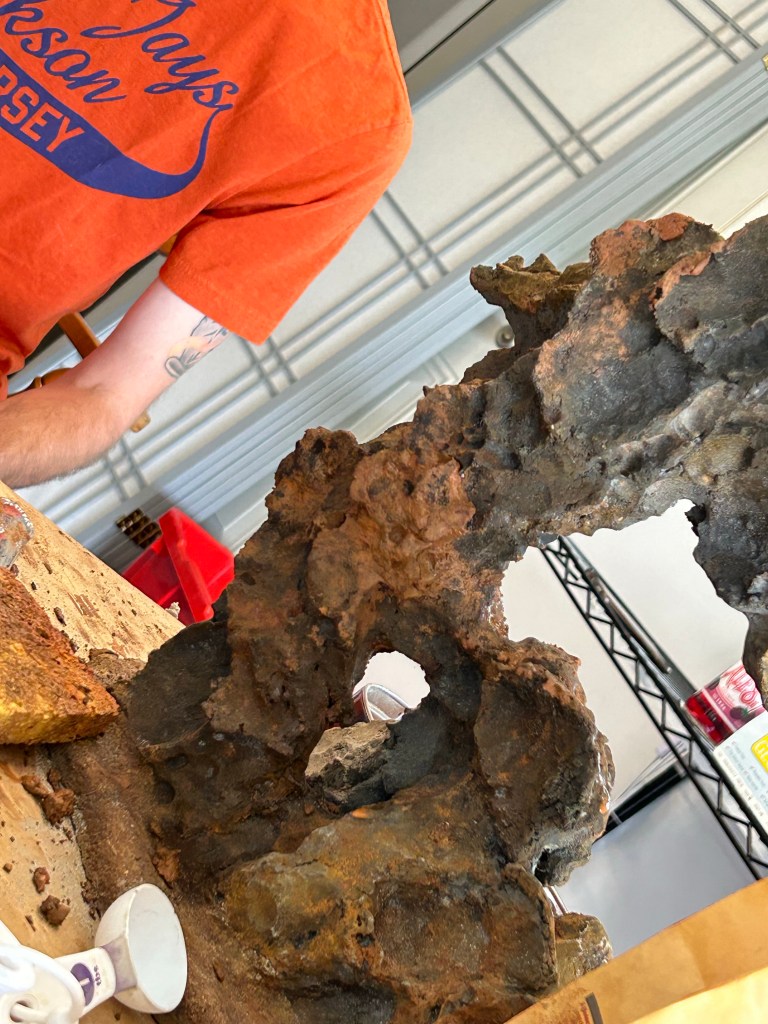
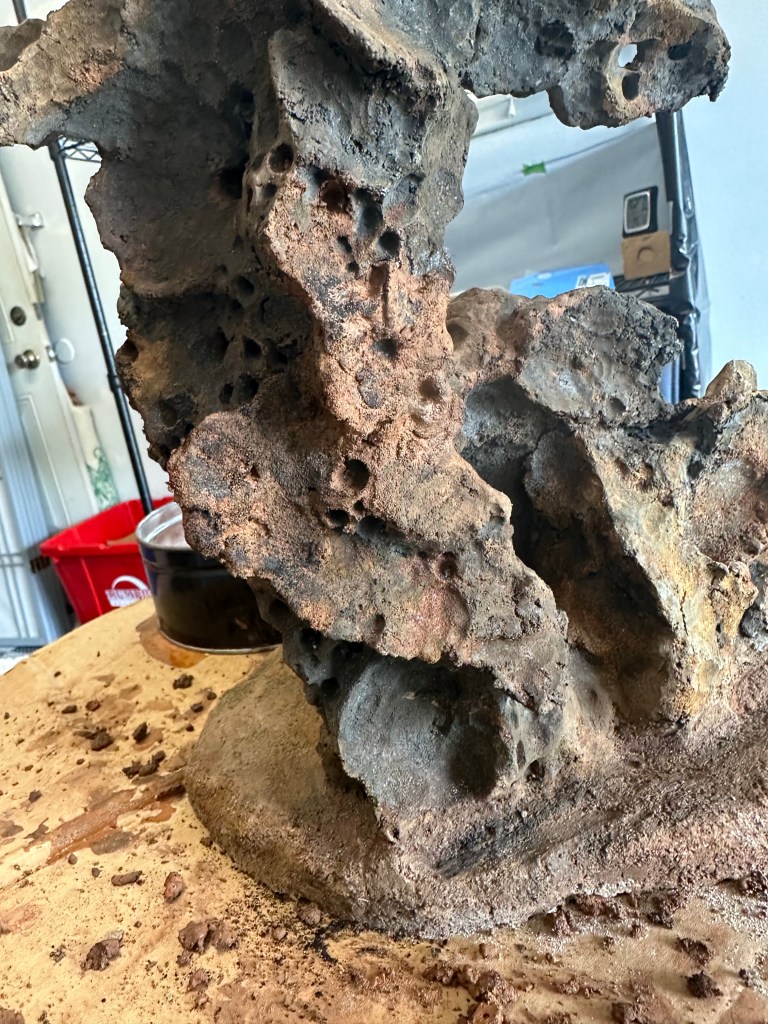
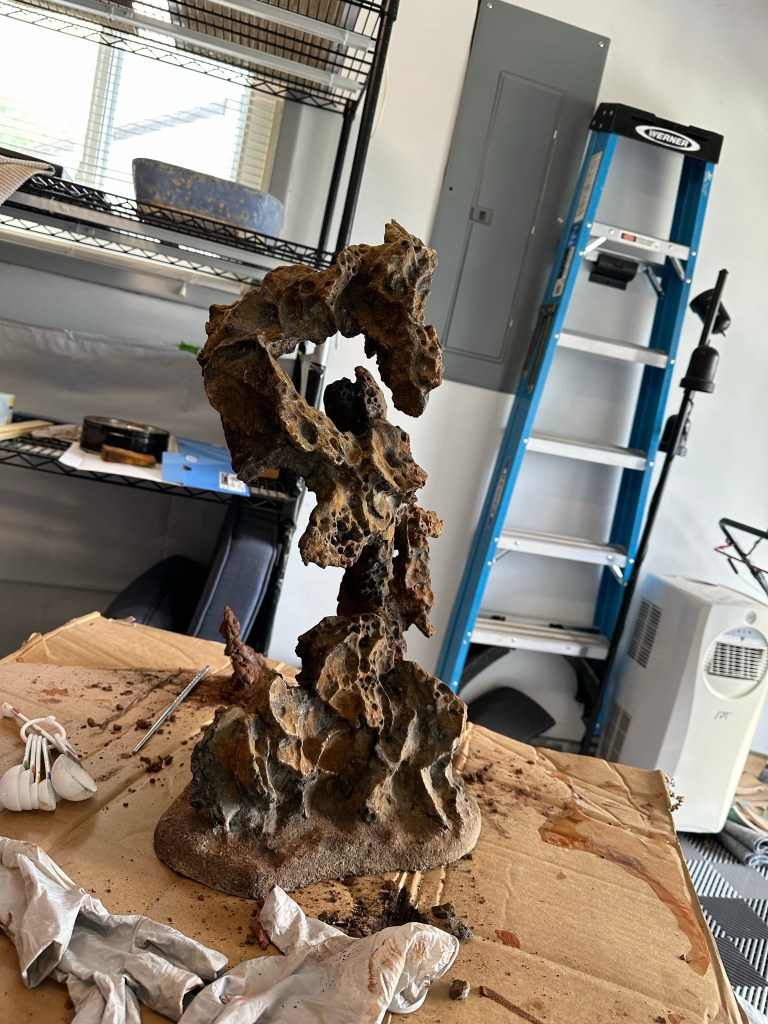
Now that’s a chunk of a block of a rock or something. Actually, it’s concrete, a manmade rock. But it’s “done broke” as they say…

It looks like a reptiles beak, below.

The story begins with a text, including some pics and videos, from Cincinnati.

The text was from Brendan. Say “Hi!” Brendan:

That’s him, my wife and me.

He got this “stone” from Poland, believe it or not. From a guy named Jacek Motyl. He makes rocks. Amazing rocks. Click on his name.

Anyway, Brendan ordered this stone and Jacek shipped it to him. In transit, it got “done broke”.

I’m not blaming the packing job. Jacek packed the rock well. I’m not blaming the Polish post office. Nor the USA postal service.

Let’s blame providence. The rock breaking gave me an opportunity to try something I’ve never done before. Sorry Brendan. Yes, this is my first attempt. I shall try my best sir.

The type of rock is technically called “tateishi”, or standing stone, used in a root over rock style called, in many modern spellings, “ishisuki”. When I was growing up in bonsai, we spelled it “ishitsuki”. Yeah, ishitsuki, I shit you not….but the modern spelling helps us to pronounce it correctly. The “T” and the “S” make a singular sound in Japanese. Kinda like an “tssss” sound.

Anyway, that’s my joke about root over rock style. It’s better in person, with the hand gestures and all.

Watch the video below to see how bad the break is.

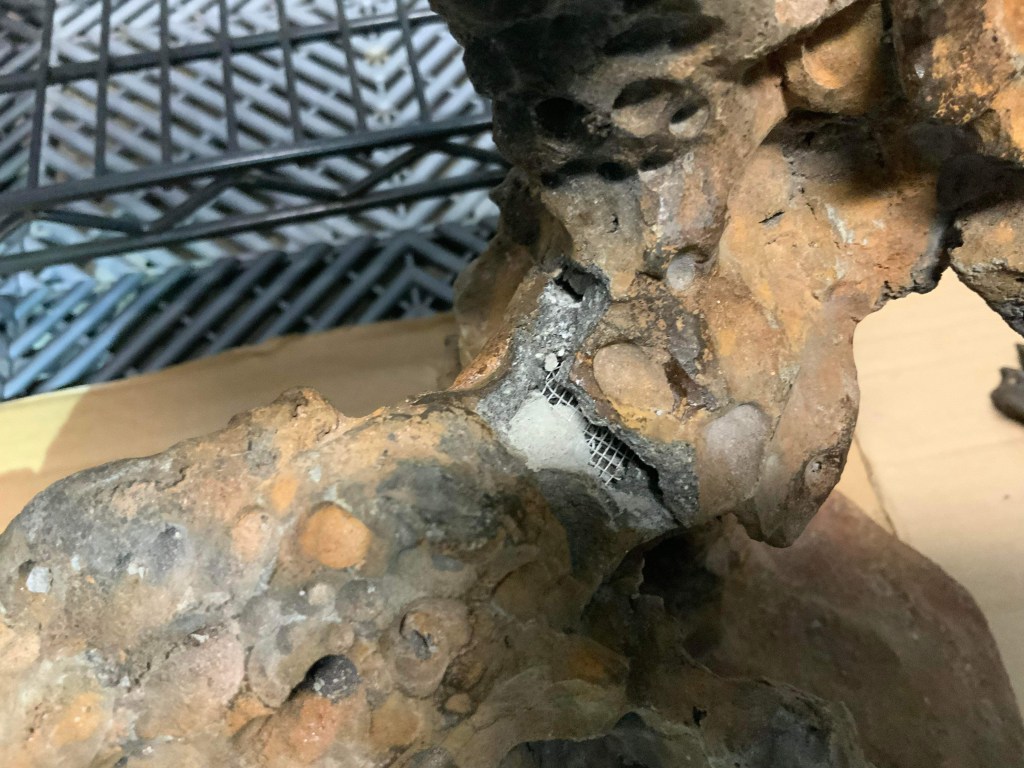
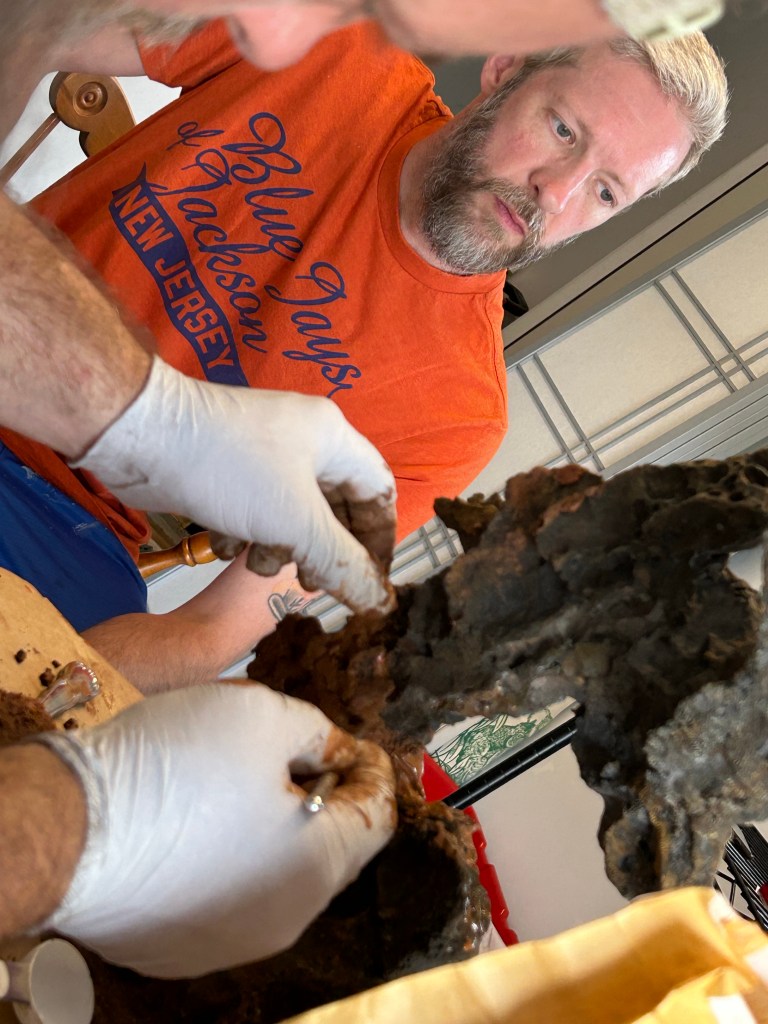
Not to give away secrets, but the shape was created by taking screen or hardware cloth and making the basic shape.

Then the screen is built up with cement. And colored, shaped, sculpted, aged, etc.

Pretty cool right?

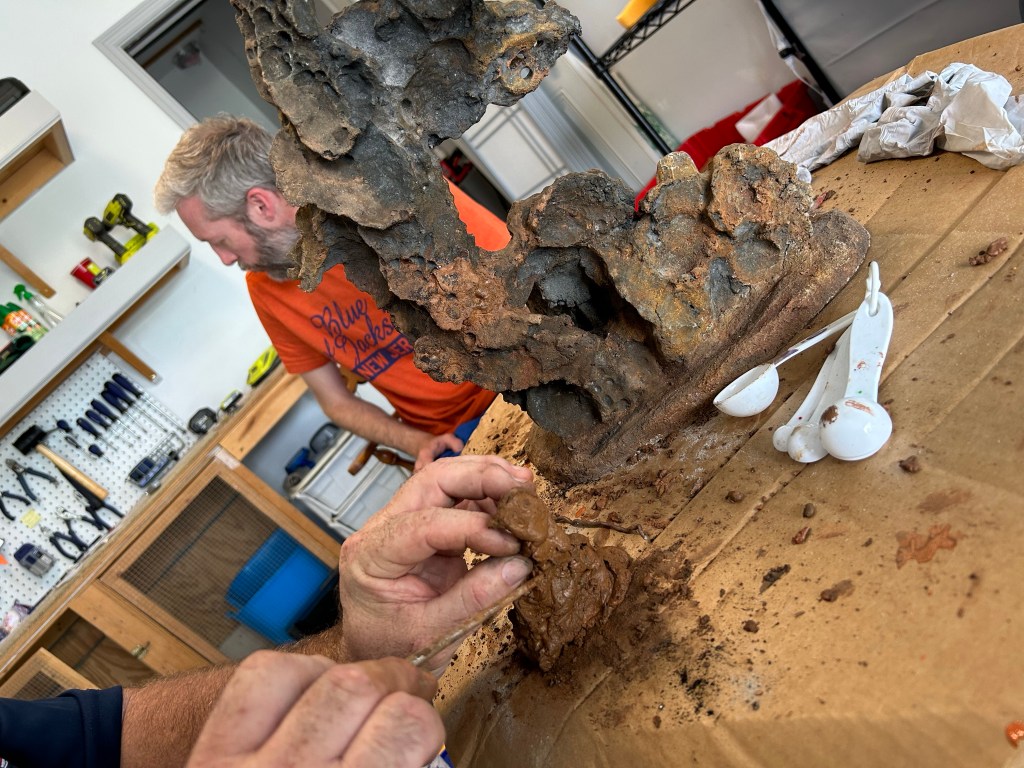
My job is to fix the break and match the colors and texture. So I first had Brendan try to find Ciment Fondue. I had remembered reading about the stuff reading in the old books and magazines when I first started in bonsai (books and magazines are these amazing learning tools that one held in one’s hands, printed on paper. You would flip pages and read and the knowledge was amazing. I could tell you about encyclopedias but you’d zone out quickly).

Brendan couldn’t find Ciment fondue. Searching on google, I found it. What is it?

CIMENT FONDU® is a hydraulic binder with an alumina content of approximately 40%. Composed mainly of calcium aluminate.

It’s a brand name, only available in Europe, so I told him to find something similar. And he did.

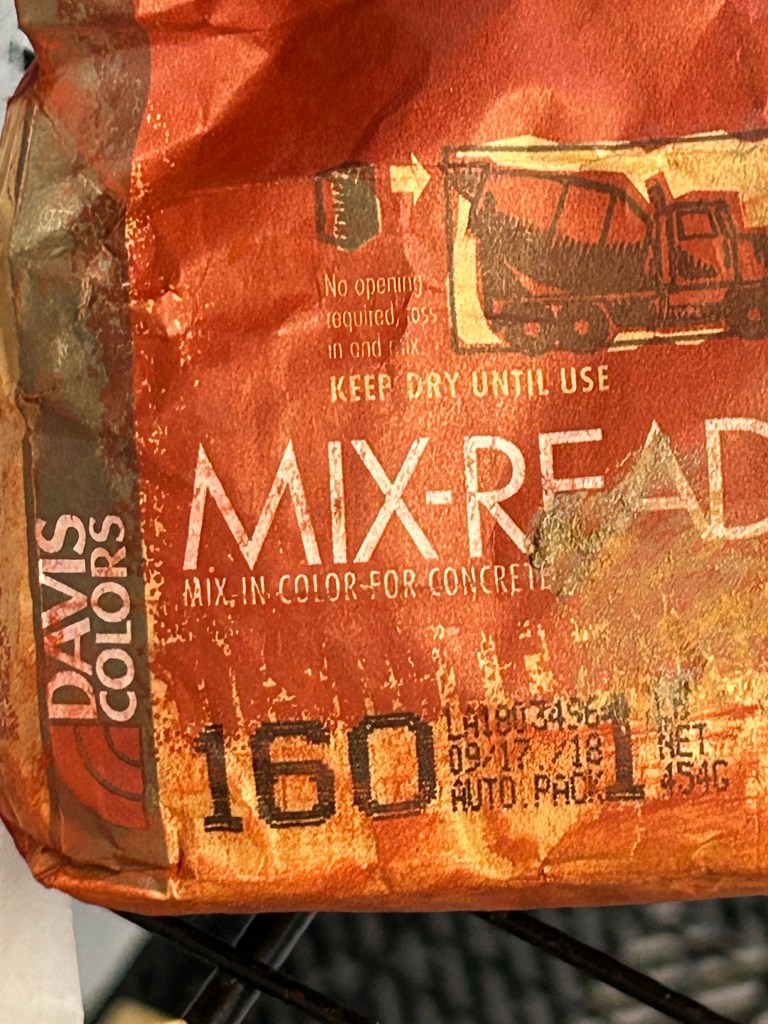
Refractory mortar.

Why something similar? So it expands and contracts in similar ways to heat and cold cycles as the original sculpture. And refractory cement is waterproof. An important thing up north, as water freezes in the cold, and can explode our rock. That might sound spectacular. But that’s not conducive to stable bonsai plantings.

There’s something soothing playing with cement.

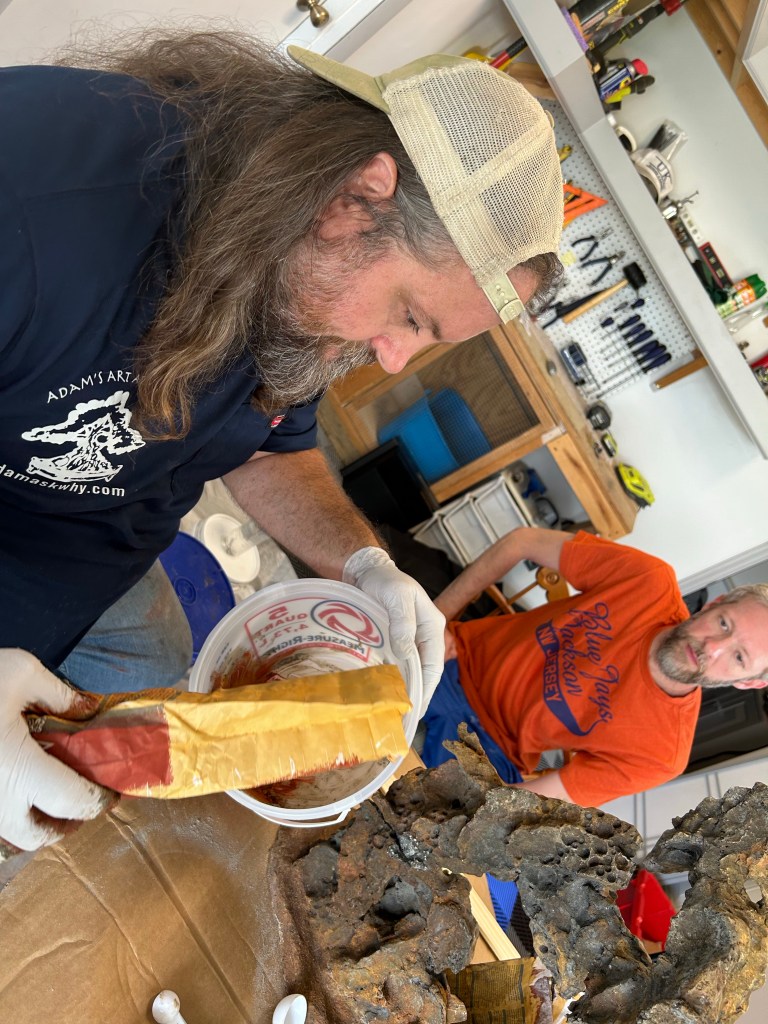
Measure out a portion….

Add color (we had red, tan, called buff, and black. I eyeballed it).

And a trick, don’t mix it fully. You want variations.

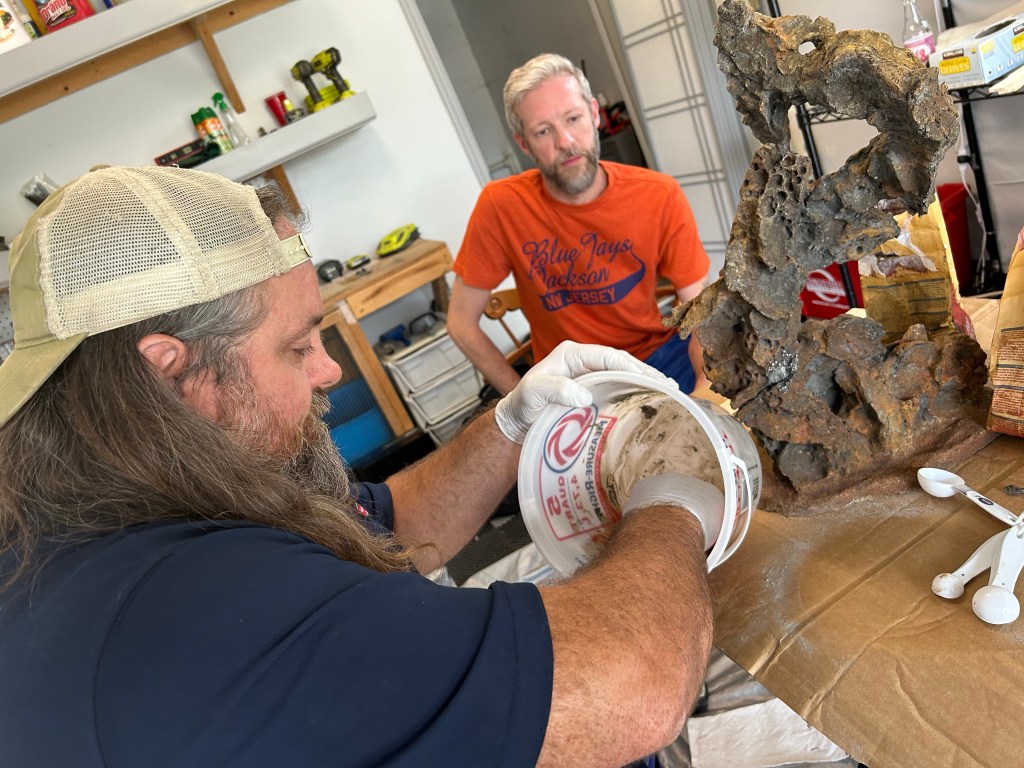
Add water.

And move fast.

Brendan was watching me closely.

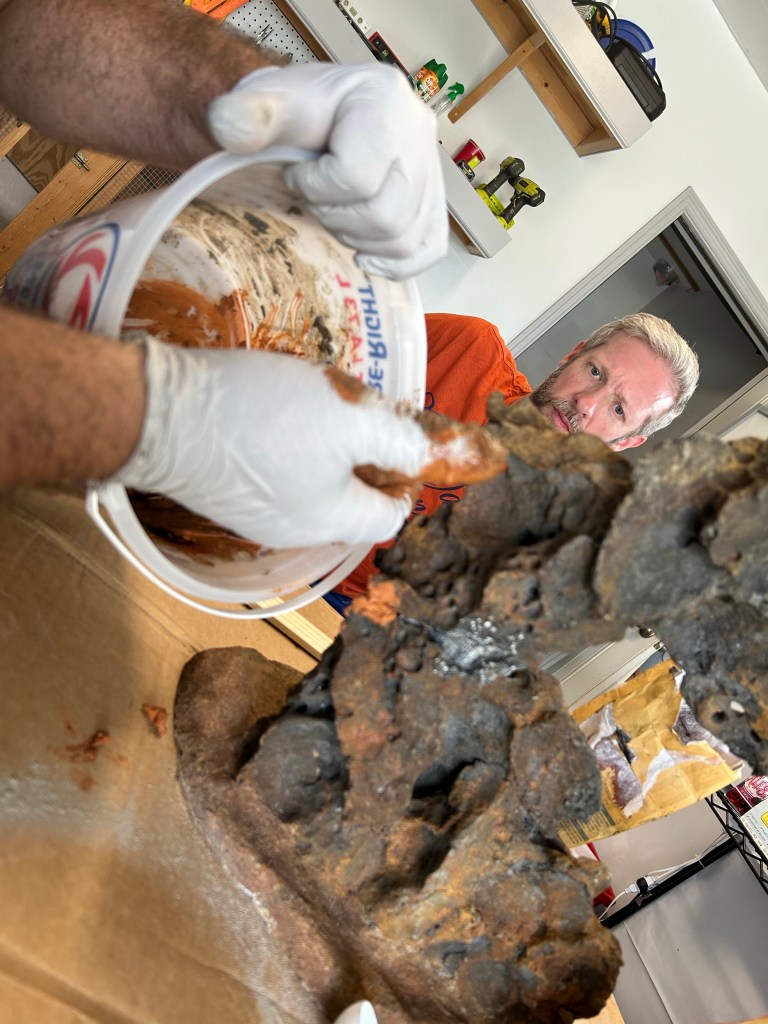
I smeared it, chopsticked it, blotted it. It’s a feeling thing.

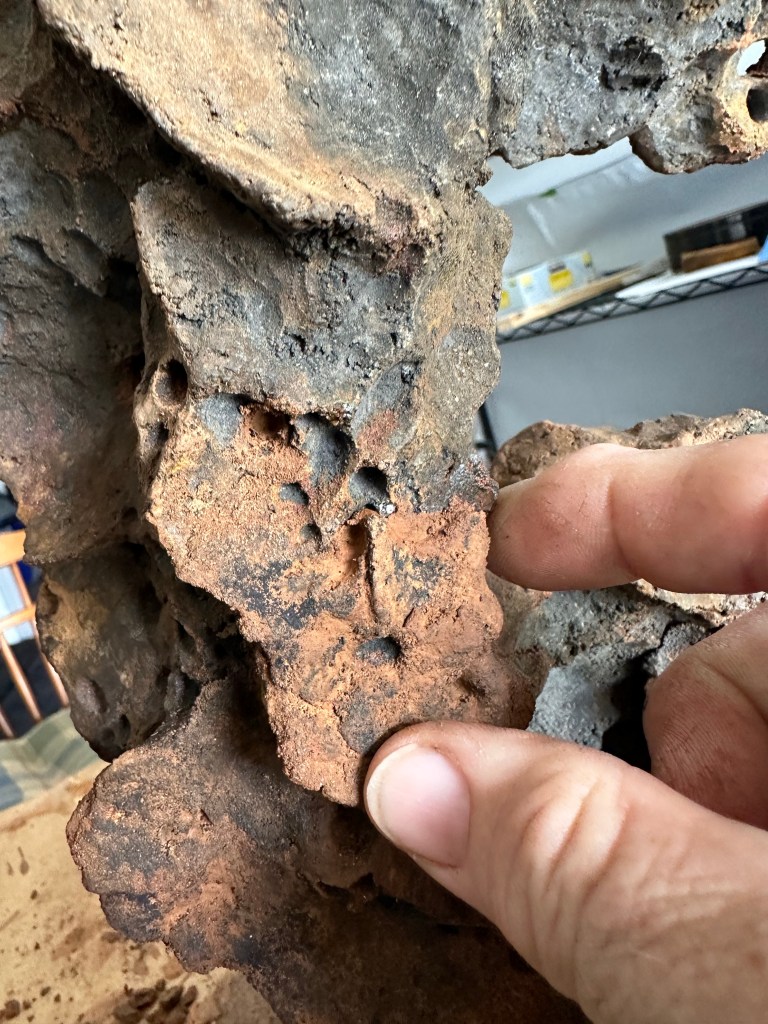
I made sure to push the material into the cracks to ensure the repair of the rock, and not just make an aesthetic facade.

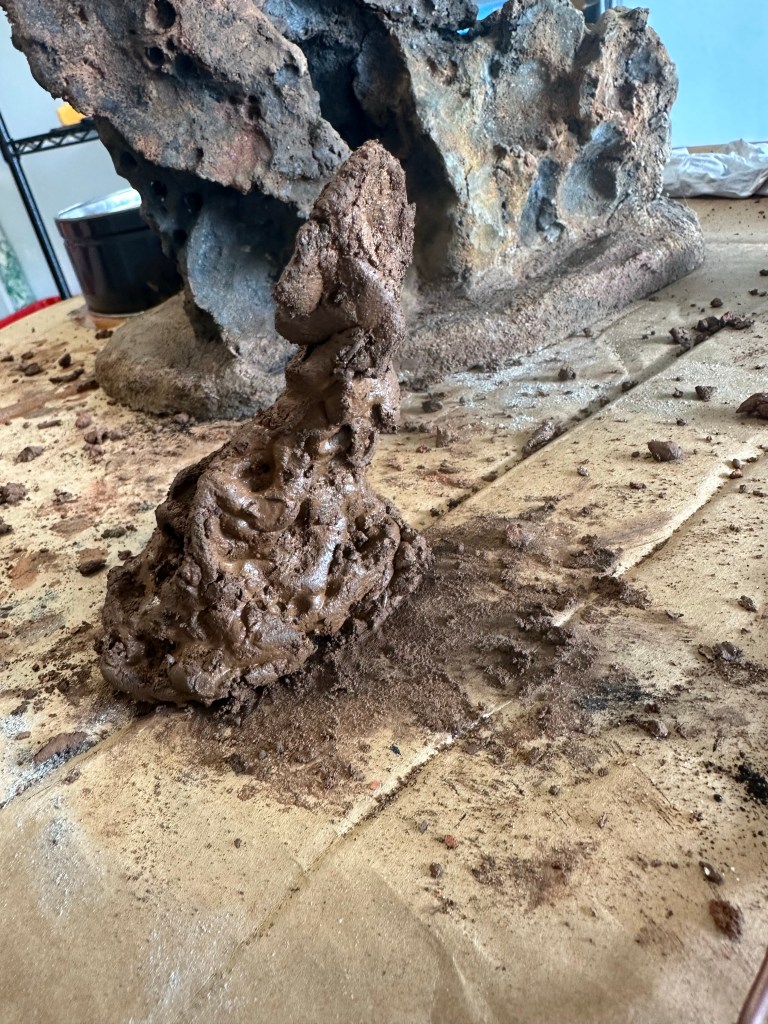
And with the leftover cement, I played around a little.

Yeah, I know what it looks like.

After the repair dried, I think it looks good.

I matched the texture and color. But most importantly, it’s solid.

I wouldn’t drop it, but it’s one piece again.

Below, is where I cemented that chunk back into place:

The “beak” is gone.

Now it’s up to Brendan what to do with it.

  •  

“What are you gonna do with that piece of sh….. “

It’s been about four years since I found this, and every year, looking at it and pondering the next move, I’ve missed the opportunity to work it. Why? I needed to repot it, get a look at the roots, figure out what was happening under the soil. You can only do the root thing in the late winter/early spring, before the tree sprungs, or you’ll tend to kill it. We don’t try to do no killin’ ’round here.

It’s my favorite deciduous tree, Celtis lævigata, and you need to repot it before the new leaves emerge. This year I got to it in time.

Let’s see what we can figure out.

I love odd shapes and challenging trunk lines in my personal trees. This is a root, I’m sure, off a bigger tree, and I love it.

The dead wood. The reverse (inverse, obverse, blah blah blah) taper. The species. I call it the ficus of the deciduous world. You just have to search “Hackberry ” in the search on the front page and you’ll get a bunch of hits on articles I’ve written on the tree (except that one Brazilian Raintree hit….).

Funny thing just occurred to me. When I write my blog I try to explain what’s happening, or what’s going through my head, as I work on the tree.

During a demo, I’ll often just get lost in the tree, and forget that the audience is there and I’m supposed to be performing. A bonsai demo is really a kind performance art (and I say that tongue in cheek, because many bonsai practitioners are kind of conservative when it comes to bonsai-as-Art, no matter their taste in art or politicians. Me, I can’t stand the taste that a politicians actions leave in my mouth, except I don’t mind that one bonsai guy in Virginia. You know who you are, Roberto).

When I’m asked what’s going through my head during a demo I usually say “not much”. It gets a few laughs. Or I’ll say “you don’t wanna know what lives inside my brain”. That gets some too.

Sometimes I tell the story of how the chicken came to the west.

I’ll say, ” How many of you have heard the chicken story?”

Those who have, groan. But they encourage it because, though they’ve suffered through it, they want others to know the pain of sitting through it as well.

Shared pain is lessened, after all.

Anyway, the chicken story:

What you may not know, is that the chicken originally came from Asia. Look it up, I ain’t lyin’. And in Asia, there is a strong Master/Apprentice relationship in the passing down of knowledge.

Now, anyone who’s raised chickens knows that it’s prit’near impossible to tell the difference between a male and a female chick (baby chicken). And it should be self explanatory that a female chick is more valuable than a male chick, because of, you know, eggs and all that, so there evolved a very prestigious occupation in the world of animal husbandry know as a “Master Chicken Sexer”. A real job. A dirty job you might say (you remember Mike Rowe and Dirty Jobs? There was an episode about just this thing).

So, being that chickens are from Asia, and they were imported into the West (how else do we have omelettes?), it soon became clear that the western farmers needed help trying to figure out how to distinguish between a male and female chick. Still obvious, right?

So the western farmers hired the Asian Master Chicken Sexers to teach the westerners how to do this.

The scene: we have the apprentice chicken sexers sitting at the conveyor belt, and the yellow chicks are coming down the chute, onto the belt, and the apprentice picks up the chick, tickle its butt or something, and throw the chick into either the male bin, or the female bin.

The poor male chicks are mostly made into….ah, feed for other chickens. The females were let go to make nests and lay eggs for the farmers to harvest and make their scrambled egg breakfast or quiche (if they’re French farmers).

As I mentioned before (about 100 words earlier) it is exceedingly hard to figure out the difference between the male and female chicks; they’re both yellow, the males haven’t learned to cock-a-doodle yet, the females don’t even gossip. So the apprentices are sitting there, chucking the yellow birds in whatever bin they thought they should go into. When they got it wrong, the master, who was standing behind the apprentice, would whack the poor student on the back of the head.

Slap!

Eventually, the apprentice could unfailingly tell the difference between male and female chicks.

Now, they had no idea how they knew, but they did know. That slap hurt.

Again, obviously, the point of the story isn’t about chickens or East and West or even farmers. It’s more about how to teach. Some bonsai teachers teach using the rod, telling you you’re wrong and to do it again, and again, and again, until you have it right.

That’s not me. My online name is Adamaskwhy. Most people think it’s that way so you can ask me “Why?”

And you can.

Most of the time I know the answer, or I can find it.

Or I make something up that sounds plausible.

But the real reason for my name is that, as a student, I don’t just want to know the answer. I want to know why. I was (and still am) that annoying kid in the back row that said “oh yeah, prove it!” And it angered some teachers, bothered others, and I was loved by the smallest percentage. Those were the good ones.

I’ve talked about this before, so excuse me if I’m repeating myself, but a teacher who doesn’t know why, ain’t much of a teacher.

If you can only recite your lessons, then you haven’t learned a thing.

Which brings us to the initial styling of this hackberry. You remember it? The subject of this article and all? I know, you got lost in the chicken story. It happens.

What in the hell is going through my head?

Well, you’ll have to trust me on this one, and see what happens this year.

It seems that a lot of “rules” are being thrown away with this tree.

I mean, they do say that “rules are meant to be broken”. But why do they say that?

Let me tell you another story, this time about a boy named Pablo. Pablo’s father, Ruiz, was an artist that specialized in realistic drawings and paintings of wildlife. He was an instructor and professor at several art schools. He started training Pablo at the age of seven, and insisted that Pablo learn how to draw and paint properly, in the classical and realist style that was popular at the time, and was profitable, as artists jobs back then was to paint portraits and art to be hung in wealthy patrons homes.

So Pablo learned. It came easily to him. At age thirteen, his father, Ruiz, proclaimed that Pablo had surpassed him in talent and technique, and enrolled him in a prestigious art school in Spain.

Pablo quickly understood what art school was for, and formed serious friendships that would help him later in life, all the while slacking off on his lessons. He knew them anyway.

That, by the way, would be the one lesson to take away from this parable, college is to make contacts in school, that will help you later in life. The bosses who hire you only want to know that you got the degree, not that you were a “C” student. But if they know you were in their sorority or the chess club they were in, you, my friends, are in, as they said in my youth, like Flynn.

Pablo was so good a draughtsman that, in his later years, when everyone called him Picasso, he would sit and drink his coffee at the cafés in Paris, and draw photorealistic flies and bugs on the walls. Drawings so real the waiters would rush over and try to swat the fly off the wall. Pablo, as you might think, got great pleasure in these escapades.

We are all just boys and girls, trying to smile at the tragedy that life sometimes is.

What is to be learned by this last story?

If you learn to do the work, as a craftsman should, you can then use that work to accomplish the Art that your soul requires to feel alive.

It seems I’m at the end of the work.

I would try to get a good pic, but my photography area has been battered by a hurricane or two. It’s on the list to repair.

And here’s the obligatory tortoise pic. I need to build him a proper enclosure. That’s sooner on the list than the photo spot.

This is the best I can do for now.

I’ll post updates as I make changes in the tree. Maybe. I have a long list of “To-Do’s”.

  •  

Finding Balance

Raise the head, close the eyes, breath in and test the air.

Feel the sun come out from behind a cloud, the breeze gives a kiss on the forehead, a caress through the hair.

Let the breath out, loud in the ears.

The sun heats the breast, almost too hot on the black t-shirt.

Open the eyes and look down at the tree. The bonsai. Dwarf tree, twisted.

Old as sin, seemingly, but young as the spring grass after a rain. Verdant, gnarled, ancient, new.

The sun flashes off the glazed ceramic vessel wherein the tree lives.

Hand falls over the scissors, curling into the handle.

Grasp, test, the feel in the hand, the cool steel and wrought shape compels a few practice snips.

Raise them towards the tree.

And begin.

  •  

Omelette

I’ve been asked how I make an omelette.
Here you go.

Save the recipe

To the young @bonsai_evan

“Three eggs, beaten, but not like the stepson, just like the middle child. Then salt and pepper to taste.

In the pan, use more butter or margarine than you think.

Enough chopped ham to heart, and cook about 39-57 seconds. Just enough to make that poor pig’s mama sweat.

Add eggs and fold in that excess butter into the egg.
Omelet-ize it.
Let it set on the fire (by the way, if the fire isn’t on high, then have them make your omelette at Denny’s).
Keep jiggling it until the top undulates like a belly dancers belly, then add shredded cheese.

Let it warm up until the cheese is about melted, but still wet, then fold it onto the plate.
I prefer to fold it in half. If you’re fancy, fold it in thirds. But that’s just snobbery.

Farmhouse style for me.
Let sit for about the time it takes to wash the frying pan and make your coffee.

If you take your coffee black, firstly, you’re probably a psychopath, secondly, that means you know how to mask, so pretend you’re fixing coffee like us normals, with three spoons of sugar and some type of dairy.

Go to the table, use a fork you animal, and enjoy.

It should be brownish on the outside, but wet, almost like a cheesy, buttery, eggie sauce, on the inside.
You’re welcome.

  •  

Holy Toledo, this tree is outta this world

Hmmm. Cosmic Bonsai in the Great White North? I’m in Ohio, and I guess they like outer space a lot; it’s a fact that more U.S. astronauts have been from Ohio than any other state.

John, from Toledo, one of my friends for a long time, has been going to the convention for the Bonsai Societies of Florida for two years now. He got to see Walter Pall, Mauro Stemberger, and many others in years past.

This year he got to meet and take workshops with Laurent Darrieux from France, the creator of the Cosmic Bonsai approach to styling trees.

Some people see it as blasphemy, some see it as a narcissistic offense, some see it as silly. But what it really is, in imaginative terms, is a question “what if we travel to another world, with, maybe, higher gravity, or two suns, or a long rotational period, what would those trees grow like?”

Artistically, it is a valid question. Artistically, it works too. When it is practiced well (just like any style, any idea, or even traditional bonsai) it works as Art. There are those that may say it isn’t bonsai, but some of those same people say that the flat top style of trees, whether the American bald cypress flat top, or the South African style Pierneef flat top, aren’t bonsai either. Uh huh.

I’m sorry, but bonsai is not a Japanese art. It is a Japanese word, and it is very Japanese traditionally (but it’s dying in the country) but that’s just because, when we modern practitioners of bonsai decided to give it a universal name, a certain Chairman in the east was intent on destroying traditional arts with his Cultural Revolution. so it was named “Bonsai”.

When I was learning bonsai, I read all the old books, and took to heart the challenge that the early Japanese bonsai masters gave us when they started to travel and teach bonsai throughout the world.

They told us not to mimic Japanese bonsai, but to find new species of trees, and new forms of design, and expression, to celebrate not only the character of our countries, but also the natural world we saw around us.

Here’s my question to you: What if our imaginations also let us see the world differently too? Say another world? That’s Cosmic Bonsai.

To categorically discard the concept because it’s not how you learned it is everything that people accuse Laurent of: arrogance.

He’s an artist. He has to create. And to show others his vision. He’s not being allowed to do it. Well, except in Florida, my backyard.

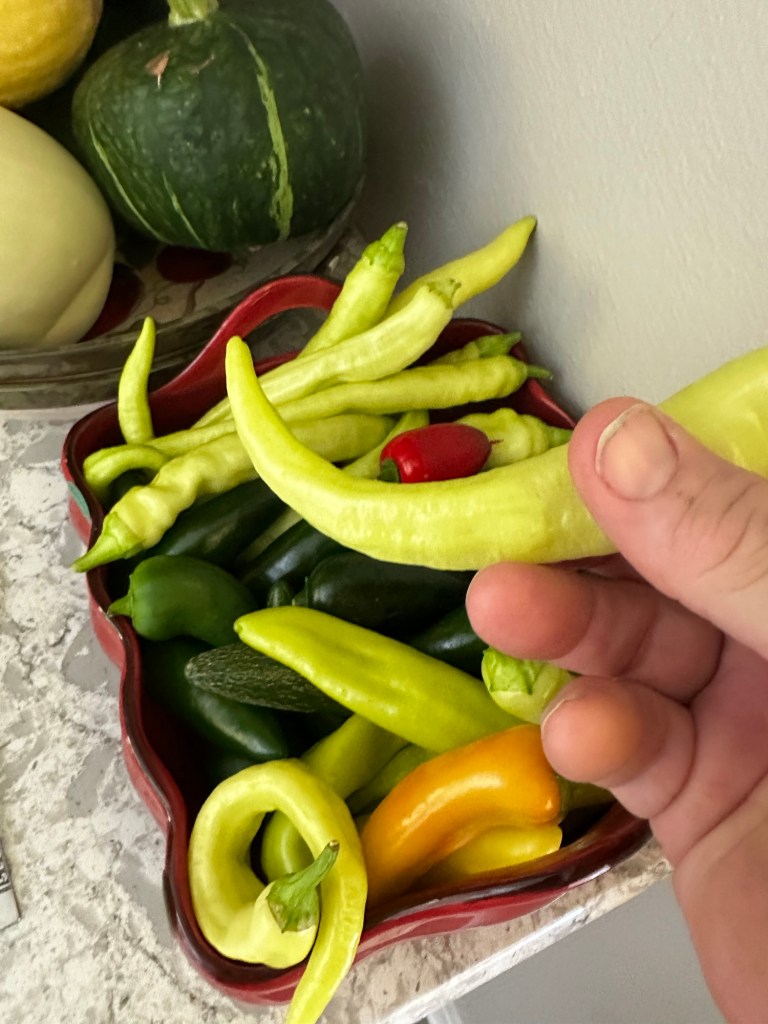
Phew, that’s some heady stuff. Anyway…Here’s a banana pepper in the traditional style.

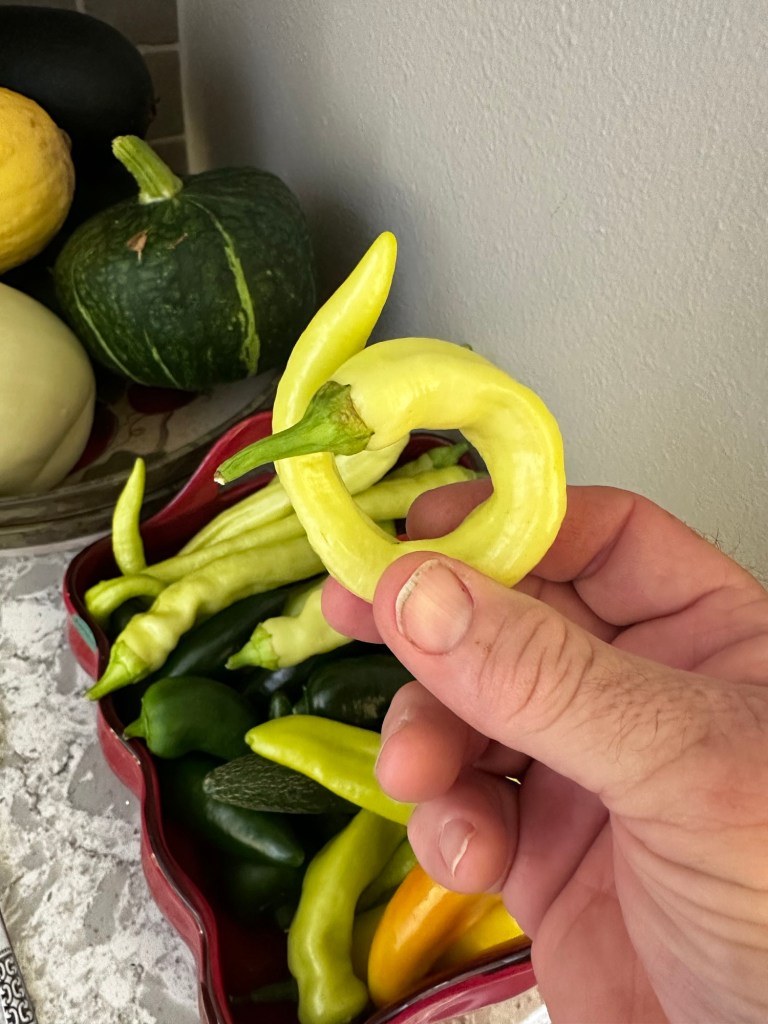
Here it is in the Cosmic Style:

They both go well in an omelette (French word btw).

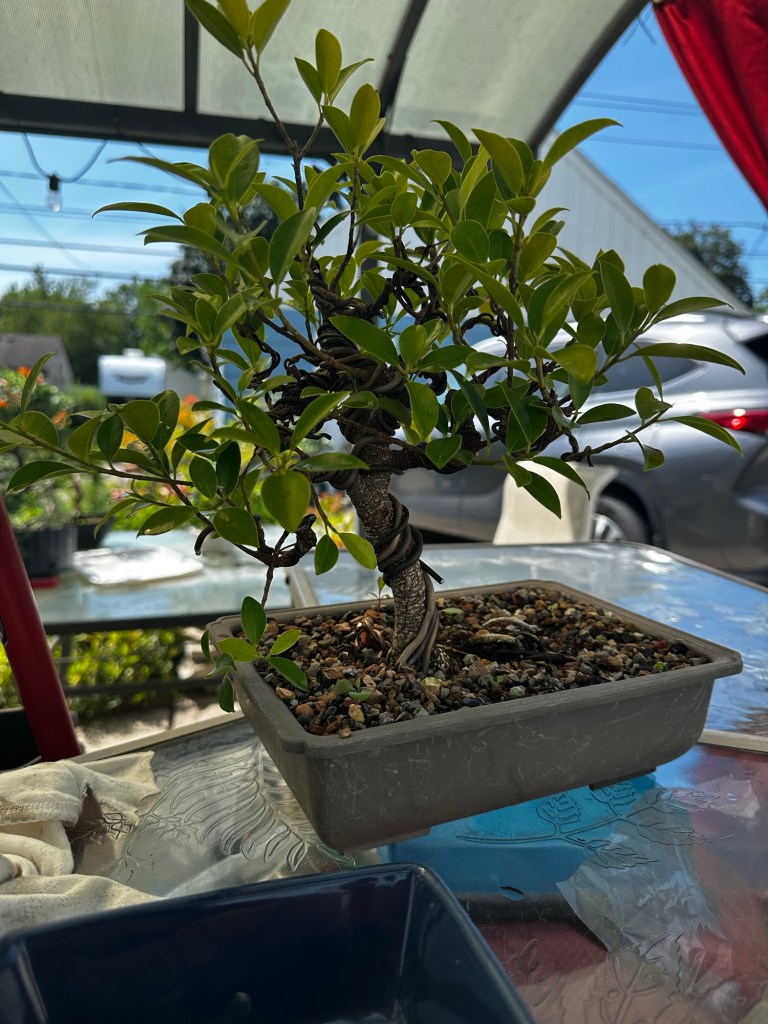
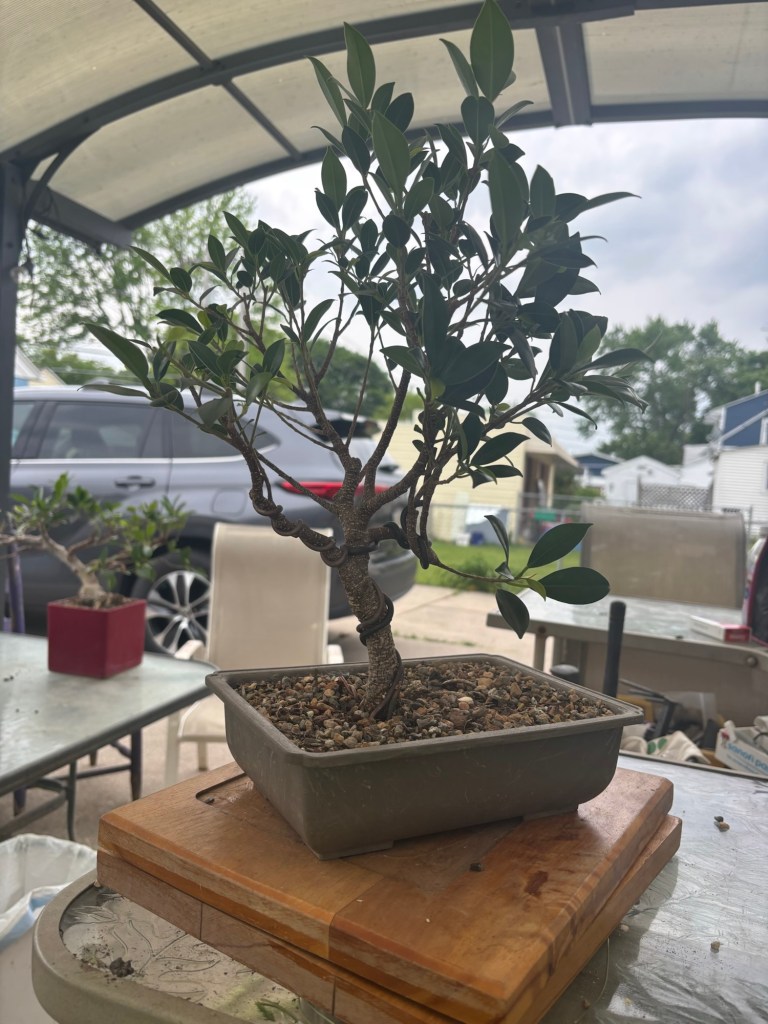
Below (and some pics above) is a tiger bark ficus (or Golden Gate, or kinman, or kemang, or whatever you want to call it) that John made in Toledo after he got back from the Orlando convention.

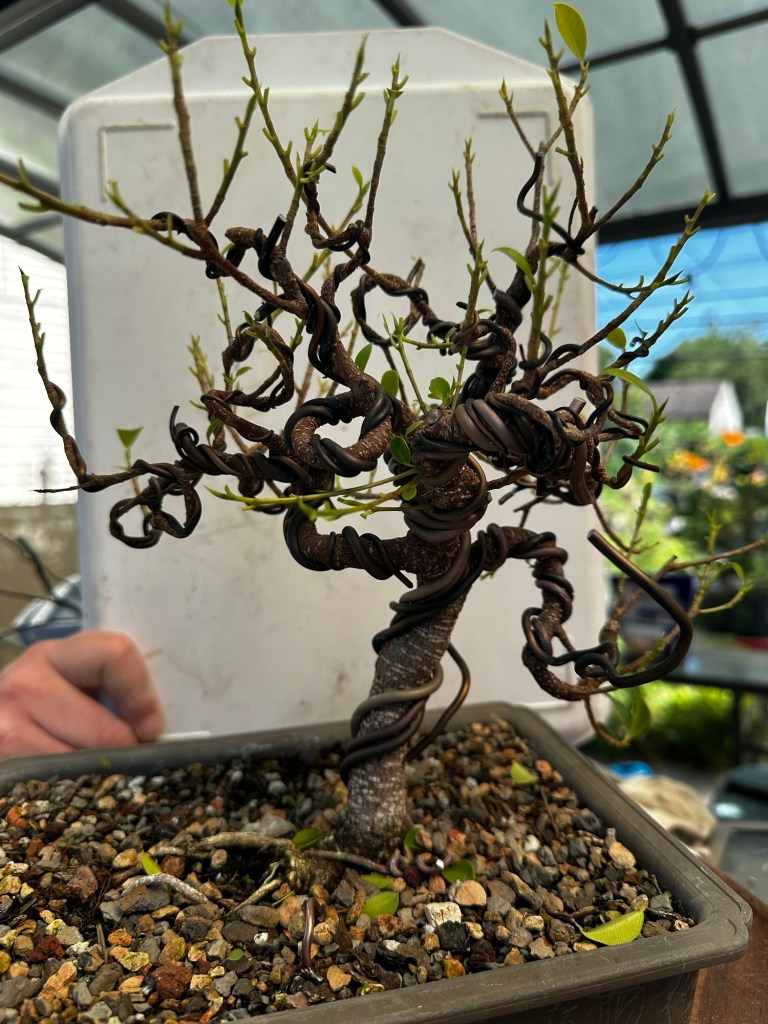
I took the wire off and…

….the branches stayed put. Surprisingly. It was a mere two months or less.

I think we need a rock outcropping to give the base some drama. and to expose the roots and give some repetition of movement to the composition.

John had the idea to add some fossil looking carvings to the rock (maybe next year).

Hi John. I made him rewire it.

While I enjoyed some….

….coffee?

And that’s it for now. I’ll add updates as I get them.

Let me know how you think, feel, or not, about the Cosmic style.

I won’t censor them. I’m not about that, I believe in freedom of expression.

BYEEEEEEEE!

  •