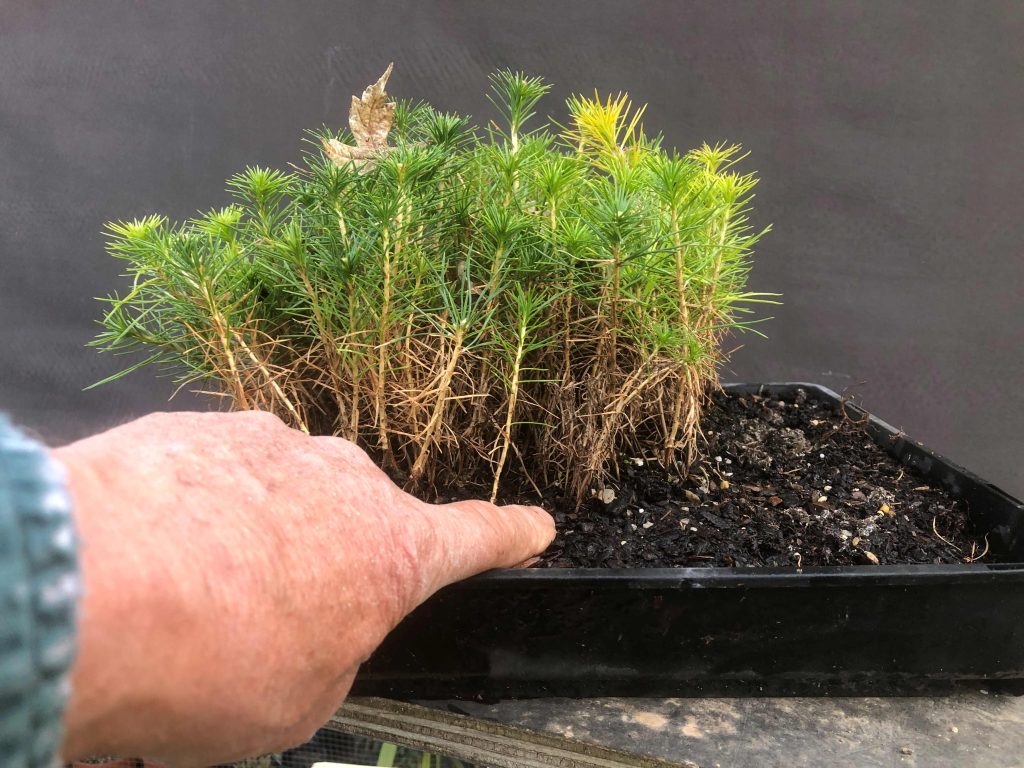
Managed to get another 30 JBP seedlings potted up today.
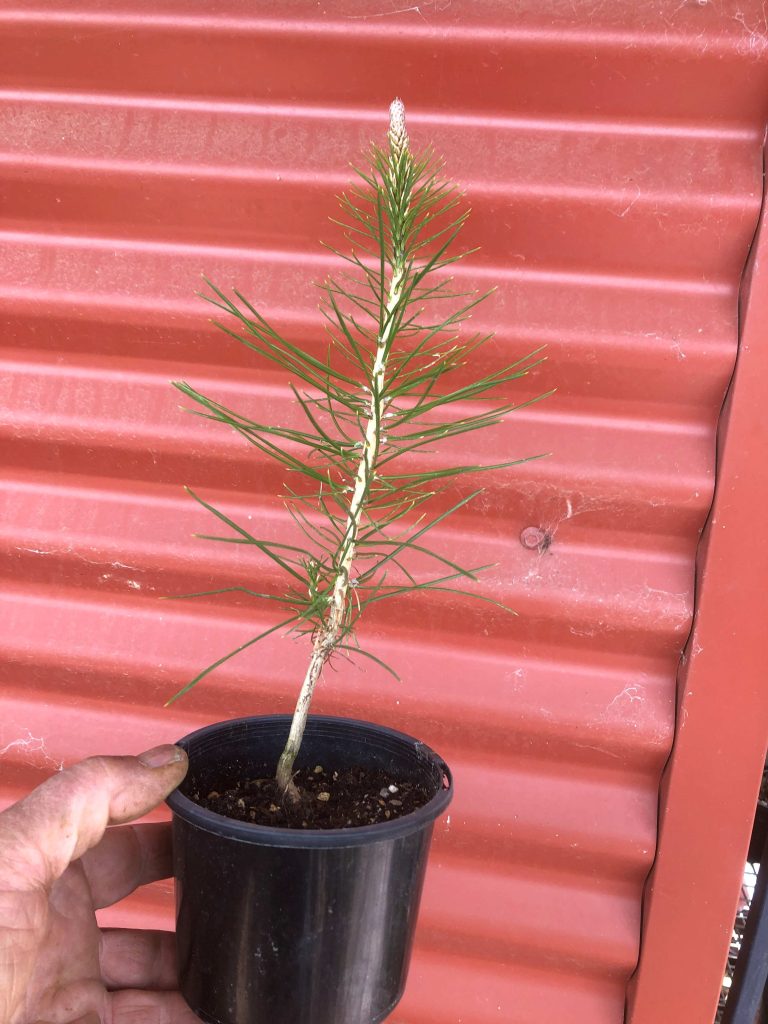
These seedlings were left over from last Spring. They’ve been siting in the seed tray all last summer and through the winter. Very crowded so they have not grown much but will still be OK to pot up.
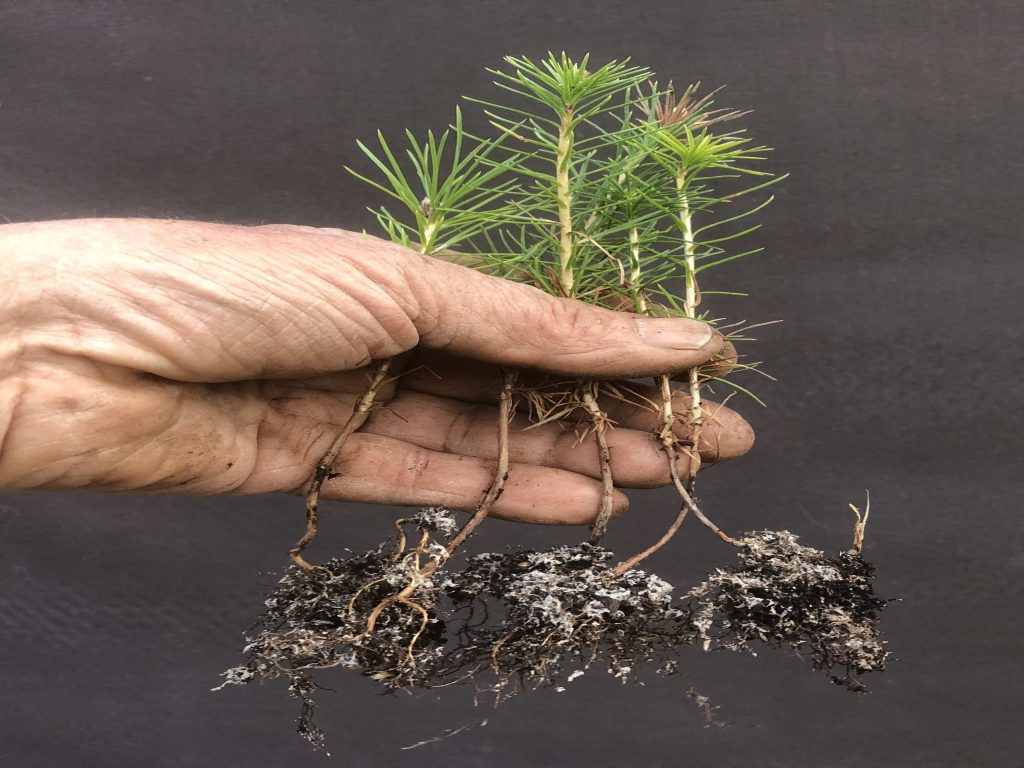
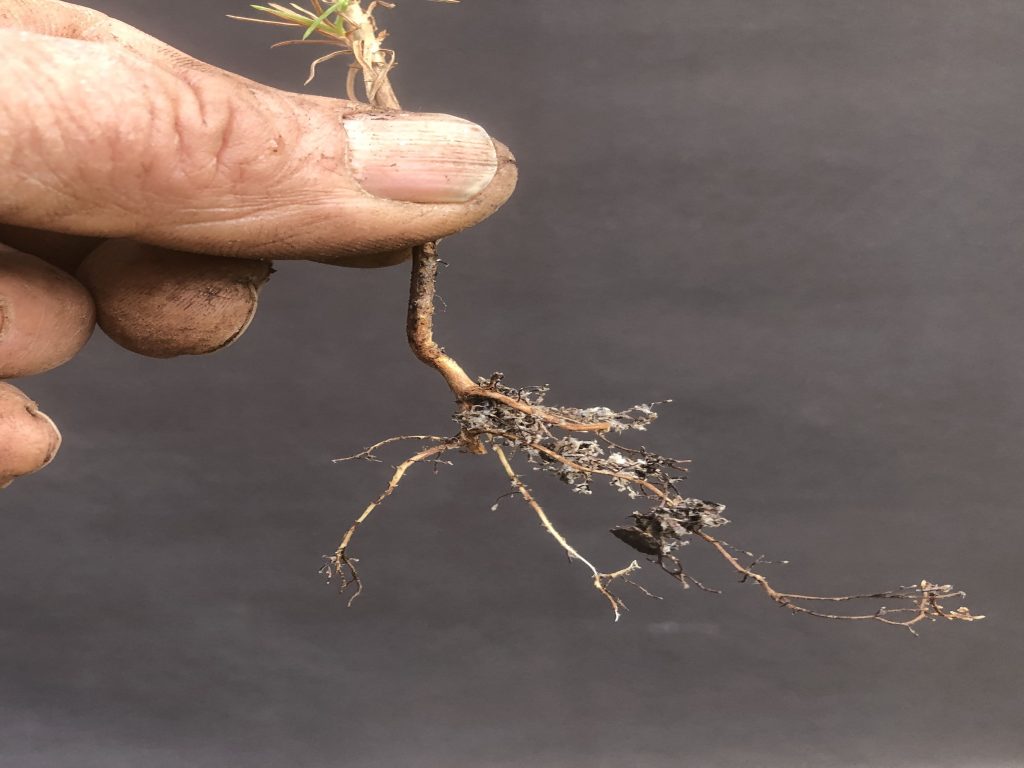
After separating the seedlings we end up with something like this.
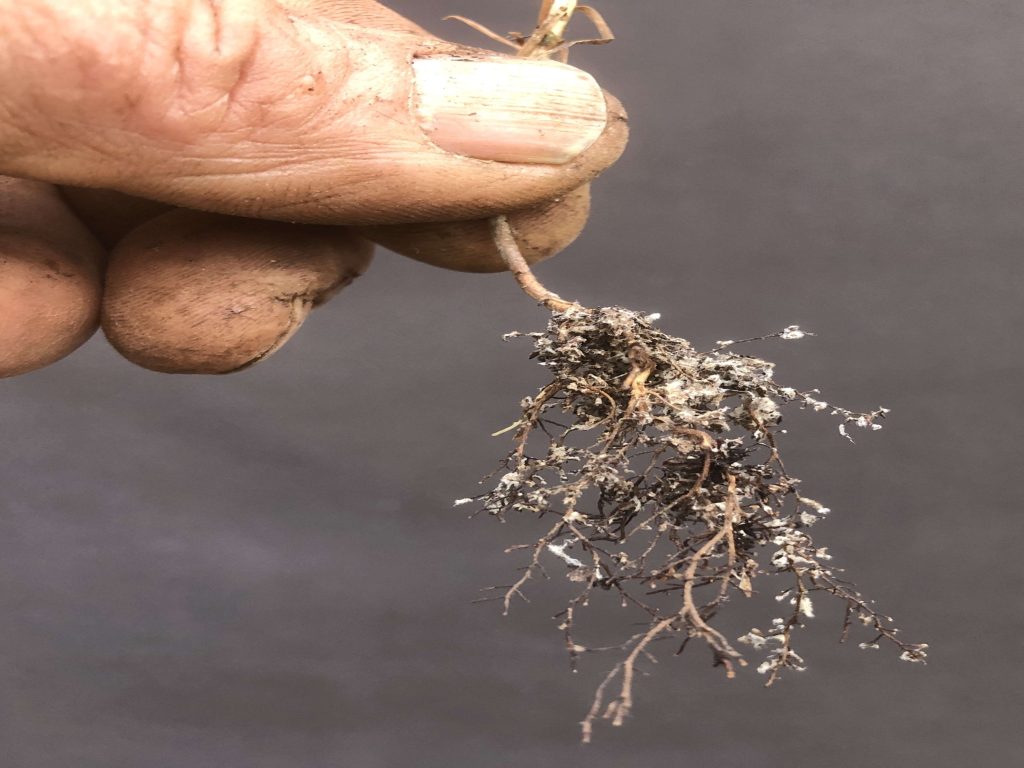
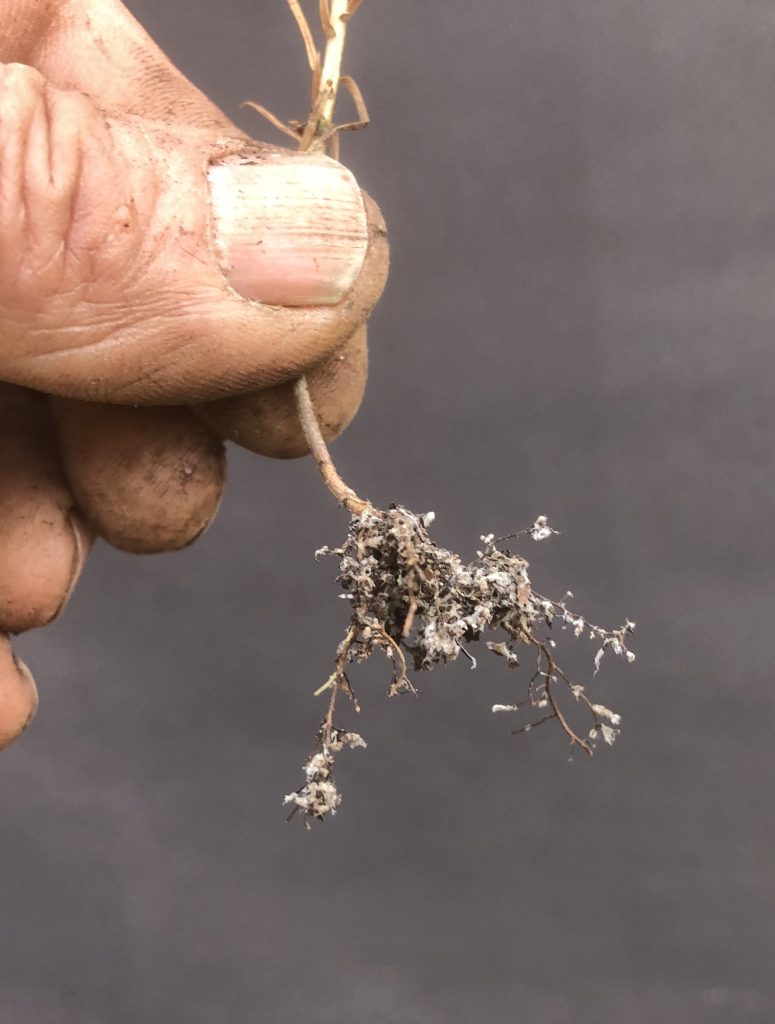
Because we are growing bonsai we want good nebari. That means removing any deeper roots so these trees will concentrate root growth on lateral roots. No need to be scared, seedlings are programmed to grow roots so we can cut seedling roots fearlessly. Often i cut roots much harder than shown here.
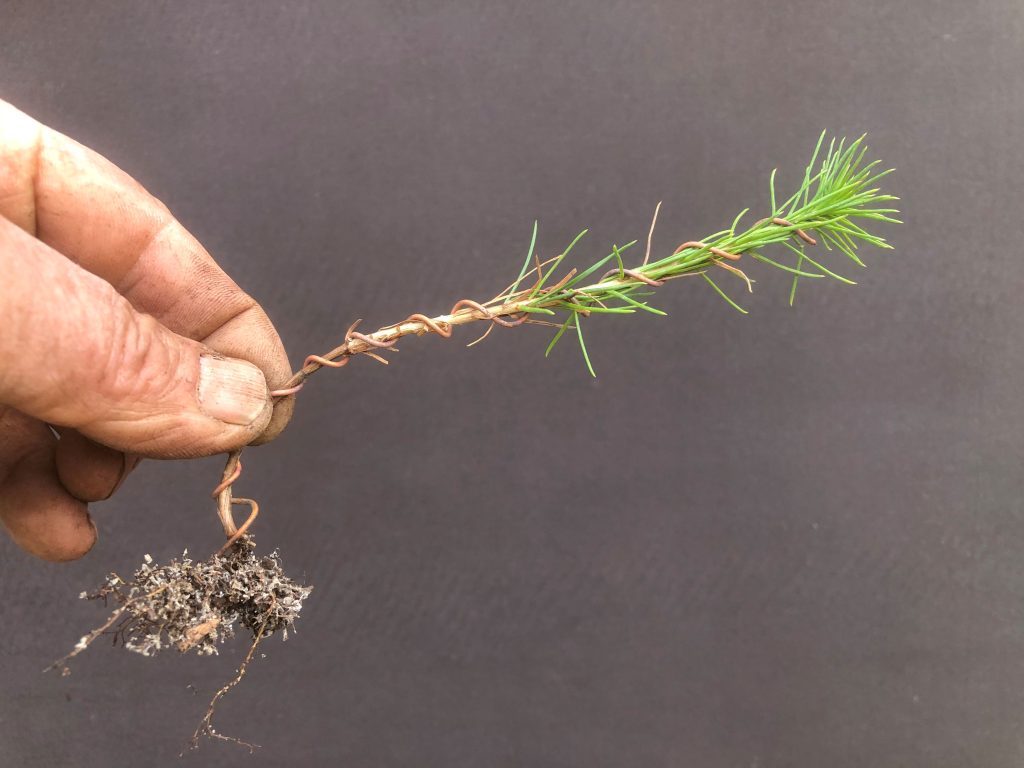
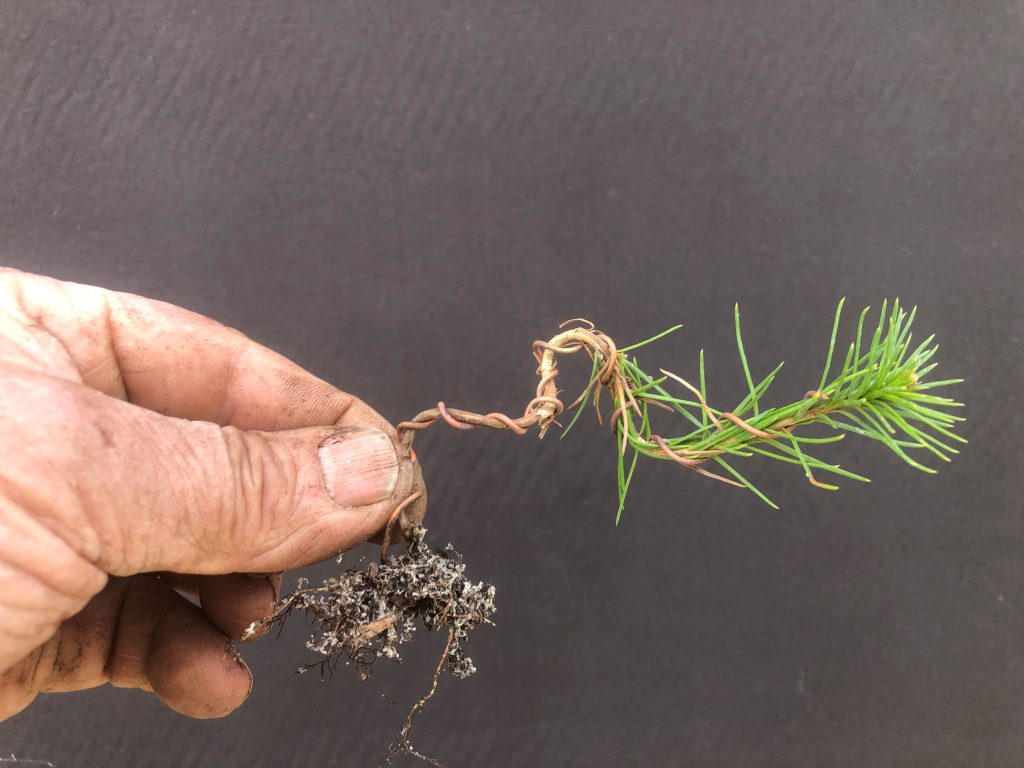
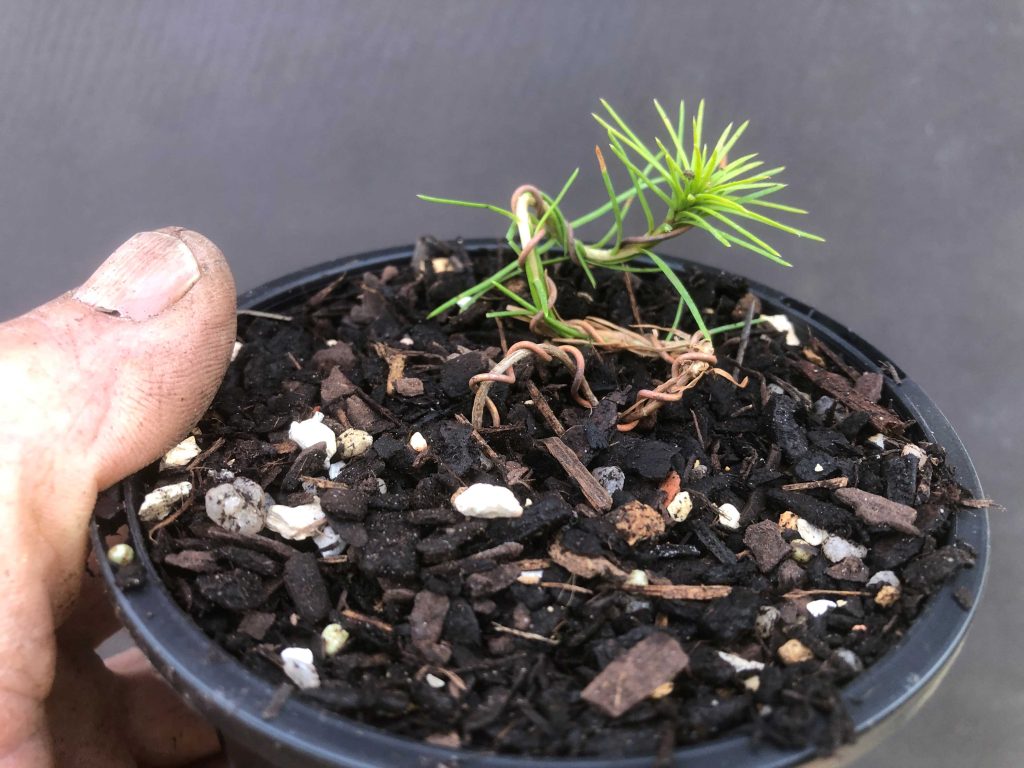
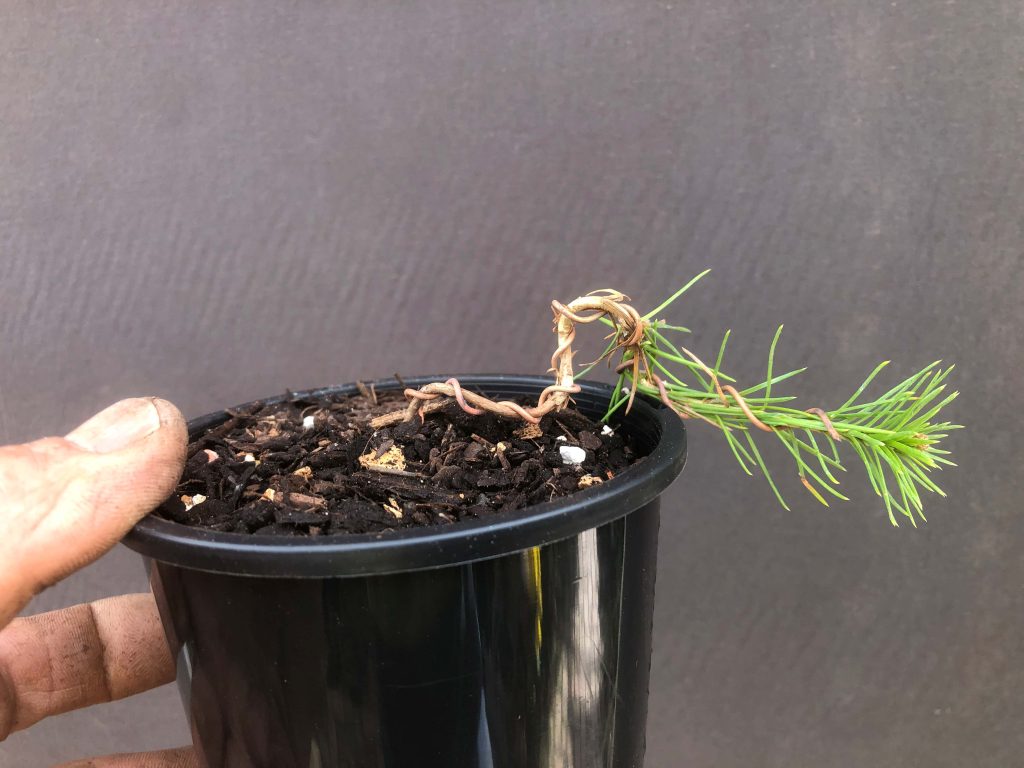
Pine seedlings generally have few side shoots as they prefer to grow tall and straight. If left as they are that will produce a long, bare trunk. There’s a few techniques to overcome that natural tendency. Today I’ve decided to wire and bend some of the seedlings which will reduce the effective length of that lower trunk as well as giving the future trunk some bends.
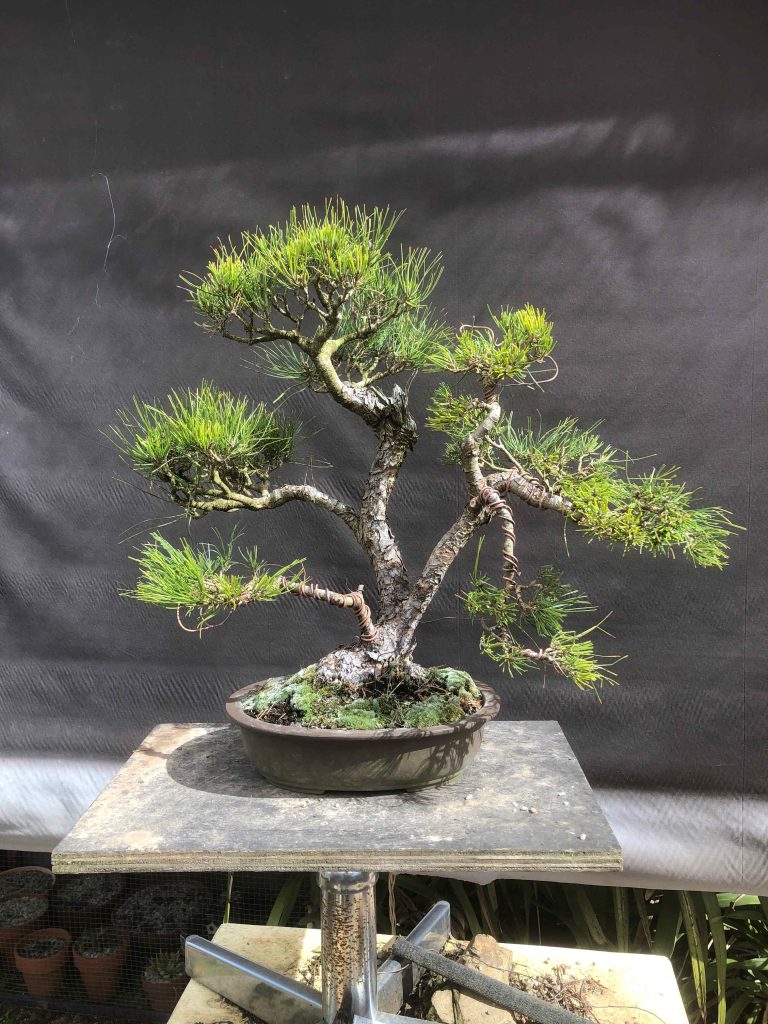
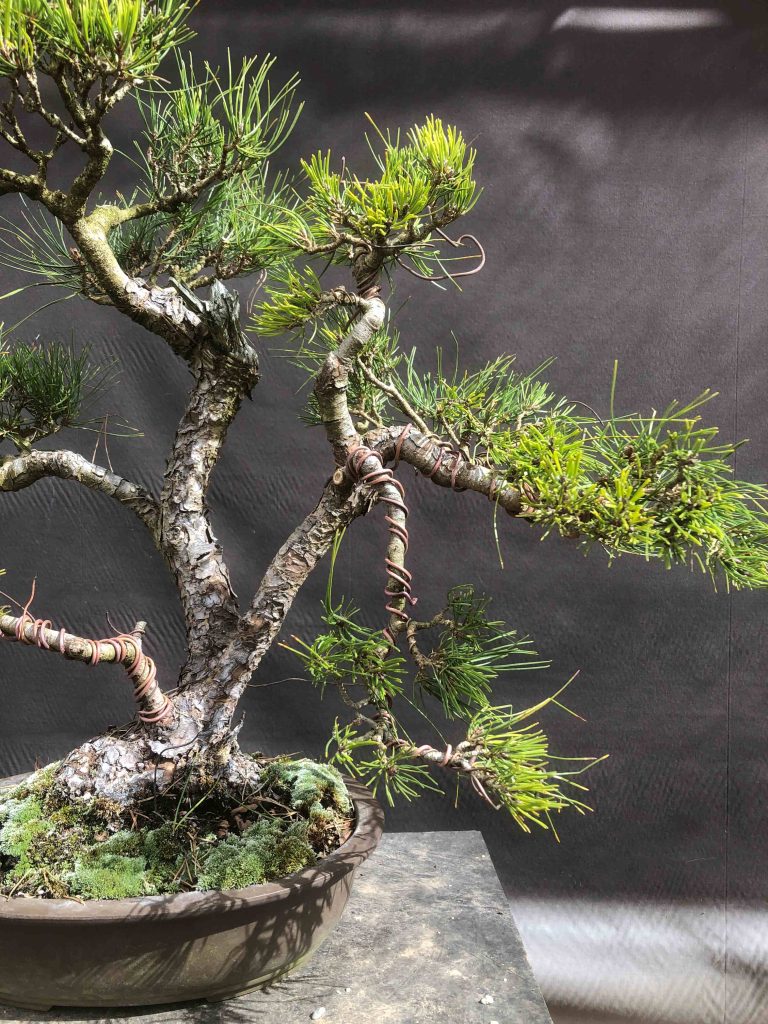
Repotting is almost finished for this spring. Today I looked at a Japanese Red Pine. It didn’t need repotting this year but really needed some shaping so I allocated some time to pruning and shaping. It’s still definitely a work in progress despite being quite old. I’m still not convinced that the smallest trunk is good design but it’s harder to put back than to cut off so it stays until I’ve come to a firm conclusion.
The hour or so I put in only got as far as removing some surplus branches and wiring the right trunk branches. There’s still plenty to do on this one – when I get some more spare time.
Unfortunately I don’t have any JRP for sale at this stage. Seed is extremely hard to get here in Australia. I have managed to strike a few cuttings but they get snapped up as soon as someone finds out I have them. I planted some trees in our paddock with the view to harvesting seed as they mature. They’ve both produced cones for the last 2 years but the few seeds in those cones have all been empty. Frustrating, but that’s sometimes what working with plants can do.
I do have plenty of Japanese Black Pines but only small seedlings and a couple of larger, field grown trees. That’s another hard to get species now, so they tend to sell quicker than I can grow them.
This year I have a few extra JBP seedlings so I have the opportunity to graft some Japanese white pine.
White pine seems to be really difficult to source here in Australia as we can’t import seed any more due to strict quarantine, local seed is rare and hard to find and pines are generally difficult to strike as cuttings. That leaves grafting as one of the few methods to propagate Japanese white pine, provided you have a white pine as a source of scions to graft with.
Fortunately I do have a couple of JWP grown from seed I obtained at the Hobart Botanic gardens some years ago.
Some readers may be aware that the bark of white pine is quite different from black pine bark. This means that grafted white pines often stand out with the smoother white pine bark on the trunk and branches but the thick, furrowed, dark bark of JBP on the lower trunk. The only way I know to reduce the visual impact of the different bark is to graft as low as possible so the darker JBP bark is hidden in the roots and nebari.
Here’s my guide to grafting pines
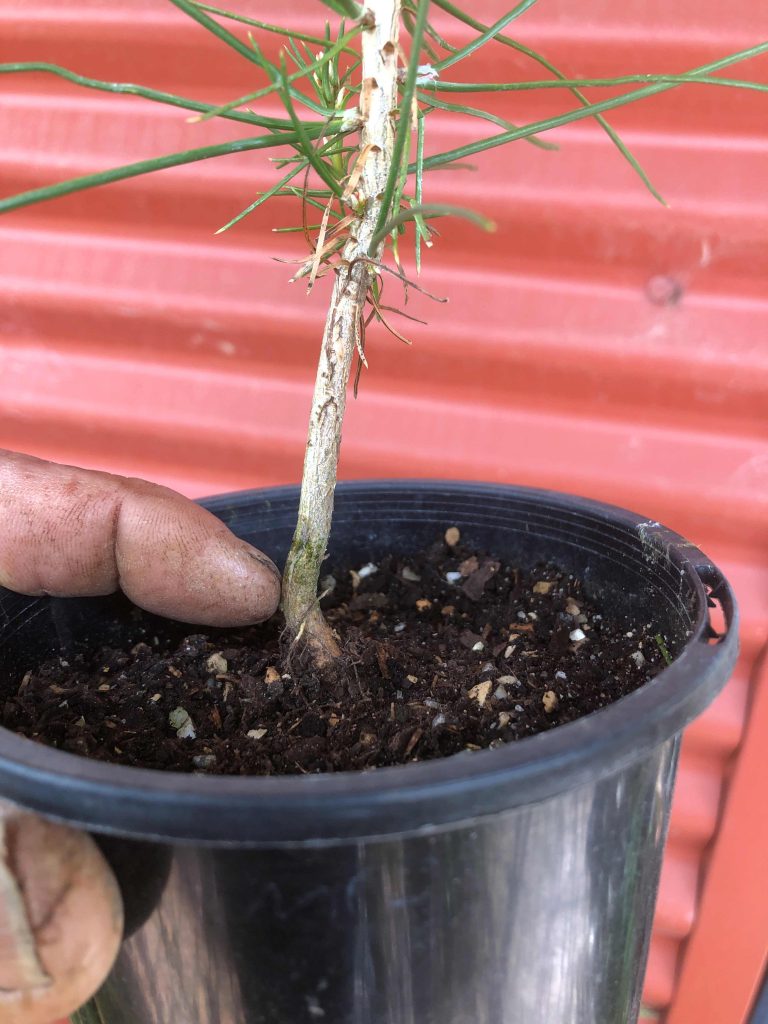
Select a suitable JBP seedling as the root stock. seedlings from around 5-10 mm thick are suitable.
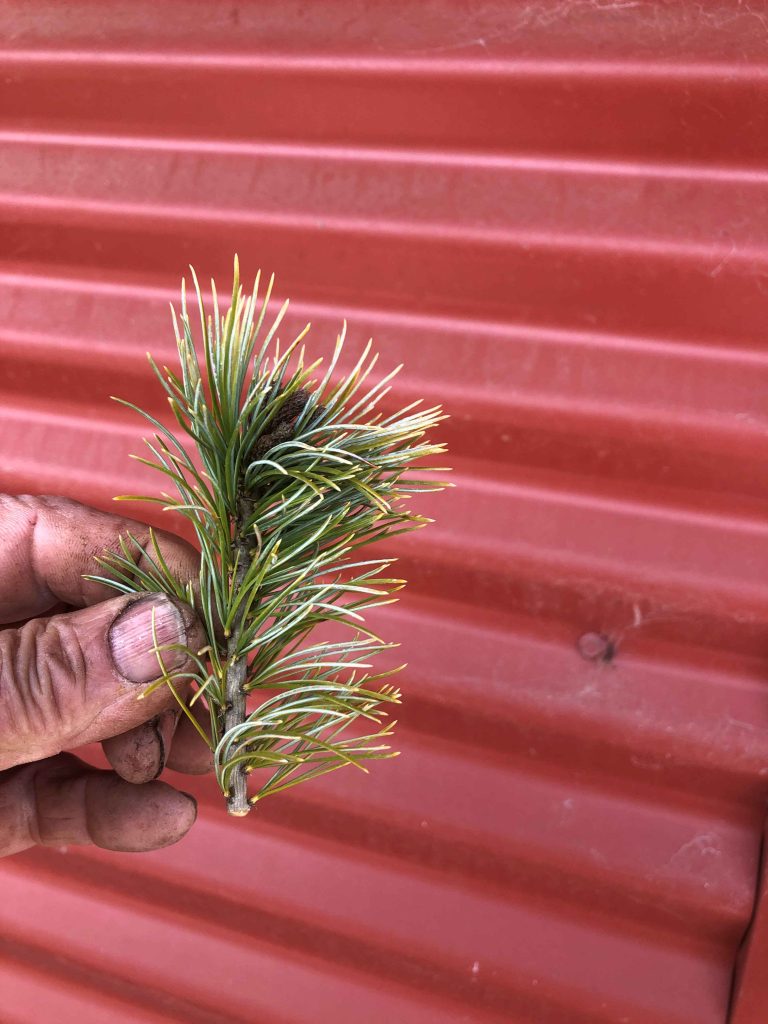
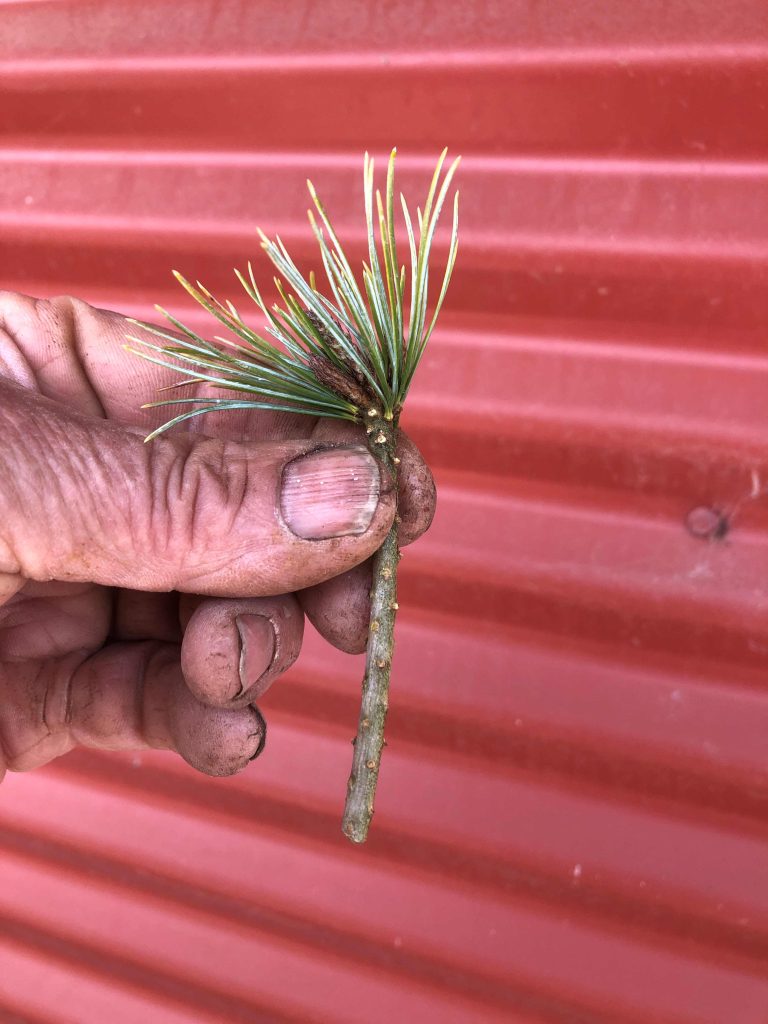
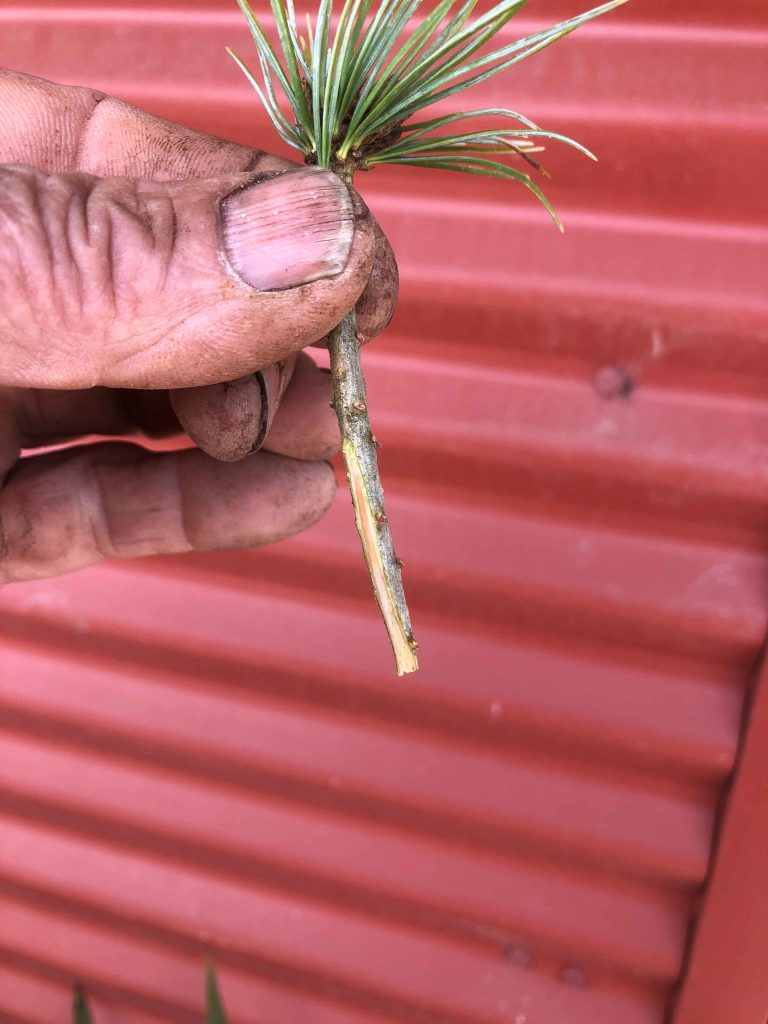
Select a suitable white pine shoot as the scion and remove most of the needles, just leaving a few close to the terminal buds.
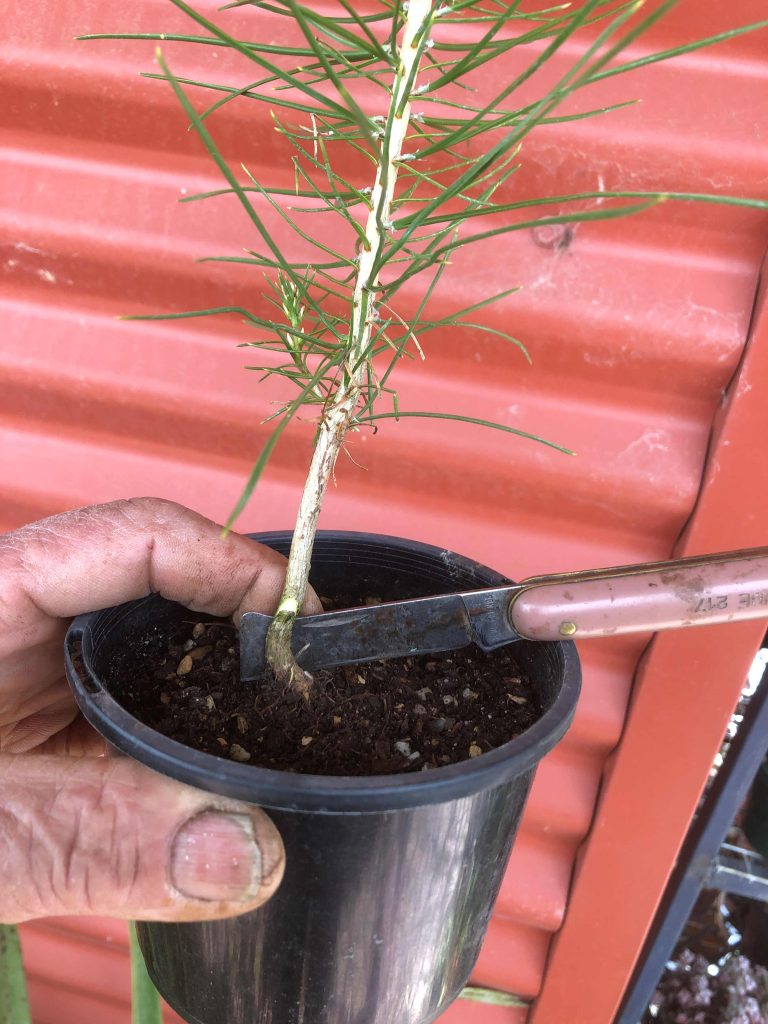
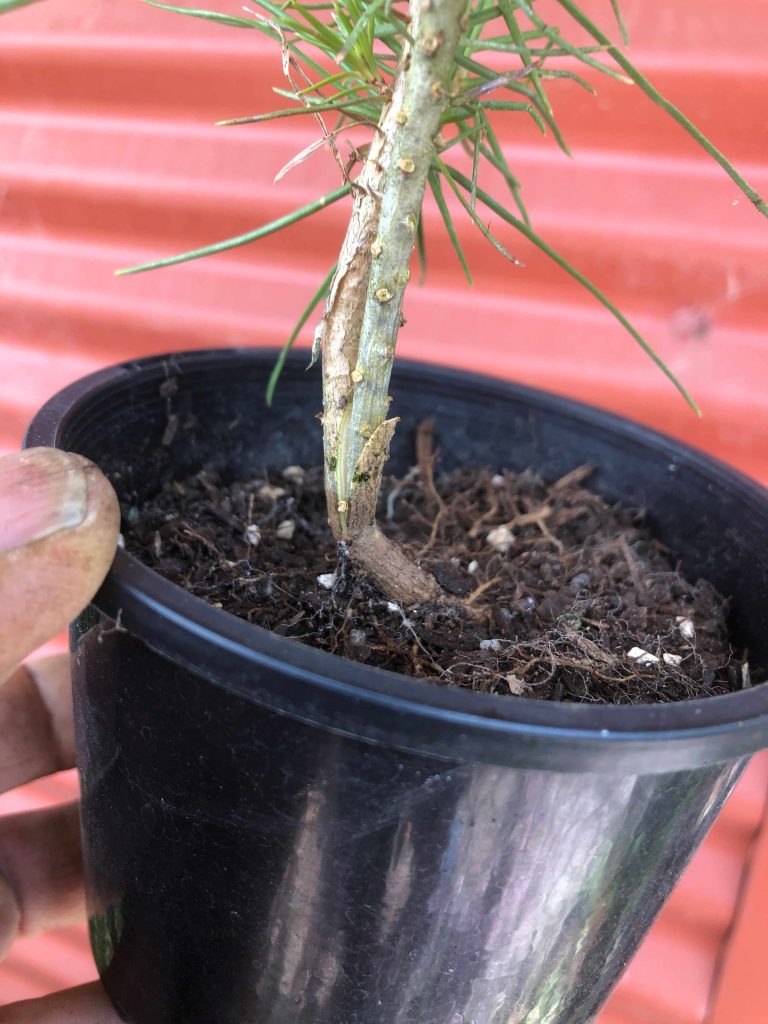
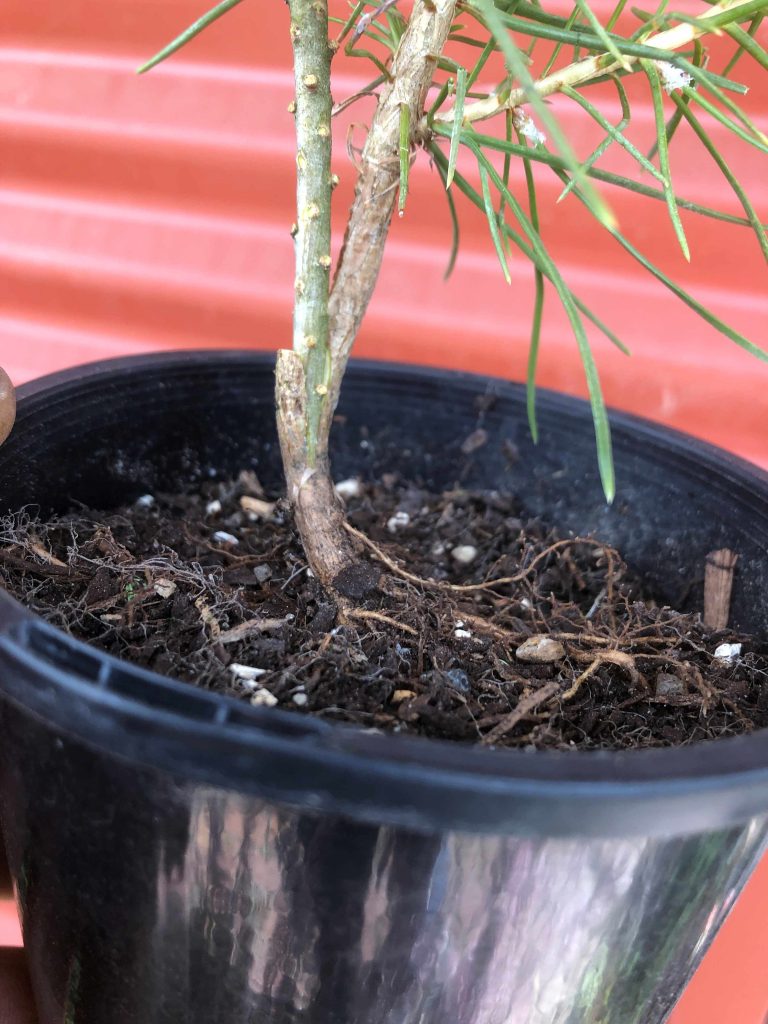
Use a very sharp, clean blade to cut a vertical incision into the stock. Note that I’m cutting as low as I can to ensure there will be minimal black pine bark as the tree matures.
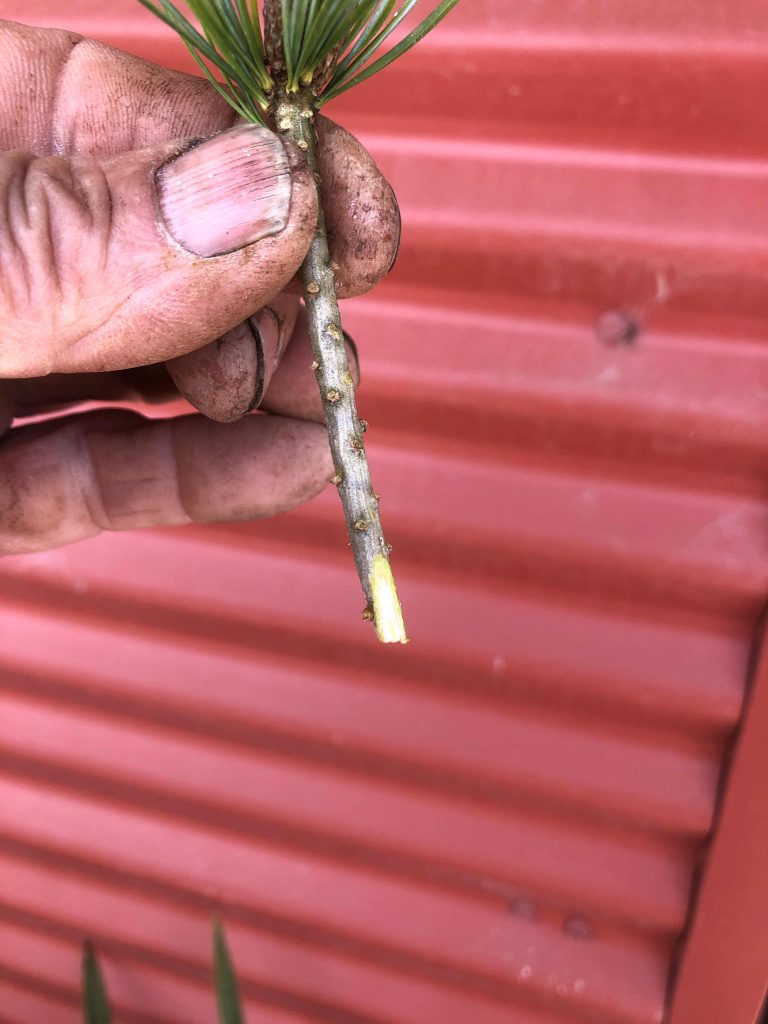
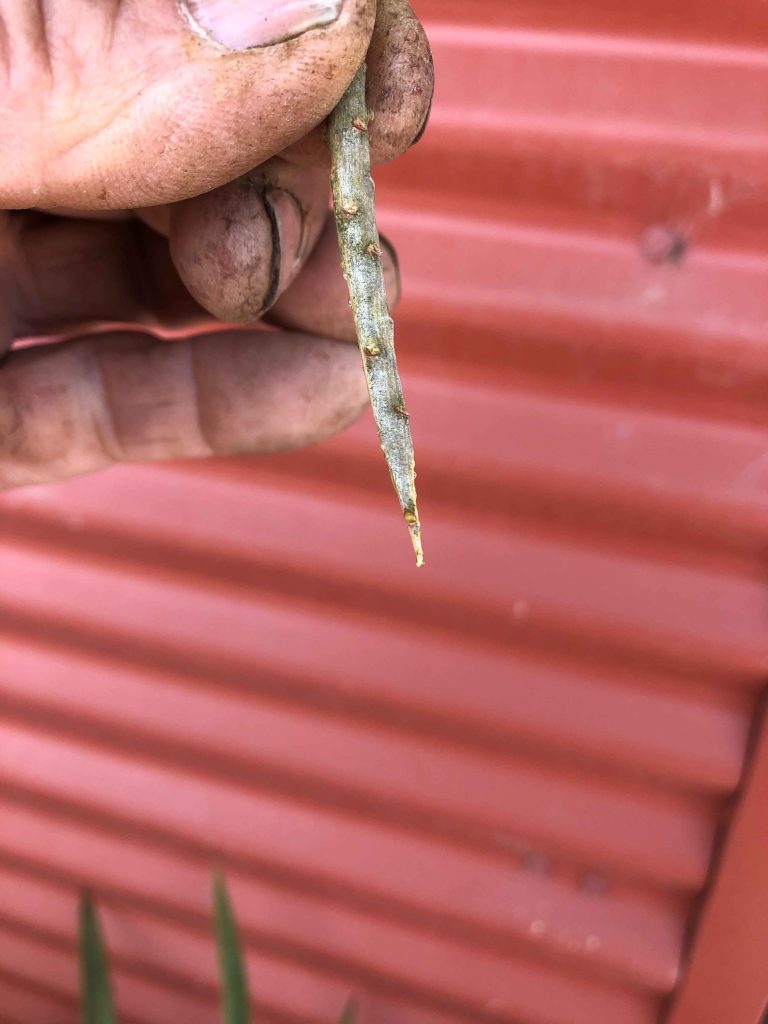
Make 2 cuts at the base of the scion to form a wedge. The cut on one side is longer than the other.
Slide the base of the white pine scion into the cut in the stock. The longer cut is against the trunk of the stock. Successful grafts rely on close contact between cambium layers of stock and scion. Cambium is a very thin, actively growing layer between bark and wood. As the size of stock and scion is rarely equal the scion is placed to one side of the cut in the root stock so that bark of both stock and scion are level ON ONE SIDE. This placement should ensure that the cambium layers on that side are close enough to join as they heal.
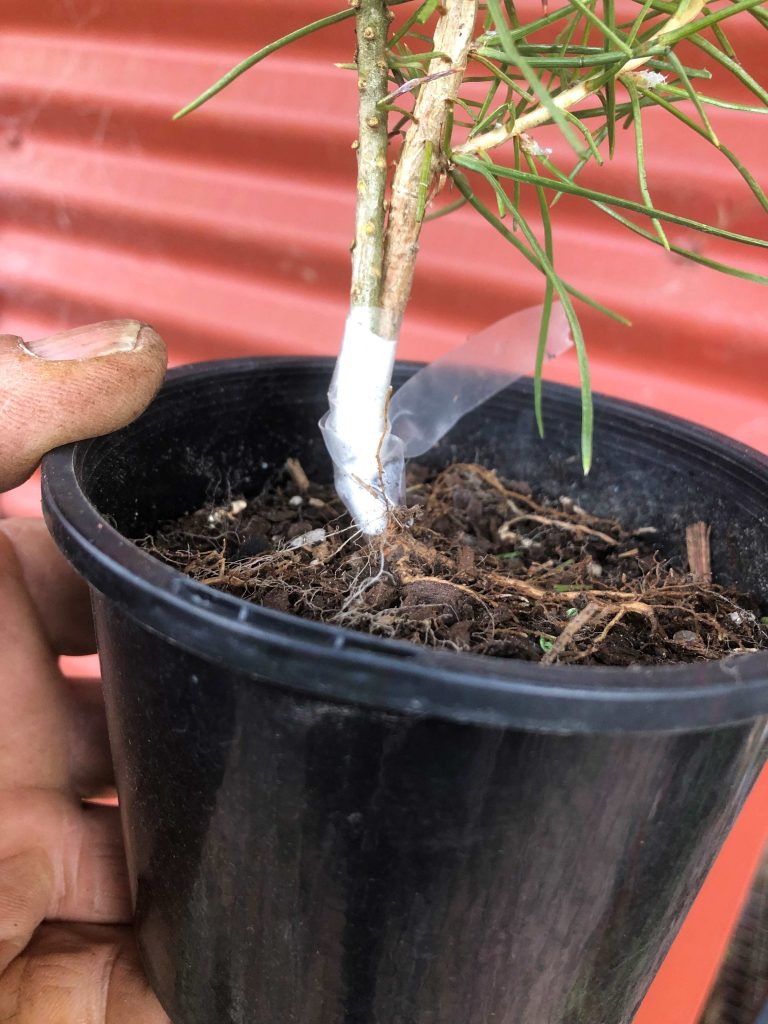
Wrap the graft union with grafting tape to hold the scion in place, put some pressure on the cuts to keep them in close contact to aid healing. Tape also stop the graft from drying out.
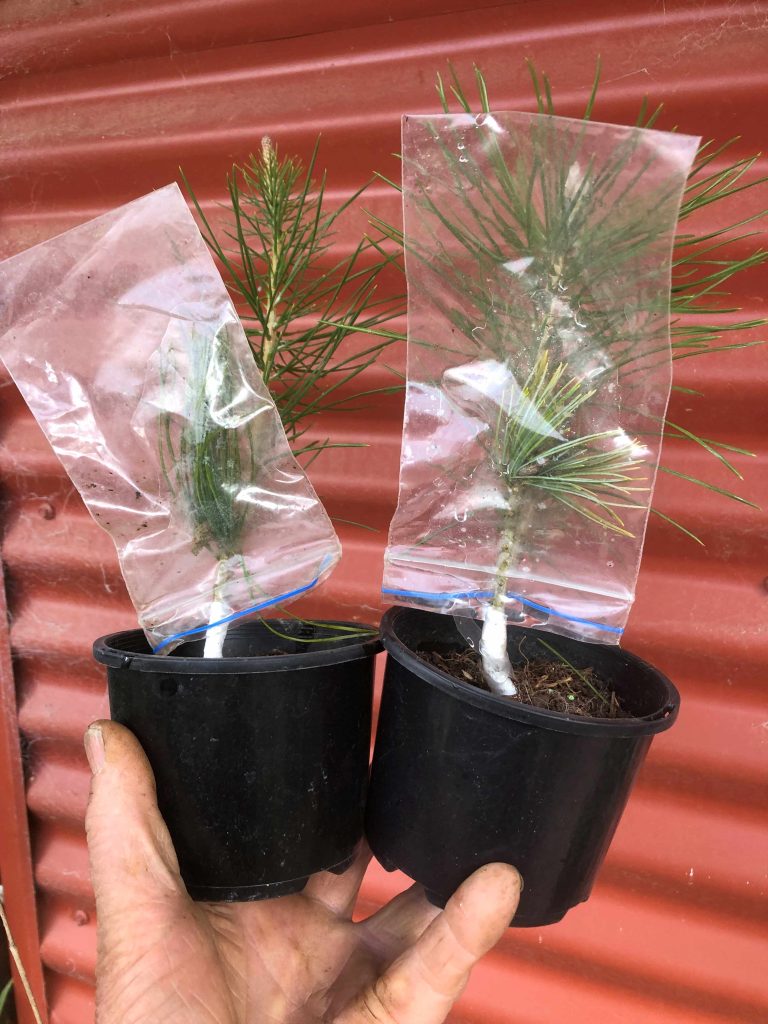
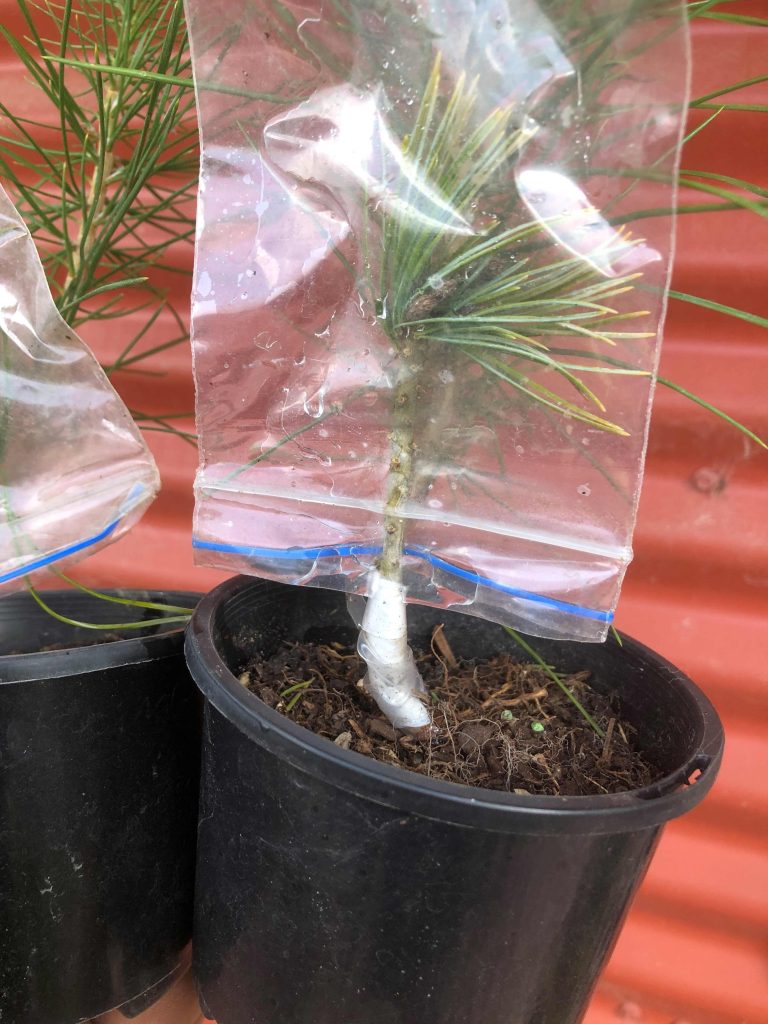
Finally, because pines are evergreen I need to protect the scion from dehydration. There are a number of ways to achieve this but I find ziplock bags really effective and easy to apply. A few drops of water in the bag, slip it over the scion and zip up the seal to make a mini greenhouse over your grafted scion.
The new grafts then go back outside but sheltered from direct sun so as not to cook the scions in their little greenhouses.
I’ll try to remember to update as these grafts progress.

 Login
Login