 Login
Login
Katsura Maple
18 June 2023 at 10:47
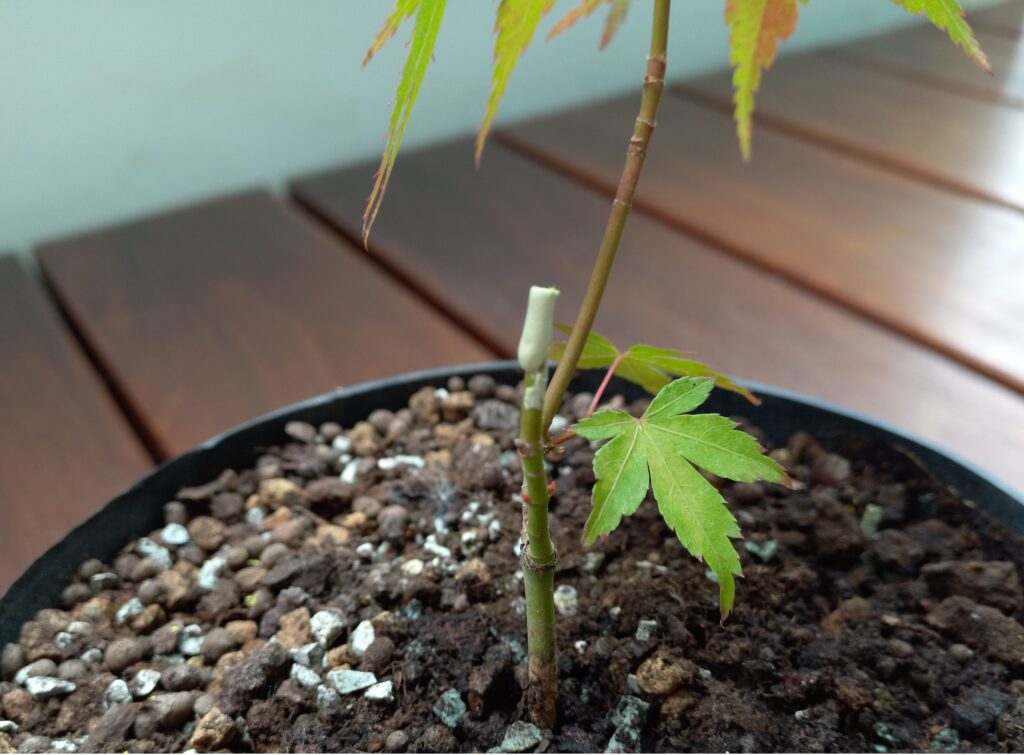
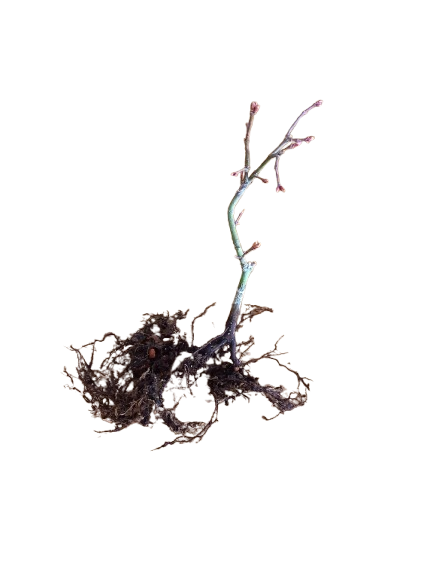
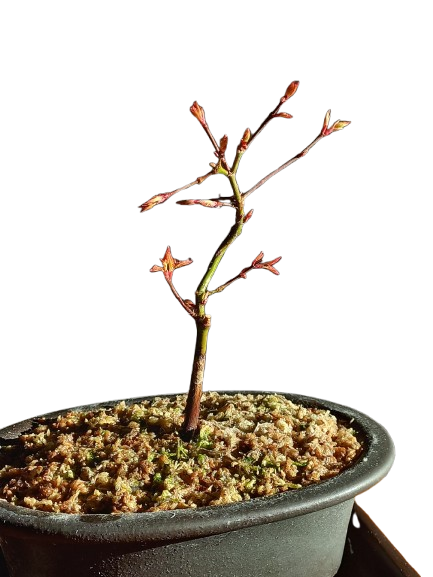
Katsura maple from OBI, just after repotting in June 2023. A young, non-grafted seedling with a green trunk.


Katsura maple from OBI, just after repotting in June 2023. A young, non-grafted seedling with a green trunk.
In the autumn of 2023, I purchased an approximately 9-year-old cork oak in Rome. The tree was planted in a mixture of pumice, akadama, and coconut fibers.
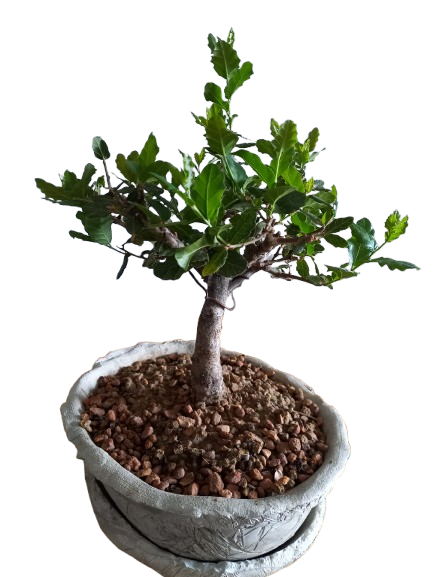
The first growth in 2024 appeared after repotting it into a slightly larger concrete pot.
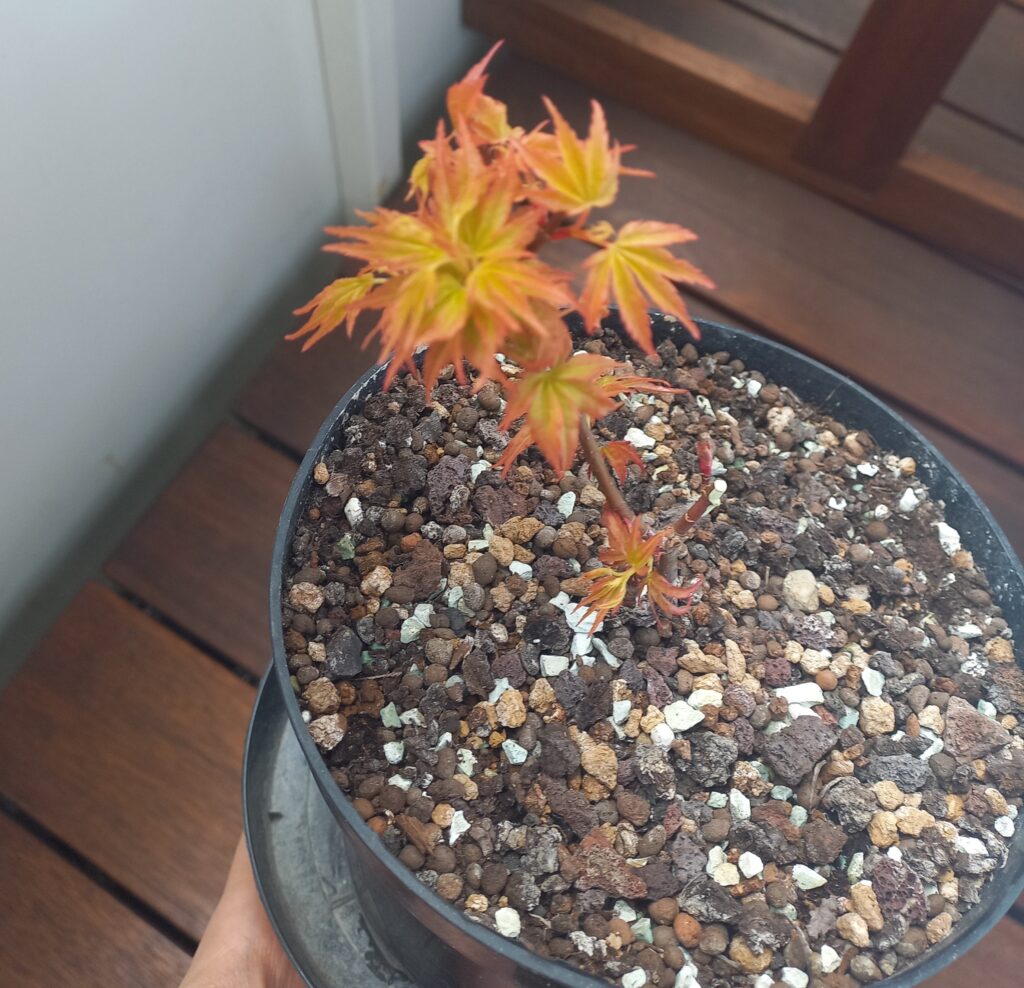
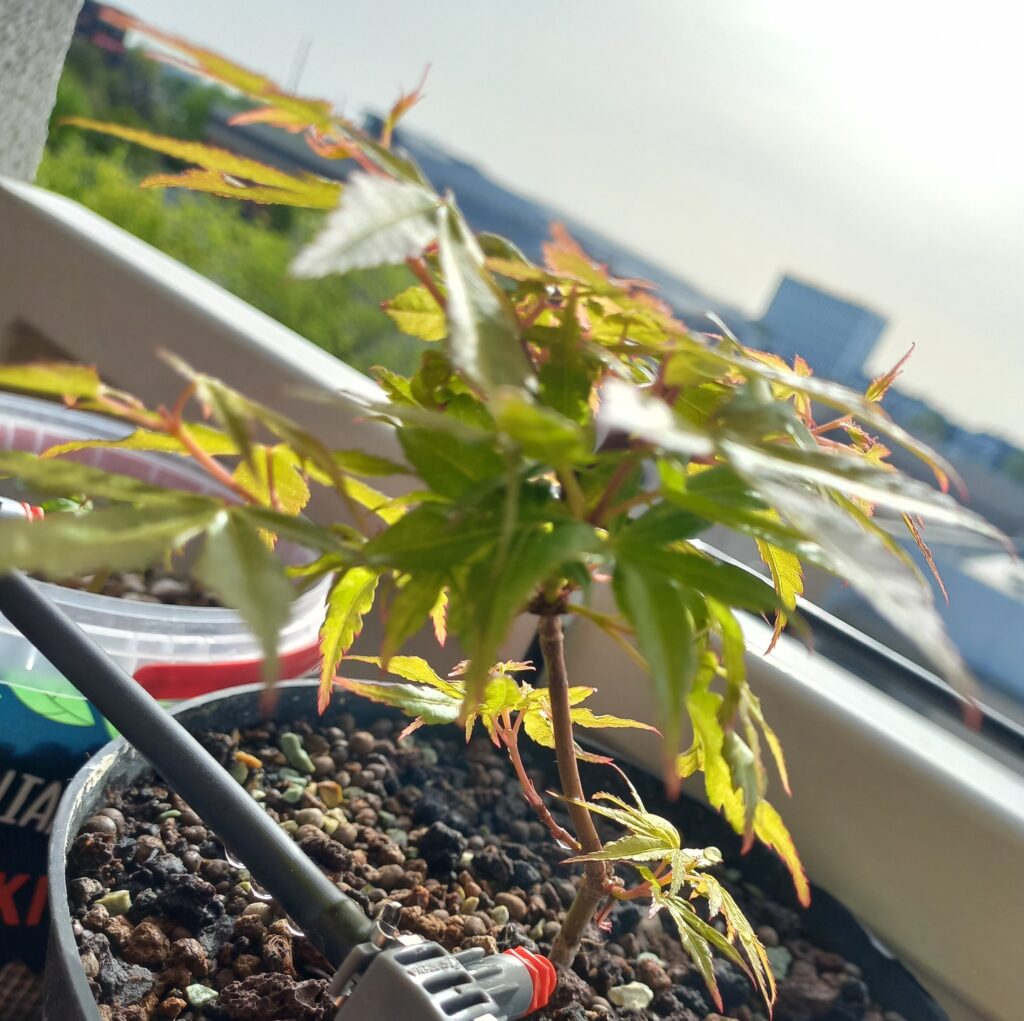
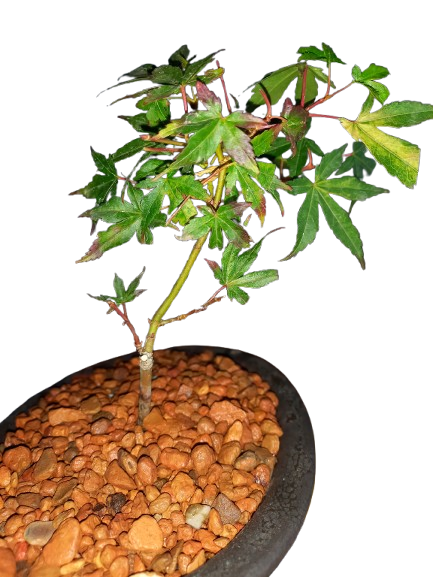
The maple in March, April, and June 2024. In the second half of the season, it was repotted into a bonsai pot with an inorganic mix.
Chinese Elm bonsai (Ulmus parvifolia) purchased from Obi in June 2023. I’m excited to document its progress here as I develop it into a more refined bonsai.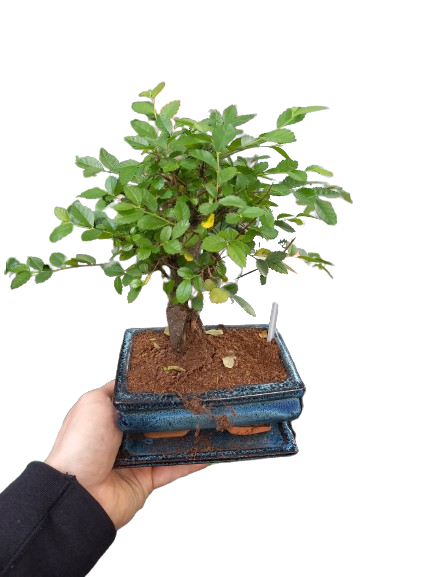
05-06-2023 first pruning and moved my Elm to a bigger pot. Visible is the big, horizontal cut on the trunk.
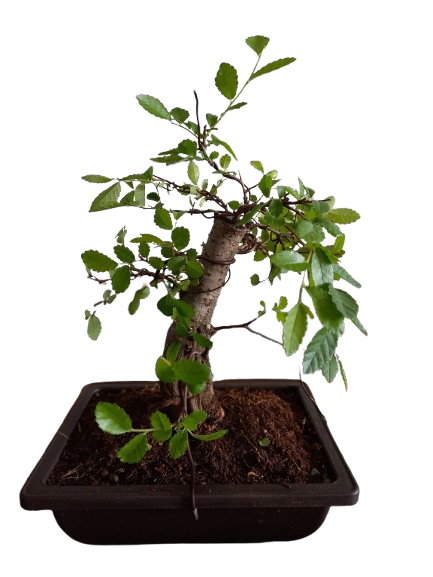
27-06-2023 I’m refining the cut with a concave cutter, making it at a sharper angle. I’m also developing a sacrificial branch to help close the wound.
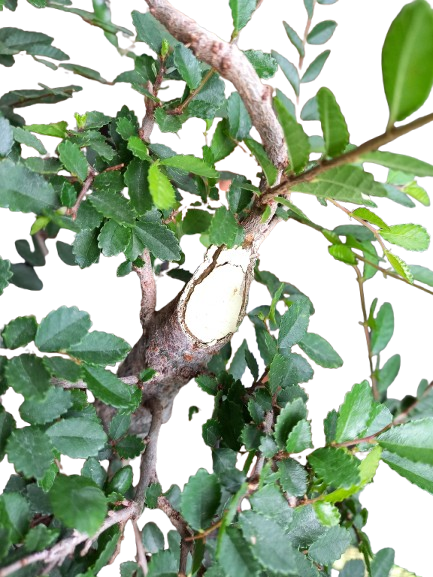
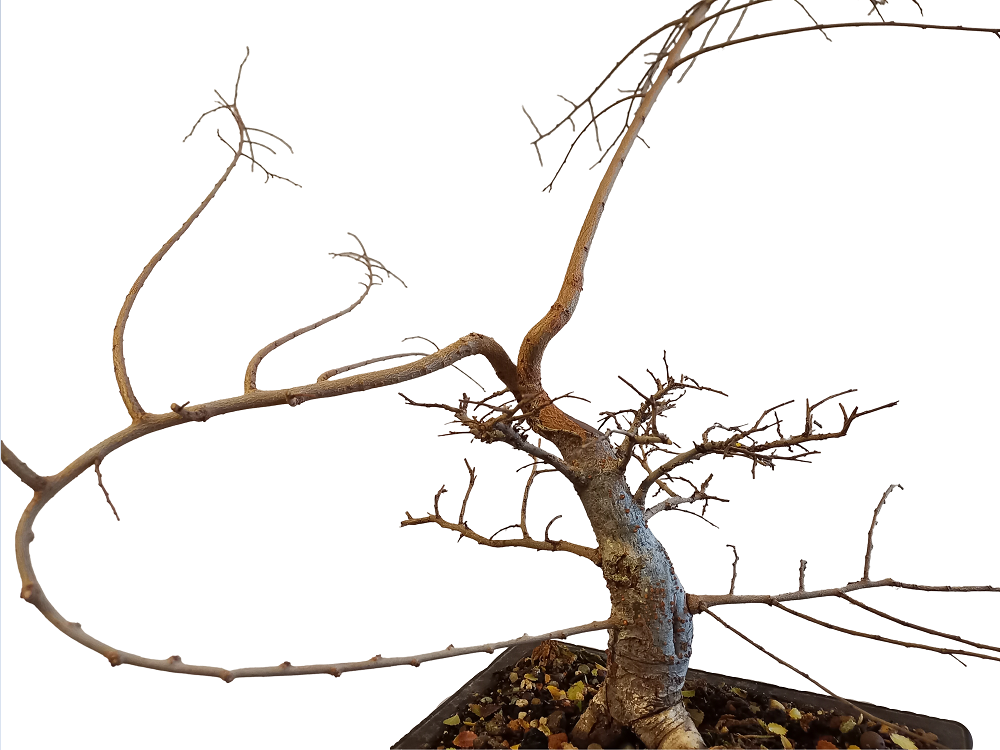
10-10-2024 the cut is starting to heal over. I’m using two sacrificial branches to thicken the top of the stump. One of them was used for a thread graft to add a new branch on the lower part of the trunk.
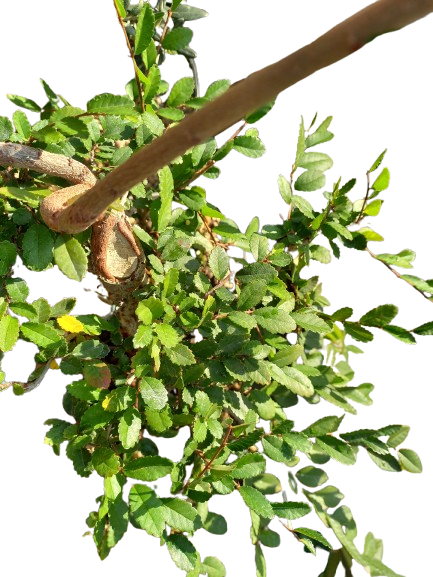
06-11-2024 I’ve switched the wound sealant to a putty type.
The pot with the elm is placed in a large basket filled with soil (to encourage root growth and faster development), along with other plants, which makes it difficult to take a good photo. In the spring, I plan to do a ground layer to improve the currently very unattractive nebari.
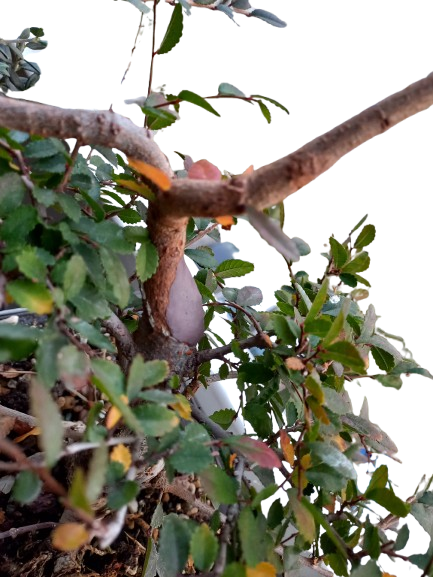
04-12-2024 I helped the tree a bit by removing all the autumn leaves. I will leave these two long branches for part of the season to support further healing of the wounds (there is also one large one in the middle of the trunk). Hopefully, this will also help the root flare (after ground layering) develop better… The nebari looks terrible at the moment. It’s hard to capture it in photos, but the trunk seems to split into two thick roots.
Since I plan to create a ground layer next season, the trunk will be slightly shortened. I received a suggestion that the newly grafted first branch is probably placed a bit too low. Well, we’ll see how everything looks once it’s on the final roots. If necessary, it will only serve to thicken the trunk, and later it can be cut off or a new branch can be grafted in the correct position.
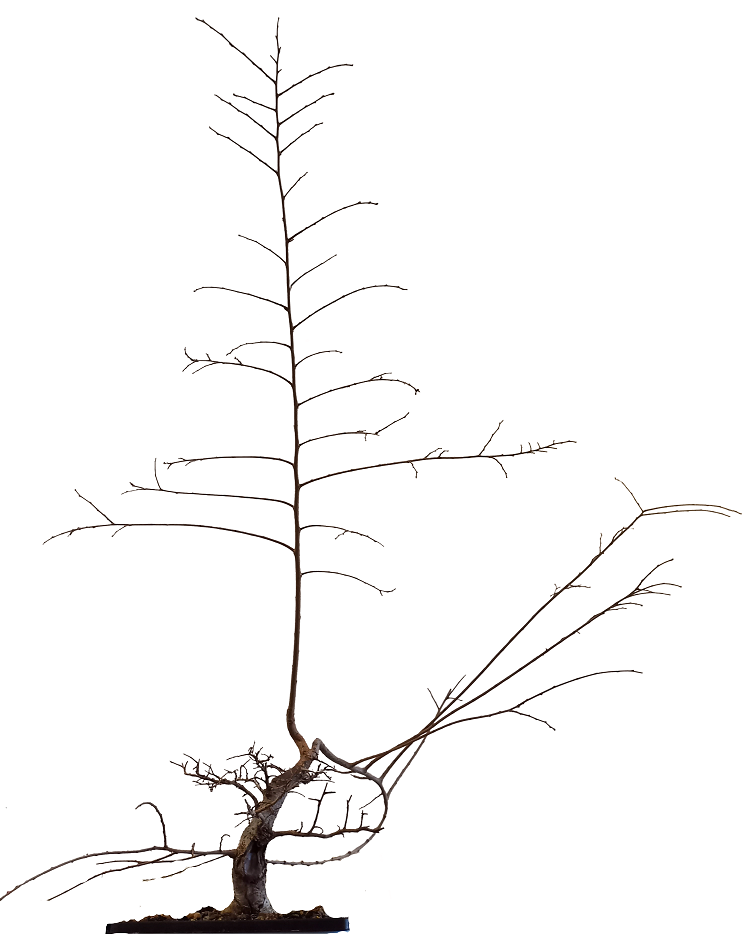
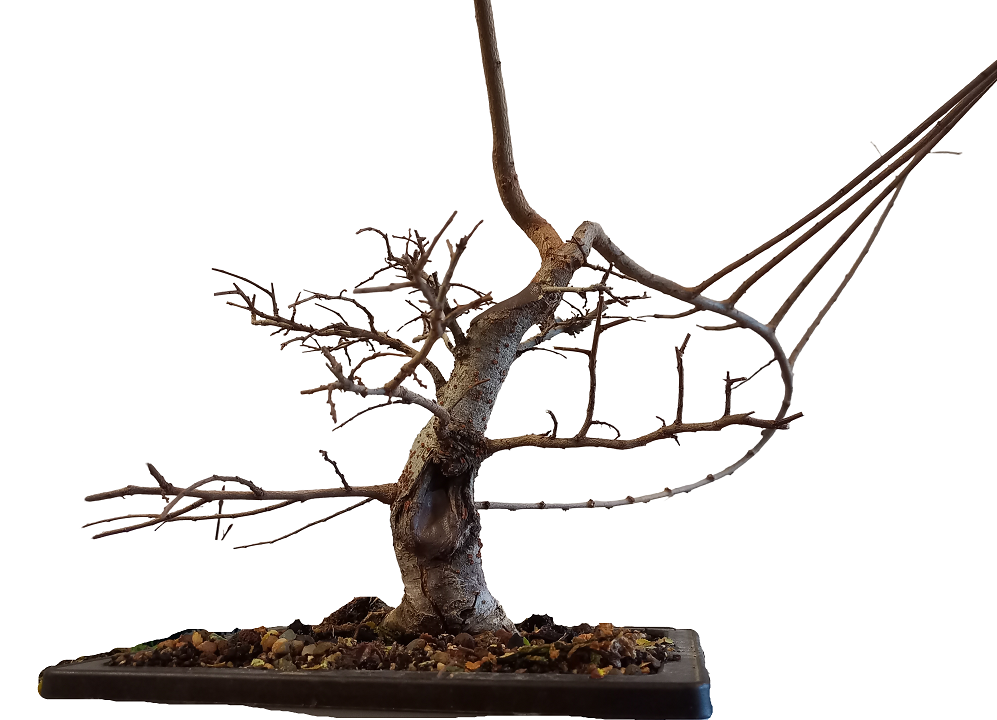
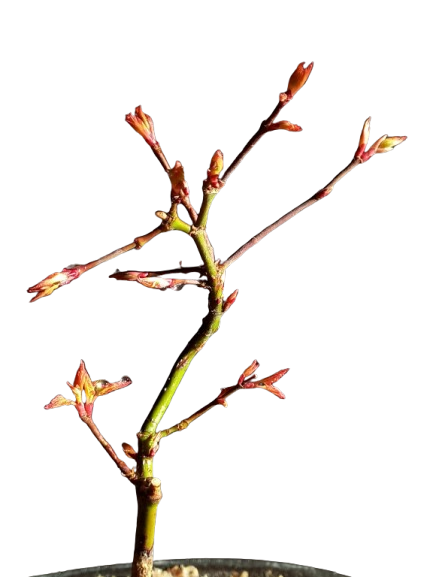
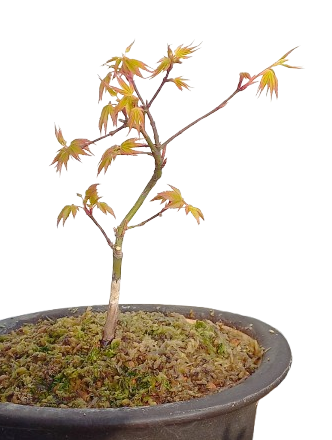
Repotting in spring 2025. The roots are still far from a good arrangement for future nebari.
Swollen buds are slowly starting to open.
Another maple clone purchased in 2024 – a variety I really wanted: Nishiki Gawa. Cork develops faster than in the case of Arakawa. Here, air layering is mandatory because the difference in bark tissue between the rootstock and the cultivar would be very noticeable.
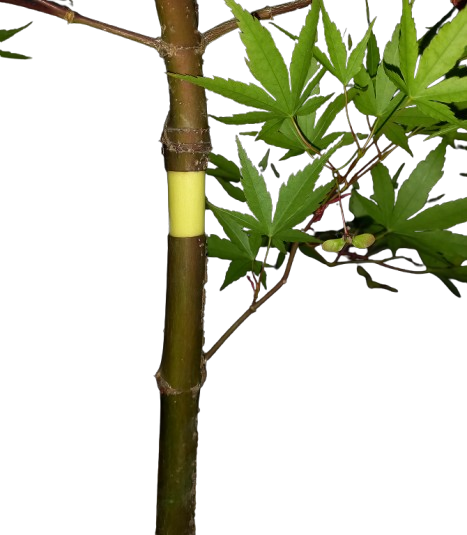
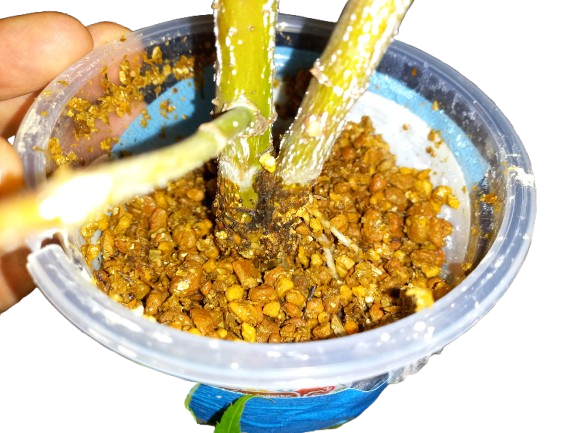
In 2025, the air layer was successfully completed. After transplanting, the plant produced new growth even before winter.
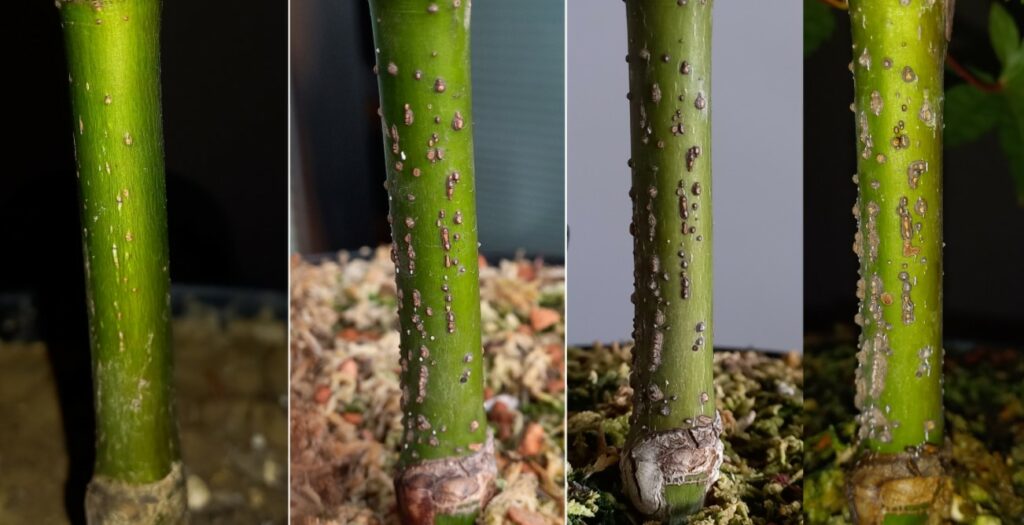
The rate of bark corking in the Nishiki Gawa variety (potted plant, grown without fertilization, showing slow growth). In open ground, cork formation might occur more quickly.
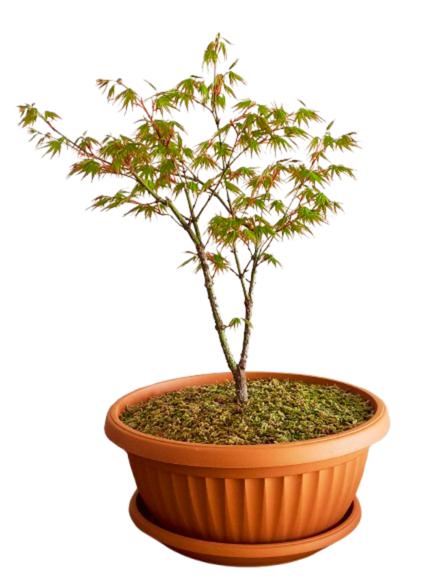
Maple after being transplanted into a slightly wider pot, March 19, 2025. The beautiful green of young leaves.
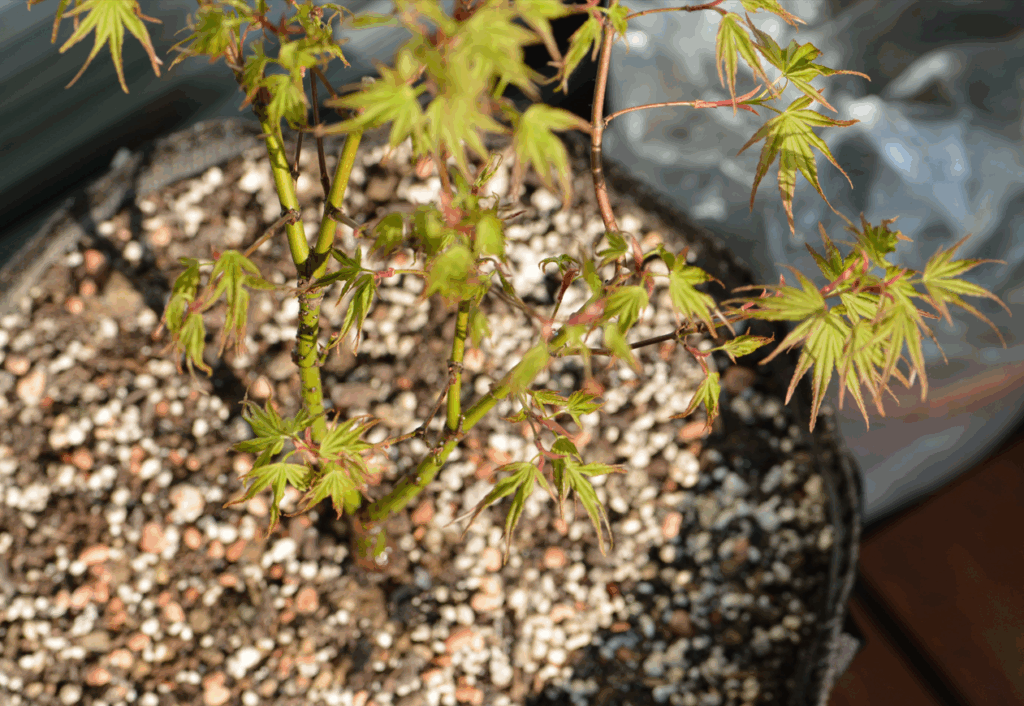
Photo from spring 2024.
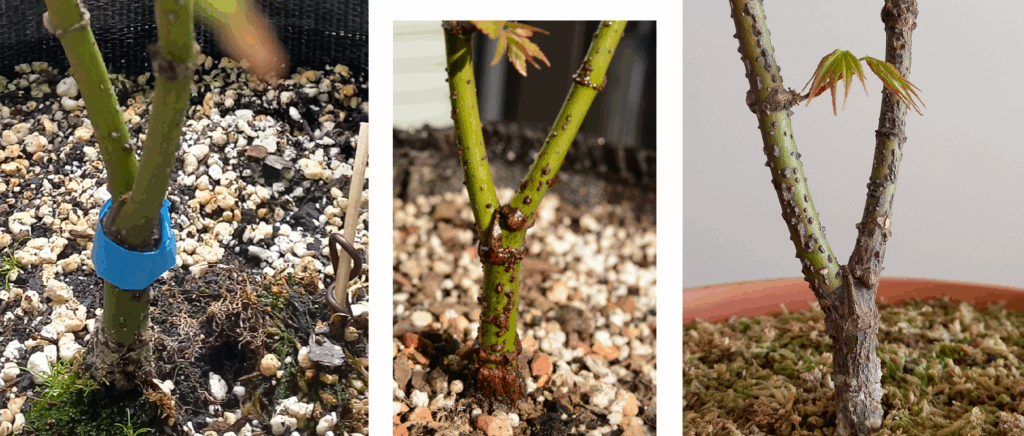
Barking progress from summer 2023 to spring 2025. This process takes a long time—at least several years are needed for the bark of the Arakawa variety to become mature, corky, and rough. This gives the appearance of an old, mature tree, unique and striking look.
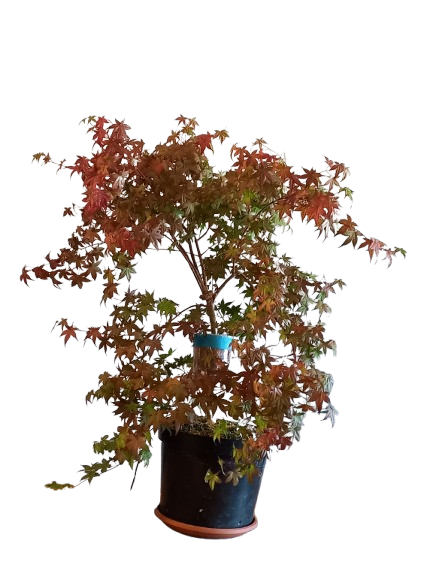
Shin Deshojo maple bought in 2024. It is grafted, and I am working on some air layers to propagate new plants without the ugly graft. Picture on the right – rootstock after removing the air layer.
This variety is known for its stunning blood-red leaves in early spring. In summer, they turn green, and in autumn, they change color beautifully.
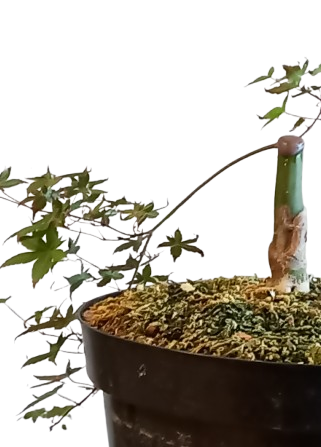
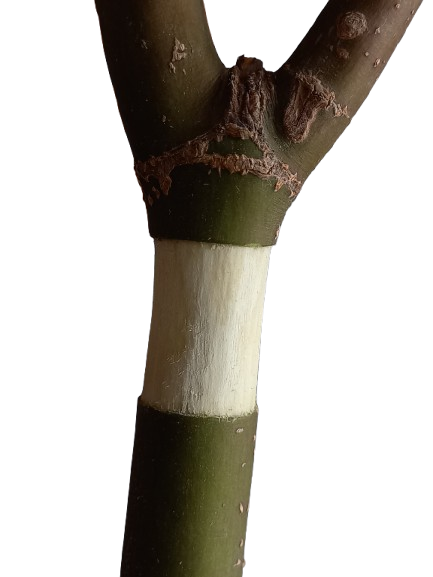
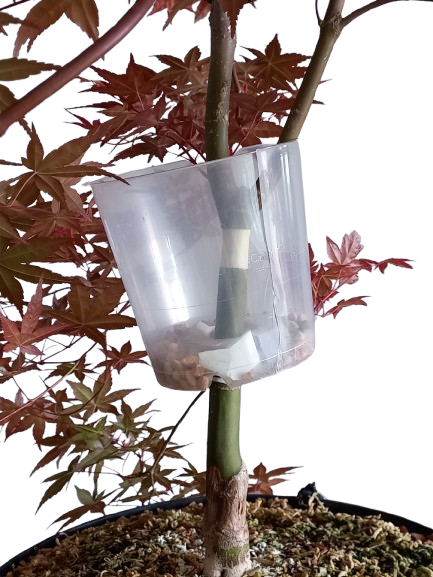
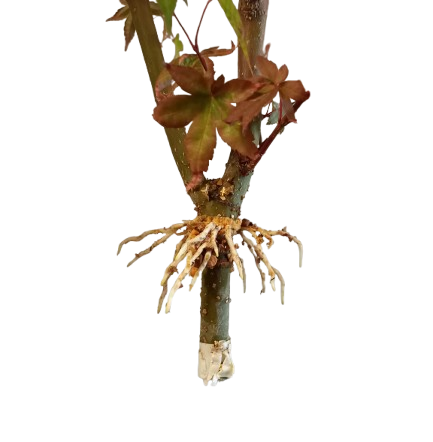
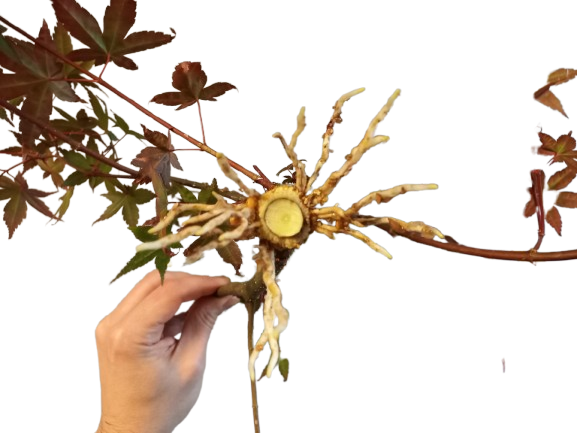
In 2025, I performed a ground layering technique. I removed the top layer of soil and made an incision around the bark. Two diverging roots are now clearly visible. I hope I scraped off all the cambium properly to prevent bridging. I applied Clonex to the cut site and covered everything with sphagnum, vermiculite, and other materials I had on hand.
It can be considered a partial success. So far, only one root has formed. I lightly pruned the tips and removed the original roots, hoping this will stimulate the development of new roots on other sides of the nebari. I’ll check again in the spring during the next repotting. Photos show the tree before the procedure, after removing the old roots, and a view from below.
This is a fairly demanding procedure for the plant. Before planting, I pruned and removed the largest branch at the apex. The tree was placed in a production pot with a well-draining, 100% inorganic substrate, and for the first two weeks, I kept it under a plastic bag to reduce transpiration. After a few weeks, the first shoots appeared. Now the root tips are visible in the drainage holes. I’m curious whether new roots will appear in other places around the base of the trunk by spring.


