Login
Login

Little Champions – Special Exhibit at the Pacific Bonsai Museum
A “Champion Tree” is a specimen that has been measured to be the largest of its species (see “Champion Tree Registry“). The findings are based on a points system that considers tree height, trunk circumference, and average crown circumference (there’s a manual that spells out the details).
Playing on this idea, the Pacific Bonsai Museum is currently featuring an exhibit called “Little Champions” that looks at eight specimens that are native to the West Coast. It’s a great example of the bonsai work that can be done with native material.
First up is an Engelmann spruce that’s been in training since 1978. Harvested from about 4600′ on the slopes of Mt. Hood, this specimen suggests the rugged terrain in which the species thrives at a much smaller scale than the tallest of the species (179′).
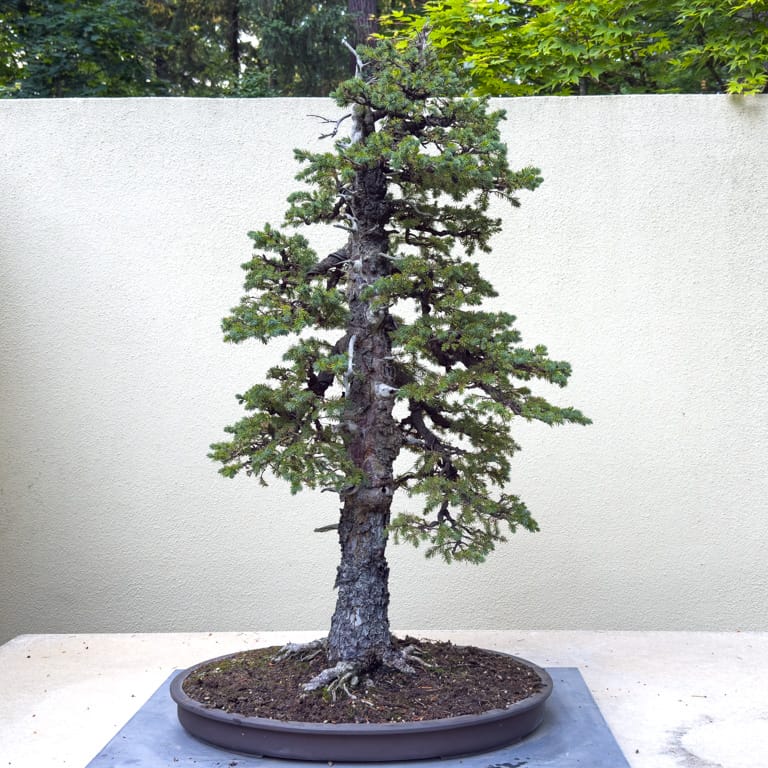
Engelmann spruce
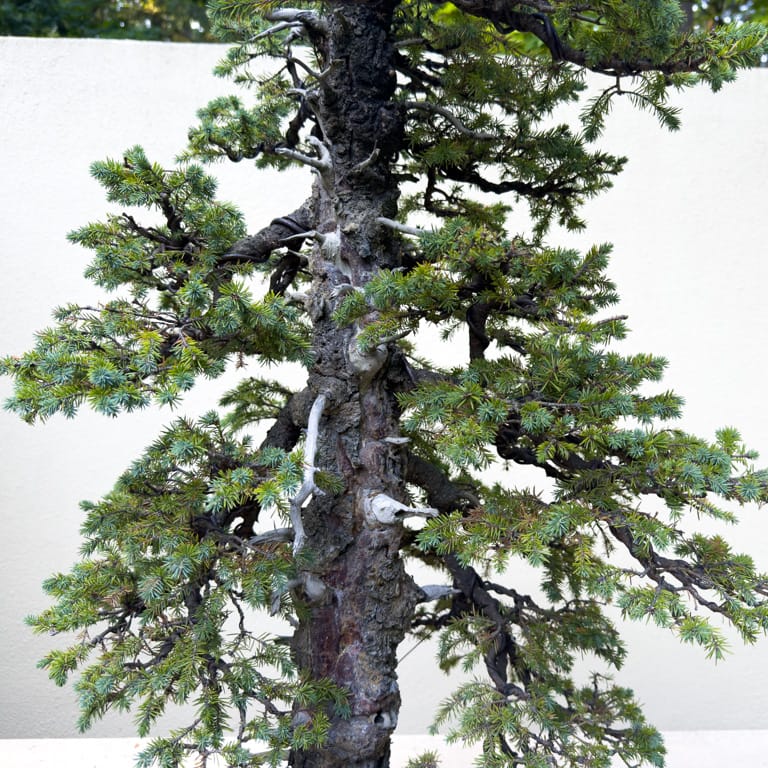
Trunk and foliage detail
Next up is a vine maple on loan to the garden from Michael Hagedorn. It was collected at about 4000′ from a lava flow in the Cascades. (Forgive the netting around the pot – it’s job is to deter critters from digging up the moss.)
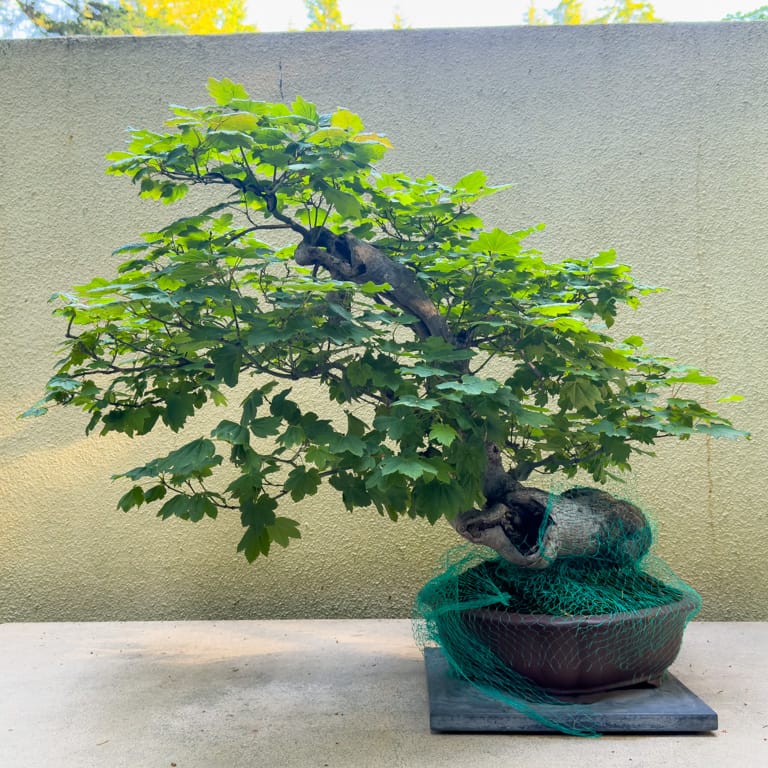
Vine maple
The coast redwood below was donated to the garden by Toichi Domoto, a well-known California nurseryman and bonsai grower. Domoto started this bonsai from a three-year old seedling in 1957 and trained it for thirty years before donating it to the Museum (learn more about Toichi Domoto).
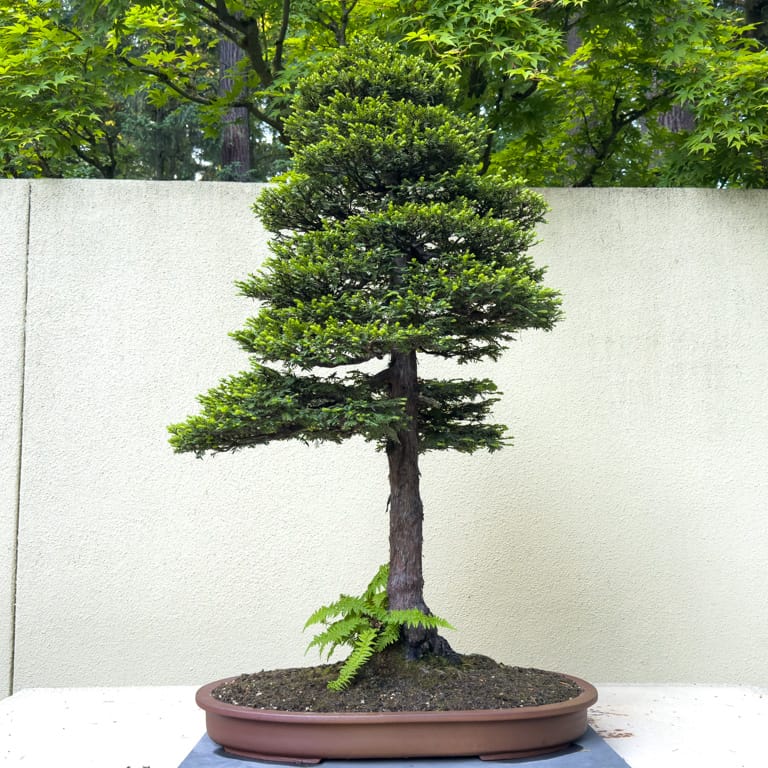
Coast redwood
In 2018, the museum presented the LAB (Living Art of Bonsai) Project which featured work from bonsai professional Ryan Neil, ceramicist Ron Lang, and furniture designer and craftsman Austin Heitzman (learn more about the LAB). The basic idea was to mix up the order in which tree, container, and stand are created to see what happens.
The composition below started with Lang’s container. Heitzman then created the stand to complement the container. Finally, in 2020, Neil planted the root over rock Douglas fir and this composition came to its initial completion.
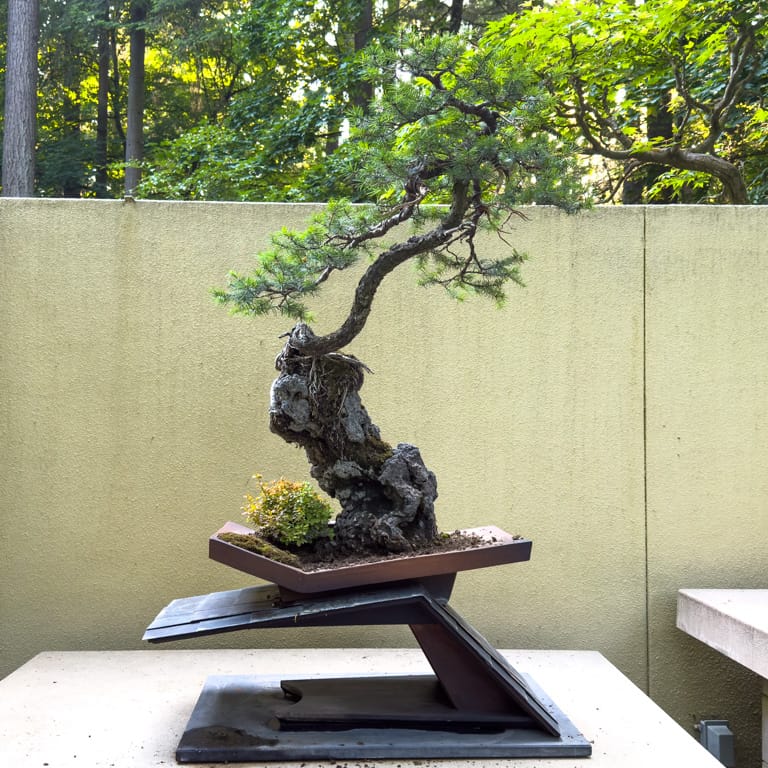
Douglas fir
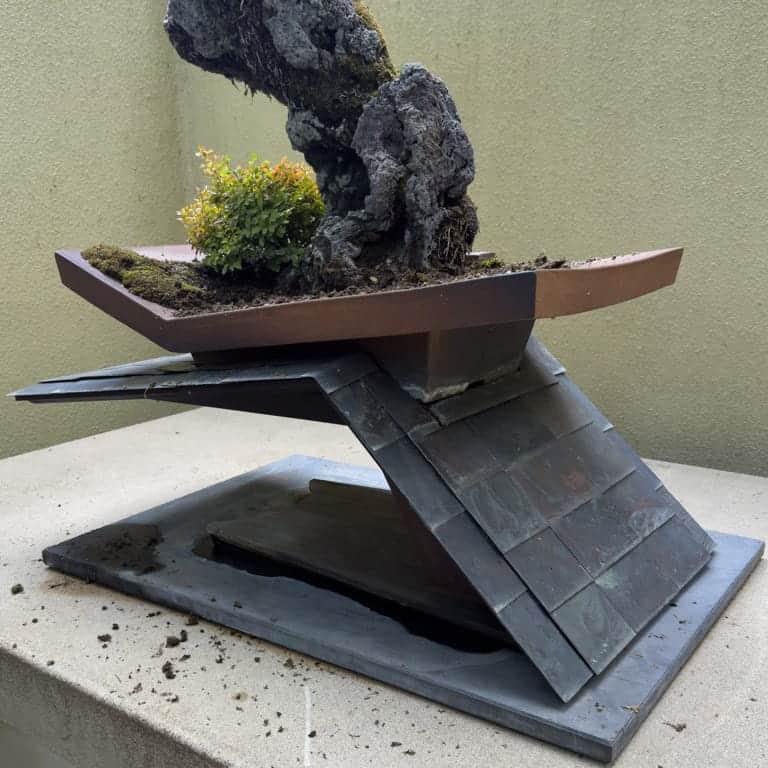
Stand and container detail
Sitka spruce can grow to massive sizes and live to be over one thousand years old. This specimen was collected in a parking lot on the Olympic Peninsula in Forks, Washington. The pot was from the museum’s Decked Out exhibit in 2016.

Sitka spruce
The subalpine fir is one of a number of coniferous species that takes on a standard forest tree shape at lower elevations but can become contorted and character-filled in more extreme environments. The specimen below, created by David De Groot, is no exception. The container is by Jan Rentenaar.

Subalpine fir
If you missed last week’s post, check out photos from the “Small Talk” exhibit. And if you’d like to see these trees in person, start planning your trip by visiting the Pacific Bonsai Museum website.
News & Updates
[2026 Kokufu Dates]
- The 100th Kokufu exhibition, the top bonsai show in Japan, will be held on February 8-11 (part 1) and February 14-15, 17-18 (part 2, the museum is closed on the 16th), 2026. The event will be held at the Tokyo Metropolitan Art Museum in Ueno Park in Tokyo.