Normal view

Received before yesterday Adam's Art and Bonsai Blog

Rock ‘N Roll

16 September 2023 at 00:31

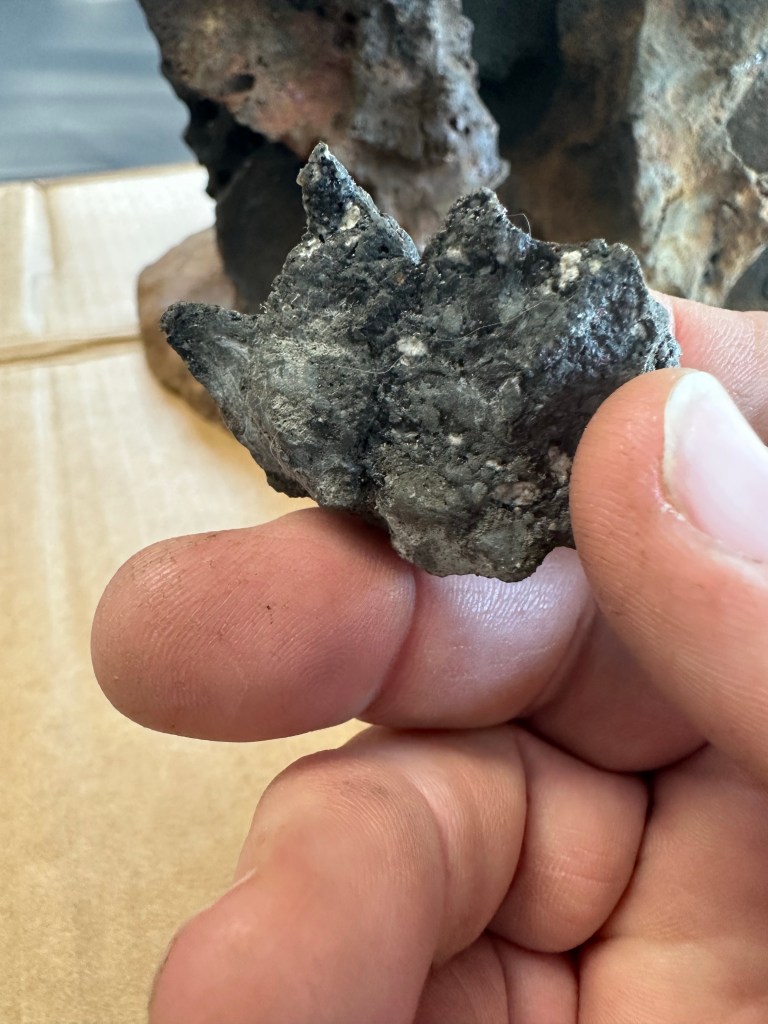
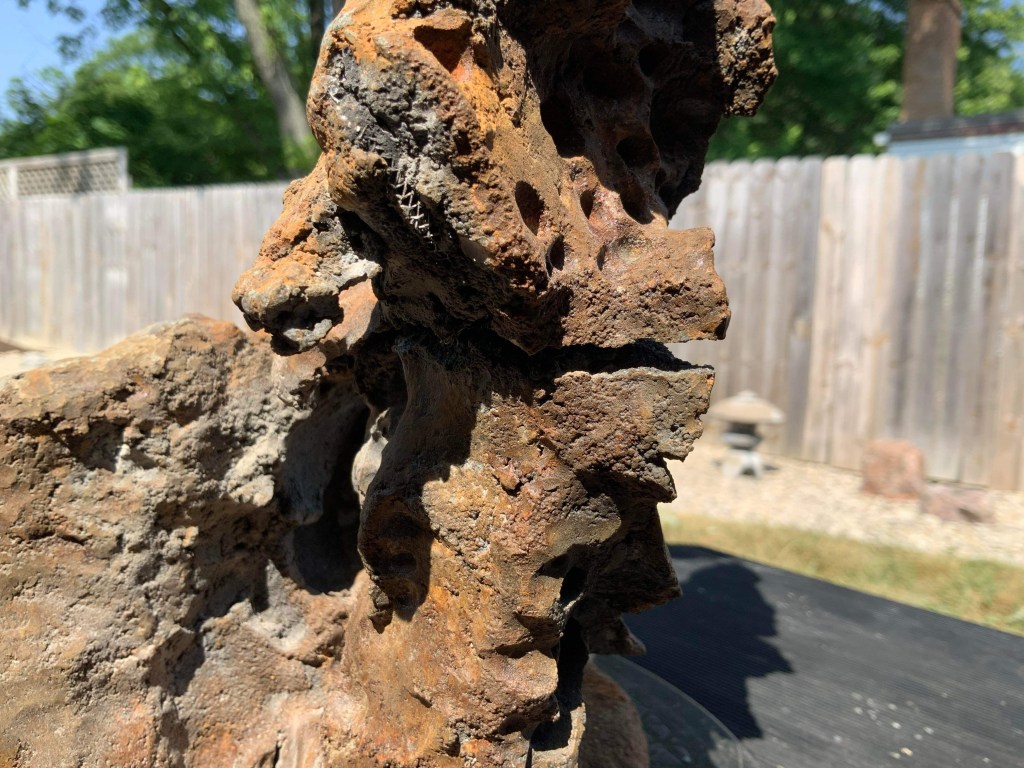
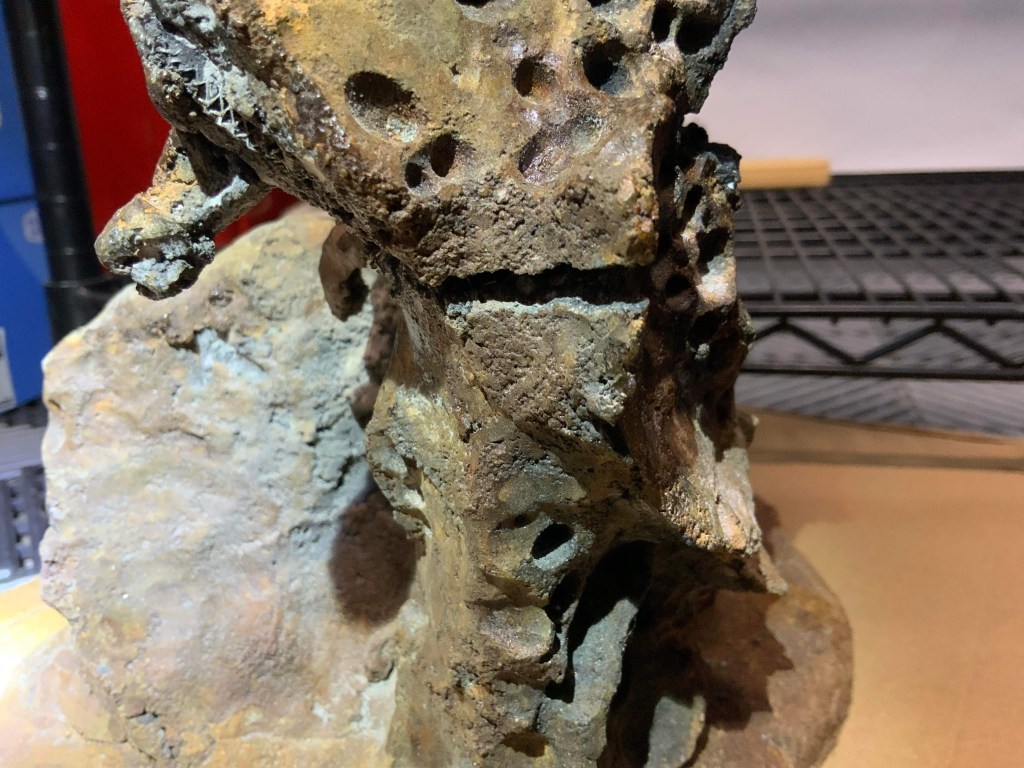
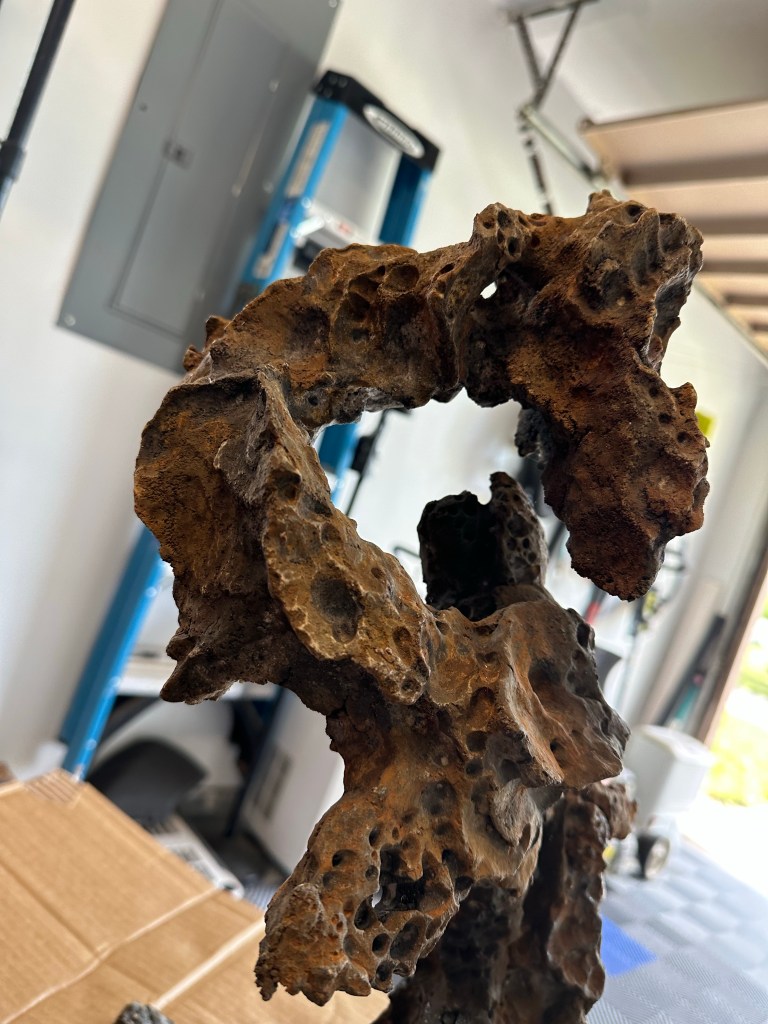
Now that’s a chunk of a block of a rock or something. Actually, it’s concrete, a manmade rock. But it’s “done broke” as they say…

It looks like a reptiles beak, below.
The story begins with a text, including some pics and videos, from Cincinnati.
The text was from Brendan. Say “Hi!” Brendan:

That’s him, my wife and me.

He got this “stone” from Poland, believe it or not. From a guy named Jacek Motyl. He makes rocks. Amazing rocks. Click on his name.
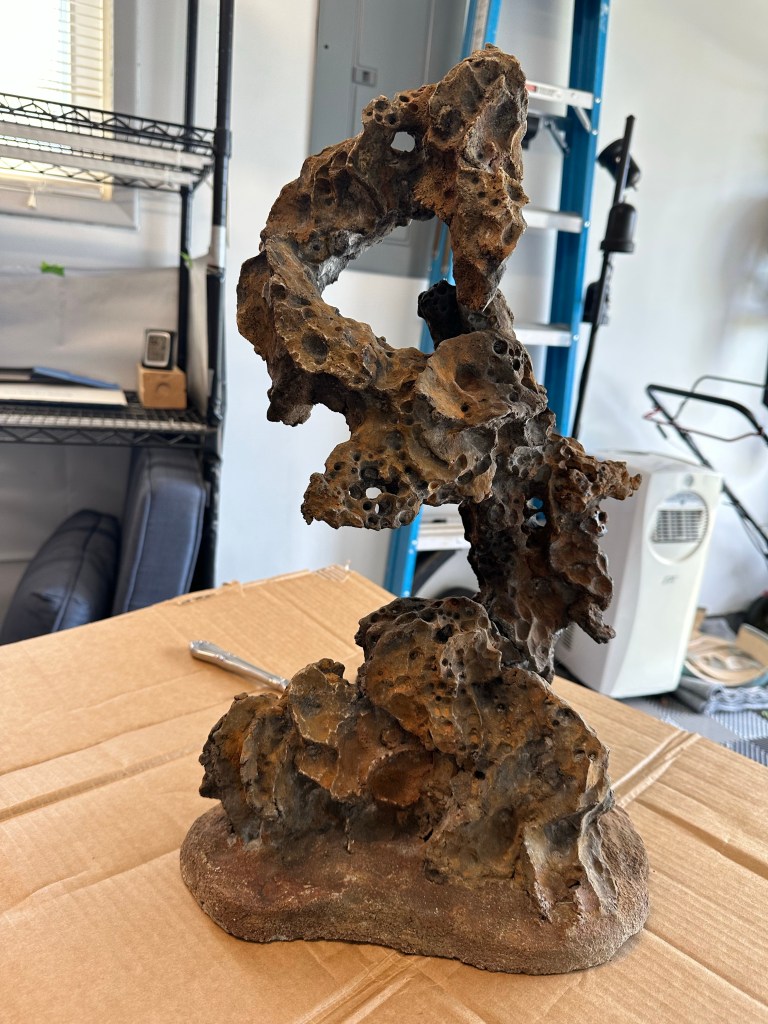
Anyway, Brendan ordered this stone and Jacek shipped it to him. In transit, it got “done broke”.
I’m not blaming the packing job. Jacek packed the rock well. I’m not blaming the Polish post office. Nor the USA postal service.

Let’s blame providence. The rock breaking gave me an opportunity to try something I’ve never done before. Sorry Brendan. Yes, this is my first attempt. I shall try my best sir.
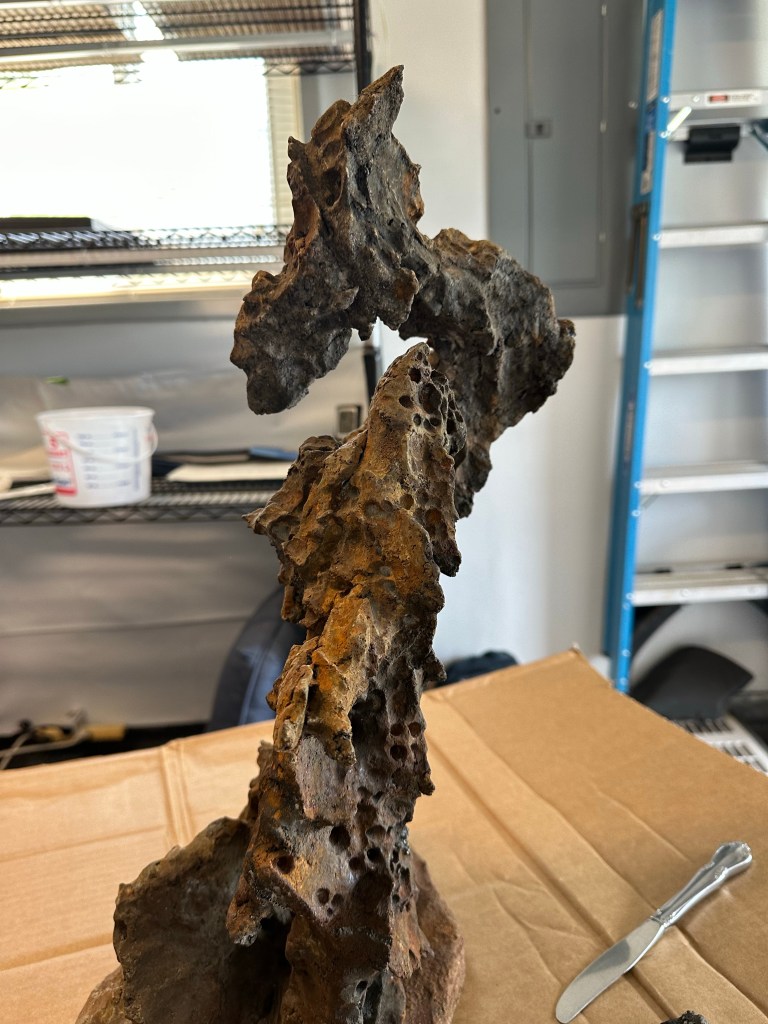
The type of rock is technically called “tateishi”, or standing stone, used in a root over rock style called, in many modern spellings, “ishisuki”. When I was growing up in bonsai, we spelled it “ishitsuki”. Yeah, ishitsuki, I shit you not….but the modern spelling helps us to pronounce it correctly. The “T” and the “S” make a singular sound in Japanese. Kinda like an “tssss” sound.

Anyway, that’s my joke about root over rock style. It’s better in person, with the hand gestures and all.

Watch the video below to see how bad the break is.

Not to give away secrets, but the shape was created by taking screen or hardware cloth and making the basic shape.
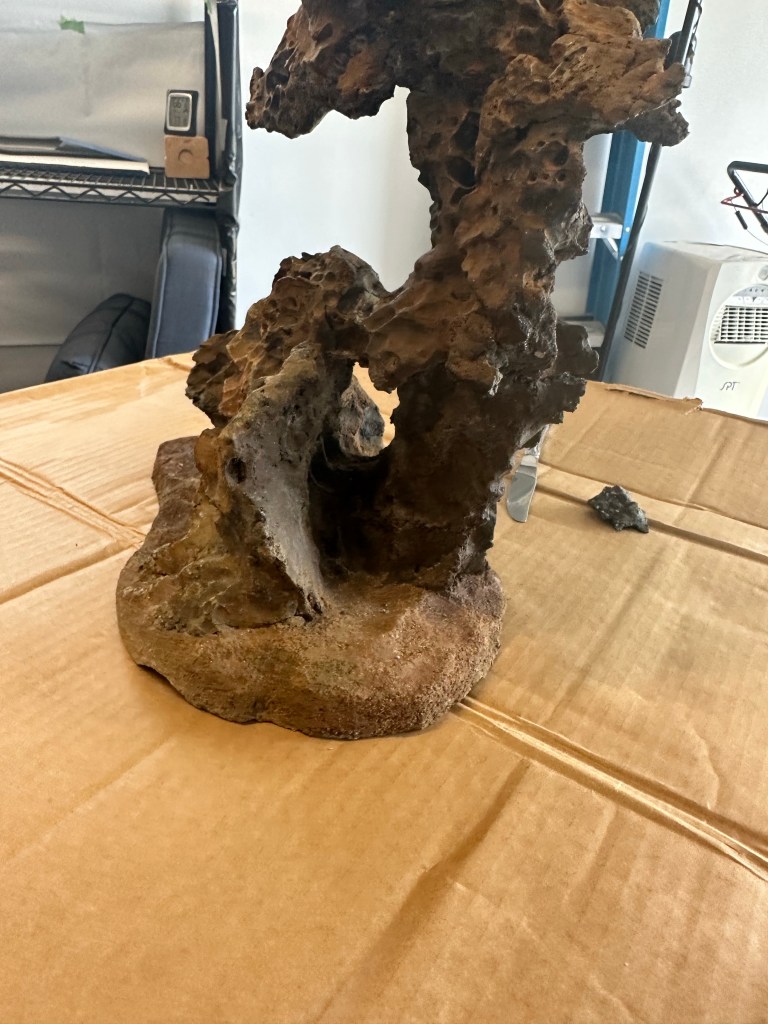
Then the screen is built up with cement. And colored, shaped, sculpted, aged, etc.
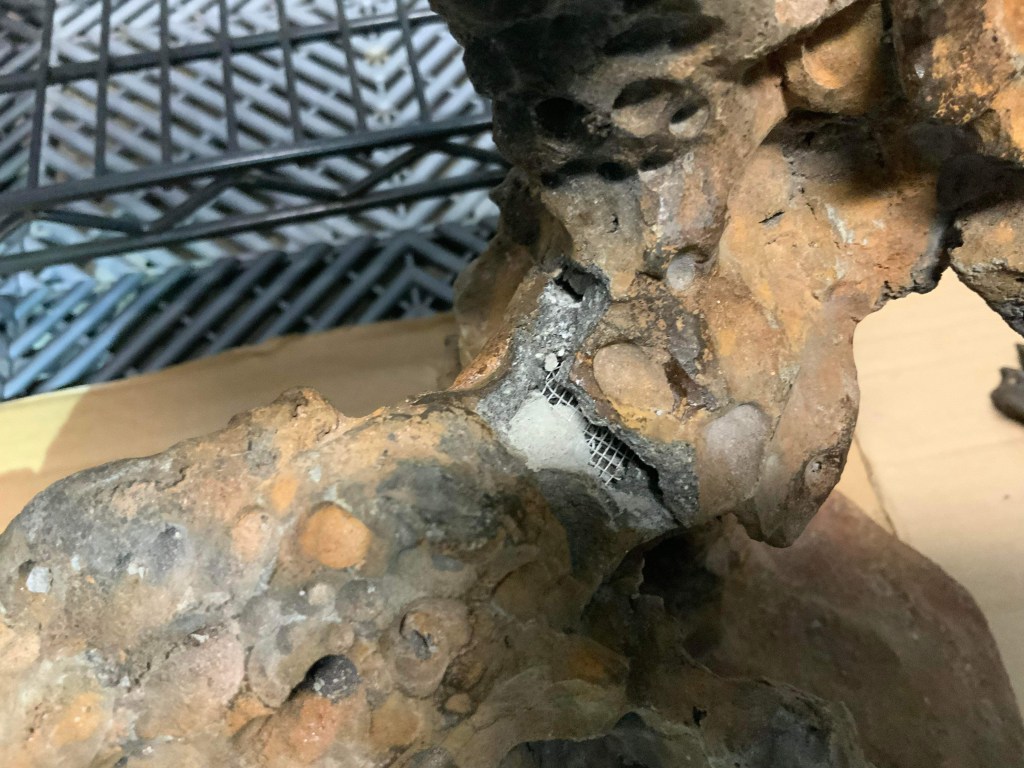
Pretty cool right?

My job is to fix the break and match the colors and texture. So I first had Brendan try to find Ciment Fondue. I had remembered reading about the stuff reading in the old books and magazines when I first started in bonsai (books and magazines are these amazing learning tools that one held in one’s hands, printed on paper. You would flip pages and read and the knowledge was amazing. I could tell you about encyclopedias but you’d zone out quickly).

Brendan couldn’t find Ciment fondue. Searching on google, I found it. What is it?

CIMENT FONDU® is a hydraulic binder with an alumina content of approximately 40%. Composed mainly of calcium aluminate.

It’s a brand name, only available in Europe, so I told him to find something similar. And he did.

Refractory mortar.

Why something similar? So it expands and contracts in similar ways to heat and cold cycles as the original sculpture. And refractory cement is waterproof. An important thing up north, as water freezes in the cold, and can explode our rock. That might sound spectacular. But that’s not conducive to stable bonsai plantings.

There’s something soothing playing with cement.

Measure out a portion….

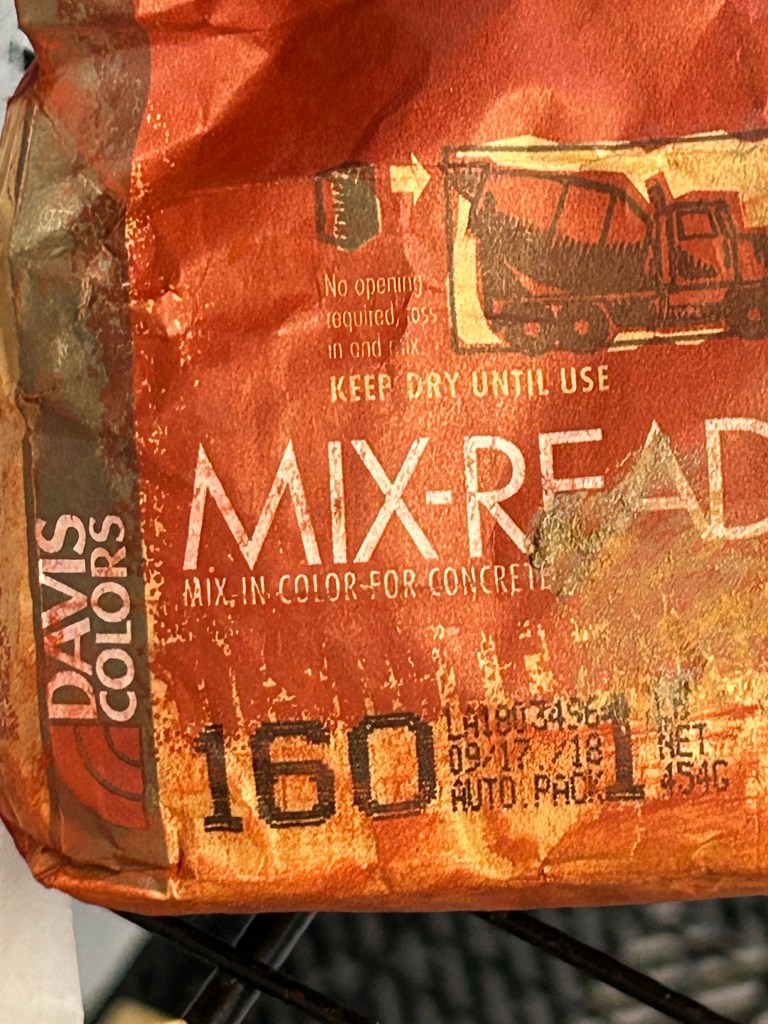
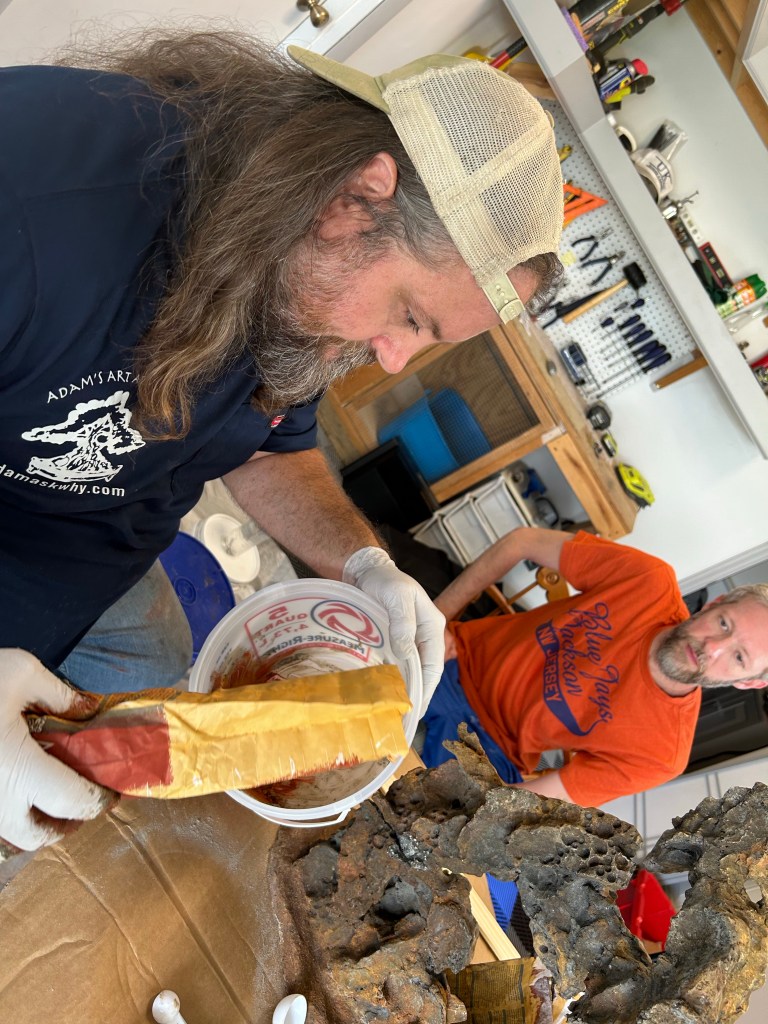
Add color (we had red, tan, called buff, and black. I eyeballed it).
And a trick, don’t mix it fully. You want variations.
Add water.
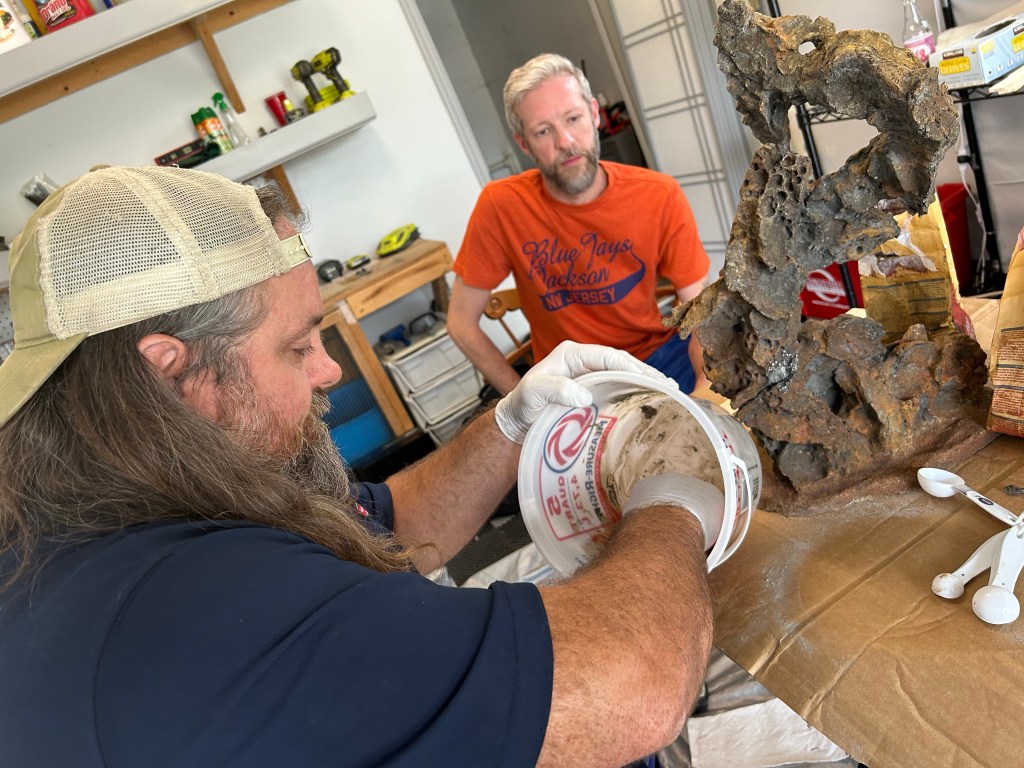
And move fast.
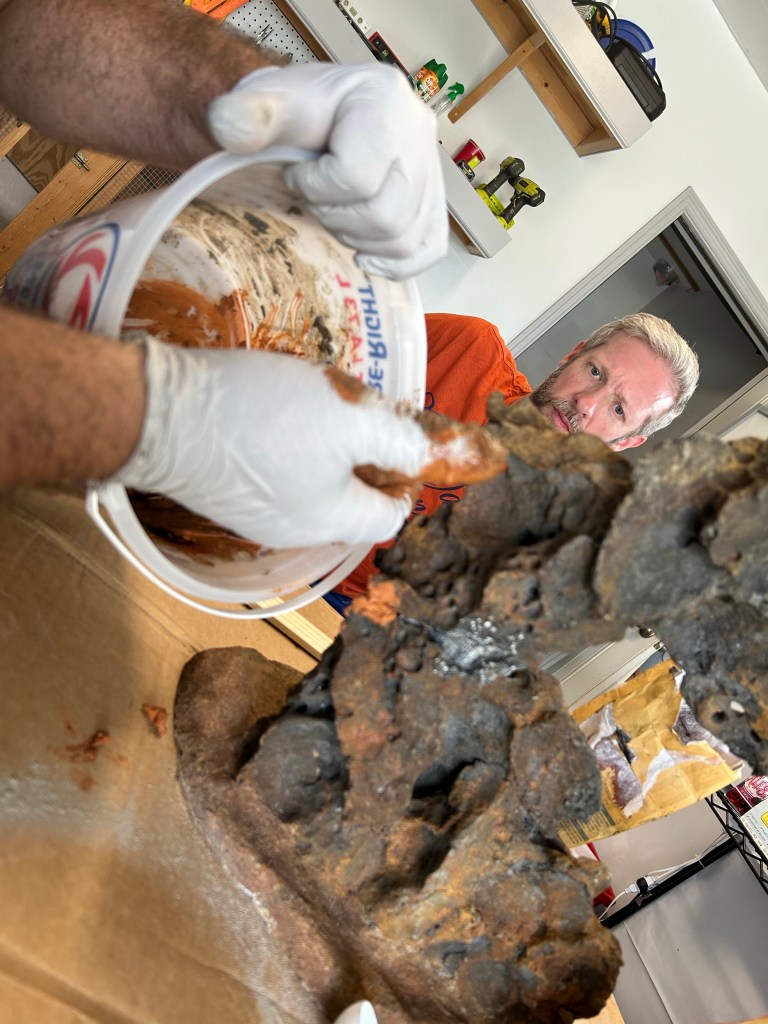
Brendan was watching me closely.
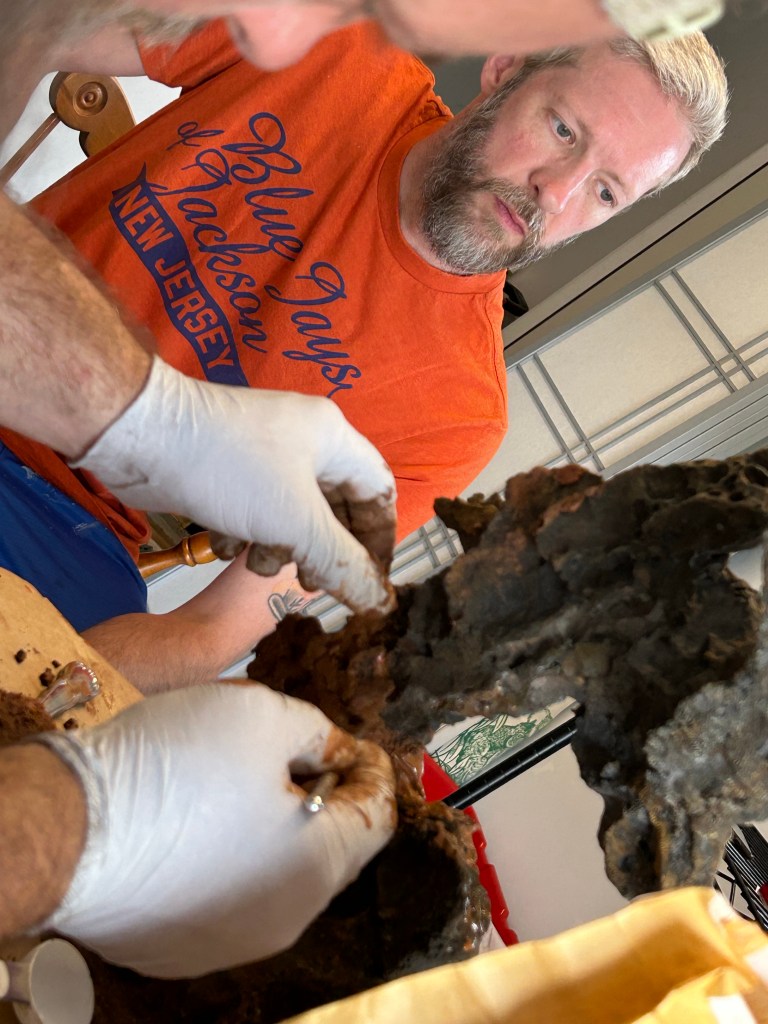
I smeared it, chopsticked it, blotted it. It’s a feeling thing.
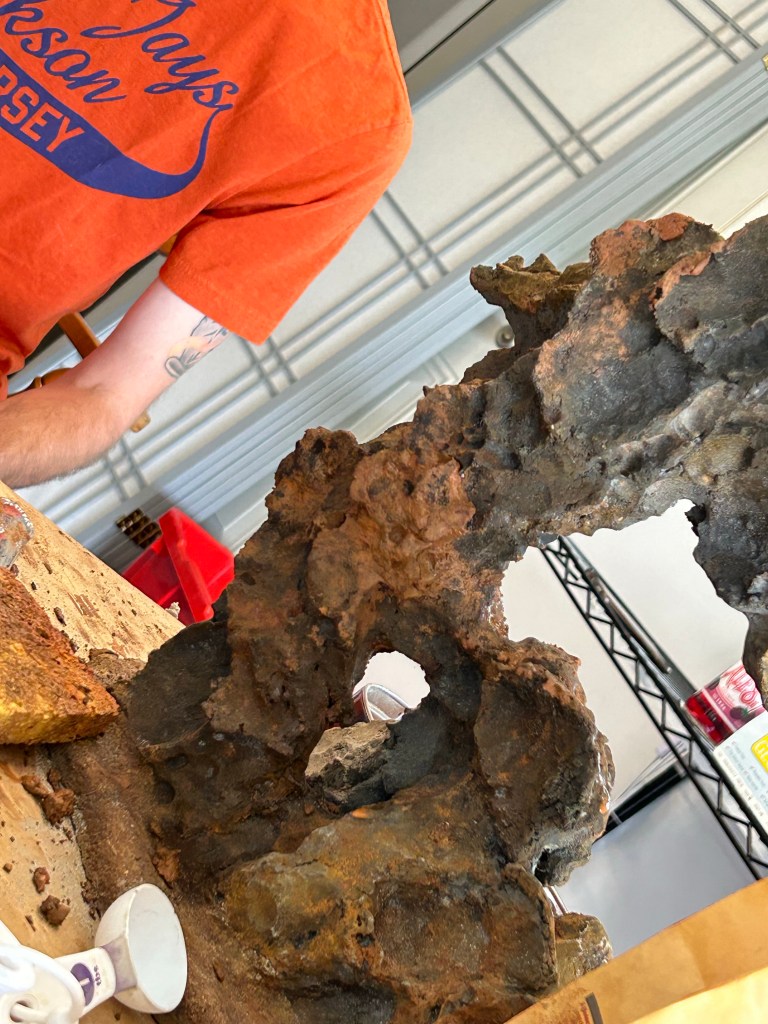
I made sure to push the material into the cracks to ensure the repair of the rock, and not just make an aesthetic facade.

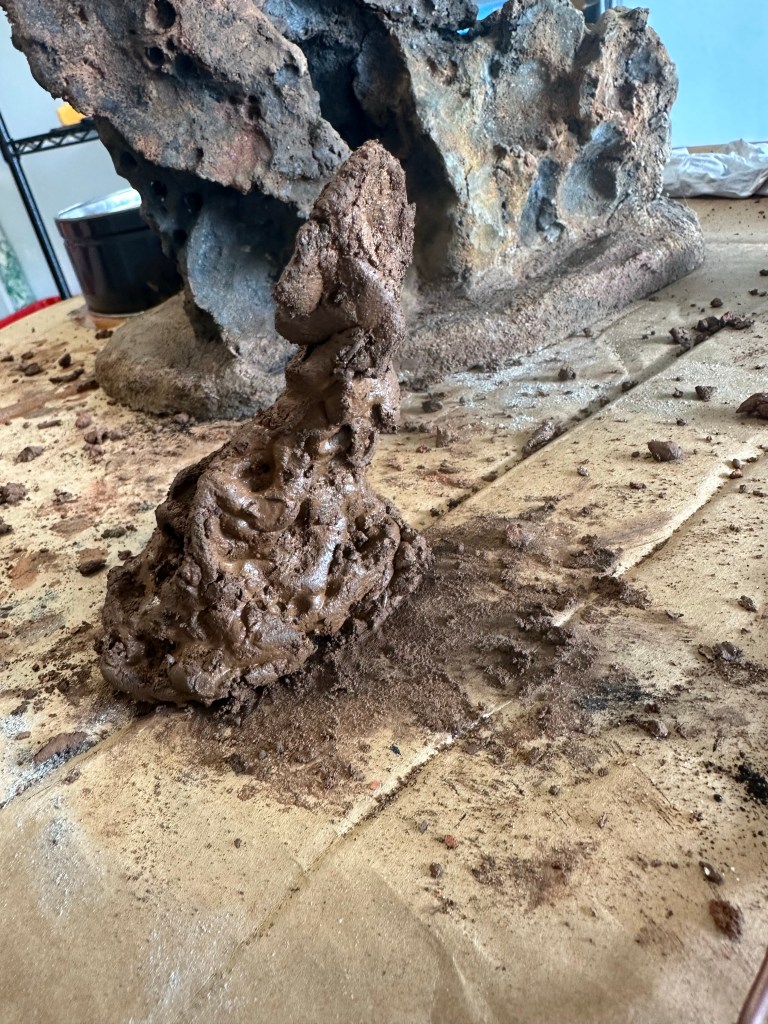
And with the leftover cement, I played around a little.
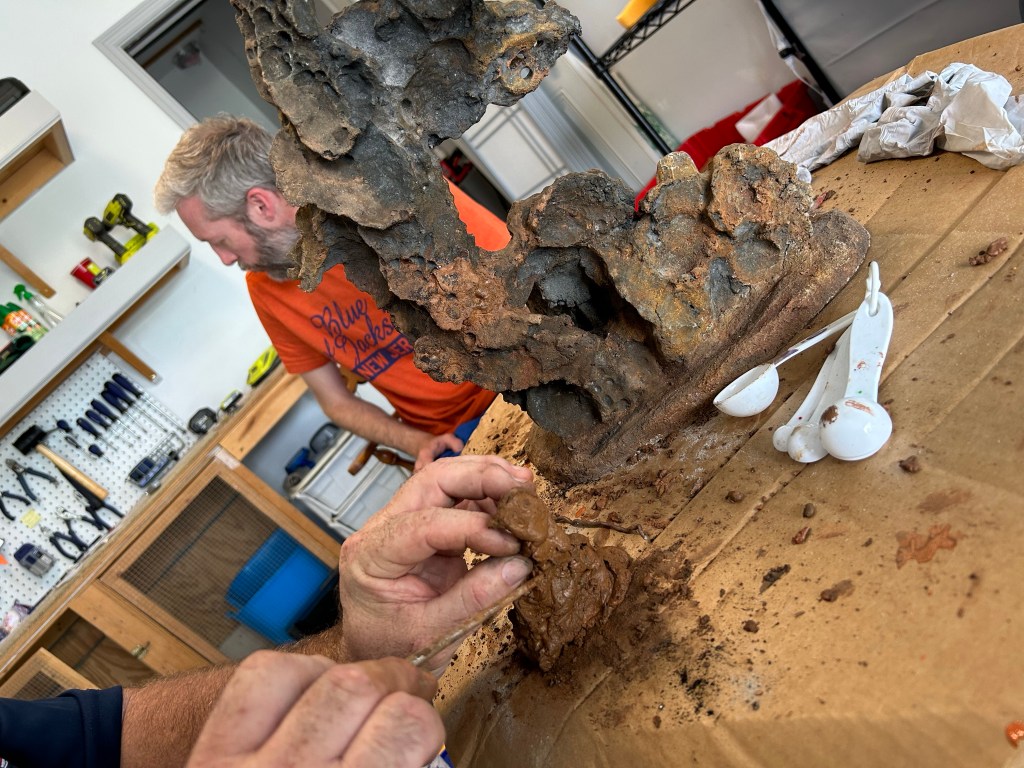
Yeah, I know what it looks like.
After the repair dried, I think it looks good.
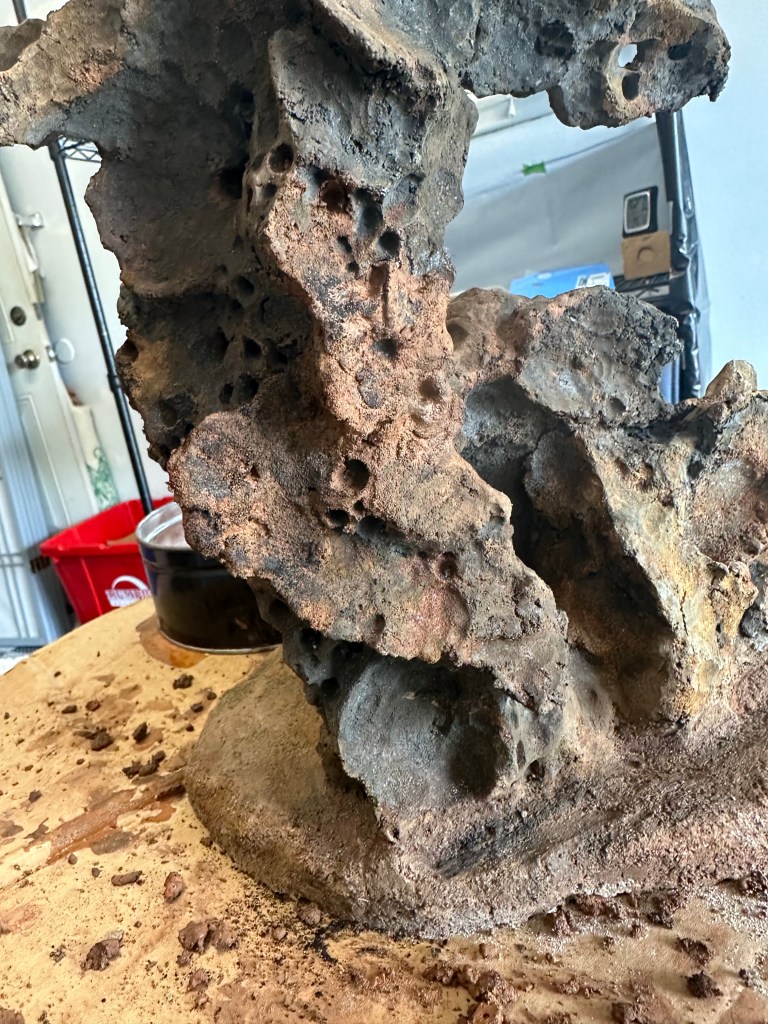
I matched the texture and color. But most importantly, it’s solid.
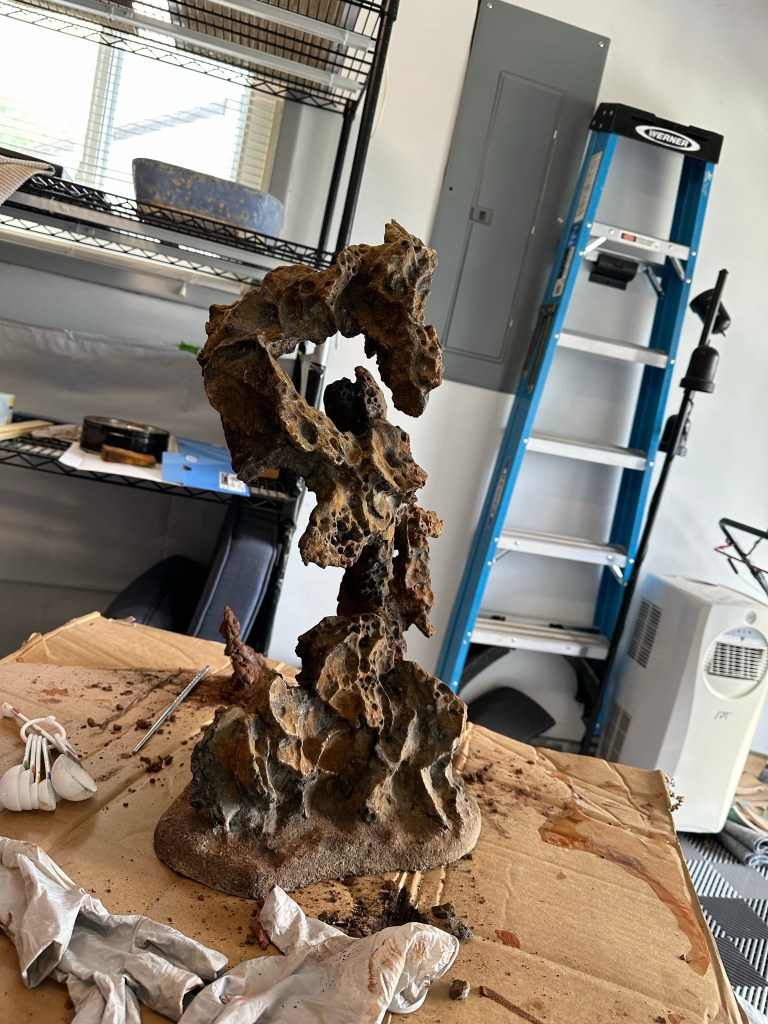
I wouldn’t drop it, but it’s one piece again.

Below, is where I cemented that chunk back into place:
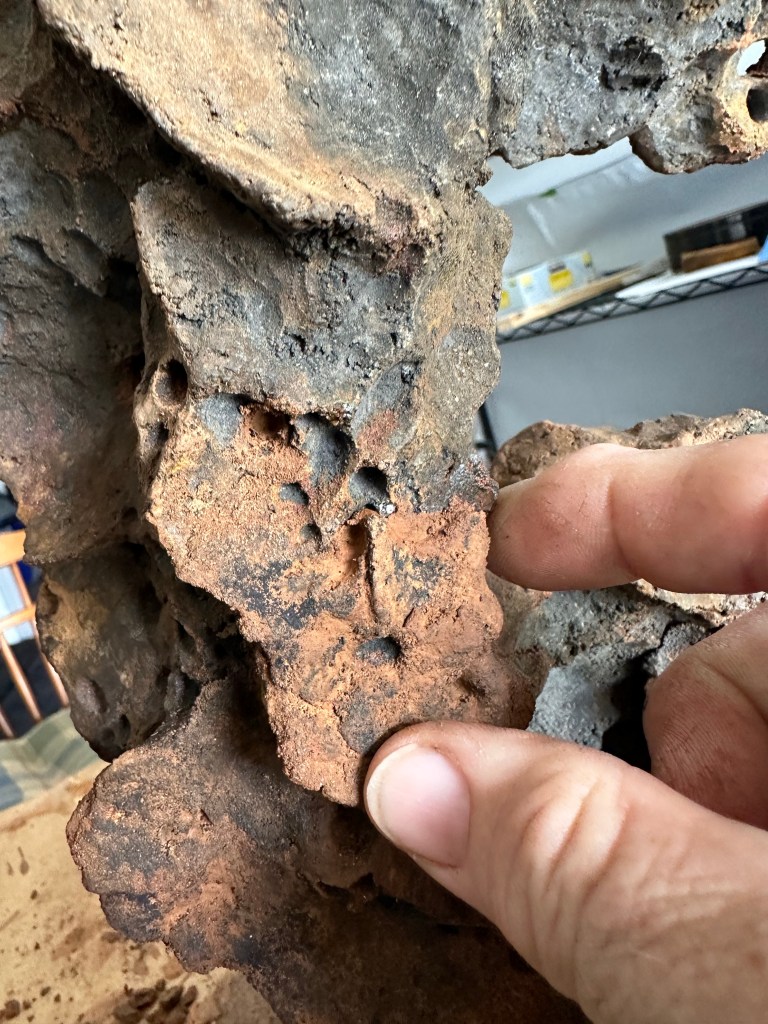
The “beak” is gone.

Now it’s up to Brendan what to do with it.

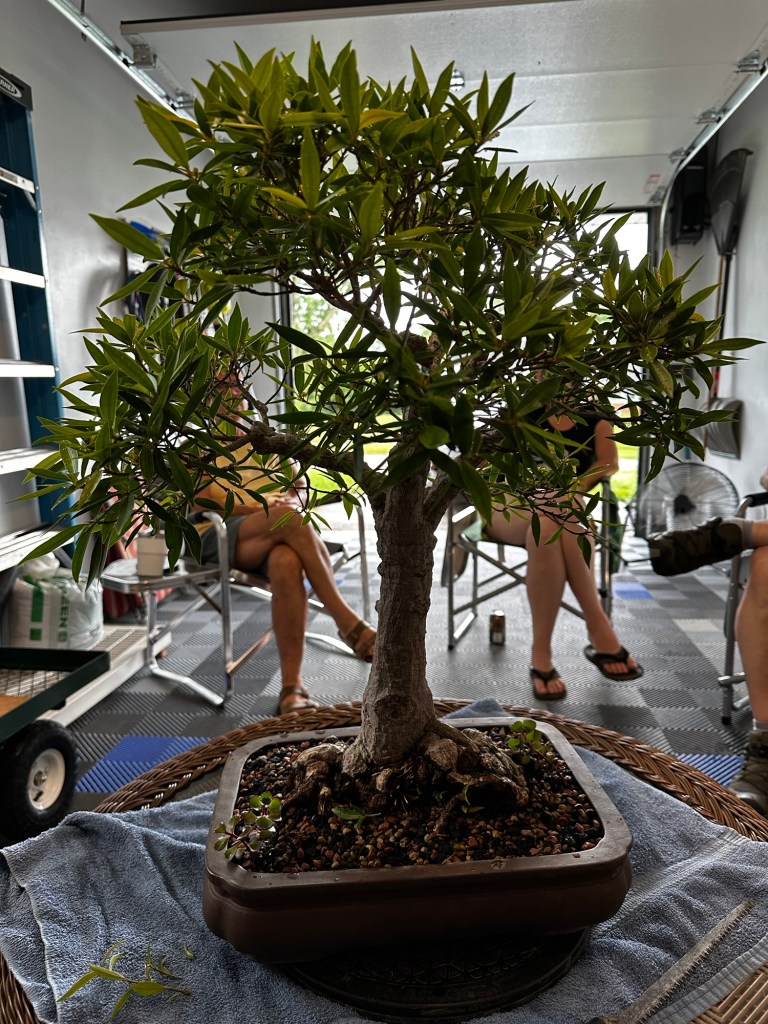
The Cincinnati split

18 August 2025 at 18:42

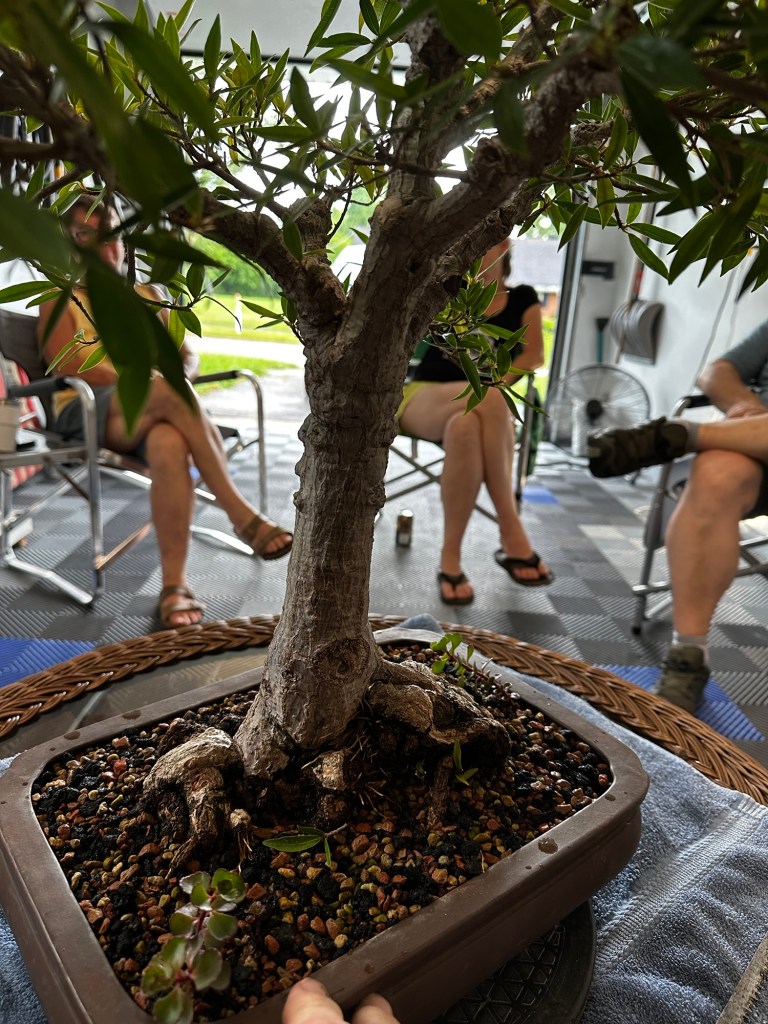
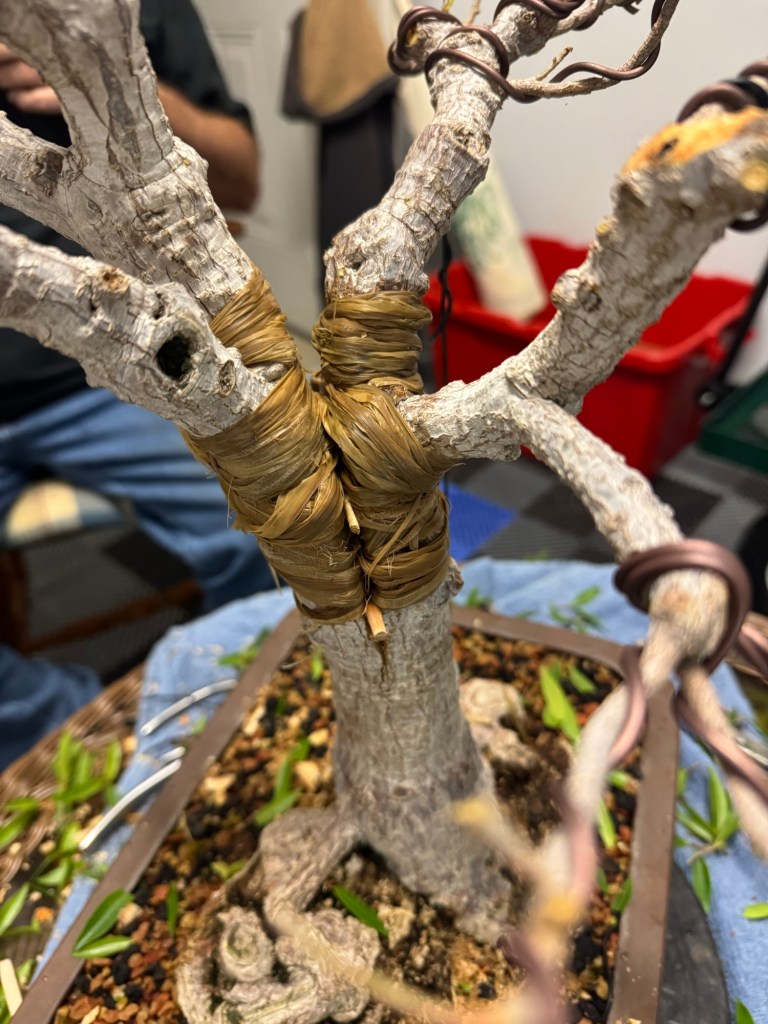
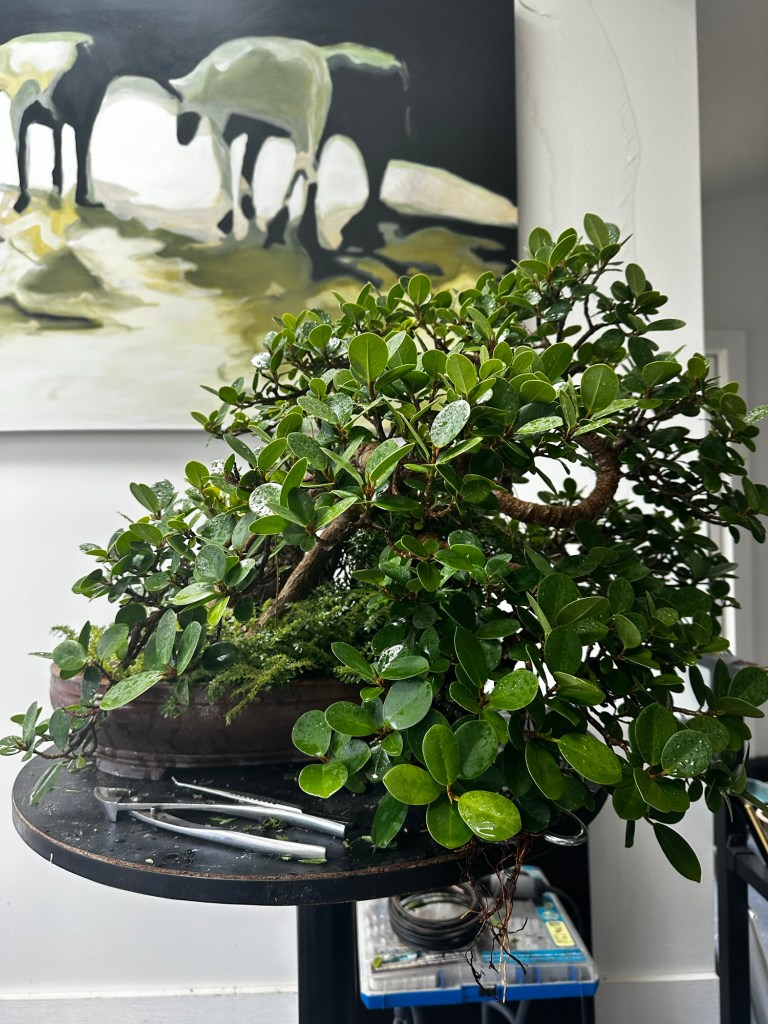
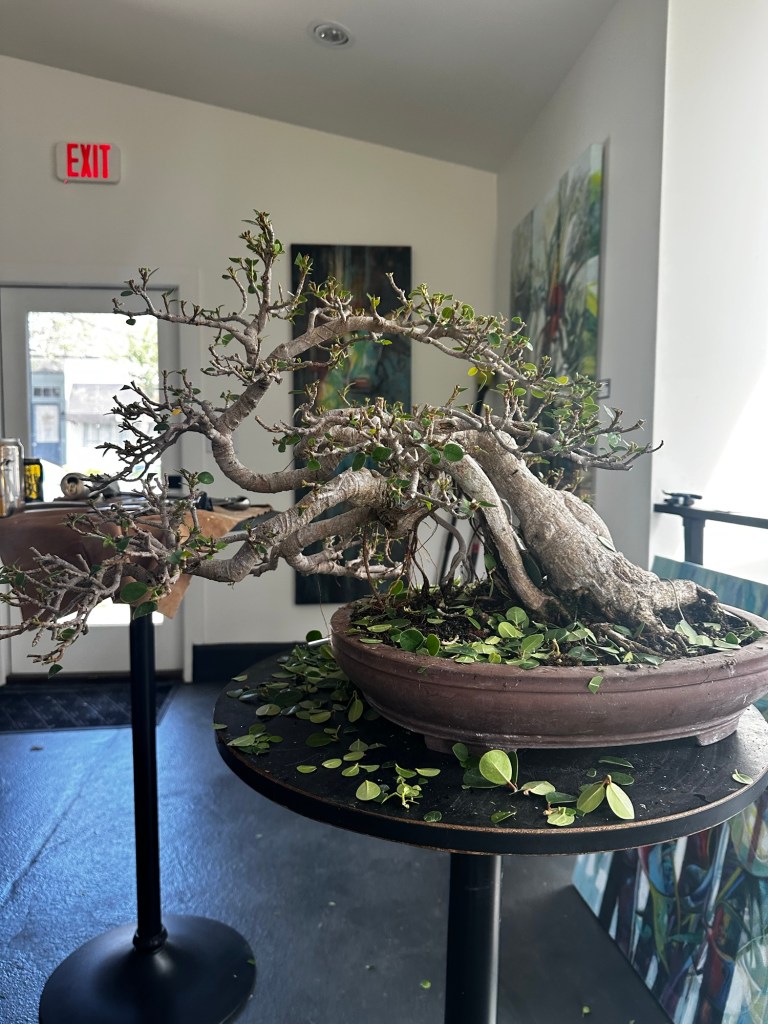
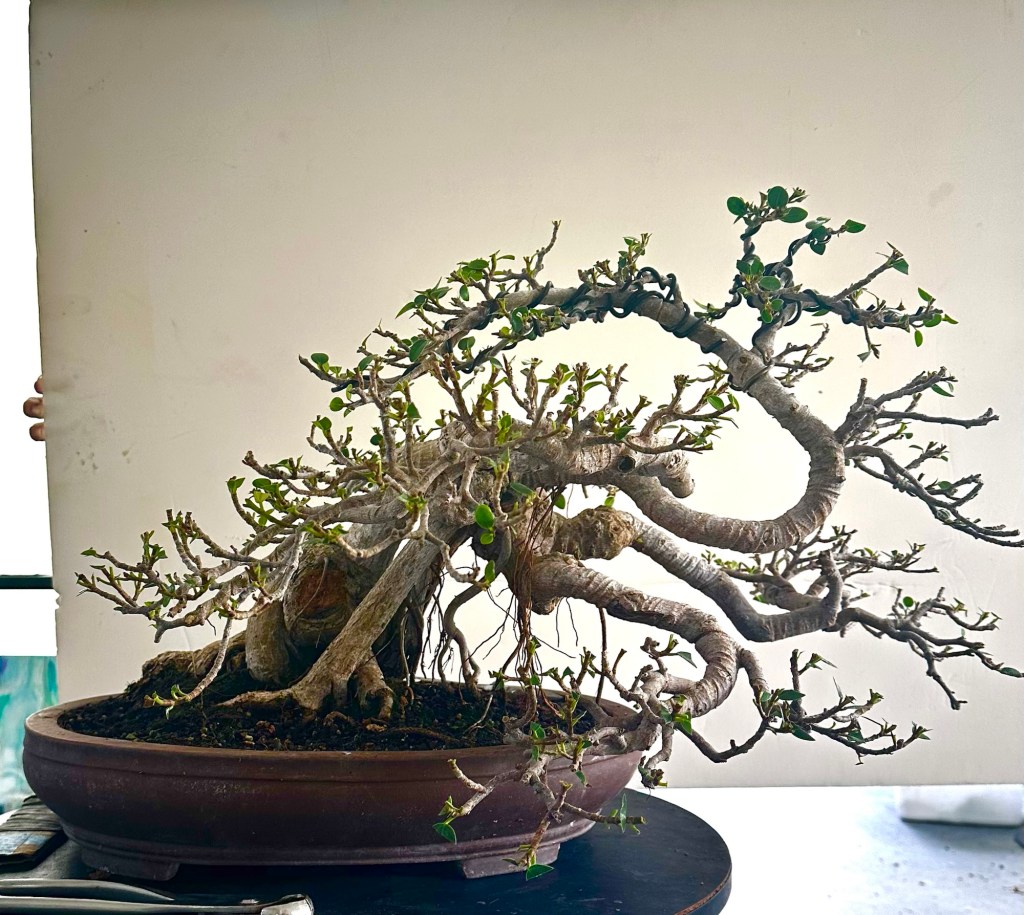
We have before us, up in the urban spires in the city of Cincinnatus, one willow leaf ficus. The tree, as is, would be good on most people’s benches. It has a biggish trunk, good branching and a full canopy. But, to quote the modern day vernacular, it’s kinda like a “helmet on a stick”.

And Brendan was bored with it. I might be able to do something about that, let’s see what we come up with, shall we?
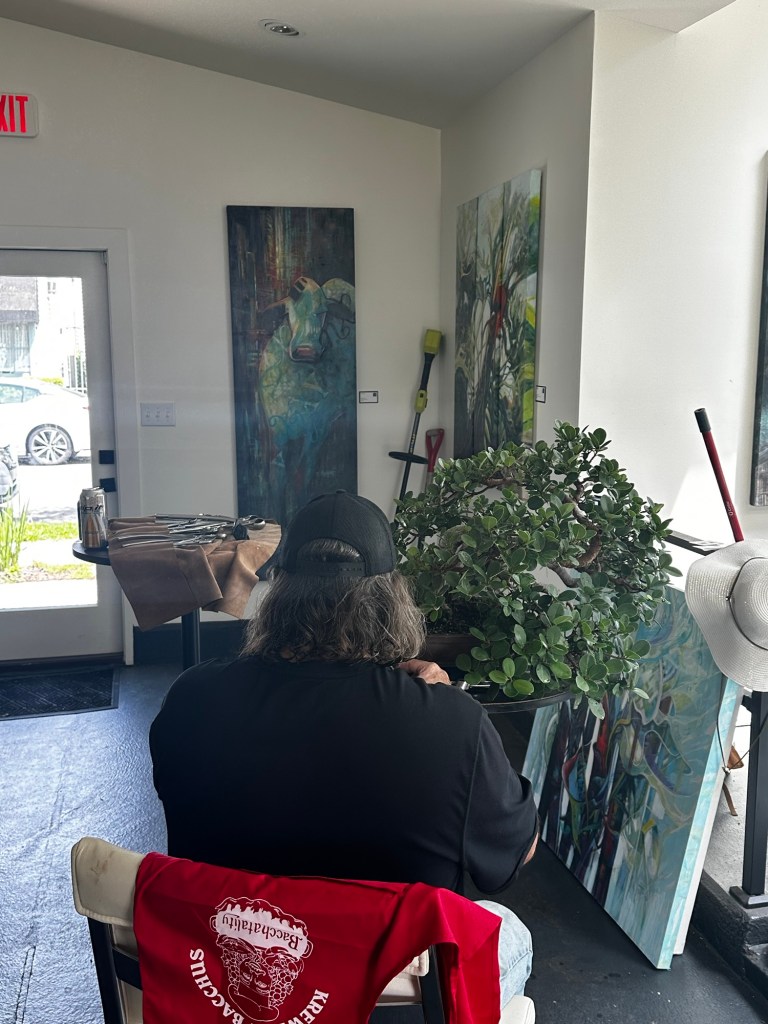
Twirling it around, I think I like the front (below) with its nice root spread and interest. Now what?

I think you see what I saw…

…hah! I crack myself up sometimes. Let’s crack this trunk up….

Or saw it, as it were.

Maybe we (or Brendan) needs some liquid courage to steady the nerves. Or hands.

Bob Dylan has a new bourbon by the way.

But, oddly, I chose a Van Morrison song for the video, go to My Instagram to watch the sawing. It’s a good song at least.

“Are you sure the tree will survive this Adam?” my wife asks.

I sure hope so.

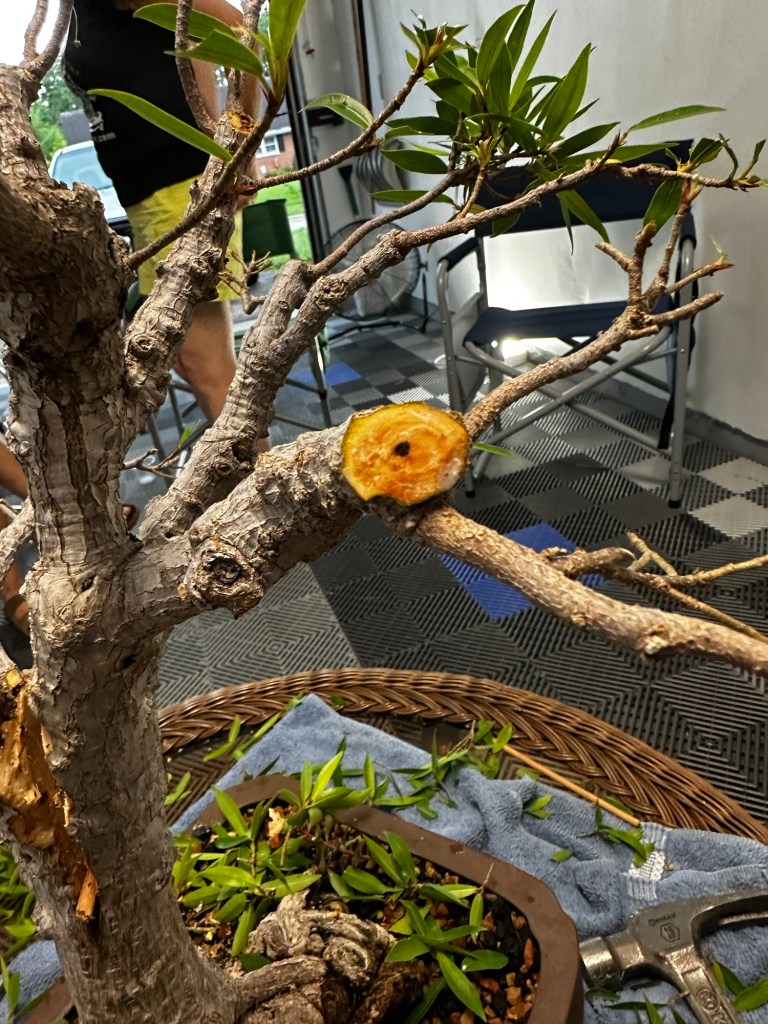
Using a knife, I make the saw cut a little less “saw cutty” looking.

That’s better. The willow leaf ficus almost heals like we do, from the inside out, as opposed to the bark spreading over the cut, like a maple tree. It’s an observation I’ve made in my career as a ficus bonsai guy.

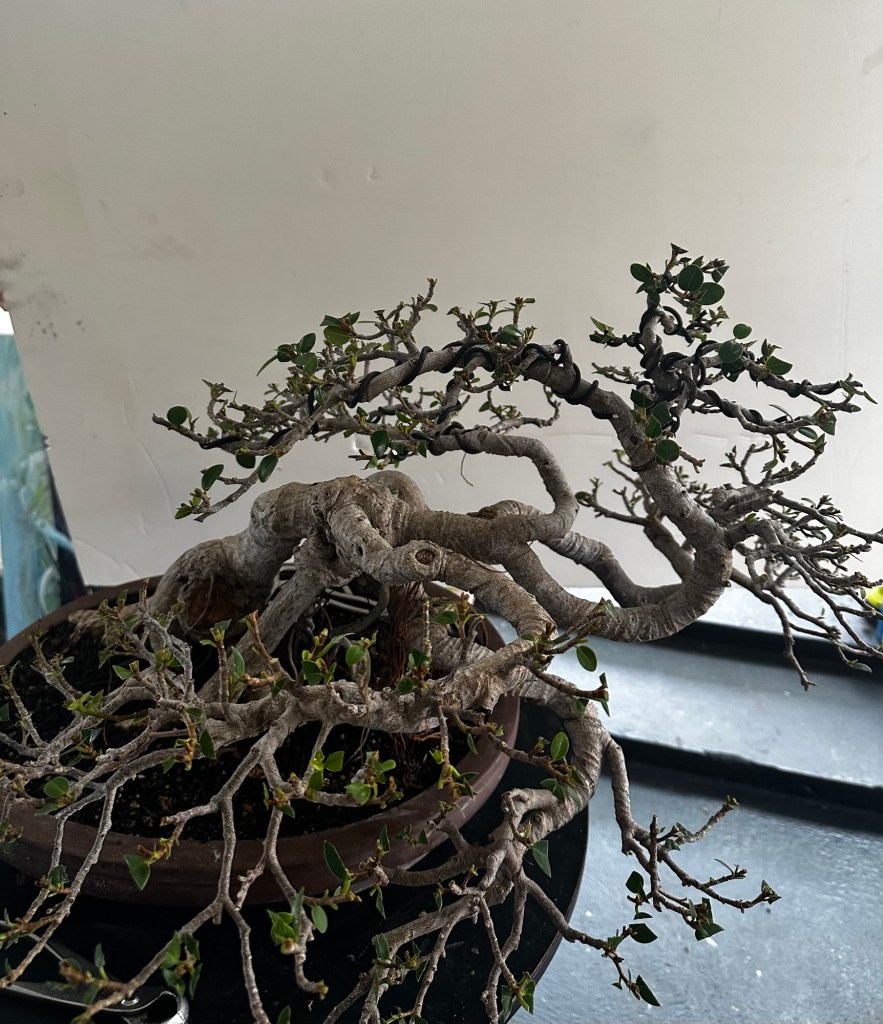
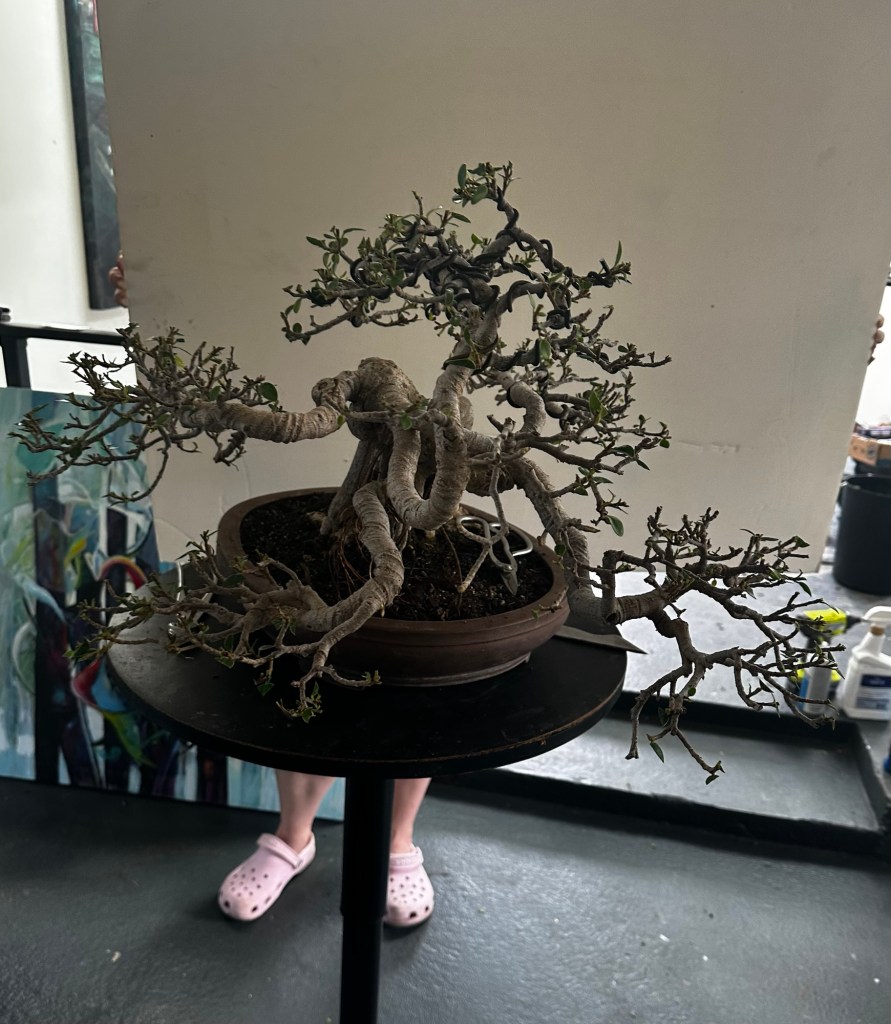
That was the easy part, now I’ll go through and give the canopy some shape.

Which means, defoliation, removing unwanted and superfluous branching or budding, wiring, etc.

Without foliage (foil-age to some of those in the town of my birth), we can clean up some cuts too.

And no, Virginia, I don’t tend to use cut paste on figs. Why? A point to consider, the white latex “sap” that we see when pruning a ficus is not the real “sap” from the tree. It’s actually from a secondary, pseudo-vascular system that utilizes cells called “laticifers”. The sap flows through the xylem and phloem and it’s comprised of the water and sugars the tree uses in photosynthesis and respiration.

Laticifers are super specialized cells or a network of connected cells (often like the real vascular system, in tube-like structures) that make and hold the latex and can be found in various tissues, including the pith, the cortex, the secondary phloem, and even secondary xylem. The botanists believe that the purpose of the latex is to trap bugs and stool continued damage to the plant, and to help seal the wound for quicker healing

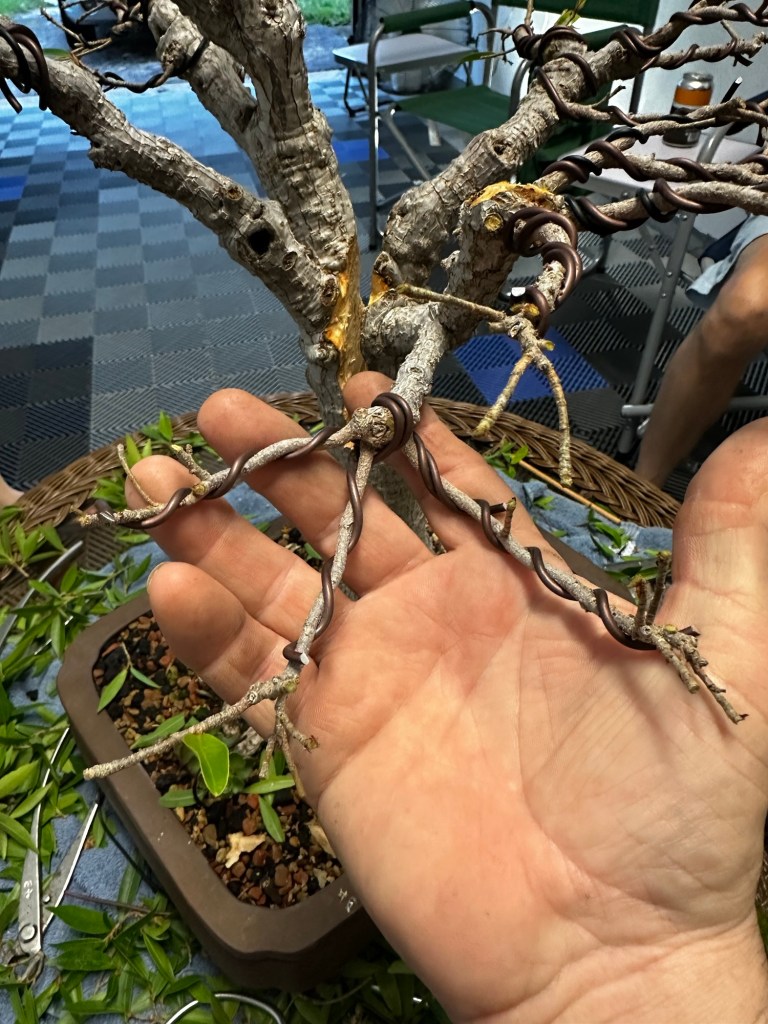
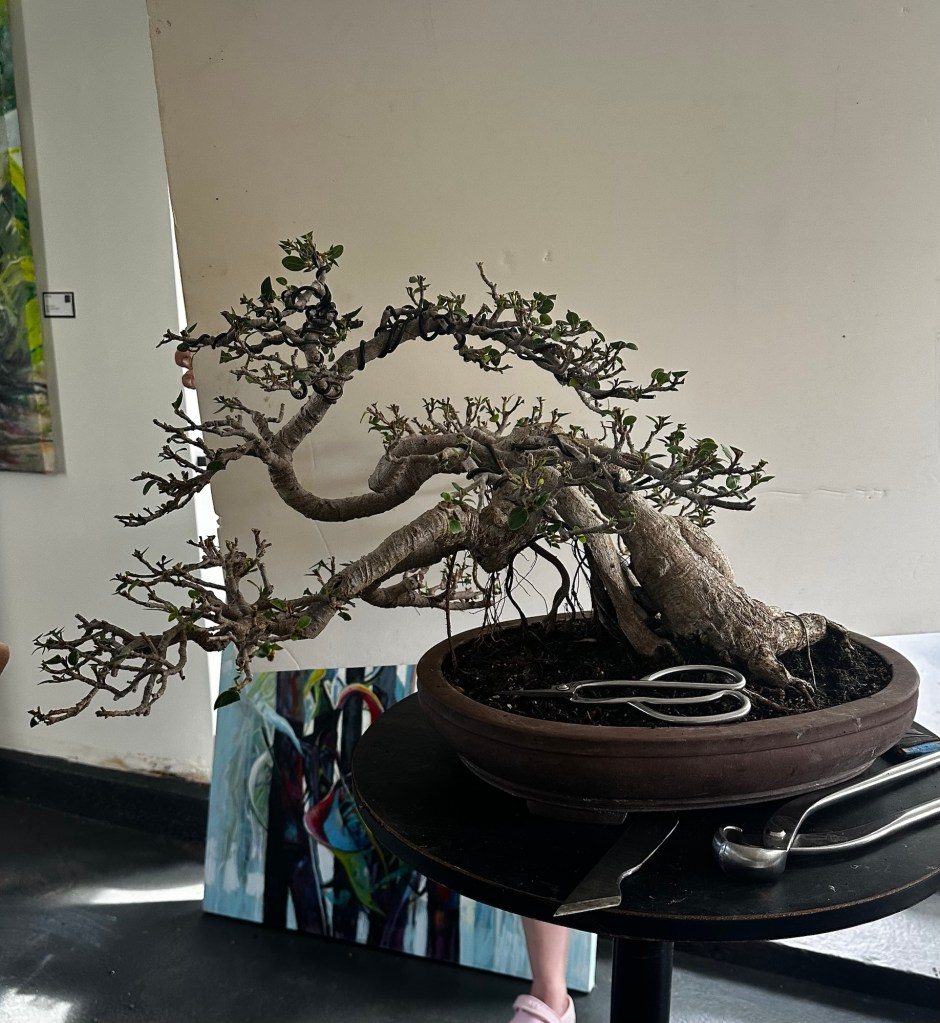
Let’s add some wire…

Look at that dude, he’s a stud.

My work is done, except to have Brendan add some raffia to the sawn edges. Willow leaf figs tend to bud right on any cut or wound, which is a good trait to have, but sometimes it’s too much.

The raffle should keep new buds from forming.

And Bob’s yer uncle!

This is where you, my Constant Readers, are quoting Jurassic Park “You.. were so preoccupied with whether you could, you didn’t stop to think if you should…”

But I jumped past all that and posit the concept that I needed to do it.
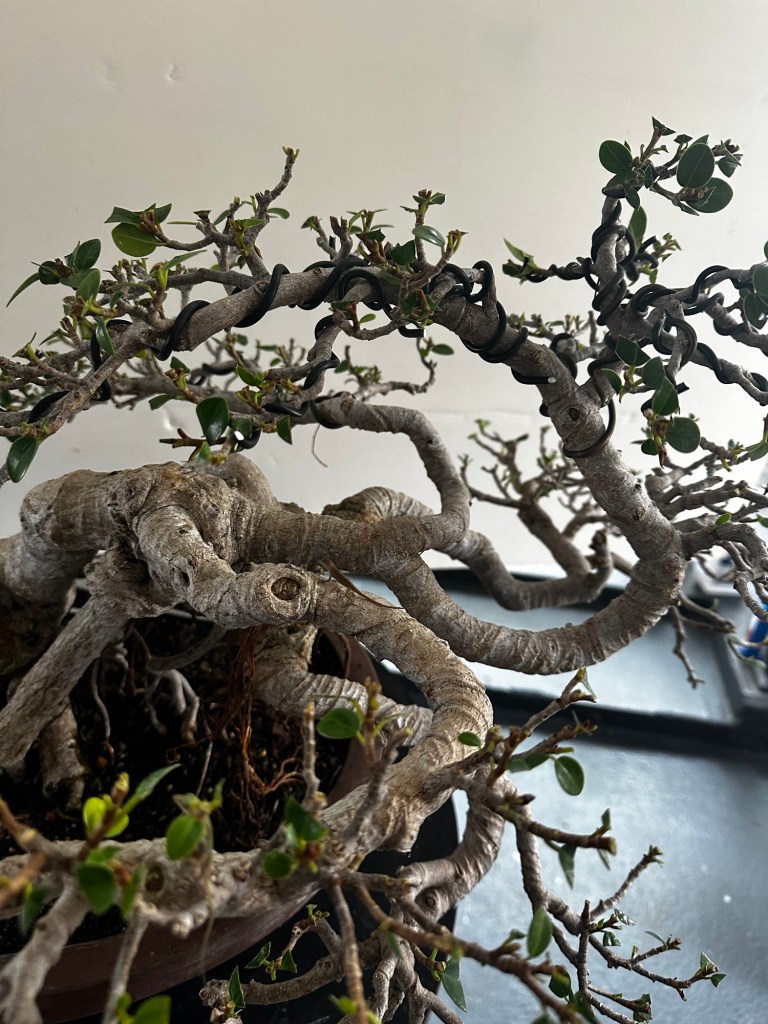
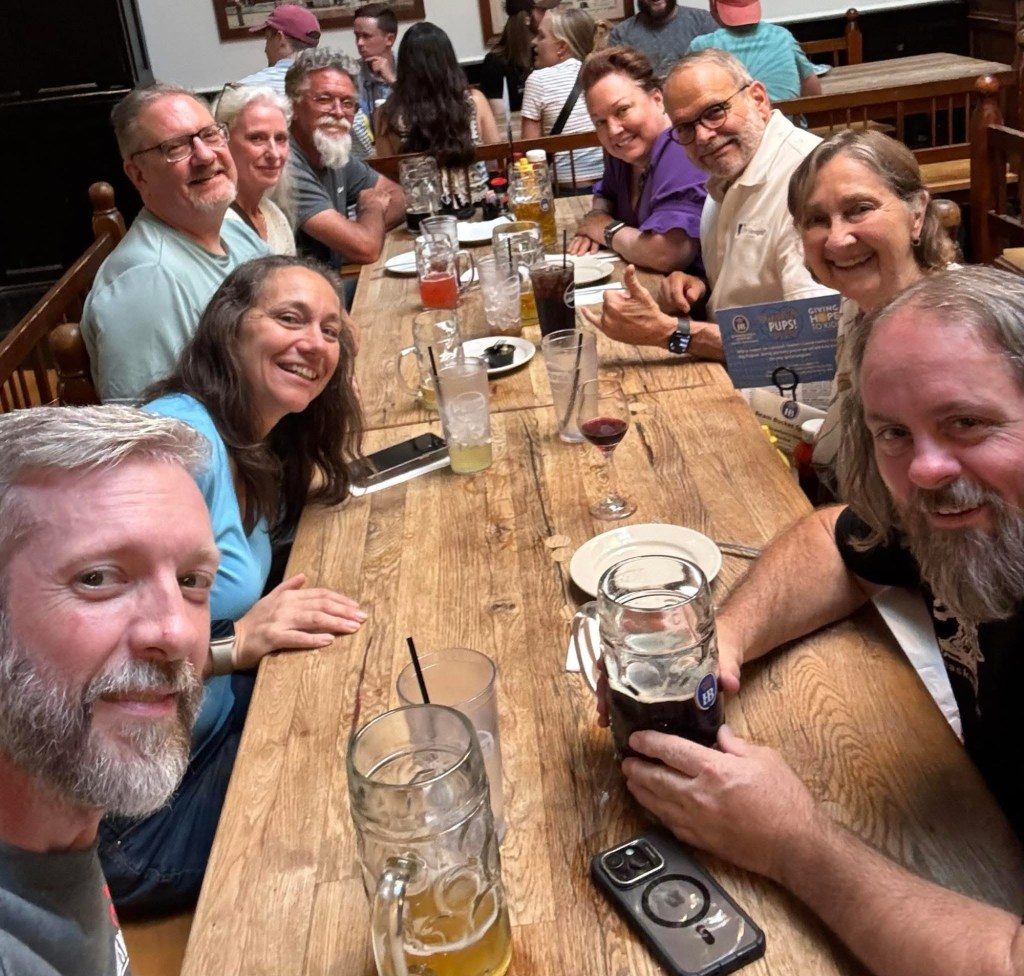
We had some reverse taper building where the branches were coming off the trunk, pretty much in the same spot, so something needed doing. Whether it was chopping them off or, this. If I chose the chop option (just as traumatic as this technique) we could have created a sweet short tree. But it too would be just a “regular” bonsai. Brendan was bored with the tree before. Now he’s excited to see what happens. And the tree will be a better one for this. That’s Brendan below, on the left in the front.
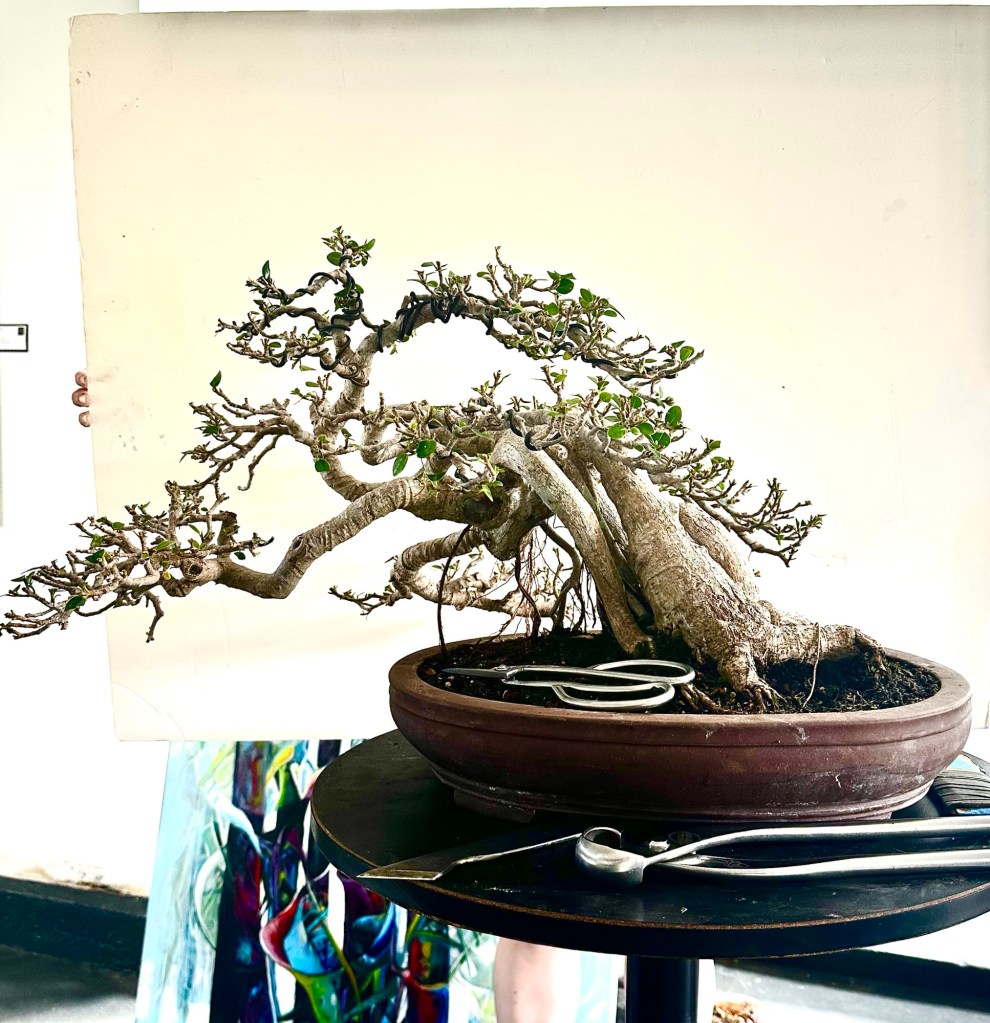
He looks happy. I do too. That’s my second or third liter of beer, so…..I’m happy.

The tree, for Brendan, was a good tree, but boring. And living up in Cincy, it was becoming a chore to go through all the labor of winter protection, including grow lights, heat mats, etc. Now, Brendan has something to look forward to as the tree responds.

The tree looks happy too.

Another video of the finished work.

And yes, you saw White Castle’s and a sparkling beverage called Bonsai, tasty and expeditious. Food and beverage of the bonsai gods we pray to.

Let me know what you think. I’ll add updates as they pop up.

❌