Login
Login

Schefflera For Days
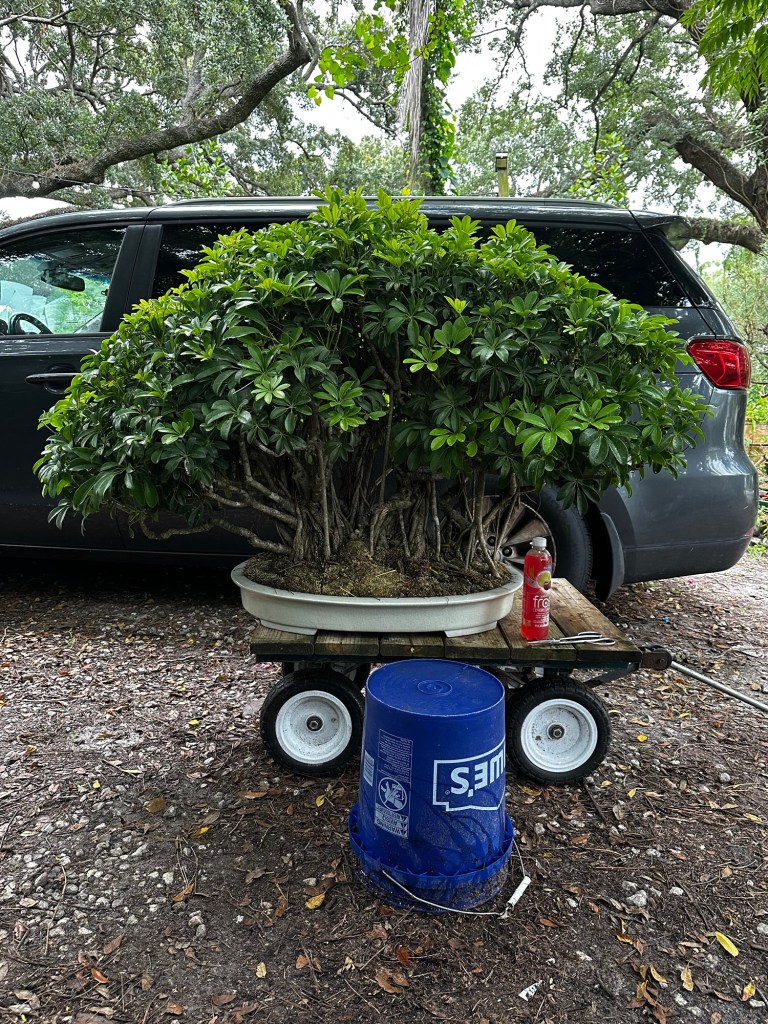
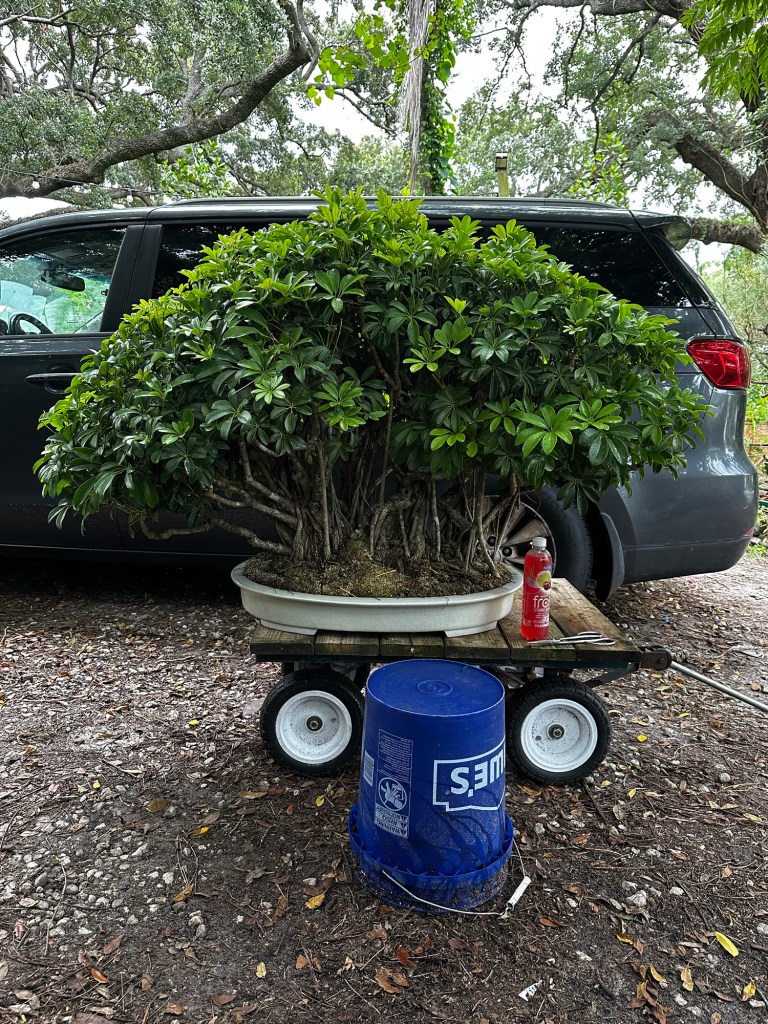
Well now, this tree is bigger than my head. Which is saying something, I got a big head. This is what they used to call, in the seasons of my youth, in bonsai, when I was green and learning the words of this , our Bonsai World, a Schefflera arboricola. Being that I also learned it in the southern latitudes of my country, they pronounced the last part, arbi’cola.

Now, they’ve changed it, and it’s just an unpronounceable and easy to forget name: “Heptapleurum”. Hepta- meaning seven, and pluerum-meaning side. Seven leaflets on each leaf. I feel sorry for the poor botanist, Johann Peter Ernst von Scheffler (born in 1739), who they named the genus for. He is an unknown man (in our time) but ever the hard worker I’m sure, who I can’t find hardly a biography on, but did something, either great or enduring, that made them name a whole genus of plants after; Schefflera.

I’m sorry but suddenly I’m feeling some existential pondering. Try to keep up….I’m a wandering ponderer, I’ll take lefts, rights, u-turns and switchbacks. Ready?
Can you think for just a moment about all the people who have ever lived, either important or unimportant lives, and their everyday existence, with families, friends, meals, whether they used chamber pots or outhouses or just pissed in the streets. Whether they ate with spoons (silver?) or just a knife, or a full place setting at the table. There are those that lived, struggled, and died never knowing the pleasure of biting into the juicy, sun drenched goodness of a red tomato with just a little salt, or a bowl of strawberries with fresh whipped cream. Or the caress of a lover, the slap of an enemy, or the warm embrace of a bed on a cold winters morning.
I know that’s hard to imagine, all the billions of joys and defeats, triumphs and pain. We can’t do it easily. It’s hard just to be aware of what’s happening across the street. Across the street, like my neighbor Bob, how he lost his wife from smoking induced emphysema, how he lives next to his mom and took her away for the last hurricane, Milton. His struggles with health, and pain. His life playing on the coasts of Florida, fishing and staying up all night on the beach, huddled around a bonfire, with his friends, drinking beer and smoking what used to be much more illegal, back in the 1960’s and ’70’s. His loves, and children, and his profession. He was a contractor. A builder of homes for so many others to live their lives in. Will anyone remember him? I’ll try.
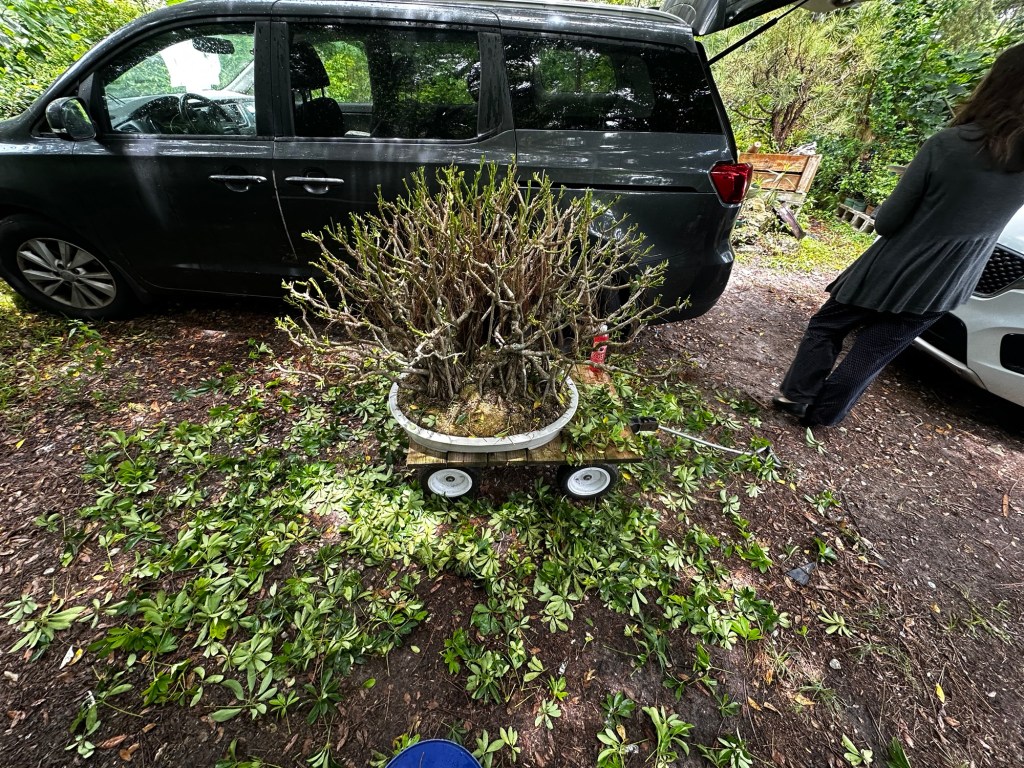
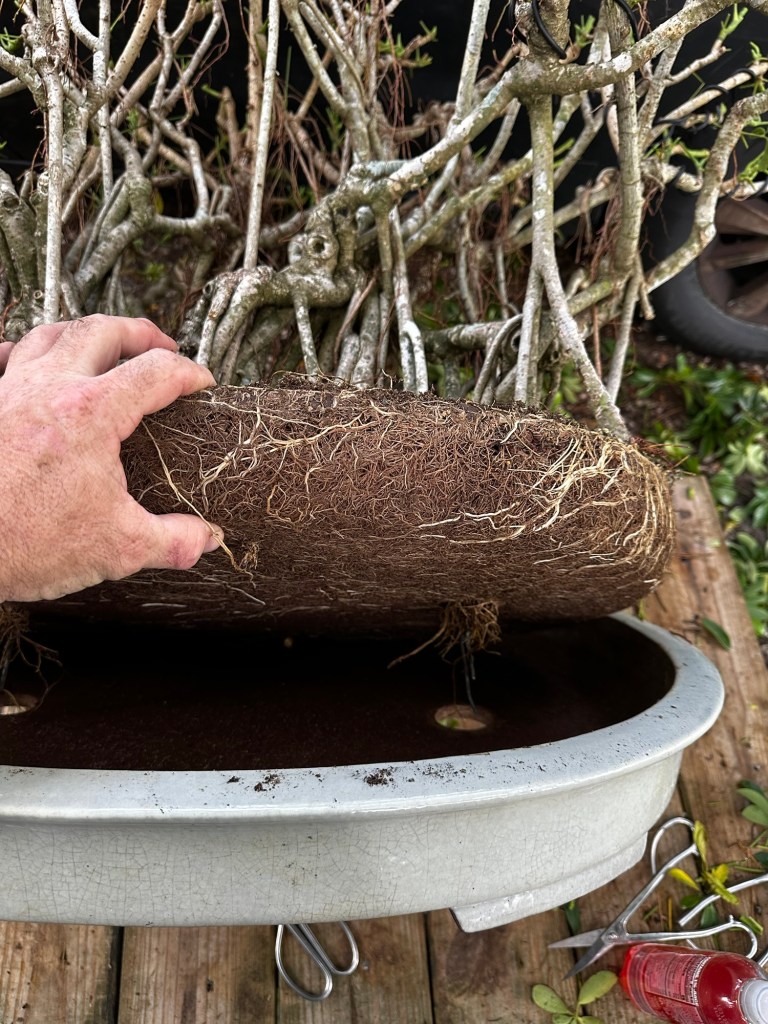
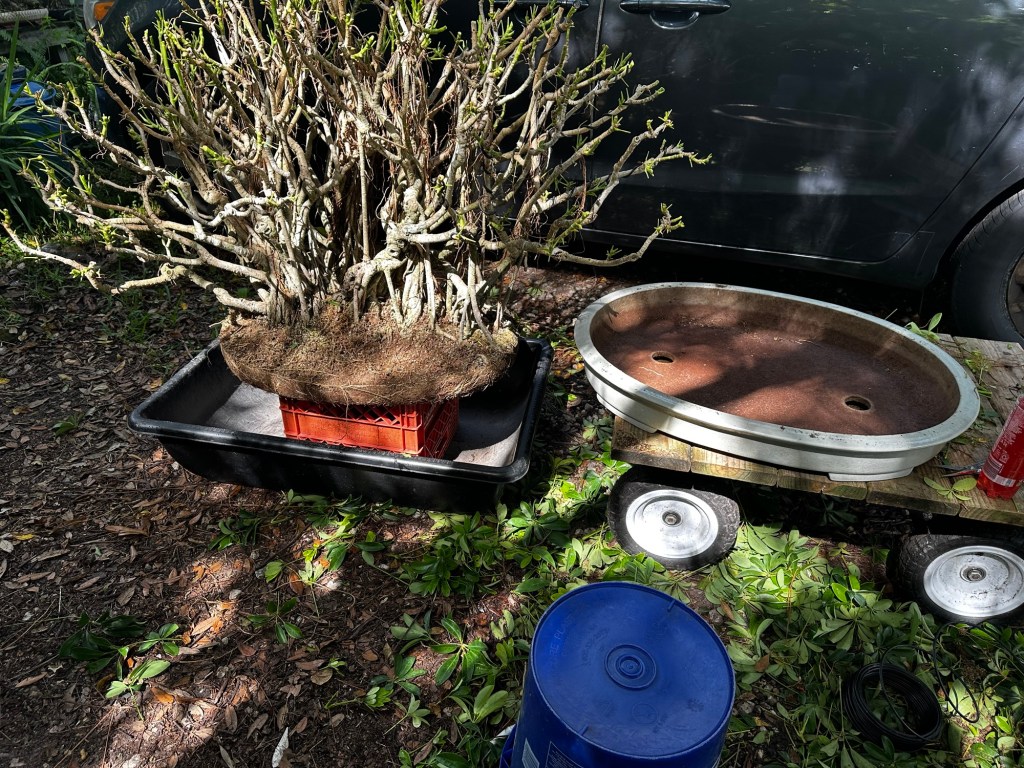
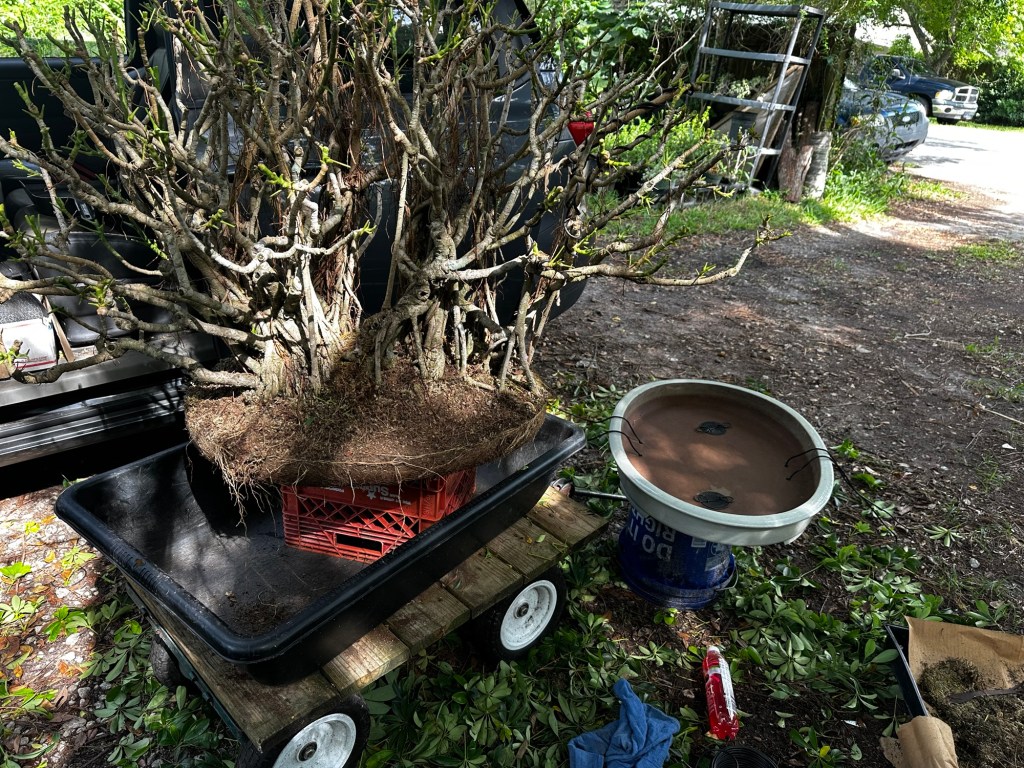
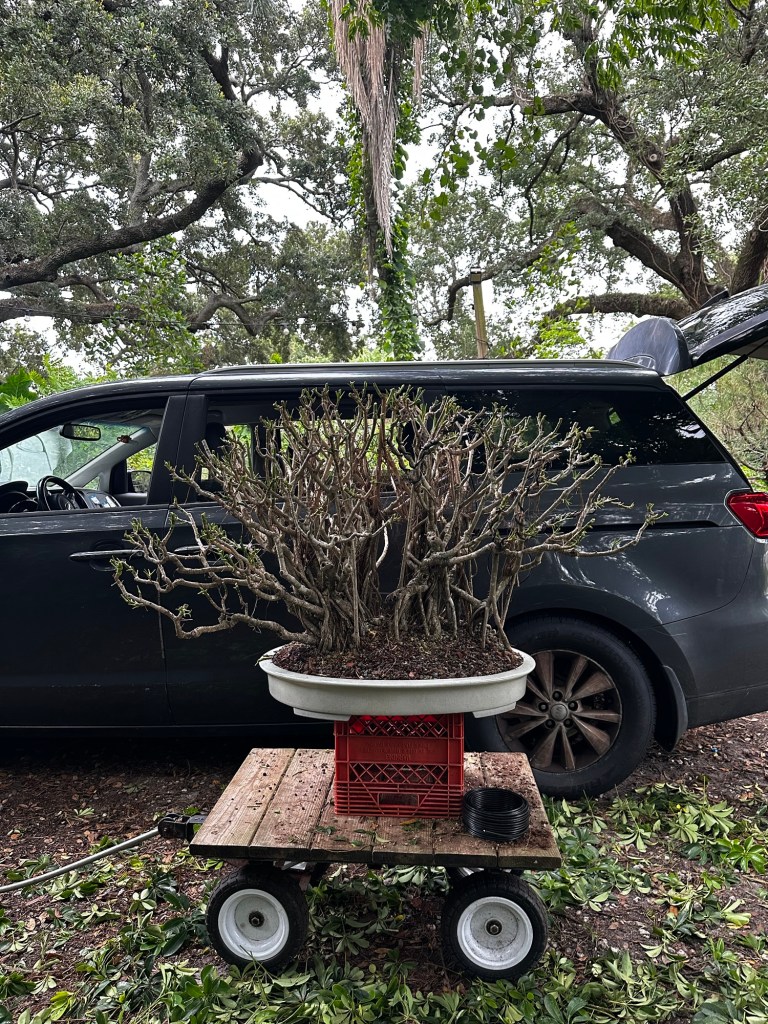
How about just all the lives lived in the life of today’s tree. I’d say it’s close to 50 years old. Oh, don’t worry, you can’t really tell, it’s so bushy, but there’s a tree in there.

I got it from Dragon Tree nursery in Palm City FL. From a man who I’ll try to remember and remember to my students and fellow bonsai friends, Robert Pinder. Robert is, along with Ed Trout, one of the last gentlemen of Florida Bonsai left. That includes me. I grew up in a rough city in Massachusetts, called Brockton, as a feral child, born in 1975, out exploring the world on my own or with friends. I never learned to talk to people (my sisters tried to tame me, they mourn the failure every day). I try to be nice but I’m far from a gentleman.

I first styled the tree during one of the pandemic era meetings we had for the Central Florida Bonsai Club. We held it at my nursery, outside in the sunshine. Safe.
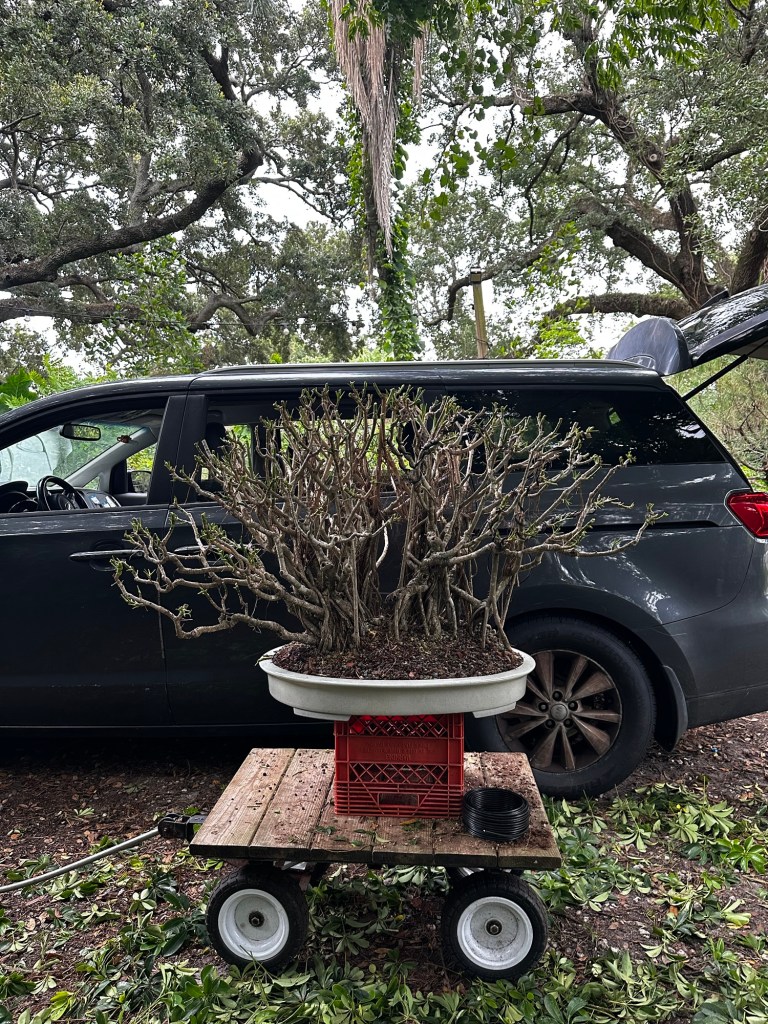
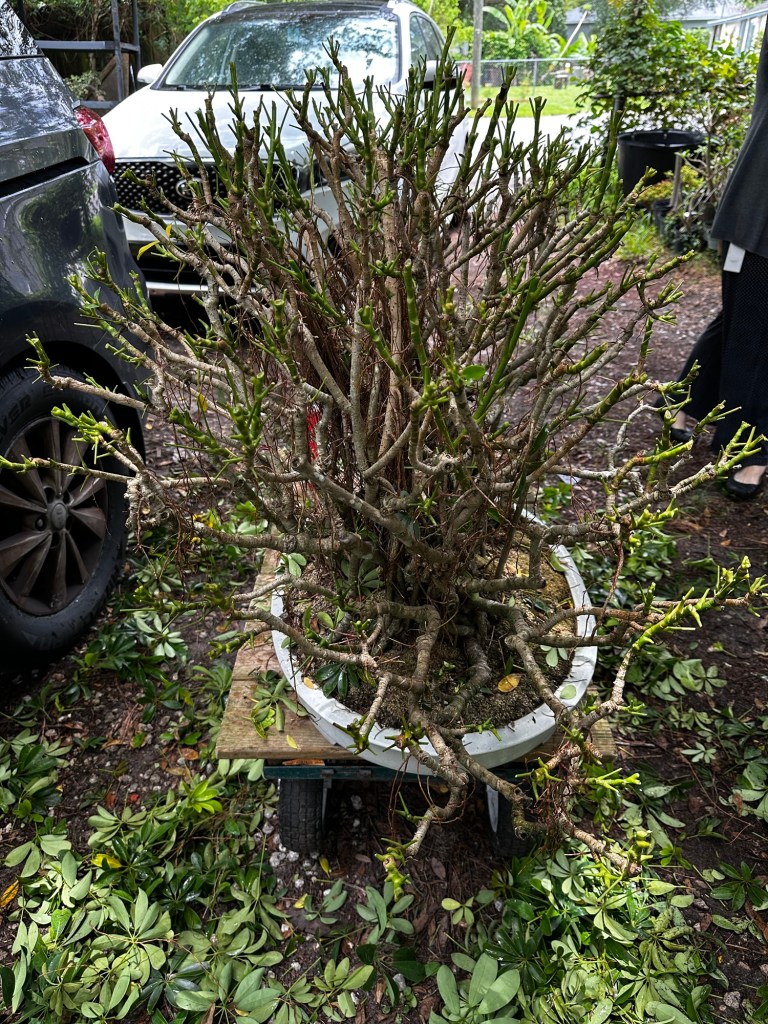
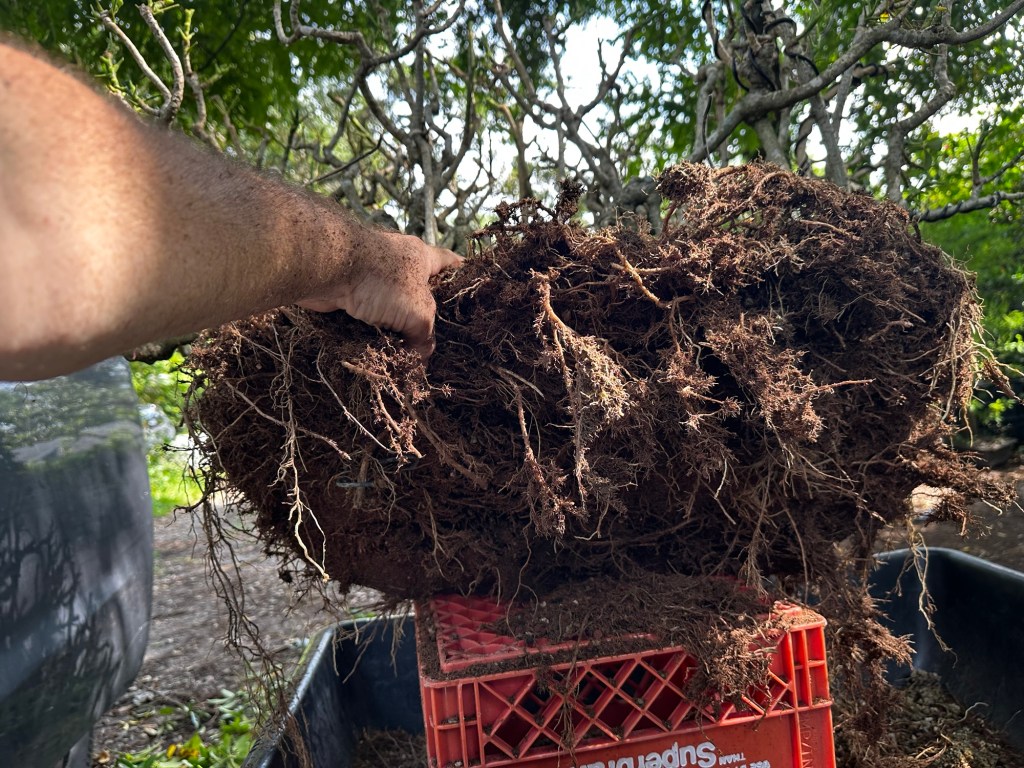
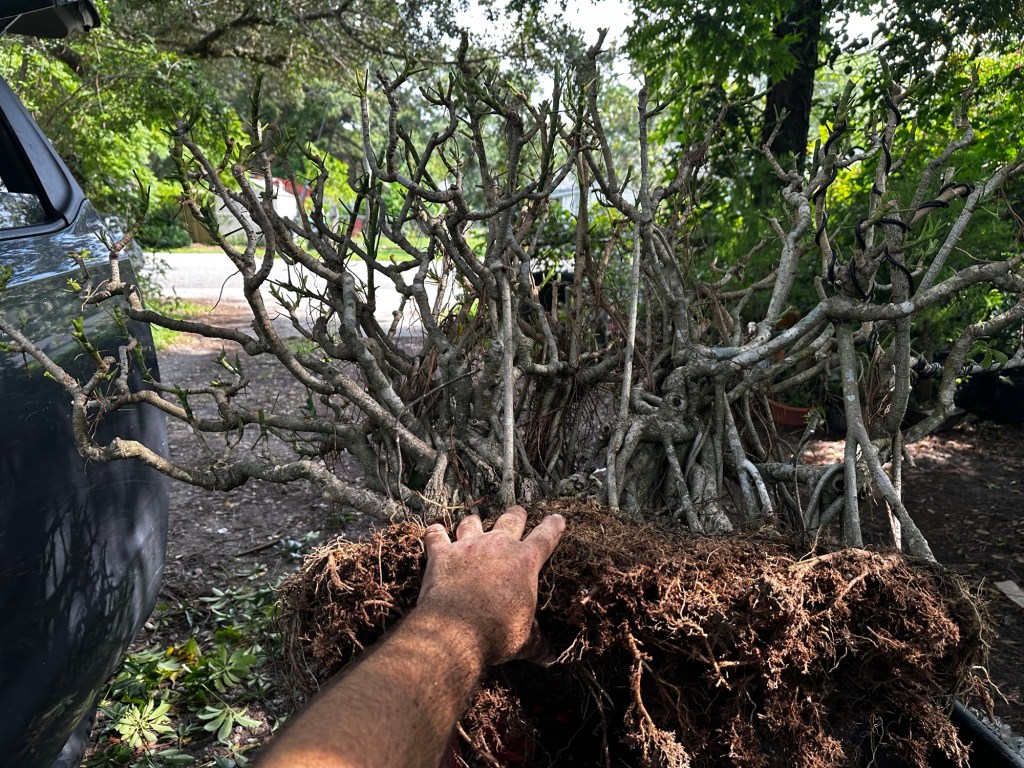
Here we go, halfway defoliated.

Robert sold this to me for less than I paid for my first automobile, a 1966 American Motors Rambler four-door sedan (no, not the hot rambler, it was a family car. Single barrel Holley carburetor, in-line six cylinder engine, four doors, army green. I bought it from an older lady who owned it new. I miss that car, but it became obsolete. No parts, worn out upholstery. And I’m just a poor itinerant bonsai traveler from the projects of Brockton Massachusetts. At the time I had no money to fix it, not that I could fix it now).

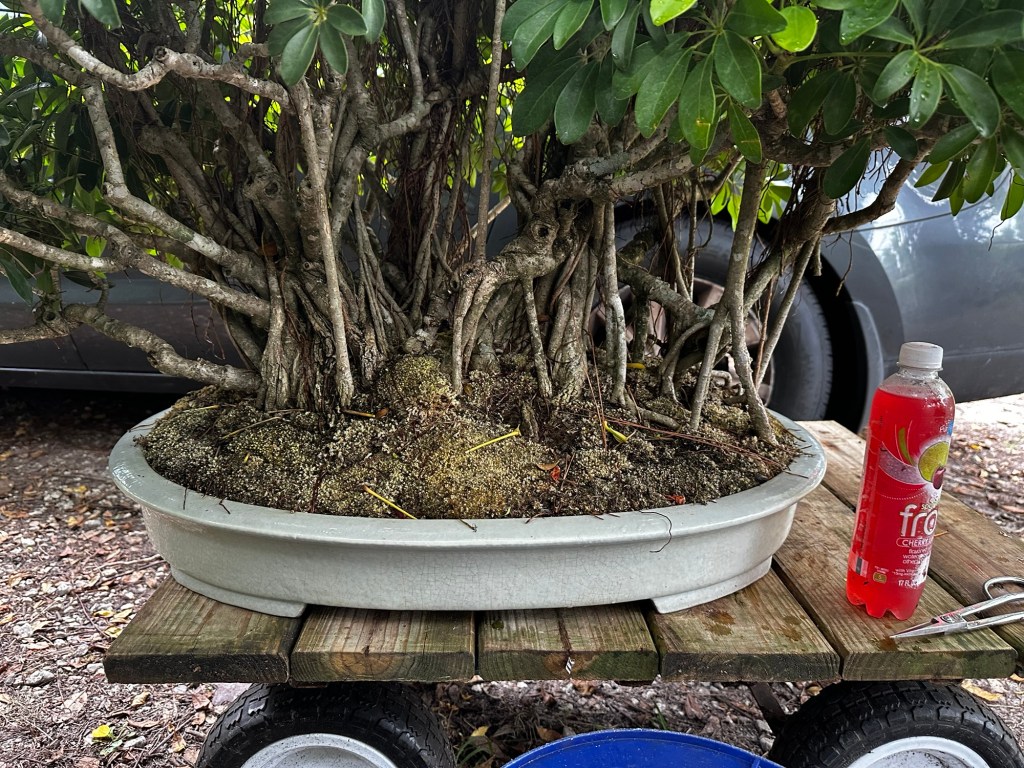
Now we can see what we have. There’s some wire on it. I’m thinking it’s been there since late 2020. Hmmmm….wire. Brings me back to my first Central Florida Bonsai Club meeting.

Here’s a cautionary tale. A famous (at the time) bonsai guy from Canada came down to tour the state and the club hired him to do a critique/help session.
It was my first meeting, and it was a cute couples first meeting too. They were waiting their turn, with a small schefflera held between them, like a child sitting up on the table. They looked so proud, bringing their tree in to get help from this “master”.

He was up at the front, and the tree was placed in front of him. He picked it up, holding it with his fingertips and turning it around, peering at the pot and the branches. Almost like he was examining a turd, trying to find a clean end to hold it.
He proclaims, in his best expository voice, projecting to the rear of the room,
“Well, we don’t have this in Canada, or we might, but we don’t consider them ‘bonsai'”
You could see the couple slowly deflate like those giant, blow up snowman holiday decoration on January 2nd when people start to take them down. The bonsai artist continues,
“I’m not sure you can even wire these, and I do believe that wire is necessary for bonsai…”
“In fact, I like to call these ‘Mutt Bonsai’, meaning they look like bonsai but really aren’t”
That poor couple took their tree and sat down, heads lowered and eyes averted. I never saw them again.
There’s no place in bonsai for that pomposity.
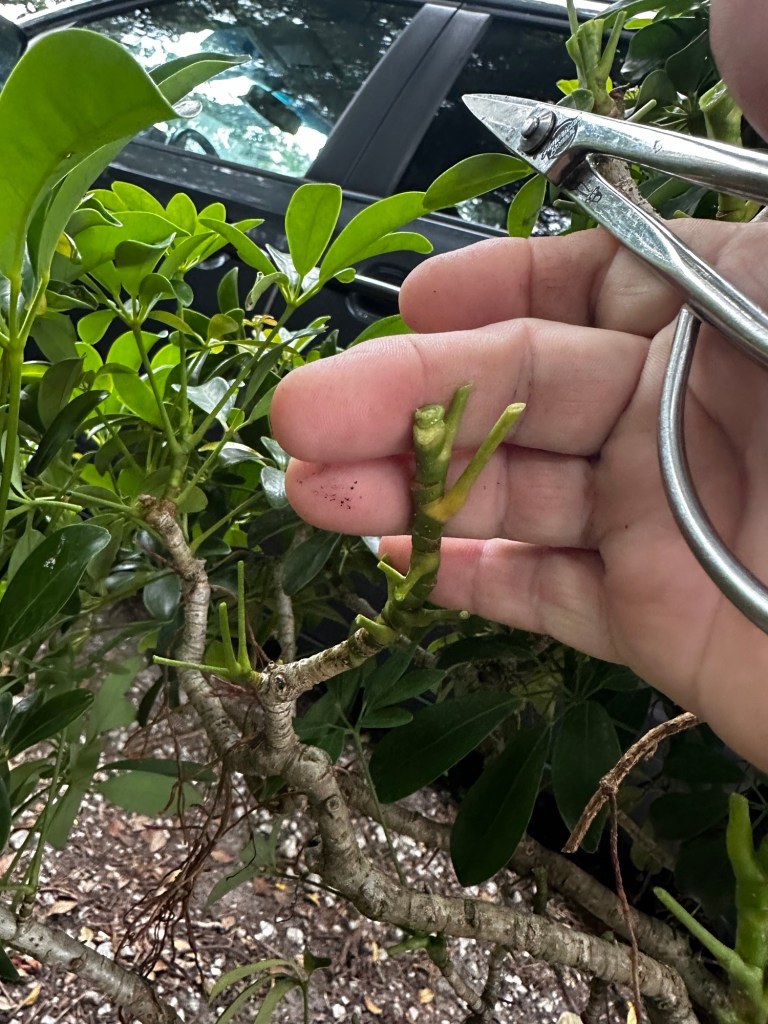
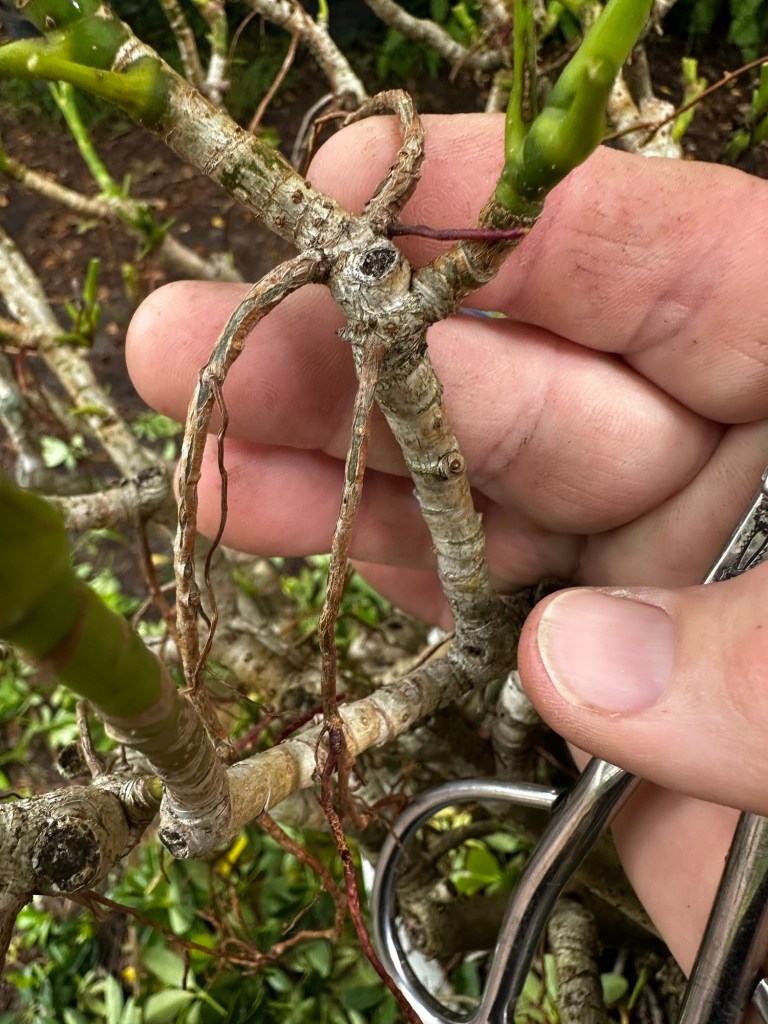
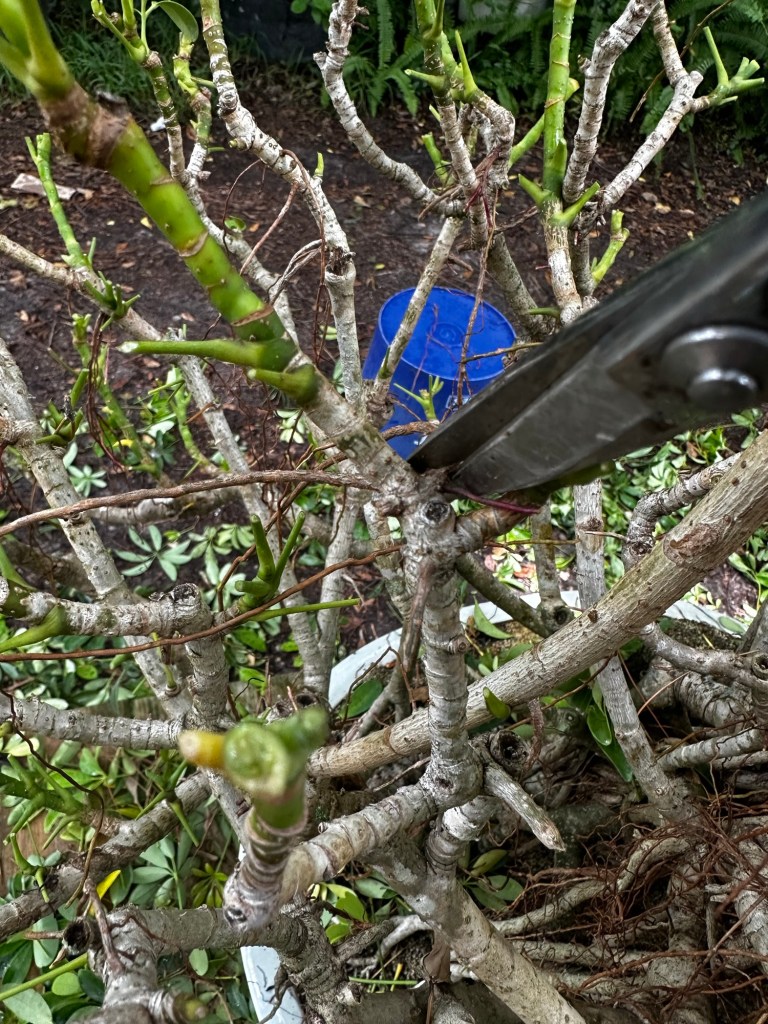
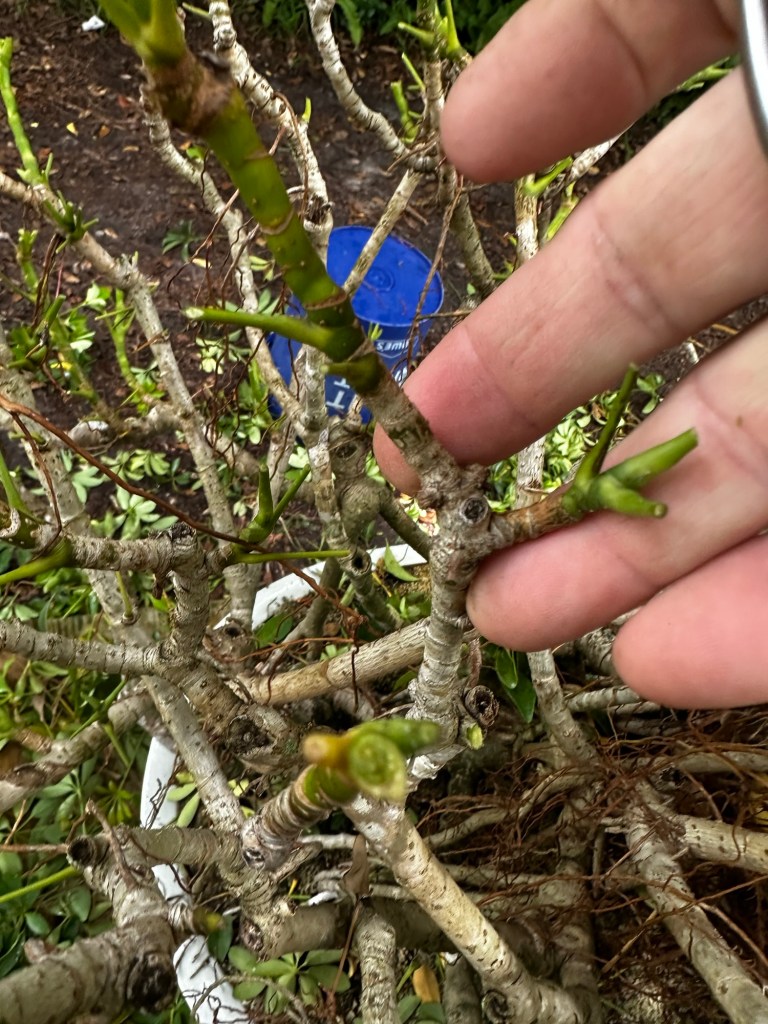
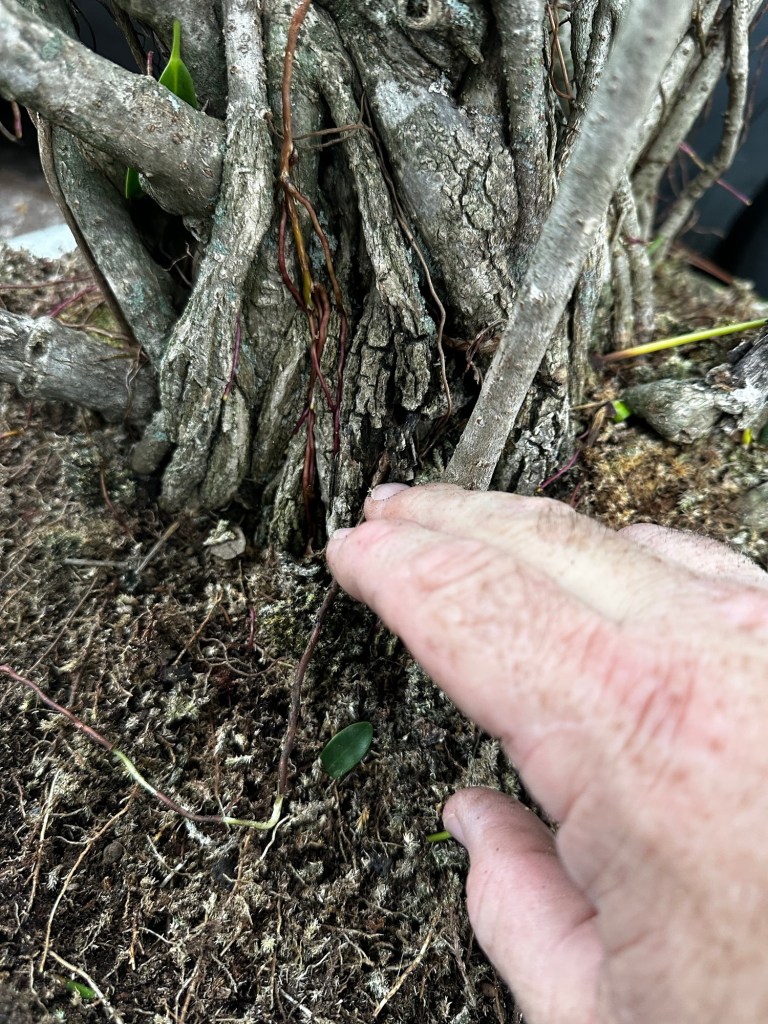
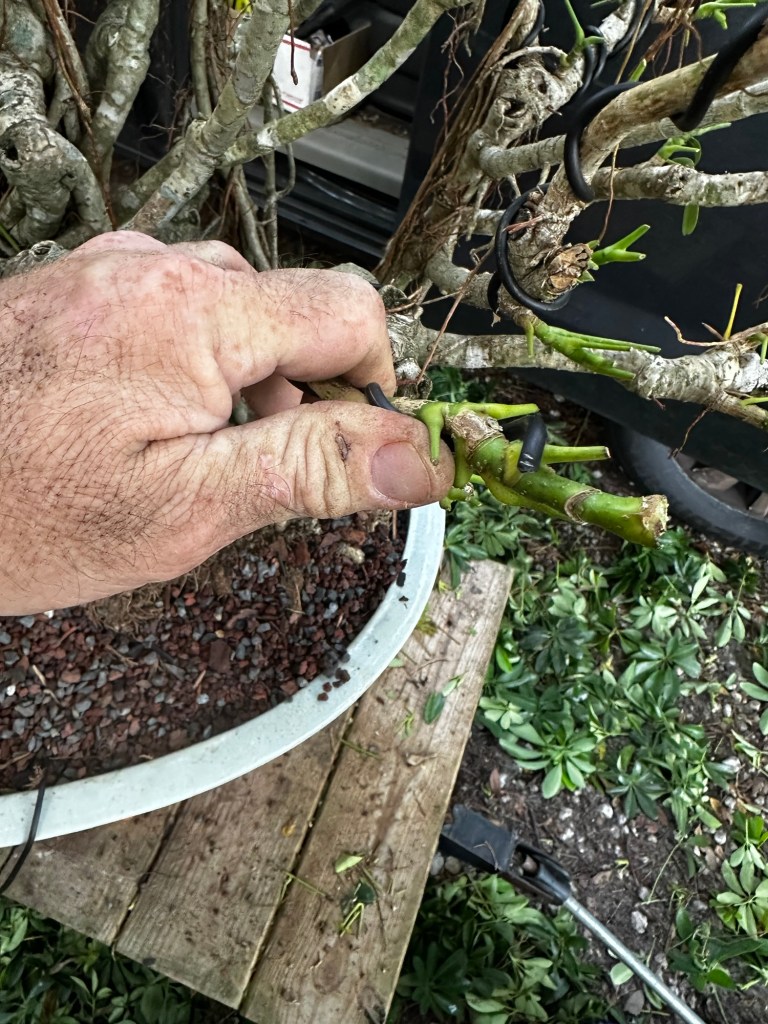
Anyway, I took all the wire off and now it’s time to prune again and rewire those branches that I’ve let grow. This is the growth tip.

In case you’re curious, when I begin a blog, and as I write it, I research. Here’s a snippet of the type of papers I read:
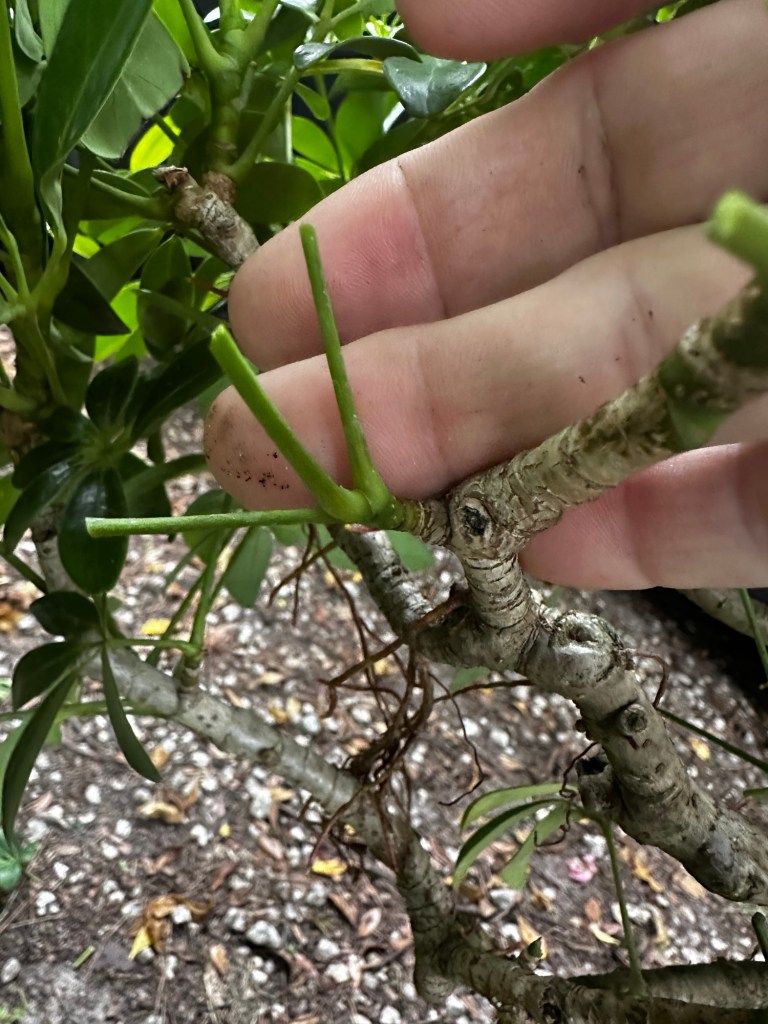
“Attachment of branches in Schefflera is unusual in that it involves fingerlike woody extensions that originate in the cortex and pass
gradually into the woody cylinder of the parent shoot. We tested the hypothesis that these structures could be roots since Schefflera
is a hemi-epiphyte with aerial roots. These branch traces originate by secondary development in the many leaf traces (LTs) of the
multilacunar node together with associated accessory traces. In the primary condition, the LTs may be described as cortical bundles.
Leaves are long persistent and can maintain a primary stem connection across a broad cylinder of secondary xylem. Under the stimulus
of branch development, the LTs form a template for secondary vascular development. Because the LT system is broad, with many
traces, the branch attachment is also broad. The fingerlike extensions are attached to the surface of the woody cylinder of the parent
stem but are progressively obscured as a continuous cambium is formed. Bark tissues are included within the branch axil because of
the extended cortical origin of the initial attachment. The results are discussed in the context of branch-trunk unions in tropical plants,
an important component of canopy development.”
A what they call a “scholarly” publication, meaning that when you research a subject, put in whatever you’re looking for and add “scholarly” and you’ll get primary research papers, by real scientists doing real science work.

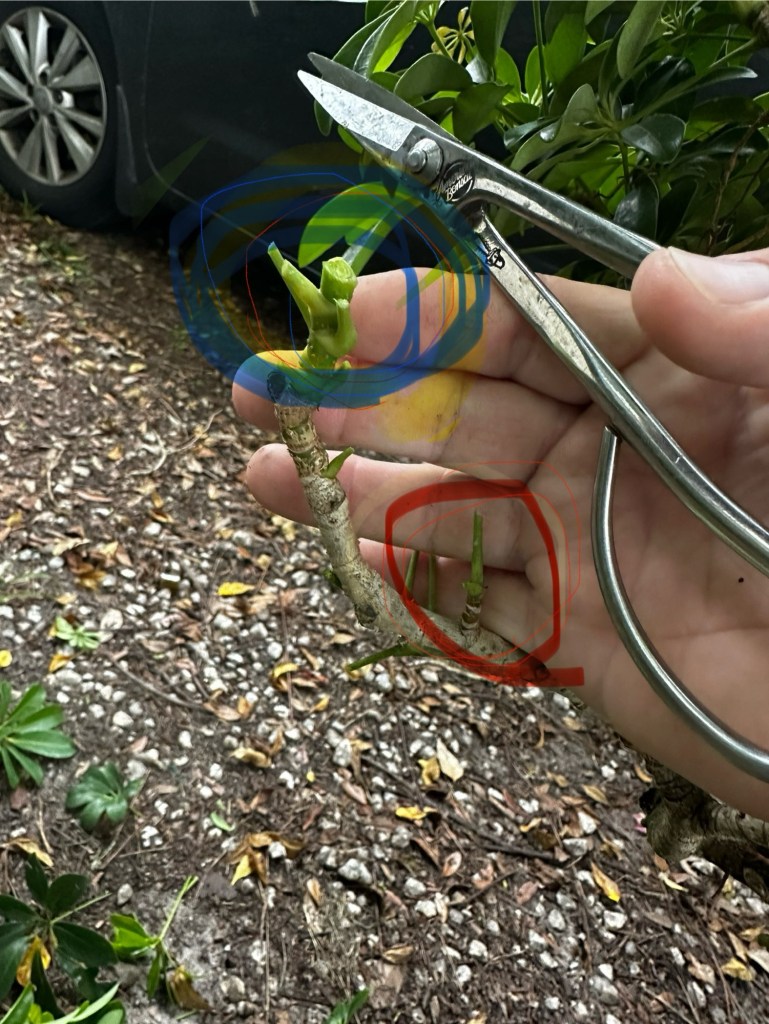
This one branch decided to grow the most of any branch. It’s fortuitous as the branch is in good proportion now, instead of a skinny shoot.

That’s what we want. You could say that the practice of bonsai is just: cut, wire, grow, unwire, cut again, rewire, let it grow. The one thing, considering all the aging techniques we have available to us, we can’t fake is the element of time, which is demonstrated by the concept we call “ramification”.
Ramification is basically more branches I go more in depth in the post: I use some fancy words to justify my defoliation habit, go figure.
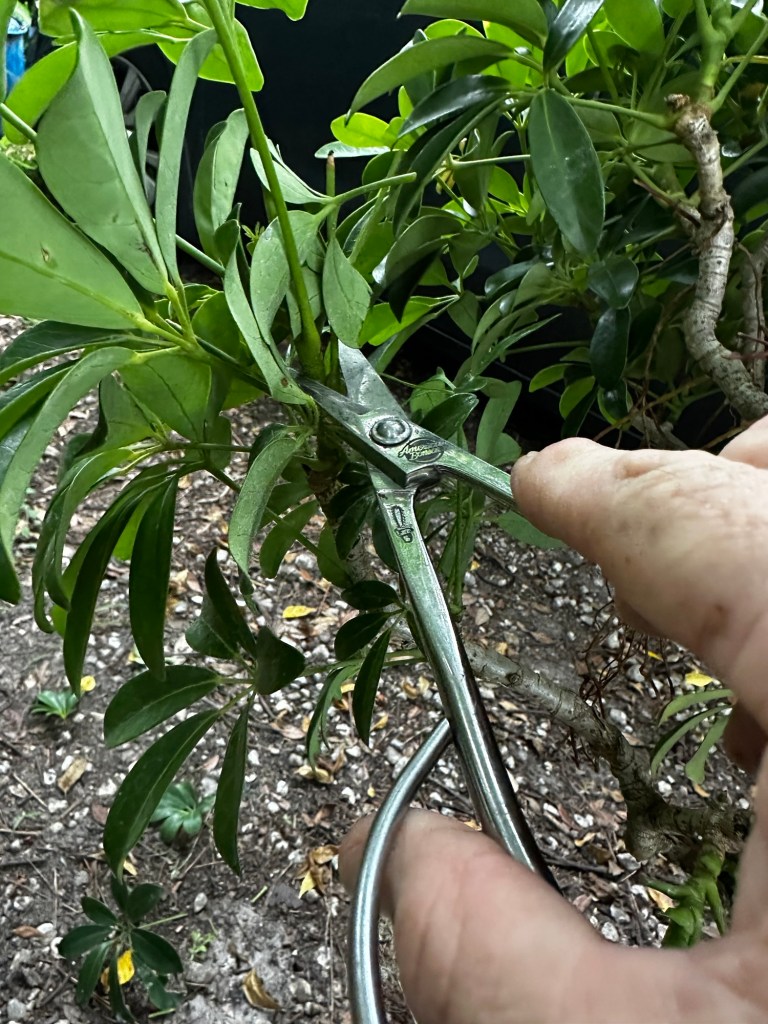
How do we get there? We cut the growth tips, which then causes back-budding, and a branch goes from one, to two, to four, to sixteen. In bonsai, those layers of ramification are called:
Primary, secondary, tertiary.

Cut, wire….

The debris after all that cutting. Thats a thirty gallon pot (what they call a “number 30” in metric system nations) easily halfway filled with schefflera.

Wired up and made pretty.

That night, I went to see my friend Jack (on the left in the red coat playing guitar) in his new band Afterglow).

He’s a great player, with great feeling. And his knowledge of music allows him to figure out a song just by hearing a few chords. Music is akin to math, notes and progressions follow certain rules and you can figure out a song if you understand this. Much like botany.
Jack has been playing professionally since he’s been a kid. He’s been in several original bands, and cover bands (he was the founder of the central Florida area band called Papa Wheely). He’s seen more faces than Bon Jovi, and has rocked them all (sorry, had to make the joke). I appreciate him and try to see him play, no matter the band or the song.
His life, though ordinary, is also exceptional. If you take all the ups and downs, he may give more weight to the one or the other, but to live at this time, in this place, is a privilege. And he has fun.
As do I. As you should too. Take pride in the small things, because it those are the things that make up the big things. Learn that b sharp minor chord, learn the bass line picking technique. Then you can play along when I play the songs too.