Normal view

Received before yesterday Adam's Art and Bonsai Blog

Ground Layered Fig Dip

23 August 2023 at 06:26

Well now, did the story start with scotch? Or end with scotch? It’s kind of hazy looking back now. But I’ll try….wait, I remember…it started with bourbon!

It actually began in 2019, but you didn’t see the tree until 2021, 2 years ago (or, two years from the post, in case you are reading this in the year 3023. It’s now 2023, taking place in the month of July. If you don’t use the word July, it’s the seventh month of the solar year, named for Julias Caesar, the first Roman emperor (or dictator) after abolishing the Roman republic. the Terran summer solstice in the northern hemisphere occurred on June 21, 2023, and this debauchery occurred 28 days later. Terra or Earth, is the third planet from our sun, called Sol, in the Solar System, in the Milky Way Galaxy. Hopefully that’s enough for the far future readers to understand how we told time back in the ancient 21st century days of legend.)

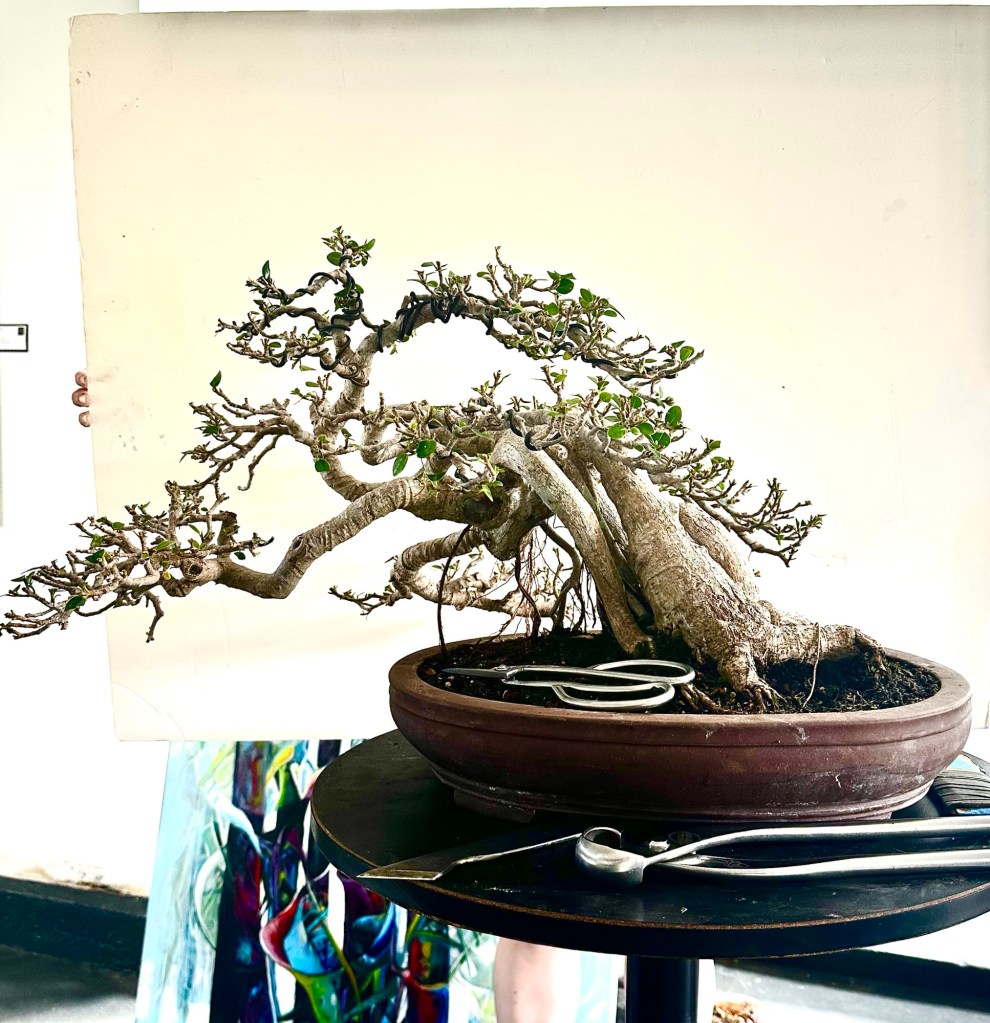
Today , or rather, late July (don’t make me go through that again). We have a ficus microcarpa, what one might call “ginseng”. But that’s just a marketing term. Ginseng are not figs, figs aren’t ginseng. You make Newtons out of figs, and Monsters out of ginseng. The cookie and beverage, that is.

The article this tree first made its debut in was this one, What can you do with a ginseng ficus, Northern edition, a rather wittily written post I might add. Go ahead, peruse it, I’ll wait. I have scotch.

Ok, now that you’re up to speed, let’s get to the work….

I’m in Toledo, or Maumee, to be precise. It’s pronounced just like “mommy” by the locals. I feel a song should be sung. 🎶I wanna go back to my Maumee🎶.

I’m with my two good friends, John and Julie. They take care of me when I’m there.

The tree is potted in an aluminum serving container. There were a few who said that we’d be poisoning the tree with the metal tray.

Looking below…

….I’d say, naaah! in fact, it looks good for a ficus in the north. Damn, I mean, it’s almost Canada fer crissakes. They don’t say “Holy Toledo!” for nothing.

Anyway, we did a lot of work that day. But not much on this ficus. We didn’t have a pot, you see. So we decided to get all “Muckety Mucked” up.

24 year…25 year….26 year, or, as the bottle suggests, one little piggy, two little piggies, and three little piggies.

We finished the 24 year. Made a dent in the 25 and 26. Wait, is this a bonsai blog or a drinking blog?!

It’s both. Sometimes.

And to the dead soldiers, we salute you!

The next morning, hangovers and bright lights notwithstanding, we had to get up early to go to Michigan (I know, that sounds like the first line in the “Great American Novel” we writers all would love to write. Maybe…..).

We had to get a decent pot, so we visited the Flower Market (Which has changed its name to Green Witch Gardens)

It’s a damn cool place to visit. Not only do they have bonsai, but there are cats…

…that’s cats, plural.

And pottery from amazing American artists.

The trees!

Julie hiding behind a tree.

Familiar weeds. These are what are called wandering dudes now. I feed them to the tortoises. Speaking of which….

Tortoises!

Only the best bonsai nurseries have tortoises.

We got some pots.

Then went back to Toledo.

And we got back to work.

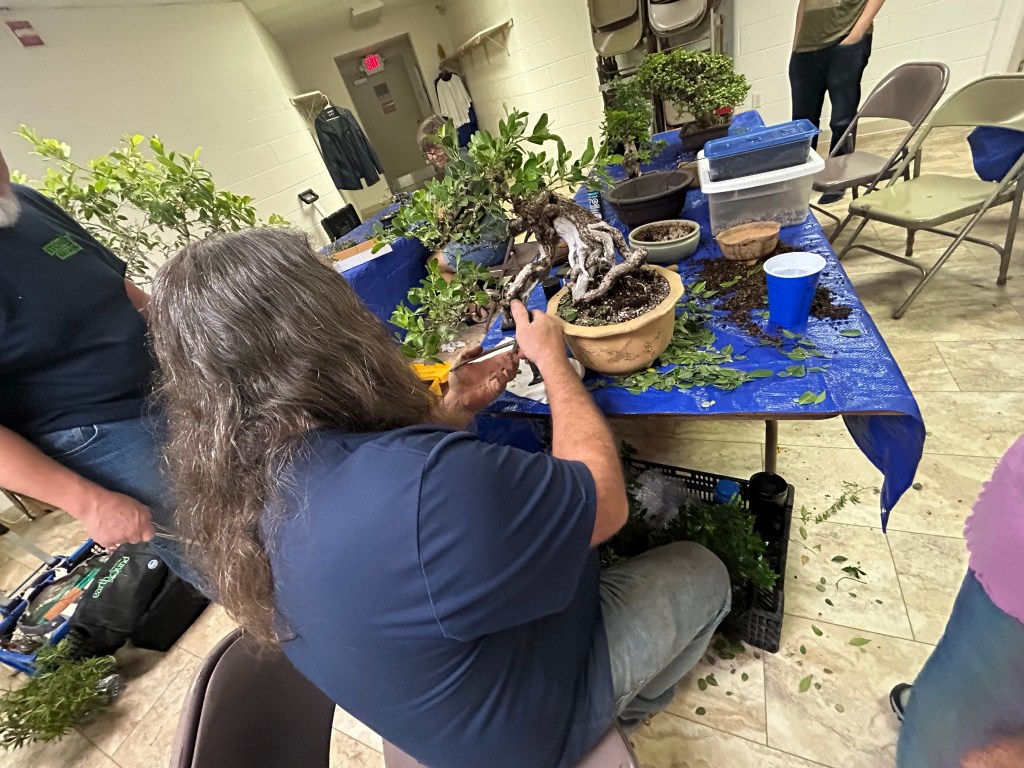
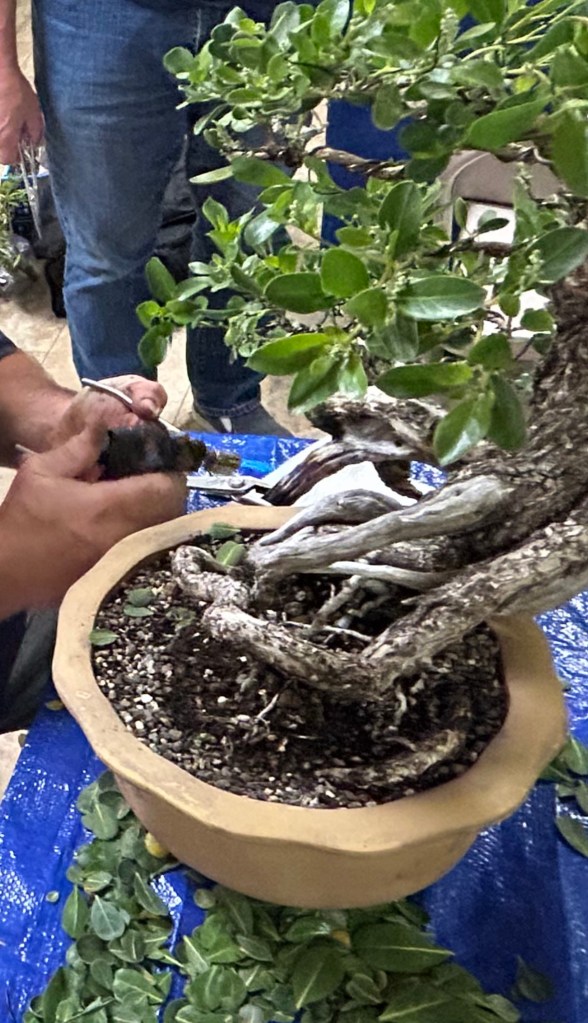
For being in a shallow aluminum pan, it’s grown some good roots.

The “pot” has even held up well. We could use it again.

Looks solid.

Raking out the roots….

Here’s the new pot we got for the ficus.

Sweet, ain’t it?

Tree is ready

Can I mention again how good the roots are?

We had split some of the larger ones (go back and read the first post).

Hey, it even fits in the new pot.

Damn those are sexy roots. Must be the soil. The vaunted, rare and near mythic “All-American Red, White, and Blue, Adamaskwhy SuperMix™” .

Just to prove we did other work, here’s some examples. A willow leaf.

A tigerbark.

An azalea.

A willow leaf root cutting.

And another.

I must say, I can’t believe what an amazing two days that was.

But I had a hard day while I was writing this piece. Something that should not be happening is. And I posted to Facebook; I quoted JRR Tolkien, the part where Frodo asks of Gandalf:

“I wish it need not have happened in my time,” said Frodo.
“So do I,” said Gandalf, “and so do all who live to see such times. But that is not for them to decide. All we have to decide is what to do with the time that is given us.”
J.R.R. Tolkien, The Fellowship of the Ring

And John replied “and what you do happens one word at a time, one leaf at a time, one sunrise at a time.”

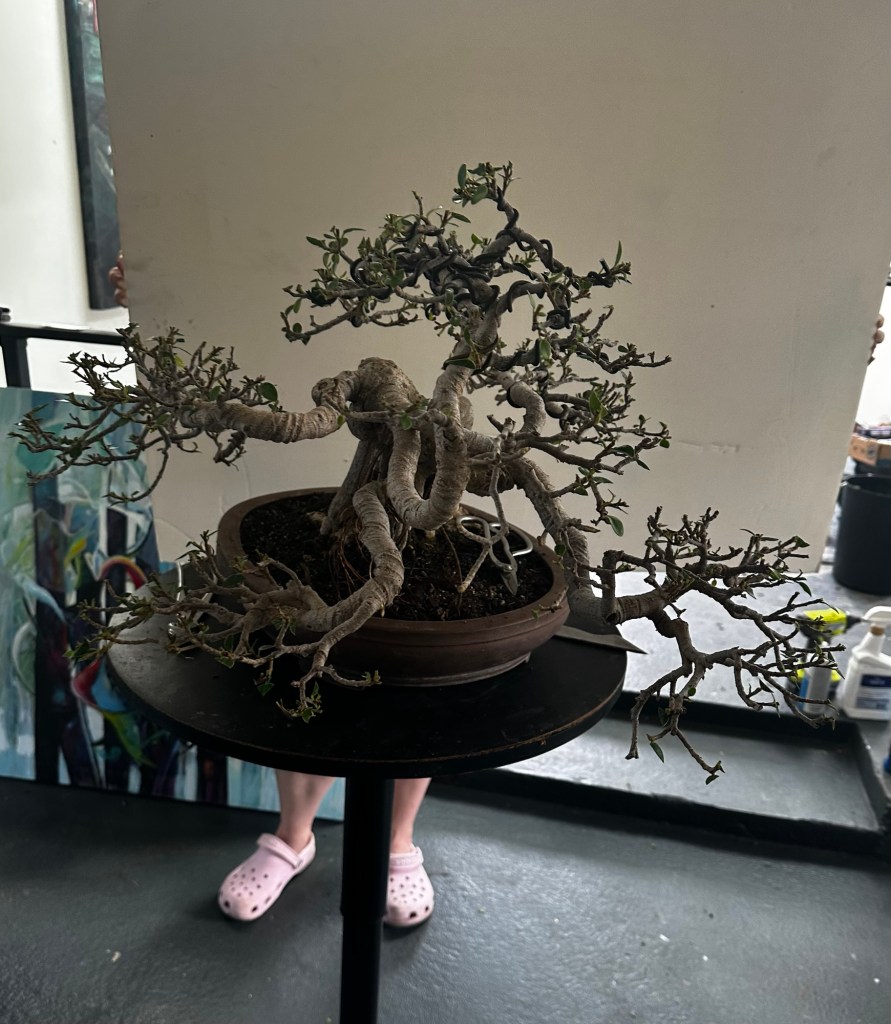
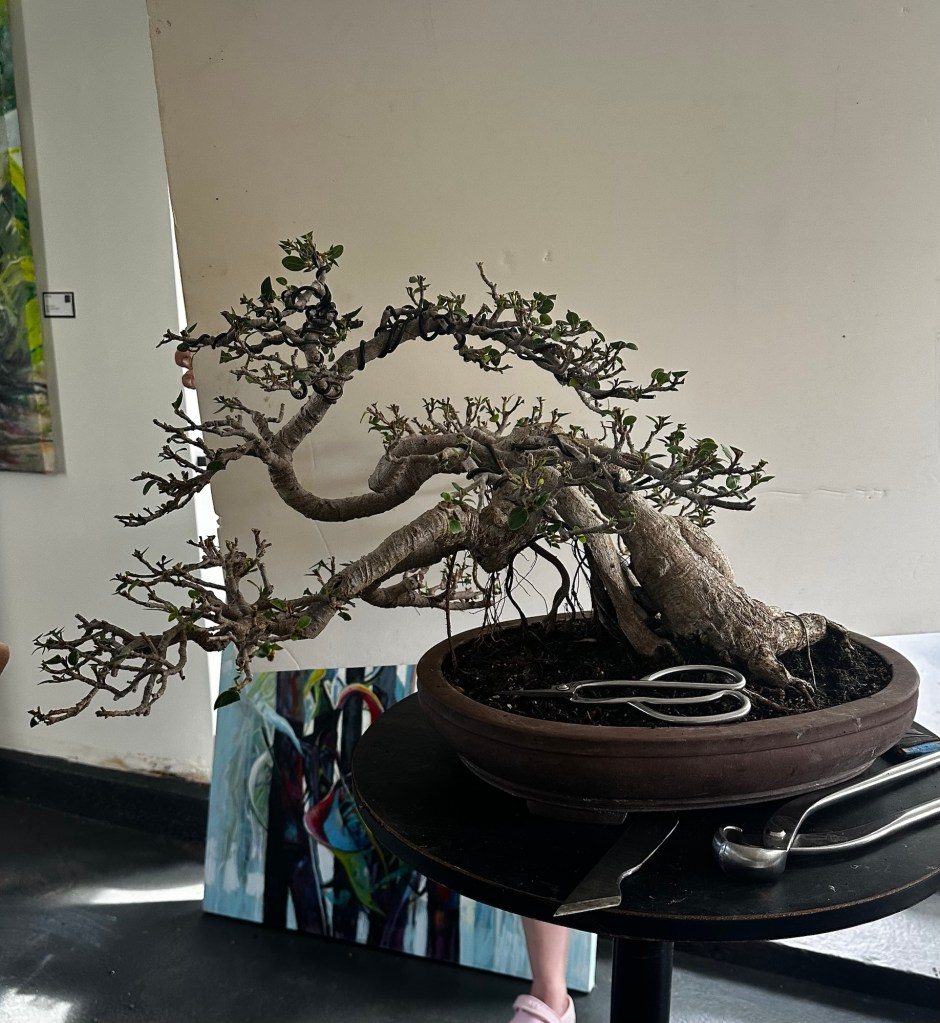
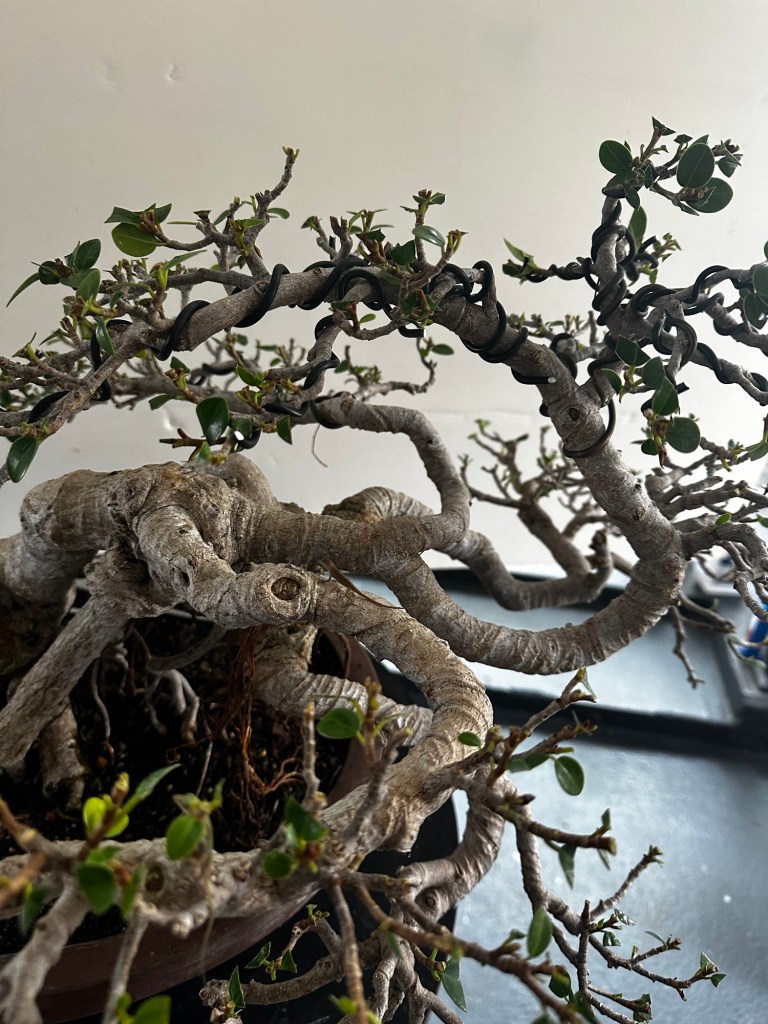
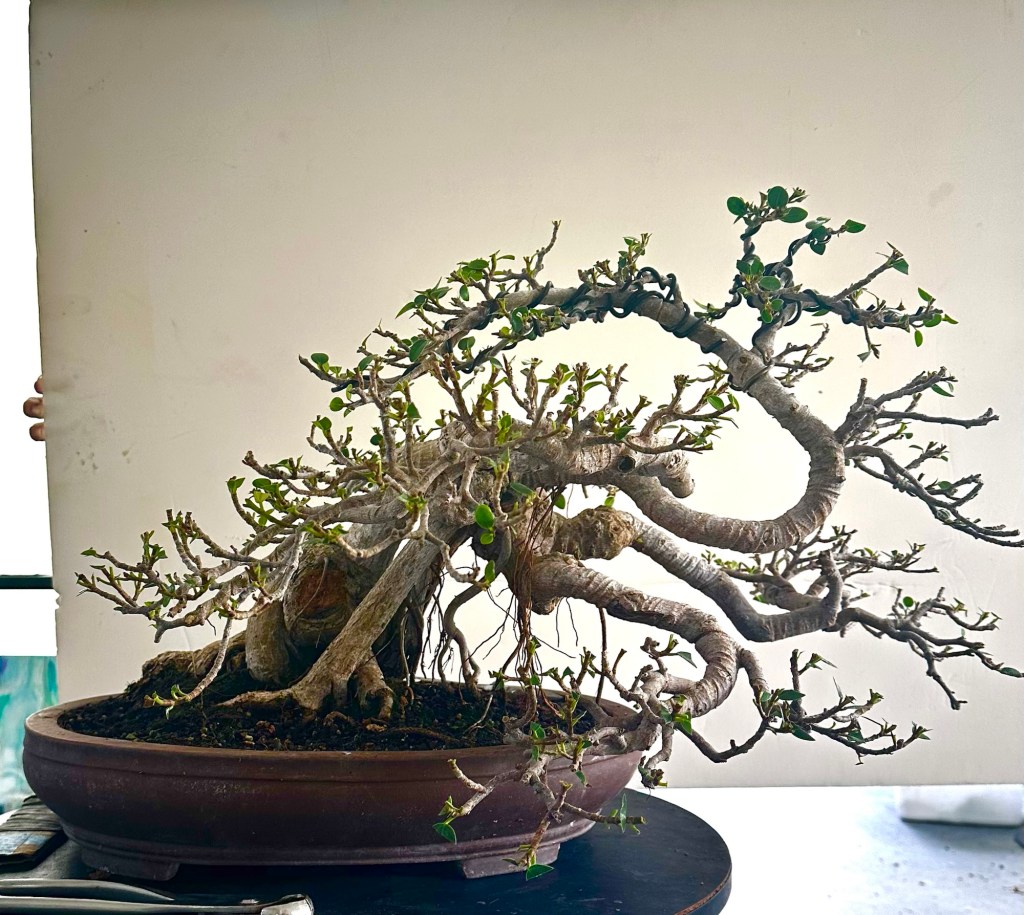
Here’s the tree all those years ago. We ground layered it (hence the post title).

One tree at a time. Even if it takes years to bring it to its potential.

One leaf at a time.

One branch.

One root sometimes.

The two years ago..

And now.

Bonsai is a journey. And getting there is sometimes the only reason to go somewhere. You can buy a tree, but making a tree, especially this one, that started so humbly, is way more fun.

John has done well with it. I’m honored to have helped him, and thanks to both John and Julie for letting this strange bonsai guy (me) into their home.


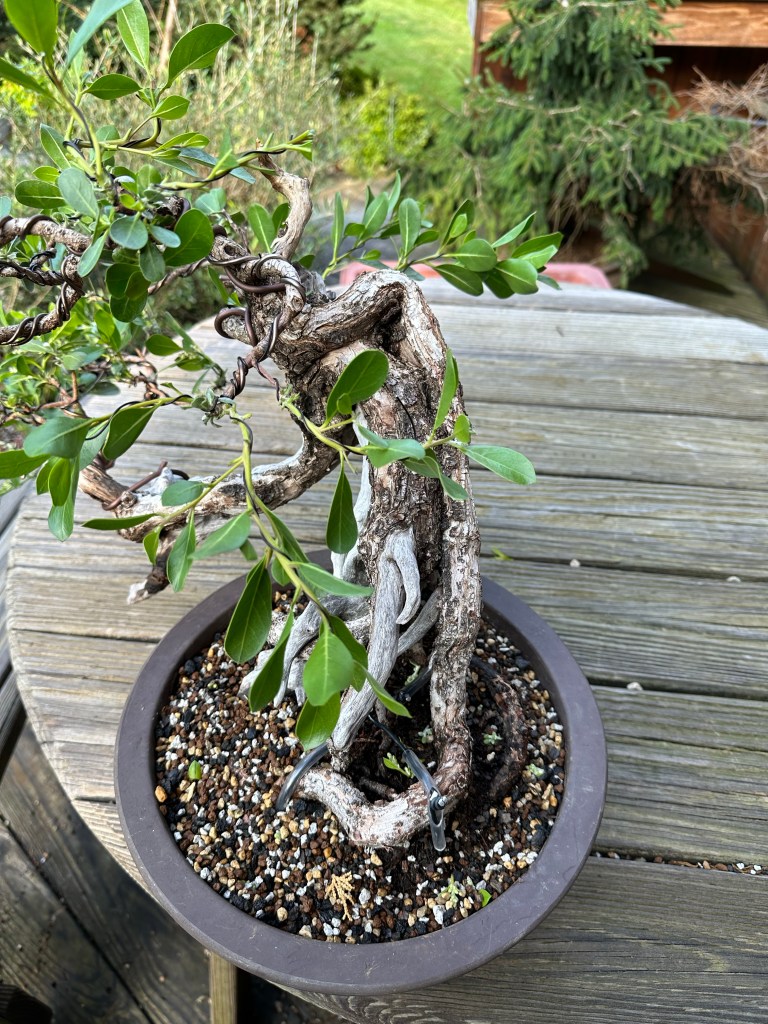
LeAnn’s buttonwood

6 September 2023 at 23:02

That’s Washington DC. I think. Lots of converging lines and paths layered on top of each other. I posted a similar insane street map last time I was up in the area and I visited the Bonsai and Penjing Exhibit at the National Arboretum .

I was too busy working this tour to get to see the Collection. That’s ok by me. I like working. To be human is to work. To find meaning in that work is the sole purpose of this life on this earth.
Anyway, there’s room for philosophy later on in the mid and last section of this essay, so, as promised in the last post, here is LeAnn’s buttonwood.

She said it was collected (as most in the USA are) by the Buttonwood Queen herself, Mary Madison.

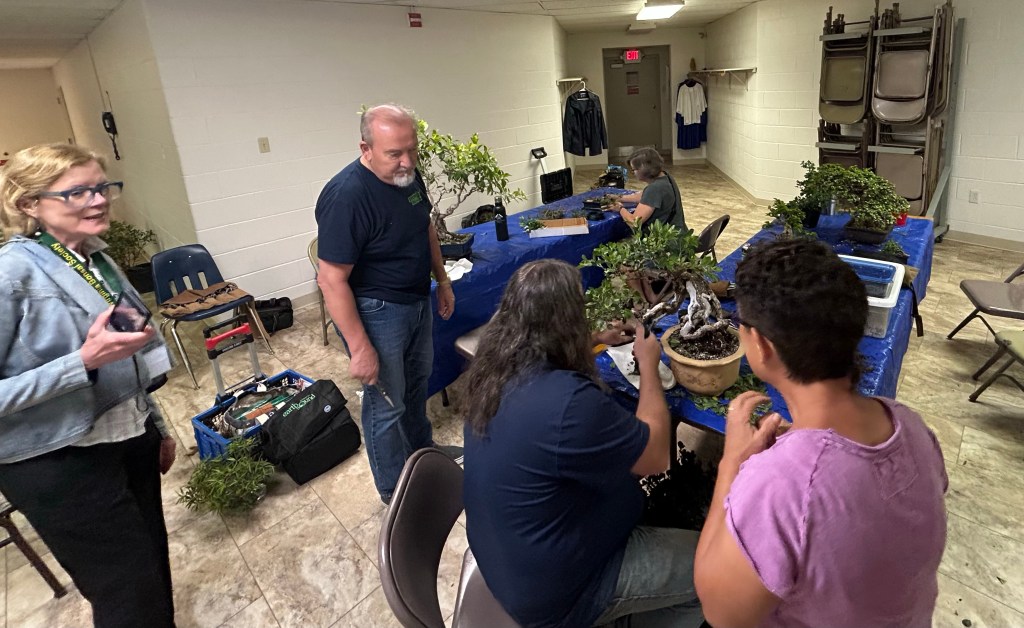
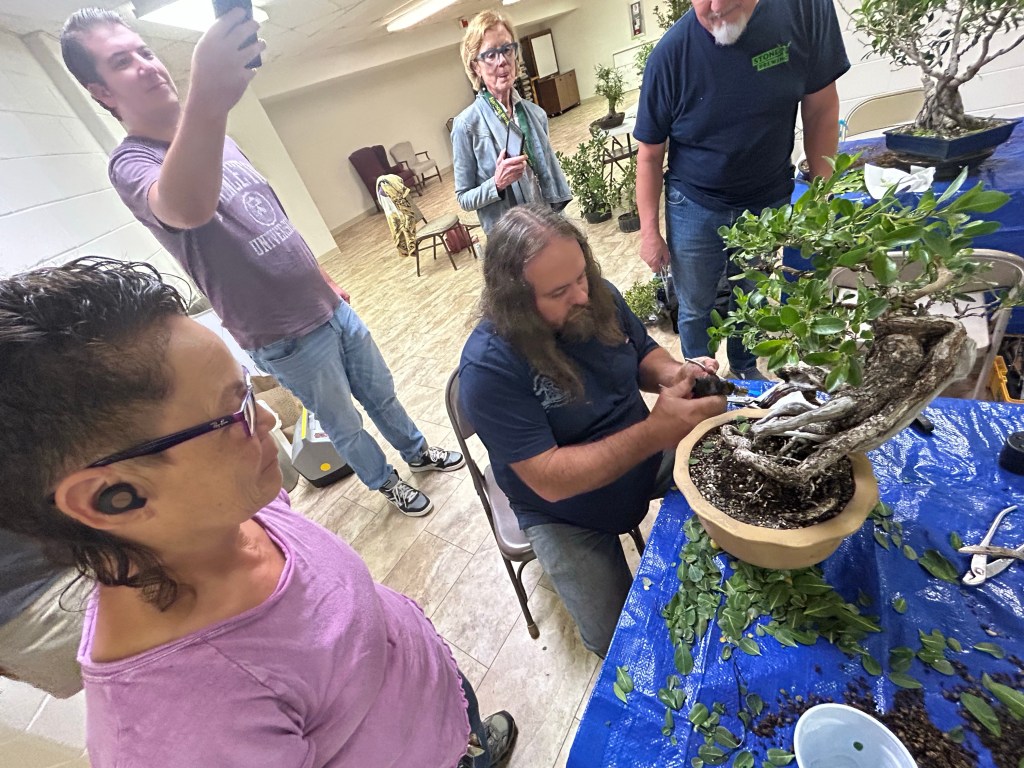
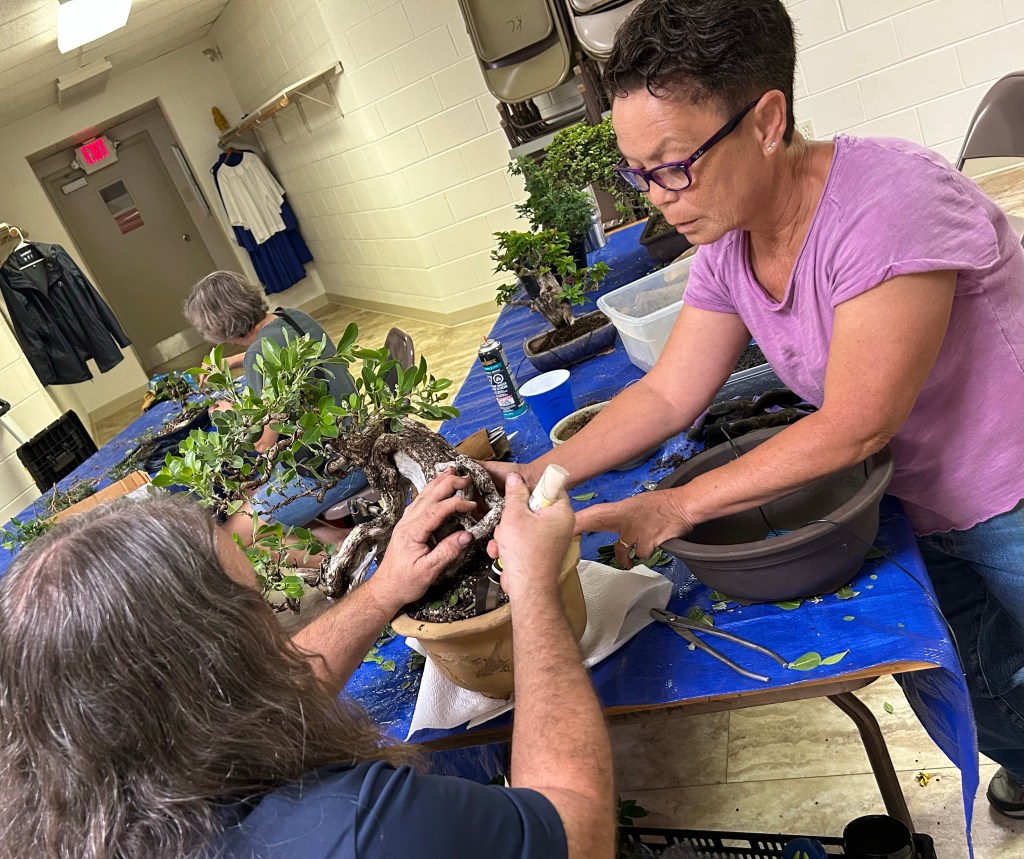
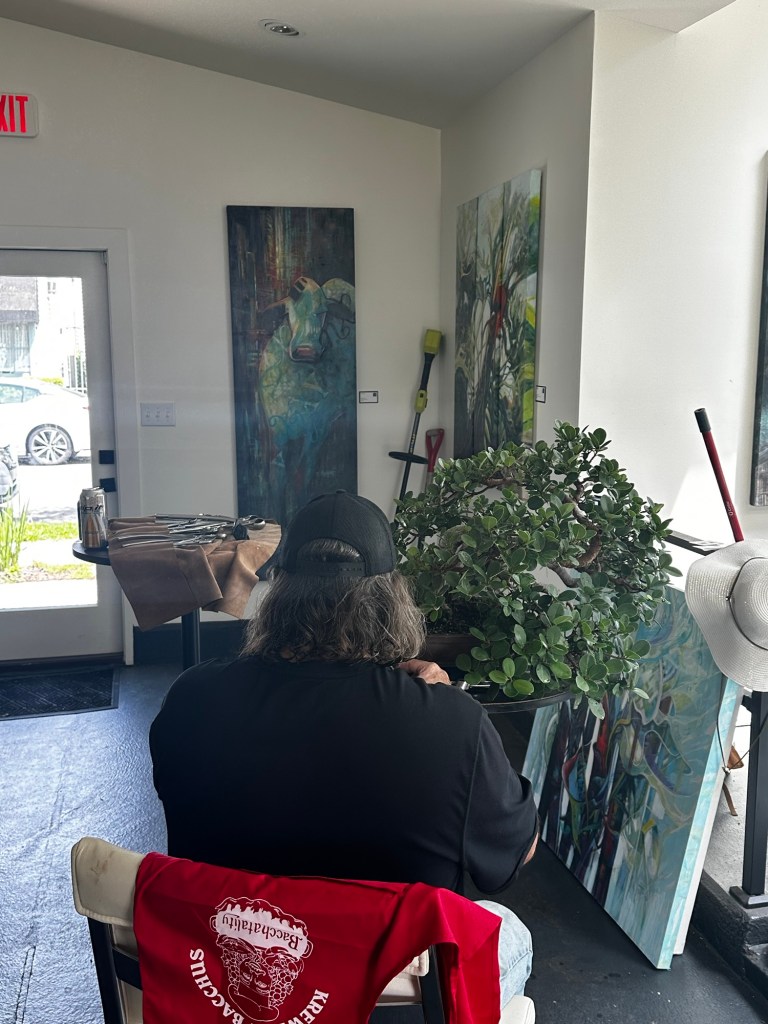
LeAnn is the lady in lavender (purple? Lilac? Not periwinkle, or plum, for sure) hovering behind me.
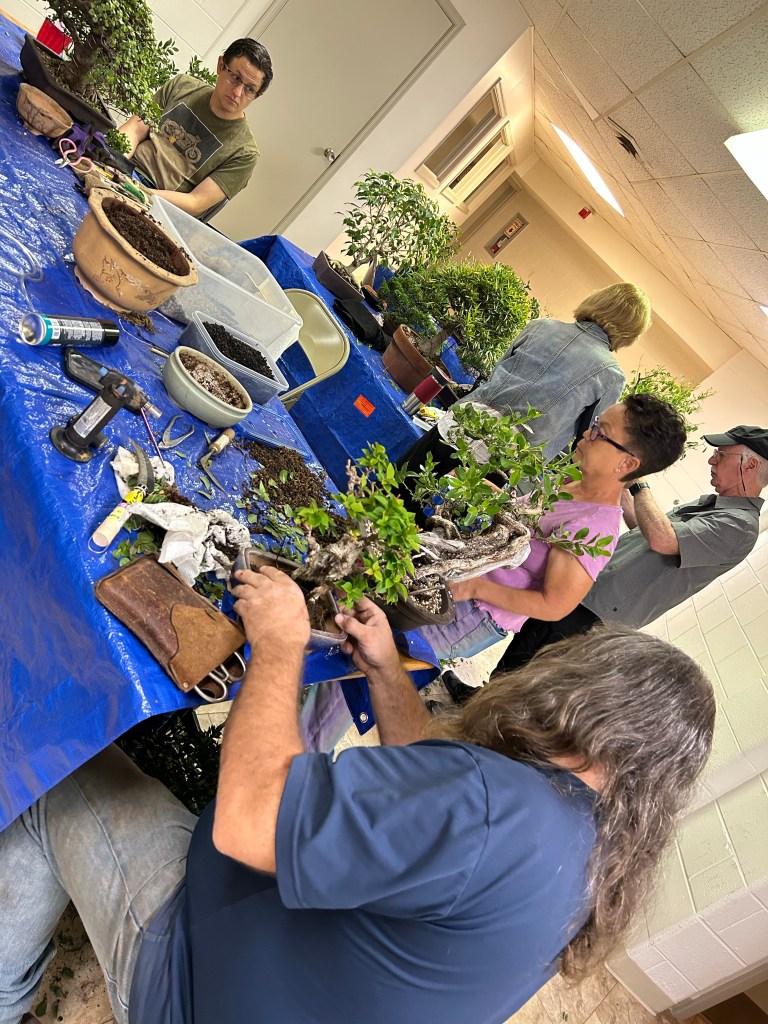
She waited very patiently while I worked through all the other workshop attendees trees and finally got to her tree.

It desperately needed a repot. I teach my students in Florida that buttonwoods need a repot every year. Up north, like here in Virginia, it’s not so important. Unless you use a horticultural heating pad, that is. (Wait, is Virginia “Up North”? I’m not sure. Where’s the Mason-Dixon Line?)

Ok now…..WHAT? (not the North/South thing, even I’m not getting into that). What’s a horticultural heating pad?!

Here’s a few secrets for my northern tropical bonsai growers. First: get grow lights. We are in a golden age of indoor growing of plants. Yes, due to the legalization of cannabis, mostly, but we gain from it because all kinds of grow lights, from full spectrum LEDS to metal halide, are available almost anywhere for cheap. So get yourself one. But…BUT..secondly: heating pads!!! Horticultural heating pads are the game changer for those that need to bring in their tropical trees for the winter (one should always put your trees outside for spring and summer, there’s no replacement for the sun and rain. None). Most tropical trees growth habits are dependent on temperature. But not just ambient air temps. It’s the temperature at the root zone, in the soil, during the evening, that makes tropicals grow.

Which is why we here in the Sunshine State don’t repot buttonwoods until nighttime temps are above 65°F for at least 6 weeks after the repot.

In sweet Virginy, this particular operation is taking place in the middle of July, and LeAnn has the rest of July and most of August to grow more roots. So no worries there for her. But I knew of a guy in Cincinnati that repotted his buttonwoods in January. He had a greenhouse and heating pads. That’s where I got the idea.

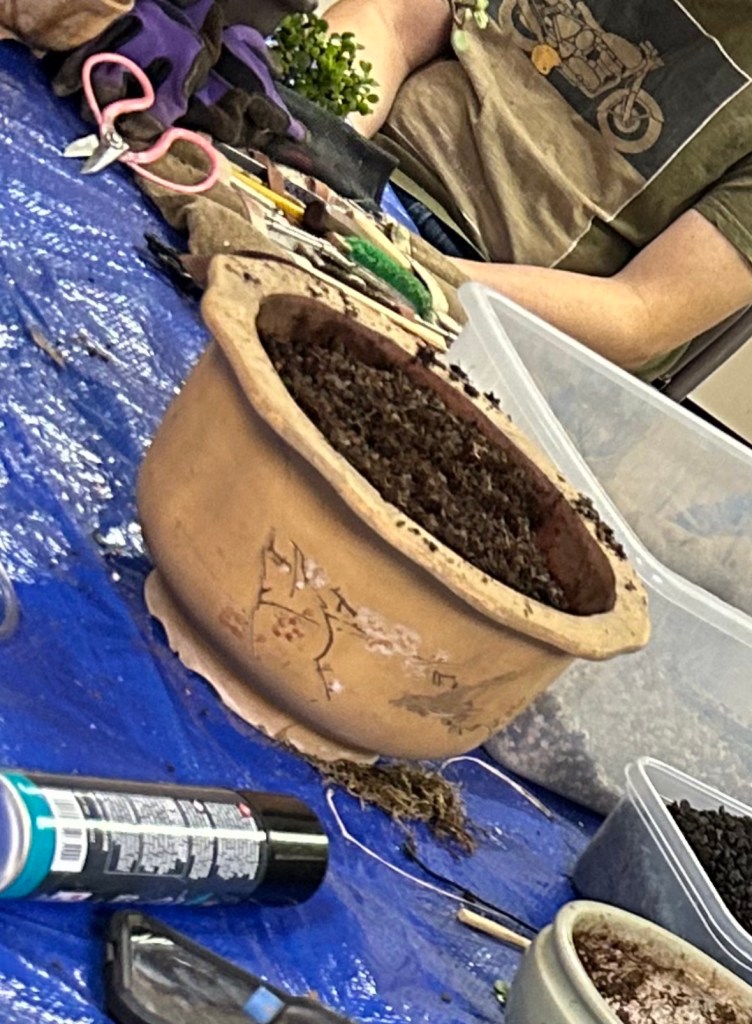
Anyway, we got the buttonwood out of this pot:

And into this pot:

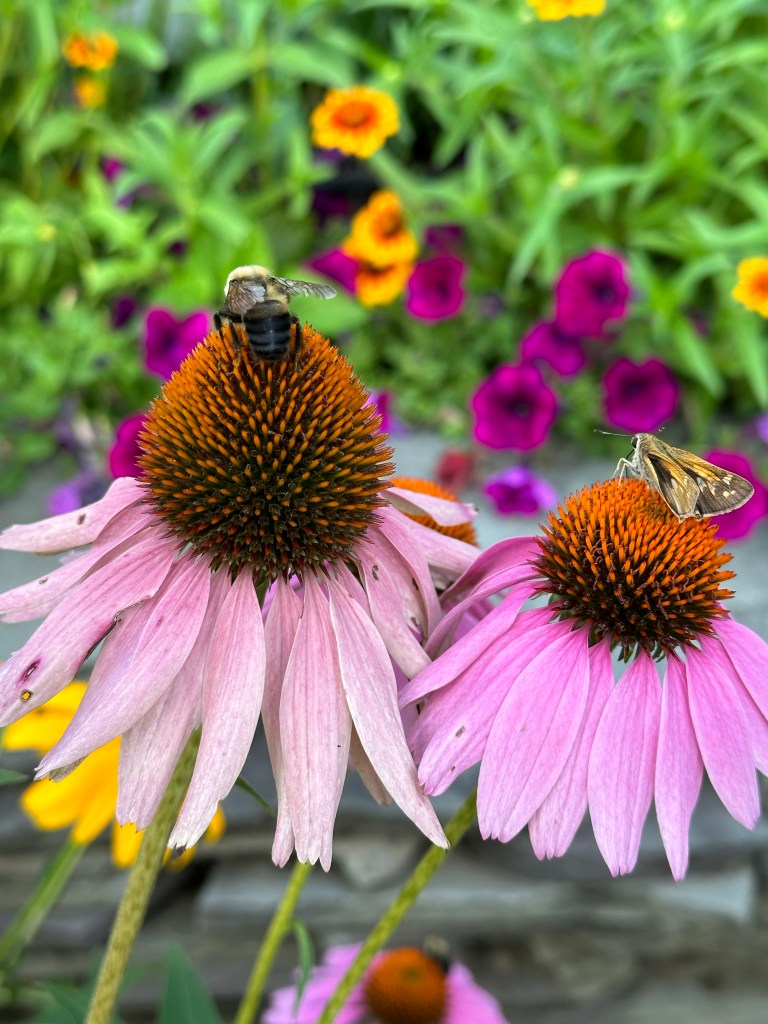
We wired it, tried to bend some deadwood with the torch and steam technique (only partly successful) and, now, just to make you wait, how about a bumble bee and a moth on a coneflower?

Awwwww, ain’t that cute?! LeAnn has an amazing garden and an even amazing collection of trees.

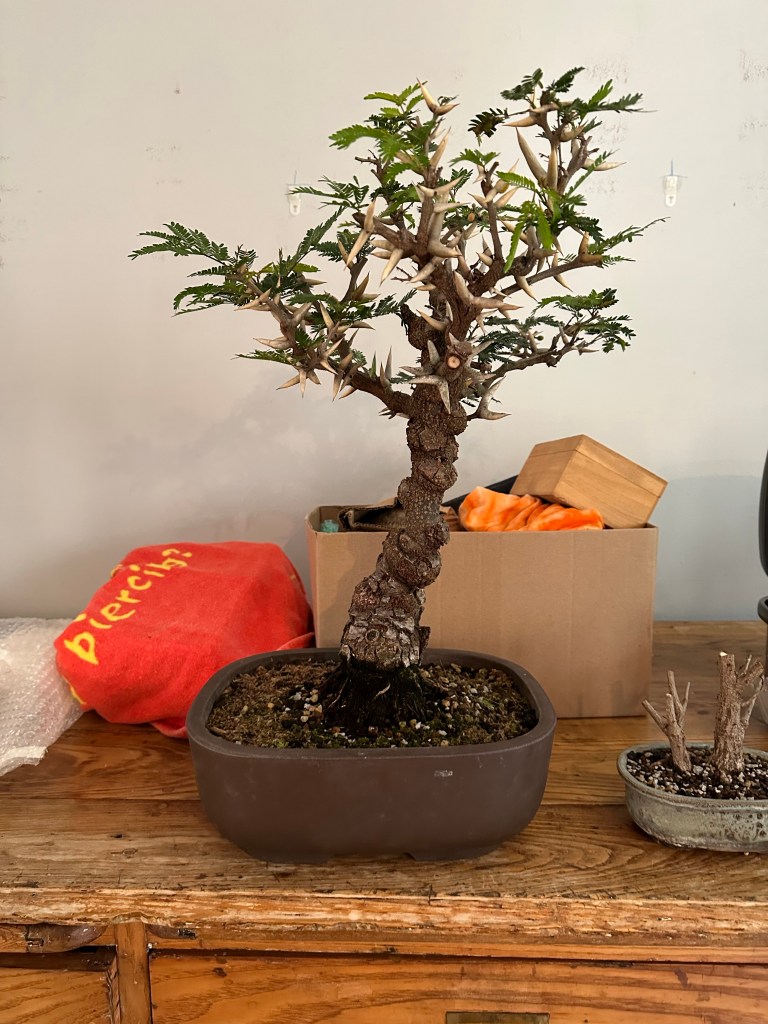
Here’s one of the more developed bullhorn acacias I’ve seen.

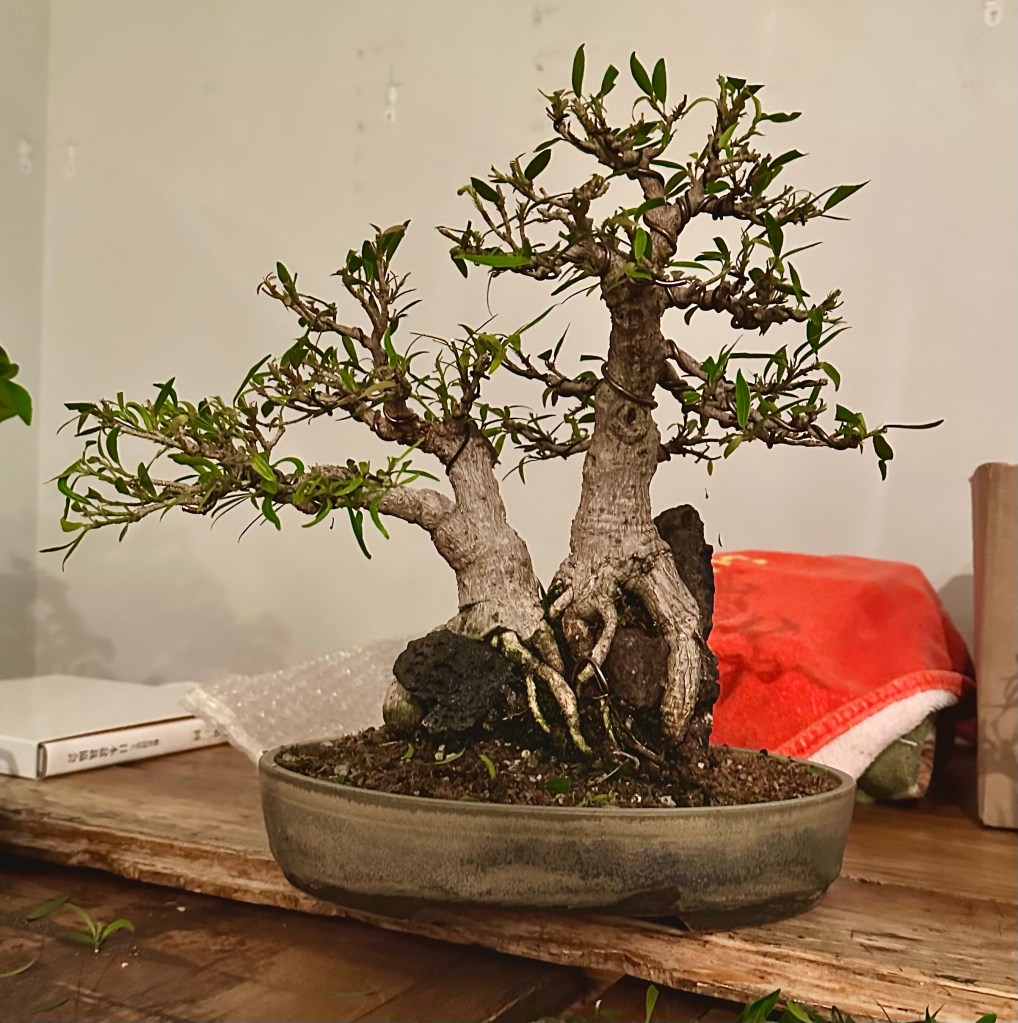
And a twin trunk willow leaf on a rock (a rock from Hawaii I believe, where LeAnn hails from).

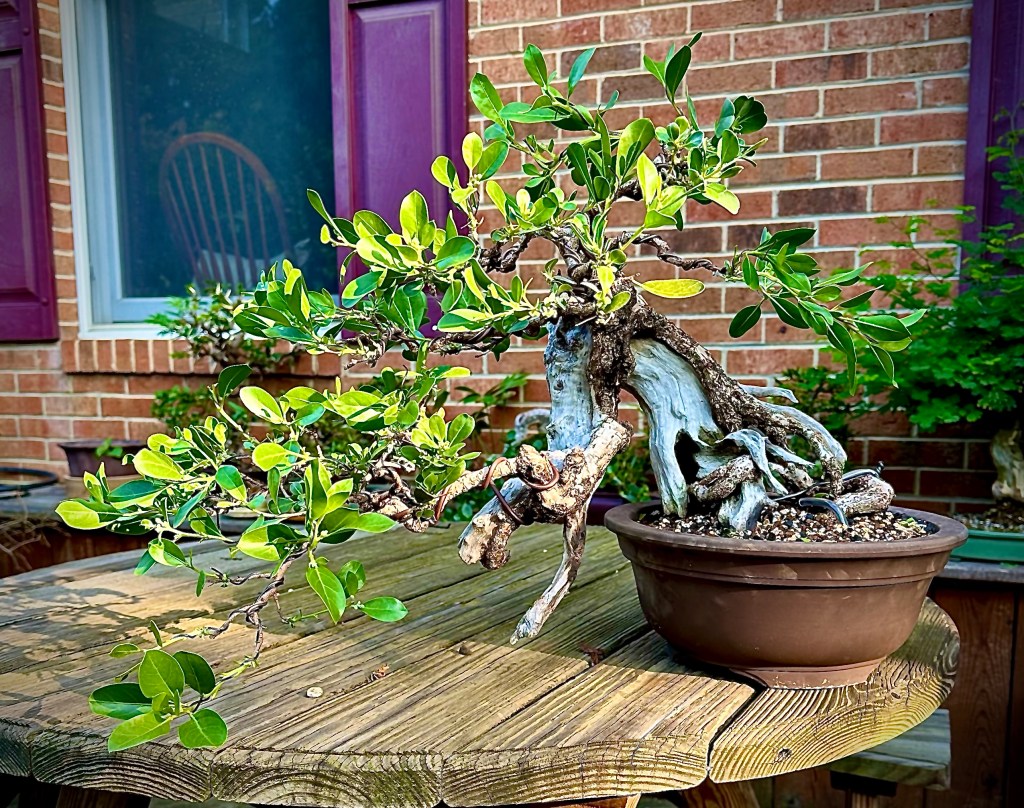
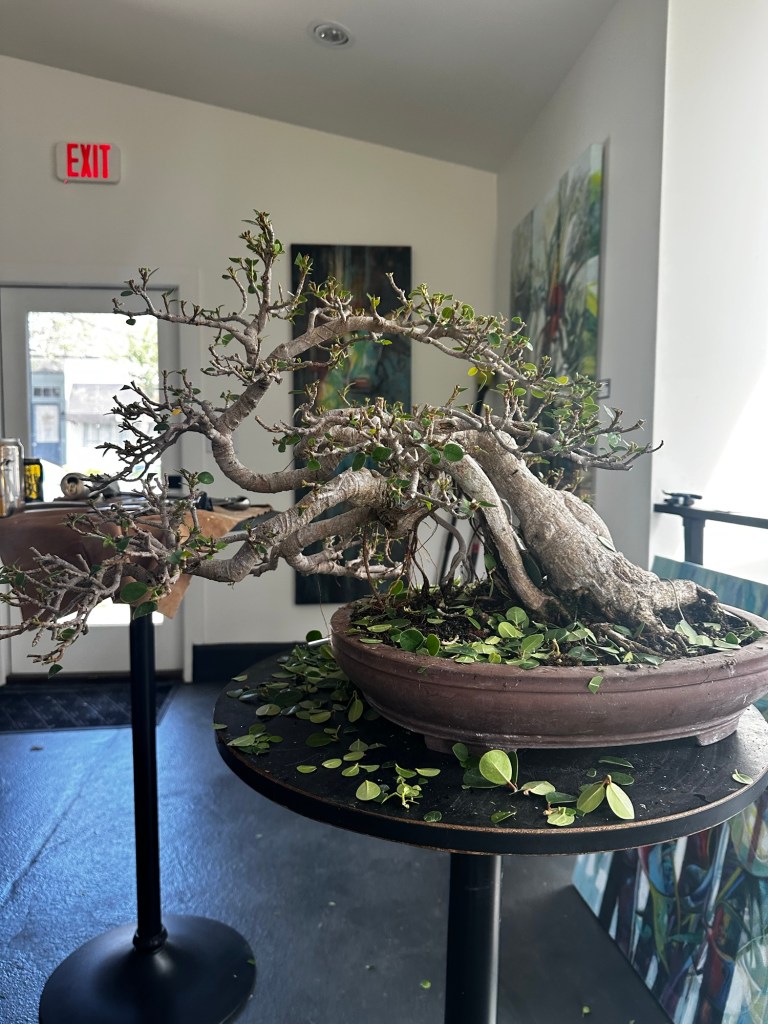
And now, the buttonwood.

It’s an impressive specimen.

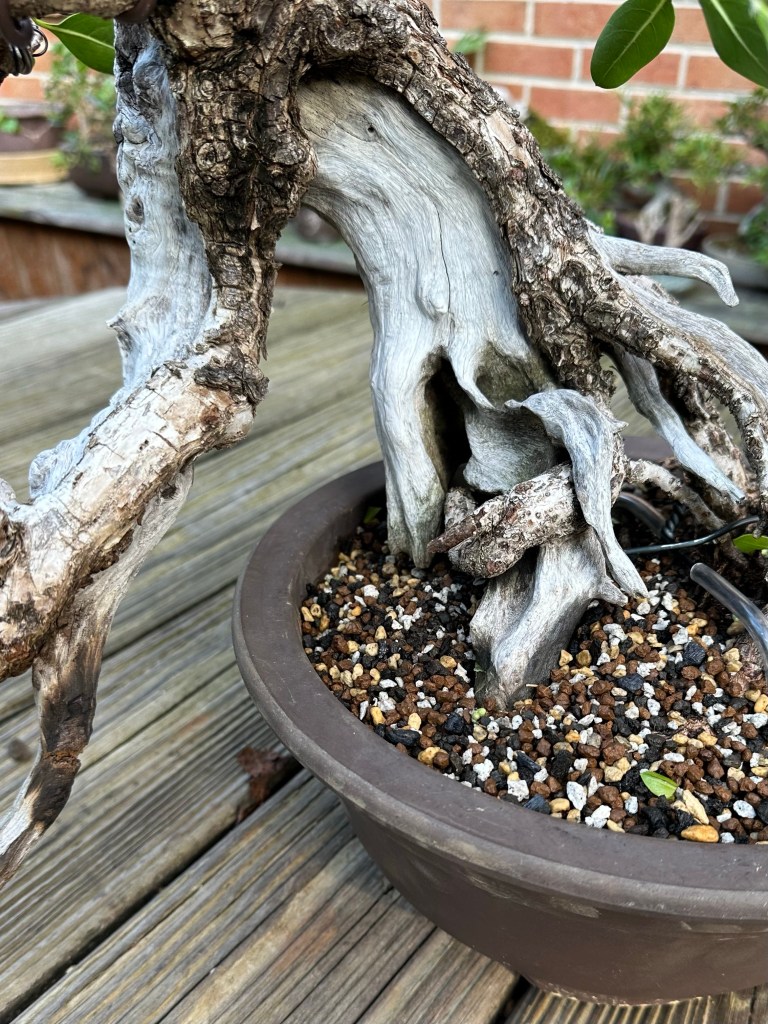
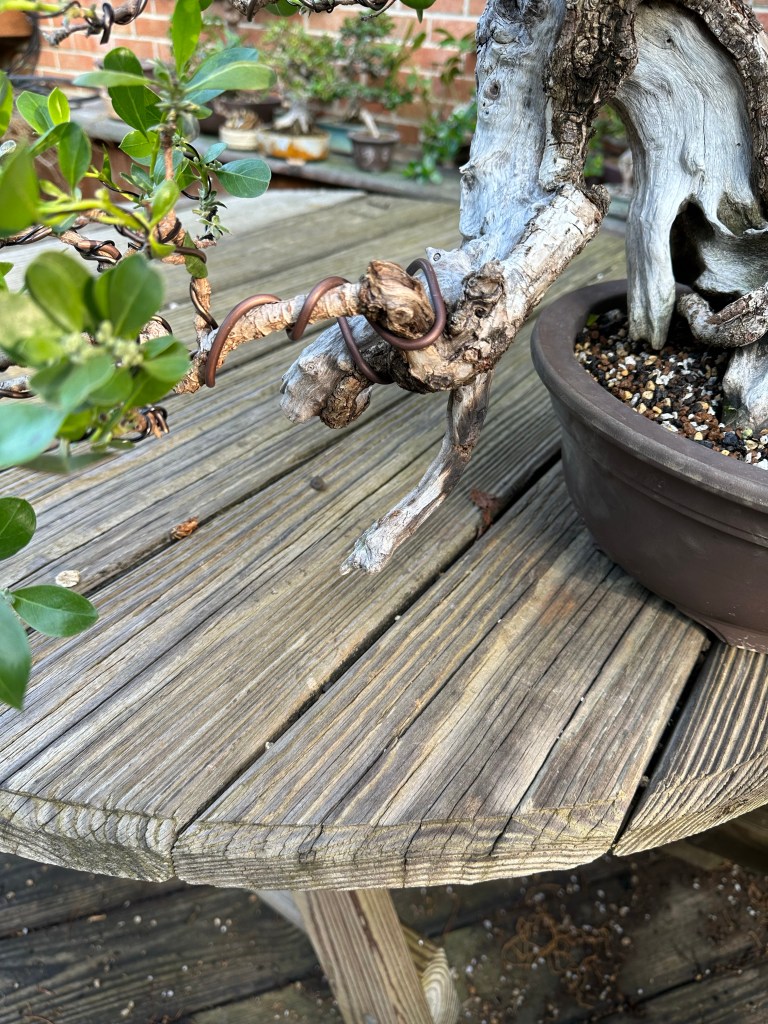
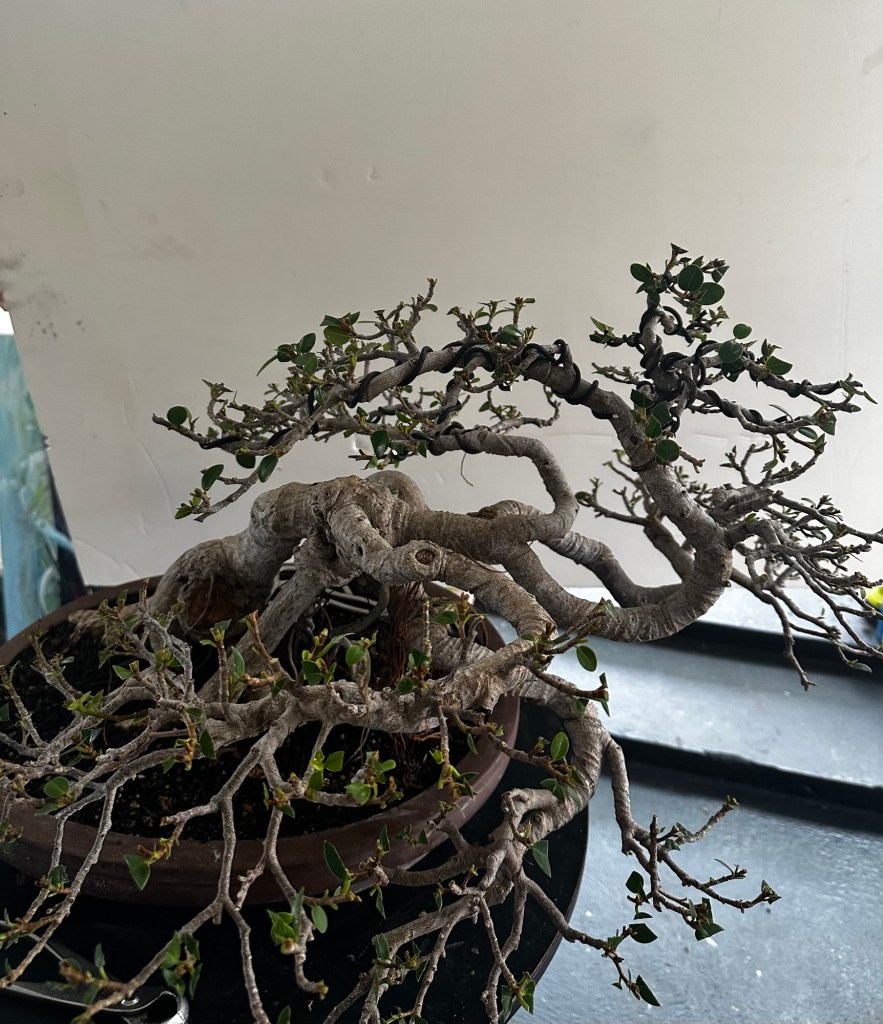
You can kinda see the burnt section where I tried to bend a straight piece of deadwood (middle of the below pic. It was ramrod straight).

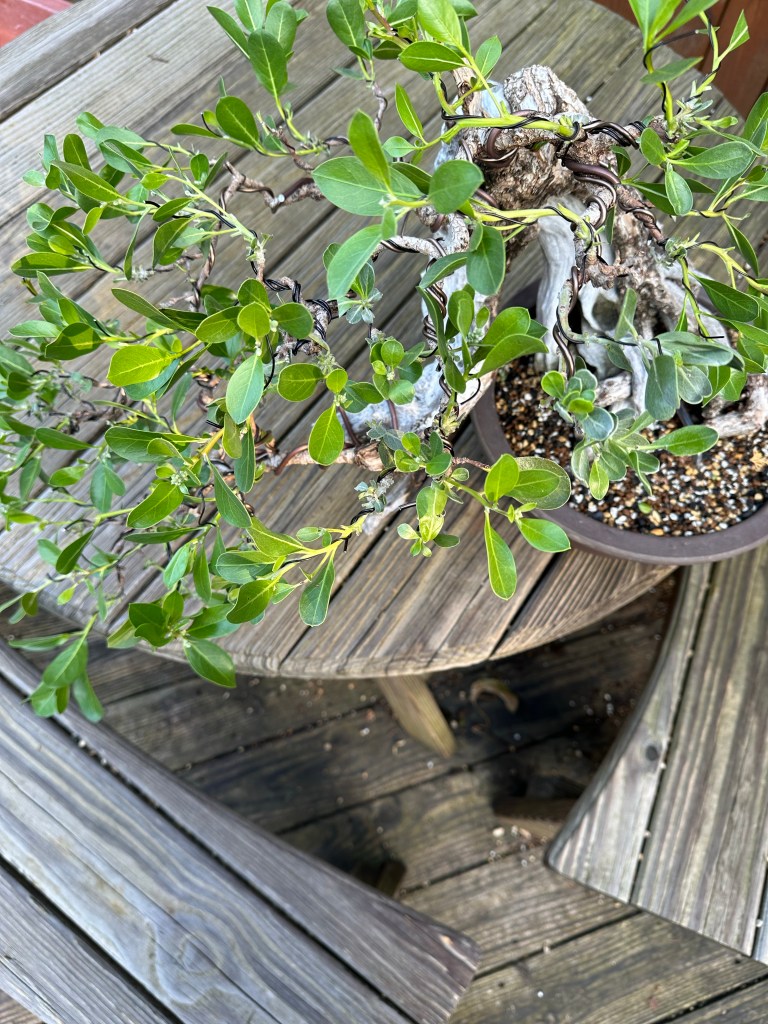
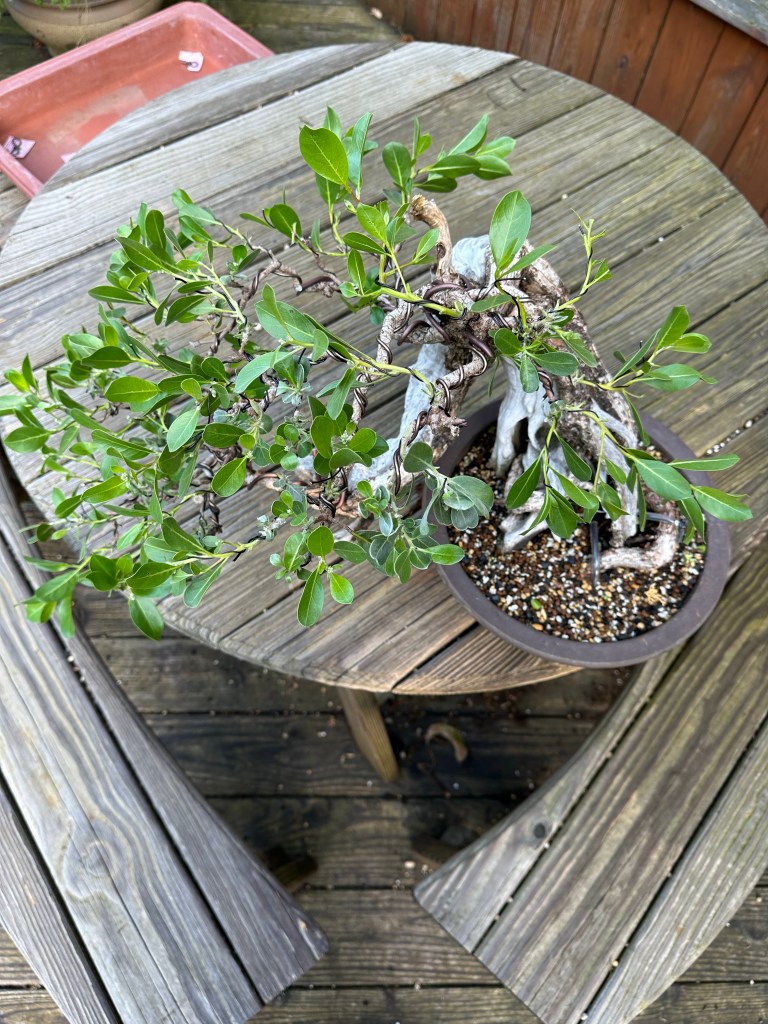
View from above.

The constant reader is asking, “Why are there still leaves on it?”

Well, we are in The North, and the sun isn’t quite so strong as in La Florida, so, even though we are in full summer, I’m not comfortable totally defoliating a buttonwood up here.

And the main thing I don’t want to do is to kill this special tree. We really beat up the roots when the repot happened, and foliage is what grows new roots, so I left the foliage. Simple calculus, as they say in the movies.

And the tree was collected by Mary. Here’s the last pic I got of her before she passed away (that’s her daughter Terri, behind her).

Mary was such a force in bonsai, it’s hard to believe she’s gone. I truly miss her. There won’t ever be a woman in bonsai like her again.

And it was an honor working her tree with LeAnn. Thank you!

One last tip, and I learned it from Mary. Since we beat up the roots so much, I advised LeAnn to set the pot in a tray of water. One deep enough to cover the drainage hole. This will help the tree to grow new roots. Contrary to what I’ve said before about air being important for root growth on other trees.

A buttonwood lives in the coastal saturated zone, where mangroves grow, by the ocean, and are used to water. In fact, to make a cutting root, the easiest way is the old fashioned “Put the cutting in water” method. Oftentimes (don’t tell anyone) when we collect buttonwood, it’s really just a big cutting, with no roots at all, and we place the tree into the pot, and, as LeAnn is doing, place that pot into a tub of water.

One can, as many often do in bonsai, point out the unscientific practices of bonsai people. I do it often. But I have a saying I use religiously, and it applies to bonsai practice distinctly:

“Horticulture is a science, but the practice of horticulture is an Art”

I’ll leave you with that to mull over. Quote it to your best friend and your most divisive foe. It’ll separate the wheat from the chaff, real quick.

Rock ‘N Roll

16 September 2023 at 00:31

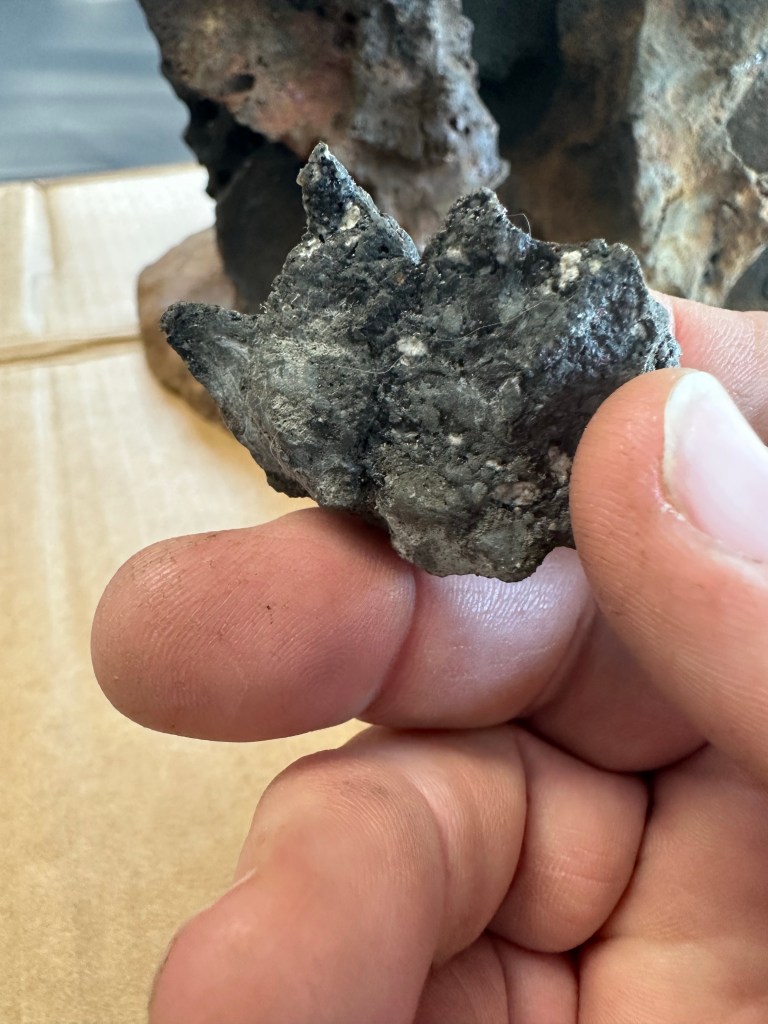
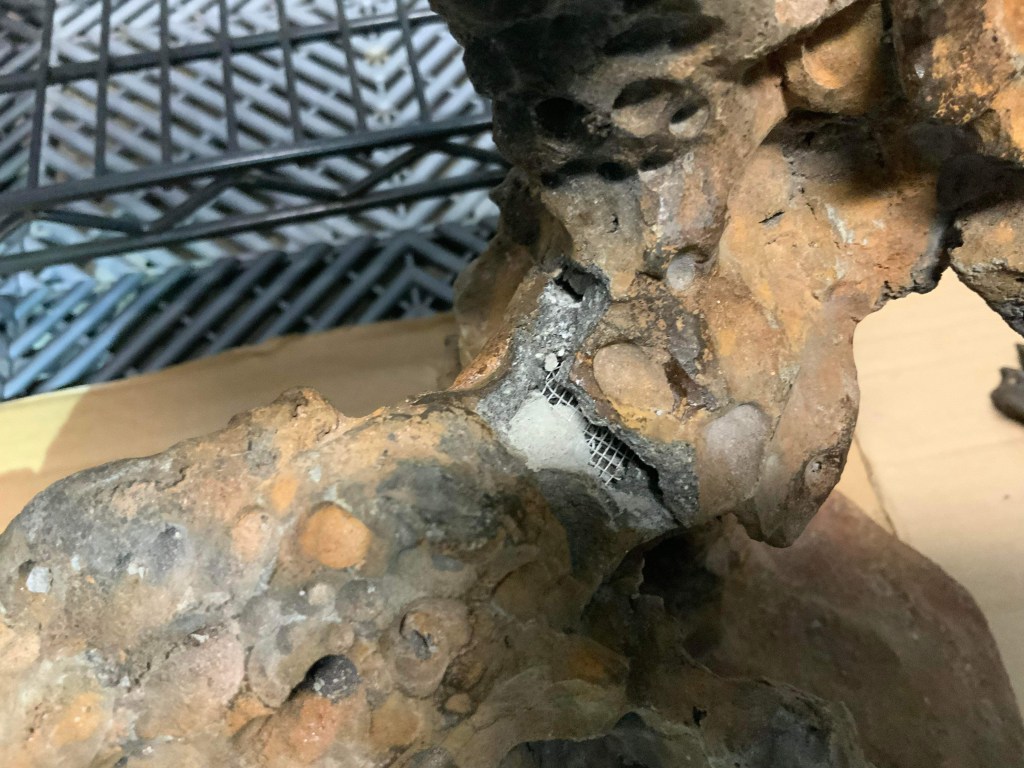
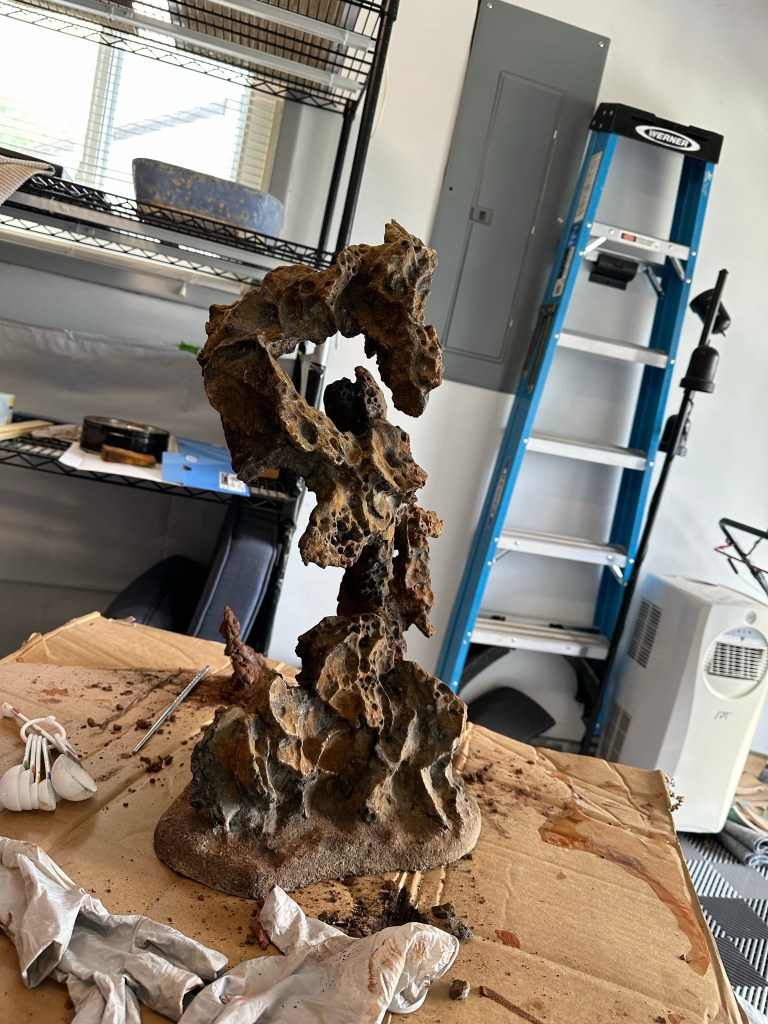
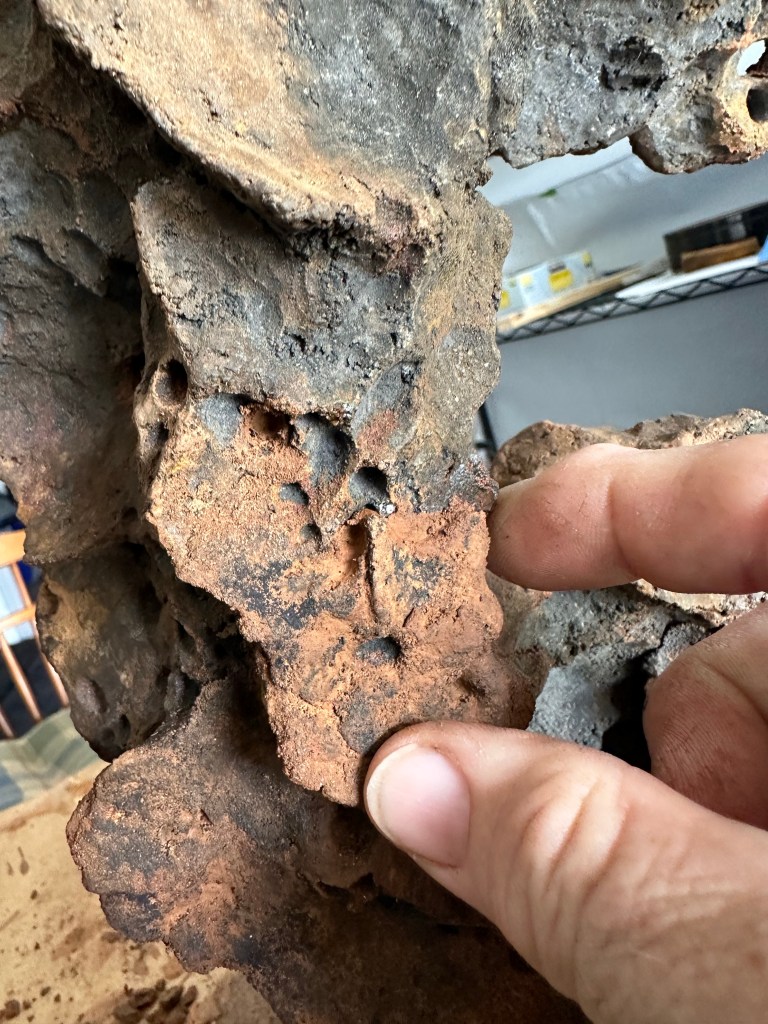
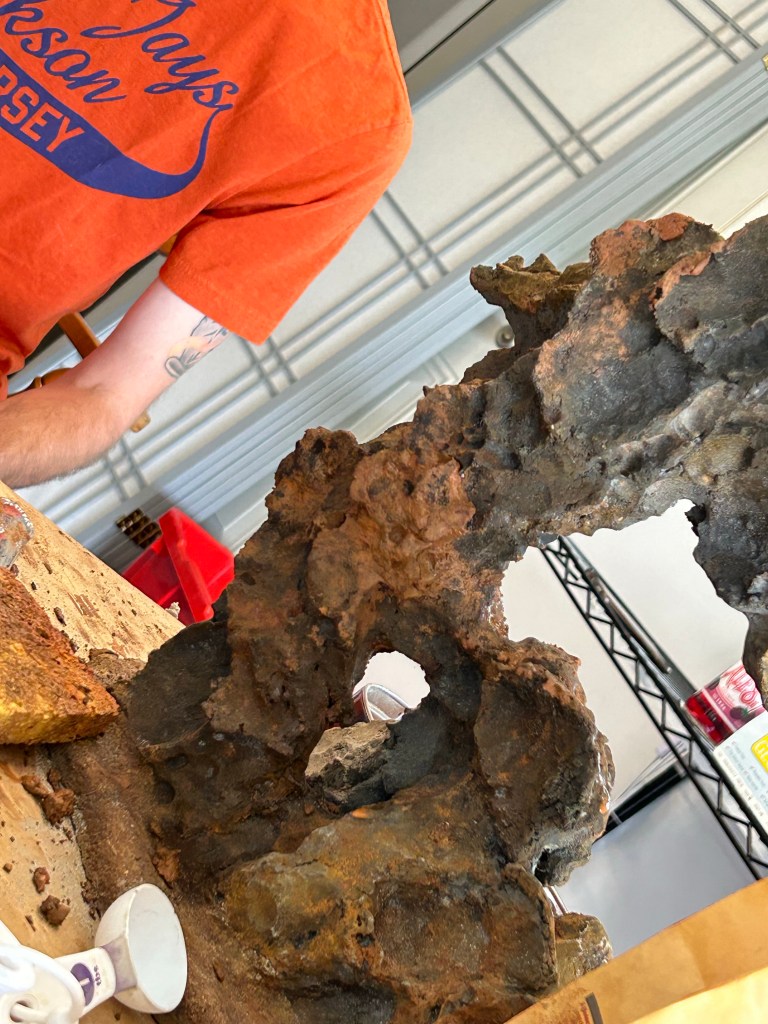
Now that’s a chunk of a block of a rock or something. Actually, it’s concrete, a manmade rock. But it’s “done broke” as they say…

It looks like a reptiles beak, below.

The story begins with a text, including some pics and videos, from Cincinnati.

The text was from Brendan. Say “Hi!” Brendan:

That’s him, my wife and me.

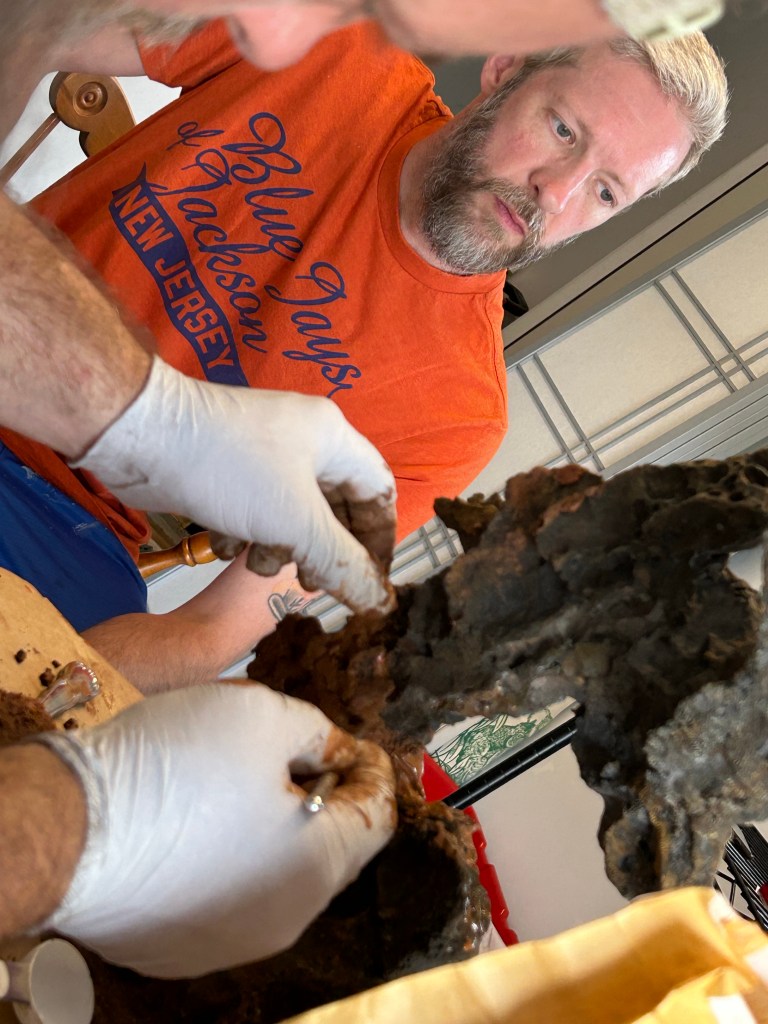
He got this “stone” from Poland, believe it or not. From a guy named Jacek Motyl. He makes rocks. Amazing rocks. Click on his name.

Anyway, Brendan ordered this stone and Jacek shipped it to him. In transit, it got “done broke”.

I’m not blaming the packing job. Jacek packed the rock well. I’m not blaming the Polish post office. Nor the USA postal service.

Let’s blame providence. The rock breaking gave me an opportunity to try something I’ve never done before. Sorry Brendan. Yes, this is my first attempt. I shall try my best sir.

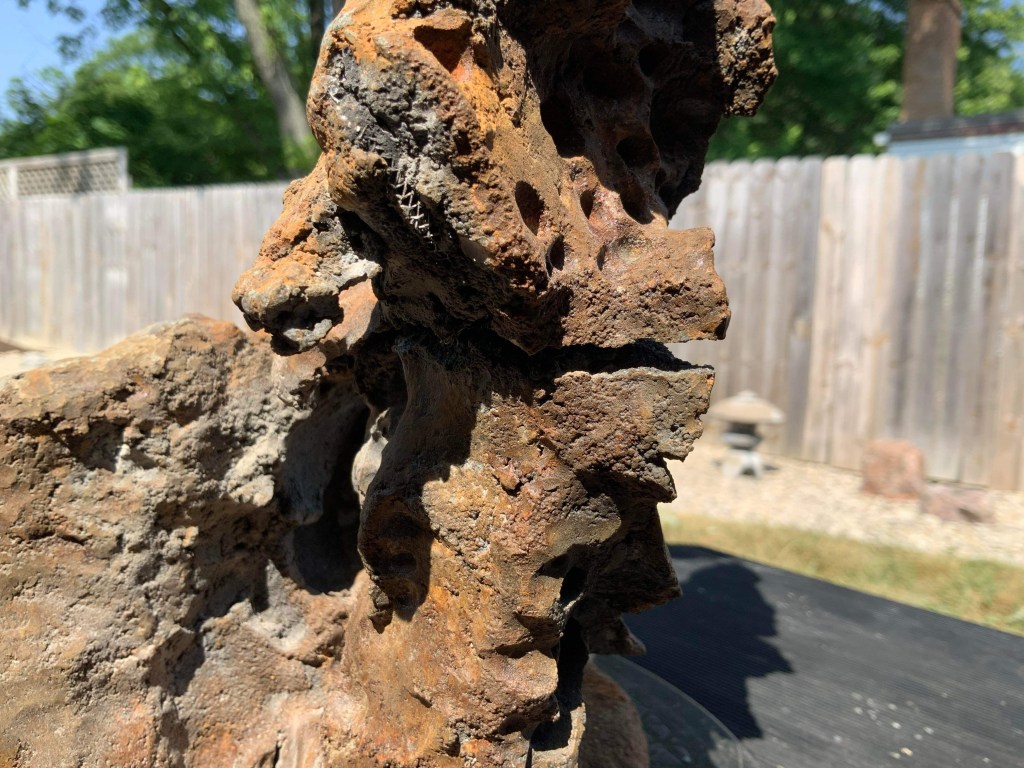
The type of rock is technically called “tateishi”, or standing stone, used in a root over rock style called, in many modern spellings, “ishisuki”. When I was growing up in bonsai, we spelled it “ishitsuki”. Yeah, ishitsuki, I shit you not….but the modern spelling helps us to pronounce it correctly. The “T” and the “S” make a singular sound in Japanese. Kinda like an “tssss” sound.

Anyway, that’s my joke about root over rock style. It’s better in person, with the hand gestures and all.

Watch the video below to see how bad the break is.

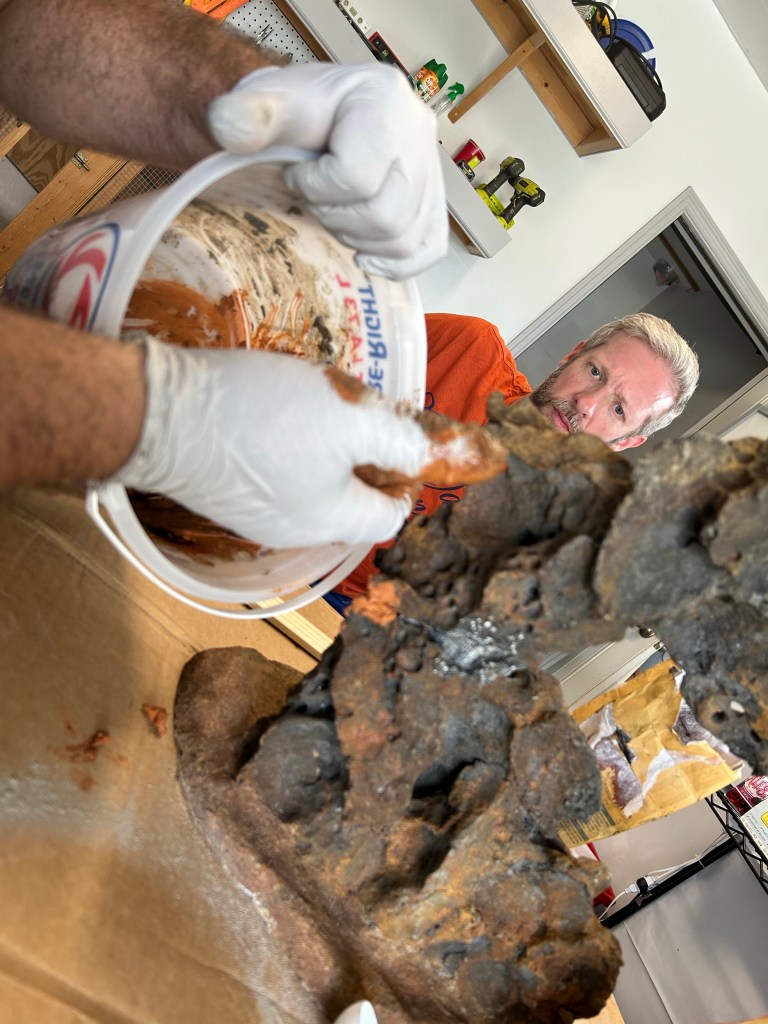
Not to give away secrets, but the shape was created by taking screen or hardware cloth and making the basic shape.

Then the screen is built up with cement. And colored, shaped, sculpted, aged, etc.

Pretty cool right?

My job is to fix the break and match the colors and texture. So I first had Brendan try to find Ciment Fondue. I had remembered reading about the stuff reading in the old books and magazines when I first started in bonsai (books and magazines are these amazing learning tools that one held in one’s hands, printed on paper. You would flip pages and read and the knowledge was amazing. I could tell you about encyclopedias but you’d zone out quickly).

Brendan couldn’t find Ciment fondue. Searching on google, I found it. What is it?

CIMENT FONDU® is a hydraulic binder with an alumina content of approximately 40%. Composed mainly of calcium aluminate.

It’s a brand name, only available in Europe, so I told him to find something similar. And he did.

Refractory mortar.

Why something similar? So it expands and contracts in similar ways to heat and cold cycles as the original sculpture. And refractory cement is waterproof. An important thing up north, as water freezes in the cold, and can explode our rock. That might sound spectacular. But that’s not conducive to stable bonsai plantings.

There’s something soothing playing with cement.

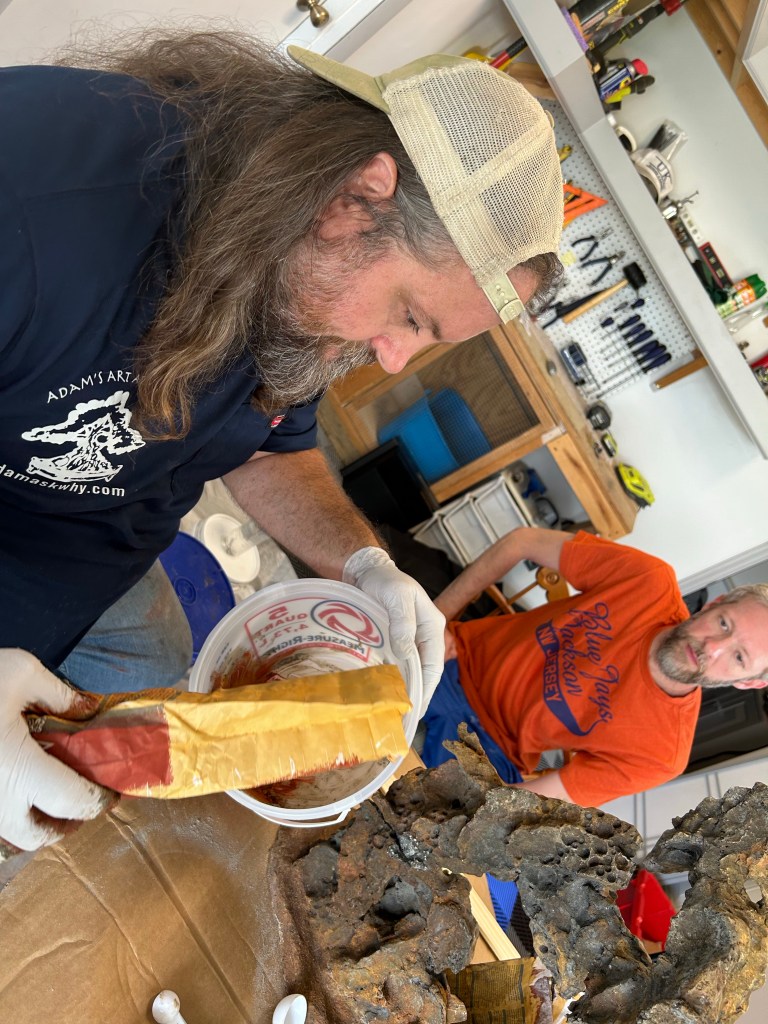
Measure out a portion….

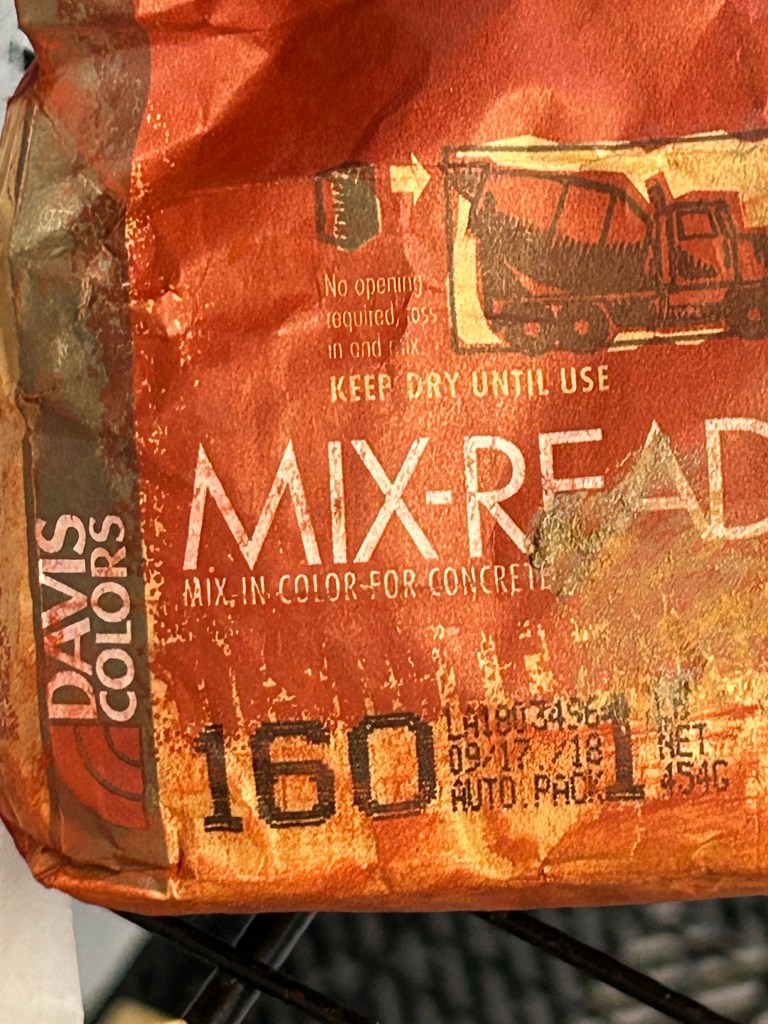
Add color (we had red, tan, called buff, and black. I eyeballed it).

And a trick, don’t mix it fully. You want variations.

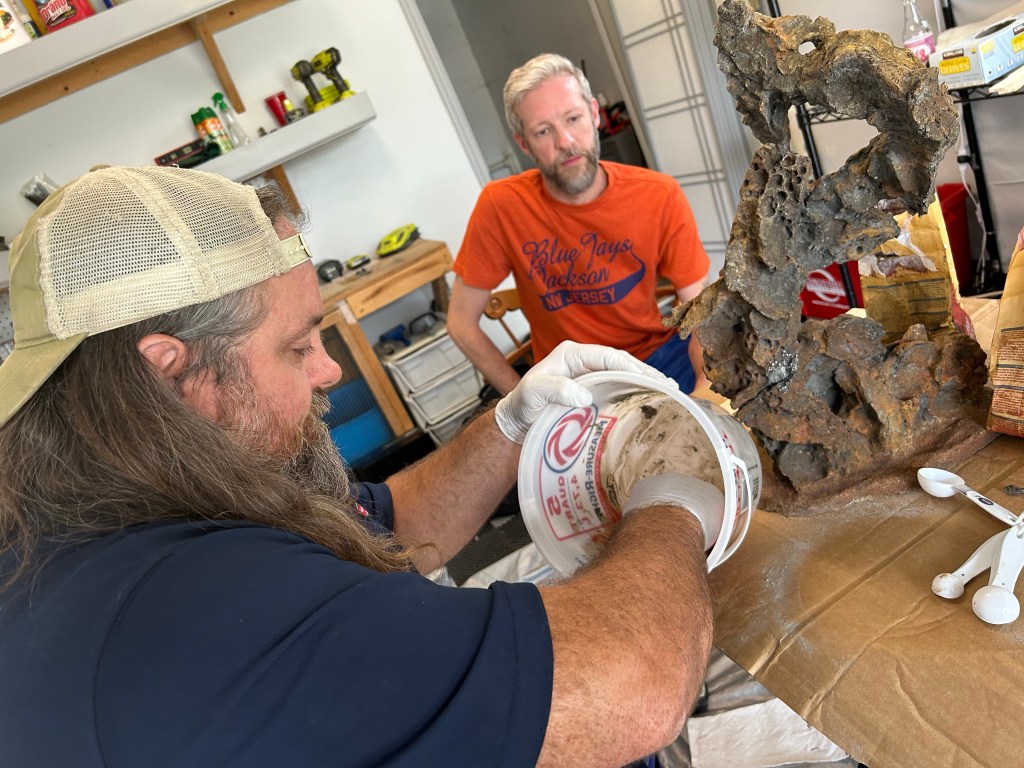
Add water.

And move fast.

Brendan was watching me closely.

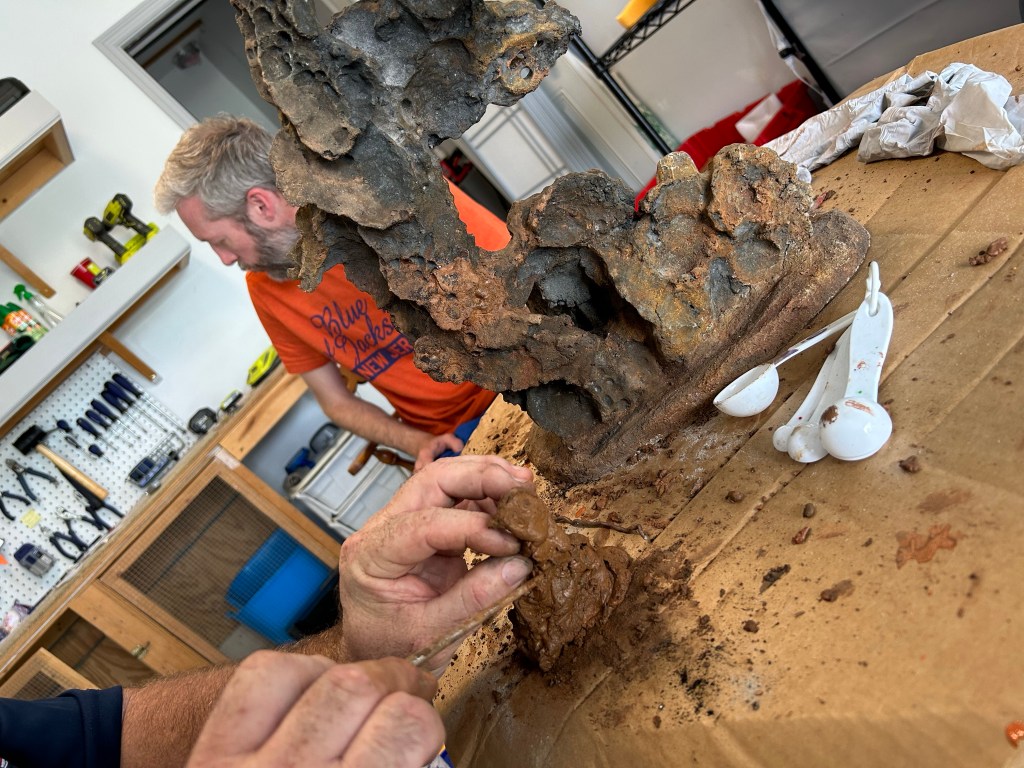
I smeared it, chopsticked it, blotted it. It’s a feeling thing.

I made sure to push the material into the cracks to ensure the repair of the rock, and not just make an aesthetic facade.

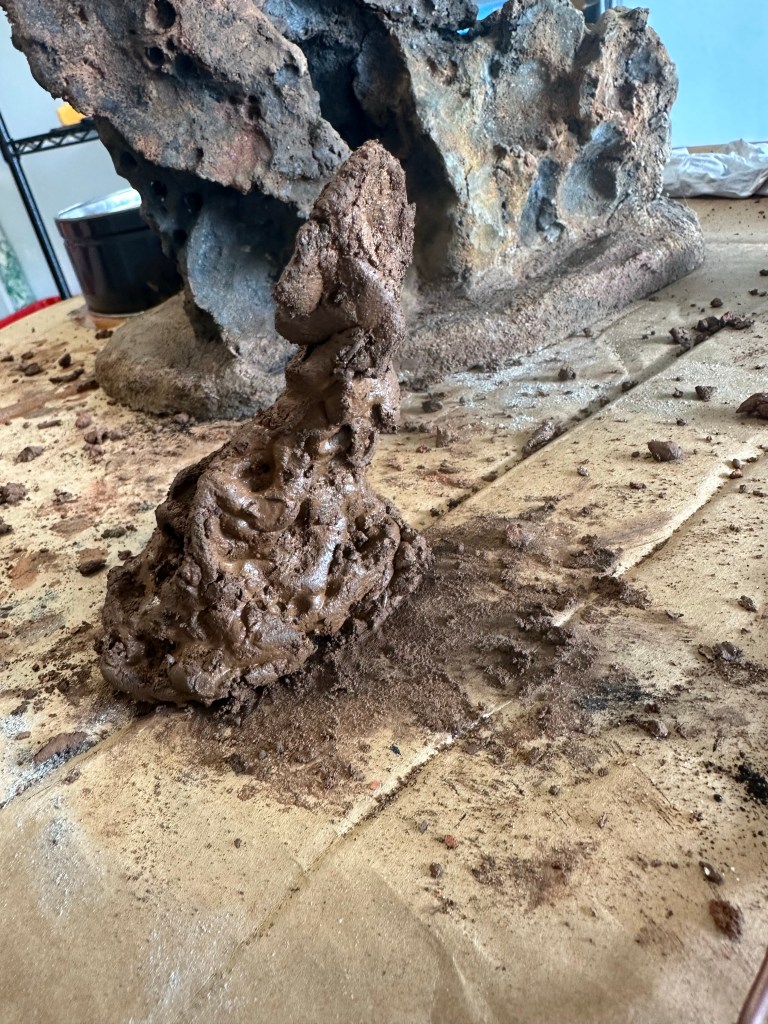
And with the leftover cement, I played around a little.

Yeah, I know what it looks like.

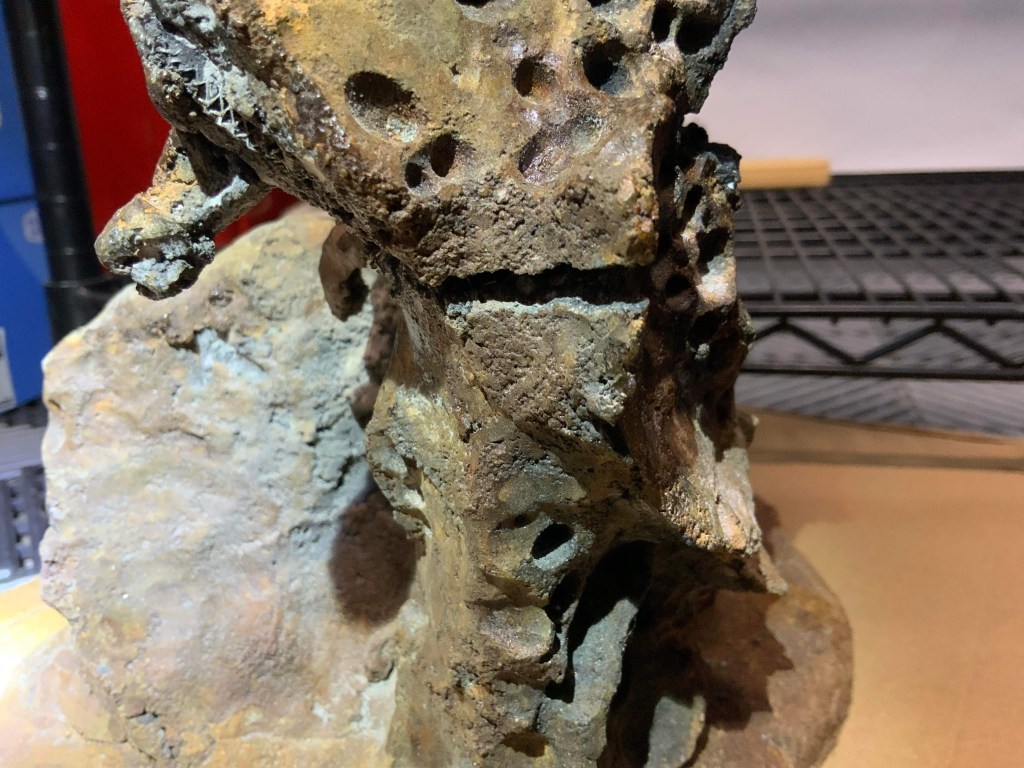
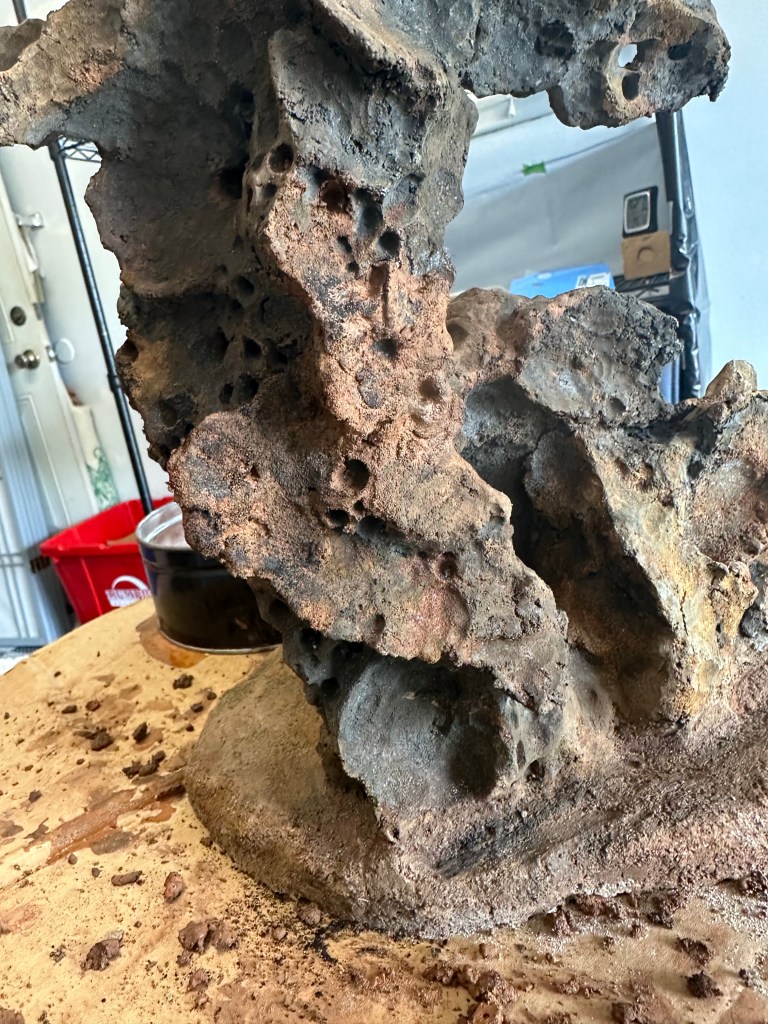
After the repair dried, I think it looks good.

I matched the texture and color. But most importantly, it’s solid.

I wouldn’t drop it, but it’s one piece again.

Below, is where I cemented that chunk back into place:

The “beak” is gone.

Now it’s up to Brendan what to do with it.

It’s a Hard Rock life, for m’trees, it’s a Hard Rock life, for me

15 July 2025 at 14:43

Carry on my wayward sons, or trees….or something like that.

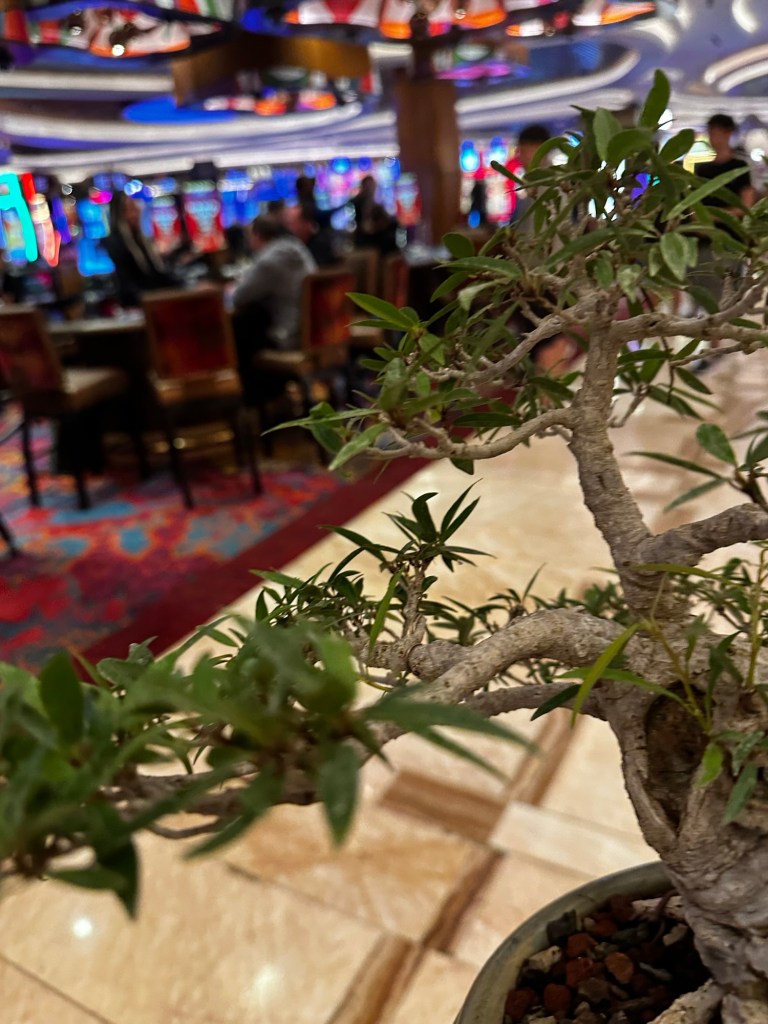
Here I find myself in a hotel in Hollywood.

Florida, not the hotel in California. Where you can’t never leave.

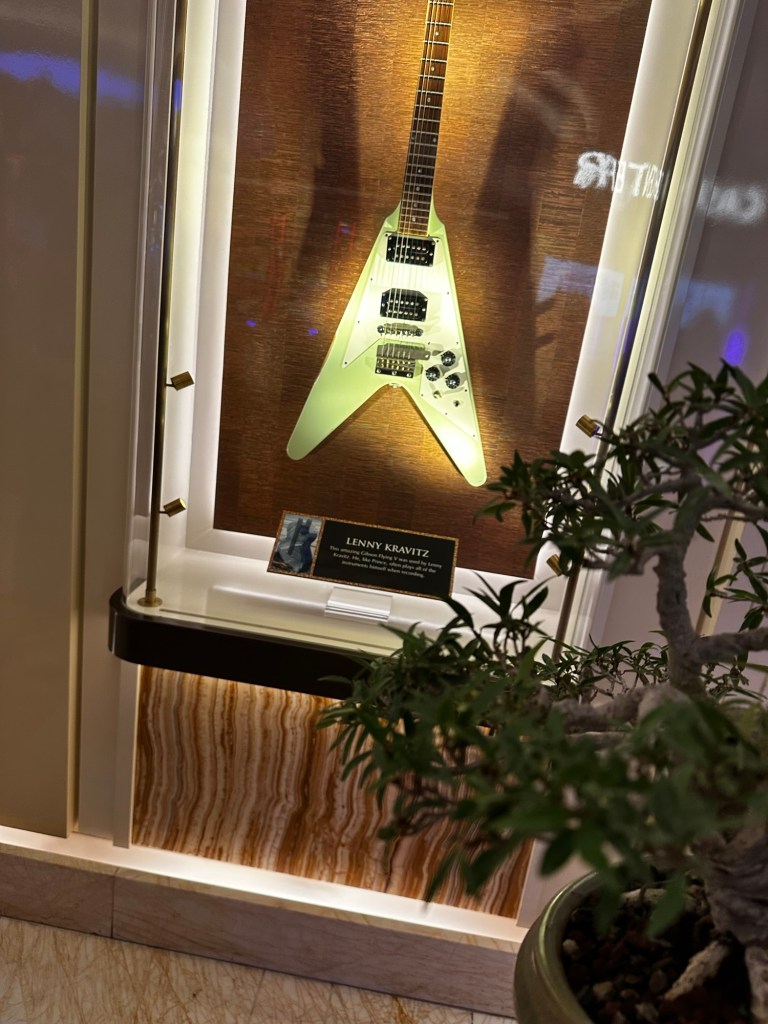
I’m at the Seminole Hard Rock Hotel and Casino. It seems there’s a place way down south in the Everglades, where the black water rolls and the saw grass waves.
The eagles fly and the otters play in the land of the Seminole…

I could catch a show, eat a meal, go swimming, gamble and win (most likely lose). But they’re never gonna catch me cuz I have one more silver dollar.

I have some work to do. Takin’ care of business, so to say.

Or, tomorrow morning I have work to do.

Nightie night…..

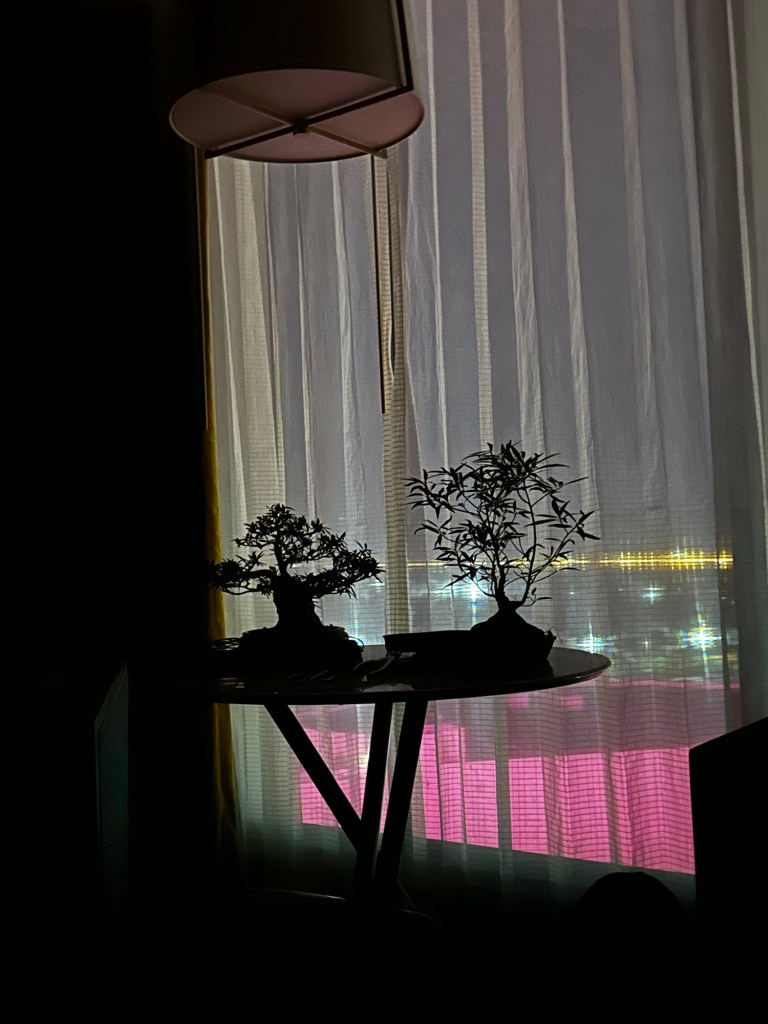
Here comes the sun….

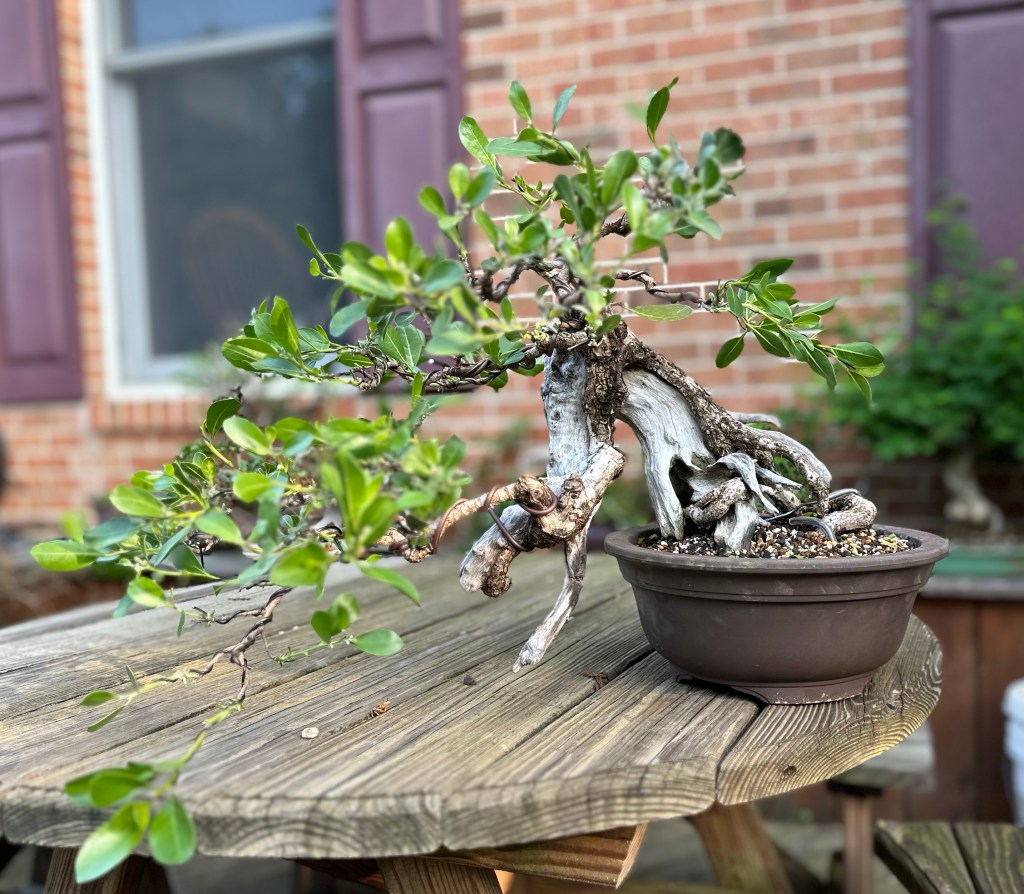
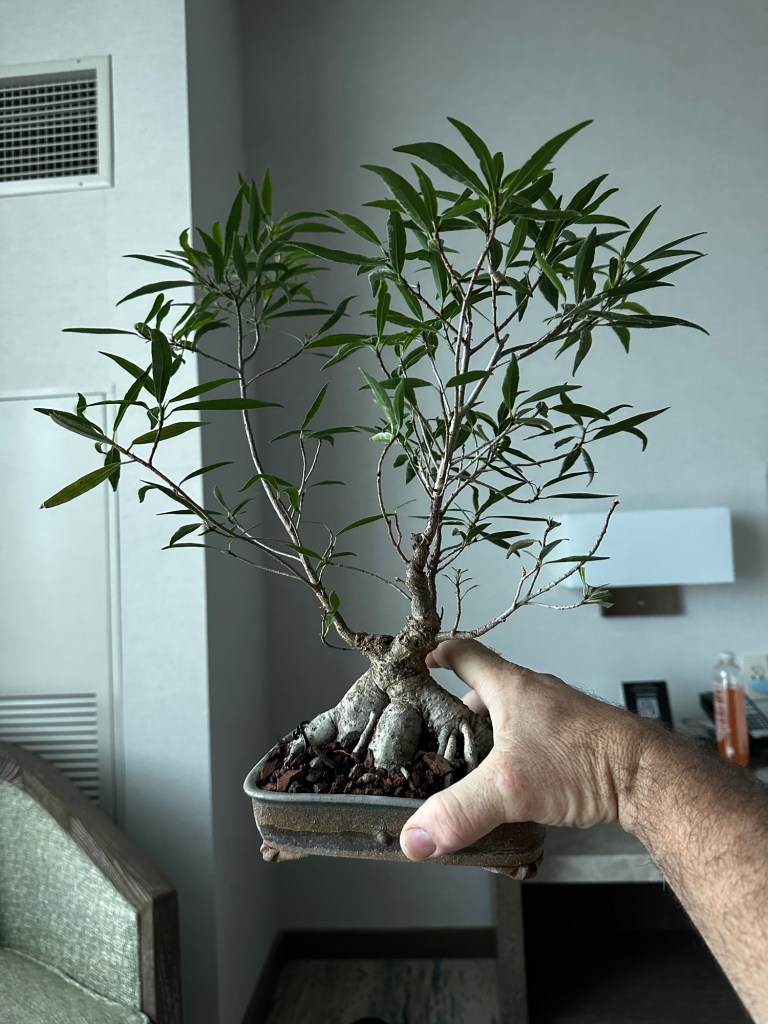
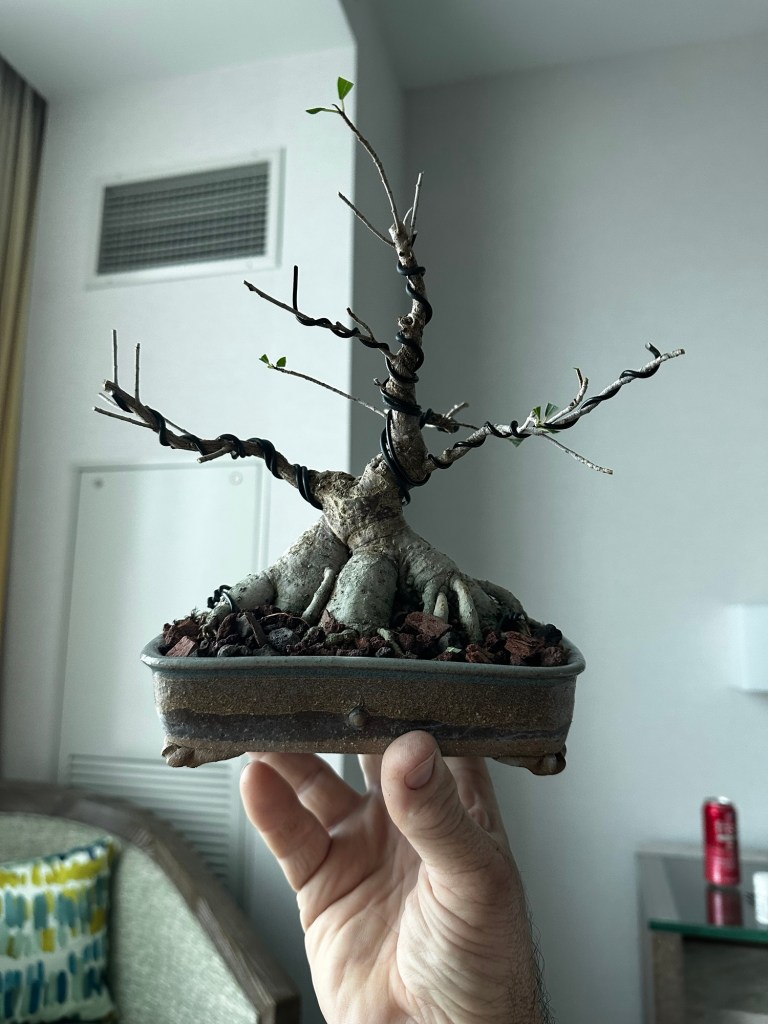
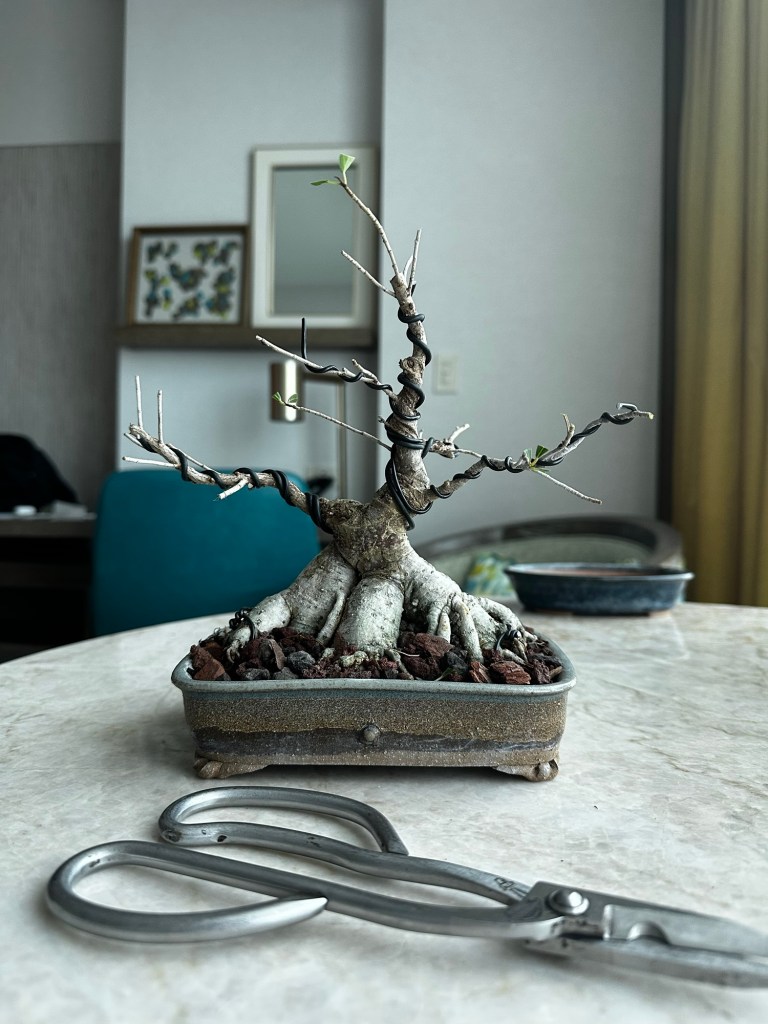
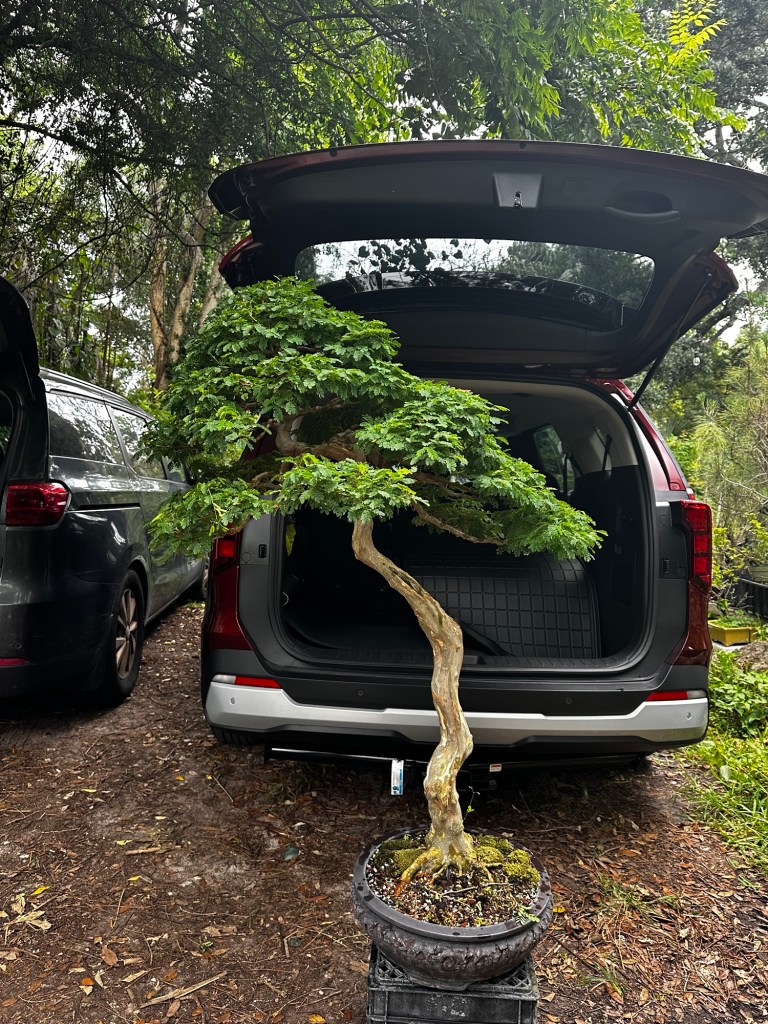
And the tree. A willow leaf fig. Ficus salicaria. What’s a more Florida tree than the one bonsai species that was first discovered here. And not too far from this place. The very first bonsai made from the willow leaf still exists and lives down on the east coast of La Florida. Very far from the Florida:Georgia line.

The tree came from Mike Blom, of Emblem Bonsai. He’s one of Florida’s best. He takes the time to develop the trunk and works to make the stock plant the best it can be. The pot is an early Taiko Earth container, by Rob Addonizio.

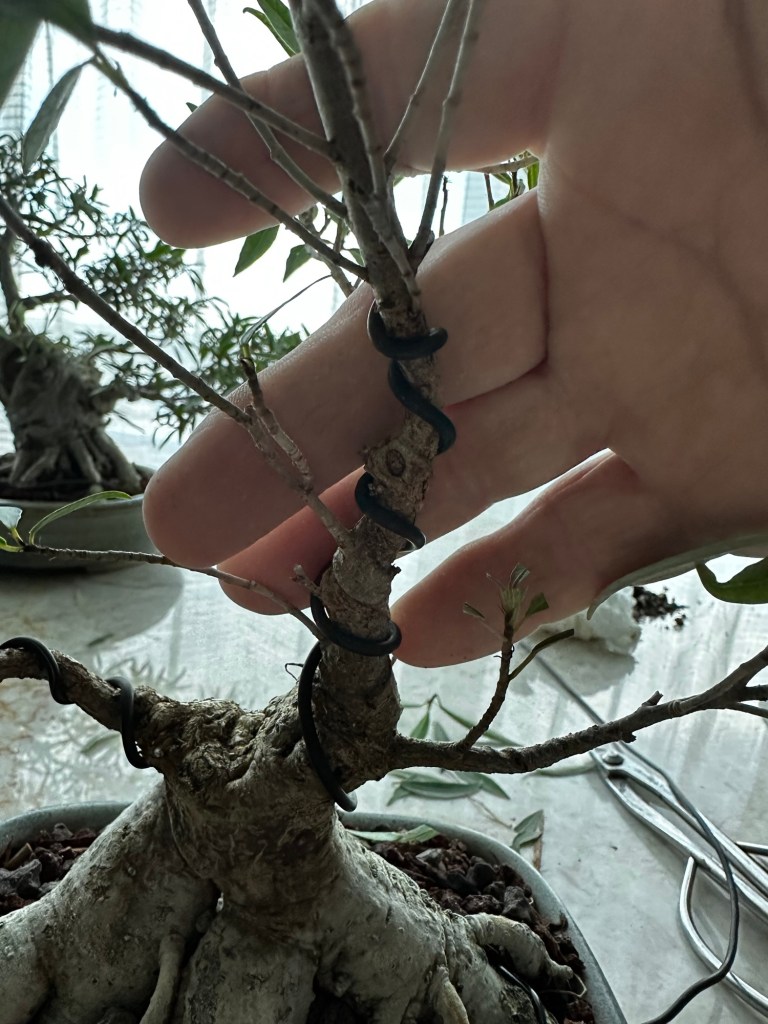
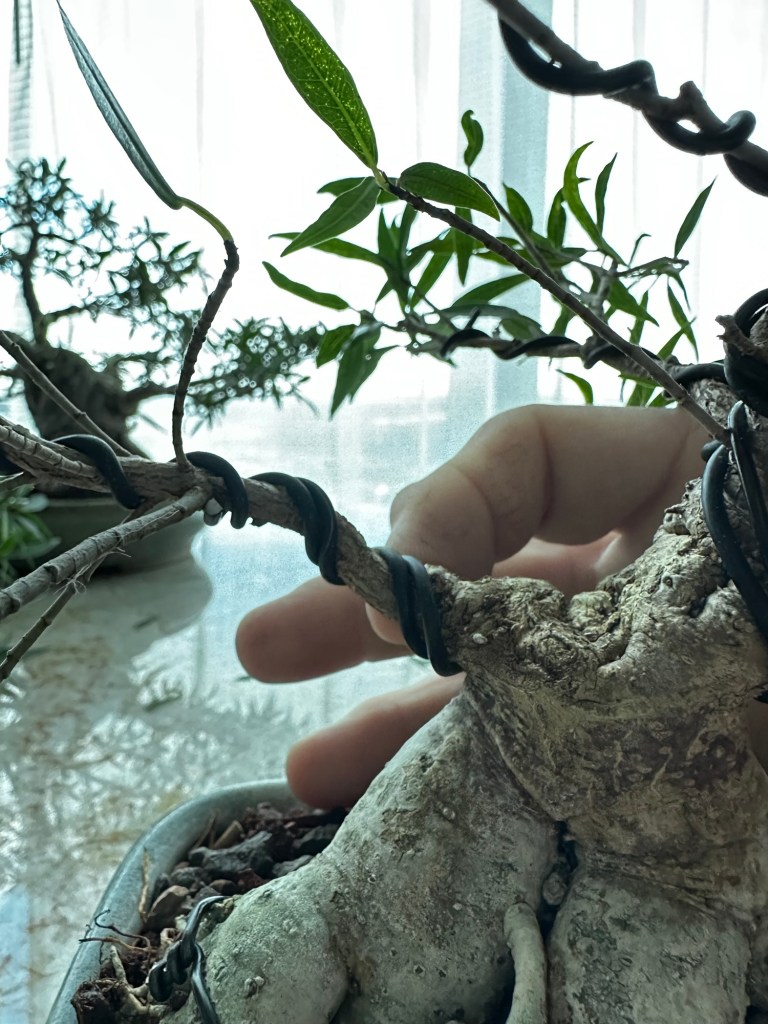
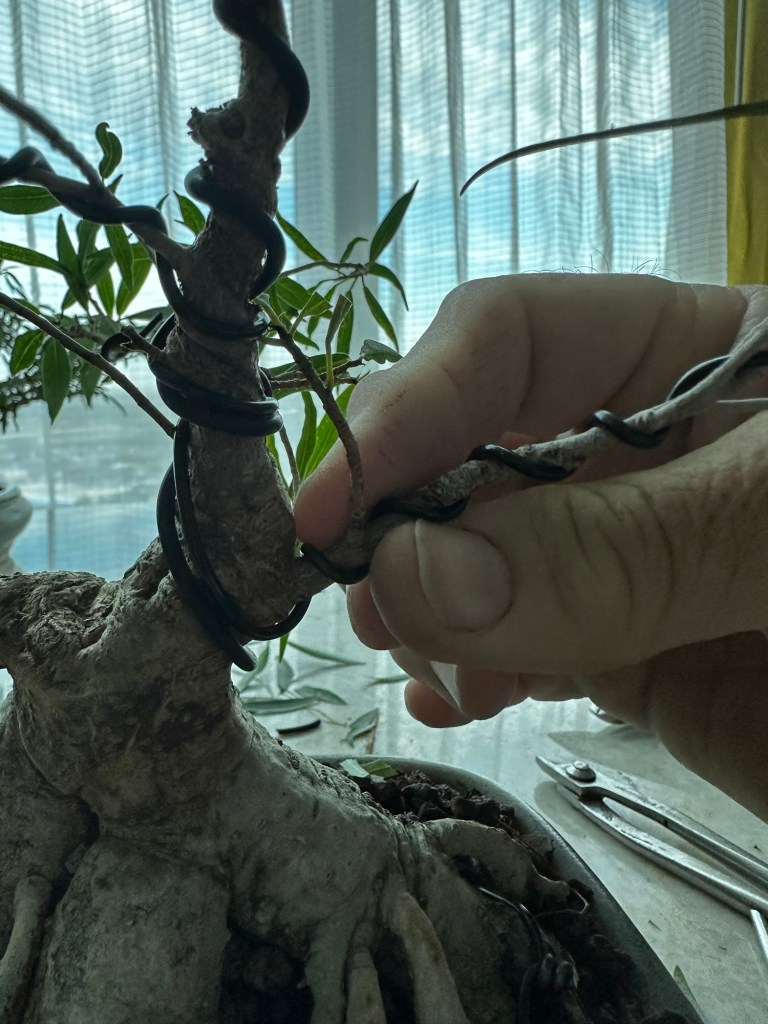
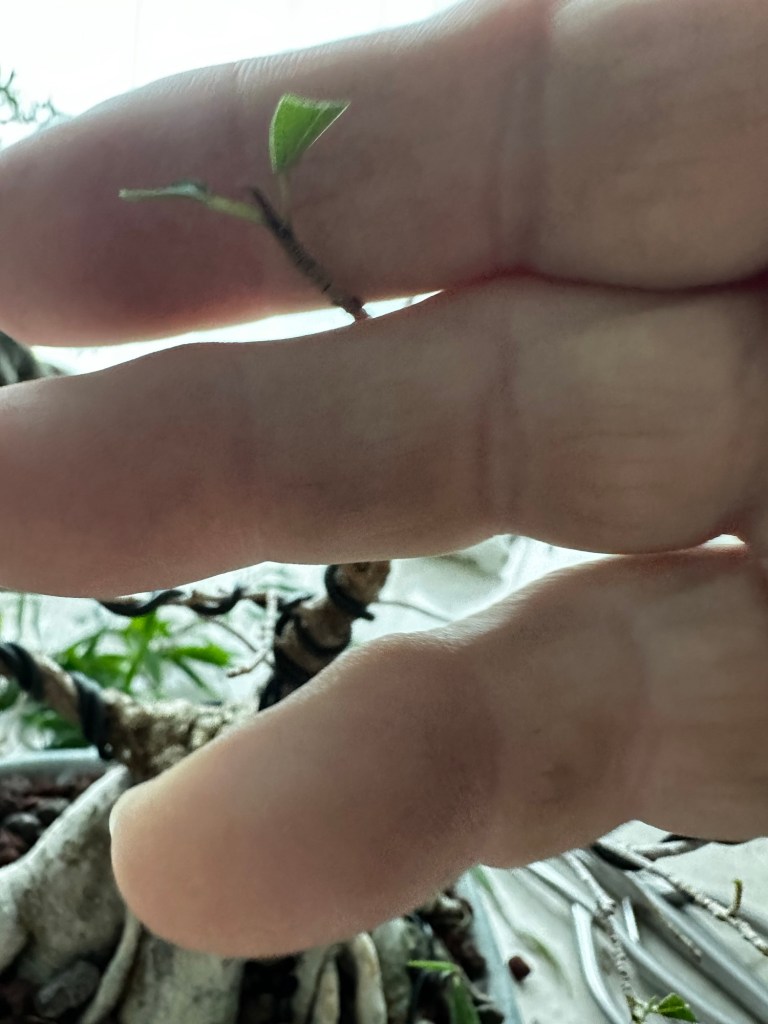
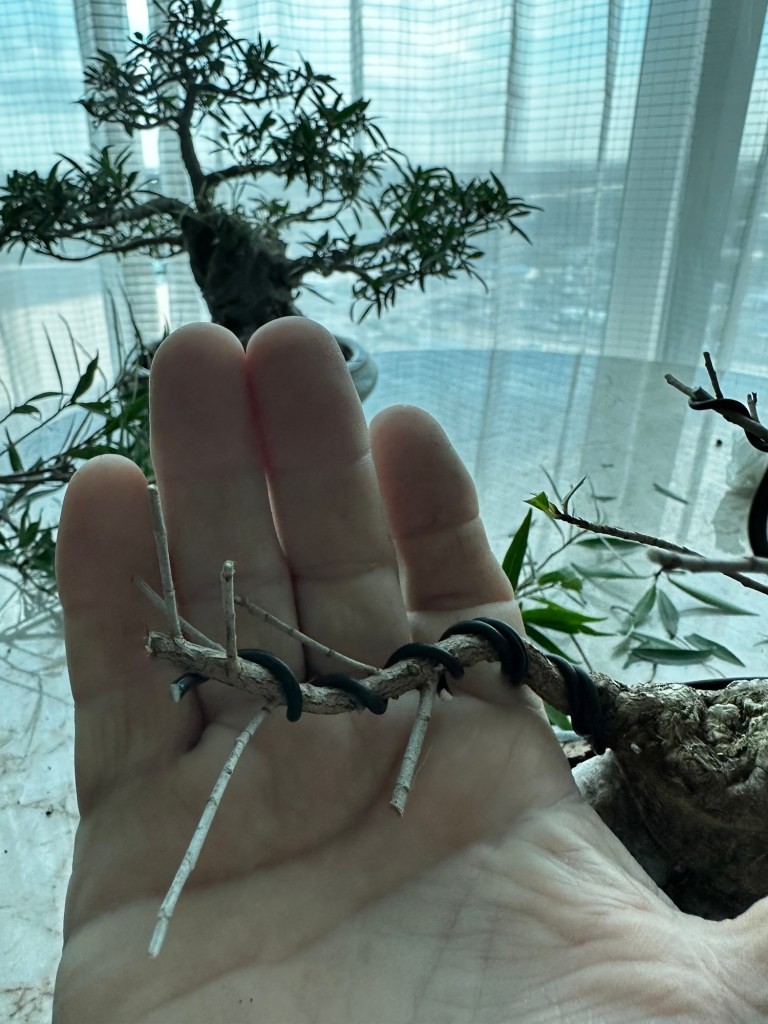
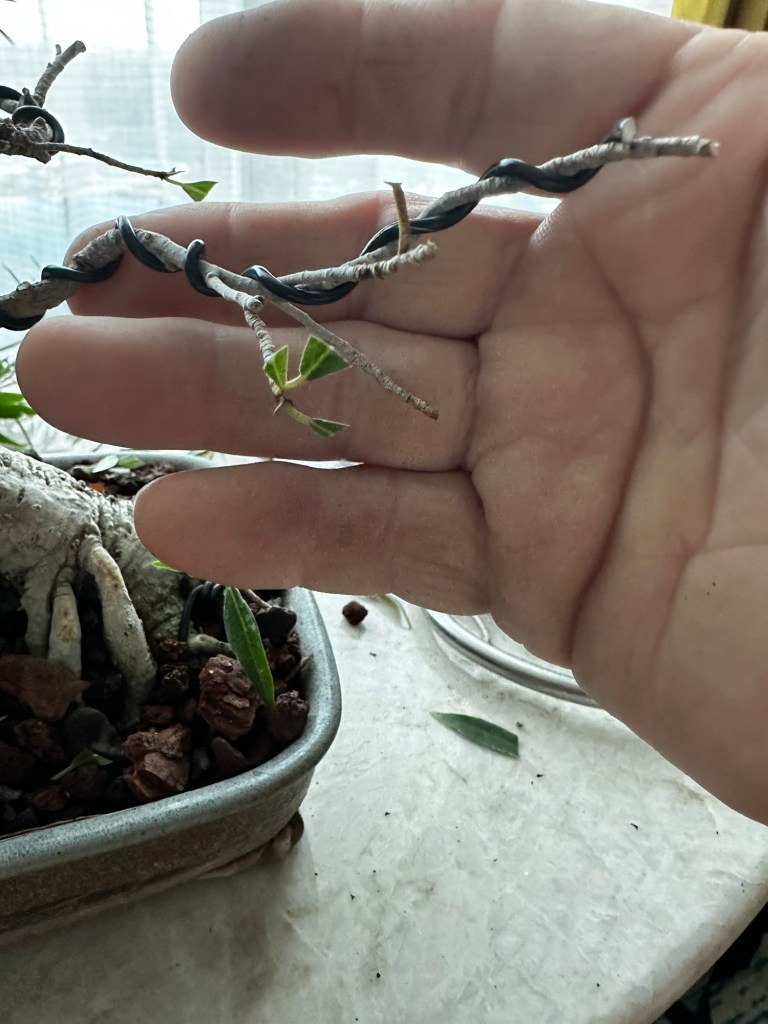
I didn’t bring any number one wire, so just the main branches will be wired.

They already have a strong upward bend so I’ll keep that movement and exaggerate it. An artistic concept we use in bonsai is the repetition of shape and line. This brings the character of the tree into a more honest representation of itself. The branches should tell a story. Say we have a mountain for or spruce in a place where winter dumps hundreds of pounds of snow on the trees and plants growing there. The branches tend to start growing down right from the trunk.

This tree, a purely tropical species, tends to want to grow up first.

Now, don’t get me wrong, we can style the willow leaf ficus as though they are conifers (in fact, here’s a post where I did just that: This is what happens when you leave a tree at my nursery)

I consider them one of the best species for bonsai mainly because they will, much like a juniper or Chinese elm, they can be made into almost all the styles. Cascade? Yeah. Upright formal? You bet. Windswept? If you want. Bunjin? Definitely.

And they grow and backbud like insanity in a tree. A trunk chop will result in buds right from the chop sight, usually double digit amounts. You can totally redesign one of these trees every ten years and the tree will thank you for the makeover. I’ve heard twice from returning westerners who’ve apprenticed in Japan that ficus in general just grow too fast for the Japanese masters.

Imagine that.

That’s one reason we in Florida tend to put them into bonsai pots when developing them, it slows the growth might so that we aren’t unwiring and then rewiring every week when it starts to cut in.

How’s that? I like it. It could have better taper….if it were a Hershey’s Kiss.

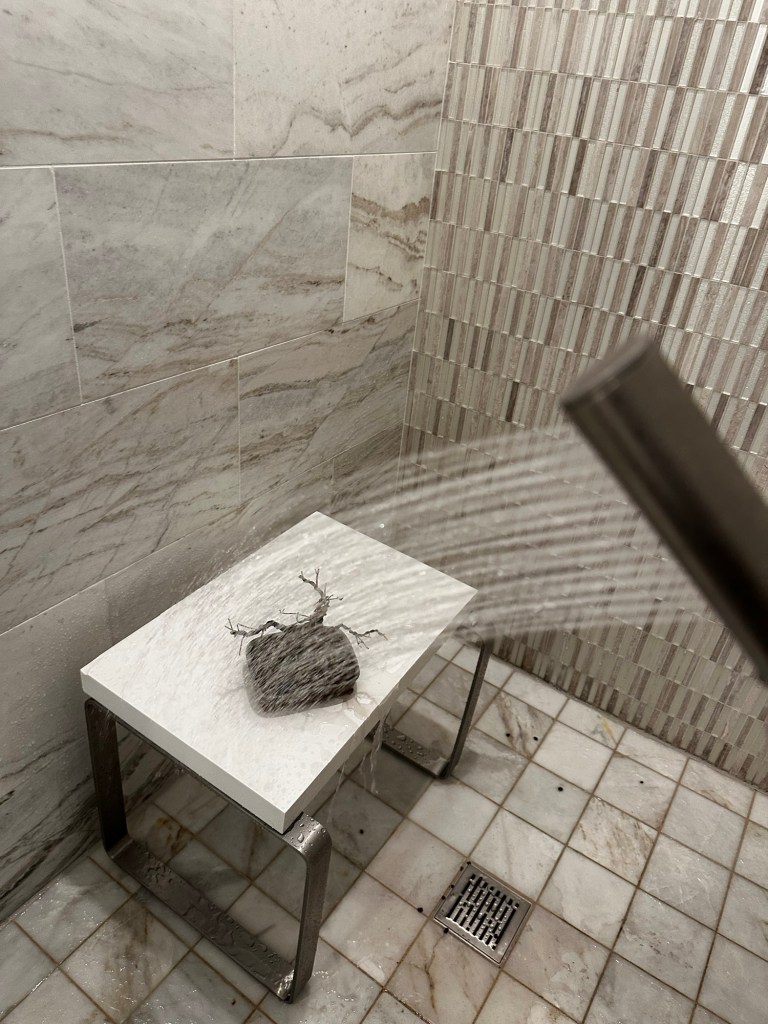
Some water…

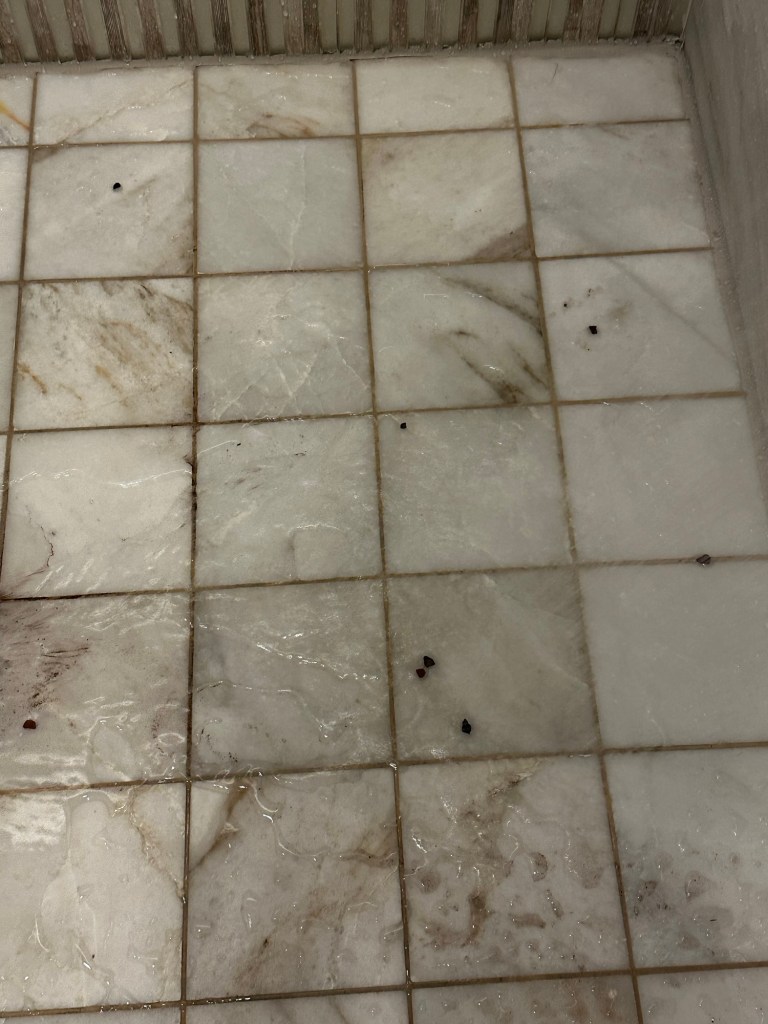
Whoops, made a mess in the shower.

Now it just needs some sunshine. Let the sun shine….and you thought I ran out of song lyrics, didn’t you?

Now it’s breakfast time.

WAIT, WHAT? $32 dollars for two eggs and bacon….I thought casinos had cheap food?

❌