Normal view

Received before yesterday Adam's Art and Bonsai Blog

LeAnn’s buttonwood

6 September 2023 at 23:02

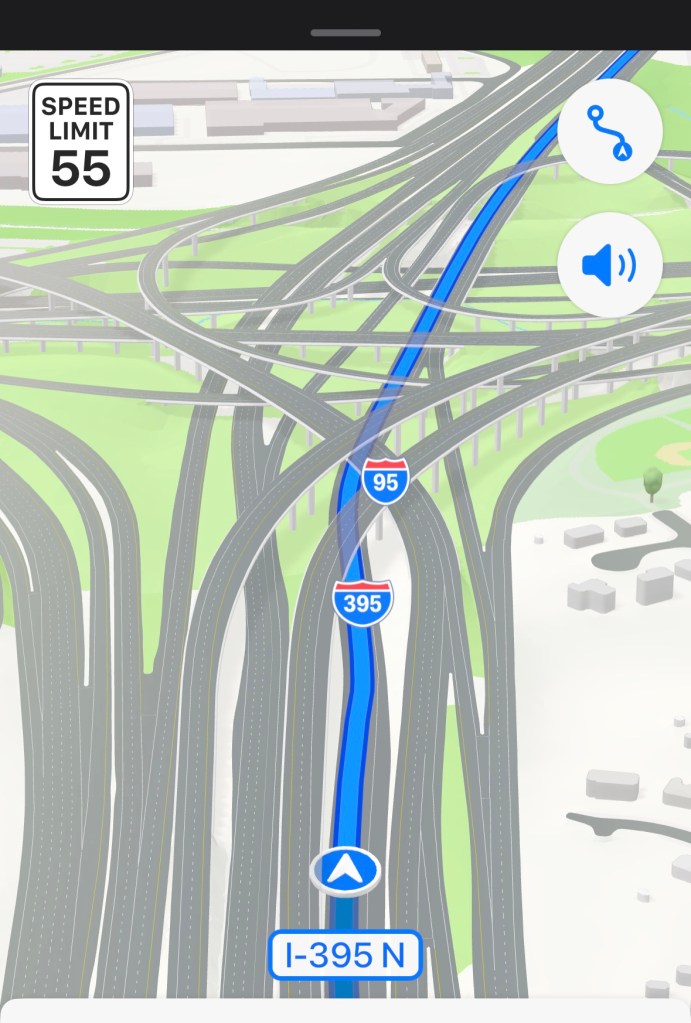
That’s Washington DC. I think. Lots of converging lines and paths layered on top of each other. I posted a similar insane street map last time I was up in the area and I visited the Bonsai and Penjing Exhibit at the National Arboretum .
I was too busy working this tour to get to see the Collection. That’s ok by me. I like working. To be human is to work. To find meaning in that work is the sole purpose of this life on this earth.
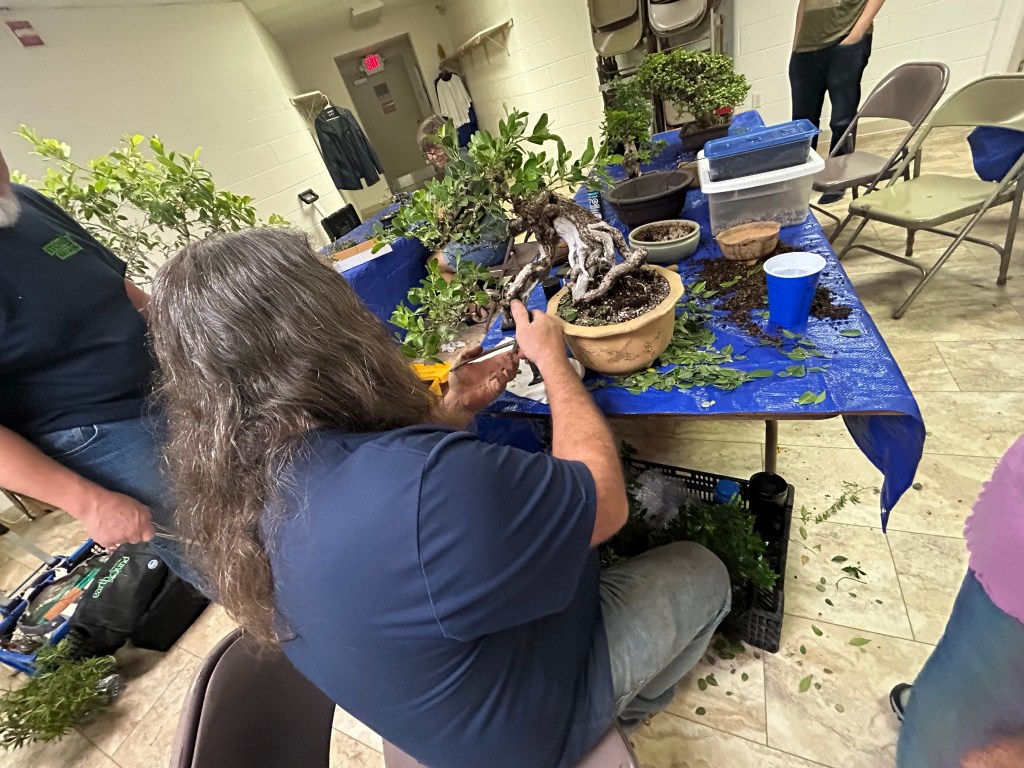
Anyway, there’s room for philosophy later on in the mid and last section of this essay, so, as promised in the last post, here is LeAnn’s buttonwood.
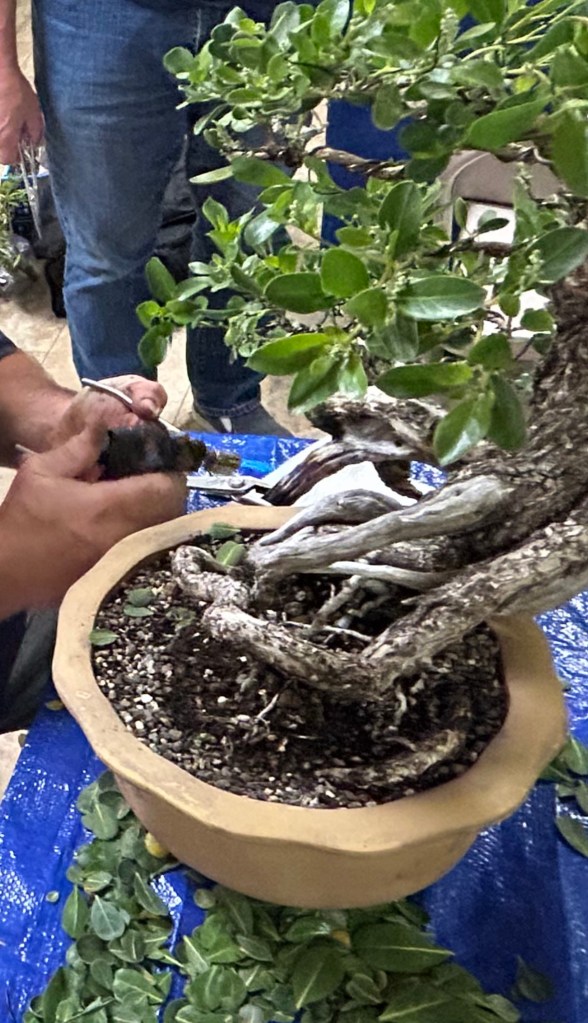
She said it was collected (as most in the USA are) by the Buttonwood Queen herself, Mary Madison.
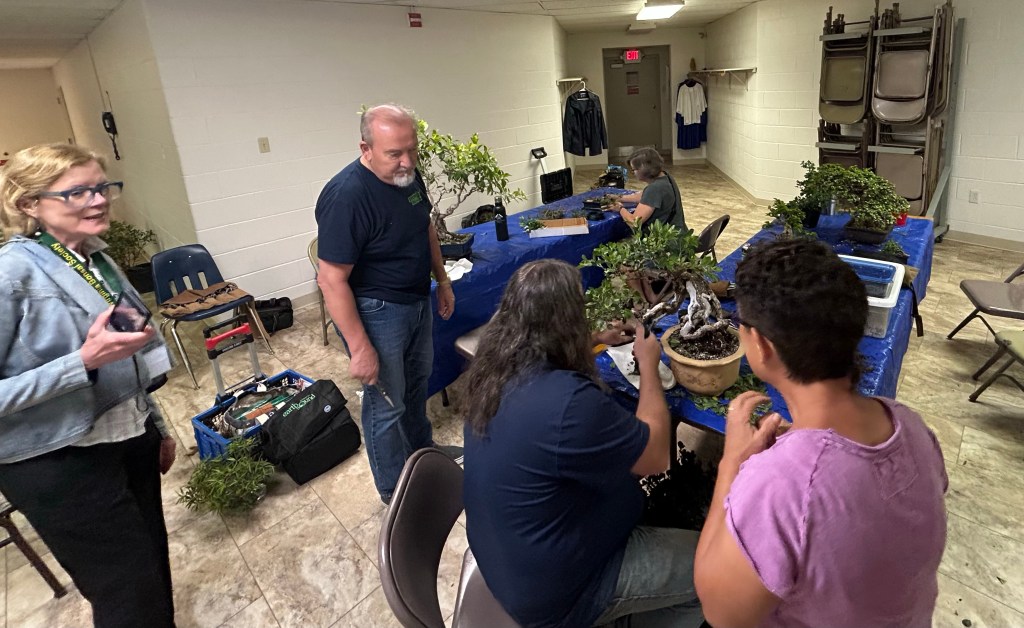
LeAnn is the lady in lavender (purple? Lilac? Not periwinkle, or plum, for sure) hovering behind me.
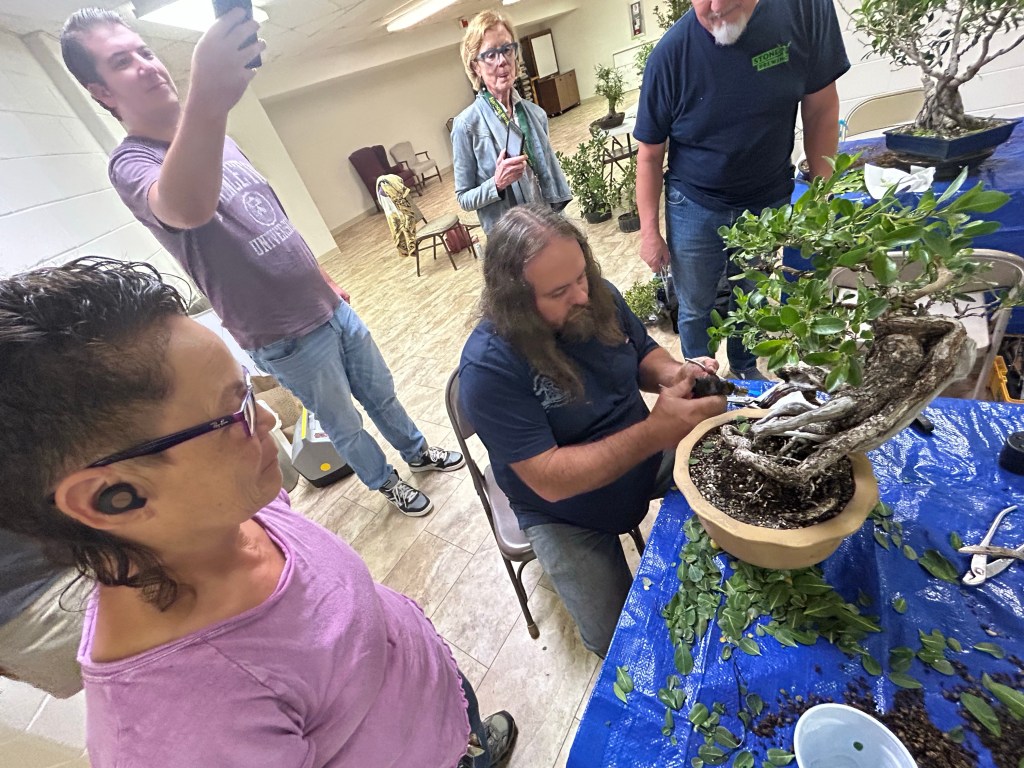
She waited very patiently while I worked through all the other workshop attendees trees and finally got to her tree.
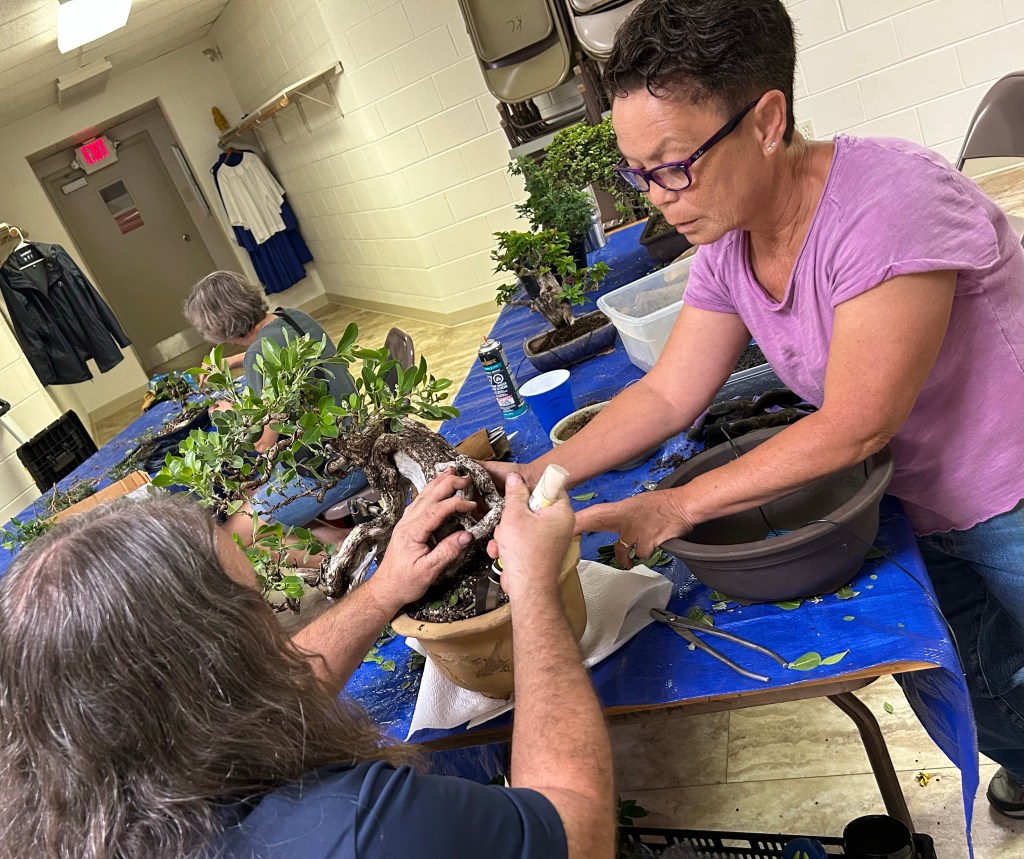
It desperately needed a repot. I teach my students in Florida that buttonwoods need a repot every year. Up north, like here in Virginia, it’s not so important. Unless you use a horticultural heating pad, that is. (Wait, is Virginia “Up North”? I’m not sure. Where’s the Mason-Dixon Line?)

Ok now…..WHAT? (not the North/South thing, even I’m not getting into that). What’s a horticultural heating pad?!

Here’s a few secrets for my northern tropical bonsai growers. First: get grow lights. We are in a golden age of indoor growing of plants. Yes, due to the legalization of cannabis, mostly, but we gain from it because all kinds of grow lights, from full spectrum LEDS to metal halide, are available almost anywhere for cheap. So get yourself one. But…BUT..secondly: heating pads!!! Horticultural heating pads are the game changer for those that need to bring in their tropical trees for the winter (one should always put your trees outside for spring and summer, there’s no replacement for the sun and rain. None). Most tropical trees growth habits are dependent on temperature. But not just ambient air temps. It’s the temperature at the root zone, in the soil, during the evening, that makes tropicals grow.

Which is why we here in the Sunshine State don’t repot buttonwoods until nighttime temps are above 65°F for at least 6 weeks after the repot.

In sweet Virginy, this particular operation is taking place in the middle of July, and LeAnn has the rest of July and most of August to grow more roots. So no worries there for her. But I knew of a guy in Cincinnati that repotted his buttonwoods in January. He had a greenhouse and heating pads. That’s where I got the idea.
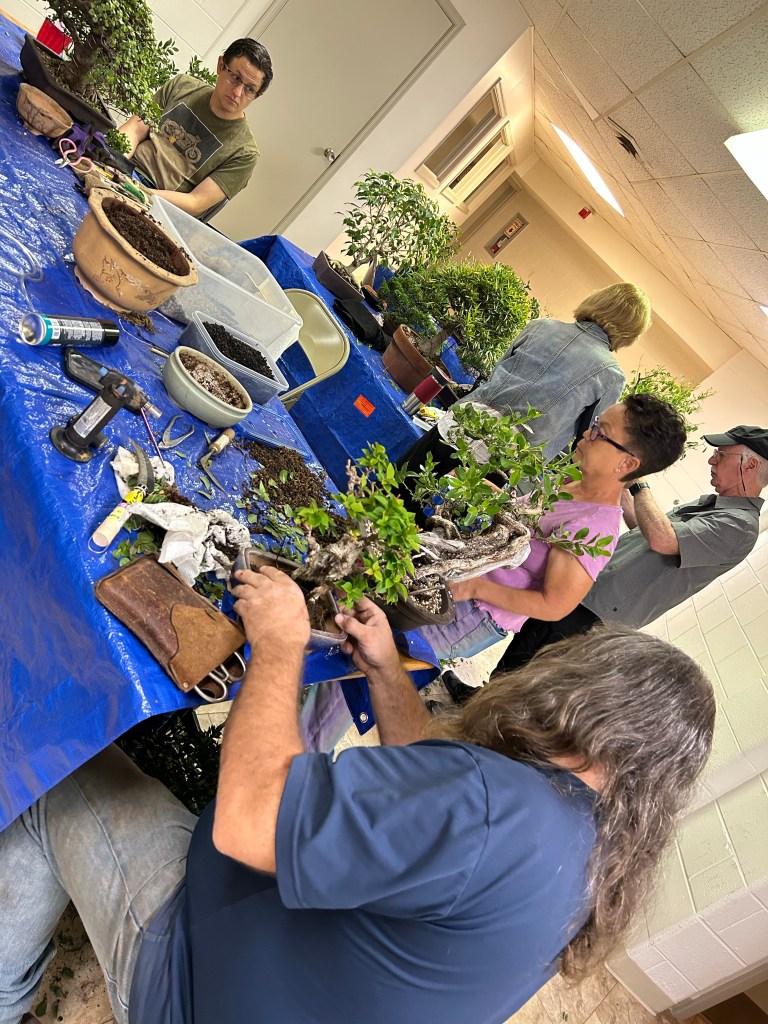
Anyway, we got the buttonwood out of this pot:
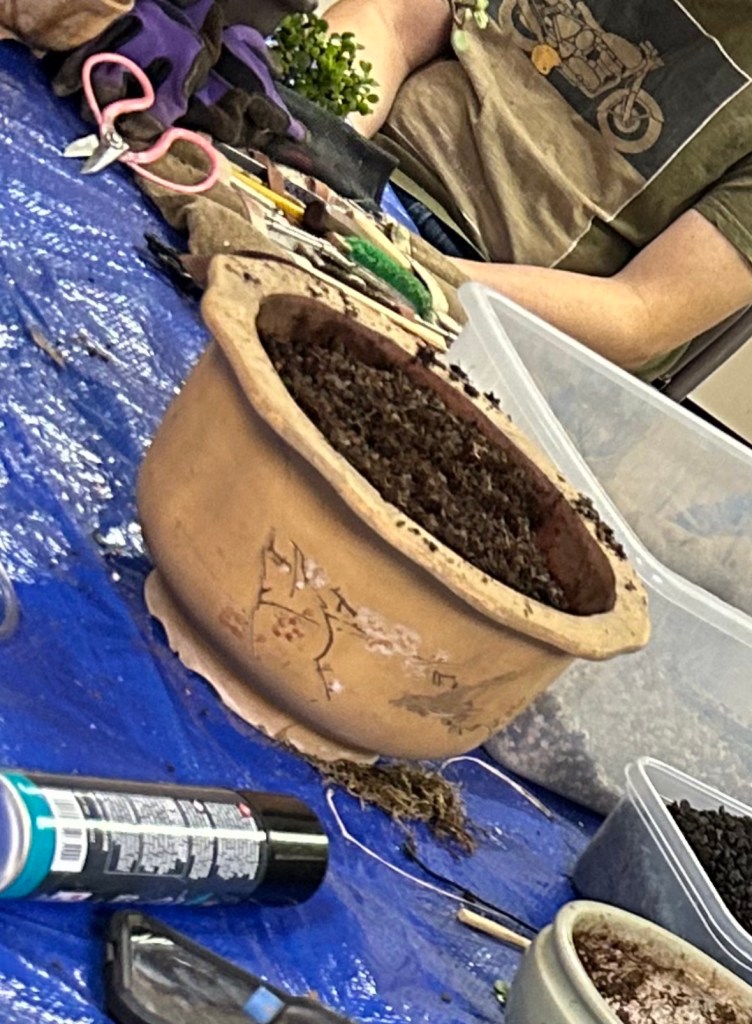
And into this pot:
We wired it, tried to bend some deadwood with the torch and steam technique (only partly successful) and, now, just to make you wait, how about a bumble bee and a moth on a coneflower?
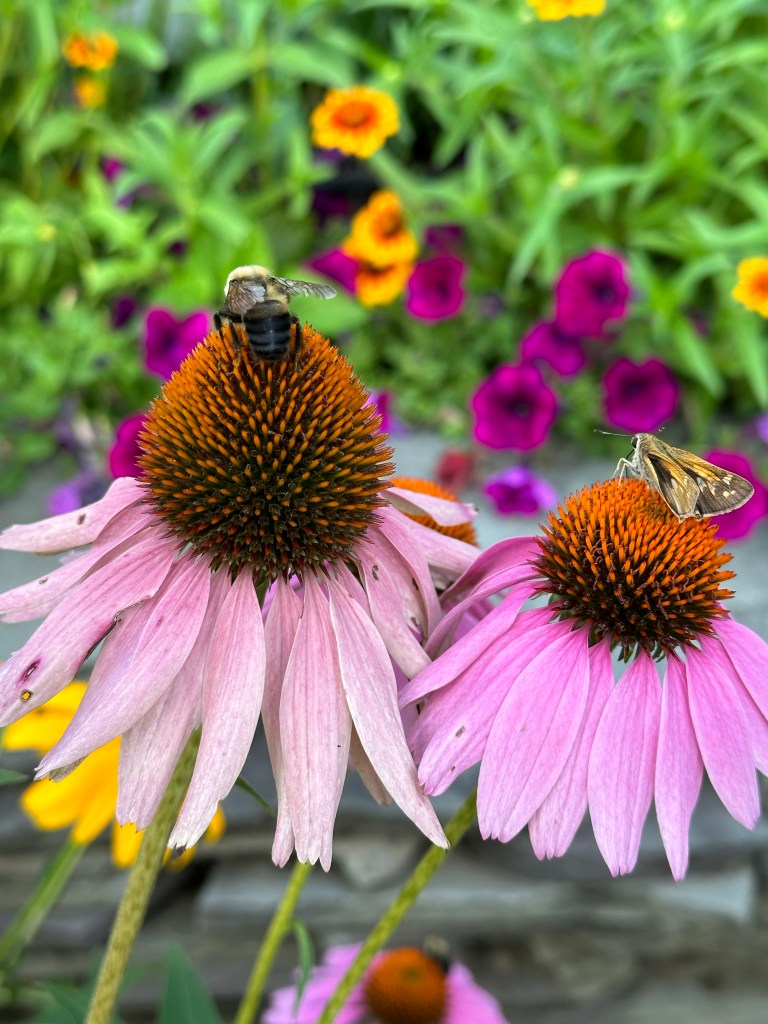
Awwwww, ain’t that cute?! LeAnn has an amazing garden and an even amazing collection of trees.

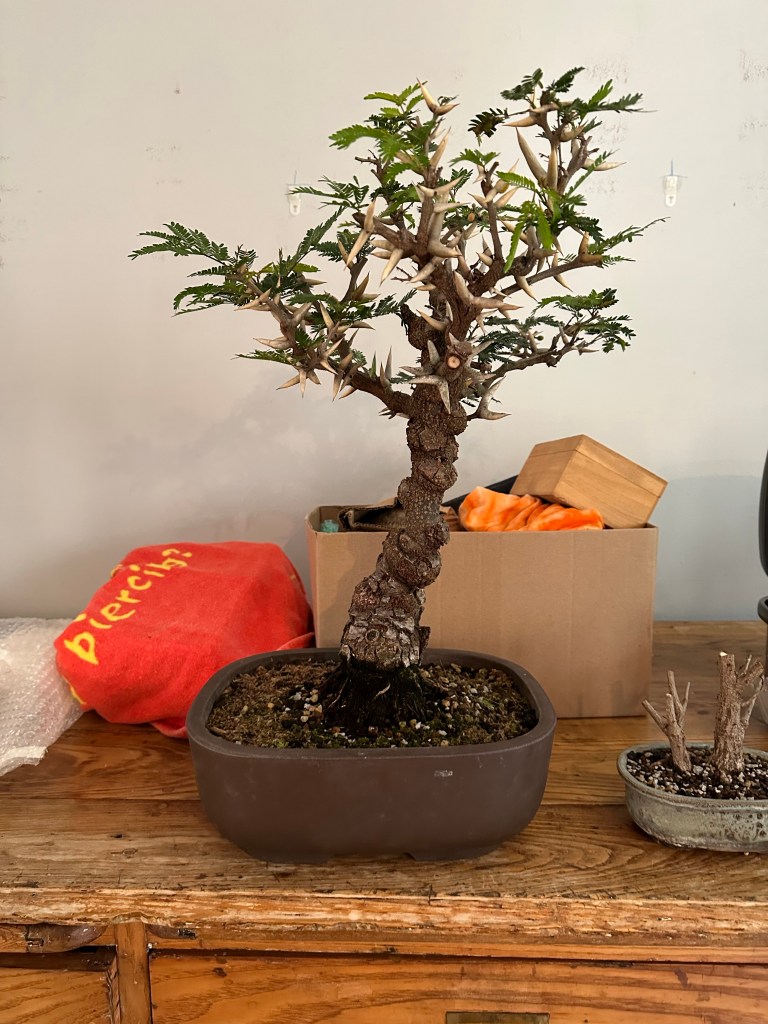
Here’s one of the more developed bullhorn acacias I’ve seen.
And a twin trunk willow leaf on a rock (a rock from Hawaii I believe, where LeAnn hails from).
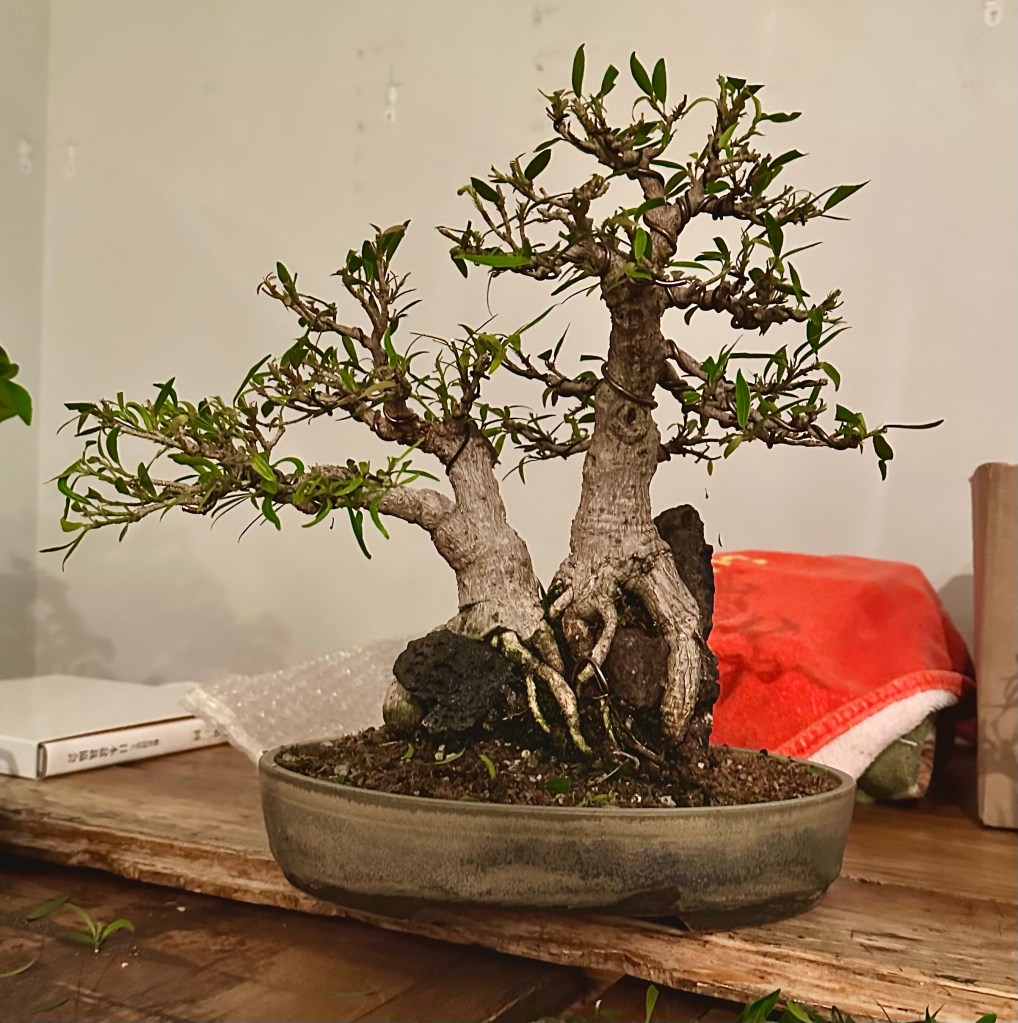
And now, the buttonwood.
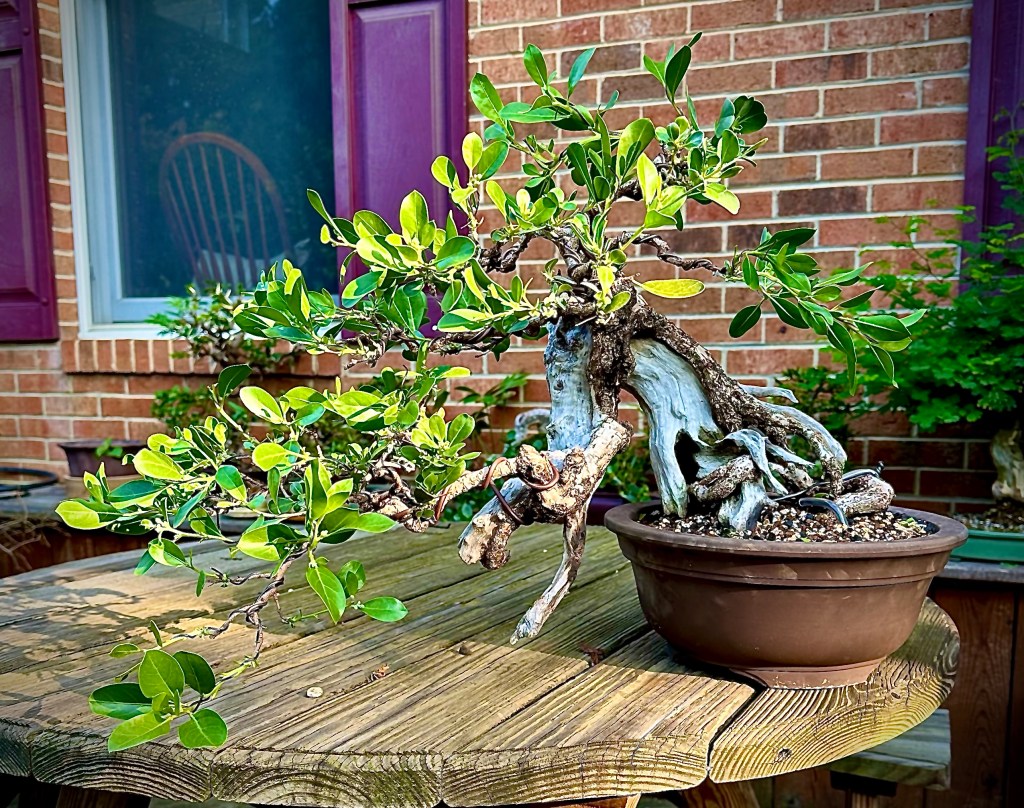
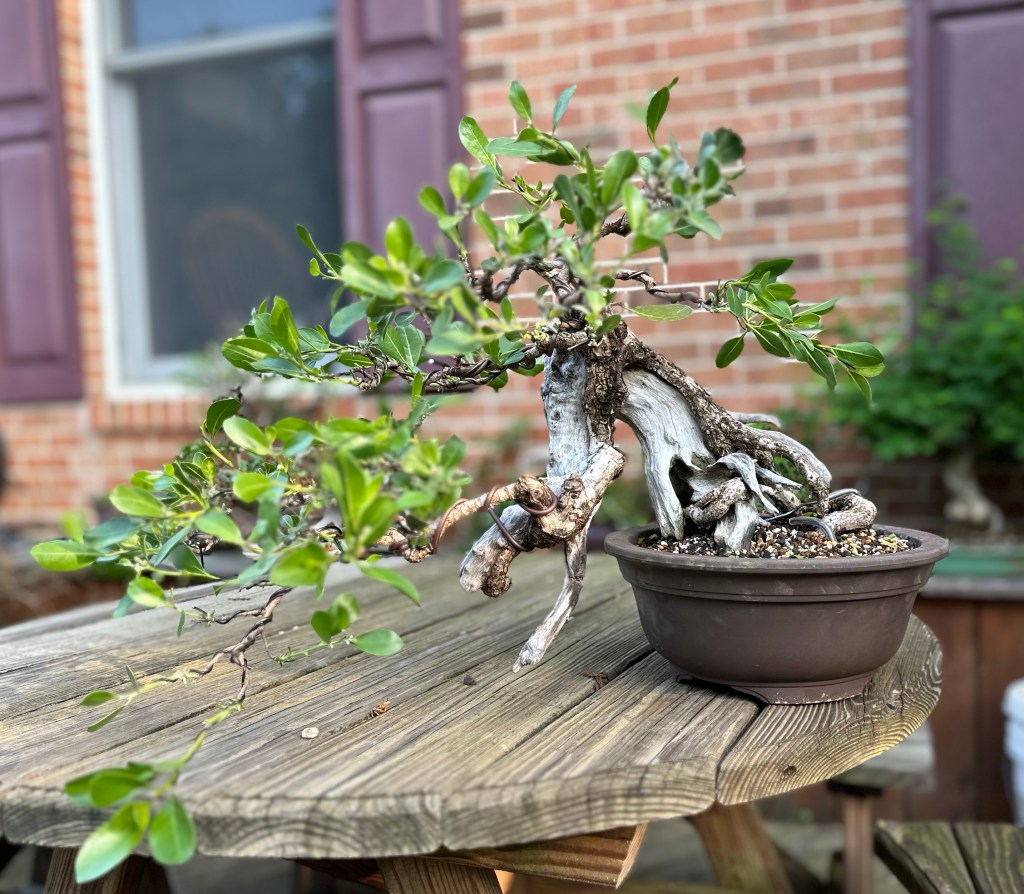
It’s an impressive specimen.
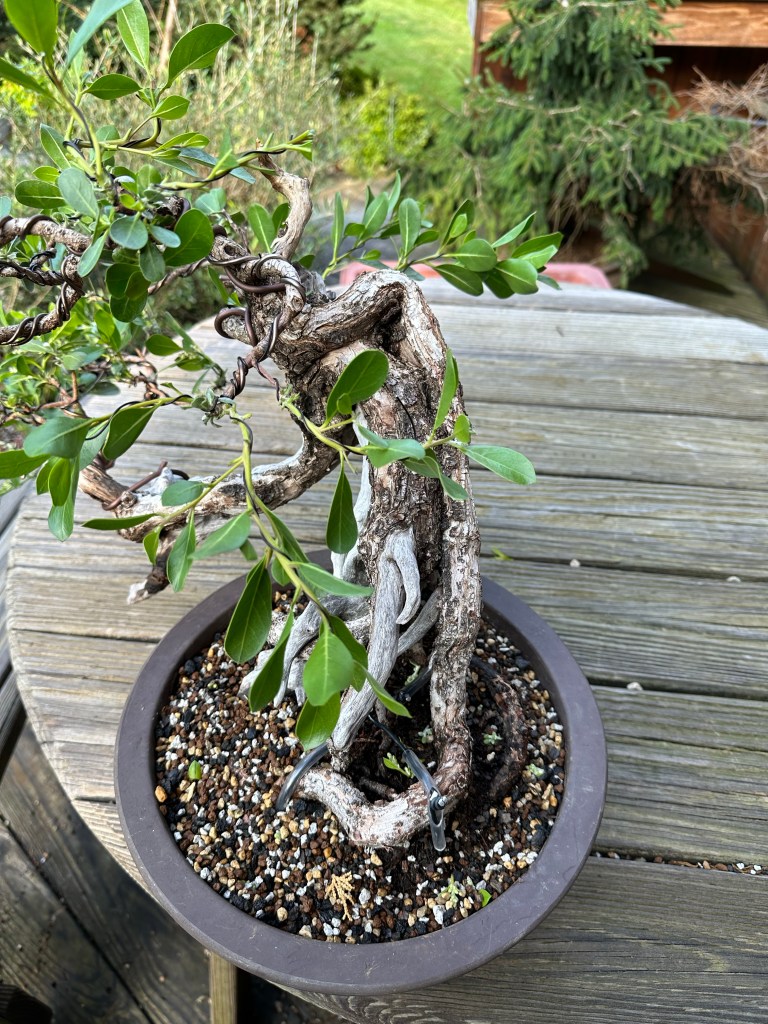
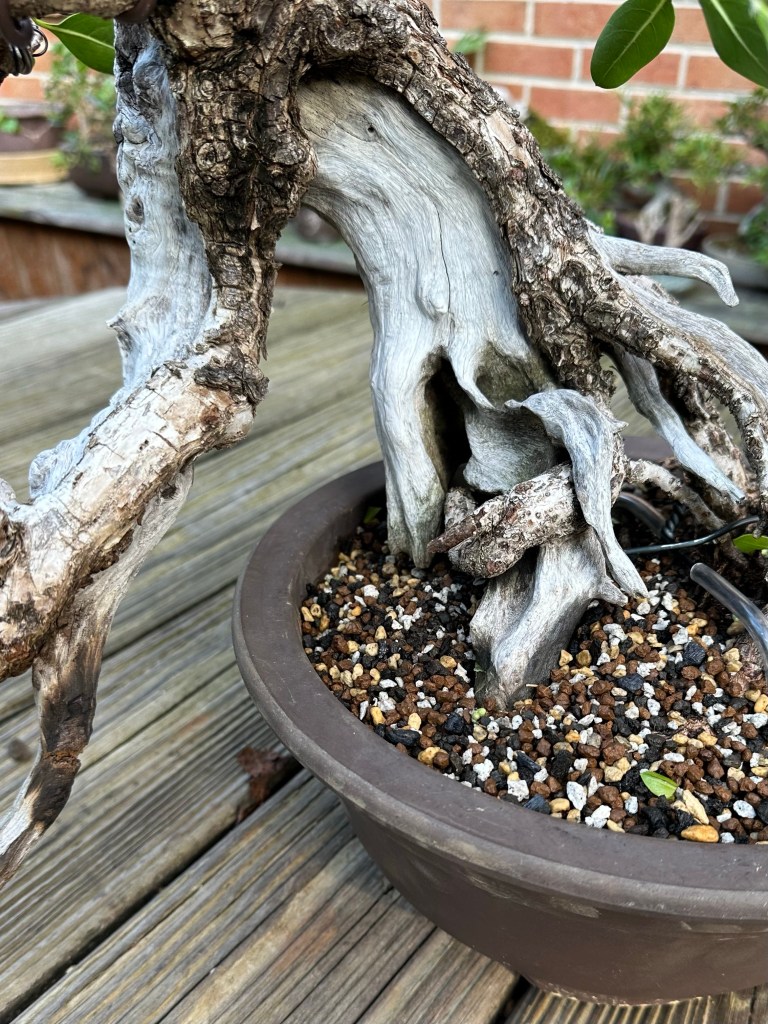
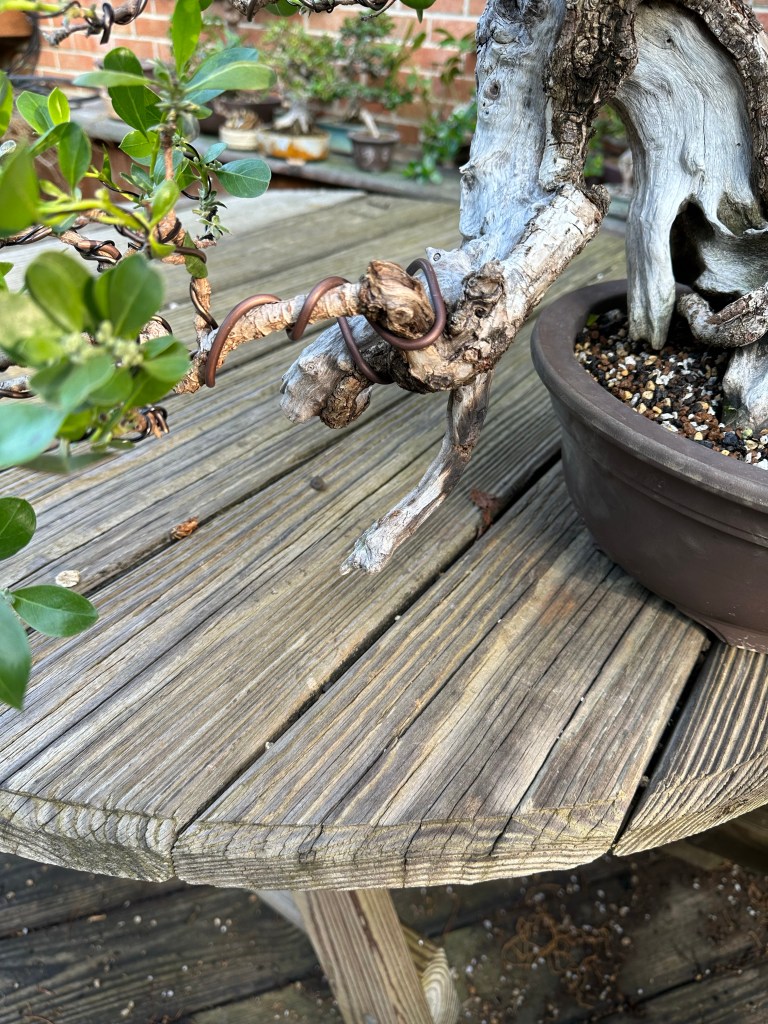
You can kinda see the burnt section where I tried to bend a straight piece of deadwood (middle of the below pic. It was ramrod straight).
View from above.
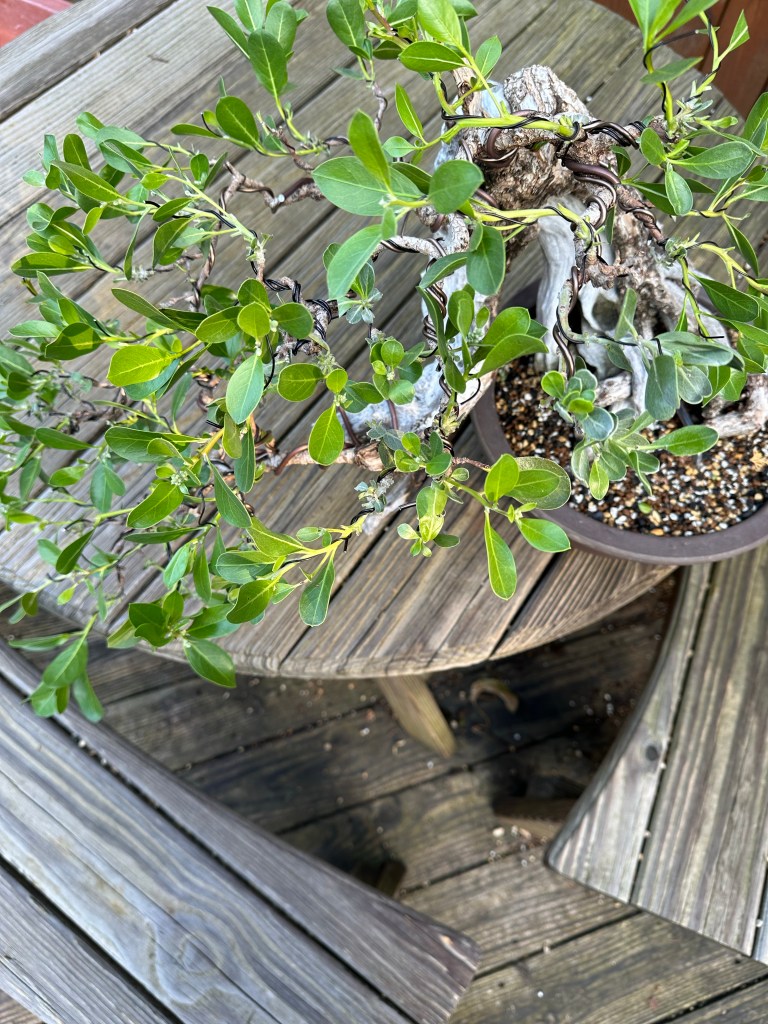
The constant reader is asking, “Why are there still leaves on it?”

Well, we are in The North, and the sun isn’t quite so strong as in La Florida, so, even though we are in full summer, I’m not comfortable totally defoliating a buttonwood up here.
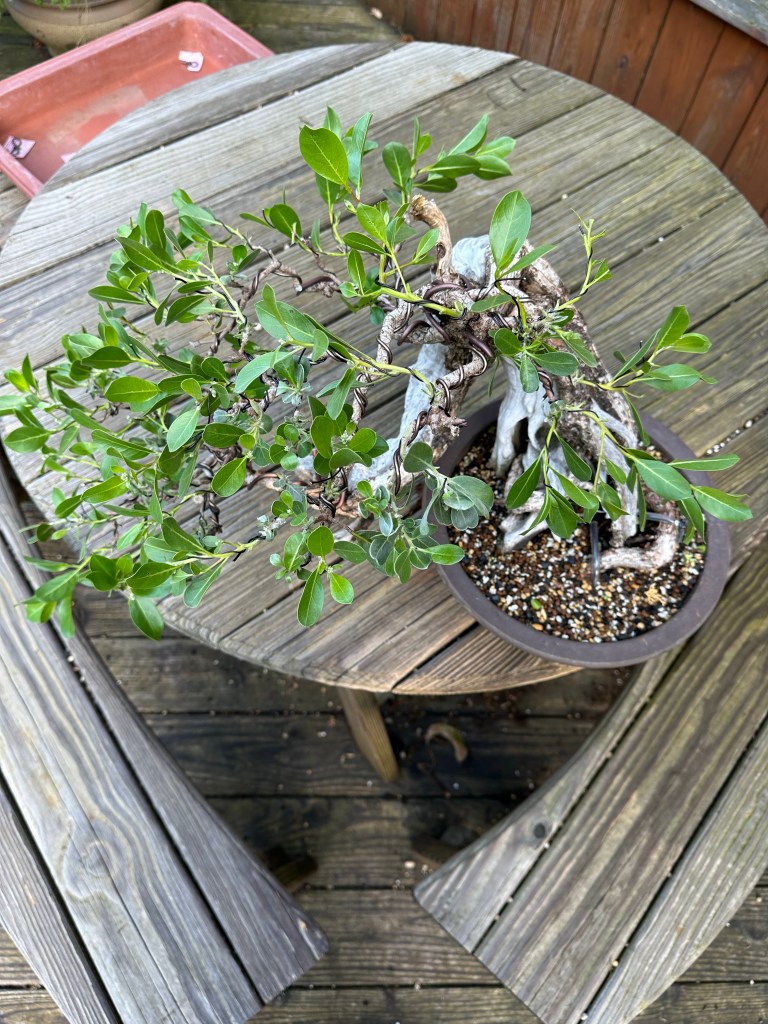
And the main thing I don’t want to do is to kill this special tree. We really beat up the roots when the repot happened, and foliage is what grows new roots, so I left the foliage. Simple calculus, as they say in the movies.

And the tree was collected by Mary. Here’s the last pic I got of her before she passed away (that’s her daughter Terri, behind her).
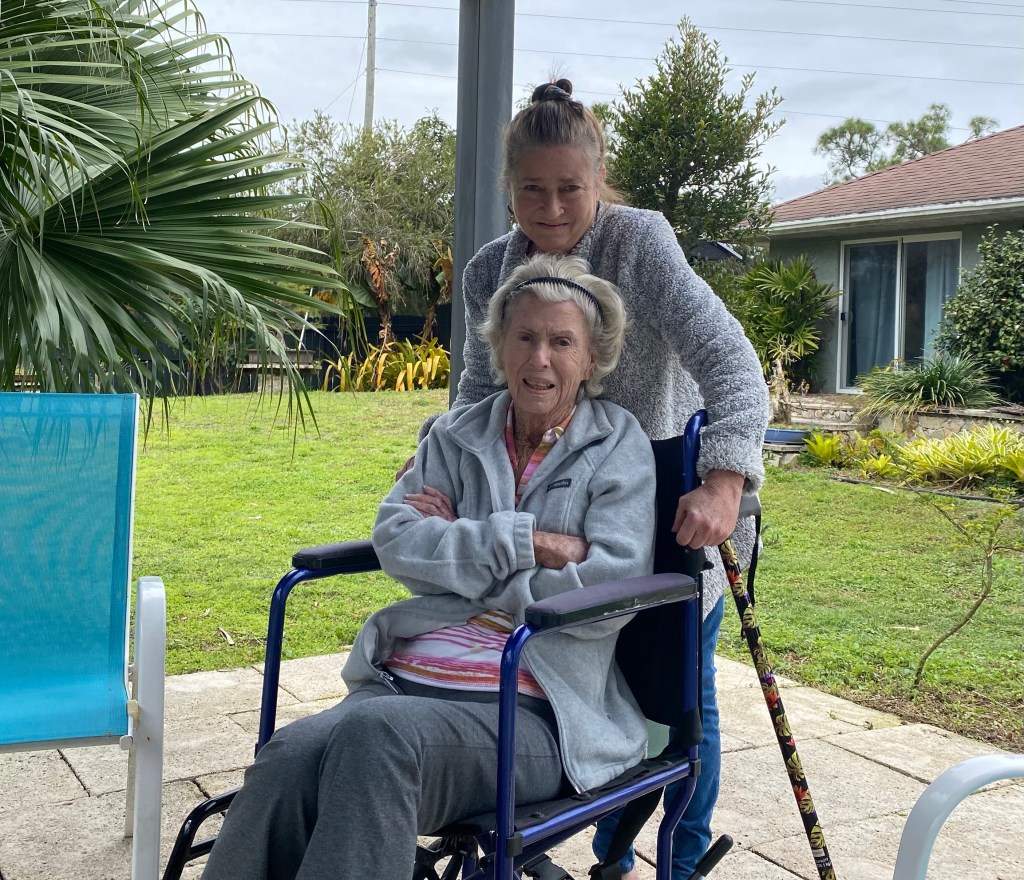
Mary was such a force in bonsai, it’s hard to believe she’s gone. I truly miss her. There won’t ever be a woman in bonsai like her again.

And it was an honor working her tree with LeAnn. Thank you!
One last tip, and I learned it from Mary. Since we beat up the roots so much, I advised LeAnn to set the pot in a tray of water. One deep enough to cover the drainage hole. This will help the tree to grow new roots. Contrary to what I’ve said before about air being important for root growth on other trees.

A buttonwood lives in the coastal saturated zone, where mangroves grow, by the ocean, and are used to water. In fact, to make a cutting root, the easiest way is the old fashioned “Put the cutting in water” method. Oftentimes (don’t tell anyone) when we collect buttonwood, it’s really just a big cutting, with no roots at all, and we place the tree into the pot, and, as LeAnn is doing, place that pot into a tub of water.

One can, as many often do in bonsai, point out the unscientific practices of bonsai people. I do it often. But I have a saying I use religiously, and it applies to bonsai practice distinctly:

“Horticulture is a science, but the practice of horticulture is an Art”

I’ll leave you with that to mull over. Quote it to your best friend and your most divisive foe. It’ll separate the wheat from the chaff, real quick.

“What are you gonna do with that piece of sh….. “

14 February 2024 at 00:53

It’s been about four years since I found this, and every year, looking at it and pondering the next move, I’ve missed the opportunity to work it. Why? I needed to repot it, get a look at the roots, figure out what was happening under the soil. You can only do the root thing in the late winter/early spring, before the tree sprungs, or you’ll tend to kill it. We don’t try to do no killin’ ’round here.

It’s my favorite deciduous tree, Celtis lævigata, and you need to repot it before the new leaves emerge. This year I got to it in time.

Let’s see what we can figure out.

I love odd shapes and challenging trunk lines in my personal trees. This is a root, I’m sure, off a bigger tree, and I love it.

The dead wood. The reverse (inverse, obverse, blah blah blah) taper. The species. I call it the ficus of the deciduous world. You just have to search “Hackberry ” in the search on the front page and you’ll get a bunch of hits on articles I’ve written on the tree (except that one Brazilian Raintree hit….).

Funny thing just occurred to me. When I write my blog I try to explain what’s happening, or what’s going through my head, as I work on the tree.

During a demo, I’ll often just get lost in the tree, and forget that the audience is there and I’m supposed to be performing. A bonsai demo is really a kind performance art (and I say that tongue in cheek, because many bonsai practitioners are kind of conservative when it comes to bonsai-as-Art, no matter their taste in art or politicians. Me, I can’t stand the taste that a politicians actions leave in my mouth, except I don’t mind that one bonsai guy in Virginia. You know who you are, Roberto).

When I’m asked what’s going through my head during a demo I usually say “not much”. It gets a few laughs. Or I’ll say “you don’t wanna know what lives inside my brain”. That gets some too.

Sometimes I tell the story of how the chicken came to the west.

I’ll say, ” How many of you have heard the chicken story?”

Those who have, groan. But they encourage it because, though they’ve suffered through it, they want others to know the pain of sitting through it as well.

Shared pain is lessened, after all.

Anyway, the chicken story:

What you may not know, is that the chicken originally came from Asia. Look it up, I ain’t lyin’. And in Asia, there is a strong Master/Apprentice relationship in the passing down of knowledge.

Now, anyone who’s raised chickens knows that it’s prit’near impossible to tell the difference between a male and a female chick (baby chicken). And it should be self explanatory that a female chick is more valuable than a male chick, because of, you know, eggs and all that, so there evolved a very prestigious occupation in the world of animal husbandry know as a “Master Chicken Sexer”. A real job. A dirty job you might say (you remember Mike Rowe and Dirty Jobs? There was an episode about just this thing).

So, being that chickens are from Asia, and they were imported into the West (how else do we have omelettes?), it soon became clear that the western farmers needed help trying to figure out how to distinguish between a male and female chick. Still obvious, right?

So the western farmers hired the Asian Master Chicken Sexers to teach the westerners how to do this.

The scene: we have the apprentice chicken sexers sitting at the conveyor belt, and the yellow chicks are coming down the chute, onto the belt, and the apprentice picks up the chick, tickle its butt or something, and throw the chick into either the male bin, or the female bin.

The poor male chicks are mostly made into….ah, feed for other chickens. The females were let go to make nests and lay eggs for the farmers to harvest and make their scrambled egg breakfast or quiche (if they’re French farmers).

As I mentioned before (about 100 words earlier) it is exceedingly hard to figure out the difference between the male and female chicks; they’re both yellow, the males haven’t learned to cock-a-doodle yet, the females don’t even gossip. So the apprentices are sitting there, chucking the yellow birds in whatever bin they thought they should go into. When they got it wrong, the master, who was standing behind the apprentice, would whack the poor student on the back of the head.

Slap!

Eventually, the apprentice could unfailingly tell the difference between male and female chicks.

Now, they had no idea how they knew, but they did know. That slap hurt.

Again, obviously, the point of the story isn’t about chickens or East and West or even farmers. It’s more about how to teach. Some bonsai teachers teach using the rod, telling you you’re wrong and to do it again, and again, and again, until you have it right.

That’s not me. My online name is Adamaskwhy. Most people think it’s that way so you can ask me “Why?”

And you can.

Most of the time I know the answer, or I can find it.

Or I make something up that sounds plausible.

But the real reason for my name is that, as a student, I don’t just want to know the answer. I want to know why. I was (and still am) that annoying kid in the back row that said “oh yeah, prove it!” And it angered some teachers, bothered others, and I was loved by the smallest percentage. Those were the good ones.

I’ve talked about this before, so excuse me if I’m repeating myself, but a teacher who doesn’t know why, ain’t much of a teacher.

If you can only recite your lessons, then you haven’t learned a thing.

Which brings us to the initial styling of this hackberry. You remember it? The subject of this article and all? I know, you got lost in the chicken story. It happens.

What in the hell is going through my head?

Well, you’ll have to trust me on this one, and see what happens this year.

It seems that a lot of “rules” are being thrown away with this tree.

I mean, they do say that “rules are meant to be broken”. But why do they say that?

Let me tell you another story, this time about a boy named Pablo. Pablo’s father, Ruiz, was an artist that specialized in realistic drawings and paintings of wildlife. He was an instructor and professor at several art schools. He started training Pablo at the age of seven, and insisted that Pablo learn how to draw and paint properly, in the classical and realist style that was popular at the time, and was profitable, as artists jobs back then was to paint portraits and art to be hung in wealthy patrons homes.

So Pablo learned. It came easily to him. At age thirteen, his father, Ruiz, proclaimed that Pablo had surpassed him in talent and technique, and enrolled him in a prestigious art school in Spain.

Pablo quickly understood what art school was for, and formed serious friendships that would help him later in life, all the while slacking off on his lessons. He knew them anyway.

That, by the way, would be the one lesson to take away from this parable, college is to make contacts in school, that will help you later in life. The bosses who hire you only want to know that you got the degree, not that you were a “C” student. But if they know you were in their sorority or the chess club they were in, you, my friends, are in, as they said in my youth, like Flynn.

Pablo was so good a draughtsman that, in his later years, when everyone called him Picasso, he would sit and drink his coffee at the cafés in Paris, and draw photorealistic flies and bugs on the walls. Drawings so real the waiters would rush over and try to swat the fly off the wall. Pablo, as you might think, got great pleasure in these escapades.

We are all just boys and girls, trying to smile at the tragedy that life sometimes is.

What is to be learned by this last story?

If you learn to do the work, as a craftsman should, you can then use that work to accomplish the Art that your soul requires to feel alive.

It seems I’m at the end of the work.

I would try to get a good pic, but my photography area has been battered by a hurricane or two. It’s on the list to repair.

And here’s the obligatory tortoise pic. I need to build him a proper enclosure. That’s sooner on the list than the photo spot.

This is the best I can do for now.

I’ll post updates as I make changes in the tree. Maybe. I have a long list of “To-Do’s”.

❌