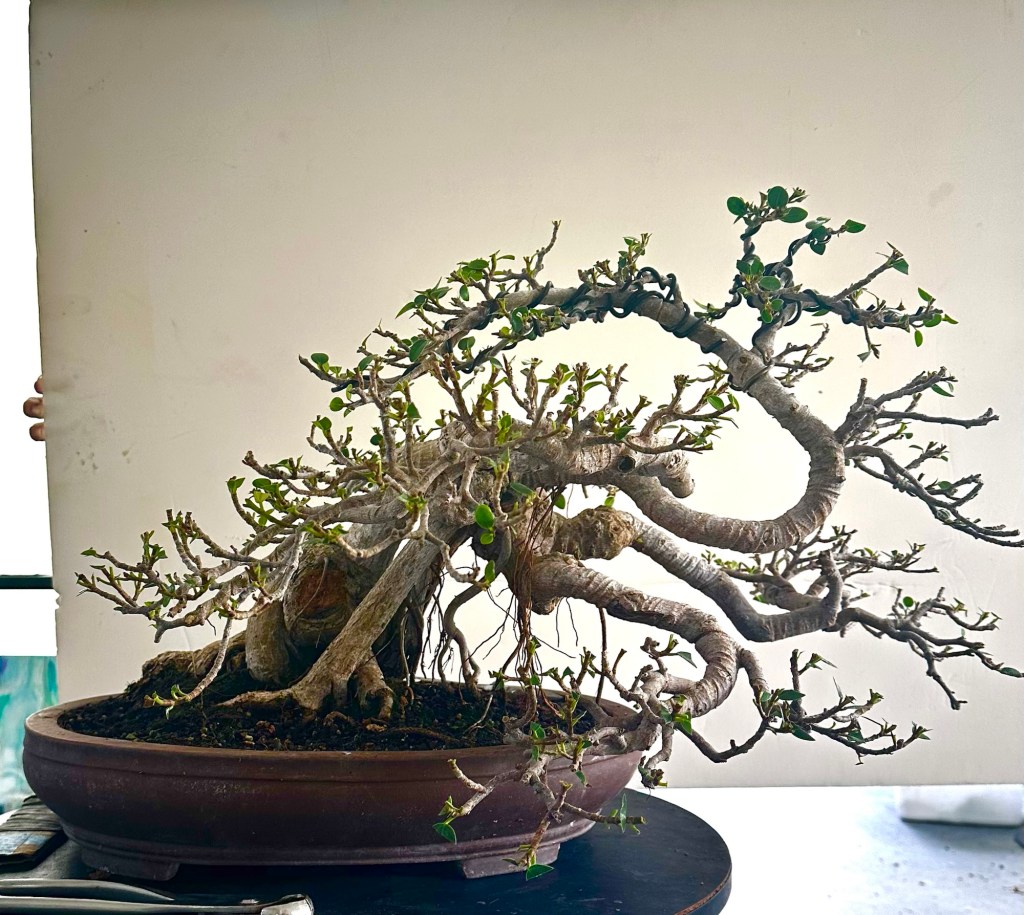
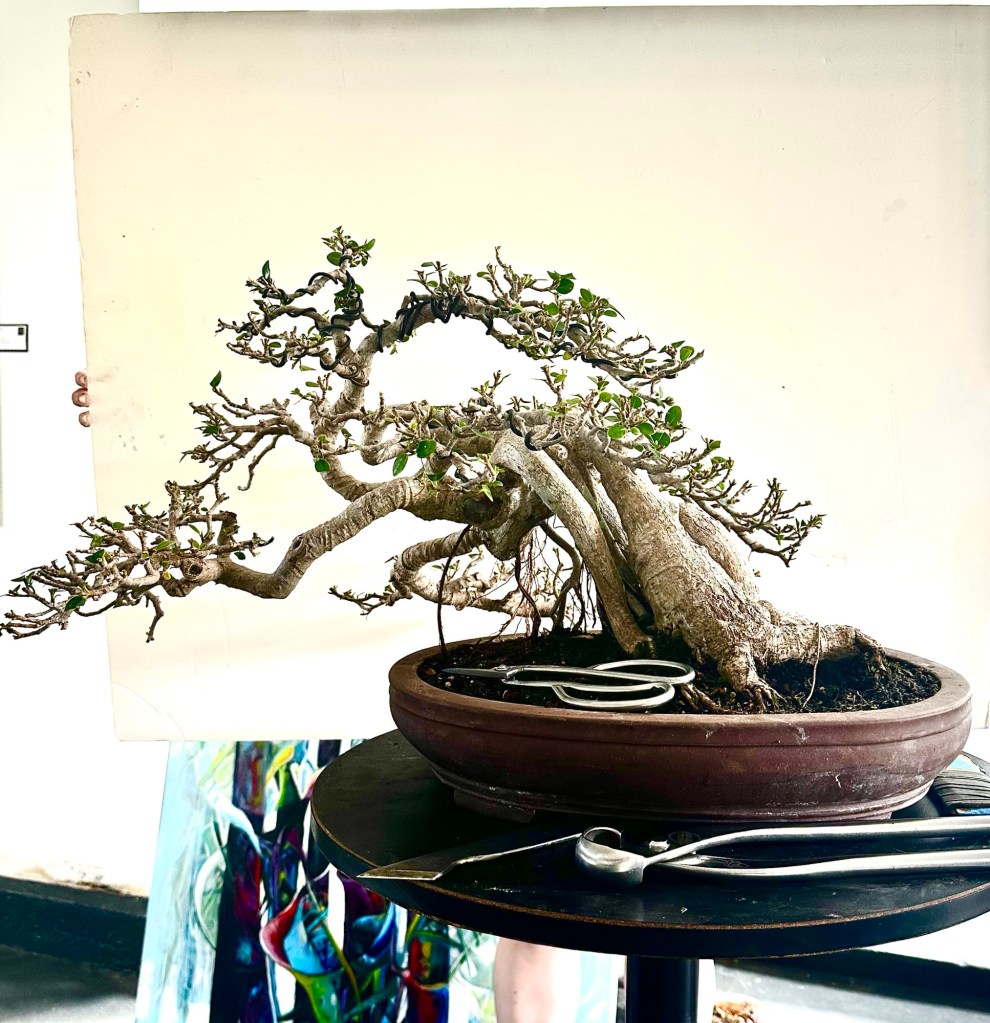
Today, I got to diagnose what’s wrong with a 2012 Jeep Compass, take my daughter to PT, and go and take a dog outside to poop.
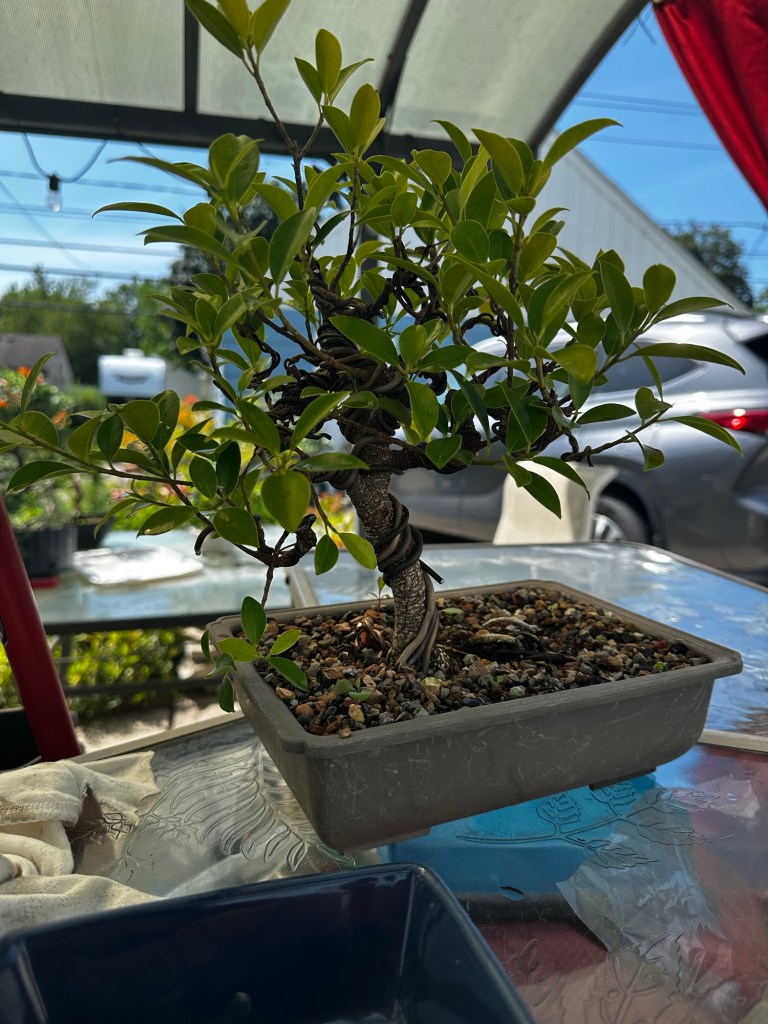
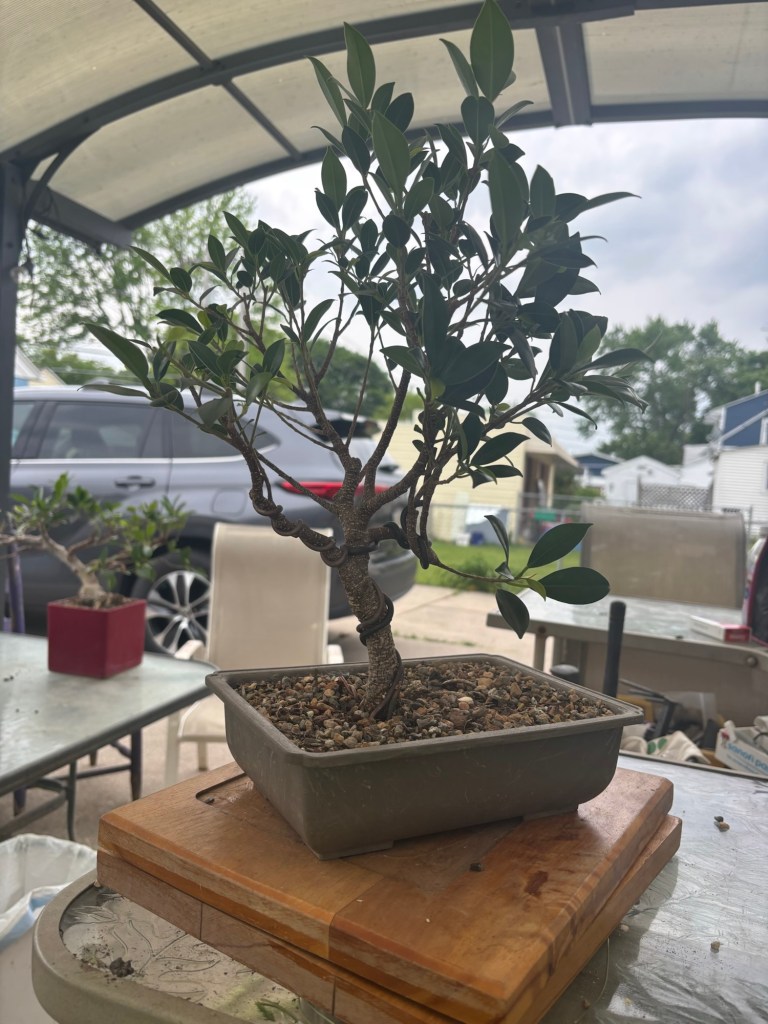
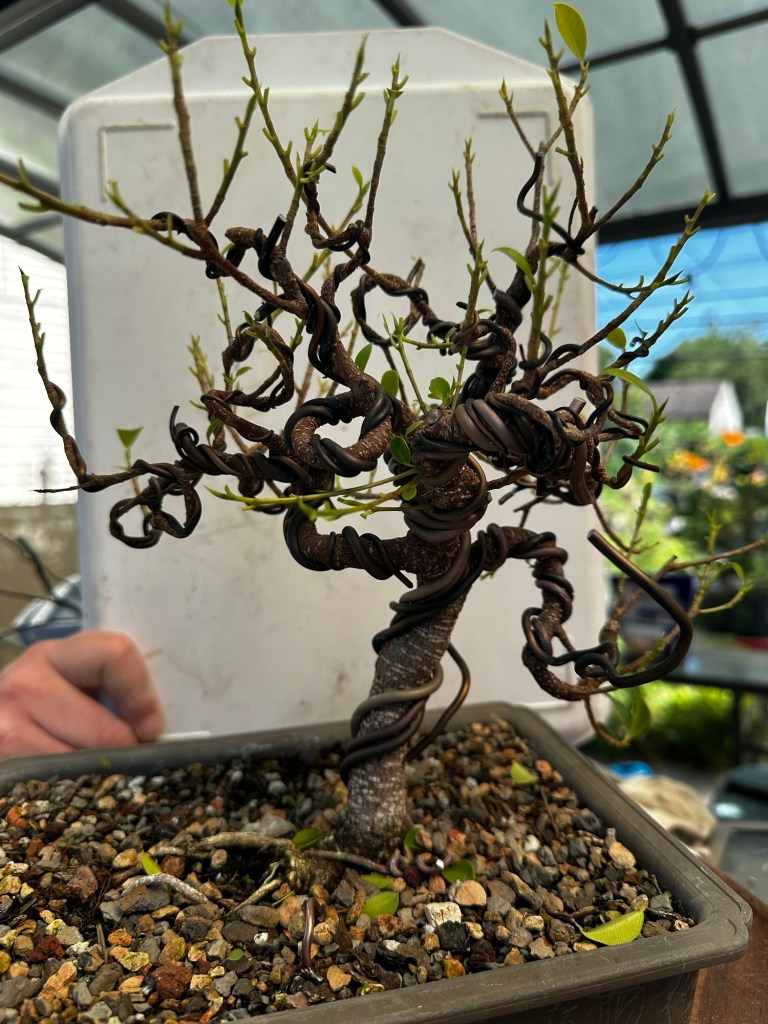
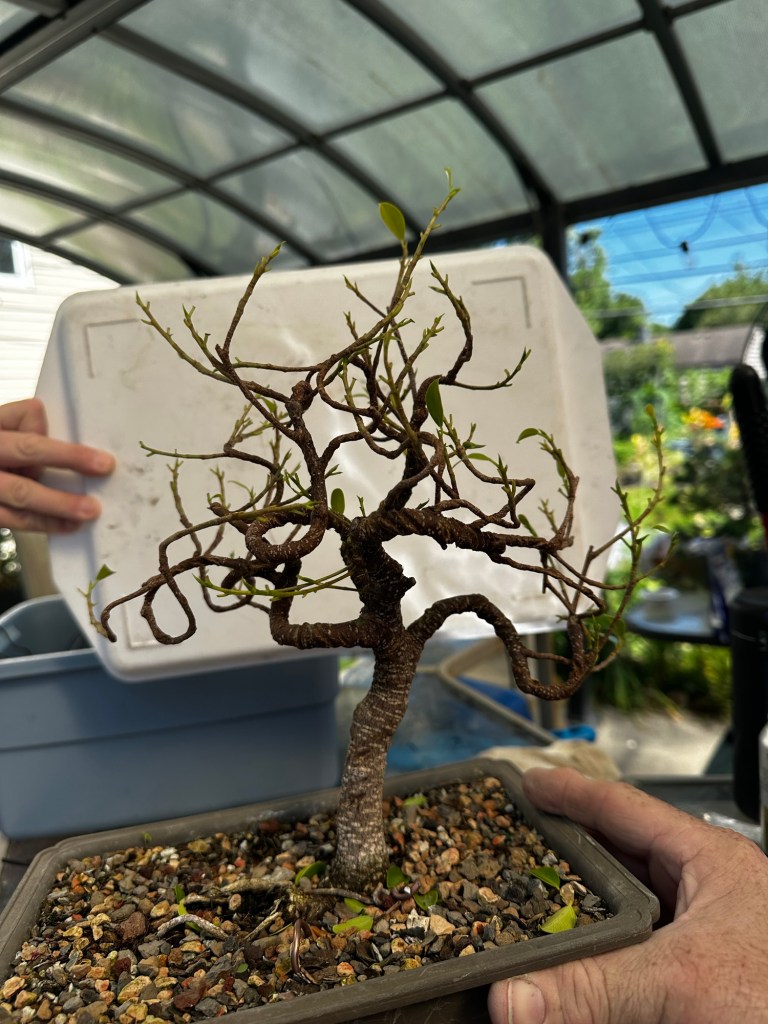
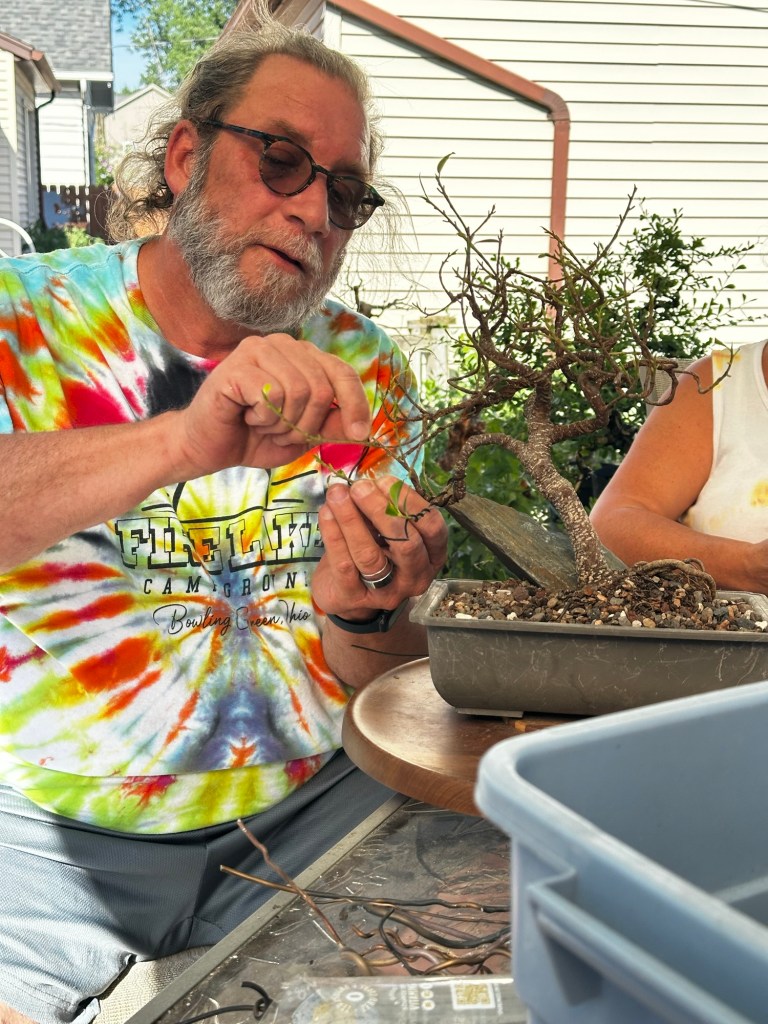
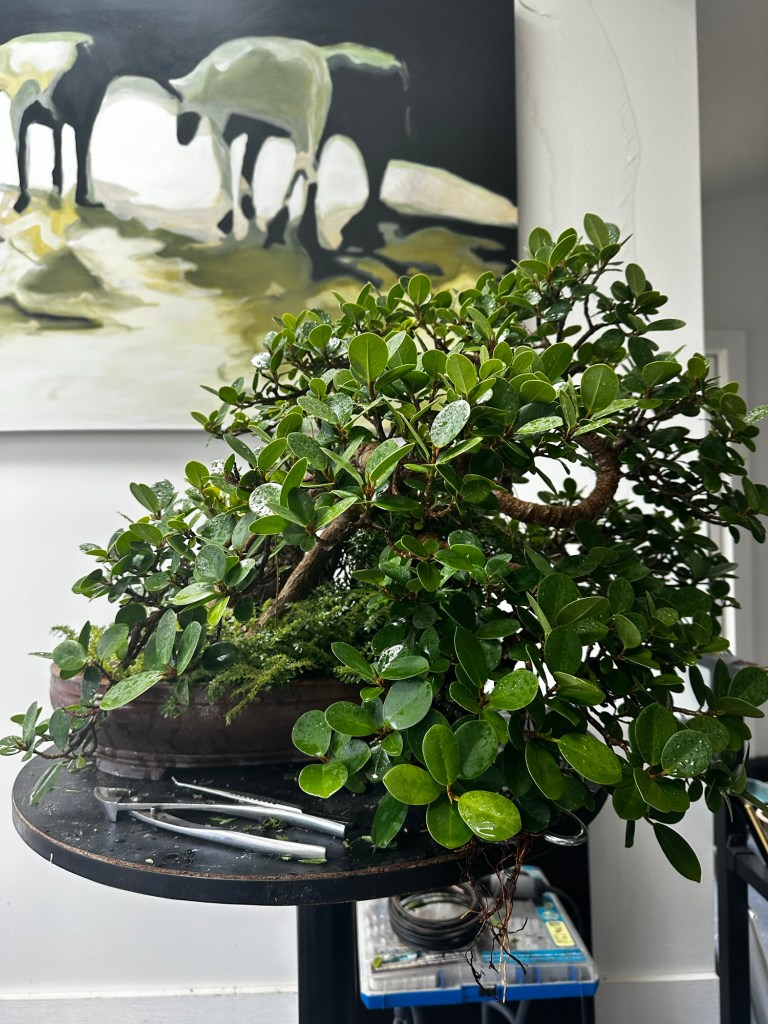
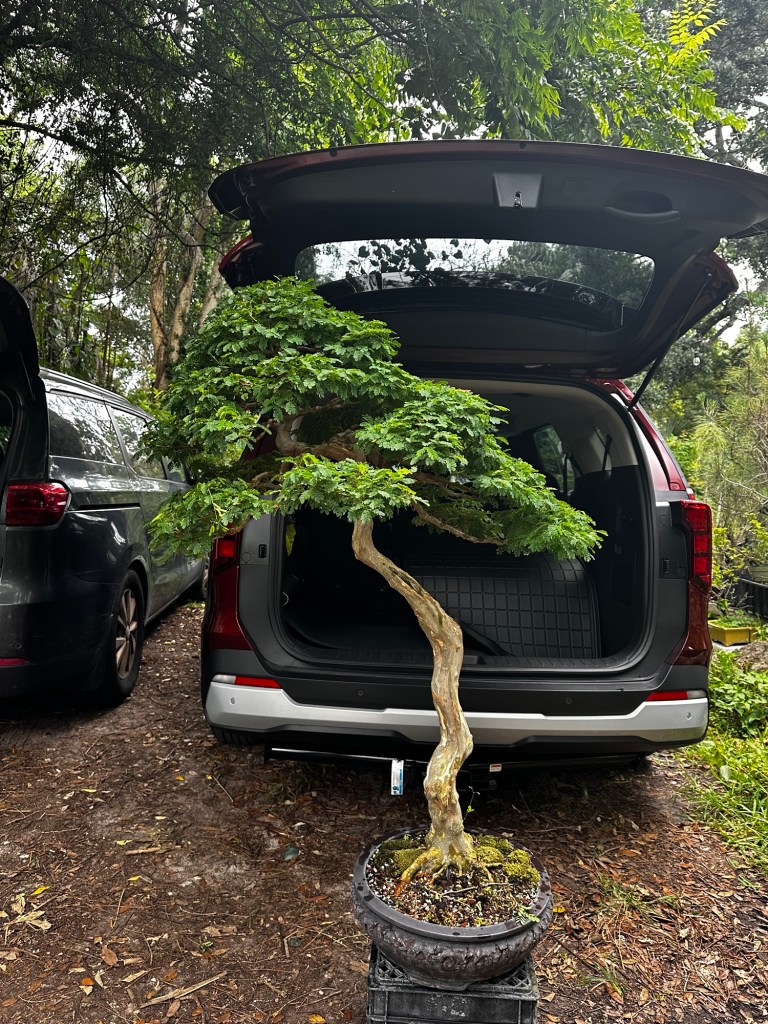
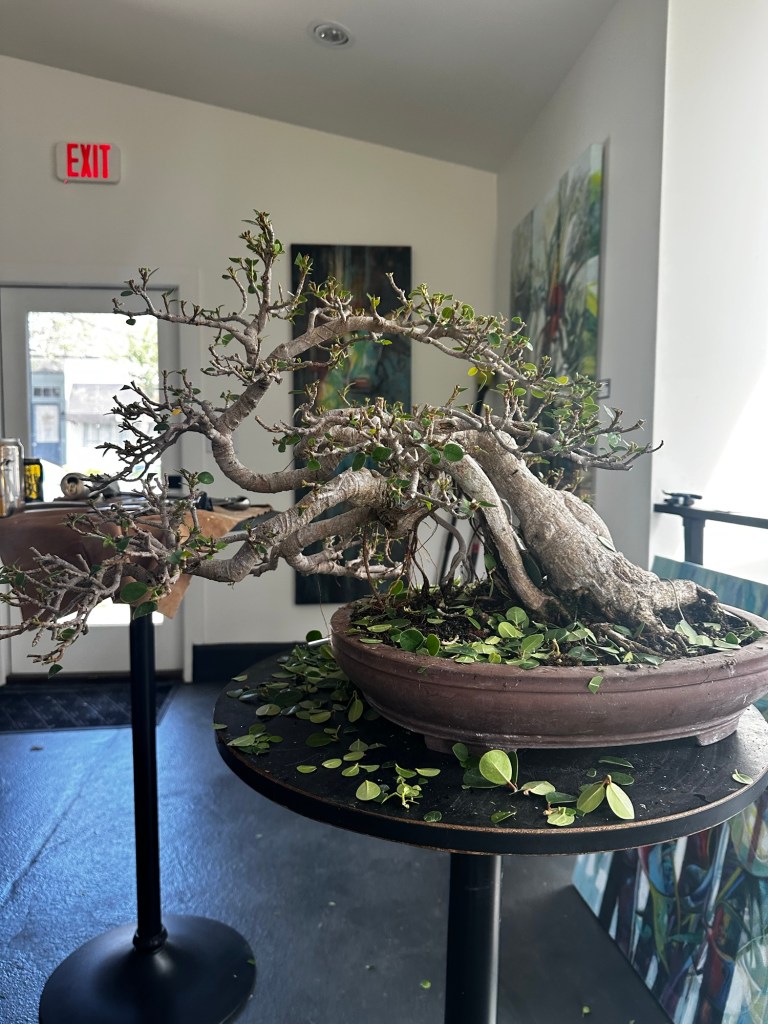
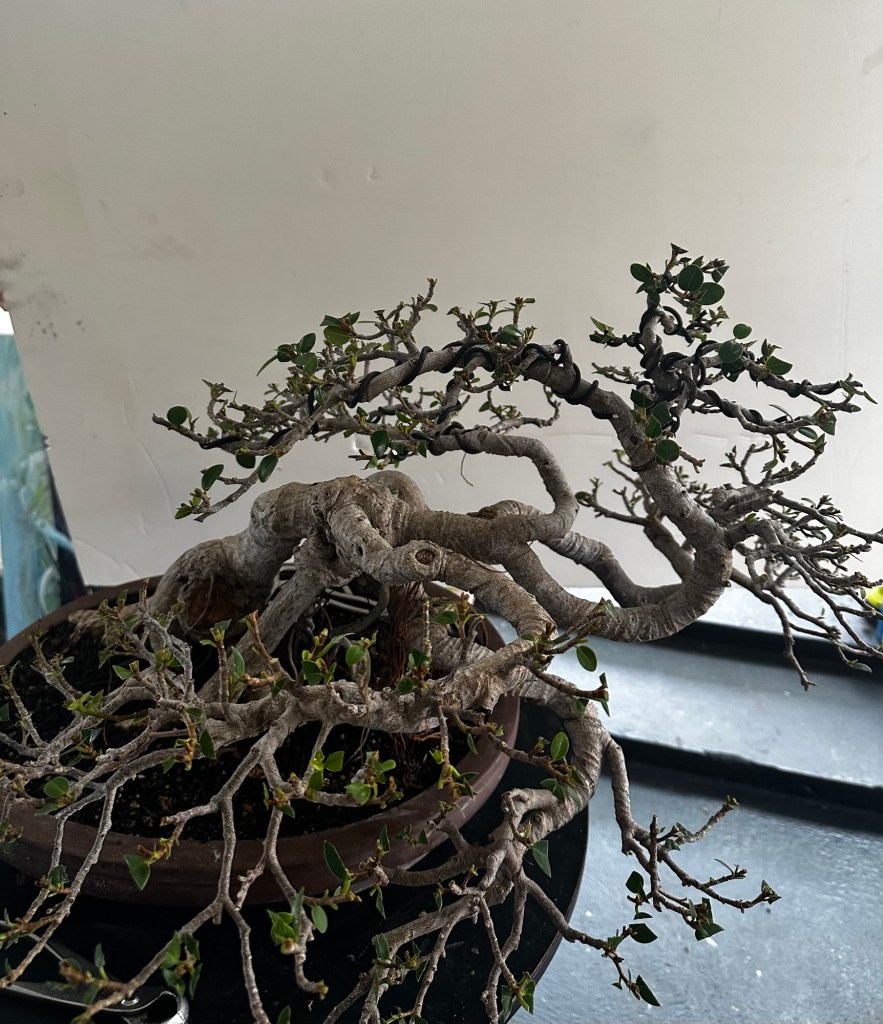
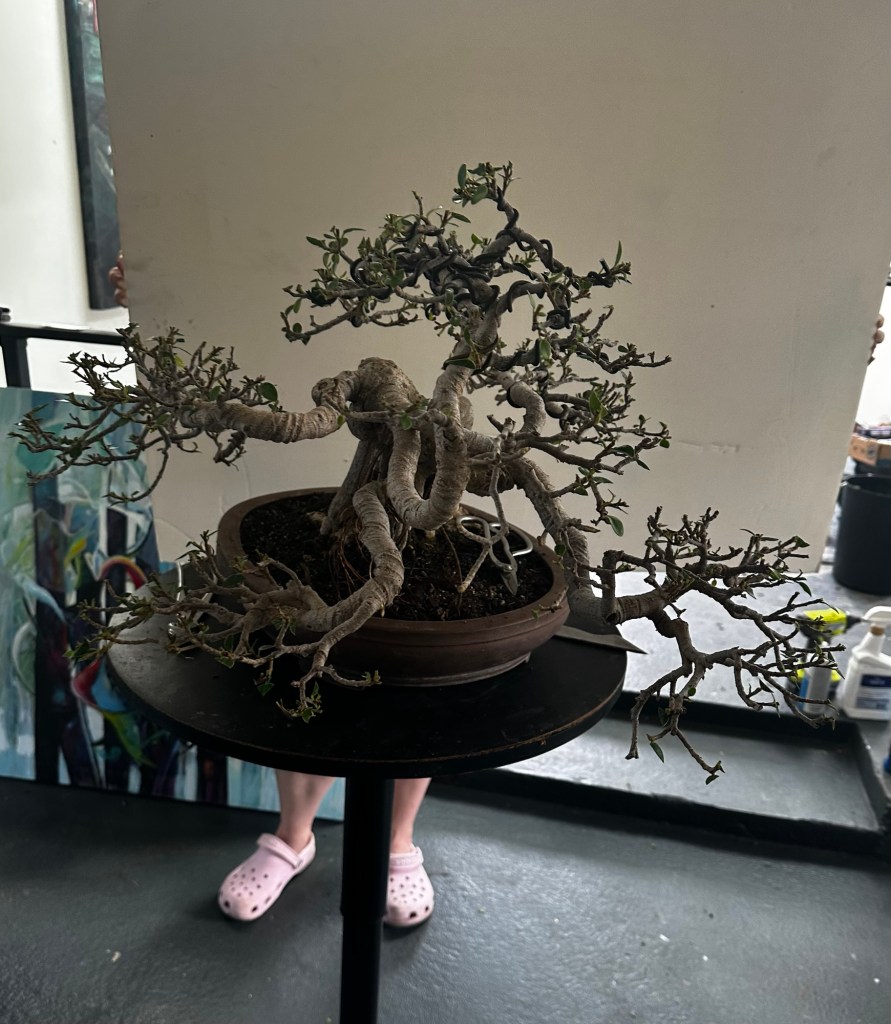
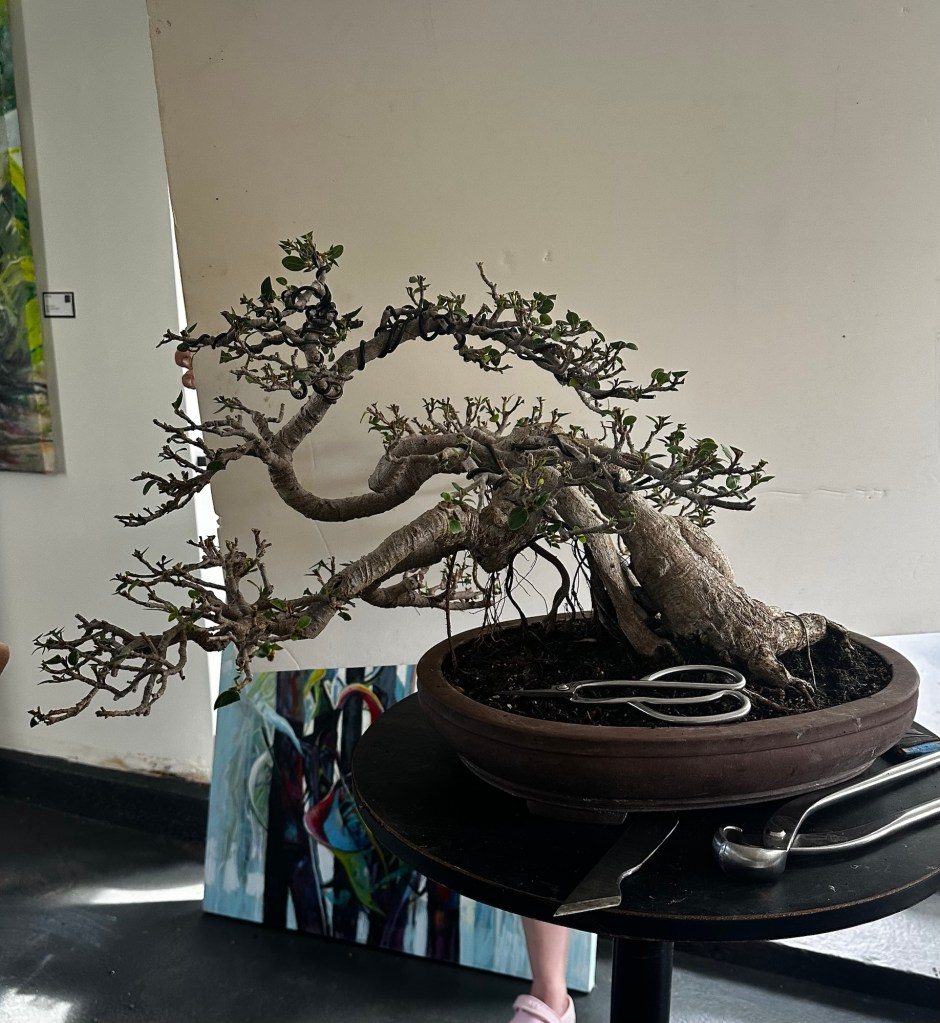
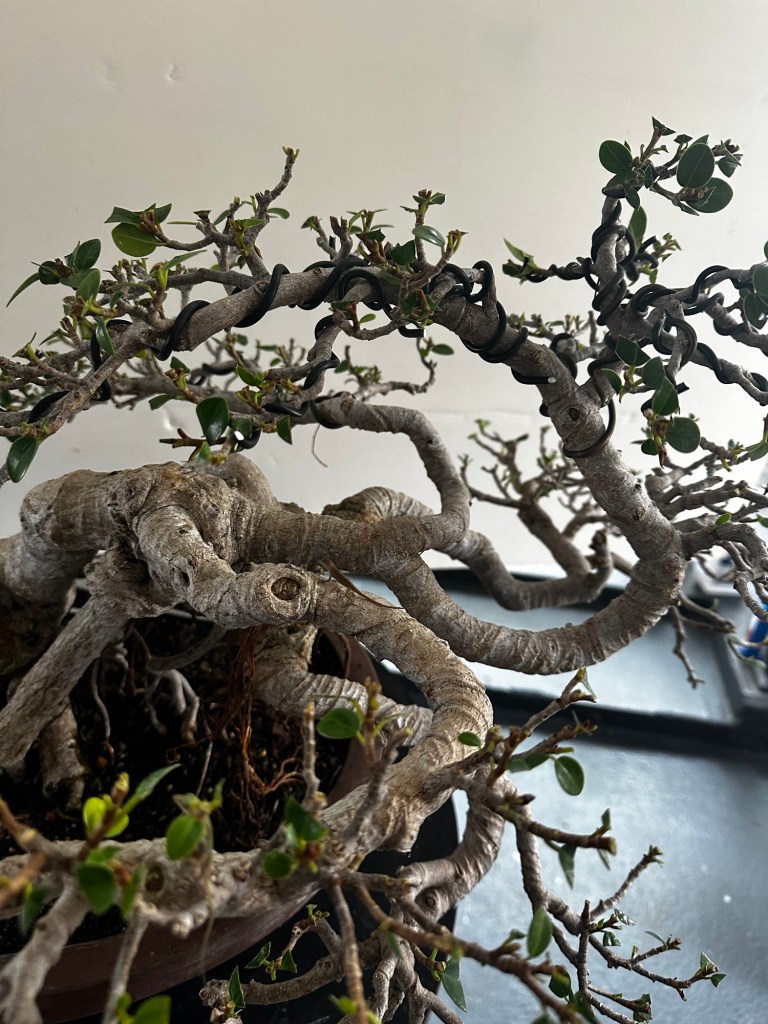
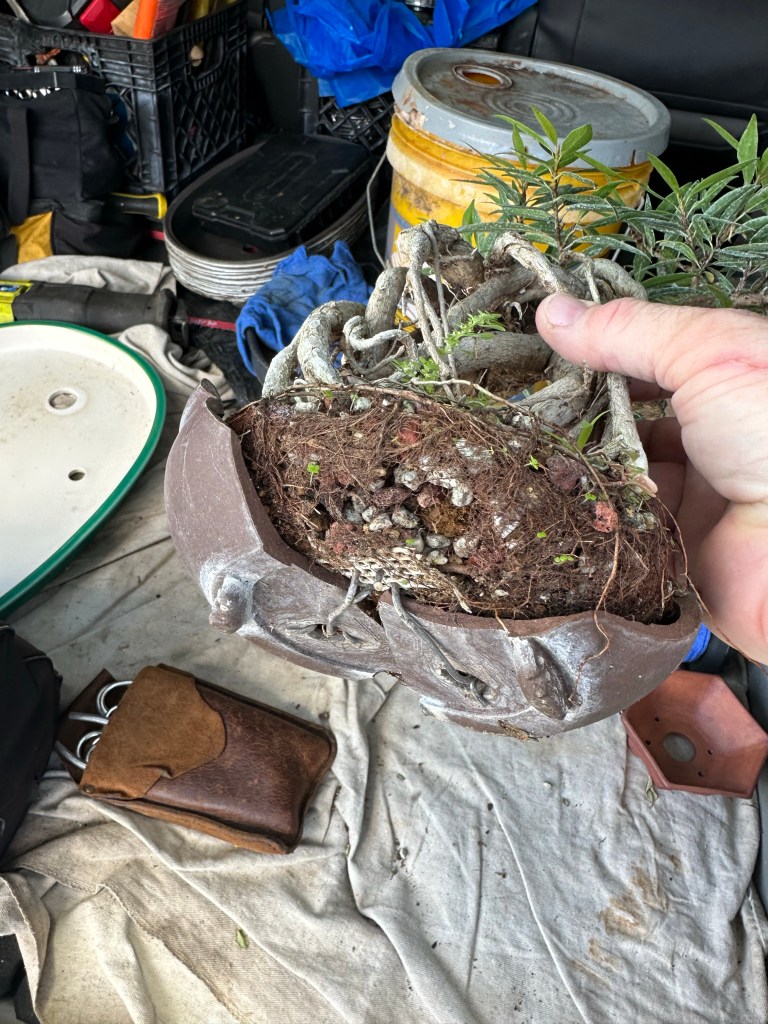
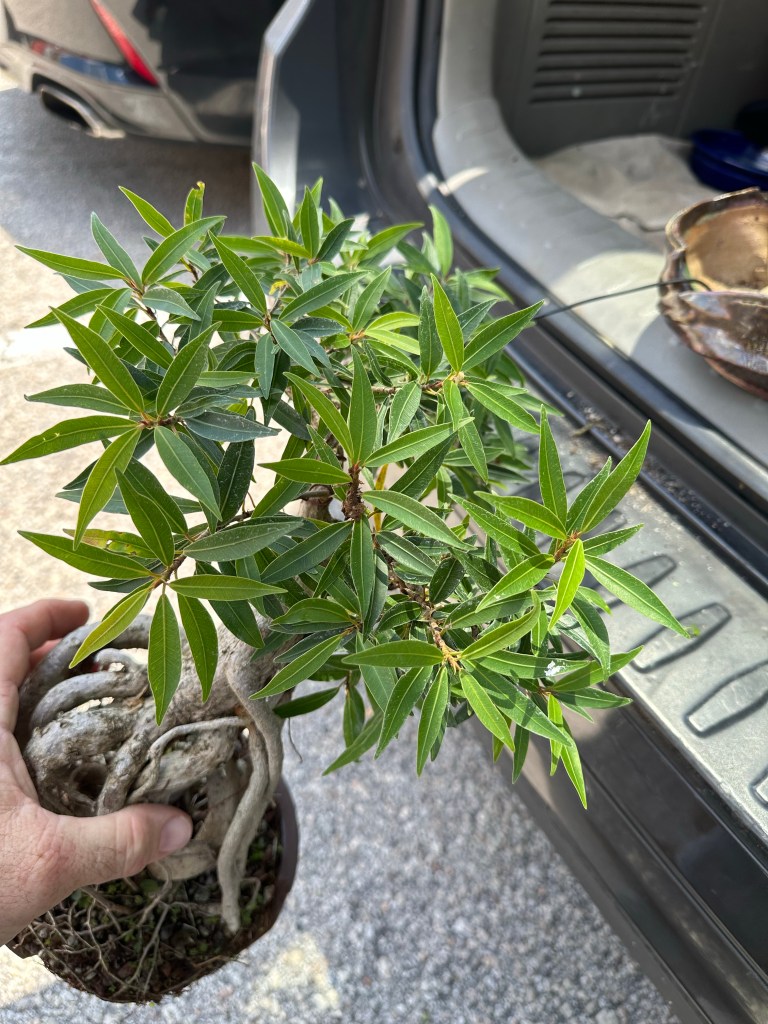
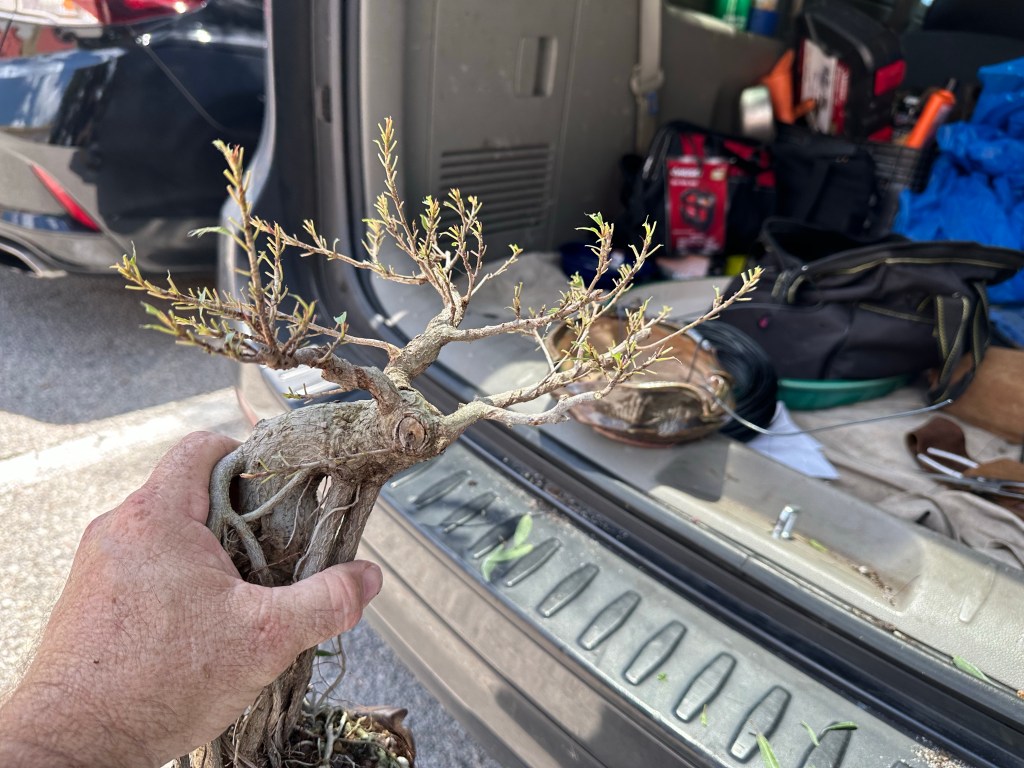
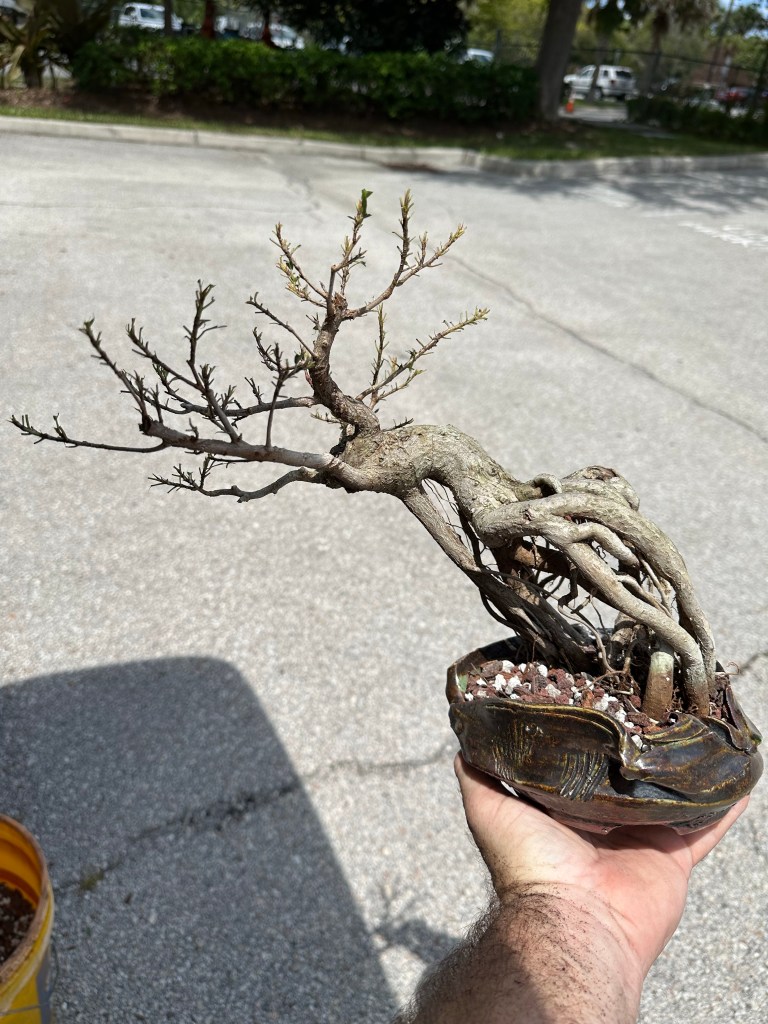
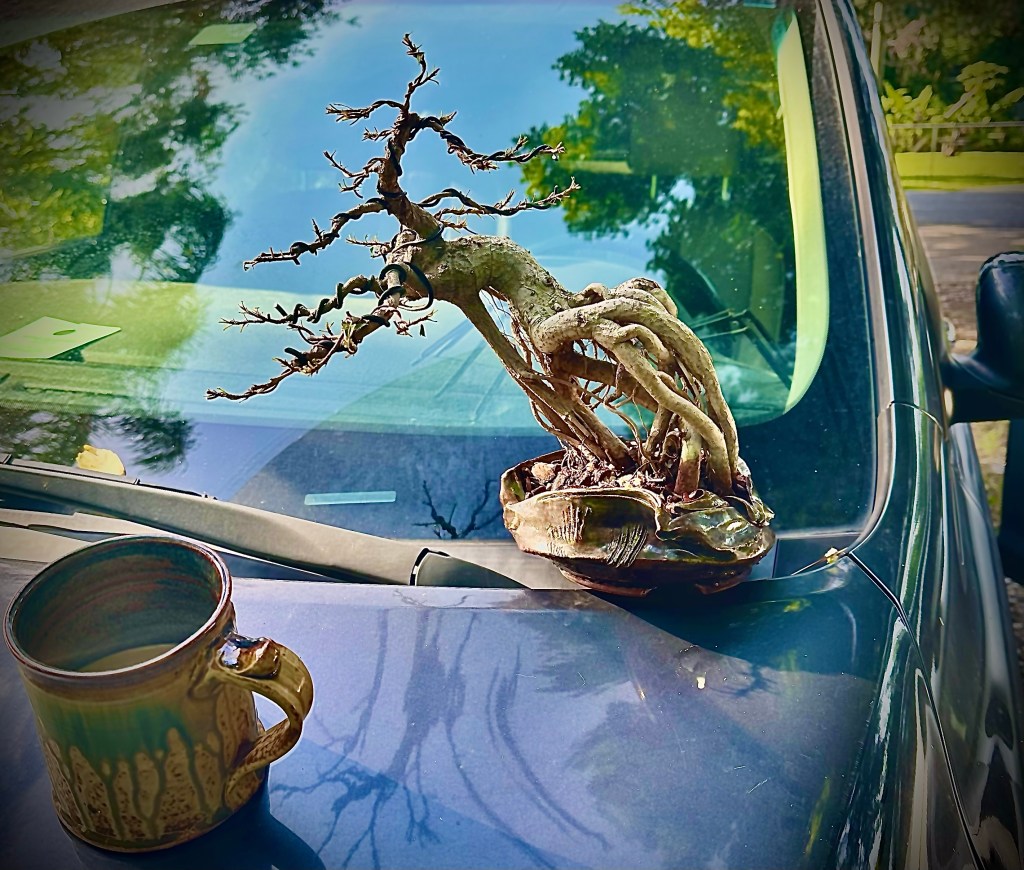
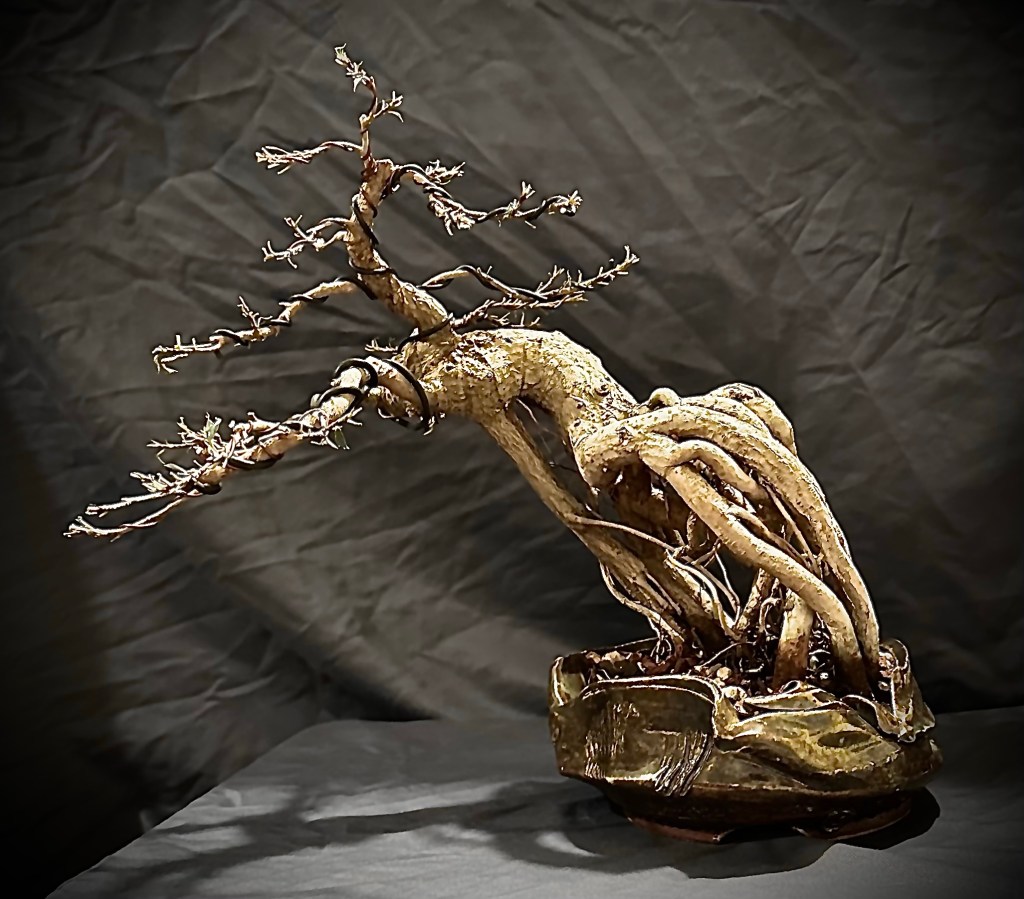
In between the PT and the Dog poop, I practiced a little Back Bumper Bonsai, just like the old days. Here’s the tree, a willow leaf fig (Ficus salicaria, ofttimes erroneously called Ficus nerifolia, or F. salicifolia, or whatever it was called when you grew up in bonsai).
Here’s the facility my daughter is getting tortured at.
Here’s the dog. Ugly thing, ain’t it? Lily. Stupid dog. It has no tail, so when it poops, you have to wipe its ass. Not me, no way, no how, not ever. My sister does though.
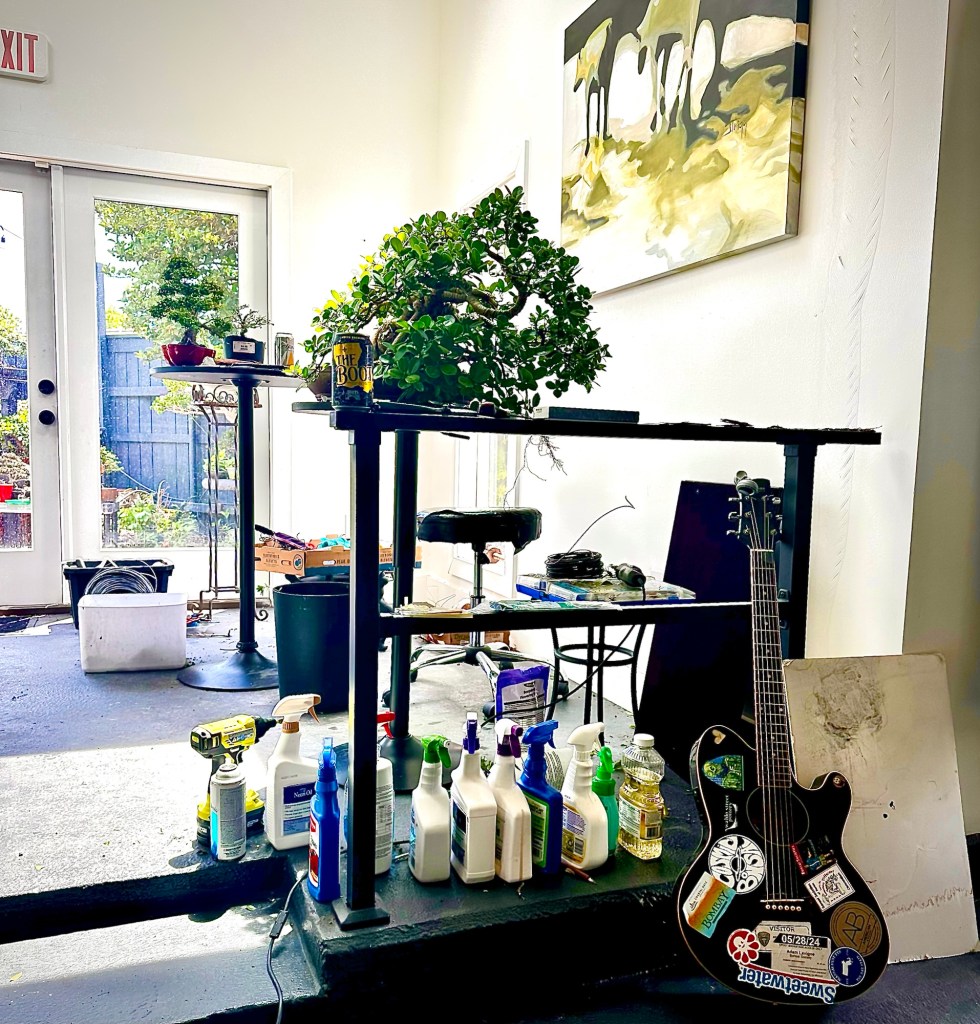
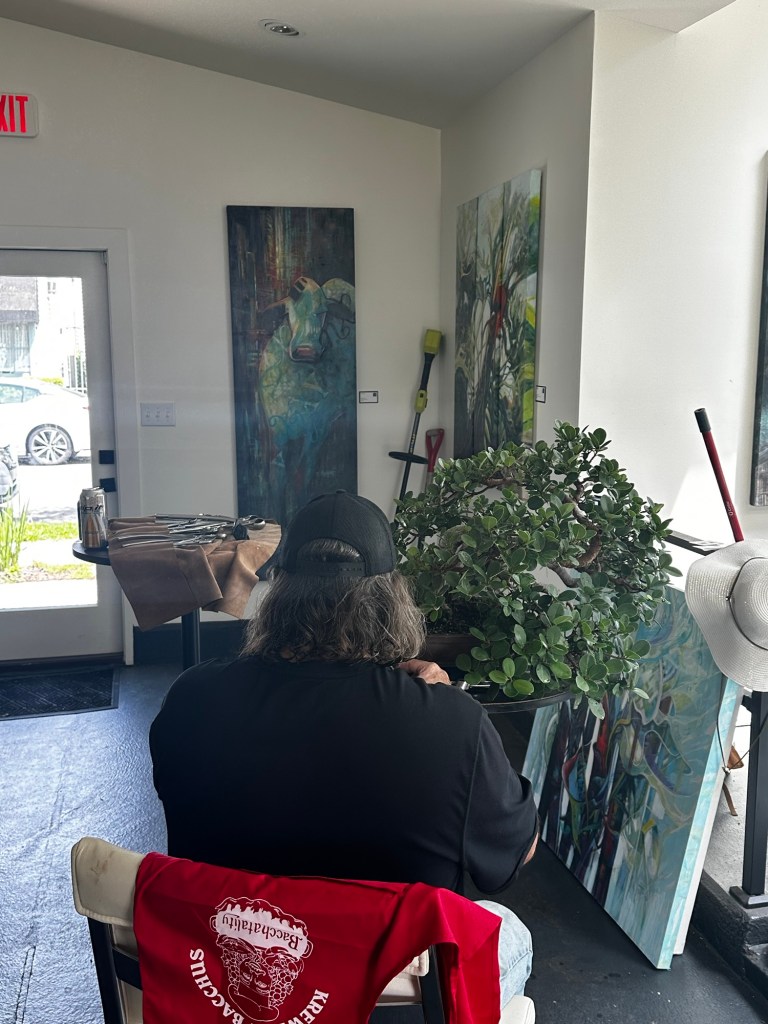
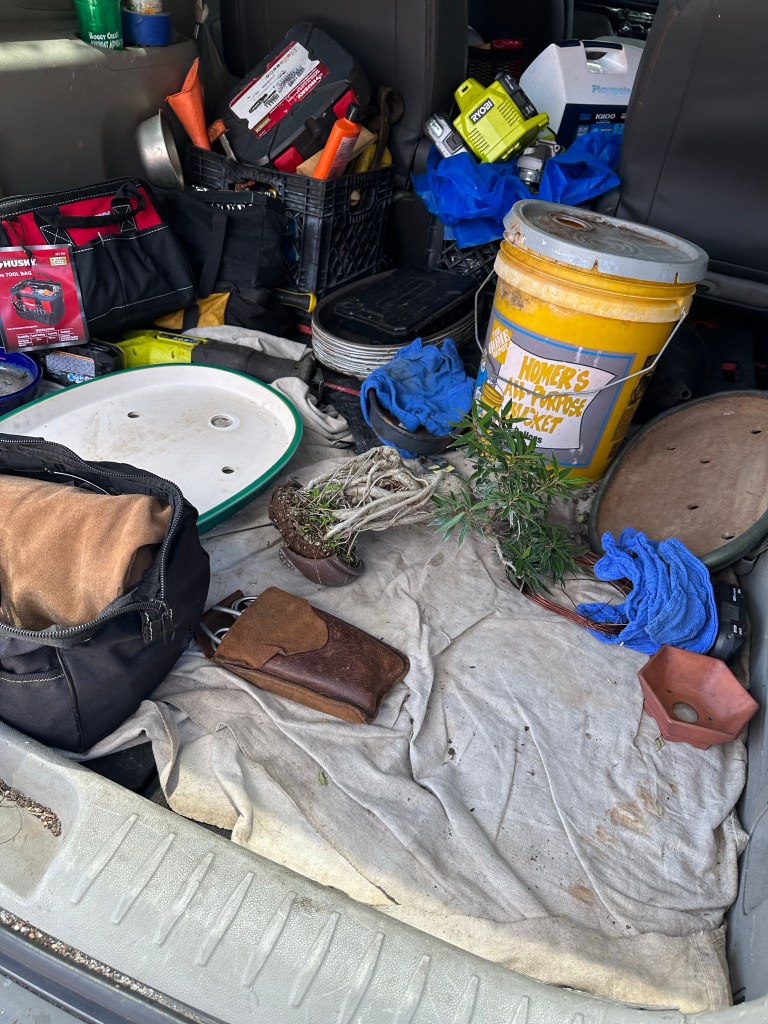
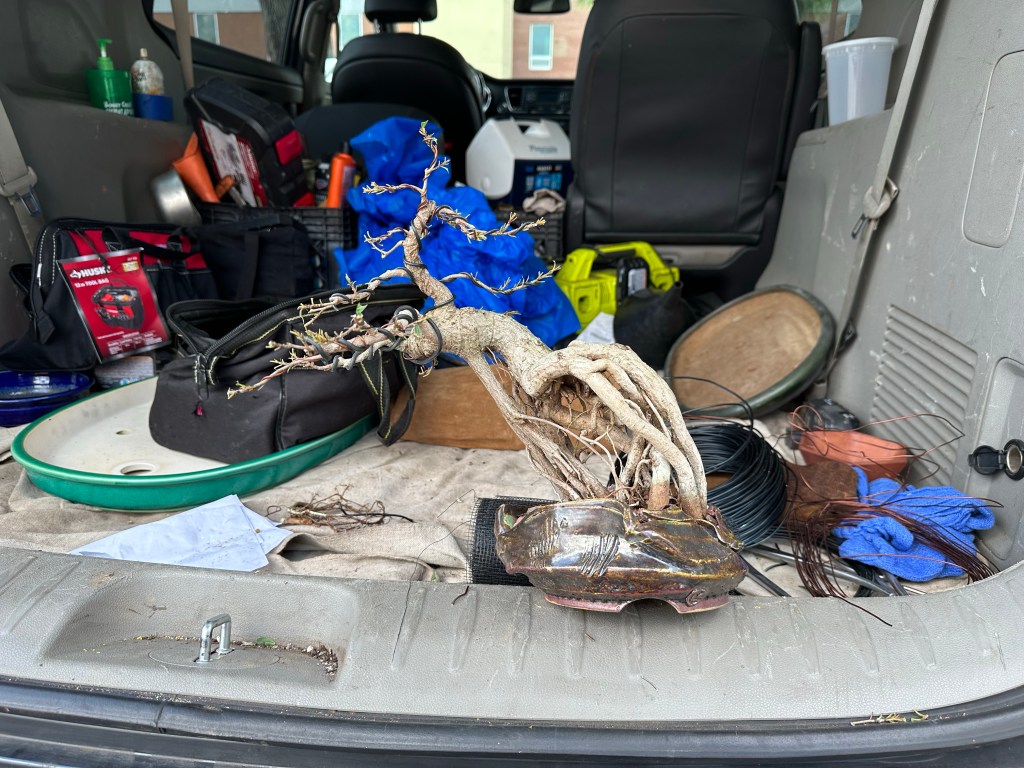
And here’s the Back Bumper bonsai studio.
A Kia minivan. For those that remember the old days, I graduated the PT Loser to the junkyard years ago.
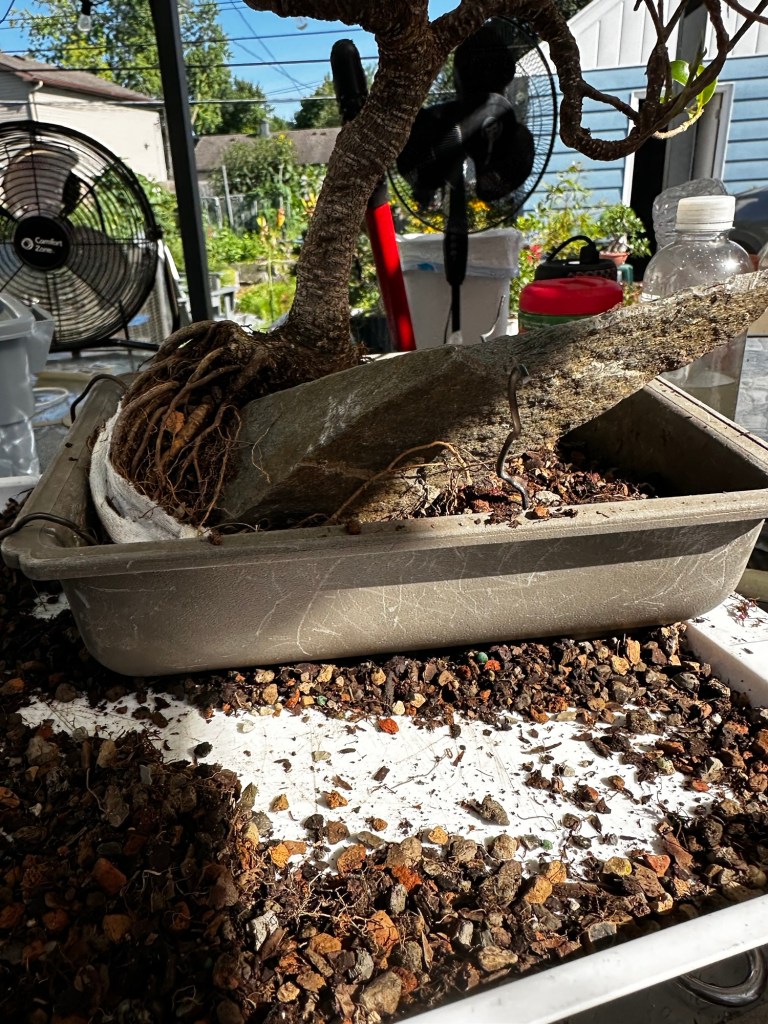
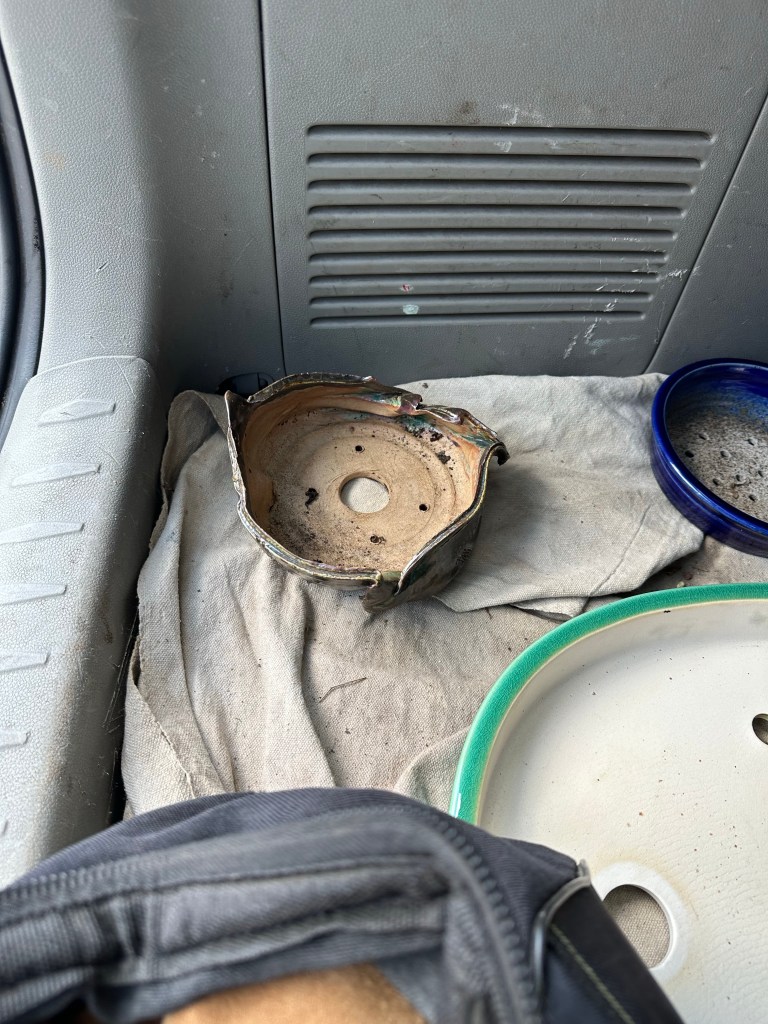
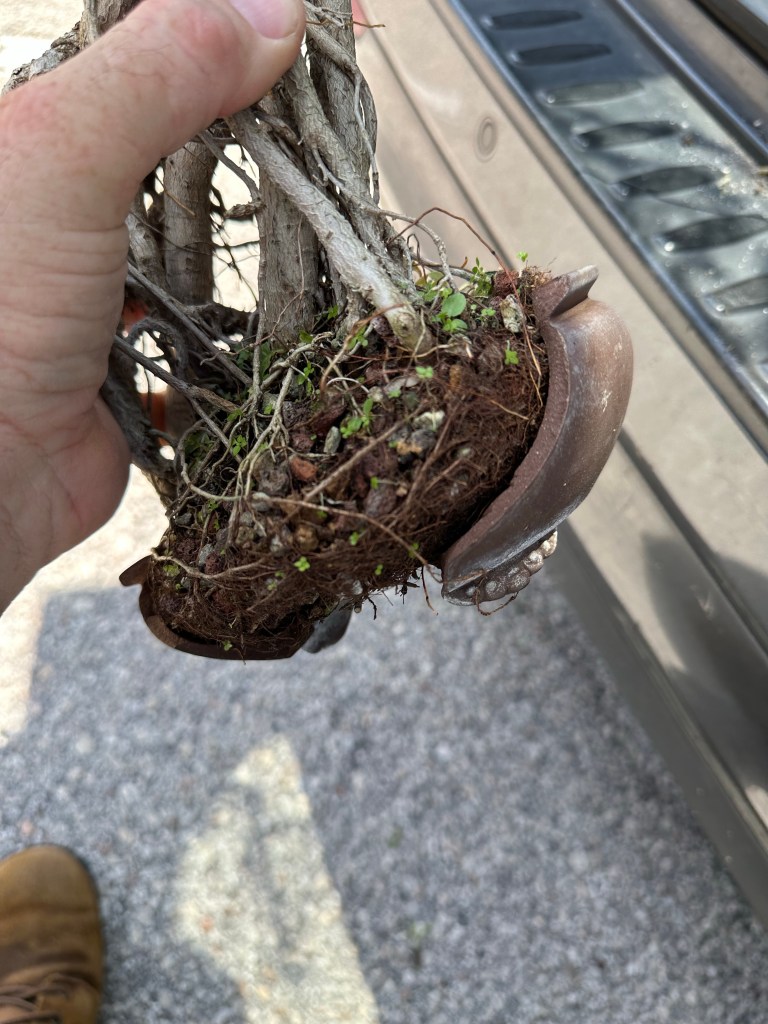
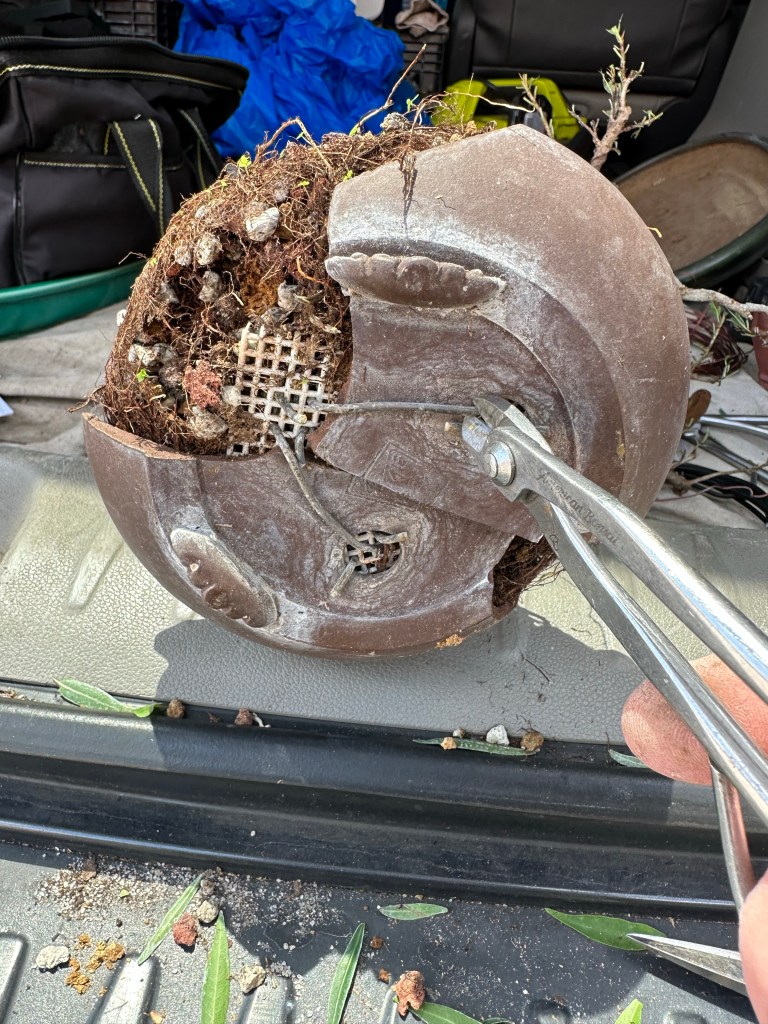
The willow leaf has a, uh, structural problem with the pot.
It done broke.
So today, I’m going to repot it, cut it back, defoliate, and wire. In that general order I guess.
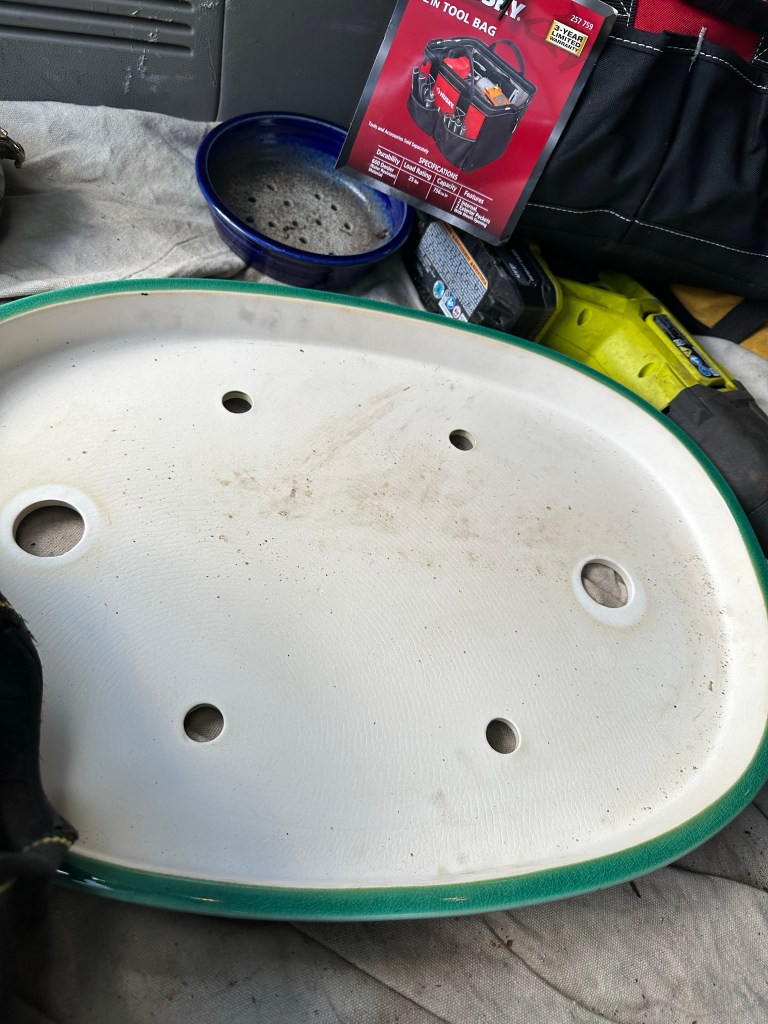
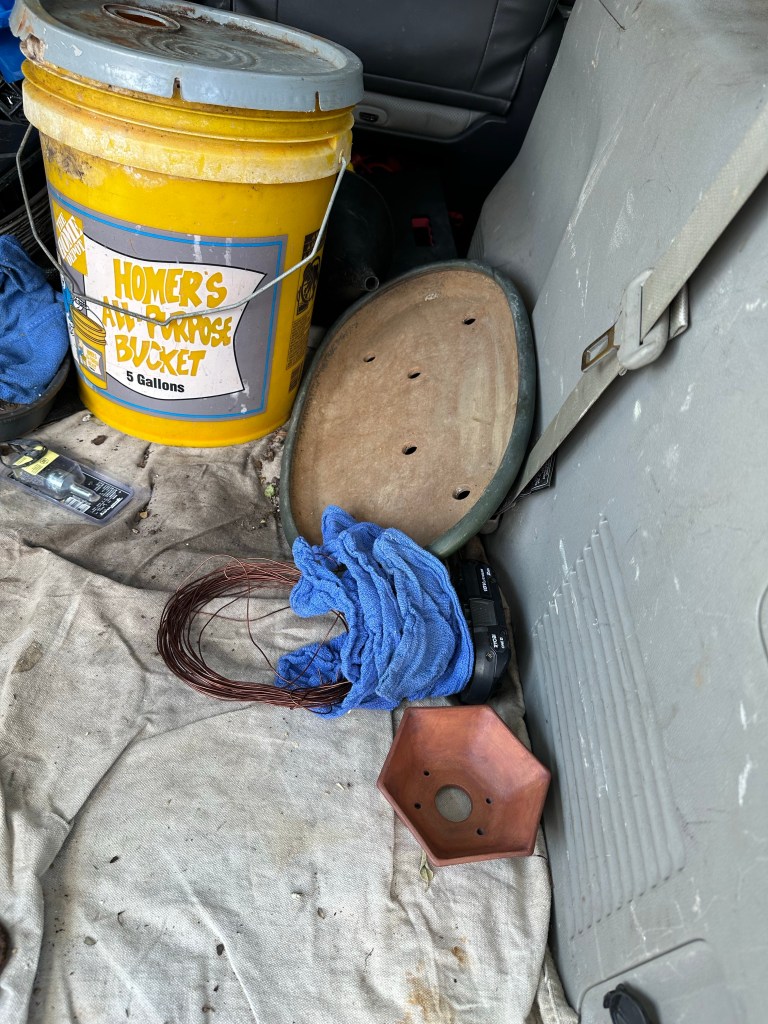
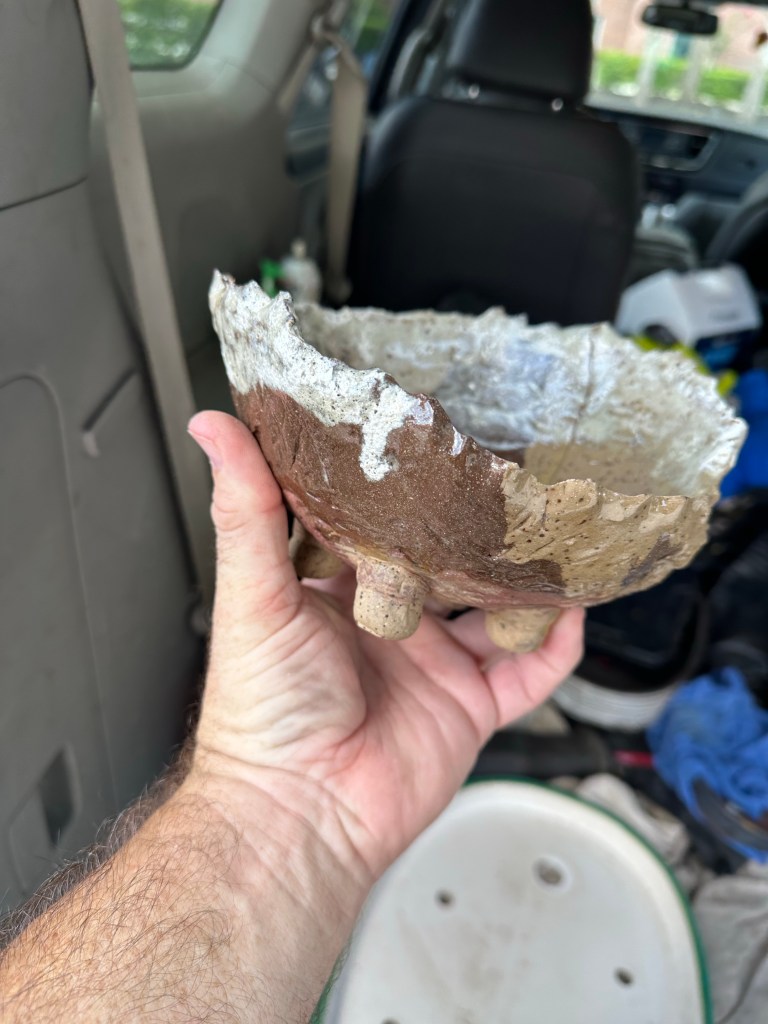
Here are some pots to choose from.
Not the big one of course.
Or that old Japanese one either.
The one below is from my student, Peter Penico. It could work.
But it’s going the wrong way. Nice pot though.
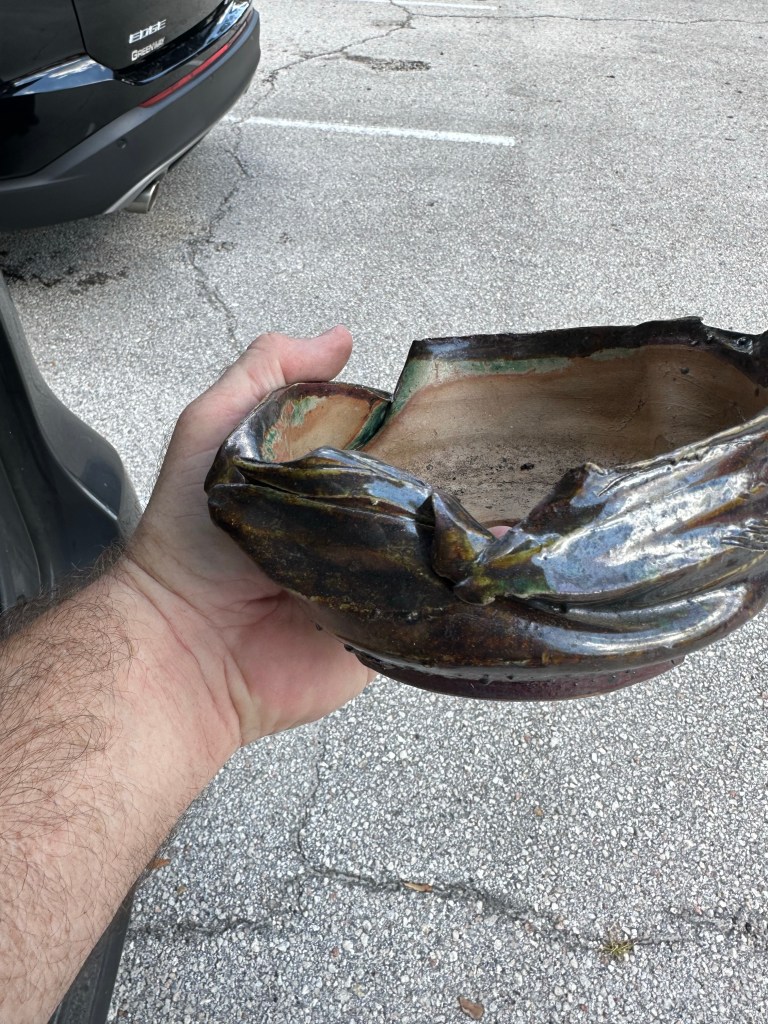
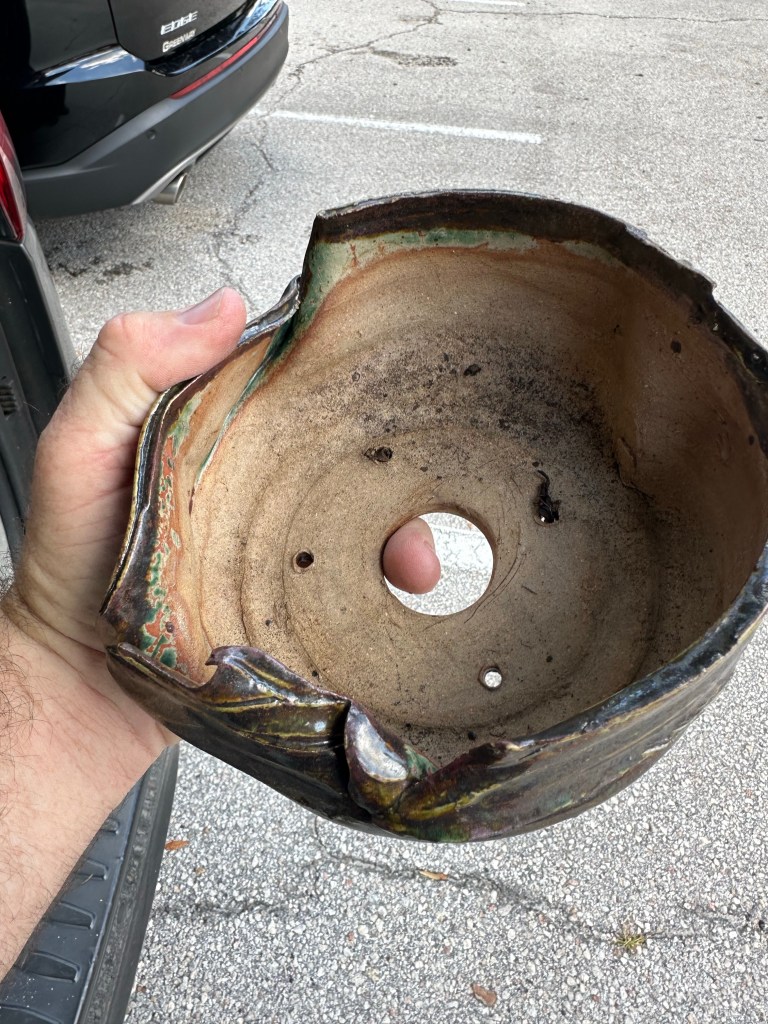
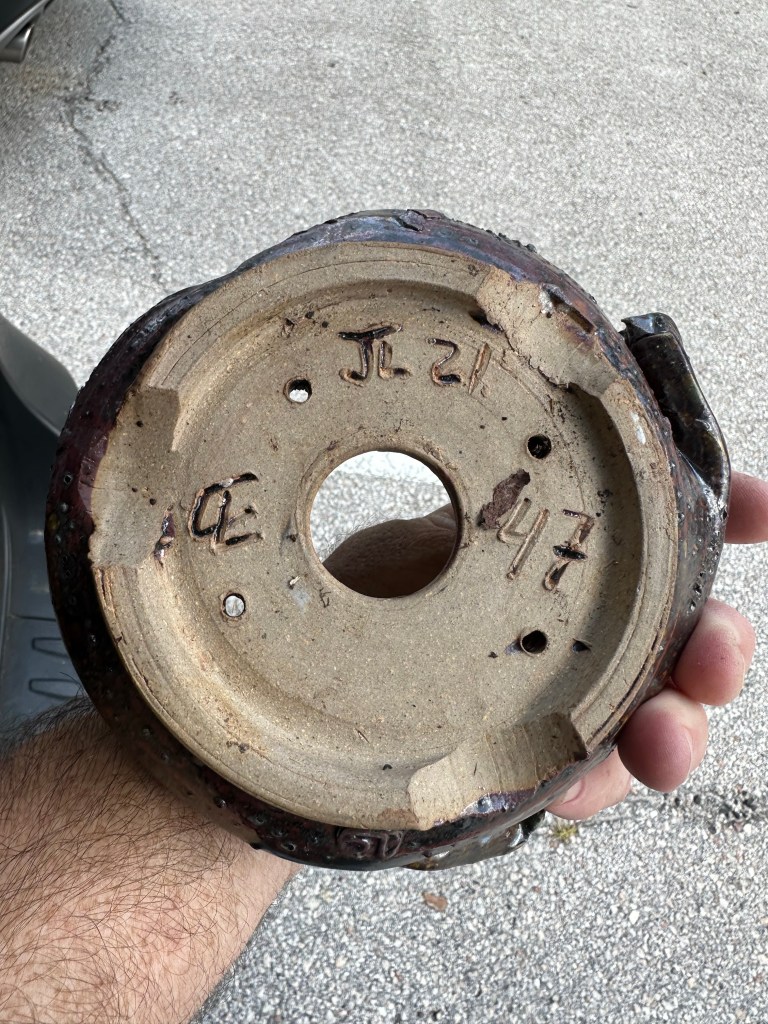
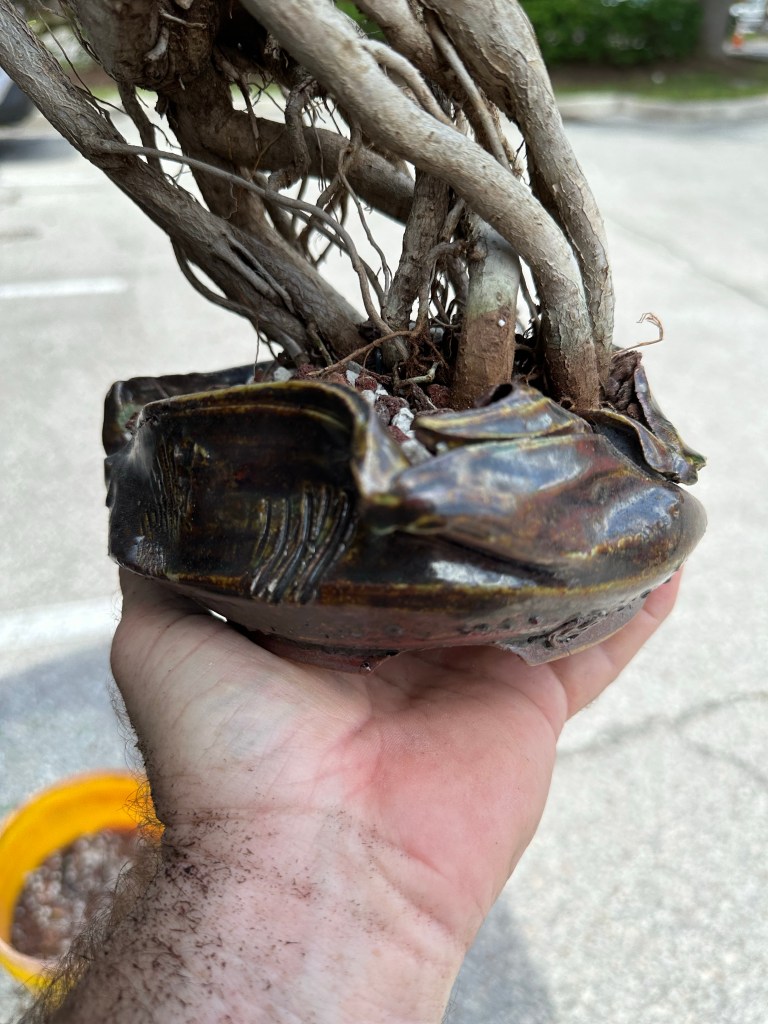
The one I’m going with is this one from Cesar Labrador, a Florida artist living in the Tampa/St. Pete area.
You’ll see his work on the Bonsai Pot Facebook auctions every once in a while.
Sweet details and shape.
It’s perfect. Let’s see about the tree now.
I think I’ll actually defoliate first.
I’ll be using the “chicken plucking” technique today.
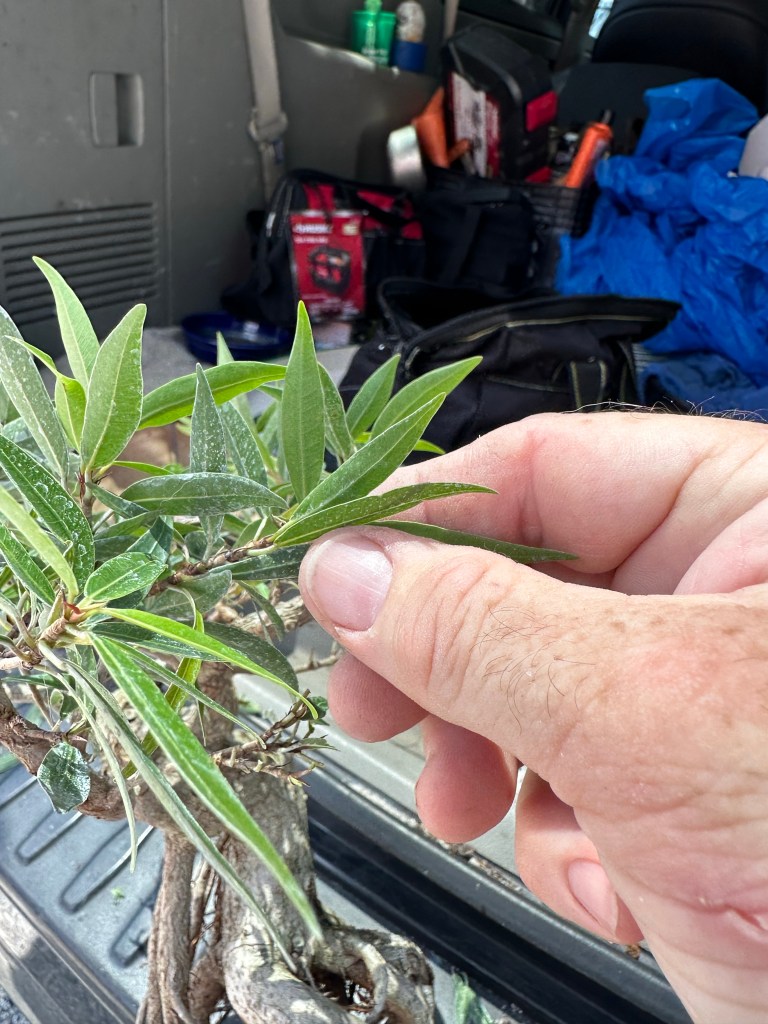
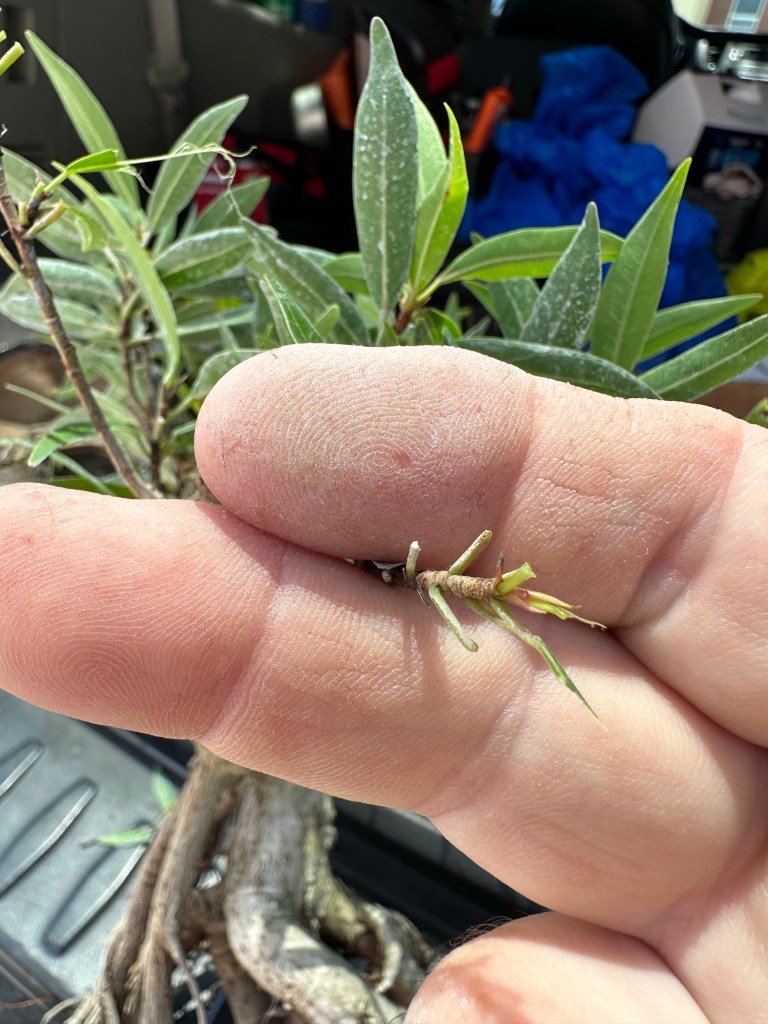
Grab the leaf, and pull forward. The leaf will break at the petiole and you’re done.
Pretty quick and easy. Doesn’t work on all species of trees though.
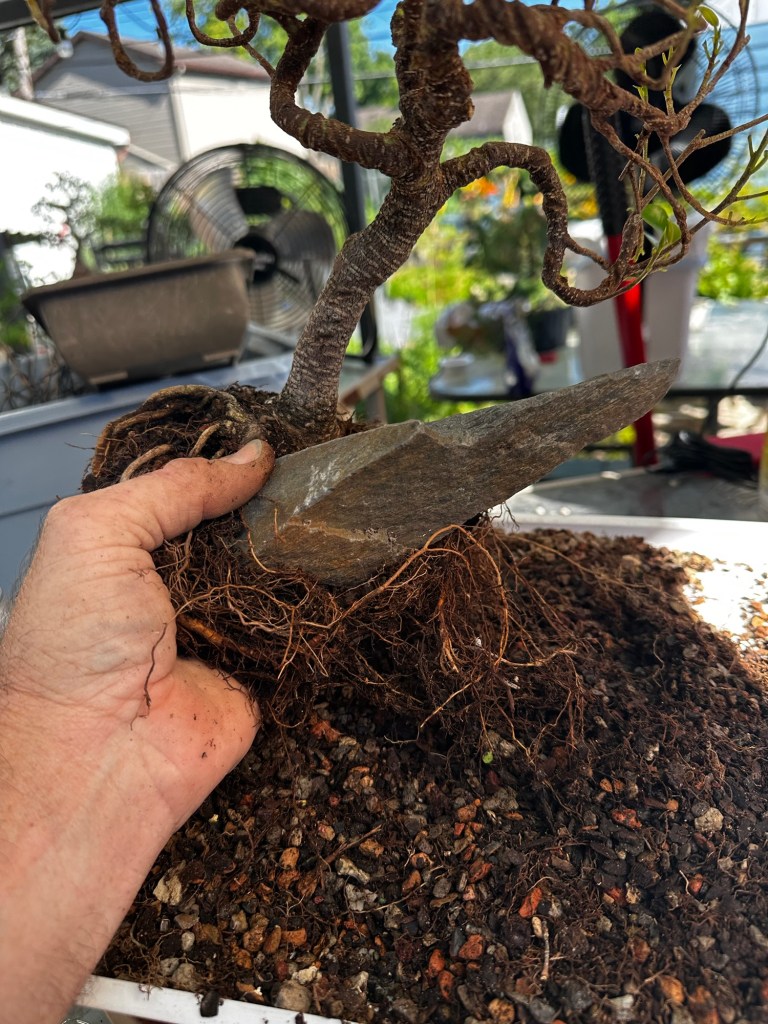
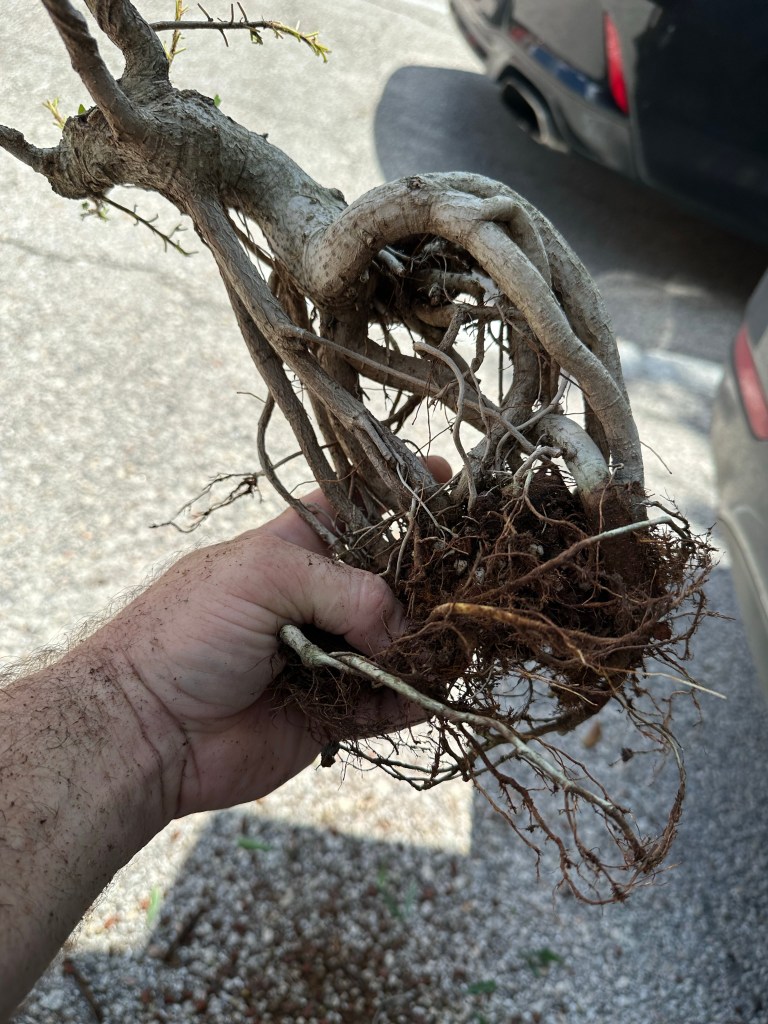
Next is to remove the old pot.
Gently massage the old soil out.
Tie the tree into the new pot, add soil.
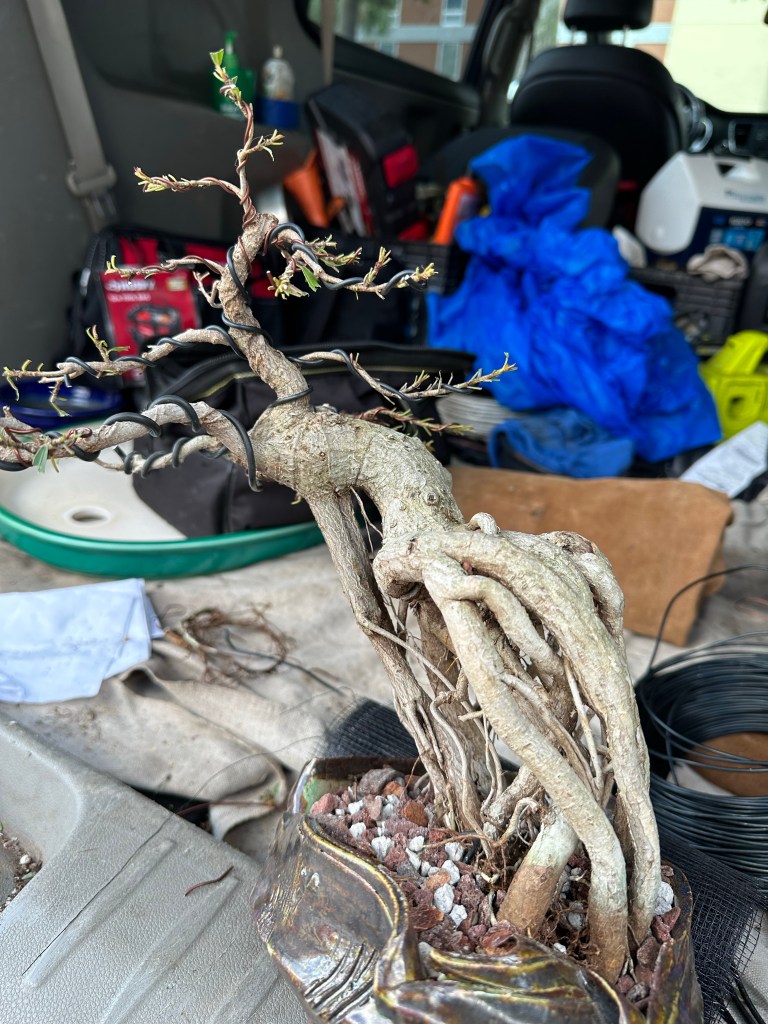
And now for the magic. Wiring!
Here’s the before.
And…..here’s my daughters Jeep and what’s wrong with it (see what I did there? I’m going to make you wait for the after. Wait, don’t scroll down yet…..dammit!). Well, if you’re still here, she has a blown head gasket. The design of the cooling system allows for the coolant to get low and you don’t know it because the overflow reservoir stays full. So, in typical Chrysler fashion, the car overheated and blew up the gasket.
She liked the color of the Jeep. But it’s a bit too much of a job for me to fix, so its for sale, as is. If you’re interested. Call me….
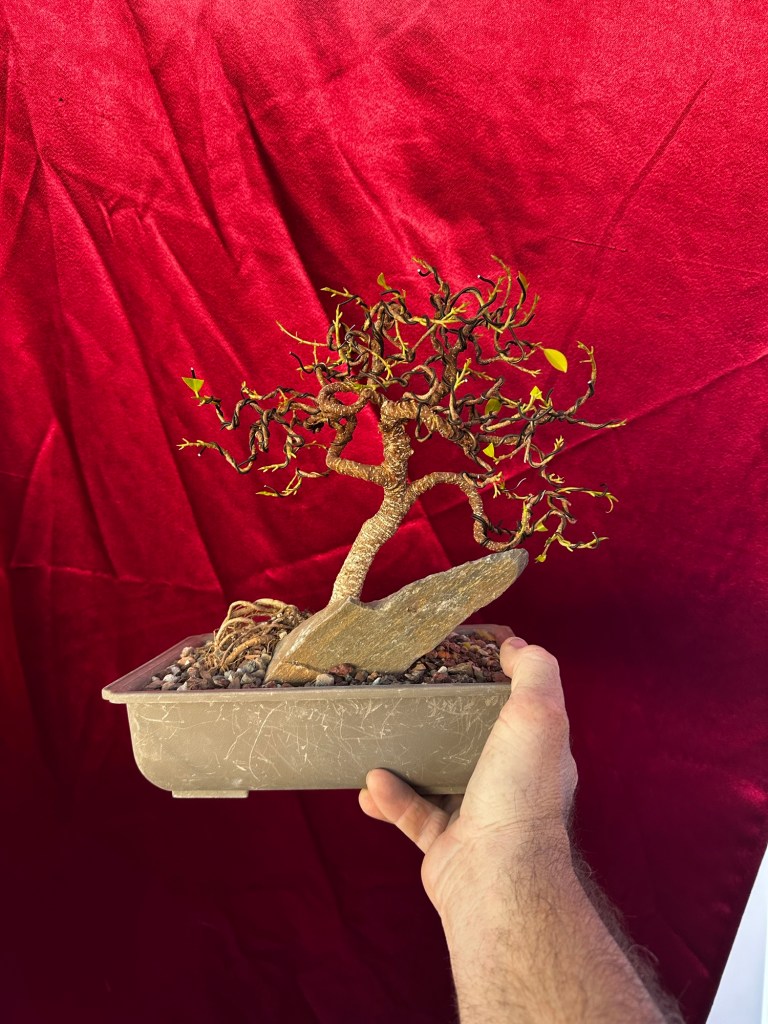
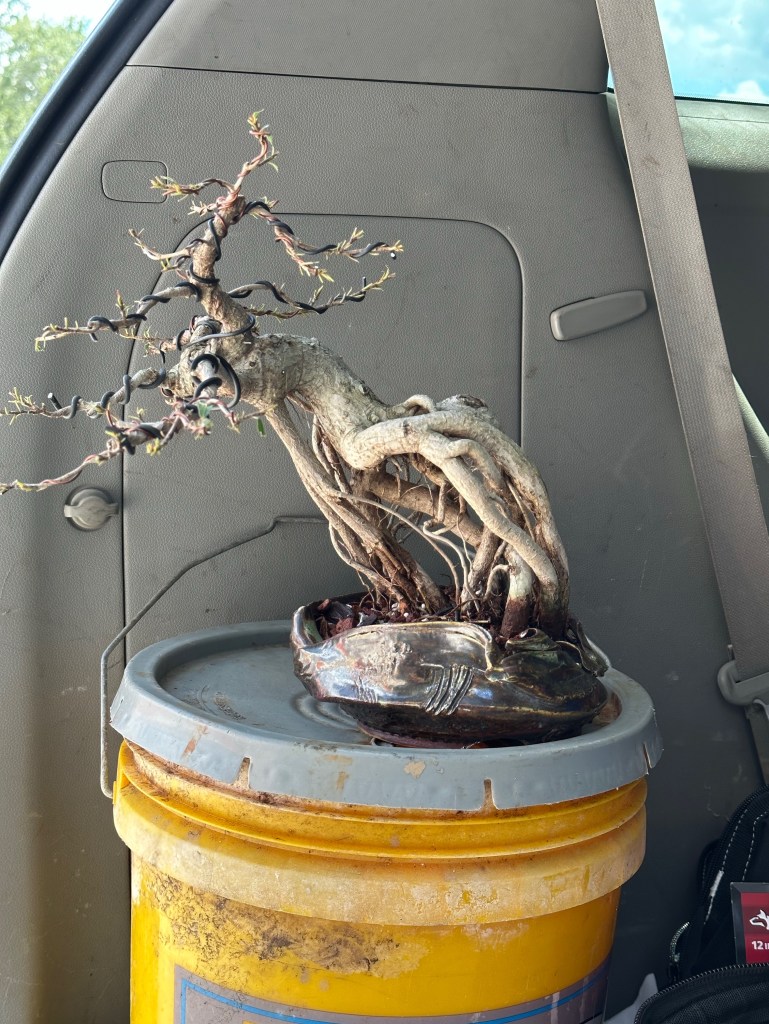
Ok, now for the after.
I think the pot goes well with the exposed root style of the tree.
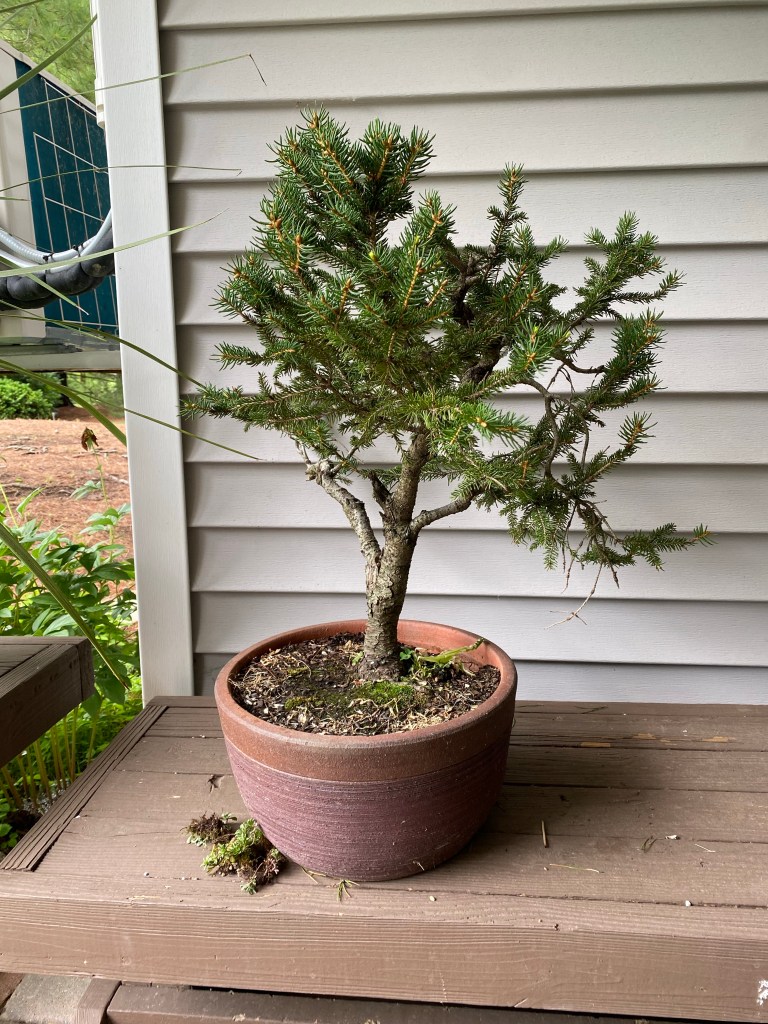
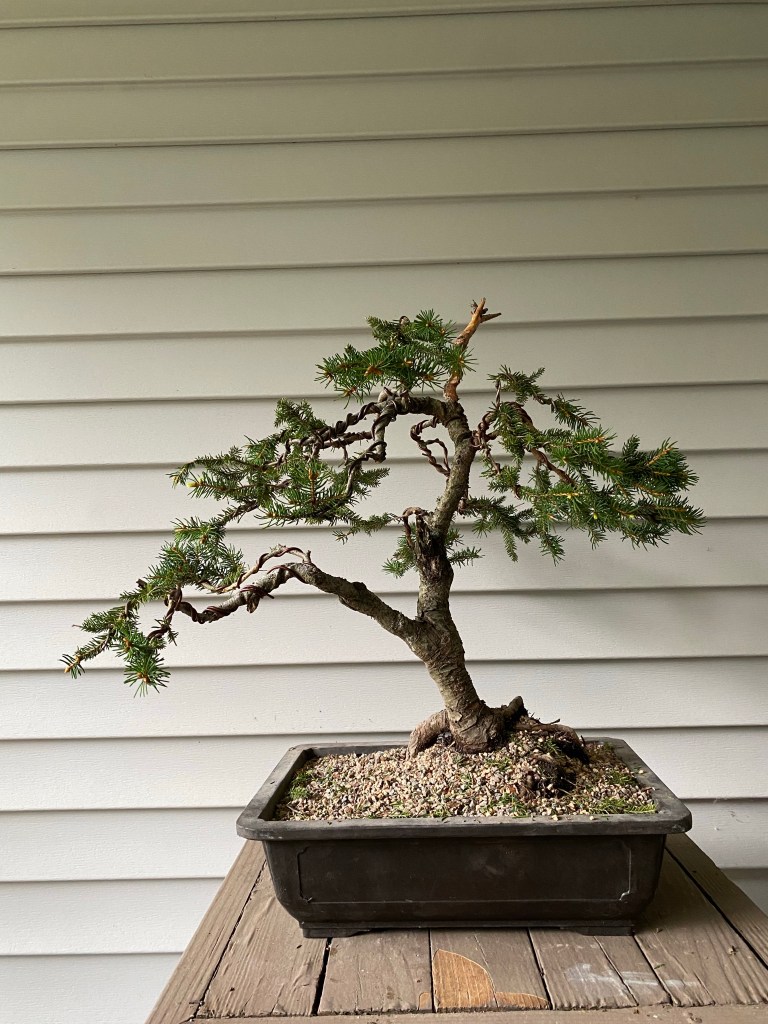
Here I am, back in Cincinnati, it’s July, 2023, two years since my last visit, and I find that a tree I had worked and, most assuredly, had killed, was still alive.
Wow…
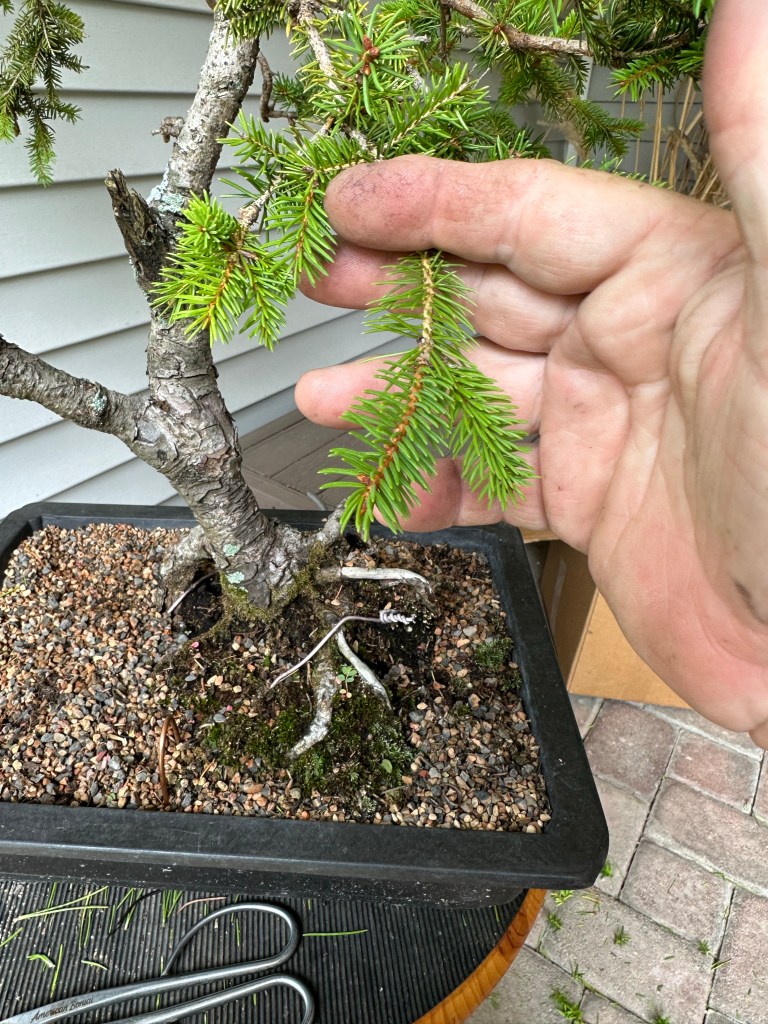
I’m not a northern conifer guy, generally (but I do work them for clients) so the only thing I can say to what it is, is that it’s some type of spruce (but it could just as easily be a fir or a hemlock). Spruces don’t grow down in Florida. They are what we call a “Christmas tree”.
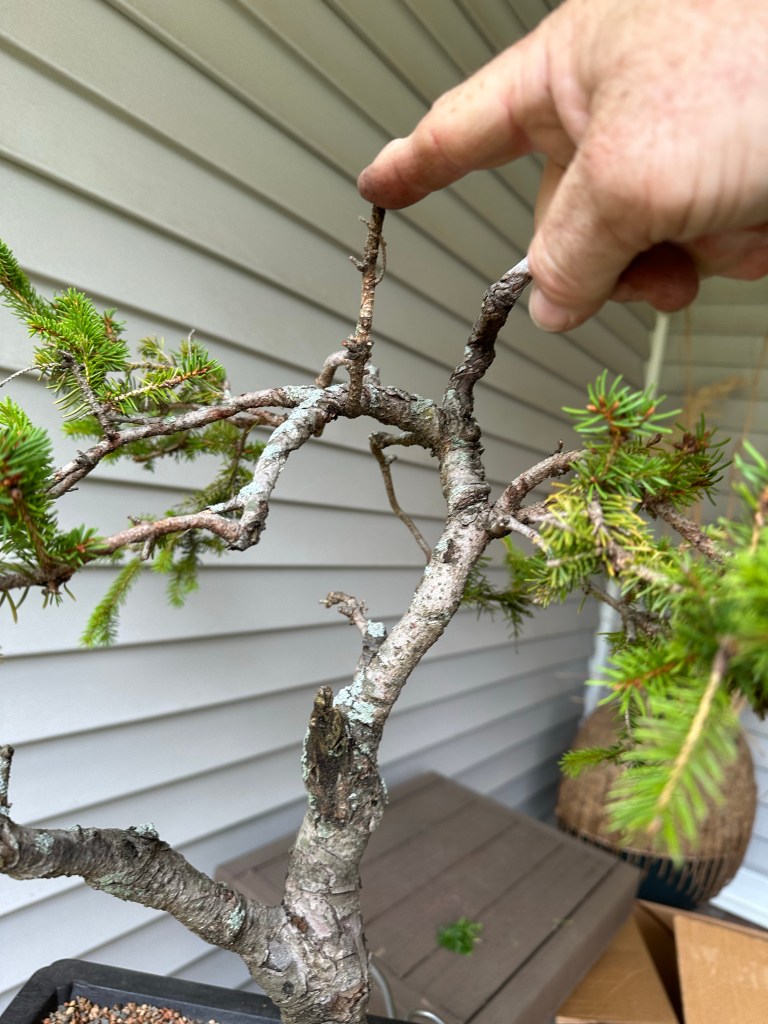
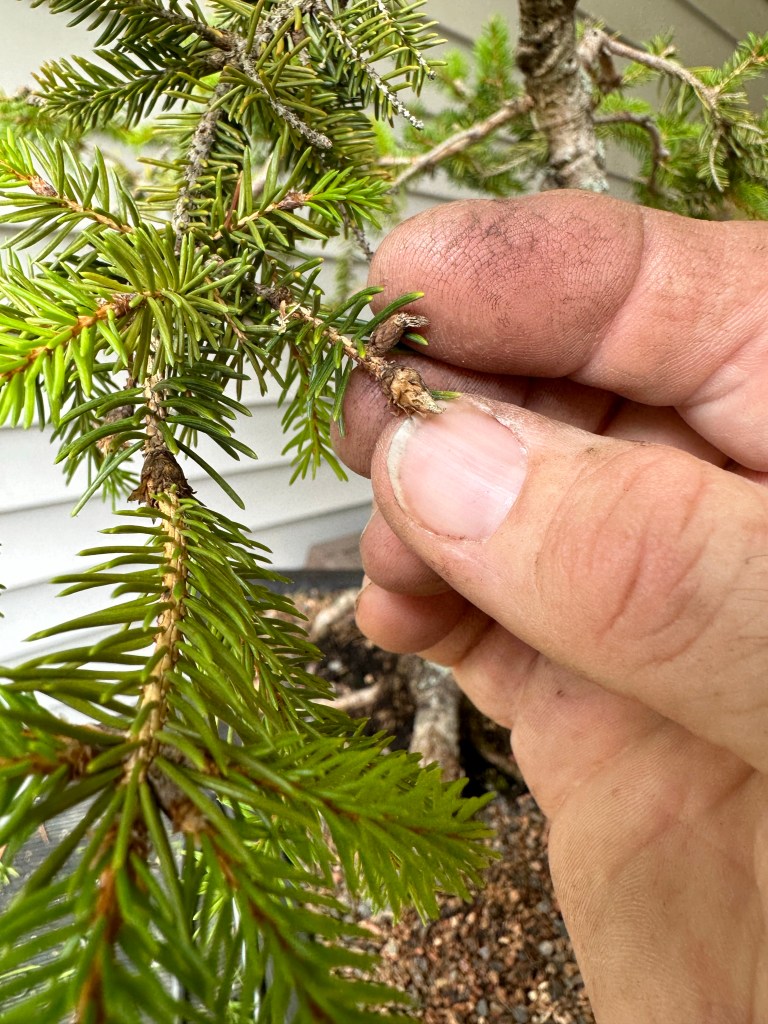
As I inspect the tree, I find a few issues. Much of the US Midwest had a weird winter. It was cold near Christmas time, but didn’t get cold the rest of the winter, until one day the temps dropped 40° Fahrenheit in a matter of hours. Many bonsai were damaged. I think it stressed this tree in particular.
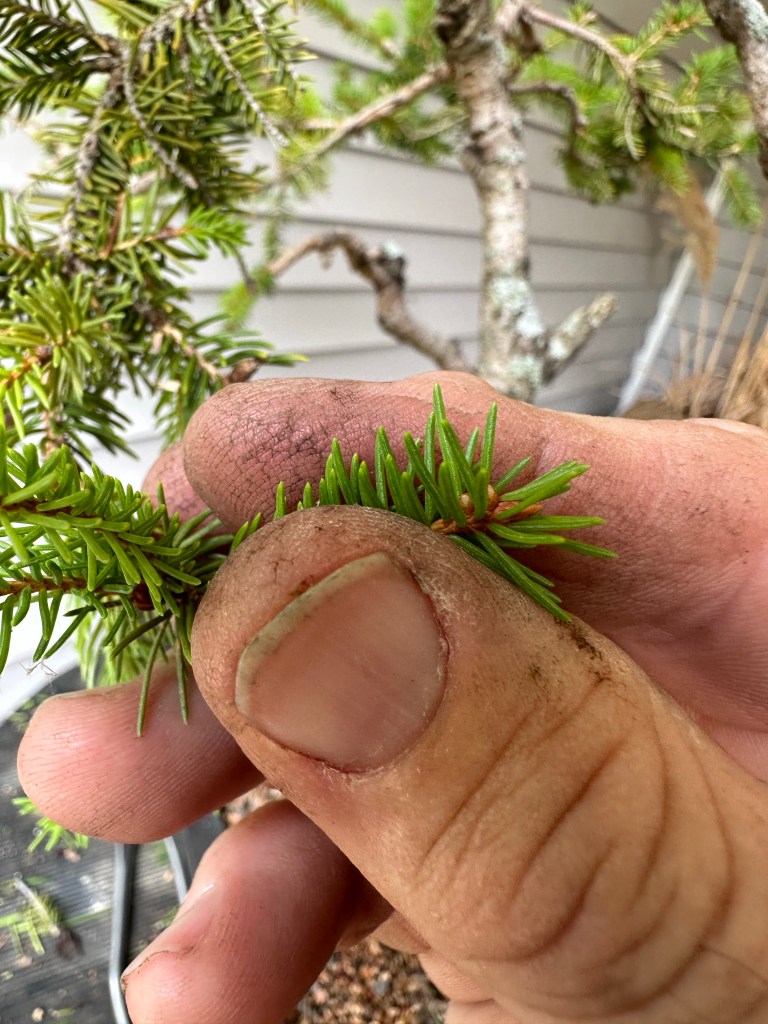
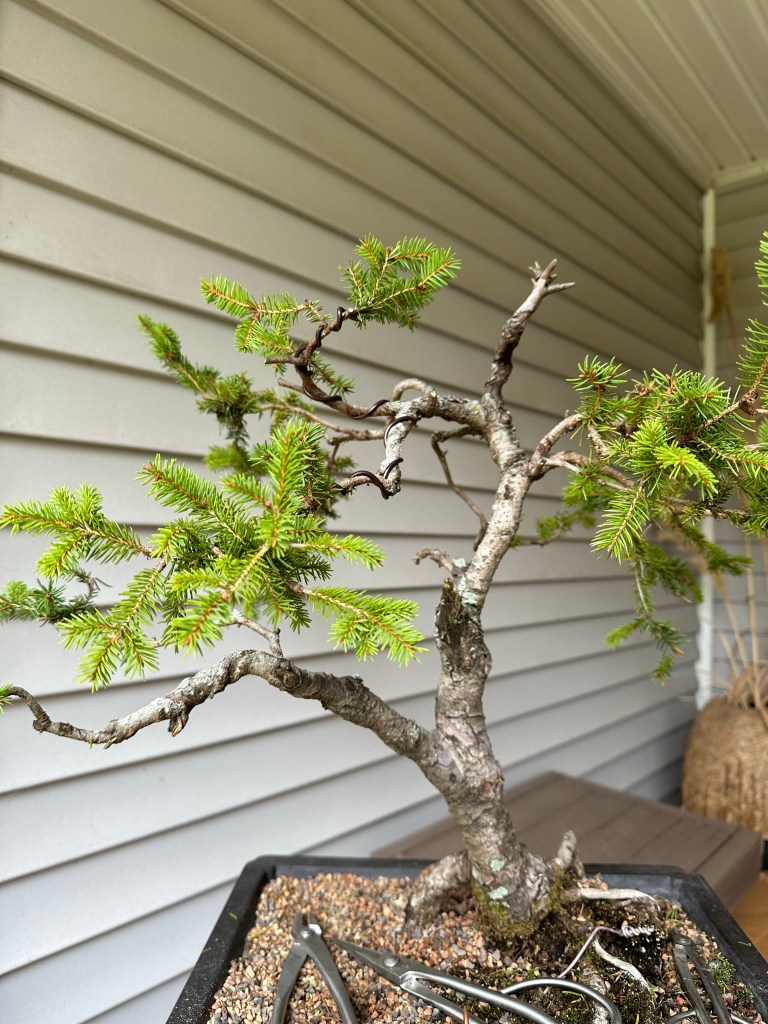
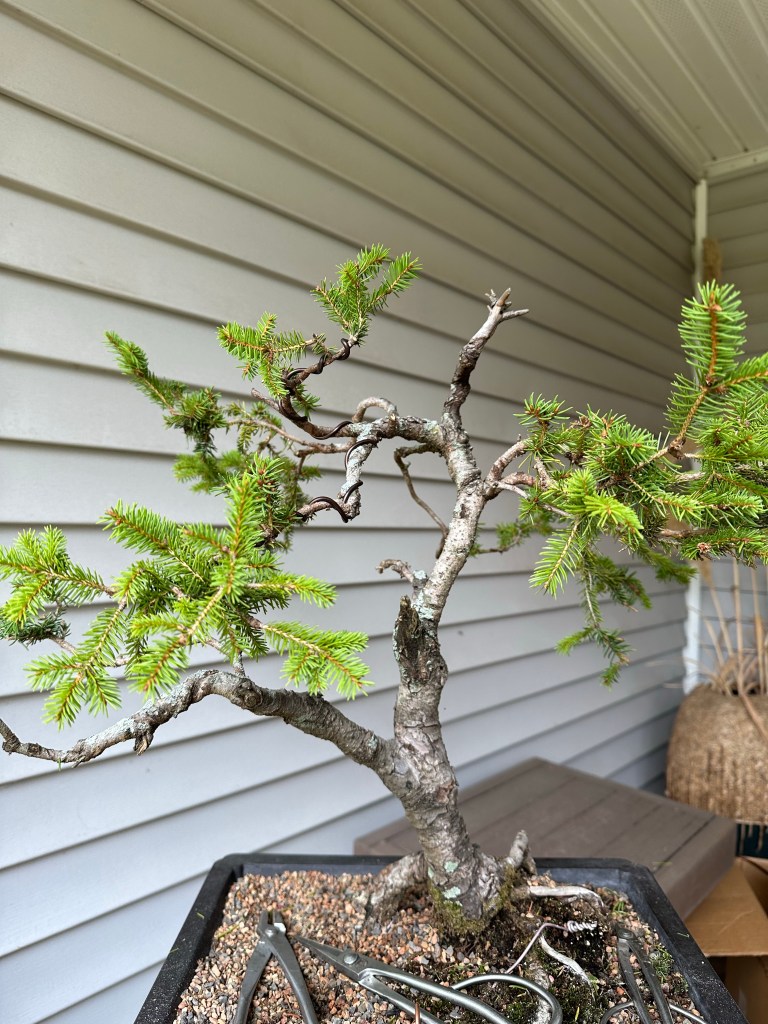
It killed off one branch (above) and some of the new buds were damaged. As you can see below.
But it’s still alive and growing. Which delighted me when I got to my clients house.
Ok, that’s in the Now. Let’s go back in time and look at the tree two years ago and you can judge me for the initial insults I rained down upon the poor tree back then.
Lots of branches, good color.
Crappy soil.
So what did I do?
I repotted it.
My client, Tom, asked me to, so I, against better judgement, did.
This was in mid June, Cincinnati, Ohio, coming into the hottest time of the year for the locale, I knew just a little of its history, but nothing about the species, and the worst insult? I’m a tropical guy (well, mostly. I am here now, aren’t I?).
Tom, who had a stroke a few years ago, doesn’t get to work his trees so much. And he’d had the tree for many years, just sitting in that pot. He’d look out the window at it from his living room.
He asked me to do something with it, so I did.
First, the repot.
The soil I had on wasn’t the best. Mostly expanded shale, or Haydite, as was the brand name back in the day.
Then I styled it.
Two years ago….
You are probably asking why I didn’t do a write up on it then? Well, to be honest, who wants to show a tree you’ve worked on that you know won’t live? I don’t like that idea, showing techniques and styling and trying to be a teacher when you know it’s not best for the tree.
But I got lucky, and sometimes, as they say, it’s better to be lucky than good.
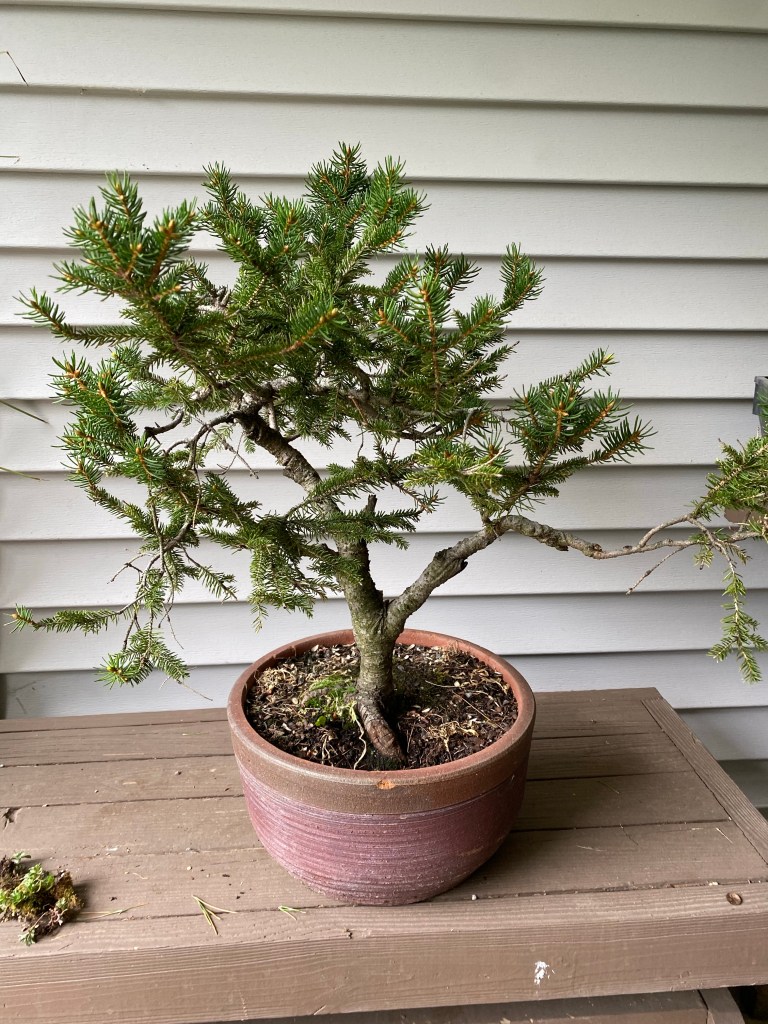
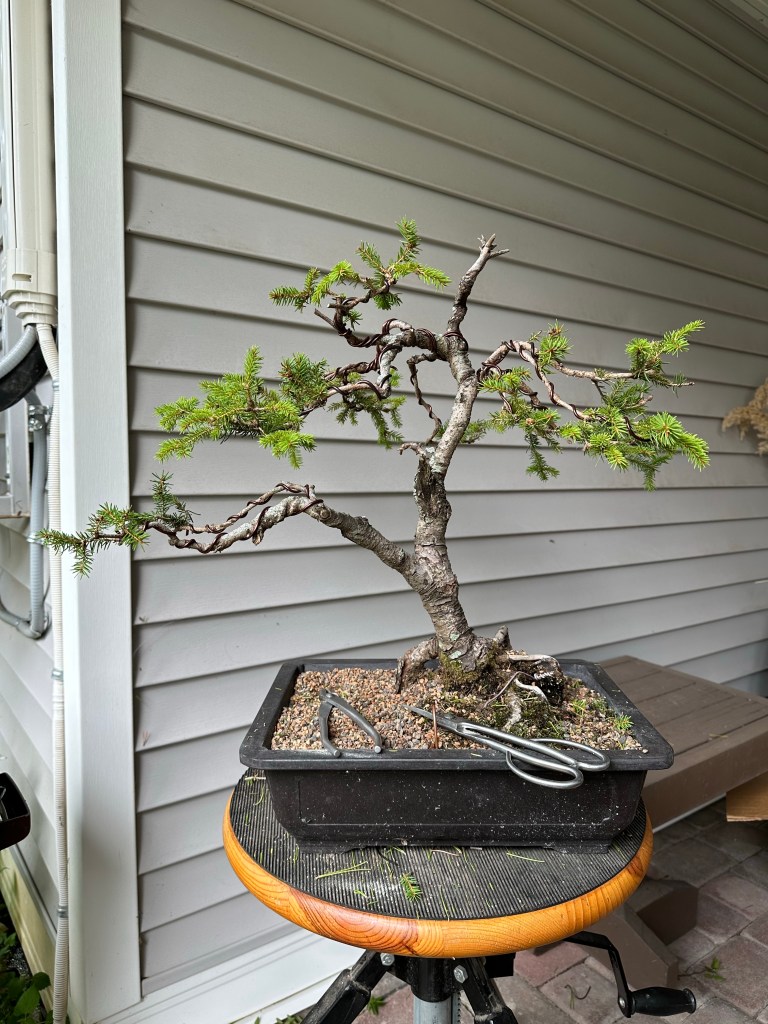
Here’s the tree after the restyle.
I left more on it this time, given that it was stressed.
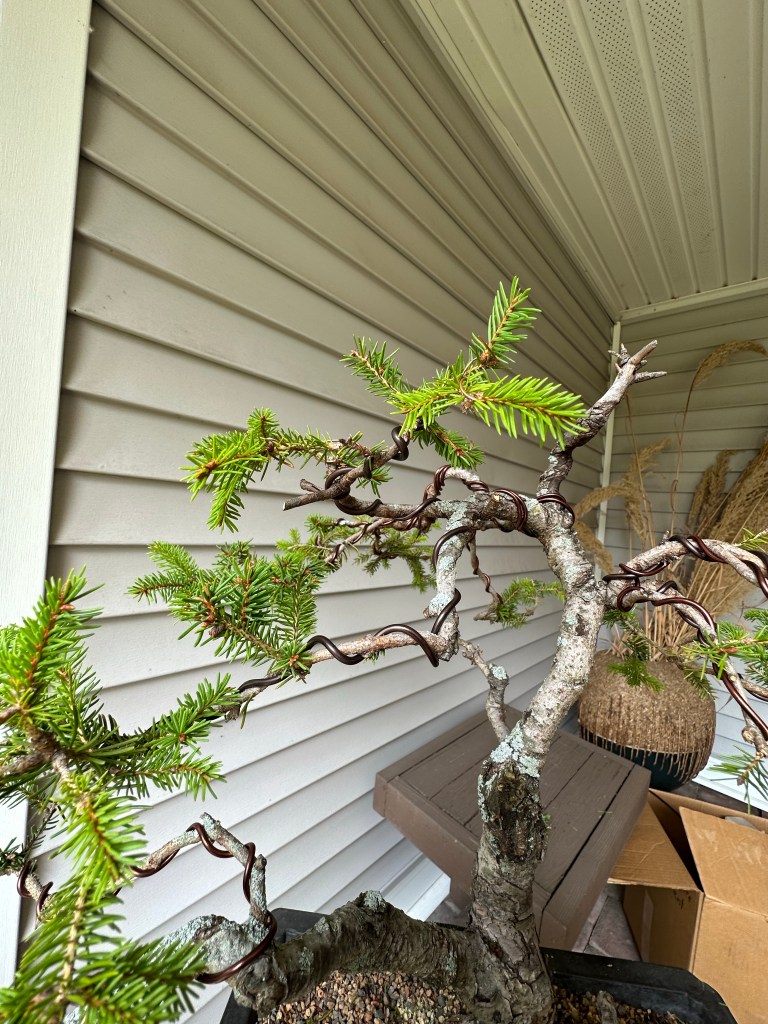
Wiring the top in a typical “conifer comb over” many bonsai artists practice.
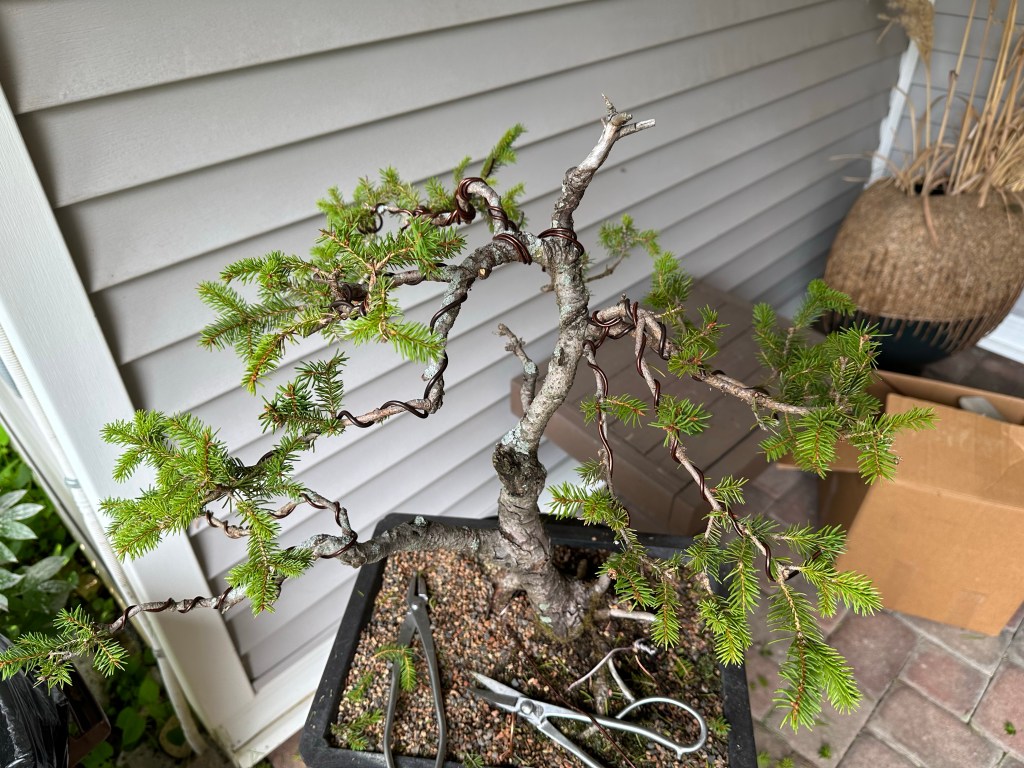
The only tips or tricks I can give you on this particular variety and species of tree (considering I’m near ignorant as to what it specifically is) is to not cut it back too much, water and fertilize as one would with the spruce genus, and pay attention to severe, sudden drops in temps near springtime bud formation.
I didn’t fertilize this time, except with a miracle product called “Micromax”, which is full of those micronutrients usually missing in most fertilizer compositions (macro nutrients are the NPK of regular ferts: nitrogen, phosphorus, and potassium, micros would be things like molybdenum or boron or even things like chlorine or copper that you might think are detrimental to a plant).
And that’s how I left it for this year. Hopefully I’ll see it again in my future travels. I don’t get to see many trees after I work on them in my tours. So a return this year was sweet.
Thank you Tom, and thank you Ruthie. You are both the real deal.
It’s been about four years since I found this, and every year, looking at it and pondering the next move, I’ve missed the opportunity to work it. Why? I needed to repot it, get a look at the roots, figure out what was happening under the soil. You can only do the root thing in the late winter/early spring, before the tree sprungs, or you’ll tend to kill it. We don’t try to do no killin’ ’round here.
It’s my favorite deciduous tree, Celtis lævigata, and you need to repot it before the new leaves emerge. This year I got to it in time.
Let’s see what we can figure out.
I love odd shapes and challenging trunk lines in my personal trees. This is a root, I’m sure, off a bigger tree, and I love it.
The dead wood. The reverse (inverse, obverse, blah blah blah) taper. The species. I call it the ficus of the deciduous world. You just have to search “Hackberry ” in the search on the front page and you’ll get a bunch of hits on articles I’ve written on the tree (except that one Brazilian Raintree hit….).
Funny thing just occurred to me. When I write my blog I try to explain what’s happening, or what’s going through my head, as I work on the tree.
During a demo, I’ll often just get lost in the tree, and forget that the audience is there and I’m supposed to be performing. A bonsai demo is really a kind performance art (and I say that tongue in cheek, because many bonsai practitioners are kind of conservative when it comes to bonsai-as-Art, no matter their taste in art or politicians. Me, I can’t stand the taste that a politicians actions leave in my mouth, except I don’t mind that one bonsai guy in Virginia. You know who you are, Roberto).
When I’m asked what’s going through my head during a demo I usually say “not much”. It gets a few laughs. Or I’ll say “you don’t wanna know what lives inside my brain”. That gets some too.
Sometimes I tell the story of how the chicken came to the west.
I’ll say, ” How many of you have heard the chicken story?”
Those who have, groan. But they encourage it because, though they’ve suffered through it, they want others to know the pain of sitting through it as well.
Shared pain is lessened, after all.
Anyway, the chicken story:
What you may not know, is that the chicken originally came from Asia. Look it up, I ain’t lyin’. And in Asia, there is a strong Master/Apprentice relationship in the passing down of knowledge.
Now, anyone who’s raised chickens knows that it’s prit’near impossible to tell the difference between a male and a female chick (baby chicken). And it should be self explanatory that a female chick is more valuable than a male chick, because of, you know, eggs and all that, so there evolved a very prestigious occupation in the world of animal husbandry know as a “Master Chicken Sexer”. A real job. A dirty job you might say (you remember Mike Rowe and Dirty Jobs? There was an episode about just this thing).
So, being that chickens are from Asia, and they were imported into the West (how else do we have omelettes?), it soon became clear that the western farmers needed help trying to figure out how to distinguish between a male and female chick. Still obvious, right?
So the western farmers hired the Asian Master Chicken Sexers to teach the westerners how to do this.
The scene: we have the apprentice chicken sexers sitting at the conveyor belt, and the yellow chicks are coming down the chute, onto the belt, and the apprentice picks up the chick, tickle its butt or something, and throw the chick into either the male bin, or the female bin.
The poor male chicks are mostly made into….ah, feed for other chickens. The females were let go to make nests and lay eggs for the farmers to harvest and make their scrambled egg breakfast or quiche (if they’re French farmers).
As I mentioned before (about 100 words earlier) it is exceedingly hard to figure out the difference between the male and female chicks; they’re both yellow, the males haven’t learned to cock-a-doodle yet, the females don’t even gossip. So the apprentices are sitting there, chucking the yellow birds in whatever bin they thought they should go into. When they got it wrong, the master, who was standing behind the apprentice, would whack the poor student on the back of the head.
Slap!
Eventually, the apprentice could unfailingly tell the difference between male and female chicks.
Now, they had no idea how they knew, but they did know. That slap hurt.
Again, obviously, the point of the story isn’t about chickens or East and West or even farmers. It’s more about how to teach. Some bonsai teachers teach using the rod, telling you you’re wrong and to do it again, and again, and again, until you have it right.
That’s not me. My online name is Adamaskwhy. Most people think it’s that way so you can ask me “Why?”
And you can.
Most of the time I know the answer, or I can find it.
Or I make something up that sounds plausible.
But the real reason for my name is that, as a student, I don’t just want to know the answer. I want to know why. I was (and still am) that annoying kid in the back row that said “oh yeah, prove it!” And it angered some teachers, bothered others, and I was loved by the smallest percentage. Those were the good ones.
I’ve talked about this before, so excuse me if I’m repeating myself, but a teacher who doesn’t know why, ain’t much of a teacher.
If you can only recite your lessons, then you haven’t learned a thing.
Which brings us to the initial styling of this hackberry. You remember it? The subject of this article and all? I know, you got lost in the chicken story. It happens.
What in the hell is going through my head?
Well, you’ll have to trust me on this one, and see what happens this year.
It seems that a lot of “rules” are being thrown away with this tree.
I mean, they do say that “rules are meant to be broken”. But why do they say that?
Let me tell you another story, this time about a boy named Pablo. Pablo’s father, Ruiz, was an artist that specialized in realistic drawings and paintings of wildlife. He was an instructor and professor at several art schools. He started training Pablo at the age of seven, and insisted that Pablo learn how to draw and paint properly, in the classical and realist style that was popular at the time, and was profitable, as artists jobs back then was to paint portraits and art to be hung in wealthy patrons homes.
So Pablo learned. It came easily to him. At age thirteen, his father, Ruiz, proclaimed that Pablo had surpassed him in talent and technique, and enrolled him in a prestigious art school in Spain.
Pablo quickly understood what art school was for, and formed serious friendships that would help him later in life, all the while slacking off on his lessons. He knew them anyway.
That, by the way, would be the one lesson to take away from this parable, college is to make contacts in school, that will help you later in life. The bosses who hire you only want to know that you got the degree, not that you were a “C” student. But if they know you were in their sorority or the chess club they were in, you, my friends, are in, as they said in my youth, like Flynn.
Pablo was so good a draughtsman that, in his later years, when everyone called him Picasso, he would sit and drink his coffee at the cafés in Paris, and draw photorealistic flies and bugs on the walls. Drawings so real the waiters would rush over and try to swat the fly off the wall. Pablo, as you might think, got great pleasure in these escapades.
We are all just boys and girls, trying to smile at the tragedy that life sometimes is.
What is to be learned by this last story?
If you learn to do the work, as a craftsman should, you can then use that work to accomplish the Art that your soul requires to feel alive.
It seems I’m at the end of the work.
I would try to get a good pic, but my photography area has been battered by a hurricane or two. It’s on the list to repair.
And here’s the obligatory tortoise pic. I need to build him a proper enclosure. That’s sooner on the list than the photo spot.
This is the best I can do for now.
I’ll post updates as I make changes in the tree. Maybe. I have a long list of “To-Do’s”.
The Central Florida Bonsai Club, my club in Orlando, has been representing Florida Bonsai at this festival for several years now.
I like to go for the day and work one of my bigger trees to show the public that bonsai don’t need to be, or are limited to, small hand-held trees.
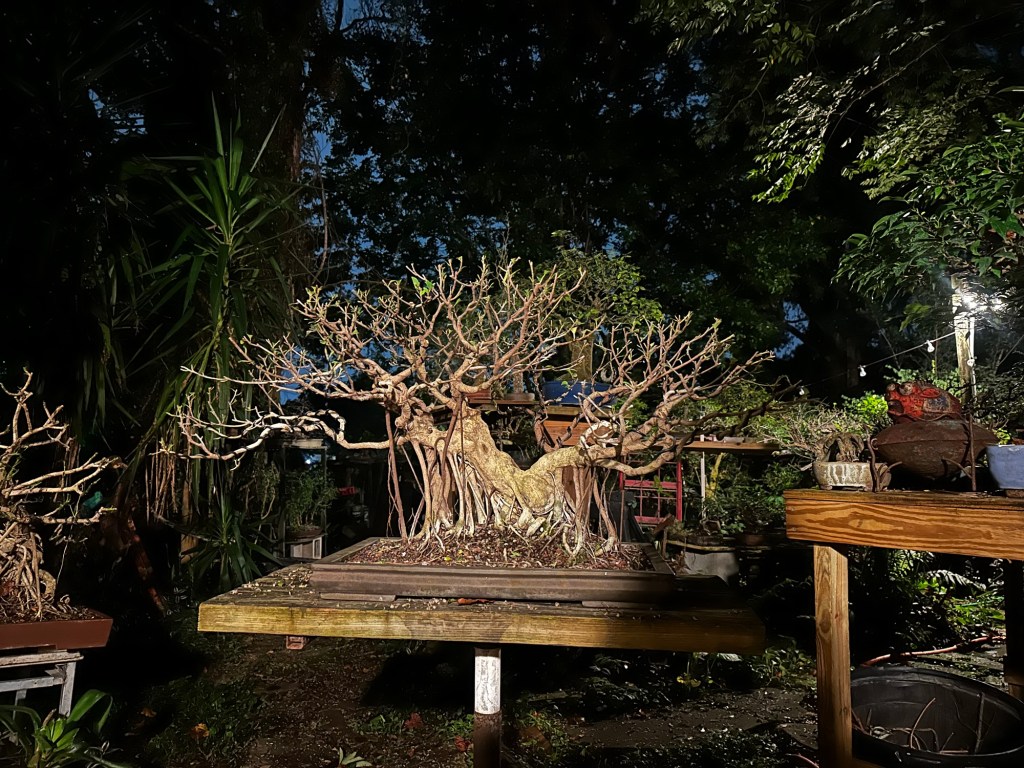
This year I brought a Ficus microcarpa. Just the plain species. Not tiger bark or green island or melon seed. Here’s how it looked after I cut it to a line way back in 2013.
I got the trunk from my good friend Ronn Miller, a Florida bonsai artist of great renown.
The link below shows a previous blog post on the tree:
Defoliation, unwiring (I think I did that already) and pruning for shape/taper/ramificatiom, and rewiring of course. But not every branch.
Sometimes that’s needed, wiring every branch, but most times it’s not. I had a former friend who insisted on wiring every branch because that’s how he learned (he watched a video on YouTube that told him to ALWAYS wire every branch, and he was a paid subscriber to this channel, so he obviously has to do what he’s told, cuz it’s worth more to him. I wish I had a simple mind like that. I have to question everything. Just last week I was tying my boots and I wondered if they’d be tighter if I used an overhand knot instead of a sideways, underneath knot. Took me 15 minutes to tie my boots…..
If you’re looking at the leaves closely, you’ll notice the white build up on some of them.
Like above. I see this question a lot on the bonsai forums: “What is this? Is it harmful? How do I get rid of it? “
It’s usually just water spots from dissolved solids in your water. Like calcium, or lime. If it’s red or orange, it’s iron rust. it’s not harmful acutely, just ugly, but it could be a problem if it’s built up so much that it blocks the sun and restricts photosynthesis. And how do you get rid of it? You can polish the leaf, or use leaf shine, or, like I’m doing, cut them off. A ficus can hold a leaf for up to three years (it’s a tropical, broadleaf evergreen). But you can defoliate one, as long as it’s healthy, up to four, five times a year. I usually do at least twice in my normal maintenance. If I’m really pushing a tree, 3-4 times.
Anyway, I have a bunch of leaves. Let’s see if I can count….
There we are. I counted 2,713 leaves.
Actually no, but that’s a good number. It’s a prime number (only divisible by itself) and sounds good saying it out loud
“two thousand seven hundred and thirteen”.
Sounds like it belongs in the first, or last, sentence in the Great American Novel:
“In the year two thousand, seven hundred and thirteen, the hero man was born.
Or died.
It was a time of illogic and lost tales, with many great humans born or killed. Some by the hands of evil men, or by their own hands as the era was one of pain.
The world had just gone through a bloody interregnum, accented by war and famine, city and states wiped off the countryside and built up into empire. Cultures distilled out of the quirks and pathology of a leader, or group.
Our hero begins the day chopping wood, collecting water, and making tea.”
I’d read that book. Maybe I’ll even have to write it.
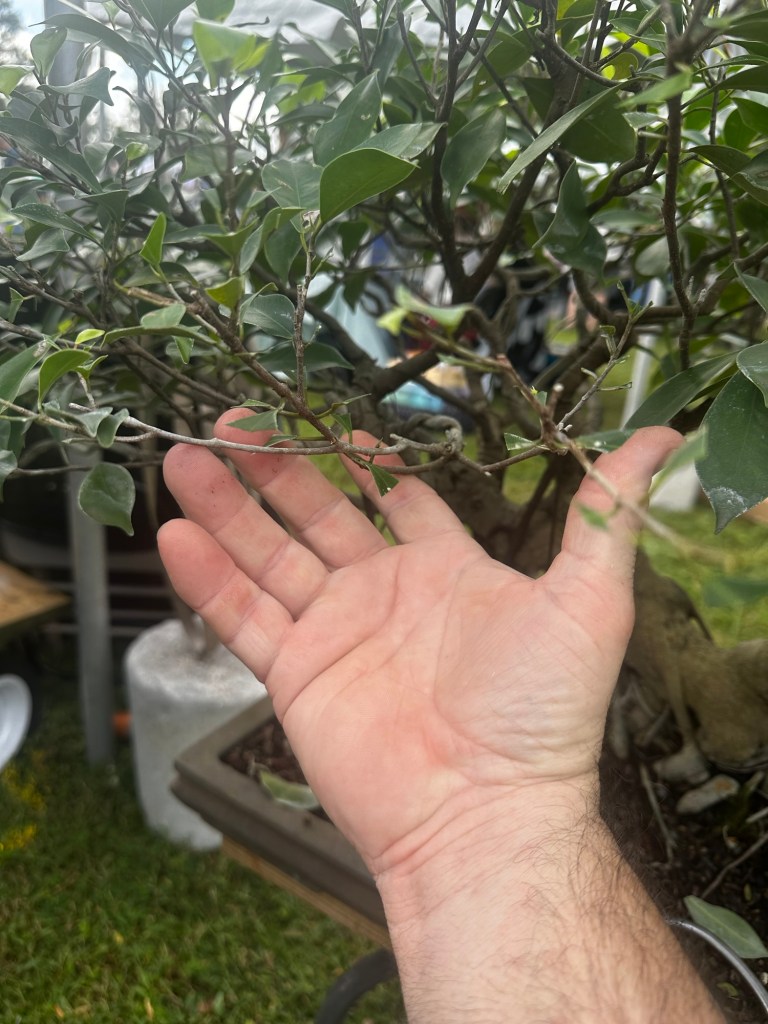
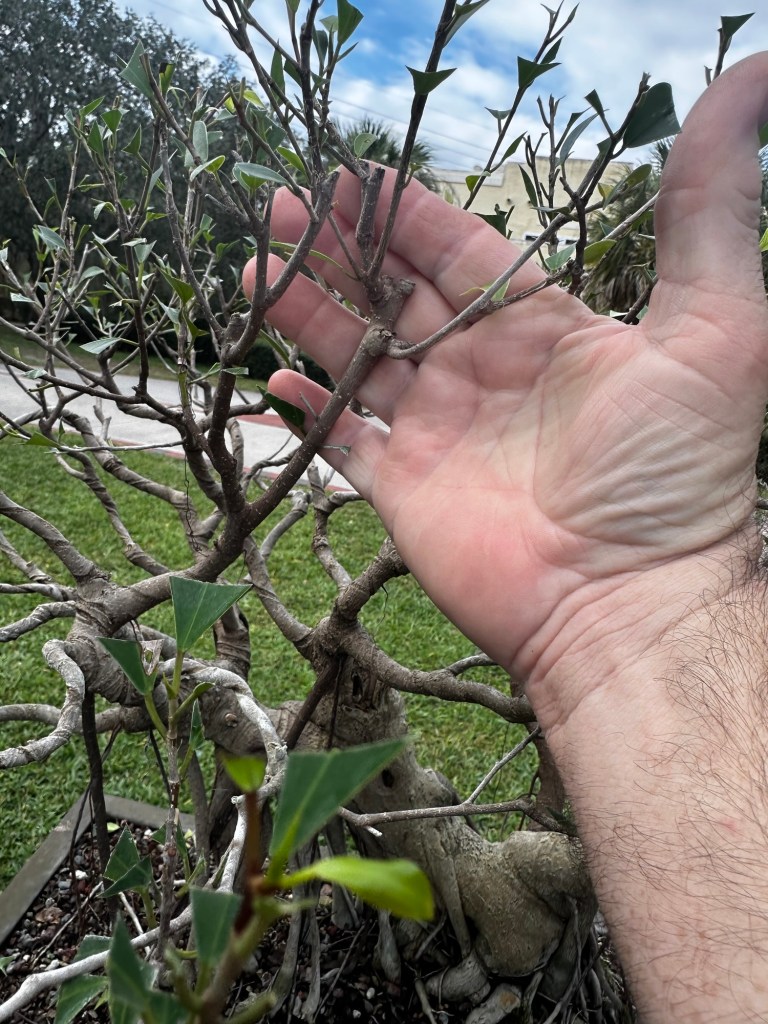
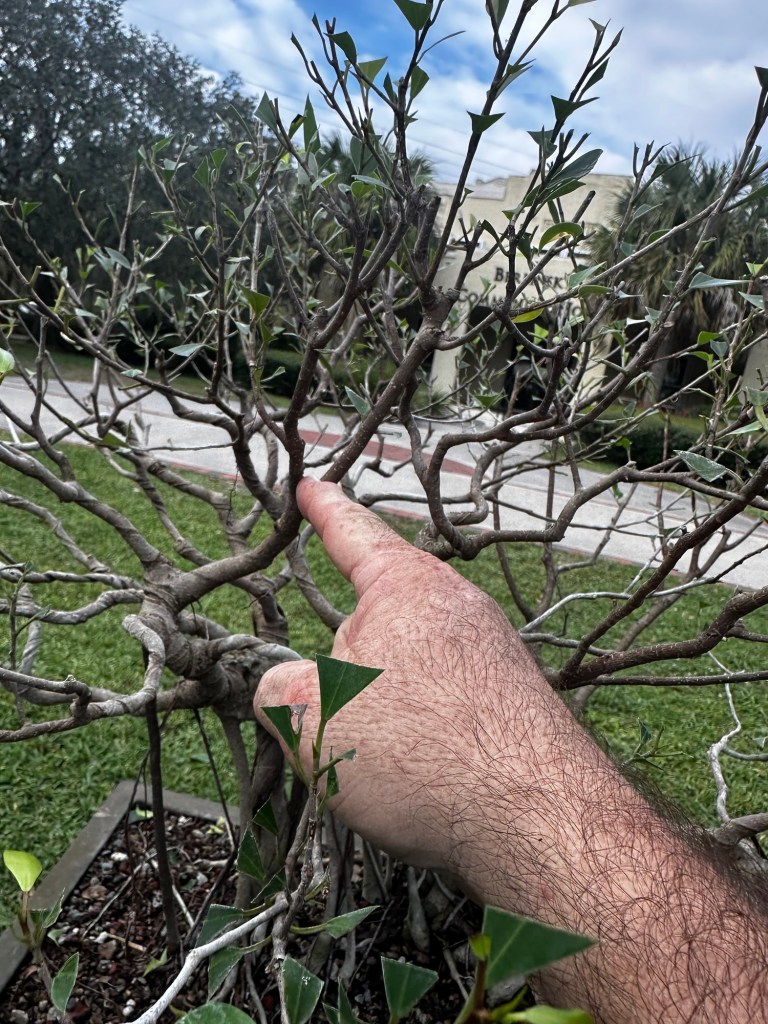
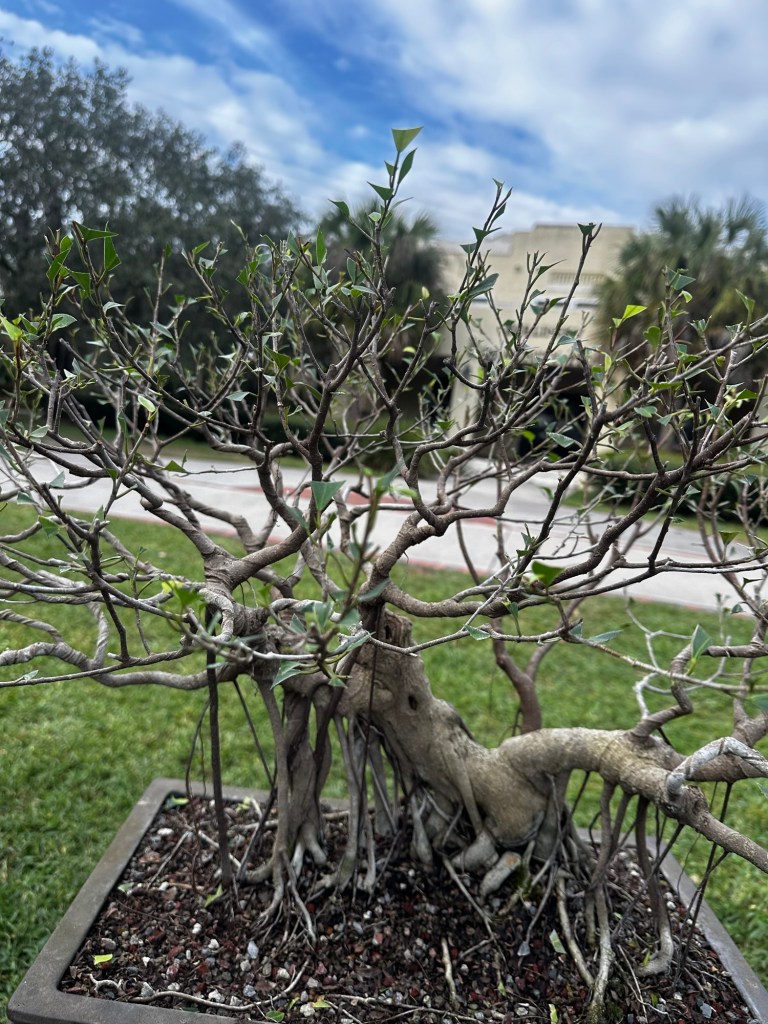
Let me finish this post first. The branch my hand is on has risen from its original place in the design.
So that’ll need to be wired back down.
That’s the life of a ficus bonsai owner: put the wire on, take the wire off, put the wire on, take the wire off.
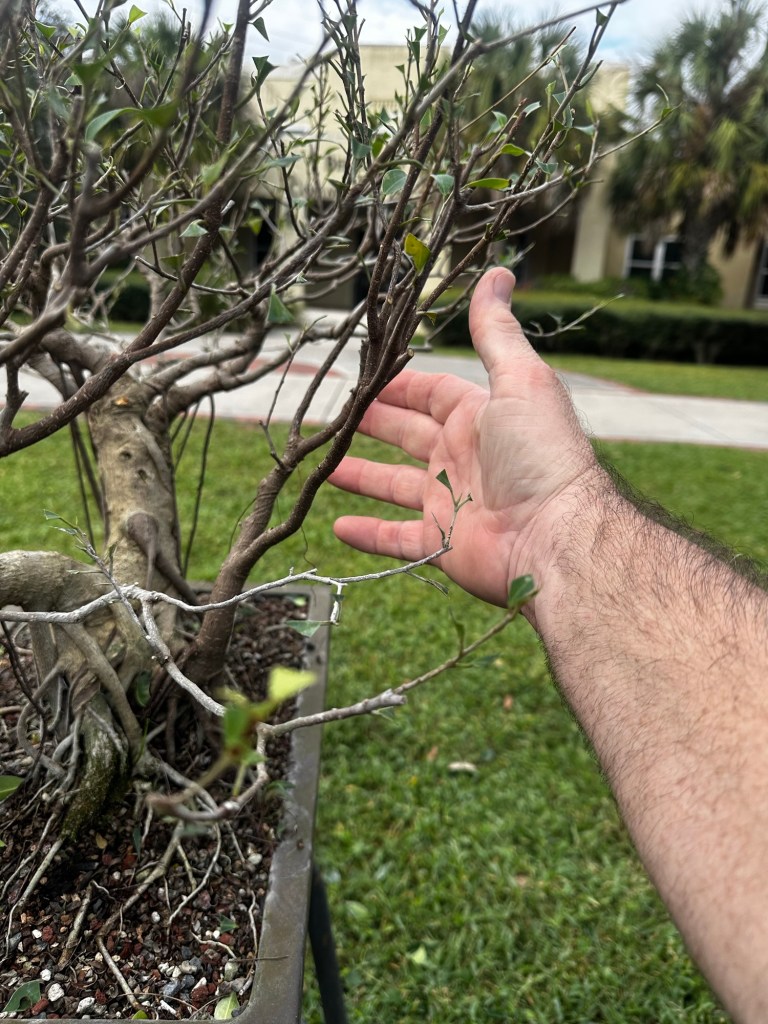
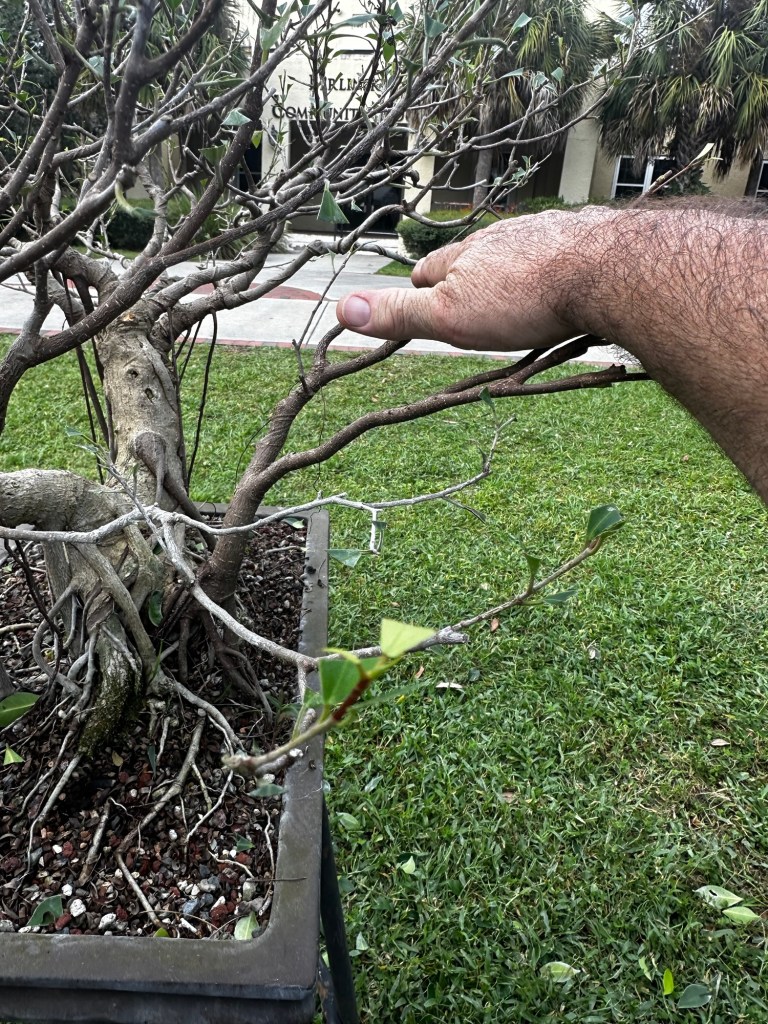
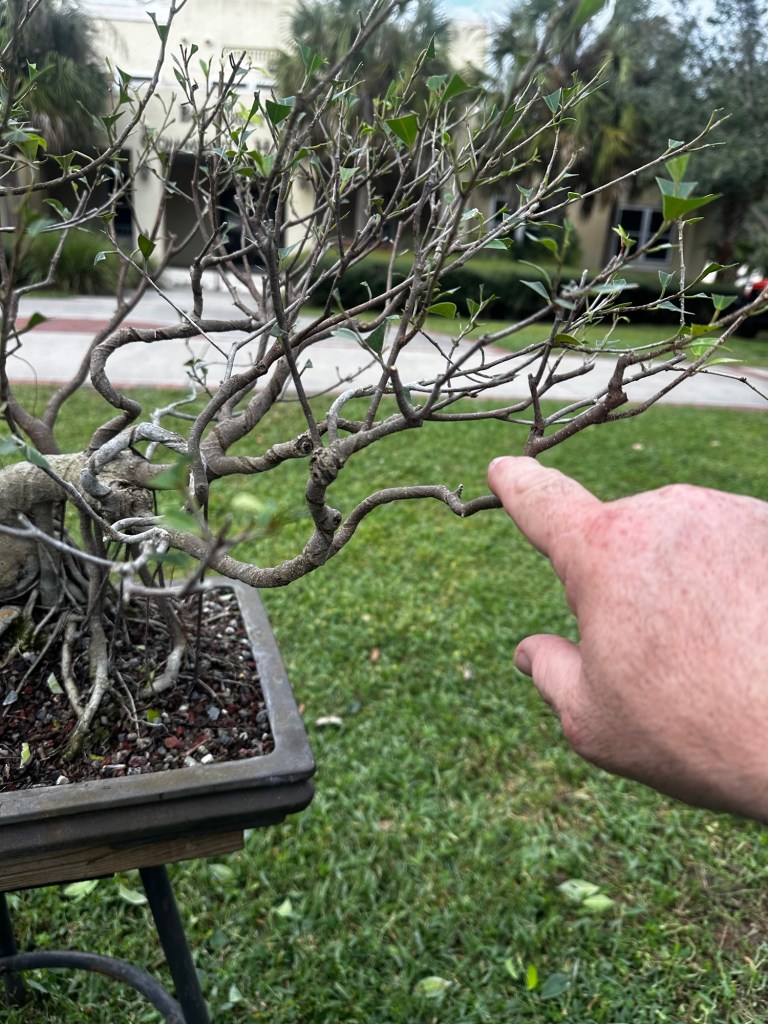
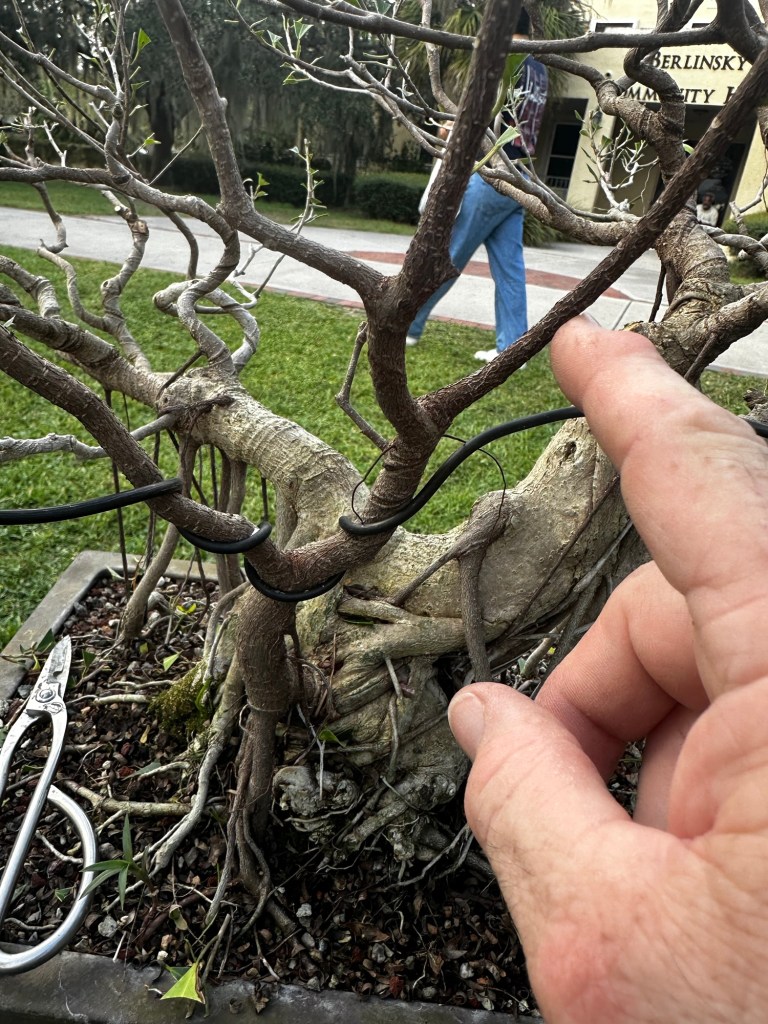
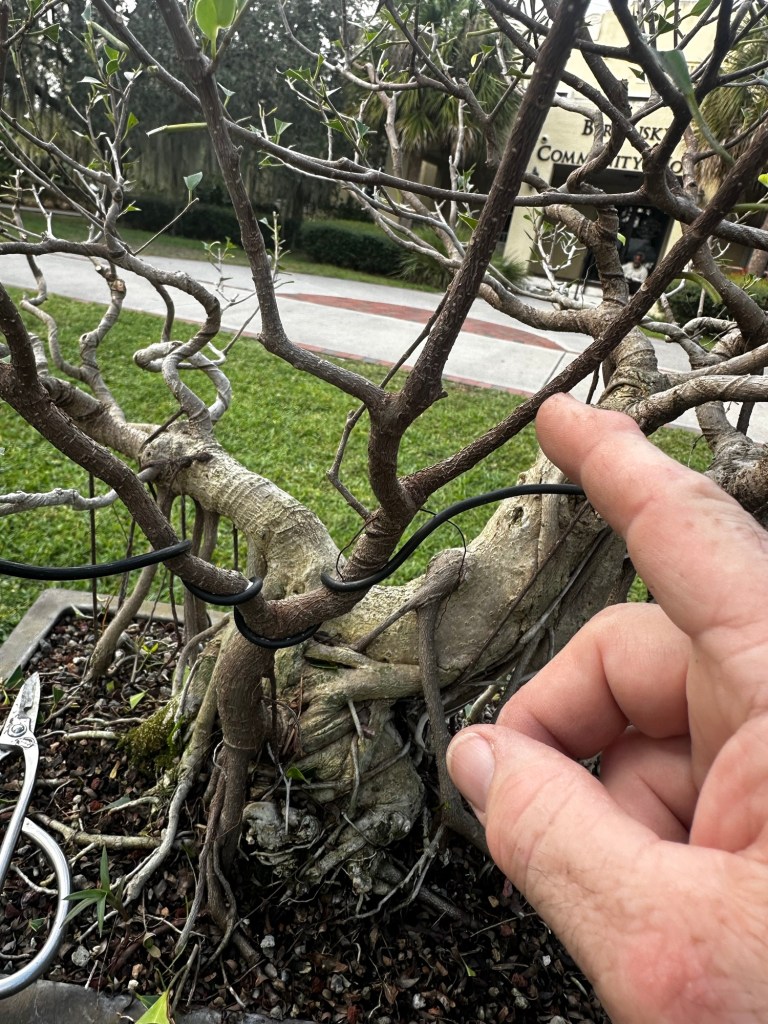
Anyway, enjoy the next twenty following pics of me pointing at various parts of the tree.
Straight lines must be made curly.
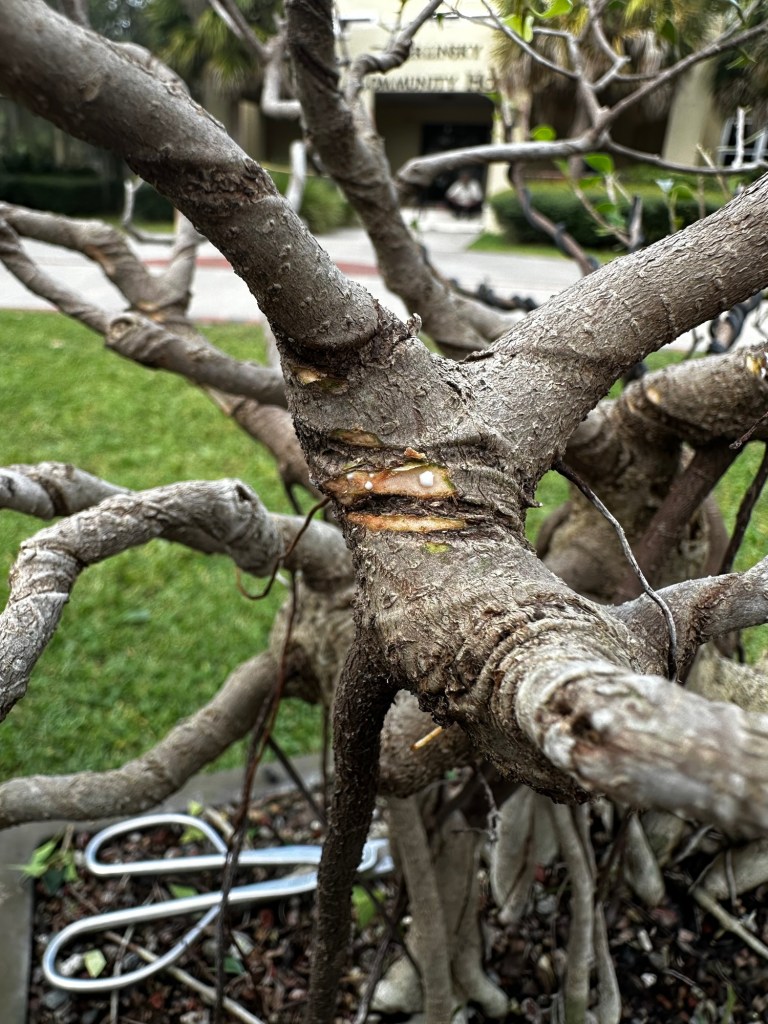
Some things gotta go.
I just realized that in the background of these pics, you’ll be seeing a pretty detailed accounting of certain attendees visiting the restroom.
Now for wire..
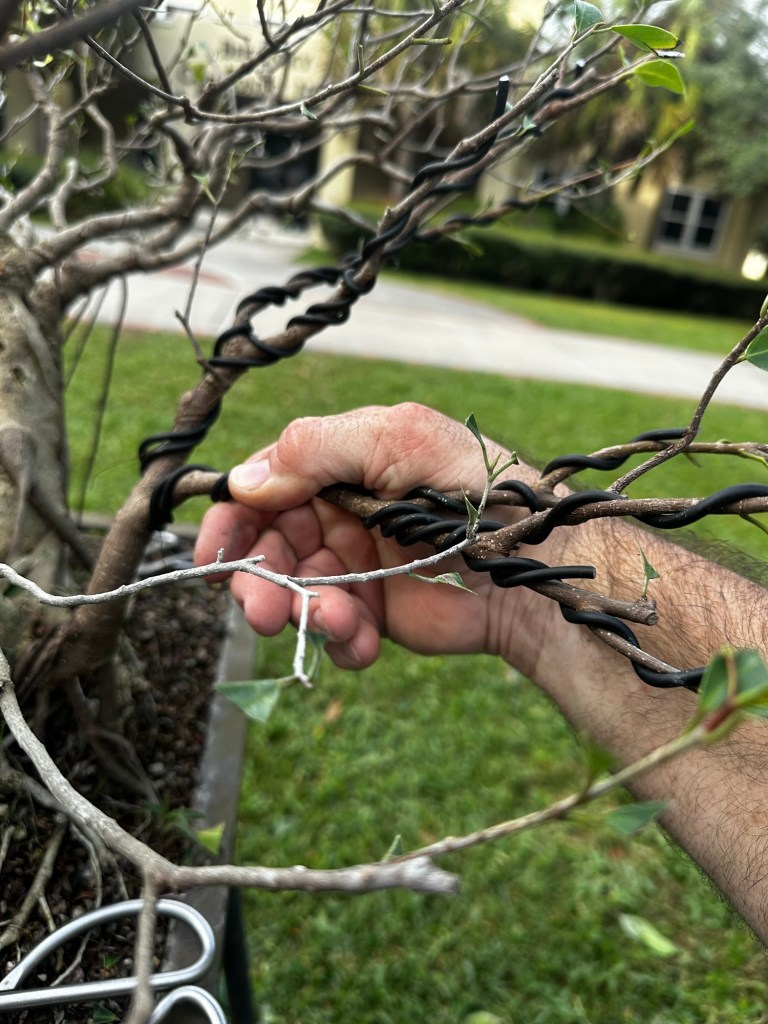
For the sake of a good anchor, one should try to wire two branches with one wire.
Always start in the branch crotch (I just learned that “crotch” is a word first used to describe the meeting of two branches, or the trunk and branch, and not the area between your legs).
And wire one side clockwise, and the other counter clockwise.
There’s a straight line that’s offending my eye.
I know I need to wire three branches. I’ll use two wires.
This will let me put two wires on some branches, to give better holding power.
Then the bend.
I usually use two hands to bend, but that’s hard to hold a camera, and bend. Pretend my left hand is steadying the branch.
There we go, one done.
Now for the rest
Zooming in, you’ll see wire marks. One of my favorite bonsai lines comes from an English man, he said “I’f’n you ain’t got no wire mahks, yer not using enough wire”.
Say that in a John Lennon accent.
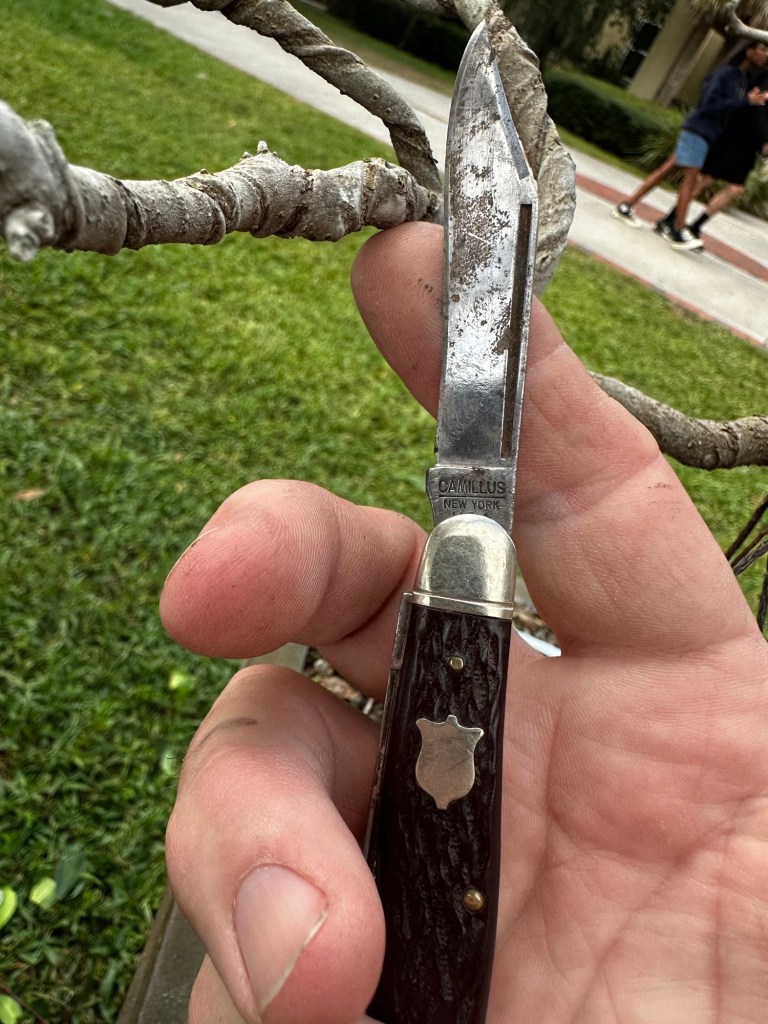
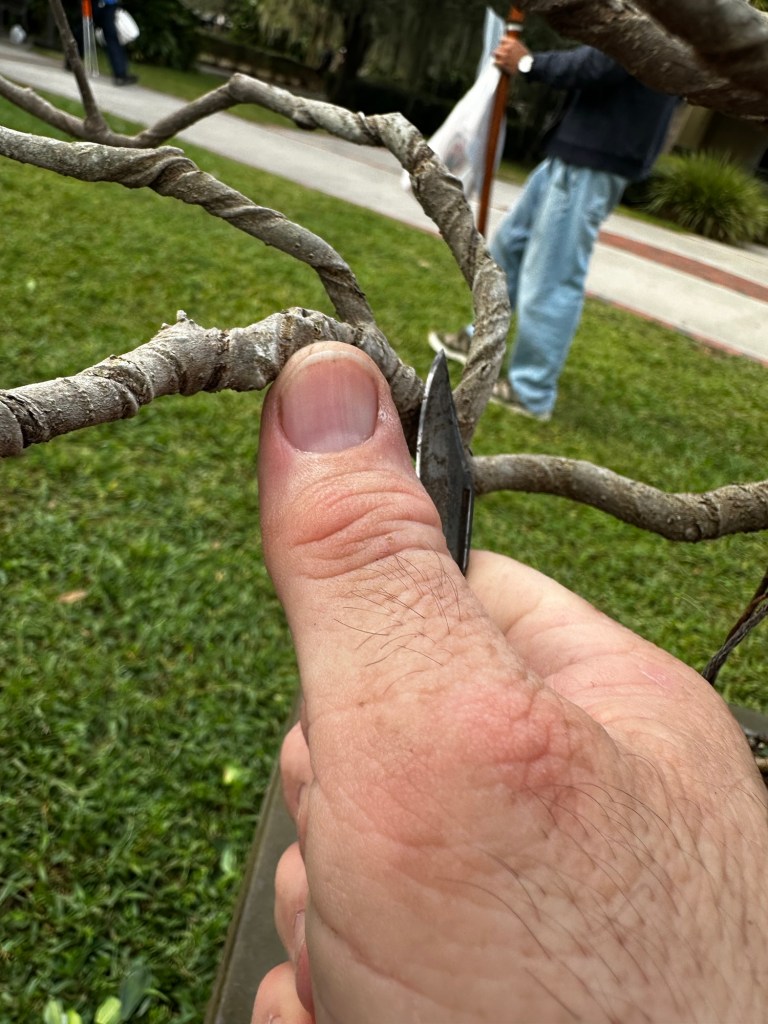
Should you find yourself with too many wire marks, you can scrape off the ridges with a blade.
It mitigates them and makes the branch look gnarly.
And chicks dig scars.
And that’s it.
A video from the top
There’s just something satisfying in wheeling a tree around on a garden cart.
Walk this way!
We all have to walk the path we see before us. Sometimes we cross others paths at the same time they’re on it, and sometimes those paths parallel each other. Relish those times of a companionship, but realize you can’t get off your own path.
Hmmm. Cosmic Bonsai in the Great White North? I’m in Ohio, and I guess they like outer space a lot; it’s a fact that more U.S. astronauts have been from Ohio than any other state.
John, from Toledo, one of my friends for a long time, has been going to the convention for the Bonsai Societies of Florida for two years now. He got to see Walter Pall, Mauro Stemberger, and many others in years past.
This year he got to meet and take workshops with Laurent Darrieux from France, the creator of the Cosmic Bonsai approach to styling trees.
Some people see it as blasphemy, some see it as a narcissistic offense, some see it as silly. But what it really is, in imaginative terms, is a question “what if we travel to another world, with, maybe, higher gravity, or two suns, or a long rotational period, what would those trees grow like?”
Artistically, it is a valid question. Artistically, it works too. When it is practiced well (just like any style, any idea, or even traditional bonsai) it works as Art. There are those that may say it isn’t bonsai, but some of those same people say that the flat top style of trees, whether the American bald cypress flat top, or the South African style Pierneef flat top, aren’t bonsai either. Uh huh.
I’m sorry, but bonsai is not a Japanese art. It is a Japanese word, and it is very Japanese traditionally (but it’s dying in the country) but that’s just because, when we modern practitioners of bonsai decided to give it a universal name, a certain Chairman in the east was intent on destroying traditional arts with his Cultural Revolution. so it was named “Bonsai”.
When I was learning bonsai, I read all the old books, and took to heart the challenge that the early Japanese bonsai masters gave us when they started to travel and teach bonsai throughout the world.
They told us not to mimic Japanese bonsai, but to find new species of trees, and new forms of design, and expression, to celebrate not only the character of our countries, but also the natural world we saw around us.
Here’s my question to you: What if our imaginations also let us see the world differently too? Say another world? That’s Cosmic Bonsai.
To categorically discard the concept because it’s not how you learned it is everything that people accuse Laurent of: arrogance.
He’s an artist. He has to create. And to show others his vision. He’s not being allowed to do it. Well, except in Florida, my backyard.
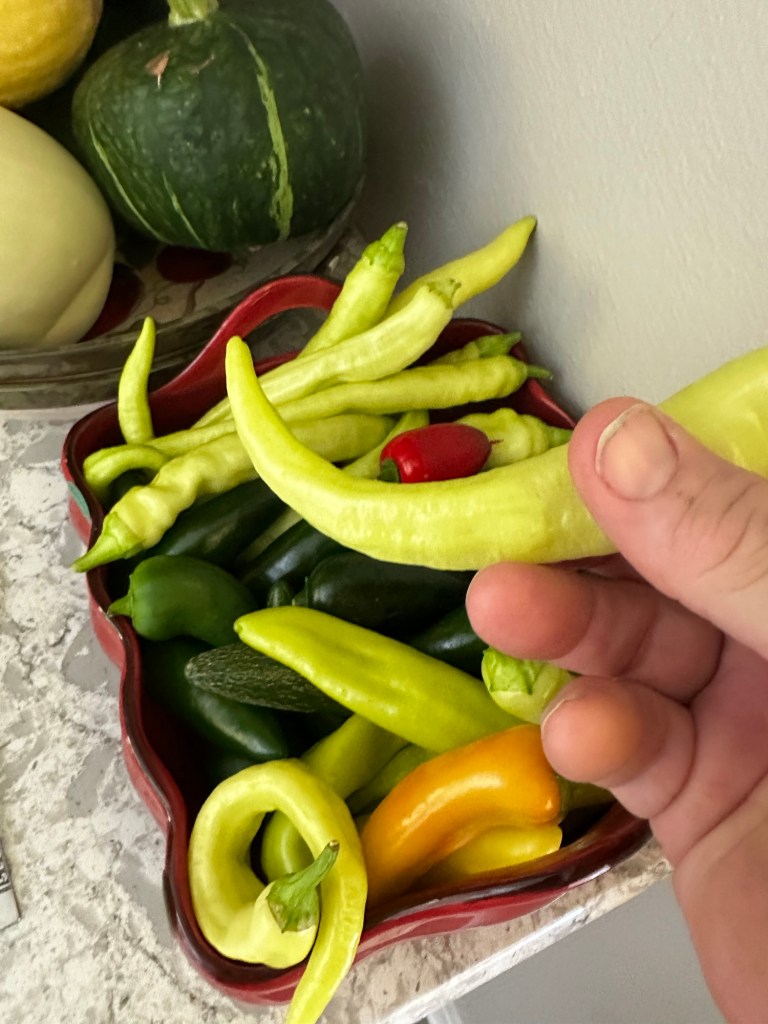
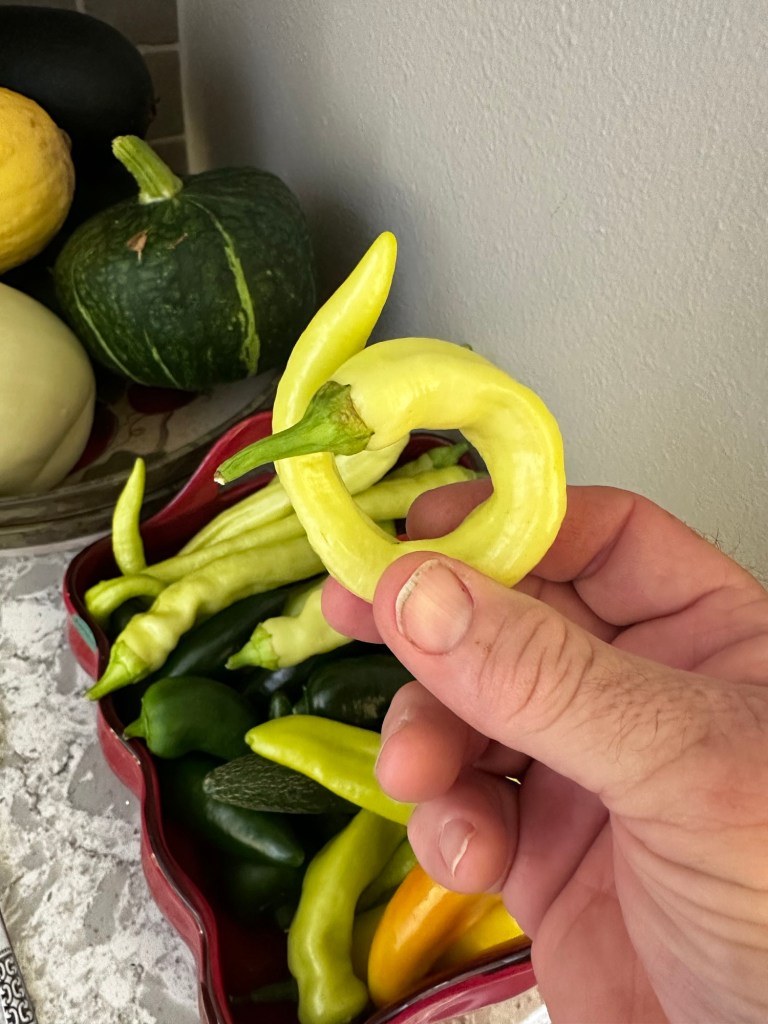
Phew, that’s some heady stuff. Anyway…Here’s a banana pepper in the traditional style.
Here it is in the Cosmic Style:
They both go well in an omelette (French word btw).
Below (and some pics above) is a tiger bark ficus (or Golden Gate, or kinman, or kemang, or whatever you want to call it) that John made in Toledo after he got back from the Orlando convention.
I took the wire off and…
….the branches stayed put. Surprisingly. It was a mere two months or less.
I think we need a rock outcropping to give the base some drama. and to expose the roots and give some repetition of movement to the composition.
John had the idea to add some fossil looking carvings to the rock (maybe next year).
Hi John. I made him rewire it.
While I enjoyed some….
….coffee?
And that’s it for now. I’ll add updates as I get them.
Let me know how you think, feel, or not, about the Cosmic style.
I won’t censor them. I’m not about that, I believe in freedom of expression.
Julie Trigg has been developing this tree (Ficus microcarpa “green mound” or “green island” for many years. Her goal was to create seven levels, or pads, or clouds, on the tree, to represent a personal symbolic idea.
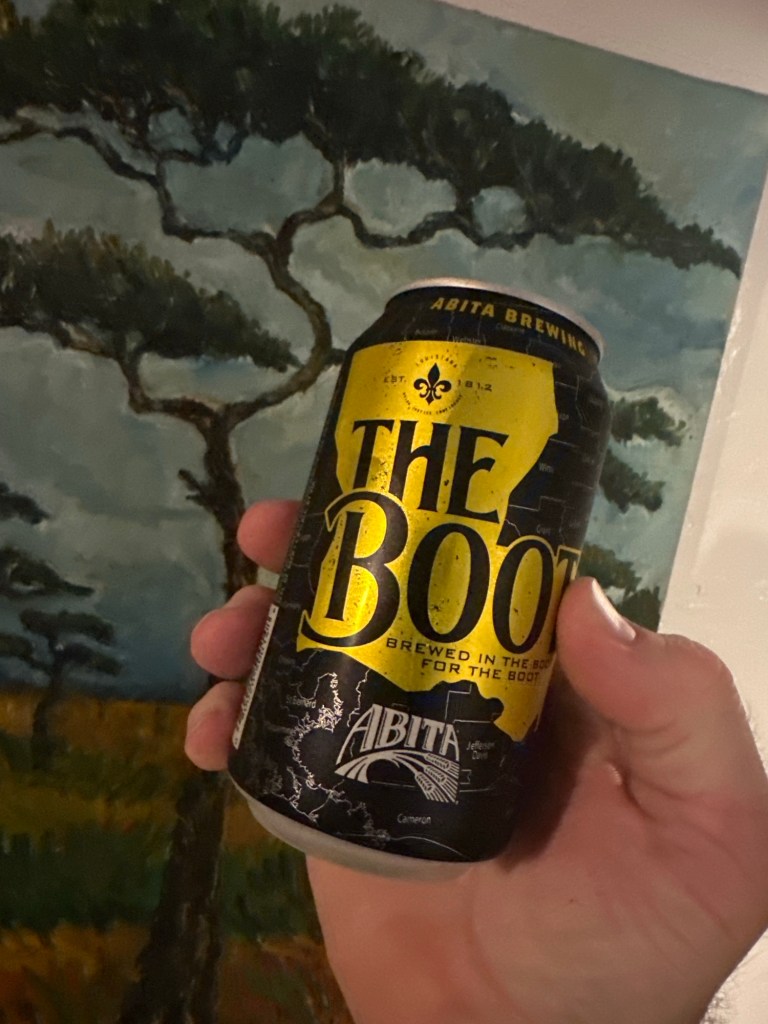
The tree in question is the one next to the beer (of course I’d show scale by beer can. I learned from the old timers of bonsai. All the old magazines showed scale by beer). And if you know anything about beer, you’ll also know that Abita Brewery’s “The Boot” beer is only sold in Louisiana.
And it is a mild felony to smuggle it out of the state. Good thing I’m not there anymore (did you know that Louisiana is still governed by napoleonic law? Meaning you are guilty until proven innocent. Well, not really, but my 7th grade civics teacher insisted it was still in effect. Good story but, you know, don’t believe everything your teachers tell you. If you can only recite the words, you haven’t learned the lessons.)
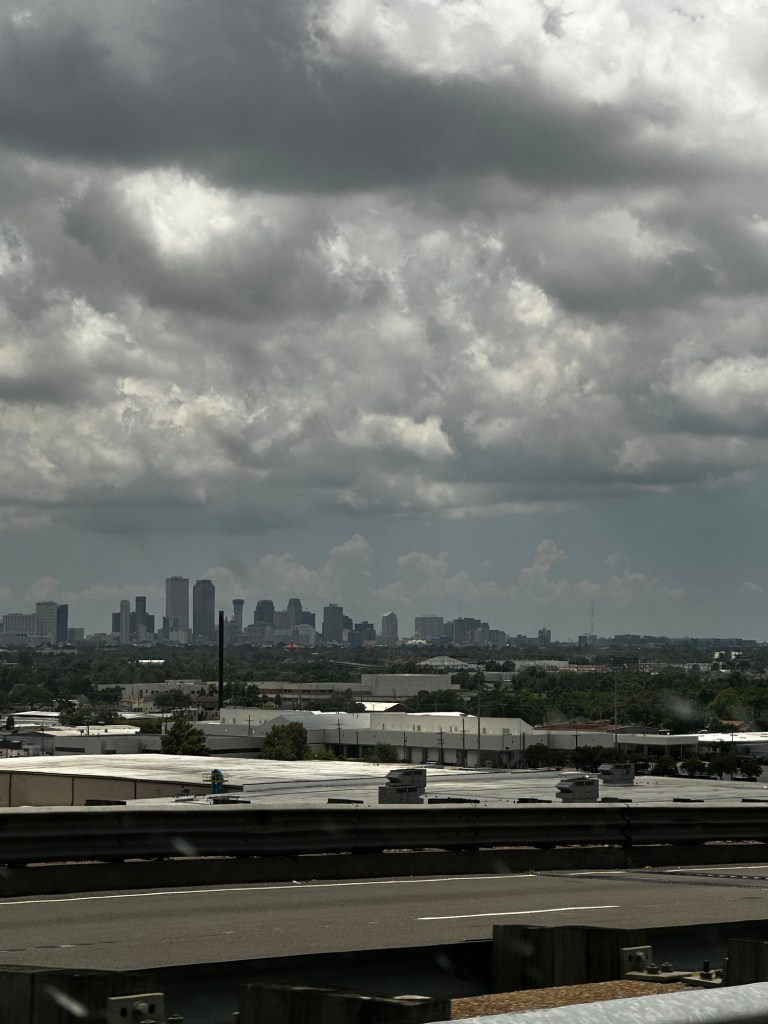
But I was there this last weekend. In New Orleans. Proof:
Better proof:
Damn these meat pies are fine cuisine. To get them shipped to Orlando I have to buy 45 individual pies (well, 45 in a box) for $129.99.
But they’re available at the Walmarts in New Orleans, in the hot food section, for like a buck fifty.
All the paintings in the backgrounds of these pics are Julie Trigg’s
In oil, acrylic, mixed media, watercolor, whatever medium you can think of, she’s one of the best. And in Bonsai too. She’s shown trees multiple times at the BSF Exhibit at Epcot’s Flower and Garden show…..
One of her trees, a Brazilian Raintree, that was on display at Epcot in 2026
…at the BSF Convention exhibit, at Bill Valavanis’ National Bonsai Exhibit, at both Komorebi shows David Camargo and I put on several years ago in Miami, and at many Shofu Bonsai Society shows, her home club when she lived in Sarasota Fl.
But why seven levels? It’s not a question I asked her. I’m a very personal person, and I feel very uncomfortable asking others personal questions. But if we do some research: seven levels could be religious (7 days of creation in Judeo-Christian religions or seven heavens/hells) spiritual (7 levels of awakening in Buddhism or the 7 energy chakras). In medieval learning, there is the sum of the trivium (grammar, rhetoric, and logic) and the quadrivium (astronomy, arithmetic, geometry, music) adding up to seven as well.
Seven colors in a prism or rainbow, seven principal notes in music. if you take any three things or entities, say A B C, you can only express them seven times (A, B, C, AB, BC, AC, ABC
Like it or not, going as far back possibly the caveman times, who were, believe it or not, more capable than we were intellectually (technology often dumbs us down), the number seven is significant.
Julie’s challenge to herself was to make a tree with seven pads, or levels. It was a challenge she conveyed to me when I worked on it.
Here we go:
First step with me is usually defoliation. Hey look, it’s me!
All defoliated and who do I find? Awww, look at that little dude!
Now for some wire:
But which side is the front I wonder?
Some more views. Then a video or two.
You can see how much work was needed to create the levels.
And if you say something silly like “You done ruint yer tree, you got wire scars”, then your slip is showing.
If your tree doesn’t have wire scars, you’re just not trying hard enough. Don’t want wire scars? Go buy a topiary.
We, as bonsai artists, use wire to shape our trees. Speaking of shaping….
One trend I’d like y’all to think about in modern bonsai is the concept of a growing a fully encompassing canopy over the tree. I’m pretty sure there is a Japanese name for it.
Is it a valid? Sure. Do I like it? Count up seven lines. That’s my answer.
I like to see the tree.
The story of a tree begins at the trunk, and (get this) branches off into ancillary chapters that tell their own stories. We may have scars (shari) or broken, dead branches (jin) that create drama, or climax.
What story does a full mushroom top tell?
How about we leave that discussion to the bonsai professionals.
Did we maintain the seven levels that Julie was going for? How about we just do some counting, sound up!
Another detail video. No sound this time. Copyright is a bitch.
Now, to go back to the question of “Which view is the front?”
Is it this one?
Or this?
They both tell different stories. They almost look like different trees. One is more massive looking, the other has more movement.
One is almost closed up, one is open.
I won’t tell you which I prefer. If I even have a preference. Julie likes the last one.

 Login
Login

 , just like the old days. Here’s the tree, a willow leaf fig (Ficus salicaria, ofttimes erroneously called Ficus nerifolia, or F. salicifolia, or whatever it was called when you grew up in bonsai).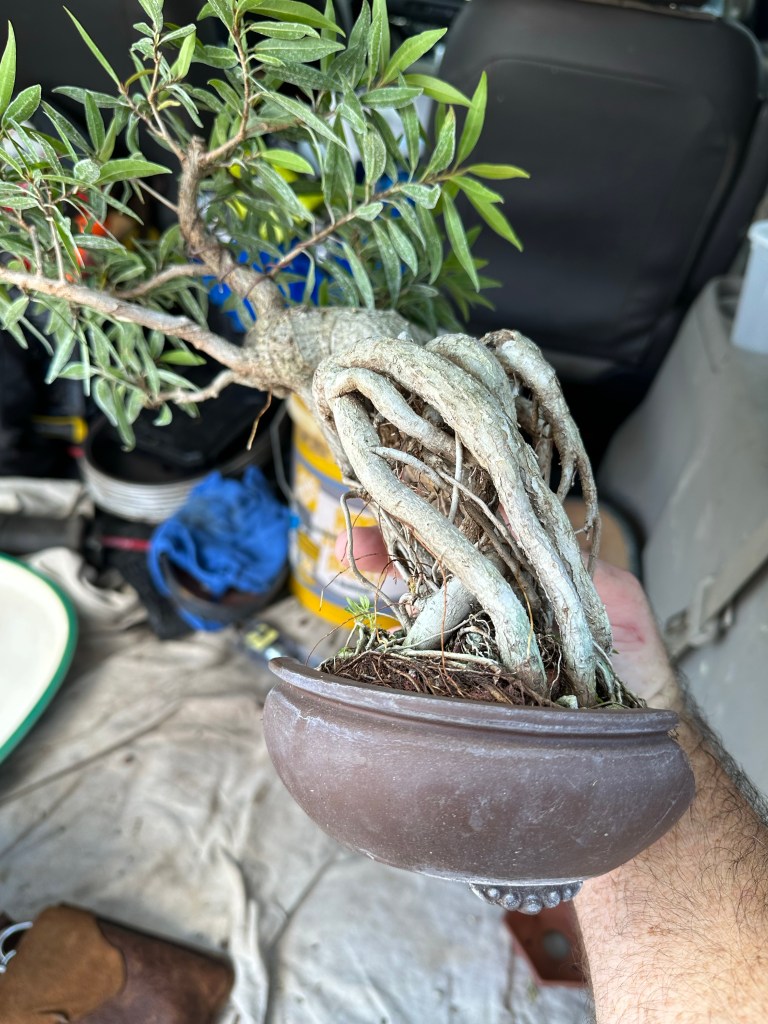





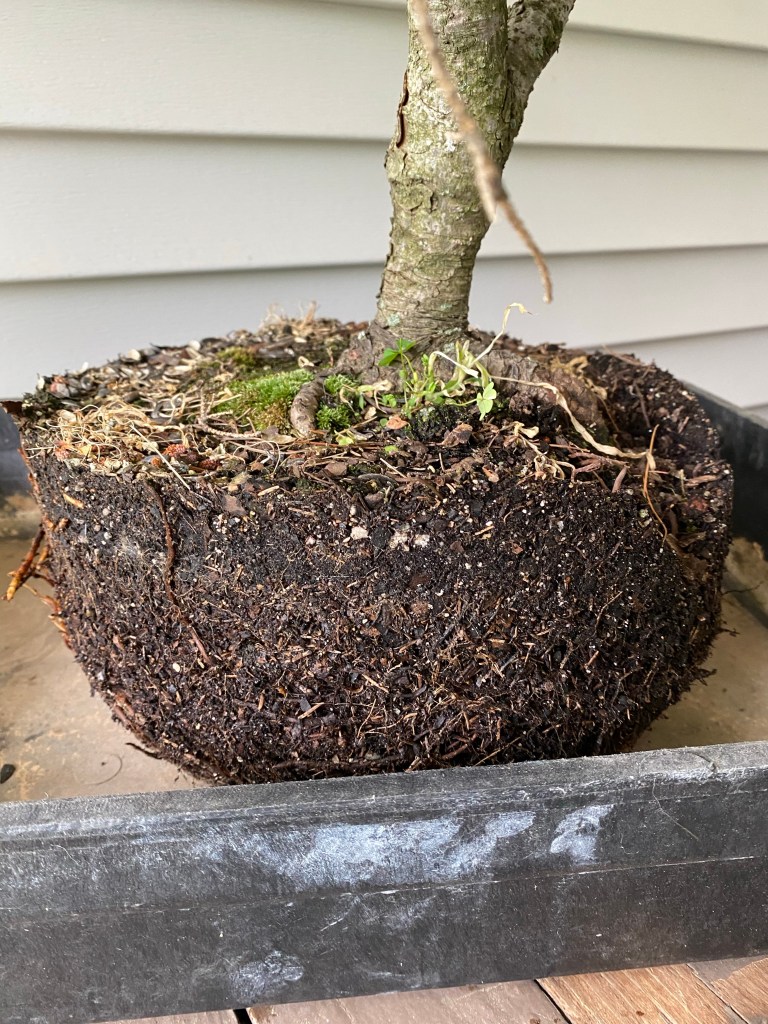
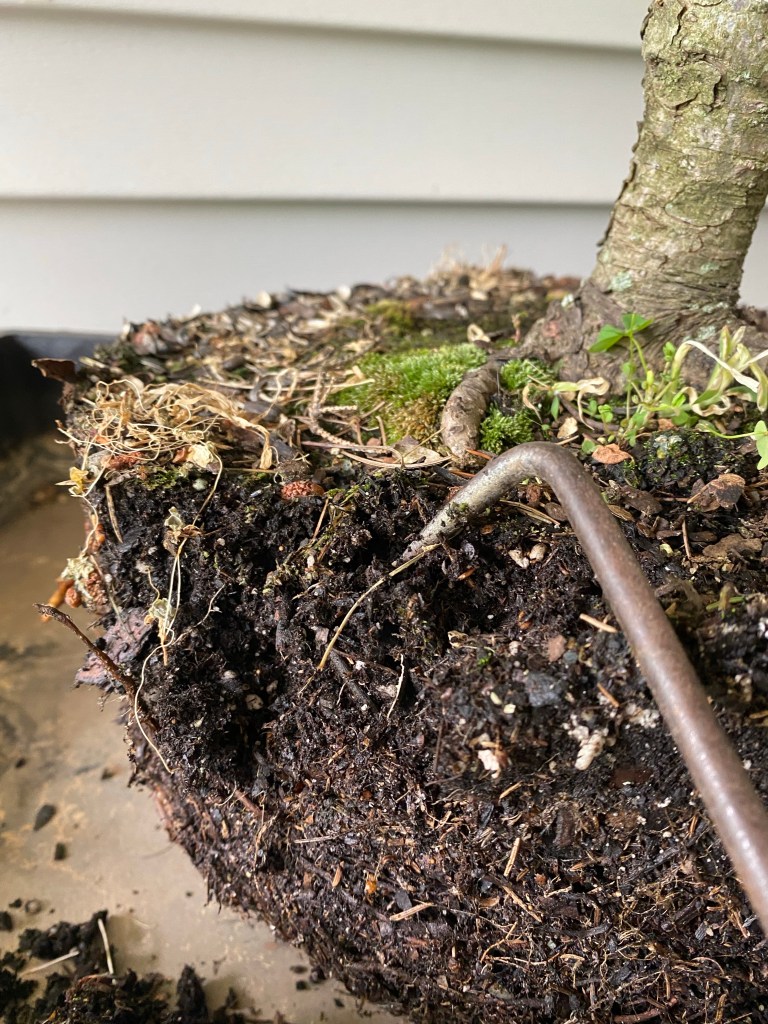
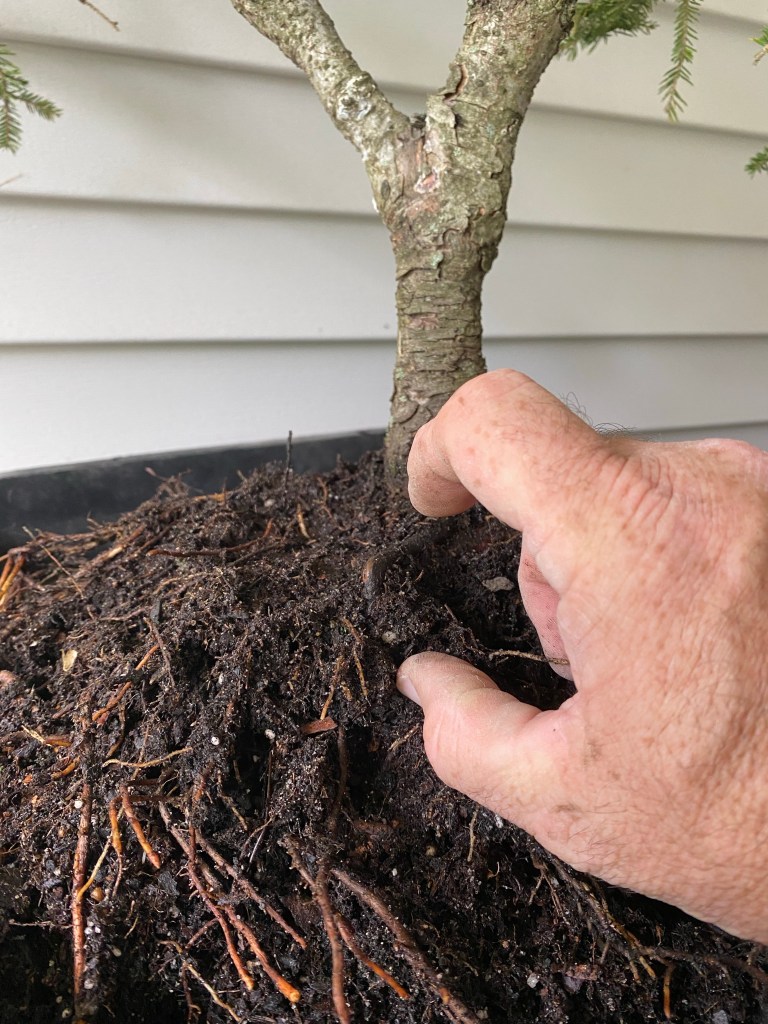
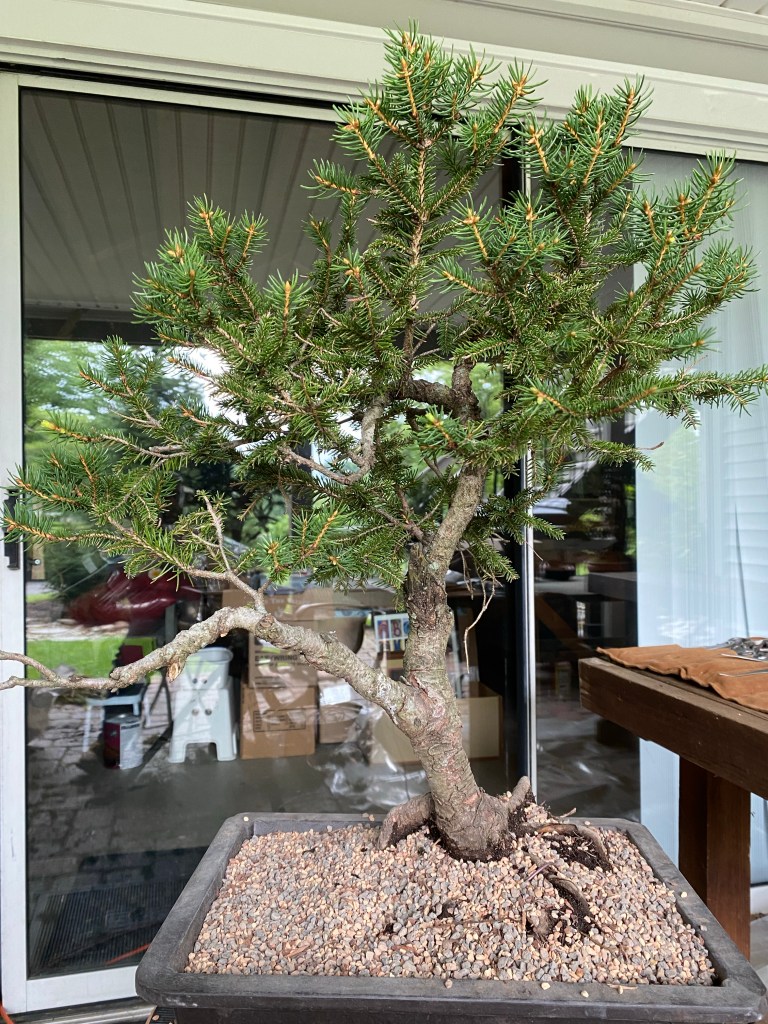

















 Walk this way!