Login
Login

Rehabbing a neglected banyan ficus
It’s been too long since I’ve attended to this poor tree. And the blog. Sorry to the tree and to my readers. I’ve been busy with client’s trees, planning the Bonsai Societies of Florida 2023 Convention (check it out Here ) and some real challenges in my life.
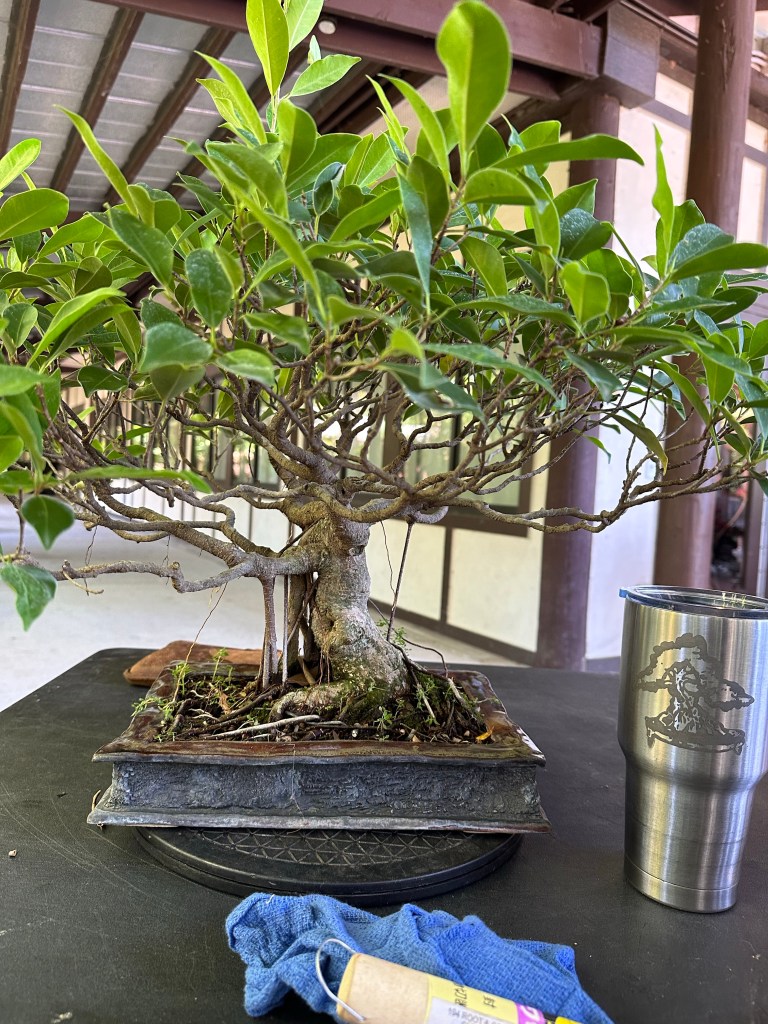
The tree is a Ficus microcarpa.

You last saw it in this blogpost What is the banyan style?, which was published way back in April 17, 2014. Here’s how it looked then:
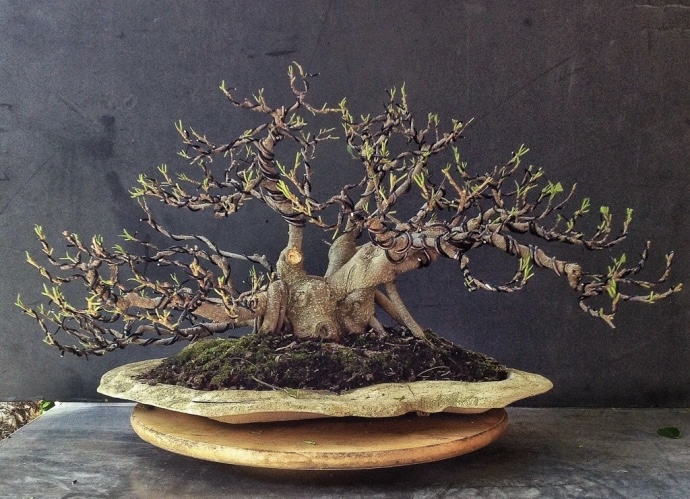
Yeah. I know, what happened? Right? I’m supposed to be a professional and all that. Neglect, unchecked growth, a couple of hurricanes and freeze warnings. Accidental uh…drought. Insects, disease, cats, children. Basically it’s survived some biblical trials and tribulations.
Speaking of disease…

I see these spots early in the spring…a lot recently. I had my nursery inspector do some checking and, though I thought it could be a fungus or a bacteria like pseudomonas, he said it’s evidence of a gall wasp. Now, as the name suggests, it’s usually an evident infestation by there being a gall on the leaf, but I haven’t seen them in my ficus. Maybe because of the systemic treatments I use (more on that later) killing the larvae. I don’t know.

The work today in rehabbing this tree will include a repot, a hard cut back, fertilizer, insecticide, and weed prevention.

Let’s get to work.

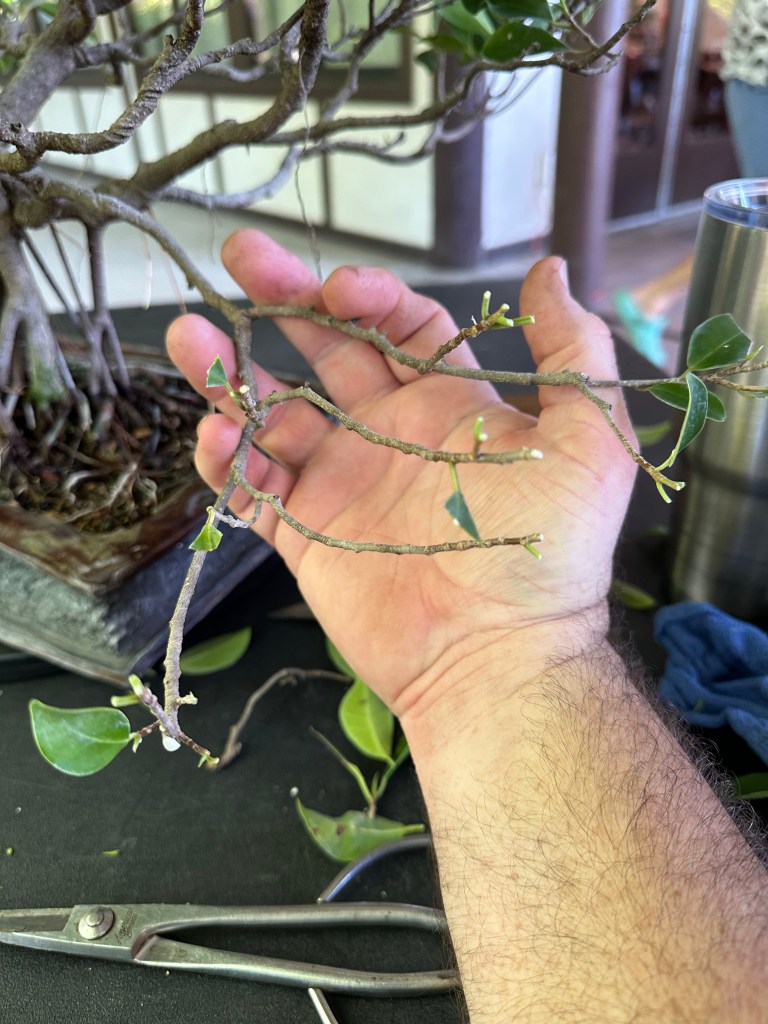
First, cut back…

I’m bringing it down quite a bit.
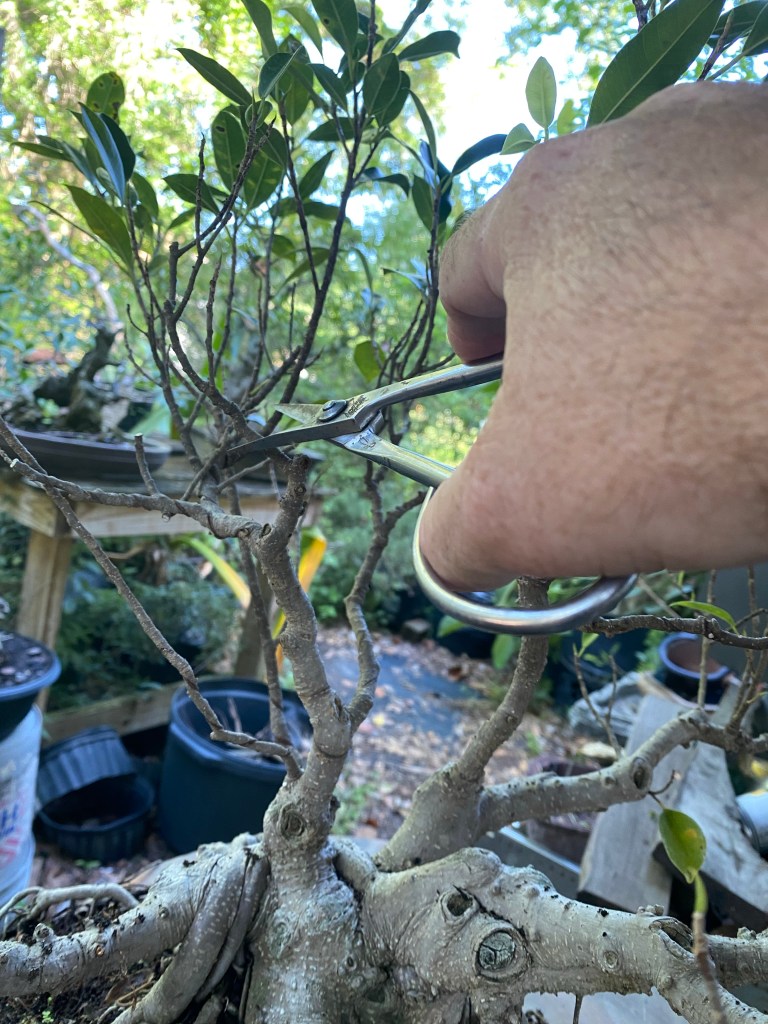
Chop chop goes the scissors!

This branch below will be the one branch I don’t cut back. You’ll see why (again) later on in the program.

Normally, I would cut this type of fig back so hard, as this is a standard Ficus microcarpa, and you can get significant dieback on it, sometimes losing whole branches. To contrast this, the Tiger bark microcarpa doesn’t do that so badly, it back buds almost anywhere. But the plain old Ficus microcarpa does. Keep that in mind. Know your tree and work accordingly.

If the branch you’re chopping is a darker brown, it’s more likely to backbud, as that’s newer growth.

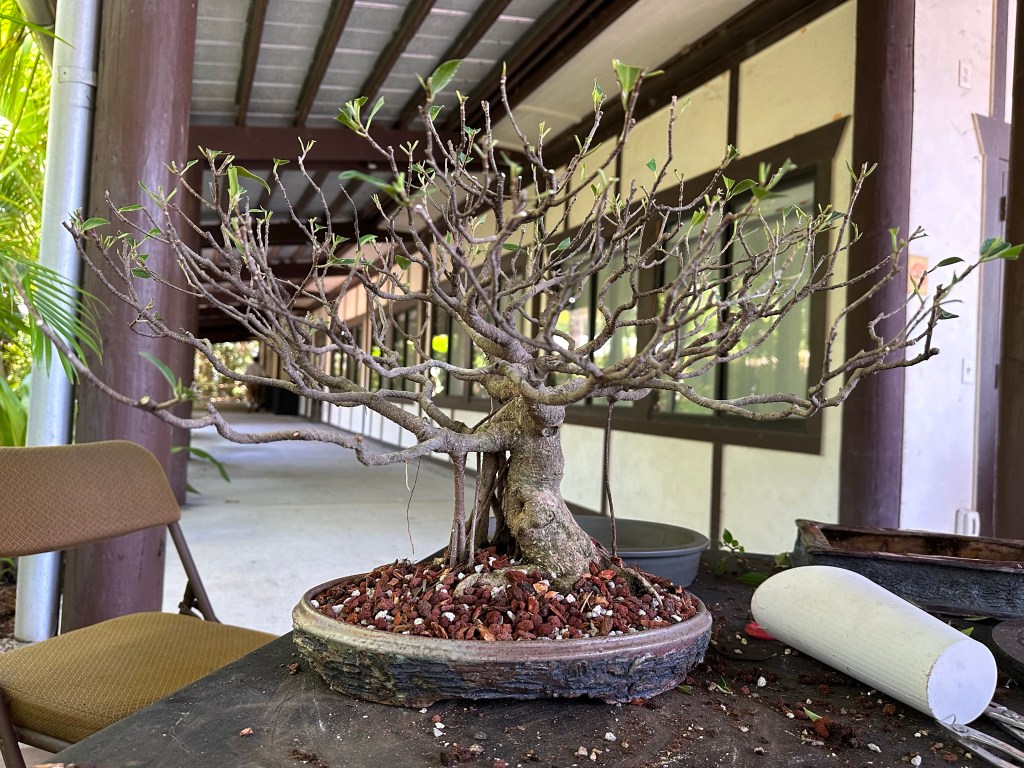
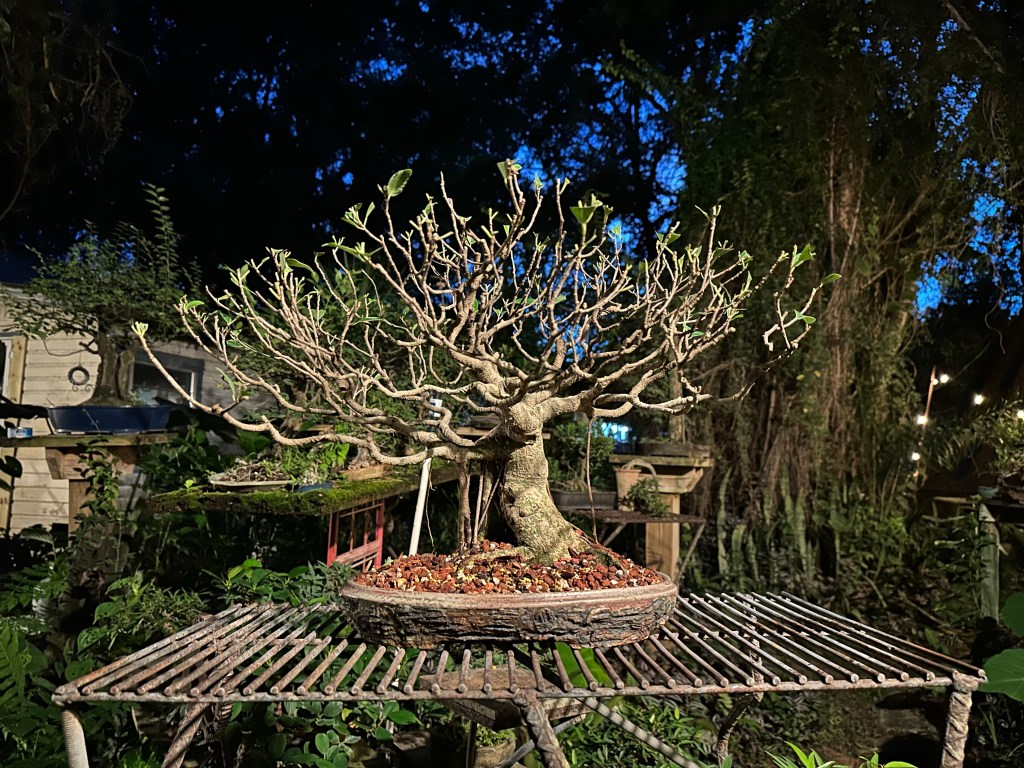
Here’s the one branch I didn’t cut back. I wired it and left the grow tip.

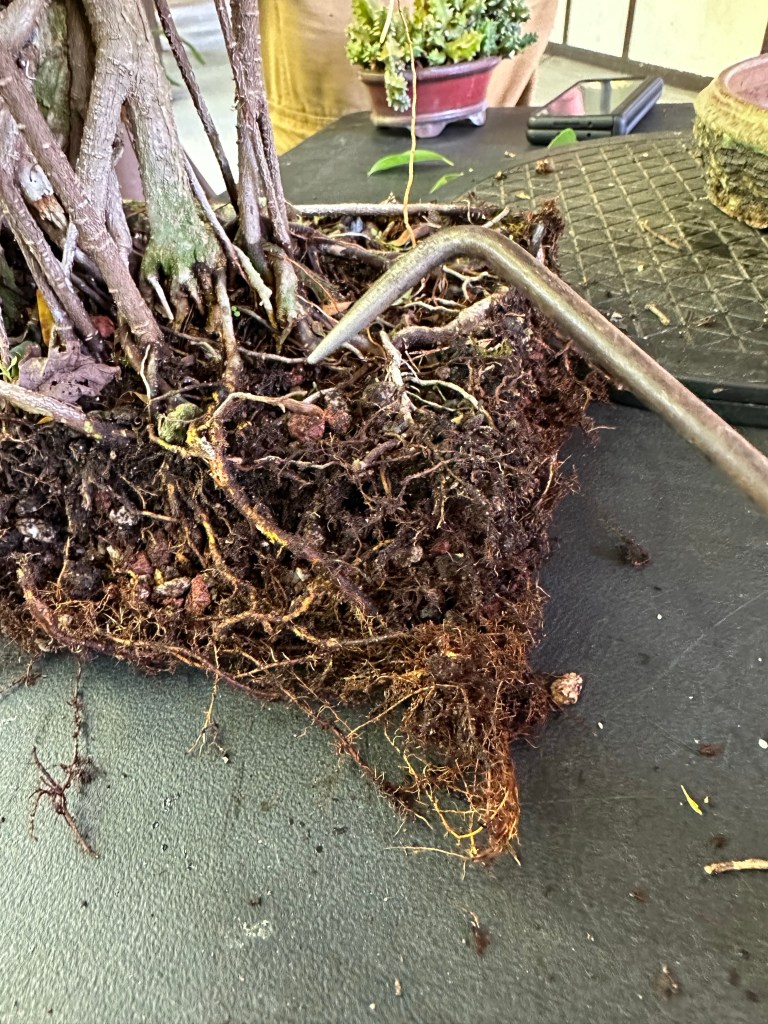
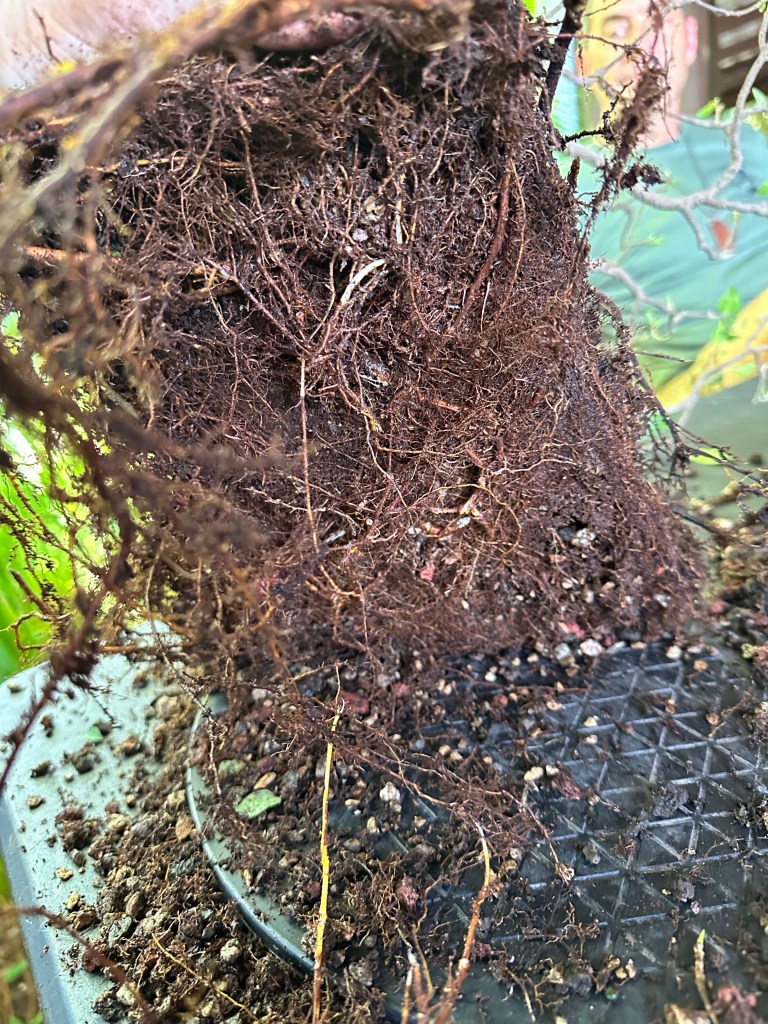
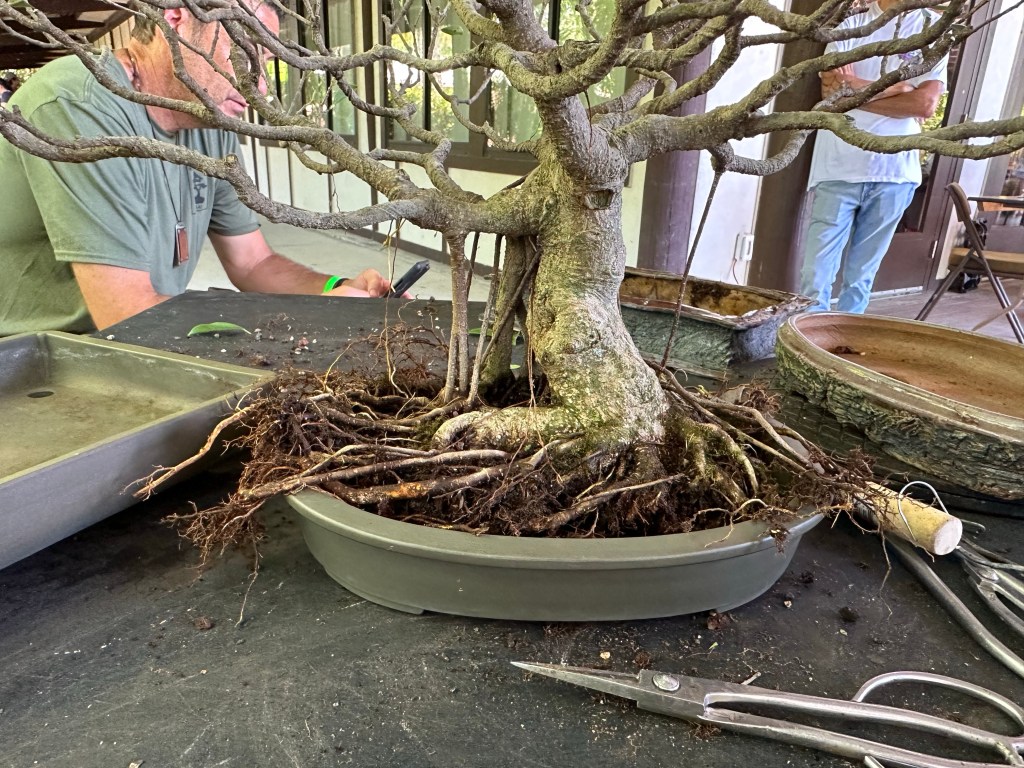
Now to repot. I’ll be combing out the roots to get rid of all the wrapping ones. And I’m being aggressive so I can get all the weeds out.

Weeds like these. This is a corm or bulb from a weed called “cat’s claw”. A climbing vine that holds onto things with tendrils and modified appendages that are a lot like, just as the name says, a cat’s claws.


Here you can see the “claw”.

This one is called “Florida spurge”. It’s underground roots can get as big as carrots. You have to be carful to pull out those roots as it will just grow back from the bulb. If you have them it’s a good indication you may have nematodes.

Here’s the leaves of the spurge.

That done, time to cut the roots.

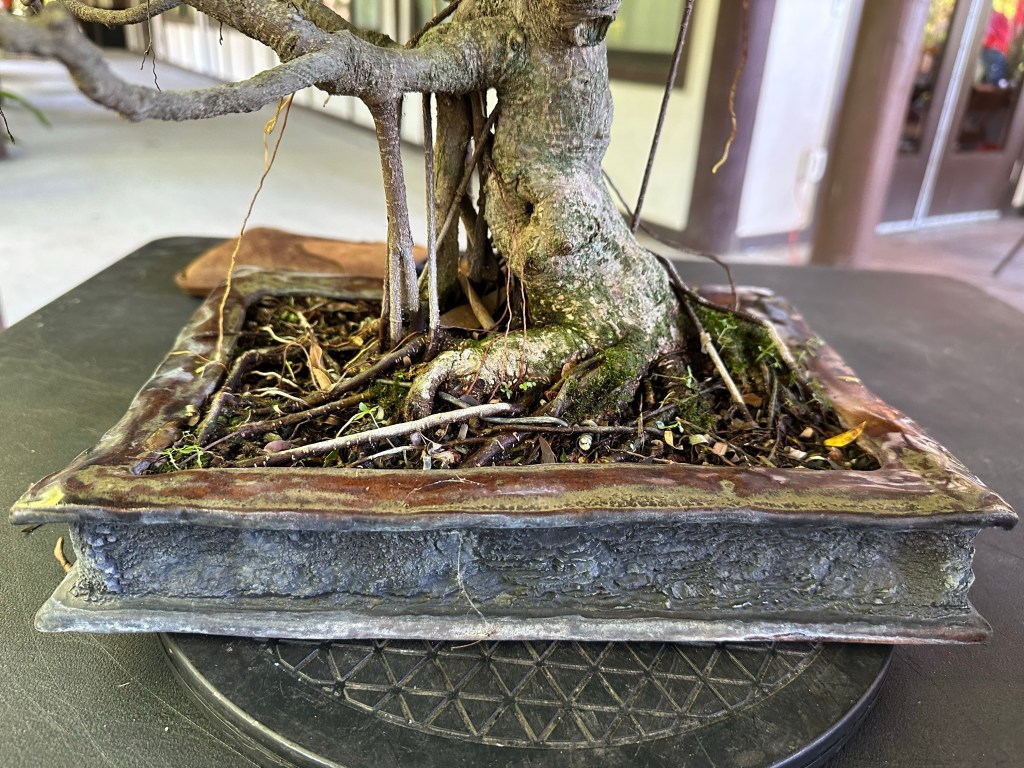
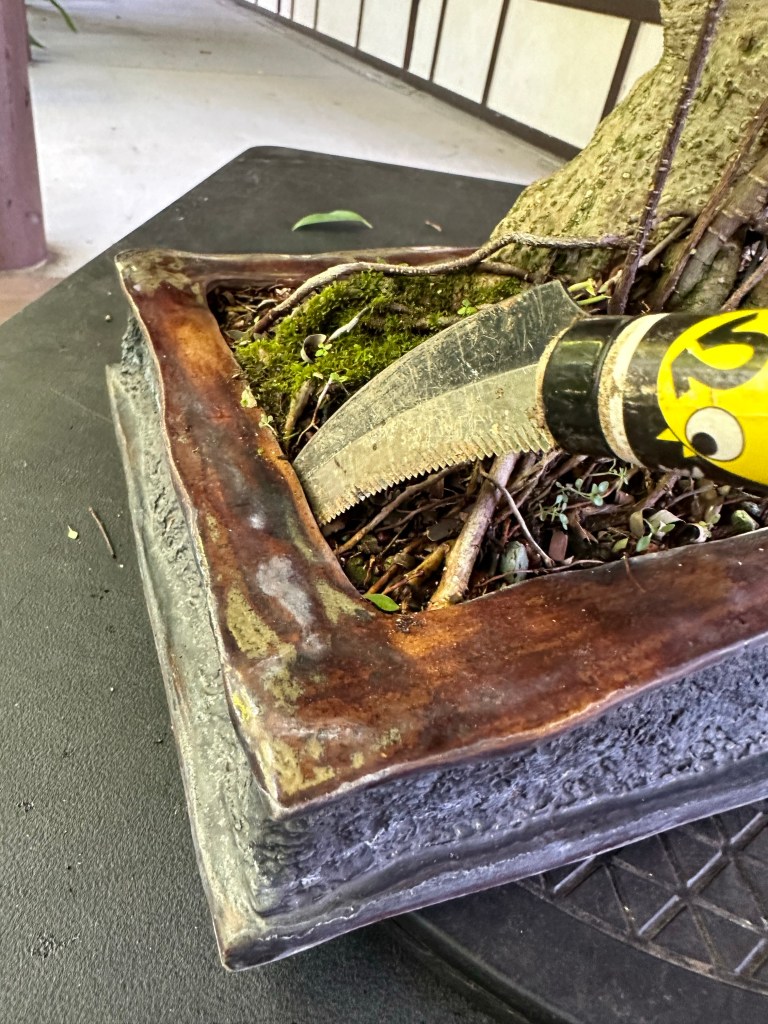
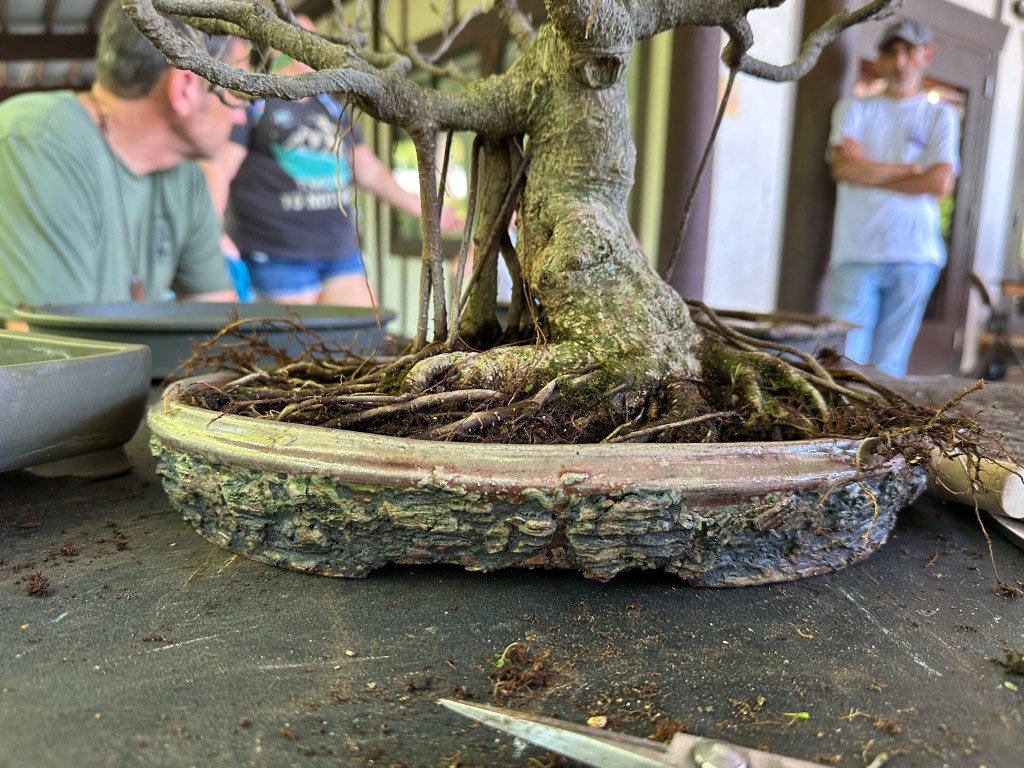
They were circling the pot (it’s in a different pot than the one I used years ago).

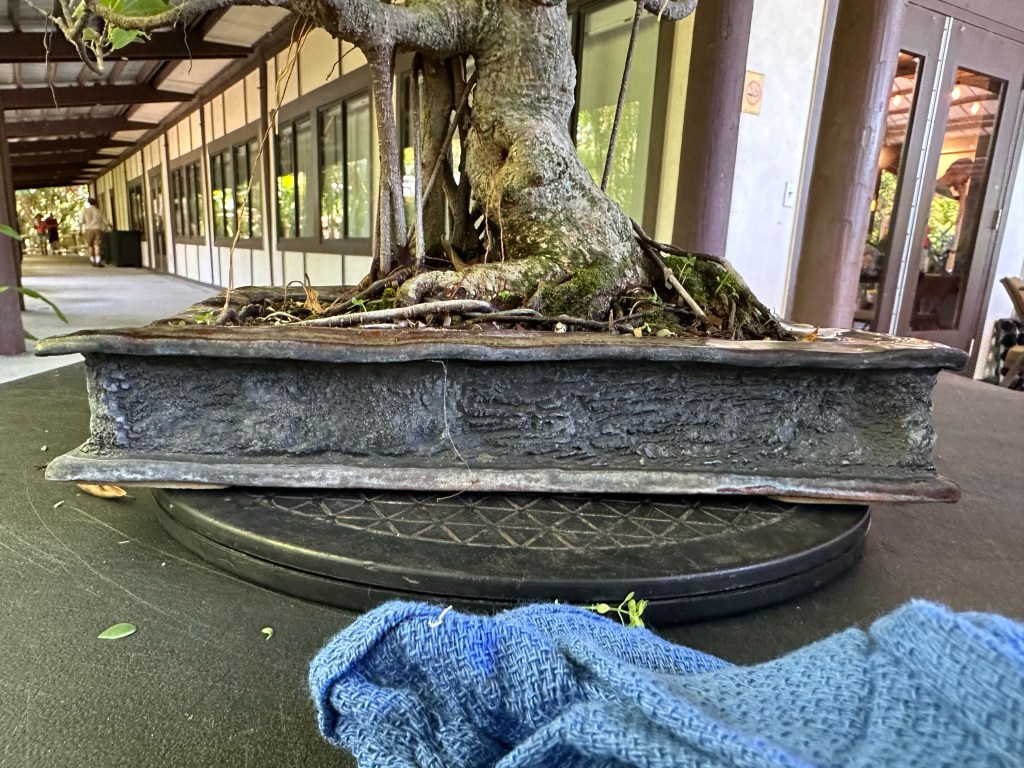
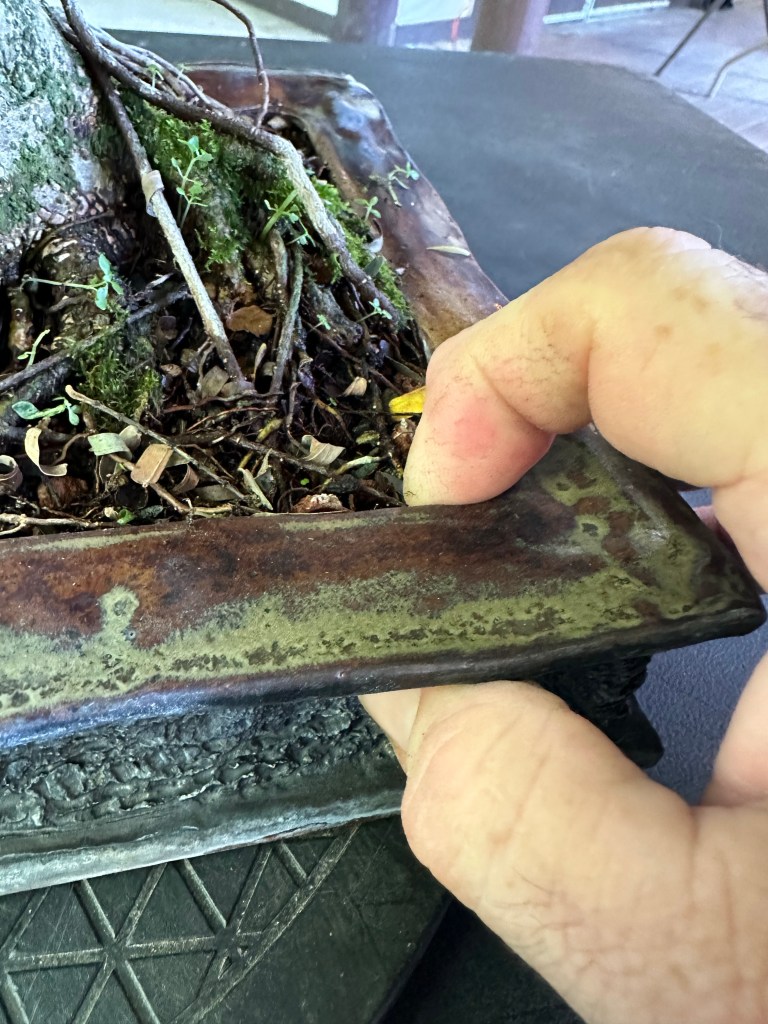
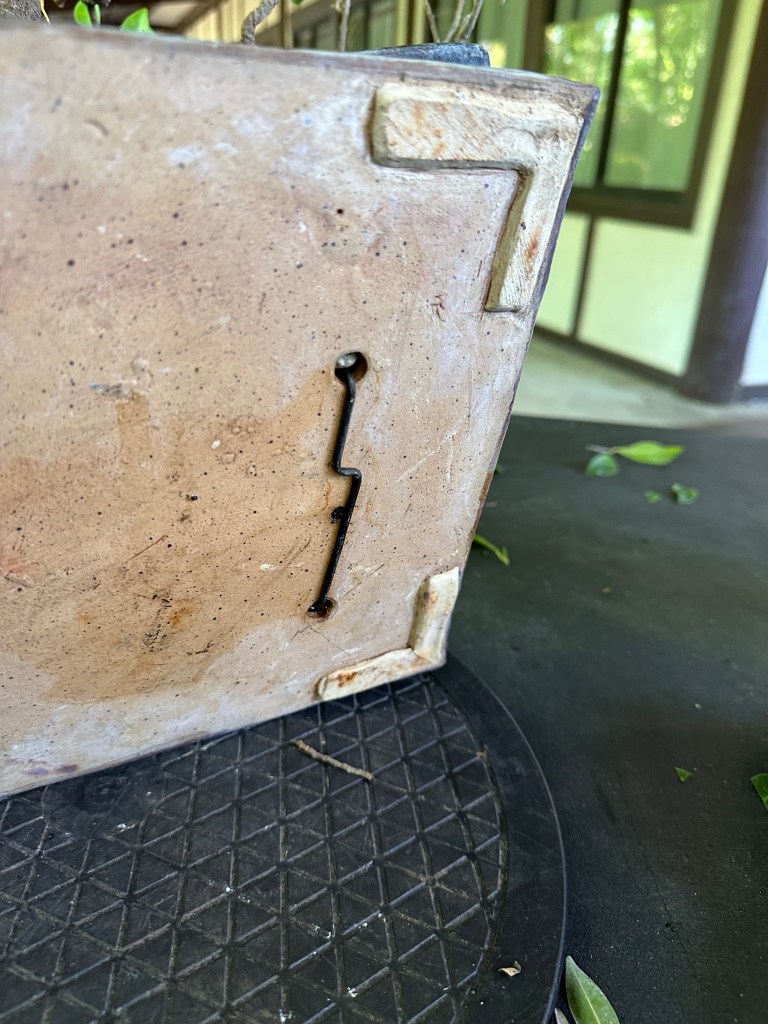
The pot it was in.

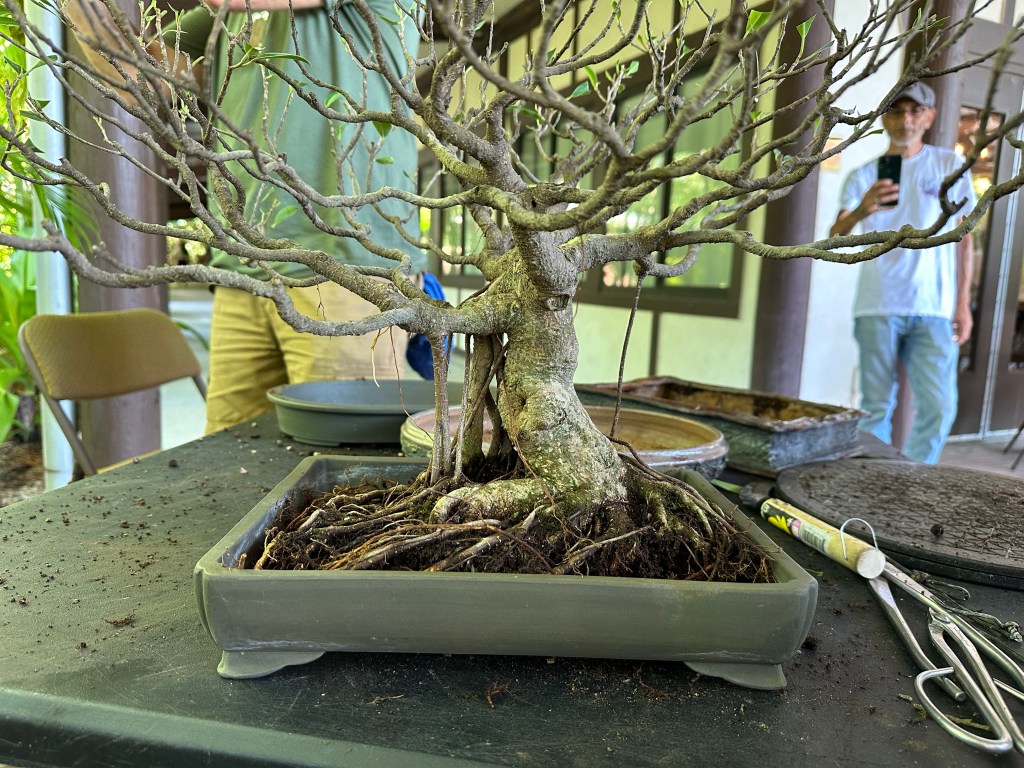
A good pot. But is it deep enough for what I need for good regrowth?

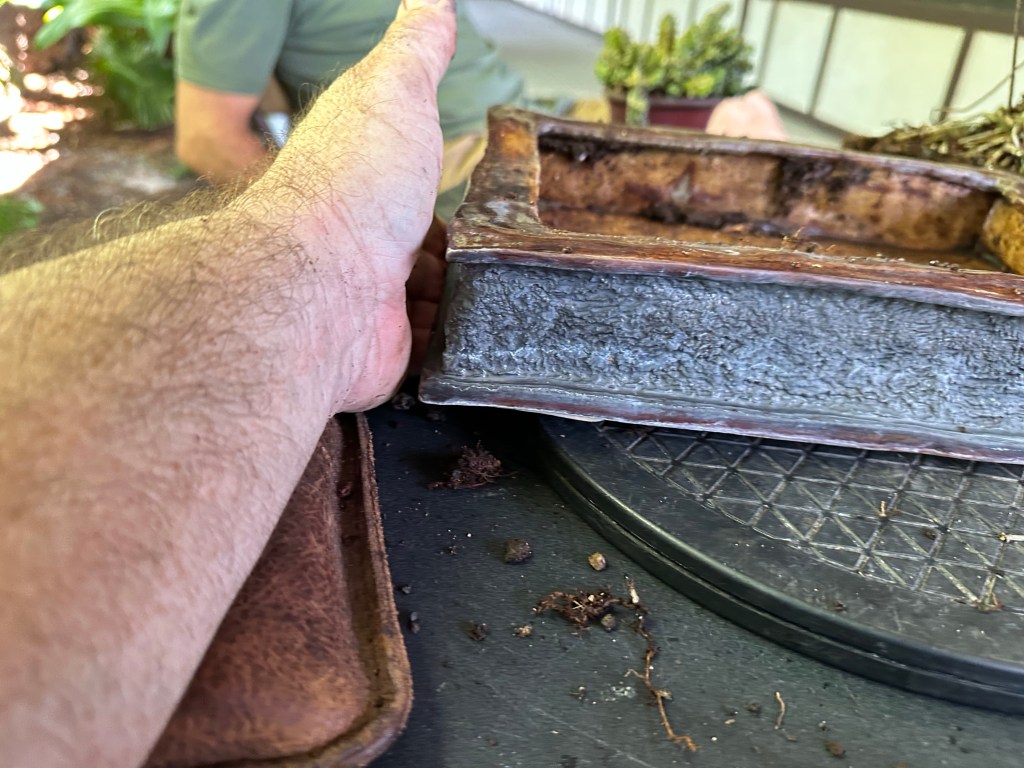
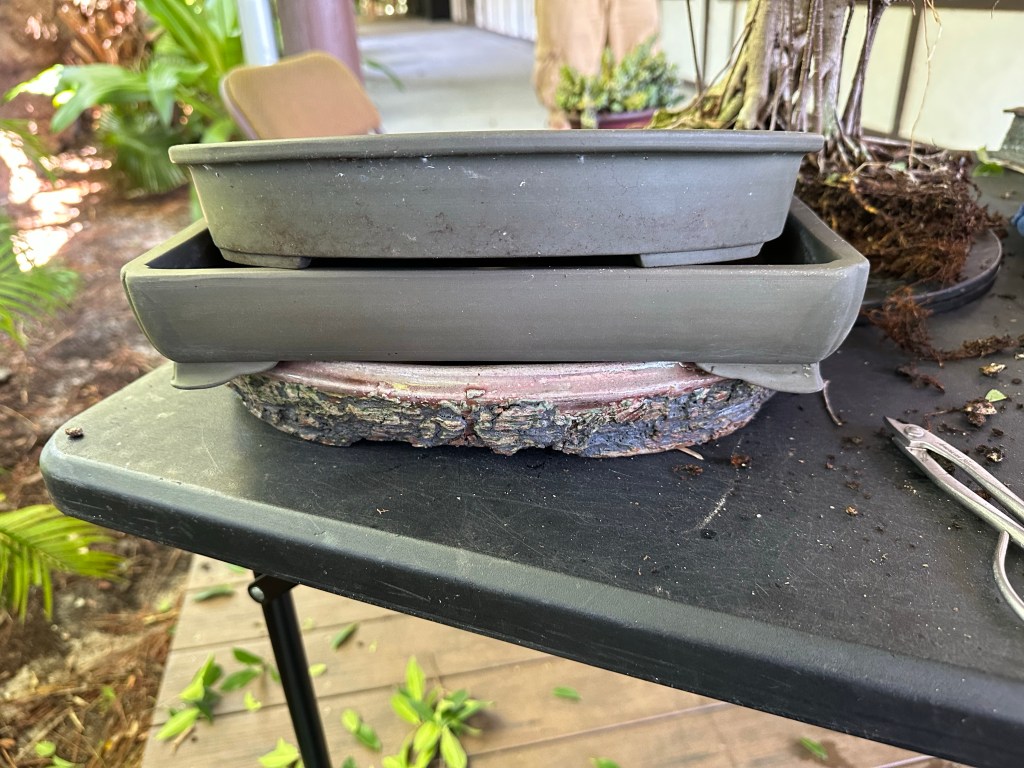
I had had thoughts of putting it into this container. It’s kind of what the trade calls an “Anderson Flat”.

It’s bigger and deeper than the ceramic one.

But using it might give me too much growth. Is there such a thing? Yeah. I need controlled growth with short internodes (remember the dieback, the branch will dieback to the next node lower on the branch). So I’m going with its current pot.

Here’s an axiom “The wetter the roots stay, the slower the growth”. You’ll hear me talk of wetter and drier soil mixes and, in this case, the more shallow a pot, the wetter the tree will stay.
To repot, first, make a mound of soil, and put the tree onto it and wiggle it down. This fills in the air gaps and gives the roots something to grow into.

It bugs me when I see people spreading an even layer around a pot. Don’t worry about the edges. That’s what chopsticks are for, getting the soil in between the roots on the margins.
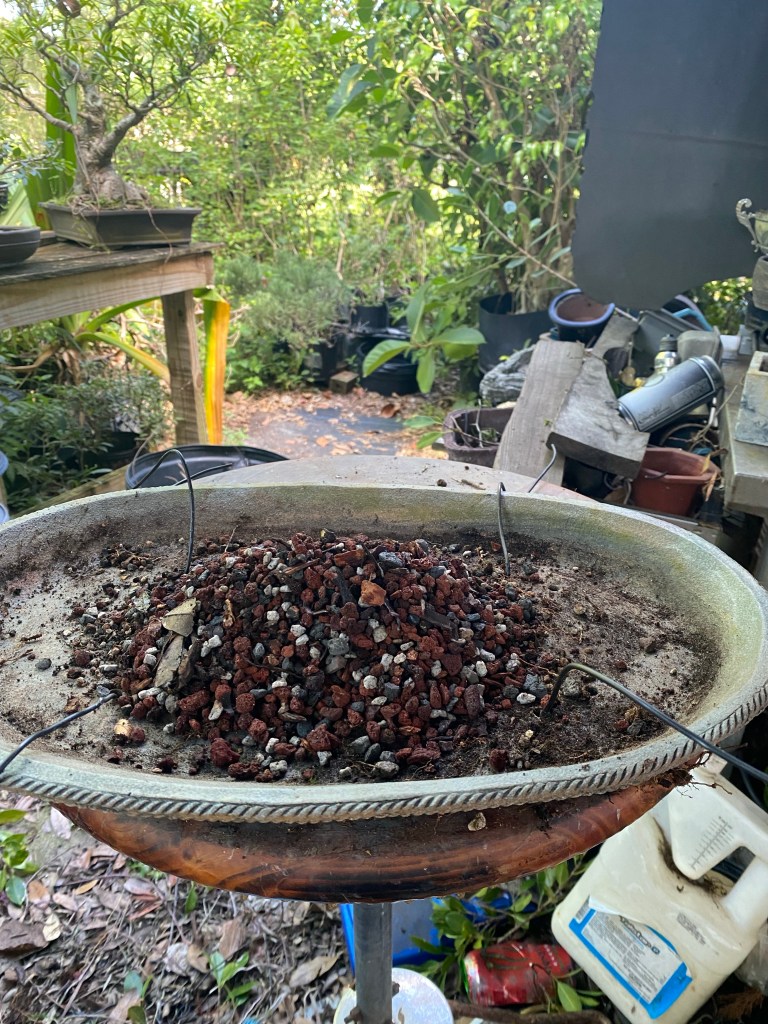
The wiggle technique:
All chopsticked in.

Some systemic insecticide next, in this case, imidacloprid. It’ll keep the thrips away. And those gall wasps.

I like to mix it into the roots well, or else you get a gooey mess.

Now, a generous portion of fertilizer. This is half synthetic time release, and half organic (I’m using Miracle Gro Skake ‘n Feed today).

And weed preventer. This is OH2 but you can find a product called “Preen” in all the stores. It’s a convenient product that inhibits seed germination, not an herbicide, so you have to get out all of the sprouted weeds first. And there will be ones you miss, so revisit it in a week or two to get those.

Do you know the difference between a weed and a plant? You want a plant, you don’t want a weed. There are places where Ficus microcarpa is a weed.
And that’s it. Let it grow.

I did rewire a back branch. It was growing up, as they are wanting to do, so I rewired the opposite direction and put it back in the place I wanted it to be. Here’s a tidbit: if you keep a branch wired too long, when you remove the wire, sometimes it pops back into its old position. The tree wants to grow up, especially newer, and smaller branches, so the tree is actually pushing against the wire, and when you unwire it, it pushes the branch up again. You can see this in bigger trees where two branches are growing against each other, and tree trimmers know this and are very cautious when they see it. As they try to chainsaw the branches, the pressure could be so great the branch will violently snap. They call it a widow maker. It happens with twin trunks the most. Imagine you’re sawing away and then “BANG” the tree splits apart at the seam.

With that, the fig has a long way to go, but by the end of the season, I’ll have secondary and tertiary branches to work with. I’ll update if I remember.

And “Bob’s yer uncle”.

Let’s see if I can get it back to its former glory.