 Login
Login
Kevin’s Satsuki Azalea
6 September 2022 at 16:51
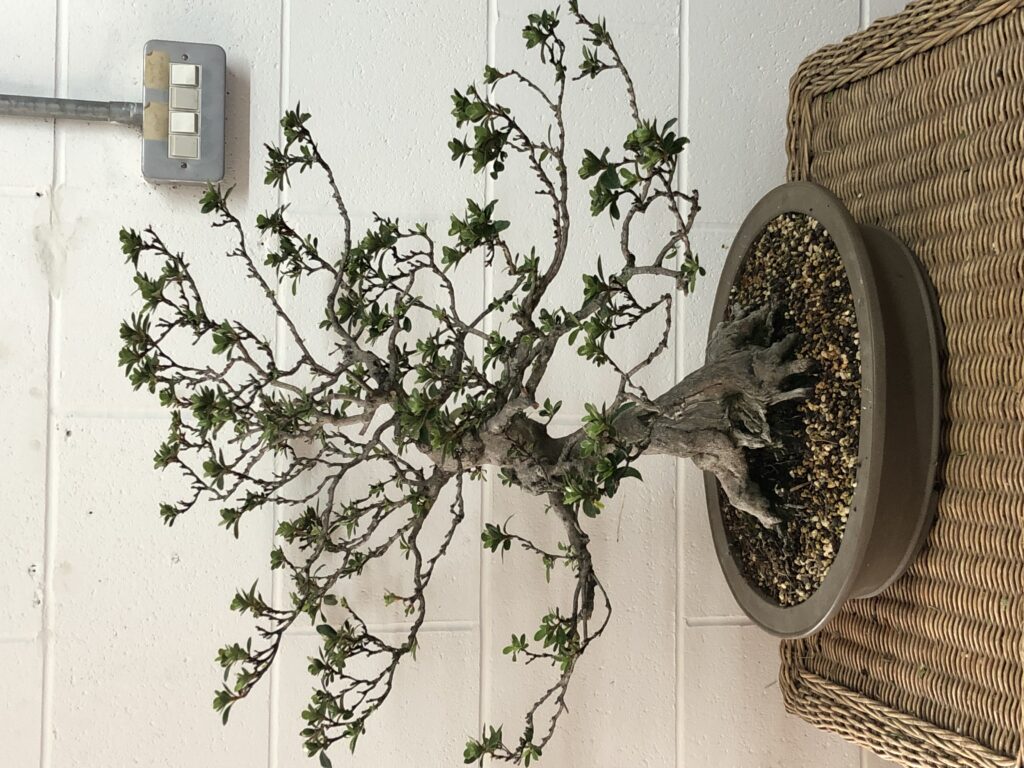

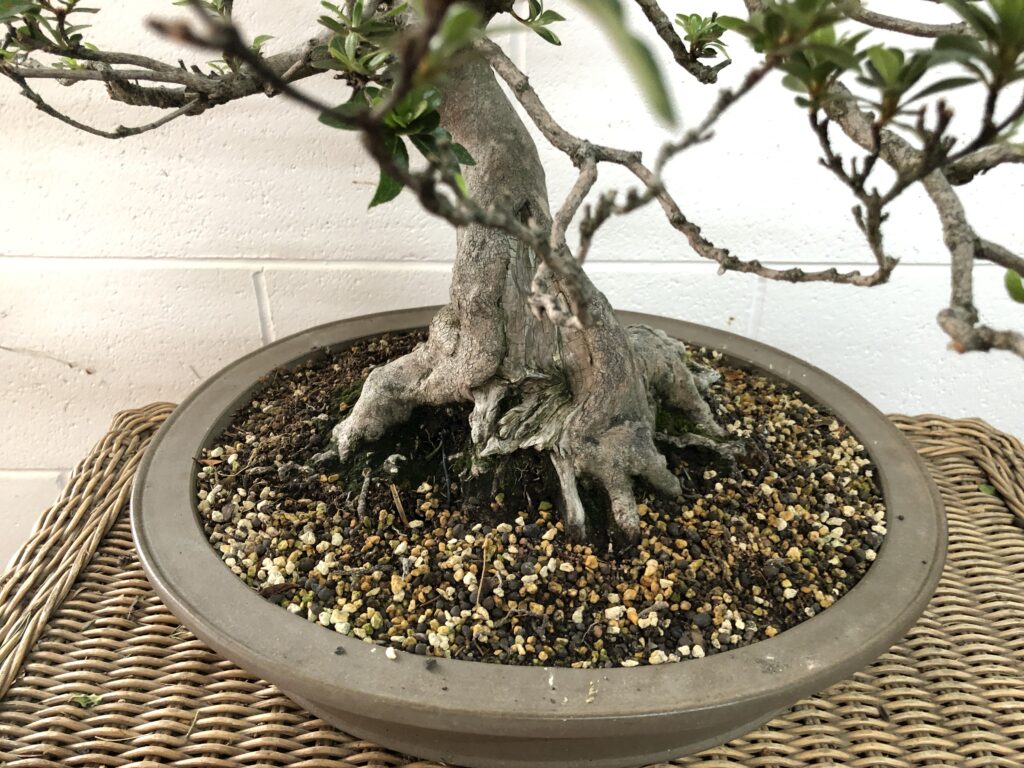
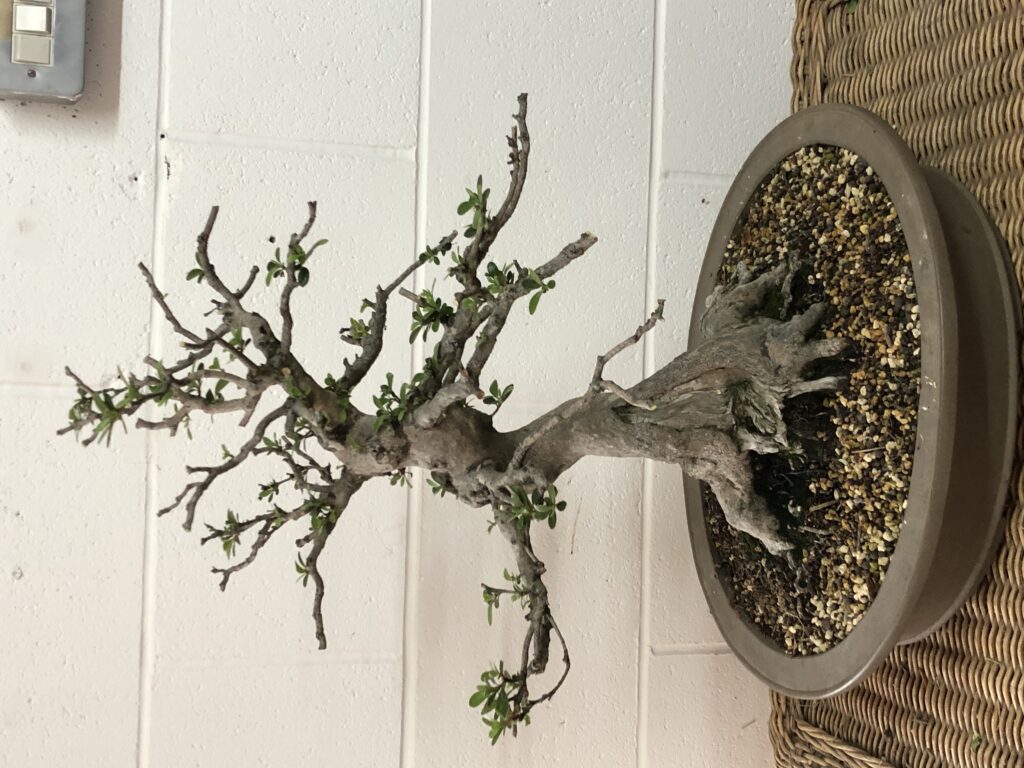


It has been quite a journey with this tree and I have been happy to be involved and helping Frank whenever the tree has been brought to a workshop. At long last we are beginning to arrive at our destination.
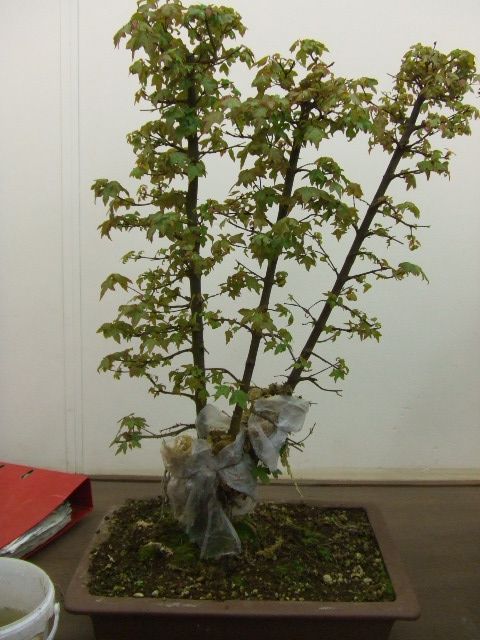
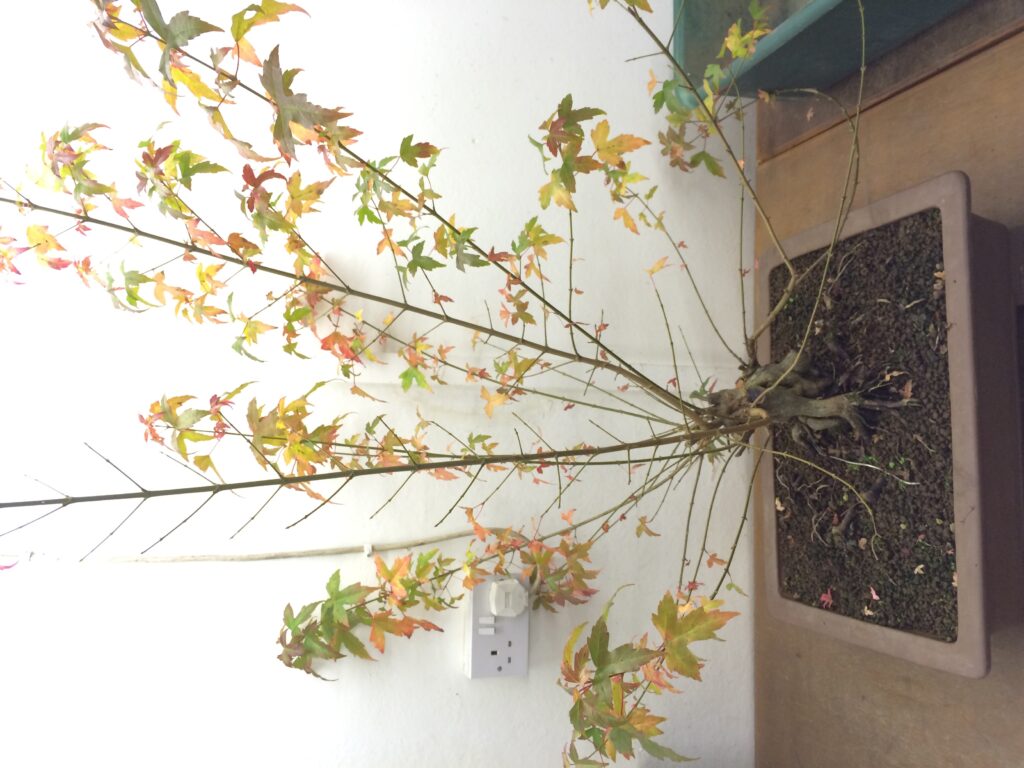
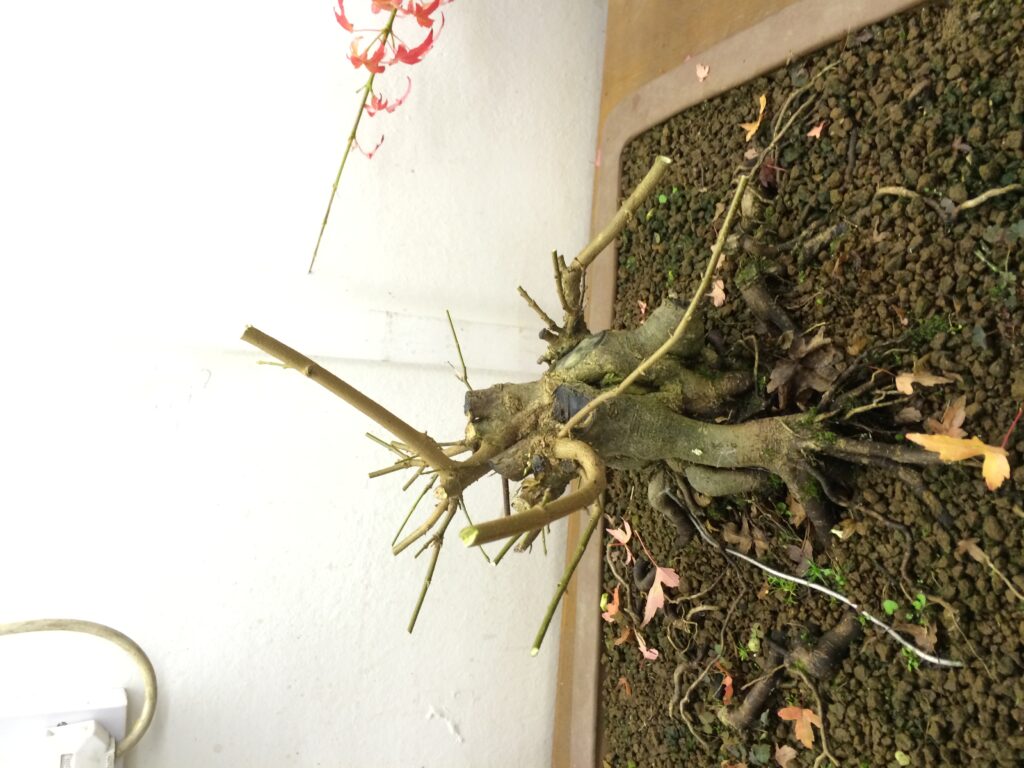
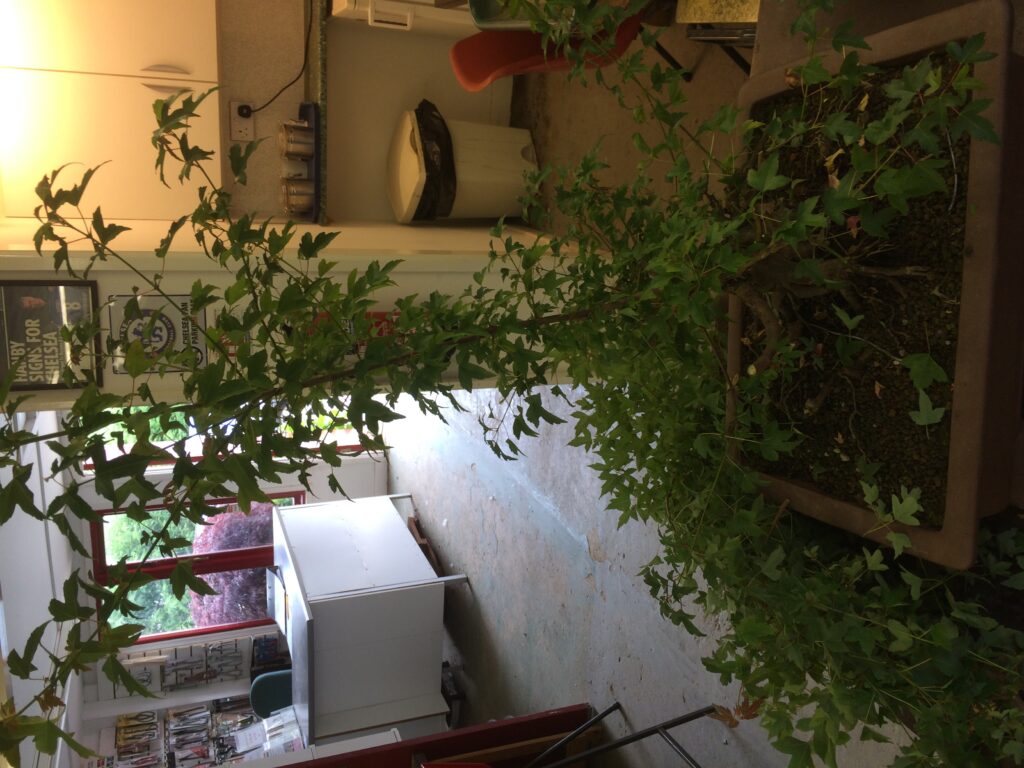
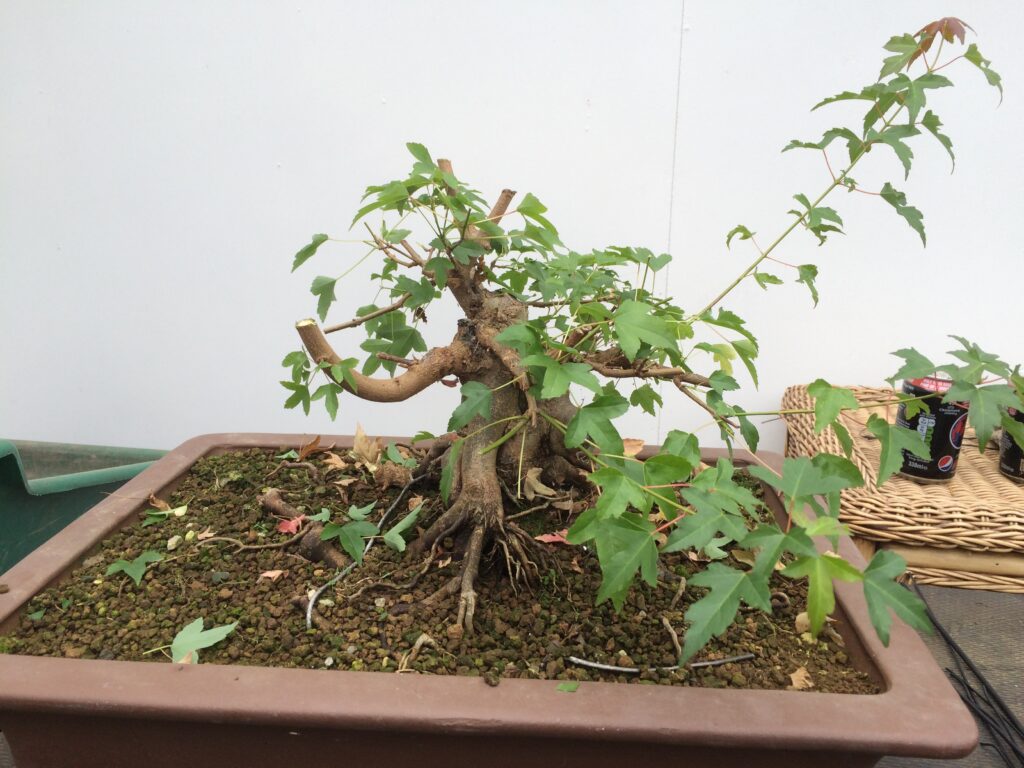
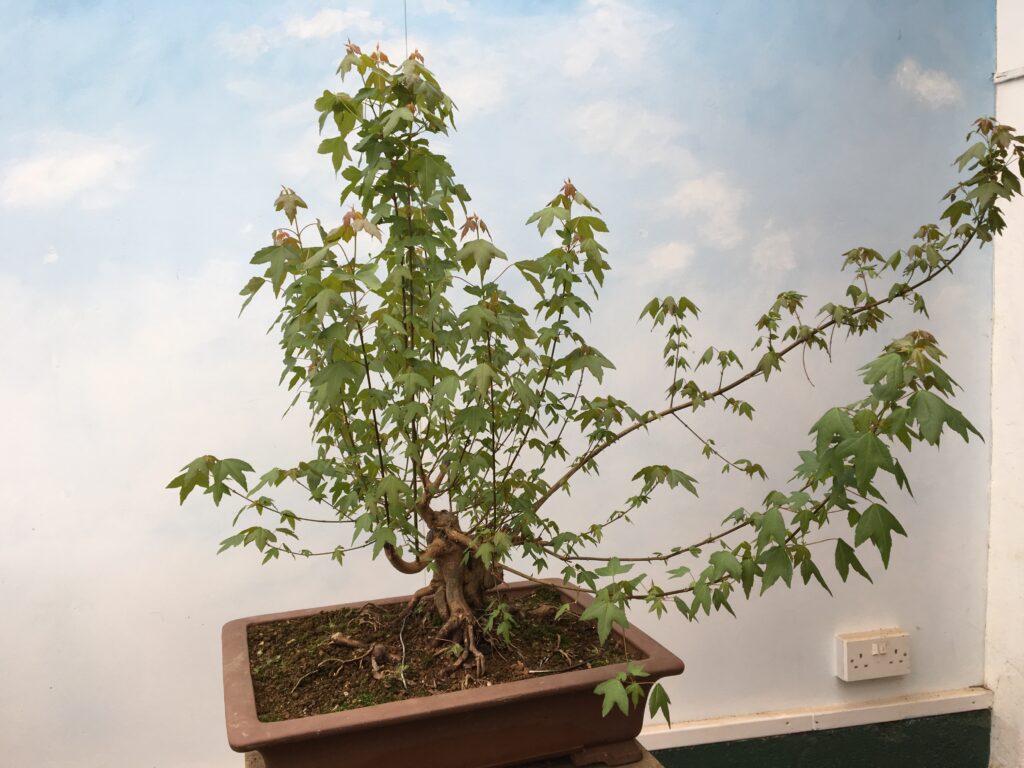
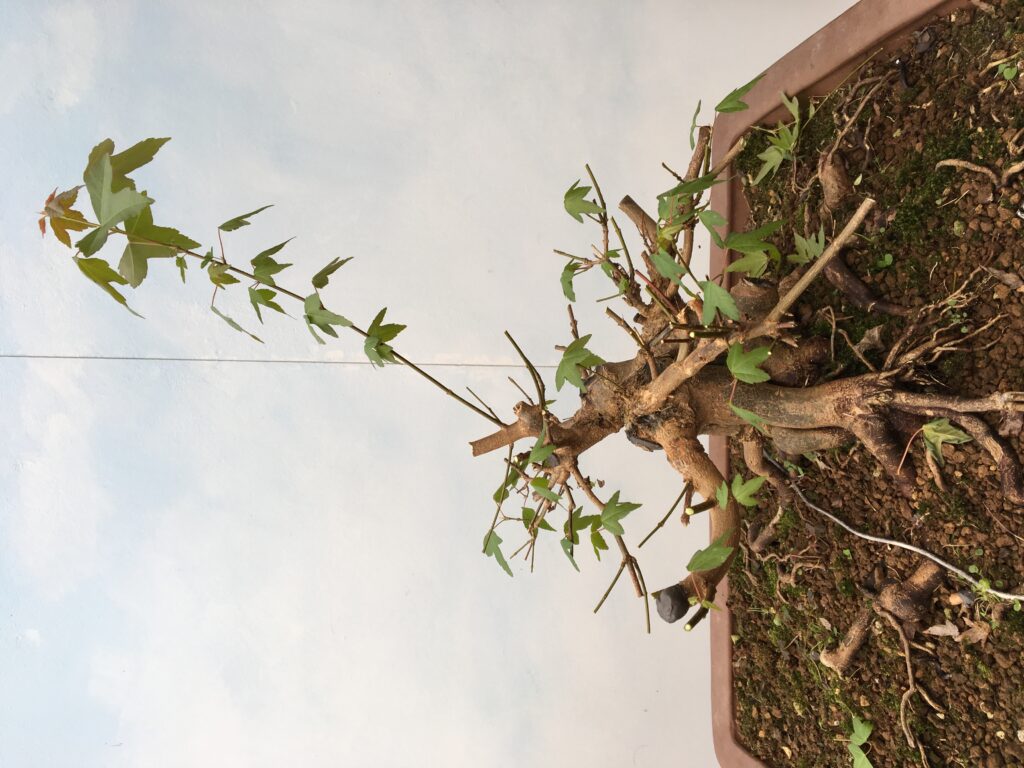
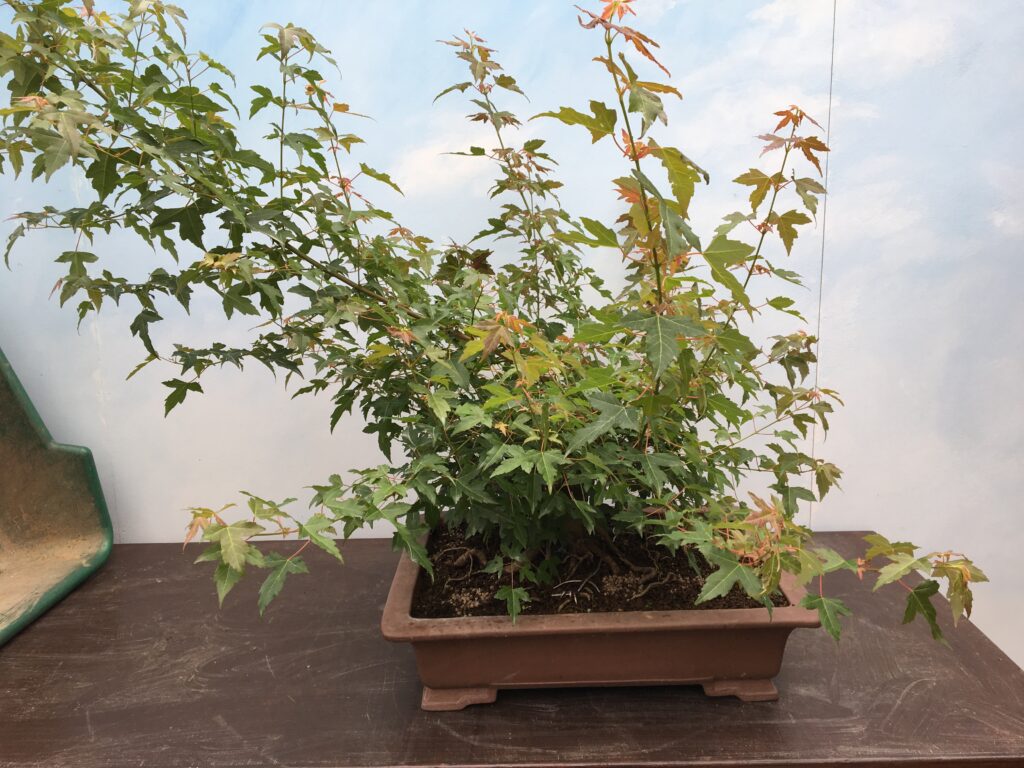
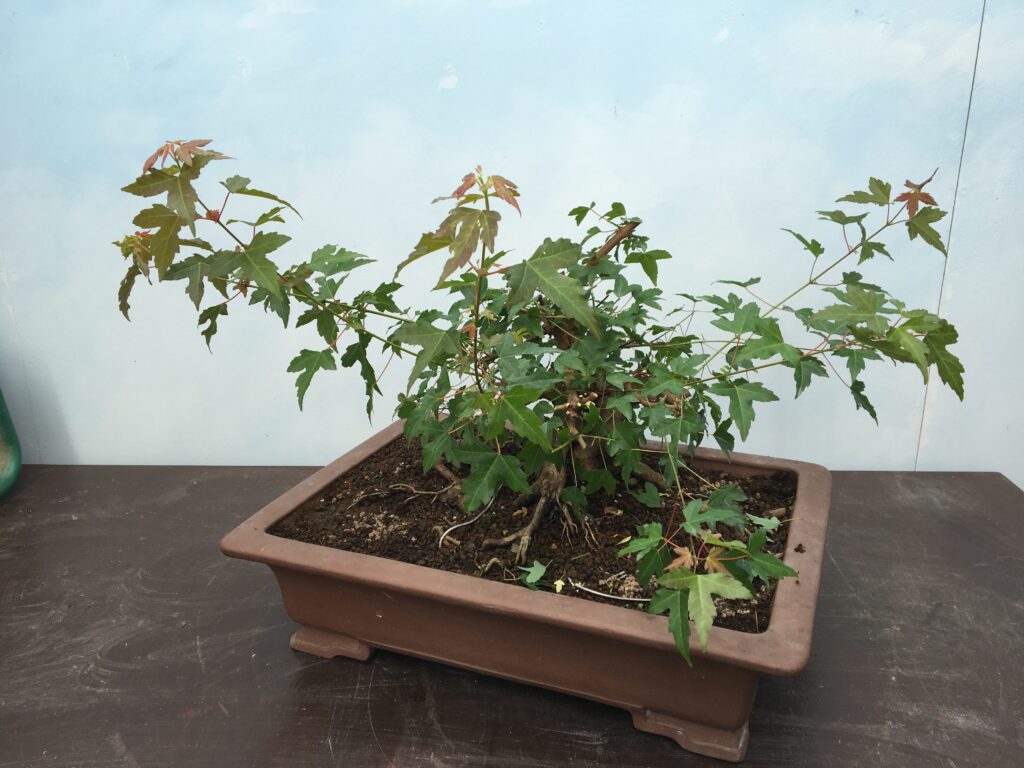
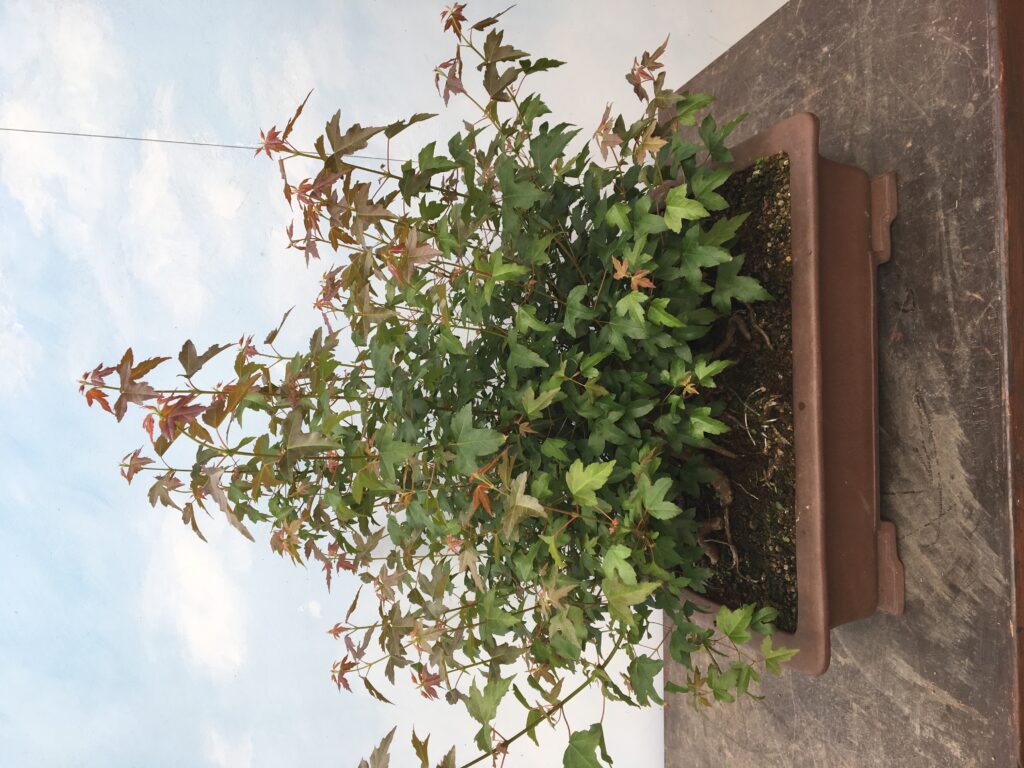
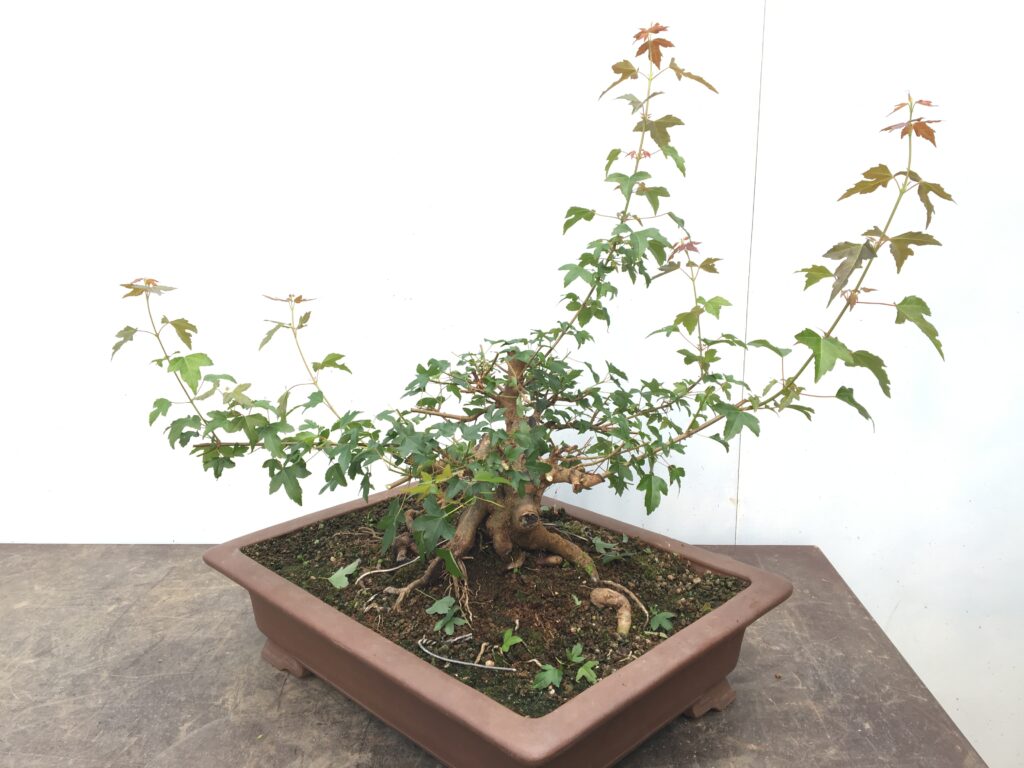
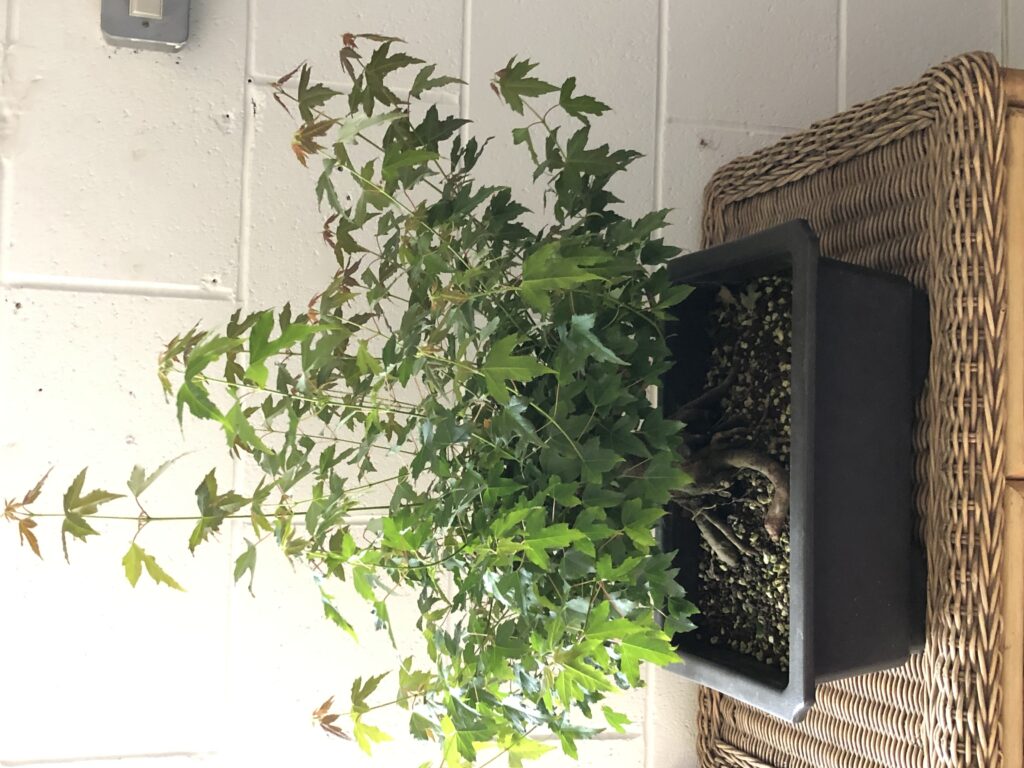
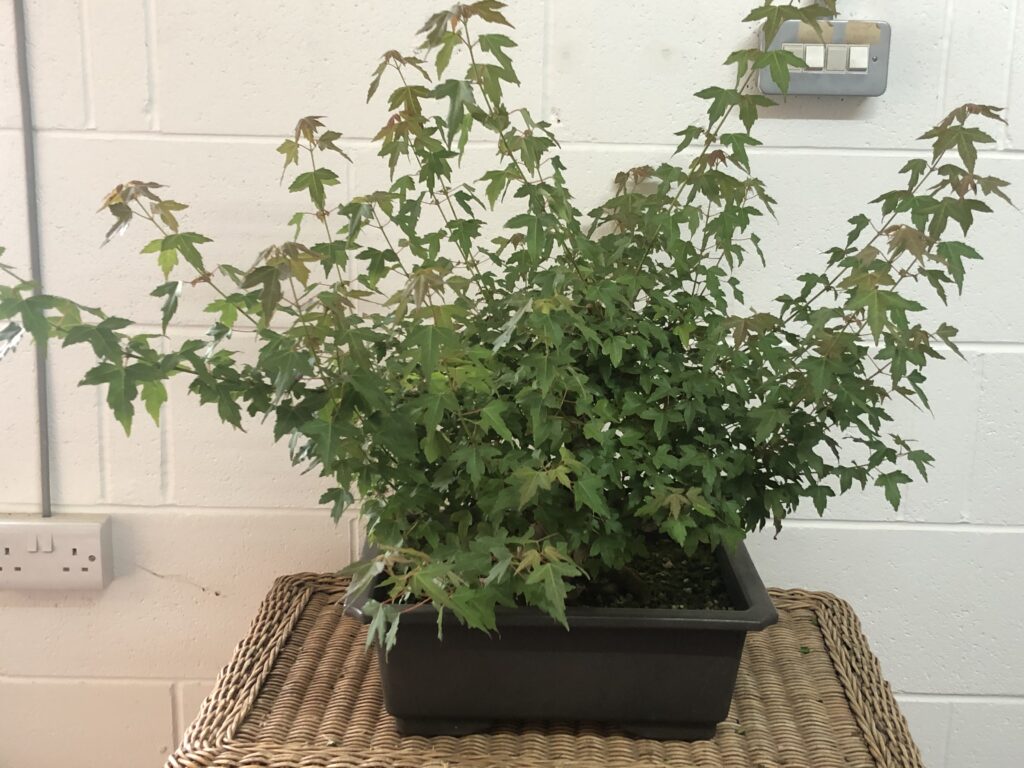
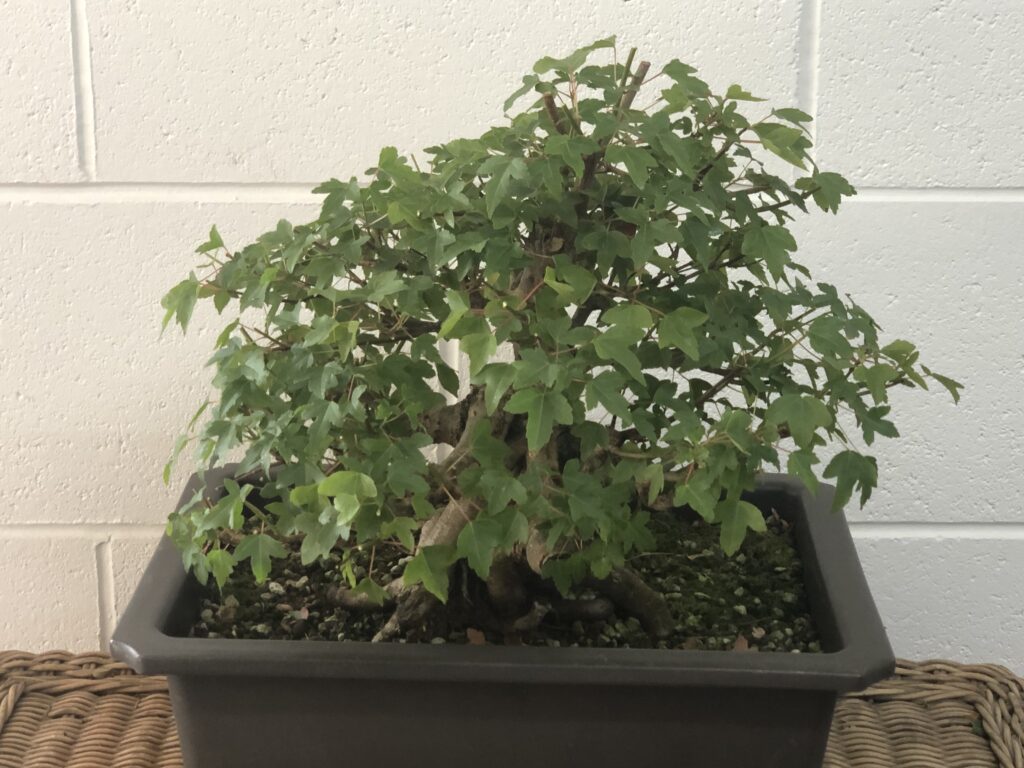
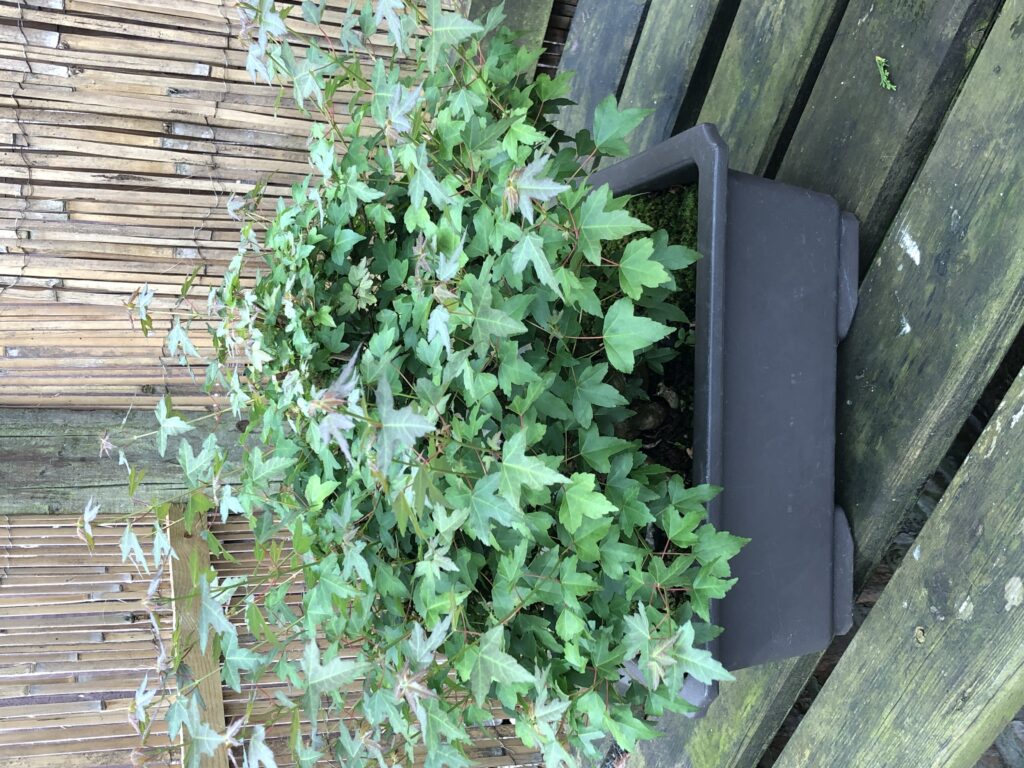
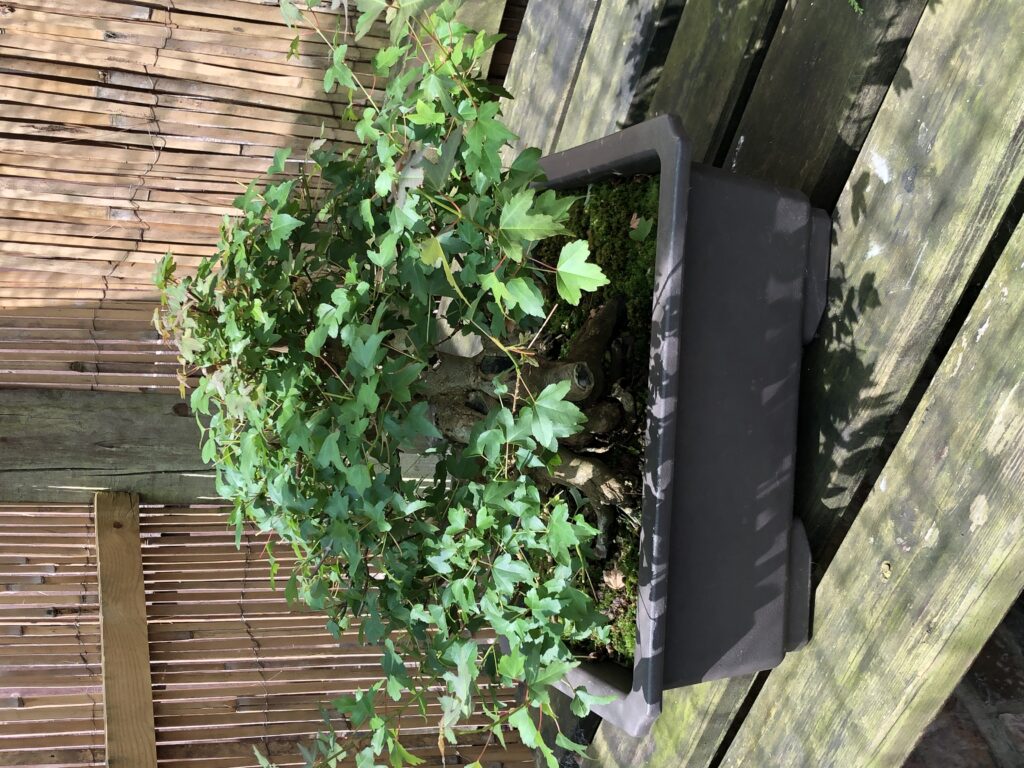
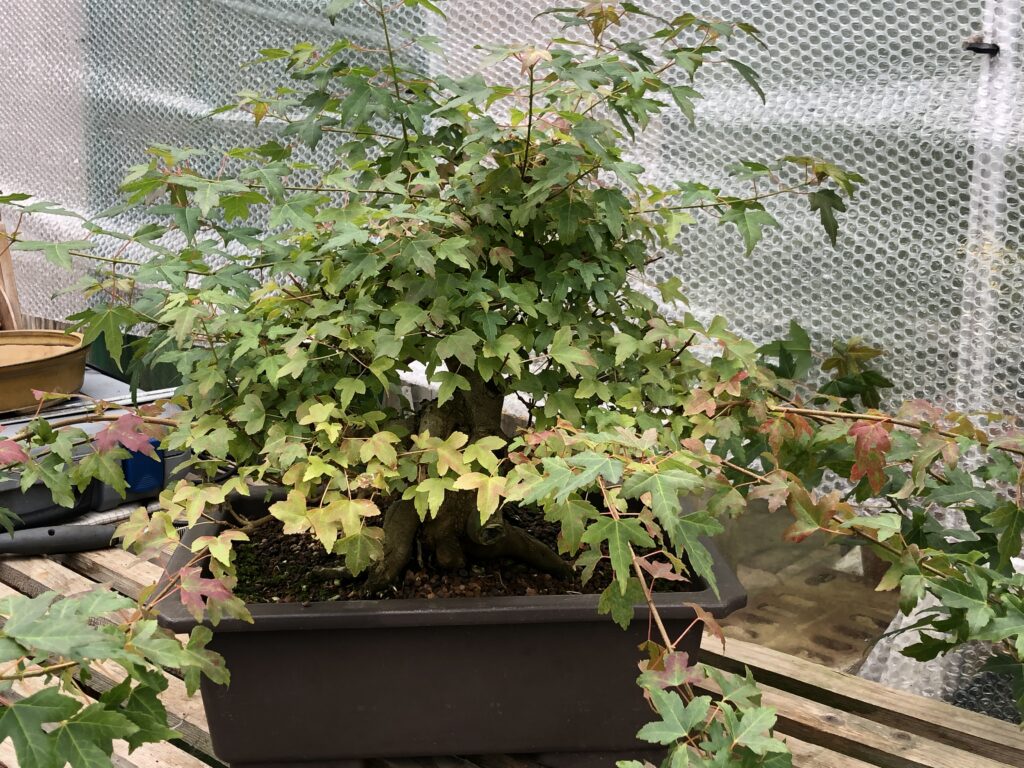
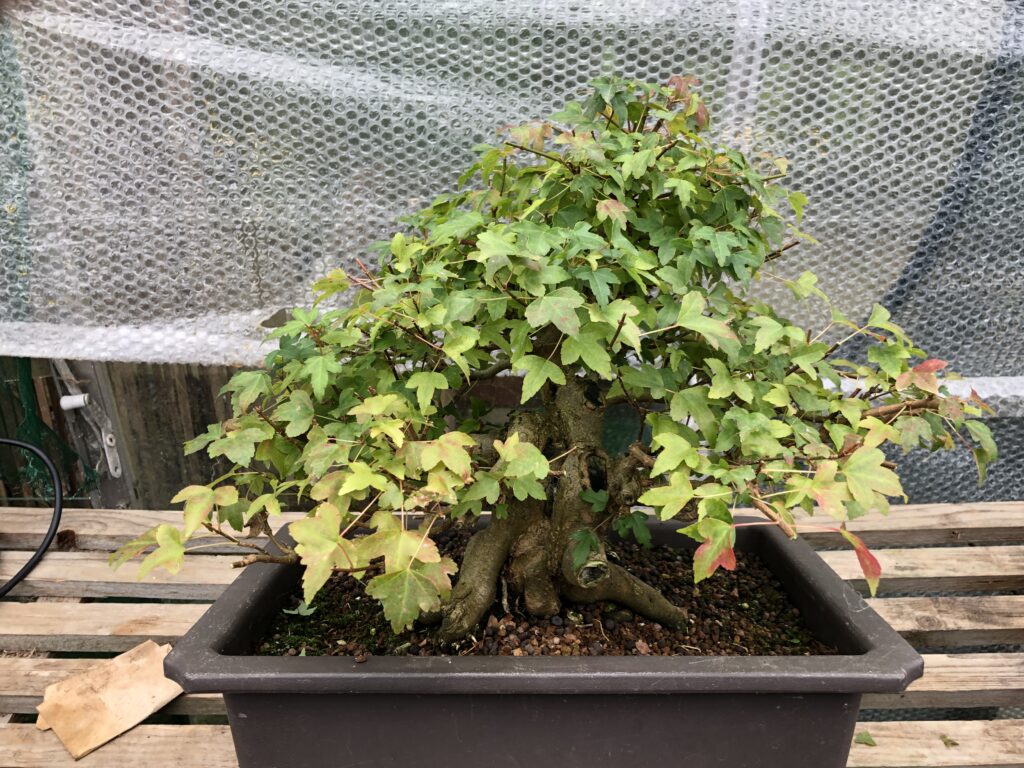
Its taken a long time to get to where we are today with this tree but it now bares no resemblance to what we started with. The successful air layers at the beginning of the project were really a bonus. The tree is now on the verge of reaching its full potential as a small powerful bonsai with an impressive stout trunk complemented by a rounded mature canopy.
The scars from the air layers are callousing well but can now be hollowed out to enhance the image of a really old ancient tree.
All the time we maintained the trees strong health and vigour concentrating on selecting and growing branches. These were then allowed to thicken before we started looking at refinement and compacting the image.
This hobby never fails to deliver immense satisfaction when you are successful in creating something special out of nothing!
A small selection of just some of the trees which have been brought to classes for some autumn pruning.
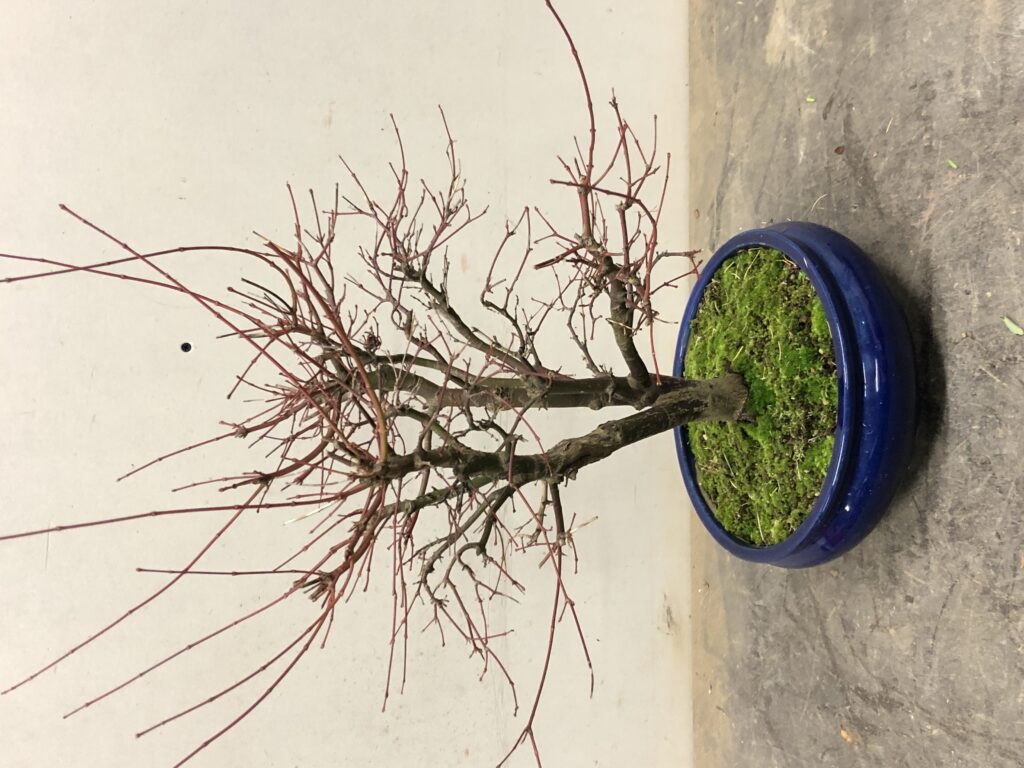
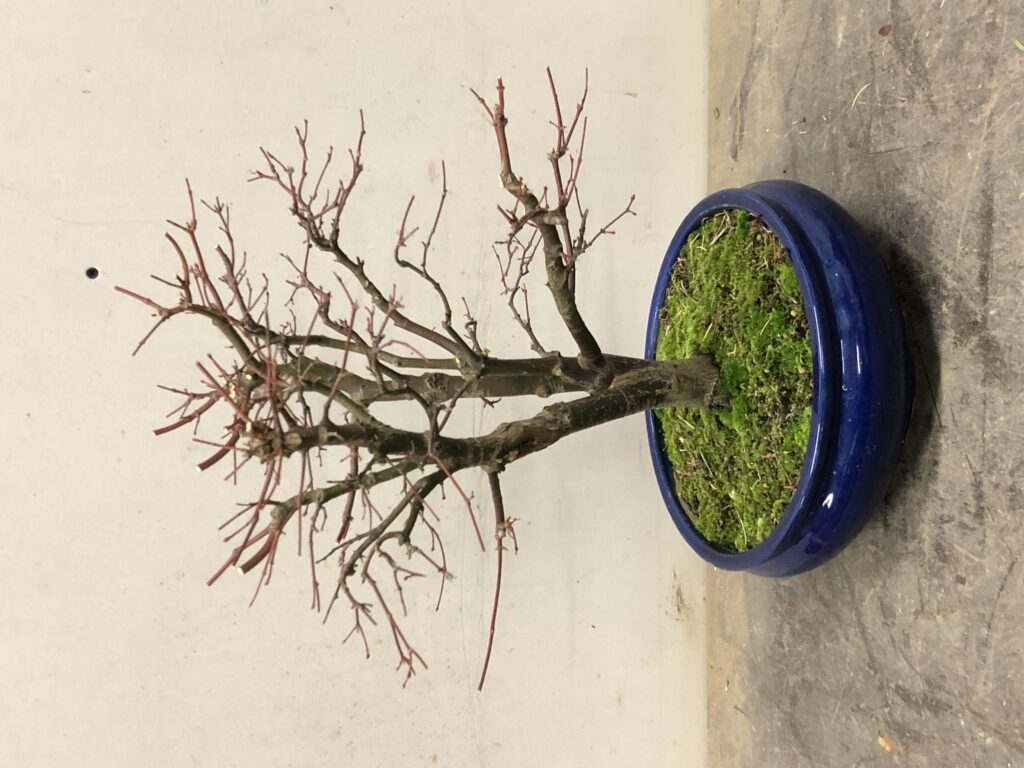
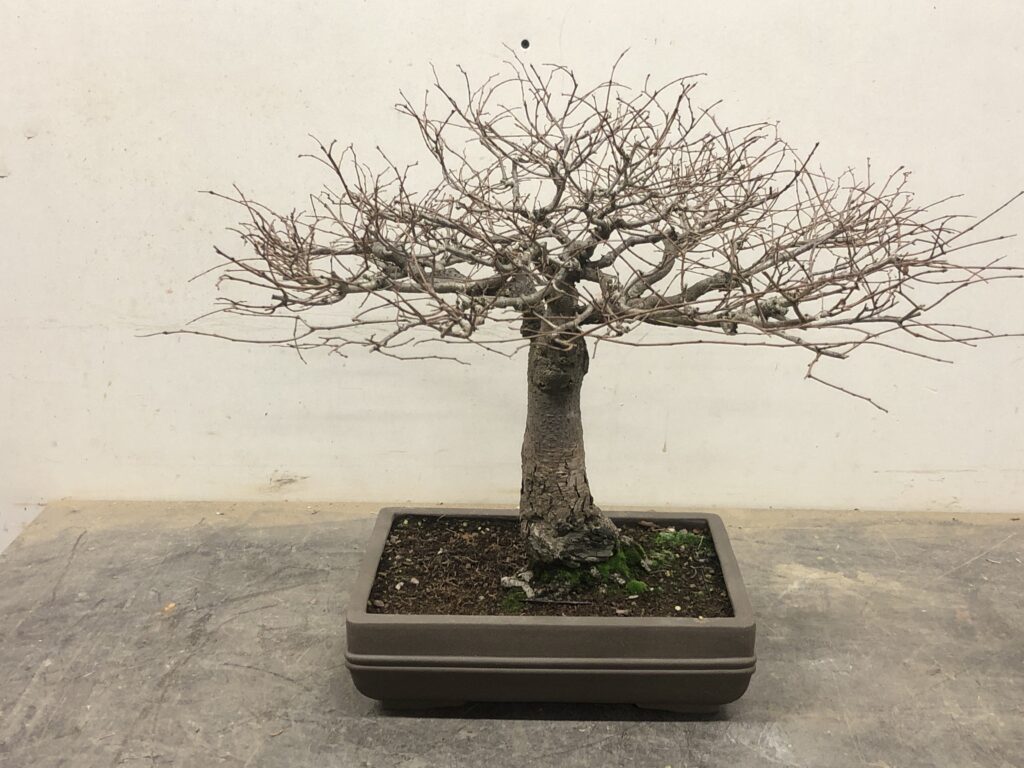
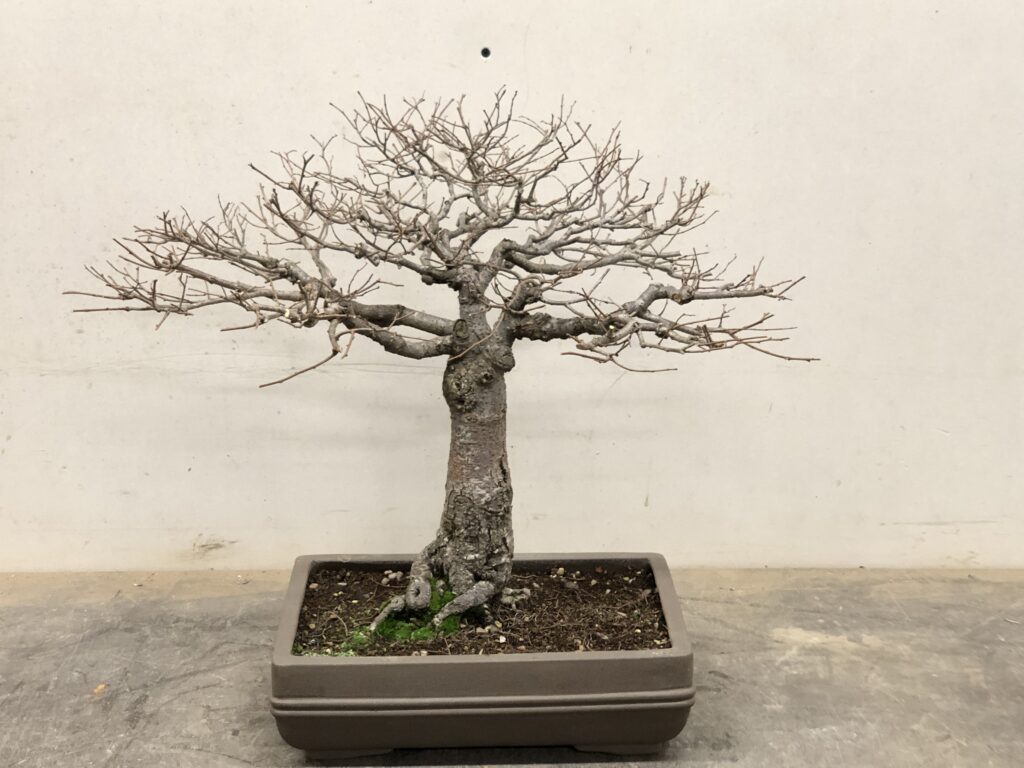
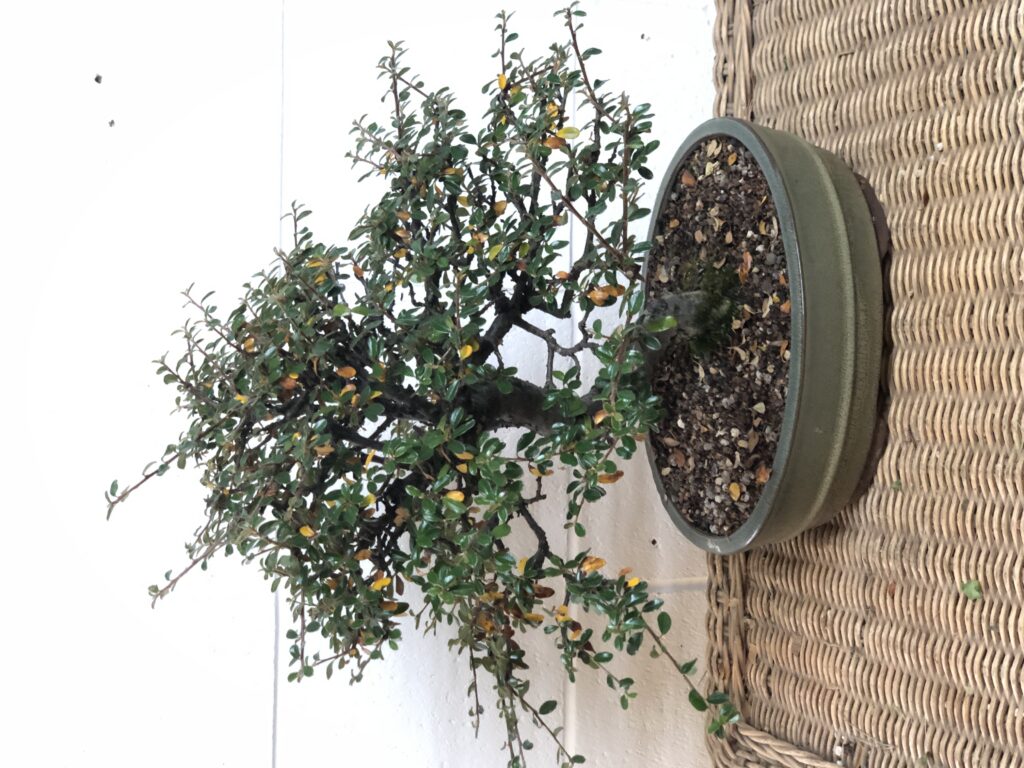
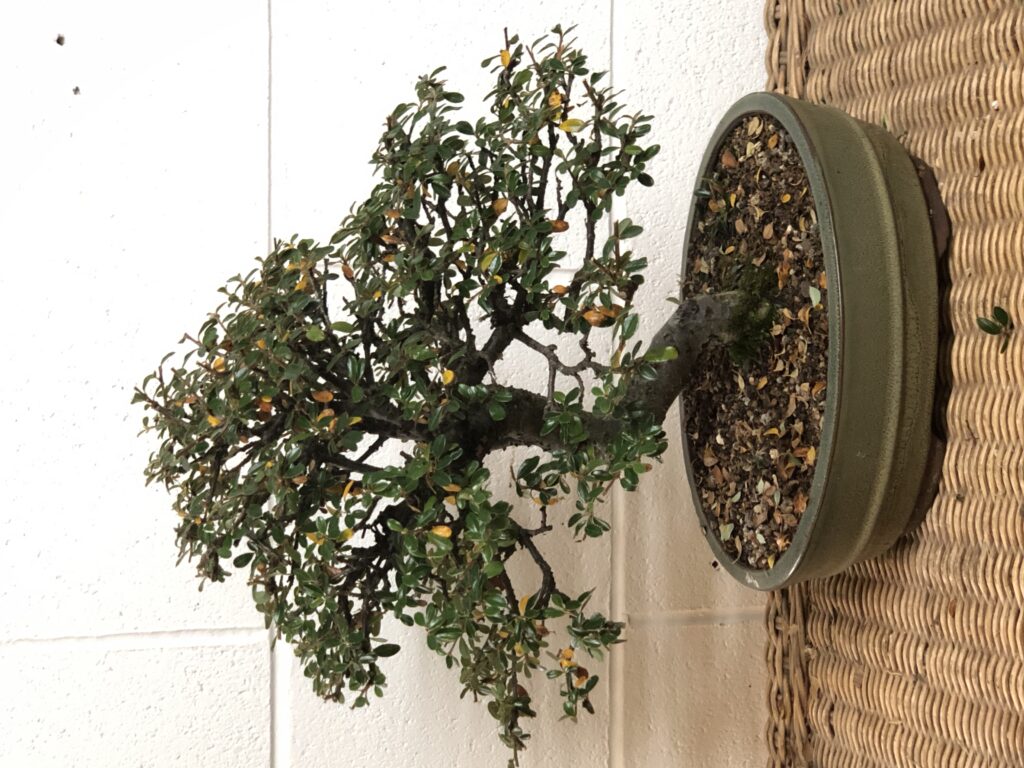
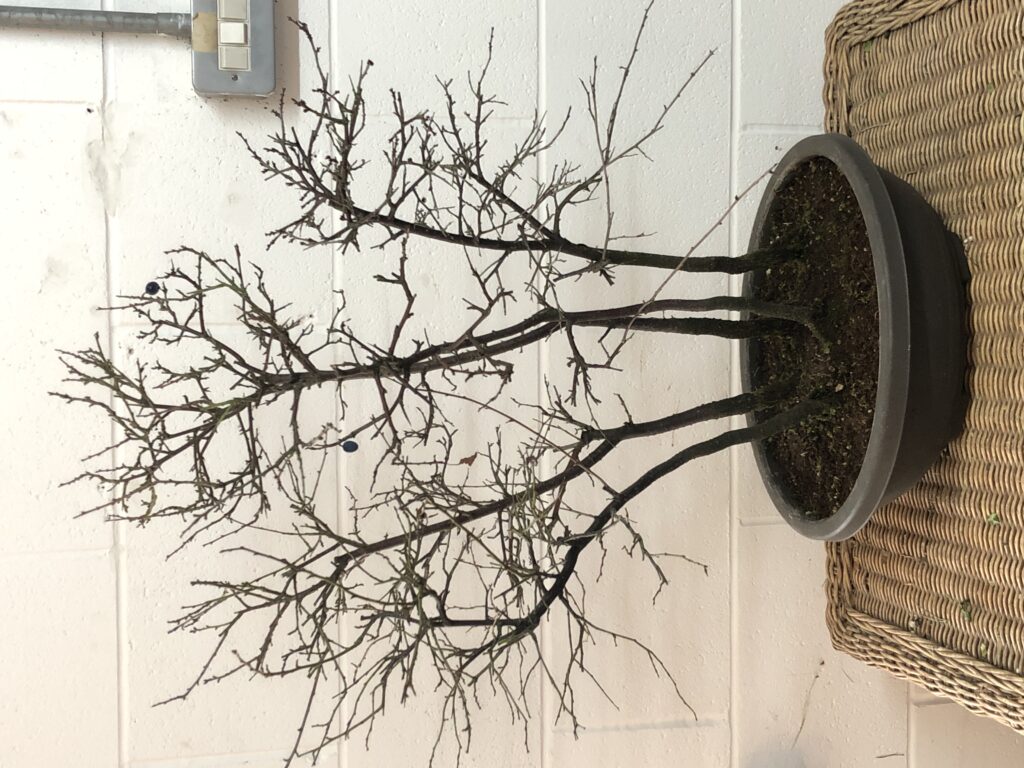
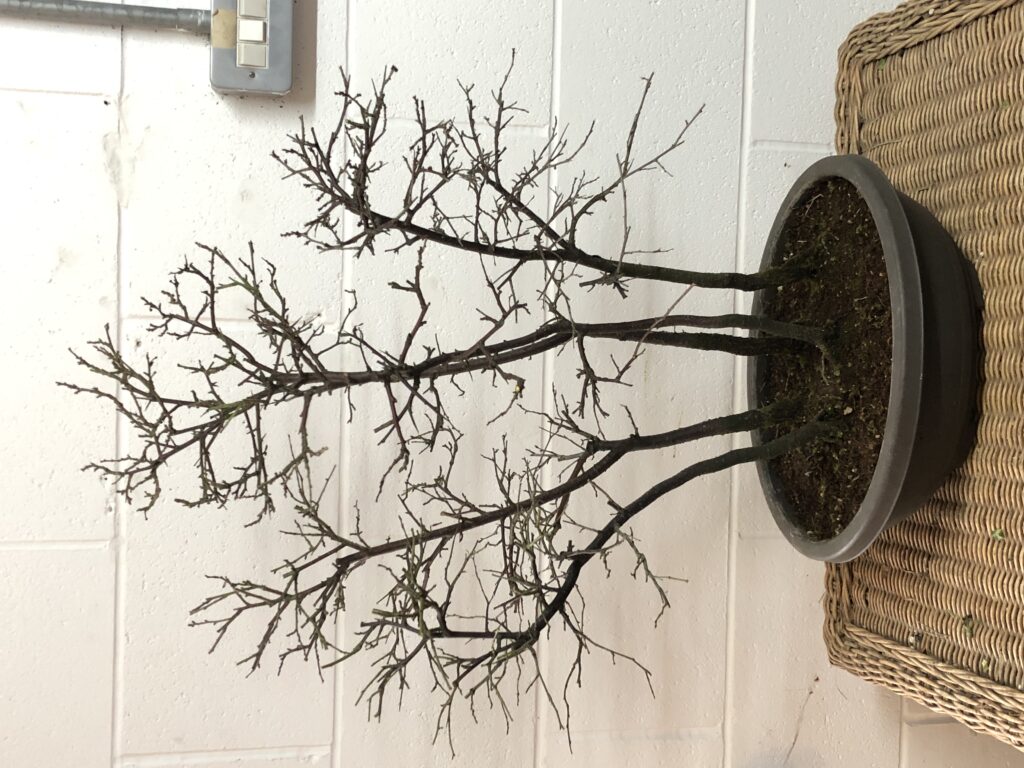
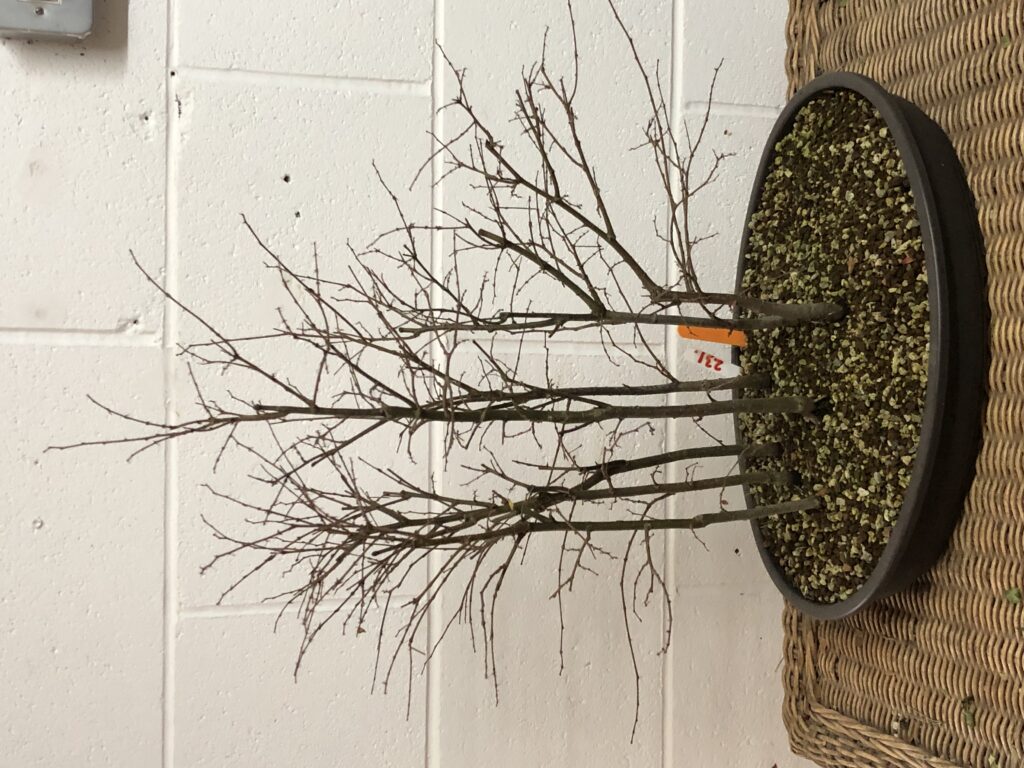
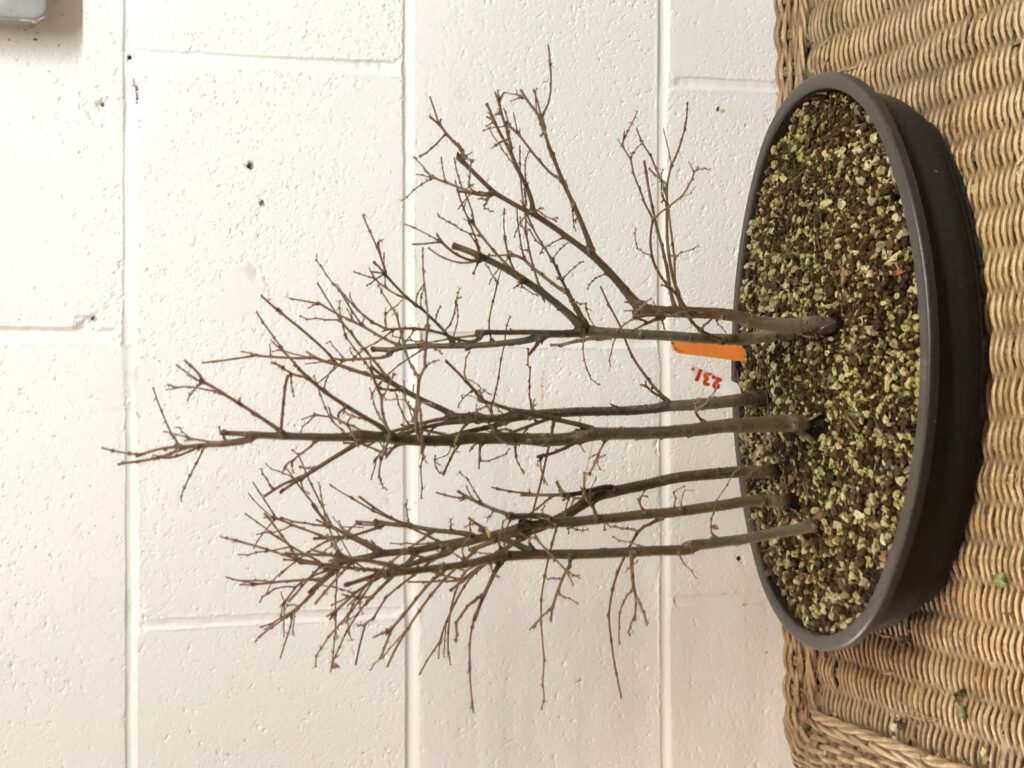
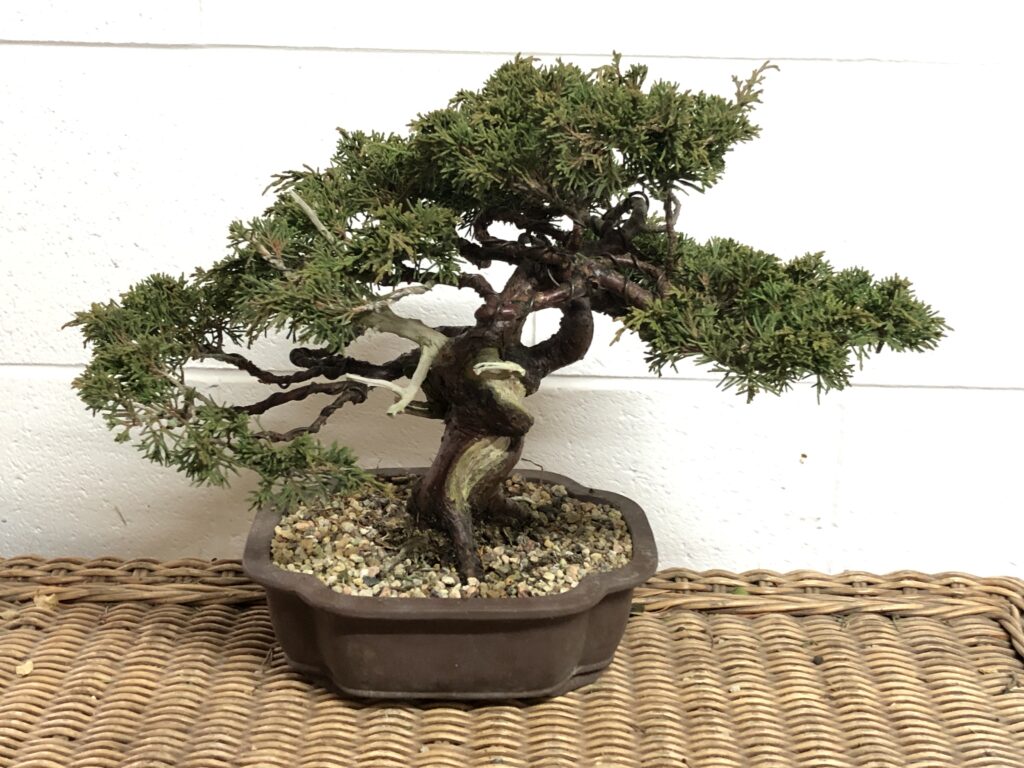
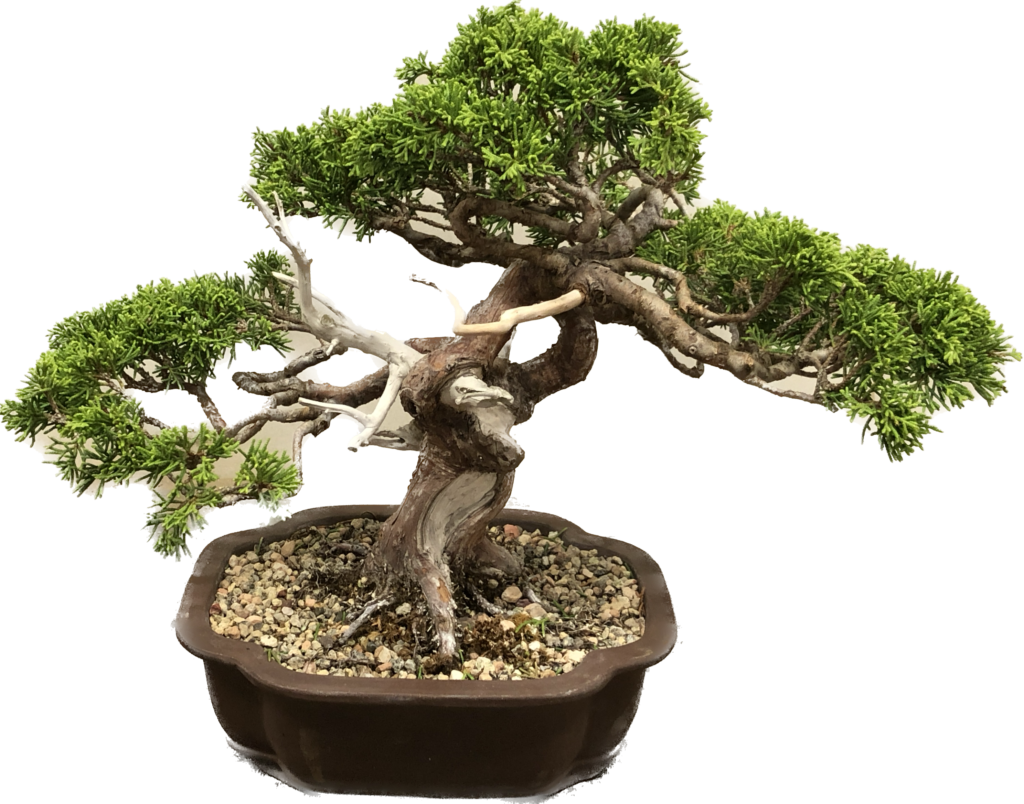
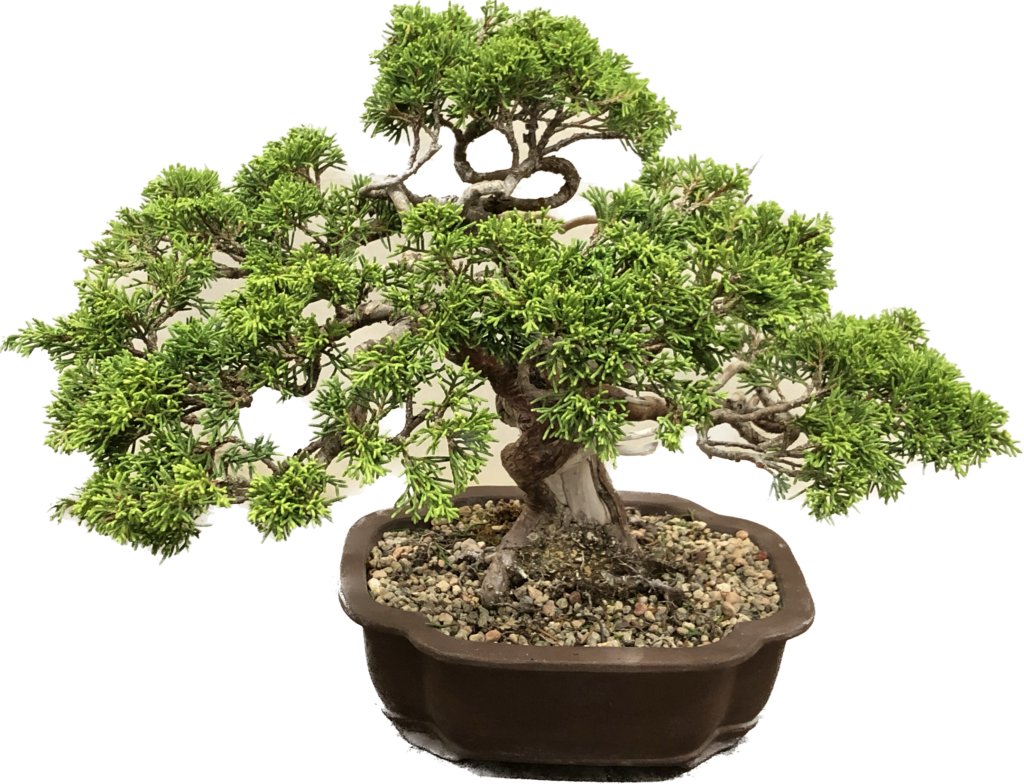
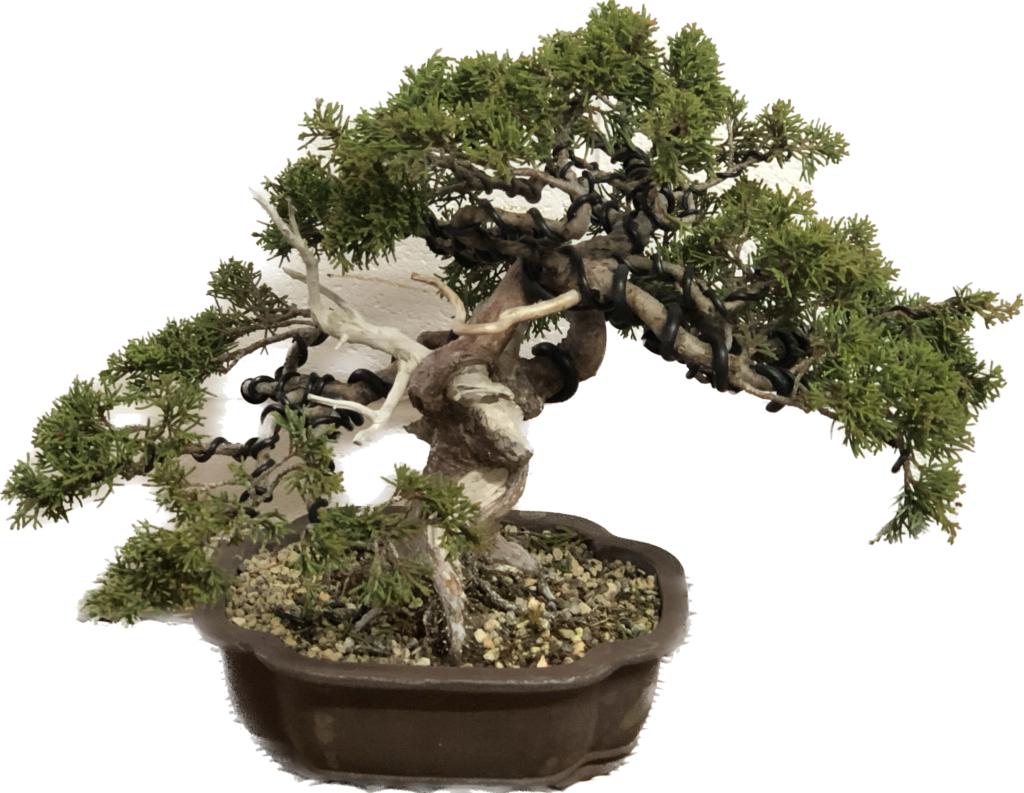
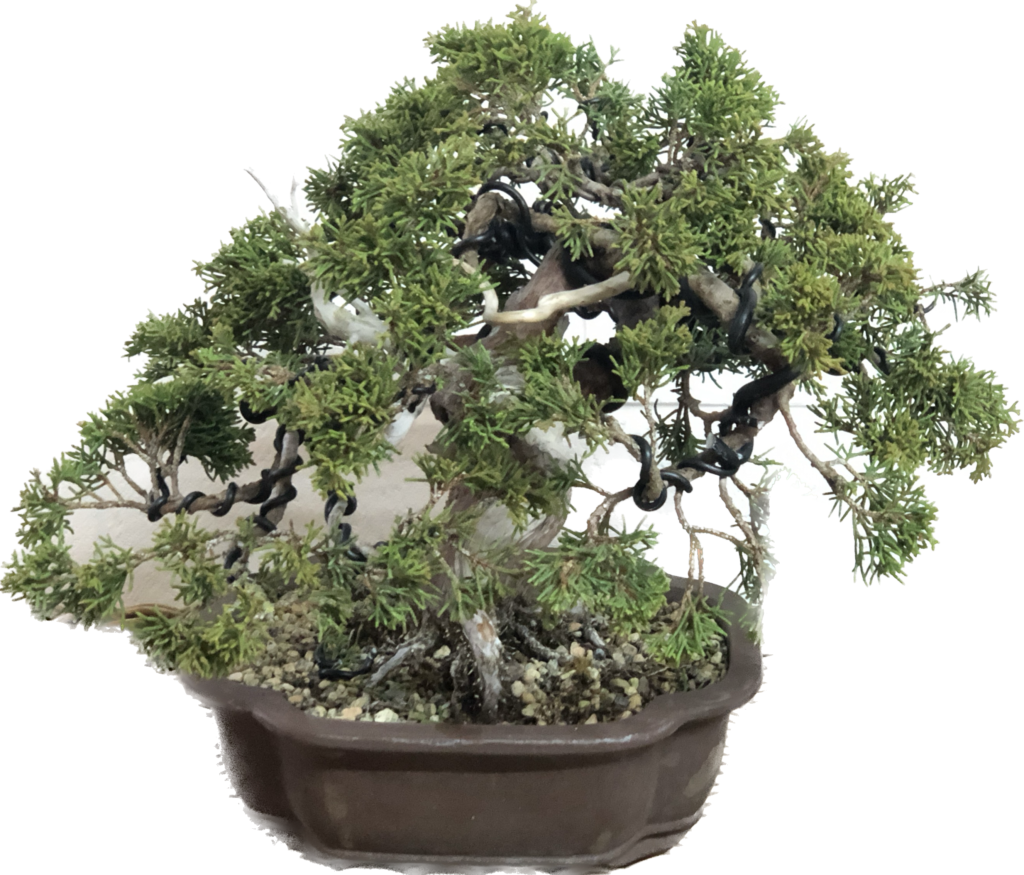
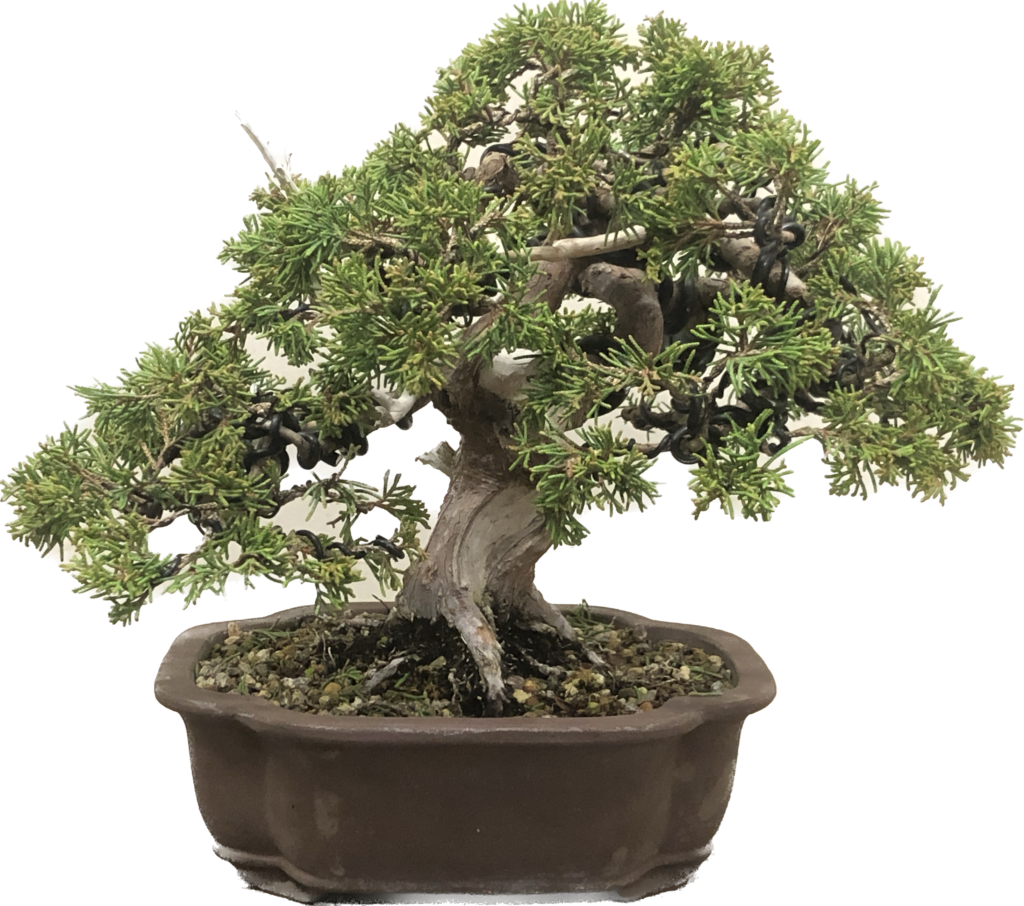
We now just need to let the tree grow and recover from the work we have undertaken. Once we have strong extended growth then we can start to prune the canopy and make the foliage mass even more compact. My student John is doing a good job with this tree and hopefully is now beginning to see the reward for all his hard work.
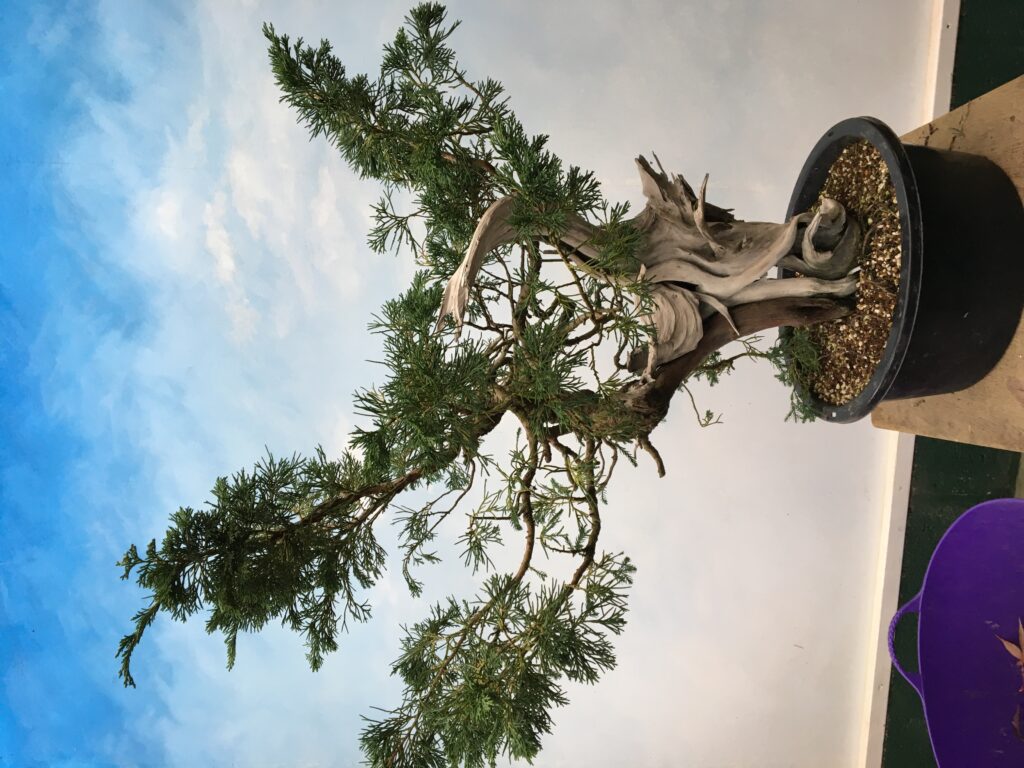
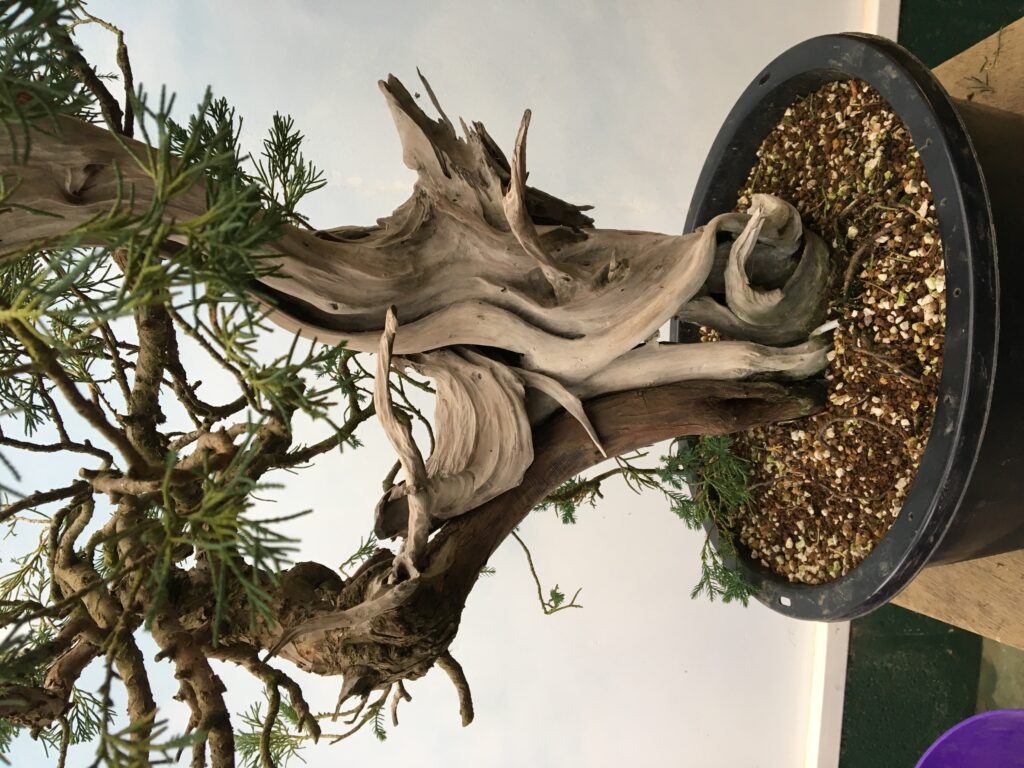
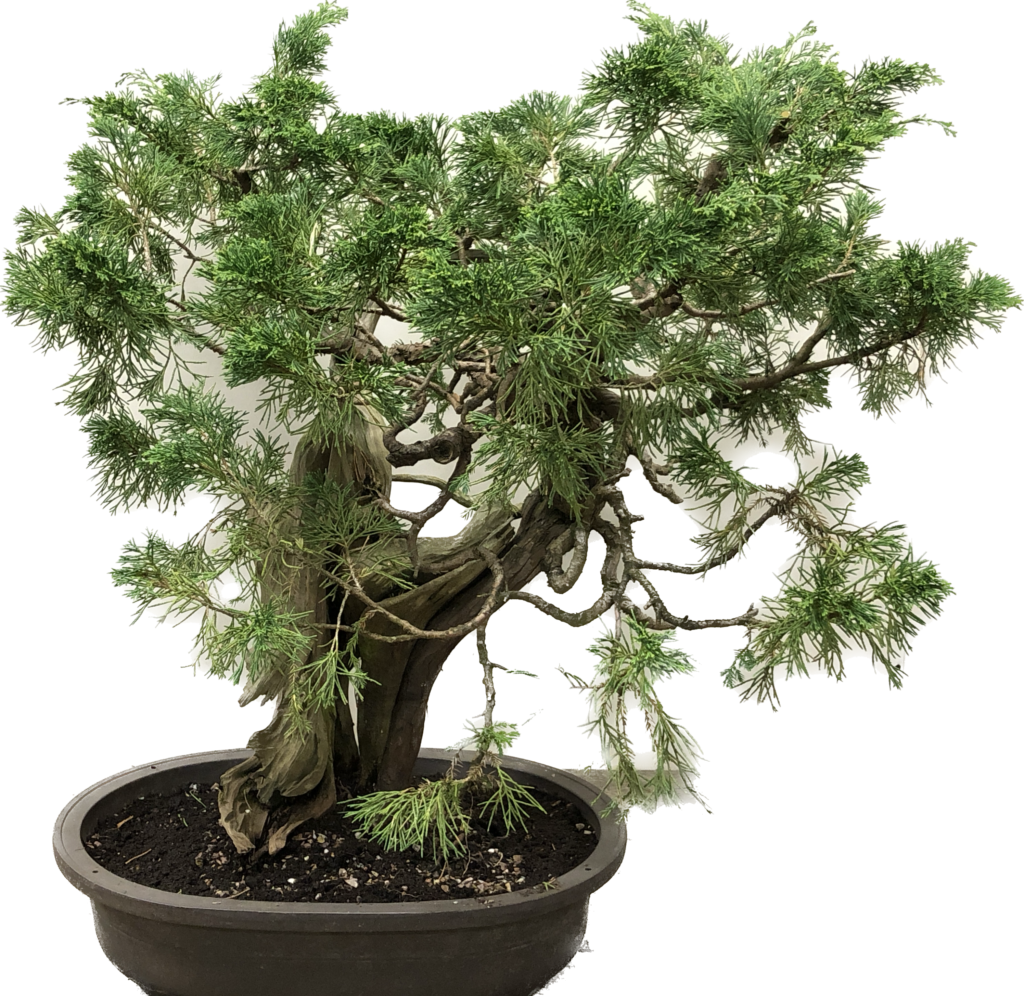
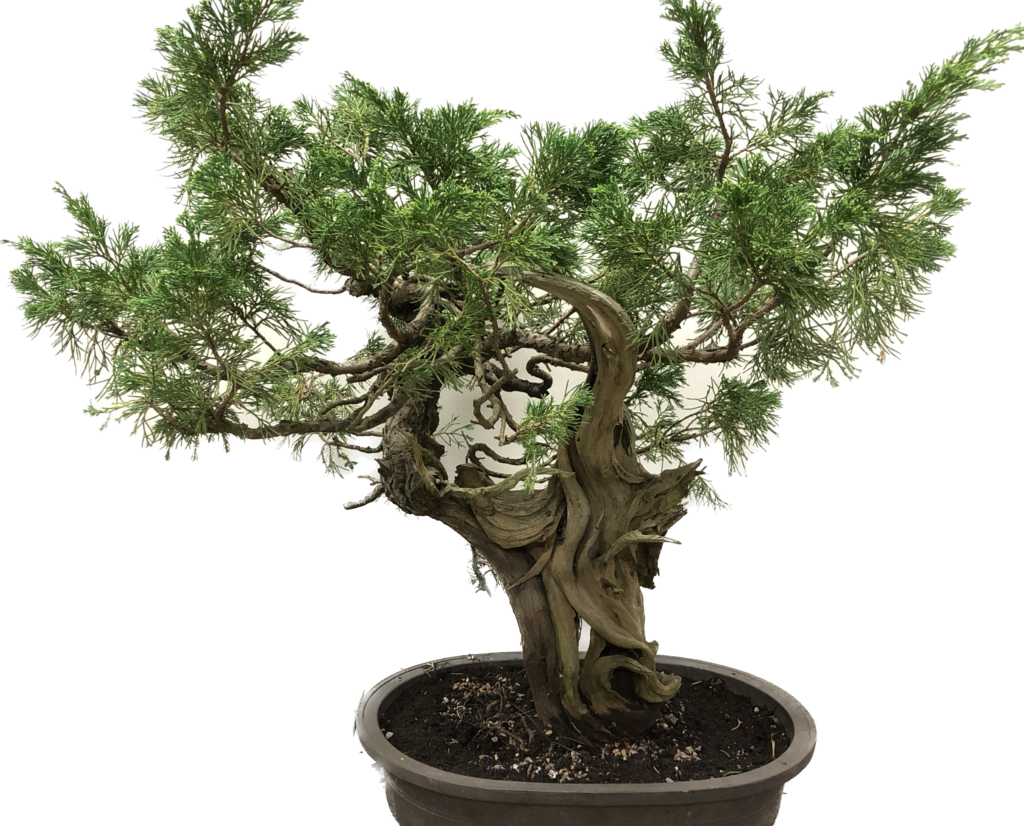
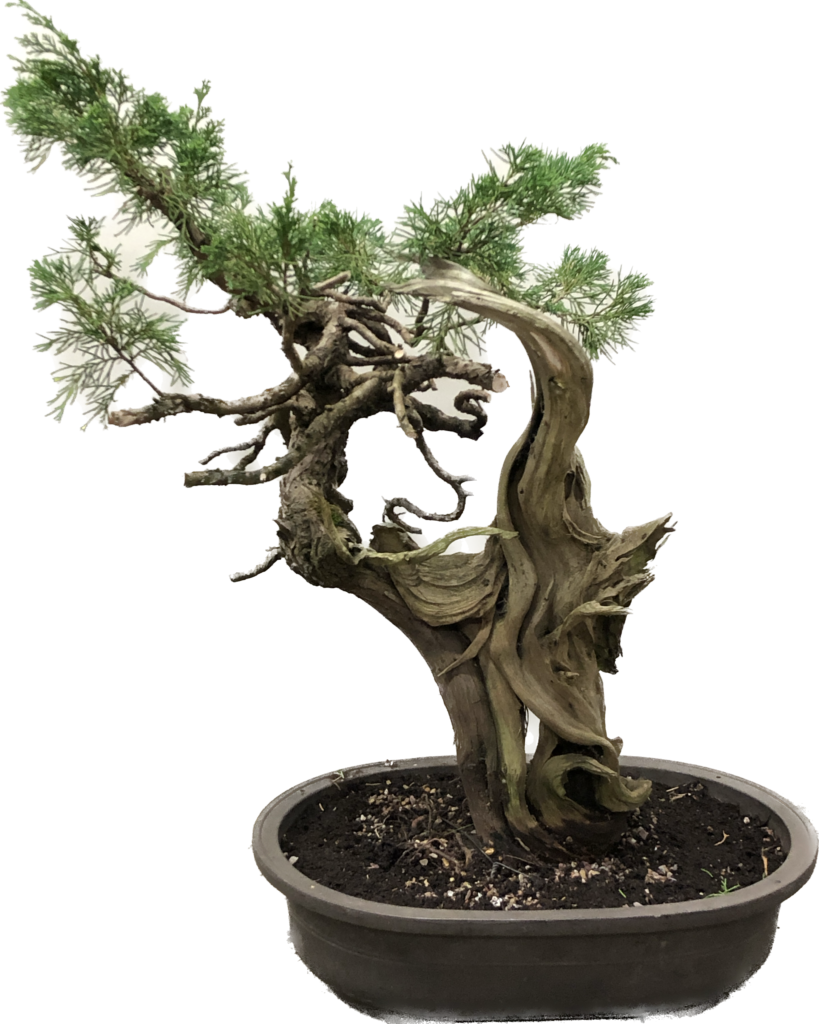
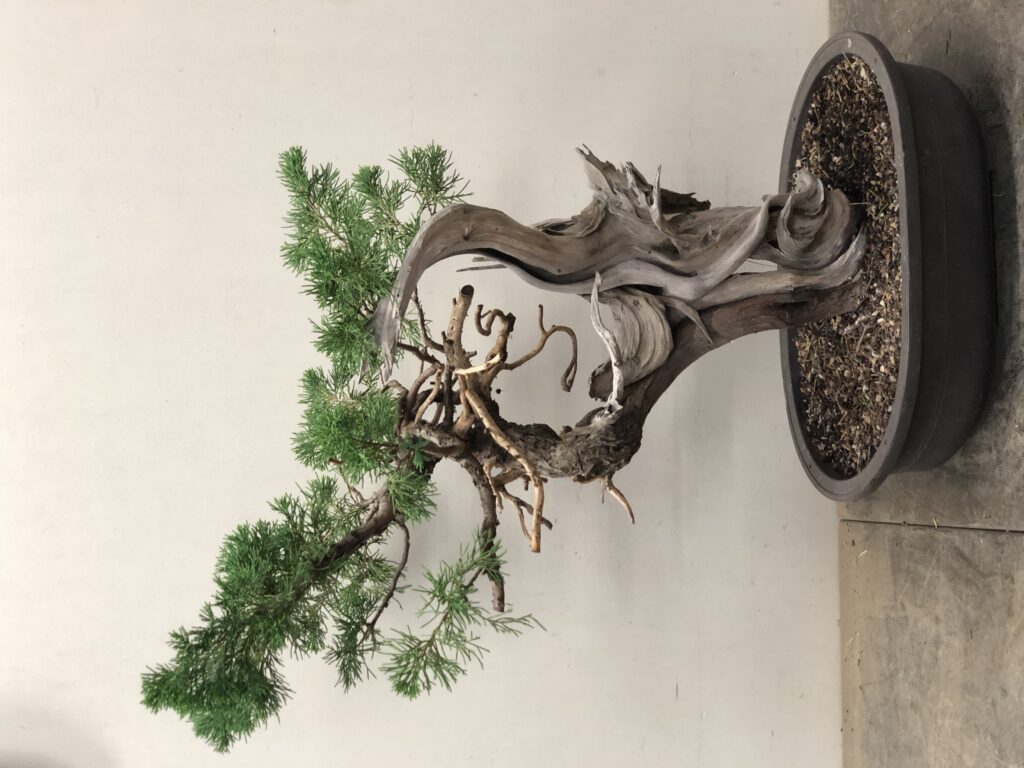
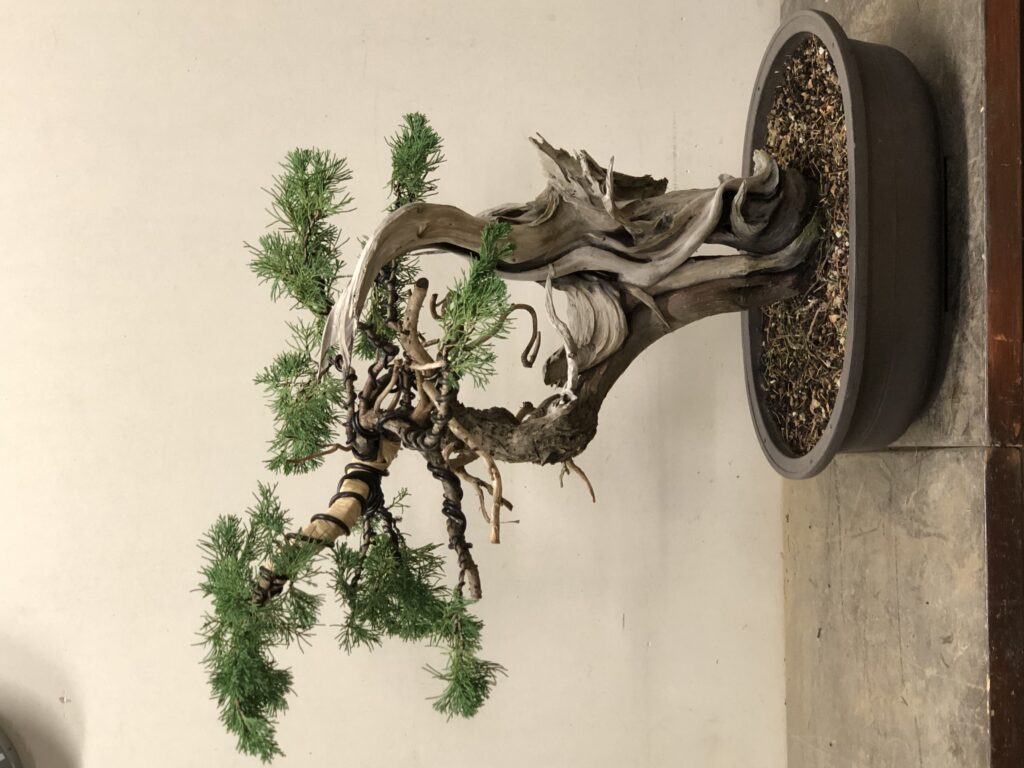
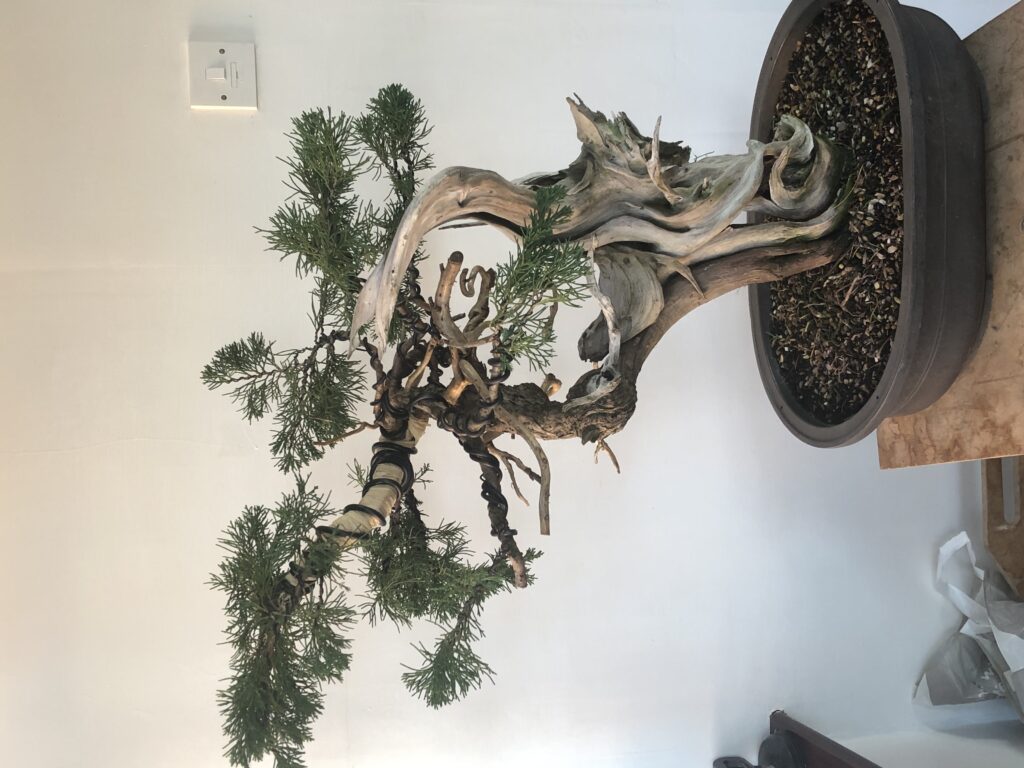
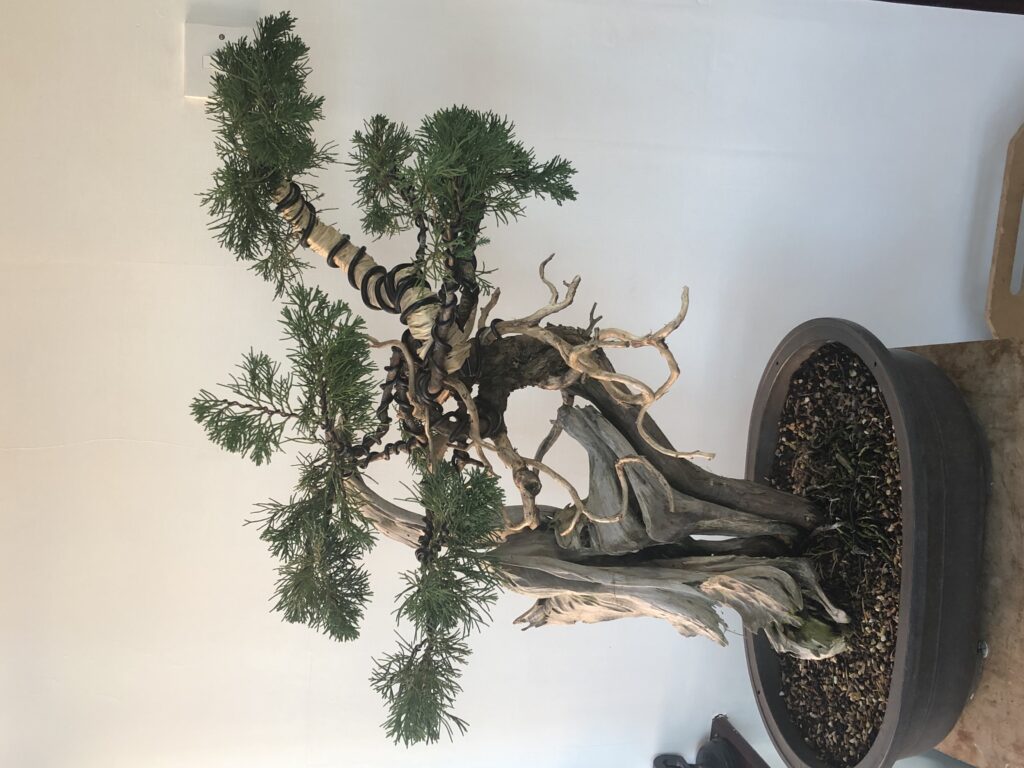
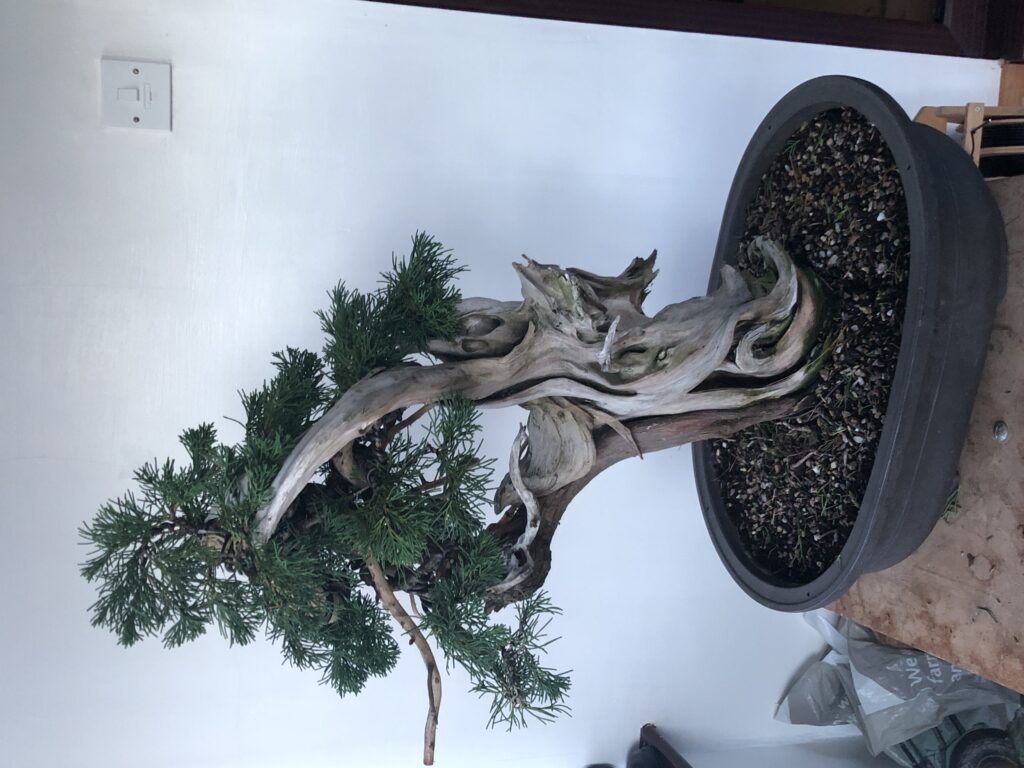
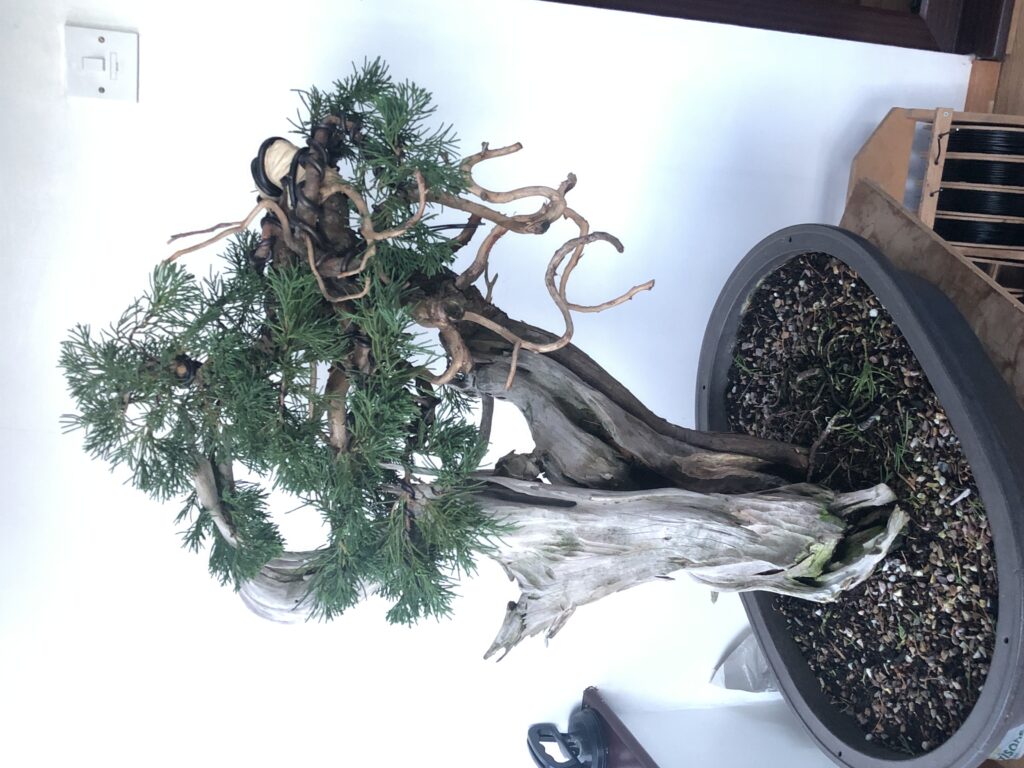
We will now persevere with the foliage to try and get it denser and more compact. At least we now have a good foliage canopy to match the impressive deadwood. There is potential here to create a really good tree.
I will keep you posted and if we do feel the need to resort to plan B I will follow it up with photographs and explanations.
For now let’s just enjoy the tree we have!
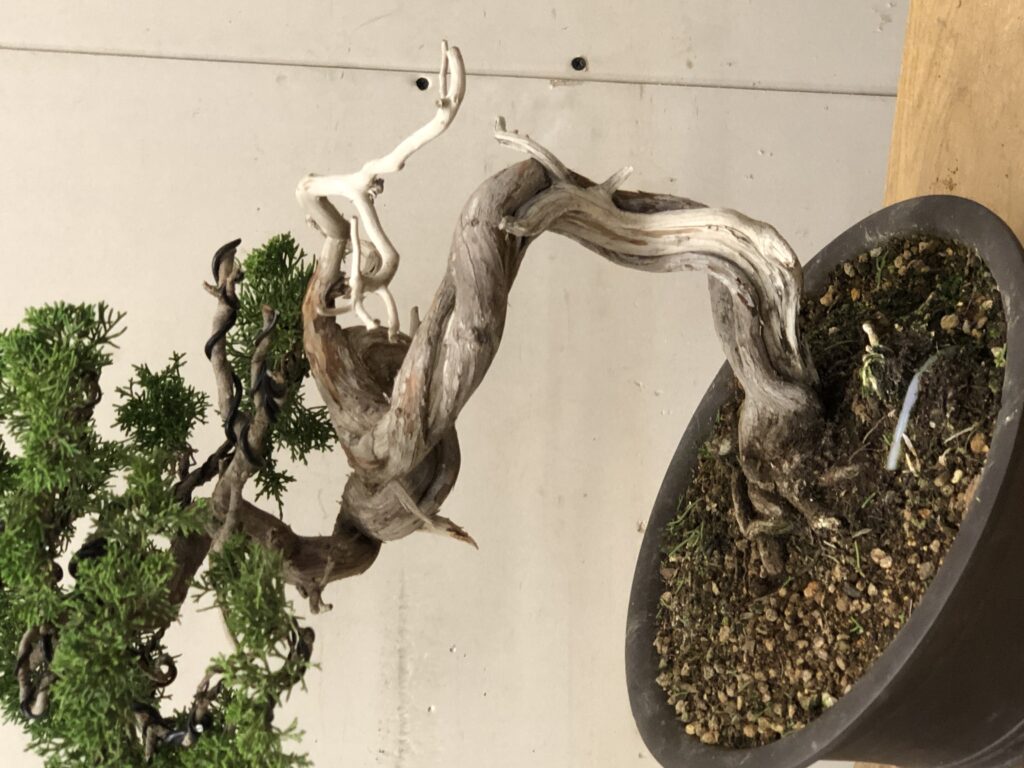
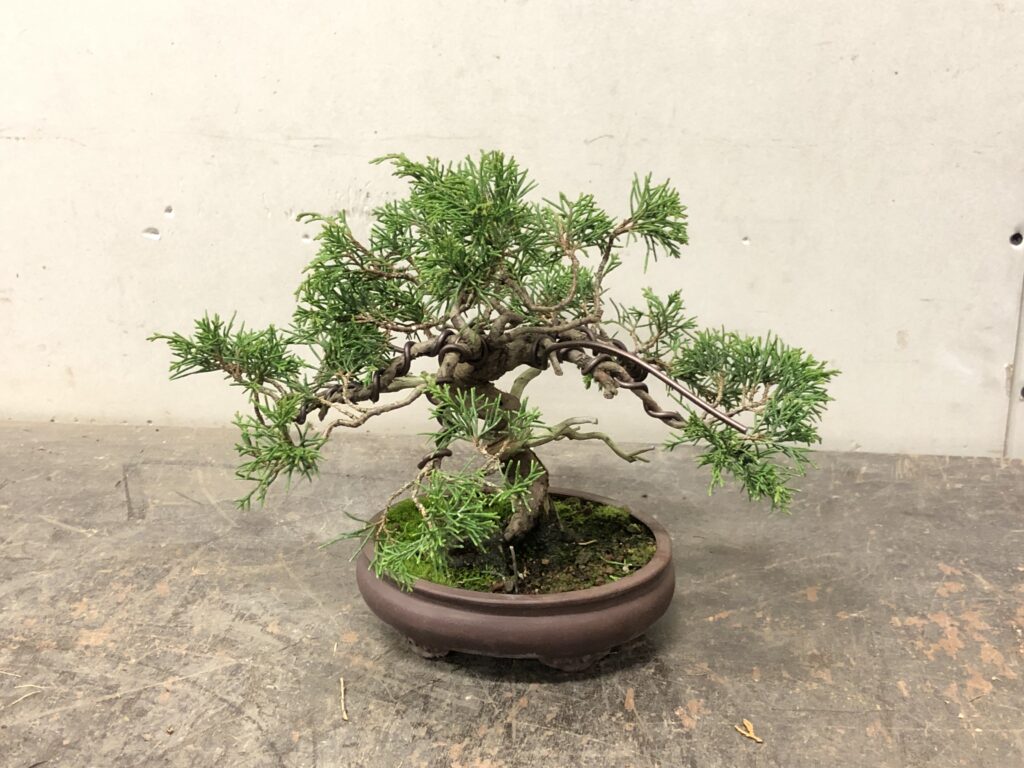
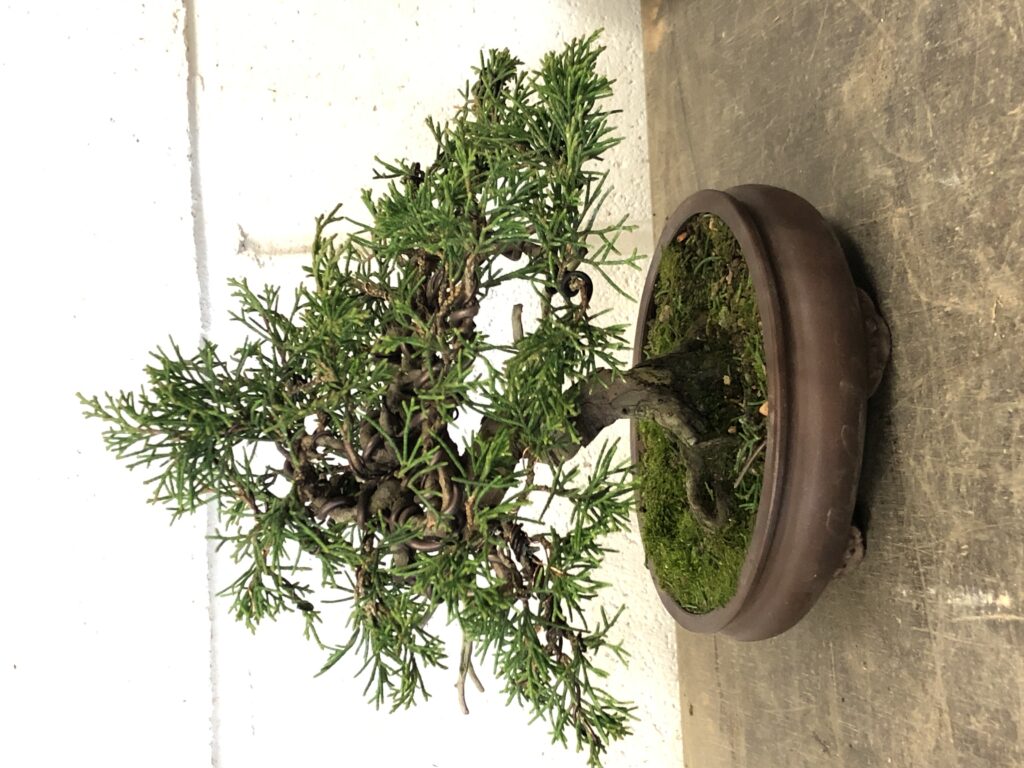
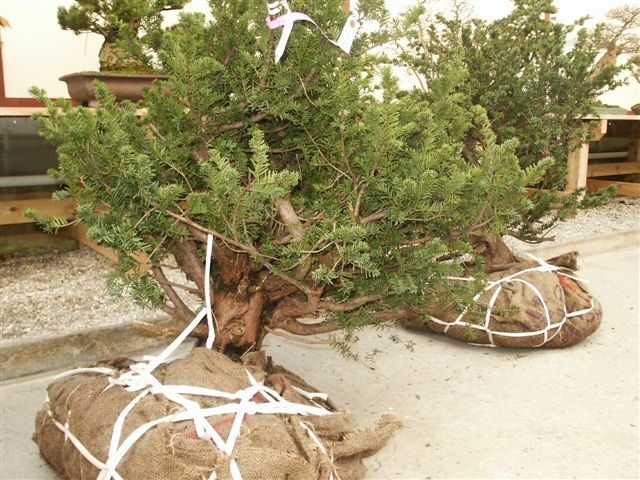
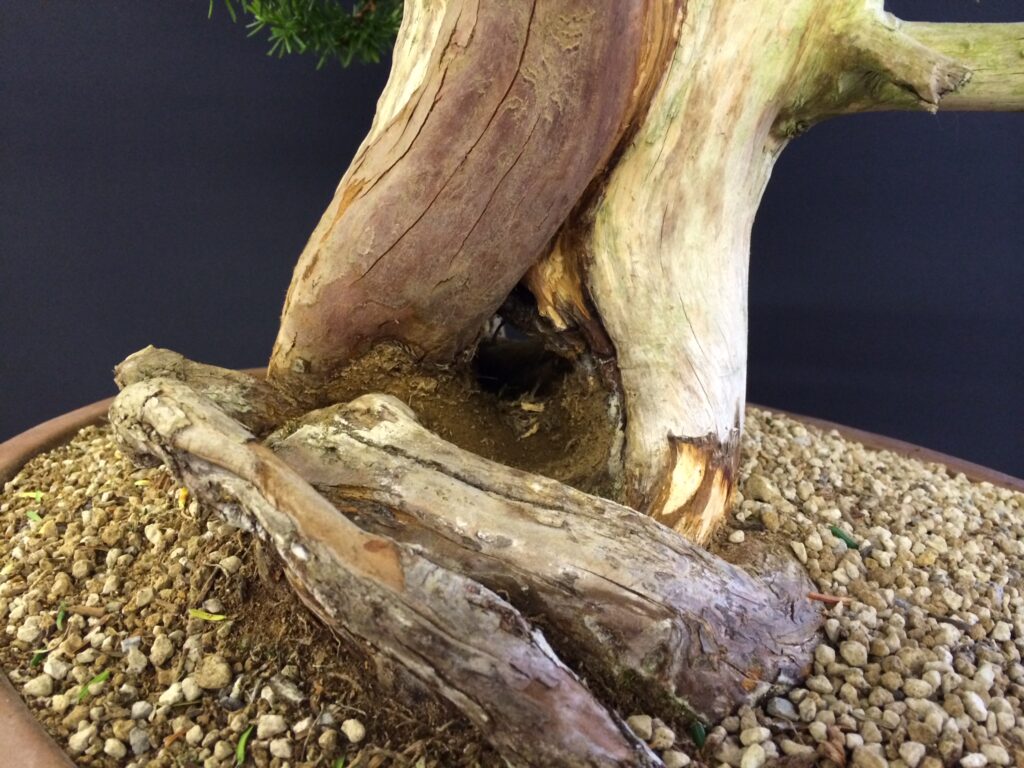
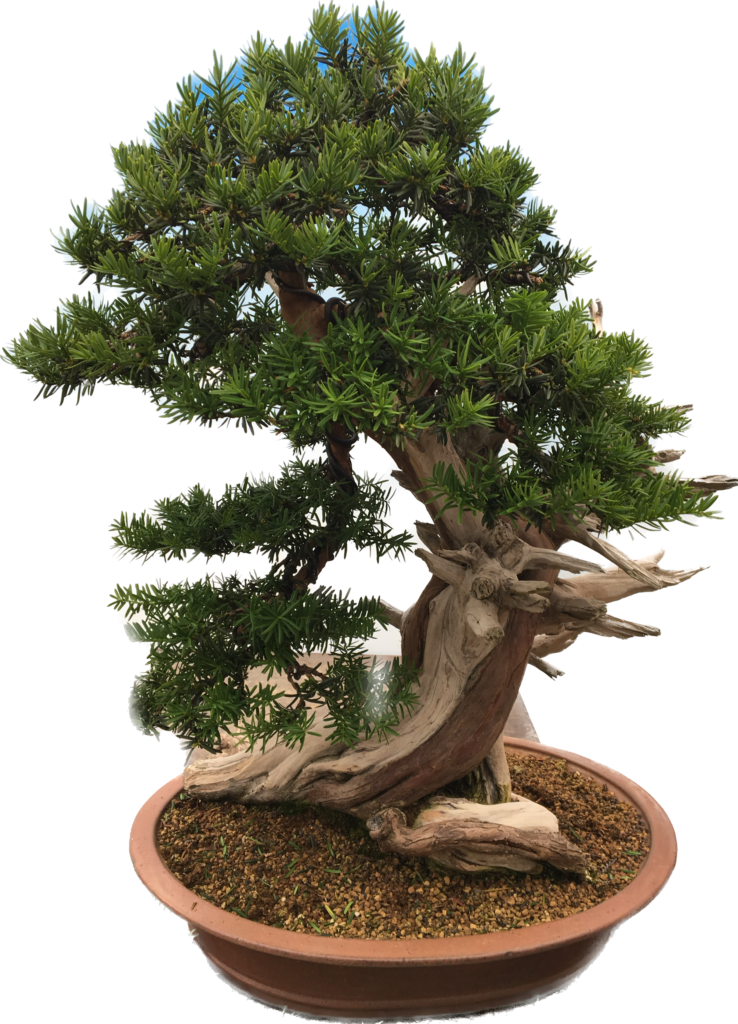
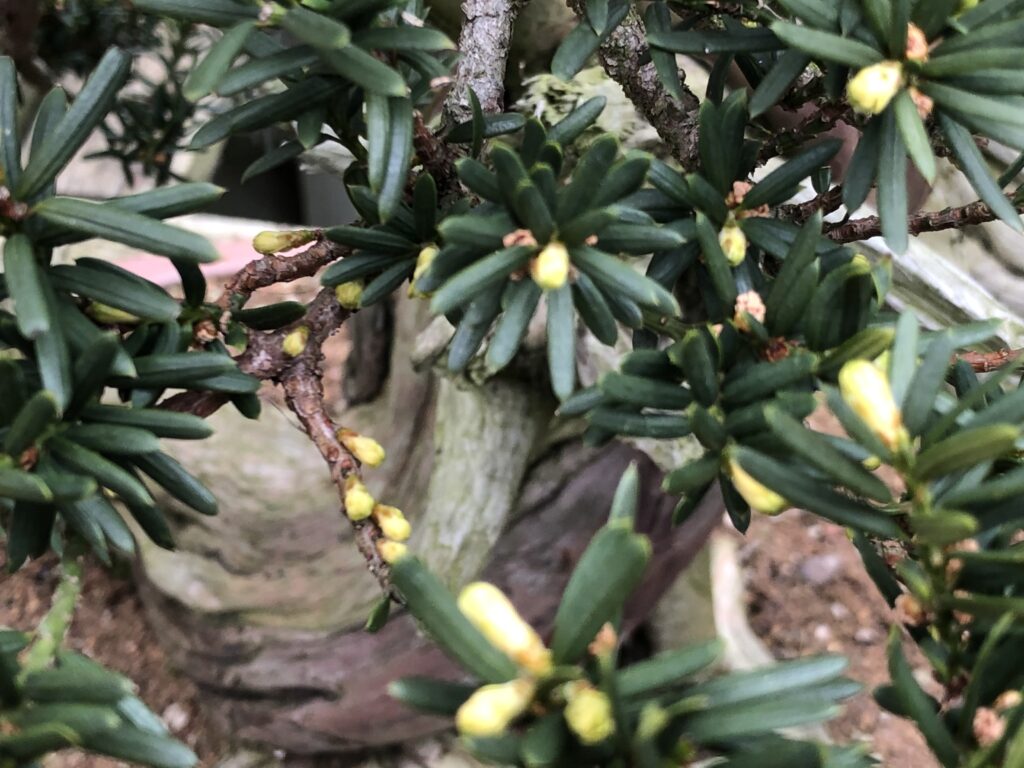
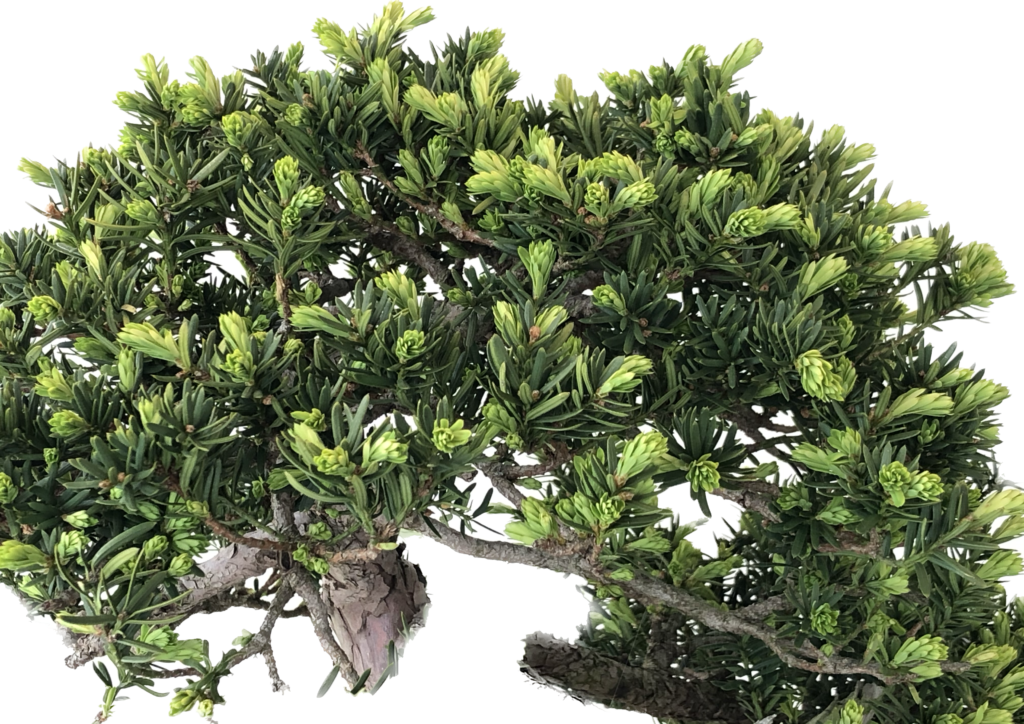
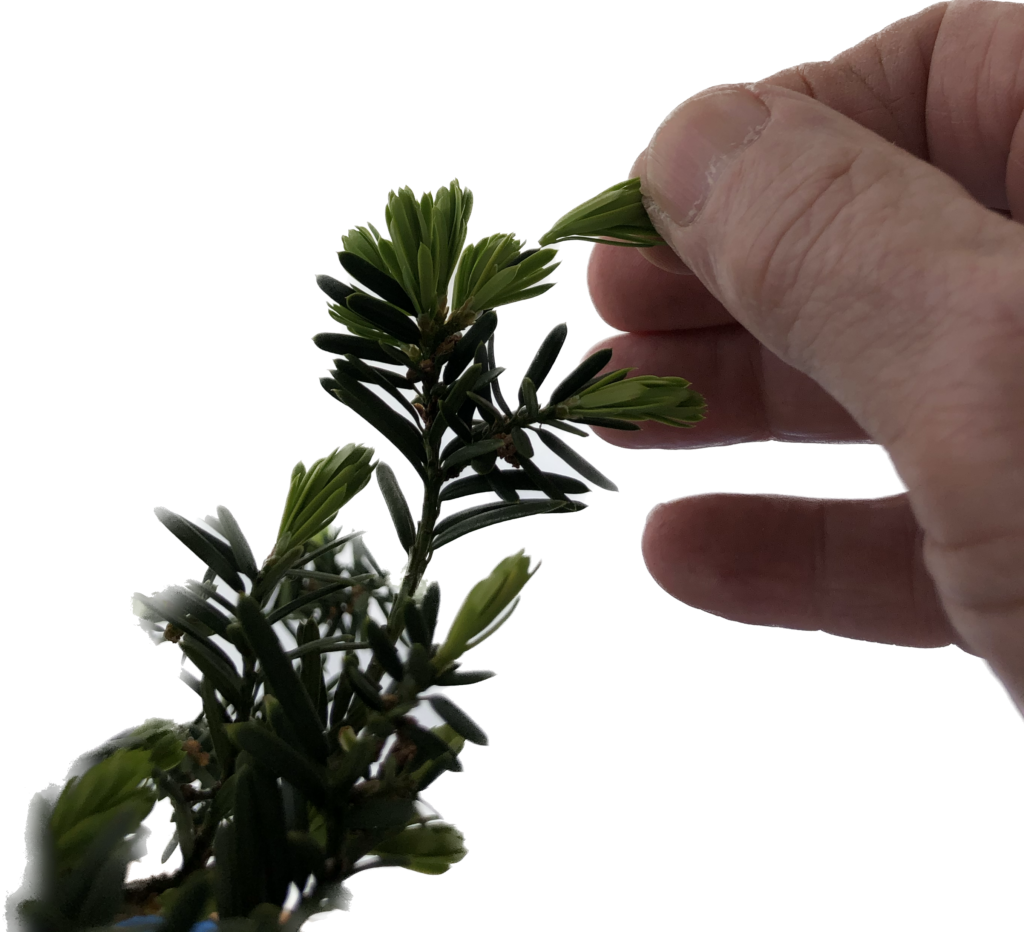
This is the story of a Japanese Yew (Taxus Cuspidata). I think I have told this story once before in my blog but for this new version I have unearthed some previously unseen early photographs whilst the story is brought up to date to a recent styling in February 2023.
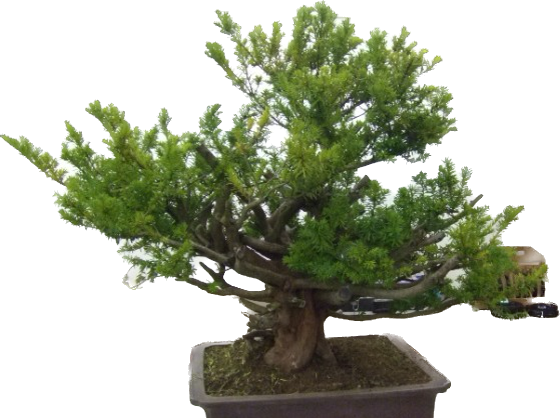
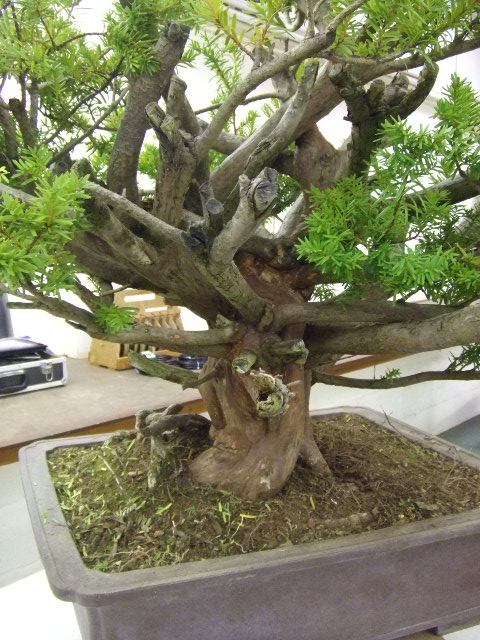
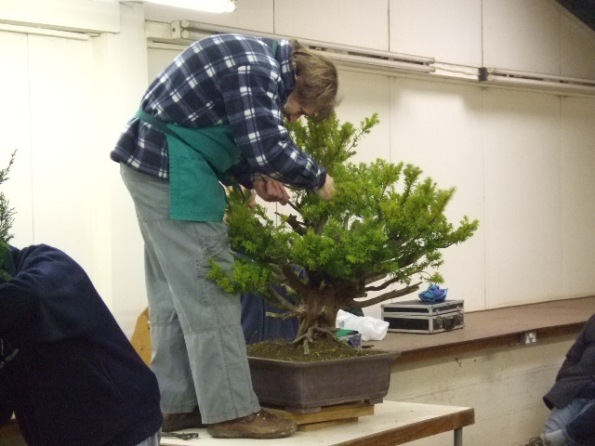

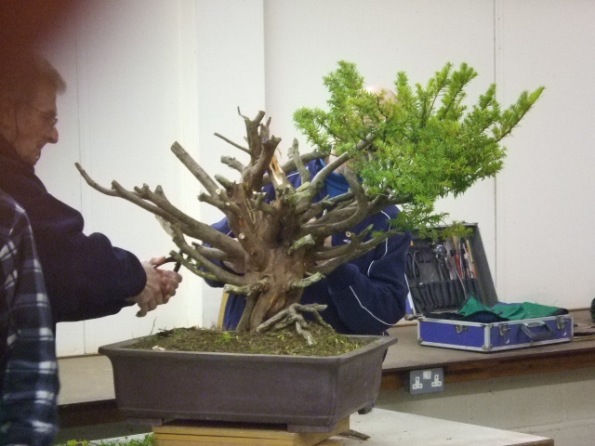
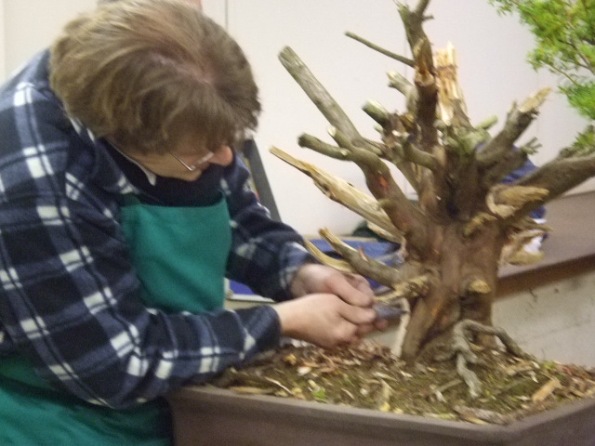
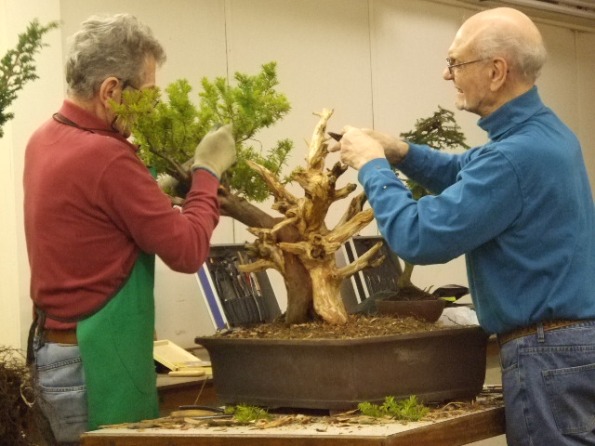
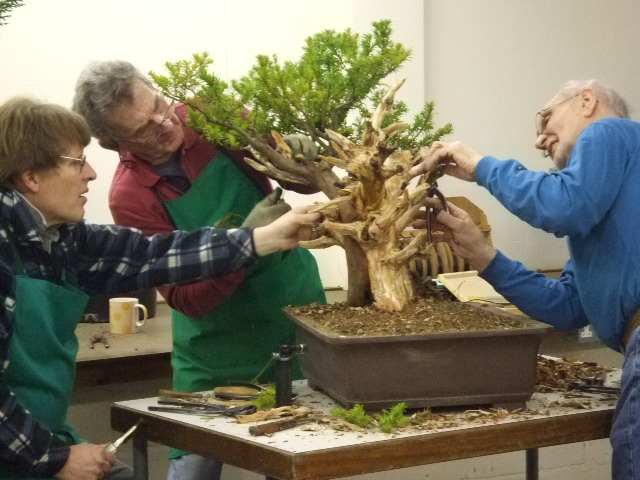
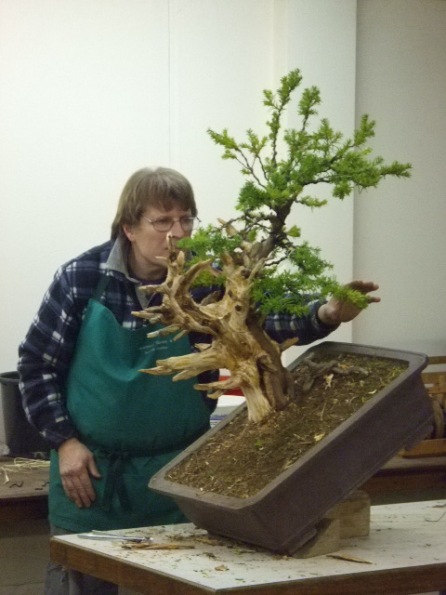

Quite a transformation and now with just two live veins feeding the remaining live foliage. The deadwood was made using hand tools only and looked really convincing considering it was newly created.
Keep an eye on the website for part two to catch up on the further development of this remarkable tree.
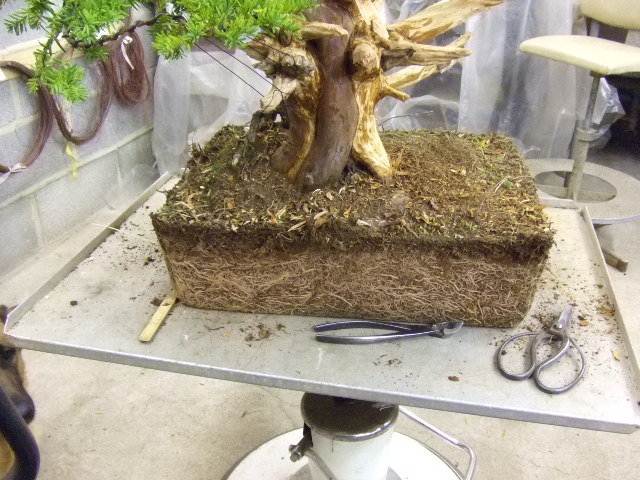
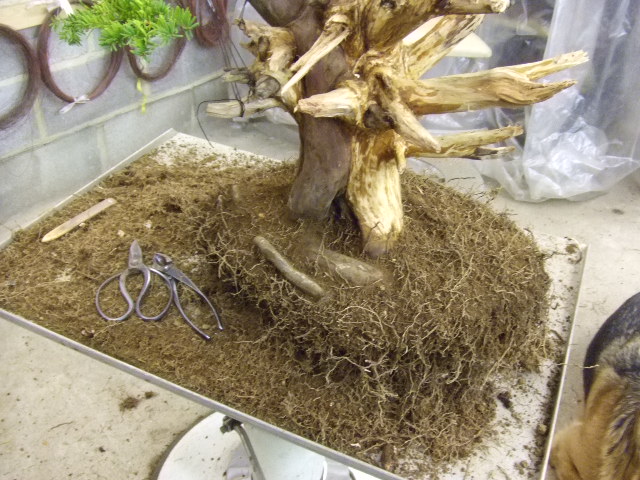
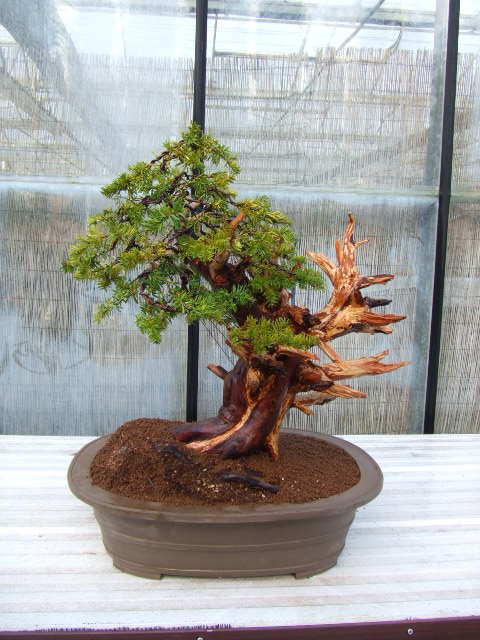
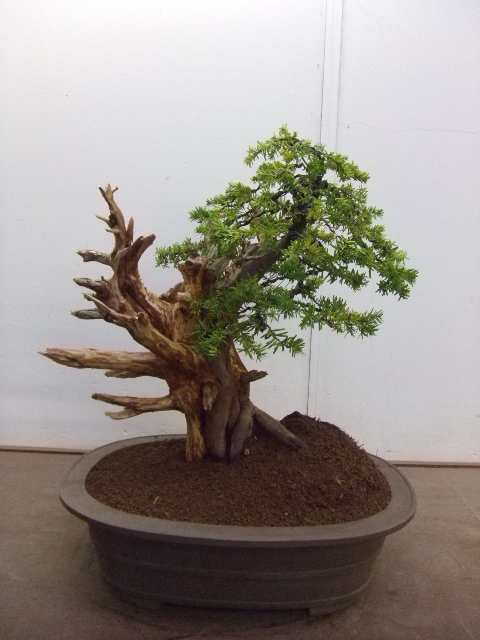
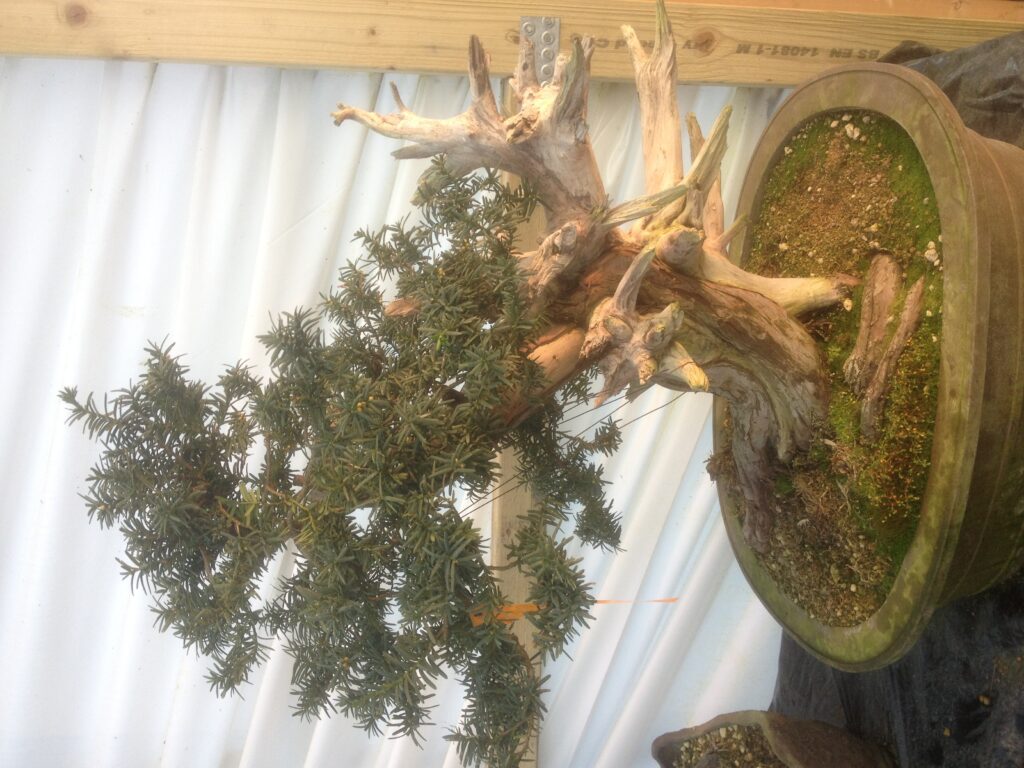
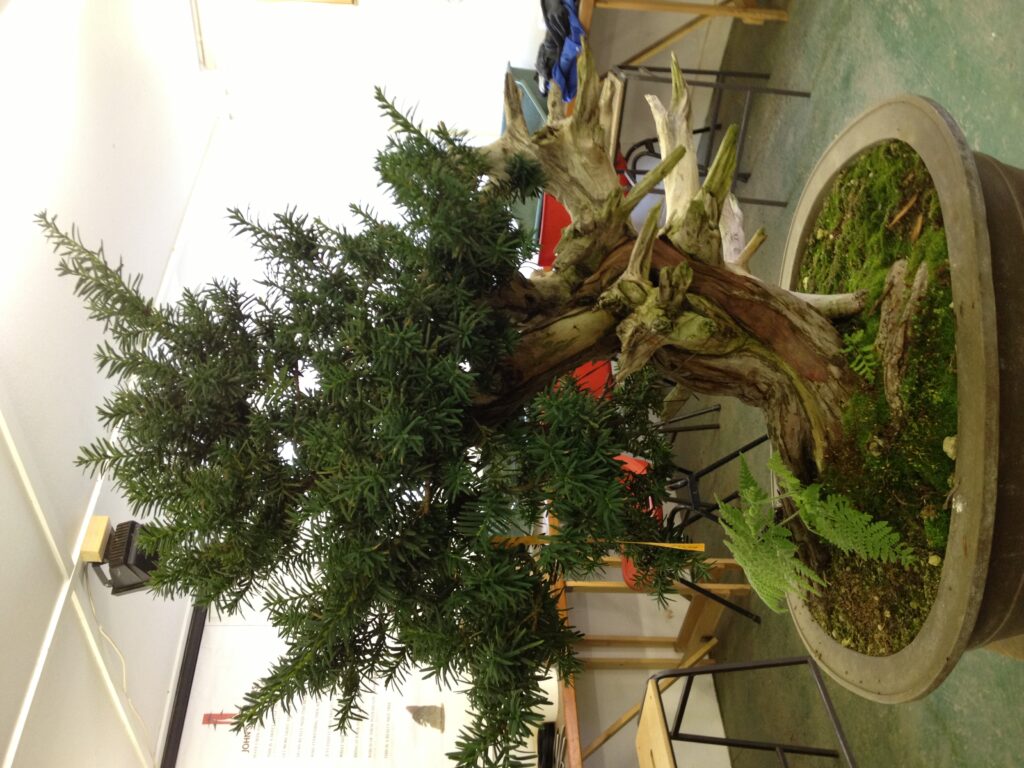
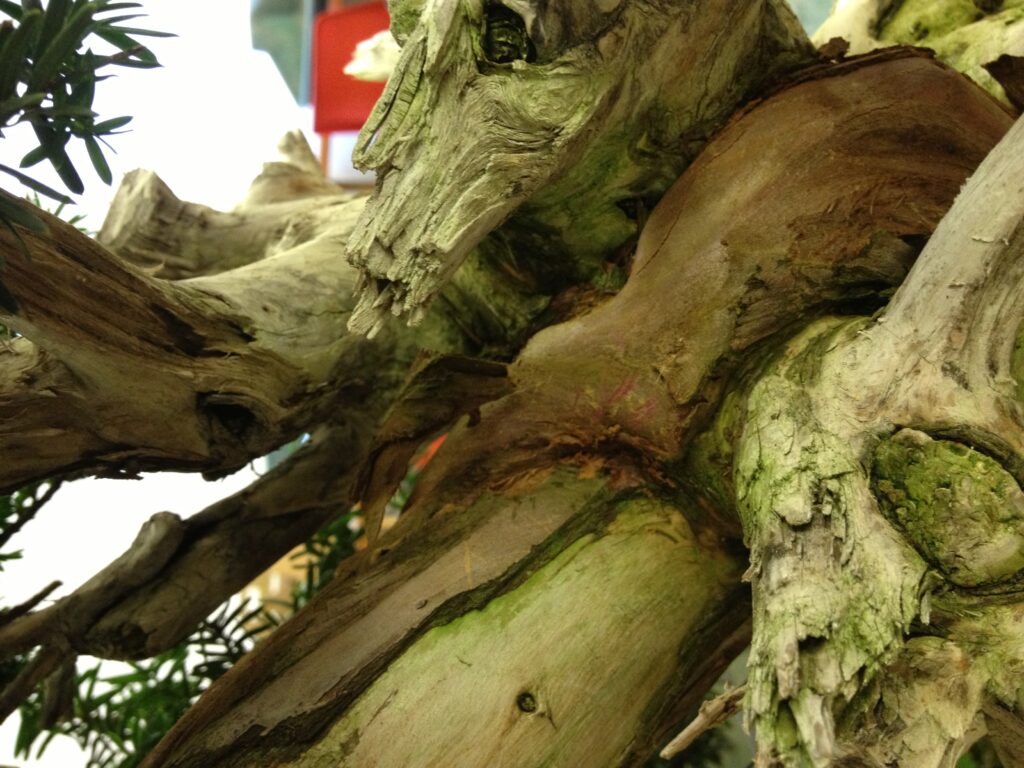
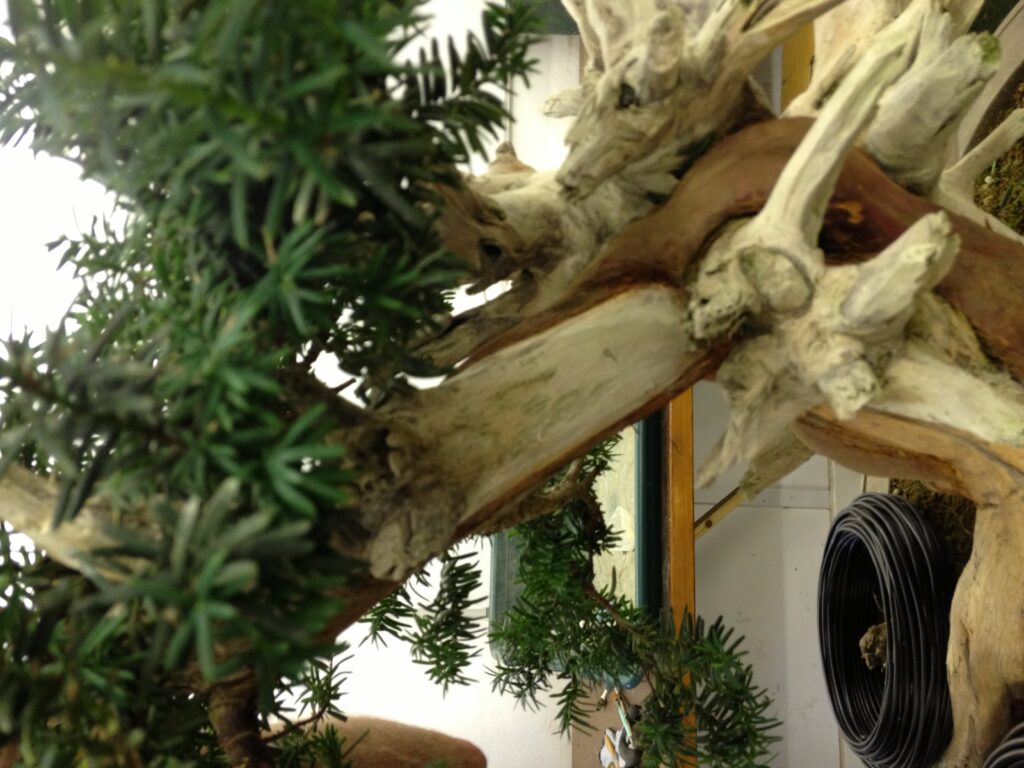
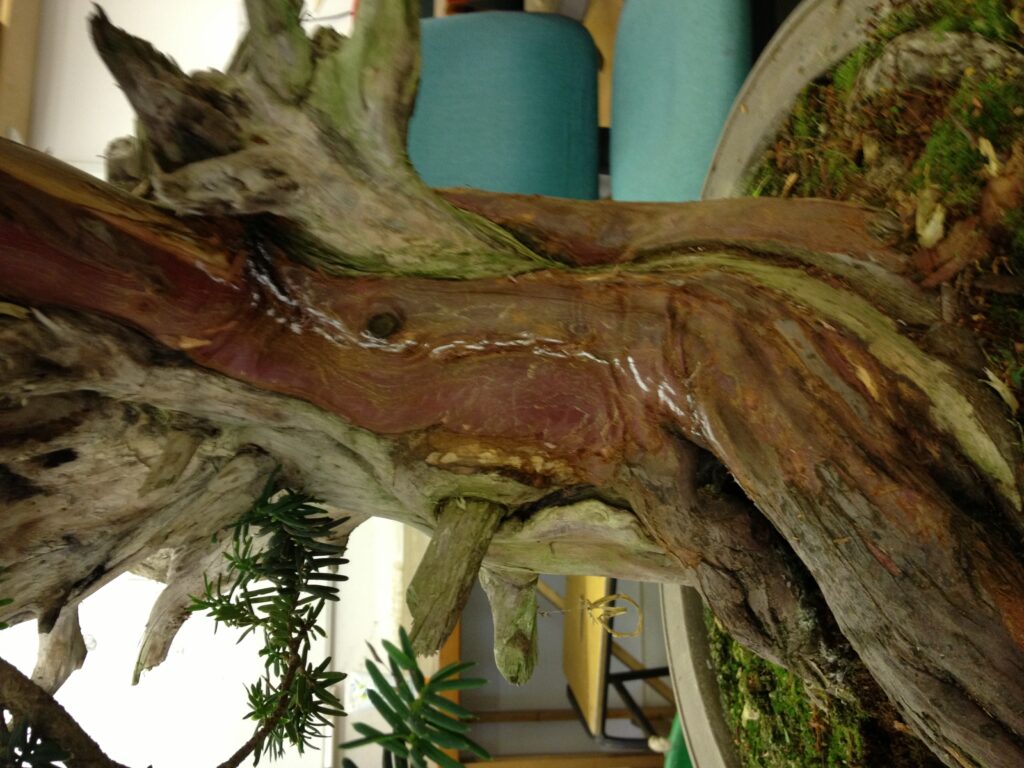
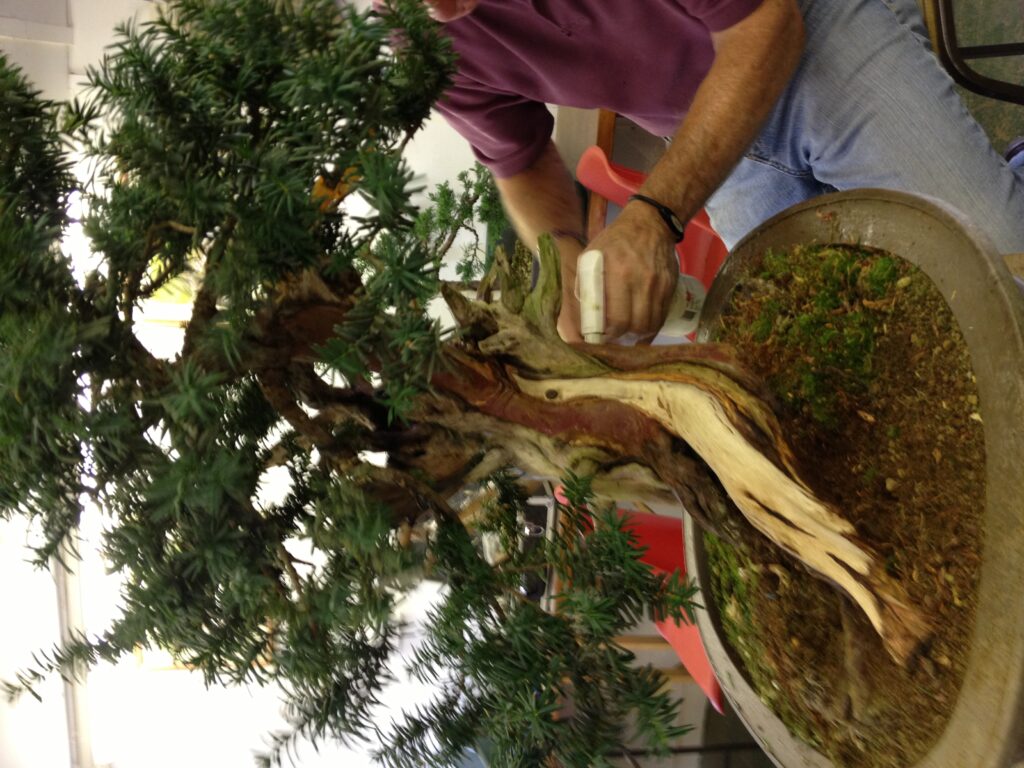
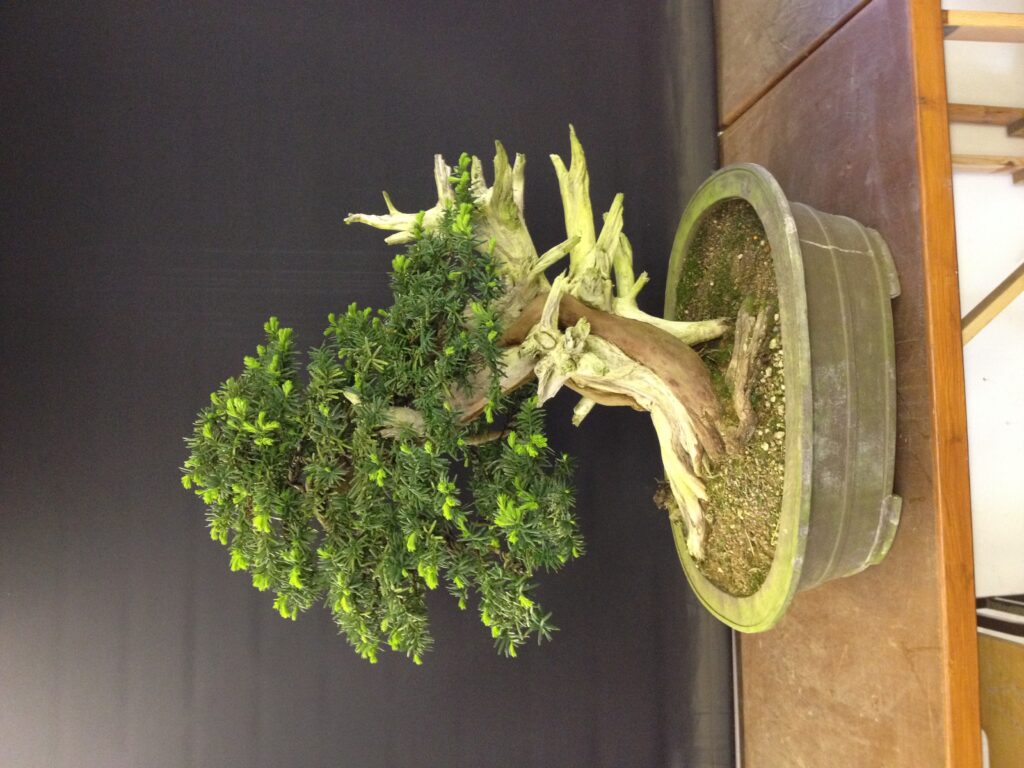
The tree continues to develop and make good progress but at the tree’s own pace. In extending the deadwood areas and reducing the live veins I follow the tree. The tree has initiated this process rather than me trying to impose changes just for the sake of it.
The story of this tree will be continued in the next instalment on my website.
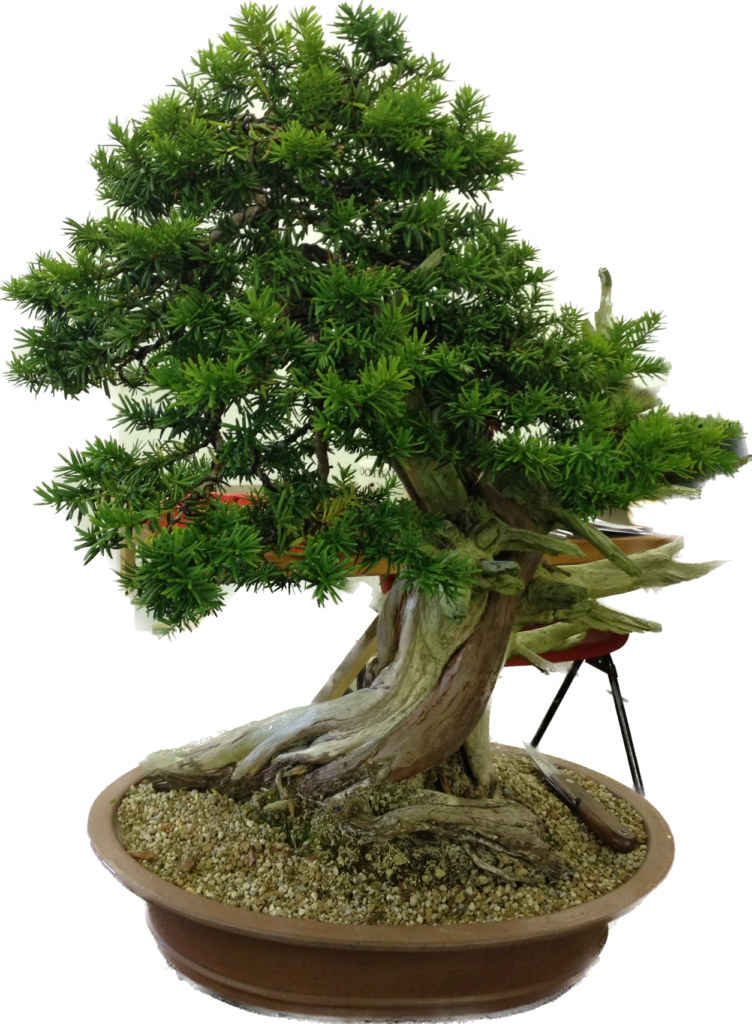
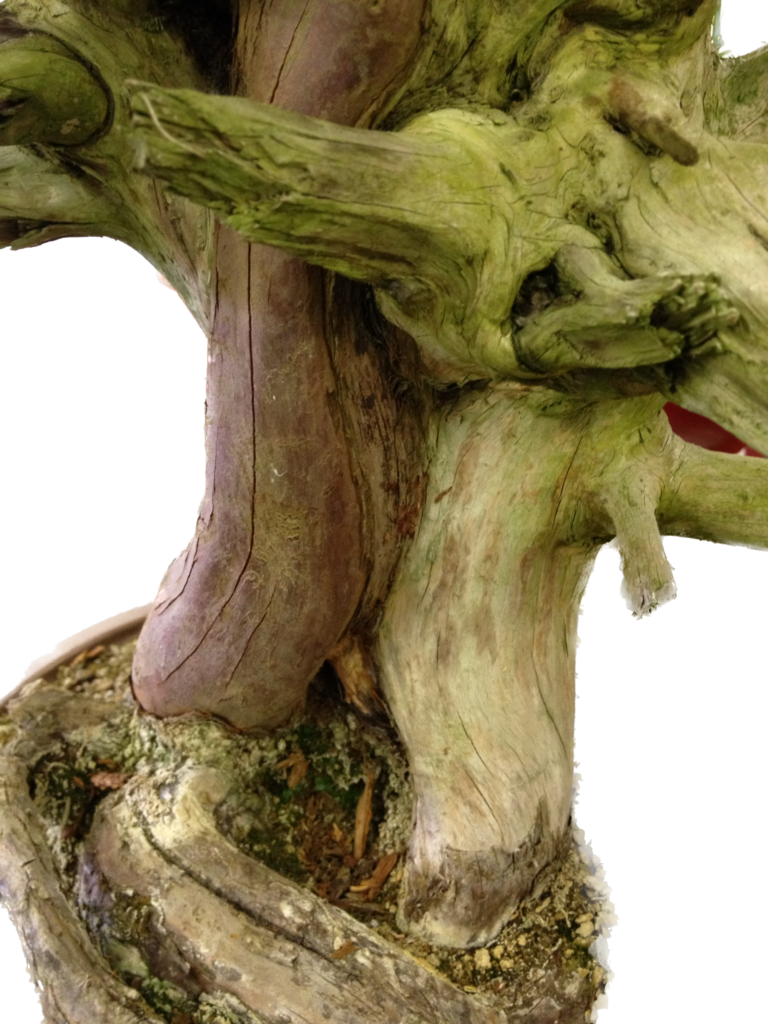
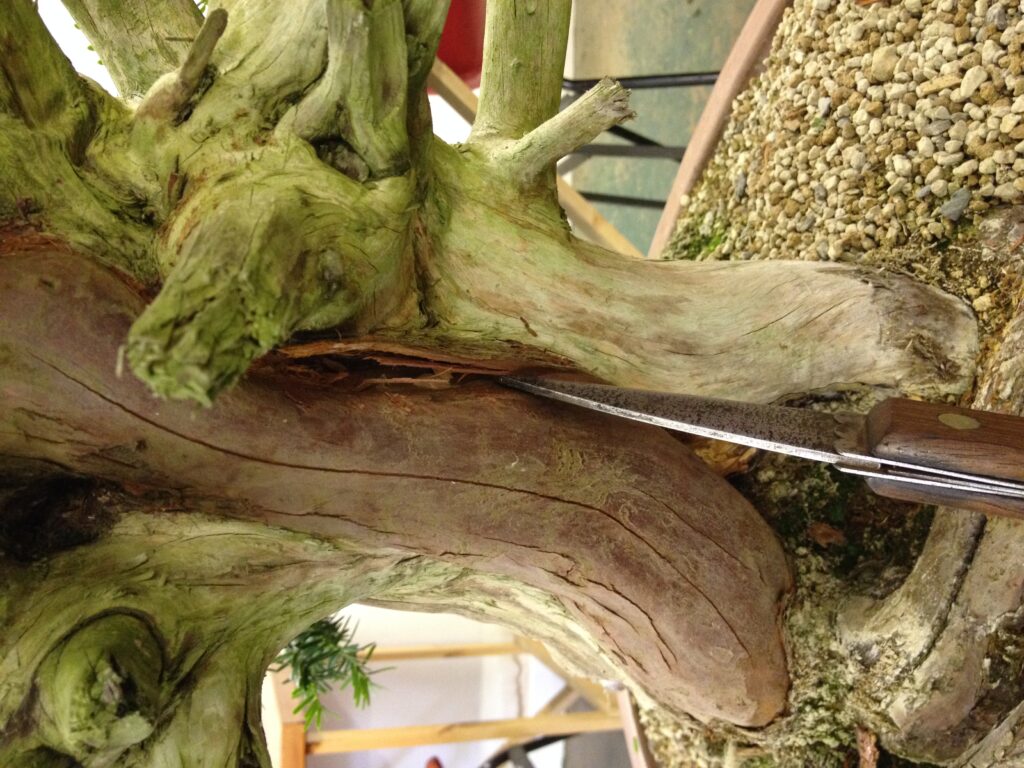
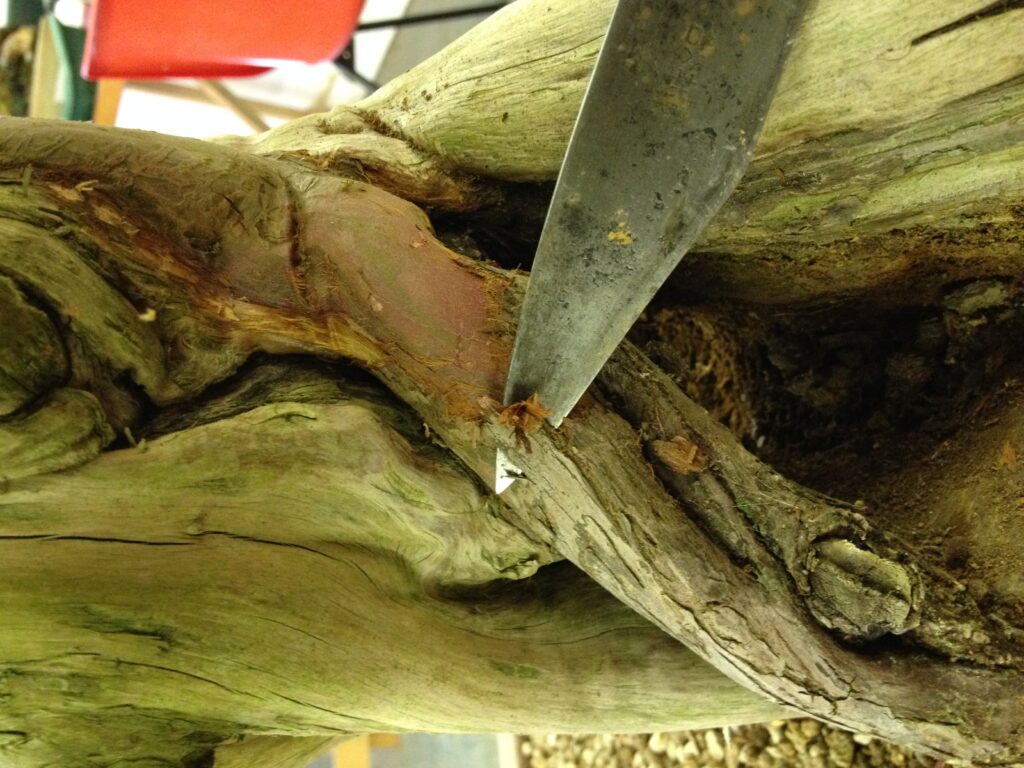
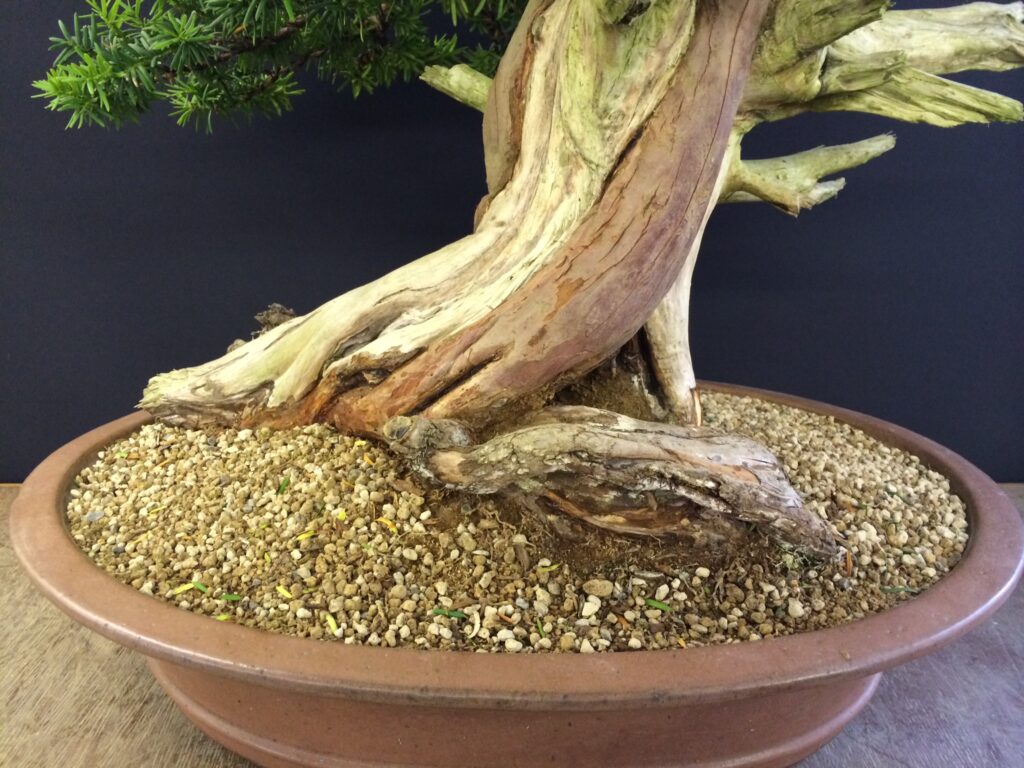
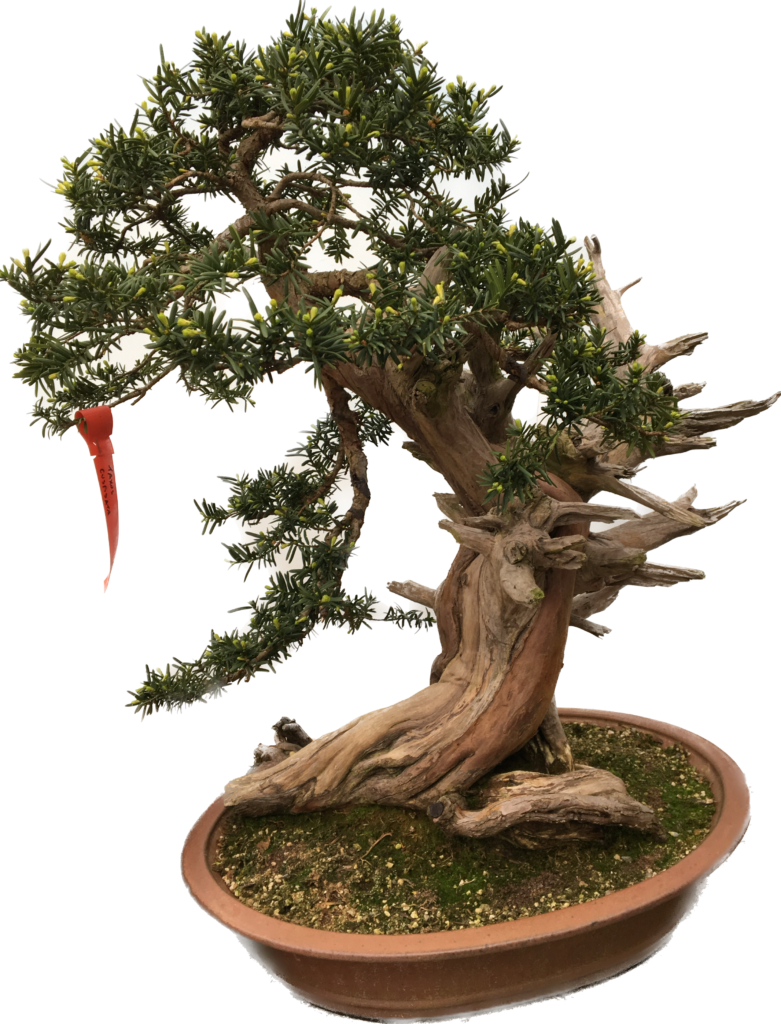
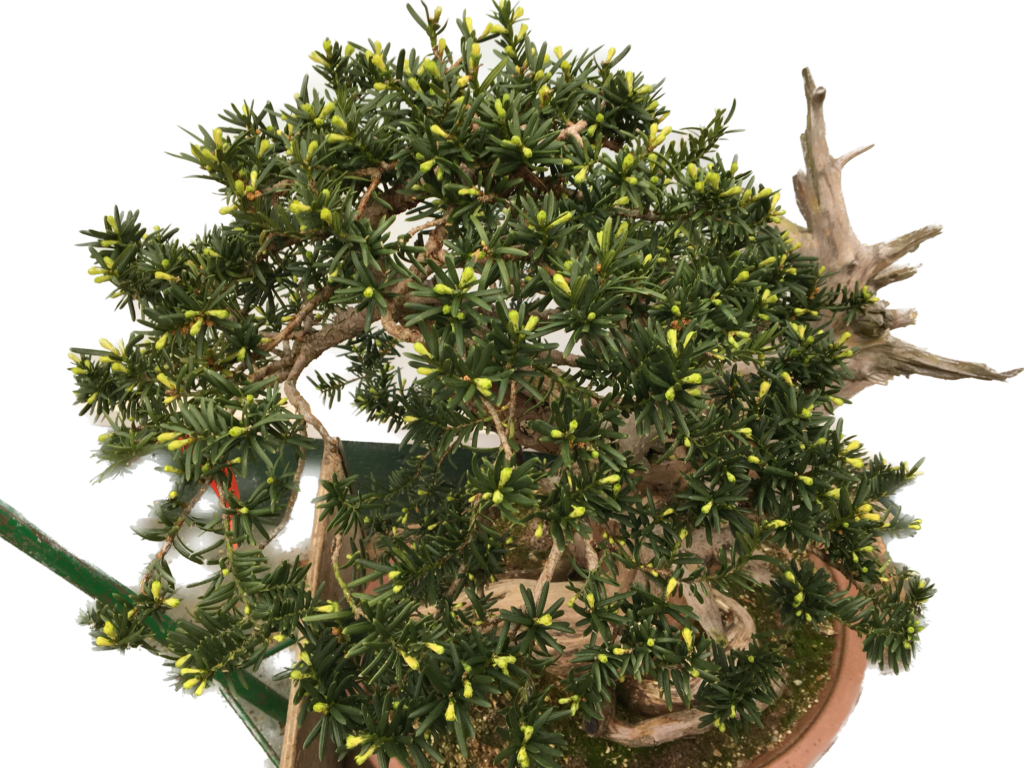
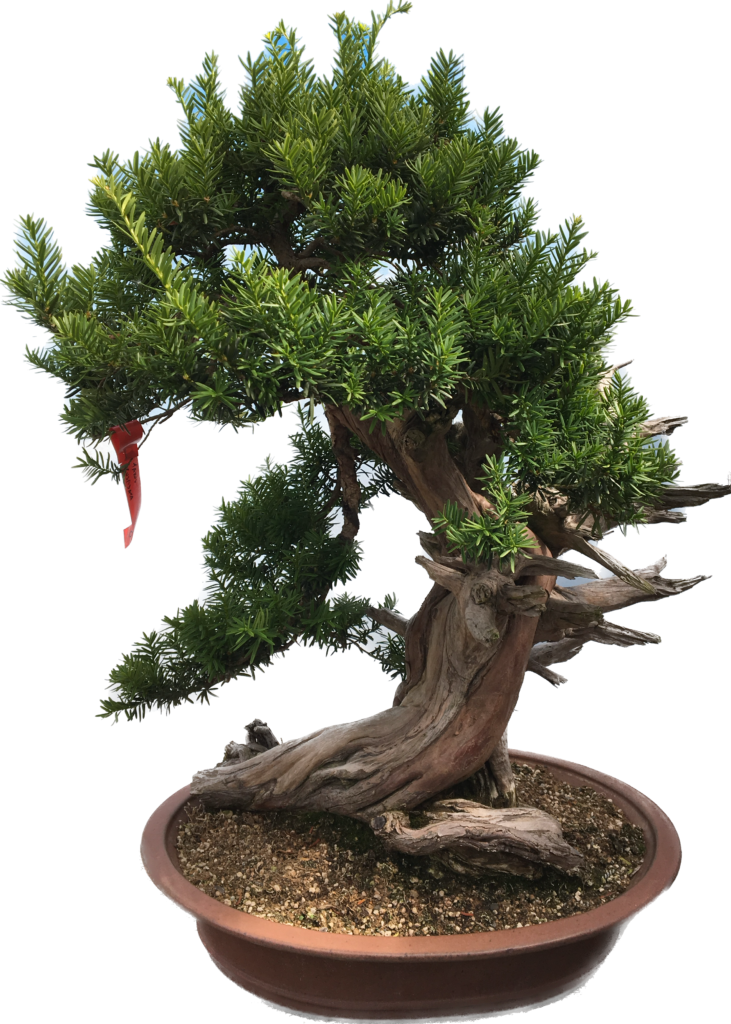
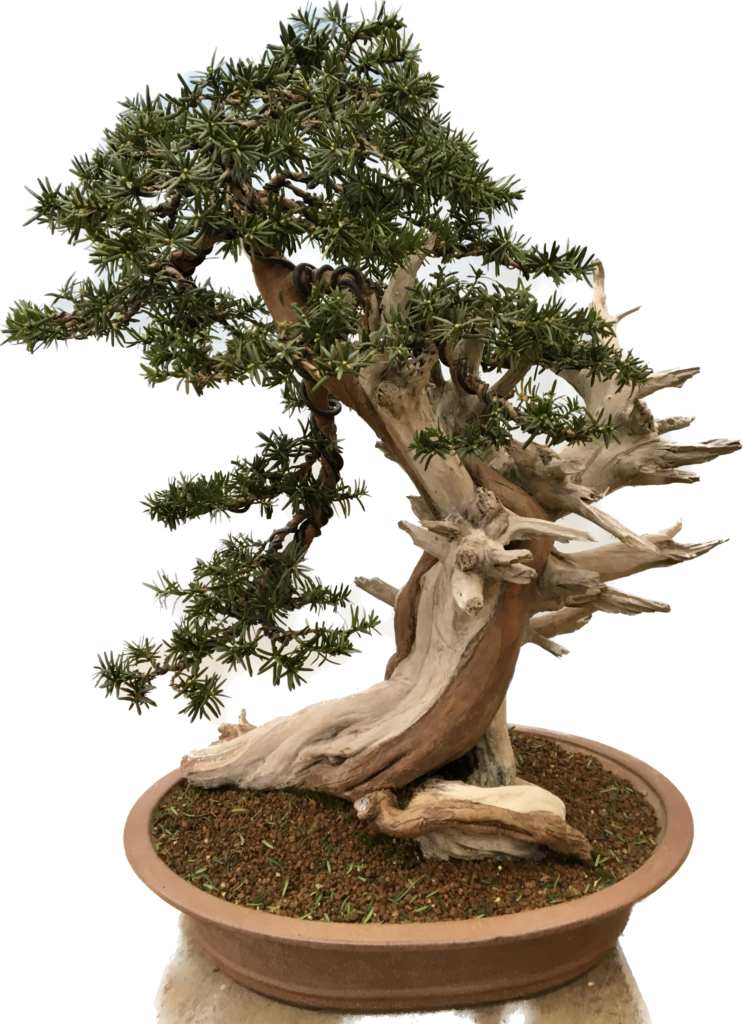
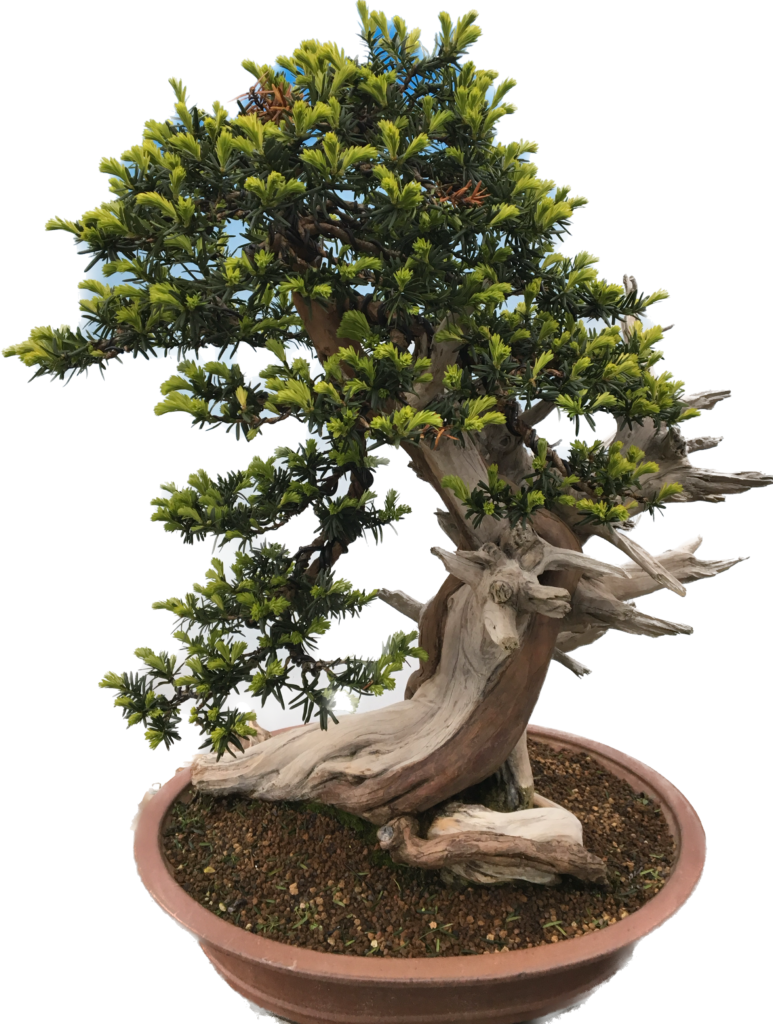
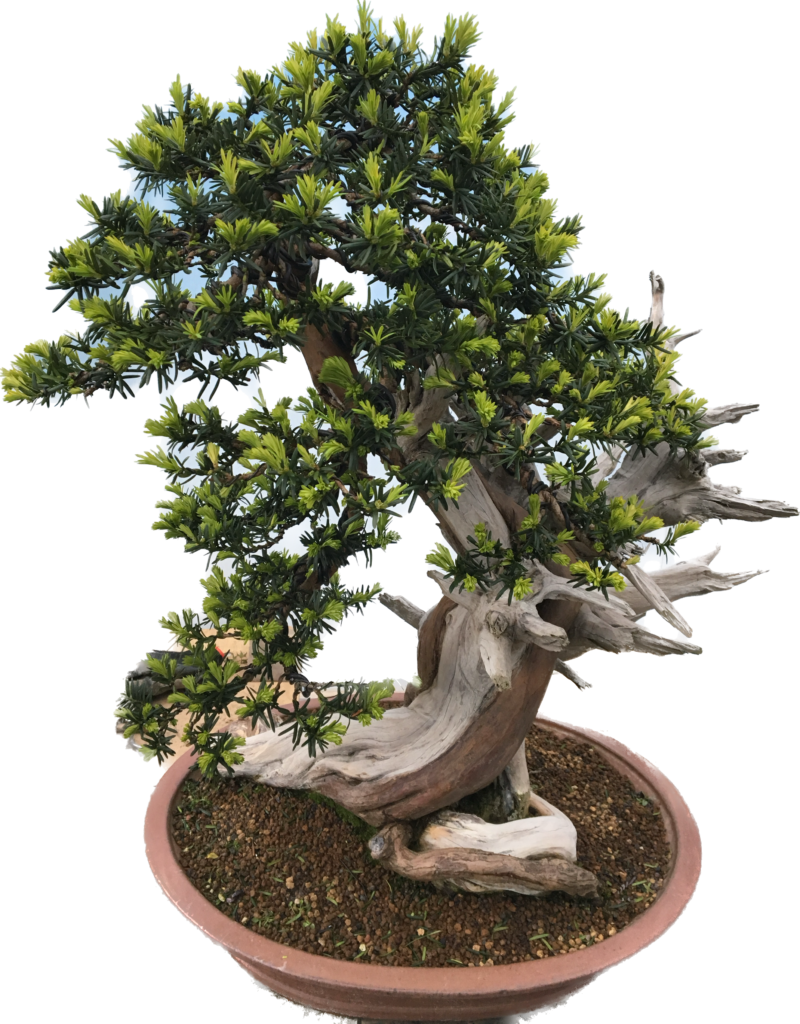
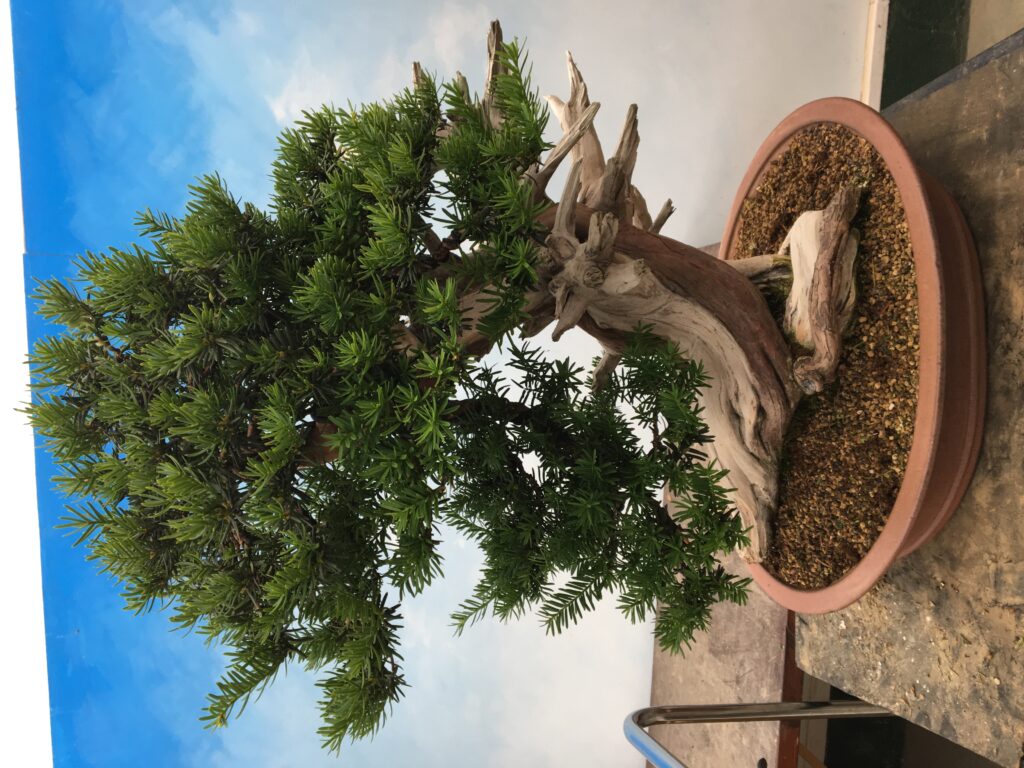
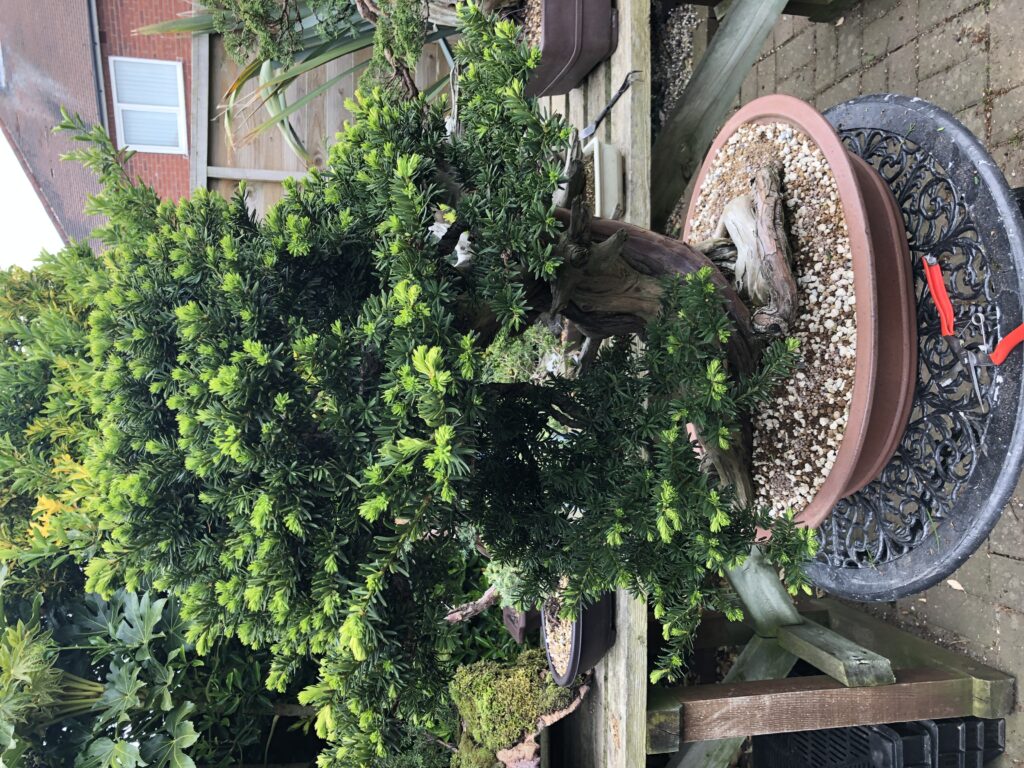
The final part of this series will bring us right up to date with the latest styling carried out at the beginning of 2023.
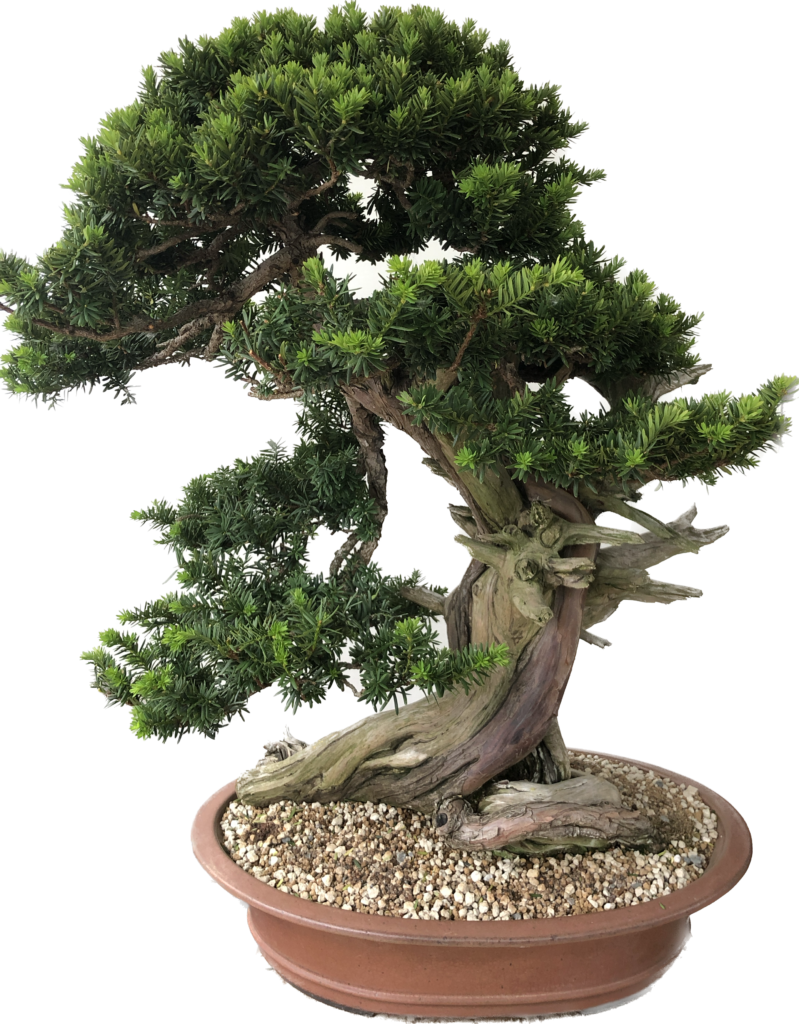
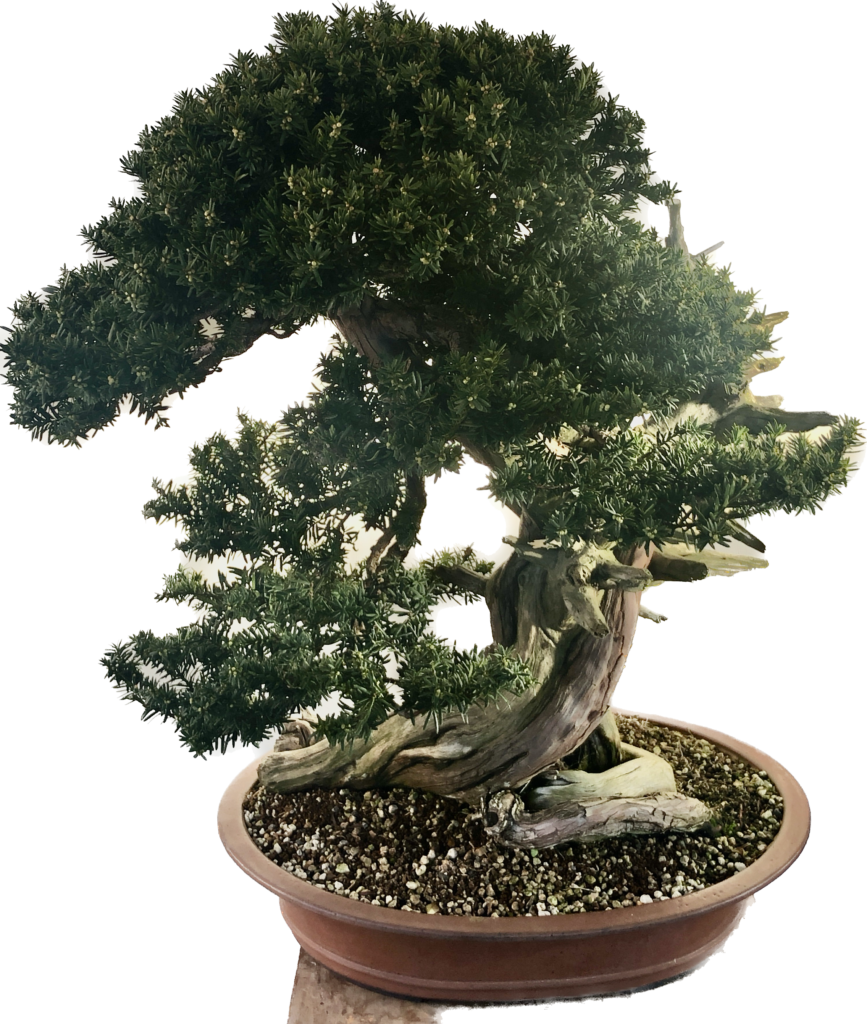
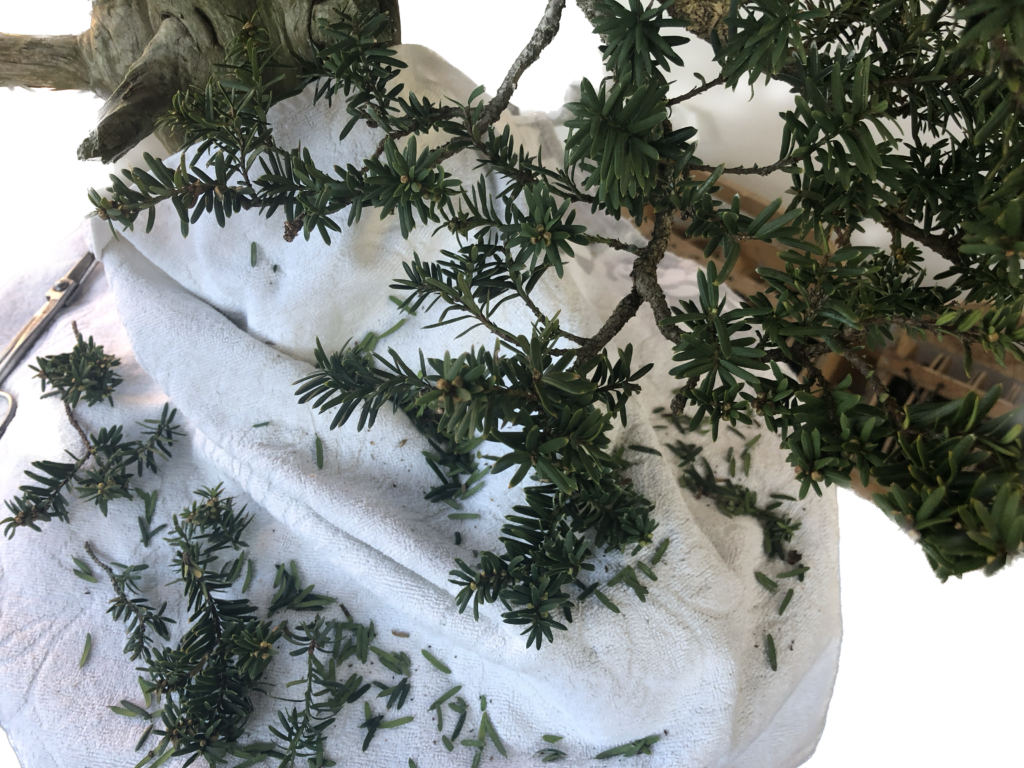
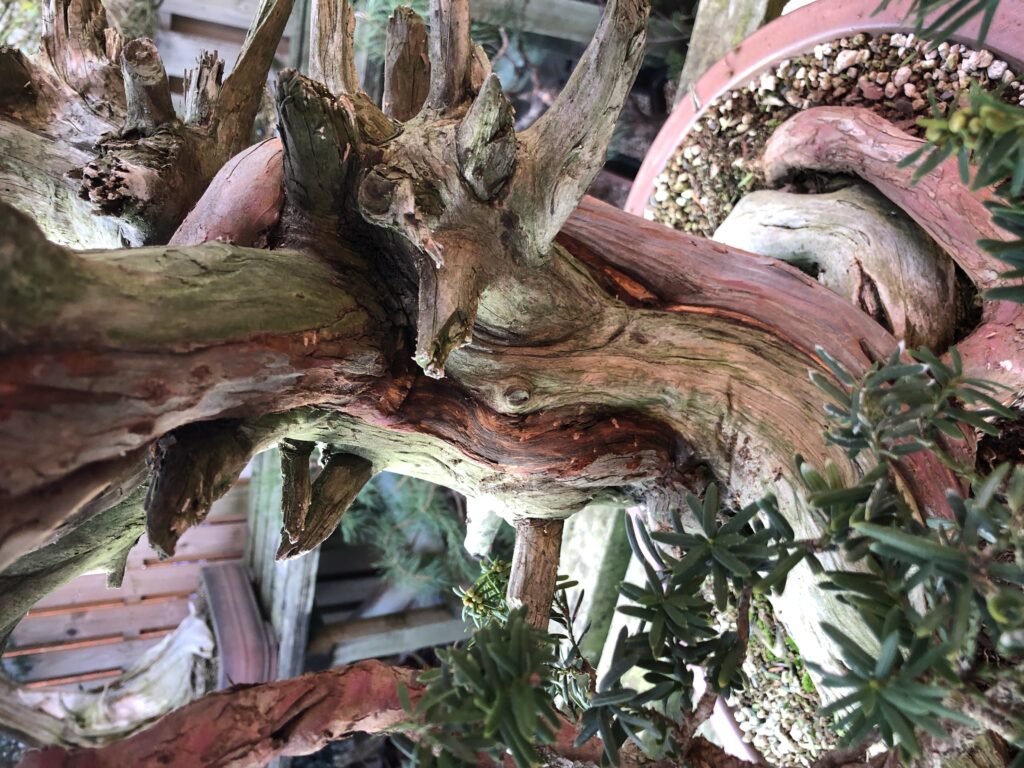
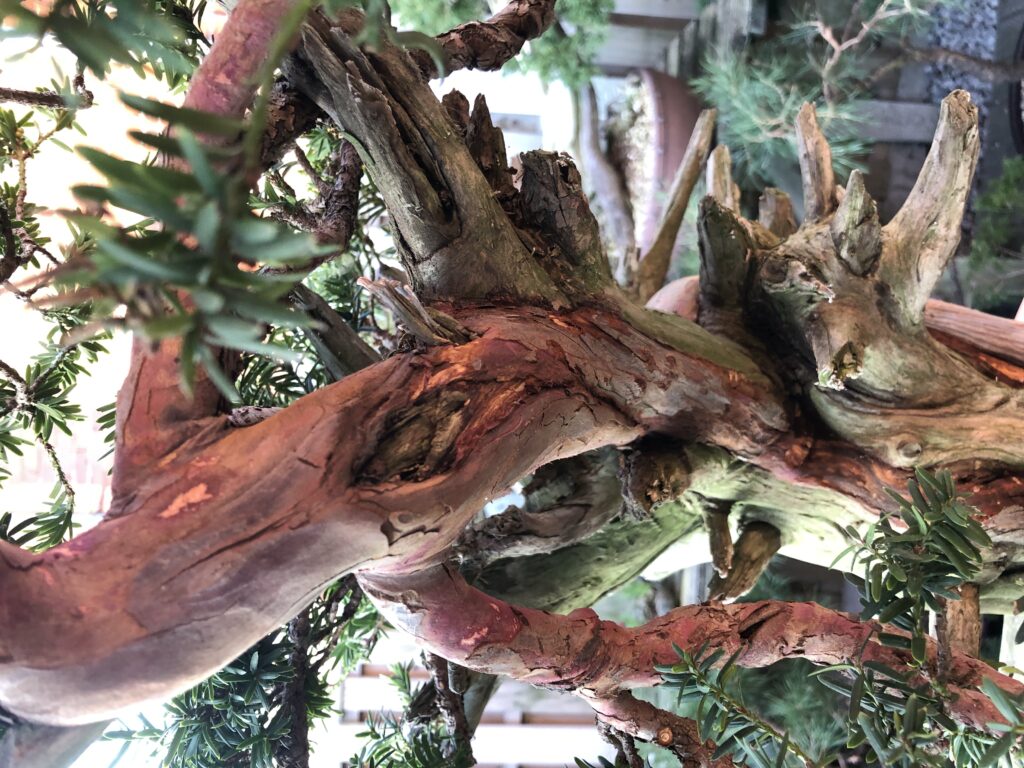
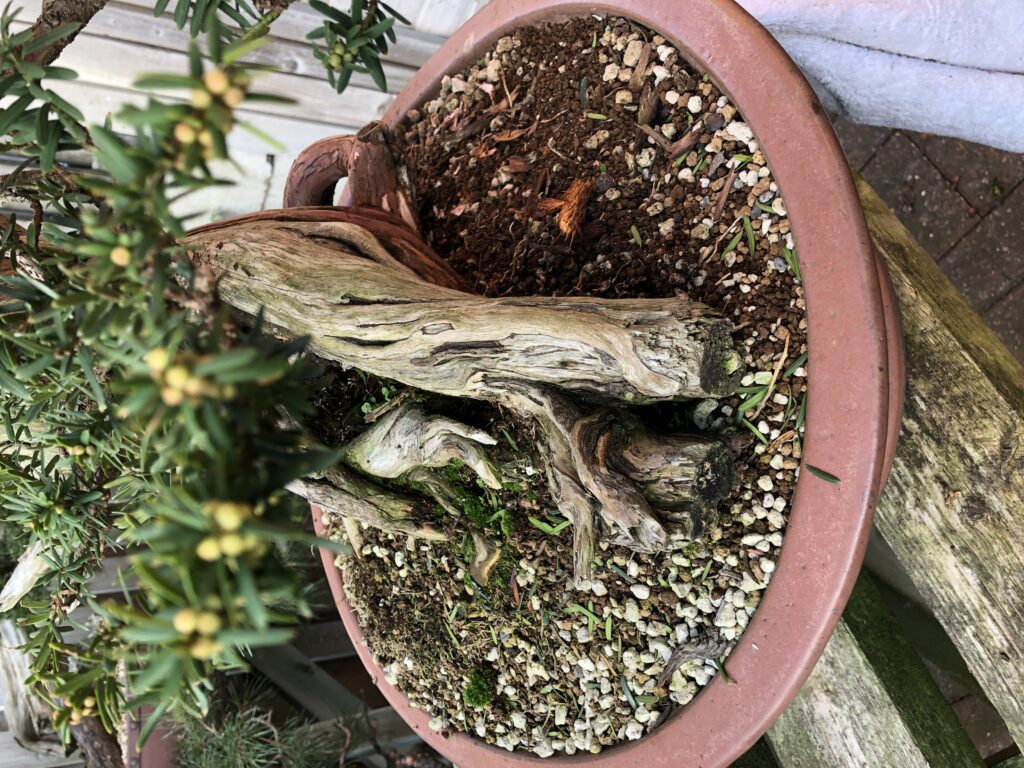
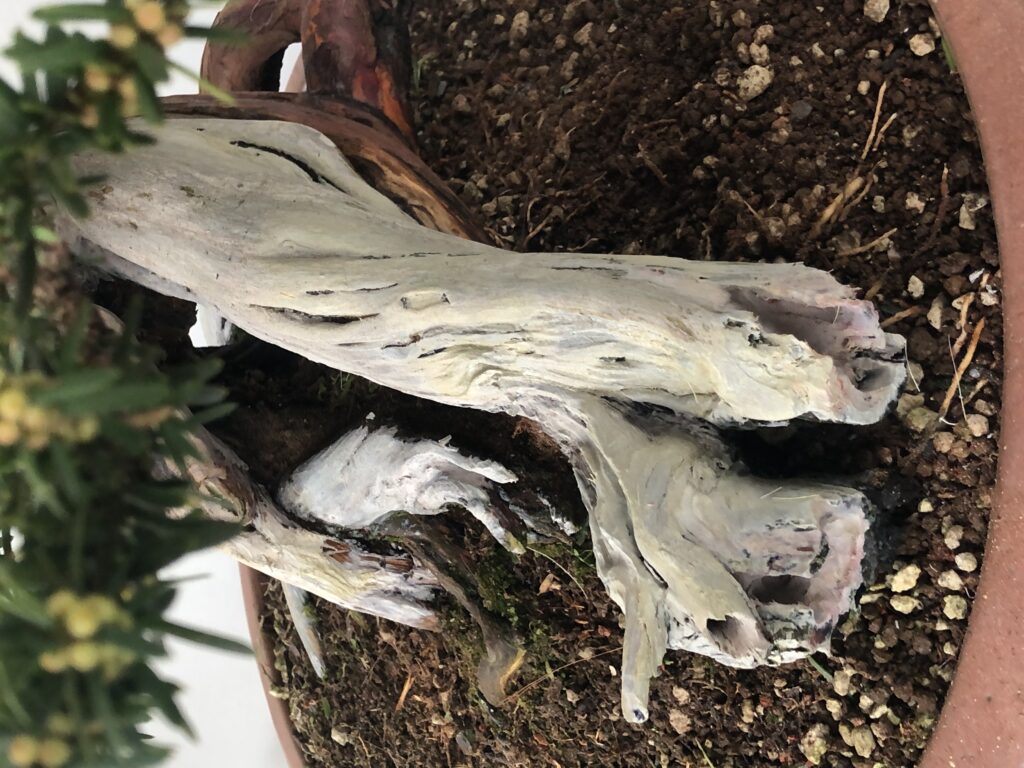
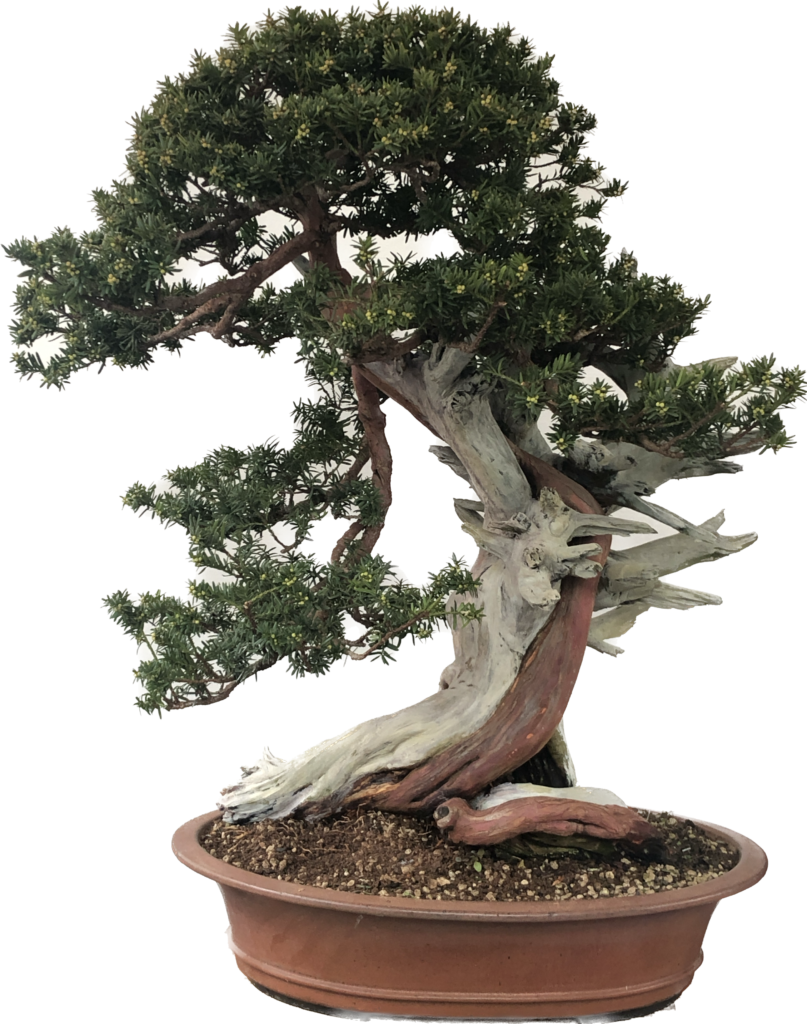
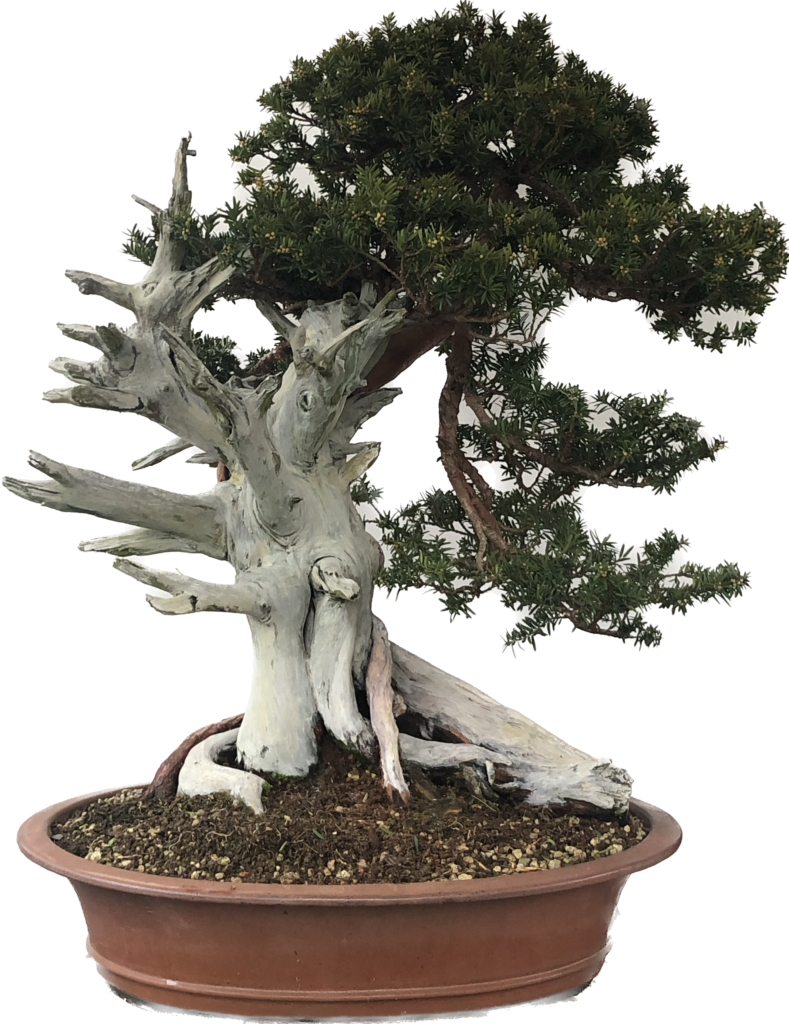
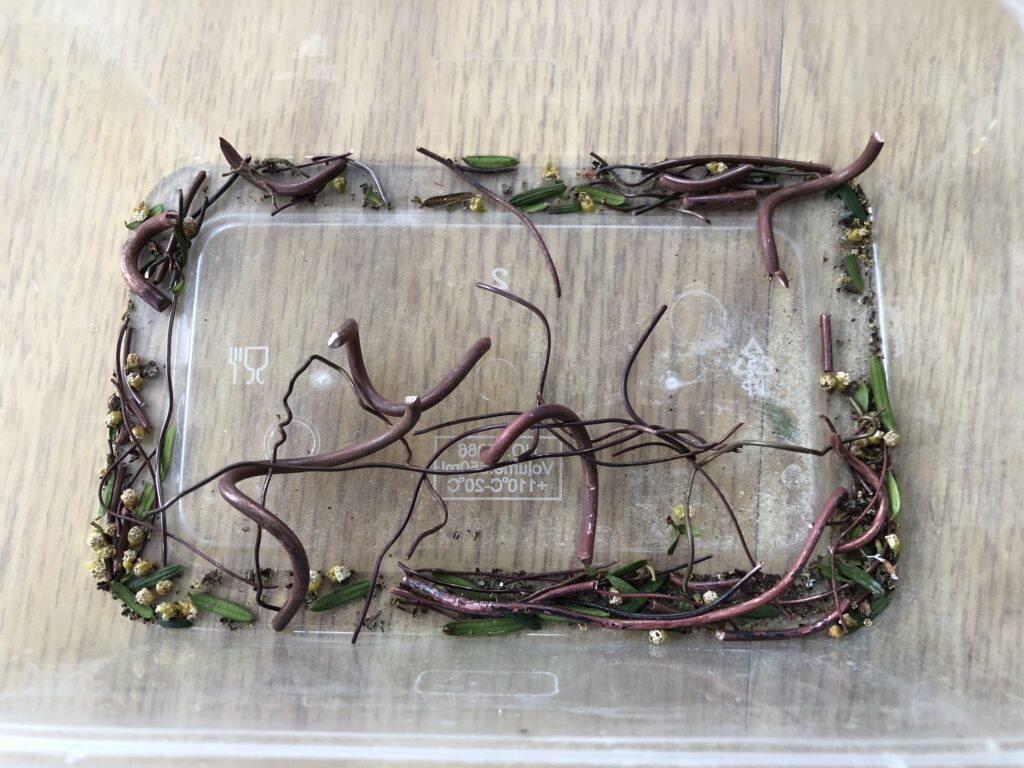
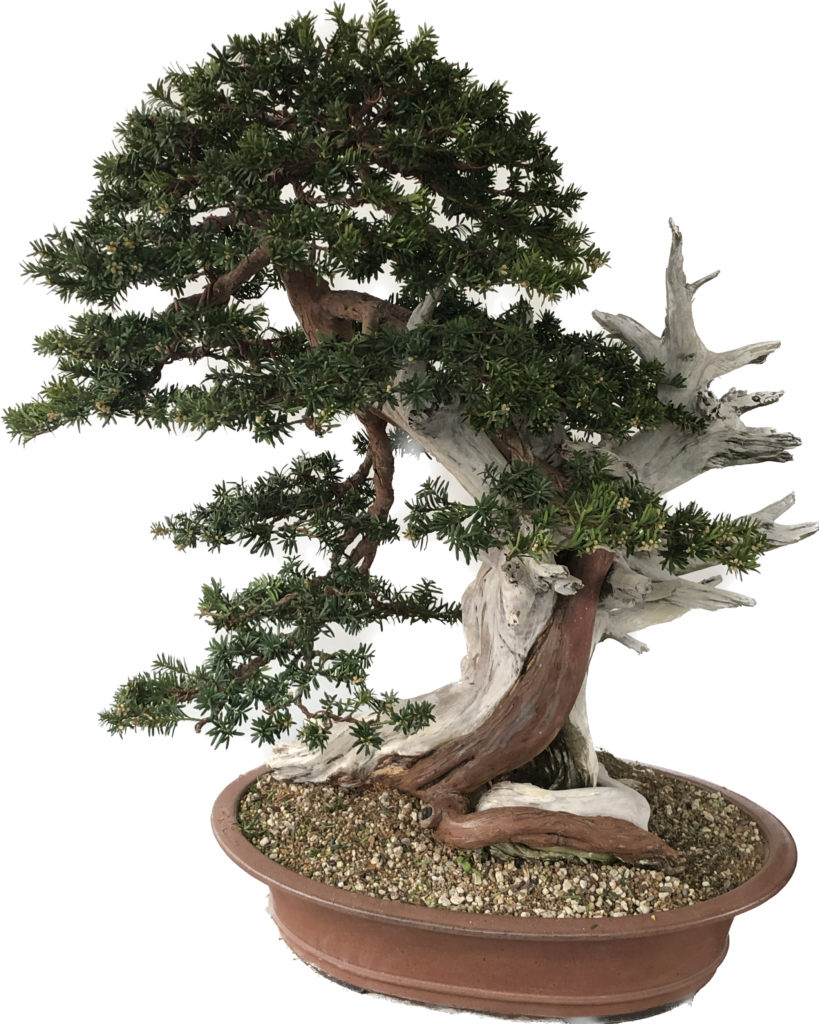
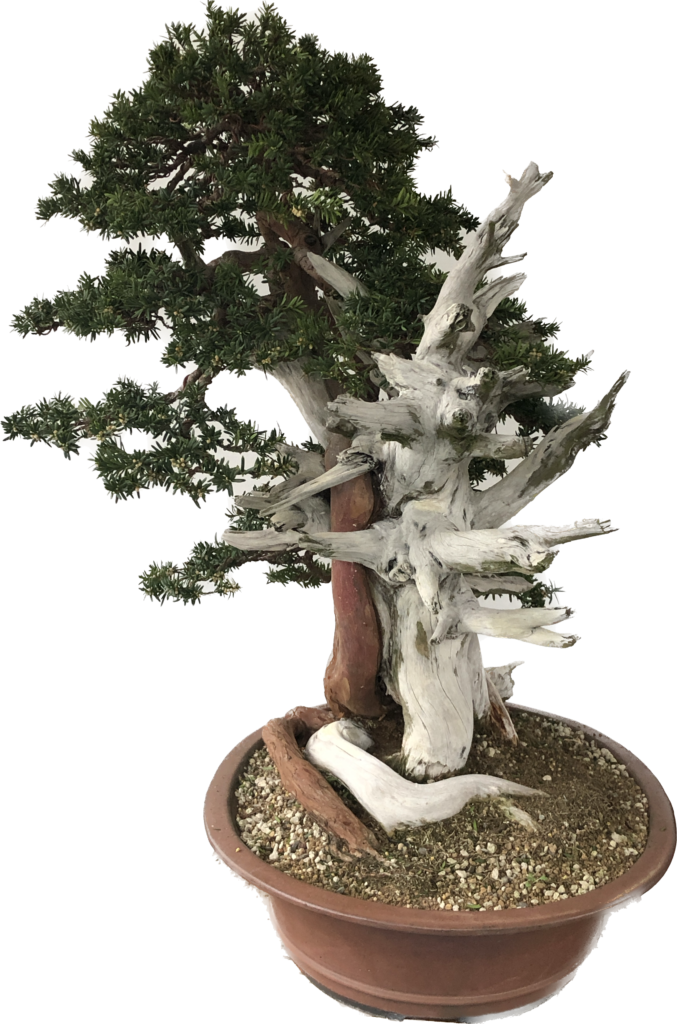
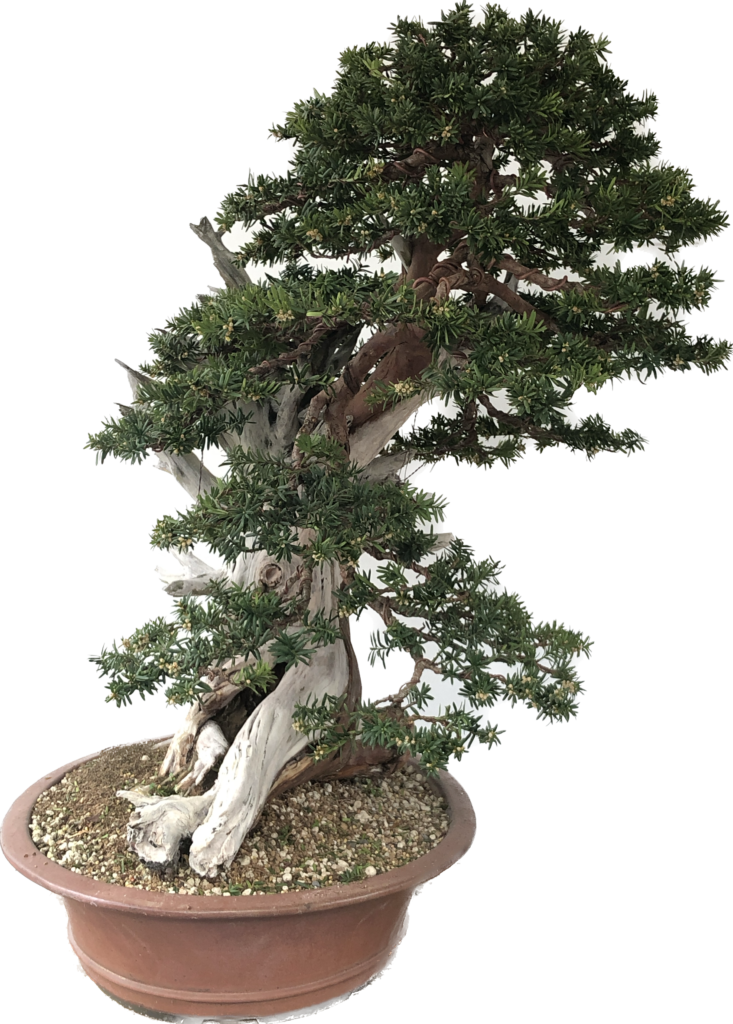
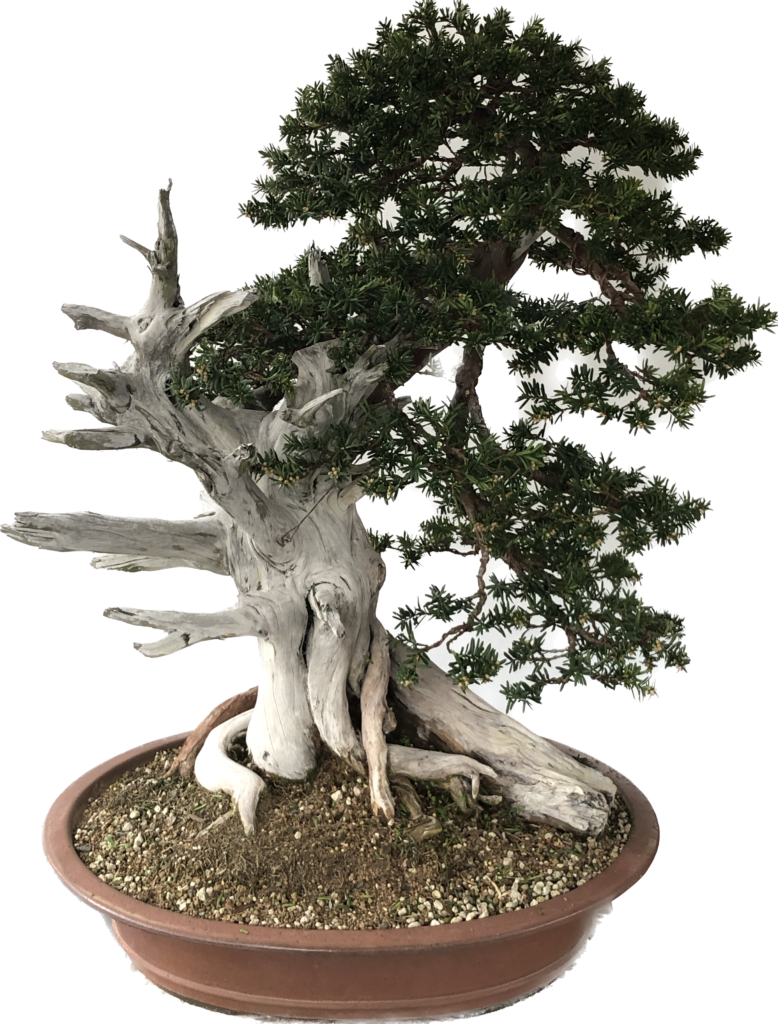
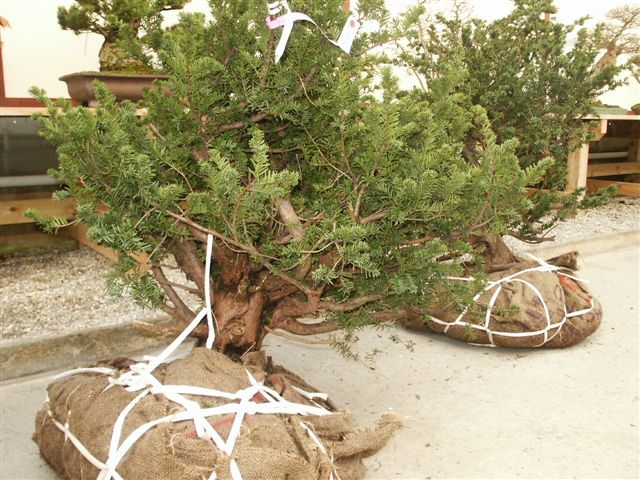
I hope you have enjoyed the story of this yew tree and our journey together. I always knew there was a good tree in that hessian sack that arrived from Japan. It was a case of careful consideration, patience and working together with nature until finally his soul could be released.
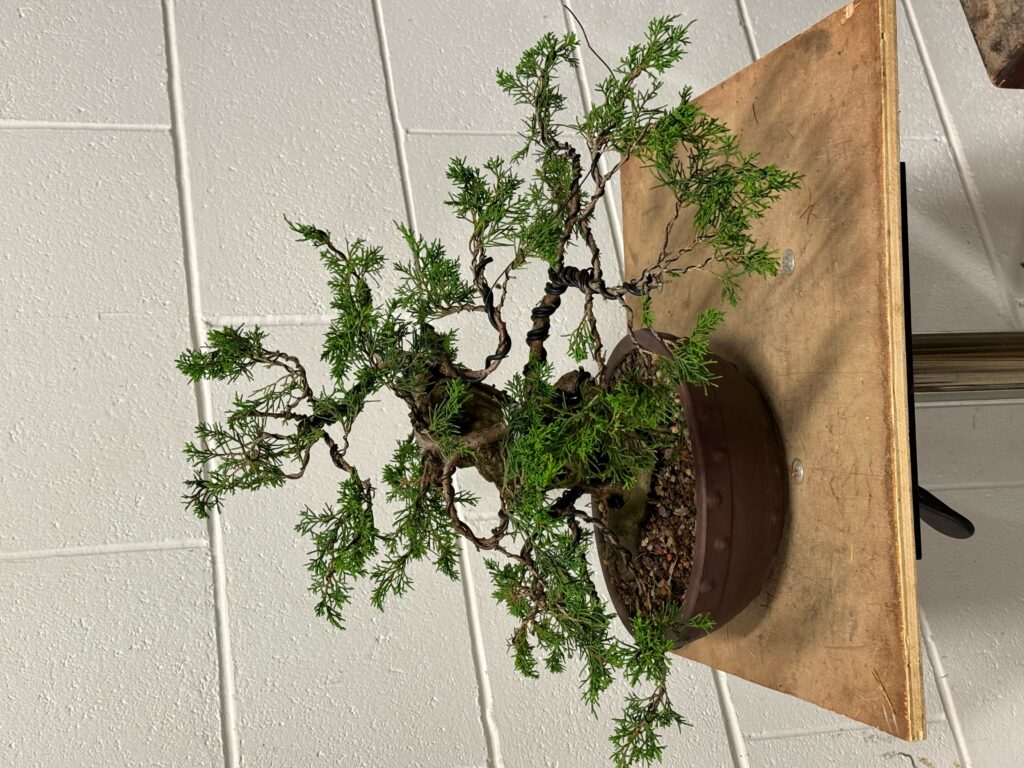
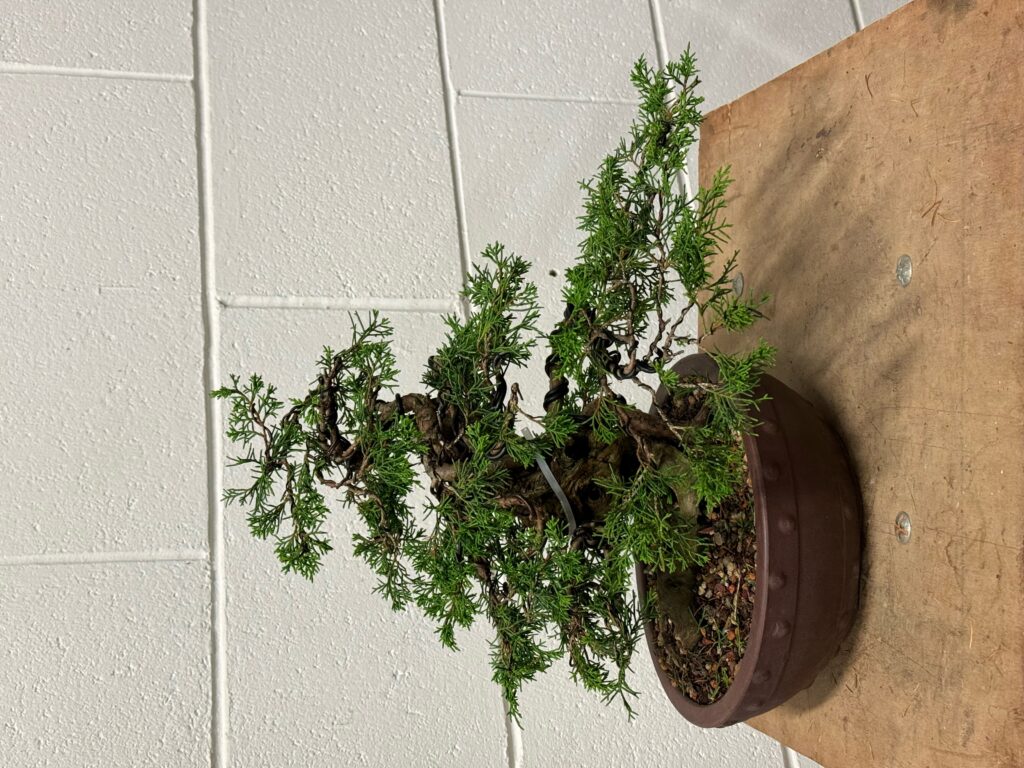
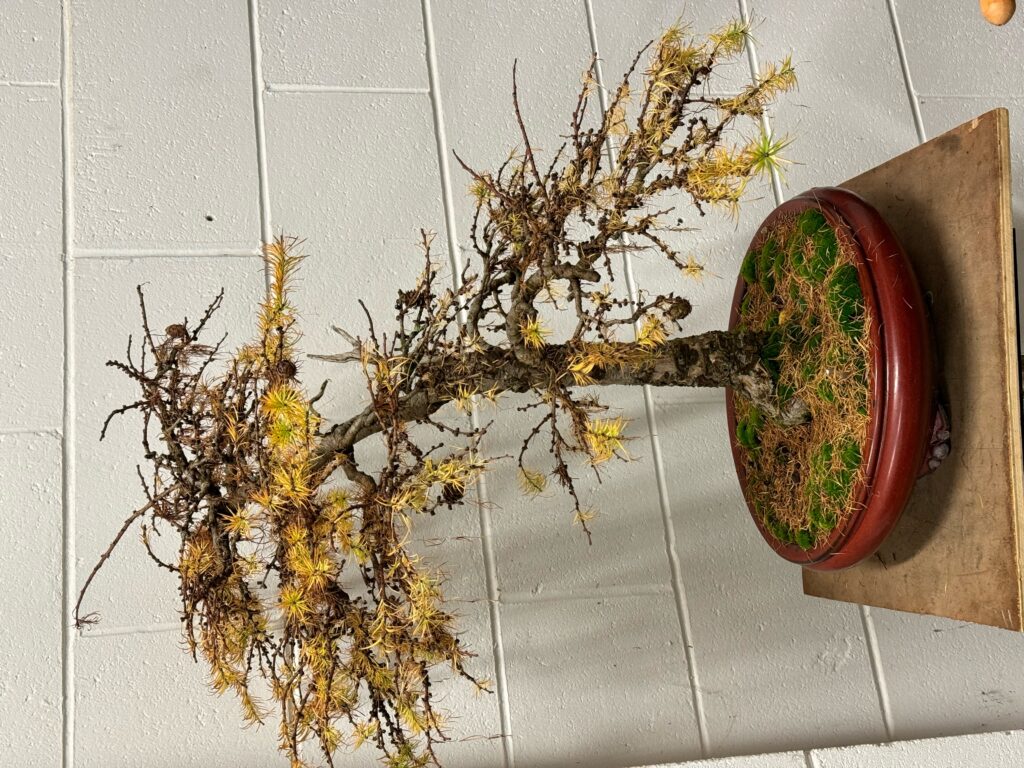
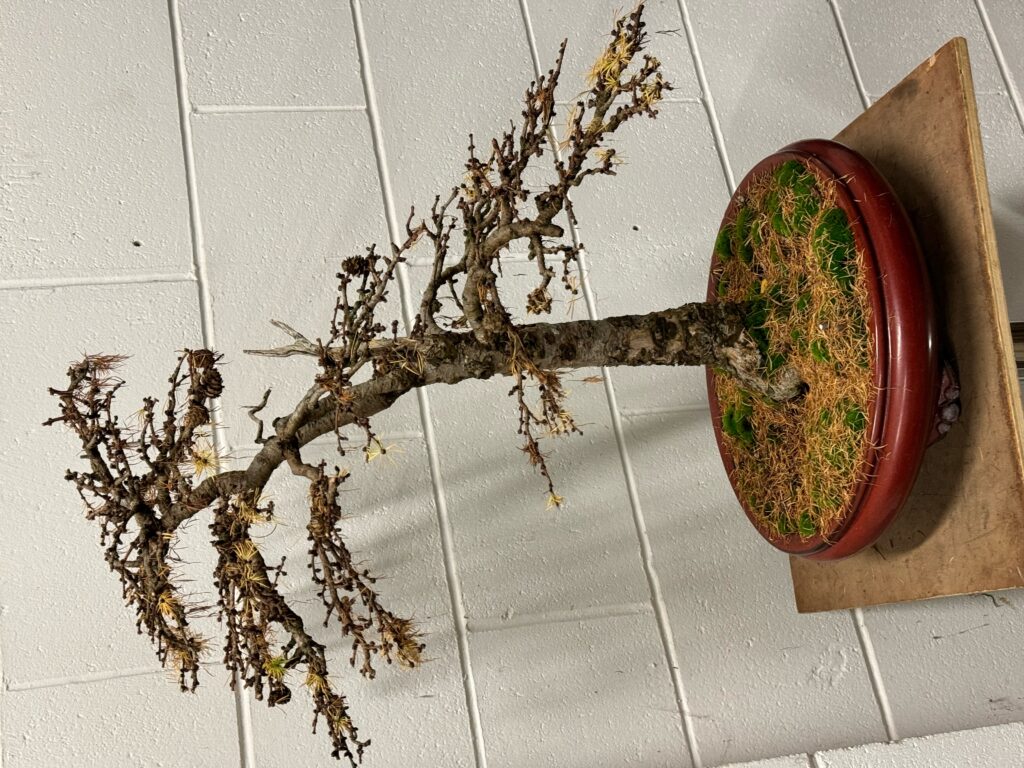
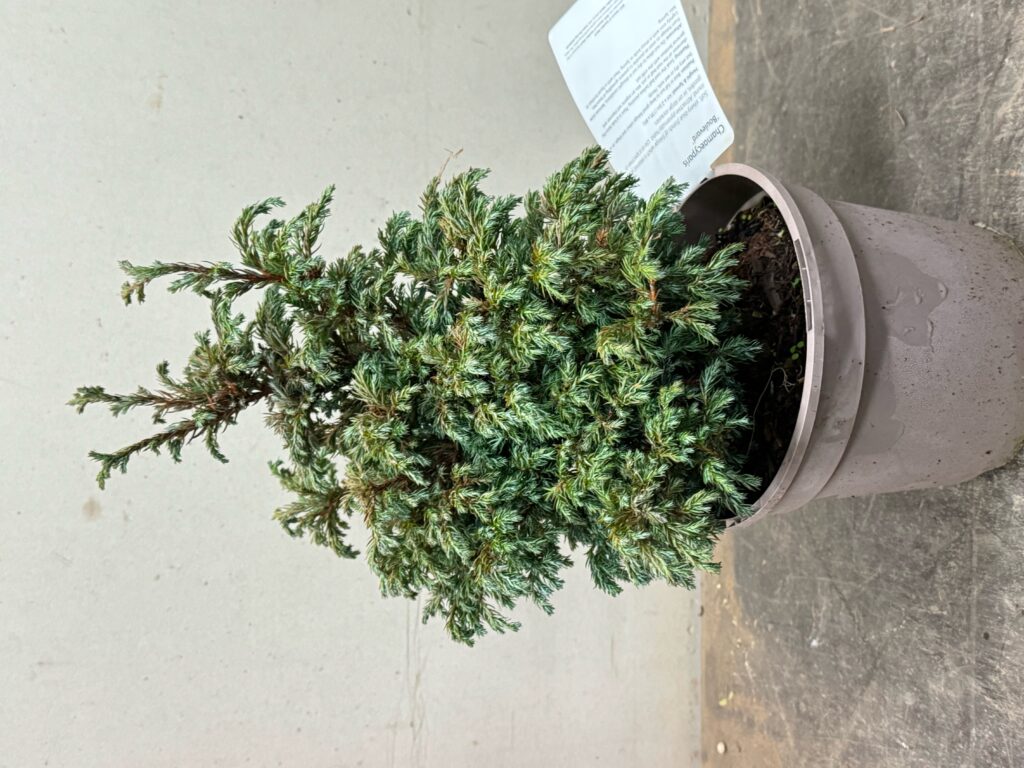
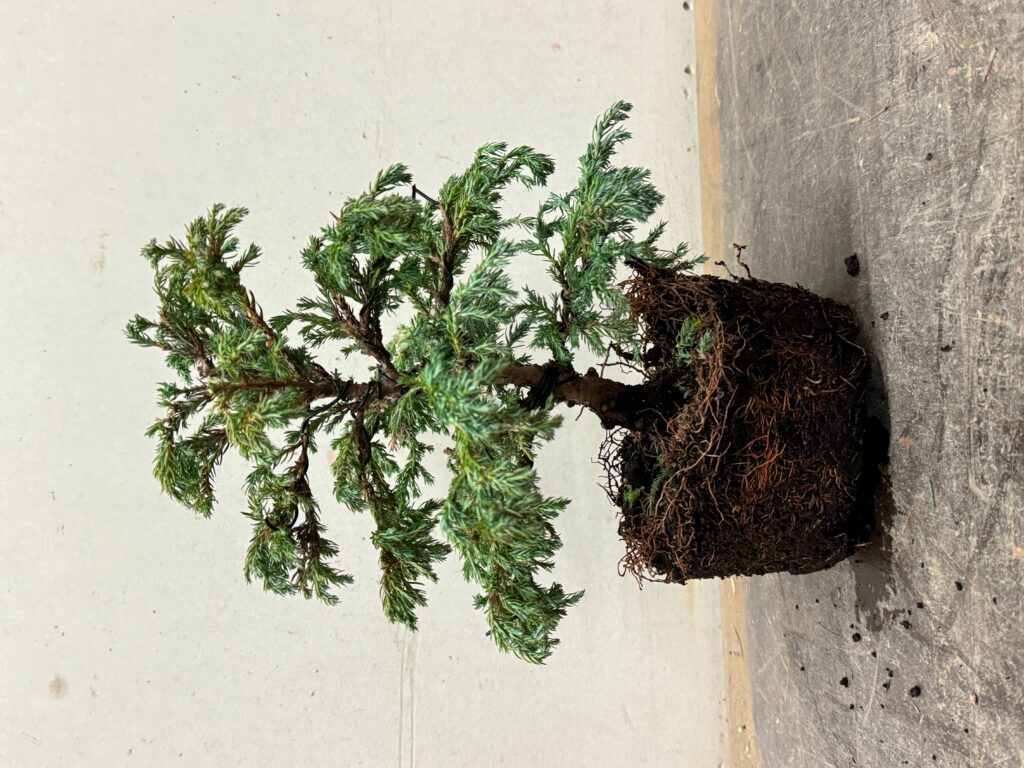
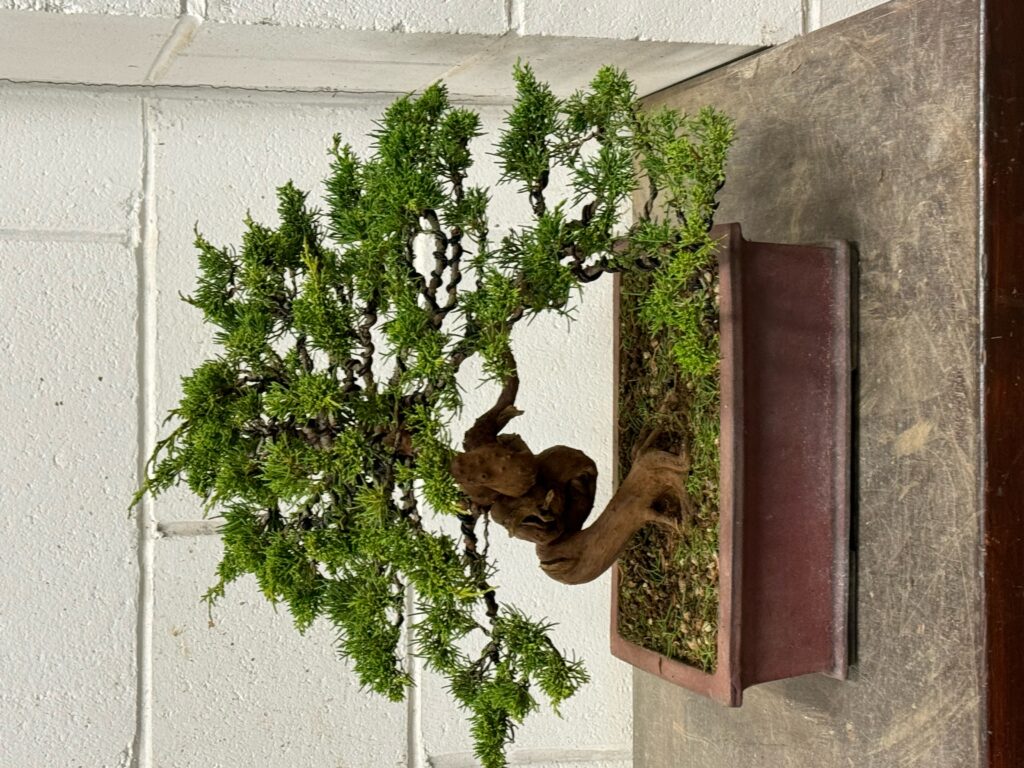
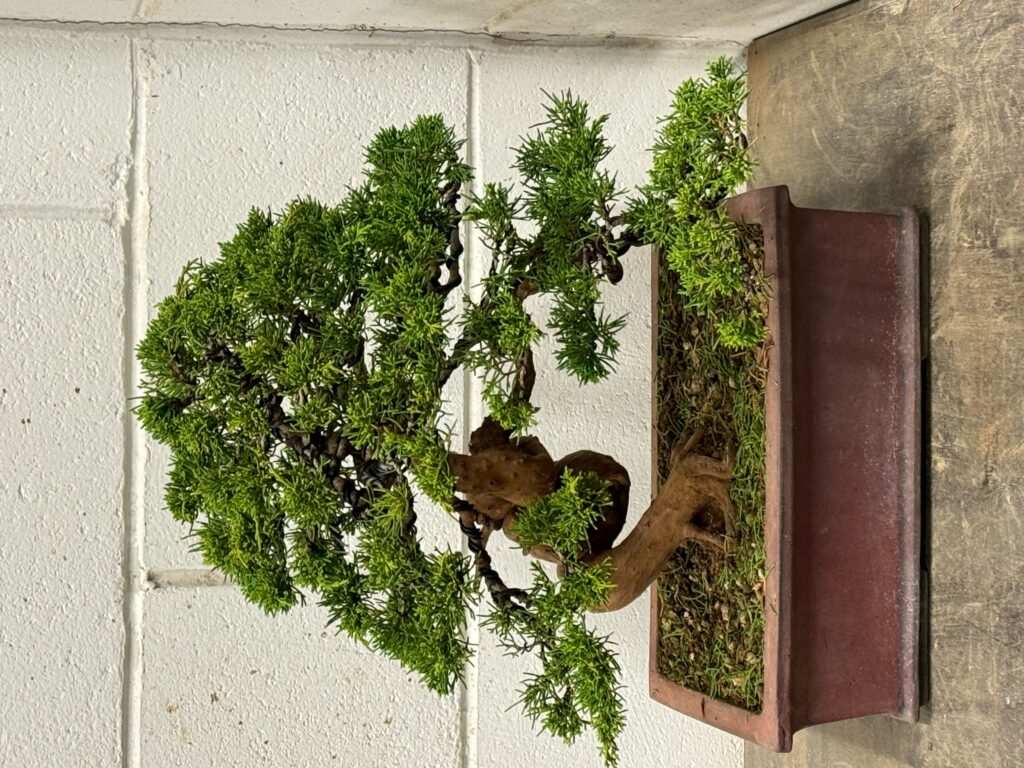
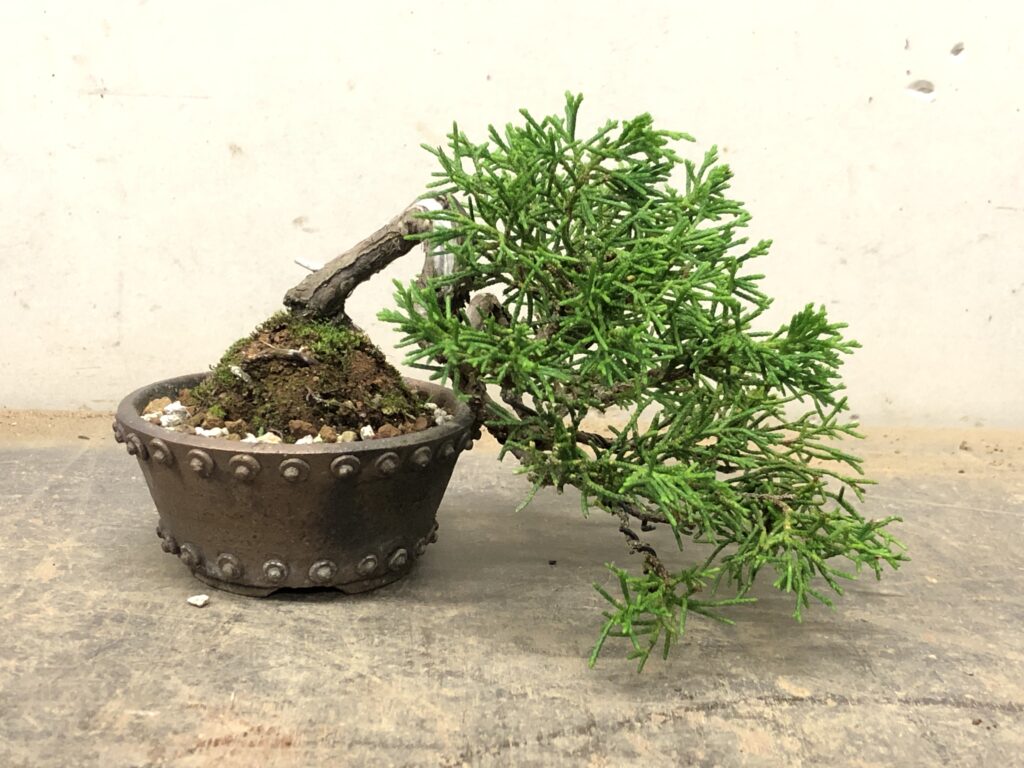
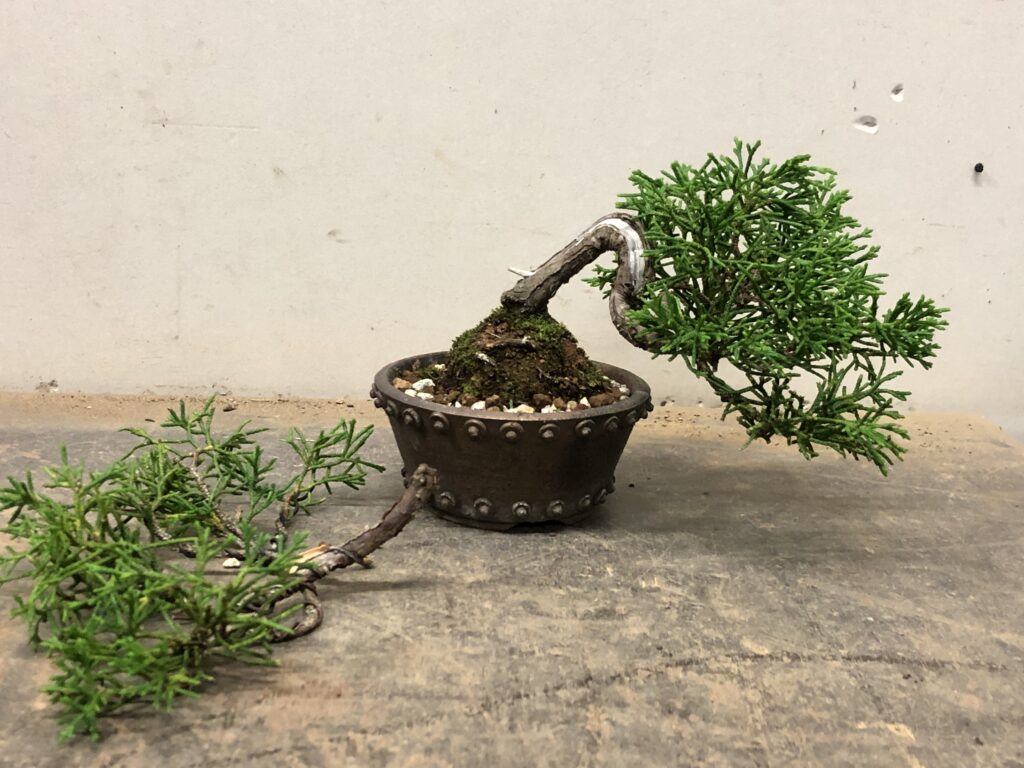
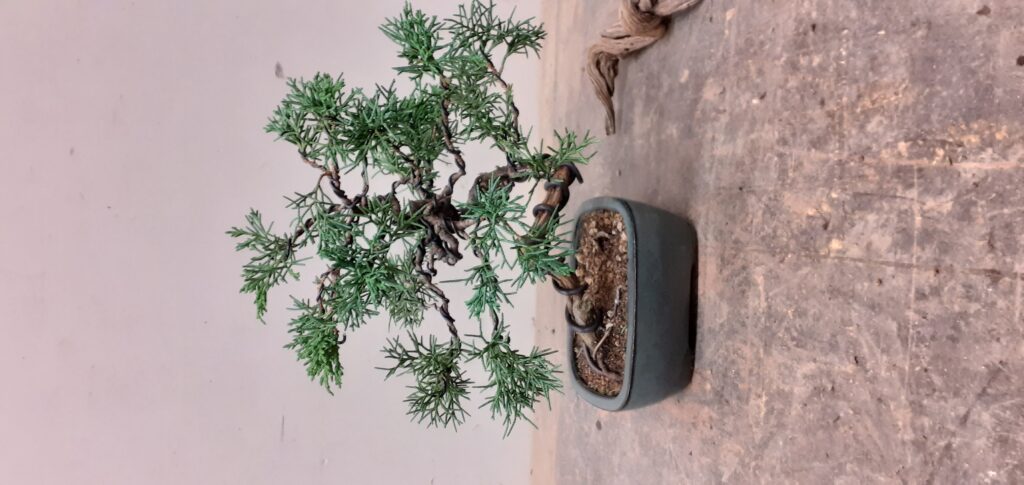
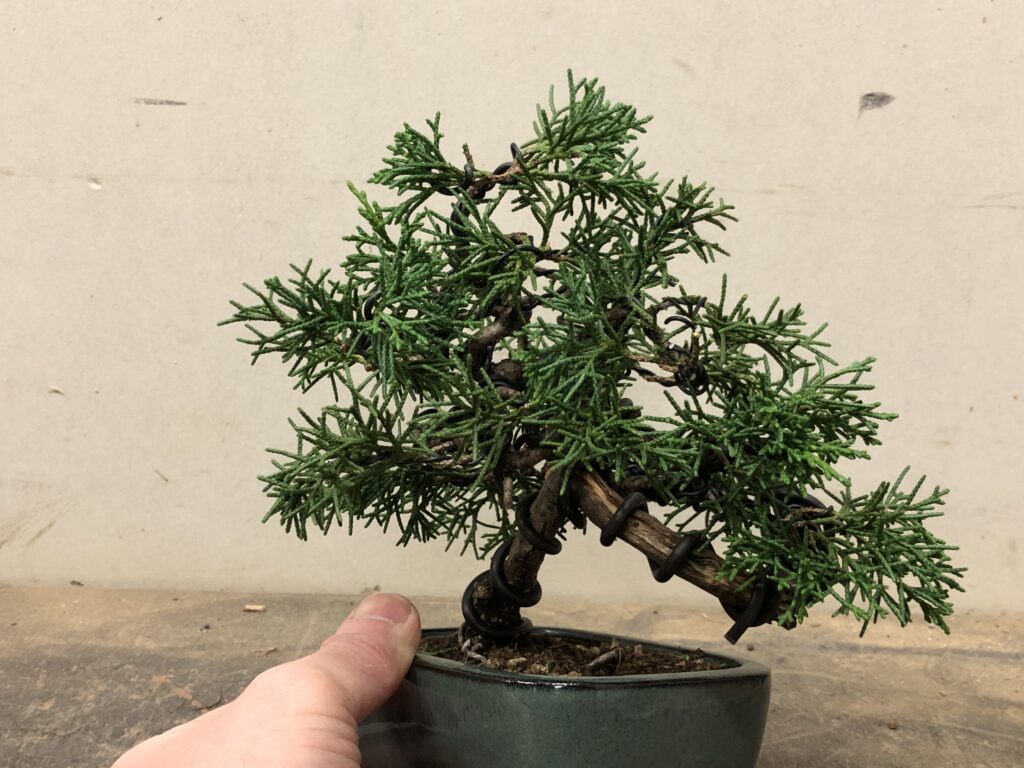
I was recently asked to visit a clients home to work on some of his junipers.
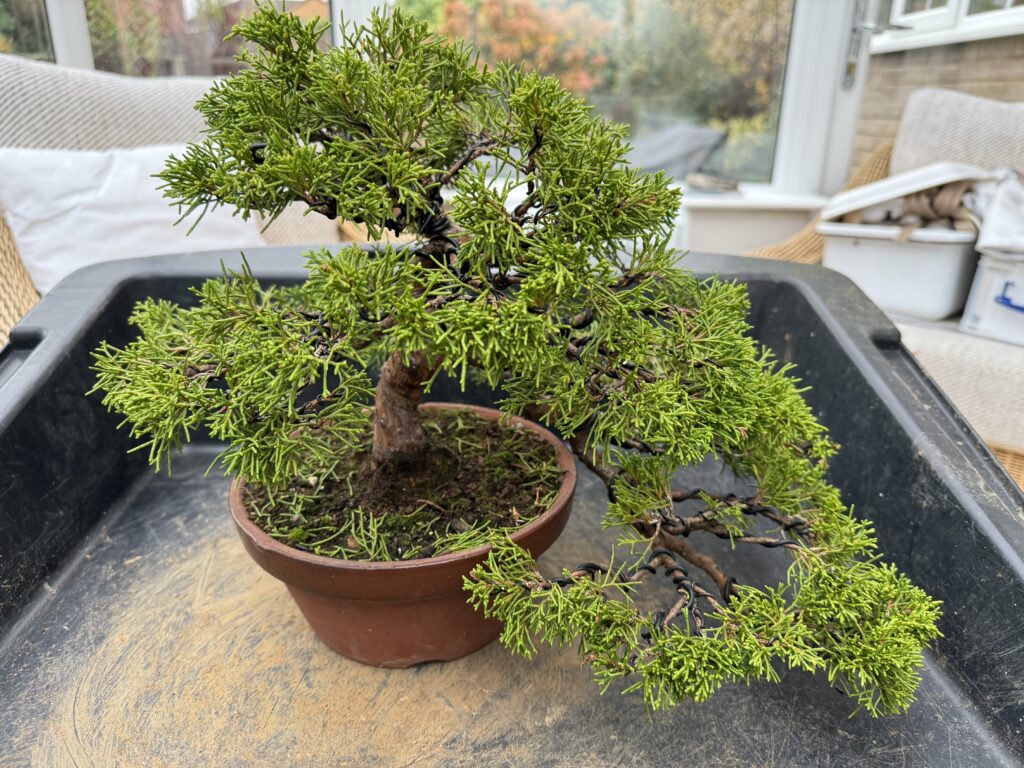
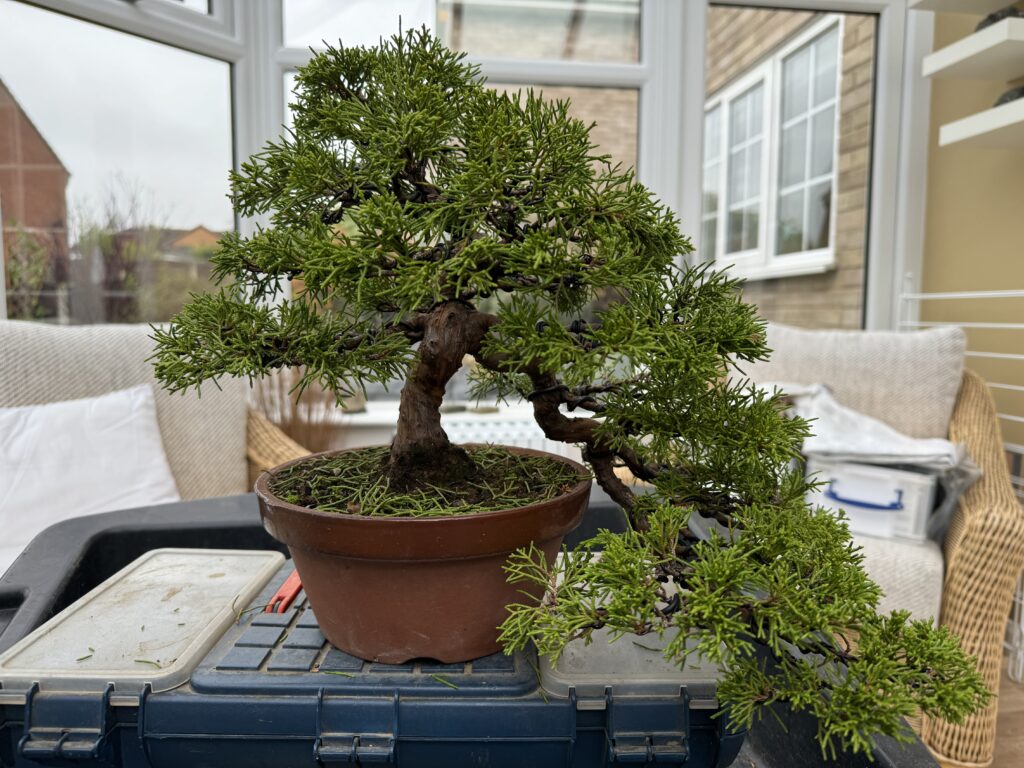
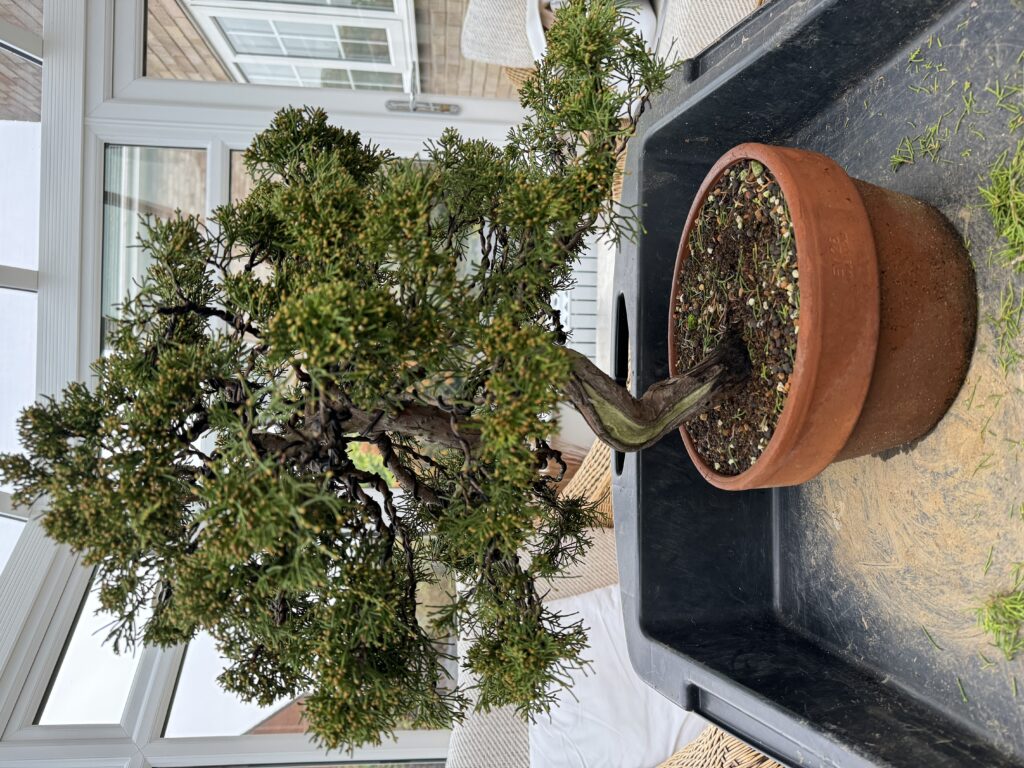
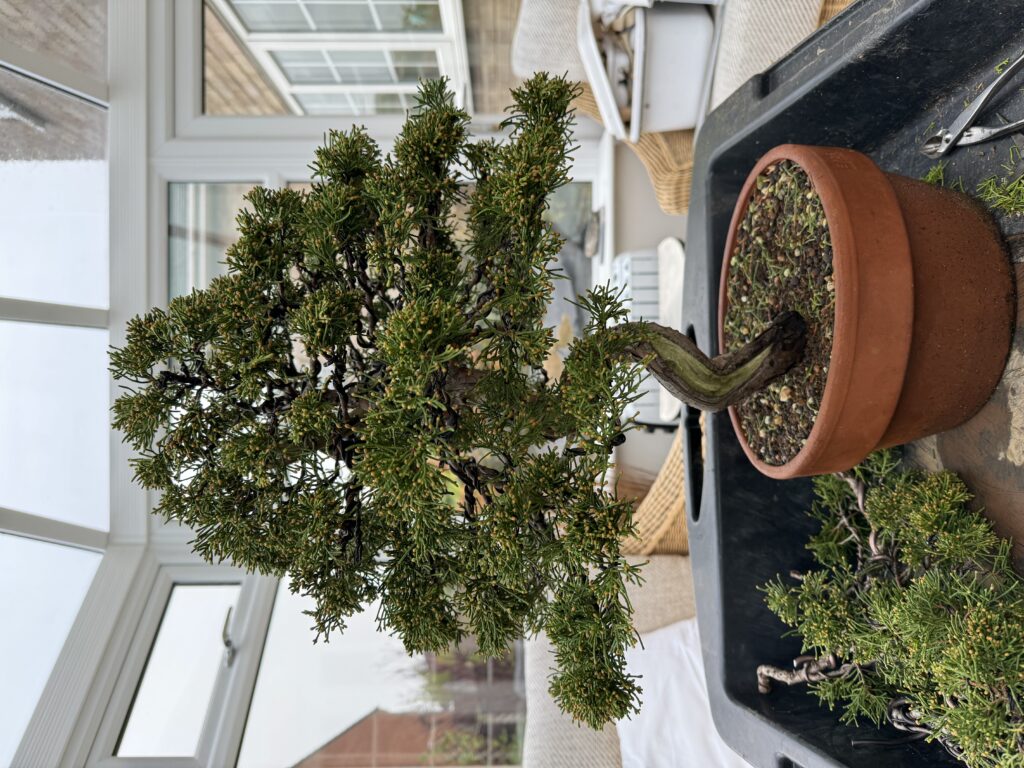
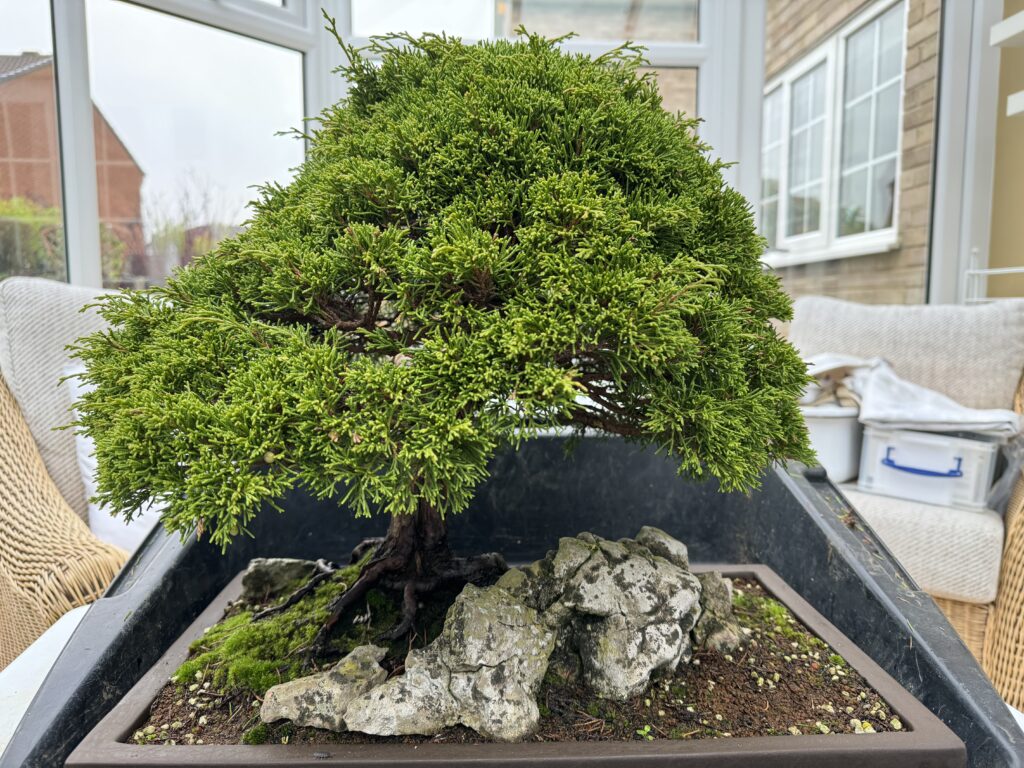
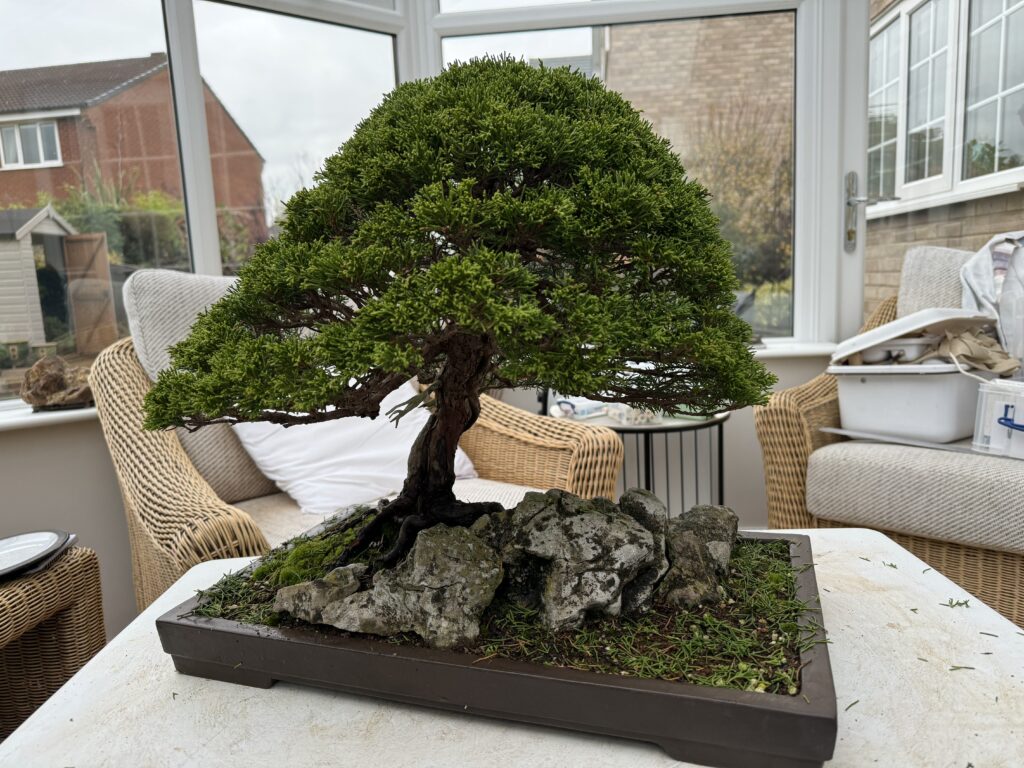
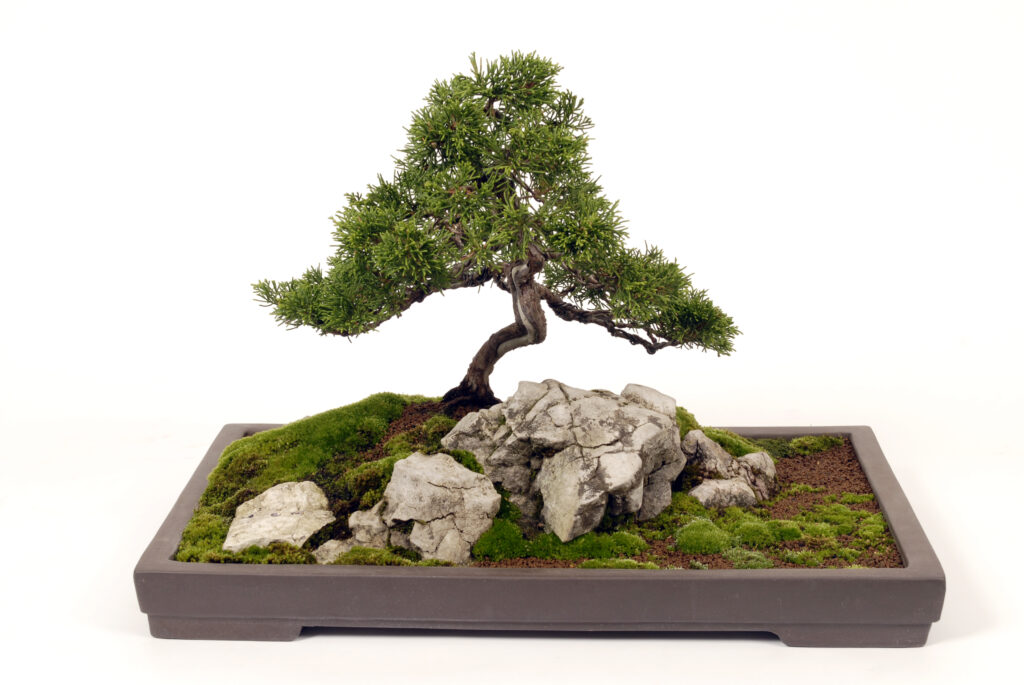
More and more of my students are beginning to take advantage of private work sessions both at their homes and at my unit.
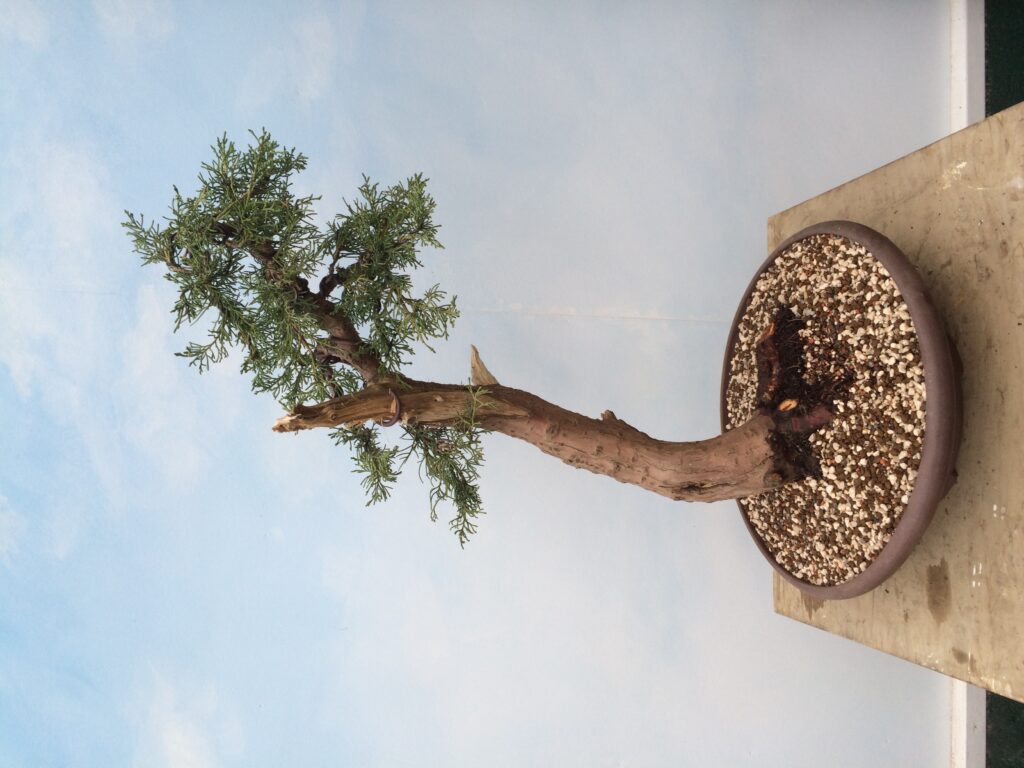
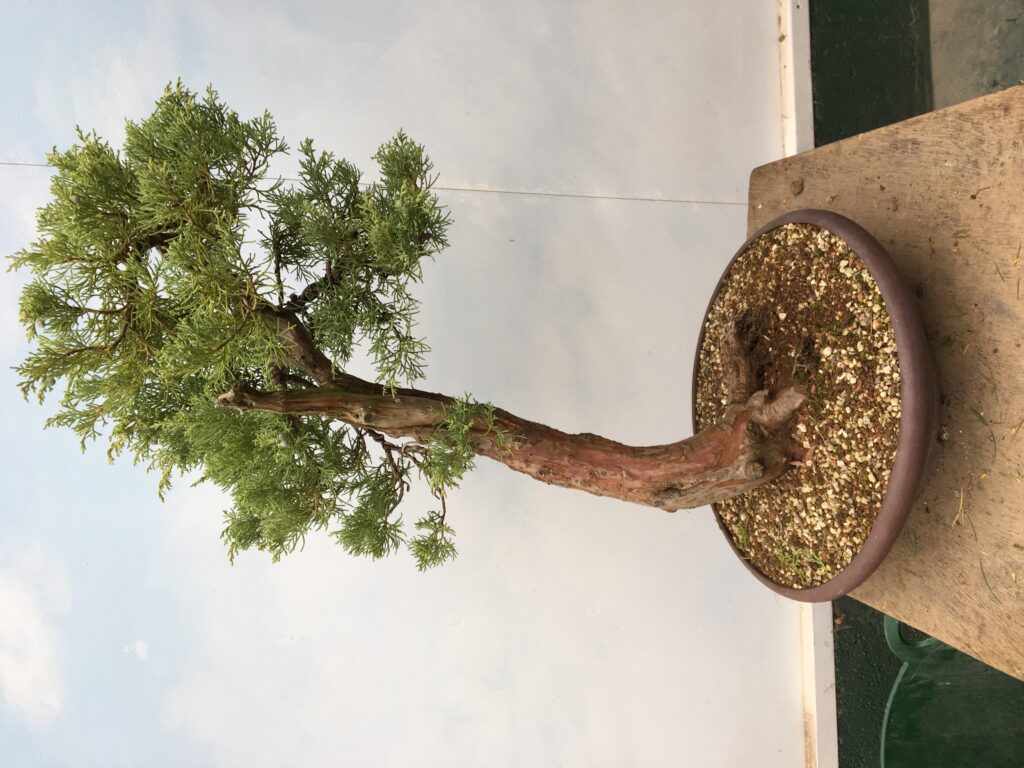
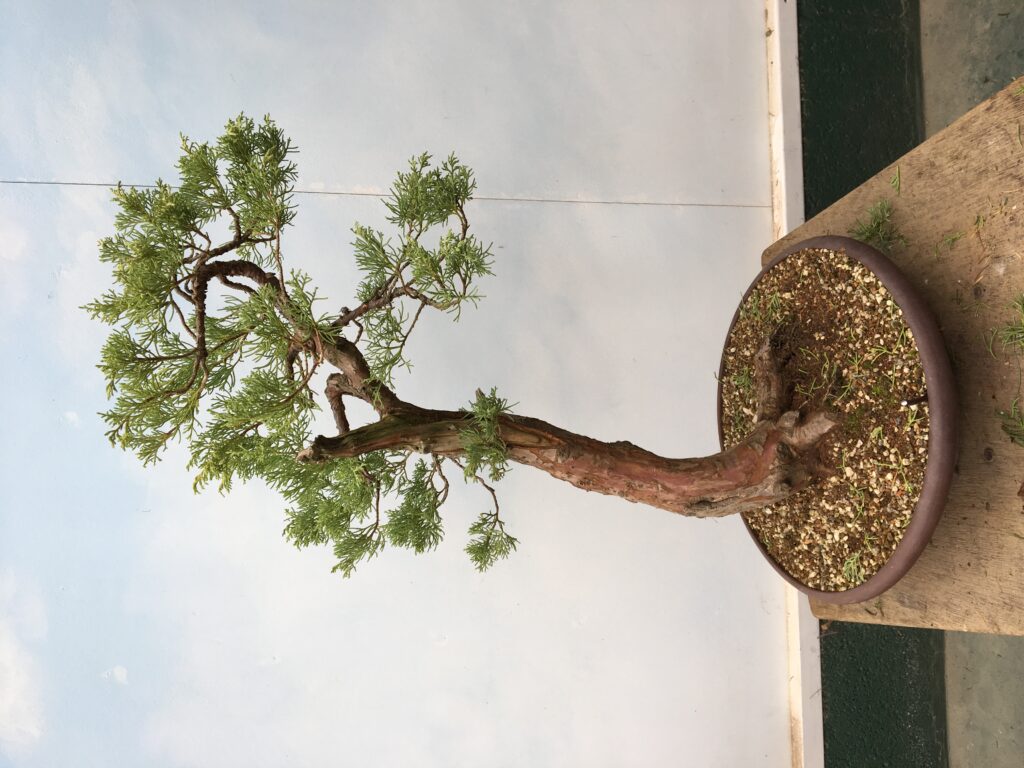
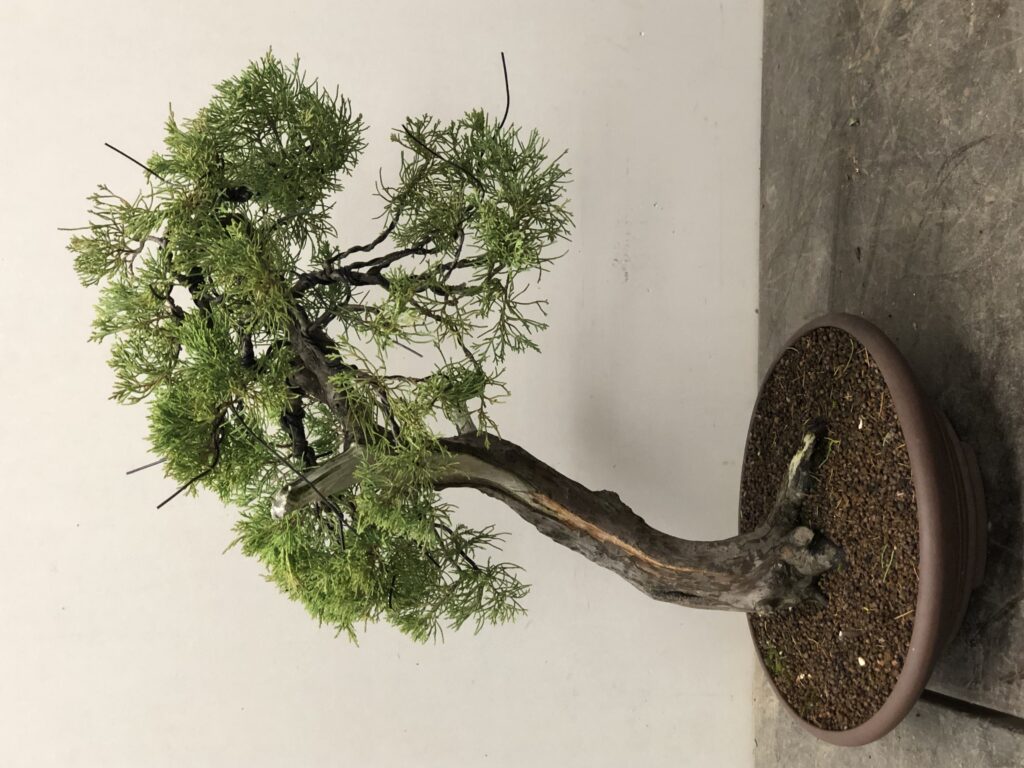
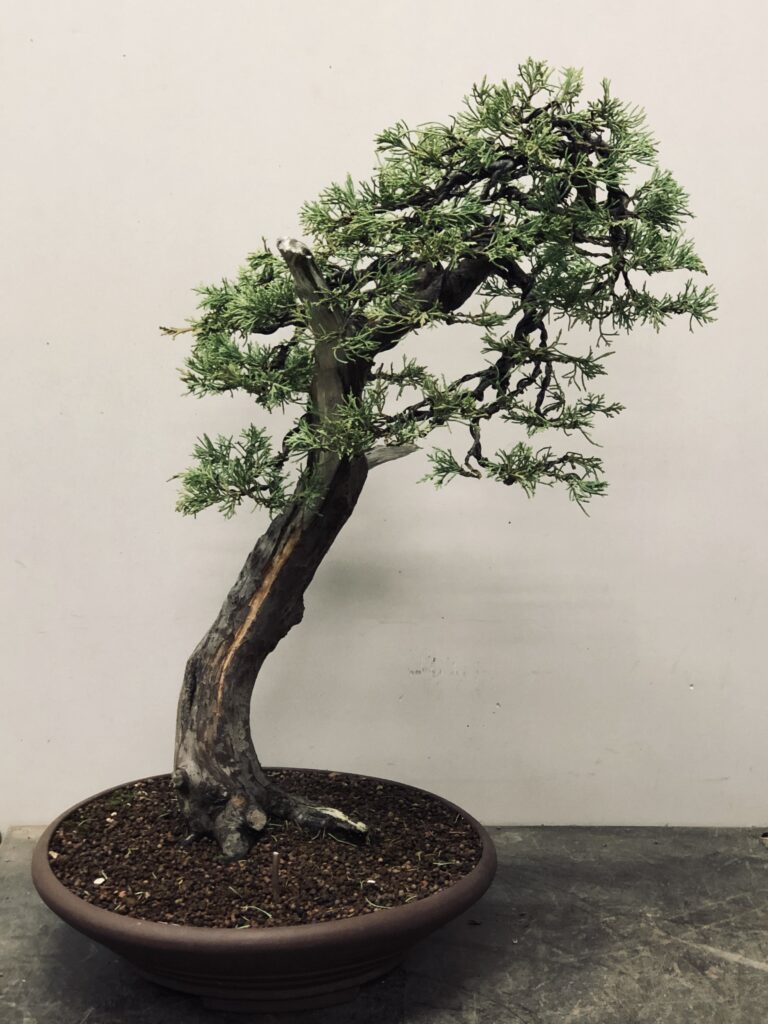
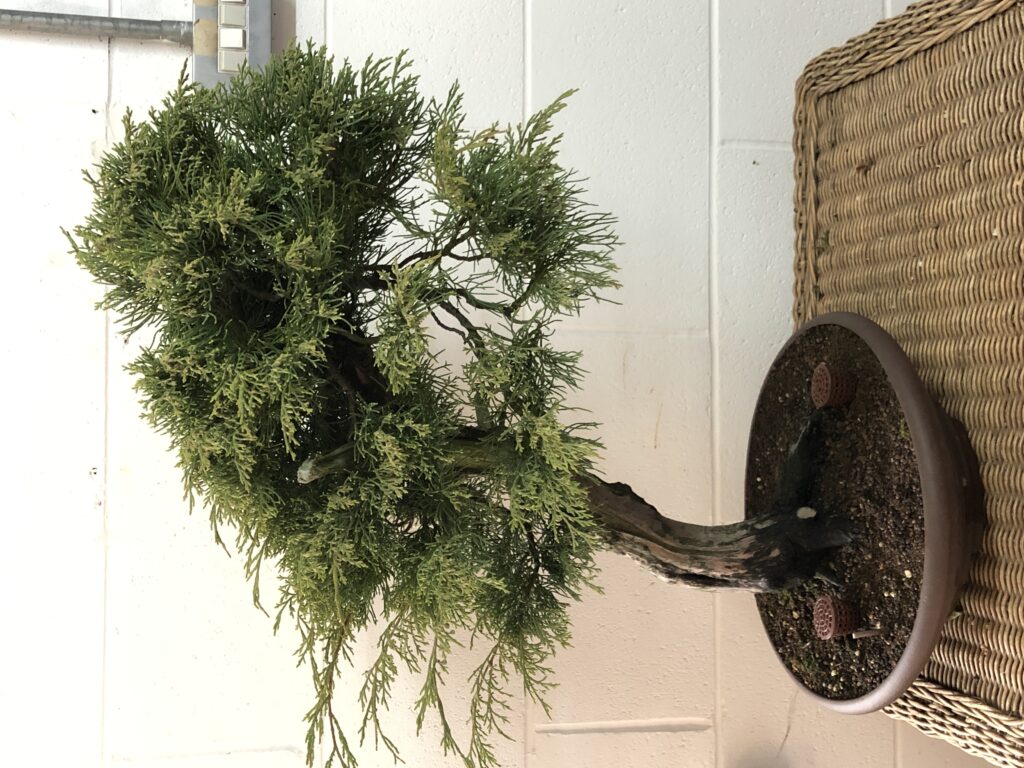
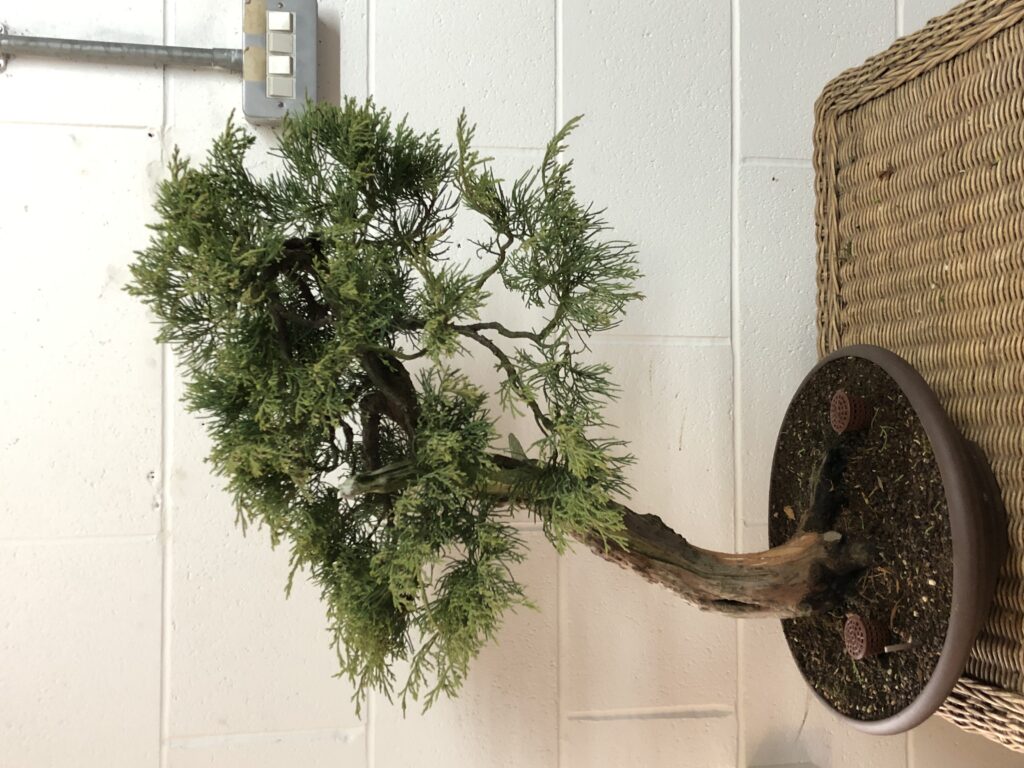
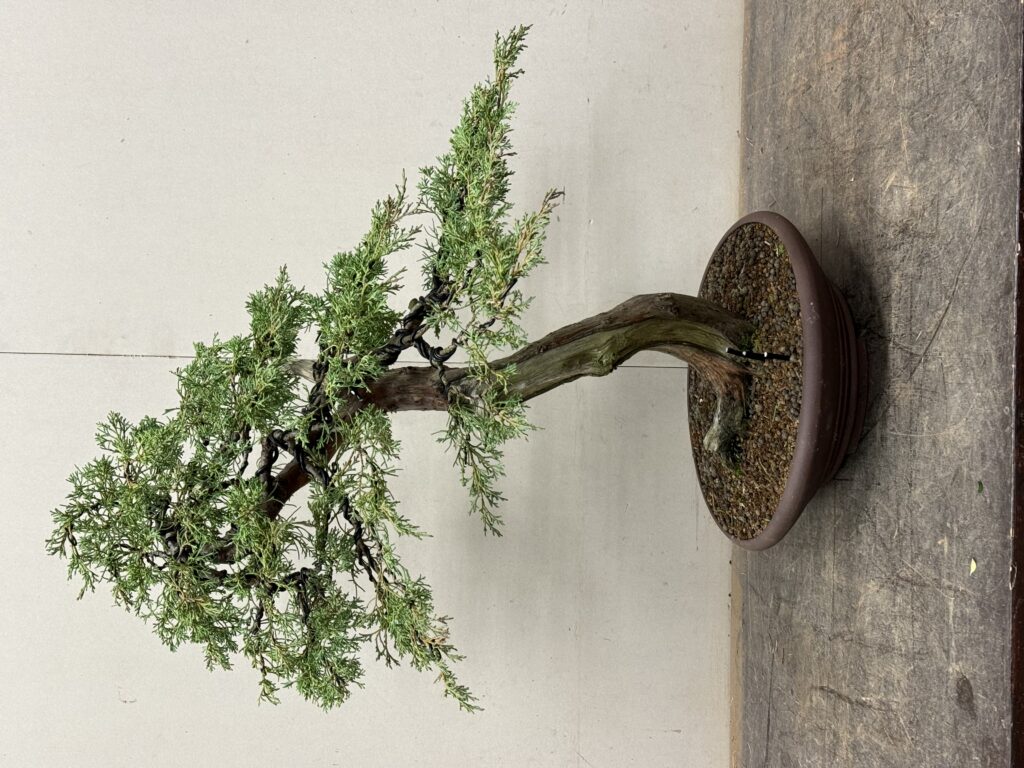
Sometimes it pays to just let your trees grow for a period. They not only become stronger and healthier but often provide you with a much better piece of raw material from which you can style a really good tree.
The transformation of a small Larch bonsai.
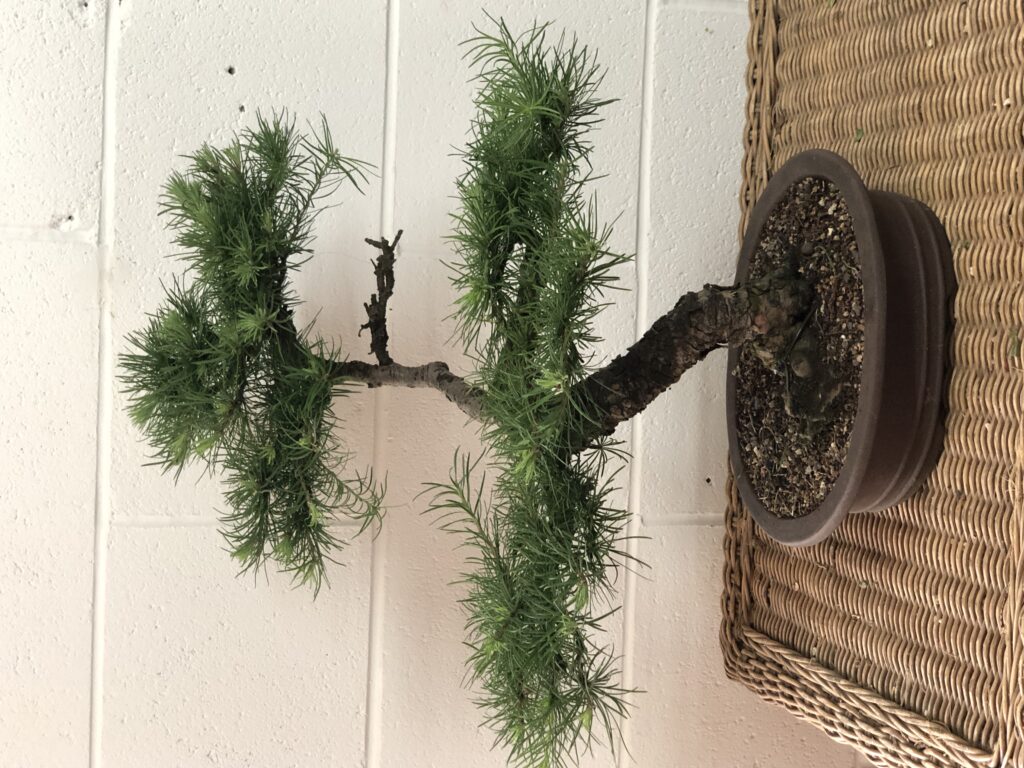
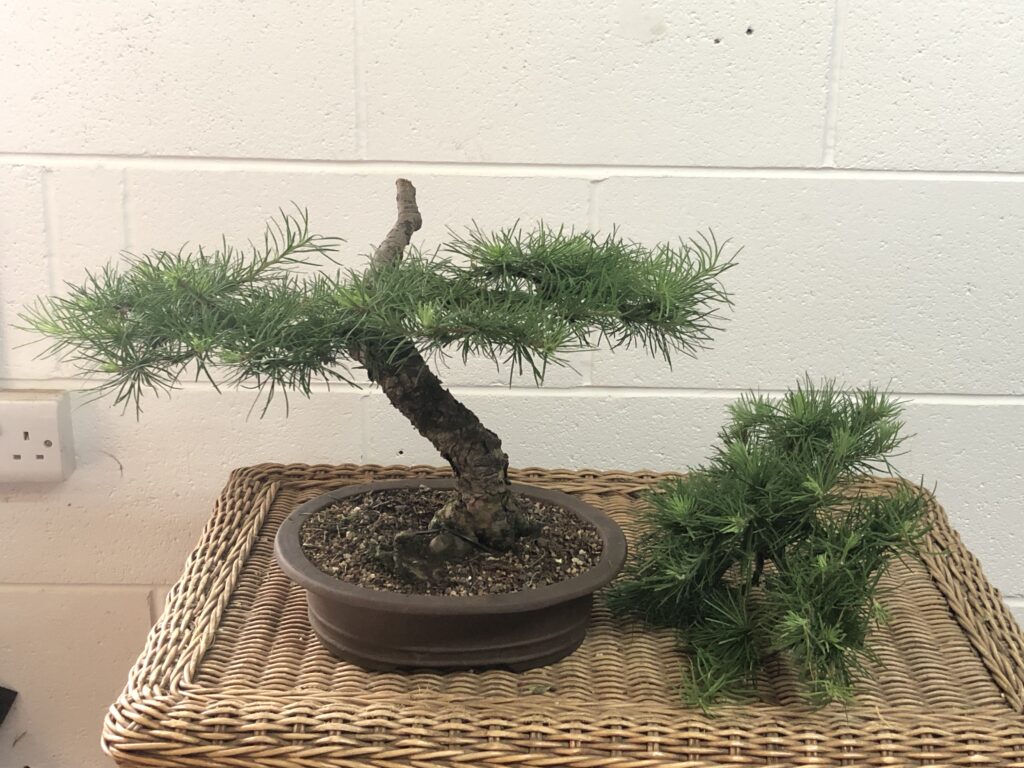
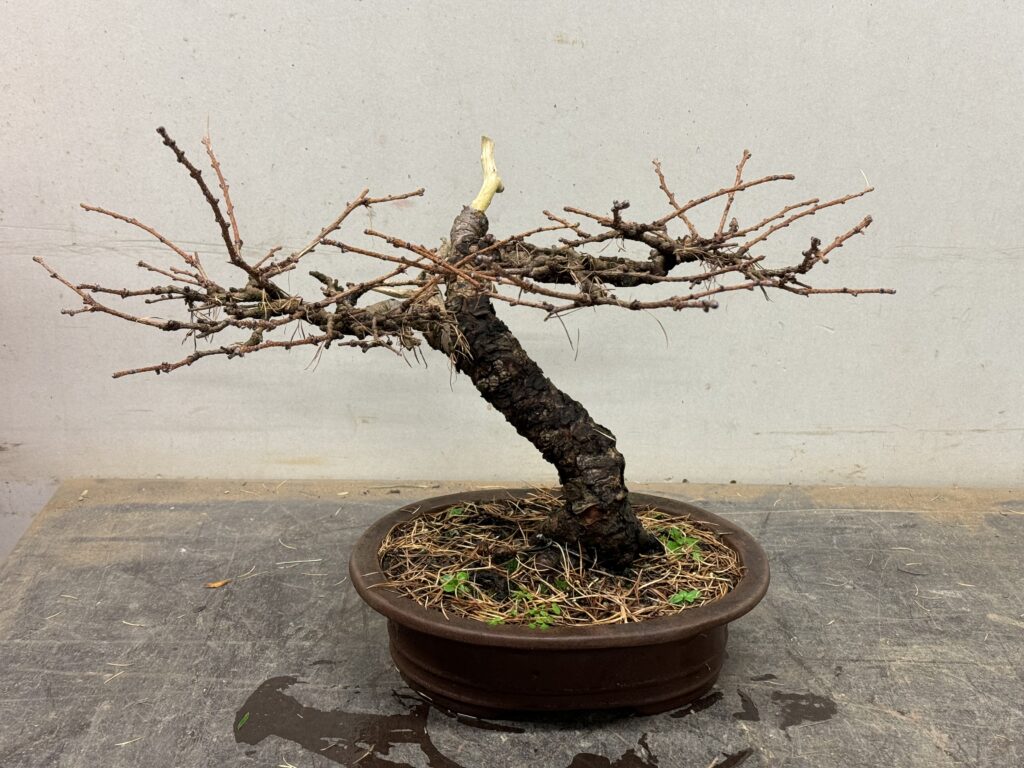
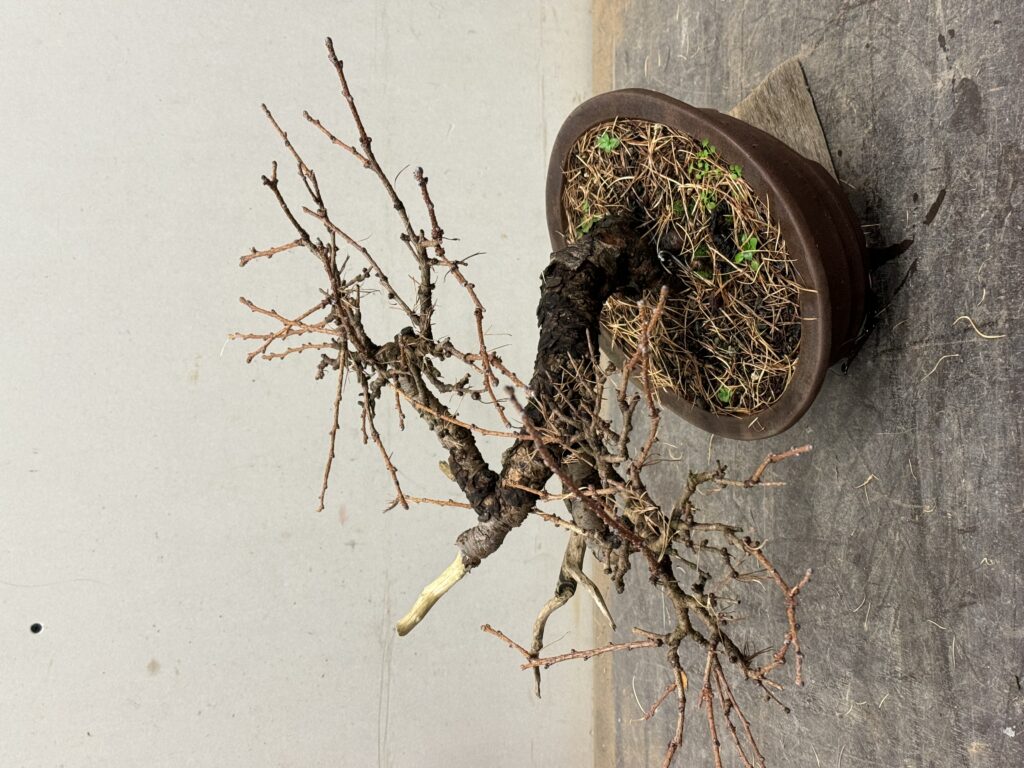
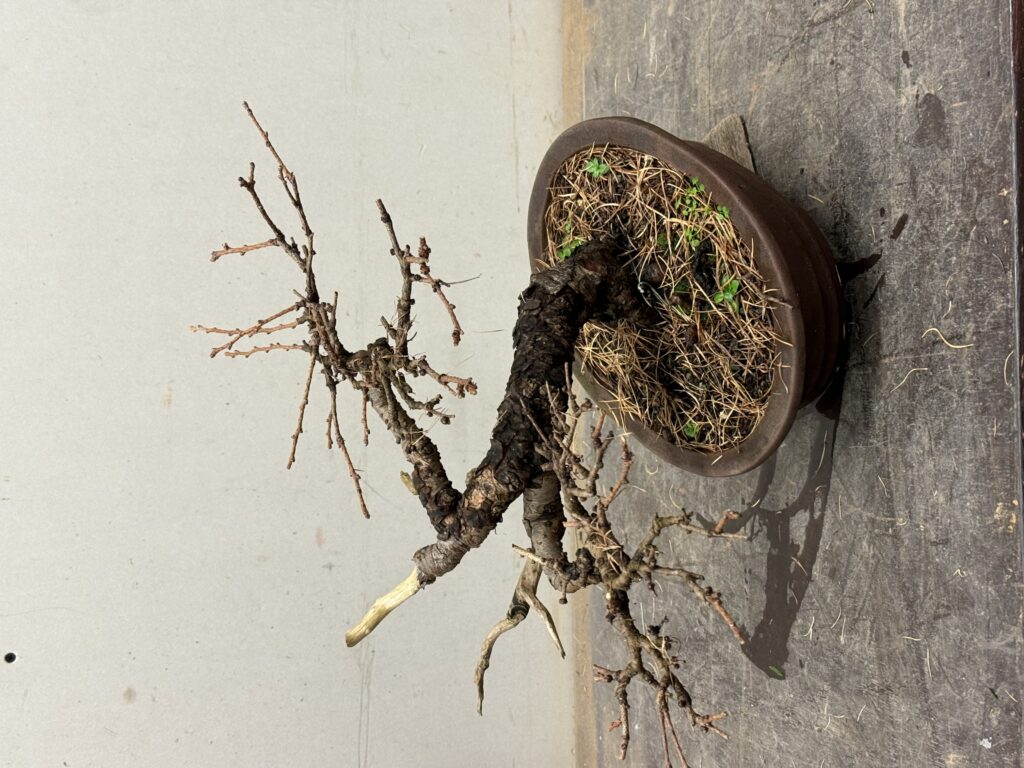
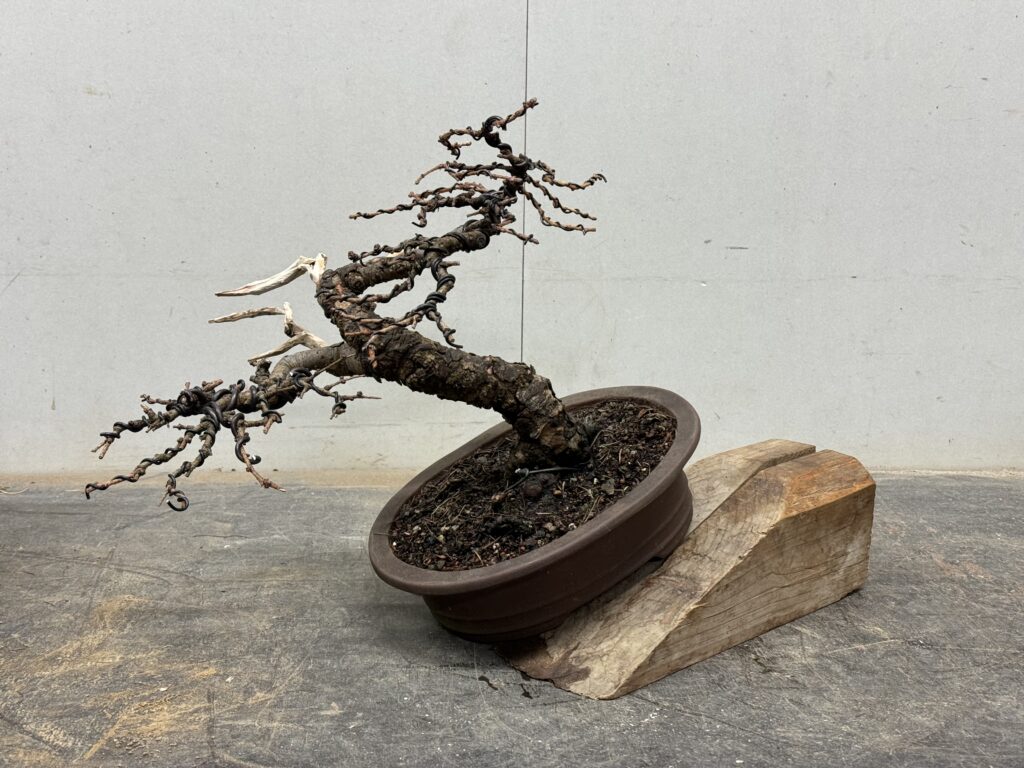
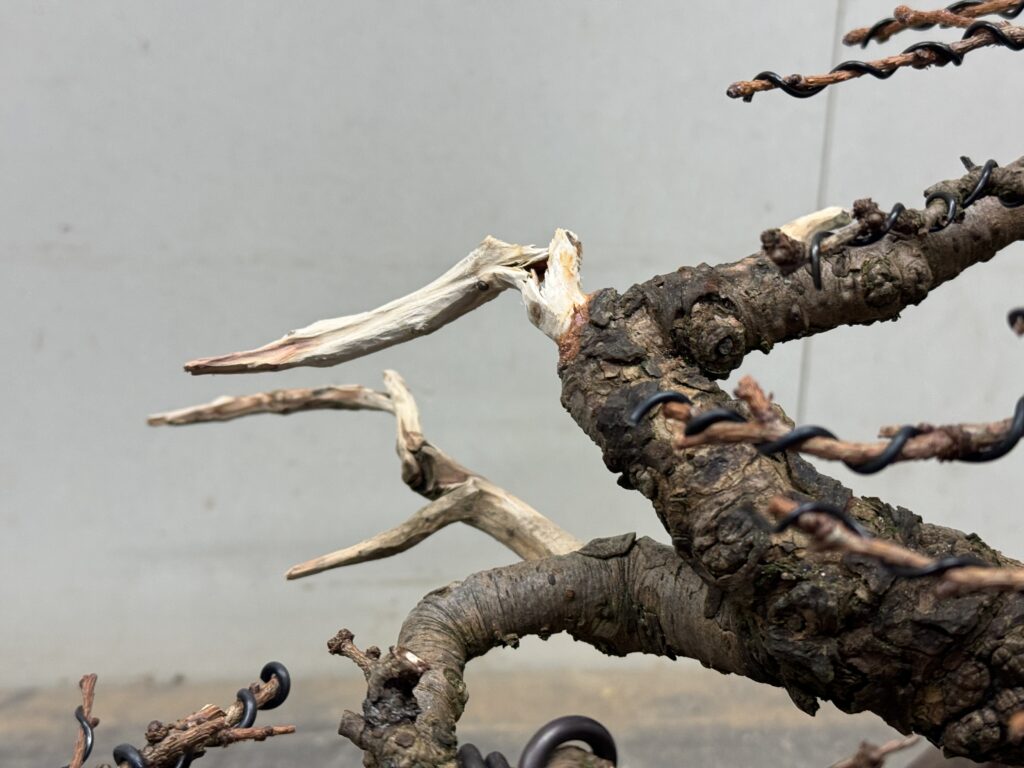
We had a tree that was uninspiring and looking as though it may have no future as a credible bonsai. With drastic pruning, a change of angle and some wiring we now have a dynamic shohin bonsai giving the appearance of a much older tree. The two trunks have taper, movement and character which work well together at this new angle.
A relatively simple change producing a substantial transformation and one that was well worth doing.


A simple technique but the change in the tree is quite dramatic. What was a major fault spoiling the appearance of the tree has now been replaced with a nice solid base which greatly improves its stature and credibility.


These trees were brought along to a couple of recent classes and clearly illustrate the diversity of material I am presented with on a regular basis. it certainly makes life interesting for both me and the other students.


We have been working on this tree for just over 10 years but what a transformation….from impossible looking material to a very pleasing image.
The frustration comes when you have been working on a tree for 10 years and it looks basically the same as when you started. Bonsai need time to develop but you have to intervene when required to guide your tree in the right direction to the desired result.
Susan has done an amazing job with this hawthorn and should be very proud of her work.


Potentially a really nice Juniper with a strong healthy framework from which we can develop and refine the image.
These pots are all 25-35 years old and were made by Derek for me for trees I had at the time. All measurements are in centimetres and external.


If you are interested in any of the above pots please message me at [email protected]
Here is the list of the books I have for sale. I can supply photographs of any front covers on request :-

Forest, rock planting & eco spruce bonsai – Saburo Kato
World bonsai convention Munich 2001 – Exhibition book
Penjing worlds of wonderment – Qingquan Zhao
British shohin association 2009 – Exhibition book
Bonsai Landscapes – Peter Adams
Bonsai design (Japanese maples) – Peter Adams
Bonsai design(deciduous and coniferous) – Peter Adams
Bonsai design(Scots pine, common juniper, larch) – Peter Adams
Art of flowering bonsai – Peter Adams
The art of bonsai – Peter Adams
Four seasons of bonsai – Kyuzo Murata
Museo bonsai de alcobendas – Spanish exhibition book
Japanese gardens – Brooklyn botanic garden
Bonsai art – Noelanders
Mountains in the sea – Lew Buller
Bonsai techniques 1 – John Naka
Bonsai techniques 2 – John Naka
Bonsai from the wild – Nick Lenz
Bonsai from the wild(revised/expanded 2nd edition) – Nick Lenz
A Japanese touch for your home – Koji Yagi
A Japanese touch for your garden – Seike/Kudo/Engel
The gardens of Japan – Teiji Itoh
Creating Japanese gardens – Ortho books
Unione Bonsaisti Italiana 2000 – Italian exhibition book
Unione Bonsaisti Italiana 2001 – Italian exhibition book
Unione Bonsaisti Italiana 2002 – Italian exhibition book
Unione Bonsaisti Italiana 2004 – Italian exhibition book
Japanese Maples – Vertrees
Japanese Maples pocket guide – Vertrees
Create your own bonsai from every day plants – Peter Chan
A life dedicated to trees – Pius Notter
Garden plants of Japan – Gerard Taaffe
Masters book of bonsai – Japan bonsai association
Japanese exhibition book – not Kokufu
Visions of my soul – Robert Steven
Floral treasures of Japan(Satsuki azaleas) – Alexander Kennedy
Classic bonsai of Japan – Nippon bonsai association
Japanese gardening in small places – Tsuboniwa
The art of Japanese gardens – Herb Gustafson
Miniature living bonsai landscapes – Herb Gustafson
Bonsai, kusamono, suiseki – Willi Benz
Bonsai complete guide(paperback) – Paul Lesniewicz
Bonsai complete guide(hard cover) – Paul Lesniewicz
Bonsai in your home – Paul Lesniewicz
Indoor bonsai – Paul Lesniewicz
Creating bonsai landscapes – Su Chin Ee
The secret techniques of bonsai – Masakuni Kawasumi
Kokufu exhibition book number 49
Wisely handbook – RHS
Bonsai – John Ainsworth
Bonsai potters – Giphart and Arzooyan
Bonsai gallery – Bonsai today
Best of bonsai in Europe 3 – Ginkgo exhibition book
Best of bonsai in Europe 4 – Ginkgo exhibition book
Best of bonsai in Europe 5 – Ginkgo exhibition book
Suiseki – Felix Rivera
Path through the Japanese garden – Albright and Tindale
Suiseki viewing stones – Melba L Tucker
Pines Masters series – Bonsai today
Living art of bonsai – Amy Liang
The art of living sculpture – Jack Douthitt
Growing and displaying bonsai – Colin Lewis
The art of bonsai – Yoshimura and Halford
Miniature trees and landscapes – Yoshimura and Halford
(Signed by Yoshimura)
The Japanese art of stone appreciation – Covello and Yoshimura
(Signed by Yoshimura)
The bonsai year book – Paul Goff
The needle juniper, Juniperus Rigida – Working bonsai
Satsuki azaleas – Robert Z Callaham
Bonsai – Susan M. Bachenheimer Resnick
At some point in your bonsai life you will lose a tree. If you have been doing bonsai seriously for any length of time then sadly you will have already experienced this, and more than likely, more than once.
Sometimes it’s down to you! You did too much work, you expected too much, you didn’t give the tree time to recover. Maybe you neglected the tree or got something wrong.
Because we are dealing with a living thing sometimes it’s down to circumstances beyond your control. Like any living entity unfortunately trees can just die! It could be attributable to pests and diseases or it could be extreme weather conditions.
Fortunately, the more experienced we become, the more diligent we are, the less likely we are to encounter this sad demise. When I look at my students and think of the large number of trees we actually have as a group it is very rare that we lose a tree.


I had to do something with this amazing deadwood to try and salvage something for my client. I will show you what I did in Part Two.


From the tragedy of the past comes hope for the future and the resurrection is well on its way. The tree now looks a much more cohesive unit than it did originally.
With the amazing deadwood and the desireable foliage of the Ittogawa juniper the hope is that this tree will eventually look better in its new state than it did originally……and then the resurrection will be truly complete!
I still get a buzz when I see the result of that initial styling whether it be a tree we have created in class or pictures on social media. To see the styled organised image appear out of a dense unkempt bush is still an exciting transformation for me.
This instant creation from seemingly nothing was what fired me up all those years ago and kept me coming back for more. I feel sure most bonsai enthusiasts will relate to this.
Once you start pursuing the hobby more seriously you soon begin to appreciate that this initial styling, as dramatic as it may be, is really just a start, a beginning! This has to be followed by the routines of watering, feeding and general care. When the time is right the necessary interventions have to be made to select, to prune, to create space, to guide the tree to his next level.
After that initial transformation of seemingly biblical proportions I am afraid the subsequent journey to anything approaching a reasonable specimen takes place at a much more sedate pace. Time is what you need to develop branches and twigs, create dense foliage clouds and allow the tree to put on a show of mature bark under a breathtaking canopy.
I suppose you can be sucked in to this sedate pace, maybe becoming a little despondent but the tree creeps up on you! One day carrying out your normal routines you may just catch the tree from a different angle or maybe you weren’t in such a hurry this time and actually looked over him. Suddenly it’s a WOW moment. You realise that after all this time the tree has finally started to arrive. The shape is good, branches are uniform and in the right place, you now have lots of twigs/leaves. You can see and appreciate the results of your work over the years.
This journey after the styling can be a source of frustration and disappointment for many enthusiasts. People can have a tree for 10 years or more and not see any significant change. You have to intervene at the right time and then do the right things. My intervention helps my students manage this precious time to achieve the desired result.
Most of my students are excellent bonsai technicians. They just need that intervention or guidance from me often only a couple of times a year just to keep them on the right path and to pull them back if they are going astray. Some students attend classes once a month, some come just a few times a year. Many students now have me go to their garden to go over more of their trees especially where these are larger and difficult to transport.
Below are pictures of some of my trees which have benefited from time…..years of care and attention but mostly just being left to grow. Leave them alone, let them grow, and then when the time is right you intervene….then you let them grow again. Some of these trees have left me now but hopefully the new owners can take them to their next level. After all the time I put in to them it was like parting with my children.
Enjoy the euphoria of the initial styling, marvel at the dramatic change, applaud the artist…….just like I did (and still do!)…..but then appreciate that this is just a start, a new beginning…….now the real work begins and its time to create your tree!


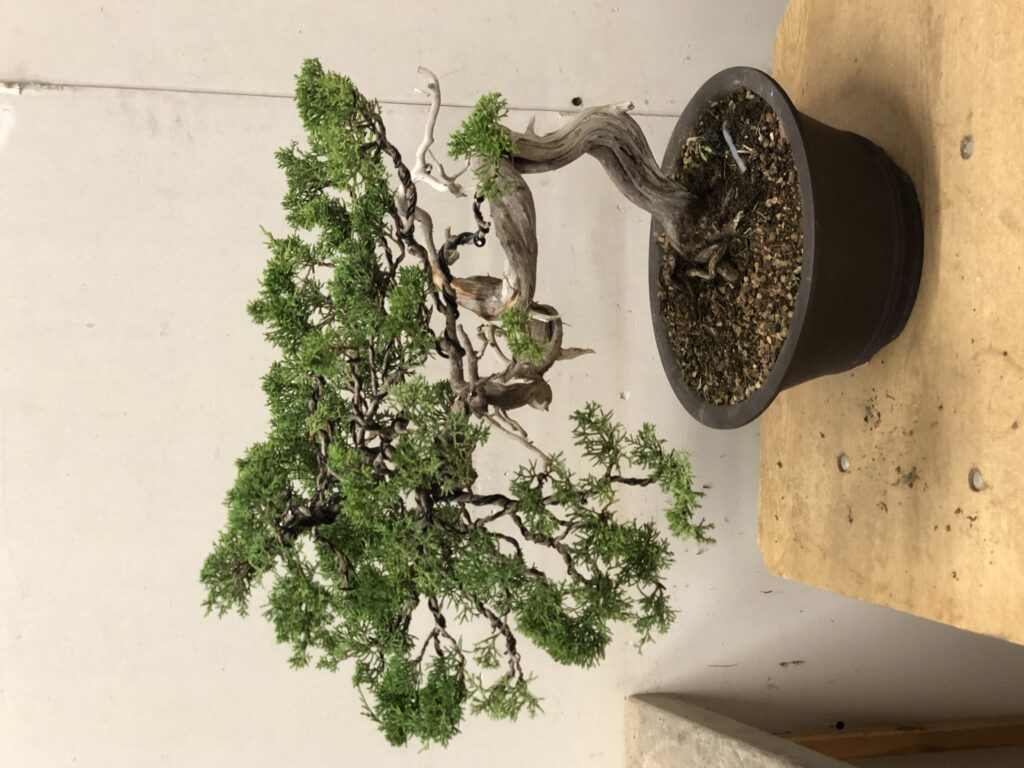
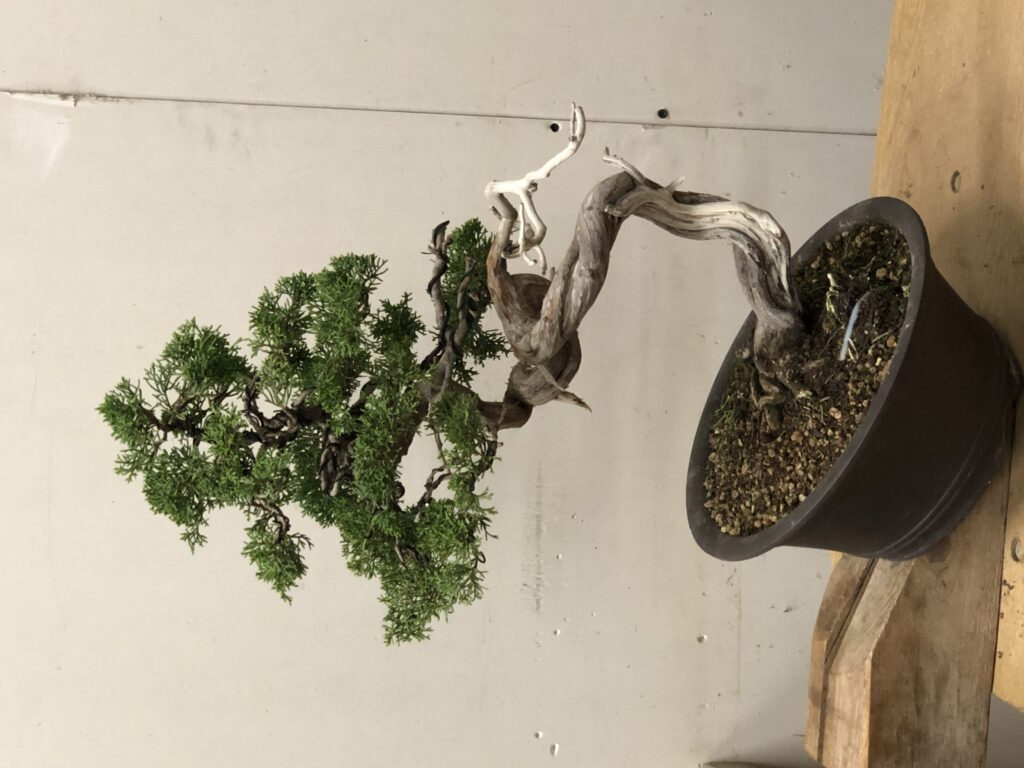
This has been and continues to be a really interesting project. We have created a tree like image out of seemingly impossible bonsai raw material. the tree has a strong resemblance to a lone Scots pine on a distant open landscape. It’s future may well be as a silhouette type bonsai without the detailed wire design normally associated with juniper bonsai.
Once again time has helped us to create a remarkable transformation. A conifer that nobody would ever consider as being suitable for creating a bonsai but maybe this tree has aspirations to prove us all wrong…..


Often we use Juniper material to create the image of a pine forest we might have seen during a road trip. To recreate that image using genuine Scots pine trees and in this size is a quite remarkable achievement of which Diane can be truly proud. I am happy to have played my part in guiding her along the way but once again the biggest contributor is simply “time”!
