Normal view

Received before yesterday Bonsai Penjing & More

More Ficus Bonsai From the Taiwan Hwa Fong National Show

16 April 2020 at 02:34

I wrote this blog after returning from the 2017 Taiwan National Hwa Fong Show but did not finish it.  I can give many excuses, truth is I was just lazy.  Procrastination has become a way of life for a retiree; there is never a rush to finish things I used to hurry and complete over the weekends while I was still working.

With the coronavirus pandemic, many of us are staying home for various reasons, doing our best to cope in this difficult time, and I want to wish every safe and well.  I thought I should pick up this old draft, add some more ficus bonsai from the show and post it.

IMG_4114
The main entrance decoration to the show.

Without a doubt Taiwan has among the best ficus bonsai in the world, and there are many things we can learn from studying the trees upclose in person.

I counted 15 ficus in this show; each one is a masterpiece.  Since my wife and I travelled to the show on our own, unbound by group activities and schedules, we could spend time studying and admiring trees we like; how the trunks were fused, how aerial roots were used to enhance the trunks and nebari, how side branches, ramifications, and pads were formed.  In fact, we came back to the show two days later since we were not done admiring so many amazing bonsai in our first visit.  Studying top-notch trees in person and talking to high level practitioners are among the best ways to learn.

Massive Ficus From Fused Trunks

The majority of the very large ficus we saw were fused from several smaller trees.

The first one I want to discuss is a massive Ficus microcarpa with an umbrella shape canopy.  A lot of ficus bonsai in Taiwan are shaped this way with variations in how the pads are arranged.  The roots are powerful, anchoring the tree firmly onto the soil level, giving the whole tree a feel of stability and unmovable.

IMG_4226
Ficus microcarpa by Rui Long Tsai (蔡瑞隆).

The main trunk is made up of several fused smaller plants. Although some could have been created from fused aerial roots.  Surface roots that became too fat were split to form smaller V-shape roots.  This is an important part of maintaining old ficus bonsai, preventing the roots from become overly and disproportionally fat.


IMG_4228

Looking from under the pads, I saw healed wire marks on some of the branches which prompted some questions.  Since the wire marks were closely spaced and were nearly perpendicular to the branch, not at the typical 45 degree angles we are familiar with; were these marks created from successive wiring and dewiring, or were they wired purposely close together and allowed to bite into the wood to speed up branch thickening?  Since these branches are very thick and there are perhaps easier ways of bending thick ficus branches, I surmised they could be used to accelerate branch thickening, a technique sometimes used in Japanese black pine.  I did not have a chance to ask and find out, anyone out there could answer this, please?

IMG_4231
Note the closely spaced wire marks.
IMG_4232
IMG_4240
IMG_4241

More umbrella top ficus from fused trunks and separate trees:

IMG_4246
Ficus microcarpa by Jian Cheng Liu (刘建成).
IMG_4248
IMG_4261
Ficus microcarpa by Qing Lian Li (李清连). The bark looks like a ‘Kinman’ aka ‘Tiger Bark’ cultivar.
IMG_4262
Ficus microcarpa by Gui Zhi Hsieh (谢贵子).  This tree is about 100 years old and won the Best of Show.  I previously wrote my discussion with one of the judges who explained why this ficus won the Best of Show, a Grand Champion, over so many beautiful trees, especially over other very imposing ficus.  His explanations enlightened me to nuances judges see, the illusion of age instead of just wow, “What a beautiful tree!”
IMG_5953
Ficus microcarpa by Jin Lian Chen (陳锦莲).
IMG_5973
Another Ficus microcarpa by Jin Lian Chen (陳锦莲).
IMG_6006
Ficus microcarpa by Rui Long Tsai (蔡瑞隆).
IMG_6029
Ficus micrcarpa by Mao Di Fang (方茂地).

This is where I stopped my draft in 2018!  I just added a few more photos with some notes.

IMG_5853-001
Ficus microcarpa by Xi Xiong Hsieh (谢喜雄).  A very interesting ficus with extensive ground hugging roots.  Someone once posted this photo On Ficus Study Group  and asked whose tree is it, I did not reply right then and forgot about it.  Whoever you are, this is the tree and its owner.
IMG_5854-001

The following one is a seldom seen clump style ficus bonsai by Zheng Xing Tsai (蔡正信) of Taipei.  My friend, Chun Shen Chen, later took me to visit Mr. Tsai’s nursery.

IMG_5835 copy
IMG_5836 copy
IMG_6847 copy
Mr. Tsai, me and Mr. Chun Sheng Chen at Mr. Tsai nursery.

In Taiwan, all participants in major shows receive a framed photo of his or her entry with show information.  This is something bonsai societies in the US might consider doing as most participants would like to have a photo of their tree professionally photographed for keepsake.  Of course, it would be nice to have it in an exhibition book like in the US Nationals but not many shows could afford publishing a book.

Wish you all safe and well!

An Unusual Ficus Bonsai Style From Taiwan

20 June 2020 at 18:17

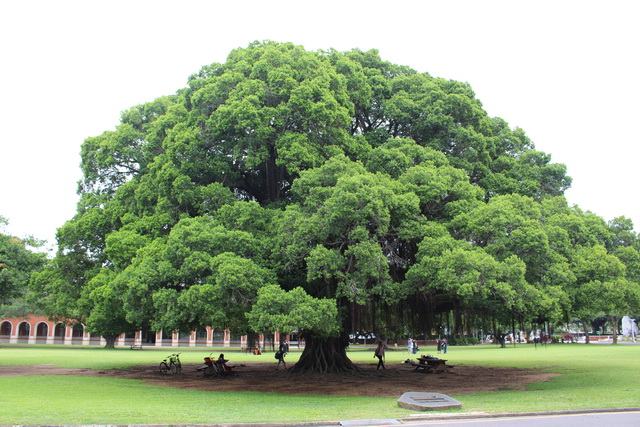
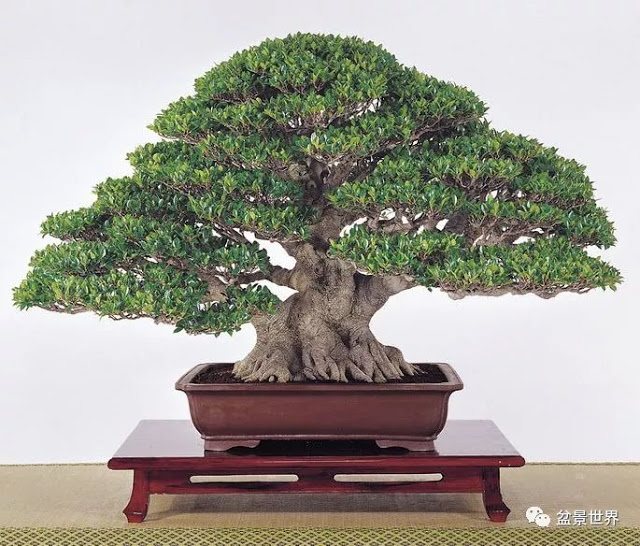
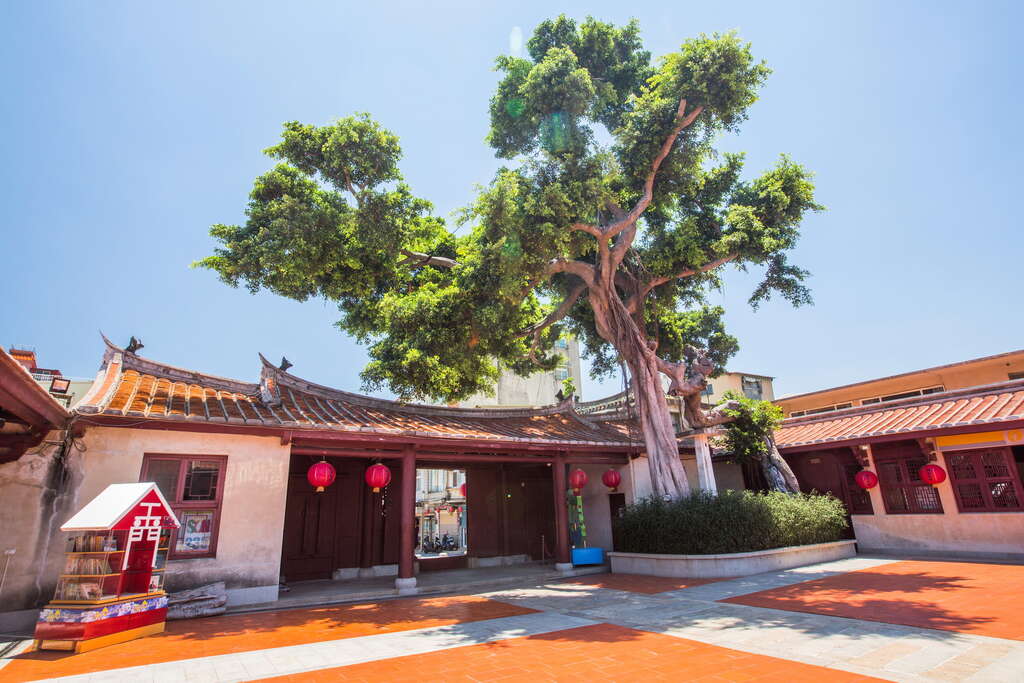
Huge massive trees with umbrella-like canopies and neatly arranged pads are hallmarks of Taiwan’s ficus bonsai. They are created and modeled after an old majestic Ficus microcarpa in Tainan’s National Cheng Kung University campus.

cheng'kongFicus

F. microcarpa at the National Cheng Kung University campus


WeChat 圖片_20190524211752

An Award Winning F. microcarpa modeled after the National Cheng Kung University ficus, height: 87 cm, by Hisu Yang

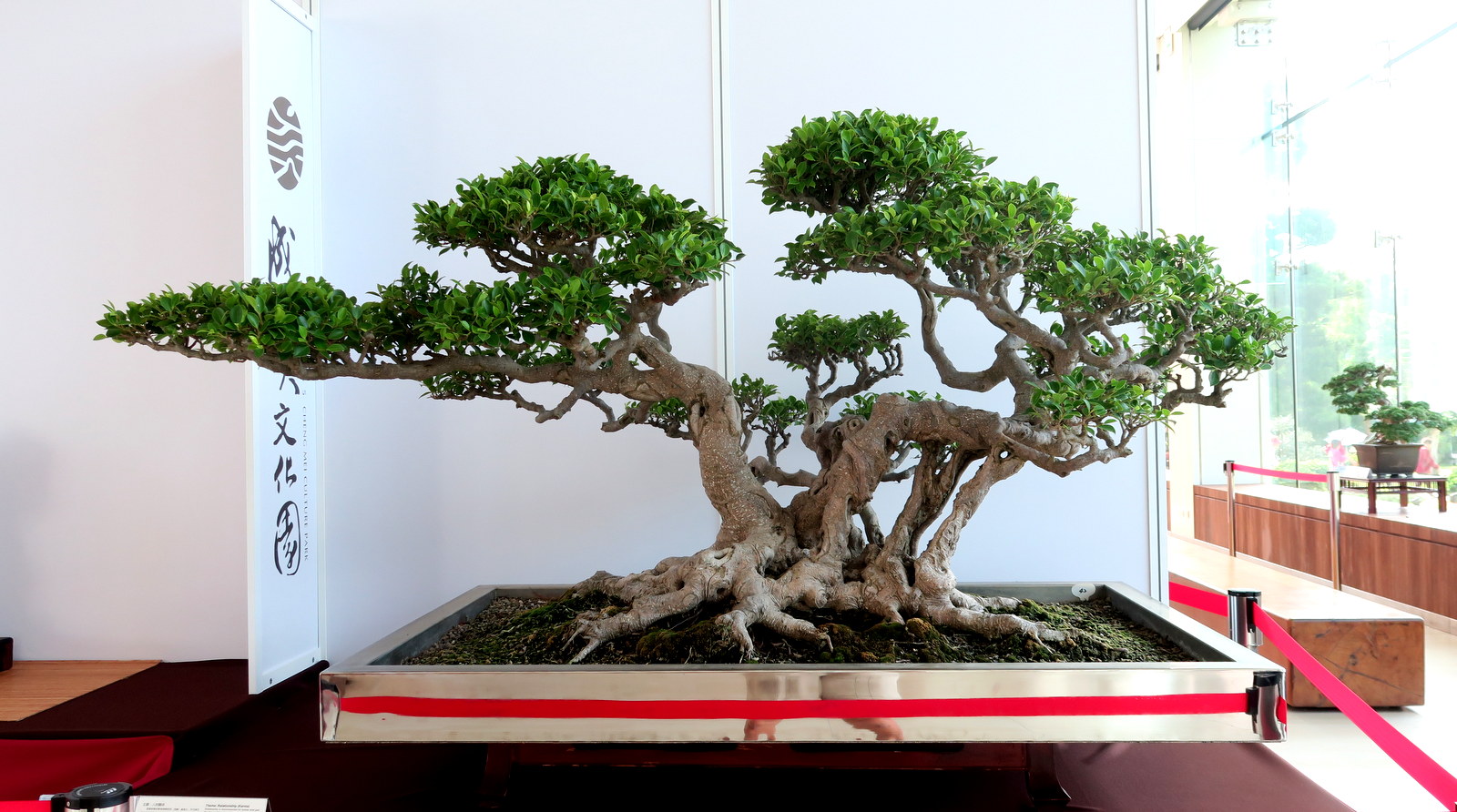
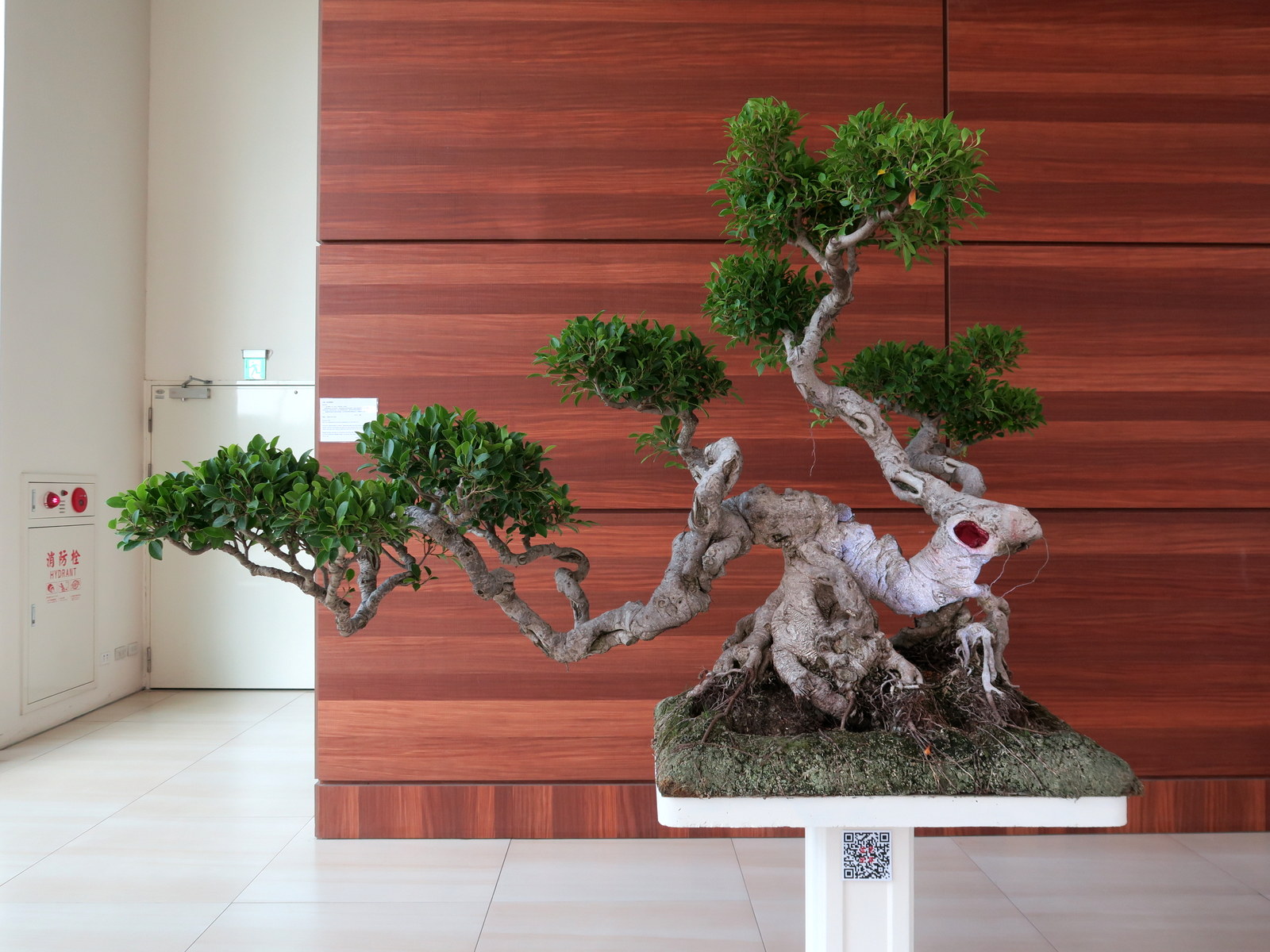
Over the last decade, there have been increasing criticisms among some Taiwanese artists that too many of their ficus bonsai look like each other, prompting comment likeif you have seen one, you have seen a hundred”. The artist of the above award winning “standard” ficus, Mr. Hsiu Yang, 杨修, did something unusual; he created two “non-traditional” ficus bonsai.

IMG_5589

Planted in stainless steel tray, size of tray is 6-8 foot long if I recall correctly.


IMG_5605

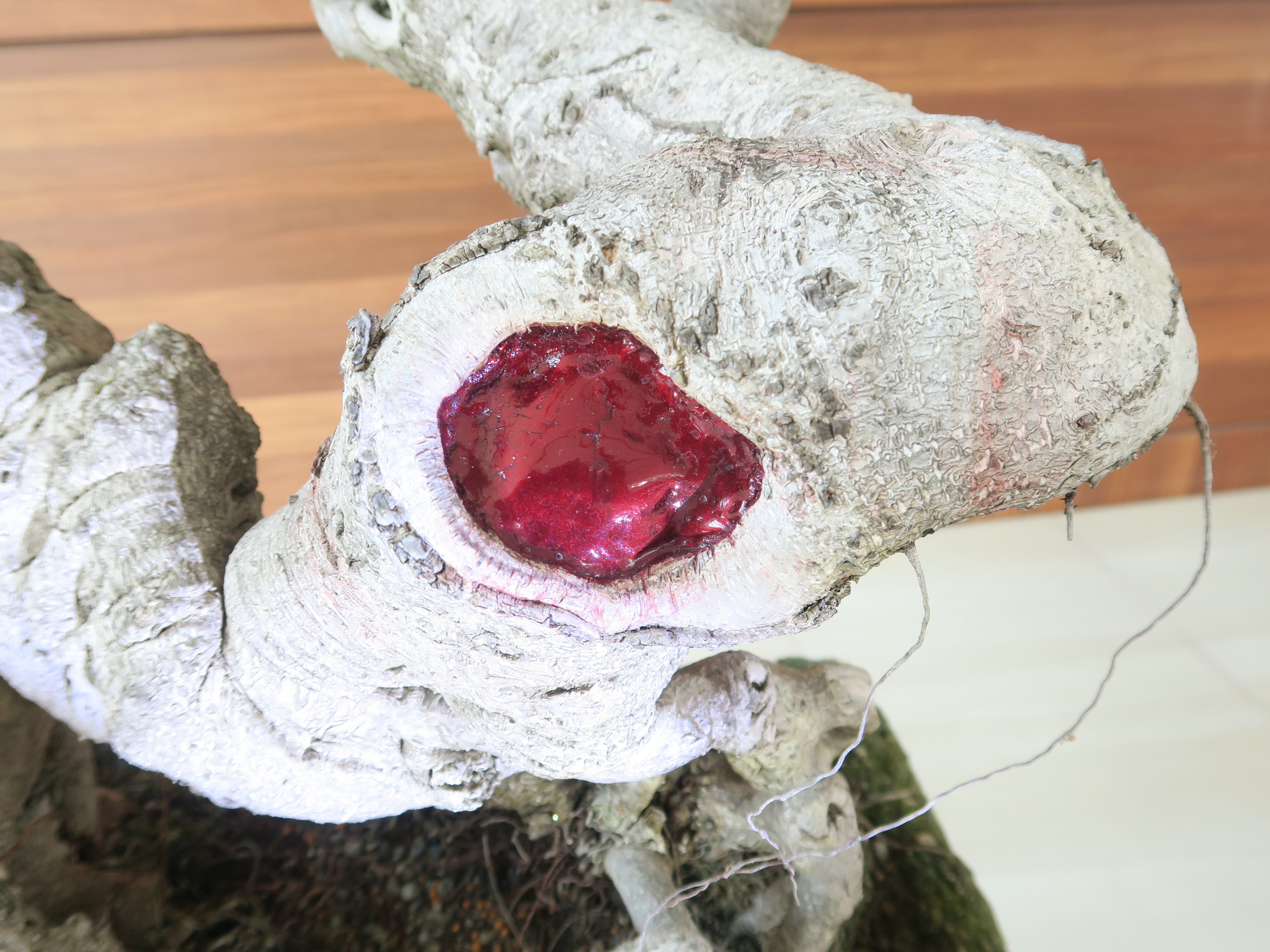
Another Mr. Yang’s creation. Note a cut wound filled with clear red resin. He had a spot light illuminating that red resin.

When I saw these two ficus at the Cheng Mei Cultural Park (成美文化園), I was shocked.  I would not be surprised to see bonsai styled this way in China, but in Taiwan?  However, these trees looked familiar and they appealed to me; I could appreciate them because I have seen oddly shaped ficus just like these two growing in suburban parks, street corners and village squares.

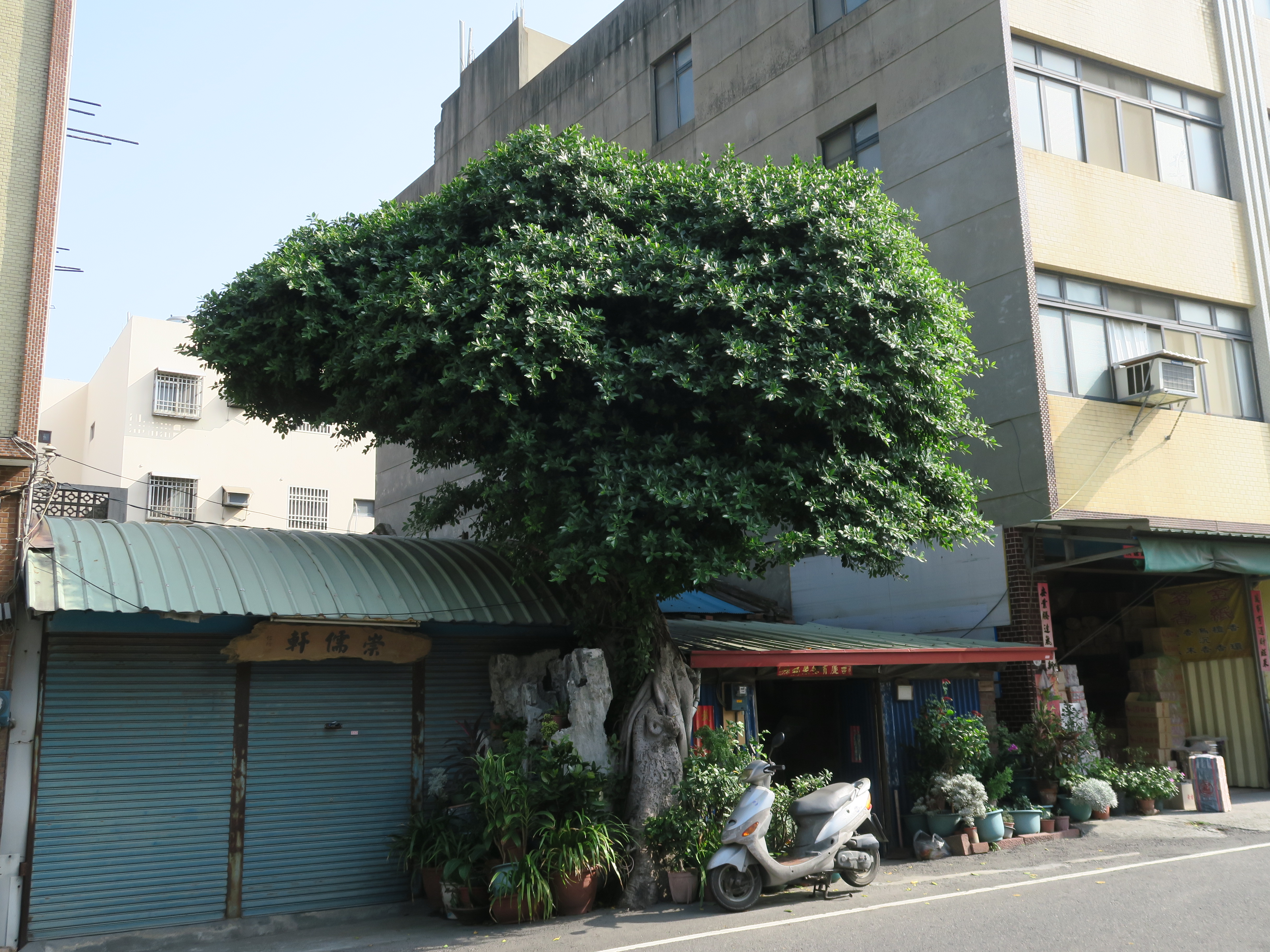
Taiwan is densely populated and is very crowded. Although ficus are widely grown as landscape trees in subdivisions and small community parks, as they grow their extended limbs eventually encroach nearby buildings, fences, etc., they compete for space with human dwellings.

When these encroaching limbs were cut off, since bonsai rules do not apply during tree trimming, new branches grow at odd angles and finally into a form which I could only ascribed to “a cohabitation between ficus and human competing for space”.

IMG_6117

A ficus I saw in Lukang, which has become too big and too close to a shop house. It ended up a mushroom shape.

To many bonsai eyes, they are ugly looking trees but are nonetheless alternative “natural” models for bonsai inspirations. There is a Chinese proverb which says “there is beauty when ugliness is at its extreme,” and it might apply in this case.

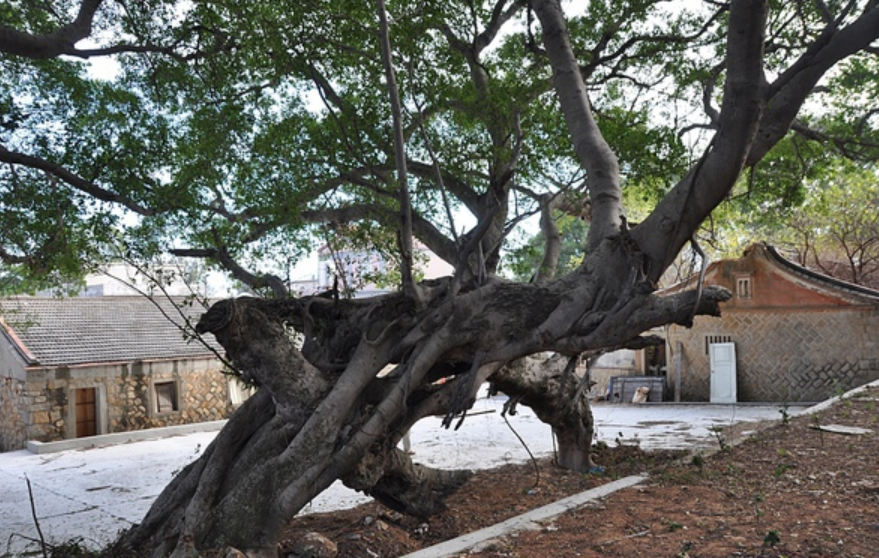
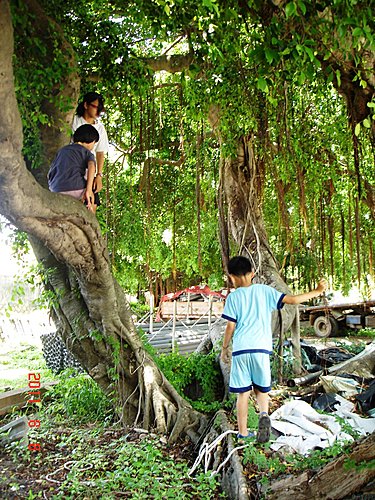
Here are some photos from Taiwan streets and squares I downloaded from the internet with their respective sources:

清金門鎮總兵署內大榕樹 (1)

An old ficus growing in the Qing dynasty military governor’s compound in Kinman. https://kinmen.travel/image/10494/1024×768


Screenshot (179)

Old ficus in Kinman Island. Source: http://papilio0204.pixnet.net/album/photo/138052177


701827097_m

A plaque, not in this photo, said it was planted in 1886.

I thought these urban ficus inspired Mr. Yang’s creations but I was wrong!  I later found out he got his Master degree from the Mingdao University using the ficus in the stainless steel container as a project, and his thesis was entitled “A Study of Bonsai Sculpture Creative Method and Ficus microcarpa Linn. f. Example.” 

In his thesis, Mr. Yang discussed applying aesthetic principles to bonsai creations. This ficus was created based on his Buddhist believes of causality; aerial roots were used to create a more organic tree without an obvious massive trunk, and the whole creation process represented the three stages of past, present and future in Buddhism.

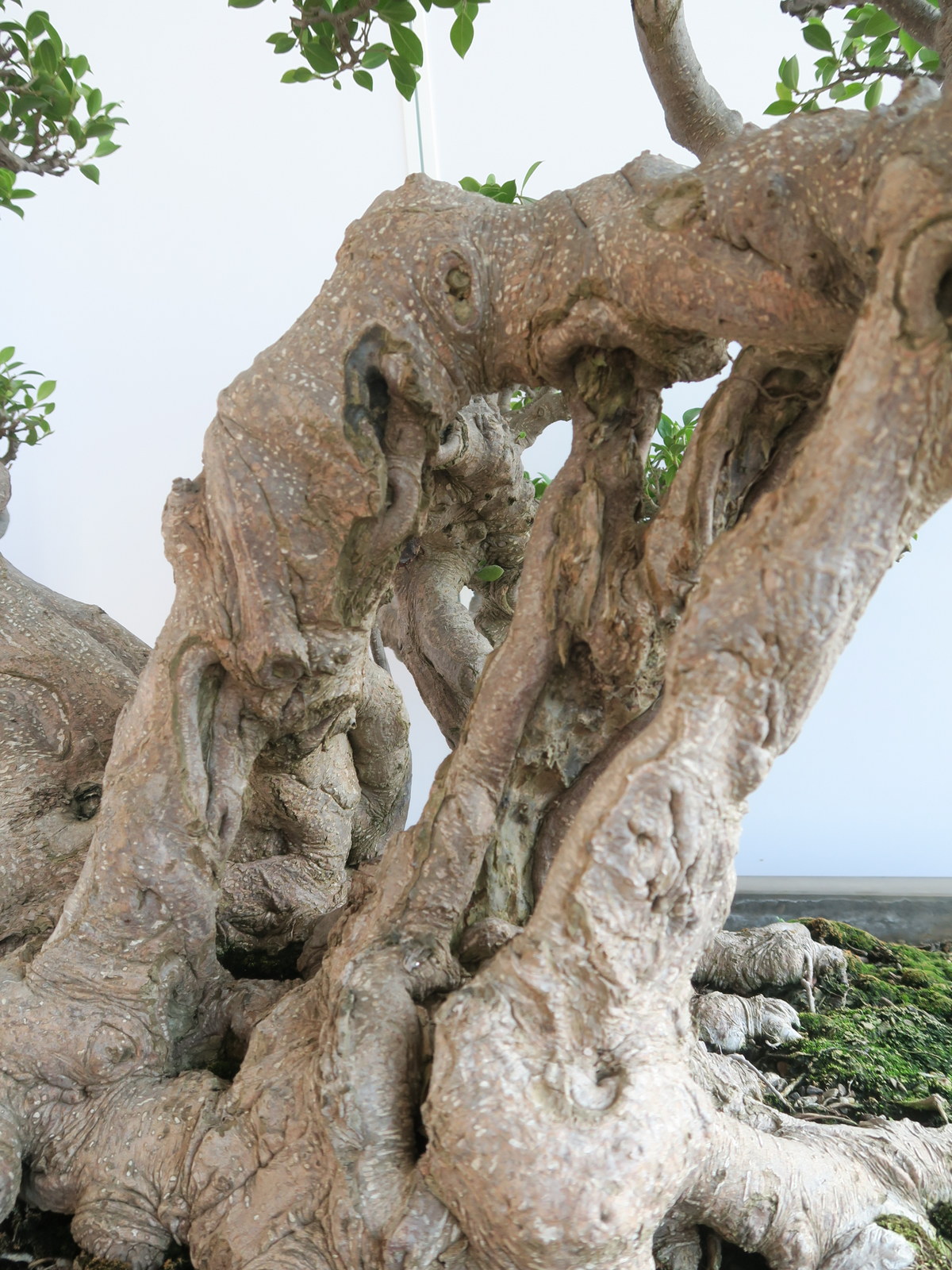
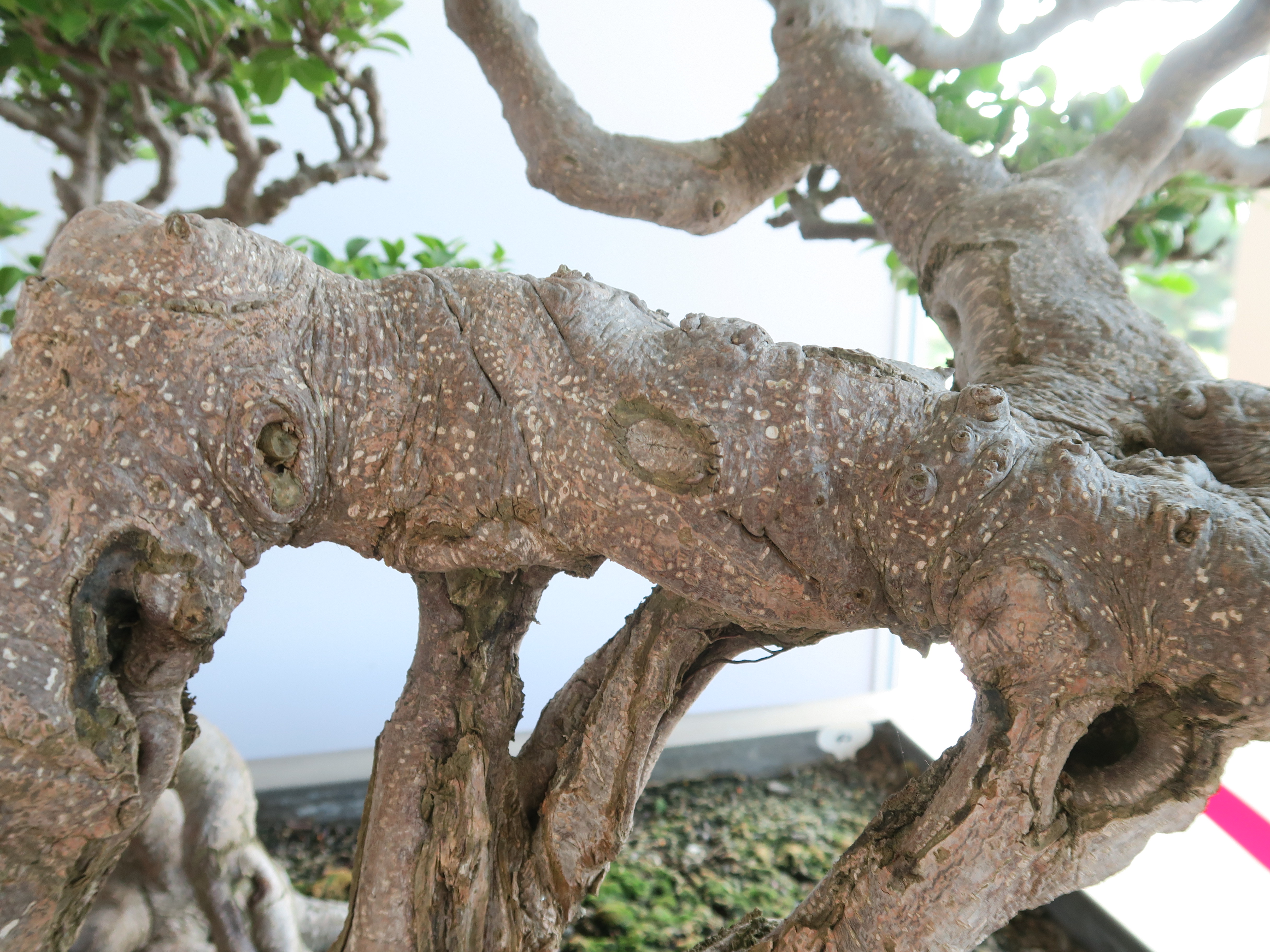
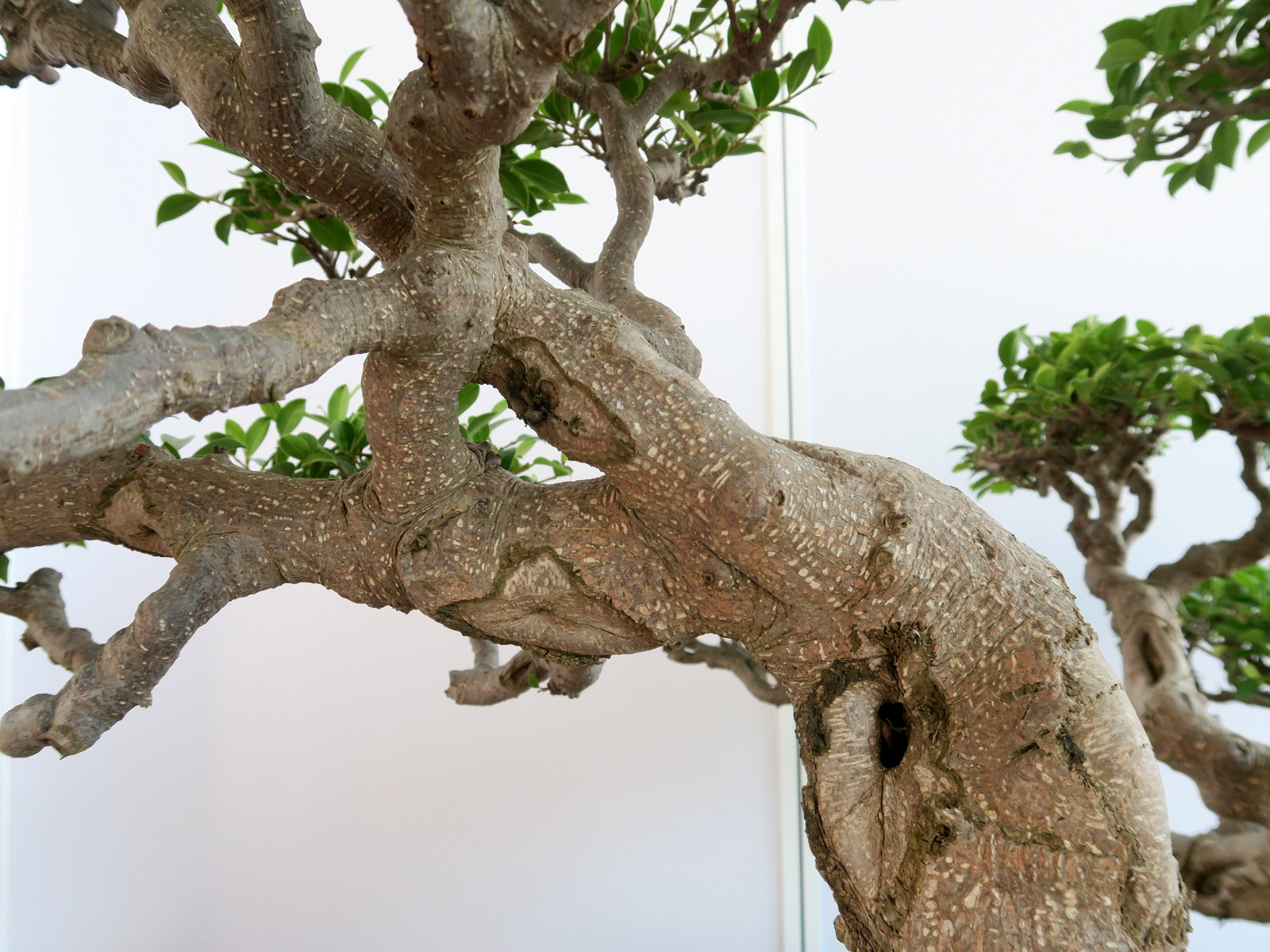
I do not understand the religious and philosophical meanings in this creation but I can relate to it because I have seen ficus growing in crowded urban areas. There are a lot of intentional “imperfections” from partly peeled irregular aerial roots, crisscross branches to unclosed large wounds, called “horse eyes,” throughout the bonsai. They are very different from the Japanese aesthetics of perfections.

Anyway, please enjoy detailed photos of these two unusual ficus bonsai.

Ficus in Stainless Steel Container: 

IMG_5592

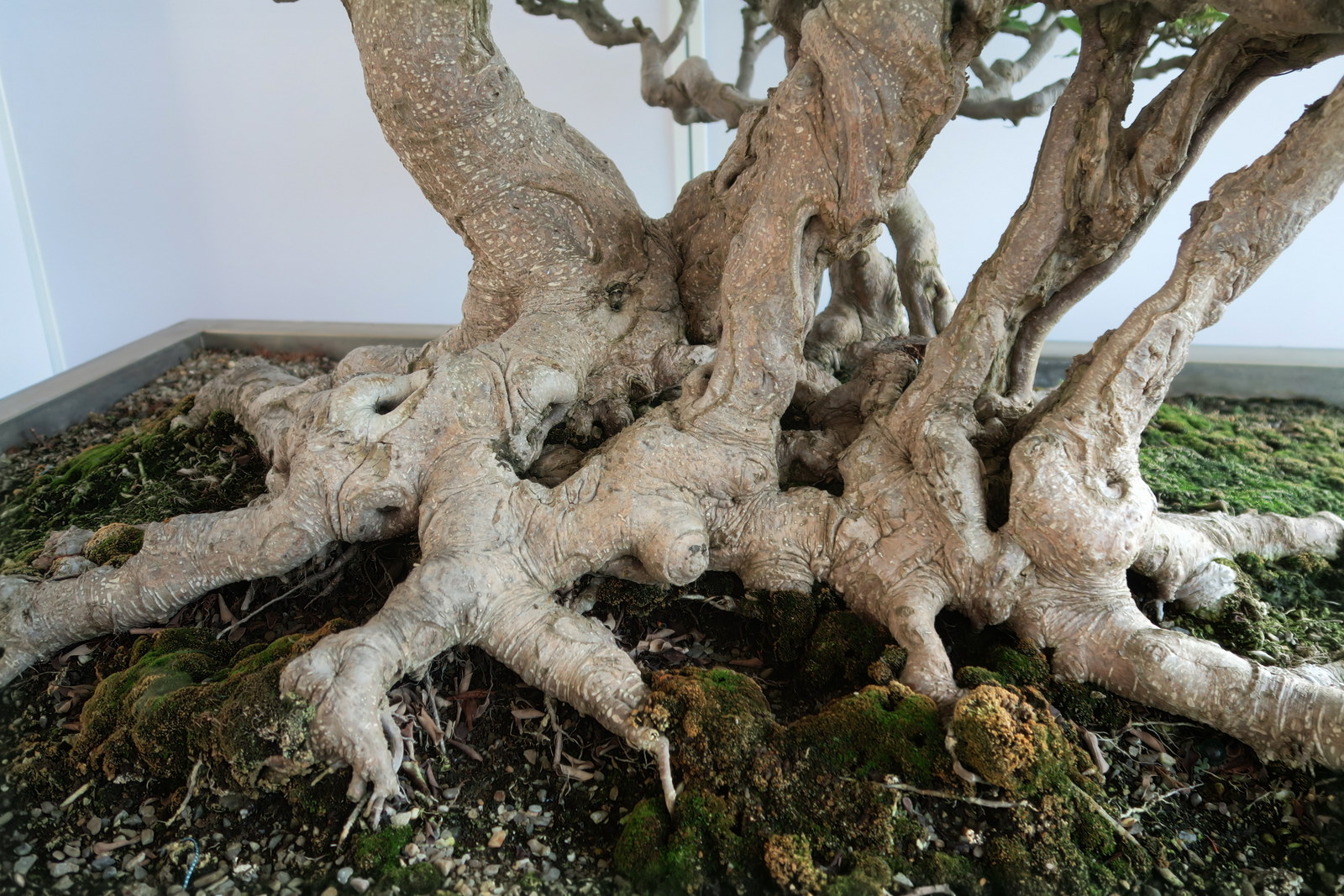
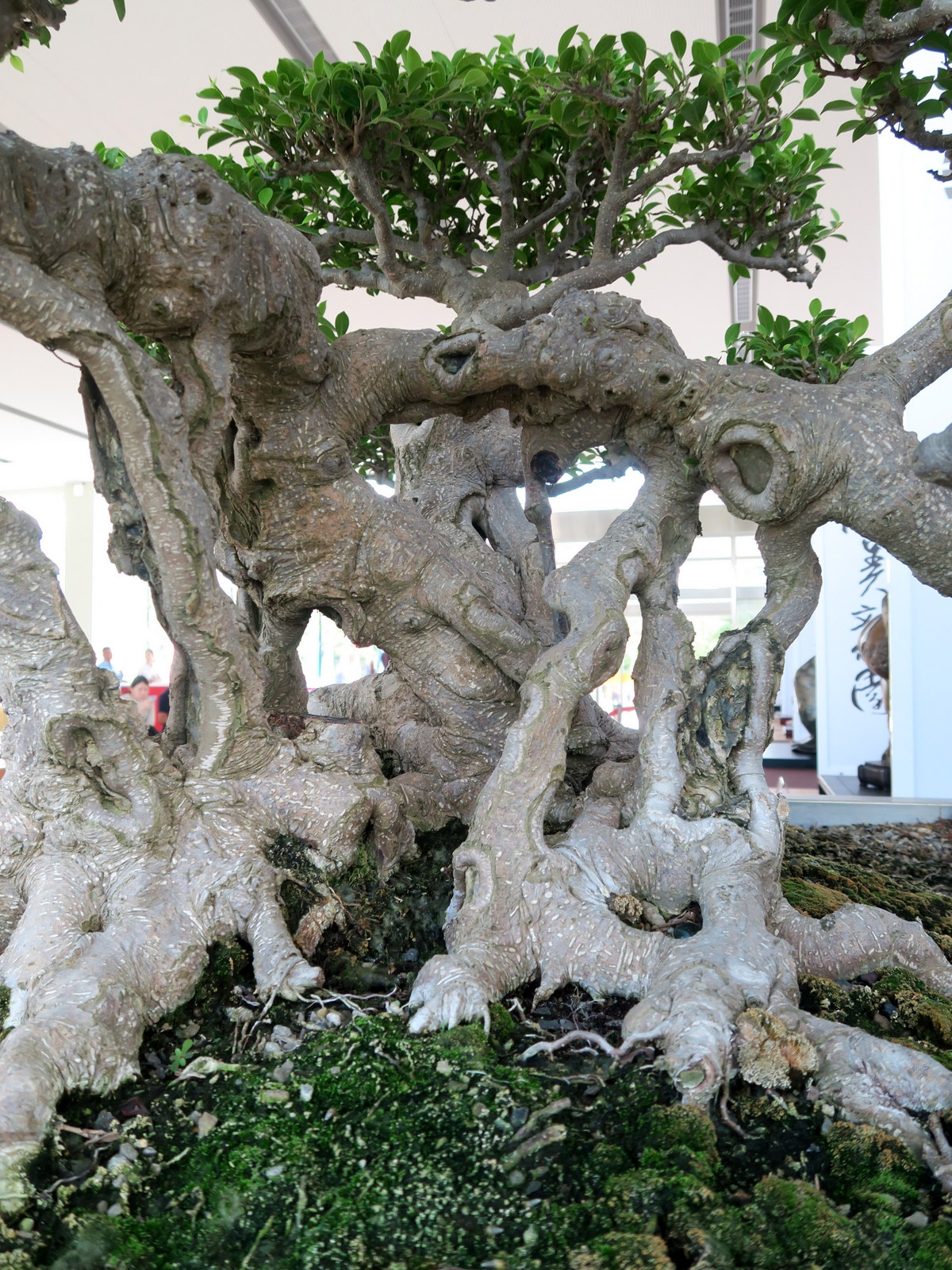
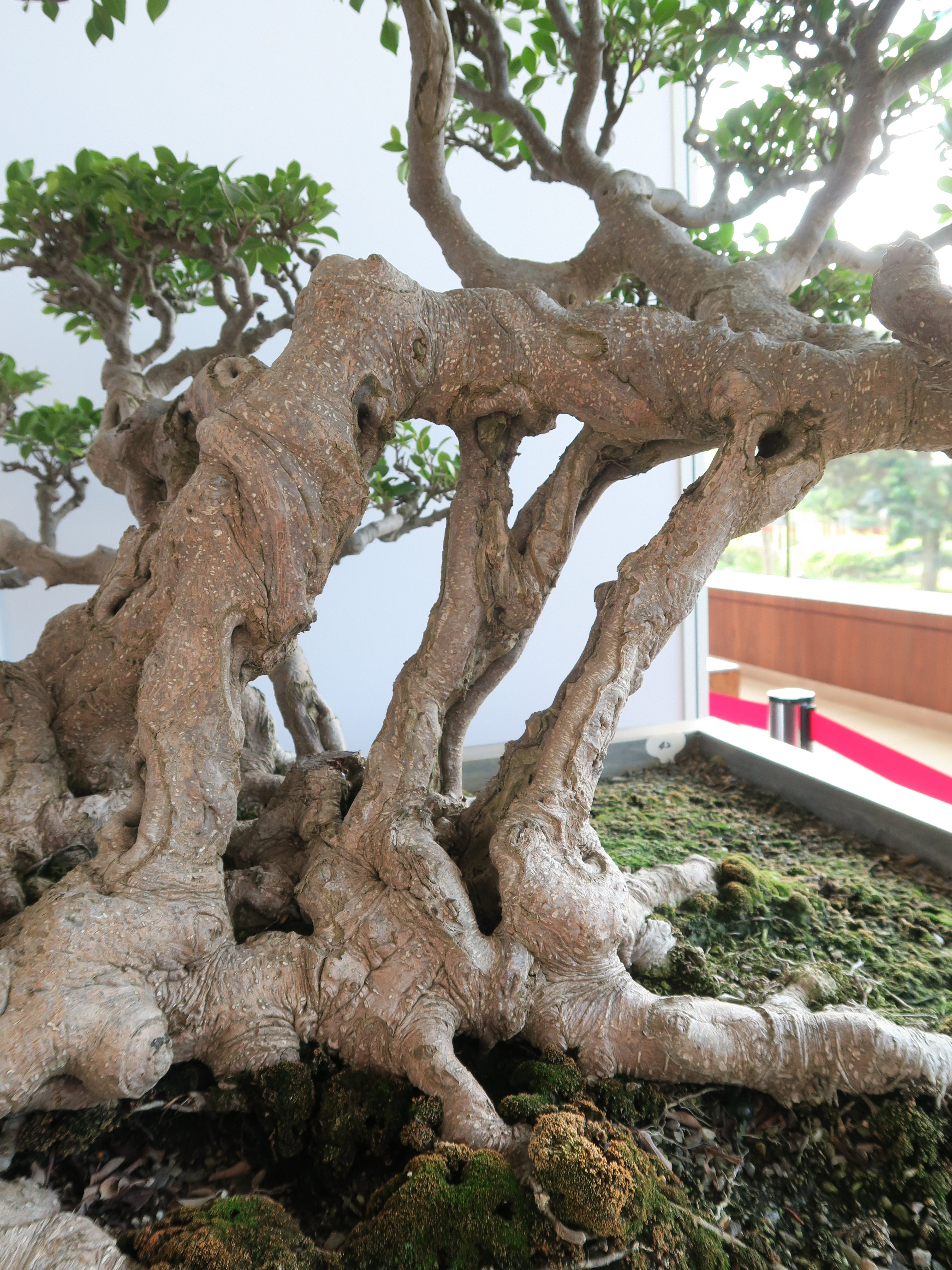
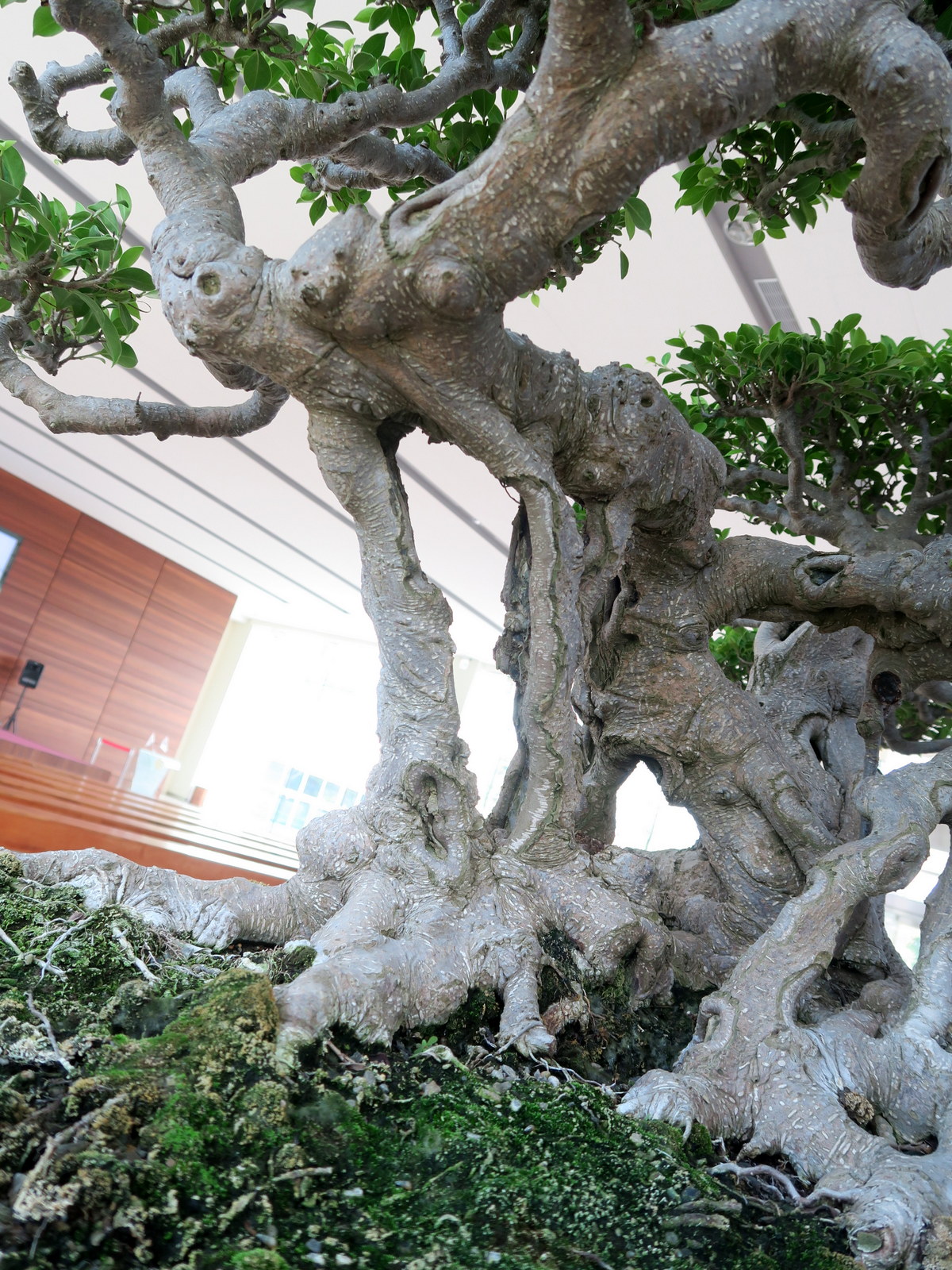
Multiple trunks created with aerial roots; they are not fused together into massive trunk we see in most Taiwan ficus bonsai.


IMG_5600

Fused irregular aerial roots as part of the “organic” trunks. Even the moss dressings were not neatly arranged like those in Japanese bonsai exhibits.

IMG_5598

IMG_5596

IMG_5597

IMG_5594

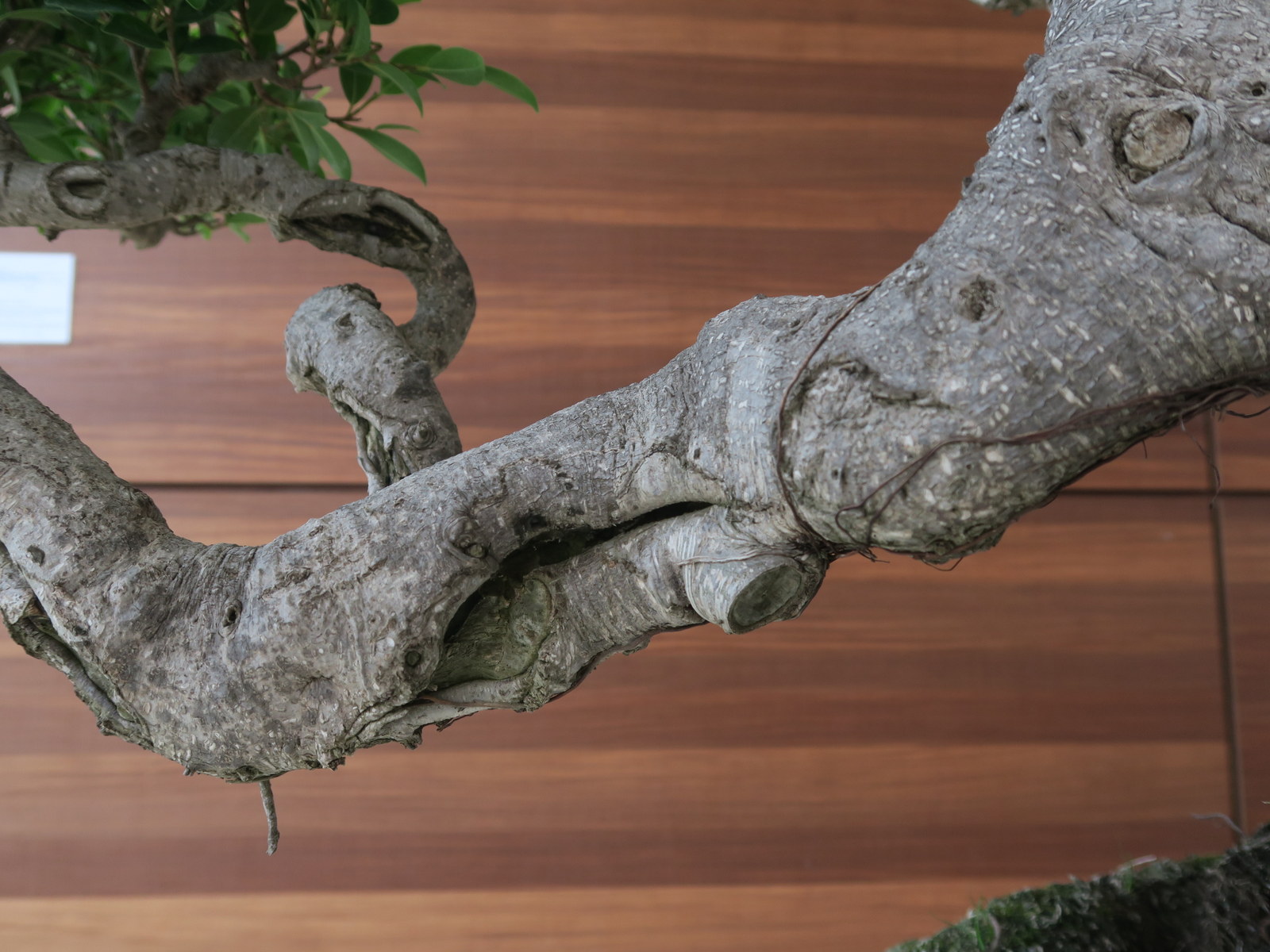
Large unclosed wounds, “horse eyes,” accentuate imperfections.

Ficus with Filled Red Resin:

IMG_5606

A light inside a 5-gallon white plastic bucket was aimed directly at the resin to capture the “tree goblin”.

IMG_5603IMG_5609

IMG_5611

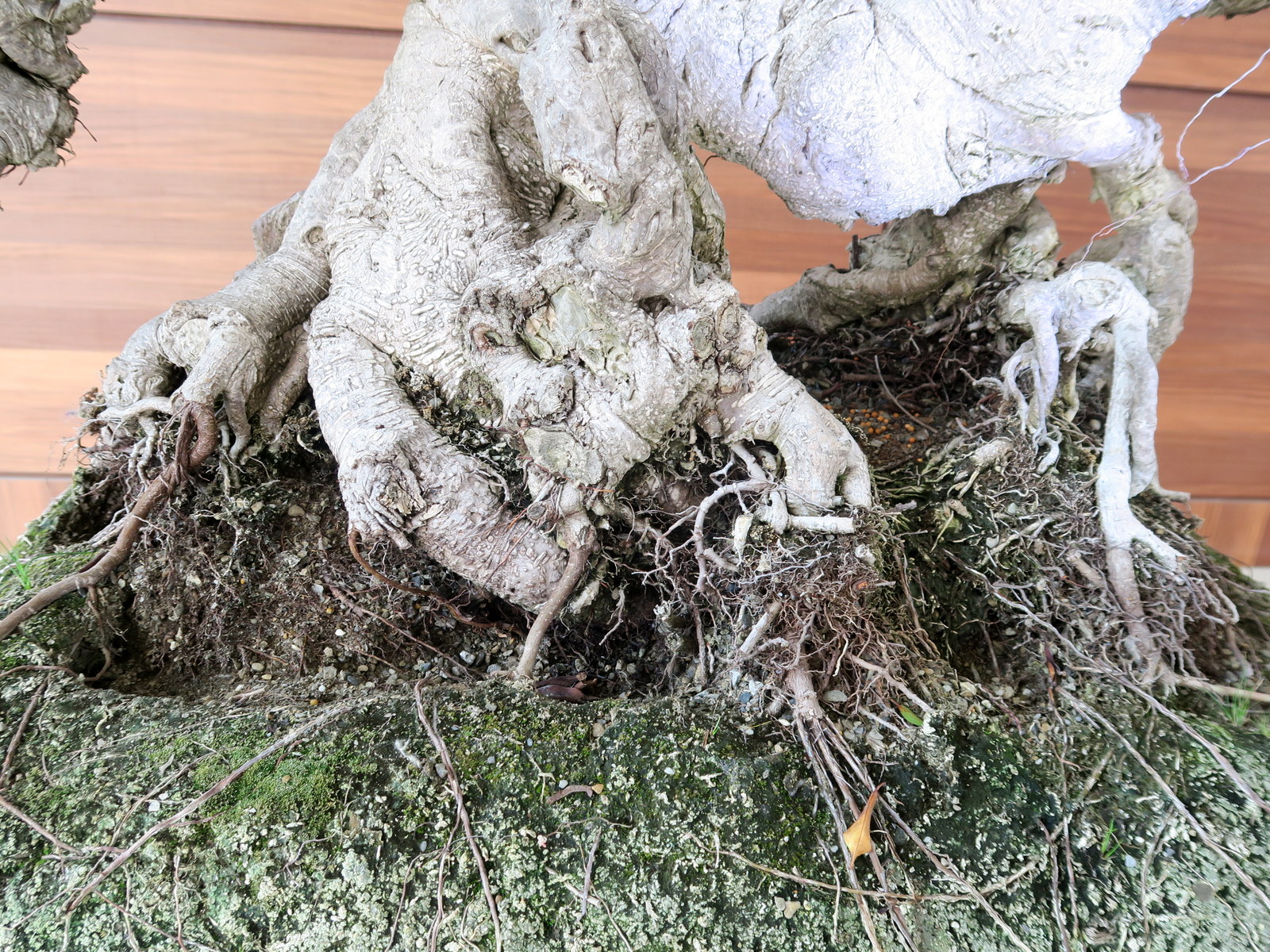
No massive nebari for this tree.

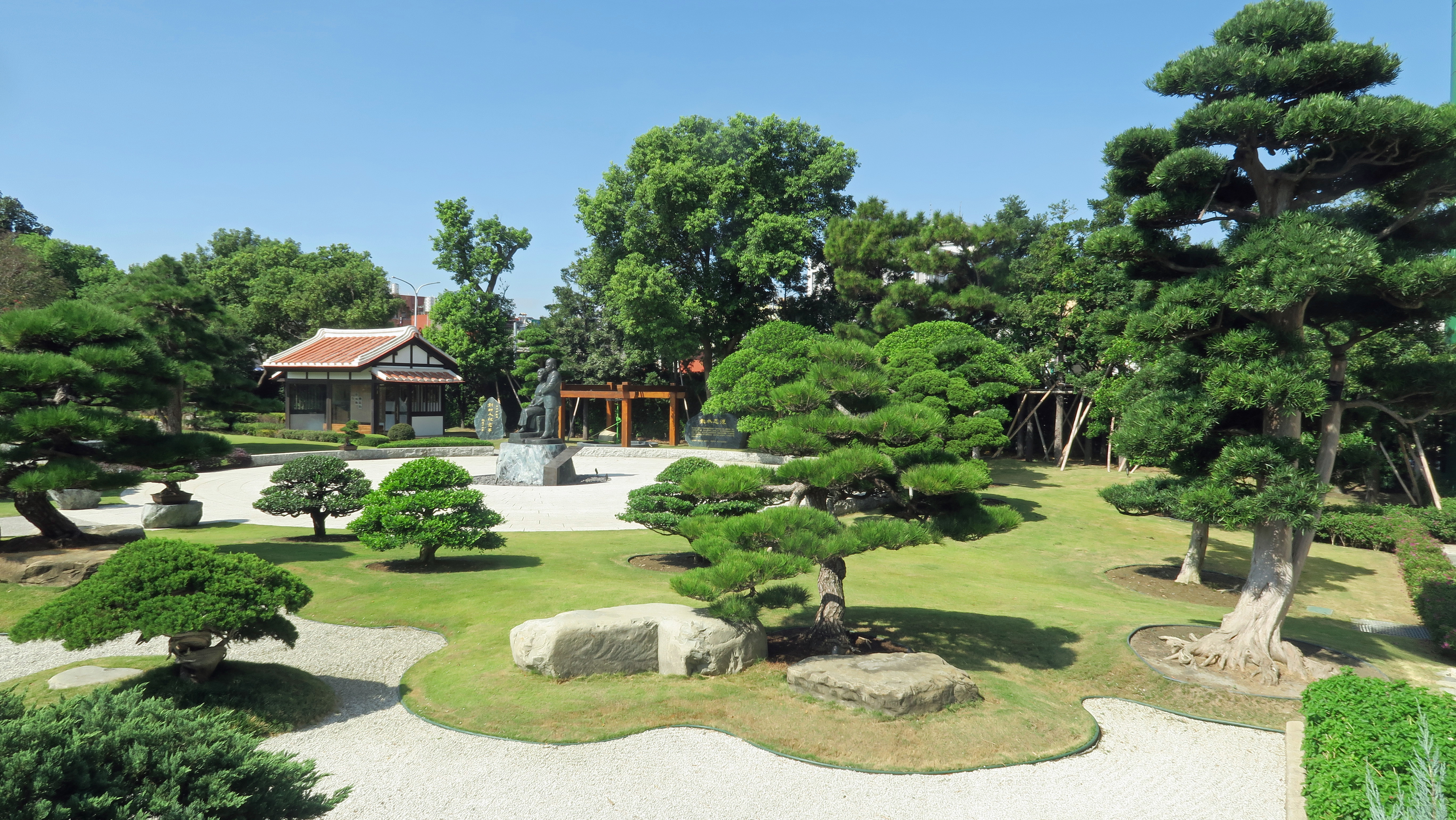
The Cheng Mei Cultural Park is a beautiful garden worth a visit if you go to Taiwan.

IMG_5638 copy

❌