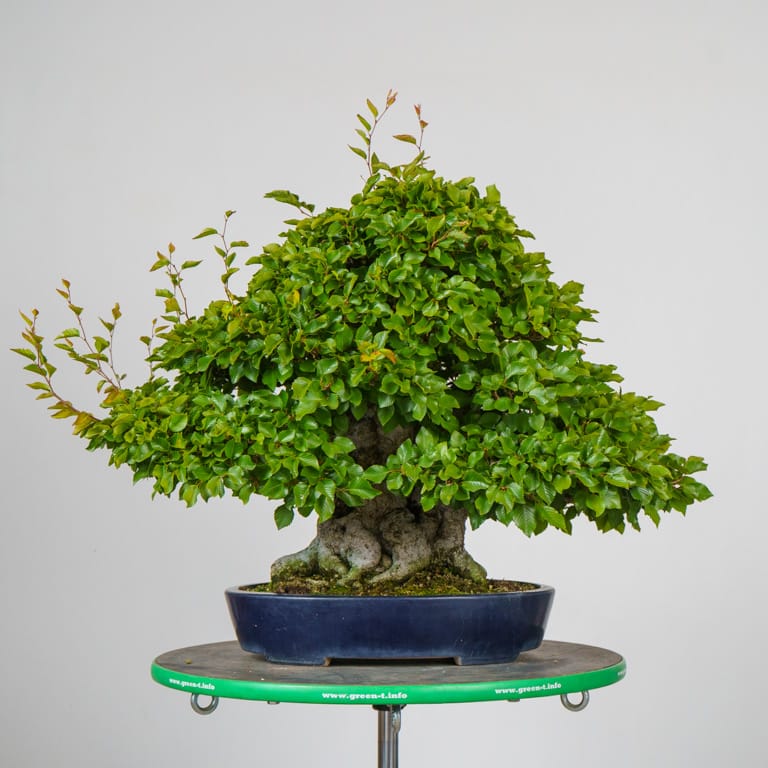
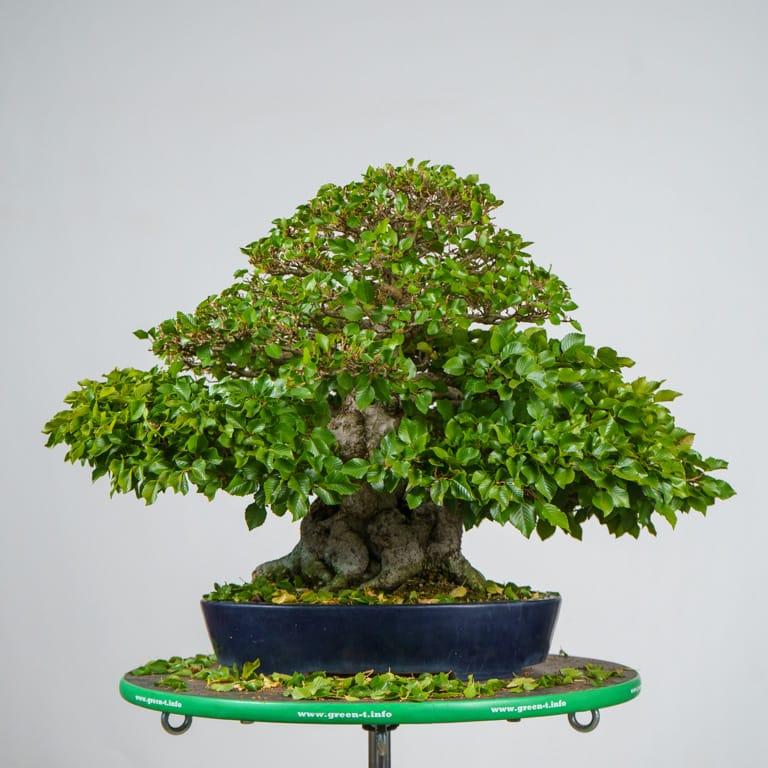
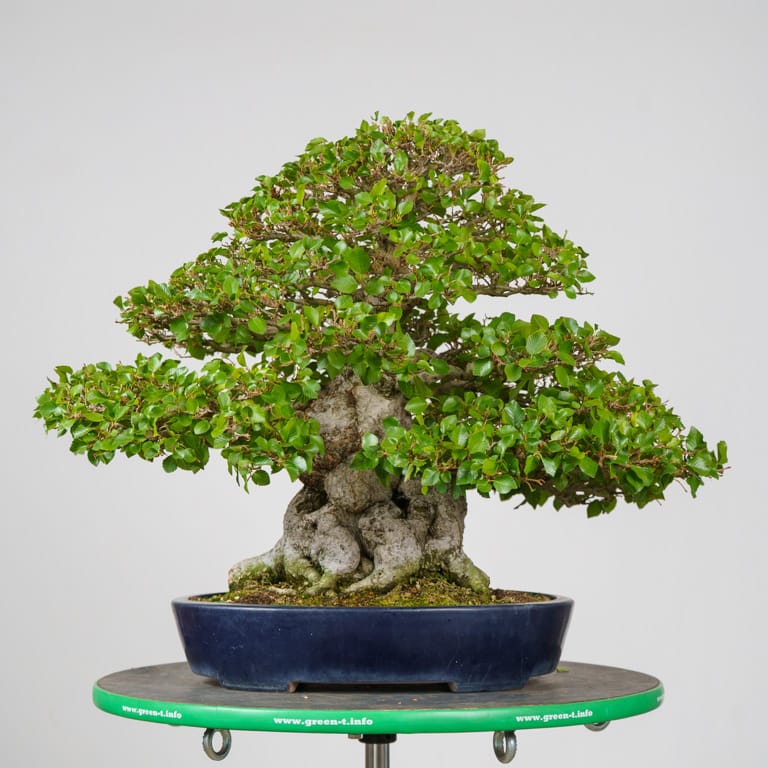
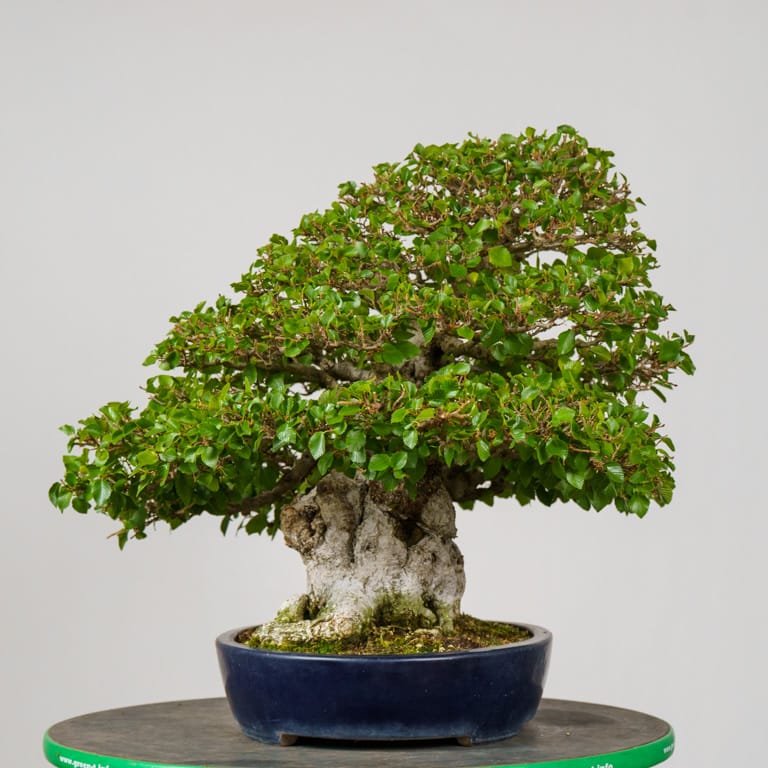
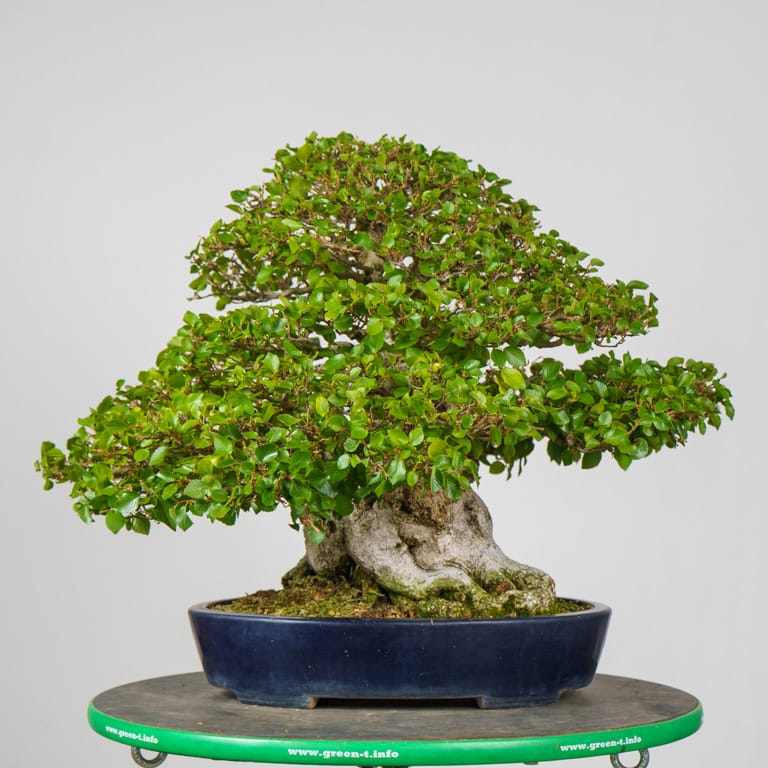
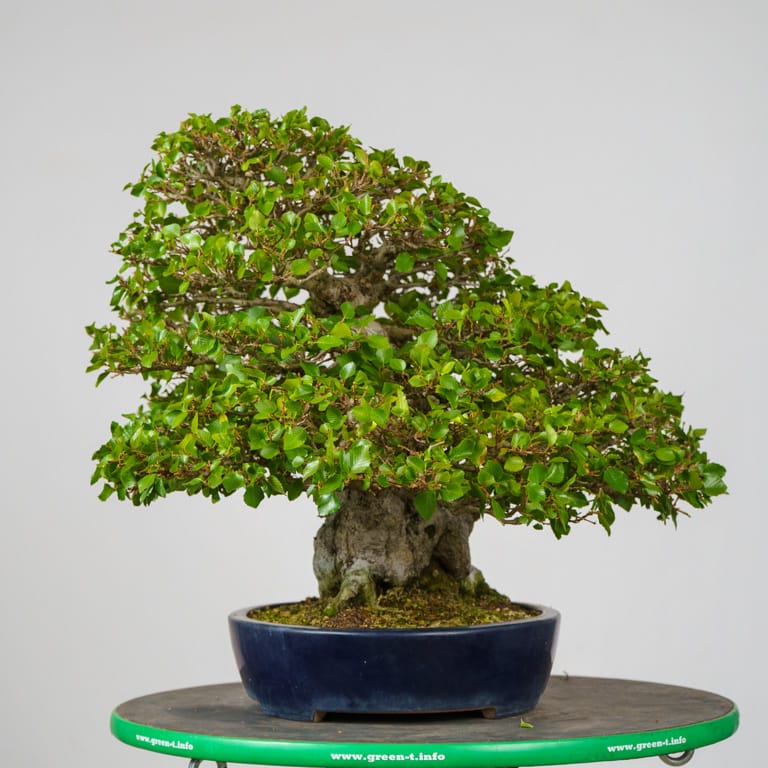
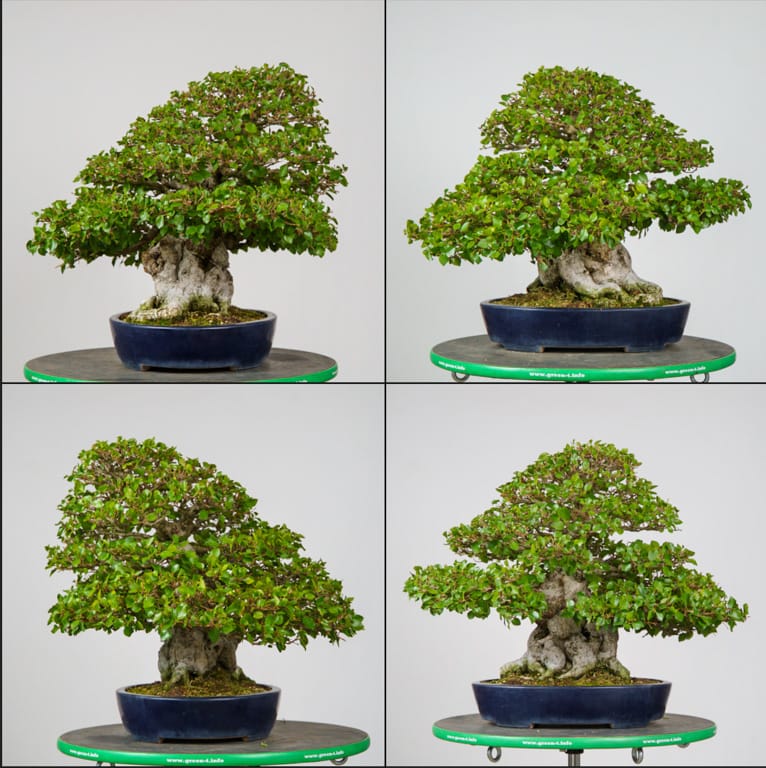
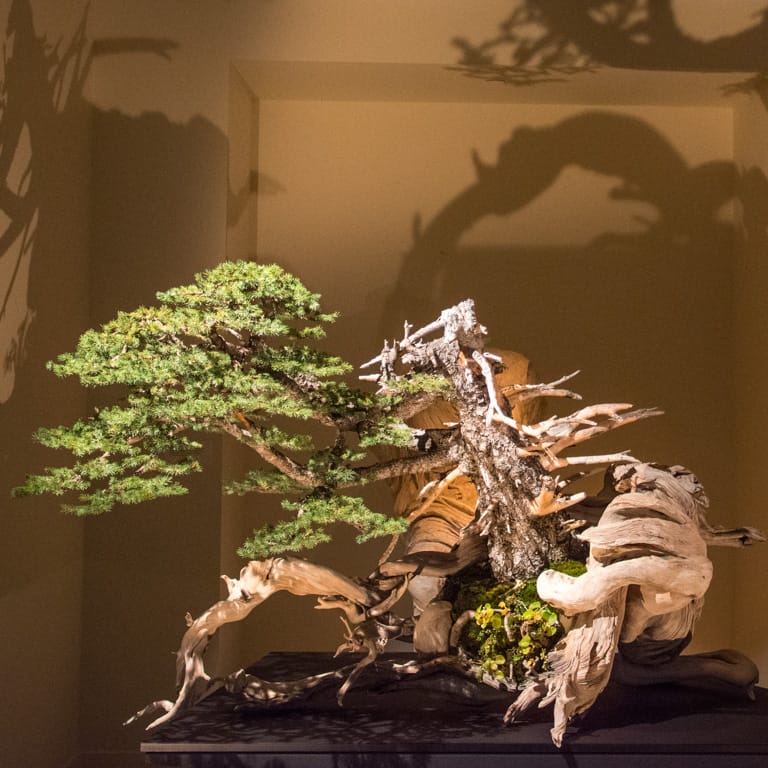
John Armitage, well known in bonsai circles, will as part of the Mame/Shohin exhibition be doing a demonstration during the day with this tree. This is in the fitness room, during the Swindon βWinter Imageβ show on Sunday the 15th February 2026. https://swindon-bonsai.co.uk/2025/11/19/new-for-the-2026-swindon-winter-image-show/ At the conclusion of the demo/workshop he will be donating this tree to the raffle.
Twickenham Bonsai Club was founded in 2019 with just a few members and has flourished to a membership of around fifty.
This is the fifth show the club has put on, a combination of both summer & winter shows. Each club member was invited to display three trees, and as more trees were put forward than the club had room for, a selection process had to take place.
It was great to see such positive engagement by all their club members, and year on year the standard of their trees continues to develop, and it was a pleasure to attend their show today.Β
A visitor vote for the best tree is used, also the winning trees from the previous summer show were invited back for second display (but excluded from voting this show).
The winners of the public vote were Liz with her Acer palmatum βShishigashiraβ in 3rd place, Mark with his Acer palmatum βArakawaβ in 2nd place and Terry with his Chamaecyparis pisifera βBoulevardβ in 1st place.Β Tina Todd was also presented by Tony Peter Ulatowski with the RHS medal for all her contributions to the bonsai club.
The show was a buzz with lots of visitors plus conversation and activity with club members working on their trees. Mark was building a double tier Japanese Larch forest which looked great.Β
The venue is ideal for a bonsai club show being spacious and well lit too. They even had a food catering truck provided by Jason Fisher this year, their own club sales and traders including Nick Payne of Springwood Ceramics, Neil Hutchings of Devon Bonsai Nursery, Vinay Rathore of Toko-en Bonsai and Stuart Beresford.
As a club they are always progressive and this year have compiled a book of their 2025 club newsletters which are very informative and it is a first which will be available to purchase from the club later this year. They also have partnered with Over Rock where you can purchase Twickenham Bonsai Club merchandise from Over Rockβs website.
Last month the Bay Area Bonsai Associates held their 42nd annual exhibit at the Lake Merritt Garden Center in Oakland, California. The event featured an exhibit, sales area, and Saturday evening demonstration by Adam Toth.
Japanese black pine
California juniper
I appreciated that the show included a good mix of deciduous, broadleaf evergreen, and coniferous bonsai. Trees ranged in size from large down to shohin with plenty of trees somewhere in the middle.
It was also fun to see different approaches to the same species. The two coast redwoods below, for example, feature different branch angles, different branch thickness, and different approaches to foliar development.
Coast redwood
Coast redwood
It was also fun to see so many deciduous bonsai in winter silhouette.
Cork elm
Elm and azalea
Jacqueline Hillier elm
Pomegranate
Several small-tree displays provided good contrast to the larger trees in the room.
Shimpaku
Shohin display
Shohin display
The show also featured native material including Sierra juniper and Coast live oak.
Coast live oak
Sierra juniper
Sierra juniper
Walking through a bonsai show has made me excited for the upcoming Kokufu exhibit in Japan. More on that in an upcoming post.
Japanese Larch Bonsai Restoration Part 2 β Video
So, despite being inundated with your lovely orders I managed to find time over the last week to put together yet another little movie.
This time we get to revisit the twin trunk larch I started on in 2024. Japanese Larch Bonsai Restoration Part 2 Video details the work of laying the foundation for future development and refinement. I hope yaβll appreciate this one, itβs taken a good few freezing cold days and late nights.
Here is an interlude post about my trip to Okinawa. Next week, back to bonsai, where I hope to share some wonderful old bonsai on Honshu.
The city of Naha, at the southern end of Okinawa.
At the top of the main island is a large laurel forest. I went up there for a few days.
At the guest house I misunderstood the food situation. Thought there would be dinner, as we were miles from town. The owner was busy and said heβd take me in the next day so I could shop. So I didnβt eat for 24 hours. I survived off a drink vending machine on property. An inadvertent juice fast.
These vending machines are everywhere. Theyβre even nowhere. A little delivery truck trundles up the barren road once every couple weeks to supply the mistaken.Β
Site of my starvation
Laurels and tree fern. Okinawa is subtropical, around 60 F this time of year. This is the dry season.
Azalea
Fire-bellied Newt. I shouldnβt have picked this up, as a friend later told me. The newtβs skin has toxins.
A protector deity on a roof. Behind the lion grows a sapling pine, I think a Ryukyu Pine. βRyukyuβ is the name of the sea-trading Okinawan culture that dates back thousands of years.
Photo courtesy Merlin app
I did some birding, including trying to find this bird, the Okinawa Rail. Itβs a sneaky shorebird that lives in the lush laurel woods and it eluded me for several days. I heard many of them in the deep ravines but had no intention of slithering to my demise over a bird so intent on not being seen. That they were only described to science in 1981 is no mystery to me.
Itβs rural and quiet in the north. Or so I thought on the first day.
Right at 6 pm a loudspeaker blared out over the sparsely inhabited forest: Itβs time to go home to your children, the day is done, good night.
This was LOUD. And it made me jumpβ
What?! A fire, an earthquake, a liquid beverage delivery?!
Then, my feathers smoothed out again, a huge shape swooped in to hang on a branch. Another few flew by. Bats, flying foxes with 3-foot wingspans.
Another evening shock. Would they quietly munch on fruit as advertised, or skip that amuse-bouche and go for the main course?
This place wasnβt good for my health.
Back in the south in a rice paddy. Many crops grew there, including taro.
Impressive root flares help stabilize these tree mangroves in the mud.
A quiet street in a small coastal town.
The current trend in Okinawan homes is concrete, with a brutalist flare.
A more typical older home.
Back in Naha for the flight to Tokyo, I found this sidewalk with embedded broken pottery shards.
Naha is proud of its past potters. Here the masonry wall of a building holds a platter.
Next week, Obuse, Japanβwhere I studied under Mr. Suzuki.
NO these bonsai are not packed for sale! Thatβs winter protection for valuable bonsai masterpiecesΒ Β at Mr. Takeyamaβs Fuyo-en bonsai garden.Β Β More later
Today Diane, Corin, Lee and I spent a COLD day with our friend Megumi Kadokura, who lives in Omiya. Her grandfather was a prominent bonsai artist. Unfortunately the garden does not exist now but, I feel fortunate to have met in in 1970.
It has been unusually COLD here in Japan. Yesterday was 24-33oF with wind. At home, in Rochester, New York, it is now -1oF and is still getting colder with over 100 inches, and it not over until May.
Throughout the bonsai village many trees have been moved for a bit of protection, much more than Iβve seen in the past 56 years.
We first visited Toju-en Bonsai Garden of Hirota Katana, the new owner. This young 26 year old man now runs the bonsai garden where Masahiko Kimura and Shinji Suzuki studied. The garden was established by Motosuke Hamano in 1934. I saw several unusual container stands. He has an EXCELLENT YouTube channel βBonsai Qβ. After serving us delicious soup he made for lunch, he showed us around and answered every question we had, in English too.
Of course, we stopped by the Omiya Bonsai Art Museum to study their masterpiece bonsai. Like in all the other gardens the trees were dormant and all the foliage on the Juniper bonsai was a lovely βbronzeβ color most people would consider to be dead. Many plants prepare by changing color to adapt to the cold winter weather. The recent water garden seems to be maturing and is surrounded by bonsai. Photos are now allowed, except the indoor gallery.
Moving on, we made brief stops at Mansei-en (Takahiro Kato) and Seiko-en (Tomio Yamada) bonsai gardens.
Of course, our final visit was to Hiroshi Takeyamaβs Fuyo-en Bonsai Garden. He specializes in fine deciduous and unusual species and forest plantings. Throughout the past decades Iβve seen a couple of his bonsai protected with blankets then covered with poly. There were many more this year. He even builds boxes which are covered with blue tarps which can be seen. The roots of plants are NOT as winter-hardy as the trunks and branches. All the bonsai protected were deciduous flowering and fruiting species, like Chinese quince, Flowering quince and a few Zelkova.Β
Additionally, Mr. Takeyama carefully removes a ring of soil on many of his pot bound bonsai in autumn. Then he fills the ditch with fresh soil. Yes, many of the circling roots were trimmed. He does this for two reasons, as the soil freezes in winter it expands and often breaks valuable antique containers. These bonsai will be repotted in spring so trimming the roots is fine. Also, they are easier to accept water. His best deciduous trees and those in shallow containers are keptΒ Β in an unheated poly house.
He showed us a new double flowering winter flowering cherry. Iβve seen a great number of Winter flowering cherry,Β Prunus campanula, especially at winter exhibitions, but they were light pink with larger blossoms. He mentioned that it came from Taiwan. I thought Taiwan was a warm sub-tropical country.
100thΒ Koku-Fu Bonsai Exhibition opened today, February 8, 2026, at the Tokyo Metropolitan Art Museum in Ueno Park, Tokyo, Japan. When it began in March 1934 two exhibitions were held yearly, one in winter and autumn. This schedule was repeated until World War II began and stopped and began after a few years. Several decades ago a double exhibition was held on the tenth years to commemorate the milestones. Then the Nippon Bonsai Association began to sponsor the exhibition in 1964. Before it was sponsored by the Koku-Fu Bonsai Club. Then it was decided to hold double show yearly where approximately all 250 masterpieces were replaced by new bonsai. So, this historic exhibition commemorates the 100thΒ anniversary, not 100 years.
The weather is unusually cold this year and we had about two inches of snow. Where I come from we donβt even count two inches, and I remember six inches of the white stuff on the ground in mid-May. It was amusing to see the vendors using leaf blowers and water sprayers to remove the snow since paying customers could not even see the smaller size bonsai in the outdoor sales area. The three- story Ueno Green Club, owned and operated by the Nippon Bonsai Growers Association, are packed with trees, containers, tools, supplies, suiseki and even hanging scrolls for the first time. Quite a few masterpiece bonsai were for sale which were displayed in past exhibition. Once a bonsai receives the coveted Koku-Fu Award it is not allowed to win the same award, however, it can be displayed again. All around the world people like to win awards and the Japanese bonsai community is not different. In this case the value of the tree often decreases because it can never win again. However, many bonsai do increase in value because they are award winning trees. The professional bonsai artists tend to promote the unaware trees to their clients because they still have a potential to win. And, the professionals make quite of bit of money shaping, refining, boarding and preparing trees for several years prior to showing.
I have personally visited this exhibition for about forty years and todayβs Part I is one of the finest in quality. Often the bonsai in Part I and Part II vary in fine quality, which the public is not even aware of. Usually the bonsai are better in Part II. This year additional display tables were added and the NBA did not have tables to sell the commemorative albums and memberships.
I have seen larger crowds on opening days, but never have seen such a great number of foreign bonsai lovers from around the world. Even the Japanese public braved their βsevereβ weather to attend.
Tomorrow I will report, with new photos of course, on the statics and more personal comments on the 100thΒ Koku-Fu Bonsai Exhibition Part I after I complete my calculations since one visit is long enough for me to study the 200 plus trees, Iβm a slow learner but thorough.Β
A few of the ridiculous trees in Part I of the Kokufu-ten. Wednesday was the take-down and switch-out to new trees. And now itβs open again for Part II.Β
The entrance to the show looks down on the large displays. This is in the Tokyo Metropolitan Art Museum in Ueno. This view gives a sense of the scale and impact these huge trees might have only a few feet away.
Needle Juniper. A well-known juniper making an appearance in the 100th Kokufu.Β
Chinese Quince. Every last twig had once been wired on this massive specimen.
Japanese Black Pine; Kokufu Prize. Huge tree.
Korean Hornbeam; Kokufu Prize.
Ume. Excellent Ume in this yearβs show.
Satsuki Azalea.
Shinpaku Juniper; Kokufu Prize.
Magnolia. Resets the tone with an airy whimsicality.
Shinpaku Juniper; Kokufu Prize.
Selaginella, or club moss (light green plant).
Japanese White Pine. A quiet multiple-trunk bunjin. The Kokufu highlights thicker-trunked trees.
Trident Maple. Grown in a small pot itβs whole life, maybe 75 years.
Ume.
Red Pine from the Imperial Family. Notice the lack of conformity to modern bonsai expectations, particularly the lack of compaction.
Japanese White Pine worked on by Mr. Shinji Suzuki. He was excited about this entry as it has a grand historyβ¦
The White Pine was shown in the first Kokufu-ten in 1934. Itβs a great addition to this 100th show (not year, they took two years off and some of the early years had double shows). The entry is a nod to the durability of the show and the trees in it.
Zelkova.
Dwarf Flowering Quince βChojubaiβ.
Honeysuckle.
Chinese Quince. The intense ramification at this small scale is not easy.
This medium sized display won a Kokufu Prize.
And the shohin displays notched a prize winner.
An unusual raised-root Japanese White Pineβthe lowest branch falls away to the back.
Ume.
Ezo Spruce. Only a few spruce in this yearβs show.
A gathering of global bonsai friendsβleft to rightβmyself, Juan Andrade, Mario Komsta, Peter Gregg, John Eads, Carmen Leskoviansky, Evan Cordes, and Masaki Shimada.Β
Iβm back home already, but with spies abroad I hope to offer a photo reel of Part IIβ
Part I of the exhibition continued for four days, Sunday through Wednesday. On Thursday and Friday all the bonsai on display will be removed and replaced with fresh trees. Thatβs a monumental task, especially since all the bonsai are quite large and heavy, usually requiring two, three or four people to lift the largest bonsai. The flatbed rolling carts are limited in number so that makes the time longer for moving. Fortunately, all the large size bonsai are on the first floor. The smaller trees require using elevators which also takes time.
2026 Part I Exhibition Statics\
181 display areas
287 individual bonsaiβ
Counting the individual medium and shohin specimens
159 Large Bonsai
39 Medium Size Bonsai CompositionsβΒ 78 Specimens
10 Shohin Bonsai CompositionsΒβ50 Specimens
11 Important Bonsai Masterpiecesβ
Hawthorn displayed in Part I by Frank Jesse from Germany on right
There are a great number of bonsai which have been cultivated and loved for several generations by many people which have been elevated to the level of art, making them valuable cultural assets. The Nippon Bonsai Association examines bonsai which art artistically shaped with the understanding excellence, having horticultural values in terms of their species, shapes and have historical value in terms of Provence and history. With the understanding of their owners every method possible for preservation of future generations. To date there have been approximately 2,000 bonsai registered.
Hawthorn displayed in Part I by Frank Jesse from Germany. Flowering image courtesy of Sara Camacho from Team Suzuki.
11 Kokufu Awardsβ
The following images are Kokufu Winners
The greatest number of awards ever presented. Perhaps because of the exceptional fine-quality bonsai displayed this year commemorating the 100thΒ exhibition. This coveted award is selected by a committee after a careful and comprehensive examination of all the bonsai are placed. It is presented to bonsai of particularly outstanding beauty, considering the species, container quality and appropriate to the tree, display table, training techniques, accessory and presentation to the viewers.
25 Foreign ExhibitorsΒβ
Representing approximately 20 different countries. These are bonsai which have been trained and refined in Japan and purchased by foreigners waiting to be imported to the ownerβs countries.
Approximately 20%βΒ of the displayed bonsai are owned by foreigners.
Masahiko Kimuraβs ArtistryβΒ was represented by over 40 bonsai owned by clients.
Kunio Kobayashiβs ArtistryβΒ represented by approximately 24 clients.
Shinji Suzukiβs ArtistryβΒ represented by approximately 20 clients.
Opening Day AttendanceβΒ 2,500 visitors (over 70% foreigners.)
A Few ObservationsβΒ Most common species were Japanese black and five-needle pines. Closely followed by Sargentβs juniper and Japanese flowering apricot and Japanese maple and Trident maple. Several rock plantings, both clinging-to-a-rock and root-over rock. Only two Ezo spruce. Normally the number of species are split between Part I and Part II.
There were a tremendous number of old famous masterpieces, making Part I the best representation of Japanese bonsai.
I wonder what Part II will bring along with the opening of the 63rdΒ Masterpiece Suiseki Exhibition held on the 4thΒ floor of the same building.
100thΒ Kofu-Fu Bonsai Exhibition- Part I, 2026β Part 2
Part I of the exhibition continued for four days, Sunday through Wednesday. On Thursday and Friday all the bonsai on display will be removed and replaced with fresh trees. Thatβs a monumental task, especially since all the bonsai are quite large and heavy, usually requiring two, three or four people to lift the largest bonsai. The flatbed rolling carts are limited in number so that makes the time longer for moving. Fortunately, all the large size bonsai are on the first floor. The smaller trees require using elevators which also takes time.
2026 Part I Exhibition Statics
181 display areas
287 individual bonsaiβ
Counting the individual medium and shohin specimens
159 Large Bonsai
39 Medium Size Bonsai CompositionsβΒ 78 Specimens
10 Shohin Bonsai CompositionsΒβ50 Specimens
11 Important Bonsai Masterpiecesβ
There are a great number of bonsai which have been cultivated and loved for several generations by many people which have been elevated to the level of art, making them valuable cultural assets. The Nippon Bonsai Association examines bonsai which art artistically shaped with the understanding excellence, having horticultural values in terms of their species, shapes and have historical value in terms of Provence and history. With the understanding of their owners every method possible for preservation of future generations. To date there have been approximately 2,000 bonsai registered.
11 Kokufu Awardsβ
The greatest number of awards ever presented. Perhaps because of the exceptional fine-quality bonsai displayed this year commemorating the 100thΒ exhibition. This coveted award is selected by a committee after a careful and comprehensive examination of all the bonsai are placed. It is presented to bonsai of particularly outstanding beauty, considering the species, container quality and appropriate to the tree, display table, training techniques, accessory and presentation to the viewers.
Frank Jesse from Germany displayed his Hawthorn in Part I. Flowering Image courtesy of Sara Camacho of Team Suzuki.
25 Foreign ExhibitorsΒβ
Representing approximately 20 different countries. These are bonsai which have been trained and refined in Japan and purchased by foreigners waiting to be imported to the ownerβs countries.
Approximately 20%βΒ of the displayed bonsai are owned by foreigners.
Masahiko Kimuraβs ArtistryβΒ was represented by over 40 bonsai owned by clients.
Kunio Kobayashiβs ArtistryβΒ represented by approximately 24 clients.
Shinji Suzukiβs ArtistryβΒ represented by approximately 20 clients.
Opening Day AttendanceβΒ 2,500 visitors (over 70% foreigners.)
A Few ObservationsβΒ Most common species were Japanese black and five-needle pines. Closely followed by Sargentβs juniper and Japanese flowering apricot and Japanese maple and Trident maple. Several rock plantings, both clinging-to-a-rock and root-over rock. Only two Ezo spruce. Normally the number of species are split between Part I and Part II.
There were a tremendous number of old famous masterpieces, making Part I the best representation of Japanese bonsai.
I wonder what Part II will bring along with the opening of the 63rdΒ Masterpiece Suiseki Exhibition held on the 4thΒ floor of the same building.